


Product Monograph - AA-Sucralfate
RECENT MAJOR LABEL CHANGES
| None at the time of the most recent authorization |
|---|
TABLE OF CONTENTS
Sections or subsections that are not applicable at the time of authorization are not listed.
RECENT MAJOR LABEL CHANGES .......................................................................................................... 2
TABLE OF CONTENTS ............................................................................................................................ 2
PART I: HEALTH PROFESSIONAL INFORMATION ................................................................................... 4
1 INDICATIONS ........................................................................................................................... 4
1.1 Pediatrics (< 18 years of age) .................................................................................................. 4
1.2 Geriatrics (>65 years of age) ................................................................................................... 4
2 CONTRAINDICATIONS ..................................................................................................... 4
4 DOSAGE AND ADMINISTRATION ...................................................................................... 4
4.1 Dosing Considerations ............................................................................................................. 4
4.2 Recommended Dose and Dosage Adjustment........................................................................ 5
4.4 Administration ......................................................................................................................... 5
4.5 Missed Dose ............................................................................................................................ 5
5 OVERDOSAGE .......................................................................................................................... 5
6 DOSAGE FORMS, STRENGTHS, COMPOSITION AND PACKAGING .............................................. 6
7 WARNINGS AND PRECAUTIONS ....................................................................................... 6
7.1 Special Populations ................................................................................................................. 7
7.1.1 Pregnant Women ................................................................................................................. 7
7.1.2 Breast-feeding ...................................................................................................................... 7
7.1.3 Pediatrics .............................................................................................................................. 7
7.1.4 Geriatrics .............................................................................................................................. 8
8 ADVERSE REACTIONS ...................................................................................................... 8
8.1 Adverse Reaction Overview ..................................................................................................... 8
8.2 Clinical Trial Adverse Reactions ............................................................................................... 8
8.3 Less Common Clinical Trial Adverse Reactions ....................................................................... 8
8.4 Abnormal Laboratory Findings: Hematologic, Clinical Chemistry and Other Quantitative Data Clinical Trial Findings ............................................................................................................... 8
8.5 Post-Market Adverse Reactions .............................................................................................. 9
9 DRUG INTERACTIONS ...................................................................................................... 9
9.2 Drug Interactions Overview ..................................................................................................... 9
9.3 Drug-Behavioural Interactions ................................................................................................ 9
9.4 Drug-Drug Interactions ............................................................................................................ 9
9.5 Drug-Food Interactions ......................................................................................................... 11
9.6 Drug-Herb Interactions ......................................................................................................... 11
9.7 Drug-Laboratory Test Interactions ......................................................................................... 11
10 CLINICAL PHARMACOLOGY ............................................................................................ 11
10.1 Mechanism of Action ........................................................................................................ 11
10.2 Pharmacodynamics .......................................................................................................... 12
10.3 Pharmacokinetics .............................................................................................................. 13
11 STORAGE, STABILITY AND DISPOSAL ...................................................................................... 13
12 SPECIAL HANDLING INSTRUCTIONS ........................................................................................ 14
PART II: SCIENTIFIC INFORMATION ..................................................................................................... 15
13 PHARMACEUTICAL INFORMATION…………………………………………………………………………… ............ 17
14 CLINICAL TRIALS ........................................................................................................... 15
14.1 Clinical Trials by Indication ................................................................................................ 15
Duodenal Ulcer............................................................................................................................... 15
Duodenal Ulcer Recurrence ........................................................................................................... 16
Gastric Ulcer ................................................................................................................................... 16
15 MICROBIOLOGY ........................................................................................................... 17
16 NON-CLINICAL TOXICOLOGY .................................................................................................. 17
- 17. SUPPORTING PRODUCT MONOGRAPHS ................................................................................. 18
PATIENT MEDICATION INFORMATION ................................................................................................ 19
PART I: HEALTH PROFESSIONAL INFORMATION
1 INDICATIONS
AA-SUCRALFATE (sucralfate) Tablets is indicated for:
- the treatment of duodenal and non-malignant gastric ulcer.
- for the prophylaxis of duodenal ulcer recurrence.
1.1 Pediatrics (< 18 years of age)
No data are available to Health Canada; therefore, Health Canada has not authorized an indication for pediatric use.
1.2 Geriatrics (>65 years of age)
No data are available to Health Canada; therefore, Health Canada has not authorized an indication for geriatric use.
2 CONTRAINDICATIONS
Sucralfate is contraindicated in:
- Patients who are hypersensitive to sucralfate or to any ingredient in the formulation, including any non-medicinal ingredient, or component of the container. For a complete listing, see 6 DOSAGE FORMS, STRENGTHS, COMPOSITION AND PACKAGING.
4 DOSAGE AND ADMINISTRATION
4.1 Dosing Considerations
Use caution when prescribing/administering this drug in pregnant or pediatric patients, or patients of childbearing potential (see 7 WARNINGS AND PRECAUTIONS).
In the case of gastric ulcers, an alternative treatment should be considered if no objective improvement is observed following 6 weeks of AA-SUCRALFATE therapy. However, patients with a large gastric ulcer that has demonstrated a progressive healing tendency may require an additional 6 weeks of treatment.
Duration of continuous treatment in patients with chronic renal failure receiving dialysis should be evaluated by periodic monitoring of serum aluminum levels, due to the possibility of aluminum accumulation in these patients (see 7 WARNINGS AND PRECAUTIONS). According to information widely available in the literature, patients with serum aluminum concentrations that approach 100 mcg/L should be carefully monitored for symptoms of aluminum toxicity and treatment should be discontinued if such symptoms appear.
There is no evidence to indicate that patients with chronic renal failure, who do not require dialysis, are at risk of developing aluminum toxicity while receiving the recommended doses of sucralfate. Healthcare professional discretion should be exercised when considering the duration of treatment (see 7 WARNINGS AND PRECAUTIONS).
4.2 Recommended Dose and Dosage Adjustment
- Duodenal ulcer
The recommended adult oral dosage one tablet of 1 g four times a day.
In duodenal ulcers, while healing with AA-SUCRALFATE often occurs within two to four weeks, treatment should be continued for a maximum of 8 to 12 weeks unless healing has been demonstrated by X-Ray and/or endoscopic examination.
- Non-malignant gastric ulcer
The recommended adult oral dosage is one tablet of 1 g four times a day.
- Prophylaxis of duodenal ulcer recurrence
For the prophylaxis of duodenal ulcer recurrence, the recommended dosage is one tablet of 1 g twice daily, on an empty stomach. Treatment may be continued for up to one year. For relief of pain, antacids may be added to the treatment. However, antacids should not be taken within ½ half hour before or after AA-SUCRALFATE intake.
Health Canada has not authorized an indication for pediatric use. See 1.1 Pediatrics.
4.4 Administration
- Duodenal ulcer
The AA-SUCRALFATE tablets are administered four times a day, one hour before meals and at bedtime, on an empty stomach. For duodenal ulcer, AA-SUCRALFATE may also be administered as two 1 g tablets twice daily, on waking and at bedtime on an empty stomach.
- Non-malignant gastric ulcer
The AA-SUCRALFATE tablets are administered four times a day, one hour before meals and at bedtime, on an empty stomach.
- Prophylaxis of duodenal ulcer recurrence
For the prophylaxis of duodenal ulcer recurrence, the tablets must be administered on an empty stomach. If antacids are added to the treatment, the antacids should not be taken within half hour before or after AA-SUCRALFATE intake.
4.5 Missed Dose
In the event that a dose is missed, the patient should take the missed dose as soon as they remember. If it is almost time for the next dose, the patient should skip the missed dose and take the next dose at the regular time. The patient should not take two doses at the same time.
5 OVERDOSAGE
Overdosage has never been observed with sucralfate and appears to be unlikely since, using maximal doses of up to 12 g/kg/body weight in a variety of animal species, a lethal dose could not be established.
Overdosage is likely to be associated with symptoms similar to those described in the 8 ADVERSE REACTIONS section, such as constipation. These should be treated symptomatically.
| For the most recent information in the management of a suspected drug overdose, contact your regional poison control centre or Health Canada's toll-free number, 1-844 POISON-X (1-844-764-7669). |
|---|
6 DOSAGE FORMS, STRENGTHS, COMPOSITION AND PACKAGING
Table 1 – Dosage Forms, Strengths, Composition and Packaging
| Route of Administration | Dosage Form / Strength/Composition | Non-medicinal Ingredients |
|---|---|---|
| Oral use | Tablet / 1 g | Colloidal silicon dioxide, croscarmellose sodium and magnesium stearate |
Each white, capsule-shaped tablet, convex one side, flat indent other side, partial bisect on both sides, and engraved “APO-1g” in indent, contains 1 g of sucralfate. Available in bottles of 100 and 500.
7 WARNINGS AND PRECAUTIONS
General
The following should be taken into account before treating patients with AA-SUCRALFATE (sucralfate):
- Recurrence may be observed in patients after a successful course of treatment for gastric or duodenal ulcers. While the treatment with sucralfate can result in complete healing of the ulcer, a successful course of treatment with sucralfate should not be expected to alter the underlying cause of ulcer disease.
- Proper diagnosis is important since symptomatic response to sucralfate therapy does not rule out the presence of a gastric malignancy.
- Isolated reports of sucralfate tablet aspiration with accompanying respiratory complications have been received. Therefore, sucralfate tablets should be used with caution by patients who have known conditions that may impair swallowing, such as recent or prolonged intubation, tracheostomy, prior history of aspiration, dysphagia, or any other conditions that may alter gag and cough reflexes, or diminish oropharyngeal coordination or motility.
Renal
Chronic Renal Failure
- Dialyzed Patients
Sucralfate should be used with caution in patients with chronic renal failure. When sucralfate is administered orally, small amounts of aluminum are absorbed from the gastrointestinal tract (see 10
CLINICAL PHARMACOLOGY, Chronic Renal Failure and Dialysis Patients). Existing evidence indicates that patients with normal renal function receiving the recommended doses of sucralfate adequately excrete aluminum in the urine; however, patients with chronic renal failure or those receiving dialysis have impaired excretion of absorbed aluminum, and in these individuals, aluminum is known to accumulate in serum and in tissues. In particular, dialysis patients are at greater risk as aluminum does not cross dialysis membranes of the dialysis machine since it is bound to plasma proteins, most notably albumin and transferrin.
In patients with chronic renal failure undergoing dialysis, aluminum-related toxicity (encephalopathy and aluminum-related bone disease), associated with the administration of sucralfate and/or other sources of aluminum has been reported. Consideration should therefore be given to the total daily load of aluminum before administering sucralfate in combination with other aluminum-containing medications, such as aluminum-containing antacids.
- Nondialyzed Patients
In a study of six nondialyzed chronic renal failure patients with glomerular filtration rates ranging from approximately 10 to 40% of normal, sucralfate administered at a dose of 1 g QID for three weeks resulted in elevated serum aluminum concentrations which plateaued at approximately 23 mcg/L after one week of treatment from a pretreatment level of 3 mcg/L. Renal aluminum clearance increased in relation to the increase in serum levels and returned to baseline within two weeks following discontinuation of sucralfate as did serum aluminum concentrations. No adverse events were reported in these patients.
These data indicate that the use of sucralfate in nondialyzed chronic renal failure patients requires healthcare professional discretion since the excretion of absorbed aluminum may be impaired in these individuals.
7.1 Special Populations
7.1.1 Pregnant Women
Teratogenicity studies have been performed in mice, rats, and rabbits at doses up to 50 times the human dose and have revealed no evidence of harm to the fetus due to sucralfate. There are, however, no adequate and well-controlled studies in pregnant women. Because animal reproduction studies are not always predictive of human response, this drug should be used during pregnancy only if clearly needed.
7.1.2 Breast-feeding
It is unknown if AA-SUCRALFATE is excreted in human milk. Precaution should be exercised because many drugs can be excreted in human milk.
7.1.3 Pediatrics
No data are available to Health Canada; therefore, Health Canada has not authorized an indication for pediatric use.
7.1.4 Geriatrics
No data are available to Health Canada; therefore, Health Canada has not authorized an indication for geriatric use.
8 ADVERSE REACTIONS
8.1 Adverse Reaction Overview
Cases of hypersensitivity have been reported with the use of sucralfate, including anaphylactic reactions, bronchospasm, dyspnoea, laryngeal oedema, lip swelling, oedema mouth, pharyngeal oedema, pruritus, rash, respiratory tract oedema, swelling face and urticaria.
8.2 Clinical Trial Adverse Reactions
Clinical trials are conducted under very specific conditions. The adverse reaction rates observed in the clinical trials; therefore, may not reflect the rates observed in practice and should not be compared to the rates in the clinical trials of another drug. Adverse reaction information from clinical trials may be useful in identifying and approximating rates of adverse drug reactions in real-world use.
- Sucralfate Tablets
Very few side effects have been reported with sucralfate. They are mild in nature and have only exceptionally led to discontinuation of therapy.
The main complaint has been constipation ranging from 1.7% to 3.3% of patients.
Other side effects reported included diarrhea, nausea, gastric discomfort, indigestion, dry mouth, back pain, dizziness, sleepiness and vertigo.
- Sucralfate Suspension
In a placebo-controlled clinical trial involving 184 patients, the adverse event rates for sucralfate suspension were similar to that seen in the placebo group (sucralfate suspension 10.2% vs placebo 7.4%). The most common adverse event was headache (3.4%) followed by nausea (2.3%), abdominal pain (2.3%), constipation (1.1%), diarrhea (1.1%), and urticaria (1.1%). Only headache, abdominal pain and nausea had a higher incidence in the sucralfate suspension group relative to placebo.
See section 7 WARNINGS AND PRECAUTIONS, Dialyzed Patients for information on the potential for aluminum toxicity in dialyzed chronic renal failure patients.
8.3 Less Common Clinical Trial Adverse Reactions
Not available.
8.4 Abnormal Laboratory Findings: Hematologic, Clinical Chemistry and Other Quantitative Data Clinical Trial Findings
Not Available.
8.5 Post-Market Adverse Reactions
The following adverse reaction has been identified during post approval use of AA-SUCRALFATE.
Because these reactions are reported voluntarily from a population of uncertain size, it is not always possible to estimate their frequency or establish a causal relationship to drug exposure.
Post-marketing cases of hypersensitivity have been reported with the use of sucralfate, including anaphylactic reactions, bronchospasm, dyspnoea, laryngeal oedema, lip swelling, oedema mouth, pharyngeal oedema, pruritus, rash, respiratory tract oedema, swelling face and urticaria.
Bezoars have been reported in patients treated with sucralfate. The majority of patients had underlying medical conditions that may predispose to bezoar formation (such as delayed gastric emptying) or were receiving concomitant enteral tube feedings.
In patients with chronic renal failure undergoing dialysis, aluminum-related toxicity (encephalopathy and aluminum-related bone disease), associated with the administration of sucralfate and/or other sources of aluminum has been reported.
9 DRUG INTERACTIONS
9.2 Drug Interactions Overview
Potential interactions with a number of drugs could occur. See 9.4 Drug-Drug Interactions.
9.3 Drug-Behavioural Interactions
Interactions with behaviour have not been established.
9.4 Drug-Drug Interactions
- The healthcare professional should consider the possible clinical implications of these interactions. It is recommended to separate the administration of any drug from that of sucralfate when the potential for altered bioavailability is felt to be critical to the effectiveness of that drug.
- Unless specified, the above data are based on studies carried out with AA-SUCRALFATE tablets.
The drugs listed in this table are based on either drug interaction case reports or studies, or potential interactions due to the expected magnitude and seriousness of the interaction (i.e., those identified as contraindicated).
Table 2 - Established or Potential Drug-Drug Interactions
| Proper/Common name | Source of Evidence | Effect | Clinical comment |
|---|---|---|---|
| Proper/Common name | Source of Evidence | Effect | Clinical comment |
| Antacids | C, AS | Decreased binding of sucralfate with the gastro- duodenal mucosa | Antacids should not be taken within half an hour before or after sucralfate intake because of the possibility of decreased binding of sucralfate with the gastro-duodenal mucosa as a consequence of a change of intra-gastric pH |
| Tetracycline, phenytoin, or cimetidine | AS | Reduction in the bioavailability of tetracycline, phenytoin or cimetidine | Animal studies have shown that simultaneous administration of sucralfate with tetracycline, phenytoin or cimetidine results in a statistically significant reduction in the bioavailability of these agents. Cimetidine absorption was not reduced in humans |
| Digoxin | CT | Reduction in the bioavailability of digoxin | Concomitant administration of sucralfate reduced the bioavailability of digoxin. Complete bioavailability was restored by separating the administration of sucralfate from that of the other agent by 2 hours |
| Phenytoin, warfarin, or fluoroquinolone antibiotics | CT | Reduction in the bioavailability of phenytoin, warfarin, or fluoroquinolone antibiotics | Simultaneous administration of sucralfate with phenytoin, warfarin, and fluoroquinolone antibiotics results in reduced absorption of these agents. Complete bioavailability was restored by separating the administration of sucralfate from that of the other agent by 2 hours |
| ASA or ibuprofen | C | Bioavailability unaltered | Administration of sucralfate 30 and 60 minutes before ASA or ibuprofen did not alter the bioavailability of these agents, respectively |
| Naproxen, indomethacin, or ketoprofen | C | Reduced peak concentration, delay in time to peak concentration | Prior administration of a single dose of sucralfate tablets reduced peak concentration and delayed time to reach peak concentration with naproxen, indomethacin, or ketoprofen |
Legend: C = Case Study; CT = Clinical Trial; AS= Animal Studies; T = Theoretical
Sucralfate, administered respectively 30 and 60 minutes before ASA or ibuprofen did not alter the bioavailability of these agents.
9.5 Drug-Food Interactions
Interactions with food have not been established.
9.6 Drug-Herb Interactions
Interactions with herbal products have not been established.
9.7 Drug-Laboratory Test Interactions
Interactions with laboratory tests have not been established.
10 CLINICAL PHARMACOLOGY
Sulfated polysaccharide has been known for a long time to possess an inhibitory action on proteolytic activity of pepsin and a preventive action on experimental peptic ulcerations.
Sucralfate, a disaccharide sulfate, has been shown to have a strong antipepsin and antiulcer action.
Contrary to the more polymerized saccharides, sucralfate is devoid of any anti-coagulant activity.
Moreover, it has been found that enhanced antiulcerogenic activity was more pronounced with the aluminum salt of the disaccharide, sucralfate.
In vitro and clinical studies have shown that sucralfate is not an antacid. Sucralfate has no effect on the cardiovascular system or central nervous system and on the hematopoietic system including blood coagulation factors.
10.1 Mechanism of Action
Sucralfate exerts a generalized gastric cytoprotective effect by enhancing natural mucosal defense mechanisms. Studies conducted in animals and clinical trials in humans have demonstrated that sucralfate can protect the gastric mucosa against various irritants such as alcohol, acetylsalicylic acid (ASA), hydrochloric acid, sodium hydroxide or sodium taurocholate.
In addition, sucralfate has been demonstrated to have a greater affinity for ulcerated gastric or duodenal mucosa than for non-ulcerated mucosa.
Sucralfate produces an adherent and cytoprotective barrier at the ulcer site. This barrier protects the ulcer site from the potential ulcerogenic properties of acid, pepsin and bile.
Furthermore, sucralfate blocks acid diffusion across the sucralfate protein barrier and also complexes directly with pepsin and bile.
10.2 Pharmacodynamics
Sucralfate produces distinct morphologic and functional changes in the normal gastric mucosa: mucus release, changes in ion transport and increased release of luminal prostaglandins.
Several studies have shown that it can increase the synthesis and release of prostaglandin E2 from the mucosa. This mechanism may in part explain its effective cytoprotective properties.
Results of in vivo and in vitro studies show that sucralfate produced an adherent and cytoprotective barrier at the ulcer site which resisted degradation by acid and pepsin.
Laboratory and clinical studies indicate that sucralfate promotes the healing of gastric and duodenal ulcers by a three-way action:
- Formation of a chemical complex that binds to the ulcer site to establish a protective barrier.
- Direct inhibition of the action of pepsin and bile.
- Blockage of the back diffusion of gastric acid across the barrier.
The binding of sucralfate was demonstrated in rats with experimentally-induced ulcers. After a single dose of sucralfate, the ulcerated organs were excised and washed with a fluorescent compound that was taken up by sucralfate. Under ultraviolet light, the sucralfate showed affinity for the areas of ulceration, substantiating the binding action.
The affinity of sucralfate for the ulcer site was further substantiated in a study where patients were scheduled for gastric resection. Each patient received the same daily dose of sucralfate, with the interval from the last dose to operation time varying from 2 to 16 hours. At all of these intervals, the concentrations of sucralfate in ulcer craters were 4 to 30 times higher than the concentrations in tissue specimens from the normal mucosa in the same patients.
The antipepsin activity of sucralfate has been demonstrated in several in vivo and in vitro studies.
In in vitro studies and on pylorus ligated rat models, the presence of sucralfate inhibits pepsin activity of the gastric juice, reduces the total acidity and is associated with an elevation of gastric fluid pH.
In a clinical study, sucralfate was administered to ulcer patients and the effects on pepsin activity was monitored for 30 minutes after ingestion of the drug. Sucralfate doses of 1, 1.5, 2, 2.5 and 3 g reduced pepsin activity by 32%, 34%, 44% and 55% respectively.
Sucralfate was shown to reduce bile salt concentration in vitro by adsorbing the bile salts onto sucralfate in suspension. Glycocholic acid in a buffered solution was used in the test. The maximum amount adsorbed was approximately 112 mg per gram of sucralfate.
Sucralfate’s capacity to block the diffusion of acid was demonstrated in an in vitro diffusion cell experiment. Sucralfate was bonded to an albumin film and placed between two solutions of equal acidity. When the acidity on the sucralfate side of the film was increased, a lowering of pH on the other side was delayed. Sucralfate delayed the change more than twice as long as albumin alone and nearly twice as long as albumin plus an antacid.
The capacity of sucralfate to block acid diffusion was further substantiated in a clinical study.
Gastric transmural potential difference was measured in normal volunteers after the administration of either glycocholic acid or sucralfate followed with glycocholic acid. The drop in potential difference produced by the administration of glycocholic acid was reduced when sucralfate was administered before glycocholic acid, indicating a reduction in the back diffusion of acid.
During therapy, the physiological functions of the digestive system remain virtually unchanged.
10.3 Pharmacokinetics
Absorption
The action of sucralfate is non-systemic as the drug is only minimally absorbed from the gastrointestinal tract. The minute amounts of the sulfated disaccharide which are absorbed are primarily excreted in the urine.
Each gram of sucralfate contains approximately 200 mg of aluminum. The aluminum moiety can dissociate at low pH and aluminum release in the stomach can be expected; however, aluminum is poorly absorbed from the intact gastrointestinal tract.
Following administration of 1 g of sucralfate four times a day to individuals with normal renal function, approximately 0.001% to 0.017% of sucralfate’s aluminum content is absorbed and excreted in the urine. This results in an aluminum load of between 0.008 mg and 0.136 mg following a 4 g daily dose. Individuals with normal renal function excrete absorbed aluminum and can respond to an increased aluminum load by increasing urinary excretion. These values were determined in individuals with intact gastrointestinal mucosa. Available evidence does not indicate that absorption of aluminum would be different in individuals with ulcerated gastrointestinal mucosa.
Experiments have shown that sucralfate is not an antacid.
Special Populations and Conditions
- Chronic Renal Failure and Dialysis Patients
When sucralfate is administered orally, small amounts of aluminum are absorbed from the gastrointestinal tract. Concomitant use of sucralfate with other products that contain aluminum, such as aluminum-containing antacids, may increase the total body burden of aluminum. Patients with normal renal function receiving the recommended doses of sucralfate and aluminum containing products adequately excrete aluminum in the urine. Patients with chronic renal failure or those receiving dialysis have impaired excretion of absorbed aluminum. In addition, aluminum does not cross dialysis membranes because it is bound to albumin and transferrin plasma proteins. Aluminum accumulation and toxicity (aluminum osteodystrophy, osteomalacia, encephalopathy) have been described in patients with renal impairment. Sucralfate should be used with caution in patients with chronic renal failure. See section 7 WARNINGS AND PRECAUTIONS, Renal.
11 STORAGE, STABILITY AND DISPOSAL
Keep container tightly closed. Store at room temperature 15°C-25°C. Protect from humidity.
12 SPECIAL HANDLING INSTRUCTIONS
There are no special handling instructions.
PART II: SCIENTIFIC INFORMATION
13 PHARMACEUTICAL INFORMATION
Drug Substance
Proper Name: sucralfate
Chemical Name: alpha-D-glucopyranoside, beta-D-fructofuranosyl-, octakis (hydrogen sulfate), aluminum complex.
Molecular Formula: C12HmAl16OnS8
molecular mass: 2483 to 2801 g/moL
Structural Formula:
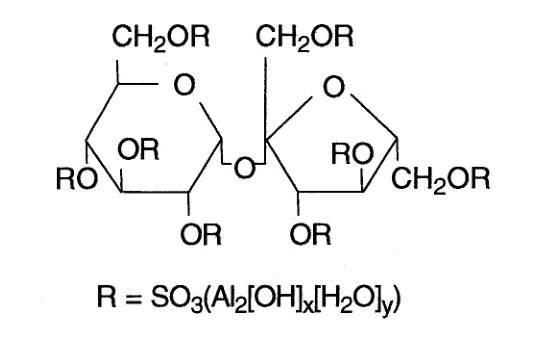
Physicochemical properties:
Sucralfate is an aluminum salt of a sulfated disaccharide. It occurs as a whitish or white, odourless, amorphous powder. It is soluble in dilute hydrochloric acid and sodium hydroxide but practically insoluble in water, boiling water, ethanol or chloroform.
14 CLINICAL TRIALS
14.1 Clinical Trials by Indication
Duodenal Ulcer
Trial Design and Study Demographics
The safety and efficacy of sucralfate in duodenal ulcer has been demonstrated in a number of controlled as well as non-controlled studies involving more than 1000 patients. The drug was compared under double-blind conditions to a placebo or cimetidine. Diagnosis and clinical findings were controlled with endoscopic examinations. The average daily dosage utilized was 3 to 4 g a day and the duration of treatment varied between 4 to 12 weeks.
Study Results
Complete healing of duodenal ulcers was observed in 83.9% of patients treated with sucralfate compared to 57.2% of patients treated with placebo.
When sucralfate was compared to placebo the healing rate observed after 8 weeks treatment was 76% of patients treated with sucralfate suspension and 53% of patients given placebo. In another study the healing rates of sucralfate suspension and sucralfate tablets administered as 1 g qid for 8 weeks, were similar: 84% vs 85% respectively.
In an eight-week double-blind study of sucralfate suspension administered as 2 g BID versus placebo suspension and involving 184 patients, the healing rate after 8 weeks of treatment for patients treated with sucralfate suspension was 74% versus 55% for placebo.
In two comparative studies of sucralfate and cimetidine, there was no statistical difference in healing rates between the two drugs.
Duodenal Ulcer Recurrence
Over 300 patients have participated in controlled clinical trials evaluating the efficacy of sucralfate tablets in preventing duodenal ulcer recurrence. A multicenter, double-blind, placebo-controlled study conducted in the US resulted in a significantly lower incidence of duodenal ulcer recurrence in patients treated with sucralfate tablets for up to one year.
Study Results
Table 3 - Primary Efficacy Analysis for clinical trials in Duodenal Ulcer Recurrence
| Treatment group | Primary Efficacy endpoint: Incidences of recurrence by endoscopic evaluations |
|---|---|
| Study Results | |
| 6 months | 12 months |
| Sucralfate Tablets | |
| 20 % | 27 % |
| Placebo | |
| 74 % | 80 % |
In the course of the trial, some investigators have noted symptoms that could be suggestive of duodenal ulcer in some patients receiving prophylaxis with sucralfate. However, these symptoms did not result in duodenal ulcer disease.
Gastric Ulcer
Trial Design and Study Demographics
The effect of sucralfate tablets in gastric ulcer was evaluated under double-blind conditions in approximately 450 patients.
Study Results:
The healing rate for patients receiving sucralfate tablets was 74.1% as compared to 53.1% in patients receiving a placebo.
In a comparative study of sucralfate and cimetidine in 41 patients, the healing rate was comparable in both groups of patients.
15 MICROBIOLOGY
No microbiological information is required for this drug product.
16 NON-CLINICAL TOXICOLOGY
General Toxicology:
Acute Toxicity
LD50 acute toxicity studies were completed in various rodent species and LD50 could not be determined. Doses utilized in these studies were as high as 12 g/kg of body weight orally in the rat and 8 g/kg of body weight administered intraperitoneally in the mouse. Dogs received sucralfate at doses up to 5 g/kg. No drug-related toxicity or deaths were observed.
Subacute Toxicity
Two subacute toxicity studies were conducted in the rabbit and guinea pig to determine the effect of sucralfate on the cecum and large bowel. Doses up to 1000 mg/kg/day for 30 days were used and detailed gross and histopathological examinations of the entire digestive tract were accomplished at the termination of the study. The results indicated that the administration of sucralfate under the conditions of these studies did not have any adverse effect on any area of the digestive tract or in any other organ system.
In addition, no effect was seen in terms of the hematological or blood chemical parameters examined in the guinea pig study. In this study, blood was also analyzed for aluminum content and no increases in blood aluminum levels were seen when test groups were compared with controls.
In a 30-day subacute study, sucralfate was given to groups of rats at doses of 2, 4 and 8 g/kg/day. No toxicity was evidenced in terms of general condition, behavior, hematology, blood chemistry or organ weights. The high dose rats did exhibit some weight gain depression. Histological examination of tissues revealed some neutrophil infiltration in the submucosa and the tunica propria mucosae of the stomach in 6 of 20 animals of the 8 g/kg/day group. A similar finding was seen in 3 rats receiving 4 g/kg/day but it was lesser in degree. No other findings were noted. The no-effect level was 2 g/kg/day.
Carcinogenicity:
The effect of prolonged administration of sucralfate was examined in mice, rats and dogs. Sucralfate was given to mice at doses of 1 and 5% of the diet in both a one-year chronic toxicity study and a two-year carcinogenicity study. No untoward deleterious effects were reported in either study and no evidence of carcinogenic potential was manifested. A second 109-week carcinogenic study was conducted in mice using doses up to 1000 mg/kg/day. This study confirmed those findings reported in the two earlier studies.
In a six-month rat chronic study, sucralfate was given at doses of 0.5, 1, 2, and 4 g/kg/day by oral gavage. No evidence of toxicity was noted in appearance, hematology, blood chemistry or organ weights.
The stomachs of animals in the 2 and 4 g/kg/day groups that were sacrificed after 90 days exhibited some neutrophilic infiltration of the submucosa and the tunica propria with concurrent hydropic degeneration or slight thickening of the mucosal epithelium. These responses were more advanced after six months. Degenerative changes were also seen in the epithelial cells of the renal tubules at 4 g/kg/day and to a lesser extent at 2 g/kg/day. The no-effect levels were in between 1 and 2 g/kg/day. These doses are in excess of 15 times that recommended for humans.
A twenty-four month chronic toxicity/carcinogenicity study was also conducted in rats. Eosinophilic cytoplasmic droplets were seen in renal tubule epithelial cells in rats of the 1000 and 250 mg/kg/day groups. Untreated control animals and those receiving 50 mg/kg/day did not have this renal finding. Behavioral observations, blood chemistry assays and urinalysis tests were comparable among all groups indicating normal kidney function. Therefore, the renal findings were not considered clinically meaningful. In addition, the findings of the microscopic examination of all other tissues were similar among the groups. Finally, no carcinogenic potential was apparent.
Dogs received sucralfate at doses up to 2 g/kg/day for six months. No untoward drug-related effects were reported. Similar results were obtained in a one-year dog study where the dogs received 50, 250 and 500 mg/kg/day sucralfate.
However, microscopic examination together with subsequent electron microscopic analysis disclosed a vacuolation of some of the epithelial cells in the proximal convoluted tubules in some of the 250 and 500 mg/kg/day animals. No morphological alterations were seen with other compounds such as mannitol, dextran, sucrose or polyvinylpyrrolidone.
The changes were non-progressive since they may be seen after 4 weeks and they are reversible. In addition, none of the blood chemistry or kidney function tests conducted indicated renal damage nor was the normal function of the kidneys hindered.
It is noted that no drug-associated cellular changes in renal tissues were cited in the 28-day guinea pig, 30-day rabbit or 109-week mouse studies discussed previously.
Reproductive and Developmental Toxicology:
Reproduction and teratological studies with sucralfate doses up to 4 g/kg/day body weight in mice and rats and up to 1000 mg/kg of body weight in rabbits did not demonstrate any teratogenic or other associated abnormalities. No deleterious drug-associated effects were seen in terms of general reproductive performance, fertility or perinatal/post-natal responses. The drug levels employed represented doses ranging from 15 to 45 times those recommended in humans.
17. SUPPORTING PRODUCT MONOGRAPHS
- 1) SULCRATE® (Tablet 1 g and Oral Suspension 1 g/5 mL), submission control 283313, PRODUCT MONOGRAPH, APTALIS PHARMA CANADA INC. (JUL 17, 2024)