


Product Monograph - Act Exemestane
RECENT MAJOR LABEL CHANGES
| 7 WARNINGS AND PRECAUTIONS, Musculoskeletal | 09/2024 |
|---|
TABLE OF CONTENTS
Sections or subsections that are not applicable at the time of authorization are not listed.
RECENT MAJOR LABEL CHANGES .............................................................................................. 2
TABLE OF CONTENTS ................................................................................................................. 2
PART I: HEALTH PROFESSIONAL INFORMATION ..................................................................... 4
1 INDICATIONS ................................................................................................................. 4
1.1 Pediatrics ............................................................................................................... 4
1.2 Geriatrics ............................................................................................................... 4
2 CONTRAINDICATIONS .................................................................................................... 4
3 SERIOUS WARNINGS AND PRECAUTIONS BOX ............................................................... 5
4 DOSAGE AND ADMINISTRATION ................................................................................... 5
4.1 Dosing Considerations ........................................................................................... 5
4.2 Recommended Dose and Dosage Adjustment ....................................................... 5
4.4 Administration ....................................................................................................... 6
4.5 Missed Dose ........................................................................................................... 6
5 OVERDOSAGE ................................................................................................................ 6
6 DOSAGE FORMS, STRENGTHS, COMPOSITION AND PACKAGING ................................... 6
7 WARNINGS AND PRECAUTIONS ..................................................................................... 7
7.1 Special Populations .............................................................................................. 10
7.1.1 Pregnant Women ............................................................................................. 10
7.1.2 Breast-feeding .................................................................................................. 11
7.1.3 Pediatrics ......................................................................................................... 11
7.1.4 Geriatrics .......................................................................................................... 11
8 ADVERSE REACTIONS ................................................................................................... 11
8.1 Adverse Reaction Overview ................................................................................. 11
8.2 Clinical Trial Adverse Reactions............................................................................ 13
8.3 Less Common Clinical Trial Adverse Reactions..................................................... 18
8.4 Abnormal Laboratory Findings: Hematologic, Clinical Chemistry and Other Quantitative Data ............................................................................................................ 18
8.5 Post-Market Adverse Reactions ........................................................................... 18
9 DRUG INTERACTIONS .................................................................................................. 19
9.2 Drug Interactions Overview ................................................................................. 19
9.3 Drug-Behavioural Interactions ............................................................................. 19
9.4 Drug-Drug Interactions ........................................................................................ 19
9.5 Drug-Food Interactions ........................................................................................ 20
9.6 Drug-Herb Interactions ........................................................................................ 20
9.7 Drug-Laboratory Test Interactions ....................................................................... 20
10 CLINICAL PHARMACOLOGY .......................................................................................... 20
10.1 Mechanism of Action ........................................................................................... 20
10.2 Pharmacodynamics .............................................................................................. 20
10.3 Pharmacokinetics ................................................................................................. 21
11 STORAGE, STABILITY AND DISPOSAL ........................................................................... 23
12 SPECIAL HANDLING INSTRUCTIONS ............................................................................. 23
PART II: SCIENTIFIC INFORMATION ......................................................................................... 23
13 PHARMACEUTICAL INFORMATION .............................................................................. 23
14 CLINICAL TRIALS .......................................................................................................... 25
14.1 Clinical Trials by Indication ................................................................................... 25
14.2 Comparative Bioavailability Studies ..................................................................... 40
15 MICROBIOLOGY ........................................................................................................... 40
16 NON-CLINICAL TOXICOLOGY ........................................................................................ 40
17 SUPPORTING PRODUCT MONOGRAPHS ...................................................................... 43
PATIENT MEDICATION INFORMATION .................................................................................... 44
PART I: HEALTH PROFESSIONAL INFORMATION
1 INDICATIONS
ACT EXEMESTANE (exemestane tablets) is indicated for:
the sequential adjuvant treatment of postmenopausal women with estrogen receptor-positive early breast cancer who have received 2-3 years of initial adjuvant tamoxifen therapy.
Approval is based on improved disease-free survival for sequential exemestane in comparison to continuous tamoxifen. However, overall survival was not significantly different between the two treatments (see 14 CLINICAL TRIALS).
- hormonal treatment of advanced breast cancer in women with natural or artificially induced postmenopausal status whose disease has progressed following antiestrogen therapy.
1.1 Pediatrics
Pediatrics (< 18 years of age): The safety and effectiveness of ACT EXEMESTANE in pediatric patients have not been established; therefore, Health Canada has not authorized an indication for pediatric use.
1.2 Geriatrics
Geriatrics (> 65 years of age): Healthy postmenopausal women aged 43 to 68 years were studied in the pharmacokinetic trials. Age-related alterations in exemestane pharmacokinetics were not seen over this age range.
2 CONTRAINDICATIONS
ACT EXEMESTANE (exemestane tablets) is contraindicated in patients who are hypersensitive to this drug or to any ingredient in the formulation, including any non-medicinal ingredient, or component of the container. For a complete listing, see 6 DOSAGE FORMS, STRENGTHS, COMPOSITION AND PACKAGING.
3 SERIOUS WARNINGS AND PRECAUTIONS BOX
Serious Warnings and Precautions
ACT EXEMESTANE should be administered under the supervision of a qualified physician experienced in the use of anti-cancer agents. |
|---|
4 DOSAGE AND ADMINISTRATION
4.1 Dosing Considerations
There are no dosing considerations for ACT EXEMESTANE.
4.2 Recommended Dose and Dosage Adjustment
The recommended dose of ACT EXEMESTANE (exemestane tablets) in early and advanced breast cancer is 25 mg once daily after a meal.
In postmenopausal women with early breast cancer, treatment with ACT EXEMESTANE should continue until completion of five years of adjuvant endocrine therapy, or until local or distant recurrence or new contralateral breast cancer.
In patients with advanced breast cancer, treatment with ACT EXEMESTANE should continue until tumor progression is evident.
No dose adjustments are required for patients with hepatic or renal insufficiency. (see 10 CLINICAL PHARMACOLOGY).
Geriatric (> 65 years of age): Healthy postmenopausal women aged 43 to 68 years were studied in the pharmacokinetic trials. Age-related alterations in exemestane pharmacokinetics were not seen over this age range.
Pediatrics (< 18 years of age): Health Canada has not authorized an indication for pediatric use.
Dose modification for Patients with Hepatic Impairment: Following a single 25-mg oral dose, the AUC of exemestane in patients with hepatic dysfunction (moderate hepatic impairment, Child Pugh B; severe hepatic impairment, Child Pugh C) was approximately 3 times higher than that observed in healthy volunteers. However, no dosage adjustment is required for patients with liver impairment since exemestane was well tolerated in patients with breast cancer at doses 8 to 24 times higher than the recommended 25 mg daily dose (see 10 CLINICAL PHARMACOLOGY).
Dose modification for Patients with Renal Impairment: The AUC of exemestane after a single 25-mg dose was approximately 3 times higher in subjects with severe renal insufficiency (creatinine clearance <30 mL/min/1.73 m2) compared with the AUC in healthy volunteers. However, no dosage adjustment is required for patients with renal impairment since exemestane was well tolerated in patients with breast cancer at doses 8 to 24 times higher than the recommended dose (see 10 CLINICAL PHARMACOLOGY).
4.4 Administration
The recommended dose is one 25 mg tablet, once daily, by mouth. The tablet should be taken with food (preferably after a meal) at the same time each day.
4.5 Missed Dose
If a dose of ACT EXEMESTANE is missed, then it should be taken as soon as the patient remembers unless it is almost time for the next dose, in which case the patient should not take the missed dose. Patients should not take 2 doses at the same time to make up for a missed dose.
5 OVERDOSAGE
Clinical trials have been conducted with exemestane tablets given up to 800 mg as a single dose to healthy female volunteers and up to 600 mg daily for 12 weeks to postmenopausal women with advanced breast cancer with no symptoms of overdose reported. There is no specific antidote to overdosage and treatment must be symptomatic. General supportive care, including frequent monitoring of vital signs and close observation of the patient, is indicated.
A male child (age unknown) accidentally ingested a 25-mg tablet of exemestane. The initial physical examination was normal, but blood tests performed 1 hour after ingestion indicated leucocytosis (WBC:25000/mm3 with 90% neutrophils). Blood tests were repeated 4 days after the incident and were normal. No treatment was given.
In rats and dogs, mortality was observed after single oral doses of 5000 mg/kg (about 2000 times the recommended human dose on a mg/m2 basis) and of 3000 mg/kg (about 4000 times the recommended human dose on a mg/m2 basis), respectively.
For management of a suspected drug overdose, contact your regional poison control centre.
6 DOSAGE FORMS, STRENGTHS, COMPOSITION AND PACKAGING
Table – Dosage Forms, Strengths, Composition and Packaging
| Route of Administration | Dosage Form / Strength / Composition | Non-medicinal Ingredients |
| Oral | Tablet, 25 mg | Butylated hydroxyanisole, butylated hydroxytoluene, colloidal anhydrous silica, crospovidone, hydroxypropylcellulose, lecithin, magnesium stearate, mannitol, polysorbate, polyvinyl alcohol, sodium starch glycolate, talc, titanium dioxide, xanthan gum. |
ACT EXEMESTANE 25 mg tablets are white, film-coated, round, biconvex tablet with “EM” on one side and “ ” on the other side.
ACT EXEMESTANE are available in Unit Dose Blister packs of 30 tablets (blister strip of 10 tablets).
7 WARNINGS AND PRECAUTIONS
Please see 3 SERIOUS WARNINGS AND PRECAUTIONS BOX.
General
Exemestane should not be administered to women with premenopausal endocrine status as safety and efficacy have not been established in these patients. ACT EXEMESTANE should not be co-administered with estrogen-containing agents as these could interfere with its pharmacologic action.
Carcinogenesis and Mutagenesis
There is no human data on the carcinogenic or mutagenic potential of exemestane (see 16 NON-CLINICAL TOXICOLOGY, Carcinogenicity).
Cardiovascular
The use of aromatase inhibitors, including exemestane, may increase the risk of ischemic cardiovascular diseases. During the Intergroup Exemestane Study (IES), more patients receiving exemestane were reported to have ischemic cardiac events (myocardial infarction, angina, and myocardial ischemia) compared to patients receiving tamoxifen (treatment-emergent cases: 2.0% versus 1.3%; all-cases [either on treatment or during follow up]: 5.8% versus 3.8%). In addition, a larger number of events were reported for exemestane in comparison to tamoxifen for some individual treatment-emergent cardiovascular events including hypertension (9.9% versus 8.4%), myocardial infarction (0.6% versus 0.2%) and cardiac failure (1.1% versus 0.7%). Women with significant cardiac disorders were excluded from the clinical studies of exemestane in early breast cancer.
Endocrine and Metabolism
The use of aromatase inhibitors, including exemestane, may increase the occurrence of hypercholesterolemia. During the IES study, more patients receiving exemestane were reported to have treatment-emergent hypercholesterolemia compared to patients receiving tamoxifen (3.7% vs. 2.1%, respectively).
In a study in postmenopausal women with early breast cancer at low risk treated with exemestane (n=73) or placebo (n=73) (Study 027) plasma HDL cholesterol was decreased 6-9% in exemestane-treated patients; total cholesterol, LDL-cholesterol, triglycerides, apolipoprotein-A1, apolipoprotein-B, and lipoprotein-a were unchanged. An 18% increase in homocysteine levels was observed in exemestane-treated patients compared with a 12% increase seen with placebo. Exemestane induced a significant increase in both bone formation and bone resorption markers [bone-specific alkaline phosphatase (BAP), serum procollagen type I N propeptide (PINP) and serum osteocalcin; serum and urinary C-terminal cross-linked telopeptide of type 1 collagen (CTX-I), and urinary N-terminal cross-linked telopeptide of type I collagen (NTX-I)].
Gastrointestinal
The use of exemestane may increase the risk of gastric ulcer. In the early breast cancer IES trial, gastric ulcer was observed at a slightly higher frequency in the exemestane arm compared to tamoxifen (0.7% versus <0.1%). The majority of patients on exemestane with gastric ulcer received concomitant treatment with non-steroidal anti-inflammatory agents and /or had a prior history.
Hematologic
In patients with early breast cancer (IES Study) the incidence of hematological abnormalities of Common Toxicity Criteria (CTC) grade ≥ 1 was lower in the exemestane treatment group, compared with tamoxifen. Incidence of CTC grade 3 or 4 abnormalities was low (approximately 0.1%) in both treatment groups. Approximately 20% of patients receiving exemestane in clinical studies in advanced breast cancer, particularly those with pre-existing lymphocytopenia, experienced a moderate transient decrease in lymphocytes. However, mean lymphocyte values in these patients did not change significantly over time. Patients did not have a significant increase in viral infections, and no opportunistic infections were observed.
To date, there is no indication that exemestane affects antithrombin III. Some steroidal compounds are known to affect antithrombin III, increasing the risk of thromboembolic events. Preclinical data evaluating exemestane’s potential to affect antithrombin III is not available;
however, studies in humans are ongoing. In a study in postmenopausal women with early breast cancer at low risk treated with exemestane (n=73) or placebo (n=73) (Study 027), there was no change in the coagulation parameters activated partial thromboplastin time [APTT], prothrombin time [PT] and fibrinogen.
Hepatic/Biliary/Pancreatic
In patients with early breast cancer, elevations in bilirubin and alkaline phosphatase were more common in those receiving exemestane than either tamoxifen or placebo. Treatment emergent bilirubin elevations occurred in 5.9% of exemestane-treated patients compared to 0.9% of tamoxifen-treated patients on the IES, and in 6.9% of exemestane-treated patients versus 0% of placebo-treated patients on the 027 study; CTC grade 3-4 increases in bilirubin occurred in 0.9% of exemestane-treated patients compared to 0.1% of tamoxifen-treated patients on the IES. Alkaline phosphatase elevations occurred in 15.9% of exemestane-treated patients compared to 3.1% of tamoxifen-treated patients on the IES, and in 13.7% of exemestane-treated patients compared to 6.9% of placebo-treated patients on Study 027.
In patients treated for advanced breast cancer, elevation of the serum levels of AST, ALT, alkaline phosphatase and gamma glutamyl transferase >5 times the upper value of the normal range have been reported rarely. These changes were mostly attributable to the underlying presence of liver and/or bone metastases. However, in the Phase III study in advanced breast cancer patients, elevation of the gamma glutamyl transferase without documented evidence of liver metastasis was reported in 2.7% of patients treated with exemestane and in 1.8% of patients treated with megestrol acetate. Additionally, in post-market surveillance elevations of the serum levels of AST, ALT, alkaline phosphatase and gamma glutamyl transferase >5 times the upper value of the normal range were not necessarily due to liver or bone metastases and normalization of liver enzyme values post discontinuation of drug has been observed.
Rare cases of hepatitis including cholestatic hepatitis have been observed in other clinical trials with additional reports identified through post-marketing surveillance.
Monitoring and Laboratory Tests
Women should have their cholesterol levels and osteoporosis risks assessed and managed according to current clinical practice and guidelines.
Musculoskeletal
The use of estrogen lowering agents, including exemestane, may cause a reduction in bone mineral density (BMD) with a possible consequent increased risk of fracture. Women should have their osteoporosis risk assessed and managed according to local clinical practice and guidelines. Women with clinical evidence of severe osteoporosis or a history of osteoporotic fracture were excluded from the clinical studies of exemestane in early breast cancer.
Reductions in BMD over time were seen with exemestane use in these clinical trials; Table 1 describes changes in BMD from baseline to 24 months in patients receiving exemestane compared to patients receiving tamoxifen (IES) or placebo (027).
Table 1: Percent Change in BMD from Baseline to 24 months, Exemestane vs. Control
| IES | 027 | ||||||||
|---|---|---|---|---|---|---|---|---|---|
| BMD | Exemestane | Tamoxifen | Exemestane N=59 | Placebo N=65 | |||||
| Lumbar spine (%) | -3.68 (N=82) | -0.19 (N=94) | -3.51 | -2.39 | |||||
| Femoral neck (%) | -3.96(N=77) | -0.69 (N=87) | -4.57 | -2.59 | |||||
The use of aromatase inhibitors, including exemestane, may cause arthralgias and/or myalgias, which may impact on treatment compliance and quality of life. In the IES study, 17.6% of patients in exemestane arm reported arthralgia as an adverse event versus 10.8% of patients in tamoxifen arm. Arthralgia-related disorders such as arthralgia, back pain, and pain in limb led to study drug discontinuation more often in exemestane-treated patients than tamoxifen-treated patients (1.3% versus 0.3% of total patients treated, respectively).
Tendon disorders: The use of third generation aromatase inhibitors, including exemestane, was found to be associated with tendonitis and tenosynovitis as reported in randomized controlled trials. Tendon rupture was found to be a potential risk. Tendonitis and tenosynovitis were estimated to be of uncommon occurrence, and tendon rupture of rare occurrence. Treating physicians should monitor patients for these adverse drug reactions.
Renal
In patients with early breast cancer, elevations in creatinine were more common in those receiving exemestane than either tamoxifen or placebo. Creatinine elevations occurred in 6.4% of exemestane-treated patients versus 5.0% of tamoxifen-treated patients on the IES and in 5.5% of exemestane-treated patients versus 0% of placebo-treated patients on Study 027.
Skin
Severe cutaneous reactions erythema multiforme and acute generalized exanthematous pustulosis (AGEP) have been reported in association with exemestane. The latency of AGEP was
2 weeks after starting exemestane treatment, which is consistent with the temporal pattern of drug-related AGEP. Patients that experience severe cutaneous reactions should permanently discontinue ACT EXEMESTANE.
7.1 Special Populations
7.1.1 Pregnant Women
ACT EXEMESTANE should not be used in women who are or may become pregnant because it may cause harm to the fetus (see 2 CONTRAINDICATIONS). There are no adequate and well-controlled studies in pregnant women using exemestane. If this drug is used during pregnancy, or if the patient becomes pregnant while taking this drug, the patient should be apprised of the potential hazard to the fetus or the potential risk for loss of the pregnancy.
In pregnant rats, exemestane caused placental enlargement, dystocia, prolonged gestation, increased resorption, reduced number of live fetuses, decreased fetal weight, and retarded ossification at doses greater than 4 mg/kg/day (24 mg/m2/day), approximately 1.5 times the recommended human daily dose (16.0 mg/m2/day) on a mg/m2 basis. The administration of exemestane at doses of 50 mg/kg/day during the organogenesis period caused an increase in fetal resorption, but there was no evidence of teratogenicity up to the dose of 810 mg/kg/day (4860 mg/m2/day). In pregnant rabbits, daily doses of exemestane 270 mg/kg/day (4320 mg/m2/day), which is greater than 200 times the recommended human daily dose caused abortions, an increase in resorptions, and a reduction in fetal body weight; there was no increase in the incidence of malformations (see 16 NON-CLINICAL TOXICOLOGY, Reproduction and Developmental Toxicology).
7.1.2 Breast-feeding
Although it is not known whether exemestane is excreted in human milk, the drug was shown to be excreted in the milk of lactating rats. Because there is a potential for serious adverse reactions in nursing infants, nursing should be discontinued when receiving therapy with ACT EXEMESTANE.
7.1.3 Pediatrics
Pediatrics (< 18 years of age): The safety and effectiveness of ACT EXEMESTANE in pediatric patients have not been established; therefore, Health Canada has not authorized an indication for pediatric use.
7.1.4 Geriatrics
Geriatrics (> 65 years of age): Healthy postmenopausal women aged 43 to 68 years were studied in the pharmacokinetic trials. Age-related alterations in exemestane pharmacokinetics were not seen over this age range (see 10 CLINICAL PHARMACOLOGY).
8 ADVERSE REACTIONS
8.1 Adverse Reaction Overview
Adjuvant Treatment of Early Breast Cancer
Exemestane tolerability in postmenopausal women with early breast cancer was evaluated in two well-controlled trials: the Intergroup Exemestane Study 031 (IES) (see 14 CLINICAL TRIALS) and the 027 study (a randomized, placebo-controlled, double-blind, parallel group, phase II study specifically designed to assess the effects of exemestane on bone metabolism, hormones, lipids and coagulation factors over 2 years of treatment).
Certain adverse events, expected based on the known pharmacological properties and side effect profiles of test drugs, were actively sought through a positive checklist. Signs and symptoms were graded for severity using CTC in both studies. Within the IES study, the presence of some illnesses/conditions was monitored through a positive checklist without assessment of severity. These included myocardial infarction, other cardiovascular disorders, gynecological disorders, osteoporosis, osteoporotic fractures, other primary cancer, and hospitalizations.
The median duration of adjuvant treatment was 30.0 months and 29.9 months for patients receiving exemestane or tamoxifen, respectively, within the IES study, and 23.9 months for patients receiving exemestane or placebo within the 027 study. Median duration of observation after randomization at the time of primary analysis, for exemestane was 40.4 months and for tamoxifen 39.1 months; and at the time of the updated analysis for exemestane was 53.6 months and for tamoxifen 51.6 months. Median duration of observation was 30 months for both groups in the 027 study.
Exemestane adverse events were usually mild to moderate. Within the IES study discontinuations due to adverse events occurred in 7.4% and 6.2% of patients receiving exemestane and tamoxifen, respectively, and in 12.3% and 4.1% of patients receiving exemestane or placebo within Study 027. Within the IES study, the most commonly reported adverse reactions were hot flushes (exemestane 22%; tamoxifen 20%), arthralgias (exemestane 18%; tamoxifen 11%), and fatigue (exemestane 16%; tamoxifen 15%). On-treatment deaths due to any cause were reported for 1.5% of the exemestane-treated patients, and 1.5% of the tamoxifen-treated patients within the IES study. There were 6 on-treatment deaths due to stroke and 3 due to cardiac failure in the exemestane-treated patients compared with 2 deaths due to stroke and 1 due to cardiac failure in the tamoxifen-treated patients. There were no deaths in Study 027.
Treatment of Advanced Breast Cancer after Failure on Tamoxifen:
A total of 1058 patients who had failed prior tamoxifen therapy were treated with exemestane tablets, 25 mg once daily in the clinical trials program. exemestane adverse events were usually mild to moderate. Only one death was potentially related to treatment with exemestane; an 80-year-old woman with known coronary artery disease had a myocardial infarction with multiple organ failure after 9 weeks on study treatment. In the clinical trials program, only 2.8% of the patients discontinued treatment with exemestane because of adverse events, mainly within the first 10 weeks of treatment; late discontinuations due to adverse events were uncommon (0.3%).
8.2 Clinical Trial Adverse Reactions
Clinical trials are conducted under very specific conditions. The adverse reaction rates observed in the clinical trials; therefore, may not reflect the rates observed in practice and should not be compared to the rates in the clinical trials of another drug. Adverse reaction information from clinical trials may be useful in identifying and approximating rates of adverse drug reactions in real-world use.
Adjuvant Treatment of Early Breast Cancer
Treatment-emergent adverse events and illnesses including all causalities and occurring with an incidence of ≥5% in either treatment group of the IES study during or within one month of the end of treatment are shown in Table 2.
Table 2: Incidence (%) of Adverse Events of all Grades1 and Illnesses Occurring in ≥5% of Patients in Any Treatment Group in Study IES in Postmenopausal Women with Early Breast Cancer
| % of patients | |||||
|---|---|---|---|---|---|
| Body system and Adverse Event by MedDRA dictionary | Exemestane 25 mg daily (N=2249) | Tamoxifen 20 mg daily 2 (N=2279) | |||
Gastrointestinal disorders Nausea3 | 8.9 | 9.1 | |||
General disorders and administration site contidions Fatigue3 | 16.3 | 15.1 | |||
Investigations Weight increased | 5.7 | 6.1 | |||
Musculoskeletal and connective tissue disorders Arthralgia Pain in limb Back pain Osteoarthritis Osteoporosis | 17.6 6.4 9.3 6.1 5.2 | 10.8 4.7 7.7 4.7 2.9 | |||
Nervous system disorders Headache3 Dizziness3 | 13.6 10.0 | 11.2 8.8 | |||
Psychiatric disorders Insomnia3 Depression | 12.9 6.2 | 9.0 5.6 | |||
Reproductive System and breast disorders Vaginal hemorrhage | 4.0 | 5.3 | |||
Skin and Subcutaneous Tissue disorders Increased sweating3 | 12.0 | 10.6 | |||
Vascular Hot flushes3 Hypertension3 | 21.8 9.9 | 20.1 8.4 | |||
1 Graded according to Common Toxicity Criteria;
2 75 patients received tamoxifen 30 mg daily;
3 Event actively sought
In the IES study, more patients receiving exemestane were reported to have ischemic cardiac events (myocardial infarction, angina, and myocardial ischemia) compared to patients receiving tamoxifen (treatment-emergent cases: 2.0% versus 1.3%; all-cases [either on treatment or during follow up]: 5.8% versus 3.8%). No significant difference was noted for any individual treatment-emergent cardiovascular event including hypertension (9.9% versus 8.4%), myocardial infarction (0.6% versus 0.2%) and cardiac failure (1.1% versus 0.7%). The proportion of patients reporting hypercholesterolemia was 3.7% in the exemestane-treated group versus 2.1% in the tamoxifen-treated group.
In the IES study, as compared to tamoxifen, exemestane was associated with a higher incidence of events in the musculoskeletal disorders and in the nervous system disorders, including the following events occurring with frequency lower than 5%: paraesthesia (2.8% vs. 1.0%), carpal tunnel syndrome (2.8% vs. 0.2%) and neuropathy (0.5% vs. <0.1%).
Exemestane was associated with a significantly higher incidence of gastric ulcer events in comparison to tamoxifen (0.7% vs. <0.1%). In addition, diarrhea was also more frequent in the exemestane group (4.2% vs. 2.2%). The majority of patients on exemestane with gastric ulcer received concomitant treatment with non-steroidal anti-inflammatory agents and/or had a prior history.
Clinical fractures were reported in 101 patients receiving exemestane (4.5%) and 75 patients receiving tamoxifen (3.3%).
Tamoxifen was associated with a greater incidence of muscle cramps (3.2% vs. 1.4%), uterine polyps (1.8% vs. 0.4%), venous thromboembolic disease (1.8% vs. 0.7%), endometrial hyperplasia (0.9% vs. <0.1%) and uterine polypectomy (0.8% vs. 0.2%).
A lower incidence of other second (non-breast) primary cancers was observed in the exemestane-treated patients versus tamoxifen-treated patients (3.6% vs. 5.3%) in the IES study.
Based on reports of adverse events in 73 postmenopausal women in each treatment group in the 027 study, Table 3 shows treatment-emergent adverse events including all causalities and occurring with an incidence of >5% in either treatment group.
Table 3: Incidence (%) of Adverse Events of all Grades1 Occurring in ≥5% of Patients in either Treatment Group in Study 027
| % of patients | |||||
|---|---|---|---|---|---|
| Body system and Adverse Event by MedDRA dictionary | Exemestane 25 mg daily (N=73) | Placebo (N=73) | |||
Gastrointestinal disorders Nausea Abdominal pain Diarrhea | 12.3 11.0 9.6 | 16.4 13.7 1.4 | |||
General disorders and administration site conditions Fatigue | 11.0 | 19.2 | |||
| % of patients | |||||
|---|---|---|---|---|---|
| Body system and Adverse Event by MedDRA dictionary | Exemestane 25 mg daily (N=73) | Placebo (N=73) | |||
Musculoskeletal and connective tissue disorders Arthralgia Pain in limb Myalgia Tendonitis | 28.8 8.2 5.5 5.5 | 28.8 6.9 4.1 5.5 | |||
Nervous system disorders Dizziness Headache | 9.6 6.9 | 9.6 4.1 | |||
Psychiatric disorders Insomnia Depression Anxiety | 13.7 9.6 4.1 | 15.1 6.9 5.5 | |||
Infections and infestations Urinary tract infection | 8.2 | 8.2 | |||
Skin and subcutaneous tissue disorders Increased sweating Alopecia Dermatitis | 17.8 15.1 6.9 | 20.6 4.1 1.4 | |||
Vascular disorders Hot flushes Hypertension | 32.9 15.1 | 24.7 6.9 | |||
1 Graded according to Common Toxicity Criteria
Events were mostly grade 1 or 2 in severity for both exemestane and placebo treated patients.
Treatment of Advanced Breast Cancer after Failure on Tamoxifen:
In the Phase III study, 358 patients were treated with exemestane and 400 patients were treated with megestrol acetate. Fewer patients receiving exemestane discontinued treatment because of adverse events than those treated with megestrol acetate (1.7% versus 5%). Adverse events in the Phase III study that were considered drug related or of indeterminate cause included hot flashes (12.6%), nausea (9.2%), fatigue (7.5%), increased sweating (4.5%), and increased appetite (2.8%). The proportion of patients experiencing an excessive weight gain (>10% of their baseline weight) was significantly higher with megestrol acetate than with exemestane (17.1% versus 7.6%, p=0.001). Table 4 shows the adverse events of all National Cancer Institute (NCI) Common Toxicity grades regardless of causality reported in 5% or greater of patients in the Phase III study treated either with exemestane or megestrol acetate.
Table 4: Incidence (%) of Adverse Events of all NCI* Common Toxicity Grades and Causes Occurring in ≥5% of Patients in the Phase III Study
| Event | Exemestane 25 mg once daily (N=358) | Megestrol Acetate 40 mg QID (N=400) |
|---|---|---|
| Any Adverse Event | 79.3 | 80 |
Skin and subcutaneous tissue disorders Increased sweating | 6.1 | 9.0 |
General Disorders and Administration Site Conditions Fatigue Pain Influenza-like symptoms | 21.8 13.1 5.9 | 29.3 12.5 5.3 |
Vascular Disorders Hypertension Hot flushes | 4.7 13.4 | 5.8 5.5 |
Psychiatric Disorders Depression Insomnia Anxiety Dizziness Headache | 12.8 10.9 10.1 8.1 8.1 | 8.8 9.0 10.8 5.8 6.5 |
Gastrointestinal disorders Nausea Vomiting Abdominal pain Anorexia Constipation Diarrhea | 18.4 7.3 6.1 6.1 4.7 3.6 | 11.5 3.8 10.5 4.8 8.0 5.0 |
Metabolism and nutrition disorders Increased appetite | 2.8 | 5.8 |
Respiratory, thoracic and mediastinal disorders Dyspnea Coughing | 9.8 5.9 | 15.0 7.0 |
* NCI = National Cancer Institute
In the overall clinical trials program for advanced cancer (N = 1058), additional adverse events reported in 5% or greater of patients treated with exemestane 25 mg once daily included pain at tumor site (8%), peripheral edema (7.6%), asthenia (5.8%) and fever (5%). Less frequent but common adverse events (1% to 5%) reported in these patients were liver enzyme abnormalities (AST, ALT, alkaline phosphatase), elevated bilirubin, arthralgia, peripheral edema, back pain, dyspepsia, paresthesia, bronchitis, rash, chest pain, edema, hypertension, upper respiratory tract infection, pruritus, urinary tract infection, pathological fracture, alopecia, leg edema, sinusitis, skeletal pain, infection, pharyngitis, rhinitis, hypoesthesia, confusion, and lymphedema.
8.3 Less Common Clinical Trial Adverse Reactions
The clinical trial adverse reaction data is not available.
8.4 Abnormal Laboratory Findings: Hematologic, Clinical Chemistry and Other Quantitative Data
Abnormal laboratory findings data is not available.
8.5 Post-Market Adverse Reactions
Post-market adverse events/illnesses include case observed in other clinical trials (not described above) as well as reports from post-marketing surveillance. Because these events are not uniformly reported, it is not always possible to reliably estimate their frequency or clearly establish a causal relationship to exemestane exposure. The following events are listed according to MedDRA system organ class.
Vascular disorders: Cerebrovascular accident, pulmonary embolus and deep vein thrombosis were among the most frequently reported adverse events/illnesses in the post-market setting.
Cardiac disorders: Cardiac failure and myocardial infarction have been reported in association with exemestane.
Nervous System disorders: Carpal tunnel and paraesthesia has been reported frequently in the post-market setting.
Hepatobiliary disorders: Rare cases of hepatitis including cholestatic hepatitis have been observed in other clinical trials with additional reports identified through post-marketing surveillance.
Investigations: ALT, AST, blood bilirubin and blood alkaline phosphatase increases that have been reported as common events above have also been reported as very common events in other clinical trials. Additionally, in post-market surveillance elevation of the serum levels of AST, ALT, alkaline phosphatase and gamma glutamyl transferase >5 times the upper value of the normal range have been observed. Increase in liver enzymes was not necessarily due to liver or bone metastases and normalization of liver enzyme values post discontinuation of drug has been observed.
Skin and subcutaneous tissue disorders: Severe cutaneous reactions erythema multiforme and acute generalized exanthematous pustulosis have been reported in association with exemestane. Urticaria and pruritus have also been reported in association with exemestane.
Immune System disorders: Hypersensitivity, including anaphylactic reactions, has occurred between 8 hours to 26 days of starting exemestane therapy.
Musculoskeletal and connective tissue disorders: Trigger finger and de Quervain’s tendonitis (tenosynovitis stenosans) have been reported in post-marketing reports as well as in clinical trials in association with exemestane. Tendonitis and tendon rupture have also been reported.
9 DRUG INTERACTIONS
9.2 Drug Interactions Overview
In vitro evidence showed that exemestane is metabolized by cytochrome P450 (CYP) 3A4 and aldoketoreductases, and does not inhibit any of the major CYP isoenzymes, including CYP 1A2, 2C9, 2D6, 2E1, and 3A. In a clinical pharmacokinetic study, the specific inhibition of CYP3A4 by ketoconazole administration showed no significant influence on the pharmacokinetics of exemestane. Although pharmacokinetic effects were observed in a pharmacokinetic interaction study with rifampin, a potent CYP3A4 inducer, the suppression of plasma estrogen concentrations (estrone sulfate) produced by exemestane was not affected and a dosage adjustment is not required. In patients receiving tamoxifen and warfarin concurrently, re-titration of the warfarin dose may be required following the switch from tamoxifen to exemestane. Possible interaction between tamoxifen and warfarin that required dose adjustments have been described. As a result, patients on warfarin treatment were excluded from the IES trial because the risk of experiencing a coagulation problem in switching from previous tamoxifen to exemestane could not be excluded. Although a potential interaction between warfarin and exemestane has not been studied clinically, in vitro studies have demonstrated that exemestane does not inhibit the activity of CYP2C9 (enzyme responsible for the metabolism of s-warfarin) and exemestane is not anticipated to alter the pharmacokinetics of warfarin. Therefore, the dosage of warfarin should be controlled by periodic determinations of prothrombin times (PT) ratio/International Normalized Ratio (INR) or other suitable coagulation tests at the time of switch from tamoxifen to exemestane as per recommendations in the warfarin Product Monograph.
9.3 Drug-Behavioural Interactions
Drug-Behavioural interactions have not been established.
9.4 Drug-Drug Interactions
Interactions with other drugs have not been established.
9.5 Drug-Food Interactions
Interactions with food have not been established.
9.6 Drug-Herb Interactions
Interactions with herbs have not been established.
9.7 Drug-Laboratory Test Interactions
Interactions with laboratory tests have not been established. .
10 CLINICAL PHARMACOLOGY
10.1 Mechanism of Action
Breast cancer cell growth is often estrogen-dependent and anti-tumour activity is expected following effective and continuous estrogen suppression in patients with hormone-sensitive breast cancer. The principal source of circulating estrogens in postmenopausal women is from conversion of adrenal and ovarian androgens to estrogens by the aromatase enzyme in peripheral tissues. Estrogen deprivation through aromatase inhibition is an effective and selective treatment for postmenopausal patients with hormone-dependent breast cancer.
Exemestane is a potent competitive human placental aromatase inhibitor that is structurally related to the natural substrate androstenedione. Exemestane significantly lowers circulating estrogen concentrations in postmenopausal women, but has no detectable effect on adrenal biosynthesis of corticosteroids or aldosterone. Exemestane has no effect on other enzymes involved in the steroidogenic pathway up to a concentration at least 600 times higher than that inhibiting the aromatase enzyme.
10.2 Pharmacodynamics
Exemestane is a potent aromatase inactivator, causing estrogen suppression and inactivation of peripheral aromatisation.
In healthy postmenopausal woman, single oral doses of exemestane (studies 001, 008, 012, 023) caused a dose-dependent decrease in circulating estrogens. At the dose of 0.5 mg of exemestane, estrogen suppression was very limited (~10-25% inhibition), whereas maximal suppression was observed at the dose of 25 mg (~70% for all estrogens). At the recommended dose of 25 mg, maximal estrogen suppression was observed 2-3 days after dosing. It was very long lasting, as estrogen levels recovered to baseline 10-14 days after dosing.
In postmenopausal breast cancer patients, maximal estrogen suppression was generally observed at doses of 10-25 mg daily (85-95%). In both Phase II and III studies, estrogen suppression was found to be still present to the same degree at the time of disease progression, thus indicating that loss of activity was not due to loss of pharmacodynamic effect, but to newly developed tumor resistance, that might also include an acquired hypersensitivity of some tumor cells to estrogens.
After 6-8 weeks of exemestane 25 mg/day, whole body aromatization was reduced by 97.9%.
In order to determine the specificity of exemestane’s action, the effect of the drug on circulating hormones other than estrogen was studied. No effect on any of the tested hormones was observed after single exemestane doses. After repeated doses, a dose-related decrease in sex-hormone binding globulin (SHBG) and a non dose-related increase in luteinizing hormone (LH) and follicle stimulating hormone (FSH) levels were observed. The decrease in SHBG (21% to 49% at 25 mg/day) is very likely related to the androgenic effect of exemestane and/or its metabolite 17- hydroexemestane, exerted at the level of the liver where this hormone is produced. The slight increase in LH and FSH levels (29% and 45% at 25 mg/day) is probably due to a compensatory feed-back mechanism resulting from the marked reduction in circulating estrogens. Exemestane 25 mg daily had no significant effect on thyroid function [free triiodothyronine (FT3), free thyroxine (FT4) and thyroid stimulating hormone (TSH)].
10.3 Pharmacokinetics
Table 5: Summary of Pharmacokinetic Parameters of Exemestane After Oral Administration of Single Dose of 25 mg In Caucasian Healthy Postmenopausal Volunteers (HPV)
Cmax (ng/mL) | Tmax (h) | t½ (h) | AUC (ng.h/mL) | CL/F (L/h) | Vz/F (L) | |
|---|---|---|---|---|---|---|
| Single dose Mean | 17 | 2 | 27 | 58 | 517 | 20,000 |
Pharmacokinetics of exemestane were found to be linear at single oral doses ranging from 25 to 200 mg.
Absorption:
Following oral administration of radiolabeled exemestane, at least 42% of radioactivity was absorbed from the gastrointestinal tract. Maximum exemestane plasma concentration (Cmax) was observed within 2 hours of receiving exemestane. Exemestane plasma levels increased by approximately 40% after a high-fat breakfast; however, no further effect on estrogen suppression was observed since maximum activity was already achieved under fasting conditions. Exemestane appears to be more rapidly absorbed in women with breast cancer than in healthy women. After repeated doses, mean Tmax was 1.2 hours in the women with breast cancer and 2.9 hours in the healthy women. Mean AUC values following repeated doses were approximately 2-fold higher in women with breast cancer (75.4 ng.h/mL) compared with healthy women (41.4 ng.h/mL). However, there was considerable overlap between the range of pharmacokinetic parameters observed in these two populations.
Food effect
A significant increase (approximately 39%) in the systemic exposure (area under the curve, AUC) was observed when tablets were administered after a high-fat breakfast compared with the same formulation administered under fasting conditions. As a result, in clinical practice it is recommended that exemestane be administered with food (preferably after a meal).
Distribution:
Exemestane is distributed extensively into tissues. Exemestane is 90% bound to plasma proteins and the fraction bound is independent of the total concentration. Albumin and α1-acid glycoprotein contribute equally to the binding. The distribution of exemestane and its metabolites into blood cells is negligible.
Metabolism:
After reaching maximum plasma concentration, exemestane levels declined polyexponentially with a mean terminal half-life of about 24 hours. Exemestane was extensively metabolized, with levels of the unchanged drug in plasma accounting for less than 10% of the total radioactivity. The initial steps in the metabolism of exemestane are oxidation of the methylene group in position 6 and reduction of the 17-keto group with subsequent formation of many secondary metabolites. Each metabolite accounts only for a limited amount of drug-related material. The metabolites are inactive or demonstrate minimal ability to inhibit aromatase compared with the parent drug. Studies using human liver preparations indicate that cytochrome P-450 3A4 (CYP 3A4) is the principal isoenzyme involved in the oxidation of exemestane. Additional studies in humans demonstrated that exemestane does not affect the activity of CYP3A4 to any great extent. No significant inhibition of any of the CYP isoenzymes (including CYP3A4) involved in xenobiotic metabolism was observed in human liver preparations. This would suggest that possible drug-drug interactions involving inhibition of CYP by co-administration with exemestane are unlikely.
Excretion:
Following administration of a single oral dose of radiolabeled exemestane, the elimination of drug related products was essentially complete within 1 week. Approximately equal proportions of the dose were eliminated in urine and feces. The amount of drug excreted unchanged in urine was less than 1% of the dose, indicating that renal excretion is a limited elimination pathway.
Special Populations and Conditions
- Pediatrics: No studies have been conducted to investigate the pharmacokinetics in pediatric patients below the age of 18 years.
- Geriatrics: Although women ranging in age up to 99 years were enrolled in the clinical studies (see 7 WARNINGS AND PRECAUTIONS), healthy postmenopausal women aged 43 to 68 years were enrolled in the pharmacokinetic trials. Age-related alterations in exemestane pharmacokinetics were not seen over this age range.
- Sex: The pharmacokinetics of exemestane following administration of a single, 25 mg tablet to fasted healthy males (mean age 32 years; range 19 to 51 years) or to fasted healthy postmenopausal women (mean age 55 years; range 45 to 68 years) have been compared. Mean Cmax and AUC values in healthy males (12.3 ± 5.8 ng/mL and 28.4 ± 17.3 ng.h/mL, respectively) were similar to those determined in healthy postmenopausal women (11.1 ± 4.4 ng/mL and 29.7 ± 7.8 ng.h/mL, respectively). Thus, the pharmacokinetics of exemestane does not appear to be influenced by gender.
- Hepatic Insufficiency: The pharmacokinetics of exemestane have been investigated in subjects with moderate and severe hepatic insufficiency. Following a single 25-mg oral dose, the AUC of exemestane was approximately 3 times higher than that observed in healthy volunteers. However, no dosage adjustment is required for patients with liver impairment since exemestane was well tolerated in patients with breast cancer at doses 8 to 24 times higher than the recommended 25-mg daily dose.
- Renal Insufficiency: The AUC of exemestane after a single 25-mg dose was approximately 3 times higher in subjects with severe renal insufficiency (creatinine clearance <30 mL/min/1.73m2) compared with the AUC in healthy volunteers. However, no dosage adjustment is required for patients with renal impairment since exemestane was well tolerated in patients with breast cancer at doses 8 to 24 times higher than the recommended dose.
11 STORAGE, STABILITY AND DISPOSAL
Store between 15°C to 30° C. Protect from light. Keep tablets in original packaging.
12 SPECIAL HANDLING INSTRUCTIONS
No special instructions for handling are required.
PART II: SCIENTIFIC INFORMATION
13 PHARMACEUTICAL INFORMATION
Drug Substance
Common name: Exemestane
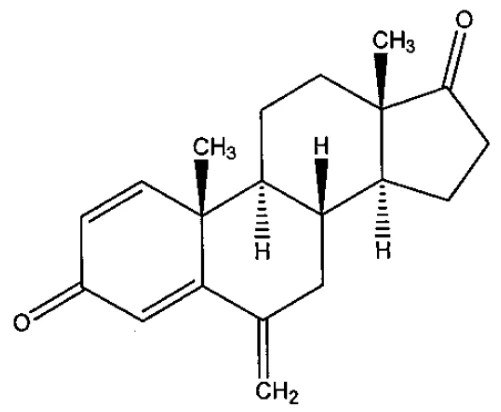
Chemical name: 6-methylenandrosta-1,4-diene-3,17-dione
Molecular formula and molecular mass: C20H24O2; 296.41 (g/mol)
Structural formula:
Physicochemical properties: Exemestane is a white to almost white crystalline powder.
It is freely soluble in methylene chloride and chloroform, soluble in acetone and ethanol, practically insoluble in water.
14 CLINICAL TRIALS
14.1 Clinical Trials by Indication
Indication 1: Adjuvant Treatment of Early Breast Cancer:
Table 6 - Summary of patient demographics for clinical trials in Adjuvant Treatment of Early Breast Cancer
| Study # | Study design | Dosage, route of administration and duration | Study subjects (n) | Mean age (Range) | Sex |
|---|---|---|---|---|---|
Intergroup Exemestane Study 031 (IES) | Randomized, double-blind, multicenter, multinational | Exemestane (25 mg/day, oral, for 3 to 2 years) versus Tamoxifen (20 or 30 mg/day, oral, for 2 to 3 years) Total duration of study: 5 years | Exemestane: 2352 Tamoxifen: 2372 Total: 4724 | Exemestane: 63 (38 – 96) Tamoxifen: 63 (31 – 90) | Female |
The Intergroup Exemestane Study 031 (IES) was a randomized, double-blind, multicenter, multinational study comparing exemestane (25 mg/day) versus tamoxifen (20 or 30 mg/day) in postmenopausal women with early breast cancer. Patients, who remained disease-free after receiving adjuvant tamoxifen therapy for 2 to 3 years, were randomized to receive 3 to 2 years of exemestane or tamoxifen to complete a total of 5 years of hormonal therapy.
The primary objective of the study was to determine whether, in terms of disease-free survival (DFS), it was more effective to switch to exemestane rather than continuing tamoxifen therapy for the remainder of five years. Disease-free survival was defined as the time from randomization to time of local or distant recurrence of breast cancer, contralateral invasive breast cancer, or death from any cause.
The secondary objectives were to compare the two regimens in terms of overall survival, time to contralateral invasive breast cancer, breast cancer free survival, distant recurrence free survival, and long-term tolerability.
The principal analysis was planned to be carried out after 716 DFS events; three interim analyses were planned to take place during the study after 179, 358 and 537 events using nominal significance levels of 0.001, 0.004, 0.019, respectively, with the principal analysis undertaken using a nominal significance level of 0.043. However, the stopping boundary was crossed after the second analysis (which is therefore considered as the primary analysis) and the study results were released on the recommendation of the Independent Data Monitoring Committee (IDMC). Following release of these results and as it was agreed upon by the IDMC and the Steering Committee, an updated analysis was carried out when 95% of patients had at least 3 years of follow-up or had died during the corresponding period.
A total of 4724 patients in the intent-to-treat (ITT) analysis were randomized to exemestane tablets 25 mg once daily (N = 2352) or to continue to receive tamoxifen once daily at the same dose received before randomization (N = 2372). Demographics and baseline characteristics are presented in Table 7.
Table 7: Demographic and Baseline Characteristics from the IES Study of Postmenopausal Women with Early Breast Cancer (ITT Population)
| Parameter | Exemestane (N=2352) | Tamoxifen (N=2372) |
|---|---|---|
Nodal status, n (%): Negative Positive 1-3 Positive nodes 4-9 Positive nodes >9 Positive nodes Not reported Unknown or missing | 1217 (51.7) 1053 (44.8) 722 (30.7) 241 (10.2) 87 (3.7) 3 (0.1) 82 (3.5) | 1230 (51.9) 1045 (44.1) 709 (29.9) 245 (10.3) 85 (3.6) 6 (0.3) 97 (4.1) |
Histologic type, n (%): Infiltrating ductal Infiltrating lobular Other Unknown or missing | 1777 (75.6) 341 (14.5) 231 (9.8) 3 (0.1) | 1830 (77.2) 321 (13.5) 214 (9.0) 9 (0.3) |
Receptor status*, n (%): ER and PgR Positive ER Positive and PgR Negative/Unknown ER Unknown and PgR Positive**/Unknown ER Negative and PgR Positive ER Negative and PgR Negative/Unknown (none positive) Missing | 1341 (57.0) 682 (29.0) 270 (11.5) 6 (0.3) 51 (2.2) 2 (0.1) | 1328 (56.0) 693 (29.2) 281 (11.9) 8 (0.3) 58 (2.4) 4 (0.2) |
Tumor Size, n (%): ≤ 0.5 cm > 0.5 – 1.0 cm > 1.0 – 2 cm > 2.0 – 5.0 cm > 5.0 cm | 57 (2.4) 315 (13.4) 1032 (43.9) 832 (35.4) 63 (2.7) | 46 (1.9) 302 (12.7) 1033 (43.5) 884 (37.3) 59 (2.5) |
| Parameter | Exemestane (N=2352) | Tamoxifen (N=2372) |
|---|---|---|
| Not reported | 53 (2.3) | 48 (2.0) |
Tumor Grade, n (%): G1 G2 G3 G4 GX Unknown/ Not Assessed / Not reported | 396 (16.8) 978 (41.6) 454 (19.3) 23 (1.0) 56 (2.4) 441 (18.8) | 393 (16.6) 1009 (42.5) 427 (18.0) 19 (0.8) 47 (2.0) 472 (19.9) |
Type of surgery, n (%): Mastectomy Breast-conserving Unknown or missing | 1231 (52.3) 1117 (47.5) 4 (0.2) | 1243 (52.4) 1123 (47.3) 6 (0.3) |
Radiotherapy to the breast, n (%): Yes No Not reported | 1524 (64.8) 824 (35.5) 4 (0.2) | 1522 (64.2) 845 (35.6) 5 (0.2) |
Prior therapy, n (%): Chemotherapy Hormone replacement therapy Bisphosponates | 774 (32.9) 565 (24.0) 43 (1.8) | 768 (32.4) 559 (23.6) 36 (1.5) |
Duration of tamoxifen therapy at randomization (months): Median (range) | 28.5 (15.8 – 52.2) | 28.4 (15.6 – 63.0) |
Tamoxifen dose, n (%): 20 mg 30 mg Not reported | 2271 (96.6) 78 (3.3) 3 (0.1) | 2290 (96.5) 75 (3.2) 7 (0.3) |
*Results for receptor status include the results of the post-randomization testing of specimens from subjects for whom receptor status was unknown at randomization.
**Only one subject in the exemestane group had unknown ER status and positive PgR status.
Efficacy results of the primary analysis:
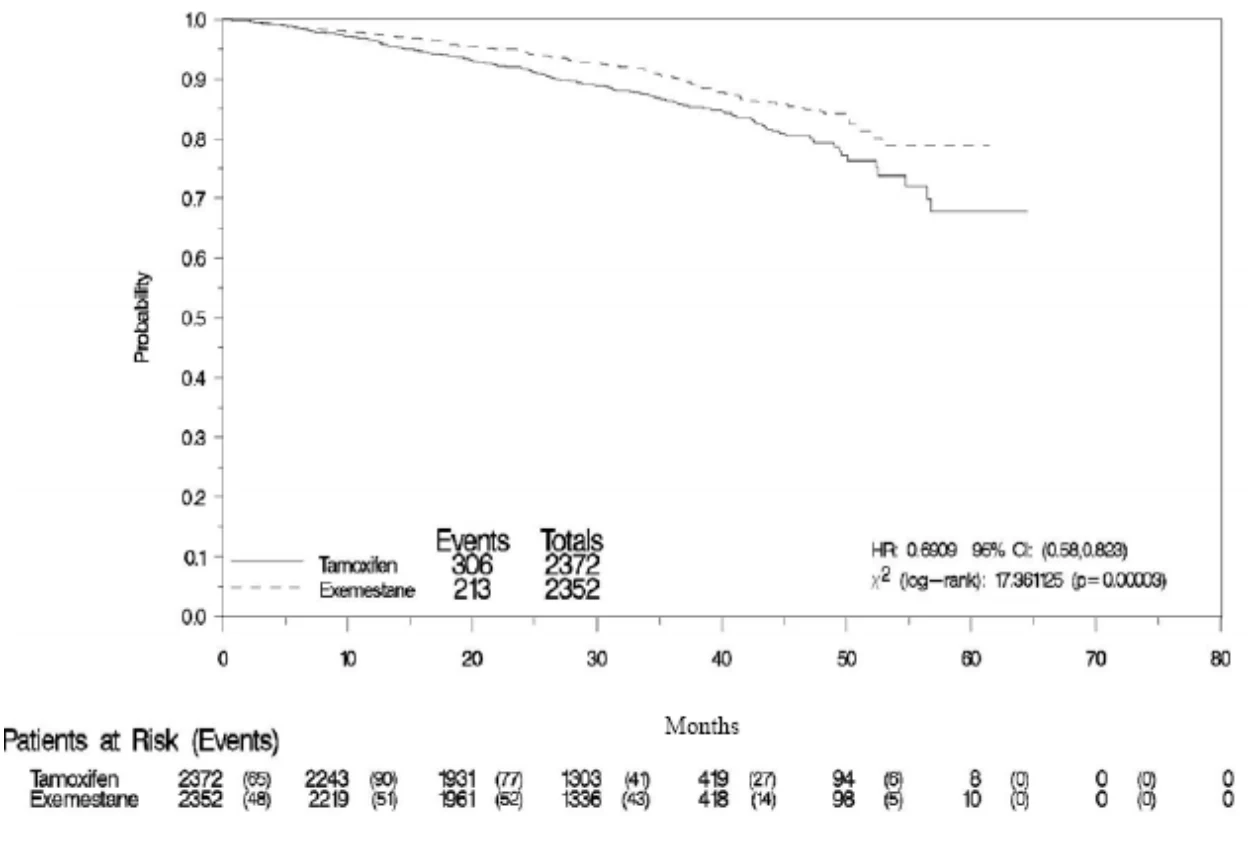
After a median duration of therapy of 27 months and with a median follow-up of 35 months, 519 events were reported, 213 in the exemestane group and 306 in the tamoxifen group (Table 8). This resulted in the conduct of the second interim analyses (analysis therefore considered as primary analysis) which crossed the stopping boundary and the study results were thus released.
Table 8: Primary Endpoint Events (ITT Population) at Primary Analysis
| Event | First Events N (%) | |
|---|---|---|
Exemestane (N=2352) | Tamoxifen (N=2372) | |
| Loco-regional recurrence | 34 (1.5) | 45 (1.9) |
| Distant recurrence | 125 (5.3) | 179 (7.6) |
| Second primary – contralateral breast cancer | 7 (0.3) | 25 (1.1) |
| Death – breast cancer | 1 (0.04) | 8 (0.3) |
| Death – other reason | 42 (1.8) | 44 (1.9) |
| Death – missing / unknown | 3 (0.1) | 5 (0.2) |
| Ipsilateral breast cancer | 1 (0.04) | 0 |
| Total number of events | 213 (9.1) | 306 (12.9) |
The results of the primary analysis are shown in Table 9. The unadjusted hazard ratio in the exemestane group as compared to the tamoxifen group was 0.69 (nominal p= 0.00003; stopping boundary p=0.004), representing a 31% reduction in the risk of relapse in the observed study period. Overall survival was not significantly different in the two groups, with 116 deaths occurring in the exemestane group and 137 in the tamoxifen group.
Table 9: Efficacy Results from the IES Study in Postmenopausal Women with Early Breast Cancer at Primary Analysis
| Endpoint | Population | Hazard Ratio (95% CI) | p-value (log-rank test) |
|---|---|---|---|
| Disease free survival | All patients ER+ patients | 0.69 (0.58 – 0.82) 0.65 (0.53 – 0.79) | 0.00003 0.00001 |
| Breast cancer free survival* | All patients ER+ patients | 0.65 (0.54 – 0.79) 0.58 (0.47 – 0.73) | <0.0001 <0.0001 |
| Time to contralateral breast cancer | All patients ER+ patients | 0.32 (0.15 – 0.72) 0.22 (0.08 – 0.57) | 0.003 0.0007 |
| Distant recurrence free survival | All patients ER+ patients | 0.70 (0.56 – 0.86) 0.65 (0.51 – 0.83) | 0.0008 0.0005 |
| Overall survival | All patients ER+ patients | 0.86 (0.67 – 1.10) 0.87 (0.66 – 1.16) | 0.23 0.34 |
* In this analysis deaths of patients who did not have a recurrence or contralateral breast cancer were censored.
Figure 1: Disease Free Survival in the IES Study of Postmenopausal Women with Early Breast Cancer (All patients) at Primary Analysis
Similar results were observed in the efficacy analyses adjusted for pre-specified prognostic factors and in most subsets of patients identified by baseline prognostic factors (i.e., ER status [positive or unknown], nodal status [negative, ≤3 positive nodes and >3 positive nodes], prior chemotherapy and prior use of hormone replacement therapy).
Updated efficacy results (52 months):
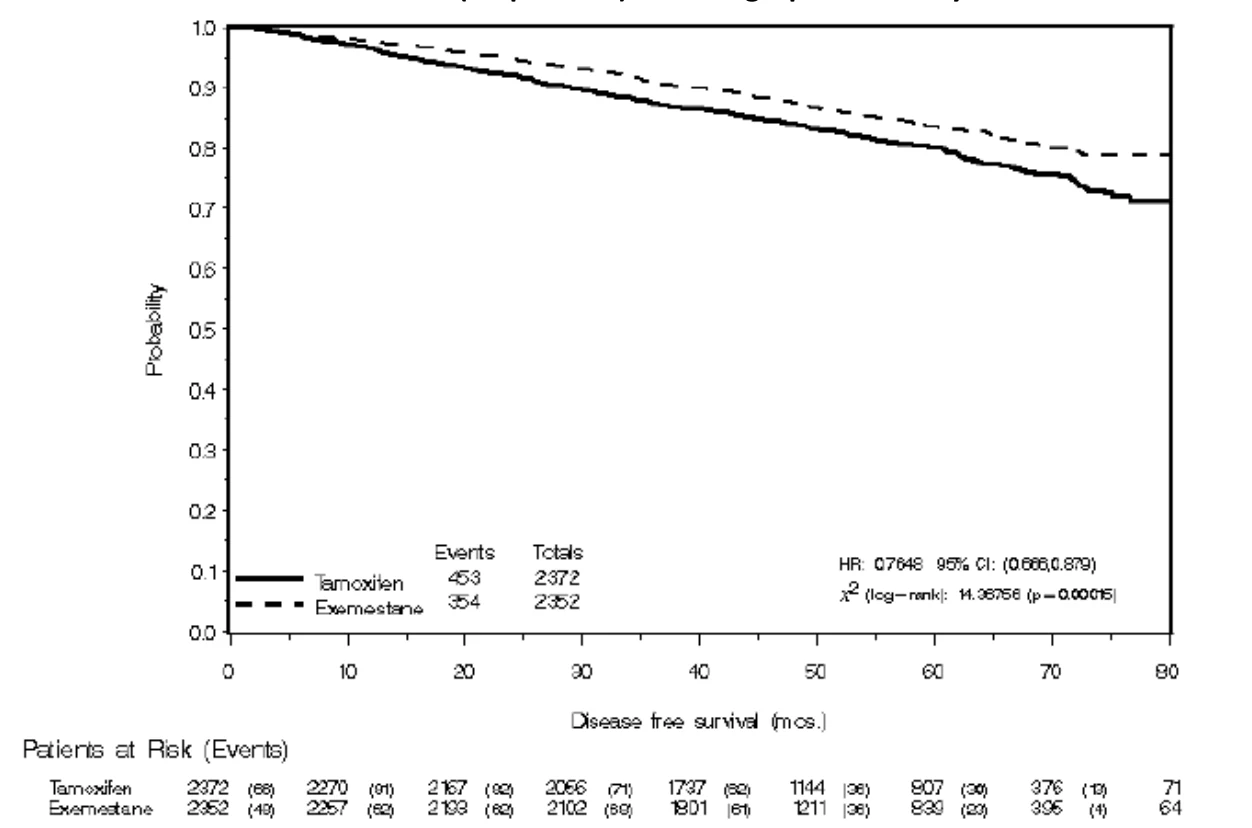
In this updated analysis, 807 events were reported, 354 in the exemestane group and 453 in the tamoxifen group, after a median duration of therapy of 30 months and with a median follow-up of about 52 months (Table 10).
Table 10: Primary Endpoint Events (ITT Population) following Updated Analysis
| Event | First Events N (%) | |
|---|---|---|
Exemestane (N=2352) | Tamoxifen (N=2372) | |
| Loco-regional recurrence | 48 (2.0) | 67 (2.8) |
| Distant recurrence | 210 (8.9) | 252 (10.6) |
| Second primary – contralateral breast cancer | 18 (0.8) | 35 (1.5) |
| Death – breast cancer | 3 (0.1) | 4 (0.2) |
| Death – other reason | 65 (2.8) | 80 (3.4) |
| Death – missing/ unknown | 9 (0.4) | 15 (0.6) |
| Ipsilateral breast cancer | 1 (0.04) | 0 |
| Total number of events | 354 (15.1) | 453 (19.1) |
The results of the updated analysis (52-month median follow-up) for the ITT population and estrogen receptor positive patients are shown in Table 11.
Table 11: Efficacy Results from the IES Study in Postmenopausal Women with Early Breast Cancer following Updated Analysis
| Endpoint | Population | Hazard Ratio (95% CIs) | p-value (Log-rank test) |
|---|---|---|---|
| Disease free survival | All patients ER+ patients | 0.76 (0.67-0.88) 0.75 (0.65 – 0.88) | 0.0002 0.0003 |
| Breast cancer free survival* | All patients ER+ patients | 0.76 (0.65-0.89) 0.73 (0.62 – 0.87) | 0.0004 0.0004 |
| Time to contralateral breast cancer | All patients ER+ patients | 0.57 (0.33 – 0.99) 0.54 (0.30 – 0.95) | 0.04 0.03 |
| Distant recurrence free survival | All patients ER+ patients | 0.83 (0.70 – 0.98) 0.78 (0.65 – 0.95) | 0.03 0.01 |
| Overall survival | All patients ER+ patients | 0.85 (0.71 – 1.02) 0.84 (0.68 – 1.02) | 0.07 0.08 |
* In this analysis deaths of patients who did not have a recurrence or contralateral breast cancer were censored.
In the whole study population exemestane reduced the risk of breast cancer recurrence by 24% compared with tamoxifen (hazard ratio 0.76, p =0.0002) (Figure 2).
Figure 2: Disease Free Survival in the IES Study of Postmenopausal Women with Early Breast
Cancer (All patients) following Updated Analysis
The beneficial effect of exemestane over tamoxifen with respect to DFS was apparent regardless of nodal status or prior chemotherapy. Overall survival was not significantly different between the two groups, although a trend for improved overall survival was observed for exemestane (222 deaths) compared to tamoxifen (262 deaths) with a hazard ratio 0.85 (log-rank test: p=0.07), suggesting a 15% reduction in the risk of death in favor of exemestane.
Similar results were observed in the DFS and overall survival analyses adjusted for pre-specified prognostic factors and in most subsets of patients identified by baseline prognostic factors (i.e. ER status [positive or unknown], nodal status [negative, ≤3 positive nodes and >3 positive nodes], prior chemotherapy and prior use of hormone replacement therapy).
Updated analysis, performed after a median follow-up of 119 months, showed no significant difference in overall survival between the two groups, with 467 deaths (19.9%) occurring in the exemestane group and 510 deaths (21.5%) in the tamoxifen group. In this updated analysis of the whole study population, exemestane reduced the risk of breast cancer recurrence by 14% compared with tamoxifen (hazard ratio 0.86; p=0.004).
Indication 2: Treatment of Advanced Breast Cancer
- a) Treatment After Antiestrogen Therapy:
Table 12 - Summary of patient demographics for clinical trials in Treatment of Advanced Breast Cancer After Antiestrogen Therapy
| Study # | Study design | Dosage, route of administration and duration | Study subjects (n) | Mean age (Range) | Sex |
|---|---|---|---|---|---|
| --- | Phase III, well-controlled, double-blind, multicenter, multinational | Exemestane (25 mg/day, oral) or Megestrol acetate (40 mg/ four times per day, oral) | Exemestane: 366 Megestrol acetate: 403 Total: 769 | 65 (30 to 99) | Female |
| --- | Phase II uncontrolled multicenter (two studies) | Exemestane (25 mg/day, oral) | 265 | 65 (30 to 99) | Female |
Exemestane Tablets 25 mg were evaluated in a Phase III, well-controlled, double-blind, multicenter, multinational, study and in two Phase II uncontrolled multicenter studies of postmenopausal women with advanced breast cancer who had disease progression after hormonal treatment with antiestrogens (primarily tamoxifen) for metastatic disease or as adjuvant therapy. In all studies, patients were required to have measurable metastases or lytic bone disease due to breast cancer, reasonable performance status (ECOG score = 0, 1, or 2), and near-normal organ function. Patients may also have received prior cytotoxic therapy, either for adjuvant or metastatic disease.
In all studies, the primary efficacy variable was objective response rate (complete response [CR] and partial response [PR]). Response rates were assessed based on World Health Organization (WHO) criteria. Objective responses in the Phase III study were submitted to an external blinded review.
Overall success rate (CR + PR + prolonged stable disease [≥ 24 weeks]), duration of response, duration of overall success, duration of prolonged stable disease, time to tumor progression, and time to treatment failure were also assessed. Subjective measurements of performance status and tumor-related signs and symptoms were assessed. The European Organization on
Research and Treatment of Cancer Quality of Life Questionnaire (EORTC QLQ-C30) instrument was also utilized. In the Phase III study, survival was a secondary endpoint.
In the Phase III study, 769 patients were randomized to receive exemestane 25 mg once daily (N = 366) or megestrol acetate 40 mg four times daily (N = 403). In the two Phase II studies, 265 patients received exemestane 25 mg once daily. Exemestane was administered soon after a light breakfast in all studies. Demographics and other baseline characteristics were similar for patients across studies. The median age of patients across studies was 65 years (range 30 to 99 years) and the majority of patients had disease-related functional impairment as evidenced by a performance status of 1 or 2. Approximately 70% of all patients were estrogen-receptor (ER) and/or progesterone-receptor (PgR) positive. The receptor status was unknown for about 25% of patients; about 20% of patients had previously responded to hormonal therapy. About 70% of all patients had measurable disease. The predominant site of disease was bone in about 30% of patients and soft tissue in about 14% of patients. Over half of all patients had visceral metastases. Demographic and baseline characteristics of patients receiving megestrol acetate in the Phase III study were similar to those of patients receiving exemestane.
Objective response rates ranging from 15% to 28% were achieved with exemestane 25 mg once daily in all three studies. The efficacy results from the Phase III study are shown in Table 13. The objective response rates observed in the two treatment arms were not statistically different (95% C.I, - 7.5 to + 2.3).
Table 13: Efficacy Results from a Phase III Study of Postmenopausal Women with Advanced Breast Cancer Whose Disease Had Progressed after Antiestrogen Therapy
| Response Characteristics | Exemestane (N=366) | Megestrol acetate (N=403) | p-value |
|---|---|---|---|
Objective Response Rate = CR + PR (%) 95% confidence interval Overall Success = CR + PR + SD ≥ 24 Weeks (%) 95% confidence interval | 15.0 (11.5 – 19.1) 37.4 (32.3 – 42.6) | 12.4 (9.4 – 16.0) 34.6 (29.9 – 39.6) | |
CR (%) PR (%) SD (%) SD ≥ 24 Weeks (%) PD (%) Other (%)* | 2.2 12.8 40.7 21.3 35.0 9.3 | 1.2 11.2 41.9 21.1 36.2 9.4 | |
Median Duration of Response (weeks) Median Duration of Overall Success (weeks) Median Duration of SD ≥ 24 Weeks (weeks) Median TTP (weeks) Median TTF (weeks) | 76.1 60.1 48.0 20.3 16.3 | 71.0 49.1 46.6 16.6 15.7 | 0.025 0.037 0.042 |
| Response Characteristics | Exemestane (N=366) | Megestrol acetate (N=403) | p-value | ||
|---|---|---|---|---|---|
Median Overall Survival (weeks) 75% Survival (weeks)† 95% Confidence Interval | Not reached 74.6 (59.1 – 91.0) | 123.4 55.0 (46.1 – 70.3) | 0.039 | ||
* Includes patients who were not treated or not evaluable † 25th percentile Abbreviations: CR = complete response, PD = progressive disease, PR = partial response, SD = stable disease (no change), TTP = time to tumor progression, TTF = time to treatment failure | |||||
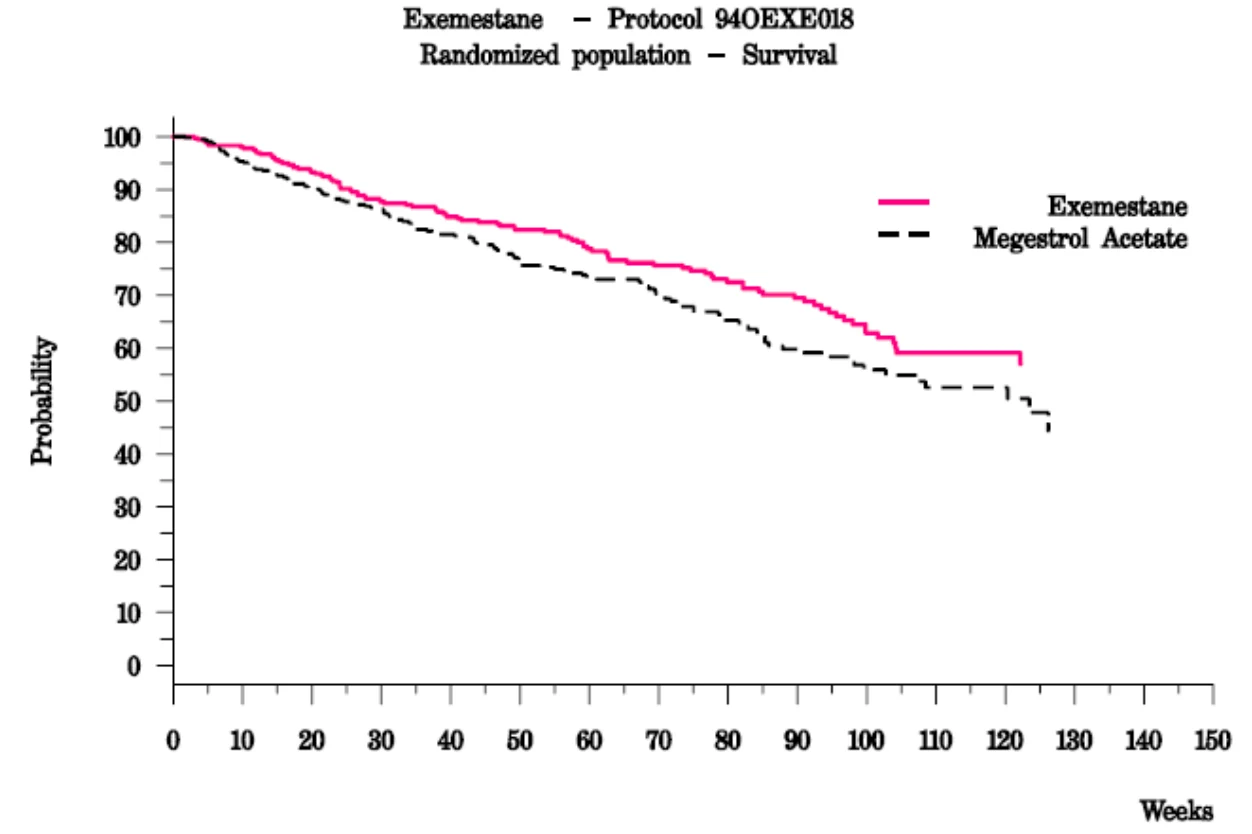
Patients treated with exemestane had significantly longer duration of overall success, (p=0.025), time to tumor progression (p=0.037), and time to treatment failure (p=0.042) than those treated with megestrol acetate. Patient treated with exemestane also had a significantly longer duration of overall survival (p = 0.039). Because median survival was not yet reached for the patients treated with exemestane, the 75% survival (25th percentile) was calculated. The Kaplan-Meier curves for duration of overall success, time to tumor progression, and overall survival in the Phase III study are shown in Figures 3-5. The results in Figure 5 indicate an early separation of the survival curves resulting in a 19.4-week difference favoring exemestane (74.6 weeks versus 55.0 weeks).
Figure 3: Duration of Overall Success, (Complete plus Partial Responses plus Stable Disease ≥24 Weeks in a Phase III Study of Postmenopausal Women with Advanced Breast
Cancer Whose Disease Had Progressed After Antiestrogen Therapy
Median Weeks (95% CI) | No. of patients with PD/No. patients | Log-rank | |
|---|---|---|---|
| Exemestane | 60.1 (50.7 – 72.0) | 74/133 | p = 0.025 |
| Megestrol Acetate | 49.1 (45.4 – 61.0) | 78/135 | |
| PD: Progressive disease |
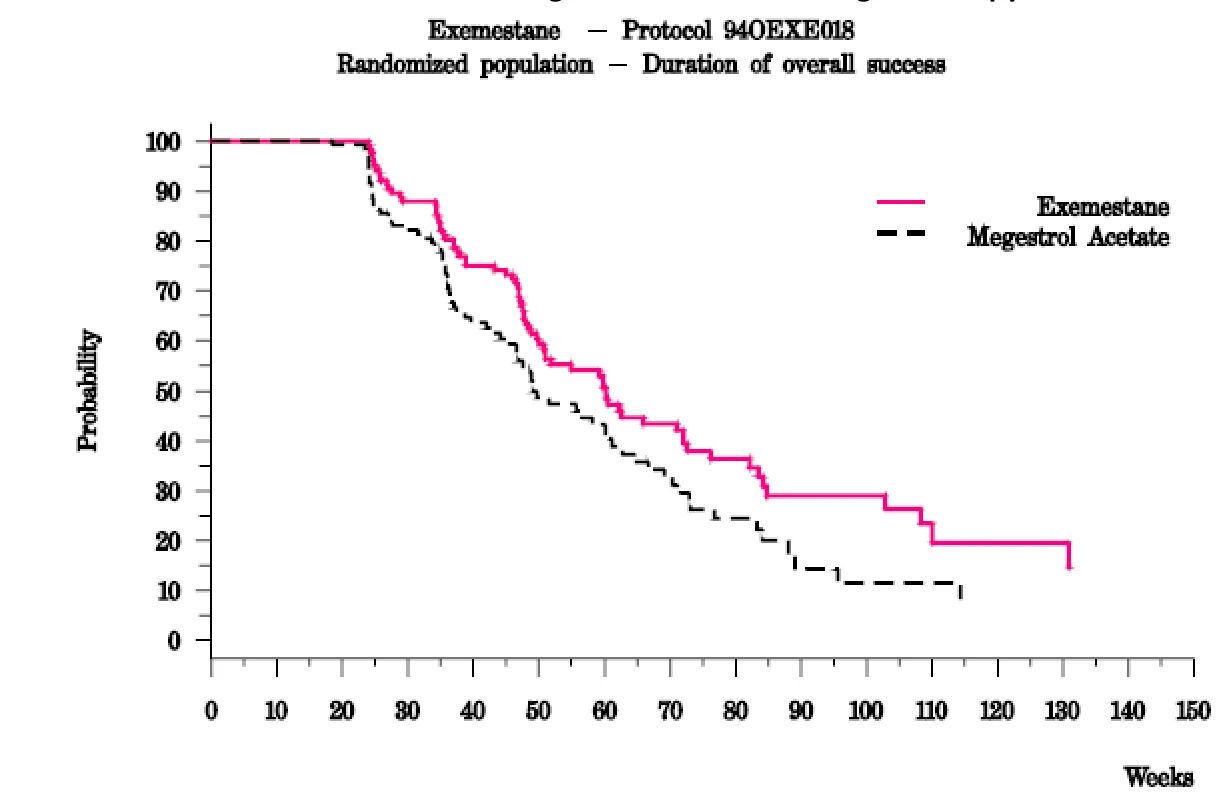
Figure 4: Time to Tumor Progression in a Phase III Study of Postmenopausal Women with Advanced Breast Cancer Whose Disease Had Progressed After Antiestrogen Therapy
Median Weeks (95% CI) | No. of patients with PD/No. patients | Log-rank | |
|---|---|---|---|
| Exemestane | 20.3 (16.1 – 24.7) | 270/366 | p = 0.037 |
| Megestrol Acetate | 16.6 (15.6 – 22.9) | 305/403 | |
| PD: Progressive disease |
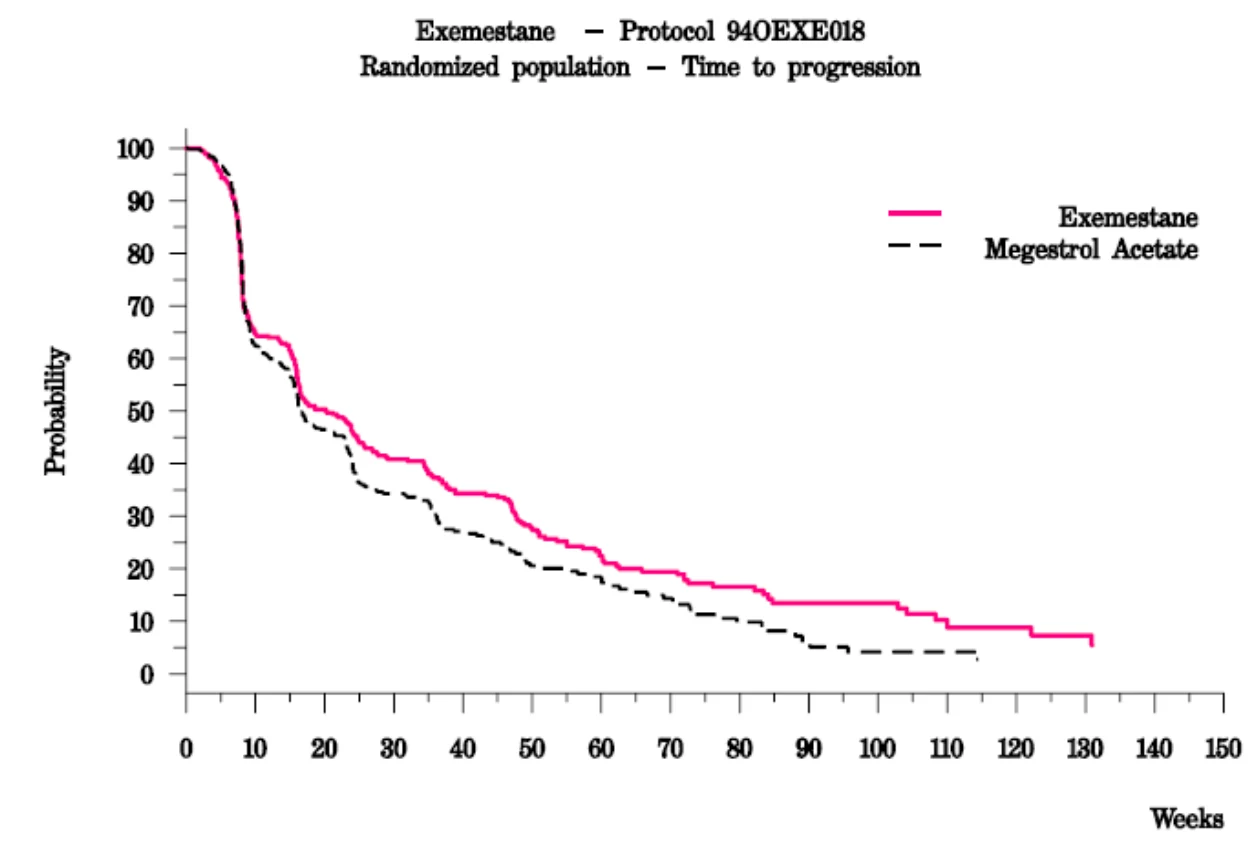
Figure 5: Overall Survival in a Phase III Study of Postmenopausal Women With Advanced Breast Cancer Whose Disease Had Progressed After Antiestrogen Therapy
Median Weeks (95% CI) | No. Deaths/No. Patients | Log-rank | |||
|---|---|---|---|---|---|
| Exemestane | nr (122.1 – nr) | 100/366 | p = 0.039 | ||
| Megestrol Acetate | 123.4 (99.6 – nr) | 130/403 | |||
| nr: Not reached at 123 weeks | |||||
In the Phase III study, three prognostic factors (prior antiestrogen treatment, prior chemotherapy, and site of metastasis), as well as the effect of protocol treatment, were examined as predictors of outcome in a protocol-defined Cox-regression analysis. The results indicate that treatment with exemestane was a favorable, predictive factor for time to tumor progression (odds ratio = 0.84; p = 0.035), time to treatment failure (odds ratio = 0.82; p=0.023), and overall survival (odds ratio = 0.77; p=0.046). These results indicate an approximate 20% exemestane-related reduction in risk for tumor progression and death, independent of response to prior antiestrogen treatment, extent of prior chemotherapy, and extent of visceral or other metastatic disease.
Tumor-related pain and other tumor-related signs and symptoms were prospectively measured and analyzed at baseline and during the study. A greater proportion of patients who responded to treatment with exemestane showed an improvement in tumor-related pain compared with those responding to megestrol acetate (51.4% versus 46.2%), and a greater proportion of all patients treated with exemestane showed an improvement in tumor-related signs and symptoms (12.1% versus 7.5%).
The European Organization on Research and Treatment of Cancer Quality of Life Questionnaire (EORTC QLQ-C30) instrument was also utilized. The 30 questions in the EORTC QLQ-C30 instrument were converted into 15 subscales. Patients receiving exemestane reported significantly better results than those receiving megestrol acetate for global health status (p<0.001), two of five functional scales (physical, role; p<0.001), and three of nine symptom scales (fatigue, dyspnea, and constipation; p=0.001). Patients receiving megestrol acetate noted significantly better results than patients receiving exemestane for one functional scale (emotional; p=0.01) and one symptom scale (appetite loss; p<0.007). An improvement in pain on both symptom scales was observed for both treatments, but was significantly improved for megestrol acetate (p<0.007). No significant differences were noted for the other subscales.
- b) Treatment in Patients Whose Disease Has Progressed After Multiple Hormonal Therapies:
Table 14 - Summary of patient demographics for clinical trials in Treatment of Advanced Breast Cancer in Patients Whose Disease Has Progressed After Multiple Hormonal Therapies
| Study # | Study design | Dosage, route of administration and duration | Study subjects (n) | Mean age (Range) | Sex |
|---|---|---|---|---|---|
| --- | Phase II (3 studies) | Exemestane (25 mg/day, oral) | 419 | 65 (38 to 88) | Female |
Three Phase II studies support the use of exemestane 25 mg once daily in postmenopausal patients with advanced breast cancer that has progressed after multiple hormonal therapies. A total of 419 women participated in these studies; previous treatment included antiestrogens, megestrol acetate, or reversible nonsteroidal aromatase inhibitors. The median age was 65 years (range 38 to 88 years), and the majority of patients had a performance status of 1 or 2. The majority (78.8%) of patients was ER and/or PgR positive. The receptor status was unknown in 20.5% of patients or negative in 0.7% of patients. Approximately 65% of the patients had measurable disease. The predominant site of disease was bone in 35.8% of patients and soft tissue in 11.5% of patients. Over half of the patients had visceral metastases.
Exemestane 25 mg once daily induced objective response rates in 9% of patients and long-term disease stabilization of ≥24 weeks in another 17.5% of patients. No benefit was seen in escalating the dose of exemestane to 100 mg in patients who progressed while receiving exemestane 25 mg once daily.
Subjective responses of tumor-related pain, other tumor-related signs and symptoms, and the EORTC-QLQ C30 were prospectively measured and analyzed. There was an improvement compared with baseline in the tumor-related pain score in 28.6% of responding patients and in 22.9% of patients experiencing a long-lasting stable disease (≥24 weeks) and an improvement compared with baseline in the other tumor-related signs and symptoms in 30.6% of patients with an objective response and in 9.6% of patients with a long-term stable disease. The EORTC QLQ-C30 scores after treatment were not significantly different from baseline.
14.2 Comparative Bioavailability Studies
A single-dose, crossover, 2-treatment, comparative bioavailability study of ACT EXEMESTANE tablets (25 mg dose as 1x 25 mg) and Aromasin® tablets (25 mg dose as 1 x 25 mg) was performed on healthy postmenopausal female subjects under fasting conditions.
A summary of the bioavailability data from 35 subjects included in the statistical analysis is presented in the table below.
Exemestane (1 x 25 mg) Geometric Mean Arithmetic Mean (CV %) | ||||
|---|---|---|---|---|
| Parameter | Test Product1 | Reference Product 2 | % Ratio of Geometric Means | 90% Confidence Interval |
AUCT (ng·h/mL) | 51008.27 54549.60 (35.9) | 53060.21 56997.04 (36.5) | 96.1 | 91.3 - 101.3 |
AUC∞ (ng·h/mL) | 58772.12 63505.62 (38.6) | 59439.03 64293.86 (37.7) | 98.9 | 92.4 - 105.9 |
Cmax (ng/mL) | 14794.47 16437.09 (43.7) | 18471.11 20515.07 (44.3) | 80.1 | 72.4 - 88.6 |
Tmax3 (h) | 0.75 (0.50 – 5.00) | 0.75 (0.50 – 3.50) | ||
T½4 (h) | 17.57 (66.8) | 16.43 (62.0) | ||
1 Exemestane 25 mg Tablets (MAH: Teva Canada Limited, Canada)
2 Aromasin™ (Exemestane 25 mg) (MAH: Pfizer Canada Ltd.) was purchased in Canada
3 Expressed as the median (range) only
4 Expressed as the arithmetic mean (CV%) only
15 MICROBIOLOGY
No microbiological information is required for this drug product.
16 NON-CLINICAL TOXICOLOGY
General Toxicology:
The acute toxicity of exemestane was characterized in single oral dose studies in mice, rats and dogs. The oral LD50 of exemestane was greater than 3000 mg/kg in mice and above 5000 mg/kg in rats. The LD50 was approximately 400 mg/kg in mice when given by the i.p. route. In male rats, the i.p. LD50 was 488 mg/kg and in females, 404 mg/kg. The clinical signs in these acute studies in the rodent included sedation, dyspnea, staggering gait, prostration and convulsions.
Exemestane had no noteworthy effects at a single oral dose of 1000 mg/kg in dogs; however, at higher doses it caused death in females which was preceded by congestion and erosions in the gastrointestinal tract. Vomiting, ataxia, muscular tremors, sedation and convulsions were also seen at these higher doses. These observations correlate well with the findings recorded in general pharmacology tests, in which signs of CNS stimulation were observed in rats and mice while convulsions occurred in mice from the dose of 800 mg/kg.
The long-term toxicity of exemestane was assessed in repeat dose studies in the mice, rats, and dogs. A 13-week toxicity study was performed in mice administering exemestane at the doses of 30, 100, 350 and 1250 mg/kg/day by diet as dose-range finding for a future carcinogenicity test. No mortality or clinical signs were seen at any dose. The organs most affected were the liver, kidneys and reproductive organs. The main findings were: in the liver, enlargement and hypertrophy of the hepatocytes; in the kidneys, tubulo-epithelial hyperplasia; in the reproductive organs, reduction in size of seminal vesicles and prostate, absence of corpora lutea and presence of atretic follicles with a corresponding minimal stromal hyperplasia in the ovaries and stromal hypoplasia in the uterus.
A 4-week toxicity study was performed in rats at the doses of 30, 150, 750 and 3750 mg/kg/day. At the highest dose there was 100% mortality within the first two weeks in both sexes. At the dose of 750 mg/kg/day only minor changes in laboratory parameters and at necropsy in some organ weights (increase in liver and decrease in adrenal and prostatic weights) were observed. For these reasons an additional study was performed in rats administering exemestane for 4 weeks at the doses of 1000 and 2000 mg/kg/day. There was a clear dose-related effect as far as mortality, involvement of the liver, kidney, lymphoid tissues and reproductive organs are concerned. The major findings were: in the liver, increase in hepatic enzymes and enlargement at necropsy; in the kidneys, necrosis in the tubular epithelium of the cortex; in the reproductive organs, reduced spermatogenesis, reduced secretion in the prostate and seminal vesicles, follicular cysts in the ovaries and mucin secreting epithelium in the vagina. Exemestane was administered orally at the doses of 30, 180 and 1080 mg/kg/day for 26 weeks and at the doses of 20, 50, 125 and 315 mg/kg/day for 52 weeks. The main target organ was the liver. Clear hepatic changes, mainly consisting of vacuolation, hypertrophy and, at the dose of 1080 mg/kg/day, focal necrosis of hepatocytes were noted in the six-month study. After one-year administration there were signs of hepatic involvement, namely changes in laboratory parameters including coagulation time, proteins, alanino aminotransferase and alkaline phosphatase at 315 mg/kg/day and liver enlargement starting from 125 mg/kg/day, without any histological changes. The increase in alkaline phosphatase was attributed to liver lesions. Another target organ was the kidney. A chronic tubular nephropathy occurred in rats at the dose of 315 mg/kg/day in the 52-week toxicity study. This focal change, already observed in the 4-week study proved to be reversible. In the 26-week study the vagina at all dose levels and uterine cervix at the high dose showed mucoid hyperplasia of the epithelium.
Exemestane was administered for 4 weeks in dogs at the doses of 30, 90, 270 and 810 mg/kg/day. Some drug-related findings were observed in all dose groups. No toxic findings were found in dogs at any dose in this study. Exemestane was administered to dogs of both sexes at the doses of 30, 150 and 750 mg/kg/day for 26 weeks and only to female dogs at the doses of 30, 120 and 480 mg/kg/day for one year (this is justified given the proposed indication). The compound induced signs of CNS stimulation including sporadic tremors and convulsions in some females during the first days of treatment at 750 mg/kg/day in the 26-week toxicity study. The main target organ was the liver, as in rodents. Functional changes occurred after six months and after one-year treatment they were associated with histological findings of biliary proliferation and epithelial hyperplasia of the gall bladder. All these changes regressed over the recovery period of six weeks. Hyperplasia of the interstitial cells of the testes, cysts and prominent secondary follicles in the ovary were found in the 26-week study. There was also a reversible inhibition of the normal estrous cycles. The no-toxic-effect level after one-year treatment in dogs was 30 mg/kg/day. At the oral dose of 30 mg/kg/day, the NOEL after one year treatment gave a safety margin of 6 when compared to that obtained in humans at the standard dose of 25 mg/day.
Carcinogenicity:
In a two-year carcinogenicity study in female rats, no treatment-related tumors were observed. In male rats the study was terminated on Week 92, because of early death by chronic nephropathy. There was no evidence of carcinogenic activity in male rats. At the highest dose evaluated in these studies, 315 mg/kg/day, plasma AUC0-24hr levels in male and female rats were 34 and 56 times higher, respectively, than those measured in post-menopausal volunteers at the recommended dose.
In a two-year carcinogenicity study in mice, an increase in the incidence of hepatic neoplasms in both genders was observed at the intermediate and high doses (150 and 450 mg/kg/day). This finding is considered to be related to the induction of hepatic microsomal enzymes, an effect observed in mice but not in clinical studies. An increase in the incidence of renal tubular adenomas was observed in male mice at the high dose of 450 mg/kg/day. This change was considered to be species-and gender-specific and occurred at a dose that represents 63-fold greater exposure than occurs at the human therapeutic dose (see 7 WARNINGS AND PRECAUTIONS).
Genotoxicity:
Exemestane, was not mutagenic in tests with Salmonella typhimurium, Escherichia coli or the V79 hamster cell line. It was also negative in the DNA repair test using rat hepatocyte primary cultures and in two in vivo tests, the micronucleus test and the chromosomal aberration test in mouse bone marrow cells. Exemestane was found to be positive only in the in vitro chromosome aberration test in human lymphocytes without metabolic activation: it was, however, negative in the same test after activation.
Reproductive and Developmental Toxicology:
A fertility study was performed in female rats at the doses of 4, 20, and 100 mg/kg/day. The NOEL for reproductive performance and for the development of the offspring was 4 mg/kg/day. Higher doses induced reduced maternal body weight, delivery complications, prolonged gestation and deaths. At the two highest doses there was a reduction in fetal body weight, an increased incidence of retarded fetal ossification and a reduction in live litter size.
Exemestane was administered to rats at the doses of 10, 50, 250 and 810 mg/kg/day from Day 6 to Day 17 of pregnancy. The compound was not teratogenic up to the dose of 810 mg/kg/day. Among the rats that were allowed to litter there was, at all dose levels, an increased duration of gestation with consequent delivery complications in some animals and maternal death. This effect on gestation and delivery was expected in view of the pharmacological activity of the compound. A reduction in the number of live pups and live litter size was observed at doses of 50 mg/kg/day and above. Sex distribution, sex maturation and reproductive performance of offspring were not affected.
Exemestane was not teratogenic up to the dose of 270 mg/kg/day in rabbits. In terms of maternal toxicity in rabbits, the NOEL was 30 mg/kg/day because at higher doses there was a reduction in maternal body weight and food consumption. At 270 mg/kg/day there was a marked reduction in fetal body weight and in the number of live fetuses. The NOEL for embryofetal development was 90 mg/kg/day.
17 SUPPORTING PRODUCT MONOGRAPHS
- 1. Aromasin® (Tablets, 25 mg) submission control number 263093, Product Monograph, Pfizer Canada ULC. (NOV 25, 2022).