


Product Monograph - Act Sertraline
SUMMARY PRODUCT INFORMATION
| Route of Administration | Dosage Form / Strength | Clinically Relevant Nonmedicinal Ingredients |
| Oral | Capsules 25 mg, 50 mg and 100 mg | Microcrystalline cellulose, dibasic calcium phosphate anhydrous, sodium starch glycolate and magnesium stearate. Capsule shells contain gelatin, titanium dioxide and dye D & C Yellow #10. 25 and 50 mg empty capsule shells also contain dye FD & C Yellow #6, and 100 mg empty capsule shells also contain FD & C Red #40. |
INDICATIONS AND CLINICAL USE
ACT SERTRALINE (sertraline hydrochloride) is indicated for:
- symptomatic relief of depressive illness
- symptomatic relief of panic disorder with or without agoraphobia
- symptomatic relief of obsessive-compulsive disorder (OCD)
Depression: the antidepressant action of sertraline hydrochloride in hospitalized depressed patients has not been adequately studied.
A placebo-controlled European study carried out over 44 weeks, in patients who were responders to sertraline has indicated that sertraline hydrochloride may be useful in continuation treatment, suppressing reemergence of depressive symptoms. However, because of methodological limitations, these findings on continuation treatment have to be considered tentative at this time.
Panic Disorder: The efficacy of sertraline hydrochloride was established in 10-week and 12-week controlled trials of patients with panic disorder as defined according to DSM-III-R criteria.
The effectiveness of sertraline in long-term use for the symptomatic relief of panic disorder (i.e., for more than 12 weeks) has not been systematically evaluated in placebo-controlled trials. Therefore, the physician who elects to use ACT SERTRALINE for extended periods should periodically reevaluate the long-term usefulness of the drug for the individual patient.
Obsessive-compulsive disorder: In order for ACT SERTRALINE to be effective in the symptomatic relief of OCD, the obsessions or compulsions must be experienced as intrusive, markedly distressing, time-consuming, or significantly interfering with the person’s social or occupational functioning.
The effectiveness of sertraline hydrochloride in long-term use for the symptomatic relief of OCD (i.e., for more than 12 weeks) has not been systematically evaluated in placebo-controlled trials. Therefore, the physician who elects to use ACT SERTRALINE for extended periods should periodically reevaluate the long-term usefulness of the drug for the individual patient.
Geriatrics (> 65 years of age):
No data is available
Pediatrics (< 18 years of age):
The safety and effectiveness of sertraline hydrochloride in children below the age of 18, has not been established. ACT SERTRALINE is not indicated for use in children below the age of 18 (see SERIOUS WARNINGS AND PRECAUTIONS: POTENTIAL ASSOCIATION WITH BEHAVIORAL AND EMOTIONAL CHANGES, INCLUDING SELF-HARM).
CONTRAINDICATIONS
- Patients who are hypersensitive to this drug or to any ingredient in the formulation or component of the container. For a complete listing, see the Dosage Forms, Composition and Packaging section of the product monograph.
Monoamine Oxidase Inhibitors:
Cases of serious, sometimes fatal, reactions have been reported in patients receiving sertraline hydrochloride in combination with a monoamine oxidase inhibitor (MAOI), including the selective MAOI, selegiline and the reversible MAOI (reversible inhibitor of monoamine oxidase - RIMA), moclobemide and linezolid, an antibiotic which is a reversible nonselective MAOI and methylthioninium chloride (methylene blue), which is a MAOI. Some cases presented with features resembling the serotonin syndrome. Similar cases have been reported with other antidepressants during combined treatment with a MAOI and in patients who have recently discontinued an antidepressant and have been started on an MAOI. Symptoms of a drug interaction between an SSRI and an MAOI include: hyperthermia, rigidity, myoclonus, autonomic instability with possible rapid fluctuations of vital signs, mental status changes that include confusion, irritability, and extreme agitation progression to delirium and coma. Therefore ACT SERTRALINE should not be used in combination with a monoamine oxidase inhibitor
(MAOI), or within 14 days of discontinuing treatment with an MAOI. Similarly, at least 14 days should elapse after discontinuing ACT SERTRALINE treatment before starting an MAOI.
Pimozide:
The concomitant use of ACT SERTRALINE and pimozide is contraindicated as sertraline hydrochloride has been shown to increase plasma pimozide levels. Elevation of pimozide blood concentration may result in QT interval prolongation and severe arrythmias including Torsade de Pointes (see WARNINGS AND PRECAUTIONS and CONSUMER INFORMATION sections).
WARNINGS AND PRECAUTIONS
General
Families and caregivers of patients being treated with sertraline hydrochloride should be alerted about the need to monitor patients for the emergence of agitation, anxiety, panic
Serious Warnings and Precautions
POTENTIAL ASSOCIATION WITH BEHAVIOURAL AND EMOTIONAL
CHANGES, INCLUDING SELF-HARM.
Pediatrics: Placebo-Controlled Clinical Trial Data:
Recent analyses of placebo-controlled clinical trial safety databases from SSRI and other newer antidepressants suggest that use of these drugs in patients under the age of 18 may be associated with behavioural and emotional changes, including an increased risk of suicidal ideation and behaviour over that of placebo.
The small denominators in the clinical trial database, as well as the variability in placebo
rates, preclude reliable conclusions about the relative safety profiles among these drugs.
Adults and Pediatrics: Additional data:
There are clinical trial and post-marketing reports with SSRIs and other newer antidepressants, in both pediatrics and adults, of severe agitation-type adverse events coupled with self-harm or harm to others. The agitation-type adverse events include: akathisia, agitation, disinhibition, emotional liability, hostility, aggression, depersonalization. In some cases, the events occurred within several weeks of starting treatment.
Rigorous clinical monitoring for suicidal ideation or other indicators of potential for
suicidal behaviour is advised in patients of all ages. This includes monitoring for agitation-type emotional and behavioural changes.
An FDA meta-analysis of placebo-controlled clinical trials of antidepressant drugs in
adult patients ages 18 to 24 years with psychiatric disorders showed an increased risk of suicidal behaviour with antidepressants compared to placebo.
- Discontinuation symptoms (see General section below)
Drug interaction with monoamine oxidase inhibitors (MAOI), including the selective MAOI,
selegiline and the reversible MAOI (reversible inhibitor of monoamine oxidase- RIMA), moclobemide (see Drug Interactions section).
attacks, hostility, irritability, hypomania or mania, unusual changes in behaviour, and other symptoms, as well as the emergence of suicidality particularly within several weeks of starting treatment or changing the dose. Such symptoms should be reported immediately to healthcare providers. Such monitoring should include daily observation by families and caregivers.
Discontinuation Symptoms:
Patients currently taking sertraline hydrochloride should NOT be discontinued abruptly, due to risk of discontinuation symptoms. At the time that a medical decision is made to discontinue an SSRI or other newer antidepressant drug, a gradual reduction in the dose rather than an abrupt cessation is recommended.
When discontinuing treatment with ACT SERTRALINE, patients should be monitored for symptoms which may be associated with discontinuation (e.g., dizziness, abnormal dreams, sensory disturbances (including paresthesias and electric shock sensations), agitation, anxiety, fatigue, confusion, headache, tremor, nausea, vomiting and sweating or other symptoms which may be of clinical significance (see ADVERSE REACTIONS). A gradual reduction in the dosage over several weeks, rather than abrupt cessation is recommended whenever possible. If intolerable symptoms occur following a decrease in the dose or upon discontinuation of treatment, dose titration should be managed on the basis of the patient’s clinical response. (See ADVERSE REACTIONS and DOSAGE AND ADMINISTRATION).
Monoamine Oxidase Inhibitors: See CONTRAINDICATIONS
Bone Fracture Risk: Epidemiological studies show an increased risk of bone fractures following exposure to some antidepressants, including SSRIs/SNRIs. The risks appear to be greater at the initial stages of treatment, but significant increased risks were also observed at later stages of treatment. The possibility of fracture should be considered in the care of patients treated with sertraline hydrochloride. Elderly patients and patients with important risk factors for bone fractures should be advised of possible adverse events which increase the risk of falls, such as dizziness and orthostatic hypotension, especially at the early stages of treatment but also soon after withdrawal. Preliminary data from observational studies show association of SSRIs/SNRIs and low bone mineral density in older men and women. Until further information becomes available, a possible effect on bone mineral density with long term treatment with SSRIs/SNRIs, including sertraline hydrochloride, cannot be excluded, and may be a potential concern for patients with osteoporosis or major risk factors for bone fractures.
Serotonin Syndrome/Neuroleptic Malignant Syndrome: On rare occasions serotonin syndrome or neuroleptic malignant syndrome-like events have occurred in association with treatment of sertraline hydrochloride, particularly when given in combination with other serotonergic and/or neuroleptic/antipsychotic drugs and other dopamine antagonists. As these syndromes may result in potentially life-threatening conditions, treatment with sertraline hydrochloride should be discontinued if patients develop a combination of symptoms possibly including hyperthermia, rigidity, myoclonus, autonomic instability with possible rapid fluctuations of vital signs, mental status changes including confusion, irritability, extreme agitation progressing to delirium and coma and supportive symptomatic treatment should be initiated. Due to the risk of serotonergic syndrome or neuroleptic malignant syndrome sertraline hydrochloride should not be used in combination with MAO inhibitors (including the antibiotic linezolid and methylthioninium chloride (methylene blue)) or serotonin-precursors (such as L-tryptophan, oxitriptan) and should be used with caution and avoided whenever possible in patients receiving other serotonergic drugs (triptans, fenfluramine, lithium, tramadol, St. John’s Wort (Hypericum perforatum), most tricyclic antidepressants other antidepressants, and fentanyl), neuroleptics/antipsychotics or other antidopaminergic agents (see CONTRAINDICATIONS and DRUG INTERACTIONS).
Hyponatremia: Hyponatremia may occur as a result of treatment with SSRIs or SNRIs including sertraline. In many cases, hyponatremia appears to be the result of a syndrome of inappropriate antidiuretic hormone secretion (SIADH). Cases of serum sodium levels lower than 110 mmol/L have been reported. Elderly patients may be at greater risk of developing hyponatremia with SSRIs and SNRIs. Also patients taking diuretics or who are otherwise volume-depleted may be at greater risk (see Geriatrics (>65 years of age)). Discontinuation of sertraline should be considered in patients with symptomatic hyponatremia and appropriate medical intervention should be instituted.
Signs and symptoms of hyponatremia include headache, difficulty concentrating, memory impairment, confusion, weakness and unsteadiness which may lead to falls. Signs and symptoms associated with more severe and/or acute cases have included hallucination, syncope, seizure, coma, respiratory arrest, and death.
Occupational hazards: Any psychoactive drug may impair judgement, thinking, or motor skills, and patients should be advised to avoid driving a car or operating hazardous machinery until they are reasonably certain that the drug treatment does not affect them adversely.
Use in Patients with Concomitant Illness:
General: Clinical experience with sertraline hydrochloride in patients with certain concomitant systemic illnesses is limited. Caution is advisable in using sertraline hydrochloride in patients with diseases or conditions that could affect metabolism or hemodynamic responses.
Microsomal Enzyme Induction:
Sertraline hydrochloride was shown to induce hepatic enzymes as determined by the decrease of the antipyrine half-life. This degree of induction reflects a clinically insignificant change in hepatic metabolism.
Carcinogenesis and Mutagenesis
In carcinogenicity studies in CD-1 mice, sertraline at doses up to 40 mg/kg produces a dose related increase in the incidence of liver adenomas in male mice. Liver adenomas have a very variable rate of spontaneous occurrence in the CD-1 mouse. The clinical significance of these findings is unknown.
Cardiovascular
Sertraline hydrochloride has not been evaluated or used to any appreciable extent in patients with a recent history of myocardial infarction or unstable heart disease. However, the electrocardiograms of 1006 patients who received sertraline hydrochloride in double-blind trials were evaluated and the data indicate that sertraline hydrochloride is not associated with the development of clinically significant ECG abnormalities.
In placebo-controlled trials, the frequency of clinically noticeable changes (±15-20 mmHg) in blood pressure was similar in patients treated with either sertraline hydrochloride or placebo.
QTc Prolongation/Torsade de Pointes (TdP)
In clinical trials, sertraline was not associated with a persistent increase in absolute QT intervals.
However, the QT effect was not systematically evaluated in a thorough QT study. Cases of QTc prolongation and Torsade de Pointes (TdP) have been reported during post-marketing use of sertraline, including at therapeutic doses. The majority of reports occurred in patients with other risk factors such as concomitant illness, concomitant medications known to cause electrolyte imbalance or increase QT interval, and overdose. Caution should be exercised when sertraline is prescribed in patients with cardiovascular disease or family history of QT prolongation, or in patients taking medicines known to increase QT interval, especially for patients with increased risk of QT prolongation, i.e., the elderly, patients with congenital long QT syndrome, congestive heart failure, heart hypertrophy, hypokalemia, or hypomagnesemia (see also DRUG INTERACTIONS, as well as OVERDOSAGE).
Dependence/Tolerance
Physical and Psychological Dependence
In a placebo-controlled, double-blind, randomized study of the comparative abuse liability of sertraline hydrochloride, alprazolam, and d-amphetamine in humans, sertraline hydrochloride did not produce the positive subjective effects indicative of abuse potential, such as euphoria or drug liking, that were observed with the other two drugs. Premarketing clinical experience with sertraline hydrochloride did not reveal any drug-seeking behavior. In animal studies sertraline hydrochloride does not demonstrate stimulant or barbiturate-like (depressant) abuse potential. As with any CNS active drug, however, physicians should carefully evaluate patients for history of drug abuse and follow such patients closely, observing them for signs of sertraline hydrochloride misuse or abuse (e.g. development of tolerance, incrementation of dose, drug-seeking behavior).
Ear/Nose/Throat
No data available.
Endrocrine and Metabolism
Several cases of hyponatremia have been reported and appeared to be reversible when sertraline hydrochloride was discontinued. Some cases were possibly due to the syndrome of inappropriate antidiuretic hormone secretion. The majority of these occurrences have been in elderly individuals, some in patients taking diuretics or who were otherwise volume depleted.
Diabetes/Loss of Glycemic Control:
Cases of new onset diabetes mellitus have been reported in patients receiving SSRIs including sertraline hydrochloride. Loss of glycemic control including both hyperglycemia and hypoglycemia has also been reported in patients with and without pre-existing diabetes. Patients should therefore be monitored for signs and symptoms of glucose fluctuations. Diabetic patients especially should have their glycemic control carefully monitored since their dosage of insulin and/or concomitant oral hypoglycemic drug may need to be adjusted.
Gastrointestinal
No data available.
Hematologic
Platelet Function:
There have been rare reports of altered platelet function and/or abnormal results from laboratory studies in patients taking sertraline hydrochloride. While there have been reports of abnormal bleeding or purpura in several patients taking sertraline hydrochloride, it is unclear whether sertraline hydrochloride had a causative role.
Abnormal Bleeding:
SSRIs and SNRIs, including sertraline hydrochloride, may increase the risk of bleeding events by causing abnormal platelet aggregation. Concomitant use of acetylsalicyclic acid, nonsteroidal anti-inflammatory drugs (NSAIDS), warfarin, and other anticoagulants may add to this risk. Case reports and epidemiological studies (case-control and cohort design) have demonstrated an association between use of drugs that interfere with serotonin reuptake and the occurrence of gastrointestinal bleeding. Bleeding events related to SSRIs and SNRIs use have ranged from ecchymoses, hematomas, epistaxis, and petechiae to life-threatening hemorrhages. (see DRUG INTERACTIONS, Drugs That Interfere With Hemostasis).
Patients should be cautioned about the risk of bleeding associated with the concomitant use of sertraline hydrochloride and NSAIDs, ASA or other drugs that affect coagulation (See DRUG INTERACTIONS, Drugs Affecting Platelet Function). Caution is also is also advised in patients with a history of bleeding disorders or predisposing conditions. (e.g., thrombocytopenia).
Electroconvulsive Therapy:
There are no clinical studies with the combined use of electroconvulsive therapy (ECT) and sertraline hydrochloride.
Hepatic/Biliary/Pancreatic
Sertraline hydrochloride is extensively metabolized by the liver. A single dose pharmacokinetic study in subjects with mild, stable cirrhosis demonstrated a prolonged elimination half-life and increased AUC in comparison to normal subjects. The effects of sertraline hydrochloride in patients with moderate and severe hepatic impairment have not been studied. The use of sertraline hydrochloride in patients with hepatic disease must be approached with caution. If
ACT SERTRALINE is administered to patients with hepatic impairment, a lower or less frequent dose should be considered (See INDICATIONS and DOSAGE AND ADMINISTRATION sections).
Immune
No data available.
Neurologic
Activation of Mania/Hypomania:
During clinical testing in depressed patients, hypomania or mania occurred in approximately 0.6% of sertraline hydrochloride treated patients. Activation of mania/hypomania has also been reported in a small proportion of patients with Major Affective Disorder treated with other marketed antidepressants.
Seizure: Sertraline hydrochloride has not been evaluated in patients with seizure disorders. These patients were excluded from clinical studies during the product’s premarket testing. No seizures were observed among approximately 3000 patients treated with sertraline hydrochloride in the development program for depression. However, 4 patients out of approximately 1800 (220 < 18 years of age) exposed during the development program for obsessive-compulsive disorder experienced seizures representing a crude incidence of 0.2%. Three of these patients were adolescents, two with a seizure disorder and one with a family history of seizure disorder, none of whom were receiving anticonvulsant medication. Accordingly, ACT SERTRALINE should be introduced with care in patients with a seizure disorder and should be avoided in patients with unstable epilepsy; patients with controlled epilepsy should be carefully monitored. ACT SERTRALINE should be discontinued in any patient who develops seizures.
Suicide: The possibility of a suicide attempt is inherent in depression and may persist until significant remission occurs. Therefore, high risk patients should be closely supervised throughout therapy and consideration should be given to the possible need for hospitalization. It should be noted that a causal role for SSRIs and other newer anti-depressants in inducing self-harm or harm to others has not been established. In order to minimize the opportunity for overdosage, prescriptions for ACT SERTRALINE should be written for the smallest quantity of drug consistent with good patient management (See SERIOUS WARNINGS & PRECAUTIONS: POTENTIAL ASSOCIATION WITH BEHAVIORAL AND EMOTIONAL CHANGES INCLUDING SELF-HARM).
Because of the well-established co-morbidity between both obsessive-compulsive disorder and depression and panic disorder and depression, the same precautions should be observed when treating patients with obsessive-compulsive disorder and panic disorder.
Akathisia
The use of sertraline has been associated with the development of akathisia (psychomotor restlessness), characterised by a subjectively unpleasant or distressing restlessness and need to move often accompanied by an inability to sit or stand still. This is most likely to occur within the first few weeks of treatment. In patients who develop these symptoms, increasing the dose may be detrimental.
Ophthalmologic
Angle-Closure Glaucoma
As with other antidepressants, sertraline hydrochloride can cause mydriasis, which may trigger an angle-closure attack in a patient with anatomically narrow ocular angles. Healthcare providers should inform patients to seek immediate medical assistance if they experience eye pain, changes in vision or swelling or redness in or around the eye.
Peri-Operative considerations
No data available.
Psychiatric
No data available.
Renal
Renal Dysfuntion: Sertraline hydrochloride is extensively metabolized and excretion of unchanged drug in the urine is a minor route of elimination. In patients with mild to moderate renal impairment (creatinine clearance 30-60 ml/min) or moderate to severe renal impairment (creatinine clearance 10-29 ml/min) indicate that, multiple-dose pharmacokinetic parameters (AUC0-24 or Cmax) were not significantly different compared with controls. Half-lives were similar and there were no differences in plasma protein binding in all groups studied. This study indicates that, as expected from the low renal excretion of sertraline hydrochloride, sertraline hydrochloride dosing does not have to be adjusted based on the degree of renal impairment.
Respiratory
No data available.
Sensitivity/Resistance
No data available.
Sexual Function/Reproduction
No data available.
Skin
No data available.
SPECIAL POPULATIONS
Male Fertility: Animal data have shown that some SSRIs may affect sperm quality. In human case reports, some reversible changes in sperm quality have been reported with some SSRIs. An impact on human fertility has not been observed.
Pregnant and Nursing Women: The safety of sertraline hydrochloride during pregnancy and lactation has not been established and therefore, it should not be used in women of childbearing potential or nursing mothers, unless, in the opinion of the physician, the potential benefits to the patient outweigh the possible hazards to the fetus.
Exposure during late pregnancy to SSRIs may have an increased risk for persistent pulmonary hypertension of the newborn (PPHN). PPHN occurs in 1-2 per 1,000 live births in the general population and is associated with substantial neonatal morbidity and mortality. In a retrospective case-control study of 377 women whose infants were born with PPHN and 836 women whose infants were born healthy, the risk for developing PPHN was approximately six-fold higher for infants exposed to SSRIs after the 20th week of gestation compared to infants who had not been exposed to antidepressants during pregnancy. A study of 831,324 infants born in Sweden in 1997-2005 found a PPHN risk ratio of 2.4 (95% CI 1.2-4.3) associated with patient-reported maternal use of SSRIs "in early pregnancy" and a PPHN risk ratio of 3.6 (95% CI 1.2-8.3) associated with a combination of patient-reported maternal use of SSRIs "in early pregnancy" and an antenatal SSRI prescription "in later pregnancy.”
Post-marketing reports indicate that some neonates exposed to sertraline hydrochloride, SSRIs (Selective Serotonin Reuptake Inhibitors), or newer antidepressants late in the third trimester have developed complications requiring prolonged hospitalization, respiratory support, and tube feeding. Such complications can arise immediately upon delivery. Reported clinical findings have included respiratory distress, cyanosis, apnea, seizures, temperature instability, feeding difficulty, vomiting, hypoglycemia, hypotonia, hypertonia, hyperreflexia, tremor, jitteriness, irritability and constant crying. These features are consistent with either a direct toxic effect of SSRIs and other newer antidepressants, or possibly, a drug discontinuation syndrome. It should be noted that, in some cases, the clinical picture is consistent with serotonin syndrome (see PRECAUTIONS - Monoamine Oxidase Inhibitors). When treating a pregnant woman with ACT Sertraline during the third trimester, the physician should carefully consider the potential risks and benefits of treatment. (See DOSAGE AND ADMINISTRATION section)
Labour and Delivery: The effect of sertraline hydrochloride on labour and delivery in humans is unknown.
Pediatrics (< 18 years of age): The safety and effectiveness of sertraline hydrochloride in children below the age of 18 have not been established and its use is not recommended.
Only limited clinical evidence is available concerning long-term safety data in children and adolescents, including effects on growth, sexual maturation and cognitive and behavioural developments (See TOXICOLOGY, Chronic Toxicity/Oncogenicity – Rat (juvenile animal study).
Geriatrics (>65 years of age): 462 elderly patients (> 65 years) with depressive illness have participated in multiple dose therapeutic studies with sertraline hydrochloride. The pattern of adverse reactions in the elderly was comparable to that in younger patients.
SSRIS and SNRIs, including sertraline hydrochloride, have been associated with cases of clinically significant hyponatremia in elderly patients, who may be at greater risk (see PRECAUTIONS, Hyponatremia).
ADVERSE REACTIONS
Adverse Drug Reaction Overview
Depression
In clinical development programs, sertraline hydrochloride has been evaluated in 1902 subjects with depression. The most commonly observed adverse events associated with the use of sertraline hydrochloride were: gastrointestinal complaints; including nausea, diarrhea/loose stools and dyspepsia; male sexual dysfunction (primarily ejaculatory delay); insomnia and somnolence; tremor; increased sweating and dry mouth; and dizziness. In the fixed dose placebo-controlled study, the overall incidence of side effects was dose related with a majority occurring in the patients treated with 200 mg dose.
The discontinuation rate due to adverse events was 15% in 2710 subjects who received sertraline hydrochloride in premarketing multiple dose clinical trials. The more common events (reported by at least 1% of subjects) associated with discontinuation included agitation, insomnia, male sexual dysfunction (primarily ejaculatory delay), somnolence, dizziness, headache, tremor, anorexia, diarrhea/loose stools, nausea and fatigue.
Incidence in Controlled Clinical Trials- Table 1 enumerates adverse events that occurred at a frequency of 1% or more among sertraline patients who participated in controlled clinical trials comparing titrated sertraline with placebo for depression in adults.
TABLE 1: TREATMENT-EMERGENT ADVERSE EVENTS: INCIDENCE IN PLACEBO-CONTROLLED CLINICAL TRIALS FOR DEPRESSION IN ADULTS*
| ADVERSE EVENTS | Percent of Patients Reporting |
|---|---|
SERTRALINE HYDROCHLORIDE (N=861) | PLACEBO (N=853) |
Autonomic Nervous System Disorders Mouth Dry Sweating Increased | |
16.3 8.4 | 9.3 2.9 |
Cardiovascular Palpitations Chest Pain | |
3.5 1.0 | 1.6 1.6 |
| ADVERSE EVENTS | Percent of Patients Reporting |
|---|
SERTRALINE HYDROCHLORIDE (N=861) | PLACEBO (N=853) | |
|---|---|---|
Centr. & Periph. Nerv. System Disorders Headache Dizziness Tremor Paresthesia Hypoesthesia Twitching Hypertonia | 20.3 11.7 10.7 2.0 1.7 1.4 1.3 | 19.0 6.7 2.7 1.8 0.6 0.1 0.4 |
Disorders of Skin and Appendages Rash | 2.1 | 1.5 |
Gastro-Intestinal Disorders Nausea Diarrhea/Loose Stools Constipation Dyspepsia Vomiting Flatulence Anorexia Abdominal Pain Appetite Increased | 26.1 17.7 8.4 6.0 3.8 3.3 2.8 2.4 1.3 | 11.8 9.3 6.3 2.8 1.8 2.5 1.6 2.2 0.9 |
General Fatigue Hot Flushes Fever Back Pain | 10.6 2.2 1.6 1.5 | 8.1 0.5 0.6 0.9 |
Metabolic and Nutritional Disorders Thirst | 1.4 | 0.9 |
Musculo-Skeletal System Disorders Myalgia | 1.7 | 1.5 |
Psychiatric Disorders Insomnia Sexual Dysfunction - Male (1) Somnolence Agitation Nervousness Anxiety Yawning Sexual Dysfunction - Female (2) Concentration Impaired | 16.4 15.5 13.4 5.6 3.4 2.6 1.9 1.7 1.3 | 8.8 2.2 5.9 4.0 1.9 1.3 0.2 0.2 0.5 |
Reproduction Menstrual Disorder (2) | 1.0 | 0.5 |
Respiratory System Disorders Rhinitis Pharyngitis | 2.0 1.2 | 1.5 0.9 |
| ADVERSE EVENTS | Percent of Patients Reporting |
|---|
SERTRALINE HYDROCHLORIDE (N=861) | PLACEBO (N=853) | |
|---|---|---|
Special Senses Vision Abnormal Tinnitus Taste Perversion | 4.2 1.4 1.2 | 2.1 1.1 0.7 |
Urinary System Disorders Micturition Frequency Micturition Disorder | 2.0 1.4 | 1.2 0.5 |
* Events reported by at least 1 % of patients treated with sertraline are included.
- (1) % based on male patients only: 271 sertraline hydrochloride and 271 placebo patients. Male sexual dysfunction can be broken down into the categories of decreased libido, impotence and ejaculatory delay. In this data set, the percentages of males in the sertraline hydrochloride group with these complaints are 4.8%, 4.8% and 8.9%, respectively. It should be noted that since some sertraline hydrochloride patients reported more than one category of male sexual dysfunction, the incidence of each category of male sexual dysfunction combined is larger than the incidence for the general category of male sexual dysfunction, in which each patient is counted only once.
- (2) % based on female patient only: 590 sertraline hydrochloride and 582 placebo patients.
Panic Disorder
In placebo-controlled clinical trials, 430 patients with panic disorder were treated with sertraline hydrochloride in doses of 25 - 200 mg/day. During the treatment, most patients received doses of 50 - 200 mg/day. Adverse events observed at an incidence of at least 5% for sertraline hydrochloride and at an incidence that was twice or more the incidence among the placebo-treated patients included: diarrhea, ejaculation failure (primarily ejaculatory delay), anorexia, constipation, libido decreased, agitation, and tremor.
In the total safety data base for panic disorder, 14% of patients discontinued treatment due to an adverse event. The most common events leading to discontinuation were nausea (2.6%), insomnia (2.3%), somnolence (2.3%), and agitation (2.1%).
Obsessive-Compulsive Disorder
In placebo-controlled clinical trials for OCD, adverse events observed at an incidence of at least 5% for sertraline hydrochloride and at an incidence that was twice or more the incidence among placebo-treated patients included: nausea, insomnia, diarrhea, decreased libido, anorexia, dyspepsia, ejaculation failure (primarily ejaculatory delay), tremor, and increased sweating.
In placebo-controlled clinical trials for OCD, 10% of patients treated with sertraline hydrochloride discontinued treatment due to an adverse event. The most common events leading to discontinuation were nausea (2.8%), insomnia (2.6%), and diarrhea (2.1%).
Incidence in Controlled Clinical Trials for Panic and Obsessive compulsive disorder in adults:
Table 2 enumerates adverse events that occurred at a frequency of 2% or more among patients on sertraline hydrochloride who participated in controlled trials comparing sertraline hydrochloride with placebo in the treatment of panic disorder and obsessive-compulsive disorder. Only those adverse events which occurred at a higher rate during sertraline hydrochloride treatment than during placebo treatment are included.
TABLE 2: TREATMENT-EMERGENT ADVERSE EVENTS INCIDENCE IN PLACEBO-CONTROLLED CLINICAL TRIALS FOR PANIC AND OBSESSIVE-COMPULSIVE DISORDER IN ADULTS*
ADVERSE EVENTS
| (Percent of Patients Reporting) | ||||||||||
|---|---|---|---|---|---|---|---|---|---|---|
| PANIC DISORDER | OBSESSIVE COMPULSIVE DISORDER | |||||||||
Sertraline HCl (N=430) | Placebo (N=275) | Sertraline HCl (N=533) | Placebo (N=373) | |||||||
Autonomic Nervous System Disorders Mouth Dry Sweating Increased | 15 5 | 10 1 | 14 6 | 9 1 | ||||||
Cardiovascular Palpitations Chest Pain | – – | – – | 3 3 | 2 2 | ||||||
Centr. & Periph. Nerv. System Disorders Tremor Paresthesia Headache Dizziness Hypertonia | 5 4 – – – | 1 3 – – – | 8 3 30 17 2 | 1 1 24 9 1 | ||||||
Disorders of Skin and Appendages Rash | 4 | 3 | 2 | 1 | ||||||
Gastrointestinal Disorders Nausea Diarrhea Dyspepsia Constipation Anorexia Vomiting Flatulence Appetite Increased | 29 20 10 7 7 6 – – | 18 9 8 3 2 3 – – | 30 24 10 6 11 3 4 3 | 11 10 4 4 2 1 1 1 | ||||||
General Fatigue Hot Flushes Pain Back Pain | 11 3 – – | 6 1 – – | 14 2 3 2 | 10 1 1 1 | ||||||
Metabolic and Nutritional Disorders Weight Increase | – | – | 3 | 0 | ||||||
Musculosketal System Disorders Arthralgia | 2 | 1 | – | – | ||||||
| ADVERSE EVENTS | (Percent of Patients Reporting) |
|---|
| PANIC DISORDER | OBSESSIVE COMPULSIVE DISORDER |
|---|
Sertraline HCl (N=430) | Placebo (N=275) | Sertraline HCl (N=533) | Placebo (N=373) | |
|---|---|---|---|---|
Psychiatric Disorders Insomnia Somnolence Nervousness Libido Decreased Agitation Anxiety Concentration Impaired Depersonalization Paroniria | 25 15 9 7 6 4 3 2 – | 18 9 5 1 2 3 0 1 – | 28 15 7 11 6 8 – 3 2 | 12 8 6 2 3 6 – 1 1 |
Respiratory System Disorders Pharyngitis | – | – | 4 | 2 |
Special Senses Tinnitus Vision Abnormal Taste Perversion | 4 – – | 3 – – | – 4 3 | – 2 1 |
Urogenital Ejaculation Failure (1) Impotence (2) | 19 2 | 1 1 | 17 5 | 2 1 |
* Events reported by at least 2% of patients treated with sertraline hydrochloride are included, except for the following events which had an incidence on placebo greater than or equal to sertraline hydrochloride [PANIC DISORDER]: headache, dizziness, malaise, abdominal pain, respiratory disorder, pharyngitis, flatulence, vision abnormal, pain, upper respiratory tract infection, and Paroniria. [OCD]: abdominal pain, respiratory disorder, depression, and amnesia.
(1) Primarily ejaculatory delay; % based on male patients only: Panic Disorder: 216 sertraline hydrochloride and
134 placebo patients, OCD: 296 sertraline hydrochloride and 219 placebo patients.
(2). % based on male patients only: Panic Disorder: 216 sertraline and 134 placebo patients, OCD: 296 sertraline and 219 placebo patients.
Suicidality-related adverse events from clinical trials in major depressive disorder in the pediatric population
In the safety analysis from controlled clinical trials in children and adolescents with major depressive disorder aged 6 to 17 years, both the number and percentage of patients for whom suicide attempts were reported was the same for the sertraline hydrochloride arm (2/189, 1.1%) as for the placebo arm (2/184, 1.1%), while the corresponding event rates of suicide attempts were 1.1% (2 attempts in 2/189 patients) in sertraline hydrochloride-treated patients versus 1.6% in placebo-treated patients (3 attempts in 2/184 patients). For the additional category of “other events possibly related to self-harm”, which includes suicidal ideation and self-injurious behaviours such as cutting, event rates were 2.1% (4 events in 189 patients) in sertraline hydrochloride-treated patients and 0% in placebo-treated patients.
Overall, the total reported event rates for both suicide attempts and other events possibly related to self-harm are as follows: 3.2% or 6/189 for sertraline hydrochloride versus 1.6% or 3/184 for placebo (See WARNINGS, POTENTIAL ASSOCIATION WITH BEHAVIORAL AND EMOTIONAL CHANGES, INCLUDING SELF-HARM).
Adverse Reactions following Discontinuation of Treatment (or Dose Reduction)
There have been reports of adverse reactions upon the discontinuation of sertraline hydrochloride (particularly when abrupt), including but not limited to the following: dizziness, abnormal dreams, sensory disturbances (including paresthesias and electric shock sensations), agitation, anxiety, fatigue, confusion, headache, tremor, nausea, vomiting and sweating or other symptoms which may be of clinical significance (See WARNINGS AND PRECAUTIONS and DOSAGE AND ADMINISTRATION sections).
Patients should be monitored for these or any other symptoms. A gradual reduction in the dosage over several weeks, rather than abrupt cessation is recommended whenever possible. If intolerable symptoms occur following a decrease in the dose or upon discontinuation of treatment, dose titration should be managed on the basis of the patient’s clinical response. These events are generally self-limiting. Symptoms associated with discontinuation have been reported for other selective serotonin reuptake inhibitors (See WARNINGS AND PRECAUTIONS and DOSAGE AND ADMINISTRATION sections).
Clinical Trial Adverse Drug Reactions
Because clinical trials are conducted under very specific conditions the adverse reaction rates observed in the clinical trials may not reflect the rates observed in practice and should not be compared to the rates in the clinical trials of another drug. Adverse drug reaction information from clinical trials is useful for identifying drug-related adverse events and for approximating rates.
Other events observed during the premarketing evaluation of sertraline hydrochloride
During its premarketing assessment, multiple doses of sertraline hydrochloride were administered to 2710 subjects. The conditions and duration of exposure to sertraline varied greatly, and included (in overlapping categories) clinical pharmacology studies, open and double-blind studies, uncontrolled and controlled studies, inpatient and outpatient studies, fixed-dose and titration studies, and studies for indications other than depression. Untoward events associated with this exposure were recorded by clinical investigators using terminology of their own choosing. Consequently, it is not possible to provide a meaningful estimate of the proportion of individuals experiencing adverse events without first grouping similar types of untoward events into a smaller number of standardized event categories.
All events are included, except those already listed in the previous table or in the WARNINGS AND PRECAUTIONS section, and those reported in terms so general as to be uninformative.
It is important to emphasize that although the events reported occurred during treatment with sertraline hydrochloride, they were not necessarily caused by it.
Autonomic Nervous System Disorders – Infrequent: flushing, mydriasis, increased saliva, cold clammy skin; Rare: pallor.
Cardiovascular – Infrequent: postural dizziness, hypertension, hypotension, postural hypotension, edema, dependent edema, periorbital edema, peripheral edema, peripheral ischemia, syncope, tachycardia; Rare: precordial chest pain, substernal chest pain, aggravated hypertension, myocardial infarction, varicose veins.
Central and Peripheral Nervous System Disorders – Frequent: confusion; Infrequent: ataxia, abnormal coordination, abnormal gait, hyperesthesia, hyperkinesia, hypokinesia, migraine, nystagmus, vertigo; Rare: local anesthesia, coma, convulsions, dyskinesia, dysphonia, hyporeflexia, hypotonia, ptosis.
Disorders of Skin and Appendages – Infrequent: acne, alopecia, pruritus, erythematous rash, maculopapular rash, dry skin; Rare: bullous eruption, dermatitis, erythema multiforme, abnormal hair texture, hypertrichosis, photosensitivity reaction, follicular rash, skin discoloration, abnormal skin odor, urticaria.
Endocrine Disorders – Rare: exophthalmos, gynecomastia.
Gastrointestinal – Infrequent: dysphagia, eructation; Rare: diverticulitis, fecal incontinence, gastritis, gastroenteritis, glossitis, gum hyperplasia, hemorrhoids, hiccup, gastrointestinal bleeding, melena, hemorrhagic peptic ulcer, proctitis, stomatitis, ulcerative stomatitis, tenesmus, tongue edema, tongue ulceration.
General – Frequent: allergic reaction, allergy, asthenia; Infrequent: malaise, generalized edema, rigors, weight decrease, weight increase; Rare: enlarged abdomen, halitosis, otitis media, aphthous stomatitis.
Hematopoietic and Lymphatic – Infrequent: lymphadenopathy, purpura; Rare: anemia, anterior chamber eye hemorrhage.
Metabolic and Nutritional Disorders – Rare: dehydration, hypercholesterolemia, hypoglycemia.
Musculo-Skeletal System Disorders – Infrequent: arthralgia, arthrosis, dystonia, muscle cramps, muscle weakness; Rare: hernia.
Psychiatric Disorders – Infrequent: abnormal dreams, aggressive reaction, amnesia, apathy, delusion, depersonalization, depression, aggravated depression, emotional lability, euphoria, hallucination, neurosis, paranoid reaction, suicide attempt (including suicidal ideation), teeth-grinding, abnormal thinking; Rare: hysteria, somnambulism, withdrawal reactions.
Reproductive – Infrequent: dysmenorrhea (2), intermenstrual bleeding (2); Rare: amenorrhea (2), balanoposthitis (1), breast enlargement (2), female breast pain (2), leukorrhea (2), menorrhagia (2), atrophic vaginitis (2).
(1) – % based on male subjects only: 1005
(2) – % based on female subjects only: 1705
Respiratory System Disorders – Infrequent: bronchospasm, coughing, dyspnea, epistaxis; Rare: bradypnea, hyperventilation, sinusitis, stridor.
Special Senses – Infrequent: abnormal accommodation, conjunctivitis, diplopia, earache, eye pain, xerophthalmia; Rare: abnormal lacrimation, photophobia, visual field defect.
Urinary System Disorders – Infrequent: dysuria, face edema, nocturia, polyuria, urinary incontinence; Rare: enuresis, oliguria, renal pain, urinary retention.
Abnormal Hematologic and Clinical Chemistry Findings
Laboratory Tests - In man, asymptomatic elevations in serum hepatic transaminases (SGOT [or AST] and SGPT [or ALT]) to a value > 3 times the upper limit of normal have been reported infrequently (approximately 0.6% and 1.1%, respectively) in association with sertraline hydrochloride administration. The proportion of patients having these elevations was greater in the sertraline hydrochloride group than in the placebo group. These hepatic enzyme elevations usually occurred within the first 1 to 9 weeks of drug treatment and promptly diminished upon drug discontinuation.
False-positive urine immunoassay screening tests for benzodiazepines have been reported in patients taking sertraline. This is due to lack of specificity of the screening tests. False positive test results may be expected for several days following discontinuation of sertraline therapy.
Confirmatory tests, such as gas chromatography/mass spectrometry, will distinguish sertraline from benzodiazepines.
Sertraline hydrochloride therapy was associated with small mean increases in total cholesterol (approximately 3%) and triglycerides (approximately 5%).
Uricosuric Effect
Sertraline hydrochloride is associated with a small mean decrease in serum uric acid (approximately 7 %) of no apparent clinical importance.
Post-Market Adverse Drug Reactions
Adverse events not listed above which have been reported in temporal association with sertraline hydrochloride since market introduction include: muscle contractions involuntary, cerebrovascular spasm (including reversible cerebral vasoconstriction syndrome and call-fleming syndrome) acute renal failure, anaphylactoid reaction, angioedema, blindness, optic neuritis, cataract, increased coagulation times, bradycardia, AV block, atrial arrhythmias, QT-interval prolongation, ventricular tachycardia (including torsades de pointes-type arrythmias), hypothyroidism, syndrome of inappropriate ADH secretion, agranulocytosis, aplastic anemia, pancytopenia, hematuria, leukopenia, thrombocytopenia, lupus-like syndrome, serum sickness, diabetes mellitus, hyperglycemia, hypoglycaemia, priapism, galactorrhea, hyperprolactinemia, neuroleptic malignant syndrome-like events, extrapyramidal symptoms, oculogyric crisis, serotonin syndrome, psychosis, pulmonary hypertension, severe skin reactions, which potentially can be fatal, such as Stevens-Johnson Syndrome, epidermal necrolysis, vasculitis, photosensitivity and other severe cutaneous disorders, rare reports of pancreatitis, bone fractures and liver events.
The causal relationship between sertraline hydrochloride treatment and the emergence of these events has not been established. The clinical features of hepatic events (which in the majority of cases appeared to be reversible with discontinuation of sertraline hydrochloride) occurring in one or more patients include: elevated enzymes, increased bilirubin, hepatomegaly, hepatitis, jaundice, abdominal pain, vomiting, liver failure and death. There have been spontaneous reports of symptoms such as dizziness, paresthesia, nausea, headache, anxiety, fatigue, and agitation following the discontinuation of sertraline hydrochloride treatment.
DRUG INTERACTIONS
Overview
CNS Active Drugs:
Sertraline hydrochloride (200 mg daily) did not potentiate the effects of carbamazepine, haloperidol or phenytoin on cognitive and psychomotor performance in healthy subjects, however the risk of using sertraline hydrochloride in combination with other CNS active drugs has not been systematically evaluated. Consequently, caution is advised if the concomitant administration of ACT SERTRALINE and such drugs is required.
Serotonergic Drugs:
There is limited controlled experience regarding the optimal timing of switching from other antidepressants and antipanic agents to sertraline hydrochloride. Care and prudent medical judgment should be exercised when switching, particularly from long-acting agents. The duration of washout period which should intervene before switching from one selective serotonin reuptake inhibitor (SSRI) or Tricyclic Antidepressants (TCAs) etc. to another has not been established. Co-administration with tryptophan, TCAs and other antidepressants may lead to a higher incidence of serotonin-associated side effects.
Rare postmarketing reports describe patients with weakness, hyperreflexia, and incoordination following the combined use of a selective serotonin reuptake inhibitor (SSRI) and 5-HT1 agonists (triptans). If concomitant treatment with ACT SERTRALINE and a triptan (e.g., almotriptan, sumatriptan, rizatriptan, naratriptan, zolmitriptan), tricyclic antidepressants, or other drugs with serotonergic activity including but not limited to fentanyl (and its analogues, dextromethorphan, tramadol, tapentadol, meperidine, methadone and pentazocine), fenfluramine and tryptophan is clinically warranted, appropriate observation of the patient for acute and long-term adverse events is advised.
QTc-Prolonging Drugs:
Pharmacokinetic and pharmacodynamic studies of sertraline combined with other medicinal products that prolong the QT interval have not been performed. An additive effect of sertraline and these medicinal products cannot be excluded. Therefore, co-administration of sertraline with medicinal products that have a clear QT interval prolonging effect is discouraged. Drugs that have been associated with QTc interval prolongation and/or torsade de pointes include, but are not limited to, the examples in the following list. Chemical/pharmacological classes are listed if some, although not necessarily all, class members have been implicated in QTc prolongation and/or torsade de pointes:
- Class IA antiarrhythmics (e.g., quinidine, procainamide, disopyramide);
- Class III antiarrhythmics (e.g., amiodarone, sotalol, ibutilide, dronedarone);
- Class 1C antiarrhythmics (e.g., flecainide, propafenone);
- antipsychotics (e.g., chlorpromazine, pimozide, haloperidol, droperidol, ziprasidone);
- antidepressants (e.g. citalopram, fluoxetine, venlafaxine, tricyclic/tetracyclic antidepressants e.g., amitriptyline, imipramine, maprotiline);
- opioids (e.g., methadone);
- macrolide antibiotics and analogues (e.g., erythromycin, clarithromycin, telithromycin, tacrolimus);
- quinolone antibiotics (e.g., moxifloxacin, levofloxacin, ciprofloxacin);
- antimalarials (e.g., quinine, chloroquine);
- azole antifungals (e.g., ketoconazole, fluconazole, voriconazole);
- domperidone;
- 5-HT3 receptor antagonists (e.g., dolasetron, ondansetron);
- tyrosine kinase inhibitors (e.g., vandetanib, sunitinib, nilotinib, lapatinib);
- histone deacetylase inhibitors (e.g., vorinostat);
- beta-2 adrenoceptor agonists (e.g., salmeterol, formoterol).
Drugs that Affect Electrolytes:
The concomitant use of ACT SERTRALINE with drugs that can disrupt electrolyte levels is discouraged. Drugs that decrease electrolyte levels include, but are not limited to, the following: loop, thiazide, and related diuretics; laxatives and enemas; amphotericin B; high dose corticosteroids.
The above lists of potentially interacting drugs are not comprehensive. (See also WARNINGS
AND PRECAUTIONS, Cardiovascular).
Monoamine Oxidase Inhibitors - See CONTRAINDICATIONS section.
Drugs Metabolized by P450 System
Drugs Metabolized by P450 3A4:
In two separate in vivo interaction studies, sertraline hydrochloride was coadministered with cytochrome P450 3A4 substrates, terfenadine or carbamazepine, under steady-state conditions. The results of these studies demonstrated that sertraline hydrochloride co-administration did not increase plasma concentrations of terfenadine or carbamazepine. These data suggest that sertraline hydrochloride’s extent of inhibition of P450 3A4 activity is not likely to be of clinical significance.
Drugs Metabolized by P450 2D6:
Many antidepressants, e.g., the SSRIs, including sertraline hydrochloride and most tricyclic antidepressants, inhibit the biochemical activity of the drug metabolizing isozyme, cytochrome P450 2D6 (debrisoquin hydroxylase), and thus may increase the plasma concentration of co-administered drugs that are metabolized primarily by 2D6 and which have a narrow therapeutic index, e.g., the tricyclic antidepressants and the type Ic antiarrhythmics, propafenone and flecainide. There is variability among the antidepressants in the extent of clinically important P450 2D6 inhibition. In two drug interaction clinical trials using desipramine and the recommended starting SSRI doses in normal volunteers, the effect of sertraline hydrochloride was compared to two other SSRIs. In the first study, mean desipramine steady state AUC (24) increased by 23% and 380% during co-administration with sertraline hydrochloride and the comparative SSRI, respectively. In a second study using a different comparative SSRI, mean desipramine steady state AUC (24) increased by 37% and 421% during co-administration with sertraline hydrochloride and the comparative SSRI, respectively. These trial results indicate that the effect of sertraline hydrochloride was significantly less pronounced than that of the two comparative SSRIs. Nevertheless, concomitant use of a drug metabolized by P450 2D6 with ACT SERTRALINE, may require lower doses than are usually prescribed for the other drug. Furthermore, whenever ACT SERTRALINE is withdrawn from co-therapy, an increased dose of the co-administered drug may be required.
Alcohol:
Although sertraline hydrochloride did not potentiate the cognitive and psychomotor effects of alcohol in experiments with normal subjects, the concomitant use of ACT SERTRALINE and alcohol in depressed, panic disorder or OCD patients has not been studied and is not recommended.
Drug-Drug Interactions:
Beta Blockers:
There is no experience with the use of sertraline hydrochloride in hypertensive patients controlled by beta-blockers. In a placebo-controlled crossover study in normal volunteers, the effect of sertraline hydrochloride on the β-adrenergic blocking activity of atenolol was assessed. The mean CD25's (the doses of isoproterenol required to increase heart rate by 25 bpm, the chronotropic dose 25 or CD25) and the average decreases in heart rate seen with atenolol during exercise test were not statistically different in the sertraline hydrochloride versus the placebo group. These data suggest that sertraline hydrochloride does not alter the β-blocking action of atenolol.
Cimetidine:
In a placebo-controlled crossover study in normal volunteers, the potential of cimetidine to alter the disposition of a single 100 mg dose of sertraline was assessed. The mean sertraline hydrochloride Cmax and AUC were significantly higher in the cimetidine-treated group, as were the mean desmethylsertraline Tmax and AUC. These data suggest that concomitant administration of cimetidine may inhibit the metabolism of sertraline hydrochloride and its metabolite, desmethylsertraline, and may result in a decrease in the clearance and first pass metabolism of sertraline hydrochloride, with a possible increase in drug-related side effects.
Diazepam:
In a normal volunteer, double-blind, placebo-controlled study comparing the disposition of intravenously administered diazepam before and after administration of sertraline hydrochloride (200 mg/day final dose) to steady state or placebo, there was a statistically significant 13% decrease relative to baseline in diazepam clearance for the sertraline hydrochloride group over that of the placebo group. These changes are of unknown clinical significance.
Digoxin:
In a parallel placebo controlled trial in normal volunteers (10 subjects per group), the administration of sertraline hydrochloride for 17 days (dose of sertraline hydrochloride: 200 mg for the last 10 days) did not cause changes in the total plasma concentrations of digoxin except a decrease of Tmax as compared to baseline.
Hypoglycemic Drugs:
There are no controlled clinical trials with sertraline hydrochloride in diabetic patients treated with insulin or oral hypoglycemic drugs.
In a placebo-controlled trial in normal volunteers, the administration of sertraline hydrochloride for 22 days (dose of sertraline hydrochloride was 200 mg/day for the final 13 days), caused a statistically significant 16% decrease in the clearance of tolbutamide following an I.V. dose of 1000 mg. In a placebo-controlled study in normal volunteers, glibenclamide (5 mg) was given before and after administration of sertraline hydrochloride (200 mg/day final dose) to steady state or placebo. No significant changes were observed in the total plasma concentration of glibenclamide.
Hypoglycemia requiring dextrose infusion was observed in one patient treated with sertraline hydrochloride, glibenclamide, haloperidol, bisacodyl, acetylsalicylic acid and flucloxacillin. The causal relationship to sertraline hydrochloride treatment was not firmly established. Nevertheless, close monitoring of glycemia in patients treated with sertraline and oral hypoglycemic drugs or insulin is recommended since their dosage of insulin and/or concomitant oral hypoglycemia drug may need to be adjusted (see PRECAUTIONS, Diabetes/Loss of Glycemic Control).
Lithium:
In placebo-controlled trials in normal volunteers, the co-administration of sertraline hydrochloride with lithium did not significantly alter lithium pharmacokinetics, but did result in an increase in tremor relative to placebo, indicating a possible pharmacodynamic interaction. When co-administering sertraline hydrochloride with medications, such as lithium, which may act via serotonergic mechanisms, patients should be appropriately monitored.
Phenytoin:
It is recommended that plasma phenytoin concentrations be monitored following initiations of sertraline hydrochloride therapy, with appropriate adjustments to the phenytoin dose. Then pharmacokinetic and pharmacodynamic effects have not been adequately characterized.
Pimozide:
In a controlled study of a single dose (2 mg) of pimozide, 200 mg sertraline (q.d.) co-administration to steady state was associated with a mean increase in pimozide AUC and Cmax of about 40%. Although these increases were not identified in the trial as being associated with clinically important effects on QT intervals, the trial design was not optimal for the investigation of pharmacodynamic effects in the clinical setting. For ethical considerations, a trial with higher doses could not be done. Since the highest recommended pimozide dose (12 mg) has not been evaluated in combination with sertraline hydrochloride, the effect on QT interval and PK parameters at doses higher than 2 mg at this time are not known. While the mechanism of this interaction is unknown, due to the narrow therapeutic index of pimozide and due to the interaction noted at a low dose of pimozide, concomitant administration of sertraline hydrochloride and pimozide is contraindicated (see CONTRAINDICATIONS and PART III: CONSUMER INFORMATION sections).
Drugs That Interfere With Hemostasis:
Warfarin:
Altered anticoagulant effects, including increased bleeding, have been reported when SSRIs or
SNRIs are co-administered with warfarin. Patients receiving warfarin therapy should be carefully monitored when sertraline hydrochloride is initiated or discontinued.
In a placebo-controlled study in healthy men comparing prothrombin time AUC (0-120 hr) following single dosing with warfarin (0.75 mg/kg) before and after dosing to steady state with either sertraline hydrochloride (200 mg/day final dose) or placebo, there was a statistically significant mean increase in prothrombin time of 8% relative to baseline for sertraline hydrochloride compared to a 1% decrease for placebo. The normalization of prothrombin time for the sertraline hydrochloride group was delayed compared to the placebo group. The clinical significance of these changes are unknown. Accordingly, prothrombin time should be carefully monitored when sertraline hydrochloride therapy is initiated or stopped in patients receiving warfarin (see PRECAUTIONS, Abnormal bleeding).
Because sertraline hydrochloride is highly bound to plasma protein, the administration of sertraline hydrochloride to a patient taking another drug which is tightly bound to protein may cause a shift in plasma concentrations potentially resulting in an adverse effect. Conversely adverse effects may result from displacement of protein bound sertraline hydrochloride by other tightly bound drugs.
Drugs Affecting Platelet Function (e.g. NSAIDs, ASA and other anticoagulants)
Serotonin release by platelets plays an important role in hemostasis. Epidemiological studies of the case-control and cohort design that have demonstrated an association between use of psychotropic drugs that interfere with serotonin reuptake and the occurrence of upper gastrointestinal bleeding have also shown that concurrent use of an NSAID or acetylsalicylic acid may potentiate this risk of bleeding. These studies have also shown that concurrent use of an NSAID, ASA or other anticoagulants may potentiate this risk of bleeding.
Altered anticoagulant effects, including increased bleeding, have been reported when SSRIs and SNIRs are co-administered with warfarin. Patients receiving warfarin therapy should be carefully monitored when sertraline hydrochloride is initiated or discontinued. (See WARNINGS AND PRECAUTIONS, Hematologic, Abnormal Bleeding.)
Drug-Food Interactions
Food appears to increase the bioavailability by about 40%. It is recommended that sertraline hydrochloride be administered with meals.
Drug-Herb Interactions
St. John’s Wort:
In common with other SSRI’s, pharmacodynamic interactions between sertraline hydrochloride and the herbal remedy St. John’s Wort may occur and may result in an increase in undesirable effects.
Drug-Laboratory Interactions
No Data available.
DOSAGE AND ADMINISTRATION
ACT SERTRALINE is not indicated for use in children under 18 years of age (see INDICATIONS: Pediatrics (<18 years of age); WARNINGS AND PRECAUTIONS: POTENTIAL ASSOCIATION WITH BEHAVIOURAL AND EMOTIONAL CHANGES, INCLUDING SELF-HARM section).
General: Sertraline hydrochloride should be administered with food once daily preferably with the evening meal, or, if administration in the morning is desired, with breakfast.
Dosing Considerations
Hepatic Impairment:
As with many other medications, ACT SERTRALINE should be used with caution in patients with hepatic impairment (See WARNINGS AND PRECAUTIONS section). The effects of ACT SERTRALINE in patients with moderate and severe hepatic impairment have not been studied.
Children:
(See WARNINGS AND PRECAUTIONS: POTENTIAL ASSOCIATION WITH BEHAVIOURAL AND EMOTIONAL CHANGES, INCLUDING SELF-HARM; ADVERSE REACTIONS)
Treatment of Pregnant Women during the Third Semester:
Post-marketing reports indicate that some neonates exposed to sertraline hydrochloride, SSRIs, or other newer antidepressants late in the third trimester have developed complications requiring prolonged hospitalization, respiratory support, and tube feeding (see WARNINGS AND PRECAUTIONS section). When treating a pregnant woman with ACT SERTRALINE during the third trimester, the physician should carefully consider the potential risks and benefits of treatment. The physician may consider tapering ACT SERTRALINE in the third trimester.
Switching Patients to or from a Monoamine Oxidase Inhibitor:
At least 14 days should elapse between discontinuation of an MAOI and initiation of therapy with ACT SERTRALINE. In addition, at least 14 days should be allowed after stopping ACT SERTRALINE before starting an MAOI (see CONTRAINDICATIONS section).
Discontinuation of ACT SERTRALINE Treatment:
Symptoms associated with the discontinuation or dosage reduction of sertraline hydrochloride have been reported. Patients should be monitored for these and other symptoms when discontinuing treatment or during dosage reduction (See WARNINGS AND PRECAUTIONS and ADVERSE REACTIONS sections).
A gradual reduction in the dose over several weeks rather than abrupt cessation is recommended whenever possible. If intolerable symptoms occur following a decrease in the dose or upon discontinuation of treatment, dose titration should be managed on the basis of the patient’s clinical response. (See WARNINGS AND PRECAUTIONS and ADVERSE REACTIONS sections).
Recommended Dose and Dosage Adjustment
Initial Treatment:
Depression and Obsessive-Compulsive Disorder:
As no clear dose-response relationship has been demonstrated over a range of 50-200 mg/day, a dose of 50 mg/day is recommended as the initial dose.
Panic Disorder:
ACT SERTRALINE treatment should be initiated with a dose of 25 mg once daily. After one week, the dose should be increased to 50 mg once daily depending on tolerability and clinical response. No clear dose-response relationship has been demonstrated over a range of 50-200 mg/day.
Titration:
In depression, OCD and panic disorder, a gradual increase in dosage may be considered if no clinical improvement is observed. Based on pharmacokinetic parameters, steady-state sertraline hydrochloride plasma levels are achieved after approximately 1 week of once daily dosing; accordingly, dose changes, if necessary, should be made at intervals of at least one week. Doses should not exceed a maximum of 200mg/day.
The full therapeutic response may be delayed until 4 weeks of treatment or longer. Increasing the dosage rapidly does not normally shorten this latent period and may increase the incidence of side effects.
Maintenance:
During long-term therapy for any indication, the dosage should be maintained at the lowest effective dose and patients should be periodically reassessed to determine the need for continued treatment.
OVERDOSAGE
| For management of a suspected drug overdose, contact your regional Poison Control Centre immediately. |
Of 2,288 cases of overdose involving sertraline hydrochloride worldwide (circa 2012), alone or with other drugs, there were 244 cases with fatal outcome.
Deaths have been reported involving overdoses of sertraline, alone or in combination with other drugs and/or alcohol. Therefore any overdosage should be treated aggressively.
The largest reported overdose of sertraline alone from which a patient recovered is 13.5 g. The lowest reported fatal case of overdose involving sertraline alone is 750mg.
Symptoms
Symptoms of overdose include serotonin-mediated side effects such as somnolence, gastrointestinal disturbance (such as nausea, vomiting, diarrhea), tachycardia, tremor, agitation and dizziness, anxiety, dilated pupils and ECG changes including QT-interval prolongation and Torsade de Pointes. Less frequently reported was coma.
Other important adverse events reported with sertraline hydrochloride overdose (single or multiple drugs) include alopecia, decreased libido, ejaculation disorder, fatigue, insomnia, bradycardia, bundle branch block, coma, convulsions, delirium, hallucinations, hypertension, hypotension, manic reaction, pancreatitis, QT-interval prolongation, serotonin syndrome, stupor and syncope.
Treatment
Establish and maintain an airway, and ensure adequate oxygenation and ventilation, if necessary. Activated charcoal, which may be used with sorbitol, may be as or more effective than lavage, and should be considered in treating overdose. Induction of emesis is not recommended.
Treatment was primary supportive and included monitoring and use of activated charcoal, gastric lavage or cathartics and hydration.
Gastric lavage with a large-bore orogastric tube with appropriate airway protection, if needed, may be indicated if performed soon after ingestion, or in symptomatic patients.
Monitoring of cardiac rhythm and vital signs is recommended along with general symptomatic and supportive measures. There are no specific antidotes for ACT SERTRALINE.
Due to the large volume of distribution of ACT SERTRALINE, forced diuresis, dialysis, hemoperfusion, and exchange transfusion are unlikely to be of benefit.
In managing overdosage, the possibility of multiple drug involvement must be considered. The physician should consider contacting a poison control center for additional information on the treatment of any overdose.
ACTION AND CLINICAL PHARMACOLOGY
Mechanism of Action
The mechanism of action of sertraline hydrochloride is presumed to be linked to its ability to inhibit the neuronal reuptake of serotonin. It has only very weak effects on norepinephrine and dopamine neuronal reuptake. At clinical doses, sertraline blocks the uptake of serotonin into human platelets
Pharmacodynamics
Like most clinically effective antidepressants, sertraline downregulates brain norepinephrine and serotonin receptors in animals. In receptor binding studies, sertraline has no significant affinity for adrenergic (alpha1, alpha2 & beta), cholinergic, GABA, dopaminergic, histaminergic, serotonergic (5-HT1A, 5-HT1B, 5-HT2) or benzodiazepine binding sites.
In placebo-controlled studies in normal volunteers, sertraline hydrochloride did not cause sedation and did not interfere with psychomotor performance.
Clinical Trials:
Panic Disorder: Four placebo-controlled clinical trials have been performed to investigate the efficacy of sertraline hydrochloride in panic disorder: two flexible dose studies and two fixed dose studies. At the last week of treatment (week 10 or 12), both flexible dose studies and one of the fixed dose studies showed statistically significant differences from placebo in favour of sertraline hydrochloride in terms of mean change from baseline in the total number of full panic attacks (last observation carried forward analysis). As the flexible dose studies were of identical protocol, data for these investigations can be pooled. The mean number of full panic attacks at baseline was 6.2/week (N=167) in the sertraline hydrochloride group and 5.4/week in the placebo group (N=175). At week 10 (last observation carried forward analysis), the mean changes from baseline were -4.9/week and -2.5/week for the sertraline hydrochloride and placebo groups, respectively. The proportion of patients having no panic attacks at the final evaluation was 57% in the placebo group and 69% in the sertraline hydrochloride group. The mean daily dose administered at the last week of treatment was approximately 120 mg (range: 25-200 mg) in the flexible dose studies. No clear dose-dependency has been demonstrated over the 50 to 200 mg/day dose range investigated in the fixed dose studies.
Obsessive-Compulsive Disorder: Five placebo-controlled clinical trials, in adults, of 8 to 16 weeks in duration have been performed to investigate the efficacy of sertraline hydrochloride in obsessive-compulsive disorder: four flexible dose studies (50-200 mg/day) and one fixed dose study (50, 100, & 200 mg/day). Results for three of the four flexible dose studies and the 50 and 200 mg dose groups of the fixed dose study were supportive of differences from placebo in favour of sertraline hydrochloride in terms of mean change from baseline to endpoint on the Yale-Brown Obsessive-Compulsive Scale and/or the National Institute of Mental Health Obsessive-Compulsive Scale (last observation carried forward analysis). No clear dose-dependency was demonstrated over the 50 to 200 mg/day dose range investigated in the fixed dose studies. In the flexible dose studies, the mean daily dose administered at the last week of treatment ranged from 124-180 mg.
Pharmacokinetics
Absorption:
Following multiple oral once-daily doses of 200 mg, the mean peak plasma concentration (Cmax) of sertraline hydrochloride is 0.19 μg/mL occurring between 6 to 8 hours post-dose. The area under the plasma concentration time curve is 2.8 mg hr/l. For desmethylsertraline, Cmax is 0.14 μg/mL, the half-life 65 hours and the area under the curve 2.3 mg hr/l. Following single or multiple oral once-daily doses of 50 to 400 mg/day the average terminal elimination half-life is approximately 26 hours. Linear dose proportionality has been demonstrated over the clinical dose range of 50 to 200 mg/day.
Food appears to increase the bioavailability by about 40%: it is recommended that sertraline hydrochloride be administered with meals.
Distribution:
Approximately 98% of sertraline hydrochloride is plasma protein bound. The interactions between sertraline hydrochloride and other highly protein bound drugs have not been fully evaluated. (See WARNINGS AND PRECAUTIONS section)
Metabolism:
Sertraline hydrochloride is extensively metabolized to N-desmethylsertraline, which shows negligible pharmacological activity. Both sertraline and N-desmethylsertraline undergo oxidative deamination and subsequent reduction, hydroxylation and glucuronide conjugation.
Excretion:
Biliary excretion of metabolites is significant.
Special Populations and Conditions
Paediatrics:
No information is available.
Geriatrics:
The pharmacokinetics of sertraline hydrochloride itself appears to be similar in young and elderly subjects. Plasma levels of N-desmethylsertraline show a 3-fold elevation in the elderly following multiple dosing, however, the clinical significance of this observation is not known.
Gender:
Analyses for gender effects on outcome did not suggest any differential responsiveness on the basis of sex.
Race:
No information is available.
Hepatic & Renal Insufficiency:
Liver and Renal Disease: The pharmacokinetics of sertraline in patients with significant hepatic or renal dysfunction have not been determined. (See WARNINGS AND PRECAUTIONS and DOSAGE AND ADMINISTRATION sections)
Genetic Polymorphism:
No information is available.
STORAGE AND STABILITY
ACT SERTRALINE capsules are packaged in opaque high density polyethylene (HDPE) bottles and PVC/PE/PVDC film and aluminum foil blisters. Store at room temperature between 15°C to 30°C. Protect the blisters from moisture.
SPECIAL HANDLING INSTRUCTIONS
No information is available.
DOSAGE FORMS, COMPOSITION AND PACKAGING
Dosage Form:
25 mg capsule: Hard gelatin capsule, with yellow opaque body and yellow opaque cap. The body has “SL 25" and the cap has “ ”, both printed in black.
50 mg capsule: Hard gelatin capsule, with white opaque body and yellow opaque cap.

The body has “SL 50" and the cap has “ ”, both printed in black.
100 mg capsule: Hard gelatin capsule with orange opaque body and orange opaque cap.
The body has “SL 100" and the cap has “ ”, both printed in black.
Composition:
ACT SERTRALINE capsules are formulated to contain sertraline as sertraline hydrochloride equivalent to 25, 50, and 100 mg sertraline. ACT SERTRALINE capsules also contain the following non-medicinal ingredients: microcrystalline cellulose, dibasic calcium phosphate anhydrous, sodium starch glycolate and magnesium stearate.
Capsule shells contain gelatin, titanium dioxide and dye D & C Yellow #10. Capsules 25 and 50 mg also contain dye FD & C Yellow #6, and capsules 100 mg also contain FD & C Red #40. They are Tartrazine free.
Packaging:
Supplied in white high density polyethylene bottles of 100 capsules. Also, the 50 and 100 mg strengths are available in bottles of 250 capsules each.
ACT SERTRALINE is also supplied in PVC/PE/PVDC film and aluminum foil blisters of 10 capsules. Protect the blisters from moisture.
PART II: SCIENTIFIC INFORMATION
PHARMACEUTICAL INFORMATION
Drug Substance
Common name: Sertraline hydrochloride
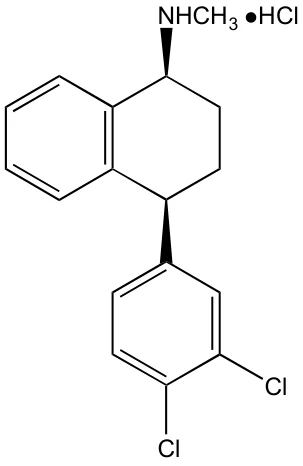
Chemical name: (lS,cis)-4-(3,4-dichlorophenyl)-1,2,3,4-tetrahydro-N-methyl-1-naphthalenamine hydrochloride
Molecular formula and molecular mass: C17H17NCl2HCl; 342.7 g/mol
Structural formula:
Physicochemical properties
Description:
Sertraline hydrochloride is a white to off-white crystalline powder that is slightly soluble in water and isopropyl alcohol, very slightly soluble in 0.1N aqueous hydrochloric acid, practically insoluble in 0.1N aqueous sodium hydroxide, sparingly soluble in ethanol, and soluble in chloroform.
CLINICAL TRIALS
A randomized, single-dose, cross over comparative bioavailability study of ACT SERTRALINE (sertraline hydrochloride 100 mg capsules) and Zoloft® (sertraline hydrochloride 100 mg capsules) has been performed in the fasting state. A summary of the bioavailability data is tabulated below.
Sertraline Hydrochloride (1 x 100 mg) From measured data Geometric Mean Arithmetic Mean (CV %) |
|---|
| Parameter | Test* | Reference† | % Ratio of Geometric Means | 90% Confidence Interval |
|---|---|---|---|---|
AUC0-72 (ngΧhr/mL) | 990.302 1079.470 (41) | 970.558 1061.589 (43) | 102.03 | 97.95 - 106.29 |
AUCI (ngΧhr/mL) | 1194.365 1343.367 (47) | 1177.940 1326.238 (49) | 101.39 | 96.55 - 106.49 |
CMAX (ng/mL) | 39.313 42.210 (38) | 38.881 42.103 (43) | 101.11 | 96.60 - 105.83 |
TMAX§ (hr) | 6.62 (17) | 6.59 (15) | ||
T½§ (hr) | 28.72 (26) | 29.13 (23) |
* Sertraline 100 mg Capsules (Actavis Pharma Company, Canada)
† Zoloft® 100 mg Capsules (Pfizer Canada Inc., Canada) were purchased in Canada
§ Expressed as the arithmetic mean (CV%) only
DETAILED PHARMACOLOGY
Animal Pharmacology:
Sertraline is a highly selective and potent inhibitor of neuronal 5HT uptake, both in vitro and in vivo. Sertraline is highly active in several behavioural and biochemical models in which clinically effective antidepressants are also active. Sertraline has no significant effects on cardiac function and only transient effects on pulmonary function are seen with high intravenous doses. A transient reduction in K+ excretion was observed in conscious dogs, which dissipated after the second daily dose of 4 mg/kg po. Sertraline increases gastric acid secretion in rats but does not induce any pathological changes in the stomachs of dogs, even after several months of treatment. Sertraline is a mild inducer of hepatic microsomal cytochrome P450.
Rats receiving a 32 mg/kg oral dose of sertraline (5 to 10 fold the therapeutic dose in man) in combination with lithium (200 mg/kg) had increased plasma levels of lithium compared to saline-treated controls.
Characterization in animal test systems produced evidence that sertraline shares pharmacologic properties common to clinically effective antidepressant agents and lacks cardiovascular or anticholinergic effects.
Preclinical Pharmacokinetics:
Data from the pharmacokinetic studies in the mouse, rat and dog are contained in Table 3. The elimination half-life of sertraline was 2.5 hours in the mouse and about 5 hours in the rat and dog. The plasma clearance of sertraline was estimated at 59 and 49 mL/min/kg in the rat and dog, respectively (Table 3). Plasma clearance represents metabolic clearance in rat and dog, since sertraline is not excreted unchanged in urine or bile. The oral bioavailability of sertraline was 70, 36 and 22% in the mouse, rat and dog, respectively (Table 3).
In the bile duct-cannulated rats and dogs receiving [1-14C] sertraline by oral gavage, 62 to 94% of the dose was absorbed. Therefore, sertraline undergoes first-pass metabolism with oral absorption.
The primary amine metabolite (desmethylsertraline), was present in the circulation of all species studied. This metabolite has no pharmacologic activity in vivo. Its elimination half-life is 2-3 times longer than that of sertraline in all species studied.
The plasma protein binding of sertraline in rat, dog and man was 97.2, 98.9 and 98.6%, respectively, at 100 ng/mL plasma concentrations.
Sertraline distributes extensively into tissues. The volume of distribution of sertraline in rat or dog was 23 or 25 l/kg (Table 3).
Enzyme induction activity: Following a five day treatment in rats, 80 mg/kg/day of sertraline (oral dose) was approximately equivalent to 50 mg/kg/day of phenobarbital in inducing the in vitro O-demethylation of p-chloroanisole. Following a three week treatment of 90 mg/kg/day in dogs, the half-life of antipyrine decreased from a pretreatment value of 54 minutes to 30 minutes.
Rat, dog and man form the primary amine metabolite (desmethylsertraline) by the N-demethylation of sertraline; form ketone by the oxidative deamination of sertraline and primary amine. Alpha-hydroxy ketone glucoronides diastereomeric pair are excreted as endproducts of this metabolic pathway. In man, the α-hydroxy ketone glucuronide diastereomers were the major but not the sole endproduct of the deamination pathway, as both the ketone and α-hydroxy ketone metabolites underwent reduction to some extent. Conjugates of the corresponding reductive metabolites, the alcohol and dihydroxy metabolites, were excreted in urine. Although not identified in excreta of rat or dog, the alcohol and dihydroxy metabolites were formed in vitro by incubation of ketone in hepatic microsomes from both species. Sertraline can alternatively be converted to N-hydroxy sertraline glucuronide or sertraline carbamoyl-O-glucuronide. Sertraline carbamoyl-0-glucuronide was the major excretory metabolite in the dog and also was formed by rat and man. N-hydroxy sertraline glucuronide was identified only in rat and dog. There was a greater excretion of metabolites in bile by the rat and dog than by man.
TABLE 3: SUMMARY OF PHARMACOKINETICS FOR SERTRALINE AND THE PRIMARY AMINE METABOLITE IN THE MOUSE, RAT, DOG AND MAN
| Sertraline* | Primary Amine* | |||||||||||||||||||||||
| Species | Sertraline Dose (mg/kg) and Route of Administration | t½ (hr) | VD (l/kg) | Cl (mL/min/kg ) | % Oral Bioavail | Cmax (µg/mL) | AUC (mg hr/l) | t½ (hr) | Cmax (µg/mL) | AUC (mg hr/l) | ||||||||||||||
| Mouse | 29 (SC and PO) | 2.5 | -- | -- | 70 | 0.31 | 1.6 | 7.4 | 0.41 | 5.3 | ||||||||||||||
| Rat | 5 (IV and PO) | 4.5 | 23 | 59 | 36 | 0.062 | 0.51 | 14 | 0.051 | 0.71 | ||||||||||||||
| Rat | 25 (IP and PO) | 6.5 | -- | -- | -- | 0.31 | 4.5 | 10.5a | 0.11 | 1.8 | ||||||||||||||
| Dog | 5 (IV) and 10 (PO) | 5.2 | 25 | 49 | 22 | 0.15 | 1.4 | 7.1a | 0.16 | 4.6 | ||||||||||||||
| Dogb | 10 (PO) | -- | -- | -- | -- | 0.32 | 2.3 | -- | 0.21 | 3 | ||||||||||||||
| Dogb | 30 (PO) | -- | -- | -- | -- | 0.93 | 8.6 | -- | 0.49 | 7.8 | ||||||||||||||
| Dogb | 90 (PO) | -- | -- | -- | -- | 3.1 | 33.6 | -- | 1.8 | 29.5 | ||||||||||||||
| Manc | 3 PO | 26 | -- | -- | -- | 0.19 | 2.8 | 65 | 0.14 | 2.3 | ||||||||||||||
* T1/2 and VD and C1 in mouse, rat and dog were based on data from parenteral route of sertraline hydrochloride administration, while Cmax and AUC were based on data following oral administration.
a Based on parenteral administration of primary amine metabolite.
b Steady-state values (average of days 3 and 36) of toxicology study #82-375-08.
c Sertraline t1/2 based on data at doses of 50 to 400 mg/day. Cmax and AUC for drug and metabolite were steady-state values (day 14) of 200 mg dose subjects.
MICROBIOLOGY
No information is available.
TOXICOLOGY
Acute Toxicity: mice and rats
ACUTE ORAL AND INTRAPERITONEAL TOXICITY STUDIES IN MICE AND RATS
| Species | Sex | LD50 (mg Sertraline base/kg) | Max Mortality (hr) | ||||||||
| Oral | IP | Oral | IP | ||||||||
| Mice | M | 548 (495-612) | 73 (66-79) | 2 1/4 | 1 | ||||||
| F | 419 (371-465) | 1 3/4 | |||||||||
| Rats | M | 1591 (1348-1847) | 79 (70-90) | 24 | 24 | ||||||
| F | 1327 (1071-1562) | 4.5 | |||||||||
Signs of toxicity observed in both mice and rats dosed orally and by intraperitoneal administration included hyperactivity, convulsions, depression, weakness, decreased food consumption, and weight gain inhibition. Oral administration in both mice and rats produced exophthalmia, soft stools, and labored respiration. Orally dosed rats also showed marked salivation. Acute oral administration produced no gross pathological findings. Acute intraperitoneal administration, on the other hand, caused adhesion of the intestines or pancreas to the liver in 2 of 10 male mice and liver lobe adhesions which were dose-related in rats.
Sertraline was also given in single doses of 10, 20, 30, and 50 mg base/kg p.o. (in capsules) to two female beagle dogs at each dose. At the lowest level, dogs were mydriatic and anorectic but otherwise asymptomatic. At higher doses, increased salivation, tremors and twitches were observed, along with the mydriasis and anorexia. None of the dogs at any dose level exhibited motor stimulation, circling or stereotypy. The duration of the anorexia was 12 to 15 hr., but eating resumed late in the day after treatment and the dogs recovered uneventfully.
Chronic Toxicity/Oncogenicity
| SPECIES | ROUTE | DOSE mg/kg/day | ANIMAL PER DOSE LEVEL | DURATION | FINDINGS | ||||||||||||
|---|---|---|---|---|---|---|---|---|---|---|---|---|---|---|---|---|---|
| 36 Day Diet Study in Mice | |||||||||||||||||
| CD-1 Mice | Diet | 0 10 40 80 | 10/sex | 36 Days | Drug and desmethyl metabolite serum levels drug related: | ||||||||||||
| Serum Concentration (ng/mL) | |||||||||||||||||
| Drug | Metabolite | ||||||||||||||||
Dose (mg/kg/day ) 10 40 80 | Male 22 52 142 | Female 17 16 63 | Male 40 181 307 | Female 23 <10 169 | |||||||||||||
| SPECIES | ROUTE | DOSE mg/kg/day | ANIMAL PER DOSE LEVEL | DURATION | FINDINGS | |||||||||||||||
|---|---|---|---|---|---|---|---|---|---|---|---|---|---|---|---|---|---|---|---|---|
| Some degree of alopecia occurred in three mid-dose animals and one high-dose animal. Fatty change occurred in the livers of 8/10 high-dose males compared to 3/10 control males. On the basis of these findings, daily doses of 10, 20, and 40 mg sertraline hydrochloride base/kg were proposed for the 2-year feeding study. | ||||||||||||||||||||
| 2 Year Diet Study in Mice | ||||||||||||||||||||
| CD-1 Mice | Diet | 0 0 10 20 40 | 50/sex | 24 Months | Survival of drug treated females was slightly less than control. Bronchioalveolar adenomas occurred in 9/49, 1/50, and 12/50 low-, mid-, and high dose females compared to 6/50 and 2/50 in females of the two control groups. Hepatocellular adenomas were observed in 8/50, 8/50 and 12/50 low-, mid-, and high dose males compared to 3/50 and 4/50 males in the two control groups. These tumors were benign and the type usually occurring spontaneously in this strain of mouse. There were no treatment-related increases in tissue specific or total malignant tumors. | |||||||||||||||
| 16 Day P.O. Study in Rats | ||||||||||||||||||||
Sprague Dawley Rats | Gavage | 0 40 80 160 | 5/sex | 16 Days | Anorexia and transient body weight gain inhibition; latter effect was high in high-dose females. Dose-related increase in liver weights due to microsomal enzyme induction; centrilobular degeneration at all dose levels and slightly elevated SGPT and SGOT at 160 mg/kg only. | |||||||||||||||
| 6 Week Diet Study in Rats | ||||||||||||||||||||
Sprague Dawley Rats | Diet | 0 10 40 80 | 10/sex | 6 Weeks | Minimal effect on body weight gain of males and slight inhibition of body weight (<10%) in mid- and high dose females. Liver weight increase in mid- and high dose males and females; hepatocellular hypertrophy and minimal midzonal fatty change in high-dose males and females and mid-dose males accompanied by slight elevations in serum SDH, GOT and 5'NT in some animals. No adverse effect level: 10 mg/kg/day. | |||||||||||||||
| 3 Month P.O. Study in Rats | ||||||||||||||||||||
| Sprague Dawley Rats | Gavage | 0 10 40 80 | 15M 10F | 3 Months | Dose related plasma levels at 10 and 40 mg/kg. | |||||||||||||||
| Plasma Levels (µg/mL) of Drug 2 h Post-Dose on Days 1, 5 and 30 | ||||||||||||||||||||
Dose (mg/kg/day ) | Sex | Day 1 | Day 5 | Day 30 | ||||||||||||||||
| 80 | M F | Mean ± SD Mean ± SD | 0.63 0.19 0.75 0.19 | 0.31 0.05 0.37 0.10 | 0.46 0.20 0.84 0.48 | |||||||||||||||
| SPECIES | ROUTE | DOSE mg/kg/day | ANIMAL PER DOSE LEVEL | DURATION | FINDINGS | |||||||||||
|---|---|---|---|---|---|---|---|---|---|---|---|---|---|---|---|---|
| 40 | M F | Mean ± SD Mean ± SD | 0.70 0.11 0.42 0.14 | 0.20 0.06 0.33 0.05 | 0.32 0.18 0.92 0.28 | |||||||||||
| 10 | M F | Mean ± SD Mean ± SD | 0.25 0.10 0.19 0.06 | 0.10 0.03 0.14 0.03 | 0.10 0.03 0.27 0.08 | |||||||||||
| Dose related increases in absolute and relative liver weights due to induction of microsomal enzymes; increases associated with centrilobular hepatocellular hypertrophy; mild midzonal fatty changes observed in 10/15 males and 1/10 females at 80 mg/kg. | ||||||||||||||||
| 2 Year Diet Study in Rats | ||||||||||||||||
| Long Evans Rats | Diet | 0 10 20 40 | 65/sex | 24 Months | Interim sacrifice (15/sex) at 6 months: Kidney/body weight was increased. Increase in mean absolute and relative liver weights in males and females at high dose and in females at mid-dose. 2 years sacrifice: Deaths were dose-related; inhibition of weight gain was dose-related in males and present at high dose only in females. Slight elevations of serum 5'nucleotidase (5'NT) activity in the high and mid-dose groups occurred throughout the study. Increase of liver and kidney/body weight ratios. These effects are considered to be related to drug-metabolizing enzyme induction. Hepatocytes with large clear fat-containing vacuoles were observed; number of affected animals in groups was dose related in females but distribution was more erratic in males. In no case was there evidence of necrosis or of an inflammatory response. There were no treatment related effects on the number of tumor bearing animals, total malignant tumors or total benign tumors in either sex. Hence, there was no evidence of oncogenic potential. | |||||||||||
| Rat (Special Toxicology Study) I.V. | ||||||||||||||||
| SPECIES | ROUTE | DOSE mg/kg/day | ANIMAL PER DOSE LEVEL | DURATION | FINDINGS | ||||||||
|---|---|---|---|---|---|---|---|---|---|---|---|---|---|
| Sprague Dawley Rats | I.V. | 0 0.125 0.250 0.500 | 10/sex | 15 days 16 days 17 days 18 days | Hemoglobinuria, identifiable only by reagent test strip as early as 5 minutes after injection, the only treatment related clinical pathology finding, was not dose-related. It is analogous to the in vitro hemolytic effects of sertraline hydrochloride in the concentrations utilized in this study, i.e., 0.125, 0.25, and 0.5 mg/mL. No hemolysis was detected in vitro when red cells were exposed to 0.005 mg/mL sertraline hydrochloride. In vitro studies have also demonstrated incompatibility (cloudiness) of plasma exposed to equal volumes of 0.25 and 0.5 mg sertraline hydrochloride/mL. These data suggest that intravenous sertraline hydrochloride solutions should be administered by drip rather than by bolus injections. A total of 3 high-dose and 12 control rats had perivascular hemorrhage and/or chronic perivasculitis at the injection site in the tail. | ||||||||
| Rat (juvenile animal study) oral | |||||||||||||
Sprague Dawley Rats | Gavage | 0 10 40 80 | 30/sex | Postnatal day 21 through postnatal day 56 with non-dosing recovery phase up to postnatal day 196 | The administration of 80 mg/kg of sertraline to males and females on postnatal Days 21 to 56 resulted in dehydration, chromo rhinorrhea and reduced average body weight gain. In addition, rales, hunched posture, reduced food consumption and two early deaths (plus one early euthanization due to poor condition) also occurred in male rats given 80 mg/kg/day. Decreases in brain weight were seen in treated male animals around postnatal day140. Delays in sexual maturation occurred in males (80 mg/kg/day)and females (≥10 mg/kg/day),but despite this finding there were no sertraline-related effects on other organ weights, mating and fertility, sperm motility or sperm concentration in males or female reproductive endpoints (estrous cycling, mating and fertility, or ovarian and uterine parameters). There were no sertraline-related effects on any behavior parameter (learning and memory, auditory startle response, and locomotor activity) in males, while a decrease in auditory startle response occurred in females at 40 and 80 mg/kg/day. There were no sertraline-related effects on female brain weights, male or female femur lengths, gross necropsy or microscopic observations at any dose level. In juvenile males, the no-observed-adverse-effect level (NOAEL) for general toxicity was 40 mg/kg/day (correlating to a Cmax of 262 ng/mL and an AUC0-t to 3170 ng·hr/mL on postnatal Day 56). In juvenile females, the NOAEL could not be established based on the delays in sexual maturation that occurred at ≥ 10 mg/kg. All of the aforementioned effects attributed to the administration of sertraline were reversed at some point during the non-dosing recovery phase of the study. | ||||||||
| 7 Day Oral Study in Dogs | |||||||||||||
| Beagle | Oral (Capsule) | 0 15 45 | 2 Males | 7 Days | Slight anorexia, body weight loss and hind limb weakness at high dose. Plasma drug levels suggested good oral absorption. | ||||||||
| Plasma Concentrations of Drug 3 h Post Dose on Days 1and 7 | |||||||||||||
Plasma Concentration (µg/mL) | |||||||||||||
| SPECIES | ROUTE | DOSE mg/kg/day | ANIMAL PER DOSE LEVEL | DURATION | FINDINGS | ||||||||
|---|---|---|---|---|---|---|---|---|---|---|---|---|---|
Dose (mg/kg/day ) | Dog No. | Day 1 | Day 7 | ||||||||||
| 45 | 832255 832259 | 2.28 2.04 | 2.48 0.82 | ||||||||||
| 15 | 832258 832260 | 1.12 0.42 | 0.13 0.68 | ||||||||||
| Apparent losses of small lymphocytes from thymus was observed; lymphoid depletion in spleen, mesenteric lymph nodes and ileum were seen in one high dose drug. | |||||||||||||
| 14 Day Oral Study in Dogs | |||||||||||||
| Beagle | Oral (Capsule) | 0 40 80 160 | 1/sex | 14 Days | Dose related anorexia and body weight loss. Increase of serum alkaline phosphatase at high dose and of SGPT in the high dose females. Depletion of small lymphocytes from spleen in the 80 mg male and from spleen and ileum in the high dose male. | ||||||||
| 3 Month Oral Study in Dogs | |||||||||||||
| Beagle | Oral (Capsule) | 0 10 40 80 | 3/sex | 3 Months | Dose-related CNS stimulation during the first one or two weeks or treatment. One high-dose animal died of convulsions 5.5 hours after drug administration on the first day of treatment. Necropsy of this animal revealed generalized congestion and lymphoid depletion of the thymus, spleen and mesenteric lymph node consistent with the cause of death. Elevated alkaline phosphatase (ALP) values were measured in all dogs of the high-dose group and in 2 males and 2 females of the mid-dose group. The ALP elevation together with a trend toward increased liver weights reflect the ability of sertraline hydrochloride to induce drug metabolizing enzymes at 40 and 80 mg/kg. Slight SGPT elevations in the high-dose animals were not associated with histopathological changes. | ||||||||
| 6 Month Oral Study in Dogs | |||||||||||||
| SPECIES | ROUTE | DOSE mg/kg/day | ANIMAL PER DOSE LEVEL | DURATION | FINDINGS | ||||||||||||||||||
|---|---|---|---|---|---|---|---|---|---|---|---|---|---|---|---|---|---|---|---|---|---|---|---|
| Beagle | Oral (Capsule) | 0 10 30 90 | 4/sex | 6 Months | Pronounced clinical signs of CNS stimulation were observed at high dose; they diminished in intensity or completely disappeared after 1 to 2 weeks of dosing. At the 90 mg/kg dose level increase in absolute and relative liver weights, proliferation of smooth endoplasmic reticulum and mild serum alkaline phosphatase elevations were all consistent with sertraline hydrochloride being an enzyme inducer. This was demonstrated by a shortening of the plasma half-life of antipyrine at the high-dose level only (30 min compared to 54 min). A few dogs at 30 mg/kg had slight sporadic alkaline phosphatase elevations. Some dogs at the high-dose level only had SGPT elevations. The mild bile duct hyperplasia detected in two high-dose males could have been drug-related; however, this lesion sometimes is observed in control beagle dogs. | ||||||||||||||||||
| 1 Year Oral Study in Dogs | |||||||||||||||||||||||
| Beagle | Oral (Capsule) | 0 10 30 90 | 4/sex | 1 year | Dose-related incidences of central and autonomic nervous system clinical signs during the first few weeks of the study were observed. Slight to moderate elevations in serum alkaline phosphatase activity occurred in 1/8, 4/8 and 7/8 low-, mid- and high-dose dogs, respectively. SGPT levels were increased in 2/8 high-dose animals. Liver/body weight ratios were increased in high-dose males (25%) and females (32%) and in mid-dose females (25%). Sertraline hydrochloride was previously shown to be an inducer of hepatic microsomal drug metabolizing enzymes, a phenomenon often associated with elevated liver weights and serum alkaline phosphatase activity in dogs. There were no gross or microscopic histologic changes in the liver or in other tissues. Plasma levels of sertraline hydrochloride and its desmethyl metabolite. CP-62,508, confirmed dose-related systemic exposure throughout the day. | ||||||||||||||||||
| CMAX OF DRUG AND 0-24 HOUR AUC OF METABOLITE | |||||||||||||||||||||||
| (mg/kg) | Cmax CP-51,974 (µg/mL) | AUC CP-62,508 (mg.h/l) | |||||||||||||||||||||
| Day 1 | Day 99 | Day 274 | Day 1 | Day 99 | Day 274 | ||||||||||||||||||
| 10 | MEAN S.D. | 0.344 0.165 | 0.218 0.142 | 0.262 0.190 | 3.4 1.7 | 2.6 0.8 | 3.0 1.0 | ||||||||||||||||
| 30 | MEAN S.D. | 0.723 0.454 | 0.643 0.299 | 1.26 0.90 | 4.9 2.3 | 8.8 4.4 | 11.6 5.0 | ||||||||||||||||
| 90 | MEAN S.D. | 1.33 0.81 | 1.06 0.61 | 2.16 1.24 | 11.8 6.2 | 12.2 5.0 | 39.9 25.1 | ||||||||||||||||
Reproduction and Teratology
Fertility and Reproductive Performance
| SPECIES | ROUTE | DOSE mg/kg/day | ANIMAL PER DOSE LEVEL | DURATION | FINDINGS | ||||
|---|---|---|---|---|---|---|---|---|---|
| A Study of the Reproduction and Fertility of Rats, Segment 1 (Extended to produce F2 litters) | |||||||||
| Rat | Oral (gavage) | 0 10 40 80 | F0=30F/dose F0=15M/dose | F0 males were treated in the 64 days prior to mating and throughout mating. F0 females were treated in the 14 days prior to mating and during mating and gestation. Offspring (F1 generation) were raised for 3 months free of drug treatment and then mated to produce an F2 generation which, together with F1 dams were sacrificed 21-24 days post-partum. The F0 treated dams showed decreased pregnancy rates, most marked at 80 mg/kg. The pregnancy rates were 47%, 83%, 92% and 100% respectively in the high, mid, low dose and control groups. Survival of F1 pups to Day 4 post-partum was also depressed in a dose-related order. High-dose F1 pups showed evidence of earlier behavioural development. | |||||
| Foetotoxicity and Fertility Study (FDA Protocol, Segment 1) in Rats by Oral Administration | |||||||||
| Rat | Oral (gavage) | 10 20 80 | 20M 40F | Males were treated for 71 days before mating. Females were treated for 2 weeks before mating, during mating and throughout gestation. Four additional groups of 20 undosed females were mated with the same males to test their fertility. Drug treatment produced inhibition (approximately 20 g) during pregnancy in all treated females and reduced birth weights of pups at Day 1 post-partum (males: #0.15 g, females: #0.3 g). At Days 4 and 21 of age, the weights of the pups treated also led to a lower neonatal survival rate at the two highest doses (survival was 61% and 69% respectively at high- and mid-dose groups compared with a survival of 94% in the low-dose group and 98% in controls at 21 days). Some of this mortality was attributed to a higher incidence of hemoperitoneum in 18 high dose and 12 mid-dose than in 6 low dose and 1 control F1 neonates. Hemoperitoneum was not seen in newborn pups in any of the other studies. In behavioural tests, some early hyperactivity observed in pups of the treated groups was consistent with the pharmacology of the drug. No adverse effects were observed in the F2 generation. | |||||
Teratology
| SPECIES | ROUTE | DOSE mg/kg/day | ANIMAL PER DOSE LEVEL | DURATION | FINDINGS | |||||
|---|---|---|---|---|---|---|---|---|---|---|
| Foetotoxicity Study (Segment II) in Rat by the Oral Route | ||||||||||
| Rat | Oral (gavage) | 10 20 80 | 20F | Drug administered to inseminated females at days 6-15 post-insemination. Treatment caused transient aggressiveness at the beginning of the treatment period and reduced body weight gain (an average of 26 g) of the high-dose dams. A slight delay in ossification of fetuses appears to be related to lower fetal weights in the mid- and high-dose groups which were probably functions of maternal toxicity (Ex: delay in ossification of metacarpus in 20 pups among 1181 at 80 mg/kg and in 13 pups among 1825 in the control group). | ||||||
| Foetotoxicity Study (FDA Segment II) in Rabbits by the Oral Route | ||||||||||
| Rabbit | Oral (gavage) | 0 5 20 40 | 20F | Sertraline hydrochloride administered to pregnant rabbits during organogenesis (days 7 to 18 post insemination). At the highest dose level of 40 mg/kg, the compound induced severe maternal toxicity which in turn delayed the ossification processes of the fetuses (Ex: delay in ossification in hyoid bone: control=20%, 40 mg/kg=36%; in Talus bone: control=27%, 40 mg/kg=44%). | ||||||
Peri- Post-Natal Studies
| SPECIES | ROUTE | DOSE mg/kg/day | ANIMAL PER DOSE LEVEL | DURATION | FINDINGS | |||||
|---|---|---|---|---|---|---|---|---|---|---|
| Peri- Post-Natal Study in Rats (Segment III) by the Oral Route | ||||||||||
| Rat | Oral | 0 10 20 80 | 20F | Sertraline hydrochloride was administered by gavage to inseminated rats from day 15 post-insemination until parturition and throughout the whole lactation period. The treatment produced some adverse effects in dams and pups at the two higher dose levels; a dose-related delay in body weight gain of the dams during gestation and lactation in mid- and high-dose groups was observed. In some animals in each of these groups, hyperactivity was observed during the first few days of treatment. Food and water consumption was also affected in these two dose groups. Statistically significant decreases in mean litter size were observed at the high dose level on Day 1 post-partum, at the mid- and high-dose levels on Day 4 post-partum; this effect was dose related on Day 21 post-partum. The mean body weights of pups were lower in both sexes at both of the higher dose level groups when compared to controls on Days 1 post-partum but there were no statistically significant differences between the groups on Day 21 post-partum. No external or visceral anomalies were observed in the pups that died during the lactation phase or were sacrificed at weaning. The post-natal development of pups was also affected by the treatment of dams: fewer pups showed positive responses on the last day when reflexes were tested and the appearance of the incisors was retarded. This was most evident at the high-dose, but also to some extent at the mid-dose. Post-weaning examination revealed no treatment related changes. | ||||||
| SPECIES | ROUTE | DOSE mg/kg/day | ANIMAL PER DOSE LEVEL | DURATION | FINDINGS | ||||
|---|---|---|---|---|---|---|---|---|---|
| Experiment (Segment III) to Further Investigate the Effect of Sertraline on Neonates | |||||||||
| Rat | Oral (gavage) | 80 | A second Segment III Study was carried out to further investigate the effects of sertraline hydrochloride on the neonates. In this study, pups from dams treated at 80 mg base/kg were fostered by untreated dams and, vice versa, pups from untreated dams were fostered by drug treated dams. As observed in previous studies, sertraline hydrochloride affected the weight gain of the dams (body weight difference between control and high dose group: at 20 day of pregnancy = 34 g, at 21 days post-partum = 19 g). The effects observed on the progeny can be separated into two categories: Those directly related to the in utero exposure of fetuses: perinatal morality and pup weight impairment on Day 1; those related to the exposure during lactation: post-natal growth impairment and delay in development. Vision and hearing, evaluated after weaning, were not affected. | ||||||
| Experiment to delineate the prenatal period of fetal vulnerability | |||||||||
| Rat | Oral (gavage) | 80 | 20 20 x 4 | Sertraline hydrochloride administered to pregnant rats throughout or during late gestation, has been shown to exert deleterious effects on neonatal growth and survival to Day 4 post-partum. Another experiment was done in which sertraline hydrochloride (80 mg base/kg/day) was administered in 0.1% methylcellulose by oral gavage to 4 groups of pregnant dams (20/group) from Day 0 to Days 5, 10, or 15 and throughout gestation, respectively, in order to delineate the prenatal period of fetal vulnerability. Pup survival was unaffected by sertraline hydrochloride treatment during the first 5, 10 or 15 days of gestation. Mortality of live-born pups in these groups during the first 4 days of life ranged from 0.8% to 3% compared with 2% for the controls whereas 56% of pups born alive to dams treated throughout the gestational period did not survive their first 4 days of life. However, survival of pups from Day 4 to Day 21 (lactation index) was comparable in all treatment and control groups. Pups born to mothers dosed throughout gestation also weighed less than control on Days 1 and 4 post partum, but body weights of pups were comparable to control by Day 14. This experiment demonstrates that the immediate prenatal period, gestation Days 16-21, is the period of vulnerability of the neonatal pup for survival from the in utero effects of a high dose (80 mg/kg) of sertraline hydrochloride. | |||||
Carcinogenesis
In carcinogenicity studies in CD-1 mice, sertraline at doses up to 40 mg/kg produces a dose related increase in the incidence of liver adenomas in male mice. Liver adenomas have a very variable rate of spontaneous occurrence in the CD-1 mouse. The clinical significance of these findings is unknown.
Genotoxicity
Genotoxicity studies including Ames Salmonella and mouse lymphoma TK+/TK- assays for point mutations, tests for cytogenetic aberrations in vivo on the mouse bone marrow and on human lymphocytes in vitro with and without metabolic activation were uniformly negative.
Sertraline did not induce mutations at the gene level in the Ames microbial assay with and without metabolic activation against Salmonella typhimurium strains TA 1535, TA 1537, TA 98, and TA 100 nor at the chromosomal level in bone marrow of mice treated with 80 mg/kg p.o. (in vivo cytogenetic assay) or in human lymphocytes (in vitro cytogenetic assay) at 0.5 to 25 mg/mL in culture. Sertraline produced no significant increase in mutant frequency in L5178Y mouse lymphoma (TK+/-) cells either in the presence or absence of exogenous metabolic activation by normal rat liver S9 microsomes.
REFERENCES
- 1. Burrows GD, McIntyre IM, Judd FK, et al. Clinical effects of serotonin reuptake inhibitors in the treatment of depressive illness. J Clin Psychiatry 1988;49(8Suppl): 18-22.
- 2. Koe BK. Preclinical pharmacology of sertraline: a potent and specific inhibitor of serotonin reuptake. J Clin Psychiatry 1990;51(12SupplB):13-7.
- 3. Woolley DW, Shaw E. Some neurophysiological aspects of serotonin. Br Med J 1954;2:122-6.
- 4. Butler J, Leonard BE. The platelet serotonergic system in depression and following sertraline treatment. Int Clin Psychopharmacol 1988;3(4):343-7.
- 5. Koe BK, Weissman A, Welch WM, et al. Sertraline: 1S,4S-N-methyl-4-(3,4- dichlorophenyl) 1,2,3,4-tetrahydro-1-naphthylamine, a new uptake inhibitor with selectivity for serotonin. J Pharmacol Exp Ther 1983; 226(3): 686-700.
- 6. Koe BK, Weissman A, Welch WM, et al. Sertraline: a new selective inhibitor of serotonin uptake. Psychopharmacol Bull 1983; 19(4): 687-91.
- 7. Byerley WF, McConnell EJ, McCabe RT, et al. Chronic administration of sertraline, a selective serotonin uptake inhibitor, decreased the density of β-adrenergic receptors in rat frontoparietal cortex. Brain Res 1987; 421 (1-2): 377-81.
- 8. Koe BK, Koch SW, Lebel LA, et al. Sertraline, a selective inhibitor of serotonin uptake, induces subsensitivity of beta-adrenoceptor system of rat brain. Eur J Pharmacol 1987; 141(2): 187-94.
- 9. Heym J, Koe BK. Pharmacology of sertraline: a review. J Clin Psychiatry 1988;49(8Suppl):40-5.
- 10. Cohn CK, Shrivastava R, Mendels J, et al. Double-blind, multicenter comparison of sertraline and amitriptyline in elderly depressed patients. J Clin Psychiatry 1990;51(12Suppl):28-33.
- 11. Doogan DP, Caillard V. Sertraline: a new antidepressant. J Clin Psychiatry 1988;49(8Suppl):46-51.
- 12. Reimherr FS, Byerley WF, Ward MF, et al. Sertraline, a selective inhibitor of serotonin uptake, for the treatment of outpatients with major depressive disorder. Psychopharmacol Bull 1988;24(1):200-5.
- 13. Reimherr FW, Chouinard G, Cohn CK, et al. Antidepressant efficacy of sertraline: a double-blind, placebo- and amitriptyline-controlled, multicenter comparison study in outpatients with major depression. J Clin Psychiatry 1990; 51(12SupplB):18-27.
- 14. Keppel-Hesselink JM, de Jongh PM. Sertraline in the prevention of depression. Br J Psychiatry. Psychiatry 1992; 160: 270-1
- 15. Hindmarch I, Shillingford J, Shillingford C. The effects of sertraline on psychomotor performance in elderly volunteers. J Clin Psychiatry 1990;51(12SupplB)34-6.
- 16. Cohn J, Katon W, Richelson E. Choosing the right antidepressant. Patient Care 1990;15:88-116.23. Rickels K, Schweizer E. Clinical overview of serotonin reuptake inhibitors. J Clin Psychiatry 1990;51(12SupplB):9-12.
- 17. Rickels K, Schweizer E. Clinical overview of serotonin reuptake inhibitors. J Clin Psychiatry 1990;51(12SupplB):9-12.
- 18. Guy W, Manov G, Wilson WH. Double-blind dose determination study of a new antidepressant - sertraline. Drug Dev Res 1986; 9(4): 267-72.
- 19. Welch WM, Vivieros DM. Synthesis of 1-14C-(1S,4S)-N-methyl-4-(3,4-dichlorophenyl)-1,2,3,4-tetrahydro-1-naphthalenamine L-mandelate (1-14C-sertraline mandelate). J Label Compounds Radiopharm 1987; 24(8):987-93.
- 20. Welch WM, Kraska AR, Sarges R, et al. Nontricyclic antidepressant agents derived from cis- and trans-1-amino-4-aryltetralins. J Med Chem 1984; 27(11): 1508-15.
- 21. Kennett GA, Dourish CT, Curzon G. Antidepressant-like action of 5-HT1A agonists and conventional antidepressants in an animal model of depression. Eur J Pharmacol 1987; 134(3): 265-74.
- 22. Hindmarch I, Bhatti JZ. Psychopharmacological effects of sertraline in normal healthy volunteers. Eur J Clin Pharmacol 1988;35(2):221-3.
- 23. Mattila MJ, Saarialho-Kere U, Mattila M. Acute effects of sertraline, amitriptyline, and placebo on the psychomotor performance of healthy subjects over 50 years of age. J Clin Psychiatry 1988;49(8Suppl):52-8.
- 24. Saletu B, Grunberger J. Drug profiling by computed electroencephalography and brain maps, with special consideration of sertraline and its psychometric effects. J Clin Psychiatry 1988;49(8Suppl):59-71.
- 25. Saletu B, Grunberger J, Linzmayer L. On central effects of serotonin re-uptake inhibitors: quantitative EEG and psychometric studies with sertraline and zimelidine. J Neural Transm 1986; 67(3-4): 241-66.
- 26. Doogan DP, Caillard V. Sertraline in the prevention of depression. Br J Psychiatry. 1992; 160:217-22
- 27. Bisserbe JC, Wiseman R, Flament M, Goldberg M, Lane R. A Double-Blind Comparison of Sertraline and Clomipramine in Outpatients with Obsessive-Compulsive Disorder. European Psychiatry 12:83-93, 1997.
- 28. Greist J, Chouinard G, DuBoff E, Halaris A, Kim SW, Koran L, Liebowitz M, Lydiard RB, Rasmussen S, White K, Sikes C. Double-Blind Parallel Comparison of Three Dosages of Sertraline and Placebo in Outpatients With Obsessive-Compulsive Disorder. Archives of General Psychiatry 52:289-295, 1995.
- 29. Greist J, Jefferson JW, Kobak KA, Chouinard G, DuBoff E, Halaris A, Kim SW, Koran L, Liebowitz MR, Lydiard B, McElroy S, Mendels J, Rasmussen S, White K, Flicker C. A 1 Year Double-Blind Placebo-Controlled Fixed Dose Study of Sertraline in the Treatment of Obsessive-Compulsive Disorder. International Clinical Psychopharmacology 10:57-65, 1995.
- 30. March JS, Biederman J, Wolkow R, Safferman A, Mardekian J, Cook EH et al. Sertraline in Children and Adolescents with Obsessive-Compulsive Disorder: A Multicenter Randomized Controlled Trial. JAMA 1998 Nov. 25; 280 (20): 1752-6.
- 31. Product Monograph for Zoloft™ (sertraline hydrochloride) 25, 50 and 100 mg Capsules, Pfizer Canada Inc., Kirkland, Quebec, Canada. Control Number: 192642. Date of Revision: July 8, 2016.