


Product Monograph - Akeega
Recent Major Label Changes
| 1 Indications | 2026-06 |
|---|---|
| 4.1 Dosing Considerations | 2026-06 |
| 4.2 Recommended Dose and Dosage Adjustment | 2026-06 |
| 7 Warnings and Precautions, General | 2026-06 |
| 7 Warnings and Precautions, Carcinogenesis and Genotoxicity | 2026-06 |
| 7 Warnings and Precautions, Endocrine and Metabolism, Adrenocortical Insufficiency | 2025-03 |
| 7 Warnings and Precautions, Hematologic | 2026-06 |
| 7 Warnings and Precautions, Hepatic/Biliary/Pancreatic | 2026-06 |
| 7 Warnings and Precautions, Infection | 2025-03 |
Table of Contents
Certain sections or subsections that are not applicable at the time of the preparation of the most recent authorized product monograph are not listed.
Recent Major Label Changes .................................................................................................... 2
Table of Contents .................................................................................................................... 2
Part I: Healthcare Professional Information ............................................................................. 5
- 1.
Indications ................................................................................................................... 5
1.1 Pediatrics ............................................................................................................... 5
1.2 Geriatrics ............................................................................................................... 5
- 2. Contraindications ......................................................................................................... 5
- 3. Serious Warnings and Precautions Box ........................................................................ 5
- 4.
Dosage and Administration .......................................................................................... 6
4.1 Dosing Considerations ........................................................................................... 6
4.2 Recommended Dose and Dosage Adjustment ...................................................... 6
4.4 Administration ....................................................................................................... 9
4.5 Missed Dose .......................................................................................................... 9
- 5. Overdose...................................................................................................................... 9
- 6. Dosage Forms, Strengths, Composition, and Packaging .............................................. 10
- 7.
Warnings and Precautions .......................................................................................... 10
General ............................................................................................................................ 10
Carcinogenesis and Genotoxicity .................................................................................... 10
Cardiovascular ................................................................................................................. 11
Driving and Operating Machinery ................................................................................... 11
Endocrine and Metabolism ............................................................................................. 11
Hematologic .................................................................................................................... 12
Hepatic/Biliary/Pancreatic .............................................................................................. 12
Immune ........................................................................................................................... 13
Monitoring and Laboratory Tests .................................................................................... 13
Musculoskeletal .............................................................................................................. 14
Neurologic ....................................................................................................................... 14
Reproductive Health ....................................................................................................... 14
7.1 Special Populations .............................................................................................. 15
7.1.1 Pregnancy ........................................................................................................ 15
7.1.2 Breastfeeding .................................................................................................. 15
7.1.3 Pediatrics ......................................................................................................... 15
7.1.4 Geriatrics ......................................................................................................... 15
- 8.
Adverse Reactions ...................................................................................................... 16
8.1 Adverse Reaction Overview ................................................................................. 16
8.2 Clinical Trial Adverse Reactions ........................................................................... 17
8.3 Less Common Clinical Trial Adverse Reactions .................................................... 23
8.4 Abnormal Laboratory Findings: Hematologic, Clinical Chemistry and Other Quantitative Data ............................................................................................................ 23
8.5 Post-Market Adverse Reactions .......................................................................... 24
- 9.
Drug Interactions ....................................................................................................... 25
9.2 Drug Interactions Overview ................................................................................. 25
9.3 Drug-Behaviour Interactions ............................................................................... 26
9.4 Drug-Drug Interactions ........................................................................................ 26
9.5 Drug-Food Interactions ........................................................................................ 28
9.6 Drug-Herb Interactions ........................................................................................ 28
9.7 Drug-Laboratory Test Interactions ....................................................................... 28
- 10.
Clinical Pharmacology ................................................................................................ 28
10.1 Mechanism of Action ........................................................................................... 28
10.2 Pharmacodynamics ............................................................................................. 29
10.3 Pharmacokinetics ................................................................................................ 30
- 11. Storage, Stability and Disposal ................................................................................... 32
- 12. Special Handing Instructions ...................................................................................... 33
Part 2: Scientific Information ................................................................................................. 34
- 13. Pharmaceutical Information ....................................................................................... 34
- 14.
Clinical Trials .............................................................................................................. 35
14.1 Clinical Trials by Indication .................................................................................. 35
Metastatic Castration-sensitive Prostate Cancer (mCSPC) .............................................. 35
Metastatic Castration-resistant Prostate Cancer (mCRPC) .............................................. 41
- 15. Microbiology .............................................................................................................. 48
- 16. Non-Clinical Toxicology .............................................................................................. 48
Patient Medication Information ............................................................................................ 50
Part I: Healthcare Professional Information
1. Indications
PrAKEEGA® (niraparib and abiraterone acetate) is indicated with prednisone or prednisolone for:
- The treatment of adult patients with deleterious or suspected deleterious BRCA mutated (germline and/or somatic) metastatic castration-sensitive prostate cancer (mCSPC). Patients must have confirmation of BRCA mutation before AKEEGA treatment is initiated.
The treatment of adult patients with deleterious or suspected deleterious BRCA mutated (germline and/or somatic) metastatic castration resistant prostate cancer (mCRPC), who are asymptomatic/mildly symptomatic, and in whom chemotherapy is not clinically indicated. Patients must have confirmation of BRCA mutation before AKEEGA treatment is initiated.
The efficacy of AKEEGA in patients with mCRPC and visceral metastases is uncertain (see 14.1 Clinical Trials by Indication, Metastatic Castration-Resistant Prostate Cancer (mCRPC)).
1.1 Pediatrics
Pediatrics (<18 years of age): No data are available to Health Canada; therefore, Health Canada has not authorized an indication for pediatric use.
1.2 Geriatrics
Geriatrics (≥65 years of age): No overall differences in safety and efficacy of niraparib and abiraterone acetate combination therapy were observed between these patients and younger patients. However, greater sensitivity of some older individuals cannot be ruled out (see 7 Warnings and Precautions).
2. Contraindications
AKEEGA is contraindicated in:
- Patients who are hypersensitive to this drug or to any ingredient in the formulation or component of the container. For a complete listing, see 6 Dosage Forms, Strengths, Composition and Packaging.
3. Serious Warnings and Precautions Box
- AKEEGA may cause hypertension, hypokalemia, and fluid retention due to mineralocorticoid excess (see 7 Warnings and Precautions, Cardiovascular)
- AKEEGA should be used with caution in patients with a history of cardiovascular disease (see 7 Warnings and Precautions, Cardiovascular)
- AKEEGA should not be given to patients with moderate to severe hepatic impairment (see 7 Warnings and Precautions, Hepatic/Biliary/Pancreatic, Hepatic Impairment)
- MDS/AML has been reported with PARP inhibitor treatment (see 7 Warnings and Precautions, Carcinogenesis and Genotoxicity)
4. Dosage and Administration
4.1 Dosing Considerations
AKEEGA is a fixed-dose dual combination of niraparib and abiraterone acetate. Confirm presence of a BRCA mutation for the treatment of mCSPC and mCRPC using a validated test prior to initiation of AKEEGA (see 14 Clinical Trials).
4.2 Recommended Dose and Dosage Adjustment
The recommended dosage of AKEEGA is 200 mg niraparib and 1000 mg abiraterone acetate (two 100 mg/500 mg tablets), as a single daily dose that must be taken on an empty stomach at approximately the same time every day (see 4.4 Administration).
For dose reduction to 100 mg niraparib and 1000 mg abiraterone acetate, a low strength tablet (two 50 mg/500 mg tablets) is recommended (see 4.4 Administration).
If further dose reduction below 100 mg/day niraparib is required, discontinue AKEEGA.
Dosage of Prednisone or Prednisolone
AKEEGA is used with 5 mg prednisone or prednisolone for mCSPC.
AKEEGA is used with 10 mg prednisone or prednisolone for mCRPC.
Treatment Withdrawal
Treatment should be continued until disease progression, unequivocal clinical progression, or unacceptable toxicity.
Dose Modification
Hematologic Adverse Reactions
The dose adjustment recommendations for anemia, thrombocytopenia and neutropenia are listed in Table 1 and in Table 2.
Table 1: Dose Adjustment Recommendations for Anemia
| Grade 1 | No change, consider weekly monitoring. |
|---|---|
| Grade 2 | At least weekly monitoring for 28 days, if baseline anemia was Grade ≤ 1. |
| Grade ≥ 3 | Withhold AKEEGA1 and switch to single agent abiraterone acetate plus prednisone (AAP). Provide supportive management with monitoring at least weekly until recovered to Grade ≤ 2. Consider resuming AKEEGA at one dose-level reduction [two low strength (50 mg/500 mg) tablets] if anemia persists based on clinical judgment. |
| Second occurrence ≥ Grade 3 | Withhold AKEEGA and switch to single agent AAP. Provide supportive management and monitor at least weekly until recovered to Grade ≤ 2. Further treatment with AKEEGA should restart at one dose-level reduction [two low strength (50 mg/500 mg) tablets]. Weekly monitoring is recommended for 28 days after resuming treatment with AKEEGA. |
| If patient was already on a reduced dose [two low strength (50 mg/500 mg) tablets], consider treatment discontinuation. | |
| Third occurrence ≥ Grade 3 | Consider discontinuing treatment with AKEEGA based on clinical judgment. |
1 During AKEEGA treatment interruption, physician may consider giving abiraterone acetate and prednisone to maintain daily dose of abiraterone acetate (see abiraterone acetate product monograph).
Table 2: Dose Adjustment Recommendations for Thrombocytopenia and Neutropenia
| Grade 1 | No change, consider weekly monitoring |
|---|---|
| Grade 2 | At least weekly monitoring and consider withholding AKEEGA and switch to single agent AAP combination until recovery to Grade 1 or baseline1. Resume AKEEGA with recommendation of weekly monitoring for 28 days after restart. |
| First occurrence ≥ Grade 32 | Withhold AKEEGA and switch to single agent AAP combination. Monitor at least weekly until platelets and neutrophils recover to Grade 1 or baseline1. Then resume AKEEGA or, if warranted, at one dose-level reduction [two low strength (50 mg/500 mg) tablets]. Weekly monitoring of blood counts is recommended for 28 days after restarting dose. |
| Second occurrence ≥ Grade 3 | Withhold AKEEGA and switch to single agent AAP combination. Monitor at least weekly until platelets and/or neutrophils recover to Grade 1. Further treatment with AKEEGA should restart at one dose-level reduction [two low strength (50 mg/500 mg) tablets]. Weekly monitoring is recommended for 28 days after resuming treatment with AKEEGA. If patient was already on a reduced dose [two low strength (50 mg/500 mg) tablets], consider treatment discontinuation. |
| Third occurrence ≥ Grade 3 | Permanently discontinue AKEEGA and switch to single agent AAP combination |
1 During AKEEGA treatment interruption related to hematological toxicities, abiraterone acetate plus prednisone or prednisolone should be generally continued by the physician (see abiraterone acetate product monograph)
2 If patient requires platelet transfusion or has neutropenic fever or neutropenia requiring granulocyte-colony stimulating factor for Grade ≥3 AE deemed to be related to AKEEGA toxicity, interrupt AKEEGA and restart at 1 dose-level reduction after resolution to Grade 1 or baseline. If AKEEGA was previously dose-reduced for the same hematologic toxicity, discontinue AKEEGA
Non-Hematologic Adverse Reactions
For drug-related ≥ Grade 3 toxicities, if the toxicity cannot be definitively attributed to either niraparib or abiraterone acetate only, then AKEEGA should be interrupted. Treatment with AKEEGA must not be reinitiated until symptoms of the toxicity have resolved to Grade 1 or baseline. To resume treatment, initiate treatment with single AAP combination first. If there is continued resolution of the toxicity to baseline/Grade 1, then switch to treatment with AKEEGA at least 7 days after restarting AAP.
If a patient was on a reduced dose of AKEEGA (100 mg/1000 mg), AKEEGA must be discontinued for a Grade ≥ 3 treatment-related adverse reaction lasting more than 28 days.
Permanently discontinue AKEEGA for treatment-related hypertensive crisis.
For the treatment of mCSPC: The dose adjustment recommendations for hypokalemia and hypertension are listed in Table 3 and in Table 4.
Table 3: Dose Adjustment Recommendations for Hypokalemia
| Grade 1-2 | Maintaining potassium level at ≥4.0 mmol should be considered. |
|---|---|
| Grade 3-4 | Withhold AKEEGA and instate appropriate medical management (obtain electrocardiogram and provide potassium supplement). Treatment with AKEEGA should not be reinitiated until hypokalemia has resolved to grade 1 or baseline. |
Table 4: Dose Adjustment Recommendations for Hypertension
| Grade 1-2 | No change to AKEEGA dose. Closely monitor participant’s BP. |
|---|---|
| Grade 3 | Withhold AKEEGA and prednisone until BP returns to baseline or grade 1. |
| Recurrence of Grade 3 | Restart AKEEGA at one dose-level reduction [two low strength (50 mg/500 mg) tablets]. |
| Grade 4 | Permanently discontinue AKEEGA. |
Hepatotoxicity
For patients who develop ≥ Grade 3 hepatotoxicity (alanine aminotransferase [ALT] increases or aspartate aminotransferase [AST] increases above five times the upper limit of normal [ULN]), treatment with AKEEGA should be interrupted and liver function closely monitored. Re-treatment may take place only after return of liver function tests to the patient’s baseline and at a reduced dose level of one regular strength AKEEGA tablet (equivalent to 100 mg niraparib and 500 mg abiraterone acetate). For patients being re-treated, serum transaminases should be monitored at a minimum of every two weeks for three months and monthly thereafter. If hepatotoxicity recurs at the reduced dose of 100 mg/500 mg daily (1 tablet), treatment with AKEEGA should be discontinued.
Permanently discontinue AKEEGA for patients who develop severe hepatotoxicity (ALT or AST ≥20 x ULN). Permanently discontinue AKEEGA for patients who develop a concurrent elevation of ALT greater than 3 x ULN and total bilirubin greater than 2 x ULN in the absence of biliary obstruction or other causes responsible for the concurrent elevation (see 7 Warnings and Precautions, Hepatic/Biliary/Pancreatic, Hepatotoxicity).
Recommended Monitoring
See 7 Warnings and Precautions, Monitoring and Laboratory Tests for required monitoring prior to, and during treatment with AKEEGA.
Special Populations
Pediatrics (<18 years of age)
Health Canada has not authorized an indication for pediatric use.
Geriatrics (≥65 years of age)
No dose adjustment is necessary for elderly patients (see 10.3 Pharmacokinetics).
Hepatic Impairment
No dose adjustment is necessary for patients with mild hepatic impairment (AST or ALT ≤3 x ULN or serum total bilirubin ≤1.5 x ULN). AKEEGA should not be used in patients with moderate to severe hepatic impairment (see 3 Serious Warnings and Precautions Box and 10.3 Pharmacokinetics).
Renal Impairment
No dose adjustment is necessary for patients with mild to moderate renal impairment (see 10.3 Pharmacokinetics). AKEEGA has not been studied in patients with severe renal impairment (creatinine clearance <30mL/min).
4.4 Administration
AKEEGA must be taken on an empty stomach. AKEEGA must be taken at least two hours after eating and food must not be eaten for at least one hour after taking AKEEGA. The tablets must be swallowed whole with water (see 10.3 Pharmacokinetics, Absorption). Do not break, crush, or chew tablets.
Gonadotropin releasing hormone (GnRH) agonists must be taken during treatment with AKEEGA or patients must have been previously treated with orchiectomy.
4.5 Missed Dose
If a dose of either AKEEGA, prednisone or prednisolone is missed, it should be resumed the next day with the usual daily dose and normal daily schedule. Extra tablets must not be taken to make up for the missed dose.
5. Overdose
There is no specific treatment in the event of AKEEGA overdose. In the event of an overdose, physicians should follow general supportive measures and treat patients symptomatically.
For the most recent information in the management of a suspected drug overdose, contact your regional poison control centre or Health Canada’s toll-free number, 1-844 POISON-X (1-844-764-7669).
- 6. Dosage Forms, Strengths, Composition, and Packaging
Table 5: Dosage Forms, Strengths, Composition and Packaging
| Route of Administration | Dosage Form/Strength/Composition | Non-medicinal Ingredients |
|---|---|---|
| oral | tablets Regular strength: 100 mg niraparib (as niraparib tosylate)/500 mg abiraterone acetate Low strength: 50 mg niraparib (as niraparib tosylate)/500 mg abiraterone acetate | Colloidal anhydrous silica, crospovidone, glycerol monocaprylocaprate, hypromellose, iron oxide (E172), iron oxide red (E172), iron oxide yellow (E172), lactose monohydrate, magnesium stearate, polyvinyl alcohol, silicified microcrystalline cellulose, sodium lauryl sulfate, talc, titanium dioxide (E171) |
AKEEGA tablets are available as regular strength (100 mg niraparib (as niraparib tosylate) and 500 mg abiraterone acetate) and low-dose strength (50 mg niraparib (as niraparib tosylate) and 500 mg abiraterone acetate):
AKEEGA 100 mg niraparib (as niraparib tosylate) and 500 mg abiraterone acetate tablets: Orange, oval, tablets (22 mm x 11 mm), debossed with “N 100 A” on one side, and plain on the other side.
AKEEGA 50 mg niraparib (as niraparib tosylate) and 500 mg abiraterone acetate tablets: Yellowish orange to yellowish brown, oval, tablets (22 mm x 11 mm), debossed with “N 50 A” on one side, and plain on the other side.
AKEEGA tablets of both strengths will be available in 150 ml high-density polyethylene (HDPE) bottles with 60 tablets each.
7. Warnings and Precautions
Please see 3 Serious Warnings and Precautions Box.
General
Carcinogenesis and Genotoxicity
Myelodysplastic Syndrome/Acute Myeloid Leukemia (MDS/AML)
MDS/AML, including cases with fatal outcome, have been reported in ovarian, fallopian tube or primary peritoneal cancer trials among patients who received niraparib monotherapy (see ZEJULA® PM).
In the individual AMPLITUDE and MAGNITUDE studies, MDS/AML was reported in 0.6% (2/347) and 0.5% (1/212) of patients treated with AKEEGA plus prednisone and niraparib plus AAP, respectively.
For suspected MDS/AML or prolonged hematological toxicities that have not resolved with treatment interruption or dose reduction, the patient should be referred to a hematologist for further evaluation. If MDS and/or AML is confirmed, treatment with AKEEGA should be permanently discontinued.
Cardiovascular
AKEEGA should be used with caution in patients with a history of cardiovascular disease. Before and during treatment of patients with a significant risk for congestive heart failure (e.g., a history of cardiac failure, or cardiac events such as ischemic heart disease), cardiac failure should be treated, and cardiac function optimized. Symptoms of congestive heart failure should be monitored every two weeks for three months, then monthly thereafter. The safety of AKEEGA in patients with clinically significant heart disease, as evidenced by myocardial infarction, arterial and venous thrombotic events in the past six months, severe or unstable angina, or NYHA Class II to IV heart failure or cardiac ejection fraction measurement of <50%, is unknown as these patients were excluded from the AMPLITUDE and MAGNITUDE studies.
Hypertension
AKEEGA may cause hypertension. Pre-existing hypertension should be adequately controlled before starting AKEEGA treatment. Blood pressure should be monitored at least weekly for two months, monthly afterwards for the first year and every other month thereafter during treatment with AKEEGA.
Hypokalemia, Fluid Retention
AKEEGA may cause hypokalemia and fluid retention (see 8 Adverse Reactions) as a consequence of increased mineralocorticoid levels resulting from CYP17 inhibition (see 10.2 Pharmacodynamics). Co-administration of a corticosteroid suppresses adrenocorticotropic hormone (ACTH) drive, resulting in a reduction in incidence and severity of these adverse reactions. Caution is required in treating patients whose underlying medical conditions might be compromised by hypokalemia. QT prolongation has been observed in patients experiencing hypokalemia in association with AKEEGA treatment. Hypokalemia and fluid retention should be corrected and controlled.
Fluid retention (weight gain, peripheral edema) should be monitored every two weeks for three months, then monthly thereafter and abnormalities corrected.
Venous Thromboembolic Events
Venous thromboembolic events (VTE), including pulmonary embolism, have occurred in patients treated with AKEEGA (see 8 Adverse Reactions). Monitor patients for clinical signs and symptoms of venous thrombosis and pulmonary embolism and treat as medically appropriate.
Driving and Operating Machinery
Patients who take AKEEGA may experience asthenia, fatigue, dizziness. AKEEGA may influence the ability to drive or use machines. Patients should use caution when driving or operating a vehicle or potentially dangerous machinery.
Endocrine and Metabolism
Hypoglycemia
Cases of hypoglycemia have been reported when abiraterone acetate plus prednisone or prednisolone was administered to patients with pre-existing diabetes receiving pioglitazone or repaglinide (see 9 Drug Interactions); therefore, blood sugar should be monitored in patients with diabetes.
Adrenocortical Insufficiency
Caution is advised and monitoring for adrenocortical insufficiency should occur if patients are withdrawn from prednisone or prednisolone. If AKEEGA is continued after corticosteroids are withdrawn, patients should be monitored for symptoms of mineralocorticoid excess.
In patients on prednisone or prednisolone who are subjected to unusual stress, an increased dose of corticosteroids may be indicated before, during and after the stressful situation.
Hematologic
Hematologic adverse reactions (anemia, neutropenia and thrombocytopenia) have been reported in patients treated with niraparib monotherapy and combination therapy (see 8 Adverse Reactions).
In the AMPLITUDE study, the overall incidence of Grade ≥3 anemia, neutropenia, and thrombocytopenia were 29.1%, 9.5%, and 6.9%, respectively, in patients receiving AKEEGA plus prednisone.
In the MAGNITUDE study, the overall incidence of Grade ≥3 anemia, neutropenia, and thrombocytopenia were 30.6%, 6.6% and 8.4%, respectively, in Cohort 1 patients receiving niraparib plus AAP.
Testing complete blood counts weekly for the first month, bi-weekly for the next two months, followed by monthly monitoring for the first year and then every other month for the remainder of treatment is recommended (see 4.2 Recommend Dose and Dosing Adjustment).
Based on individual laboratory values, weekly monitoring for the second month may be warranted. If a patient develops severe persistent hematologic toxicity including pancytopenia that does not resolve within 28 days following interruption, AKEEGA should be discontinued. Due to the risk of thrombocytopenia, other medicinal products known to reduce platelet counts should be used with caution in patients taking AKEEGA.
Hepatic/Biliary/Pancreatic
Hepatic Impairment
There are no data on the clinical safety and efficacy of AKEEGA administered to patients with moderate or severe hepatic impairment (aspartate aminotransferase [AST] and alanine aminotransferase [ALT] >3 x ULN or Child-Pugh Class B or C). AKEEGA should not be used in patients with moderate to severe hepatic impairment (see 3 Serious Warnings and Precautions Box, 4 Dosage and Administration, and 10.3 Pharmacokinetics).
Hepatotoxicity
Marked increases in liver enzymes leading to treatment interruption or discontinuation occurred in clinical studies with abiraterone acetate. In both MAGNITUDE Cohort 1 and AMPLITUDE studies, approximately 2% of patients who received niraparib plus AAP and AKEEGA plus prednisone, respectively, experienced a dose modification due to hepatotoxicity. In the AMPLITUDE study, one patient (0.3%) discontinued treatment in the AKEEGA arm and in MAGNITUDE Cohort 1, two patients (0.9%) discontinued treatment in the niraparib plus AAP arm (see 8 Adverse Reactions).
Severe hepatotoxicity (including fatal outcomes) has been reported during post-marketing experience with abiraterone acetate monotherapy (see ZYTIGA® PM).
Serum aminotransferase and total bilirubin levels should be measured prior to starting treatment, every two weeks for the first three months of treatment, and monthly thereafter. If clinical symptoms or signs suggestive of hepatotoxicity develop, serum aminotransferases and bilirubin should be measured immediately. If at any time the ALT or AST rises above five times the upper limit of normal (ULN) or bilirubin rises 3 times the ULN, treatment with AKEEGA should be interrupted and liver function closely monitored. Permanently discontinue AKEEGA for patients who develop a concurrent elevation of ALT greater than 3 x ULN and total bilirubin greater than 2 x ULN in the absence of biliary obstruction or other causes responsible for the concurrent elevation.
Retreatment may take place only after return of liver function tests to the patient’s baseline and at a reduced dose level (see 4.2 Recommended Dose and Dosage Adjustment, Hepatotoxicity). If patients develop severe hepatotoxicity (ALT or AST twenty times the ULN) anytime while on therapy, treatment with AKEEGA should be permanently discontinued. Patients with active or symptomatic viral hepatitis were excluded from clinical trials; thus, there are no data to support the use of AKEEGA in this population.
Immune
In patients treated with abiraterone acetate monotherapy, cases of anaphylactic reactions requiring rapid medical interventions have been reported during post-marketing experience (see ZYTIGA® PM).
Infection
In both AMPLITUDE and MAGNITUDE, severe infections including COVID-19 infections with fatal outcome occurred more frequently in patients treated with AKEEGA and niraparib plus AAP. Patients should be monitored for signs and symptoms of infection. Severe infections may occur in absence of neutropenia and/or leukopenia.
Monitoring and Laboratory Tests
- Complete blood counts should be obtained prior to starting treatment, weekly for the first month, bi-weekly for the next two months, followed by monthly monitoring for the first year and then every other month for the remainder of treatment (see 4.2 Recommended Dose and Dosage Adjustment and 7 Warnings and Precautions, Hematologic).
- Serum aminotransferases and total bilirubin should be measured prior to starting treatment, every two weeks for the first three months of treatment and monthly thereafter for the first year and then every other month for the duration of treatment (see 7 Warnings and Precautions, Hepatotoxicity).
- Serum potassium should be monitored monthly for the first year and then every other month for the duration of treatment.
- In patients who develop hypokalemia whilst being treated with AKEEGA, consider maintaining the patient’s potassium level at ≥4.0 mM (see 7 Warnings and Precautions, Cardiovascular, Hypokalemia, Fluid Retention)
- Blood pressure should be monitored at least weekly for two months, monthly afterwards for the first year and every other month thereafter during treatment with AKEEGA (see 7 Warnings and Precautions, Cardiovascular, Hypertension).
- Caution is advised and monitoring for adrenocortical insufficiency should occur if patients are withdrawn from prednisone or prednisolone. If AKEEGA is continued after corticosteroids are withdrawn, patients should be monitored for symptoms of mineralocorticoid excess. In patients on prednisone or prednisolone who are subjected to unusual stress, an increased dose of corticosteroids may be indicated before, during and after the stressful situation (see 7 Warnings and Precautions, Endocrine and Metabolism, Adrenocortical Insufficiency).
Musculoskeletal
Increased Fractures and Mortality in Combination with Radium dichloride
Treatment with AKEEGA in combination with radium dichloride is not recommended. In a randomized clinical trial of patients with asymptomatic or mildly symptomatic bone predominant metastatic castration-resistant prostate cancer with bone metastases, the addition of radium 223 dichloride to abiraterone plus prednisone/prednisolone showed an increase in mortality and an increased rate of fracture (see ZYTIGA® PM).
Myopathy/Rhabdomyolysis
Cases of myopathy/rhabdomyolysis have been reported in patients treated with abiraterone acetate monotherapy (see ZYTIGA® PM). Caution is recommended in patients concomitantly treated with drugs known to be associated with myopathy/rhabdomyolysis.
Neurologic
Posterior Reversible Encephalopathy Syndrome (PRES)
Posterior Reversible Encephalopathy Syndrome (PRES) is a rare, reversible, neurological disorder which can present with rapidly evolving symptoms including seizures, headache, altered mental status, visual disturbance, or cortical blindness, with or without associated hypertension. A diagnosis of PRES requires confirmation by brain imaging, preferably magnetic resonance imaging (MRI).
There have been reports of PRES in patients receiving niraparib as a monotherapy in the ovarian, fallopian tube or primary peritoneal cancer population (see ZEJULA® PM).
In case of PRES, treatment with AKEEGA should be permanently discontinued and appropriate medical management should be instituted.
Reproductive Health
It is not known whether components of AKEEGA or their metabolites are present in semen. If the patient is engaged in sex with a pregnant woman or a woman of childbearing potential, a condom is required along with another highly effective contraceptive method during treatment and for three months after the last dose of AKEEGA.
Studies in animals have shown reproductive toxicity (see 7.1.1 Pregnancy).
Fertility
There are no clinical data on fertility with AKEEGA. In animal studies, male fertility was reduced with niraparib or abiraterone acetate, but these effects were reversible following treatment cessation (see 16 Non-Clinical Toxicology).
Teratogenic Risk
AKEEGA has the potential to cause fetal harm based on the mechanism of action of both components and findings from animal studies with abiraterone acetate (see 16 Non-Clinical Toxicology).
7.1 Special Populations
7.1.1 Pregnancy
AKEEGA is not authorized for use in women.
There are no data on the use of AKEEGA in pregnant women. AKEEGA has the potential to cause fetal harm based on the mechanism of action of both components and findings from animal studies with abiraterone acetate. Animal developmental and reproductive toxicology studies were not conducted with niraparib (see 16 Non-Clinical Toxicology, Reproductive and developmental toxicology).
To avoid inadvertent exposure, women who are pregnant or women who may be pregnant should not handle AKEEGA tablets without protection, e.g., gloves.
7.1.2 Breastfeeding
AKEEGA is not authorized for use in women.
7.1.3 Pediatrics
Pediatrics (<18 years of age): No data are available to Health Canada; therefore, Health Canada has not authorized an indication for pediatric use.
7.1.4 Geriatrics
Geriatrics (≥65 years of age): In AMPLITUDE, 63.9% of subjects were aged ≥65 years and 22.7% were aged ≥75 years and in MAGNITUDE Cohort 1, 70.9% of subjects were aged ≥65 years and 26.5% were aged ≥75 years. No overall differences in safety and efficacy of niraparib and abiraterone acetate combination therapy were observed between these patients and younger subjects. However, greater sensitivity of older individuals ≥75 years cannot be ruled out. Increased vigilance in older individuals (≥75 years) is recommended.
7.1.5 Lactose Intolerance
This medicinal product contains lactose. Patients with rare hereditary problems of galactose intolerance, total lactase deficiency, or glucose galactose malabsorption should not take this medicine.
8. Adverse Reactions
8.1 Adverse Reaction Overview
Metastatic Castration-Sensitive Prostate Cancer (mCSPC)
The safety of AKEEGA was evaluated in AMPLITUDE, a Phase 3, randomized, double-blind, multinational, placebo-controlled study, in patients with mCSPC and HRR gene alterations who received AKEEGA plus prednisone (AKEEGA arm) (n=347) or placebo plus AAP (n=348).
Serious adverse events occurred in 39.2% of subjects in the AKEEGA arm and 27.6% of subjects treated with placebo plus AAP. Anemia (5.8%), pneumonia (3.5%), cardiac failure (2.9%), urinary tract infection (2.6%), arrhythmia (2.6%), and hypokalemia (2.3%) were the serious adverse reactions reported in ≥2% of subjects in the AKEEGA arm.
Severe adverse events including COVID-19 infections with fatal outcome occurred in 4.0% of subjects in the AKEEGA arm and 2.0% of subjects treated with placebo plus AAP. Fatal adverse reactions due to pneumonia occurred in 0.3% of subjects in the AKEEGA arm and none of the subjects who received placebo plus AAP.
The most common adverse reactions of all Grades, occurring in >20% of subjects in the AMPLITUDE study were anemia, hypertension, musculoskeletal pain, fatigue, constipation, nausea, hypokalemia, neutropenia and respiratory tract infection. The most frequently observed Grade ≥3 adverse reactions were anemia, hypertension, hypokalemia, neutropenia, thrombocytopenia and lymphopenia.
Dose interruptions due to an adverse event occurred in 66.9% of subjects in the AKEEGA arm and 42.2% of subjects treated with placebo plus AAP. The most common adverse reactions leading to dose interruption in the AKEEGA arm were anemia (27.4%), neutropenia (10.4%), hypertension (8.6%), thrombocytopenia (8.4%), and hypokalemia (8.1%). All other TEAEs leading to dose interruption occurred with ≤5% frequency, except COVID-19 (8.4%).
Dose reductions due to an adverse event occurred in 21.9% of subjects in the AKEEGA arm and 6.9% of subjects in the placebo plus AAP arm. The most common adverse reaction leading to dose reduction in the AKEEGA arm was anemia (13.5%).
Permanent discontinuation due to an adverse event occurred in 14.7% of subjects in the AKEEGA arm and 10.3% of subjects treated with placebo plus AAP. The most common adverse event leading to drug discontinuation in the AKEEGA arm was anemia (2.3%).
Metastatic Castration-Resistant Prostate Cancer (mCRPC)
The safety of AKEEGA was evaluated in MAGNITUDE Cohort 1, a Phase 3, randomized, double-blind, placebo-controlled study, in patients with mCRPC who received niraparib plus AAP (n=212) or placebo plus AAP (n=211) as single agent combinations orally once daily.
Serious adverse events occurred in 47% of subjects treated with niraparib plus AAP and 31% of subjects treated with placebo plus AAP. Anemia (6.6%) and thrombocytopenia (2.4%) were the serious adverse reactions reported in ≥2% of subjects who received niraparib plus AAP.
Severe adverse events including COVID-19 infections with fatal outcome occurred in 10.4% of subjects treated with niraparib plus AAP and 4.7% of subjects treated with placebo plus AAP. Fatal adverse reactions due to pneumonia occurred in 0.5% of subjects who received niraparib plus AAP and none of the subjects who received placebo plus AAP.
The most common adverse reactions of all Grades, occurring in >20% of subjects in MAGNITUDE Cohort 1 were anemia, hypertension, constipation, fatigue, nausea and thrombocytopenia. The most frequently observed Grade ≥3 adverse reactions were anemia, hypertension, thrombocytopenia, neutropenia, blood alkaline phosphatase increased and hypokalemia.
Dose interruptions of any component of combination therapy due to an adverse event occurred in 53% of subjects treated with niraparib plus AAP and 29% of subjects treated with placebo plus AAP. Fifty-one percent of Cohort 1 subjects needed dose interruptions of niraparib and use of single agent abiraterone acetate. The median length of treatment with single agent abiraterone acetate was 136 days (range: 6; 1013). The most common adverse reactions leading to dose interruption in the niraparib plus AAP arm were anemia (24%), thrombocytopenia (11%) and neutropenia (7%). All other TEAEs leading to dose interruption occurred with ≤5% frequency.
Dose reductions due to an adverse event occurred in 30% of subjects in the niraparib plus AAP arm and 10% of subjects in the placebo plus AAP arm Cohort 1. The most common adverse reactions leading to dose reduction in the niraparib plus AAP arm were anemia (14%), thrombocytopenia (3%) and fatigue (2%).
Permanent discontinuation due to an adverse event occurred in 18% of subjects treated with niraparib plus AAP and 8.1% of subjects treated with placebo plus AAP Cohort 1. The most common adverse events leading to drug discontinuation in the niraparib plus AAP arm were COVID-19/COVID-19 pneumonia (4.3%).
Overall, the safety and tolerability profile of AKEEGA was in line with the known safety profile of its 2 single agents, with no new safety signals identified.
8.2 Clinical Trial Adverse Reactions
Clinical trials are conducted under very specific conditions. Therefore, the frequencies of adverse reactions observed in the clinical trials may not reflect frequencies observed in clinical practice and should not be compared to frequencies reported in clinical trials of another drug.
The safety of AKEEGA plus prednisone in patients with mCSPC was assessed in the AMPLITUDE study (Table 6), and the safety of niraparib plus AAP and AKEEGA in patients with mCRPC was assessed in the MAGNITUDE study, Cohorts 1 and 3 respectively (Table 7).
Metastatic Castration-Sensitive Prostate Cancer (mCSPC)
Table 6: Adverse Drug Reactions in mCSPC Patients with HRR Gene Mutations (≥2% Increase in Frequency in AKEEGA arm Compared to Placebo plus AAP arm)
| System/Organ Class | AKEEGA+Prednisone N=347 | Placebo+AAP N=348 | |||||||||||||||
| Adverse Reaction | All Grades % | Grade 3 % | Grade 4 % | All Grades % | Grade 3 % | Grade 4 % | |||||||||||
| Infections and infestations | |||||||||||||||||
| Respiratory tract infectiona | 21.3 | 0.6 | 0.3 | 12.6 | 0.3 | 0 | |||||||||||
| Blood and lymphatic system disorders | |||||||||||||||||
| Anemia | 51.6 | 28.5 | 0.6 | 23.9 | 4.6 | 0 | |||||||||||
| Neutropenia | 21.9 | 8.1 | 1.4 | 8.0 | 1.7 | 0.3 | |||||||||||
| Thrombocytopenia | 19.0 | 4.3 | 2.6 | 5.7 | 0 | 0.3 | |||||||||||
| Leukopenia | 16.7 | 4.0 | 0.6 | 5.2 | 0.3 | 0 | |||||||||||
| Lymphopenia | 13.0 | 5.2 | 0.6 | 7.8 | 2.0 | 0.9 | |||||||||||
| Metabolism and nutrition disorders | |||||||||||||||||
| Hypokalemia | 25.9 | 9.8 | 1.7 | 20.1 | 9.5 | 1.4 | |||||||||||
| Decreased appetite | 14.7 | 0.6 | 0 | 5.2 | 0.6 | 0 | |||||||||||
| Psychiatric disorders | |||||||||||||||||
| Insomnia | 14.1 | 0.3 | 0 | 7.8 | 0.3 | 0 | |||||||||||
| Nervous system disorders | |||||||||||||||||
| Dizziness | 14.4 | 0.3 | 0 | 9.2 | 0 | 0 | |||||||||||
| Headache | 13.5 | 0.3 | 0 | 9.8 | 0.3 | 0 | |||||||||||
| Dysgeusia | 4.6 | 0 | 0 | 0.6 | 0 | 0 | |||||||||||
| Lethargy | 2.6 | 0 | 0 | 0.6 | 0 | 0 | |||||||||||
| Cardiac disorders | |||||||||||||||||
| Arrhythmiab | 15.9 | 1.7 | 0.3 | 6.0 | 0 | 0.9 | |||||||||||
| Cardiac failurec | 4.0 | 2.0 | 0 | 1.7 | 1.1 | 0 | |||||||||||
| Vascular disorders | |||||||||||||||||
| Hypertension | 43.8 | 26.5 | 0 | 32.5 | 18.4 | 0 | |||||||||||
| Hot flush | 18.2 | 0 | 0 | 13.8 | 0 | 0 | |||||||||||
| Respiratory, thoracic and mediastinal disorders | |||||||||||||||||
| Dyspnead | 13.8 | 1.2 | 0 | 6.6 | 0.3 | 0 | |||||||||||
| Gastrointestinal disorders | |||||||||||||||||
| Constipation | 35.2 | 0 | 0 | 16.4 | 0.3 | 0 | |||||||||||
| Nausea | 30.8 | 0 | 0 | 14.4 | 0 | 0 | |||||||||||
| Vomiting | 16.1 | 0.9 | 0 | 8.6 | 0 | 0 | |||||||||||
| Diarrhea | 14.7 | 0.6 | 0 | 11.5 | 0.3 | 0 | |||||||||||
| Abdominal paine | 13.8 | 0.6 | 0 | 11.5 | 0.3 | 0 | |||||||||||
| Dyspepsia | 7.8 | 0 | 0 | 5.7 | 0 | 0 | |||||||||||
| Dry mouth | 6.3 | 0 | 0 | 4.0 | 0 | 0 | |||||||||||
| Abdominal distension | 4.6 | 0 | 0 | 2.6 | 0 | 0 | |||||||||||
| Gastrointestinal hemorrhagef | 3.7 | 0 | 0 | 1.4 | 0 | 0.3 | |||||||||||
| Gastritis | 3.2 | 0 | 0 | 1.1 | 0 | 0 | |||||||||||
| Skin and subcutaneous tissue disorders | |||||||||||||||||
| Photosensitivity reaction | 2.6 | 0 | 0 | 0.6 | 0 | 0 | |||||||||||
| General disorders and administration site conditions | |||||||||||||||||
| Fatigueg | 36.9 | 4.3 | 0 | 30.7 | 2.9 | 0 | |||||||||||
| Edemah | 18.7 | 0.3 | 0 | 15.8 | 0 | 0 | |||||||||||
| Investigations | |||||||||||||||||
| Weight decreased | 15.3 | 1.2 | 0 | 5.2 | 0 | 0 | |||||||||||
| Blood creatinine increased | 12.7 | 0.6 | 0.3 | 4.6 | 0.6 | 0 | |||||||||||
| Injury, poisoning and procedural complications | |||||||||||||||||
| Fractures i | 7.2 | 1.2 | 0.3 | 4.9 | 0.9 | 0 | |||||||||||
*CTCAE=Common Terminology Criteria for Adverse Events version 5.0
a Includes Upper respiratory tract infection, Bronchitis, Nasopharyngitis, Respiratory tract infection viral, Rhinitis, Lower respiratory tract infection, Laryngopharyngitis, Viral upper respiratory tract infection, Laryngitis
bIncludes Sinus tachycardia, Palpitations, Atrial flutter, Cardiac arrest, Arrhythmia, Sinus arrhythmia, Bradycardia, Ventricular extrasystoles, Supraventricular extrasystoles, Ventricular tachycardia, Supraventricular tachycardia, Tachycardia, Atrial fibrillation, Sudden death, Heart rate increased, Syncope cIncludes Cardiac failure acute, Cardiac failure congestive
d Includes Dyspnea exertional
e Includes Abdominal pain upper, Abdominal pain lower
f Includes Rectal hemorrhage, Hematochezia, Hematemesis, Hemorrhoidal hemorrhage, Small intestinal hemorrhage
g Includes Asthenia
h Includes Edema peripheral, Peripheral swelling, Face edema, Swelling, Swelling face
i Includes Rib fracture, Ankle fracture, Femur fracture, Femoral neck fracture, Fibula fracture, Humerus fracture, Sternal fracture, Tibia fracture, Osteoporosis
Metastatic Castration-resistant Prostate Cancer (mCRPC)
Table 7: Adverse Drug Reactions in mCRPC Patients with HRR Gene Mutations, Cohort 1 (≥2% Increase in Frequency in niraparib plus AAP Compared to Placebo plus AAP)
| System/Organ Class | Niraparib + AAP N=212 | Placebo + AAP N=211 | |||||||||||||||
|---|---|---|---|---|---|---|---|---|---|---|---|---|---|---|---|---|---|
| System/Organ Class | Niraparib + AAP N=212 | Placebo + AAP N=211 | |||||||||||||||
| Adverse Reaction | All Grades % | Grade 3 % | Grade 4 % | All Grades % | Grade 3 % | Grade 4 % | |||||||||||
| Adverse Reaction | All Grades % | Grade 3 % | Grade 4 % | All Grades % | Grade 3 % | Grade 4 % | |||||||||||
| Blood and lymphatic system disorders | |||||||||||||||||
| Anemia | 52.4 | 29.2 | 1.4 | 22.7 | 8.5 | 0 | |||||||||||
| Thrombocytopenia | 24.1 | 4.2 | 4.2 | 9.5 | 2.4 | 0 | |||||||||||
| Neutropenia | 16.0 | 5.2 | 1.4 | 7.1 | 1.9 | 0.5 | |||||||||||
| Leukopenia | 10.8 | 1.9 | 0 | 2.4 | 0.5 | 0 | |||||||||||
| Lymphopenia | 10.8 | 3.8 | 0.5 | 2.4 | 0.9 | 0.5 | |||||||||||
| Infections and infestations | |||||||||||||||||
| Urinary tract infection | 10.4 | 3.3 | 0 | 8.5 | 1.9 | 0 | |||||||||||
| Metabolism and nutrition disorders | |||||||||||||||||
| Decreased appetite | 15.6 | 0.9 | 0 | 8.1 | 0.5 | 0 | |||||||||||
| Hypokalemia | 15.6 | 4.7 | 0.9 | 10.4 | 3.3 | 0 | |||||||||||
| Hyperglycemia | 12.7 | 3.3 | 0.5 | 8.5 | 0.9 | 0 | |||||||||||
| Psychiatric disorders | |||||||||||||||||
| Insomnia | 11.3 | 0 | 0 | 4.3 | 0 | 0 | |||||||||||
| Nervous system disorders | |||||||||||||||||
| Dizziness | 13.2 | 0.5 | 0 | 6.6 | 0 | 0 | |||||||||||
| Cardiac disorders | |||||||||||||||||
| Arrhythmiaa | 13.2 | 2.4 | 0.5 | 7.6 | 1.9 | 0 | |||||||||||
| Venous Thromboembolismb | 6.6 | 4.7 | 0 | 3.3 | 1.4 | 0 | |||||||||||
| Vascular disorders | |||||||||||||||||
| Hypertension | 34.0 | 16.5 | 0 | 23.2 | 12.8 | 0 | |||||||||||
| Respiratory, thoracic, and mediastinal disorders | |||||||||||||||||
| Dyspneac | 21.2 | 2.4 | 0 | 6.6 | 1.4 | 0 | |||||||||||
| Cough | 9.4 | 0 | 0 | 5.7 | 0 | 0 | |||||||||||
| Pneumonitis | 2.4 | 0 | 0 | 0 | 0 | 0 | |||||||||||
| Gastrointestinal disorders | |||||||||||||||||
| Constipation | 34.0 | 0.5 | 0 | 16.6 | 0 | 0 | |||||||||||
| Nausea | 25.0 | 0.5 | 0 | 14.7 | 0.5 | 0 | |||||||||||
| Vomiting | 15.1 | 1.4 | 0 | 8.1 | 0.9 | 0 | |||||||||||
| Diarrhea | 8.5 | 1.4 | 0 | 4.7 | 0 | 0 | |||||||||||
| Dyspepsia | 7.1 | 0 | 0 | 4.3 | 0 | 0 | |||||||||||
| Abdominal Pain Upper | 5.2 | 0 | 0 | 3.3 | 0 | 0 | |||||||||||
| Abdominal distention | 4.2 | 0 | 0 | 0.5 | 0 | 0 | |||||||||||
| Musculoskeletal and connective tissue disorders | |||||||||||||||||
| Arthralgia | 18.4 | 0.5 | 0 | 10.9 | 1.4 | 0 | |||||||||||
| General disorders and administration site conditions | |||||||||||||||||
| Fatigue | 31.1 | 4.2 | 0 | 19.4 | 5.2 | 0 | |||||||||||
| Asthenia | 17.0 | 0.9 | 0.5 | 10.0 | 0.5 | 0 | |||||||||||
| Investigations | |||||||||||||||||
| Blood alkaline phosphatase increased | 11.8 | 4.7 | 0.9 | 8.1 | 2.4 | 0 | |||||||||||
| Weight decreased | 11.8 | 1.4 | 0 | 3.8 | 0.5 | 0 | |||||||||||
| Blood creatinine increased | 10.4 | 1.4 | 0 | 5.7 | 0 | 0.5 | |||||||||||
| Hepatobiliary disorders | |||||||||||||||||
| Hyperbilirubinemia | 3.3 | 0 | 0 | 0.9 | 0.5 | 0 | |||||||||||
*CTCAE=Common Terminology Criteria for Adverse Events version 5.0
a Grouped terms for arrhythmia: tachycardia, palpitations, atrial fibrillation, sinus tachycardia, supraventricular tachycardia, syncope, supraventricular extrasystoles, atrial tachycardia, cardiac arrest, sudden death, ventricular extrasystoles, ventricular fibrillation, atrial flutter, bradycardia, heart rate increased, ventricular tachycardia
b Grouped terms for thromboembolism (venous): pulmonary embolism, deep vein thrombosis, pulmonary microemboli, retinal vein occlusion, venous thrombosis limb, brachiocephalic vein occlusion
c Grouped terms for dyspnea: dyspnea, dyspnea exertional
Hematological Toxicities
Hematological toxicities (anemia, thrombocytopenia, and neutropenia) including laboratory findings are the most frequent adverse reactions attributable to niraparib. These toxicities generally occurred within the first three months of treatment.
In studies with niraparib plus AAP, the following hematologic parameters were inclusion criteria: absolute neutrophil count (ANC) ≥1,500 cells/μL; platelets ≥100,000 cells/μL and hemoglobin ≥9 g/dL.
Anemia
Anemia was the most frequent adverse reaction (51.6%) and most commonly observed Grade 3-4 event (29.1%) in the AMPLITUDE study. Anemia occurred early during the course of therapy (median time to onset of 65 days). In the AMPLITUDE study, dose interruptions occurred in 27.4% and dose reductions in 13.5% of patients. Twenty-five percent of patients received at least one anemia-related red blood cell transfusion. Anemia caused discontinuation in a relatively small number of patients (2.3%).
Anemia was the most frequent adverse reaction (52%) and most observed Grade >3 event (30.7%) in the MAGNITUDE study. Anemia generally occurred early during therapy (median time to onset of 64 days, range: 1; 636 days). In the MAGNITUDE study, dose interruptions occurred in 24.1% of patients and dose reductions in 13.7%. Twenty-seven percent of patients received at least one anemia related red blood cell transfusion. Anemia caused treatment discontinuation in 2.8% of subjects.
Thrombocytopenia
In the AMPLITUDE study, 19.0% of treated patients reported thrombocytopenia, while 6.9% of patients experienced Grade 3-4 thrombocytopenia. Median time from first dose to first onset was 46.5 days. In the AMPLITUDE study, thrombocytopenia was managed with dose modification (interruption 8.4% and reduction in 0.9%) and platelet transfusion (1.7%), where appropriate (see 4.2 Recommended Dose and Dosage Adjustment). Discontinuation occurred in 0.6% of patients. In the AMPLITUDE study, 2.3% of patients with thrombocytopenia experienced a concurrent bleeding event.
In the MAGNITUDE study, 24.1% of treated patients reported thrombocytopenia while 8.5% of patients experienced Grade 3-4 thrombocytopenia. Median time from first dose to first onset was 71 days. In the MAGNITUDE study, thrombocytopenia was managed with dose modification (interruption 11.3% and reduction in 2.8%) and platelet transfusion (3.8%) where appropriate. Discontinuation occurred in 0.5% of patients and 2.4% of patients with thrombocytopenia experienced a concurrent bleeding event.
Neutropenia
In the AMPLITUDE study, 21.9% of patients experienced neutropenia, with Grade 3-4 neutropenia reported in 9.5% of patients. Median time from first dose to first report of neutropenia was 58 days. Neutropenia led to treatment interruption in 10.4% of patients and dose reduction in 1.2%. Discontinuation occurred in 0.6% of patients. In the AMPLITUDE study, 3.2% of patients had a concurrent infection.
In the MAGNITUDE study, 16.0% of patients experienced neutropenia with Grade 3-4 neutropenia reported in 6.6% of patients. Median time from first dose to first report of neutropenia was 65 days. Neutropenia led to treatment interruption in 6.6% of patients and dose reduction in 1.4%. In the MAGNITUDE study, 0.9% of patients had a concurrent infection.
Non-Hematologic Adverse Reactions
Hypertension
Hypertension is an adverse reaction for both components of AKEEGA and patients with uncontrolled hypertension (persistent systolic blood pressure [BP] ≥160 mmHg or diastolic BP ≥100 mmHg) were excluded in all combination trials.
In the AMPLITUDE study, hypertension was reported in 44.7% of patients of whom 26.8% had Grade ≥3. The median time to onset of hypertension was 71.0 days. Hypertension was managed with adjunctive medicinal products.
In the MAGNITUDE study, hypertension was reported in 34% of patients of whom 16.5% had Grade ≥3. The median time to onset of hypertension was 60.5 days.
Cardiac Events
In the AMPLITUDE study, the most frequent major adverse cardiovascular event [MACE (Ischemic Heart Disease, Cardiac Failure)] was cardiac failure (5.8%). Ischemic heart disease was also reported in 5.5% of patients. Additionally, arrhythmias were reported in 19.6% of patients, with fatal events related to arrhythmia reported in 1.7% of patients in the AKEEGA arm and in 0.9% of patients in the placebo arm. Overall, higher frequency of arrhythmias in the AKEEGA arm was largely due to low grade events of sinus tachycardias and atrial arrhythmias.
In the MAGNITUDE study, the most frequent major adverse cardiovascular events [MACE (Ischemic Heart Disease, Cardiac Failure)] was ischemic heart disease (5.2%). Cardiac failure was also reported in 2.8% of patients. Additionally, arrythmias were reported in 13.2% of patients.
Hepatotoxicity
Hepatotoxicity had been recognized as important identified risk for abiraterone acetate. Patients with moderate and severe hepatic impairment (NCI classification) and patients with Child-Turcotte-Pugh Class B and C were excluded from AKEEGA combination studies.
In the AMPLITUDE and MAGNITUDE studies, patients with baseline hepatitis or significant abnormalities of liver function tests were excluded (serum total bilirubin ≤1.5 × ULN or direct bilirubin ≤1 x ULN and AST or ALT ≤3 × ULN).
The overall incidence of hepatotoxicity in the AMPLITUDE study was 13.3% in the AKEEGA arm versus 20.4% in the placebo plus AAP arm (see 4.2 Recommended Dose and Dosage Adjustment, Hepatotoxicity and 7 Warnings and Precautions, Hepatic/Biliary/Pancreatic, Hepatotoxicity). The majority of these events were low grade aminotransferase elevations. Grade 3 events occurred in 2.3% of patients in AKEEGA arm and no Grade 4 or 5 event occurred. The incidence of SAEs was 0.3%. The median time to onset of hepatotoxicity in the AMPLITUDE study was 49 days. Hepatotoxicity was managed with dose interruptions in 2.0% and dose reduction in 0.6% of patients. In the AMPLITUDE study, treatment was discontinued in 0.3% of patients due to hepatotoxicity.
The overall incidence of hepatotoxicity in the MAGNITUDE study was 14.2%. Grade 3 events occurred in 1.4% of patients, and there was one (0.5%) patient with a Grade 4 event and one patient (0.5%) with a Grade 5 event. The incidence of SAEs was 1.4%. The median time to onset of hepatotoxicity in the MAGNITUDE study was 43 days. Hepatotoxicity was managed with dose interruptions in 1.9% and dose reduction in 0.9% of patients. Two patients (0.9%) in the MAGNITUDE study discontinued treatment due to hepatotoxicity.
8.3 Less Common Clinical Trial Adverse Reactions
The following adverse reactions were reported in the AMPLITUDE study in less than 1% of patients receiving AKEEGA and with higher incidences reported than with placebo plus AAP:
Immune system disorders: Hypersensitivity
Investigations: Electrocardiogram QT prolonged
Neoplasms benign, malignant and unspecified (including cysts and polyps): Myelodysplastic syndrome/ Acute myeloid leukemia
Nervous system disorders: Cognitive disorders
The following are selected clinically significant adverse reactions reported in the MAGNITUDE study in less than 1% of patients receiving niraparib plus AAP or AKEEGA and with higher incidences reported than with placebo plus AAP:
Cardiac disorders: QT Prolongation
Infections and Infestations: Urosepsis, Conjunctivitis
Investigations: Gamma-glutamyl transferase increased
Metabolism and nutrition disorders: Hypertriglyceridemia
Skin and Subcutaneous tissue disorders: Photosensitivity
8.4 Abnormal Laboratory Findings: Hematologic, Clinical Chemistry and Other Quantitative Data
Table 8 and Table 9 present the hematology and chemistry laboratory abnormalities worsening from baseline from the AMPLITUDE and MAGNITUDE Cohort 1 studies, respectively.
Table 8: Summary of Laboratory Abnormalities Worsening From Baseline in AKEEGA Treated Patients at a Higher Incidence than Placebo plus AAP; All HRR Safety Analysis Set (AMPLITUDE)1
| Placebo + AAP | AKEEGA + P | Placebo + AAP | AKEEGA + P | ||||||||||||||
| Placebo + AAP | AKEEGA + P | Placebo + AAP | AKEEGA + P | ||||||||||||||
| Grade 1-4 | Grade 1-4 | Grade 3-4 | Grade 3-4 | ||||||||||||||
| Grade 1-4 | Grade 1-4 | Grade 3-4 | Grade 3-4 | ||||||||||||||
| Analysis set: safety | 348 | 347 | 348 | 347 | |||||||||||||
| CHEMISTRY | |||||||||||||||||
| Alkaline Phosphatase Increased | 84 (24.3%) | 109 (31.7%) | 6 (1.7%) | 3 (0.9%) | |||||||||||||
| Blood Bilirubin Increased | 53 (15.3%) | 75 (21.8%) | 0 | 0 | |||||||||||||
| Creatinine Increased | 84 (24.3%) | 117 (34.1%) | 9 (2.6%) | 6 (1.7%) | |||||||||||||
| Hyperkalemia | 62 (17.9%) | 74 (21.3%) | 11 (3.2%) | 12 (3.5%) | |||||||||||||
| Hypoglycemia | 34 (9.8%) | 38 (11.0%) | 0 | 7 (2.0%) | |||||||||||||
| Hypokalemia | 117 (33.7%) | 143 (41.2%) | 44 (12.7%) | 44 (12.7%) | |||||||||||||
| HEMATOLOGY | |||||||||||||||||
| Anemia | 276 (79.3%) | 326 (93.9%) | 14 (4.0%) | 102 (29.4%) | |||||||||||||
| Hemoglobin Increased | 3 (0.9%) | 4 (1.2%) | 0 | 1 (0.3%) | |||||||||||||
| Lymphocyte Count Decreased | 143 (41.2%) | 216 (62.2%) | 41 (11.8%) | 71 (20.5%) | |||||||||||||
| Lymphocyte Count Increased | 7 (2.0%) | 15 (4.3%) | 0 | 0 | |||||||||||||
| Neutrophil Count Decreased | 75 (21.6%) | 178 (51.3%) | 11 (3.2%) | 38 (11.0%) | |||||||||||||
| Platelet Count Decreased | 80 (23.0%) | 150 (43.2%) | 4 (1.1%) | 24 (6.9%) | |||||||||||||
| White Blood Cell Decreased | 118 (34.0%) | 217 (62.5%) | 6 (1.7%) | 20 (5.8%) | |||||||||||||
| Key: AAP = abiraterone acetate plus prednisone. | |||||||||||||||||
1 Frequency is calculated based on the number of subjects with a least 1 postbaseline assessment for the specific lab test.
Table 9: Summary of Laboratory Abnormalities Worsening From Baseline in Niraparib plus AAP Treated Patients at a Higher Incidence than Placebo plus AAP; Cohort 1 All HRR Safety Analysis Set (MAGNITUDE)1
| Placebo + AAP | Niraparib + AAP | Placebo + AAP | Niraparib + AAP | ||||||||||||||||
| Grade 1-4 | Grade 1-4 | Grade 3-4 | Grade 3-4 | ||||||||||||||||
| Analysis set: safety | 211 | 212 | 211 | 212 | |||||||||||||||
| CHEMISTRY | |||||||||||||||||||
| Alkaline Phosphatase Increased | 80 (38.1%) | 96 (45.5%) | 2 (1.0%) | 8 (3.8%) | |||||||||||||||
| Blood Bilirubin Increased | 21 (10.0%) | 26 (12.3%) | 3 (1.4%) | 0 | |||||||||||||||
| Creatinine Increased | 39 (18.6%) | 70 (33.2%) | 4 (1.9%) | 2 (0.9%) | |||||||||||||||
| Hyperkalemia | 53 (25.2%) | 61 (28.9%) | 7 (3.3%) | 5 (2.4%) | |||||||||||||||
| Hypokalemia | 46 (21.9%) | 56 (26.5%) | 9 (4.3%) | 16 (7.6%) | |||||||||||||||
| HEMATOLOGY | |||||||||||||||||||
| Anemia | 158 (74.9%) | 184 (86.8%) | 18 (8.5%) | 59 (27.8%) | |||||||||||||||
| Hemoglobin Increased | 0 | 2 (0.9%) | 0 | 0 | |||||||||||||||
| Lymphocyte Count Decreased | 76 (36.0%) | 114 (53.8%) | 27 (12.8%) | 43 (20.3%) | |||||||||||||||
| Neutrophil Count Decreased | 38 (18.0%) | 69 (32.5%) | 7 (3.3%) | 15 (7.1%) | |||||||||||||||
| Platelet Count Decreased | 44 (20.9%) | 84 (39.6%) | 4 (1.9%) | 18 (8.5%) | |||||||||||||||
| White Blood Cell Decreased | 44 (20.9%) | 93 (43.9%) | 2 (0.9%) | 10 (4.7%) | |||||||||||||||
| Key: AAP = abiraterone acetate plus prednisone. | |||||||||||||||||||
1 Frequency is calculated based on the number of subjects with a least 1 postbaseline assessment for the specific lab test.
8.5 Post-Market Adverse Reactions
At the time of authorization, no post-market findings were identified.
9. Drug Interactions
9.2 Drug Interactions Overview
No clinical trial evaluating drug interactions has been performed using AKEEGA. Interactions that have been identified in studies with individual components of AKEEGA (niraparib or abiraterone acetate) determine the interactions that may occur with AKEEGA.
Niraparib (see ZEJULA® PM for Drug Interaction Overview)
No formal drug interaction studies have been performed with niraparib.
In Vitro Studies
Substrate of CYPs: Niraparib is a substrate of carboxylesterases (CEs) and UDP glucuronosyltransferases (UGTs) in vivo.
Inhibition of CYPs: Neither niraparib nor the major primary metabolite M1 is an inhibitor of CYP1A1/2, CYP2B6, CYP2C8, CYP2C9, CYP2C19, CYP2D6, and CYP3A4. The potential to inhibit CYP3A4 at the intestinal level has not been established at relevant niraparib concentrations. Therefore, caution is recommended when niraparib is combined with active substances with CYP3A4-dependent metabolism.
Induction of CYPs: Neither niraparib nor M1 is a CYP3A4 inducer in vitro. Niraparib weakly induces CYP1A2 in vitro. Therefore, caution is recommended when niraparib is combined with active substances with CYP1A2-dependent metabolism.
Inhibition of UGTs: Niraparib did not exhibit inhibitory effect against the UGT isoforms (UGT1A1, UGT1A4, UGT1A9, and UGT2B7) up to 200 μM in vitro. Therefore, the potential for a clinically relevant inhibition of UGTs by niraparib is minimal.
Inhibition of transporter systems: Niraparib is a weak inhibitor of Breast Cancer Resistance Protein (BCRP) and P-glycoprotein (P-gp) with an IC50 = 5.8 μM and 161 μM, respectively, but does not inhibit bile salt export pump (BSEP). The M1 metabolite is not an inhibitor of P-gp, BCRP, BSEP, MRP2, or Multidrug And Toxin Extrusion (MATE)-1 or 2. Neither niraparib nor M1 is an inhibitor of organic anion transport polypeptide 1B1 (OATP1B1), 1B3 (OATP1B3), or organic anion transporter 1 (OAT1), 3 (OAT3), or organic cation transporter 2 (OCT2).
Niraparib is an inhibitor of MATE-1 and -2 with IC50 of 0.18 μM and ≤ 0.14 μM, respectively (see 9.4 Drug-Drug Interactions). In vitro, niraparib weakly inhibits the organic cation transporter 1 (OCT1) with an IC50 = 34.4 μM. Caution is recommended when niraparib is combined with active substances that undergo uptake transport by OCT1.
Substrate of transporter systems: Niraparib is a substrate of P-gp and BCRP. Niraparib is not a substrate of BSEP, MRP2, or MATE-1 or 2. The metabolite M1 is not a substrate of P-gp, BCRP, BSEP, or MATE-1 and 2. Neither niraparib nor M1 is a substrate of organic anion transport polypeptide 1B1 (OATP1B1), 1B3 (OATP1B3), or organic cation transporter 1 (OCT1), organic anion transporter 1 (OAT1), 3 (OAT3), or organic cation transporter 2 (OCT2).
Abiraterone Acetate (see ZYTIGA® PM for Drug Interaction Overview)
In Vitro Studies
In vitro studies indicated that CYP3A4 (see 9.4 Drug-Drug Interactions) and sulfotransferase 2A1 (SULT2A1) are the major isoenzymes involved in the metabolism of abiraterone.
Inhibition of CYPs: Abiraterone is an inhibitor of the hepatic drug-metabolizing enzymes CYP2C8 and CYP2D6 (see 9.4 Drug-Drug Interactions). In vitro studies with human hepatic microsomes demonstrated that abiraterone was a moderate inhibitor of CYP2C9, CYP2C19 and CYP3A4/5 (no clinical DDI studies have been performed to confirm these in vitro findings).
Substrate of OATP1B1: In vitro, abiraterone and its major metabolites were shown to inhibit the hepatic uptake transporter OATP1B1 and as a consequence it may increase the concentrations of drugs that are eliminated by OATP1B1. There are no clinical data available to confirm transporter based interaction.
9.3 Drug-Behaviour Interactions
Photosensitivity has been observed in patients exposed to niraparib monotherapy (see ZEJULA® PM) and as a combination therapy with AKEEGA. Patients should be counselled to avoid sun exposure when possible while on treatment with AKEEGA.
9.4 Drug-Drug Interactions
Potential for other medicinal ingredients to affect AKEEGA
CYP3A4 inducers: Based on in vitro data, abiraterone is a substrate of CYP3A4. In a clinical pharmacokinetic interaction study of healthy subjects pretreated with a strong CYP3A4 inducer (rifampicin, 600 mg daily for 6 days) followed by a single dose of abiraterone acetate 1000 mg, the mean plasma AUC∞ of abiraterone was decreased by 55%. Strong inducers of CYP3A4 during treatment with AKEEGA are to be avoided.
CYP3A4 inhibitors: In a clinical pharmacokinetic interaction study, healthy subjects were administered ketoconazole, a strong CYP3A4 inhibitor, 400 mg daily for 6 days. No clinically meaningful effect on the pharmacokinetics of abiraterone was demonstrated following co-administration of a single dose of abiraterone acetate, 1000 mg at day 4.
Potential for AKEEGA to affect other drugs
CYP2D6 substrates: In a clinical study to determine the effects of abiraterone acetate (plus prednisone) on a single dose of the CYP2D6 substrate dextromethorphan, the systemic exposure (AUC) of dextromethorphan was increased by approximately 200%. The AUC24 for dextrorphan, the active metabolite of dextromethorphan, increased by approximately 33%. Caution is advised when AKEEGA is administered with drugs activated by or metabolized by CYP2D6, particularly with drugs that have a narrow therapeutic index. Dose reduction of narrow therapeutic index drugs metabolized by CYP2D6 should be considered.
CYP2C8 substrates: In a clinical pharmacokinetic interaction study in healthy subjects, the AUC of pioglitazone was increased by 46% and the AUCs for M-III and M-IV, the active metabolites of the CYP2C8 substrate pioglitazone, each decreased by 10%, when a single dose of pioglitazone was given together with a single dose of 1000 mg abiraterone acetate. Patients should be monitored for signs of toxicity related to a CYP2C8 substrate with a narrow therapeutic index if used concomitantly with AKEEGA.
The drugs listed in Table 10 are interactions for AKEEGA.
Table 10: Established or Potential Drug-Drug Interactions
| Common name | Source of Evidence | Effect | Clinical Comment |
|---|---|---|---|
| Drugs that may affect the exposure of AKEEGA | |||
| Strong CYP3A4 inducers (e.g., phenytoin, carbamazepine, rifampicin, rifabutin, rifapentine, phenobarbital, St. John's wort) | CT* | Decreased abiraterone exposure | Strong inducers of CYP3A4 during treatment with AKEEGA are to be avoided. |
| Strong CYP3A4 inhibitors (e.g., ketoconazole) | CT* | No clinically meaningful effect on the pharmacokinetics of abiraterone | No dose adjustment needed for AKEEGA when given with strong inhibitors of CYP3A4. |
| Drugs for which the exposure may be affected by AKEEGA | |||
| CYP2D6 substrates (e.g., metoprolol, propranolol, desipramine, venlafaxine, haloperidol, risperidone, propafenone, flecainide, codeine, oxycodone and tramadol) | CT* | Inhibited metabolism of CYP2D6 substrates | Caution is advised when co-administering AKEEGA with medicinal products activated by or metabolized by CYP2D6, particularly with drugs that have a narrow therapeutic index. Dose reduction should be considered. |
| CYP2C8 substrates (e.g., pioglitazone and repaglinide) | CT* | Inhibited metabolism of CYP2C8 substrates | Patients should be monitored for signs of toxicity related to a CYP2C8 substrate with a narrow therapeutic index if used concomitantly with AKEEGA. |
| MATE-1 and -2 substrates (e.g., metformin) | T* | Inhibited metabolism of MATE-1 and -2 substrates | Monitoring of the clinical effects of MATE-1 and MATE-2 substrates with a narrow therapeutic index is recommended if used concomitantly with AKEEGA. |
CT*= Clinical trial with abiraterone acetate, T*=Theoretical
Drug interactions of AKEEGA with vaccines or immunosuppressant agents has not been studied.
The data on niraparib, in combination with cytotoxic medicinal products, are limited. Caution should be taken if AKEEGA is used in combination with vaccines, immunosuppressant agents or with other cytotoxic medicinal products. The safety of immunization during treatment with AKEEGA with live or live-attenuated vaccines and the response to immunization with any vaccine are unknown.
9.5 Drug-Food Interactions
AKEEGA must not be taken with food (see 4 Dosage and Administration and 10.3 Pharmacokinetics). Administration with food has the potential to result in increased and highly variable systemic exposures of AKEEGA.
9.6 Drug-Herb Interactions
Concomitant use with St. John’s wort (Hypericum perforatum) or products containing St. John’s wort is to be avoided.
9.7 Drug-Laboratory Test Interactions
Interactions with laboratory tests have not been established.
10. Clinical Pharmacology
10.1 Mechanism of Action
The niraparib and abiraterone acetate tablet is a dual-action tablet combination of niraparib (an inhibitor of poly (ADP-ribose) polymerase (PARP) enzymes, PARP-1 and PARP-2, which play a role in DNA repair) and the abiraterone prodrug (abiraterone acetate is converted in vivo to abiraterone, an androgen biosynthesis inhibitor). This combination targets two oncogenic dependencies in patients with metastatic prostate cancer and HRR gene alterations.
In vitro studies have shown that niraparib-induced cytotoxicity may involve inhibition of PARP enzymatic activity and increased formation of PARP-DNA complexes resulting in DNA damage, apoptosis, and cell death. Increased niraparib-induced cytotoxicity was observed in tumour cell lines with or without deficiencies in BRCA1/2. Niraparib reduced tumour growth in mouse xenograft models of human cancer cell lines with defective BRCA1/2 function and in patient-derived xenograft tumour models with homologous recombination deficiency that had either mutated or wild type BRCA1/2, and in tumours that are BRCA wild-type and without detectable homologous recombination deficiency.
Abiraterone acetate is converted in vivo to abiraterone that selectively inhibits the enzyme 17α-hydroxylase/C17,20-lyase (CYP17). CYP17 enzyme is expressed in and is required for androgen biosynthesis in testicular, adrenal, and prostatic tumour tissues. CYP17 catalyzes the conversion of pregnenolone and progesterone into testosterone precursors, DHEA, and androstenedione, respectively, by 17α-hydroxylation and cleavage of the C17,20 bond.
Androgen sensitive prostatic carcinoma responds to treatment that decreases androgen levels. Androgen deprivation therapies, such as treatment with GnRH agonists or orchiectomy, decrease androgen production in the testes but do not affect androgen production by the adrenals or in the tumor. Treatment with abiraterone decreases serum testosterone to undetectable levels (using commercial assays) when given with GnRH agonists (or orchiectomy).
In preclinical mouse models of prostate cancer, the combination of niraparib and abiraterone acetate demonstrated superior efficacy relative to either active substance administered alone. This was demonstrated in both the BRCA1/2 wild-type VCaP model, and the BRCA2 mutant LuCaP 96 model.
10.2 Pharmacodynamics
As niraparib and abiraterone acetate tablets contain niraparib and abiraterone acetate, the pharmacodynamic effects of each component should be considered.
Cardiac Electrophysiology
Niraparib (see ZEJULA® PM for Pharmacodynamics)
No large changes in the mean QTc interval (>20 ms) were detected following the treatment of niraparib 300 mg once daily.
Abiraterone Acetate (see ZYTIGA® PM for Pharmacodynamics)
A multicentre, open-label, uncontrolled, single arm ECG assessment study was performed in 33 patients with metastatic castration-resistant prostate cancer who were medically (N=28) or surgically castrated (N=5). Patients had serial ECG recordings at baseline and on day 1 of the first and second 28-day cycles of treatment with abiraterone acetate 1 g/day plus prednisone 5 mg twice daily. At steady-state on day 1 of cycle 2, the QTc interval was significantly shortened at most time points, with a maximum decrease from baseline of mean -10.7 (90% CI -14.8, -6.5) ms at 24 h post-dosing.
Androgen deprivation is associated with QTc prolongation. In this study the QTc interval averaged 435−440 ms at baseline and 57.6% of subjects had baseline QTc values >450 ms prior to initiation of abiraterone acetate. Because the subjects in this trial were already androgen-deprived, the results of this study cannot be extrapolated to non-castrated populations.
Cardiovascular Effects (see ZEJULA® PM for Pharmacodynamics)
Niraparib (see ZEJULA® PM for Pharmacodynamics)
Niraparib has the potential to cause effects on pulse rate and blood pressure in patients, which may be related to pharmacological inhibition of the dopamine transporter (DAT), norepinephrine transporter (NET), and serotonin transporter (SERT).
Based on the PRIMA study conducted in patients with advanced ovarian cancer (NCT02655016), mean pulse rate and blood pressure increased over baseline in the niraparib arm relative to the placebo arm at most on-study assessments. Mean greatest increases from baseline in pulse rate on treatment were 22.4 and 14.0 beats/min in the niraparib and placebo arms, respectively. Mean greatest increases from baseline in systolic blood pressure on treatment were 24.4 and 19.6 mmHg in the niraparib and placebo arms, respectively. Mean greatest increases from baseline in diastolic blood pressure on treatment were 15.9 and 13.9 mmHg in the niraparib and placebo arms, respectively.
Based on the NOVA study conducted in patients with platinum-sensitive recurrent epithelial ovarian, fallopian tube, or primary peritoneal cancer (NCT02354131), mean pulse rate and blood pressure increased over baseline in the niraparib arm relative to the placebo arm at all on-study assessments. Mean greatest increases from baseline in pulse rate on treatment were 24.1 and 15.8 beats/min in the niraparib and placebo arms, respectively. Mean greatest increases from baseline in systolic blood pressure on treatment were 24.5 and 18.3 mmHg in the niraparib and placebo arms, respectively. Mean greatest increases from baseline in diastolic blood pressure on treatment were 16.5 and 11.6 mmHg in the niraparib and placebo arms, respectively.
Mineralocorticoid Receptor Antagonists
Patients in the pivotal clinical trials MAGNITUDE (64091742PCR3001) and AMPLITUDE (67652000PCR3002) were not allowed to use the mineralocorticoid receptor antagonist spironolactone since spironolactone has the ability to bind and activate the androgen receptor, which could stimulate disease progression. The use of spironolactone with AKEEGA should be avoided.
10.3 Pharmacokinetics
Table 11: Summary of AKEEGA (200 mg niraparib and 1000 mg abiraterone acetate) Pharmacokinetic Parameters in mCRPC Patients
| Cmax,ss (ng/mL) | Tmax (h)* | T1/2 (h) | AUC0-24h,ss (ng∙h/mL) | CL/F (L/h) | Vd/F (L) | |
|---|---|---|---|---|---|---|
| Mean for niraparib | 831 | 3.00 | 62.3 | 13616 | 16.7 | 1117 |
| Mean for abiraterone | 151 | 1.50 | 19.7 | 707 | 1673 | 25774 |
*Median for Tmax
Co-administration of niraparib and abiraterone acetate has no impact on the exposure of the individual moieties. The AUC and Cmax are comparable for niraparib and abiraterone when administered as a combination when compared to respective monotherapy exposures. Exposure of niraparib is similar in mCRPC and mCSPC patients.
Absorption
In mCRPC patients, under fasted and modified fasted conditions, upon administration of multiple doses of niraparib and abiraterone acetate tablets, the maximum plasma concentration was achieved within a median of 3 hours for niraparib, and a median of 1.5 hours for abiraterone.
The food effect of the individual components has been extensively characterized. Given the normal variation in the content and composition of meals, taking niraparib and abiraterone acetate tablets with meals has the potential to result in increased and highly variable exposures of abiraterone. Niraparib and abiraterone acetate tablets must be taken at least two hours after eating and food must not be eaten for at least one hour after taking abiraterone acetate.
Distribution
Based on population pharmacokinetic analysis, the apparent steady-state volume of distribution (Vss/F) of niraparib and abiraterone were 1,117 L and 25,774 L, respectively, indicative of extensive extravascular distribution. Niraparib was moderately protein-bound in human plasma (83%), mainly with serum albumin. The plasma protein binding of 14C-abiraterone in human plasma is >99%.
Metabolism
Niraparib is metabolized primarily by carboxylesterases (CEs) to form a major inactive metabolite, M1. In a mass balance study, M1 and M10 (the subsequently formed M1 glucuronides) were the major circulating metabolites. Following oral administration of 14C-abiraterone acetate as capsules, abiraterone acetate is hydrolyzed to abiraterone by a CYP independent pathway. Abiraterone undergoes metabolism including sulphation, hydroxylation, and oxidation primarily in the liver. Of the 15 detectable metabolites, 2 main metabolites, abiraterone sulphate and N-oxide abiraterone sulphate, each represent approximately 43% of total radioactivity. The formation of N-oxide abiraterone sulphate is predominantly catalyzed by CYP3A4 and SULT2A1 while the formation of abiraterone sulphate is catalyzed by SULT2A1.
Elimination
Based on population pharmacokinetic analysis in patients with mCRPC, the apparent clearance (CL/F) of niraparib and abiraterone were estimated to be 16.7 L/h and 1673 L/h, respectively. The mean t½ of niraparib and abiraterone when given in combination were approximately 62 hours and 20 hours, respectively.
Special populations and conditions
- Pediatrics: No studies have been conducted to investigate the pharmacokinetics of AKEEGA in pediatric patients.
- Geriatrics: Based on population pharmacokinetic analysis in patients with mCRPC, geriatric patients aged 75 to 90 years had 23% (90% CI of 16-30%) higher AUC0-24h,ss and 16% (90% CI of 10-22%) higher Cmax,ss of niraparib compared to patients aged 45 to 65 years. Based on population pharmacokinetic analysis in patients with mCSPC, geriatric patients aged 75 to 88 years had 29% (90% CI of 20-39%) higher AUC0-24h,ss and 21% (90% CI of 14-29%) higher Cmax,ss of niraparib compared to patients aged 40 to 65 years. Based on population pharmacokinetic analysis in patients with mCRPC, geriatric patients aged 75 to 90 years had 25% (90% CI of 16-34%) higher AUC0-24h,ss and 19% (90% CI of 1-40%) higher Cmax,ss of abiraterone compared to patients aged 43 to 65 years.
- Body weight: Based on the population pharmacokinetic analysis, body weight did not have a clinically relevant impact on the exposure of niraparib (range: 43.3-165 kg in mCRPC; 36.3-155 kg in mCSPC) and abiraterone (range: 46.0-165 kg in mCRPC).
- Ethnic origin: Based on a population pharmacokinetic analysis in mCRPC that included 69% White, 11% Asian, and 6% Hispanic patients and in mCSPC that included 59% White, 22% Asian, and 9% Hispanic patients, ethnicity does not have a clinically significant effect on the exposure to niraparib. Based on a population pharmacokinetic analysis in mCRPC that included 67% White, 17% Asian, and 7% Hispanic patients, ethnicity does not have a clinically significant effect on the exposure to abiraterone.
Hepatic insufficiency: No hepatic impairment study was conducted using AKEEGA.
Based on the population pharmacokinetic analysis of data from clinical studies where prostate cancer patients received niraparib alone or niraparib and abiraterone acetate in combination, mild hepatic impairment (NCI-ODWG criteria, n=231) did not affect the exposure of niraparib.
In a clinical study of cancer patients using NCI-ODWG criteria to classify the degree of hepatic impairment, niraparib AUCinf in patients with moderate hepatic impairment (n=8) was 1.56 (90% CI: 1.06 to 2.30) times the niraparib AUCinf in patients with normal hepatic function (n=9) following administration of a single 300 mg dose.
The pharmacokinetics of abiraterone were examined in subjects with pre-existing mild (n = 8) or moderate (n = 8) hepatic impairment (Child-Turcotte-Pugh Class A and B, respectively) and in 8 healthy control subjects. Systemic exposure to abiraterone after a single oral 1,000 mg dose increased approximately 1.11-fold and 3.6-fold in subjects with mild and moderate pre-existing hepatic impairment, respectively.
There is no clinical experience using AKEEGA in patients with moderate or severe hepatic impairment.
No dose adjustment of AKEEGA is necessary for patients with preexisting mild hepatic impairment. AKEEGA should not be used in patients with moderate and severe hepatic impairment (see 3 Serious Warnings and Precautions Box, 4.2 Recommended Dose and Dosage Adjustment and 7 Warnings and Precautions, Hepatic/Biliary/Pancreatic, Hepatic Impairment).
For patients who develop hepatotoxicity during treatment, suspension of treatment and dose adjustment may be required (see 4.2 Recommended Dose and Dosage Adjustment and 7 Warnings and Precautions, Hepatic/Biliary/Pancreatic, Hepatotoxicity).
Renal insufficiency: No renal impairment study was conducted using AKEEGA.
Based on the population pharmacokinetic analysis of data from clinical studies where prostate cancer patients received niraparib alone or niraparib and abiraterone acetate in combination, mild renal impairment (CrCl: 60 to 90 mL/min, n=337 in mCRPC, n=128 in mCSPC) had no clinically significant effect on the pharmacokinetics of niraparib. Compared to patients with normal renal function, patients with moderate renal impairment (CrCl: 30 to 60 mL/min) had 33% higher AUC0-24h,ss and 25% higher Cmax,ss of niraparib in mCRPC (n=114) and 36% higher AUC0-24h,ss and 26% higher Cmax,ss of niraparib in mCSPC (n=52).
The pharmacokinetics of abiraterone were compared in patients with end-stage renal disease on a stable hemodialysis schedule (n=8) versus matched control subjects with normal renal function (n=8). Systemic exposure to abiraterone after a single oral 1,000 mg dose did not increase in subjects with end-stage renal disease on dialysis.
No dose adjustment for the niraparib and abiraterone acetate tablets is necessary for patients with mild to moderate renal impairment. There is no clinical experience in patients with severe renal impairment.
11. Storage, Stability and Disposal
Store at room temperature (15-30°C) in original container.
- 12. Special Handing Instructions
Based on its mechanism of action, this medicinal product may harm a developing fetus; therefore, women who are or may become pregnant should not handle it without protection, e.g., gloves (see 2 Contraindications, and 7.1.1 Pregnancy).
Any unused product or waste material should be disposed of in accordance with local requirements.
Part 2: Scientific Information
13. Pharmaceutical Information
Drug Substances
Non-proprietary name of the drug substance: niraparib tosylate
Chemical name: 2-{4-[(3S)-piperidin-3-yl] phenyl}-2H-indazole 7-carboxamide 4-methylbenzenesulfonate hydrate (1:1:1)
Molecular formula: C19H20N4O. C7H8O3S.H2O
Molecular mass: 510.61
Structural formula:
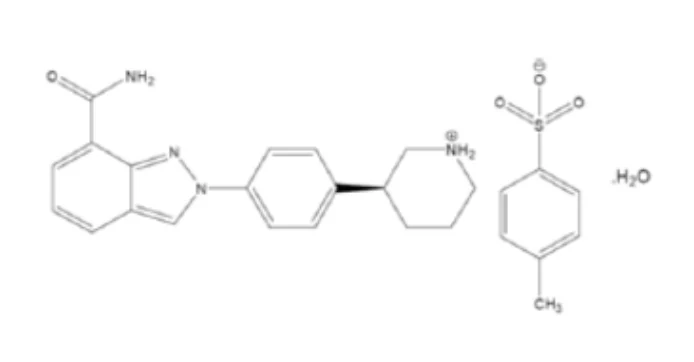
Physicochemical properties: Niraparib tosylate monohydrate is a white to off-white, non-hygroscopic crystalline solid. Niraparib solubility is pH independent below the pKa of 9.95, with an aqueous free base solubility of 0.7 mg/mL to 1.1 mg/mL across the physiological pH range.
Non-proprietary name of the drug substance: abiraterone acetate
Chemical name: (3β)-17-(3-pyridinyl) androsta-5,16-dien-3-yl acetate
Molecular formula: C26H33NO2
Molecular mass: 391.55
Structural formula:
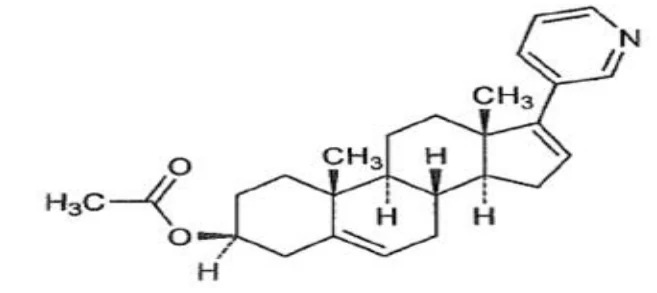
Physicochemical properties: Abiraterone acetate is a white to off-white crystalline powder. Abiraterone acetate is practically insoluble in aqueous media over a wide range of pH values (pH=2.0 to 12.9). The melting point is between 147°C and 148°C. The pKa is 5.19.
14. Clinical Trials
14.1 Clinical Trials by Indication
Metastatic Castration-sensitive Prostate Cancer (mCSPC)
The treatment of adult patients with deleterious or suspected deleterious BRCA mutated (germline and/or somatic) metastatic castration-sensitive prostate cancer (mCSPC). Patients must have confirmation of BRCA mutation before AKEEGA treatment is initiated.
Table 12: Summary of Patient Demographics for Clinical Trials in Metastatic Castration-Sensitive Prostate Cancer (mCSPC)
| Study # | Study design | Dosage, route of administration and duration | Study subjects (n) | Mean age (Range) |
| 67652000PCR3002 (AMPLITUDE) | Phase 3 Randomized, double-blind, placebo-controlled multinational study | AKEEGA plus prednisone arm: 200 mg niraparib, 1000 mg abiraterone acetate as two regular-strength fixed dose combination tablets (two 100 mg niraparib/500 mg abiraterone acetate tablets), and 5 mg prednisone. Abiraterone acetate plus prednisone arm: 1000 mg abiraterone acetate (four 250 mg abiraterone acetate tablets), and 5 mg prednisone. Participants received concomitant background androgen deprivation therapy with a GnRH analogue if not surgically castrated. | 696 | 67.3 (40-92 years) |
Study Design and Study Demographics (AMPLITUDE)
AMPLITUDE is a Phase 3, randomized, double-blind, placebo-controlled, multinational study evaluating treatment with AKEEGA (200 mg niraparib and 1000 mg abiraterone acetate) plus prednisone (5 mg) daily versus abiraterone acetate plus prednisone (AAP) standard of care in 696 patients with mCSPC and select HRR population.
Participants were required to have at least one of the selected HRR gene mutations, which was confirmed prior to randomization.
All participants received androgen deprivation therapy (either medical or surgical castration), starting ≥14 days and up to maximum of 6 months prior to randomization. Participants were allowed to receive up to 6 cycles of docetaxel and/or up to 45 days of AAP prior to randomization. Randomization was stratified based on (1) HRR gene alteration (BRCA2 versus CDK12 versus all other pathogenic alterations), (2) prior docetaxel use (yes versus no), and (3) volume of disease at screening (high versus low).
Efficacy data was based on 387 patients with mCSPC and BRCA gene mutations, who were randomised (1:1) to receive either AKEEGA plus prednisone (N=191) or placebo plus AAP (N=196) orally daily. Treatment was continued until disease progression, unacceptable toxicity, or death. The median duration of treatment was 25.7 months in the AKEEGA plus prednisone arm and 21.5 months in the placebo plus AAP arm.
Table 13 summarizes the demographics and baseline disease characteristics of participants enrolled in the AMPLITUDE study. The median PSA at initial diagnosis was 107.00 ug/L (range 0.1- 15900.0). All participants had an Eastern Cooperative Oncology Group Performance Status (ECOG PS) score of 0, 1 or 2 at study entry.
Table 13: Key Demographic and Baseline Disease Characteristics in BRCAm patients, AMPLITUDE.
AKEEGA + Prednisone N=191 n (%) | Placebo+AAP N=196 n (%) | Total N=387 n (%) | |||||||||
|---|---|---|---|---|---|---|---|---|---|---|---|
| Age (years) | |||||||||||
| < 65 | 74 (38.7) | 82 (41.8) | 156 (40.3) | ||||||||
| ≥ 65-74 | 69 (36.1) | 81 (41.3) | 150 (38.8) | ||||||||
| ≥ 75 | 48 (25.1) | 33 (16.8) | 81 (20.9) | ||||||||
| Median | 67.0 | 66.0 | 67.0 | ||||||||
| Range | (41; 88) | (44; 92) | (41; 92) | ||||||||
| Race | |||||||||||
| Caucasian | 125 (65.4) | 144 (73.5) | 269 (69.5) | ||||||||
| Asian | 49 (25.7) | 43 (21.9) | 92 (23.8) | ||||||||
| 10 (5.2) | 4 (2.0) | 14 (3.6) | |||||||||
| Unknown | 1 (0.5) | 1 (0.5) | 2 (0.5) | ||||||||
| Baseline disease characteristics | |||||||||||
| Prior Docetaxel Use | 29 (15.2) | 33 (16.8) | 62 (16.0) | ||||||||
Disease Volumea High Low | 151 (79.1) 40 (20.9) | 154 (78.6) 42 (21.4) | 305 (78.8) 82 (21.2) | ||||||||
| Gleason score ≥ 8 at initial diagnosis | 160 (83.8) | 158 (80.6) | 318 (82.2) | ||||||||
| Bone involvement | 189 (99.0) | 191 (97.4) | 380 (98.2) | ||||||||
| Visceral disease (liver, lung, adrenal gland, other) | 33 (17.3) | 31 (15.8) | 64 (16.5) | ||||||||
| Metastasis stage at initial diagnosis (M1) | 167 (87.4) | 175 (89.3) | 342 (88.4) | ||||||||
| Lymph nodes involvement | 92 (48.2) | 100 (51.0) | 192 (49.6) | ||||||||
| Number of bone lesions at study entry > 10 lesions | 101 (52.9) | 108 (55.1) | 209 (54.0) | ||||||||
| Median time from metastatic diagnosis to randomization (months) | 3.09 | 3.04 | 3.06 | ||||||||
BPI-SF pain score (last score before first dose) 0 1 to 3 > 3 | 88 (46.1) 63 (33.0) 40 (20.9) | 88 (45.4) 66 (34.0) 40 (20.6) | 176 (45.7) 129 (33.5) 80 (20.8) | ||||||||
ECOG Performance Status Score 0 1 2 | 133 (69.6) 55 (28.8) 3 (1.6) | 130 (66.3) 65 (33.2) 1 (0.5) | 263 (68.0) 120 (31.0) 4 (1.0) | ||||||||
a High-volume mCSPC is defined as 1) visceral metastases or 2) at least 4 bone lesions, with at least 1 bone lesion outside of the vertebral column or pelvis. Low-volume mCSPC is defined as not meeting the definition of high-volume mCSPC | |||||||||||
Efficacy Endpoints:
In the AMPLITUDE study, the primary endpoint, rPFS, was determined by the first occurrence of progression by bone scan (according to Prostate Cancer Working Group 3 criteria) or soft tissue lesions by CT or MRI (according to RECIST 1.1 criteria) or death, whichever occurs first. Time to symptomatic progression (TSP) and overall survival (OS) were the key secondary efficacy endpoints.
Study Results:
In the BRCAm subgroup, a statistically significant and clinically meaningful improvement in rPFS was observed in the AKEEGA plus prednisone arm, with a 48.5% reduction in the risk of radiographic progression or death compared with the placebo plus AAP arm (HR=0.515; 95% CI: 0.370, 0.717; p<0.0001).
The rPFS efficacy results are supported by benefit in the key secondary endpoint of TSP in favour of the AKEEGA plus prednisone arm.
At the first interim analysis for OS, with a median follow-up of 30.7 months, a trend towards improvement in OS with AKEEGA plus prednisone treatment was observed.
Primary and key secondary efficacy results of the AMPLITUDE study are summarized in Table 14, Figure 1 and Figure 2.
In subgroup analyses, treatment benefit in mCSPC subjects with the BRCA1 mutation was uncertain. In BRCA1 patients (n=61), excluding co-occurring BRCA2, the HR point estimate for investigator assessed rPFS was 1.127 [95% CI 0.447, 2.843].
Table 14: Summary of Primary and Key Secondary Efficacy Endpoints, BRCA Population (AMPLITUDE)
| Endpoints | AKEEGA + Prednisone (N=191) | Placebo+AAP (N=196) | |||||||
|---|---|---|---|---|---|---|---|---|---|
| Radiographic Progression-free Survival1 | |||||||||
| Events | 57 (29.8%) | 93 (47.4%) | |||||||
| Median (95% CI) time to event (months) | NE (41.20, NE) | 25.99 (22.11, 41.17) | |||||||
| Hazard Ratio (95% CI) | 0.515 (0.370, 0.717) | ||||||||
| p-value | <0.0001 | ||||||||
| Time to Symptomatic Progression2 | |||||||||
| Events | 31 (16.2%) | 66 (33.7%) | |||||||
| Median (95% CI) time to event (months) | NE (NE, NE) | NE (39.72, NE) | |||||||
| Hazard Ratio (95% CI) | 0.444 (0.290, 0.681) | ||||||||
| p-value | 0.0001 | ||||||||
| Overall Survival2 | |||||||||
| Events | 44 (23.0%) | 61 (31.1%) | |||||||
| Median (95% CI) time to event (months) | NE (NE, NE) | NE (36.17, NE) | |||||||
| Hazard Ratio (95% CI) | 0.750 (0.509,1.106) | ||||||||
| p-value | 0.1454 | ||||||||
| 1 Final analysis with a 30.7 month median follow-up | |||||||||
2 Interim analysis 1 with a 30.7 month median follow-up
NE = not estimable
Figure 1: Kaplan-Meier Plot of Radiographic Progression-free Survival by Investigator in the BRCA Population (AMPLITUDE)
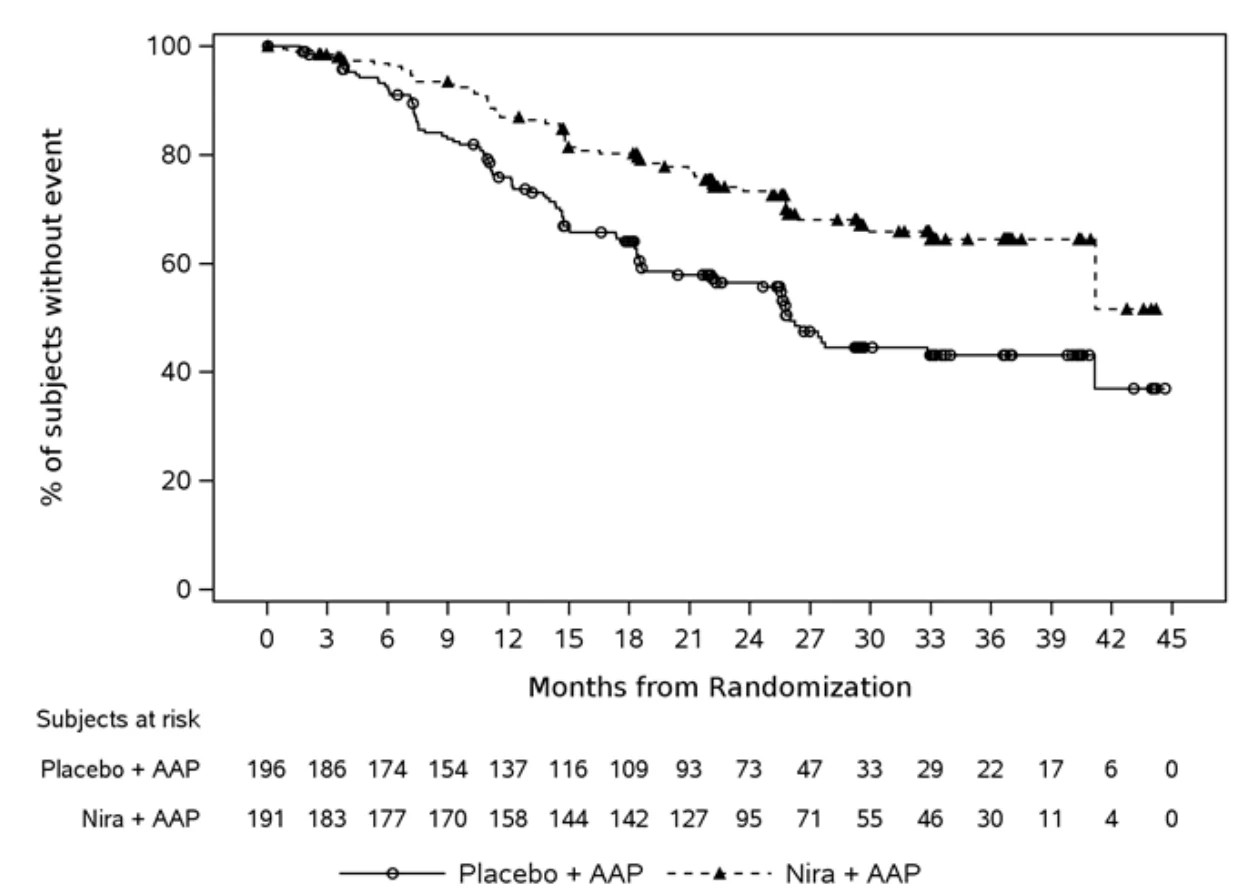
Key: AAP = abiraterone acetate plus prednisone; Nira = niraparib
Figure 2: Kaplan-Meier Plot of Overall Survival in the BRCA Population (AMPLITUDE)
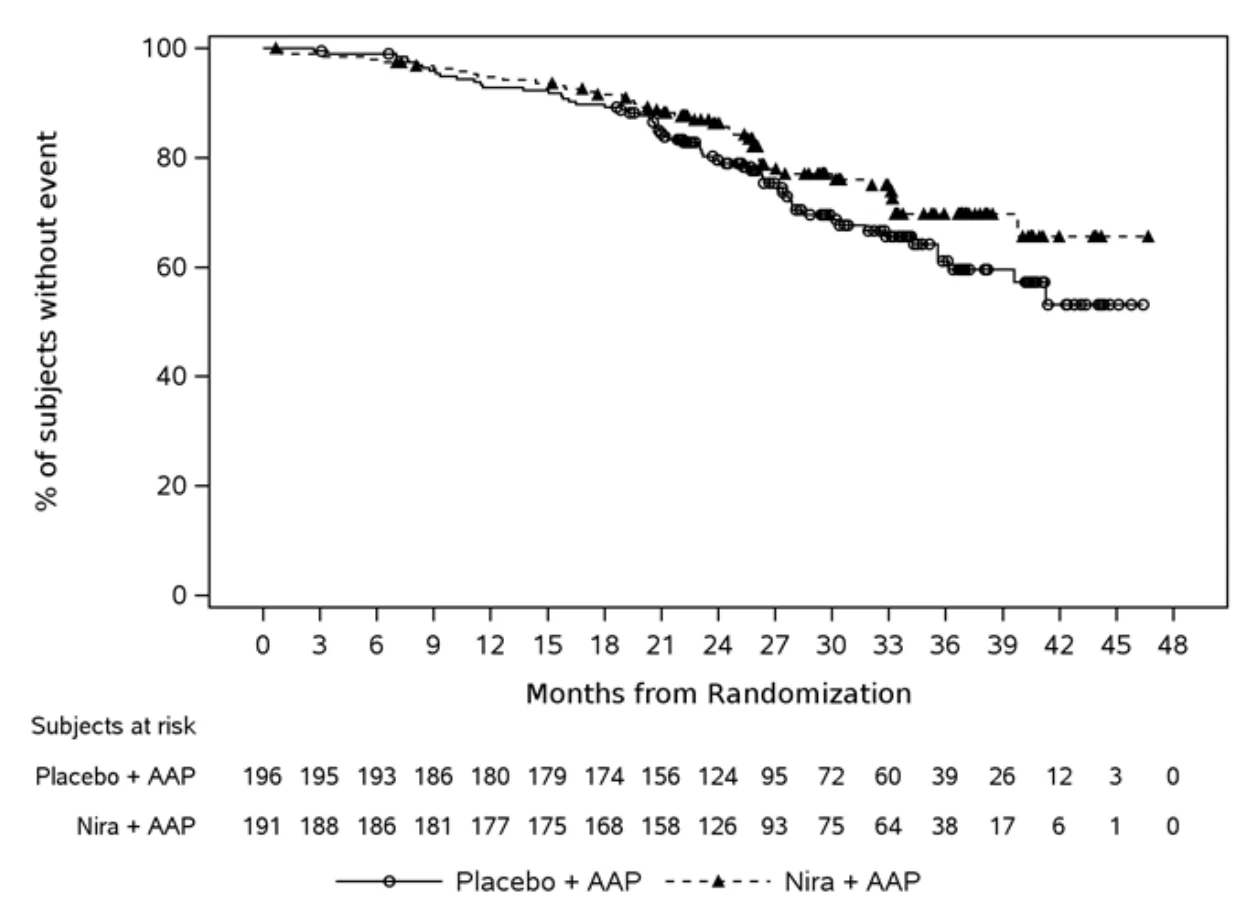
Key: AAP = abiraterone acetate plus prednisone; Nira = niraparib
Additional efficacy endpoints included:
- Time to subsequent therapy (TST), defined as the time from the date of randomization to the date of initiation of subsequent therapy for prostate cancer,
- PFS on first subsequent therapy (PFS2), defined as the time from the date of randomization to the date of the first occurrence of disease progression on first subsequent therapy for prostate cancer or death, and
- Time to initiation of cytotoxic chemotherapy (TTCC).
In the BRCAm subgroup, a statistically significant and clinically meaningful improvement in TST was observed in the AKEEGA plus prednisone arm, with a 53.3% reduction in the risk of initiation of subsequent therapy compared with the placebo plus AAP arm (HR=0.467; 95% CI: 0.330, 0.659; nominal p=<0.0001). The results for PFS2 and TTCC were also consistent and demonstrated a benefit for the AKEEGA plus prednisone arm over the placebo plus AAP arm.
Metastatic Castration-resistant Prostate Cancer (mCRPC)
The treatment of adult patients with deleterious or suspected deleterious BRCA mutated (germline and/or somatic) metastatic castration-resistant prostate cancer (mCRPC), who are asymptomatic/mildly symptomatic, and in whom chemotherapy is not clinically indicated. Patients must have confirmation of BRCA mutation before AKEEGA treatment is initiated.
Table 15: Summary of Patient Demographics for Clinical Trials in Metastatic Castration-resistant Prostate Cancer (mCRPC)
| Study # | Study design | Dosage, route of administration and duration | Study subjects (n) | Mean age (Range) |
| 64091742PCR3001 (MAGNITUDE) | Phase 3 Randomized, double-blind, placebo-controlled multicenter study with 3 Cohorts | Cohort 1 and 2: 200 mg niraparib/placebo, 1000 mg abiraterone as single agent combinations, and 10 mg prednisone orally once daily. Cohort 3: 200 mg niraparib, 1000 mg abiraterone as fixed-dose combination tablets, and 10 mg prednisone orally once daily Patients received concomitant background androgen deprivation therapy with a GnRH analogue if not surgically castrated. | Cohort 1 = 423 Cohort 2 = 247 Cohort 3 = 95 | Cohort 1 = 69 (43-100 years) Cohort 2 = 71 (52-87 years) Cohort 3 = 69.2 (47-90 years) |
Study Design and Study Demographics (MAGNITUDE)
The efficacy of AKEEGA was established in MAGNITUDE (Study 64091742PCR3001), a randomized, double-blind, placebo-controlled multicenter Phase 3 clinical study to assess the efficacy of niraparib in combination with abiraterone acetate plus prednisone (AAP), compared with placebo plus AAP in metastatic castration-resistant prostate cancer (mCRPC) patients randomized in 3 Cohorts.
Key eligibility criteria included asymptomatic/mildly symptomatic patients with mCRPC who had not received prior systemic therapy in the mCRPC setting except for a short duration of prior AAP (up to four months in the absence of disease progression) and, an Eastern Cooperative Oncology Group Performance
Status (ECOG PS) of 0 or 1, adequate hematological, hepatic, renal and cardiac function parameters (see Table 16 for Study Demographics). Asymptomatic/mildly symptomatic status was defined by a score of ≤3 on BPI-SF (Brief Pain Inventory Short Form), Question #3 worst pain over the past 24 hours at screening. Patients were required to have castrate levels of testosterone ≤50 ng/dL on a GnRHa or bilateral orchiectomy and continued background androgen deprivation therapy with a GnRH analogue if not surgically castrated. Subjects with active brain metastases, opiate use during screening, a history of adrenal dysfunction, history of current/prior AML/MDS, or prior AAP treatment outside mCRPC setting were excluded.
Patients were stratified by past taxane-based chemotherapy exposure in metastatic castration-sensitive prostate cancer setting (24.4%), past AR-targeted therapy exposure (4.9%), prior AAP use up to four months (26.2%). In Cohort 1, Patients were further stratified by homologous recombination repair (HRR) gene alteration status (BRCA1/2 vs. all non-BRCA HRRm).
Patients were prospectively screened for HRR alterations and then enrolled into either Cohort 1 and 3 (presence of HRR gene alterations) or Cohort 2 (absence of HRR gene alterations). Plasma, and/or tumor tissue (fresh or archival) samples for all patients were centrally tested with Foundation One® CDx or the Resolution CtDx HRD™ to determine HRR mutation status. These assays do not differentiate between germline and somatic mutations. Enrollment into the study based on local testing was infrequent. The same central tests were used to confirm HRR status for those subjects who enrolled based on local test results.
Cohort 1 consisted of 423 patients with mCRPC and 9 pre-specified HRR gene alterations (HRRm). Cohort 1 and 2 patients were randomized (1:1) to receive either niraparib plus abiraterone acetate and prednisone or prednisolone (AAP) orally at a dose of 200 mg/1,000 mg once daily or placebo plus AAP once daily as single agent combinations. Treatment was continued until disease progression, unequivocal clinical progression, unacceptable toxicity, or death.
Cohort 2 included 246 patients without HRR gene alterations. Since the pre-specified futility analysis for Cohort 2 was met, the independent data monitoring committee (IDMC) recommended unblinding and to stop enrolment in Cohort 2, with the unblinded patients allowed to remain on niraparib plus AAP or receive AAP alone.
Cohort 3 was a separate single-arm open-label cohort with no hypothesis testing, which enrolled patients after completion of enrollment into Cohort 1 and 2. Cohort 3 included 95 mCRPC patients with the same HRR gene alterations as Cohort 1. Patients received treatment with the same dosing regimen as Cohort 1 with the fixed-dose combination tablet formulation of niraparib and abiraterone acetate.
Demographic and baseline disease characteristics in BRCAm patients in MAGNITUDE, Cohort 1 are summarized in Table 16 below. Demographics and baseline disease characteristics were generally balanced between the treatment arms, however, more patients with higher ECOG and BPI-SF score were in the niraparib plus AAP arm.
Table 16: Key Demographic and Baseline Disease Characteristics in BRCAm patients, MAGNITUDE Cohort 1
| Placebo + AAP | Niraparib + AAP | Total | ||
|---|---|---|---|---|
| Placebo + AAP | Niraparib + AAP | Total | ||
| Analysis set: randomized | 112 | 113 | 225 | |
| Analysis set: randomized | 112 | 113 | 225 | |
| Time from initial diagnosis to randomization (years) | ||||
| Mean (SD) | 3.68 (3.506) | 3.09 (2.796) | 3.39 (3.176) | |
| Median | 2.31 | 2.00 | 2.26 | |
| Range | (0.5; 16.1) | (0.5; 18.3) | (0.5; 18.3) | |
| Time from mCRPC to first dose (years) | ||||
| Mean (SD) | 0.46 (0.513) | 0.34 (0.292) | 0.40 (0.420) | |
| Median | 0.28 | 0.27 | 0.27 | |
| Range | (0.0; 2.9) | (0.0; 2.3) | (0.0; 2.9) | |
| Age (years) | ||||
| Median | 68.0 | 67.0 | 68.0 | |
| Range | (43; 88) | (45; 100) | (43; 100) | |
| <65 | 37 (33.0%) | 39 (34.5%) | 76 (33.8%) | |
| ≥65-74 | 52 (46.4%) | 44 (38.95) | 96 (42.7%) | |
| ≥75 | 23 (20.5%) | 30 (26.5%) | 53 (23.6%) | |
| Gene Frequency | ||||
| BRCA1 | 4 (3.6%) | 12 (10.6%) | 16 (7.1%) | |
| BRCA2 | 89 (79.5%) | 86 (76.1%) | 175 (77.8%) | |
| Race | ||||
| Asian | 20 (17.9%) | 18 (15.9%) | 38 (16.9%) | |
| Black or African American | 0 | 3 (2.7%) | 3 (1.3%) | |
| White | 84 (75.0%) | 78 (69.0%) | 162 (72.0%) | |
| Unknown | 8 (7.1%) | 14 (12.4%) | 22 (9.8%) | |
| Ethnicity | ||||
| Hispanic or Latino | 13 (11.6%) | 13 (11.5%) | 26 (11.6%) | |
| Not Hispanic or Latino | 91 (81.3%) | 83 (73.5%) | 174 (77.3%) | |
| Not reported | 8 (7.1%) | 17 (15.0%) | 25 (11.1%) | |
| Metastasis stage at initial diagnosis | ||||
| M0 | 56 (50.0%) | 38 (33.6%) | 94 (41.8%) | |
| M1 | 50 (44.6%) | 70 (61.9%) | 120 (53.3%) | |
| Unknown | 6 (5.4%) | 5 (4.4%) | 11 (4.9%) | |
| Gleason Score at initial diagnosis | ||||
| <7 | 8 (7.1%) | 8 (7.1%) | 16 (7.1%) | |
| 7 | 27 (24.1%) | 16 (14.3%) | 43 (19.2%) | |
| 3+4 | 7 (6.3%) | 6 (5.4%) | 13 (5.8%) | |
| 4+3 | 19 (17.0%) | 10 (8.9%) | 29 (12.9%) | |
| unknown | 1 (0.9%) | 0 | 1 (0.4%) | |
| ≥8 | 72 (64.3%) | 83 (74.1%) | 155 (69.2%) | |
| Unknown | 5 (4.5%) | 5 (4.5%) | 10 (4.5%) | |
| PSA at initial diagnosis (µg/L) | ||||
| N | 101 | 104 | 205 | |
| Mean (SD) | 252.83 (693.7) | 219.83 (553.9) | 236.09 (625.3) | |
| Median | 42.00 | 43.23 | 42.96 | |
| Range | (0.1; 5000.0) | (0.1; 3687.0) | (0.1; 5000.0) | |
| ECOG Performance Status | ||||
| 0 | 80 (71.4%) | 69 (61.1%) | 149 (66.2%) | |
| 1 | 32 (28.6%) | 44 (38.9%) | 76 (33.8%) | |
| Extent of Disease at study entrya | ||||
| Bone | 93 (83.0%) | 99 (87.6%) | 192 (85.3%) | |
| Bone only | 46 (41.1%) | 38 (33.6%) | 84 (37.3%) | |
| Visceral | 22 (19.6%) | 26 (23.0%) | 48 (21.3%) | |
| Soft tissue | 7 (6.3%) | 5 (4.4%) | 12 (5.3%) | |
| Nodalb | 50 (44.6%) | 62 (54.9%) | 112 (49.8%) | |
| Pelvic | 34 (30.4%) | 42 (37.2%) | 76 (33.8%) | |
| Non-pelvic | 34 (30.4%) | 40 (35.4%) | 74 (32.9%) | |
| Prostatec | 2 (1.8%) | 1 (0.9%) | 3 (1.3%) | |
| Number of bone lesions at study entry | ||||
| ≤10 lesionsd | 67 (59.8%) | 68 (60.2%) | 135 (60.0%) | |
| > 10 lesions | 45 (40.2%) | 45 (39.8%) | 90 (40.0%) | |
| LDH at study entry (Enzyme U/l) | ||||
| N | 111 | 111 | 222 | |
| Mean (SD) | 241.09 (190.5) | 337.90 (473.8) | 289.50 (363.5) | |
| Median | 197.00 | 204.00 | 201.50 | |
| Range | (98.0; 1530.0) | (98.0; 2959.0) | (98.0; 2959.0) | |
| BPI-SF pain score (item 3) | ||||
| 0 | 57 (50.9%) | 57 (50.4%) | 114 (50.7%) | |
| 1 to 3 | 40 (35.7%) | 51 (45.1%) | 91 (40.4%) | |
| > 3 | 15 (13.4%) | 5 (4.4%) | 20 (8.9%) | |
| Mean (SD) | 1.35 (1.976) | 1.09 (1.573) | 1.22 (1.786) | |
| Median | 0.00 | 0.00 | 0.00 | |
| Range | (0.0; 9.0) | (0.0; 10.0) | (0.0; 10.0) | |
Key: AAP=abiraterone acetate plus prednisone
aSubjects having multiple lesions within each category are counted only once in the category but may be represented on more than one category
bIncludes lymph nodes not specified as pelvic or non-pelvic.
cProstate local recurrence/progression
dIncludes subjects with no bone lesion
The median duration of treatment in Cohort 1 was 20.5 months (14.4 months in placebo plus AAP) and Cohort 3 was 19.5 months respectively at the time of CCO (15 May 2023). Overall, 95.3% and 93.7% of patients received at least 3 cycles of treatment in Cohort 1 and Cohort 3.
Efficacy Endpoints:
The primary endpoint was radiographic progression free survival (rPFS) as determined by blinded independent central radiology (BICR) review per prostate cancer working group 3 (PCWG3) (for bone lesions) and Response Evaluation Criteria in Solid Tumors (RECIST) criteria 1.1 (for soft tissue lesions). In patients with alterations in BRCA1 or BRCA2 genes (BRCAm subgroup), rPFS was formally statistically evaluated. Secondary statistically-planned efficacy outcome measures included time to cytotoxic chemotherapy (TCC), time to symptomatic progression (TSP), and overall survival (OS).
Study Results:
Treatment of BRCA-mutated mCRPC (MAGNITUDE)
In the BRCAm subgroup, a statistically significant and clinically meaningful improvement in rPFS was observed in the niraparib plus AAP group, with a 47% reduction in the risk of radiographic progression or death compared with the placebo plus AAP group (HR = 0.533; 95% CI: [0.361, 0.789], two-sided p = 0.0014) at interim analysis 1 (clinical cut-off on 08 October 2021).
The rPFS efficacy was similar between the plasma circulating tumour DNA and tumour tissue DNA testing methods for the BRCAm subgroup.
The rPFS efficacy results are supported by benefit in key secondary endpoints of TSP and TCC in favour of the combination arm. Furthermore, at the final analysis, there was a strong trend toward improved OS with niraparib plus AAP. Efficacy results of the BRCAm subgroup of Cohort 1 are summarized in Table 17, Figure 3 and Figure 4.
Table 17: Efficacy Results from BRCAm mCRPC population in MAGNITUDE Cohort 1
a Interim analysis: CCO 08 October 2021
b Final analysis: CCO 15 May 2023
Note hazard ratio is estimated based on the stratified Cox's Proportional Hazards Model; p-value is from a stratified log-rank test.
c nominal p-value
d Time to Symptomatic progression was defined as the time from the date of randomization to the date of the first of any of the following:
- EBRT for skeletal symptoms.
- Tumor-related orthopedic surgical intervention.
- Other cancer-related procedures (e.g., nephrostomy insertion, bladder catheter insertion, EBRT, or surgery for tumor symptoms other than skeletal).
- Cancer-related morbid events (e.g., fracture [symptomatic and/or pathologic], cord compression, urinary obstructive events).
| Endpoints | Niraparib + AAP (N=113) | Placebo + AAP (N=112) |
|---|---|---|
| Radiographic Progression-free Survival by BICRa | ||
| 45 (39.8%) | 64 (57.1%) |
| 16.56 (13.86, NE) | 10.87 (8.31, 13.80) |
| 0.533 (0.361, 0.789) | |
| 0.0014 | |
| Time to Initiation of Cytotoxic Chemotherapyb | ||
| 35 (31.0%) | 51 (45.5%) |
| NE (31.44, NE) | 28.16 (20.73, NE) |
| 0.598 (0.387,0.924) | |
| 0.0192 | |
| Time to Symptomatic Progressionb, d | ||
| 38 (33.6%) | 58 (51.8%) |
| NE (36.24, NE) | 21.65 (17.61, 35.81) |
| 0.562 (0.371, 0.849) | |
| 0.0056 | |
| Overall Survivalb | ||
| 70 (62.5%) | 60 (53.1%) |
| 28.55 (23.82, 32.95) | 30.36 (27.60, NE) |
| 0.788 (0.554,1.120) | |
| 0.1828 | |
- Initiation of a new systemic anti-cancer therapy because of cancer pain
Figure 3: Kaplan-Meier Plot of Radiographic Progression-free Survival by Central Review in BRCAm mCRPC patients in MAGNITUDE Cohort 1
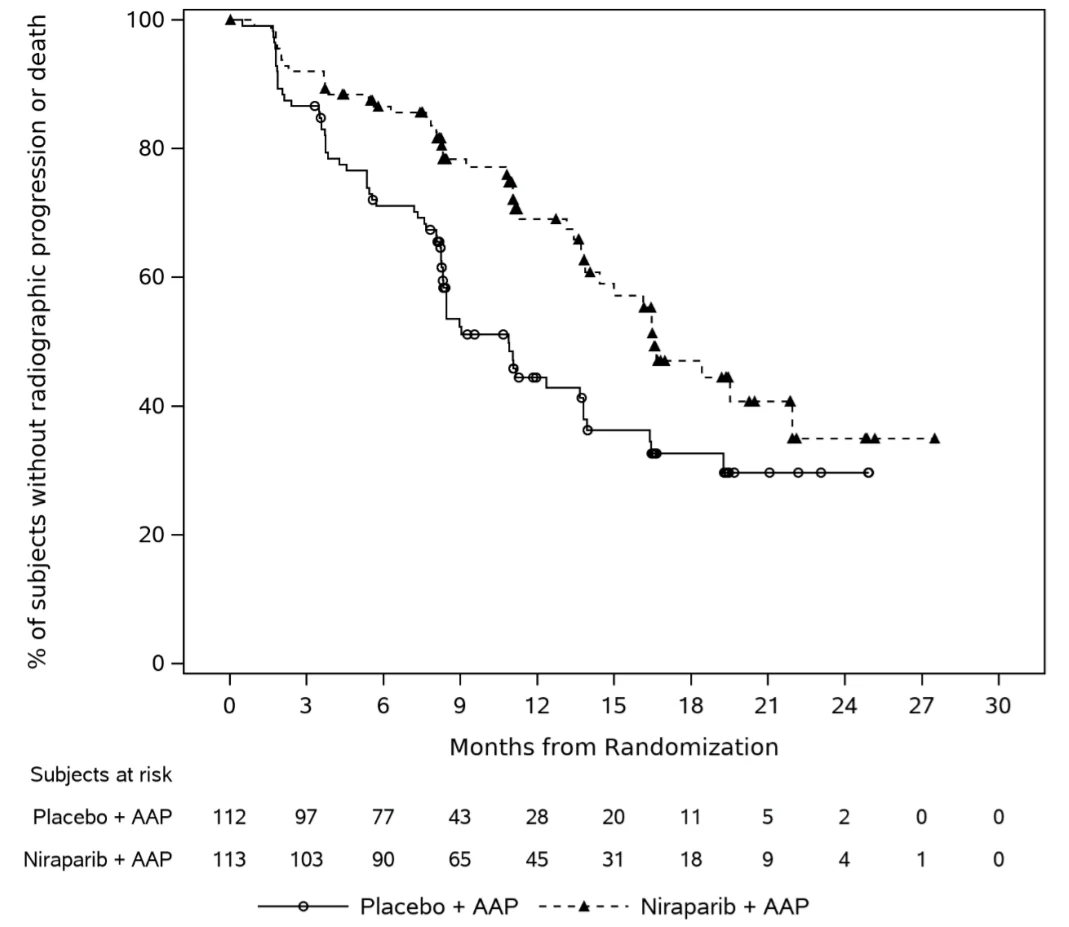
Key: AAP = abiraterone acetate plus prednisone.
Primary analysis: CCO 08 October 2021
Figure 4: Kaplan-Meier Plot of Overall Survival in BRCAm mCRPC patients in MAGNITUDE Cohort 1
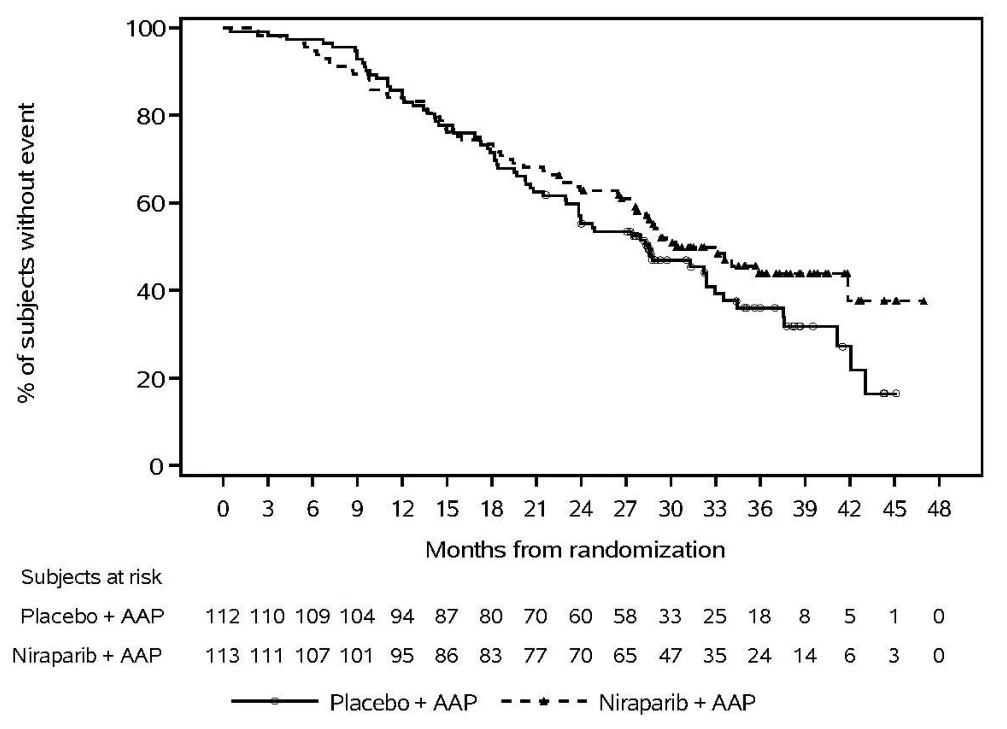
Key: AAP = abiraterone acetate plus prednisone.
Final analysis: CCO 15 May 2023
In exploratory subgroup analyses, treatment benefit in subjects with visceral metastases was uncertain due to the limited sample size. In Cohort 1, BRCA patients with visceral metastases (n=48), the rPFS HR=1.02 [95% CI 0.50, 2.06]; the OS HR=1.93 [95% CI: 0.96, 3.89]. In the BRCA subgroup with visceral metastases, the median OS was 14 months in the niraparib plus AAP arm compared to 24 months in the placebo plus AAP arm at final analysis (CCO 15 May 2023). Subgroup analyses are summarized in Table 18.
Table 18: Exploratory subgroup analyses by visceral metastases status
| rPFS PA-IA1 | OS FA | ||||||||||||
|---|---|---|---|---|---|---|---|---|---|---|---|---|---|
| Subgroup (N) (%) | Treatment group | N (events) | HR (95% CI) | N (events) | HR (95% CI) | ||||||||
| BRCA non-Visceral (N=177) (78.7%) | Placebo+AAP | 90 (51) | 0.386 (0.238, 0.626) | 90 (57) | 0.576 (0.383, 0.867) | ||||||||
| Niraparib+AAP | 87 (25) | 87 (39) | |||||||||||
| BRCA Visceral (N=48) (21.3%) | Placebo+AAP | 22 (13) | 1.020 (0.504, 2.061) | 22 (13) | 1.931 (0.958, 3.894) | ||||||||
| Niraparib+AAP | 26 (20) | 26 (21) | |||||||||||
No benefit for treatment with niraparib plus AAP was observed in Cohort 2 patients without HRR gene alterations. The pre-planned futility analysis for Cohort 2 was performed on 13 August 2020, assessing data from 233 subjects with 113 composite progression events observed. With a HR=1.087 for the composite progression endpoint, futility was declared for this cohort.
15. Microbiology
No microbiological information is required for this drug product.
16. Non-Clinical Toxicology
General toxicology
Nonclinical studies with AKEEGA have not been performed. The nonclinical toxicology data are based on findings in studies with niraparib and abiraterone acetate individually. Aside from reproductive organ changes seen in all animal toxicology studies, nonclinical data reveal no special hazard for humans with AKEEGA based on conventional studies of safety pharmacology, repeated dose toxicity, genotoxicity, and carcinogenic potential.
In vitro, niraparib bound to the dopamine transporter (DAT), norepinephrine transporter (NET) and serotonin transporter (SERT) and inhibited uptake of norepinephrine and dopamine in cells with IC50 values that were lower than the Cmin at steady-state in patients receiving niraparib 300 mg once daily. In mice, single doses of niraparib increased intracellular levels of dopamine and metabolites in cortex. Niraparib has the potential to cause effects in patients related to inhibition of these transporters (e.g., cardiovascular or CNS).
In safety pharmacology studies, intravenous administration of niraparib to vagotomized dogs over 30 minutes at 1, 3 and 10 mg/kg resulted in an increased range of arterial pressures of 13-20, 18-27 and 19-25% and increased range of heart rates of 2-11, 4-17 and 12-21% above pre-dose levels, respectively. The unbound plasma concentrations of niraparib in dogs at these dose levels were approximately 0.7, 2 and 8 times the unbound Cmax at steady-state in patients receiving niraparib 300 mg once daily. Reduced locomotor activity was seen in one of two single dose studies in mice. The clinical relevance of these findings is not known. In repeat-dose oral toxicity studies, niraparib was administered daily for up to 3 months’ duration in rats and dogs. The major primary target organ for toxicity in rats and dogs was the bone marrow, with associated changes in peripheral hematology parameters. Additionally, decreased spermatogenesis was seen in both species. These findings occurred at exposure levels below those seen clinically and were reversible within 4 weeks of cessation of dosing.
In repeated dose toxicity studies in rats and monkeys with abiraterone acetate, circulating testosterone levels were significantly reduced at concentration levels of approximately one half the human clinical exposure. As a result, morphological and/or histopathological changes in the reproductive organs such as aspermia/hypospermia, atrophy/weight reductions in the male genital tract organs and testes, adrenal gland hypertrophy, Leydig cell hyperplasia, pituitary gland hyperplasia and mammary gland hyperplasia were observed. The changes in the reproductive organs and androgen sensitive organs are consistent with the pharmacology of abiraterone. All treatment related changes were partially or fully reversed after a four-week recovery period.
After chronic treatment from 13-weeks onward, bile duct/oval cell hyperplasia, associated with increased serum alkaline phosphatase and/or total bilirubin levels, was seen in rat and monkey livers. After a four-week recovery period, serum parameters reversed, whereas bile duct/oval cell hyperplasia persisted.
A dose dependent increase in cataracts was observed after 26-weeks of treatment in rats which were irreversible after a four-week recovery period.
Carcinogenicity
Carcinogenicity studies have not been conducted with niraparib. Abiraterone acetate was not carcinogenic in a 6-month study in the transgenic (Tg.rasH2) mouse. In a 24-month carcinogenicity study in the rat, abiraterone acetate increased the incidence of interstitial cell neoplasms in the testes. This finding is considered related to the pharmacological action of abiraterone and rat specific. The clinical relevance of this finding is not known. Abiraterone acetate was not carcinogenic in female rats.
Genotoxicity
Niraparib was not mutagenic in a bacterial reverse mutation assay (Ames) test but was clastogenic in an in vitro mammalian chromosomal aberration assay and in an in vivo rat bone marrow micronucleus assay. This clastogenicity is consistent with genomic instability resulting from the primary pharmacology of niraparib and indicates potential for genotoxicity in humans. Abiraterone acetate and abiraterone were devoid of genotoxic potential in the standard panel of genotoxicity tests, including an in vitro bacterial reverse mutation assay (the Ames test), an in vitro mammalian chromosome aberration test (using human lymphocytes) and an in vivo rat micronucleus assay.
Reproductive and developmental toxicology
Reproductive and developmental toxicity studies have not been conducted with niraparib. While no direct fertility studies were conducted with niraparib in animals, repeat dose toxicity studies in rats and dogs showed a reduction in spermatogenesis, small testes, and germ cell depletion in the testes and epididymides and these changes were largely reversible within four-weeks of cessation of dosing.
In fertility studies in rats with abiraterone acetate, reduced organ weights of reproductive system, sperm count, sperm motility, altered sperm morphology and reduced fertility were observed in male rats dosed for 4 weeks at ≥30 mg/kg/day. Mating of untreated female rats with males that received 30 mg/kg/day abiraterone acetate resulted in a reduced number of corpora lutea, implantations and live embryos and an increased incidence of pre-implantation loss. Female rats dosed for 2 weeks until day 7 of pregnancy at ≥30 mg/kg/day had an increased incidence of irregular or extended estrous cycles and preimplantation loss. These effects in male and female rats were completely reversible in 4 to 16 weeks after abiraterone acetate was stopped. The dose of 30 mg/kg/day in rats is approximately 0.3 times the recommended 1000 mg/day dose of abiraterone acetate based on body surface area.
In developmental toxicity study in rats, abiraterone acetate did not have teratogenic potential, however, abiraterone acetate caused developmental toxicity when administered at doses ≥10 mg/kg/day throughout the period of organogenesis (gestational days 6-17). Findings included embryo-fetal lethality (increased post-implantation loss and resorptions and decreased number of live fetuses), fetal developmental delay (skeletal effects), urogenital effects (bilateral ureter dilation), decreased fetal ano-genital distance, decreased fetal body weight. The doses tested in rats caused maternal toxicity at systemic exposures lower than the human exposure.