


Product Monograph - Amivas-Artesunate
Recent Major Label Changes
| None at the time of the most recent authorization. |
|---|
Table of Contents
Certain sections or subsections that are not applicable at the time of the preparation of the most recent authorized product monograph are not listed.
Recent Major Label Changes .................................................................................................. 2
Part 1 : Health Professional Information ................................................................................ 4
Indications ................................................................................................................. 4
1.1 Pediatrics ................................................................................................................... 4
1.2 Geriatrics ................................................................................................................... 4
Contraindications ....................................................................................................... 4
Serious Warnings and Precautions Box ....................................................................... 5
Dosage and Administration ........................................................................................ 5
4.2 Recommended Dose and Dosage Adjustment ......................................................... 5
4.3 Reconstitution ........................................................................................................... 5
4.4 Administration .......................................................................................................... 6
4.5 Missed Dose .............................................................................................................. 6
Overdose ................................................................................................................... 6
Dosage Forms, Strengths, Composition and Packaging ................................................ 7
Warnings and Precautions .......................................................................................... 7
General ................................................................................................................................ 7
Hematologic ........................................................................................................................ 7
Immune ............................................................................................................................... 8
Monitoring and Laboratory Tests ....................................................................................... 8
Reproductive Health ........................................................................................................... 8
7.1 Special Populations ....................................................................................................... 8
7.1.1 Pregnancy ............................................................................................................ 8
7.1.2 Breastfeeding ...................................................................................................... 9
7.1.3 Pediatrics ............................................................................................................. 9
7.1.4 Geriatrics ............................................................................................................. 9
Adverse Reactions ...................................................................................................... 9
8.1 Adverse Reaction Overview ...................................................................................... 9
8.2 Clinical Trial Adverse Reactions .............................................................................. 10
8.3 Less Common Clinical Trial Adverse Reactions: ...................................................... 11
8.5 Post-Market Adverse Reactions .............................................................................. 11
Drug Interactions ..................................................................................................... 11
9.2 Drug Interactions Overview .................................................................................... 11
9.3. Drug-Behaviour Interactions ................................................................................... 12
9.4 Drug-Drug Interactions ........................................................................................... 12
9.5 Drug-Food Interactions ........................................................................................... 12
9.6 Drug-Herb Interactions ........................................................................................... 12
9.7 Drug-Laboratory Test Interactions.......................................................................... 12
Clinical Pharmacology .............................................................................................. 12
10.1 Mechanism of Action ........................................................................................ 12
10.2 Pharmacodynamics ........................................................................................... 12
10.3 Pharmacokinetics .............................................................................................. 12
Storage, Stability and Disposal .................................................................................. 14
Part 2: Scientific Information ............................................................................................... 15
Pharmaceutical Information ..................................................................................... 15
Clinical Trials ............................................................................................................ 16
14.1. Clinical Trials by Indication ............................................................................... 16
Microbiology ............................................................................................................ 17
Non-Clinical Toxicology ............................................................................................ 18
Patient Medication Information .......................................................................................... 20
Part 1 : Health Professional Information
Indications
AMIVAS-ARTESUNATE (artesunate) is indicated for:
- The initial treatment of severe malaria in adult and pediatric patients.
Initial treatment of severe malaria with AMIVAS-ARTESUNATE should always be followed by a complete treatment course with appropriate oral antimalarial therapy.
It is recommended that AMIVAS-ARTESUNATE should be used to treat patients with severe malaria only after consultation with a physician with appropriate experience in the management of malaria.
LIMITATIONS OF USE
Artesunate does not treat the hypnozoite liver stage forms of Plasmodium and will therefore not prevent relapses of malaria due to Plasmodium vivax or Plasmodium ovale. Concomitant therapy with an antimalarial agent such as an 8-aminoquinoline drug is necessary for the treatment of severe malaria due to P. vivax or P. ovale.
1.1 Pediatrics
Pediatrics (> 6 months– 18 years old): Based on the data submitted and reviewed by Health Canada, the safety and efficacy of AMIVAS-ARTESUNATE in pediatric patients older than 6 months of age has been established. Therefore, Health Canada has authorized an indication for pediatric use.
Pediatrics (birth - 6 months): There was no clinical data of AMIVAS-ARTESUNATE in pediatric patients less than 6 months of age. Pharmacokinetic modelling and simulations indicated that after receiving a dose of 2.4 mg/kg IV artesunate, the dihydroartemisinin (DHA) plasma exposures in infants aged less than 6 months are likely to be higher than those in older infants and children (see 7 Warnings and Precautions, 7.1.3 Pediatrics and 10.3 Pharmacokinetics).
1.2 Geriatrics
Geriatrics (≥ 65 years of age): Available data for the use of AMIVAS-ARTESUNATE in patients older than 65 years of age is limited.
Contraindications
AMIVAS-ARTESUNATE is contraindicated in:
- Patients who are hypersensitive to this drug, to any other artemisinin antimalarial agent, or to any ingredient in the formulation or component of the container. For a complete listing, see 6 Dosage Forms, Strengths, Composition and Packaging.
Serious Warnings and Precautions Box
Dosage and Administration
4.2 Recommended Dose and Dosage Adjustment
- AMIVAS-ARTESUNATE is for IV administration only. The reconstituted solution should be administered as a slow bolus injection over 1-2 minutes.
- Do not administer AMIVAS-ARTESUNATE via continuous intravenous infusion.
- The recommended dose is 2.4 mg/kg (0.24 mL of reconstituted solution for injection per kg body weight) by intravenous (IV) injection at 0, 12 and 24 hours.
- After at least 24 hours (3 doses) treatment with AMIVAS-ARTESUNATE, patients unable to tolerate oral treatment may continue to receive intravenous treatment with 2.4 mg/kg once every 24 hours (from 48 hours after start of treatment).
- Treatment with AMIVAS-ARTESUNATE should be stopped when patients can tolerate oral treatment. After stopping AMIVAS-ARTESUNATE all patients should receive a complete treatment course of an appropriate oral combination antimalarial regimen.
- In patients with severe malaria due to Plasmodium vivax (P. vivax) or Plasmodium ovale (P. ovale), AMIVAS-ARTESUNATE should be administered with an antimalarial agent that is active against the hypnozoite liver stage forms of Plasmodium, such as an 8-aminoquinoline drug.
- Monitor hemoglobin weekly for 4 weeks post artesunate therapy (see 3 Serious Warnings and Precautions Box, and 7 Warnings and Precautions).
- Geriatrics: No dose adjustment is required (see 7.1.4 Geriatrics and 10.3 Pharmacokinetics).
- Renal impairment: No dose adjustment is required (see 10.3 Pharmacokinetics).
- Hepatic impairment: No dose adjustment is required (see 10.3 Pharmacokinetics).
- Pediatric population: No dosage adjustment is recommended based on age and weight (see 7.1.3 Pediatrics and 10.3 Pharmacokinetics).
4.3 Reconstitution
AMIVAS-ARTESUNATE must be reconstituted with the supplied diluent prior to administration (see Table 1).
To reconstitute AMIVAS-ARTESUNATE, withdraw 11 mL of the supplied 0.3 M sodium phosphate diluent with a needle and syringe and inject into the vial containing artesunate powder for injection (the final concentration of artesunate is 10 mg/mL when reconstituted). Swirl gently (do not shake) for up to 5 to 6 minutes until the powder is fully dissolved and no visible particles remain.
Post-treatment Hemolysis: Cases of post-treatment hemolytic anemia severe enough to require transfusion have been reported. Monitor patients for 4 weeks after treatment for evidence of hemolytic anemia (see 4 Dosage and Administration and 7 Warnings and Precautions).
Hypersensitivity: Serious hypersensitivity reactions including anaphylaxis have been reported. Discontinue if signs of serious hypersensitivity occur (see 7 Warnings and Precautions).
Table 1 - Reconstitution
| Vial Size | Volume of Diluent to be Added to Vial | Approximate Available Volume | Concentration per mL |
| 20 mL | 11 mL | 11 mL | 10 mg/mL |
Visually inspect the solution within the vial to ensure that no visible particles remain and there is no discolouration of the solution. Do not administer if the solution is discoloured or contains particulate matter.
Discard the vial and any unused portion of the reconstituted medicinal product after use (see 11 Storage, Stability and Disposal).
Any unused medicinal product or waste material should be disposed of in accordance with local requirements (see 11 Storage, Stability and Disposal).
4.4 Administration
AMIVAS-ARTESUNATE must be reconstituted before administration (see 4.3 Reconstitution).
Because of the instability of artesunate in aqueous solutions the reconstituted solution must be used within 1.5 hours of preparation (see 11 Storage, Stability and Disposal). Therefore, the required dose of artesunate should be calculated (dose in mg = patient’s weight in kg x 2.4) and the number of vials of artesunate needed should be determined prior to reconstituting the artesunate powder.
Inject the reconstituted solution IV as a slow bolus over 1-2 minutes. Do not administer via continuous IV infusion.
AMIVAS-ARTESUNATE must not be mixed with other medicinal products.
4.5 Missed Dose
Should a dose be missed or delayed, AMIVAS-ARTESUNATE should be administered at the earliest opportunity and continue to give the remaining doses 12 or 24 hours apart.
Overdose
Experience of acute overdose with artesunate is limited. One fatal overdose case has been reported in a 5-year-old child administered rectal artesunate at 88 mg/kg/day for 4 days (almost 8-fold over the highest recommended dose). Clinical signs included pancytopenia, melena, seizures, and multiorgan failure before death.
In cases of suspected overdosage, symptomatic and general supportive therapy should be given as appropriate.
| For the most recent information in the management of a suspected drug overdose, contact your regional poison control centre or Health Canada’s toll-free number, 1-844 POISON-X (1-844-764-7669). |
|---|
Dosage Forms, Strengths, Composition and Packaging
Table 2 - Dosage Forms, Strengths, Composition and Packaging
Description
AMIVAS-ARTESUNATE is a white or almost white, fine crystalline powder available in a Type I glass vial capped with a latex-free bromobutyl rubber stopper and an aluminium seal.
Each vial of powder contains 110 mg of artesunate. After reconstitution (see 4.3 Reconstitution), each mL contains 10 mg of artesunate.
The diluent consists of a clear and colourless sodium phosphate buffer for reconstitution available in a Type I glass vial capped with a latex-free bromobutyl rubber stopper and aluminium seal.
Each vial of diluent contains 12 mL of 0.3 M sodium phosphate buffer.
After reconstitution, each mL contains 13.4 mg of sodium.
Warnings and Precautions
See 3 Serious Warnings and Precautions Box
General
Malaria due to P. vivax, Plasmodium malariae (P. malariae) or P. ovale
AMIVAS-ARTESUNATE has not been evaluated in the treatment of severe malaria due to P. vivax, P. malariae or P. ovale. Available data indicates that it is effective against all Plasmodium species (see 1 Indications, 4.2 Recommended Dose and Dosage Adjustment and 15 Microbiology). It does not treat the hypnozoite liver stage forms of Plasmodium and will therefore not prevent relapses of malaria due to P. vivax or P. ovale. Patients treated initially with artesunate for severe malaria due to P. vivax or P. ovale should receive an antimalarial agent that is active against the hypnozoite liver stage forms of Plasmodium.
Hematologic
Post-artesunate delayed hemolysis
Post-artesunate delayed hemolysis (PADH) is characterised by decreased hemoglobin with laboratory evidence of hemolysis (such as decreased haptoglobin and increased lactate dehydrogenase) with onset
| Route of Administration | Dosage Form / Strength/Composition | Non-medicinal Ingredients |
| Intravenous | Powder for Solution, 110 mg Solution 12 mL of sterile 0.3 M sodium phosphate buffer | Concentrated phosphoric acid, disodium phosphate dihydrate, monosodium phosphate monohydrate, sodium hydroxide, water for injection |
at least 7 days and sometimes several weeks after initiating artesunate treatment. PADH has been reported to occur very commonly after successful treatment of severe malaria that commenced with IV artesunate in returning travellers. The risk of PADH may be highest in patients with hyperparasitemia and in younger pediatric patients. Patients should be monitored for evidence of hemolytic anemia for 4 weeks after starting artesunate treatment (see 3 Serious Warnings and Precautions Box and 7 Warnings and Precautions: Monitoring and Laboratory Tests). Spontaneous recovery from PADH usually occurs within a few weeks. However, cases of post-artesunate hemolytic anemia severe enough to require transfusion have been reported. Since a subset of patients with delayed hemolysis after artesunate therapy have evidence of immune hemolytic anemia, performing a direct antiglobulin test should be considered to determine if therapy, e.g. with corticosteroids, is necessary.
Reticulocytopenia
The artemisinins have shown direct inhibitory effects on human erythroid precursors in vitro and inhibit bone marrow responses (especially red blood cell precursors) in animal models. Both animal preclinical data and human data from clinical trials have suggested that reversible reticulocytopenia occurs commonly in association with treatment with intravenous artesunate. The reticulocyte count recovers after cessation of treatment.
Immune
Hypersensitivity
Allergic reactions to intravenous artesunate, including anaphylaxis, have been reported. Other reported allergic reactions include Stevens-Johnson syndrome, urticarial rash and pruritus (see 8.1 Adverse Reactions Overview).
Monitoring and Laboratory Tests
Monitor hemoglobin on Days 7, 14, 21 and 28 post artesunate therapy. If a decrease in hemoglobin is detected, additional laboratory tests for hemolysis could include haptoglobin, lactate dehydrogenase and direct antiglobulin (see 3 Serious Warnings and Precautions Box, 4 Dosage and Administration and PADH in Hematologic above).
Reproductive Health
Fertility
No fertility data are available in humans. Animal studies have reported effects on the male reproductive organs (see section 16 Non-Clinical Toxicology).
7.1 Special Populations
7.1.1 Pregnancy
The use of AMIVAS-ARTESUNATE in the first trimester is not recommended unless the benefit to the mother outweighs the risk to the fetus. There is limited clinical experience with the use of AMIVAS-ARTESUNATE in the first trimester of pregnancy. A risk to the fetus cannot be excluded. Animal studies have shown reproductive toxicity (see 16 Non-Clinical Toxicology).
A moderate amount of clinical data on pregnant women (between 300-1,000 pregnancy outcomes) indicate no malformative or feto/neonatal toxicity of artesunate when given IV in their second or third trimester. As a precautionary measure, it is preferable to avoid the use of AMIVAS-ARTESUNATE during the second or third trimester of pregnancy.
Delaying treatment of severe malaria in pregnancy may result in serious morbidity and mortality to the mother and fetus.
Advise women who are exposed to AMIVAS-ARTESUNATE during pregnancy that there is a pregnancy safety study that monitors pregnancy outcomes. Encourage these patients to report their pregnancy to Amivas, Inc. at 1-855-526-4827 (1-855-5AMIVAS) or www.amivas.com/our-products.
7.1.2 Breastfeeding
DHA, a metabolite of artesunate, is present in human milk. There are no data on the effects of artesunate or DHA on the breastfed infant or on milk production. The benefits of breastfeeding to mother and infant should be weighed against potential risk from infant exposure to DHA through breast milk.
7.1.3 Pediatrics
The safety and effectiveness of AMIVAS-ARTESUNATE have been established in pediatric patients older than 6 months of age. This indication is supported by evidence from clinical studies in adults and pediatric patients with additional pharmacokinetic and safety data in pediatric patients aged 6 months and older (see 8 Adverse Reactions and 14 Clinical Trials).
There was insufficient clinical data to establish the safety and effectiveness of AMIVAS-ARTESUNATE in infants below 6 months of age. Pharmacokinetic modelling and simulations indicate that after receiving a dose of 2.4 mg/kg IV artesunate, the dihydroartemisinin (DHA) plasma exposures in infants aged less than 6 months are likely to be higher than those in older infants and children (see 10.3 Pharmacokinetics).
7.1.4 Geriatrics
There are limited clinical data regarding the safety and efficacy of AMIVAS-ARTESUNATE in patients 65 years and older (see 10.3 Pharmacokinetics).
Adverse Reactions
8.1 Adverse Reaction Overview
The most common adverse drug reaction reported in clinical trials has been anemia. Reticulocytopenia that resolves after completion of treatment with IV artesunate occurs commonly or very commonly (see section 7 Warnings and Precautions).
Patients in clinical trials for artesunate were assessed for neurologic sequelae at the time of hospital discharge. Numerically, a greater number of patients in the artesunate arm of these trials had neurological sequalae at discharge from the hospital than the number in the quinine arm and the neurologic sequelae included loss of balance, hemiplegia/ paresis, ataxia, neuropsychiatric symptoms, tremor, generalized weakness, and confusion and restlessness.
8.2 Clinical Trial Adverse Reactions
Clinical trials are conducted under very specific conditions. The adverse reaction rates observed in the clinical trials; therefore, may not reflect the rates observed in practice and should not be compared to the rates in the clinical trials of another drug. Adverse reaction information from clinical trials may be useful in identifying and approximating rates of adverse drug reactions in real-world use.
Tables 3 and 4 summarize the adverse reactions occurring in > 2% in artesunate arm vs. the quinine comparator arm, in the 2 pivotal trials (see 14.1 Clinical Trials by Indication).
Table 3 - Summary of Artesunate Adverse Drug Reactions by Organ System – Trial 1
| System organ class/preferred term | Artesunate n = 730 (%) | Quinine n = 731 (%) |
| Infection and Infestation | ||
| Blackwater fever | 49 (6.7) | 33 (4.5) |
| Renal | ||
| Dialysis | 60 (8.2) | 48 (6.6) |
Note: Blackwater fever is a clinical scenario characterized by intravascular hemolysis, hemoglobinuria ( with dark brown or red urine ) and renal failure.
Table 4 - Summary of Artesunate Adverse Drug Reactions by Organ System – Trial 2
| System organ class/preferred term | Artesunate n = 2712 (%) | Quinine n = 2713 (%) |
| Blood and Lymphatic Tissue Disorders | ||
| Acute anemia | 155 (5.7) | 125 (4.6) |
| Nervous system disorder | ||
| Coma | 138 (5.1) | 95 (3.5) |
| Convulsions | 274 (10.1) | 225 (8.3) |
| Investigations | ||
| Hypoglycemia | 76 (2.8) | 49 (1.8) |
The following clinically significant adverse reactions occurred in at least 2% of healthy volunteers or patients.
Blood and Lymphatic system disorders: leukopenia, reduced reticulocytes
Gastrointestinal disorders: abdominal pain, vomiting
General disorders and administration site conditions: pyrexia
Hepatic/Biliary/Pancreatic disorders: hyperbilirubinemia
8.3 Less Common Clinical Trial Adverse Reactions:
The following clinically significant adverse reactions occurred in less than 2% of healthy volunteers or patients.
Blood and Lymphatic system disorders: thrombocytopenia, lymphopenia, neutropenia, disseminated intravascular coagulation, leukocytosis
Ear/Nose/Throat disorders: cough, tinnitus, rhinitis
Gastrointestinal disorders: nausea, constipation, diarrhea,
General disorders and administration site conditions: fatigue, pain at injection site
Immune system disorders: Immune hemolytic anemia, Stevens-Johnson syndrome
Metabolism and Nutrition disorders: anorexia
Monitoring and Laboratory Tests: transaminase increased, elevated creatinine
Neurologic disorders: headaches, dizziness, dysgeusia
Renal disorders: acute renal failure, hemoglobinuria
Respiratory disorders: acute respiratory distress syndrome, pneumonia, pulmonary edema
Skin and subcutaneous tissue disorders: pruritus, rash, urticaria
Vascular disorders: flushing, hypotension, phlebitis
8.5 Post-Market Adverse Reactions
The following adverse reactions have been identified during use of parenteral artesunate. Because the reactions are reported voluntarily from a population of uncertain size, it is not possible to estimate their frequency reliably or to establish a causal relationship to drug exposure.
Blood and lymphatic system disorders: delayed hemolysis, immune hemolytic anemia, hemolysis
Gastrointestinal disorders: pancreatitis
General disorders and administration site conditions: drug resistance, general physical health deterioration, treatment failure
Immune system disorders: hypersensitivity, anaphylaxis
Drug Interactions
9.2 Drug Interactions Overview
After intravenous administration, artesunate is converted to DHA by esterases and by CYP2A6. DHA is converted to inactive glucuronide conjugates by UGT1A9 and UGT2B7.
Co-administration of AMIVAS-ARTESUNATE with strong inhibitors of UGT enzymes (e.g. axitinib, vandetanib, imatinib, diclofenac) may increase plasma exposures to DHA. Co-administration should be avoided if possible.
Co-administration of AMIVAS-ARTESUNATE with UGT inducers (e.g. nevirapine, ritonavir, rifampicin, carbamazepine, phenytoin) may decrease DHA exposures, leading to a reduction in, or loss of, efficacy. Co-administration should be avoided.
Limited data from in vitro studies and from published studies with oral artesunate and/or oral DHA have indicated that DHA may induce CYP3A and inhibit CYP1A2. Caution is advised when co-administering AMIVAS-ARTESUNATE with substrates of CYP3A4 or CYP1A2 that have narrow therapeutic windows.
9.3. Drug-Behaviour Interactions
The interaction of AMIVAS-ARTESUNATE with individual behavioural risks (e.g. cigarette smoking, cannabis use, and/or alcohol consumption) has not been studied.
9.4 Drug-Drug Interactions
No clinical drug-drug interactions studies have been conducted with AMIVAS-ARTESUNATE.
9.5 Drug-Food Interactions
Interactions with food have not been established.
9.6 Drug-Herb Interactions
Interactions with herbal products have not been established.
9.7 Drug-Laboratory Test Interactions
Interactions with laboratory tests have not been established.
Clinical Pharmacology
10.1 Mechanism of Action
AMIVAS-ARTESUNATE is an antimalarial drug (see 15 Microbiology).
10.2 Pharmacodynamics
Cardiac Electrophysiology:
No definitive QT study was conducted.
At the approved intravenous dose of 2.4 mg/kg artesunate, artesunate and DHA do not cause large mean increases (i.e., 20 msec) in the QTc interval.
10.3 Pharmacokinetics
Absorption
The pharmacokinetic parameters of artesunate and DHA in patients with severe malaria following intravenous administration of 2.4 mg/kg artesunate as a bolus injection over 3-4 minutes are shown in Table 5.
Distribution
Artesunate and DHA distribute into the extracellular body fluid. DHA is approximately 93% protein bound in patients with uncomplicated malaria infection. Erythrocytes infected with Plasmodia in vitro have been reported to contain very high DHA concentrations compared to plasma levels (e.g. 300-fold vs. mean plasma concentrations).
Metabolism
Artesunate is converted to DHA by cytochrome 2A6 and blood esterases. In human hepatocyte incubations of DHA, DHA-glucuronide was the main metabolite found. In urine from patients, α-DHA-β-glucuronide (α-DHA-G) and a variable amount of the tetrahydrofuran isomer of α-DHA-G was identified. DHA itself was present only in very small amounts.
Elimination
Artesunate is very rapidly eliminated from blood (within a few minutes) via conversion to DHA. DHA is eliminated from blood within a few hours after an intravenous dose, mainly via urinary excretion of glucuronides.
Table 5 - Summary of Median (Range) Pharmacokinetic Parameters in Patients with Severe Malaria (N=14)
| PK Parameter | Artesunate | DHA |
|---|---|---|
| Cmax (mcg/mL) | 3.3 (1.0-164) | 3.1 (1.7-9.5) |
| AUC (mcg-h/mL) | 0.7 (0.3-111.3) | 3.5 (2.2-6.3) |
| Distribution | ||
| Volume of Distribution (L) | 68.5 (0.2-818) | 59.7 (26-117) |
| Elimination | ||
| Half-life (hours) | 0.3 (0.1-1.8) | 1.3 (0.9-2.9) |
| Clearance (L/h) | 180 (1-652) | 32.3 (16-55) |
| In vitro Metabolism | ||
| Primary Pathway | Blood Esterases | Glucuronidation |
| Metabolite | DHA | α-DHA-β-glucuronide |
| Excretion | ||
| Urine | Unknown | Unknown |
| PK=pharmacokinetics, AS=artesunate, DHA=dihydroartemisinin, Cmax=maximum concentration, AUC=area under the concentration-time curve | ||
Special populations and conditions: See also 4 Dosage and Administration
Pediatrics
There are limited PK data on the use of IV artesunate in neonates and infants. Physiologically-based PK modelling and simulations predict that plasma exposures are likely to be higher in infants below 6 months of age compared to infants aged more than 6 months (see 7.1.3 Pediatrics).
Geriatrics
There are no pharmacokinetic data available after AMIVAS-ARTESUNATE dosing in patients aged 65 years or older with severe malaria (see 4.2 Recommended Dose and Dosage Adjustment and 7 Warnings and Precautions).
Hepatic Insufficiency
No pharmacokinetic data are available for patients with impaired hepatic function. Clinical trial data from patients with severe malaria and accompanying hepatic impairment at start of treatment indicate that no dose modifications are necessary.
Renal Insufficiency
No pharmacokinetic data are available for patients with impaired renal function. Clinical trial data from patients with severe malaria and accompanying renal impairment at start of treatment indicate that no dose modifications are necessary.
Storage, Stability and Disposal
Store at 15°C - 30°C. Do not freeze. Protect from light.
The reconstituted solution must be used within 1.5 hours of preparation.
Keep out of the sight and reach of children.
Any unused medicinal product or waste material should be disposed of in accordance with local requirements.
Part 2: Scientific Information
Pharmaceutical Information
Drug Substance
Proper name: Artesunate
Chemical name(s): Butanedioic acid, [3R-(3α,5aβ,6β,8aβ,9α,10β,12β,12a R*)] mono(decahydro-3,6,9-trimethyl- 3,12-epoxy-12H-pyrano[4,3-j]-1,2-benzodioxepin-10-yl) ester
Molecular formula and molecular mass: C19H28O8, Mr = 384.43
Structural formula:
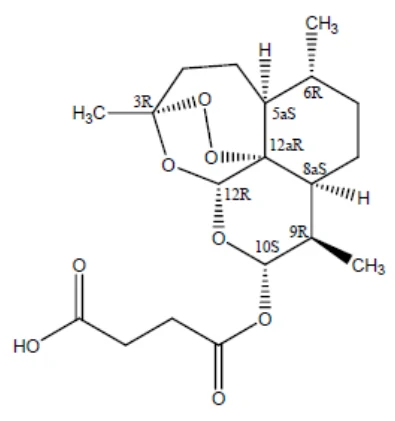
Physicochemical properties: Artesunate is a fine, white to almost white crystalline powder. Artesunate is very soluble in dichloromethane, soluble in ethyl acetate, freely soluble in ethanol and acetone, very slightly soluble in water, and insoluble in hexane.
Clinical Trials
14.1. Clinical Trials by Indication
Trial Design and Study Demographics
Table 6 – Summary of Patient Demographics for Clinical Trials in the Treatment of Severe Malaria
| Study # | Study design | Dosage, route of administration and duration | Study subjects (n) | Mean age (Range) | Gender |
Trial 1 (Dondorp 2005) | Open-label, multicentre, randomized | Artesunate 2.4 mg/kg IV at 0, 12 and 24 hours and then every 24 hours for artesunate Quinine 20 mg/kg IV over 4h, followed by 10 mg/kg infused over 2-8h thrice (3) daily for quinine | Artesunate (730) Quinine (731) | Artesunate: 27.9 years (2 - 85) Quinine: 27.9 years (2 - 87) | 1,075 males 386 females |
Trial 2 (Dondorp 2010) | Open-label, multicentre, randomized | Artesunate 2.4 mg/kg IV at 0, 12 and 24 hours and then every 24 hours for artesunate Quinine 20 mg/kg IV over 4h, followed by 10 mg/kg infused over 2-8h thrice (3) daily for quinine | Artesunate (2712) Quinine (2713) | Artesunate: 2.8 years (1.7 - 4.3) Quinine: 2.9 years (1.6 - 4.2) | 2,815 males 2,610 females |
In Trial 1 (Dondorp 2005), an open-label, multi-centre trial conducted in Bangladesh, India, Indonesia and Myanmar, 1,461 patients (1,259 adults and 202 pediatric patients <15 years) with severe falciparum malaria were randomized to initial intravenous treatment with artesunate or quinine until oral medication could be tolerated. Artesunate was administered at 2.4 mg/kg IV at 0, 12 and 24 hours and then every 24 hours. Quinine was given IV at 20 mg/kg over 4 hours, followed by 10 mg/kg thrice daily over 2-8 hours
Trial 2 (Dondorp 2010) was an open-label multi-centre trial in which African pediatric patients aged < 15 years (n=5425) with severe falciparum malaria were randomized to parenteral artesunate or parenteral quinine using the same dose as in Trial 1.
Table 7 - Results of Trial 1 (Dondorp 2005) and Trial 2 (Dondorp 2010) in Malaria
| Trial 1 | Trial 2 | ||||||||
|---|---|---|---|---|---|---|---|---|---|
Artesunate (N = 730) | Quinine (N = 731) | Treatment difference (95% CI)a | Artesunate (N = 2712) | Quinine (N = 2713) | Treatment difference (95% CI) a | ||||
| Primary endpoint | |||||||||
| Mortality in Intent-to-Treat (ITT) population | 14.7 % | 22.4% | OR 0.59 (0.45, 0.78) p=0.0002 | 8.5% | 10.9% | OR 0.75, (0.63–0.90) p= 0.0022b | |||
| Mortality in patients with severe malaria (SM) | 19.8% | 28.1% | OR: 0.63 (0.48, 0.84) p=0.0031 | 9.9 % | 12.4% | OR 0.77, (0.64–0.93) p= 0.0055b | |||
| a. Based on Odds Ratio (OR) stratified by study site b. Statistically significant under multiplicity control for artesunate vs quinine comparison | |||||||||
Microbiology
Mechanism of Action: Artesunate is rapidly metabolized into an active metabolite, DHA. Artesunate and DHA, like other artemisinins contain an endoperoxide bridge that is activated by heme iron leading to oxidative stress, inhibition of protein and nucleic acid synthesis, ultrastructural changes as well as a decrease in parasite growth and survival.
Both artesunate and DHA are active against the asexual forms of the Plasmodium parasites and clear parasites within 48 to 72 hours.
In vitro Activity: Available in vitro data indicate that artesunate 50% inhibitory concentrations (IC50 values) are broadly comparable for P. falciparum and for the other Plasmodium species that cause malaria in humans (P. vivax, P. ovale, P. malariae, P. knowlesi).
Antimicrobial activity: Artesunate and DHA are active against the blood-stage asexual parasites and gametocytes of Plasmodium species. However, artesunate and DHA are not active against the hypnozoite liver stage forms of P. vivax and P. ovale.
Artemisinin resistance: Decreases in susceptibility to artesunate and other artemisinins, manifesting clinically as slower rates of parasite clearance is associated with mutation in the K13 gene, which encodes the parasite’s Kelch propeller protein Kelch13.
Non-Clinical Toxicology
Carcinogenicity
Carcinogenicity studies have not been conducted with artesunate.
Genotoxicity
Artesunate was negative in an in vitro bacterial reverse mutation assay, an in vitro Chinese hamster ovary chromosome aberration assay, and in an in vivo rat peripheral blood micronucleus assay using intravenous administration.
However, the published literature indicates that artesunate induced DNA damage, as detected by Comet assay, in human lymphocytes and HepG2 liver cells in vitro and in the spermatozoa of intraperitoneally treated mice. The published literature also indicates that artesunate increased micronuclei formation in human lymphocytes in vitro.
Reproductive and Developmental Toxicology
Animal reproduction studies in several species have demonstrated fetal harm from oral and intravenously administered artesunate. The clinical relevance of the animal data is uncertain.
A single dose of intravenous artesunate at 1.5 mg/kg (approximately 0.1 times the clinical dose based on body surface area [BSA] comparisons) administered to pregnant rats during early organogenesis on gestation day (GD) 11 resulted in complete postimplantation loss. A mass balance study conducted in pregnant rats administered a single dose of 5 mg/kg intravenous 14C-artesunate on GD 11 (corresponding to 0.3 times the recommended clinical dose based on BSA comparisons) showed distribution of radiolabeled artesunate (approximately 7% of detected radioactivity) to feto-placental tissues.
Pregnant rats dosed orally during organogenesis (GD 6 through 17) with 6, 10 and 16.7 mg/kg/day artesunate (approximately 0.4- to 1.1-times the clinical dose based on BSA comparisons) showed dose-dependent postimplantation losses, with surviving fetuses displaying cardiovascular (ventricular septal defects, abnormal origin of subclavian artery) and skeletal (e.g., bent and/or shortened scapulae, humeri, femurs, and fibulae) malformations in the absence of maternal toxicity. Oral dosing in pregnant rabbits during organogenesis (GD 7 through GD 19) at doses of 5, 7, and 12 mg/kg/day artesunate (0.7- to 1.6-times the clinical dose based on BSA comparisons) resulted in cardiovascular (ventricular septal defects, abnormal origin of subclavian artery), skeletal (e.g., cleft sternebrae, shortened and/or displaced ribs) and brain (dilated ventricles, pons absent) malformations in the absence of maternal toxicity. Additionally, administration of artesunate at 12 mg/kg/day to pregnant rabbits during organogenesis resulted in abortions and postimplantation loss. Oral administration of artesunate to pregnant cynomolgus monkeys during organogenesis (GD 20 to GD 50) at 12 mg/kg/day (approximately 1.6-times the clinical dose based on BSA comparisons) resulted in increased embryonic death with skeletal malformations (i.e., decrease in absolute length of the ulna) observed in surviving fetuses.
In a fertility and early embryonic development study, intravenous administration of artesunate to female rats at between 1-2 times the clinical dose (based on BSA comparisons) for two weeks before mating, during mating, and through implantation (up to GD 7) did not affect fertility, or early embryonic development.
No significant changes in male reproductive organs (i.e., gross, microscopic or histologic lesions or organ weights) or sperm motility, counts or morphology were observed in rats and dogs following 28 days of repeated dosing with intravenously administered artesunate in Good Laboratory Practice (GLP) studies.
In published literature, male rats and mice administered oral or intraperitoneal artesunate as a single dose or repeated doses (3 days to 6 weeks) displayed histopathological changes of the seminiferous tubules and altered spermatogenesis (increased percentage of abnormal sperm and/or decreased sperm motility and viability) at doses ranging from approximately 0.2- to 1.3-times the clinical dose based on BSA comparisons.
Juvenile Toxicity
No juvenile toxicity studies have been conducted with artesunate alone.