


Product Monograph - Anthim
RECENT MAJOR LABEL CHANGES
Not applicable.
TABLE OF CONTENTS
RECENT MAJOR LABEL CHANGES ............................................................................ 2
TABLE OF CONTENTS .................................................................................................. 2
PART I: HEALTH PROFESSIONAL INFORMATION .................................................... 4
1 INDICATIONS ...................................................................................................... 4
1.1 Pediatrics ..................................................................................................... 4
1.2 Geriatrics ..................................................................................................... 4
2 CONTRAINDICATIONS ....................................................................................... 5
3 SERIOUS WARNINGS AND PRECAUTIONS BOX ............................................ 5
4 DOSAGE AND ADMINISTRATION ..................................................................... 5
4.1 Dosing Considerations................................................................................. 5
4.2 Recommended Dose and Dosage Adjustment ............................................ 5
4.3 Dilution......................................................................................................... 6
4.4 Administration .............................................................................................. 7
4.5 Missed Dose ................................................................................................ 8
5 OVERDOSAGE .................................................................................................... 8
6 DOSAGE FORMS, STRENGTHS, COMPOSITION AND PACKAGING ............. 8
7 DESCRIPTION ..................................................................................................... 8
8 WARNINGS AND PRECAUTIONS ...................................................................... 9
8.1 Special Populations ..................................................................................... 9
8.1.1 Pregnant Women ..................................................................................... 9
8.1.2 Breast-feeding .......................................................................................... 9
8.1.3 Pediatrics ................................................................................................. 9
8.1.4 Geriatrics ................................................................................................ 10
9 ADVERSE REACTIONS .................................................................................... 10
9.1 Adverse Reaction Overview ...................................................................... 10
9.2 Clinical Trial Adverse Reactions ................................................................ 10
9.3 Less Common Clinical Trial Adverse Reactions ........................................ 11
9.4 Post-Market Adverse Reactions ................................................................ 12
10 DRUG INTERACTIONS ..................................................................................... 12
10.1 Overview ................................................................................................ 12
10.2 Drug-Drug Interactions ........................................................................... 12
10.3 Drug-Food Interactions ........................................................................... 12
10.4 Drug-Herb Interactions ........................................................................... 12
10.5 Drug-Laboratory Test Interactions .......................................................... 12
10.6 Drug-Lifestyle Interactions ...................................................................... 12
11 ACTION AND CLINICAL PHARMACOLOGY ................................................... 13
11.1 Mechanism of Action .............................................................................. 13
11.2 Pharmacodynamics ................................................................................ 13
11.3 Pharmacokinetics ................................................................................... 13
12 STORAGE, STABILITY AND DISPOSAL ......................................................... 14
13 SPECIAL HANDLING INSTRUCTIONS ............................................................ 14
14 PHARMACEUTICAL INFORMATION ............................................................... 15
15 CLINICAL TRIALS ............................................................................................. 16
15.1 Trial Design and Study Demographics ................................................... 16
16 DETAILED PHARMACOLOGY ......................................................................... 18
17 MICROBIOLOGY ............................................................................................... 19
18 NON-CLINICAL TOXICOLOGY ......................................................................... 20
PATIENT MEDICATION INFORMATION ..................................................................... 21
PART I: HEALTH PROFESSIONAL INFORMATION
1 INDICATIONS
ANTHIM™ (obiltoxaximab for injection) is indicated in adult and pediatric patients for the treatment of inhalational anthrax due to Bacillus anthracis in combination with appropriate antibacterial drugs.
ANTHIM is indicated for post-exposure prophylaxis of inhalational anthrax due to B. anthracis when alternative therapies are not available or not appropriate.
The effectiveness of ANTHIM is based solely on efficacy studies in animal models of inhalational anthrax.
Limitations of Use
ANTHIM should only be used for prophylaxis when its benefit for prevention of inhalational anthrax outweighs the risk of hypersensitivity and anaphylaxis [see WARNINGS AND PRECAUTIONS].
ANTHIM binds to the protective antigen (PA) component of B. anthracis toxin; it does not have direct antibacterial activity. ANTHIM is not expected to cross the blood-brain barrier and does not prevent or treat meningitis. ANTHIM should be used in combination with appropriate antibacterial drugs.
1.1 Pediatrics
Pediatrics (<18 years of age): Safety and PK of ANTHIM have been studied in adult healthy volunteers. There have been no studies of safety or PK of ANTHIM in the pediatric population. A population PK approach was used to derive intravenous infusion dosing regimens that are predicted to provide pediatric patients with exposure comparable to the observed exposure in adults [see [see WARNINGS AND PRECAUTIONS].
].
1.2 Geriatrics
Geriatrics (≥65 years of age): Clinical studies of ANTHIM did not include sufficient numbers of subjects aged 65 years and over to determine whether they respond differently from younger subjects. No dose modification is recommended for patients ≥65 years of age
EUND
“HEALTH CANADA HAS AUTHORIZED THE SALE OF THIS EXTRAORDINARY USE NEW DRUG FOR ADULT AND PEDIATRIC PATIENTS FOR TREATMENT OF INHALATIONAL ANTHRAX DUE TO BACILLUS ANTHRACIS IN COMBINATION WITH APPROPRIATE ANTIBACTERIAL DRUGS, AND FOR PROPHYLAXIS OF INHALATIONAL ANTHRAX WHEN ALTERNATIVE THERAPIES ARE NOT AVAILABLE OR ARE NOT APPROPRIATE, BASED ON LIMITED CLINICAL TESTING IN HUMANS.”
2 CONTRAINDICATIONS
ANTHIM is contraindicated in patients who are hypersensitive to this drug or to any ingredient in the formulation, including any non-medicinal ingredient, or component of the container. For a complete listing, [see DOSAGE FORMS, STRENGTHS, COMPOSITION AND PACKAGING].
3 SERIOUS WARNINGS AND PRECAUTIONS BOX
4 DOSAGE AND ADMINISTRATION
4.1 Dosing Considerations
- Pre-medicate with diphenhydramine prior to administering ANTHIM [see WARNINGS AND PRECAUTIONS].
- Dilute the injection in 0.9% Sodium Chloride Injection, USP, before administering as an intravenous infusion [see Dilution].
- ANTHIM should be administered in monitored settings by personnel trained and equipped to manage anaphylaxis [see WARNINGS AND PRECAUTIONS].
- Monitor individuals who receive ANTHIM closely for signs and symptoms of hypersensitivity reactions throughout the infusion and for a period of time after administration [see WARNINGS AND PRECAUTIONS].
4.2 Recommended Dose and Dosage Adjustment
Adults
- The recommended dosage of ANTHIM in adult patients is a single dose of 16 mg/kg administered intravenously over 90 minutes (1 hour and 30 minutes) [see DOSAGE AND ADMINISTRATION].
Pediatrics (< 18 yrs)
- The recommended dose for pediatric patients is based on weight as shown in Table 1 below.
Serious Warnings and Precautions
Hypersensitivity and anaphylaxis have been reported during the intravenous infusion of ANTHIM. Due to the risk of hypersensitivity and anaphylaxis, ANTHIM should be administered in monitored settings by personnel trained and equipped to manage anaphylaxis. Monitor individuals who receive ANTHIM closely for signs and symptoms of hypersensitivity reactions throughout the infusion and for a period of time after administration. Stop ANTHIM infusion immediately and treat appropriately if hypersensitivity or anaphylaxis occurs [see Administration].
EUND
Table 1 Recommended Pediatric Dose of ANTHIM (weight-based dosing)
| Body Weight | Dose |
| Greater than 40 kg | 16 mg/kg |
| Greater than 15 kg up to 40 kg | 24 mg/kg |
| Less than or equal to 15 kg | 32 mg/kg |
- Administer the recommended dose of ANTHIM intravenously over 90 minutes (1 hour and 30 minutes) [see DOSAGE AND ADMINISTRATION].
There have been no studies of the safety or PK of ANTHIM conducted in the pediatric population. The dosing recommendations in Table 1 are derived from simulations using a population PK approach designed to match the observed adult exposure to ANTHIM at a 16 mg/kg dose [see ACTION AND CLINICAL PHARMACOLOGY, Pharmacokinetics, Special Populations].
4.3 Dilution
Important Preparation Instructions:
- Keep vials in their cartons prior to preparation of an infusion solution to protect ANTHIM from light. ANTHIM vials contain no preservative.
- Parenteral drug products should be inspected visually for particulate matter and discoloration prior to administration, whenever solution and container permit.
- Discard the vial if the solution is discolored or contains extraneous particles other than a few translucent-to-white, proteinaceous particles [see DESCRIPTION].
- Do not shake the vial.
Preparation and Dilution in Bag for Infusion
- 1. Calculate the milligrams of ANTHIM injection needed by multiplying the recommended mg/kg dose in Table 2 by the patient weight in kilograms.
- 2. Calculate the required volume in milliliters of ANTHIM injection and number of vials needed for the dose by dividing the calculated dose in milligrams (step 1) by the concentration, 100 mg/mL. Each single vial allows for delivery of 6 mL of ANTHIM.
- 3. Select an appropriate size bag of 0.9% Sodium Chloride Injection, USP. Withdraw a volume of solution from the bag equal to the calculated volume in milliliters of ANTHIM in step 2 above. Discard the solution that was withdrawn from the bag.
- 4. Withdraw the required volume of ANTHIM injection (calculated from step 2) from the ANTHIM vial(s). Discard any unused portion remaining in the ANTHIM vial(s) [see SPECIAL HANDLING INSTRUCTIONS].
- 5. Transfer the required volume of ANTHIM injection to the selected infusion bag.
- 6. Gently invert the bag to mix the solution. Do not shake.
- 7. The prepared solution is stable for 8 hours stored at room temperature 20°C to 25°C or 8 hours stored in the refrigerator at 2°C to 8°C [see STORAGE, STABILITY AND DISPOSAL].
Preparation and Dilution in Syringe for Infusion
- 1. Calculate the milligrams of ANTHIM injection needed by multiplying the recommended mg/kg dose in Table 2 by the patient weight in kilograms.
- 2.
Calculate the required volume in milliliters of ANTHIM injection and number of vials
- needed for the dose by dividing the calculated dose in milligrams (step 1) by the concentration, 100 mg/mL. Each single vial allows delivery of 6 mL of ANTHIM.
- 3. Select an appropriate size syringe for the total volume of infusion to be administered.
- 4. Using the selected syringe, withdraw the required volume of ANTHIM injection (calculated from step 2). Discard any unused portion remaining in the ANTHIM vial(s) [see SPECIAL HANDLING INSTRUCTIONS].
- 5. Withdraw an appropriate amount of 0.9% Sodium Chloride Injection, USP to prepare the total infusion volume specified in Table 2.
- 6. Gently mix the solution. Do not shake.
- 7. Once a diluted solution of ANTHIM has been prepared, administer immediately according to the infusion rate in Table 2. Do not store solution in syringe [see STORAGE, STABILITY AND DISPOSAL]. Discard unused product [see SPECIAL HANDLING INSTRUCTIONS].
4.4 Administration
Administer ANTHIM in appropriately monitored settings which are equipped to manage anaphylaxis [see WARNINGS AND PRECAUTIONS].
Dilute ANTHIM injection before administering ANTHIM intravenously using the bag or syringe for infusion [see Dilution].
After preparation of the bag or syringe for infusion administer the infusion solution using a 0.22 micron inline filter with the infusion rate described in Table 2 [see Administration].
There are no known incompatibilities between ANTHIM and polyvinyl chloride (PVC) or polyolefin infusion bags, PVC or polyethylene-lined administration sets. In the absence of compatibility studies, ANTHIM should not be mixed with other medicinal products. Do not add or simultaneously infuse other drug substances through the same intravenous line.
Table 2 ANTHIM Dose, Total Infusion Volume and Infusion Rate by Body Weight
| Body Weight (weight-based dosing) | Total Infusion Volume | Infusion Rate | ||||||||||
| Pediatrics greater than 40 kg or adult (16 mg/kg) | ||||||||||||
| Greater than 40 kg | 250 mL | 167 mL/hr | ||||||||||
| Pediatrics greater than 15 kg to 40 kg (24 mg/kg) | ||||||||||||
| 31 kg to 40 kg | 250 mL | 167 mL/hr | ||||||||||
| 16 kg to 30 kg | 100 mL | 67 mL/hr | ||||||||||
| Pediatrics 15 kg or less (32 mg/kg) | ||||||||||||
| 11 kg to 15 kg | 100 mL | 67 mL/hr | ||||||||||
| 5 kg to 10 kg | 50 mL | 33.3 mL/hr | ||||||||||
| 3.1 kg to 4.9 kg | 25 mL | 17 mL/hr | ||||||||||
| 2.1 kg to 3 kg | 20 mL | 13.3 mL/hr | ||||||||||
| 1.1 kg to 2 kg | 15 mL | 10 mL/hr | ||||||||||
| 1 kg or less | 7 mL | 4.7 mL/hr | ||||||||||
Administer diluted ANTHIM intravenous infusion over 1 hour and 30 minutes. Monitor patients closely for signs and symptoms of hypersensitivity throughout the infusion and for a period of time after administration [see WARNINGS AND PRECAUTIONS]. Stop the infusion immediately and treat appropriately, if hypersensitivity or anaphylaxis occurs.
Patients need to be monitored closely for signs and symptoms of hypersensitivity throughout the infusion and for at least one hour after administration [see WARNINGS AND PRECAUTIONS].
In ANTHIM clinical trials infusions were discontinued in individuals who developed a hypersensitivity reaction. In the event that an anthrax-exposed individual develops an infusion reaction, the infusion rate may be slowed or the infusion interrupted. However, the risk-benefit of slowing or resuming the infusion should be carefully assessed. The infusion has to be stopped immediately and permanently if severe hypersensitivity occurs, such as anaphylaxis, central cyanosis, bronchospasm or acute respiratory distress syndrome, generalized urticarial reactions, or symptomatic hypertension [see WARNINGS AND PRECAUTIONS].
Flush the line with 0.9% Sodium Chloride Injection, USP at the end of the intravenous infusion.
4.5 Missed Dose
Not applicable.
5 OVERDOSAGE
There is no clinical experience with overdosage of ANTHIM. In case of overdosage, monitor patients for any signs or symptoms of adverse effects.
| For management of a suspected drug overdose, contact your regional poison control centre. |
6 DOSAGE FORMS, STRENGTHS, COMPOSITION AND PACKAGING
Table 3 – Dosage Forms, Strengths, Composition and Packaging.
7 DESCRIPTION
ANTHIM is a chimeric (human-murine) immunoglobulin G1κ (IgG1κ) monoclonal antibody. ANTHIM binds the protective antigen (PA) of the B. anthracis toxin with an affinity equilibrium dissociation constant (Kd) of 0.33 nM.
ANTHIM injection is a sterile, preservative-free, clear to opalescent, colorless to pale yellow to
| Route of Administration | Dosage Form / Strength/Composition | Non-medicinal Ingredients |
| Intravenous infusion | Vial containing solution of 600 mg of obiltoxaximab/6 mL (100 mg/mL) |
|
pale brownish-yellow solution that may contain a few translucent-to-white proteinaceous particulates in single-dose vials. ANTHIM is available in the following packaging configuration:
Carton: Contains one (1) single-dose vial of ANTHIM 600 mg/6 mL.
8 WARNINGS AND PRECAUTIONS
Please see the Serious Warnings and Precautions Box at the beginning of Part 1: Health Professional Information.
Hypersensitivity
In three safety clinical studies of ANTHIM, hypersensitivity reactions were reported in 30/320 (9.4%) healthy subjects who received ANTHIM, compared to 4/70 (5.7%) heathy subjects who received placebo. One case of anaphylaxis occurred in a subject who received ANTHIIM. Hypersensitivity reactions reported in the clinical studies include rash, urticaria, pruritus, cough, dysphonia, dyspnea, cyanosis, dizziness, chest discomfort, and anaphylactic reaction.
Due to the risk of hypersensitivity and anaphylaxis, ANTHIM should be administered in monitored settings by personnel trained and equipped to manage anaphylaxis. Patients should be monitored closely throughout the infusion period and for a period of time after administration. If anaphylaxis or hypersensitivity reactions occur, stop the infusion immediately and treat appropriately. [see Administration]
Patients should be pre-medicated with diphenhydramine prior to administration of ANTHIM [see DOSAGE AND ADMINISTRATION and ADVERSE REACTIONS]. Diphenhydramine premedication does not prevent anaphylaxis, and may mask or delay onset of symptoms of hypersensitivity.
8.1 Special Populations
8.1.1 Pregnant Women
No adequate and well-controlled studies in pregnant women were conducted. Because animal reproduction studies are not always predictive of human response, ANTHIM should be used during pregnancy only if clearly needed.
8.1.2 Breast-feeding
ANTHIM has not been evaluated in nursing women. It is unknown whether ANTHIM is excreted in human milk. Inform a nursing woman that the effects of local gastrointestinal and systemic exposure to ANTHIM on nursing infant are unknown.
8.1.3 Pediatrics
Pediatrics (<18 years of age): As in adults, the effectiveness of ANTHIM in pediatric patients is based solely on efficacy studies in animal models of inhalational anthrax. There have been no studies of safety or PK of ANTHIM in the pediatric population. As exposure of healthy children to
ANTHIM is not ethical, a population PK approach was used to derive intravenous dosing regimens that are predicted to provide pediatric patients with exposure comparable to the observed exposure in adults receiving 16 mg/kg. The dose for pediatric patients is based on weight [see Recommended Dose and Dosage Adjustment].
8.1.4 Geriatrics
Geriatrics (≥65 years of age): Clinical studies of ANTHIM did not include sufficient numbers of subjects aged 65 years and over to determine whether they respond differently from younger subjects. Of the 320 subjects in clinical studies of ANTHIM, 9.4% (30/320) were 65 years and over, while 2% (6/320) were 75 years and over. No alteration of dosing is needed for patients ≥65 years of age [see ACTION AND CLINICAL PHARMACOLOGY, Pharmacokinetics].
9 ADVERSE REACTIONS
9.1 Adverse Reaction Overview
The safety profile presented is based on analysis in three safety studies of ANTHIM. A total of 320 healthy subjects received one or two 16 mg/kg IV doses of ANTHIM. The most frequently reported adverse reactions were pruritus, rash, cough, infusion site swelling, urticaria, and injection-site pain.
9.2 Clinical Trial Adverse Reactions
Because clinical trials are conducted under very specific conditions, the adverse reaction rates observed in the clinical trials may not reflect the rates observed in practice and should not be compared to the rates in the clinical trials of another drug. Adverse reaction information from clinical trials is useful for identifying drug-related adverse events and for approximating rates.
The safety of ANTHIM has been studied only in healthy volunteers. It has not been studied in patients with inhalational anthrax.
The safety of ANTHIM was evaluated in 320 healthy subjects treated with one or more 16 mg/kg IV doses in three clinical studies. Study 1 was a placebo-controlled study evaluating a single dose of ANTHIM vs. placebo (210 subjects received ANTHIM, 70 received placebo). Study 2 was a repeat-dose study in which 70 subjects received the first dose, and 34 and 31 subjects received a second dose of ANTHIM either 2 weeks apart or ≥ 4 months apart. Study 3 was a drug interaction study of a single dose of ANTHIM with ciprofloxacin in 40 subjects (20 subjects received ANTHIM alone and 20 subjects received ANTHIM plus ciprofloxacin for 9 days).
The overall safety of ANTHIM was evaluated as an integrated summary of these three clinical trials. Of 320 subjects receiving ANTHIM, 250 received single doses, 34 received 2 doses 2 weeks apart, and 31 received 2 doses ≥ 4 months apart. Subjects were 18 to 79 years of age, 54.4% were male, 70% Caucasian, 25.9% Black/African American, 1.9% American Indian/Alaska Native, 0.9% Asian and 9.7% Hispanic.
Table 4 shows the adverse reactions that occurred in ≥0.5% of healthy subjects receiving a single dose of ANTHIM (16 mg/kg IV) and more frequently than those receiving placebo.
EUND
Table 4 Adverse Reactions Observed in ≥ 0.5% of Healthy Adult Subjects Exposed to a Single Dose of ANTHIM 16 mg/kg IV and more frequently than placebo
ANTHIM n = 320 (%) | Placebo n = 70 (%) | ||||
| General disorders and administration site conditions | |||||
| Infusion site pain | 7 (2.2) | 0 | |||
| Infusion site swelling | 8 (2.5) | 0 | |||
| Musculoskeletal and connective tissue disorders | |||||
| Pain in extremity | 5 (1.6) | 1 (1.4) | |||
| Nervous system disorders | |||||
| Dizziness | 3 (0.9) | 0 | |||
| Respiratory, thoracic and mediastinal disorders | |||||
| Cough | 9 (2.8) | 0 | |||
| Skin and subcutaneous tissue disorders | |||||
| Pruritus | 11 (3.4) | 1 (1.4) | |||
| Urticaria | 7 (2.2) | 0 | |||
| Rash | 10 (3.1) | 2 (2.9) | |||
9.3 Less Common Clinical Trial Adverse Reactions
The list below represents the drug-related adverse events reported in less than 0.5% of healthy adult subjects exposed to a single dose of ANTHIM 16 mg/kg IV and more frequently than placebo.
Cardiac disorders: cyanosis
Ear and labyrinth disorders: ear discomfort
Eye disorders: photophobia
Gastrointestinal disorders: dry mouth, lip pain
General disorders and administration site conditions: fatigue, chest discomfort, non-cardiac chest pain, tenderness, vessel puncture site pain
Immune system disorders: anaphylactic reaction, hypersensitivity
Investigations: lymphocyte count decreased, neutrophil count decreased, white blood cell count decreased
Musculoskeletal and connective tissue disorders: muscle spasms, muscle twitching, myalgia, pain in jaw
Nervous system disorders: dizziness postural, hypoaesthesia, lethargy, migraine with aura
Psychiatric disorders: restlessness
Respiratory, thoracic and mediastinal disorders: dry throat, dysphonia, dyspnea, nasal congestion, sinus congestion
Skin and subcutaneous tissue disorders: dermatitis allergic, skin exfoliation
Vascular disorders: flushing, pallor, phlebitis, phlebitis superficial
Immunogenicity
As with all therapeutic proteins, there is a potential for immunogenicity. The development of anti-ANTHIM antibodies was evaluated in all subjects receiving single and double doses of ANTHIM in studies 1, 2 and 3. Eight subjects (2.5%) who received at least one dose of IV ANTHIM were positive for a treatment-emergent anti-therapeutic antibody (ATA) response. Quantitative titers were low ranging from 1:20 – 1:320. There was no evidence of altered PK or toxicity profile in subjects with ATA development.
9.4 Post-Market Adverse Reactions
No post-marketing data are available.
10 DRUG INTERACTIONS
10.1 Overview
Interactions with other drugs have not been established.
10.2 Drug-Drug Interactions
One clinical study showed that co-administration of 16 mg/kg ANTHIM intravenously with intravenous or oral ciprofloxacin in human subjects did not alter the PK of obiltoxaximab.
Drug-drug interactions between ANTHIM and anthrax vaccine have not been evaluated in non-clinical and clinical studies.
10.3 Drug-Food Interactions
Interactions with food have not been established.
10.4 Drug-Herb Interactions
Interactions with herbal products have not been established.
10.5 Drug-Laboratory Test Interactions
Exposure to ANTHIM may interfere with serological tests for anthrax.
10.6 Drug-Lifestyle Interactions
No studies on the effects of obiltoxaximab on the ability to drive and use machines have been performed, although the pharmacological activity and adverse reactions reported to date suggest that obiltoxaximab may have a minor influence on the ability to drive and use machines since headache, dizziness, and fatigue may occur following administration [see Clinical Trial Adverse Reactions].
11 ACTION AND CLINICAL PHARMACOLOGY
11.1 Mechanism of Action
Obiltoxaximab is a monoclonal antibody that binds the protective antigen of B. anthracis [see MICROBIOLOGY].
11.2 Pharmacodynamics
There are no ANTHIM pharmacodynamics (PD) studies in humans. An in-vitro study showed that ANTHIM binds free PA with an affinity equilibrium dissociation constant (Kd) of 0.33 nM.
In rabbits and monkeys challenged with lethal doses of B. anthracis spores by inhalation, a dose-dependent increase in survival was observed following treatment with ANTHIM. Exposure to B. anthracis spores resulted in increasing concentrations of PA in the serum of NZW rabbits and cynomolgus macaques. After treatment with ANTHIM there was a decrease in PA concentrations in a majority of surviving animals. PA concentrations in placebo animals increased continually with fatal outcomes.
11.3 Pharmacokinetics
Table 5 - Summary of obiltoxaximab Pharmacokinetic Parameters in healthy subjects
Cmax (µg/mL) | Tmax (d) | t½ (d) | AUC0-∞ (µg.d/mL) | CL (L/d) | Vd (L) | |
|---|---|---|---|---|---|---|
| Single dose mean (SD)* | 400 (91.2) | 0.0782 (0.0674-1.01) | 20.2 (5.26) | 5170 (1360) | 0.270 (0.0886) | 7.41 (1.90) |
*median and range are reported for Tmax
Absorption: The PK of obiltoxaximab are linear over the dose range of 4 mg/kg (0.25 times the lowest recommended dose) to 16 mg/kg following single IV administration in healthy subjects. Following single IV administration of ANTHIM 16 mg/kg in healthy, male and female human subjects, the mean Cmax and AUCinf were 400 ± 91.2 mcg/mL and 5170 ± 1360 mcg•day/mL, respectively.
Distribution: Mean obiltoxaximab steady-state volume of distribution was greater than plasma volume, suggesting some tissue distribution.
Metabolism: Formal metabolism and excretion studies have not been conducted with ANTHIM. Monoclonal antibodies generally are catabolized by proteases to small peptides and amino acids which are subsequently incorporated into the endogenous pool or excreted.
Elimination: Clearance values were much smaller than the glomerular filtration rate, indicating that there is virtually no renal clearance of obiltoxaximab.
Because the effectiveness of ANTHIM cannot be evaluated in humans, a comparison of ANTHIM exposures achieved in healthy human subjects to those observed in animal models of inhalational anthrax in therapeutic efficacy studies is necessary to support the dosage regimen of 16 mg/kg IV as a single dose for the treatment of inhalational anthrax in humans. Based on observed and simulated data, humans achieve similar obiltoxaximab Cmax and greater AUCinf following a single 16 mg/kg IV dose compared to exposures achieved in NZW rabbits and cynomolgus macaques.
Special Populations and Conditions
Pediatrics: ANTHIM PK have not been evaluated in children.
Geriatrics, Sex, and Ethnic Origin: ANTHIM PK were evaluated via a population PK analysis using serum samples from 303 healthy adult subjects who received a single IV dose across 3 clinical trials. Based on this analysis, age (elderly versus young), gender (female versus male) and race (non-Caucasian versus Caucasian) had no meaningful effects on the PK parameters for ANTHIM.
Drug Interaction Studies
Ciprofloxacin
In an open-label study evaluating the effect of ciprofloxacin on obiltoxaximab PK in healthy adult male and female subjects (study 3), the administration of 16 mg/kg ANTHIM IV infusion prior to ciprofloxacin IV infusion or ciprofloxacin oral tablets twice daily did not alter the PK of obiltoxaximab. [see DRUG INTERACTIONS].
12 STORAGE, STABILITY AND DISPOSAL
Store in a refrigerator at 2°C to 8°C.
Do Not Freeze. Do Not Shake.
Store in the original packaging in order to protect from light.
Diluted solution in bag for infusion: chemical, physical and microbial in-use stability has been demonstrated for 8 hours at room temperature (20-25°C) or in the refrigerator at (2-8°C).
Diluted solution in syringe for infusion: once a diluted solution of ANTHIM has been prepared, administer immediately. Do not store solution in syringe. Discard unused product.
This medicinal product must not be mixed with other medicinal products except those mentioned in Dilution.
13 SPECIAL HANDLING INSTRUCTIONS
Single-dose vial. Any unused medicinal product or waste material should be disposed of in accordance with local requirements.
PART II: SCIENTIFIC INFORMATION
14 PHARMACEUTICAL INFORMATION
Drug Substance
Common name: Obiltoxaximab
Chemical name: Immunoglobin G1, anti – (Bacillus anthracis anthrax protective antigen) (human-Mus musculus monoclonal obiltoxaximab heavy chain), disulfide with human-Mus musculus monoclonal obiltoxaximab κ-chain, dimer
Molecular formula: Primary amino acid sequence: without C terminal lysine clip and N terminal modification:
H Chain: C2,187H3,395N58 O674S16
Lκ Chain: C1,035H1,618N284O337S6
Structural formula: obiltoxaximab is a deimmunized IgG1.The VH and VL antibody gene sequences of obiltoxaximab were engineered from the murine monoclonal antibody (14B7). The murine 14B7 VH and VL genes were engineered for reduced immunogenicity and increased binding affinity by specific sequence mutations.
Complete Molecule: 2 H Chains + 2 Light Kappa (κ) Chains
It has an approximate molecular weight of 148 kDa.
The following amino acid sequence information for obiltoxaximab shows the variable and constant regions, complementarity determining regions (CDRs), inter- and intra-chain disulfide bridges for both heavy and light chain and glycosylation site located in the heavy chain.
Obiltoxaximab Heavy Chain Amino Acid Sequence
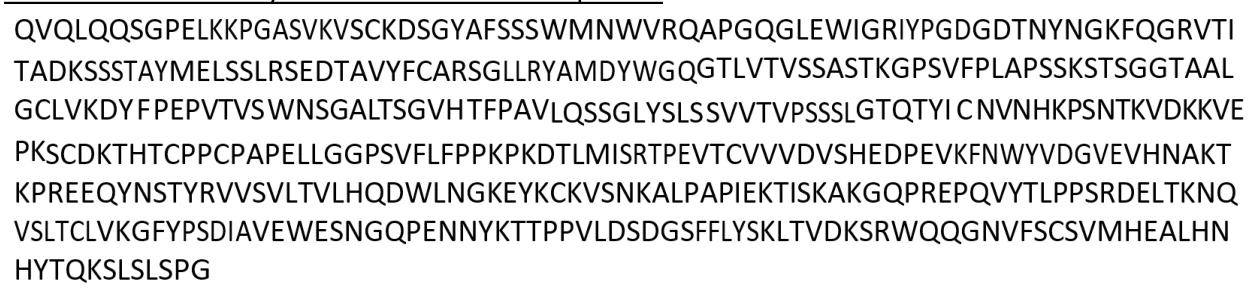
Obiltoxaximab κ Light Chain Amino Acid Sequence

Physicochemical properties: Obiltoxaximab is a chimeric IgG1κ monoclonal antibody (mAb) that binds the PA component of B. anthracis toxin.
Product Characteristics
ANTHIM is a, chimeric (human-murine) immunoglobulin G1κ (IgG1κ) monoclonal antibody. ANTHIM is produced in murine GS-NS0 myeloma cells by recombinant DNA technology. ANTHIM binds the protective antigen (PA) of the B. anthracis toxin with an affinity equilibrium dissociation constant (Kd) of 0.33 nM.
15 CLINICAL TRIALS
Because it is not feasible or ethical to conduct controlled clinical trials in humans with inhalational anthrax, the efficacy of ANTHIM for the treatment of inhalational anthrax is based on efficacy studies in NZW rabbits and cynomolgus macaques [see DETAILED PHARMACOLOGY]. The safety of ANTHIM has been studied only in healthy volunteers.
15.1 Trial Design and Study Demographics
Table 6 Summary of patient demographics for clinical trials in healthy volunteers
| Study # | Trial design | Dosage, route of administration and duration | Study subjects (n) | Mean age (Range) | Sex |
|---|---|---|---|---|---|
| AH104 | Randomized, double-blind, placebo-controlled, single-dose study | ANTHIM 16 mg/kg or matching Placebo; IV infusion over 90 minutes (± 5 minutes) | 280 ANTHIM: 210 Placebo: 70 | 42.2 (18-79) | Male 144 (51.4%) Female 136 (48.6%) |
“HEALTH CANADA HAS AUTHORIZED THE SALE OF THIS EXTRAORDINARY USE NEW DRUG FOR ADULT AND PEDIATRIC PATIENTS FOR TREATMENT OF INHALATIONAL ANTHRAX DUE TO BACILLUS ANTHRACIS IN COMBINATION WITH APPROPRIATE ANTIBACTERIAL DRUGS, AND FOR PROPHYLAXIS OF INHALATIONAL ANTHRAX WHEN ALTERNATIVE THERAPIES ARE NOT AVAILABLE OR ARE NOT APPROPRIATE, BASED ON LIMITED CLINICAL TESTING IN HUMANS.”
| Study # | Trial design | Dosage, route of administration and duration | Study subjects (n) | Mean age (Range) | Sex |
|---|---|---|---|---|---|
| AH109 | Double-Dose: Randomized, double-blind, placebo-controlled, repeat-dose study with two IV doses of ANTHIM either 14 days or 120 days apart | (2 weeks apart group): ANTHIM 16 mg/kg on Days 1 and 14 and placebo on Day 120 or (≥ 4 months apart group): ANTHIM 16 mg/kg on Days 1 and 120 and placebo on Day 14; IV infusion over 90 minutes (± 5 minutes) | 70 2-weeks apart: 35 ≥4 months apart: 35 | 43.1 (19-78) | Male 44 (62.9%) Female 26 (37.1%) |
| AH110 | Randomized, open-label, parallel group, drug interaction study with ciprofloxacin | ANTHIM 16 mg/kg or ANTHIM 16 mg/kg + 400 mg ciprofloxacin on Day 1 followed by oral ciprofloxacin (750 mg) every 12 hrs on Days 2-8 and morning of Day 9; IV infusion over 90 minutes (± 5 minutes) | 40 ANTHIM: 20 ANTHIM + cipro: 20 | 33 (18-60) | Male 24 (60.0%) Female 16 (40.0%) |
Study AH104 was a double-blind, randomized, placebo-controlled, multicenter study designed to evaluate the safety, tolerability, PK, and immunogenicity of a 16 mg/kg dose of ANTHIM administered as a 90 minute IV infusion. Overall, 280 subjects were randomized: 210 to the ANTHIM group and 70 to the placebo group.
Study AH109 was a Phase 1, double-blind, randomized, placebo-controlled study to investigate the safety, tolerability, PK, and immunogenicity of repeat administration (two doses) of intravenous ANTHIM 16 mg/kg in adult volunteers. A total of 70 subjects were randomized to receive study drug, 35 to Sequence A (16 mg/kg ANTHIM on Day 1 / 16 mg/kg ANTHIM on Day 14 / Placebo on Day 120) and 35 to Sequence B (16 mg/kg ANTHIM on Day 1 / Placebo on Day 14 / 16 mg/kg ANTHIM on Day 120).
Study AH110 was an open-label, randomized, parallel group study conducted to assess the safety, tolerability and PK of a 16 mg/kg IV dose of ANTHIM alone and in the presence of ciprofloxacin (400 mg IV dose on Day 1, then 750 mg BID oral ciprofloxacin from Day 2 through the morning of Day 9) administered to adult subjects. Forty subjects, 20 per group were randomized in this study.
Results of the safety studies are presented within the Clinical Trial Adverse Reactions.
16 DETAILED PHARMACOLOGY
Overview
Because it is not feasible or ethical to conduct controlled clinical trials in humans with inhalational anthrax, the efficacy of ANTHIM for the treatment of inhalational anthrax is based on efficacy studies in NZW rabbits and cynomolgus macaques. The animal efficacy studies are conducted under widely varying conditions, such that the survival rates observed in the animal studies cannot be directly compared between studies and may not reflect the rates observed in clinical practice.
The efficacy of ANTHIM for treatment of inhalational anthrax was studied in a NZW rabbit and cynomolgus monkey model of inhalational anthrax disease. Animals were challenged with aerosolized B. anthracis spores (Ames strain) at approximately 200xLD50 to achieve 100% mortality if left untreated. Efficacy in animals was determined based on survival at Day 28 in the majority of the studies.
The animal efficacy studies of ANTHIM included trigger-to-treat studies and post-exposure prophylaxis studies. In the trigger-to-treat studies, animals were administered treatment after exhibiting clinical signs or symptoms of systemic anthrax. In post-exposure prophylaxis studies of inhalational anthrax, animals were treated prior to the development of symptoms.
Trigger-to-treat studies
Four trigger-to-treat studies (two in rabbits and two in monkeys) were conducted to evaluate the efficacy of ANTHIM at a dose level of 16 mg/kg. Trigger-to-treat studies evaluated the treatment with ANTHIM after established infection in animals, as evidenced by the presence of protective antigen in the circulation and the development of fever (in rabbits only). The treatment was delayed (a range 26-40 hours post-challenge) to allow disease to be established. The results showed that a single dose of ANTHIM increased the survival rate.
Table 7 Survival Rate in Monotherapy Treatment Studies, All Randomized Animals Positive for Bacteremia [B. anthracis] Prior to Treatment
| Animal | Study | Survival rate at Day 28 1 | p-value 2 | 95% CI 3 | |||||
| Placebo | ANTHIM 16 mg/kg IV | ||||||||
| Cynomolgus Macaques | AP202 4 | 0 (0/17) | 31% (5/16) 35% (6/17) | 0.0085 0.0055 | 0.08, 0.59 0.11, 0.62 | ||||
| AP204 | 6% (1/16) | 47% (7/15) | 0.0068 | 0.09, 0.68 | |||||
| NZW Rabbits | AR021 | 0 (0/9) | 93% (13/14) | 0.0010 | 0.59, 1.00 | ||||
| AR033 | 0 (0/13) | 62% (8/13) | 0.0013 | 0.29, 0.86 | |||||
IV: intravenous, CI: Confidence Interval
1 Survival assessed 28 days after spore challenge
2 p-value is from 1-sided Boschloo Test (with Berger-Boos modification of gamma=0.001) compared to placebo
3 Exact 95% confidence interval of difference in survival rates
4 ANTHIM products manufactured at two different facilities were tested in two separate treatment arms
The efficacy of ANTHIM administered in combination with antibiotics (levofloxacin, ciprofloxacin, doxycycline) for the treatment of animals with systemic anthrax disease (30-96 hours after spore challenge) was evaluated in rabbits and monkeys. ANTHIM administered in combination with antibacterial drugs resulted in higher survival outcomes than antibacterial therapy alone in multiple studies where ANTHIM and antibacterial therapy was given at various doses and treatment times.
Post-exposure prophylaxis study
One monkey study evaluated post-exposure prophylactic treatment with ANTHIM 16 mg/kg administered intramuscularly at 18, 24, or 36 hours after spore challenge. Survival rates were 6/6 (100%) at 18 hours, 5/6 (83%) at 24 hours, and 3/6 (50%) at 36 hours.
One monkey study evaluated immediate pre-exposure prophylaxis treatment with ANTHIM 16 mg/kg administered intramuscularly at 24, 48 or 72 hours prior to anthrax spore challenge. Survival rates at end of study (56 days) were 14/14 (100%) at 24 hours, 14/14 (100%) at 48 hours and 15/15 (100%) at 72 hours.
17 MICROBIOLOGY
Mechanism of Action
Obiltoxaximab is a monoclonal antibody that binds free PA with an affinity equilibrium dissociation constant (Kd) of 0.33 nM. Obiltoxaximab inhibits the binding of PA to its cellular receptors, preventing the intracellular entry of the anthrax lethal factor and edema factor, the enzymatic toxin components responsible for the pathogenic effects of anthrax toxin.
Activity In Vitro and In Vivo
Obiltoxaximab binds in vitro to PA from the Ames, Vollum, and Sterne strains of B. anthracis. Obiltoxaximab binds to an epitope on PA that is conserved across reported strains of B.
anthracis.
In vitro studies in a cell-based assay, using murine macrophages, suggest that obiltoxaximab neutralizes the toxic effects of lethal toxin, a combination of PA + lethal factor.
In vivo efficacy studies in NZW rabbits and cynomolgus macaques challenged with the spores of the Ames strain of B. anthracis by the inhalational route, showed a dose-dependent increase in survival following treatment with ANTHIM. Exposure to B. anthracis spores resulted in increasing concentrations of PA in the serum of NZW rabbits and cynomolgus macaques. After treatment with ANTHIM there was a decrease in PA concentrations in a majority of surviving animals. PA concentrations in placebo animals increased until they died [see DETAILED PHARMACOLOGY].
18 NON-CLINICAL TOXICOLOGY
Carcinogenesis, Mutagenesis, Impairment of Fertility
Carcinogenicity, genotoxicity, and fertility studies have not been conducted with obiltoxaximab.
Animal Toxicology and/or Pharmacology
Central nervous system (CNS) lesions (bacteria, inflammation, hemorrhage and occasionally necrosis) were seen in anthrax-infected non-surviving NZW rabbits and cynomolgus macaques administered IV obiltoxaximab (≥4 mg/kg) or control at the time of disease confirmation. No dose response relationship for brain histopathology was identified. No treatment-related brain lesions were shown in anthrax-infected surviving NZW rabbits (at day 28) or cynomolgus macaques (up to day 56) after a single administration of obiltoxaximab at doses up to 16 mg/kg and up to 32 mg/kg/dose, respectively. Observed hemorrhage (or hemorrhagic meningoencephalitis) in obiltoxaximab treated surviving animals was considered not related to obiltoxaximab, because similar findings were noted in the surviving control animal and surviving animals received levofloxacin alone. No obiltoxaximab-related neurobehavioral effects were observed in surviving anthrax-infected cynomolgus macaques following treatment with obiltoxaximab.
A single embryonic-fetal development study was conducted in pregnant, healthy New Zealand White (NZW) rabbits administered 4 intravenous doses of ANTHIM up to 32 mg/kg (2 times the human dose on a mg/kg basis) on gestation days 6, 10, 13, and 17. No evidence of harm to the pregnant dam or the fetuses due to ANTHIM was observed. Cumulative exposures in NZW rabbits (10,000 mcg•day/mL) at the NOAEL of 32 mg/kg/dose (n=4 doses) based on AUC0-15 days were approximately two-fold the human male and female combined mean AUC at the clinical intravenous dose of 16 mg/kg. Cmax values following a 32 mg/kg/dose were 1180 mcg•day/mL.
Immunogenicity
The potential for development of anti-therapeutic antibodies to ANTHIM was investigated in rabbits and monkeys. In rabbits, the presence of anti-ANTHIM antibodies had no discernable effect on ANTHIM concentration or the calculated PK parameters. In monkeys, no concurrent decrease in ANTHIM exposure was noted.