


Product Monograph - Apo-Atovaquone
INDICATIONS AND CLINICAL USE
APO-ATOVAQUONE (atovaquone USP) Oral Suspension is indicated for the acute oral
treatment of mild to moderate Pneumocystis carinii pneumonia (PCP) in patients who are intolerant to trimethoprim-sulfamethoxazole (TMP-SMX).
The efficacy of atovaquone in patients who are failing therapy with TMP-SMX has not been systematically studied (see WARNINGS).
The indication is based on the results of comparative pharmacokinetic studies of atovaquone oral suspension and atovaquone tablet formulations (see PHARMACOLOGY) and clinical efficacy studies of the tablet formulation which established a relationship between atovaquone plasma concentration and successful treatment. The results of a randomized double-blind trial comparing atovaquone tablets to TMP-SMX in AIDS patients with mild to moderate PCP (defined as an alveolar-arterial oxygen diffusion gradient [(A-a)DO2] ≤45 mmHg and PaO2 ≥60 mmHg on room air), and a randomized trial comparing atovaquone tablets to intravenous pentamidine isethionate in patients with mild to moderate PCP intolerant to trimethoprim or sulfa-antimicrobials are summarized below:
TMP-SMX Comparative Study
This double-blind trial, initiated in 1990, was designed to compare the safety and efficacy of atovaquone tablets to that of TMP-SMX for the treatment of AIDS patients with histologically confirmed PCP. Only patients with mild to moderate PCP were eligible for enrollment.
A total of 408 patients were enrolled into the trial at 37 study centres. Eighty-six patients without histologic confirmation of PCP were excluded from the efficacy analyses. Of the 322 patients with histologically confirmed PCP, 160 were randomized to receive atovaquone tablets and 162 to TMP-SMX.
Study participants randomized to atovaquone treatment were to receive 750 mg atovaquone (three 250 mg tablets) three times daily for 21 days and those randomized to trimethoprim-sulfamethoxazole were to receive 320 mg TMP plus 1600 mg SMX three times daily for 21 days.
All patients were evaluated for their response to treatment. Each patient was classified as a therapy success or failure. Therapy success was defined as improvement in clinical and respiratory measures persisting at least 4 weeks after cessation of therapy. Therapy failures included lack of response, treatment discontinuation due to an adverse experience, and unevaluable.
There was a significant difference (p=0.03) in mortality rates between the treatment groups. Among the 322 patients with confirmed PCP, 13 of 160 patients treated with atovaquone tablets and 4 of 162 patients receiving TMP-SMX died during the 21-day treatment course or an 8-week follow-up period. In the intent-to-treat analysis for all 408 randomized patients there were 16 deaths in the atovaquone tablets arm and 7 in the TMP-SMX arm (p=0.051).
This difference in mortality between the two treatment groups appeared to be partially due to a disproportionate number of fatal bacterial infections in the atovaquone tablets group. Four of the 13 atovaquone tablets-treated patients died of PCP, while 5 of the 13 died of a combination of bacterial infections and PCP. A correlation between plasma concentrations and death was demonstrated; in general, patients with lower atovaquone plasma concentrations were more likely to die than patients with higher atovaquone plasma concentrations.
Sixty-two percent (62%) of patients on atovaquone tablets and 64% of patients on TMP-SMX were classified as protocol-defined therapy successes.
Table 1: Outcome of Treatment for PCP-Positive Patients Enrolled in the TMP-SMX
Comparative Study
| Outcome of Therapy1 | Number of Patients (% of Total) | P value | |
Atovaquone Tablets (n = 160) | TMP–SMX (n = 162) | ||
| Therapy Success | 99 (62%) | 103 (64%) | 0.75 |
Therapy Failure Lack of Response Adverse Experience Unevaluable | 28 (17%) 11 (7%) 22 (14%) | 10 (6%) 33 (20%) 16 (10%) | <0.01 <0.01 0.28 |
| Required Alternative PCP Therapy During Study | 55 (34%) | 55 (34%) | 0.95 |
1 As defined by the protocol and described in study description above
The failure rate due to lack of response was significantly larger for patients receiving atovaquone tablets, while the failure rate due to adverse experiences was larger for patients receiving TMP-SMX.
There were no significant differences in the effect of either treatment on additional indicators of response (i.e., arterial blood gas measurements, vital signs, serum LDH levels, clinical symptoms, and chest radiographs).
Pentamidine Comparative Study
This open, randomized trial, initiated in 1991, was designed to compare the safety and efficacy of atovaquone tablets to that of pentamidine for the treatment of histologically confirmed mild or moderate PCP among AIDS patients. Approximately 80% of the patients had a history of, or were currently experiencing, intolerance to trimethoprim or sulfa-antimicrobials.
Patients randomized to atovaquone were to receive 750 mg atovaquone (three 250 mg tablets) three times daily for 21 days, and those randomized to pentamidine isethionate were to receive a 3 to 4 mg/kg single intravenous infusion daily for 21 days.
It was anticipated that patients intolerant of TMP-SMX would present in either of two ways. They would either have a known intolerance and would represent a primary therapy group, or their intolerance would first become evident during treatment for the current episode of PCP and would represent a study group for salvage therapy.
A total of 135 PCP-positive patients were enrolled: 110 were in the primary therapy group and 25 were in the salvage therapy group.
There was no difference in mortality rates between the treatment groups. Among the 135 patients with confirmed PCP, 10 of 70 patients treated with atovaquone tablets and nine of 65 patients treated with pentamidine died during the 21-day treatment course or an 8-week follow-up period. Three of the ten patients treated with atovaquone tablets died of PCP while another 3 patients died with a combination of bacterial infections and PCP. The contribution of PCP in these latter deaths is unclear. One patient died of sepsis, one died of lymphoma, one died of complications of AIDS and one died of refractory pneumothorax. Two of nine patients treated
with pentamidine died of PCP while another 3 patients died with a combination of bacterial infections and PCP. The contribution of PCP in these latter deaths is unclear. One each died of a cerebral mycotic aneurysm and disseminated Coccidioides immitis and 2 patients died of complications of AIDS. In the intent-to-treat analysis for all randomized patients, there were 11 deaths in the atovaquone tablets arm and 12 deaths in the pentamidine arm. For those patients for whom day 4 atovaquone plasma concentration are available, 3 of 5 (60%) patients with concentrations <5 mcg/mL died during participation in the study. However, only 2 of 21 (9%) patients with day 4 plasma concentrations >5 mcg/mL died. The therapeutic outcomes are presented in Table 2 below.
Table 2: Outcome of Treatment for PCP-Positive Patients Enrolled in the Pentamidine
Comparative Study
| Outcome of Therapy | Primary Treatment | P value | Salvage Treatment | P value | ||
Atovaquone Tablets (n = 56) | Penta-midine (n = 53) | Atovaquone Tablets (n = 14) | Penta- midine (n = 11) | |||
| Therapy Success | 32 (57%) | 21 (40%) | 0.09 | 13 (93%) | 7 (64%) | 0.14 |
Therapy Failure Lack of Response Adverse Experience Unevaluable | 16 (29%) 2 (3.6%) 6 (11%) | 9 (17%) 19 (36%) 4 (8%) | 0.18 <0.01 0.75 | 0 0 1 (7%) | 0 3 (27%) 1 (9%) | 0.07 1.00 |
| Required Alternative PCP Therapy During Study | 19 (34%) | 29 (55%) | 0.04 | 0 | 4 (36%) | 0.03 |
Data on Chronic Use
Atovaquone oral suspension has not been systematically evaluated as a chronic suppressive agent to prevent the development of PCP in patients at high risk for Pneumocystis carinii disease. In a pilot-dosing study of chronic dosing of atovaquone tablets in AIDS patients, 5 of 31 patients had PCP breakthroughs: one patient at a dose of 750 mg once daily (after 20 days), three patients at 750 mg twice daily (after 14, 70, and 97 days), and one patient at 1500 mg twice daily (after 74 days). The dose used in the acute treatment studies (750 mg three times daily) was not studied and, therefore, there are no data on the rate of breakthrough at this dose. Based on these limited observations, no recommendation can be made as to the use of atovaquone oral suspension for prophylaxis.
CONTRAINDICATIONS
APO-ATOVAQUONE Oral Suspension is contraindicated for individuals with known hypersensitivity to atovaquone or to any of the components of the formulation.
WARNINGS
Clinical experience with atovaquone has been limited to patients with mild to moderate PCP [(A-a)DO2 ≤45 mmHg]. Treatment of more severe episodes of PCP has not been systematically studied with this agent.
Also, the efficacy of atovaquone in patients who are failing therapy with TMP-SMX has not been
systematically studied and, therefore, cannot be recommended.
atovaquone has not been evaluated as an agent for PCP prophylaxis.
PRECAUTIONS
General
Absorption of orally administered atovaquone is limited but can be significantly increased when the drug is taken with food. Atovaquone plasma concentrations have been shown to correlate with the likelihood of successful treatment and survival. Therefore, parenteral therapy with other agents should be considered for patients who have difficulty taking APO-ATOVAQUONE with food (see PHARMACOLOGY).
Gastrointestinal disorders may limit absorption of orally administered drugs. Patients with these disorders also may not achieve plasma concentrations of atovaquone associated with response to therapy in controlled trials. The prescriber must be aware that diarrhea at the start of treatment has been shown to be associated with significantly lower atovaquone plasma levels. These, in turn, are correlated with a higher incidence of therapy failures and a lower survival rate.
Based upon the spectrum of in vitro antimicrobial activity, APO-ATOVAQUONE is not effective therapy for concurrent pulmonary conditions such as bacterial, viral or fungal pneumonia or mycobacterial diseases. Clinical deterioration in patients may be due to other pathogens, as well as progressive PCP. All patients with acute PCP should be carefully evaluated for all other possible causes of pulmonary disease and treated with additional agents as appropriate.
Rare cases of hepatitis, elevated liver function tests, and one case of fatal liver failure have been reported in patients treated with atovaquone. A causal relationship between atovaquone use and these events could not be established because of numerous confounding medical conditions and concomitant drug therapies (see ADVERSE REACTIONS, Post-Marketing Adverse Reactions).
Use in the Elderly
Atovaquone has not been systematically evaluated in patients greater than 65 years of age. Caution should be exercised when treating elderly patients reflecting the greater frequency of decreased hepatic, renal and cardiac function in this population.
There is no clinically significant change in the average rate or extent of absorption of atovaquone between elderly and young patients. A trend toward an increase in t½ in elderly subjects after a single dose suggests that atovaquone may accumulate after multiple dosing.
Use in Infants and Young Children
There are no efficacy studies in children. Clinical experience with atovaquone in immunosuppressed pediatric patients is limited to safety data from one pharmacokinetic study (n = 11). No children under 4 months of age participated in the Phase I trial.
Pregnancy
There are no adequate and well-controlled studies in pregnant women. APO-ATOVAQUONE should be used during pregnancy only if the potential benefit justifies the potential risk to the fetus (see Teratology section of TOXICOLOGY).
Nursing Mothers
It is not known whether atovaquone is excreted in human milk and breast feeding is not recommended. In a rat study, atovaquone concentrations in the milk were 30% of the concurrent atovaquone concentrations in the maternal plasma.
Patients with Hepatic Impairment
In patients with mild to moderate hepatic impairment there is no clinically significant change in exposure to atovaquone when compared to healthy patients. No data are available in patients with severe hepatic impairment.
Patients with Renal Impairment
In patients with mild to moderate renal impairment, oral clearance and/or AUC data for atovaquone are within the range of values observed in patients with normal renal function. The Cmax and AUC of total atovaquone (bound + free) are reduced in patients with severe renal impairment. The effect of severe renal impairment on free (unbound) concentrations of atovaquone in plasma is unknown.
Ability to Perform Tasks That Require Judgement, Motor or Cognitive skills There have been no studies to investigate the effect of atovaquone on driving performance or the ability to operate machinery.
Drug Interactions
As experience is limited, care should be taken when combining other drugs with APO-ATOVAQUONE.
Atovaquone is highly bound to plasma protein (>99.9%). Therefore, caution should be used when administering APO-ATOVAQUONE concurrently with other highly plasma protein bound drugs with narrow therapeutic indices, as competition for binding sites may occur.
The extent of plasma protein binding of atovaquone in human plasma is not affected by the presence of therapeutic concentrations of phenytoin (15 mcg/mL). Atovaquone does not affect the pharmacokinetics, metabolism or extent of protein binding of phenytoin in vivo. In vitro there is no plasma protein binding interaction between atovaquone and quinine, phenytoin, warfarin, sulphamethoxazole, indomethacin or diazepam.
The concomitant administration of atovaquone and rifampicin or rifabutin is not recommended. Concomitant administration of rifampicin or rifabutin is known to reduce atovaquone levels by approximately 50% and 34%, respectively, and could result in sub-therapeutic plasma concentrations in some patients.
Concomitant treatment with tetracycline or metoclopramide has been associated with significant decreases in plasma concentrations of atovaquone. Caution should be exercised in prescribing these drugs with APO-ATOVAQUONE oral suspension until the potential interaction has been further studied.
In clinical trials of atovaquone oral suspension, small decreases in plasma concentrations of atovaquone (mean <3 mcg/ml) were associated with concomitant administration of acetominophen, benzodiazepines, acyclovir, opiates, cephalosporins, anti-diarrheals and laxatives. The causal relationship between the change in plasma concentrations of atovaquone and the administration of these drugs is unknown.
Zidovudine does not appear to affect the pharmacokinetics of atovaquone. However, pharmacokinetic data have shown that atovaquone appears to decrease the rate of metabolism of zidovudine to its glucuronide metabolite (steady-state AUC of zidovudine was increased by 33% and peak plasma concentration of the glucuronide was decreased by 19%). At zidovudine dosages of 500 or 600 mg/day it would seem unlikely that a three-week, concomitant course of atovaquone oral suspension for the treatment of acute PCP would result in an increased incidence of adverse reactions attributable to higher plasma concentrations of zidovudine. Extra care should be taken in monitoring patients receiving prolonged atovaquone oral suspension therapy. There are no data available for ddC (zalcitabine).
Didanosine (ddI) does not affect the pharmacokinetics of atovaquone as determined in a prospective multidose drug interaction study of atovaquone and ddI. However, there was a 24% decrease in the AUC for ddI when co-administered with atovaquone which is unlikely to be of clinical significance.
Concomitant administration of atovaquone and indinavir results in a decrease in the Cmin of indinavir (23% decrease; 90% CI 8-35%). Caution should be exercised when prescribing atovaquone with indinavir due to the decrease in trough levels of indinavir.
In clinical trials of atovaquone, the following drugs were not associated with a change in steady- state plasma concentrations of atovaquone: fluconazole, clotrimazole, ketoconazole, antacids, systemic corticosteroids, non-steroidal anti-inflammatory drugs, anti-emetics (excluding metoclopramide) and H2-antagonists.
Laboratory Tests
It is not known if atovaquone interferes with clinical laboratory test or assay results.
ADVERSE REACTIONS
Because many patients who participated in clinical trials with atovaquone tablets had complications of advanced HIV disease, it was often difficult to distinguish adverse events caused by the drug from those caused by underlying medical conditions. There were no life-threatening or fatal adverse experiences caused by atovaquone tablets.
Table 3 summarizes all the clinical adverse experiences reported by ≥5% of the study population during the TMP-SMX comparative study of atovaquone tablets (n=408), regardless of attribution.
Table 3: Treatment-Emergent Adverse Experiences in the TMP-SMX Comparative PCP
Treatment Study
Treatment-Emergent Adverse Experience | Number of Patients with Treatment-Emergent Adverse Experience (% of Total) | |
Atovaquone Tablets (n = 203) | TMP-SMX (n = 205) | |
BODY AS A WHOLE Asthenia Fever Headache GASTROINTESTINAL Diarrhea Constipation Abdominal Pain Vomiting Nausea Monilia, Oral NERVOUS Dizziness Insomnia SKIN Rash (including maculopapular) Pruritus | 17 (8%) 28 (14%) 33 (16%) 39 (19%)* 7 (3%) 9 (4%) 29 (14%) 43 (21%) 11 (5%) 7 (3%) 20 (10%) 47 (23%) 11 (5%) | 16 (8%) 52 (25%)* 44 (22%) 15 (7%) 35 (17%)* 15 (7%) 72 (35%)* 90 (44%)* 21 (10%) 17 (8%)* 18 (9%) 69 (34%)* 18 (9%) |
| No. of Patients discontinuing Therapy due to an Adverse Experience | 19 (9%) | 50 (24%)* |
| No. of Patients Reporting at least one Adverse Experience | 127 (63%) | 134 (65%) |
* p <0.05
Although an equal percentage of patients receiving atovaquone tablets and TMP-SMX reported at least one adverse experience, more patients receiving TMP-SMX required discontinuation of therapy due to an adverse event. Nine percent of patients receiving atovaquone tablets were prematurely discontinued from therapy due to an adverse event versus 24% of patients receiving TMP-SMX. Eight patients receiving atovaquone tablets had therapy discontinued due to development of rash. The majority of cases of rash among patients receiving atovaquone tablets were mild and did not require the discontinuation of dosing. The only other clinical adverse experience which led to premature discontinuation of atovaquone tablets dosing by more than one patient was the development of vomiting (n=2). The most common adverse experience requiring discontinuation of dosing in the TMP-SMX group was rash (n=16).
Laboratory test abnormalities reported for ≥5% of the study population during the treatment period are summarized in Table 4. Five patients treated with atovaquone tablets and 15 patients treated with TMP-SMX had therapy prematurely discontinued due to elevations in ALT/AST. In general, patients treated with atovaquone tablets developed fewer abnormalities in measures of hepatocellular function (ALT, AST, alkaline phosphatase) or amylase values than patients treated with TMP/SMX.
Table 4: Treatment-Emergent Laboratory Abnormalities
| Laboratory Test Abnormality | Number of Patients Developing a Laboratory Test Abnormality (% of Total Patients) | |
| Atovaquone Tablets | TMP-SMX | |
Anemia (Hgb <8.0 g/dL) Neutropenia (ANC <750 c/mm3) Elevated ALT (>5 x ULN) Elevated AST (>5 x ULN) Elevated Alkaline Phosphate (>2.5 x ULN) Elevated Amylase (>1.5 x ULN) Hyponatremia (<0.96 x LLN) | 6% 3% 6% 4% 8% 7% 7% | 7% 9% 16% 14% 6% 12% 26% |
ULN=upper limit of normal range
LLN=lower limit of normal range
Table 5 summarizes the clinical adverse experiences reported by ≥5% of the study population during the comparative trial of atovaquone tablets and intravenous pentamidine (n = 144), regardless of attribution. A slightly lower percentage of patients who received atovaquone tablets reported occurrence of adverse events than did those who received pentamidine (63% vs 72%).
However, only 7% of patients discontinued treatment with atovaquone tablets due to adverse events, while 41% of patients who received pentamidine discontinued treatment for this reason (p <0.001). Of the five patients who discontinued therapy with atovaquone tablets, three reported rash (4%). Rash was not severe in any patient. No other reason for discontinuation of atovaquone tablets was cited more than once. The most frequently cited reasons for discontinuation of pentamidine therapy were hypoglycemia [8 patients (11%)] and vomiting [6 patients (9%)].
Table 5: Treatment-Emergent Adverse Experiences in the Pentamidine Comparative
PCP Treatment Study
Treatment-Emergent Adverse Experience | Number of Patients with Treatment-Emergent Adverse Experience (% of Total) | |
Atovaquone Tablets (n = 73) | Pentamidine (n = 71) | |
BODY AS A WHOLE Asthenia Fever Headache Pain CARDIOVASCULAR Hypotension GASTROINTESTINAL Diarrhea Dyspepsia Abdominal Pain Vomiting Nausea Monilia, Oral Anorexia METABOLIC Hypoglycemia NERVOUS Anxiety Dizziness Insomnia RESPIRATORY Sinusitis Rhinitis Cough SKIN Rash Sweat SPECIAL SENSES Taste Perversion | 6 (8%) 29 (40%) 13 (18%) 7 (10%) 1 (1%) 15 (21%) 4 (5%) 7 (10%) 10 (14%) 16 (22%) 7 (10%) 5 (7%) 1 (1%) 5 (7%) 6 (8%) 14 (19%) 5 (7%) 4 (5%) 10 (14%)* 16 (22%) 7 (10%) 2 (3%) | 10 (14%) 18 (25%) 20 (28%) 7 (10%) 7 (10%)* 22 (31%) 7 (10%) 8 (11%) 12 (17%) 26 (37%) 2 (3%) 7 (10%) 11 (15%)* 7 (10%) 10 (14%) 10 (14%) 4 (6%) 5 (7%) 1 (1%) 9 (13%) 2 (3%) 9 (13%)* |
| No. of Patients discontinuing Therapy due to an Adverse Experience | 5 (7%) | 29 (41%)** |
| No. of Patients Reporting at least one Adverse Experience | 46 (63%) | 51 (72%) |
* p <0.05 ** p <0.001
Laboratory test abnormalities reported in >5% of patients in the pentamidine comparative study are presented in Table 6. Laboratory abnormality was reported as the reason for discontinuation of treatment in two of 73 patients who received atovaquone tablets. One patient
(1%) had elevated creatinine and BUN levels and one patient (1%) had elevated amylase levels. Laboratory abnormalities were the sole or contributing factor in 14 patients who prematurely discontinued pentamidine therapy. In the 71 patients who received pentamidine, laboratory parameters most frequently reported as reasons for discontinuation were hypoglycemia (11%), elevated creatinine levels (6%), and leukopenia (4%).
Table 6: Treatment-Emergent Laboratory Abnormalities in the Pentamidine Comparative
PCP Treatment Study
| Laboratory Test Abnormalities | Patients Developing a Laboratory Test Abnormality (% of Total) | |
| Atovaquone Tablets | Pentamidine | |
Anemia (Hgb <8.0 g/dL) Neutropenia (ANC <750 c/mm3) Hyponatremia (<0.96 x LLN) Hyperkalemia (>1.18 x ULN) Elevated Alkaline Phosphate (>2.5 x ULN) Hyperglycemia (>1.8 x ULN) Elevated AST (>5 x ULN) Elevated Amylase (>1.5 x ULN) Elevated Creatinine (>1.5 x ULN) | 4% 5% 10% 0% 5% 9% 0% 8% 0% | 9% 9% 10% 5% 2% 13% 5% 4% 7% |
ULN=upper limit of normal range
LLN=lower limit of normal range
Post-Marketing Adverse Reactions
In addition to adverse events reported from clinical trials, the following events have been identified during worldwide post-approval use of atovaquone. Because they are reported voluntarily from a population of unknown size, estimates of frequency cannot be made. These events have been chosen for inclusion due to a combination of their seriousness, frequency of reporting, or potential causal connection to atovaquone.
Blood and Lymphatic System Disorders: Methemoglobinemia, thrombocytopenia.
Immune System Disorders: Hypersensitivity reactions including angioedema, bronchospasm, throat tightness and urticaria.
Eye Disorders: Vortex keratopathy.
Gastrointestinal Disorders: Pancreatitis.
Hepatobiliary Disorders: Hepatitis and one case of fatal liver failure have been reported with atovaquone usage.
Skin and Subcutaneous Tissue Disorders: Erythema multiforme and Stevens-Johnson
syndrome and skin desquamation have been reported in patients receiving multiple drug therapy including atovaquone.
Renal and Urinary Disorders: Acute renal impairment
SYMPTOMS AND TREATMENT OF OVERDOSAGE
For management of a suspected drug overdose, contact your regional Poison Control Centre.
There is insufficient experience to predict the consequences of or suggest specific management of overdosage from the oral administration of APO-ATOVAQUONE oral suspension. If overdosage occurs, the patient should be monitored and standard supportive treatment applied.
DOSAGE AND ADMINISTRATION
Failure to administer APO-ATOVAQUONE Oral Suspension with food may result in lower plasma concentrations and may limit response to therapy (see PHARMACOLOGY and PRECAUTIONS sections).
Adults
The recommended oral dose of APO-ATOVAQUONE Oral Suspension is 750 mg (5 mL) administered with food twice a day (total daily dose 1500 mg) for 21 days. For patients with difficulty in swallowing and unable to take two meals a day, the dose should be 1500 mg (2 x 5 mL) with food once a day for 21 days (see PHARMACOLOGY).
PHARMACEUTICAL INFORMATION
Drug Substance
Trade Name: APO-ATOVAQUONE
Proper Name: Atovaquone USP
Chemical Name: 1) 1,4-Naphthalenedione, 2-[4-(4-chlorophenyl)cyclohexyl]-3- hydroxy-, trans-;
- 2) 2-[trans-4-(p-Chlorophenyl)cyclohexyl]-3-hydroxy-1,4-naphthoquinone
- 3) 2-[trans-4-(4-chlorophenyl)cyclohexyl)-3-hydroxy naphthalene-1,4-dione
Structural Formula:
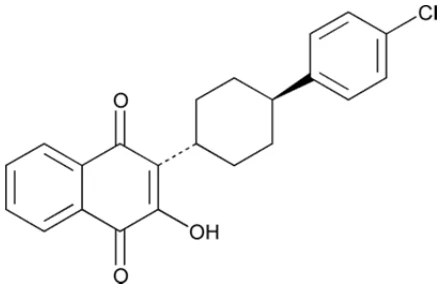
Molecular Formula: C22H19ClO3
Molecular Weight: 366.84
Description: Atovaquone is a yellow powder with a melting point of 217.6°C –
218.8°C. It is practically insoluble in water. It is freely soluble in tetrahydrofuran, soluble in chloroform and sparingly soluble in acetone.
Composition
APO-ATOVAQUONE Oral Suspension contains 750 mg of atovaquone per 5 mL and the following non-medicinal ingredients: benzyl alcohol, flavor (citrus), poloxamer 188, purified water, saccharin sodium and xanthan gum.
STABILITY AND STORAGE RECOMMENDATIONS
Atovaquone oral suspension should be stored at 15°C to 30°C and kept in tight, light resistant containers.
Atovaquone oral suspension SHOULD NOT BE FROZEN.
AVAILABILITY OF DOSAGE FORMS
APO-ATOVAQUONE Oral Suspension, containing atovaquone 750 mg/5 mL, is bright yellow with a citrus aroma. Supplied in bottles of 210 mL with child resistant cap.
CLINICAL TRIALS
Comparative Bioavailability Studies
A randomized, single-dose, double-blinded, standard 2-way crossover comparative bioavailability study, conducted under fed conditions, was performed on healthy male volunteers. The results obtained from 31 volunteers who completed the study are summarized in the following table. The rate and extent of absorption of atovaquone were measured and compared following a single oral dose (5 mL x 750 mg/5 mL) of APO-ATOVAQUONE (atovaquone) 750 mg/5 mL Oral Suspension (Apotex Inc.) and Mepron® (atovaquone) 750 mg/5 mL Oral Suspension (GlaxoSmithKline Inc., Canada).
Atovaquone (5 mL x 750 mg/5 mL) From Measured Data Geometric Mean# Arithmetic Mean (CV%) | ||||
| Parameter | Test* | Reference† | Ratio of Geometric Means (%) | 90% Confidence Interval (%) |
| AUC72 (ng•h/mL) | 392792.7 407472.1 (27) | 389882.5 398663.6 (23) | 100.75 | 95.30-106.50 |
| AUCI (ng•h/mL) | 946277.7 1062725.8 (74) | 895258.8 973266.6 (43) | 105.70 | 88.62-126.07 |
| Cmax (ng/mL) | 11576.6 11769.1 (19) | 10794.1 10990.1 (21) | 107.25 | 102.24-112.51 |
| Tmax§ (h) | 5.19 (35) | 6.29 (41) | ||
| T1/2§ (h) | 99.69 (79) | 93.97 (45) | ||
* APO-ATOVAQUONE (atovaquone) 750 mg/5 mL Oral Suspension (Apotex Inc.). † Mepron® (atovaquone) 750 mg/5 mL Oral Suspension (GlaxoSmithKline Inc., Canada) was purchased in Canada. # Based on Geometric Least Squares Means. § Expressed as arithmetic means (CV%) only. | ||||
MICROBIOLOGY
Pneumocystis carinii
Several laboratories, using different in vitro methodologies, have shown the IC50 (50% Inhibitory Concentration) of atovaquone against rat P. carinii to be in the range of 0.1 - 3.0 mcg/mL.
Atovaquone is active against P. carinii in immunosuppressed rats. This activity has been demonstrated in both prophylactic and treatment regimens. In a study designed to test atovaquone in the acute treatment of PCP, rats were immunosuppressed with corticosteroids for 4 or 6 weeks to predispose them to PCP and then treated by oral route once daily for 5 or 7 days per week for three weeks. A dose of 100 mg/kg completely cured (i.e. there was no histologic evidence of infection) a majority of the animals. In another study, 100 mg/kg of atovaquone was given daily for 3 weeks starting at the beginning of week 5 of immunosuppression. This regimen was effective in producing complete cures, as defined previously, in 4 of the 15 (27%) rats evaluated. The average infection score in treated rats was reduced to 0.8 from 2.57 in untreated immunosuppressed rats.
In studies designed to test atovaquone for prophylaxis of PCP, doses of 100 mg/kg, started concurrently with the immunosuppressive agent, prevented the development of pneumocystosis in the majority of susceptible rats. Atovaquone was administered by oral route either once daily for 5 days per week for six weeks, or daily for eight weeks. A dose response was evident in this model with doses lower than 100 mg/kg demonstrating a decreasing effect and doses of 10 mg/kg and 25 mg/kg having only a marginal effect, as evidenced by persistence of infection in 90% and 88% of animals, respectively. At the end of the study, animals remaining negative for PCP had atovaquone plasma concentrations >60 mcg/mL (range 60-94 mcg/mL). These atovaquone plasma concentrations are achievable at daily doses of 50 mg/kg/day or greater.
Toxoplasma gondii
The following additional preclinical data are available regarding Toxoplasma gondii, but their clinical significance is unknown. The in vitro IC50s of atovaquone against the tachyzoite stage of a number of strains of T. gondii were in the range of 0.001 to 0.07 mcg/mL. Atovaquone was also clearly active against the isolated cyst stages at 50 mcg/mL over a 72-hour incubation period. Limited activity was also observed at 5.0 mcg/mL; however, no intermediate atovaquone concentrations were tested.
Studies in an immunocompromised mouse model infected with clinical laboratory strains of T. gondii indicated ED50s (50% Effective Dose for delaying the time of death) to be in the range of 10 to 30 mg/kg/day when treatment was initiated 24 hours after infection. Percentage survival of mice decreased if the treatment was initiated later. In one study, mice treated with 50 mg/kg of atovaquone once daily for 15 days and surviving 30 days post infection were evaluated for residual viable brain cysts. Brain homogenates prepared from treated mice were shown to produce a fatal toxoplasma infection when subinoculated into normal mice. Thus, although atovaquone showed activity against T. gondii in vivo, these results indicate that viable organisms remain encysted in the brain. In another study with animals with pre-existing brain infections, dosage regimens of 100 mg/kg/day had a beneficial effect on survival and level of infection. However, relapse of infection due to residual parasites was not evaluated.
Plasmodium species
The in vitro IC50 against Plasmodium sp. is approximately 0.004 mcg/mL. Strains of P. falciparum resistant to atovaquone have been produced by drug selective pressure in the laboratory.
In order to determine the in vivo efficacy of atovaquone against murine malaria, CD-1 mice were injected with between 1 and 5 x 10⁶ erythrocytes infected with pathogenic strains of P. yoelii or P. berghei and the dose of atovaquone required to reduce parasitemia by 50% (ED50) and 99% (ED99) when given in 7 separate doses was determined. In drug sensitive strains, atovaquone has an ED99 of 0.09-0.15 mg/kg (P. yoelii) and 0.009-0.116 mg/kg (P. berghei).
Atovaquone was also evaluated in the Aotus monkey model of P. falciparum malaria. In P. falciparum infected monkeys, 1 mg/kg of atovaquone once a day orally for 3 to 7 days cleared all animals of circulating parasites 2 to 4 days after onset of treatment. Those receiving drug for 7 days were completely cured, while most of the animals treated with 3 or 5 doses recrudesced.
In Plasmodium species, the site of action appears to be the cytochrome bc1 complex (Complex III). Several metabolic enzymes are linked to the mitochondrial electron transport chain via ubiquinone. Inhibition of electron transport by atovaquone will result in indirect inhibition of these enzymes. The ultimate metabolic effects of such blockade may include inhibition of nucleic acid and ATP synthesis.
PHARMACOLOGY
Human Pharmacology
Absorption
Atovaquone is a highly lipophilic drug with low solubility in water. Pharmacokinetic and bioavailability studies indicate that the bioavailability of the drug is highly dependent on formulation and diet. The suspension formulation provides an approximately two-fold increase in atovaquone bioavailability in the fasting or fed state compared to the tablet formulation studied under the same conditions. The absolute bioavailability of a 750 mg dose of atovaquone oral suspension, administered under fed conditions, has been evaluated in nine HIV-seropositive (CD4 ≥100 cells/mm3) volunteers and was 47% ± 15%. In the same study, the bioavailability of the tablet formulation was 23% ± 11%. Other pharmacokinetic parameters from this study are shown in Table 7.
Table 7: Mean (±SD) Pharmacokinetic Parameters for Atovaquone after 0.5 mg/kg
Intravenous Infusion or 750 mg Tablet and Oral Suspension Administration*
| Parameter | I.V. | Tablet | Oral Suspension |
Cmax (mcg/mL) AUC (hr•mcg/mL) Bioavailability (%) T1/2 (hr) | 3.21 ± 0.38 70.0 ± 25.6 — 62.5 ± 35.3 | 4.76 ± 1.71 316 ± 159 23 ± 11 67.8 ± 28.9 | 11.47 ± 2.76 639 ± 227 47 ± 15 67.0 ± 33.4 |
* Mean IV dose was 36.9 mg.
The bioavailability of atovaquone tablets is increased approximately three-fold when administered with meals. In particular, fat has been shown to enhance absorption significantly. In one study, 18 volunteers received a single dose of 500 mg atovaquone tablets after an overnight fast and following a breakfast (23 g fat: 2696 kJ (642 kCal)). The mean (± SD) AUC values were 93.8 ± 45.7 and 288 ± 77 hr•mcg/mL, under fasting and fed conditions, respectively. In another volunteer study where atovaquone tablets were administered under fasting conditions, with 28 g butter (23 g fat) and 56 g butter (46 g fat) on toast, mean AUC values increased 2.7- and 4.0-fold, respectively, compared to the fasting state.
The bioavailability of atovaquone oral suspension is increased approximately two-fold when administered with meals. In one study, 16 healthy volunteers received a single dose of 750 mg atovaquone oral suspension after an overnight fast and following a standard breakfast [23 g fat: 2686 kJ (642 kCal)]. The mean (±SD) area under the concentration-time curve (AUC) values were 324 ± 115 and 801 ± 320 hr•mcg/mL under fasting and fed conditions, respectively. The effect of food [23 g fat: 1673 kJ (400 kCal] on atovaquone plasma concentrations was also evaluated in a multiple-dose, randomized, crossover study in 19 HIV-infected volunteers (CD4 ≤200 cells/mm3) receiving daily doses of 500 mg atovaquone oral suspension. AUC was 280 ± 114 hr•mcg/mL when atovaquone was administered with food as compared to 169 ± 77 hr•mcg/mL under fasting conditions. Maximum plasma atovaquone concentration (Cmax) was 15.1 ± 6.1 and 8.8 ± 3.7 mcg/mL when atovaquone was administered with food and under fasting conditions, respectively. Significant differences in the bioavailability of atovaquone oral suspension have been observed between normal volunteers or HIV-seropositive asymptomatic volunteers and AIDS patients.
Comparisons of AUC values of atovaquone tablets and atovaquone oral suspension across studies indicate that, on average, atovaquone plasma concentrations are approximately two- to three-fold higher in non-HIV-infected individuals than in patients with AIDS.
Dose Proportionality
Plasma atovaquone concentrations do not increase proportionally with dose. When atovaquone oral suspension was administered with food at dosage regimens of 500 mg once daily, 750 mg once daily and 1000 mg once daily, average steady-state plasma atovaquone concentrations were 11.7 ± 4.8, 12.5 ± 5.8, and 13.5 ± 5.1 mcg/mL, respectively. The corresponding Cmax concentrations were 15.1 ± 6.1, 15.3 ± 7.6, and 16.8 ± 6.4 mcg/mL. When atovaquone oral suspension was administered to five HIV-infected volunteers at a dose of 750 mg twice daily, the average steady-state plasma atovaquone concentration was 21.0 ± 4.9 mcg/mL and Cmax was 24.0 ± 5.7 mcg/mL. The minimum plasma atovaquone concentration (Cmin) associated with the 750 mg twice daily regimen was 16.7 ± 4.6 mcg/mL.
Distribution
Following the intravenous administration of atovaquone, the volume of distribution at steady state (Vdss) was 0.60 ± 0.17 L/kg (n=9). Atovaquone is extensively bound to plasma proteins (99.9%) over the concentration range of 1 to 90 mcg/mL. In three HIV- infected children who received 750 mg atovaquone as the tablet formulation four times daily for 2 weeks, the cerebrospinal fluid concentrations of atovaquone were 0.04 mcg/mL, 0.14 mcg/mL, and 0.26 mcg/mL, representing less than 1% of the plasma concentration.
Elimination
The plasma clearance of atovaquone following intravenous administration in nine HIV-infected volunteers was 10.4 ± 5.5 mL/min (0.15 ± 0.09 mL/min/kg). The half-life of atovaquone was 62.5 ± 35.3 hours after I.V. administration and ranged from 67.0 ± 33.4 to 77.6 ± 23.1 hours across studies following administration of atovaquone oral suspension. The half-life of atovaquone is long due to presumed enterohepatic cycling and eventual fecal elimination. In a study where 14C-labelled atovaquone was administered to healthy volunteers, greater than 94% of the dose was recovered as unchanged atovaquone in the feces over 21 days. There was little or no excretion of atovaquone in the urine (less than 0.6%). There is indirect evidence that atovaquone may undergo limited metabolism; however, a specific metabolite has not been identified.
Human Pharmacokinetics
HIV Seropositive Asymptomatic Adults
During a multiple-dose study of atovaquone tablets in cohorts of 4 HIV-seropositive asymptomatic adult volunteers, dose-proportionality was demonstrated for dosage regimens of 100 to 750 mg once daily. However, at doses above 750 mg once daily with food, the relative oral bioavailability decreased. The maximum dose tested, 3000 mg once daily, produced a mean ±SD steady-state average plasma concentration of 40.0 ± 19.0 mcg/mL compared to 26.9 ± 10.0 mcg/mL in volunteers receiving 750 mg once daily.
In a multiple-dose escalation study (Table 8) conducted in volunteers with AIDS, where a single cohort of 15 individuals received 15- to 17-day consecutive courses of atovaquone tablets administered with food at regimens of 750, 1500, 3000 mg once daily, 750 mg twice daily, and 1500 mg twice daily, the lack of dose proportionality was also demonstrated; however, there was a modest increase in concentrations with increasing total daily dose. Altering dose intervals without changing total daily dose did not affect concentrations. In this study, the Cmax/Cmin concentration ratio values were low; approximately 1.5, and independent of the dosage regimen.
Table 8: Atovaquone Tablets AUC Values and Plasma Concentrations in Volunteers with
AIDS*
| Parameter | 750 mg (n =15) | 1500 mg (n =15) | 3000 mg (n =14) | 750 mg (n =12) | 1500 mg (n =13) |
Steady-State AUC (hr mcg/mL) Steady-State Average Concentrations (mcg/mL) | 181 ± 84 7.5 ± 3.5 | 253 ± 126 10.6 ± 5.3 | 322 ± 135 13.4 ± 5.6 | 231 ± 59 9.6 ± 2.5 | 314 ± 109 13.1 ± 4.5 |
*Mean ± SD
In two pivotal studies for the treatment of PCP where 191 AIDS patients received 750 mg
atovaquone tablets three times daily, the mean steady-state atovaquone concentration was 13.9 ± 6.8 mcg/mL.
Immunocompromised Children
The pharmacokinetics of atovaquone have been evaluated in 10 immunocompromised children (age: 5 months to 13 years; weight: 3.5 to 85.5 kg). The mean half-life was 2.7 ± 1.6 days. A dosage regimen of 10 mg/kg once daily achieved a steady-state average concentration of 7.5 ± 4.6 mcg/mL (range 2.5 to 15.2 mcg/mL). For 3 of these children who also received a dosage regimen of 40 mg/kg once daily, a steady-state average concentration of 14.0 ± 2.2 mcg/mL (range 10.9 to 15.6 mcg/mL) was achieved.
Relationship Between Atovaquone Plasma Concentration and Clinical Outcome
In a comparative study of atovaquone tablets with trimethoprim-sulfamethoxazole (TMP-SMX) for oral treatment of mild to moderate PCP, where AIDS patients received 750 mg atovaquone tablets three times daily for 21 days, the mean steady-state atovaquone concentration was 13.9 ± 6.8 mcg/mL (n=191). Analysis of these data established a relationship between atovaquone plasma concentration and successful treatment.
Table 9: Relationship Between Atovaquone Plasma Concentrations and Successful
Treatment
Steady-State Plasma Atovaquone Concentrations (mcg/mL) | Successful Treatment* Number successes/Number in Group (%) | |||
| Observed | Predicted† | |||
0 to <5 5 to <10 10 to <15 15 to <20 20 to <25 25+ | 0/6 18/26 30/38 18/19 18/18 6/6 | 0% 69% 79% 95% 100% 100% | 1.5/6 14.7/26 31.9/38 18.1/19 17.8/18 6/6 | 25% 57% 84% 95% 99% 100% |
* Successful treatment was defined as improvement in clinical and respiratory measures persisting at least 4 weeks after cessation of therapy.
† Based on logistic regression analysis
A dosing regimen of atovaquone oral suspension for the treatment of mild to moderate PCP has been selected to achieve average atovaquone plasma concentrations of approximately 20 mcg/mL, because this plasma concentration was previously shown to be well tolerated and associated with the highest treatment success rates (Table 9). In an open-label PCP treatment study with atovaquone oral suspension, dosing regimens of 1000 mg once daily, 750 mg twice daily, 1500 mg once daily, and 1000 mg twice daily were administered to AIDS patients with PCP. The average steady-state plasma atovaquone concentration (Cavg, ss ± SD) achieved at the 750 mg twice daily dose given with meals was 22.0 ± 10.1 mcg/mL (n=18). Twelve of the eighteen patients (67%) achieved a Cavg, ss level of ≥15 mcg/mL after 21 days of treatment. Based on the limited pharmacokinetic data, the Cavg,ss for the 1500 mg once daily treatment regimen given with meals was 17.6 ± 8.1 mcg/mL (n = 9). At this dosing regimen, five of the nine patients (56%) achieved a Cavg, ss level of ≥15 mcg/mL after 21 days of treatment.
Animal Pharmacology
Absorption, distribution, metabolism and elimination studies have been conducted with atovaquone or 14C-labelled atovaquone in several animal species.
Absorption
Atovaquone exhibits limited absorption after oral administration in all species studied. There is considerable interanimal variability in plasma concentrations after oral administration; this is most evident in dogs where up to 10-fold differences in plasma concentrations are seen after a given oral dose. High doses (up to 1200 mg/kg/day) do not result in proportionately higher plasma concentrations of atovaquone. Atovaquone exhibits a long plasma half-life, averaging 9 hours in mice, 26 hours in rats, 22 hours in rabbits, and 37 hours in dogs. It is >99% bound to plasma proteins in all species studied.
Distribution
The distribution of atovaquone into tissues after absorption is limited to the organs of excretion and metabolism. Plasma to tissue concentration ratios range from 2 in the liver to ~30 in brain.
Metabolism
After oral administration of atovaquone, hepatic cytochrome P-450 isoenzymes of the IIB (phenobarbital-inducible) family are induced in mice but not in rats. The compound does not appear to induce its own metabolism. In vitro studies and characterization of metabolic profiles in excreta of animals and humans dosed with 14C-labelled atovaquone indicate that biotransformation of the compound is not a significant factor in the disposition of atovaquone. The compound is not metabolized in liver microsomal preparations, and the major (in man the single) component of fecal extracts in all species is unchanged atovaquone.
Elimination
After either I.V. or oral administration, the major route of elimination is via feces. In all species examined, including man, urinary excretion accounts for <3% of the administered dose, and in most experiments this value is <1%. Elimination in feces accounts for an average of >92% of an oral dose across all nonclinical species examined; in man, fecal elimination after an oral dose averages 93%.
TOXICOLOGY
The toxicology of atovaquone has been investigated extensively in a variety of species for periods of up to six months (see Table 10).
Acute Toxicity Studies
In acute toxicity experiments in rats and mice, the oral MLD (median lethal dose) was determined to be in excess of 1825 mg/kg. No deaths or other treatment-related effects were observed. The intravenous MLD was approximately 26 mg/kg in mice and 36 mg/kg in rats. The lowest doses at which any deaths occurred were 25 and 35 mg/kg in mice and rats, respectively, and all deaths occurred on the day of dosing. Clonic convulsions, and other signs included ataxia, decreased activity, prostration, and laboured breathing. These signs were seen either immediately, or within 3 minutes after dosing and all survivors recovered within 24 hours.
Subchronic Oral Toxicity Studies
Subchronic (28-day and 6-month) oral studies were conducted in rats and dogs given atovaquone at doses of 20 to 500 mg/kg/day.
In the 28-day rat study, no treatment-related antemortem or postmortem effects were noted at doses up to 500 mg/kg/day. In the 6-month study, equivocal or marginal decreases in erythrocytic parameters were observed at doses of 20 to 500 mg/kg/day.
In 28-day and 6-month studies in dogs, daily oral doses ranged from 20 to 500 mg/kg/day. No treatment-related antemortem or postmortem effects were seen.
Teratology
Studies were conducted in rats at oral doses up to 1000 mg/kg/day and in rabbits at oral doses up to 1200 mg/kg/day. Maternal trough plasma concentrations of atovaquone averaged 76 mcg/mL (1000 mg/kg/day) and 16 mcg/mL (1200 mg/kg/day) for the rat and rabbit teratology studies, respectively. There was no evidence of teratogenicity in either species.
In the rabbit study, fetal concentrations of atovaquone averaged 30% of the concurrent maternal plasma concentrations. Body weight loss occurred at 1200 mg/kg/day; 5 of 25 animals aborted at 1200 mg/kg/day. Rabbits that aborted were in the group of animals that had severely reduced food consumption and considerable weight loss. Small decreases in fetal body length and body weight were seen at 1200 mg/kg/day; these effects may have been a result of drug-related maternal toxicity.
Carcinogenesis, Mutagenesis
Oncogenicity studies in mice showed an increased incidence of hepatocellular adenomas and carcinomas without determination of the no observed adverse effect level. No such findings were observed in rats and mutagenicity tests were negative. These findings appear to be due to the inherent susceptibility of mice to atovaquone and are considered of no relevance in the clinical situation. At concentrations up to the limit of drug solubility, atovaquone was not mutagenic in the Ames Salmonella mutagenicity assay (79 mcg/plate: 29.3 mcg/mL) nor mouse lymphoma assay (50 mcg/mL), with or without metabolic activation. Atovaquone was not associated with any biologically significant increases in the incidence of structural or numerical chromosomal abnormalities in cultured human lymphocytes at up to 50 mcg/mL and 10 mcg/mL with or without metabolic activation, respectively.
There was no biologically significant increase in the incidence of structural or numerical chromosome abnormalities in bone marrow cells from mice given oral doses of atovaquone up to 5000 mg/kg.
Table 10: Summary of Oral Toxicology Study Findings
| Type | Duration | Species | Dose (mg/kg/day) | Findings |
| ACUTE TOXICITY STUDIES | Single dose | CD-1 Mouse | 1, 1825 | MLD>1825mg/kg |
| Single dose | Wistar Rat | 1, 1825 | MLD>1825mg/kg | |
SUBCHRONIC TOXICITY STUDIES | 90 Days (diet) | CD-1 Mouse | 0, 50, 200, 800 | Hepatocellular hypertrophy, individual cell necrosis, increased hepatocellular smooth endoplasmic reticulum. Findings seen at all doses may have resulted from enzyme induction. |
| 28 Days (gavage) | Wistar Rat | 0, 20, 100, 500 | No effect at any dose on |
| Type | Duration | Species | Dose (mg/kg/day) | Findings |
| (14 days postdose) | antemortem or postmortem observations or measurements | |||
| 90 Days (diet) | Rat CD | 0, 50, 200, 800 | Marginal reduction in erythrocytic parameters (RBC, Hct) seen in all doses. | |
| 6 Months (gavage) (28 days postdose) | Wistar Rat | 0, 20, 100, 500 | Marginal reduction in erythrocytic parameters (RBC, Hct) seen in all doses | |
28 Days (14 days postdose) | Beagle Dog | 0, 20, 100, 500 | No effect at any dose on antemortem or postmortem observations or measurements. | |
| 6 Months (28 days postdose) | Beagle Dog | 0, 20, 100, 500 | No effect at any dose on antemortem or postmortem observations or measurements. | |
| TERATOLOGY STUDIES | Gestation days 6 through 15 | CD Rat | 0, 250, 500, 1000 | Not teratogenic |
Gestation days 6 through 18 | NZW Rabbit | 0, 300, 600, 1200 | Not teratogenic | |
| MUTAGENICITY STUDIES | Assay | |||
| Ames Assay | Salmonella typhimurium | Up to 79 mcg/plate | Nonmutagenic | |
Mouse Lymphoma Assay | Mouse | Up to 50 mcg/plate | No chromosomal aberrations | |
In Vitro Cytogenetic Assay | Human Lymphocyte | Up to 50 mcg/mL - 5 hours Up to 10 mcg/mL - 48 hours | No chromosomal aberrations | |
| Micronucleus Assay | Mouse | 1000, 3000, 5000 | Nonmutagenic | |
Other Toxicity Studies
Data on further animal studies are supplied below. The relationship of these findings to potential human toxicity is unclear.
In a long-term, 6-month, oral toxicity study in Wistar rats, atovaquone was administered at doses of 20, 100 and 500 mg/kg/day. Starting at week 5, slight anemia was observed at doses that were approximately 1-4 times the estimated human exposure (based upon plasma concentrations and AUC).
Unexplained deaths occurred in a 90-day study in mice administered atovaquone orally 800 mg/kg/day; as well as in a study in rabbits receiving up to 1200 mg/kg/day for gestation days 6 through 18.
Intravenously administered atovaquone caused unexplained deaths in mice and rats. In the mice, deaths occurred at 25 and 30 mg/kg/day. The deaths in rats occurred at intravenous doses associated with atovaquone plasma concentrations greater than 100 mcg/mL.
Additionally, a 1-hour infusion of an intravenous formulation of atovaquone 60 mg/kg, dissolved in a cosolvent vehicle containing polyethylene glycol, propylene glycol and tromethamine (TRIS) caused convulsions and death in dogs at plasma concentrations of 164 mcg/mL.
REFERENCES
- 1. Araujo FG, Huskinson J, Remington JS. Remarkable in vitro and in vivo activities of the hydroxynaphthoquinone 566C80 against tachyzoites and tissue cysts of Toxoplasma gondii. Antimicrob Agents Chemother. 1991 Feb;35(2):293-299.
- 2.
Dohn MN, Weinberg WG, Torres RA, Follansbee SE, Caldwell PT, Scott JD et al.
Oral atovaquone compared with intravenous pentamidine for Pneumocystis carinii pneumonia in patients with AIDS. Atovaquone Study Group. Ann Intern Med. 1994 Aug;121(3):174-180.
- 3. Falloon J, Follansbee S, Reves R, Weinberg W, Torres R, Chan C et al. Atovaquone suspension for Pneumocystis pneumonia (PCP) [Abstract]. In: Program and abstracts of the Second National Conference on Human Retroviruses and Related Infections, Washington, DC, 1995:109.
- 4. Falloon J, Kovacs J, Hughes W, O'Neill D, Polis M, Davey RT, Jr. et al. A preliminary evaluation of 566C80 for the treatment of Pneumocystis pneumonia in patients with the acquired immunodeficiency syndrome. N Engl J Med. 1991 Nov;325(22):1534-1538.
- 5. Hudson AT, Randall AW, Fry M, Ginger CD, Hill B, Latter VS et al. Novel anti- malarial hydroxynaphthoquinones with potent broad spectrum anti-protozoal activity. Parasitology. 1985 Feb;90(Pt 1):45-55.
- 6. Hughes W, Leoung G, Kramer F, Bozzette SA, Safrin S, Frame P et al. Comparison of atovaquone (566C80) with trimethoprim-sulfamethoxazole to treat Pneumocystis carinii pneumonia in patients with AIDS. N Engl J Med. 1993 May;328(21):1521-1527.
- 7. Hughes WT, Gray VL, Gutteridge WE, Latter VS, Pudney M. Efficacy of a hydroxynaphthoquinone, 566C80, in experimental Pneumocystis carinii pneumonitis. Antimicrob Agents Chemother. 1990 Feb;34(2):225-228.
- 8.
Hughes WT, Kennedy W, Shenep JL, Flynn PM, Hetherington SV, Fullen G et al.
Safety and pharmacokinetics of 566C80, a hydroxynaphthoquinone with anti- Pneumocystis carinii activity: a phase I study in human immunodeficiency virus (HIV)-infected men. J Infect Dis. 1991 Apr;163(4):843-848.
- 9. Hughes WT. A new drug (566C80) for the treatment of Pneumocystis carinii pneumonia. Ann Intern Med. 1992 Jun;116(11):953-954.
- 10. Huskinson-Mark J, Araujo FG, Remington JS. Evaluation of the effect of drugs on the cyst form of Toxoplasma gondii. J Infect Dis. 1991 Jul;164(1):170-171.
- 11. Lavelle J, Trapnell C, Byrne R, Noblin J, Sadler B, Blum R et al. The absolute bioavailability of atovaquone tablets and suspension in HIV-seropositive volunteers [Abstract]. Clin Pharmacol Ther. 1994 Feb;55(2):192.
- 12.
Product Monograph - MEPRON® (Atovaquone Oral Suspension, USP) 750 mg/5 mL.
GlaxoSmithKline Inc. Date of Revision: July 26, 2016.