


Product Monograph - Apo-Entacapone
CLINICAL TRIALS
Comparative Bioavailability Studies
A randomized, single-dose, double-blinded, 2-way crossover comparative bioavailability study, conducted under fasting conditions, was performed on 21 healthy male and/or female volunteers between the ages of 18-65 years old. The rate and extent of absorption of analyte was measured and compared following a single oral dose of Comtan (entacapone) or Apo- Entacapone, 200 mg tablets. The results from measured data are summarized in the following table.
Summary Table of the Comparative Bioavailability Data
Entacapone (1 x 200 mg) From measured data – Fasting Conditions (EA4091) Geometric Mean# Arithmetic Mean (CV %) | ||||
| Parameter | Entacapone Tablets USP (Apotex Inc.) | Comtan* Tablets (Novartis Pharmaceuticals Canada Inc.) (Canada) | % Ratio of Geometric Means# | 90% Confidence Interval# |
| AUCt | 1833.18 | 1831.08 | 100.1 | 94.1 – 106.6 |
| (ng•h/mL) | 1874.80 (23) | 1899.40 (32) | ||
| AUCinf | 1839.65 | 1834.18 | 100.3 | 93.6 – 107.5 | ||||||
| (ng•h/mL) | 1880.93 (23) | 1943.44 (32) | ||||||||
| Cmax | 1388.56 | 1389.89 | 99.9 | 84.7 – 117.9 | ||||||
| (ng/mL) | 1472.15 (34) | 1685.17 (98) | ||||||||
| Tmax§ (h) | 1.67 | (63) | 1.17 | (76) | ||||||
| T1/2§ (h) | 1.39 | (35) | 1.07 | (21) | ||||||
§ Expressed as the arithmetic mean (CV %) only
# based on least squares estimates
The effectiveness of entacapone as an adjunct to levodopa/ DDC therapy in the treatment of Parkinson’s disease was demonstrated in three separate 24-week randomized, placebo- controlled, double-blind, multicenter studies in 676 patients with mild to moderate Parkinson's disease (average Hoen and Yahr score: 1.5-3). In two of these studies (Nordic Study and North American “SEESAW” Study), the patients’ disease was “fluctuating”, i.e. was characterized by documented periods of “On” (periods with relatively good functioning) and “Off” (periods of relatively poor functioning), despite optimum levodopa therapy. In the third trial (German-Austrian “CELOMEN” Study) patients were not required to have been experiencing fluctuations. On average the patients evaluated had been treated with levodopa/ DDC inhibitor therapy for 8.3 years and 86 % were treated with other antiparkinsonian medication (dopamine agonists, selegiline, amantadine, anticholinergics) in addition to a levodopa/DDC inhibitor.
In the two studies in patients with Parkinson’s disease with documented episodes of end-of- dose motor fluctuations despite optimal levodopa therapy, patients were randomized to receive placebo (n=188) or 200 mg entacapone (n=188) with each daily dose of levodopa/DDC inhibitor (carbidopa or benserazide; average 4 -to- 6 doses per day). The formal double-blind portion of both trials was 6 months. Patients recorded the time spent in the “On” and “Off” states in home
diaries periodically throughout the duration of the trial. In the Nordic Study the primary outcome measure was the total mean time spent in the “On” state during an 18-hour diary recorded day, in the North American “SEESAW” study, the primary outcome measure was the proportion of awake time spent over 24 hours in the “On” state.
In addition to the primary outcome measure, as secondary measures, the amount of time spent in the “Off” state was evaluated and patients were also evaluated in subparts of the Unified Parkinson’s Disease Rating Scale (UPDRS), an investigator’s and patients’ global assessment of clinical condition, a 7-point subjective scale designed to assess global functioning in Parkinson’s Disease and for change in daily levodopa/DDC dose. Results for the primary efficacy measure for these two studies are shown in Table 1.
TABLE 1: Primary Outcome Measures: Hours of awake time “On” (Nordic Study); Percent of Awake time “On” (North American “SEESAW” study)
| Nordic Study | |||
Placebo (n=86) Mean (± SD) | Entacapone (n=85) Mean (± SD) | Difference | |
| Baseline* | 9.2 ± 2.5 | 9.3 ± 2.2 | |
| Week 8-24*† | 9.4 ± 2.6 | 10.7 ± 2.2 | 1h 20 min (8.3%) CI95% 45 min, 1h 56 min |
| North American “SEESAW” Study | |||
| Placebo (n=102) | Entacapone (n=103) | Difference | |
| Baseline** | 60.8 ± 14.0 | 60.0 ± 15.2 | |
| Week 8-24**‡ | 62.8 ± 16.8 | 66.8 ± 14.5 | 4.5% (0 h 35 min) CI95% 0.93%, 7.97% |
- * daily ON time (h); † Values represent the average of weeks 8, 16 and 24, by protocol-defined outcome measure.
** Proportion ON time %; ‡Values represent the average of weeks 8, 16 and 24, by protocol defined outcome measure.
Effects on “On” time did not differ by age, weight, disease severity at baseline, levodopa dose and concurrent treatment with dopamine agonists or selegiline.
Corresponding significant decreases in OFF time were also noted. Change from baseline in hours of awake time “Off” in the Nordic Study were: -1.3 hours for the entacapone group; 0 hours for the placebo group and in the North American “SEESAW” Study were: -1.2 hours for the entacapone group; 0.3 for the placebo group.
Withdrawal of entacapone: In the North American “SEESAW” Study, abrupt withdrawal of entacapone, without alteration of the dose of levodopa/carbidopa, resulted in significant worsening of fluctuations, compared to placebo. In some cases, symptoms were slightly worse at baseline, but returned to approximately baseline severity within two weeks following levodopa dose increase on average by 80 mg. In the Nordic Study, similarly, a significant worsening of Parkinsonian symptoms were observed after entacapone withdrawal, as assessed two weeks after drug withdrawal. At this phase the symptoms were approximately baseline severity following levodopa dose increase by about 50 mg.
In the third placebo controlled trial (Austrian-German “CELOMEN” Study), as in the other two trials, patients were randomized to receive 200 mg entacapone or placebo with each dose of levodopa / DDC inhibitor (up to 10 times daily). The CELOMEN study was primarily designed as a safety trial. Measures of effectiveness in this study were the UPDRS Parts II and III and total daily “On” time (see Table 2).
TABLE 2: Outcome Measures: UPDRS and Hours of awake time “On” (Austrian-German “CELOMEN” Study)
| UPDRS ADL* | |||
Placebo (n =104) Mean (± SD) | Entacapone (n =191) Mean (± SD) | Difference | |
| Baseline | 12.0 ± 5.8 | 12.4 ± 6.1 | |
| Week 24 | 12.4 ± 6.5 | 11.1 ± 6.3 | -1.35 CI95 -2.54, -0.16 |
| UPDRS MOTOR* | |||
| Placebo (n =102) | Entacapone (n =190) | Difference | |
| Baseline | 24.1 ± 12.1 | 24.9 ± 12.9 | |
| Week 24 | 24.3 ± 12.9 | 21.7 ± 12.1 | -2.83 CI95 -4.95, -0.71 |
| Hours of Awake Time “On” (Home diary)** | |||
| Placebo (n = 60) | Entacapone (n =114) | Difference | |
| Baseline | 10.1 ± 2.5 | 10.2 ± 2.6 | |
| Week 24 | 10.6 ± 3.0 | 11.8 ± 2.7 | 1.08 CI95 0.13, 2.03 |
*Total population; score change at endpoint
**Fluctuating population, with 5-10 doses
INDICATIONS AND CLINICAL USE
APO-ENTACAPONE (entacapone) is indicated as an adjunct to levodopa/carbidopa or levodopa/ benserazide preparations to treat patients with idiopathic Parkinson’s Disease who experience the signs and symptoms of end-of-dose “wearing-off” (see CLINICAL PHARMACOLOGY: Clinical Trials).
APO-ENTACAPONE’s effectiveness has not been systematically evaluated in patient’s with idiopathic Parkinson’s Disease who do not experience end-of-dose “wearing-off”.
Since APO-ENTACAPONE is to be used in combination with a levodopa/DDC inhibitor, the complete prescribing information for levodopa/carbidopa and levodopa/benserazide are also applicable when APO-ENTACAPONE is added to the treatment regimen.
CONTRAINDICATIONS
- APO-ENTACAPONE (entacapone) is contraindicated in patients with known hypersensitivity to entacapone or to any of the excipients (see PHARMACEUTICAL INFORMATION – Composition for a complete listing).
- APO-ENTACAPONE is contraindicated in patients with hepatic impairment.
- APO-ENTACAPONE should not be given concomitantly with non-selective monoamine oxidase (MAO) inhibitors (e.g. phenelzine and tranylcypromine). The combination of selective MAO-A and selective MAO-B inhibitors is equivalent to non-selective MAO- inhibition, therefore, they should not both be given concomitantly with APO- ENTACAPONE and levodopa preparations. Non-selective MAO inhibitors must be discontinued at least two weeks prior to initiating therapy with entacapone. Selective MAO-B inhibitors should not be used at higher than recommended doses (e.g. selegiline 10 mg/day) when co-administered with APO-ENTACAPONE and levodopa (see PRECAUTIONS, Drug Interactions, Selegiline).
- APO-ENTACAPONE should not be given to patients with clinical or laboratory evidence of uncompensated cardiovascular, endocrine, hematologic, pulmonary (including bronchial asthma), or renal disease.
- APO-ENTACAPONE is contraindicated in patients with a previous history of Neuroleptic Malignant Syndrome (NMS) and/or non-traumatic rhabdomyolysis.
- APO-ENTACAPONE should not be given when administration of a sympathomimetic amine is contraindicated.
- APO-ENTACAPONE is contraindicated in patients with pheochromocytoma due to the increased risk of hypertensive crisis.
- APO-ENTACAPONE should not be given to patients with narrow angle glaucoma.
- Because levodopa may activate a malignant melanoma, APO-ENTACAPONE should not be used in patients with suspicious, undiagnosed skin lesions or a history of melanoma.
WARNINGS
Sudden Onset of Sleep
Patients receiving treatment with APO-ENTACAPONE in combination with levodopa/DDC inhibitor and/or other dopaminergic agents have reported suddenly falling asleep while engaged in activities of daily living, including the driving of a car, which sometimes resulted in accidents. Although some of the patients reported somnolence while treated with levodopa/DDC inhibitor and APO-ENTACAPONE, others perceived that they had no warning signs, such as excessive drowsiness, and believed that they were alert immediately prior to the event.
Physicians should alert patients of the reported cases of sudden onset of sleep, bearing in mind that these events are NOT limited to initiation of therapy. Patients should also be advised that sudden onset of sleep has occurred without warning signs and should be specifically asked about factors that may increase the risk with APO-ENTACAPONE used in combination with levodopa/decarboxylase DDC inhibitor, such as concomitant medications or the presence of sleep disorders. Given the reported cases of somnolence and sudden onset of sleep (not necessarily preceded by somnolence), physicians should caution patients about the risk of operating hazardous machinery, including driving motor vehicles, while taking APO- ENTACAPONE in combination with levodopa/decarboxylase DDC inhibitor. If drowsiness or sudden onset of sleep should occur, patients should be informed to refrain from driving or operating machines and to immediately contact their physician (see PRECAUTIONS- Information for Patients).
Episodes of falling asleep while engaged in activities of daily living have also been reported in patients taking other dopaminergic agents, therefore, symptoms may not be alleviated by substituting these products.
While dose reduction clearly reduces the degree of somnolence, there is insufficient information to establish that dose reduction will eliminate episodes of falling asleep while engaged in activities of daily living.
Currently, the precise cause of this event is unknown. It is known that many Parkinson’s disease patients experience alterations in sleep architecture, which results in excessive daytime sleepiness or spontaneous dozing, and that dopaminergic agents can also induce sleepiness.
Skin
Melanoma: Epidemiological studies have shown that patients with Parkinson’s disease have a higher risk (2- to approximately 6-fold higher) of developing melanoma than the general population. Whether the increased risk observed was due to Parkinson’s disease or other factors, such as drugs used to treat Parkinson’s disease, is unclear. For the reasons stated above, patients and healthcare providers are advised to monitor for melanomas frequently and on a regular basis when using APO-ENTACAPONE for any indication (see PRECAUTIONS- Information for Patients). Ideally, periodic skin examinations should be performed by appropriately qualified individuals (e.g., dermatologists).
Prostate Cancer
Prostate cancer has been reported in elderly males during the use of entacapone in combination with levodopa/carbidopa in clinical trials. The clinical relevance of these adverse events is not known (see ADVERSE REACTIONS). Physicians are advised to adhere to the routine examination schedule for all male patients for symptoms and risk factors of prostate cancer including evaluation prior to initiating treatment with APO-ENTACAPONE. Physicians should emphasize to patients the importance of adhering to routine examinations for prostate cancer during extended treatment with entacapone (see PRECAUTIONS-Information for Patients).
Drugs metabolized by Catechol-O-methyltransferase (COMT)
When a single 400 mg dose of entacapone was given together with intravenous isoprenaline (isoproterenol) and epinephrine without coadministered levodopa/DDC inhibitor, the overall mean maximal changes in heart rate during infusion were about 50% and 80% higher than with placebo, for isoprenaline and epinephrine, respectively.
Therefore, drugs known to be metabolized by COMT, such as isoproterenol, epinephrine, norepinephrine, dopamine, dobutamine, alpha-methyldopa, apomorphine, isoetherine and bitolterol should be administered with caution in patients receiving entacapone regardless of the
route of administration (including inhalation), as their interaction may result in increased heart rates, possibly arrhythmias, and excessive changes in blood pressure.
Ventricular tachycardia was noted in a 32 year old healthy male volunteer in an interaction study after epinephrine infusion and oral entacapone administration. Treatment with propranolol was required. A causal relationship to entacapone administration appears probable but cannot be attributed with certainty.
Abnormal Weight Decrease
In isolated cases, combined progressive anorexia, asthenia and weight decrease within a relatively short period of time have been reported prior to elevations in liver enzymes and serious hepatic adverse events. For patients who experience progressive anorexia, asthenia and weight decrease within a relatively short period of time, a general medical evaluation including assessment of liver function should be considered (See PRECAUTIONS- Diarrhea and Weight Decrease).
Cardiovascular
Myocardial infarction and other ischemic heart disease events have been reported with the use of entacapone in combination with levodopa/DDC inhibitor in clinical trials (see ADVERSE REACTIONS). Entacapone therapy should be administered with caution to patients with ischemic heart disease or risk factors for cardiovascular disease.
In patients with a history of myocardial infarction or who have residual atrial nodal or ventricular arrhythmias, cardiac function should be monitored with particular care during the period of initial dosage adjustments in a facility with provisions for intensive cardiac care.
Periodic evaluation of cardiovascular function is recommended during extended therapy with entacapone.
PRECAUTIONS
General
Periodic evaluation of hepatic, hematopoietic, cardiovascular and renal function is recommended during extended therapy with levodopa/DDC inhibitor and APO-ENTACAPONE.
APO-ENTACAPONE enhances the effects of levodopa. Therefore, to reduce levodopa-related dopaminergic adverse reactions, e.g. dyskinesias, nausea, vomiting and hallucinations, it may be necessary to adjust the levodopa dosage within the first days to first weeks following the initiation of APO-ENTACAPONE treatment.
APO-ENTACAPONE has no antiparkinsonian effect of its own and therefore should only be used as an adjunct to levodopa/carbidopa or levodopa/benserazide treatment. The warnings and precautions given for levodopa/carbidopa and levodopa/benserazide treatment should therefore be taken into account when APO-ENTACAPONE is used.
If APO-ENTACAPONE treatment is discontinued, it is necessary to adjust the dosing of other parkinsonian treatments, especially levodopa, to achieve a sufficient level of control of the parkinsonian symptoms (see DOSAGE AND ADMINISTRATION).
Neuroleptic Malignant Syndrome
A symptom complex resembling the neuroleptic malignant syndrome (NMS), characterized by elevated temperature, muscular rigidity, altered consciousness (e.g., agitation, confusion, coma), autonomic instability (tachycardia, labile blood pressure) and elevated CPK has been reported in association with the rapid dose reduction, or withdrawal of, or changes in antiparkinsonian therapy. In individual cases, only some of these symptoms and/or findings may be evident. This syndrome should be considered in the differential diagnosis for any patient who develops a high fever or severe rigidity.
Cases with similar signs and symptoms have been reported in association with APO- ENTACAPONE (entacapone) therapy, especially following abrupt reduction or discontinuation of entacapone and other dopaminergic medications. The complicated nature of these cases makes it difficult to determine what role, if any, entacapone may have played in their pathogenesis. No cases have been reported following abrupt withdrawal or dose reduction of entacapone treatment during clinical studies.
Prescribers should exercise caution when discontinuing entacapone treatment. When considered necessary, withdrawal should proceed slowly. If a decision is made to discontinue treatment with APO-ENTACAPONE, recommendations include monitoring the patient closely and adjusting other dopaminergic treatments as needed. If signs and/or symptoms occur
despite a slow withdrawal of entacapone, an increase in levodopa dosage may be necessary. Tapering APO-ENTACAPONE has not been systematically evaluated.
Rhabdomyolysis
Rhabdomyolysis secondary to severe dyskinesias or Neuroleptic Malignant Syndrome (NMS) has been observed rarely in patients with Parkinson’s disease. Very rare cases of rhabdomyolysis have been reported with entacapone treatment.
Symptoms associated with rhabdomyolysis can include muscle pain, muscle tenderness and weakness, bruising, elevated temperature, urinary retention, confusion, and elevated CPK. Acute renal failure is serious complication associated rhabdomyolysis and has been reported in some cases of rhabdomyolysis that have occurred during entacapone treatment.
Orthostatic Hypotension/Syncope
APO-ENTACAPONE may aggravate levodopa-induced orthostatic hypotension. APO- ENTACAPONE should be given with caution to patients who are treated with drugs which may cause orthostatic hypotension. In controlled clinical trials approximately 1.2% of patients who received 200 mg entacapone and 0.8% of patients treated with placebo reported at least one episode of syncope. Reports of syncope were generally more frequent in patients in both treatment groups who had an episode of documented hypotension.
Diarrhea and Weight Decrease
In clinical trials, diarrhea was reported as an adverse event in 60 of 603 (10.0%) and 16 of 400 (4.0%) of patients treated with 200 mg entacapone and placebo, respectively. In patients treated with entacapone diarrhea was generally mild to moderate in severity (8.6%) but was reported as severe in 1.3%. Diarrhea resulted in withdrawal in 10 of 603 (1.7%) patients (1.2% with mild to moderate diarrhea and 0.3% with severe diarrhea). Diarrhea generally resolved after discontinuation of entacapone. Two patients with diarrhea required hospitalization. Typically, diarrhea presents within 4 to 12 weeks after entacapone is started, but it may appear as early as the first week and as late as many months after the initiation of treatment. For patients experiencing diarrhea, close monitoring of weight is recommended in order to assess the need for treatment discontinuation to avoid excessive weight loss (see also WARNINGS-Abnormal Weight Decrease).
Colitis
Some patients who experienced diarrhea and weight loss during entacapone treatment were subsequently diagnosed with colitis, following colonoscopy and biopsy (See ADVERSE REACTIONS-Post Introduction Reports). Prolonged or persistent diarrhea suspected to be related to entacapone may be a sign of colitis. In the event of prolonged or persistent diarrhea, entacapone should be discontinued and appropriate medical therapy and investigations considered.
Dyskinesia
APO-ENTACAPONE may potentiate the dopaminergic side effects of levodopa and may cause and/or exacerbate preexisting dyskinesia. Although decreasing the dose of levodopa may ameliorate this side effect, many patients in controlled trials continued to experience frequent dyskinesias despite a reduction in their dose of levodopa. The rates of withdrawal for dyskinesia were 1.5% and 0.8% for 200 mg entacapone and placebo, respectively.
Psychiatric
Levodopa may cause mental disturbances. All patients treated with levodopa/DDC inhibitor in combination with APO-ENTACAPONE should be monitored carefully for the development of mental changes (e.g. hallucinations and psychoses), depression with suicidal tendencies, and serious antisocial behavior. Patients with past or current psychosis should be treated with caution.
Behavioral Changes: Patients and caregivers should be advised to adhere to dosage instructions given by the physician. Patients should be regularly monitored for the development of impulse control disorders. Patients and caregivers should be made aware that behavioral symptoms of impulse control disorders including pathological gambling, increased libido, hypersexuality, compulsive spending or buying, binge eating and compulsive eating can occur in patients treated with dopamine agonists and/or other dopaminergic treatments such as entacapone in association with levodopa. Safety data from various sources including literature, clinical trials, and post-market analysis have described an addictive pattern of dopamine replacement therapy, in which patients use doses in excess of those required to control their motor symptoms. Because patients may not recognize these behaviors as abnormal, it is important for physicians to specifically ask patients and caregivers to identify new behavior patterns. Review of treatment is recommended if such symptoms develop. These symptoms were generally reversible upon dose reduction or treatment discontinuation (see ADVERSE REACTIONS).
Hallucinations: Dopaminergic therapy in Parkinson’s disease patients has been associated with hallucinations. In clinical trials, hallucinations developed in approximately 4% of patients treated with 200 mg entacapone or placebo. Hallucinations led to drug discontinuation and premature withdrawal from clinical trials in 0.8% and 0% of patients treated with 200 mg entacapone and placebo, respectively. Hallucinations led to hospitalization in 1.0% and 0.3% of patients in the 200 mg entacapone and placebo groups, respectively.
Fibrotic Complications
Cases of retroperitoneal fibrosis, pulmonary infiltrates, pleural effusion, and pleural thickening have been reported in some patients treated with ergot derived dopaminergic agents. These complications may resolve when the drug is discontinued, but complete resolution does not always occur. Although these adverse events are believed to be related to the ergoline structure of these compounds, it is unknown whether other, non-ergot derived drugs (e.g., entacapone) that increase dopaminergic activity can cause them. It should be noted that the expected incidence of fibrotic complications is so low that even if entacapone caused these complications at rates similar to those attributable to other dopaminergic therapies, it is unlikely that it would have been detected in a cohort of the size exposed to entacapone. Four cases of pulmonary fibrosis were reported during clinical development of entacapone; three of these patients were also treated with pergolide and one with bromocriptine. The duration of treatment with entacapone ranged from 7 to 17 months.
Urine, Sweat and Saliva Discolouration
APO-ENTACAPONE may cause a harmless intensification in the color of the patient’s urine to brownish-orange. APO-ENTACAPONE may also cause darkening of sweat and saliva.
Occupational Hazards: Psychomotor Performance
APO-ENTACAPONE together with levodopa may cause dizziness and symptomatic orthostatism. Therefore, patients should be cautioned about operating machinery, including automobiles, until they are reasonably certain that the drug treatment does not affect them adversely.
APO-ENTACAPONE in association with levodopa may have major influence on the ability to drive and use machines. Patients being treated with entacapone in association with levodopa and presenting with somnolence and/or sudden sleep onset episodes must be instructed to refrain from driving or engaging in activities where impaired alertness may put themselves or others at risk of serious injury or death (e.g. operating machines) until such recurrent episodes have resolved (see WARNINGS, Sudden Onset of Sleep).
Special Populations
Hepatic Impairment
The metabolism of entacapone is slowed in patients with mild to moderate (Child-Pugh grading Class A and B) hepatic impairment caused by cirrhotic disease. In these patients, the AUC and Cmax values were approximately two-fold greater than those in demographically-matched healthy volunteers. As there are no clinical trial data to establish a safe and effective dosing regimen for hepatically impaired patients, entacapone should not be administered to patients with hepatic impairment (see CONTRAINDICATIONS).
Renal Impairment
The pharmacokinetics of entacapone were not significantly changed in patients with moderate to severe renal impairment and there is no need for dose adjustment. APO-ENTACAPONE should be administered with caution to patients with severe renal disease (see Pharmacokinetics and Metabolism of Entacapone). There is no experience with entacapone in patients receiving dialysis.
Pregnant Women
There are no studies or clinical experience of the use of entacapone in pregnant women. Use of APO-ENTACAPONE in women of child-bearing potential requires that the anticipated benefits of the drug be weighed against possible hazards to mother and child (see TOXICOLOGY, Reproductive Studies).
Nursing Mothers
Studies in rats have shown that entacapone is excreted in milk.
It is not known whether entacapone is excreted in human milk. Since the safety of APO- ENTACAPONE in infants is unknown, women should not breast-feed during treatment with APO-ENTACAPONE.
Pediatrics
The safety and efficacy of entacapone in pediatric patients has not been established and use in patients below the age of 18 is not recommended.
Geriatrics
No adjustment of APO-ENTACAPONE dosage is necessary in elderly patients.
Concurrent Diseases
APO-ENTACAPONE and levodopa should not be given to patients with clinical or laboratory evidence of uncompensated cardiovascular, endocrine, hematologic, pulmonary (including bronchial asthma), hepatic or renal disease (see CONTRAINDICATIONS).
APO-ENTACAPONE should be administered with caution to patients with ischemic heart disease, biliary obstruction, or history of peptic ulcer disease or convulsions.
Carcinogenesis, Mutagenesis, Impairment of Fertility
Carcinogenesis
Two-year carcinogenicity studies have been conducted in the mouse at dosages up to 600 mg/kg/day and in the rat at dosages up to 400 mg/kg/day. In the rat, the only drug-related finding was an increased incidence of renal tubular adenomas and carcinomas noted in males at doses of 400 mg/kg/day. Plasma exposures (AUC) associated with this dose were approximately 20 times higher than estimated plasma exposures of humans receiving the maximum recommended daily dose of entacapone (8 x 200 mg = 1600 mg). In the mouse study, there was a high incidence of premature mortality in animals receiving the highest dose of entacapone (600 mg/kg/day, corresponding to 2 times the maximum recommended human dose on a mg/m2 basis). Thus, the mouse study does not allow adequate assessment of carcinogenicity. Although no treatment related tumors were observed in animals receiving lower doses, the carcinogenic potential of entacapone has not been fully evaluated.
The carcinogenic potential of entacapone in combination with levodopa/DDC has not been studied.
Mutagenesis
Entacapone was mutagenic and clastogenic in the in vitro mouse lymphoma/ thymidine kinase assay in the presence and absence of metabolic activation, and was clastogenic in cultured human lymphocytes in the presence of metabolic activation. Entacapone, either alone or in combination with Sinemet, was not clastogenic in the in vivo mouse micronucleus test or mutagenic in the bacterial reverse mutation assay (Ames test).
Teratogenicity
Reproduction studies have been performed in rats and rabbits at doses up to 1000 mg/kg/day and 300 mg/kg/day, respectively, of entacapone. Increased incidence of fetal variations was evident in litters from rats treated at the highest dose in the absence of overt maternal toxicity. The maternal plasma drug exposure (AUC) associated with this dose was approximately 34 times the estimated plasma exposure in humans receiving the maximal recommended dose of 8 x 200 mg (1600 mg/day). Increased frequencies of abortion and late/total resorptions and decreased fetal weights were observed in litters of rabbits treated with maternotoxic doses of 100 mg/kg/day (plasma AUC 0.4 times those in humans receiving the maximal recommended daily dose) or greater. There was no evidence of teratogenicity in these studies.
However, when entacapone was administered to female rats prior to mating and during early gestation, an increased incidence of fetal eye anomalies (macrophthalmia, microphthalmia, anophthalmia) was observed in litters of dams treated with doses of 160 mg/kg/day (plasma AUCs 7 times those in humans receiving the maximal recommended daily dose) or greater, in the absence of maternal toxicity. Administration of up to 700 mg/kg/day (plasma AUCs 28 times those in humans receiving the maximal recommended daily dose) to female rats during the later part of gestation and throughout lactation produced no evidence of developmental impairments in the offspring.
Entacapone is always given concomitantly with levodopa/DDC inhibitor, which is known to cause visceral and skeletal malformations in rabbits. Although the teratogenicity of entacapone was assessed in animals, the teratogenic potential of entacapone in combination with levodopa/carbidopa was not assessed.
Impairment of fertility
No effect on fertility was observed in male and female rats treated with up to 700 mg/kg/day of entacapone (exposure achieved approximately 28 times higher than that in man after the maximum recommended daily dose of 8 x 200 mg/day).
Information for Patients
The following information should be discussed by physicians with patients and their caregivers:
- 1.
Sudden Onset of Sleep
Physicians should alert patients that cases of sudden onset of sleep have been reported with entacapone in combination with levodopa/DDC inhibitor and/or other dopaminergic agents, and inform them that these events are NOT limited to initiation of therapy. Patients should also be advised that sudden onset of sleep has occurred without warning signs and should be specifically asked about factors that may increase the risk with APO-ENTACAPONE used in combination with levodopa/DDC inhibitor, such as concomitant medications or the presence of sleep disorders. Given the reported cases of somnolence and sudden onset of sleep (not necessarily preceded by somnolence), physicians should caution patients about the risk of operating hazardous machinery, including driving motor vehicles, while taking APO- ENTACAPONE in combination with levodopa/DDC inhibitor. Patients should be advised to refrain from driving or operating machines and to immediately contact their physician if they experience drowsiness or sudden onset of sleep.
- 2.
Monitoring for melanomas
Patients should be advised that studies of people with Parkinson’s disease show that they may be at an increased risk of developing melanoma, when compared to people without Parkinson’s disease. It is not known if this problem is associated with Parkinson’s disease or the drugs used to treat Parkinson’s disease. Therefore, patients and healthcare providers are advised to perform periodic skin examinations when using APO-ENTACAPONE.
- 3.
Monitoring for prostate cancer
Patients should be informed that in a study of patients with early stage Parkinson’s disease, who were treated with levodopa/carbidopa or entacapone in combination with levodopa/carbidopa for an average of about 3 years, prostate cancer was reported more frequently in the group of patients that received entacapone. It is not known if treatment with entacapone affects the risk of having prostate cancer. Therefore, physicians should emphasize to patients the importance of adhering to routine examinations for prostate cancer during extended treatment with APO-ENTACAPONE.
- 4.
Prolonged or persistent diarrhea
Patients should be informed that diarrhea may occur with entacapone and may have a delayed onset. Sometimes prolonged diarrhea has been associated with colitis (inflammation of the large intestine). Should transient, mild diarrhea occur, the patient should drink fluids and monitor for weight loss. If diarrhea persists, without any known cause, patient evaluation by a physician is recommended. If prolonged/persistent diarrhea is suspected to be related to APO- ENTACAPONE, the drug should be discontinued. In case the prolonged diarrhea is due to APO-ENTACAPONE, it seems to resolve usually within a few days after stopping the drug. If the cause of prolonged diarrhea remains unclear or continues after stopping entacapone, then further diagnostic investigations should be considered.
- 5.
Compulsive behaviors
Patients should be advised that intense urges to gamble, increased sexual urges, other intense urges such as excessive eating or spending, and the inability to control these urges have been reported while taking one or more of the medications that increase central dopaminergic tone, which are generally used for the treatment of Parkinson’s disease, including APO-ENTACAPONE. Prescribers should ask patients about the development of new or increased urges or cravings and should advise patients to report such new urges while being treated with APO-ENTACAPONE. Because these urges have been reported to stop in some cases after dose reduction or stopping medication, physicians should consider these adjustments if a patient develops such urges while taking APO-ENTACAPONE.
Drug Interactions
Protein binding
Entacapone is highly protein bound (98%). In vitro studies have shown that entacapone, at therapeutic concentrations, does not displace drugs of which a large proportion is bound to plasma proteins (e.g. warfarin, salicylic acid, phenylbutazone and diazepam). Entacapone is not markedly displaced by any of these drugs at therapeutic concentrations (see ACTIONS AND CLINICAL PHARMACOLOGY).
Drugs metabolized by Cytochrome P450
Data from in vitro studies using human liver microsomal preparations indicate that entacapone inhibits cytochrome P450 2C9 (IC50 ~ 4 mcM).
Other P450 isoenzymes (CYP1A2, CYP2A6, CYP2D6, CYP2E1, CYP3A and CYP2C19) were inhibited only by very high concentrations of entacapone (IC50 from 200 to greater than 1000
mcM). The highest concentration of entacapone achieved with an oral 200 mg dose is approximately 5 mcM and is not expected to inhibit these enzymes.
Drugs metabolized by Cytochrome P450 (CYP2C9)
Entacapone has been shown to inhibit the activity of cytochrome P450 2C9 in vitro and may potentially interfere with drugs whose metabolism is dependent on this isoenzyme, such as S- warfarin. However, in an interaction study in healthy volunteers, entacapone did not change the
plasma levels of S-warfarin, while the AUC for R-warfarin increased on average by 18% [CI90 11 to 26%]. The INR values increased on average by 13% [CI90 6 to 19%]. Thus, control of INR is recommended when entacapone treatment is initiated for patients receiving warfarin.
Drugs metabolized by the Catechol-O-methyltransferase (COMT):
The experience of the clinical use of entacapone with medicinal products that are metabolized by COMT (e.g. catechol-structured compounds: rimiterole, isoprenaline, adrenaline, noradrenaline, dopamine, dobutamine, alpha-methyldopa, apomorphine, and paroxetine) is still limited (see WARNINGS). Regardless of their route of administration, including inhalation, drugs known to be metabolized by COMT should be used with caution in patients treated concomitantly with entacapone, as their interaction may result in increased heart rates, possible arrhythmias and excessive changes in blood pressure (see WARNINGS).
Non-selective MAO inhibitors: APO-ENTACAPONE should not be given concomitantly with nonselective monoamine oxidase (MAO) inhibitors (e.g. phenelzine and tranylcypromine). The combination of selective MAO-A and selective MAO-B inhibitors is equivalent to non-selective MAO-inhibition, therefore, they should not both be given concomitantly with APO- ENTACAPONE and levodopa preparations. Non-selective MAO inhibitors must be discontinued at least two weeks prior to initiating therapy with entacapone (See CONTRAINDICATIONS).
Selegiline
In two multiple-dose interaction studies in patients with Parkinson's disease, no interactions between entacapone and selegiline (10 mg) were observed in the presence of coadministered levodopa/DDC inhibitor. More than 400 parkinsonian patients in phase 2 and 3 studies used selegiline in combination with entacapone and levodopa/DDC inhibitor without any apparent interactions (also see CONTRAINDICATIONS).
Tricyclic antidepressants and noradrenaline re-uptake inhibitors
In a single-dose study in healthy volunteers, no interactions between entacapone and imipramine were observed in the absence of coadministration of levodopa/DDC inhibitor.
The potential for interactions between entacapone and tricyclic antidepressants or noradrenaline re-uptake inhibitors has not been systematically evaluated in patients with Parkinson’s disease. The experience on the clinical use of entacapone with tricyclic antidepressants and noradrenaline reuptake inhibitors (desipramine, maprotiline and venlafaxine) is limited. Therefore, patients should be carefully monitored when APO- ENTACAPONE is administered in combination with these drugs.
Dopa Decarboxylase Inhibitors
Carbidopa
No interaction of entacapone with carbidopa was observed with the recommended dosage regimen; however, high single doses (in excess of 400 mg of entacapone) may decrease the bioavailability of carbidopa.
Benserazide
Pharmacokinetic interaction studies with benserazide have not been conducted.
Entacapone increases the bioavailability of levodopa from standard levodopa/benserazide preparations 5 to 10% more than from standard levodopa/carbidopa preparations. Consequently, undesirable dopaminergic effects may be more frequent when entacapone is added to levodopa/benserazide treatment. A larger reduction of the levodopa dose may be required when APO-ENTACAPONE treatment is initiated in patients receiving levodopa/benserazide (see DOSAGE and ADMINISTRATION)
Drugs interfering with biliary excretion
As most APO-ENTACAPONE excretion is via the bile, caution should be exercised when drugs known to interfere with biliary excretion, glucuronidation, and intestinal beta-glucuronidase are given concurrently with APO-ENTACAPONE. These include probenicid, cholestyramine, and some antibiotics (e.g. erythromycin, rifampicin, ampicillin and chloramphenicol).
Iron
Similar to levodopa, APO-ENTACAPONE may impair the absorption of iron from the gastrointestinal tract. Therefore, APO-ENTACAPONE and iron-containing supplements or multivitamins should be ingested at least 2 to 3 hours apart.
Hormone levels
Levodopa is known to depress prolactin secretion and increase growth hormone levels. Treatment with APO-ENTACAPONE coadministered with levodopa/DDC inhibitor does not change these effects.
Laboratory Tests
APO-ENTACAPONE is a chelator of iron. The impact of entacapone on the body’s iron stores is unknown; however, a tendency towards decreased serum iron concentrations was noted in a clinical trial. In a controlled clinical study serum ferritin levels (as marker of iron deficiency and subclinical anemia) were not changed with entacapone compared to placebo after one year of treatment and there was no difference in the rates of anemia or decreased hemoglobin levels.
The laboratory tests required during extended levodopa therapy should be normally conducted also during
APO-ENTACAPONE treatment.
ADVERSE REACTIONS
A total of 1450 patients with Parkinson’s Disease received entacapone during the pre-marketing clinical trials. Approximately 14% of the 603 patients given entacapone in the double-blind placebo-controlled trials discontinued treatment due to adverse events compared to 9% of the 400 patients who received placebo. The most frequent causes of discontinuation in decreasing order for entacapone vs placebo are: psychiatric reasons (2% vs 1%), diarrhea (2 % vs 0%), dyskinesia/hyperkinesia (2% vs 1%), nausea (2% vs 1%), abdominal pain (1% vs 0%), and aggravation of Parkinson’s Disease symptoms (1% vs 1%).
Incidence of Adverse Events in Placebo Controlled Trials
The most frequently observed adverse events reported with entacapone were dyskinesias/hyperkinesia (25%/10%), nausea (14%), abnormal urine (intensification of the color of urine, 10%), diarrhea (10%), dizziness (8%) and abdominal pain (8%). Dyskinesia, nausea and abdominal pain, may be more common with higher doses (> 1,400 mg/day) than with lower doses of APO-ENTACAPONE.
Adverse events related to the treatment with entacapone are usually mild to moderate in severity, leading only rarely to discontinuation of the treatment.
Table 3: Adverse events, irrespective of causal relationship to study drug, occurring in
≥1% of entacapone patients and > placebo during controlled Phase 3 studies.
| Adverse Events by body system | Entacapone N=603 % of patients | Placebo N=400 % of patients |
Autonomic Nervous System Disorders Hypotension postural | 4.3 | 4.0 |
Body As A Whole - General Disorders Fatigue Pain Back pain Sweating increased Asthenia Weight decrease Fever Syncope | 6.1 6.0 5.0 3.6 1.8 1.7 1.3 1.0 | 3.5 4.5 3.0 3.0 1.3 0.5 0.5 0.8 |
Central & Peripheral Nervous System Disorders Dyskinesia Hyperkinesia Hypokinesia Dizziness Ataxia Speech disorder | 25.2 9.5 8.6 7.5 1.2 1.2 | 14.8 5.0 7.5 6.0 0.5 0.8 |
Gastrointestinal System Disorders Nausea Diarrhea Abdominal pain Constipation Vomiting Dry mouth Dyspepsia Flatulence Anorexia Gastrointestinal disorders Gastritis | 13.8 10.0 8.1 6.3 4.0 3.0 2.3 1.5 1.5 1.0 1.0 | 7.5 4.0 4.5 4.3 1.0 0.3 0.8 0.3 1.3 0.3 0.3 |
Musculoskeletal System Disorders Arthralgia | 1.8 | 1.5 |
| Adverse Events by body system | Entacapone N=603 % of patients | Placebo N=400 % of patients |
Platelet, Bleeding & Clotting Disorders Purpura | 1.5 | 0.8 |
Psychiatric Disorders Hallucinations Nightmares Anxiety Agitation Confusion Somnolence Amnesia Sleep disorder | 4.1 2.2 2.0 1.7 1.7 1.7 1.3 1.3 | 4.0 1.8 1.3 0.3 1.5 0.3 0.8 0.8 |
Reproductive Disorders, Male Prostatic disorder | 1.0 | 0.3 |
Resistance Mechanism Disorders Infection bacterial | 1.3 | 0.0 |
Respiratory System Disorders Dyspnoea Bronchitis | 2.7 1.2 | 1.3 1.0 |
Secondary Terms – Events Fall | 4.1 | 3.5 |
Skin And Appendages Disorders Rash | 3.6 | 3.0 |
Special Senses Other, Disorders Taste perversion | 1.0 | 0.3 |
Urinary System Disorders Urine abnormal Cystitis | 9.5 1.2 | 0.0 0.5 |
Additional adverse events that are not included in the above table but that have been identified as common adverse events associated with the use of entacapone in clinical trials and post- market spontaneous reports include insomnia, parkinsonism aggravated, and dystonia.
Adverse Events reported in <1% of patients treated with entacapone in Phase 3 trials
Body As A Whole - General Disorders: malaise, hot flushes, temperature changed sensation, aspiration, oedema generalised, carpal tunnel syndrome, leg pain;
Cardiovascular Disorders, General: hypertension, heart valve disorders;
Central & Peripheral Nervous System Disorders: hypoaesthesia, muscle contractions involuntary, eye abnormality, hypotonia; impulse control disorders (obsessive-compulsive disorder, hypersexuality, akathisia, compulsive lip biting, gambling, libido increased, obsessive thoughts, pathological gambling, sexual activity increased);
Endocrine Disorders: hyperthyroidism;
Gastrointestinal System Disorders: gastroenteritis, oesophagitis, tooth disorder, saliva increased, dysphagia, faeces discoloured, diverticulitis, change in bowel habits, faecal abnormality;
Heart Rate And Rhythm Disorders: extrasystoles, bradycardia, bundle branch block, fibrillation atrial;
Liver & Biliary System Disorders: gamma-gt increased, cholelithiasis, bilirubinaemia, cholangitis;
Metabolic & Nutritional Disorders: hyperglycaemia, hypoglycaemia, phosphatase alkaline increased, hypercholesterolaemia;
Musculoskeletal System Disorders: bursitis, arthritis, tendinitis;
Myo-, Endo-, Pericardial & Valve Disorders: angina pectoris;
Platelet, Bleeding & Clotting Disorders: epistaxis, thrombocytopenia;
Psychiatric Disorders: nervousness, thinking abnormal, concentration impaired, dreaming abnormal, delusion, paranoid reaction;
Reproductive Disorders, Female: breast fibroadenosis; Reproductive Disorders, Male: impotence, sexual function abnormal; Resistance Mechanism Disorders: herpes simplex;
Respiratory System Disorders: pneumonia, pharyngitis, sinusitis;
Secondary Terms - Events: inflicted injury;
Skin And Appendages Disorders: pruritus, skin disorder, dermatitis, eczema, dermatitis fungal;
Special Senses Other, Disorders: taste loss;
Urinary System Disorders: urinary incontinence, haematuria, albuminuria, dysuria, nocturia, renal pain;
Vascular (Extracardiac) Disorders: skin cold clammy, claudication intermittent;
Vision Disorders: diplopia, conjunctivitis, cataract, photopsia;
White Cell & Res Disorders: leucopenia.
The following adverse events were reported only once but are considered clinically important:
hepatic function abnormal, hepatic enzymes increased (>3 times ULN), cholecystitis, allergic reaction, and dopamine dysregulation syndrome.
Myocardial Infarction and Other Ischemic Heart Disease Events
Myocardial infarction and other ischemic heart disease events have been reported with the use of entacapone in combination with levodopa/carbidopa in clinical trials.
In 13 controlled, double-blind studies, 2082 patients (median age of approximately 65) with end- of-dose motor fluctuations ("wearing-off") were treated with entacapone in combination with levodopa/DDC inhibitor and 1582 patients (median age of approximately 65) received levodopa/DDC inhibitor for an average duration of approximately 6 months. The incidence rate of myocardial infarction was 0.53% and 0.32% for entacapone† and levodopa/DDC inhibitor, respectively. Other ischemic heart disease adverse events were reported in 1.54% of patients treated with entacapone and 0.82% of patients treated with levodopa/DDC inhibitor.
A study was conducted in which patients with early Parkinson’s disease (median age of 61) initiated levodopa treatment with either levodopa/carbidopa/entacapone or levodopa/carbidopa. The average treatment duration was approximately 3 years. Myocardial infarction was reported in 1.9% of patients treated with levodopa/carbidopa/entacapone compared to 0% of patients treated with levodopa/carbidopa. Other ischemic heart disease adverse events were reported in 1.9% of patients treated with entacapone and in 3.5% of patients who received levodopa/carbidopa. APO-ENTACAPONE is not indicated for the treatment of early Parkinson’s disease.
Entacapone therapy should be administered with caution to patients with ischemic heart disease or risk factors for cardiovascular disease. Periodic evaluation of cardiovascular function is recommended during extended therapy with entacapone.
Prostate Cancer Adverse Events
Prostate cancer has been reported elderly males during the use of entacapone in combination with levodopa/carbidopa in clinical trials (see PRECAUTIONS-Prostate Cancer).
In the study of patients with early Parkinson’s disease who initiated levodopa treatment with either levodopa/carbidopa in combination with entacapone or levodopa/carbidopa (median age of 61), and remained on treatment for an average duration of approximately 3 years, prostate cancer was reported in 3.7% of males treated with levodopa/carbidopa in combination with entacapone and in 0.9% of males treated with levodopa/carbidopa. There was a numerical increase in the probability of developing prostate cancer with increased duration of treatment, but this was not statistically significant. APO-ENTACAPONE is not indicated for the treatment of early Parkinson’s disease.
In 13 controlled, double-blind studies that included patients with end-of-dose motor fluctuations (median age
† Entacapone refers to entacapone in combination with levodopa/DDC inhibitor
of approximately 65), in which the average treatment duration was approximately 6 months, prostate cancer was reported at similar frequencies in males treated with entacapone (0.31%) and in males treated with levodopa/DDC inhibitor (0.20%).
The clinical relevance of these observations is not known. Physicians are advised to emphasize to patients the importance of adhering to regular examinations for prostate cancer during extended treatment with entacapone (see PRECAUTIONS-Information for Patients).
Laboratory Findings
Slight decreases in hemoglobin, erythrocyte count and hematocrit have been reported during entacapone treatment. The underlying mechanism may involve decreased absorption of iron from the gastrointestinal tract. During long-term treatment (6 months) with entacapone a clinically significant decrease in haemoglobin has been observed in 1.5% of patients.
Post-Introduction Reports
Voluntary reports of adverse events that have been received since market introduction that are not listed above, are listed in Table 4. Because these reactions are reported voluntarily from a population of uncertain size, it is not always possible to reliably estimate their frequency or establish a causal relationship to drug exposure.
Table 4: Entacapone Post-Market Spontaneous Adverse Event Reports.
| Adverse Event | Frequency | ||||
| Common (≥1%) | Uncommon (<1% and ≥0.1%) | Rare (<0.1% and ≥0.01%) | Very rare (<0.01%) | ||
| Liver and Biliary System Disorders | |||||
Hepatitis with mainly cholestatic features | X | ||||
Clinically significant increases in liver enzymes | X | ||||
Central and Peripheral Nervous System Disorders | |||||
| Neuroleptic Malignant Syndrome | X | ||||
| Gastrointestinal disorders | |||||
| Colitis | X | ||||
| Musculoskeletal System Disorders | |||||
| Rhabdomyolysis | X | ||||
| Skin and Appendage Disorders | ||||
| Erythematous/maculopapular rash | X | |||
| Urticaria | X | |||
| Skin, hair, beard and nail discolorations | X |
Isolated cases of hepatic failure and severe, serious skin reactions resembling erythema multiforme and toxic epidermal necrolysis have been reported in patients treated with entacapone.
Isolated cases of angioedema have been reported after initiation of treatment with levodopa/DDC inhibitor/entacapone.
Patients treated with entacapone in combination with levodopa/DDC inhibitor have very rarely reported falling asleep while engaged in activities of daily living, including operation of motor vehicles, which has sometimes resulted in accidents (See WARNINGS).
Pathological (compulsive) gambling has been reported in post-market data, including those in the literature, for antiparkinson drugs. Impulse control disorders: pathological (compulsive) gambling, increased libido, hypersexuality, compulsive spending/buying, binge eating/compulsive eating have been reported in patients treated with dopamine agonists and/or other dopaminergic treatments such as entacapone in association with levodopa; these were reported at a rate of 0.04 per 1000 patient years. Safety data from various sources including literature, clinical trials, and post-market analysis have described an addictive pattern of dopamine replacement therapy, in which patients use doses in excess of those required to control their motor symptoms (dopamine dysregulation syndrome), and was reported at a rate of 0.002 per 1000 patient years. These behavioral symptoms were generally reversible upon dose reduction or treatment discontinuation (see PRECAUTIONS).
SYMPTOMS AND TREATMENT OF OVERDOSAGE
Symptoms
The COMT inhibition by APO-ENTACAPONE (entacapone) is dose-dependent; a massive overdose of APO-ENTACAPONE may, therefore, produce a 100 % inhibition of COMT enzyme in man, and thereby prevent the metabolism of endogenous and exogenous catechols. The post-marketing data includes isolated cases of overdose in which the reported highest daily dose of levodopa and entacapone has been at least 10,000 mg and 40,000 mg, respectively.
The acute symptoms and signs in these cases of overdose included agitation, dsyskinesia, confusional state, coma, bradycardia, ventricular tachycardia, Cheyne-Stokes respiration mydriasis, decreased activity, somnolence, hypotonia, discolouration of the skin, tongue and conjunctiva, chromaturia, mild renal failure, neuroleptic malignanat syndrome and urticaria.
Management of overdose: Hospitalization is advised and general supportive care is indicated. Management is symptomatic; there is no known antidote to APO-ENTACAPONE. The drug is rapidly absorbed and eliminated with a short mean residence time. There is no experience with dialysis or hemoperfusion, and these procedures are unlikely to be of benefit, because APO- ENTACAPONE is highly bound to plasma proteins. An immediate gastric lavage and repeated doses of charcoal over time may hasten the elimination of APO-ENTACAPONE by decreasing the absorption/reabsorption of APO-ENTACAPONE from GI tract. The adequacy of the respiratory and circulatory systems should be carefully observed and appropriate supportive measures employed. In managing overdosage, the possibility of interaction among drugs, especially catechol-structured drugs, should be borne in mind. For up-to-date information on the management of a suspected drug overdose, contact a regional Poison Control
Center.
| For management of suspected drug overdose, contact your regional Poison Control Centre. |
DOSAGE AND ADMINISTRATION
Method of Administration
APO-ENTACAPONE (entacapone) has no antiparkinsonian effect of its own and therefore should always be administered simultaneously with each levodopa/carbidopa or levodopa/benserazide dose. The efficacy of APO-ENTACAPONE as an adjunct to controlled- release levodopa/DDC inhibitor preparations has not been established.
APO-ENTACAPONE is taken orally with or without food. (See ACTION AND CLINICAL PHARMACOLOGY).
Dosage
The recommended dose of APO-ENTACAPONE is one 200 mg tablet administered concomitantly with each levodopa/carbidopa or levodopa/benserazide dose up to 8 times daily (1600 mg/day).
Because entacapone enhances the bioavailability and therefore the central effects of levodopa, it may be necessary to adjust the dosage of levodopa during the initial days to weeks of entacapone therapy in order to reduce levodopa-related dopaminergic adverse reactions, e.g., dyskinesias, nausea, vomiting and hallucinations. In some cases, it may be necessary to reduce the daily dosages of levodopa by about 10 to
30%. This can be achieved through either reducing the dose of the levodopa preparation itself, or by extending the interval between doses, according to the clinical condition of the patient.
In clinical trials, the majority of patients required a decrease in daily levodopa dose if their daily dose of levodopa had been greater than or equal to 800 mg, or if patients had moderate or severe dyskinesias before beginning treatment. The average reduction in daily levodopa dose for patients in clinical trials requiring levodopa dose reduction was about 25% (more than 58% of patients with levodopa doses above 800 mg daily required such a reduction).
APO-ENTACAPONE increases the bioavailability of levodopa from standard levodopa/benserazide preparations slightly (5 to 10%) more than from standard levodopa/carbidopa preparations. Therefore, patients who are taking standard levodopa/benserazide preparations may need a larger reduction of levodopa dose when entacapone is initiated.
Patients with Impaired Hepatic Function
As there is no clinical trial data to establish a safe and effective dosing regimen for hepatically impaired patients, entacapone should not be administered to patients with hepatic impairment (see CONTRAINDICATIONS)
Patients with Impaired Renal Function
No dose adjustment of APO-ENTACAPONE is necessary in patients with moderate to severe renal impairment. There is no experience with APO-ENTACAPONE in patients receiving dialysis therapy.
Elderly
No dose adjustment is required in elderly patients.
Discontinuation of APO-ENTACAPONE
Rapid withdrawal or abrupt reduction in the APO-ENTACAPONE dose could lead to emergence of signs and symptoms of Parkinson’s disease (see Clinical Pharmacology, Clinical Trials) and may lead to a symptom complex resembling neuroleptic malignant syndrome (see PRECAUTIONS, Neuroleptic Malignant Syndrome). This syndrome should be considered in the differential diagnosis for any patient who develops high fever or severe rigidity. If a decision is made to discontinue treatment with APO-ENTACAPONE, patients should be monitored closely and other dopaminergic treatments should be adjusted as needed. Although tapering APO- ENTACAPONE has not been systematically evaluated, it seems prudent to withdraw patients slowly if the decision to discontinue treatment is made.
PHARMACEUTICAL INFORMATION
Drug Substance
Common Name: entacapone
Chemical Name: (E)- α -Cyano-N,N-diethyl-3,4-dihydroxy-5-nitrocinnamamide Empirical Formula: C14H15N3O5
Molecular Weight: 305.29 g/mol
Structural Formula:
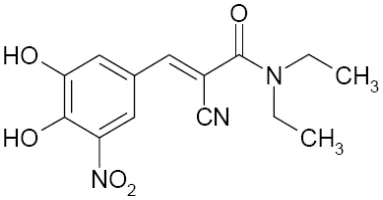
Description:
Entacapone is a yellow to orange non-hygroscopic crystalline powder. It is practically insoluble in water, but slightly soluble in organic solvents. The pKa value is approximately 4.5. The partition coefficient in 1-octanol/phosphate buffer pH 7.4 is -0.25. Its melting range is between 163°C to 166°C.
Composition:
APO-ENTACAPONE 200 mg film coated tablets contain 200 mg of the active ingredient entacapone. The non-medicinal ingredients are: Core: crospovidone and stearic acid. Coating: hydroxypropyl cellulose, hydroxypropyl methylcellulose, polyethylene glycol, red iron oxide, titanium dioxide and yellow iron oxide.
Storage:
Store at controlled room temperature (15°C to 30°C).
APO-ENTACAPONE must be kept out of the reach and sight of children.
AVAILABILITY OF DOSAGE FORMS
APO-ENTACAPONE (entacapone) Tablets USP 200 mg is a dark orange, oval, biconvex film-coated tablet engraved with "APO" on one side and “ENT 200” on the other side. APO-ENTACAPONE tablets USP are available in bottles of 100 tablets and blisters of 30 tablets.
PHARMACOLOGY
ANIMAL PHARMACOLOGY
In Vitro
Entacapone is a potent inhibitor of COMT in vitro suppressing COMT activity in crude tissue preparations (brain, duodenum, rat and human red blood cells, liver) with IC50-values ranging from 0.01 mcM for rat brain S-COMT to 0.16 mcM for rat liver S-COMT. The IC50-values for (Z)-OR- 611, the (Z)-isomer of entacapone, were of approximately the same magnitude as those measured for entacapone. The IC50-values for human and rat RBC were similar.
The Ki-value, which indicates the affinity of the inhibitor to the enzyme, was 14 nM for rat liver sol-COMT. The enzyme kinetic studies revealed that entacapone is a reversible and selective inhibitor of the COMT-enzyme
Ex Vivo
In ex vivo tests, following oral or i.v. administration of entacapone 10 mg/kg, S-COMT was inhibited generally in good correlation with in vitro IC50-values of the same tissue, excepting the brain which reflects poor penetration of entacapone into the CNS.
In most tissues, inhibition of COMT was transient indicating that entacapone is a reversible COMT-inhibitor. In rats, the inhibition of duodenal COMT activity was more complete and sustained as compared to other tissues.
In Vivo
Levodopa Pharmacokinetics
Entacapone administered orally at doses of 0.3 to 30 mg/kg, caused a dose-dependent and sustained inhibition of 3-OMD formation from levodopa in rat serum. The inhibition of 3-OMD formation was reflected by elevated levodopa concentrations in serum. Accordingly, addition of
entacapone (30 mg/kg) to levodopa/ carbidopa treatment prolonged the elimination half-life of levodopa about 5-fold after i.v. levodopa and about 2-fold after oral levodopa.
Peripheral COMT Inhibition and Central Levodopa Metabolism
Entacapone added to the levodopa/carbidopa treatment reduced rat striatal 3-OMD levels and increased both dopamine and levodopa concentrations. Striatal HVA levels were not reduced, supporting the inhibition of peripheral COMT activity by entacapone. Following addition of entacapone to levodopa/carbidopa treatment, the dose of levodopa could be decreased by 70
% and reach the same striatal dopamine concentration as with levodopa/carbidopa alone. A significant reduction in 3-OMD concentration and a significant increase in levodopa concentration was observed with entacapone treatment, indicating that entacapone improved the availability of levodopa in the brain.
Efficacy of entacapone in animal models of Parkinson’s disease
Entacapone significantly improves and sustains the dopaminergic effect of levodopa therapy, when given in combination with carbidopa, in various animal models of Parkinson’s disease.
The locomotor activity of hypokinetic reserpine treated mice was potentiated by the oral administration of entacapone at doses of 3, 10 and 30 mg/kg to the levodopa/carbidopa treatment.
In rats with unilateral 6-hydroxy-dopamine (6-OHDA) induced lesions of the substantia nigra, entacapone administered orally at doses of 1, 3 and 10 mg/kg potentiated levodopa/carbidopa induced contralateral circling behavior up to approximately 3 hours post-dosing. In another study, the addition of entacapone, administered orally at dose of 10 mg/kg, to the levodopa/carbidopa treatment allowed a 50% reduction in the levodopa dose without reducing the contralateral turning.
Entacapone, at oral doses of 12.5 mg/kg, significantly increased and potentiated the antiparkinsonian effect of low dose levodopa/carbidopa in MPTP treated marmosets.
Special studies
Three short-term studies (8 to 15 days) were conducted in rats to compare the toxicity of entacapone and another COMT-inhibitor (tolcapone) at doses ranging from 200 to 600 mg/kg/day. All of these studies examined potential hepatotoxic effects of these two compounds
and one was designed to investigate the association of toxicity with uncoupling of oxidative phosphorylation in vivo. Signs of hepatotoxicity (centrilobular hypertrophy, necrosis, vacuolation) were observed in rats treated with tolcapone at doses which caused mortality (400 mg/kg) (plasma exposure at 500 mg/kg/day corresponds to 26 times that in humans at the maximum recommended daily dose of 600 mg); 300 mg/kg may be a threshold dose since 1 of 19 animals exhibited hepatic changes similar to those found at the higher doses. Increased body temperature and changes in mitochondrial respiration and ATP/ADP ratios were found in animals treated with tolcapone (>300 mg/kg) and dinitrophenol, a known uncoupler of oxidative phosphorylation. In contrast, neither hepatotoxic effects (histopathological) nor effects on oxidative phosphorylation were observed with entacapone at any of the doses tested (plasma exposure at the highest dose of 600 mg/kg/day corresponds to 26 times that in humans receiving the maximum recommended daily dose of 1600 mg). The relevance of these findings to man is unknown.
| Treatment | ||||||
| Dose mg/kg | ||||||
| Mortality | Liver microscopic findings | |||||
| Body Temp | Mitochondrial ATP/ADP (liver) | Respiratory control ratio | AUC 0-24h h•mcg/mL | |||
| Entacapone | ||||||
| 200 | 0 | none (n=6) | 159 (10 x human) | |||
| 300 | 0 | none (n=20) | - | - | - | |
| 400 | 0 | none (n=5) | - | |||
| 500 | 0 | none (n=20) | - | - | - | |
| 600 | 0 | none (n=11) | - | 415 (26 x human) | ||
| Tolcapone | ||||||
| 200 | 0 | none (n=6) | 325 (4 x human) | |||
| 300 | 0 | Centrilobular hypertrophy, vacuolation (1/19 animals) | ↑ | ↓ (marginal) | ↓ | |
| 400 | ↑ | Centrilobular hypertrophy, necrosis, vacuolation (5/5 animals) | ↑ | |||
| 500 | ↑ | Centrilobular hypertrophy, vacuolation (14/20 animals) | ↑ | ↓ | ↓ | |
| 600 | ↑ | Centrilobular hypertrophy, focal necrosis, vacuolation (9/11 animals) | ↑ | |||
| Dinitrophenol | ||||||
| 20 | 0 | Centrilobular hypertrophy, necrosis (3/12 animals) | ↑ | ↓ | ↓ | |
| Blank = not evaluated; - = no different from control; ↑ = increase; ↓ = decrease | ||||||
In an in vitro study in rat liver mitochondria, entacapone had no influence on membrane potential at concentrations less than 100 mcM, while the other COMT inhibitor (tolcapone) and 2, 4-dinitrophenol caused a concentration-dependent decrease in mitochondrial membrane potential. The results of this study indicate that entacapone does not uncouple oxidative phosphorylation since it had no effect on membrane potential at reasonable concentrations.
Concentration required for 50% decrease in mitochondrial membrane potential in vitro
| Entacapone | Tolcapone | Dinitrophenol |
| ≥100 mcM | 3-5 mcM | 2 mcM |
TOXICOLOGY
Acute Toxicity
| Species | Sex | Dose (mg/kg) | Route | LD50 (mg/kg) |
| Mouse Mouse Mouse Mouse | 5 M 5 F 10 F 5 M 5 F | 1000, 1500, 2000 2000 1000, 1500, 2000, 2500 1000, 1500, 2000 1500 | oral oral oral oral | 2000 2000 >2500 >1900 (z-isomer) >1900 (z-isomer) |
| Rat Rat Rat | 5 F 5 M 5 M | 1500, 1750, 2000 2000 1000/1000/250-1500/1500/375 (Levodopa/benserazide: 2000/500) | oral oral | >2000 Entacapone/levodopa/ benserazide:1400/1400/350 Levodopa/benserazide:LD50 >2000/500 |
The acute toxicity of the (Z)-isomer is similar to that of (E)-isomer of entacapone and are considered to be low.
Subchronic/Chronic Toxicity with Entacapone
| Species Strain | Dosage (mg/kg/day orally) | N/Dose | Duration | Findings |
Rat Han: Wistar | 0, 15, 95*, 600 by gavage in MC | 10 F/10 M | 28 days | Mortality: 5 deaths during the study but none were treatment related. 600 mg/kg/d: ↓ body weight gain and food consumption in M; ↑ body weight-related liver weight in F. Treatment rats passed coloured urine. ↓ levels of hemoglobin, erythrocytes, hematocrit, serum albumin and urea and ↑ levels of ALAT. Dose-dependent ↓ in ASAT and lactate dehydrogenase. Urine analysis: ↑ erythrocytes, chloride and sodium. Macroscopic & Microscopic examinations: Fur and tail discolouration mainly. 95 & 600 mg/kg: Dose-related incidence of pre-and post-dose salivation. Microscopic pathology did not reveal any treatment-related changes. |
| Dog Beagle | 0, 10, 80*, (600)-200 by gavage in MC | 3 F/3 M | 28 days | 10 mg/kg/d: 1F vomited on one day. 80 mg/kg/d: Occasional vomiting in some animals and a slight initial in ↓ food consumption. The animals also tended to pass coloured urine and feces. 600 mg/kg/d: Marked clinical signs over the first 3 days. Animals vomited often and were subdued, and body weight ↓ markedly. Dose level ↓ to 400 mg/kg/d from day 4. Animals salivated, had orange/red urine and dark feces, but the incidence of vomiting was ↓. Because the body weight still ↓, the animals were not dosed in week 3. During that week there were no clinical signs and the body weight gain was normal. When treatment was restarted in week 4 at 200 mg/kg/d, the animals passed coloured urine and feces and two of them vomited on one occasion each. No treatment-related abnormal findings were observed in ophthalmoscopy, hematology, clinical chemistry, urine analysis (except the colour) and in macroscopic and microscopic pathology. |
| Rat (Crl:CDR) Sprague Dawley | 0, 10, 65*, 400 by gavage in MC | 12 F/12 M | 13 weeks | Mortality: 4 animals died but no changes at autopsy were related to treatment. 400 mg/kg/d: rats had stained fur (yellowish); postdose salivation was regularly observed throughout the study; ↓ body weight gain in both sexes during the first half of the study. ↓ levels of hemoglobin, hematocrit, glucose and triglycerides. Lymphocyte count slightly ↑. 65 and 400 mg/kg/d: Dose-related coloured urine (yellow-orange) throughout the study. ↑ hemoglobin in urine. Macroscopic examination revealed fur and skin |
| discolouration and abnormal coloured contents of caecum. Microscopic pathology did not reveal any treatment-related findings. |
| Dog Beagle | 0, 10, 45*, (200) -300 in gelatine capsules | 4 F/4 M | 13 weeks | Mortality: No deaths. 300 mg/kg/d: coloured urine and dark feces. Fur of animals became stained as the study progressed. Pre- and post-dose salivation and occasional vomiting. Body weight gain of M and F of only 22% & 36% respectively. ↓ food consumption at beginning of study and after dose level ↑ to 300 mg/kg/d. Slightly ↑ specific gravity of urine. No treatment- related changes in ECG, blood pressure, hematology and clinical chemistry. Dose-related ↑ in relative liver weight in M & F. Macroscopic pathology did not reveal any treatment-related changes. The only histopathological finding noted was a marginal increase in cytoplasmic vacuolation in the centrilobular areas in the liver. It was noted in 1, 1 and 4 cases at dosages of 10, 45 & 300 mg/kg/d, respectively. The significance of this finding is equivocal. 45 mg/kg/d: coloured urine and dark feces were observed. 10 mg/kg/day: dark feces were observed occasionally. |
| Rat (Crl:CDR) Sprague Dawley | 0, 20, 90*, 400 by gavage in MC | 20 F/20 M | 52 weeks | Mortality: 18 animals died or were killed, none of these were treatment related. All doses: dose-related coloured urine (yellow-orange) and postdose salivation. 90 & 400 mg/kg/d: dark feces, yellow staining of fur. 400 mg/kg/d: ↓ body weight gain, low hematocrit values and ↑ serum inorganic phosphorus (F): ↑ serum ALP, low thrombocyte count, ↑ serum sodium and potassium (M); ↑ water consumption; ↓ levels of hemoglobin and erythrocytes; ↓ ALAT, ASAT and urinary sodium and chloride concentrations; ↑ incidence of chronic myocarditis; |
| Dog Beagle | 0, 20, 80*, 300 in gelatine capsules | 4 F/4 M | 52 weeks | Mortality: no deaths All doses: no treatment-related changes in ophthalmoscopy, ECG and blood pressure; no treatment-related histopathological changes observed. 20 mg/kg/d: dark feces and dark yellow urine occasionally observed. 80 & 300 mg/kg/d: dark feces, bright orange urine (degree of colouration dose related), yellow-orange staining of coat. |
300 mg/kg/d: M & F: active resistance to dosing; ↓ body weight gain and food consumption; hypochromic microcytic anaemia characterised by low packed cell volume, Hb concentration, mean cell volume and mean cell Hb and slightly low erythrocyte count; transiently low plasma phospholipid, total cholesterol and plasma urea concentrations; absolute thyroid weights and body weight-relative thyroid and submandibular salivary gland weights slightly higher than in controls. F: Salivation; ↓ number of cells of the erythroid series in the bone marrow in 2 animals after 52 weeks. |
* No Toxic Effects Level (NTEL). MC = 0.05 or 1.2 % methylcellulose
Combination toxicity with L-DOPA + Carbidopa
| Species Strain | Dosage (mg/kg/day orally) | N/Sex | Duration | Findings | ||||
| Rat | Entacapone 0, 10, 60, 600 | 10 F/10 M | 28 days | Mortality: 6 premature deaths during the study; 4 deaths occurred at high- dose level, 1 death at intermediate-dose level and 1 death at control level. Five cases were confirmed to be due to gavage technique (perforation of esophagus). In 1 case at high-dose level the cause of death could not be confirmed, but it was possibly caused by gavage technique. However, in this case the treatment relationship cannot be excluded. Signs/pathology: There were no major deviations in clinical signs, hematology, clinical chemistry or urine analysis from the signs observed in the 28-day oral toxicity study with entacapone alone. Marginal ↓ in blood glucose. Macroscopic and microscopic examination of different organs and tissues did not reveal any treatment-related pathological changes. | ||||
| (Crl:CDR) | L-DOPA/Carbidopa 50/50 | |||||||
| Sprague | by gavage in 1.2% | |||||||
| Dawley | Methylcellulose | |||||||
| Rat | Entacapone/L-DOPA/ | 10 F/10 M | 13 weeks | Mortality: 2 premature deaths which were considered unrelated to treatment. Signs/pathology: the combination of entacapone, levodopa and carbidopa for 13 weeks at the dose level of 120/120/30 mg/kg/d was associated with ↓ body weight gain, clinical signs induced by levodopa/carbidopa alone or entacapone alone and minor focal erosive lesions in stomach. The macroscopic examination revealed fur and gastric epithelium discolourations in entacapone-treated rats. In microscopic examination, minor local erosive lesions of the gastric mucosa were seen in 3/20 rats of the 120/120/30 mg/kg/day group, in 1/10 rats of the 0/120/30 mg/kg/d group and in 1/10 rats of the 20/20/5 mg/kg/d group. | ||||
| (Crl:CDR) | Carbidopa: | |||||||
| Sprague | 0/ 0/ 0; 20/20/5; 50/ 50/ 12.5; | |||||||
| Dawley | 120/120/30; | |||||||
| 120/0/0; 0/120/30 | ||||||||
| by gavage in 0.5% | ||||||||
| Methylcellulose | ||||||||
| Cynomolgus | Entacapone/L-DOPA/Carbidopa: | 4 F/4 M | 13 weeks | Mortality: there were no deaths. Signs/pathology: The combination of entacapone, levodopa and carbidopa for 13 weeks at the dose level of 80/80/20 mg/kg/d was associated with ↑ dopaminergic clinical signs (e.g. stereotypies, chorea, dystonia) which were comparable to those seen in monkeys without entacapone. Discoloured urine in groups receiving 40-80 mg/kg/d entacapone. Dark feces were noted in animals receiving the highest dose of entacapone. No treatment- related macroscopic or microscopic changes were observed. | ||||
| monkey | 0/ 0/ 0; 20/20/5; | |||||||
| 40/40/10; 80/80/20; | ||||||||
| 80/0/0; 0/80/20 | ||||||||
| by gavage in 0.5% | ||||||||
| Methylcellulose | ||||||||
No distinct organ toxicity was observed in chronic toxicity studies. Entacapone did not increase the toxic effects of L-DOPA + Carbidopa in combination toxicity studies.
Renal Toxicity
In a 1 year toxicity study, entacapone (plasma exposure 20 times that in humans receiving the maximum recommended daily dose of 1600 mg) caused an increased incidence in male rats of nephrotoxicity that was characterized by regenerative tubules, thickening of basement membranes, infiltration of mononuclear cells and tubular protein casts. These effects were not associated with changes in clinical chemistry parameters, and there is no established method for monitoring for the possible occurrence of these lesions in humans. Although this toxicity could represent a species- specific effect, there is not yet evidence that this is so.
Teratological and Reproductive Studies
In the Segment I study, entacapone did not have any effect on male or female fertility up to doses of 350 mg/kg twice daily. The exposure achieved in this study was approximately 50 times higher than the average exposure in man (AUCman with 6 x 200 mg).
In the Segment II studies, entacapone was not teratogenic up to doses of 500 mg/kg twice daily (1000 mg/kg/day), which approximates 100 times higher than the average exposure in man. The rabbit did not tolerate entacapone as well as the rat, the dose increment being limited by maternal toxicity and only 5 times higher exposure was achieved than the average exposure in man.
Increased frequencies of abortions and late/total resorptions and decreased fetal weights were observed in the litters of rabbits treated with maternotoxic doses of 100 mg/kg/day (plasma AUCs
0.4 times those in humans receiving the maximum recommended therapeutic dose of 1600 mg/day) or greater.
In the Segment III studies, maternal treatment with entacapone did not affect the pre- and post-natal development or the subsequent growth development or the fertility of the F1 generation.
The exposure achieved in these studies was up to 50 times higher than the average exposure in man.
Mutagenicity Studies with Entacapone
| STUDY | DOSE-RANGE of entacapone | RESULT | LOWEST POSITIVE DOSE |
Bacterial mutagenicity (S.typh. TA98, TA100, TA1535, TA1537; E. coli WP2 pKM101, WP2 uvrA pKM101); ± S9 | 15.625 - 2000 mcg/plate | Negative | |
| Mammalian cell mutagenicity (mouse lymphoma L5178Y (Tk+/-) in vitro ); ± S9 | 2.5 - 400 mcg/ml | Positive | At constant concentration range of 25-50 mcg/ml |
| DNA-binding in vitro (calf thymus DNA); ± S9 | 20, 25 or 50 mcg of 14C- entacapone | Negative | |
| Chromosomal aberration in human lymphocytes in vitro; ± S9 | 5 - 400 mcg/plate | Positive only with S-9 mix | Excluding gaps 400 mcg/ml; Including gaps 100 mcg/ml |
| Micronuclei in vivo in polychromatic erythrocytes in mice | 40, 200 or 1000 mg/kg orally; 35 mg/kg i.v. | Negative | |
| Rat liver UDS in vivo/in vitro | 600 or 2000 mg/kg, orally | Negative |
Entacapone was not mutagenic in the Ames bacterial mutagenicity tested in four strains of Salmonella typhimurium and two strains of Escherichia coli in the presence and absence of metabolic activation (S-9 mix). Entacapone induced a significant increase in TK mutant frequency in L5178Y mouse lymphoma cells at a concentration range of 25 to 150 mcg/mL with or without S-9 mix. The scoring of the number of wells containing small and large colonies showed that the majority of entacapone induced mutants were of the small colony type which indicates a chromosome-type damage of entacapone. In vitro, no substantial amount of entacapone seems to bind to DNA when thymus DNA was exposed to 25 to 50 mcg/mL of entacapone. Bacteria, which do not possess chromosomes, were not affected by entacapone. Hence, the negative DNA-binding data is in good correlation with the results of Ames test strengthening the hypothesis that the damage induced by entacapone is at the chromosomal level.
In in vitro chromosomal aberration test with human lymphocytes, entacapone induced increases in chromosomal aberrations only in the presence of S-9 mix. The significant increases in the frequency of aberrant metaphases were observed at 400 mcg/mL (1.3 mM) of entacapone. When mitotic indices were scored, entacapone was more toxic to the cells in the absence of S-9 mix than in its presence, the concentration difference being approximately 5-fold. Observed differences in
mitotic indices could be due to differences in the treatment period, i.e. continuous and pulse treatment without and with S-9-mix, respectively.
Entacapone did not induce chromosomal or any other damage which leads to micronucleus formation in polychromatic erythrocytes of treated mice 24, 48 or 72 h after oral administration of a single MTD dose of 1000 mg/kg, or 24 h after a single i.v. dose of 35 mg/kg.
Mutagenicity Studies of Entacapone in combination with L-DOPA + Carbidopa
| STUDY | DOSE-RANGE OF ENTACAPONE | RESULT |
| Bacterial mutagenicity (S.typh. | Negative | |
| TA98, TA100, TA1535, | ||
| TA1537); ± S9 | 50 - 5000 mcg/plate | |
| E coli WP2 pKM101, WP2 | Negative | |
| uvrA pKM101); ± S9 | ||
Micronuclei in vivo in polychromatic erythrocytes in mice | 40, 200 or 1000 mg/kg orally | Negative |
*The ratio of 4:4:1 of entacapone: L-DOPA: carbidopa at each dose-level was employed in the bacterial mutagenicity tests. In the mice micronucleus test L-DOPA 40 mg/kg + carbidopa 10 mg/kg were administered orally, concomitantly with various doses of entacapone.
Combination treatment with L-DOPA + carbidopa + entacapone was not mutagenic in the Ames bacterial mutagenicity test, tested in four strains of Salmonella typhimurium and two strains of Escherichia coli in the presence and absence of metabolic activation (S-9 mix). The highest dose- level of entacapone was shown to be toxic to the test bacteria.
In mice, entacapone (up to 1000 mg/kg p.o.) did not induce micronuclei in polychromatic erythrocytes when administered concomitantly with L-dopa + carbidopa (40 + 10 mg/kg p.o.)
Carcinogenicity Studies
| Duration, Species, N | Dosage (mg/kg/d orally) by gavage in MC# | N of animals died M/F | Survival % corresponding to dosage | Exposure factor * relative to human dosing 200 mg , 6 times a day | Findings during the course of study and at necropsy |
| 104 weeks, Mouse Crl:CD-1 50 F/50 M | 0, 0, 20, 100, 600 | 22M + 33F 26M + 31F 23M + 29F 23M + 33F 36M+ 41F** | M: 56 ; F: 34 M: 48 ; F: 38 M: 54 ; F: 42 M: 54 ; F: 34 M:28 ; F - | M: 0.4 ; F: 0.8 M: 24 ; F: 32 | - - - - Food consumption decreased slightly (F) |
| 104 weeks, | 0, | 34M + 31F | M: 32 ; F: 38 | - | |
| Rat Crl:CDR | 0, | 26M + 27F | M: 48 ; F: 46 | Tubular carcinoma (1M) | |
| (Sprague Dawley) | 20, | 32M + 32F | M: 36 ; F: 36 | M: 2.7 ; F: 4.1 | Tubular carcinoma (1F) |
| 50 F /50 M; | 90, | 32M + 31F | M: 36 ; F: 38 | M: 6.5 ; F: 9.9 | Slight anemia (M) and tubular carcinoma (1F) |
| 400 | 33M + 36F | M: 34 ; F: 28 | M: 14 ; F: 32 | Slight anemia (M); decreased body weight gain (M | |
| + F); Kidney weight increase (M); Tubular adenoma | |||||
| (6M); Tubular carcinoma (5M) |
* Exposure factor was calculated by dividing the AUCanimal by AUCman. The AUC in man was derived by multiplying the AUC of entacapone after a single (200 mg) dose (1.5 h•mcg/mL) with the number of the average dosing frequency, i.e. 6 times a day.
** Rest of the female mice were sacrificed on week 95. # MC = 0.5% methyl cellulose
47
The mouse study did not allow for adequate assessment of the carcinogenic potential of entacapone due to the high incidence of premature mortality occurring at high doses.
In the rat two year carcinogenicity study, high doses (400 mg/kg) of entacapone caused renal adenomas and increased the number of carcinomas in male rats. The carcinogenic potential of enatcapone administered in combination with levodopa/carbidopa has not been evaluated.
REFERENCES
Preclinical:
- 1. Bernheimer H., Birkmayer W., Hornykiewicz O., Jellinger K., Seitelberger F. Brain dopamine and the syndromes of parkinson and huntington. Clinical, morphological and neurochemical correlations. Journal of the neurological sciences, 1973; 20: 415-455.
- 2. Kaakkola S., Wurtman R. Effects of COMT inhibitors on striatal dopamine metabolism: a microdialysis study. Brain Research, 1992; 587: 241-249.
- 3. Mannisto P., Tuomainen P. Effects of high single doses of levodopa and carbidopa on brain dopamine and its metabolites: modulation by selective inhibitors of monoamine oxidase and/or catechol-O-methyltransferase in the male rat. Naunnyn Schmiedebgerg's Archives of Pharmacology, 1991; 344: 412-418.
- 4. Nissinen E., Linden I.B., Schultz E., Pohto P. Biochemical and pharmacological properties of a peripherally acting catechol-O-methyltransferase inhibitor entacapone. Naunyn-Schmiedebergs Archives of Pharmacology, 1992; 346: 262-266.
- 5. Wikberg T., Vuorela A., Ottoila P., Taskinen J. Identification of major metabolites of the catechol-O-methyltransferase inhibitor entacapone in rats and humans. Drug Metab Dispos Biol Fate Chem, 1993; 21: 81-92.
Clinical:
- 6. Ahtila S, Kaakkola S, Gordin A, et al. Effect of entacapone, a COMT inhibitor, on the pharmacokinetics and metabolism of levodopa after administration of controlled-release levodopa-carbidopa in volunteers. Clin Neuropharmacol, 1995; 18: 46-57.
- 7. Illi A., Sundberg S., Koulu M., et al. COMT inhibition by high-dose entacapone does not affect hemodynamics but changes catecholamine metabolism in healthy volunteers at rest and during exercise. Int J Clin Pharmacol Ther, 1994; 32: 582-588.
- 8. Illi A, Sundberg S, Ojala-Karlsson P, Scheinin M, Gordin A. Simultaneous inhibition of catechol-O-methyltransferase and monoamine oxidase A: Effects on hemodynamics and catecholamine metabolism in healthy volunteers. Clin Pharmacol Ther, 1996; 59:450-7.
- 9. Illi A, Sundberg S, Ojala-Karlsson P, Scheinin M, Gordin A. Simultaneous inhibition of catecholamine-O-methylation by entacapone and neuronal uptake by imipramine: Lack of interactions. Eur J Clin Pharmacol, 1996; 51:273-6.
- 10. Kaakkola S, Gordin A, Männistö PT. General properties and clinical possibilities of new selective inhibitors of catechol -O-methyltransferase. Gen Pharmacol, 1994; 25:813-24.
- 11.
Kaakkola S, Teräväinen H, Ahtila S, Rita H, Gordin A. Effect of entacapone, a COMT inhibitor, on clinical disability and levodopa metabolism in parkinsonian patients. Neurology,
- 1994; 44:77-80.
- 12. Kaakkola S, Teräväinen H, Ahtila S, et al. Entacapone in combination with standard or controlled-release levodopa/carbidopa: a clinical and pharmacokinetic study in patients with Parkinson's disease. Eur J Neurol, 1995; 2:341-7.
- 13. Keränen T, Gordin A, Harjola V-P, et al. The effect of catechol-O-methyltransferase inhibition by entacapone on the pharmacokinetics and metabolism of levodopa in healthy volunteers. Clin Neuropharmacol, 1993; 16: 145-156.
- 14. Keränen T, Gordin A, Karlsson M, et al. Inhibition of soluble catechol-O- methyltransferase and single-dose pharmacokinetics after oral and intravenous administration of entacapone. Eur J Clin Pharmacol, 1994; 46: 151-157.
- 15. Lyytinen J, Kaakkola S, Ahtila S, Tuomainen P, Teräväinen H. Simultaneous MAO-B and COMT inhibition in L-dopa-treated patients with Parkinson's disease. Movement Disorders, 1997; 12:497-505.
- 16. Merello M, Lees AJ, Webster R, et al. Effect of entacapone, a peripherally acting catechol-O-methyltransferase inhibitor, on the motor response to acute treatment with levodopa in patients with Parkinson's disease. J Neurol Neurosurg Psychiatry, 1994; 57: 186-189.
- 17. Myllylä V, Sotaniemi KA, Illi A, et al. Effect of entacapone, a COMT inhibitor, on the pharmacokinetics of levodopa and on cardiovascular reponses in patients with Parkinson's disease. Eur J Clin Pharmacol, 1993; 45: 419-423.
- 18. Nutt JG, Woodward WR, Beckner RM, et al. Effect of peripheral catechol-O- methyltransferase inhibition on the pharmacokinetics and pharmacodynamics of levodopa in parkinsonian patients. Neurology, 1994; 44:913-9.
- 19.
Ruottinen H, Rinne UK. Effect of one month's treatment with peripherally acting COMT inhibitor, entacapone, on pharmacokinetics and motor response to levodopa in advanced parkinsonian patients. Clin Neuropharmacol, 1996; 19:222-233.
18
- 20.
Ruottinen HM, Rinne JO, Ruotsalainen UH, et al. Striatal [ F]fluorodopa utilization after
COMT inhibition with entacapone studied with PET in advanced Parkinson's disease. J Neural Transam [P-D Sect], 1995; 10:91-106.
- 21. Ruottinen H, Rinne UK. A double-blind pharmacokinetic and clinical dose-response study of entacapone as an adjuvant to levodopa therapy in advanced parkisonian disease. Clin Neuropharmacol, 1996; 19:283-296.
- 22. Ruottinen H, Rinne UK. Entacapone prolongs levodopa response in a one month double blind study in parkinsonian patients with levodopa related fluctuations. J Neurol Neurosurg Psych, 1996; 60:36-40.
- 23.
Sawle HM, Burn DJ, Lammertsma AA, et al. The effect of entacapone (OR-611) on brain
18
[ F]-6-L-fluorodopa metabolism: Implications for levodopa therapy of Parkinson's
disease. Neurology, 1994; 44:1292-7.
- 24. Sundberg S, Scheinin M, Illi A, et al. The effects of the COMT inhibitor entacapone on haemodynamics and peripheral catecholamine metabolism during exercise. Br J Clin Pharmacol, 1993; 36: 451-456.
- 25. Product Monograph - PrCOMTAN® (entacapone) tablets. Novartis Pharmaceuticals Canada Inc., dated November 18, 2013.