


Product Monograph - Apo-Etidronate
SUMMARY PRODUCT INFORMATION
Route of Administration | Dosage Form / Strength | All Non-medicinal Ingredients |
| Oral | Tablets 200 mg, 400 mg | The Non-medicinal ingredients include crospovidone and magnesium stearate. |
INDICATIONS AND CLINICAL USE
APO-ETIDRONATE (etidronate disodium) is indicated for:
- the treatment of symptomatic Paget’s disease of the bone (osteitis deformans).
- the short-term (30 to90 days) maintenance of clinically acceptable serum calcium levels following treatment with etidronate disodium I.V. Infusion (for patients with hypercalcemia of malignancy). The relapse rate without oral etidronate disodium follow-up after about one month is high (90%); with such follow-up it is lower (50%). A second course of etidronate disodium I.V. infusion may be effective if hypercalcemia recurs.
Pediatrics
The safety and effectiveness of etidronate disodium in children has not been established.
CONTRAINDICATIONS
APO-ETIDRONATE (etidronate disodium) is contraindicated for:
- Patients with known hypersensitivity to this drug or to any ingredient in the formulation or component of the container. For a complete listing, see DOSAGE FORMS, COMPOSITION AND PACKAGING.
- Patients with clinically overt osteomalacia; appropriate treatment to resolve their osteomalacia should be initiated before prescribing APO-ETIDRONATE.
WARNINGS AND PRECAUTIONS
General
The physician should adhere to the recommended dose regimen in order to avoid unnecessary overtreatment with etidronate disodium. (see DOSAGE AND ADMINISTRATION).
In post-marketing reporting, osteonecrosis of the jaw has been reported in patients treated with bisphosphonates. The majority of reports occurred following dental procedures such as tooth extractions; and have involved cancer patients treated with intravenous bisphosphonates, but some occurred in patients receiving oral treatment for postmenopausal osteoporosis and other diagnoses. Many had signs of local infection, including osteomyelitis. A dental examination with appropriate preventative dentistry should be considered prior to treatment with bisphosphonates in patients with concomitant risk factors (e.g. cancer, immune suppression, head and neck radiotherapy or poor oral hygiene). While on treatment, these patients should avoid invasive dental procedures if possible. For patients requiring dental procedures, there are no data available to suggest whether discontinuation of bisphosphonate treatment prior to the procedure reduces the risk of osteonecrosis of the jaw. Clinical judgment, based on individual risk assessment, should guide the management of patients undergoing dental procedures. The following should be considered when evaluating a patient’s risk of developing ONJ:
- Potency of the medicinal product that inhibits bone resorption (higher risk for highly potent compounds),
- Route of administration (higher risk for parenteral administration)
- Cumulative dose of bone resorption therapy.
- Co-morbid conditions (e.g. anaemia, coagulopathies) and smoking
- Periodontal disease, poorly fitting dentures, history of dental disease.
Carcinogenesis
The incidence of osteogenic sarcoma is known to be increased in Paget’s disease. Pagetic lesions, with or without therapy, may appear by x-ray to progress markedly, possibly with some loss of definition of periosteal margins. Such lesions should be evaluated carefully to differentiate these from osteogenic sarcoma.
Gastrointestinal
Etidronate disodium therapy should be approached with caution in patients with gastrointestinal disease, because APO-ETIDRONATE may cause diarrhea in some patients at doses above 5 mg/kg/day.
Musculoskeletal
Although there is no evidence of impaired fracture healing with etidronate disodium, in case of spontaneous or pathological fractures occurring during APO-ETIDRONATE therapy of Paget’s disease, the drug should be discontinued until complete healing of the fracture takes place. (See ADVERSE REACTIONS).
Osteoid Mineralization:
In Paget’s disease, etidronate disodium may retard mineralization of osteoid laid down during the bone accretion process. This effect is dose and time-dependent. There may be an overlap of beneficial and mineralization inhibition effects in some patients at higher doses. Extended periods of continuous medication should be approached cautiously.
When administered at doses of 20 mg/kg/day, etidronate disodium suppresses bone turnover and essentially stops mineralization of new bone in Pagetic lesions and, to a lesser extent, in the uninvolved skeleton. Mineralization of Pagetic lesions has been demonstrated to occur normally after discontinuation of the drug. (see CONTRAINDICATIONS).
Bone Pain:
Bone pain at the Pagetic site may increase or recur during APO-ETIDRONATE therapy even in patients who are experiencing relief of their original symptoms. Continuance of therapy will usually result in resolution of pain. However, on occasion, therapy may have to be discontinued (see ADVERSE REACTIONS).
Nutrition
Patients with Paget’s disease of bone should maintain an adequate nutritional status, and particularly, an adequate intake of calcium and vitamin D. Patients with restricted vitamin D and calcium intake may be particularly sensitive to drugs that affect calcium homeostasis and should be closely followed while under treatment with etidronate disodium.
Renal
Since absorbed etidronate disodium is excreted through the kidneys, periodic renal function assessment should be carried out in patients whose renal function may be deteriorating. While there is no experience to specifically guide treatment in patients with impaired renal function, in such cases renal function should be monitored carefully.
Ophthalmologic
Ocular disturbances including conjunctivitis, uveitis, episcleritis, iritis and scleritis have been reported with bisphosphonate use. There have been published reports of conjunctivitis with etidronate. Patients with ocular events other than uncomplicated conjunctivitis should be referred to an ophthalmologist for evaluation. Treatment may need to be discontinued.
Atypical Subtrochanteric and Diaphyseal Femoral Fractures
Atypical, low-energy, or low trauma fractures of the femoral shaft have been reported in bisphosphonate-treated patients. These fractures can occur anywhere in the femoral shaft from just below the lesser trochanter to above the supracondylar flare and are transverse or short oblique in orientation without evidence of comminution. Atypical femur fractures most commonly occur with minimal or no trauma to the affected area. They may be bilateral and many patients report prodromal pain in the affected area, usually presenting as dull, aching thigh pain, weeks to months before a complete fracture occurs. Poor healing of these fractures was also reported. Any patient with a history of bisphosphonate exposure who presents with thigh or groin pain should be suspected of having an atypical fracture and should be evaluated to rule out an incomplete femur fracture. Patients presenting with an atypical femur fracture should also be assessed for symptoms and signs of fracture in the contralateral limb.
Interruption of bisphosphonate therapy should be considered pending a risk/benefit assessment.
Special Populations
Pregnant Women:
Studies performed in rats and rabbits using orally administered etidronate disodium at doses up to five times the maximum human dose have revealed no evidence of impaired fertility or harm to the fetus. At doses of twenty-two times the maximum human dose, a decrease in live fetuses was observed in rats. Malformations occurred only in rats at exaggerated doses following parenteral administration and were skeletal in nature. These malformations were deemed to be the result of the pharmacologic action of the drug. The relationship of oral and intravenous routes of administration in reproduction/teratology studies is unknown. There are no adequate, well-controlled studies in pregnant women. Because animal reproduction studies are not always predictive of human response, this drug should be used during pregnancy only if clearly needed.
Nursing Women:
Etidronate disodium is not intended for administration during lactation. It is not known whether etidronate is excreted in human milk; it is excreted in the milk of rats. Because many drugs are excreted in human milk and because of the potential for adverse effects on the skeletons of infants, a decision should be made whether to discontinue nursing or to discontinue the drug, taking into account the importance of the drug to the mother.
Geriatrics:
Special precautions related to the use of etidronate disodium in geriatric patients have not been identified. However, serum creatinine levels should be closely monitored in patients with renal impairment.
Monitoring and Laboratory Tests
During therapy of Paget’s disease, periodic monitoring of urinary hydroxyproline excretion and/or serum alkaline phosphatase levels to assess disease activity is desirable. Additionally, monitoring of serum phosphate levels may provide indications of patient compliance. A failure of serum phosphate levels to increase at APO-ETIDRONATE dose levels of 10 mg/kg/day or above may be suggestive of non-compliance.
Hyperphosphatemia:
Etidronate disodium therapy for Paget’s disease at daily doses of 10 mg/kg/day and above, and occasionally at doses of 5 mg/kg/day, is associated with serum phosphate elevations, probably due to increased renal tubular reabsorption of phosphate. Serum values of up to 2.26 mmol/L (7 mg %) are seen at the highest doses. The usual increments are approximately 0.32 mmol/L (1 mg %) over the pretreatment levels. Serum phosphate returns to normal within two to four weeks after the drug is discontinued.
Therapy with etidronate disodium alone is not accompanied by clinically significant changes in serum parathyroid hormone or serum calcium levels.
Hypercalcemia of malignancy: Serum calcium levels should be monitored in patients receiving etidronate disodium I.V. Infusion therapy and/or oral etidronate disodium maintenance therapy for hypercalcemia of malignancy. The physiologically important component of serum calcium is the ionized portion. In most institutions, this cannot be measured directly. It is important to recognize that factors influencing the ratio of free and bound calcium such as serum proteins, particularly albumin, may complicate the interpretation of total serum calcium measurements. If indicated, a corrected (adjusted) serum calcium value should be calculated using an established algorithm, such as:
Caadj = CaT - 0.71 (A - Am),
where, Caadj = adjusted calcium concentration (mg/100 mL)
CaT = total calcium concentration (mg/100 mL)
A = albumin concentration (g/100 mL)
Am = mean normal albumin concentration for given laboratory. (g/100 mL)
Serum creatinine and blood urea nitrogen should be monitored in patients with known or suspected renal insufficiency.
ADVERSE REACTIONS
Clinical Trial Adverse Drug Reactions
Because clinical trials are conducted under very specific conditions the adverse reaction rates observed in the clinical trials may not reflect the rates observed in practice and should not be compared to the rates in the clinical trials of another drug. Adverse drug reaction information from clinical trials is useful for identifying drug-related adverse events and approximate rates of occurrence.
General
Diarrhea and loose bowel movement may occur in some patients when etidronate disodiumis administered at doses greater than 5 mg/kg/day. The incidence is approximately 20% in patients treated with 20 mg/kg/day of etidronate disodium.
Paget’s Disease
Increased or recurrent bone pain at existing Pagetic sites and/or the appearance of pain at sites previously asymptomatic may occur even when the patient’s overall clinical status is improved. The incidence was about 7% in placebo-treated patients and not substantially higher at the 5 mg/kg/day dose level. At higher doses the figure rose to approximately 20%. In etidronate disodium treated patients, the pain resolved while
therapy was continued in some patients, but persisted for several months in others.
Fractures are recognized as a common feature in patients with Paget’s disease. The risk of fracture may be increased when etidronate disodium is taken at a dose level of 20 mg/kg/day in excess of 3 months. This risk may be greater in patients with extensive and severe disease, a history of multiple fractures, and/or rapidly advancing osteolytic lesions. It is recommended that the drug be discontinued when fractures occur and that therapy not be reinstated until fracture healing is complete.
Hypercalcemia of Malignancy
Continuous oral medication at doses of 20 mg/kg/day for longer than 3 months, or 10 mg/kg/day for longer than 6 months, may result in the accumulation of unmineralized osteoid. Adverse reactions associated with such changes have not been reported in patients treated for hypercalcemia of malignancy.
Post Market Adverse Drug Reactions
Other adverse events that have been reported in postmarketing studies of a number of indications, and were thought to be possibly related to etidronate disodium include the following: nausea, alopecia; arthropathies, including arthralgia and arthritis; bone fracture; esophagitis; glossitis; hypersensitivity reactions, including angioedema, skin rashes (such as follicular eruption, macular rash, maculopapular rash), pruritus, Stevens Johnson syndrome, and urticaria; osteomalacia; neuropsychiatric events, including amnesia, confusion, depression, and hallucination; paresthesias; burning tongue; erythema multiforme; and exacerbation of asthma.
In patients receiving etidronate disodium, there have been rare reports of leukopenia, agranulocytosis, and pancytopenia. Also, there have been very rare cases of leukemia reported with etidronate use (1/100,000) in ongoing safety surveillance since 1978 encompassing approximately 1.5 million patient-years of treatment. Any causal relationship to either the treatment or to the patients’ underlying disease has not been established.
A number of cases of osteonecrosis (primarily of the jaw) have been reported in patients receiving treatment with bisphosphonates. Osteonecrosis has other well documented multiple risk factors. It is not possible to determine if these events are related to bisphosphonates, to concomitant drugs or other therapies (e.g. chemotherapy, radiotherapy, corticosteroids), to the patient’s underlying disease or to other co-morbid risk factors (e.g. anemia, infection, preexisting oral disease). See WARNINGS AND PRECAUTIONS, General.
Exacerbation of existing peptic ulcer disease with resulting complications has been reported in a few patients.
DRUG INTERACTIONS
Drug-Drug Interactions
The concurrent use of etidronate disodium with corticosteroid, phosphate, calcitonin, furosemide or mithramycin therapies may result in additive effects.
The concurrent use of etidronate disodium with warfarin has been associated with isolated reports of patients experiencing increases in their prothrombin time. The majority of these reports concerned variable elevations in prothrombin times without clinically significant sequelae. Although the relevance of these reports and any mechanism of coagulation alterations is unclear, patients on warfarin should have their prothrombin time more closely monitored.
Drug-Food Interactions
Food in the stomach or upper portions of the small intestine, particularly materials with a high calcium content such as milk, may reduce absorption of the etidronate disodium. (See DOSAGE AND ADMINISTRATION.)
Drug-Herb Interactions
Interactions with herbs have not been established.
Drug-Laboratory Interactions
Depending on the time elapsed since the last dose of etidronate, the Etidronate therapy may prevent bone-imaging diagnostic agents (e.g., technetium-99m
-methylene diphosphonate) used in bone scans, from adhering to bone and thus affect the interpretation of imaging results.
DOSAGE AND ADMINISTRATION
Dosing Considerations
- For the treatment of Paget’s disease, the physician should adhere to the recommended dose regimen in order to avoid unnecessary overtreatment with APO-ETIDRONATE (See ADVERSE REACTIONS).
- The response to therapy may be slow onset and may continue even for months after treatment when the drug has been discontinued. Dosage should not be increased prematurely nor should treatment be resumed before there is clear evidence of reactivation of the disease process.
- Retreatment should not be initiated until the patient has had at least a three-month drug-free interval to determine whether remission has occurred and to promote mineralization of any unmineralized osteoid which may have developed.
APO-ETIDRONATE should be taken on an empty stomach as a single oral daily dose, at least two hours before or after meals with a full glass of water. However,
should gastrointestinal discomfort occur, the dose may be divided. To maximize absorption, patients should avoid taking the following items within two hours of dosing:
- Food, especially those high in calcium, such as milk or milk products.
- Vitamins with mineral supplements or antacids which are high in metals such as calcium, iron, magnesium or aluminum.
Recommended Dose and Dosage Adjustment
Paget’s Disease
Initial Treatment Guidelines: The recommended initial dose of APO-ETIDRONATE for most patients is 5 mg/kg body weight/day, not to exceed a period of six months. Doses above 10 mg/kg/day should be reserved for use when there is an overriding requirement for suppression of increased bone turnover associated with Paget’s disease or when the patient requires more prompt reduction of elevated cardiac output. Treatment with doses above 10 mg/kg/day should be approached cautiously and should not exceed three months duration. Doses in excess of 20 mg/kg/day are not recommended.
Urine hydroxyproline excretion and/or serum alkaline phosphatase levels should be monitored periodically during the course of APO-ETIDRONATE therapy.
Retreatment Guidelines: Retreatment should be initiated only after:
- 1) An etidronate disodium-free period of at least 90 days and,
- 2) There is biochemical, symptomatic or other evidence of active disease process.
It is advisable to monitor patients every 3 to6 months, although some patients may go drug-free for extended periods. Retreatment regimens are the same as for initial treatment. For most patients the original dose will be adequate for retreatment. If not, consideration should be given to increasing the dose within the recommended guidelines.
Hypercalcemia of Malignancy
APO-ETIDRONATE tablets may be started on the day following the last dose of etidronate disodium I.V. Infusion. The recommended oral dose of APO-ETIDRONATE for patients who have hypercalcemia is 20 mg/kg body weight/day for 30 days. If serum calcium levels remain normal or at clinically acceptable levels, treatment may be extended. Treatment for more than 90 days has not been adequately studied and is not recommended.
Missed Dose
Patients should be instructed that if they miss a dose of APO-ETIDRONATE, they should take 1 tablet as they normally would for their next dose. Patients should not double their next dose or take 2 tablets on the same day.
OVERDOSAGE
For management of a suspected drug overdose, contact your regional Poison Control Centre immediately.
Clinical experience with etidronate disodium overdosage is extremely limited. Decreases in serum calcium following substantial overdosage may be expected in some patients. Signs and symptoms of hypocalcemia also may occur in some of these patients. In one event, an 18-year-old female who ingested an estimated single dose of 4,000 to6,000 mg (67 to100 mg/kg) of etidronate disodium was reported to be mildly hypocalcemic (1.88 mmol/L or 7.52 mg/dL) and experienced paresthesia of the fingers. Hypocalcemia resolved 6 hours after lavage and treatment with intravenous calcium gluconate. A 92-year-old female who accidentally received 1,600 mg of etidronate disodium per day for 3.5 days experienced marked diarrhea and required treatment for electrolyte imbalance. Some patients may develop vomiting and expel the drug. Gastric lavage may remove unabsorbed drug. Standard procedures for treating hypocalcemia, including the intravenous administration of ionizable calcium salts, would be expected to restore physiologic amounts of ionized calcium and relieve signs and symptoms of hypocalcemia. Such treatment has been effective.
ACTION AND CLINICAL PHARMACOLOGY
Etidronate disodium acts primarily on bone. It can inhibit the formation, growth and dissolution of hydroxyapatite crystals and their amorphous precursors by chemisorption to calcium phosphate surfaces. Inhibition of crystal resorption occurs at lower doses than are required to inhibit crystal growth. Both effects increase as the dose increases.
General
The gastrointestinal absorption of etidronate disodium is approximately 3.5%. The plasma half life (t½) is between 1 to 6 hours. The drug is not metabolized. It is either rapidly excreted unchanged in the urine or is taken up by bone. About half the dose is deposited in the skeleton, with the subsequent elimination controlled by bone turnover rate, which in turn is influenced by the metabolic conditions and specific bone type.
Paget’s Disease
Etidronate disodium acts on bones by slowing the rate of turnover (resorption and accretion) both in Pagetic lesions and to a lesser extent in the normal bone remodeling process. During treatment with etidronate disodium histologic examination of bone from Pagetic lesions shows a decrease in the excessive cellular activity accompanied by a suppression of bone turnover, an improved histologic pattern including lamellar bone
formation, a decrease in fibrotic marrow pattern, a decrease in vascularity, and an increase in normal hematopoietic marrow elements.
Etidronate disodium therapy, in patients with Paget’s disease, results in lowering of urinary hydroxyproline as well as serum alkaline phosphatase, and radionuclide uptake by Pagetic bone is reduced in many patients. The associated pathophysiological manifestations of increased bone vascularity, increased skin temperature, and increased cardiac output are also improved. These actions are generally accompanied by symptomatic improvement, including reduction of bone pain.
At a dose of 20 mg/kg/day in excess of three months and after six or more months of therapy at doses of 10 mg/kg/day, unmineralized osteoid can accumulate. (See WARNINGS AND PRECAUTIONS).
Hypercalcemia of Malignancy
Hypercalcemia of malignancy is usually related to increased bone resorption associated with the presence of neoplastic tissue. It occurs in 8 to 20% of patients with malignant disease. Whereas hypercalcemia is more often seen in patients with demonstrable osteolytic, osteoblastic, or mixed metastatic tumors in bone, discrete skeletal lesions cannot be demonstrated in at least 30% of patients. Etidronate disodium’s reduction of abnormal bone resorption is responsible for its therapeutic benefit in hypercalcemia. Following successful treatment with etidronate disodium I.V. Infusion, which effectively reduces total and ionized serum calcium, etidronate disodium tablets help maintain clinically acceptable serum calcium levels.
STORAGE AND STABILITY
Store at controlled room temperature (15°C to 30°C). Protect from moisture.
SPECIAL HANDLING INSTRUCTIONS
Keep out of reach and sight of children.
DOSAGE FORMS, COMPOSITION AND PACKAGING
Dosage forms and availability
APO-ETIDRONATE 200 mg tablets: Each white, rectangular tablet, engraved “APO” on one side and “200” on the other side, contains 200 mg of etidronate disodium. Available in bottles of 100.
APO-ETIDRONATE 400 mg tablets: Each white to off-white, capsule-shaped, biconvex tablet, engraved “ETI” score “400” on one side, “APO” on the other side, contains 400 mg of etidronate disodium. Available in bottles of 100 and blisters of 100.
Composition
In addition to the active ingredient, etidronate disodium, each tablet contains crospovidone and magnesium stearate.
PART II: SCIENTIFIC INFORMATION
PHARMACEUTICAL INFORMATION
Drug Substance
Proper Name: Etidronate Disodium
Chemical Name: Disodium salt of (1-hyroxyethylidene) bisphosphonic acid.
Molecular formula and molecular weight: C2H6P2Na2O7 , 250.0 g/mol
Structural Formula:
Physicochemical properties:
| Solution pH: | The pH of a 1.0% aqueous solution of etidronate disodium is 4.2 to 5.2. |
| Description: | Etidronate disodium is a white powder, highly soluble in water but insoluble in most other solvents. At temperatures above 250°C, etidronate disodium undergoes thermal decomposition. |
P C P
OH
CH3
O O
NaO
HO
ONa
OH
CLINICAL TRIALS
Comparative Bioavailability
A randomized, single-dose, blinded standard 2-way crossover comparative bioavailability study, conducted under fasting conditions, was performed on healthy male volunteers. The results obtained from 40 volunteers who completed the study are summarized in the following table. The rate and extent of absorption of etidronate was measured and compared following a single oral dose (2 x 200 mg tablets) of APO-ETIDRONATE (etidronate disodium) 200 mg (Apotex Inc.) and DIDRONEL® (etidronate disodium) 200 mg tablets (Proctor and Gamble pharmaceuticals Canada Inc.).
Summary Table of the Comparative Bioavailability Data Etidronate (Dose: 2 x 200 mg) From Measured Data – Under Fasting Conditions Based on Etidronate | ||||
| Parameter | Geometric Mean Arithmetic Mean (CV%) | Ratio of Geometric Means (%)** | 90% Confidence interval (%)** | |
| Apo-Etidronate | Didronel® † | |||
| AUCT (ng•hr/mL) | 1053 1193 (49) | 1036 1248 (63) | 101.6 | 88.9-116.2 |
| AUCI (ng•hr/mL) | 1087 1230 (49) | 1068 1285 (63) | 101.8 | 89.1-116.3 |
| CMAX (ng/mL) | 330 395 (59) | 292 365 (69) | 113.0 | 92.9-137.4 |
| TMAX* (hr) | 1.17 (93) | 1.68 (76) | -- | -- |
| T½* (hr) | 4.41 (31) | 4.19 (24) | -- | -- |
* Arithmetic means (CV%). ** Based on the least squares estimate. † Didronel® is marketed by Procter & Gamble Pharmaceuticals Canada Inc., Canada. | ||||
Paget’s Disease
Etidronate disodium acts primarily on bone. It can modify the crystal growth of calcium hydroxyapatite by chemisorption onto the crystal surface. Depending on concentration, the drug may either inhibit crystal resorption or crystal growth. Etidronate disodium slows the rate of bone turnover (bone resorption and new bone accretion) in Pagetic bone lesions and in the normal remodeling process.
Paget’s disease is an idiopathic bone disorder characterized by abnormal and accelerated bone resorption and formation in one or more bones. The extent and severity of the disease is highly variable. Characteristic symptoms may be bone pain, varying degrees of bone deformity, and vascular disorders, including abnormally elevated cardiac output secondary to the increased vascularity associated with Paget’s disease.
Serum phosphate elevations have been observed when etidronate disodium is administered at daily doses of 10 mg/kg body weight/day or above and occasionally at 5 mg/kg/day. This has not been found to be an indication for discontinuing therapy. This drug-related elevation appears to be the result of increased tubular reabsorption of phosphate by the kidney, and serum values in excess of 2.3 mmol/L (7 mg/100 mL) have been observed with high doses. No adverse effects of etidronate disodium -induced hyperphosphatemia have been found. Serum phosphate levels generally return to normal 2 to 4 weeks after stopping medication.
To elicit the bone effects of the drug, patients with Paget’s disease of bone, myositis ossificans progressiva, as well as normal volunteers on prolonged bed rest, were studied. In general etidronate disodium, at a dose of 20 mg/kg/day, produced a reduction of approximately 50% in both mineral accretion rate and mineral resorption rate as measured by 47Calcium kinetics methods. Patients generally showed an increased intestinal calcium absorption (and urinary calcium excretion) and a more positive calcium balance on the drug, but only a slight, clinically insignificant increase in serum calcium levels.
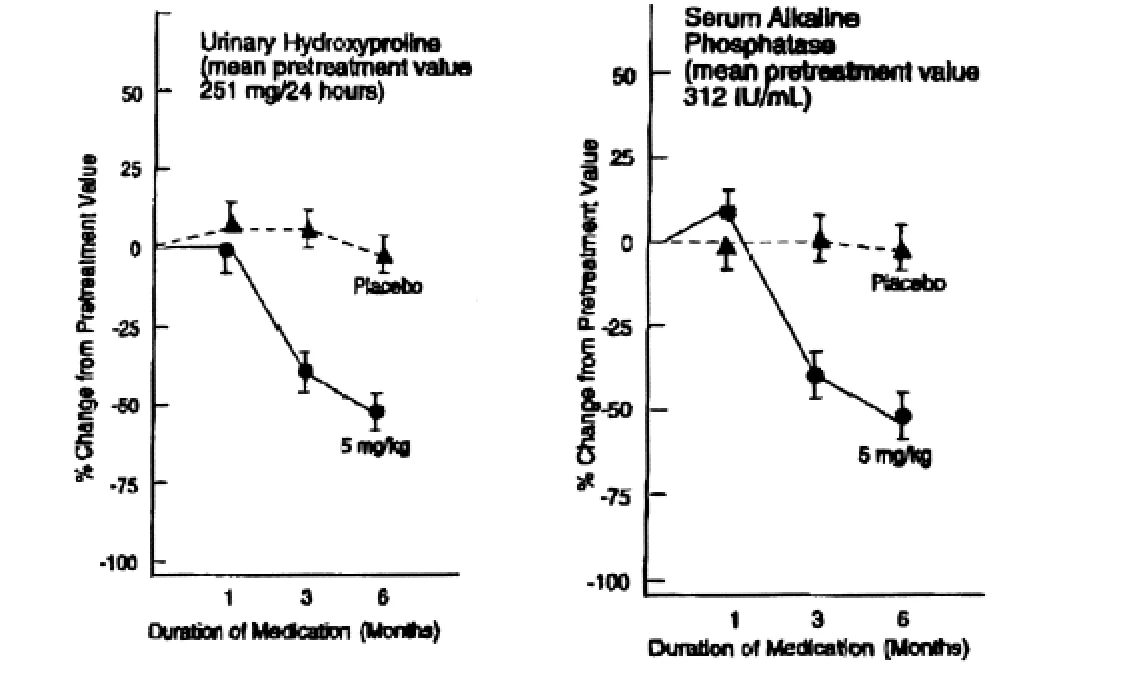
The first evidence of therapeutic response to etidronate disodium in Paget’s patients, reduction of urinary hydroxyproline excretion, usually occurs after one to three months of medication. Average percent reductions of elevated hydroxyproline and alkaline phosphatase during etidronate disodium therapy at the recommended dose of 5 mg/kg/day for 6 months are shown in Figure 1.
Etidronate disodium’s effectiveness has been demonstrated primarily in patients with polyostotic Paget’s disease with symptoms of pain and with clinically significant elevations of urinary hydroxyproline and serum alkaline phosphatase. In patients treated with etidronate disodium at the dose of 5 mg/kg/day, the elevated urinary hydrxoxyproline and serum phosphatase decreased by 30% or more in about 80% of patients. Hydroxyproline and alkaline phosphatase either returned to normal or were decreased by at least half in about 60% and 50% of patients respectively.
FIGURE 1: Percentage Change In Elevated Biochemical Parameters (Patients Treated With Etidronate Disodium At 5 mg/kg/day In Double-Blind, Placebo-Controlled Studies)
In controlled studies of Paget’s patients, approximately 60% of the patients experienced decreased pain and/or improved mobility. About 40% of the patients in the placebo group showed similar subjective improvement. Objective measurements in etidronate disodium-treated patients have shown reductions of elevated cardiac output in about 65% of the patients. Reductions in elevated skin temperature over Pagetic lesions have also been measured. The number of treated patients in these categories is still too small to predict with certainty how likely such a result will be in any given patient. Objective evidence of hearing improvement has not been demonstrated.
Histologic examination of Pagetic bone from patients treated with etidronate disodium shows a reduction in the excessive cellular activity, accompanied by a suppression of abnormal bone resorption and accretion. Marrow spaces become less vascular and normal fat and hematopoietic cellular elements replace the fibrous Pagetic marrow. Accumulation of unmineralized osteoid was frequently observed in patients treated with 20 mg etidronate disodium/kg/day for six months, and in some patients after longer periods of therapy at lower doses. This accumulation of osteoid is more marked in Pagetic bone than in the uninvolved portion of the skeleton. Withdrawal of the drug permits the osteoid to mineralize normally.
Impaired vitamin D metabolism could be associated with decreased calcium absorption. At a clinical dose of 20 mg/kg/day, etidronate disodium has been observed to increase intestinal calcium absorption. In addition, administration of vitamin D3 or its active metabolite does not reverse etidronate disodium -induced inhibition of mineralization. This would seem to rule out any important effect of the drug on vitamin D metabolism at clinically employed doses.
Hypercalcemia of Malignancy
In a multicentre, randomized, double-blind study, patients with hypercalcemia due to malignant disease or with hypercalcemia due to primary hyperparathyroidism disease were treated with daily intravenous infusions of etidronate disodium I.V. Infusion plus saline or saline alone. All patients were eligible to receive up to 3 liters of additional saline and 80 mg furosemide daily during the I.V. treatment period.
Patients in this study could participate in one or more of four treatment periods, which, in themselves, constituted individual studies. Three of the periods involved evaluating a response to IV infusion therapy; the other involved evaluating a response to maintenance therapy with oral etidronate disodium (blinded oral etidronate disodium or oral placebo).
In this trial, patients who had reductions in serum calcium to the normal range after the etidronate disodium I.V. therapy were randomized to receive either oral etidronate disodium at a dose of 20 mg/kg/day for 90 days, or a similar placebo regimen.
Eighty-one of the original 233 patients continued to the oral treatment period of the study, 63 of whom could be analyzed. Of these analyzable patients, about half were treated with oral etidronate disodium. A comparison of the duration of response between the two groups, using a lifetable analysis method, demonstrated a statistically significantly longer (p<0.01) median time of noromocalcemia for patients treated with oral etidronate disodium (29 days) versus placebo-treated patients (11 days) (Figure 2).
The success rates were 35% for oral etidronate disodium and 6% for placebo when total serum calcium was analyzed. The difference between the groups was statistically significant (p<0.01). Twenty patients were available for analysis of albumin adjusted serum calcium levels. The success rates were 38% and 0% respectively. 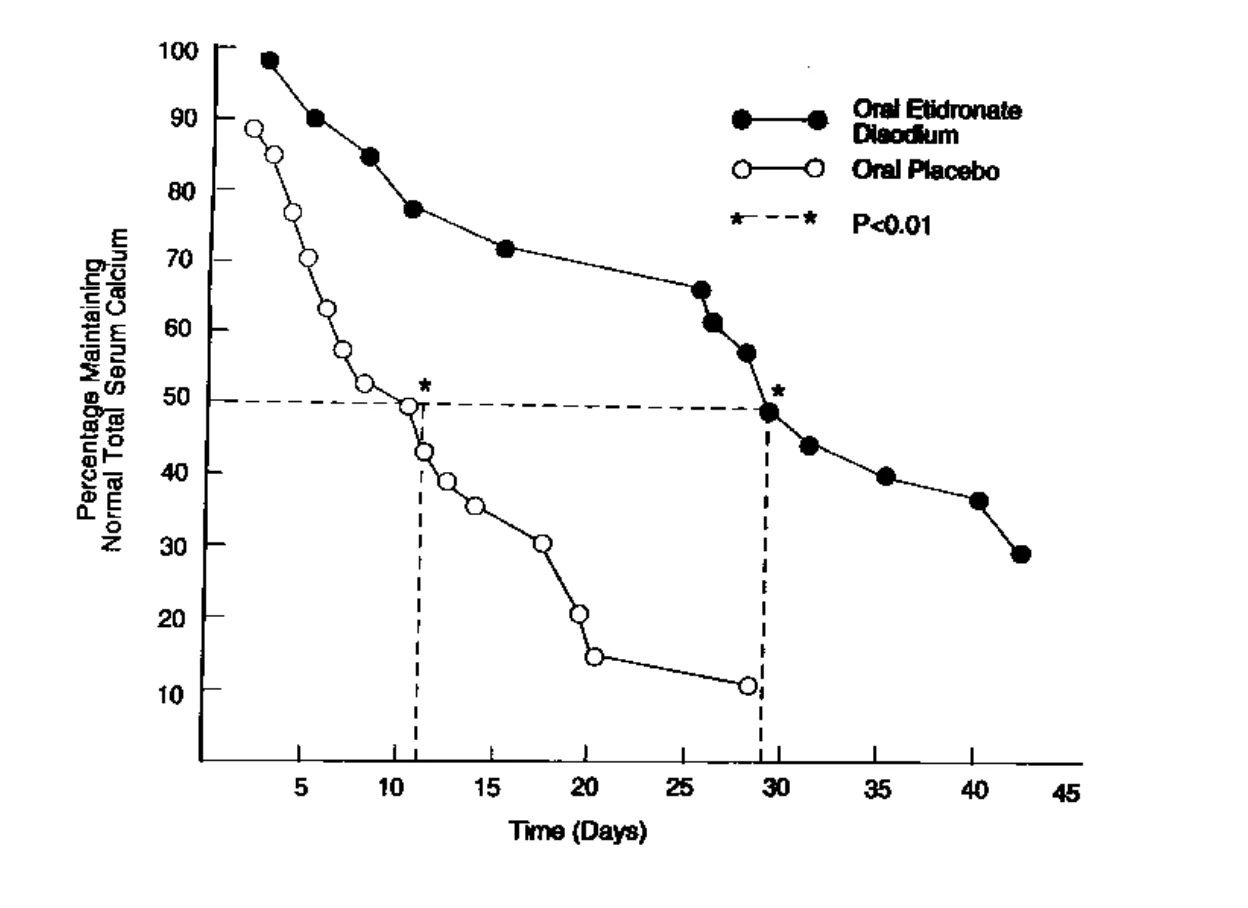
Figure 2: Percentage Of Patients With Hypercalcemia Of Malignancy Maintaining Normal Total Serum Calcium Levels Versus Time (Days).
DETAILED PHARMACOLOGY
Etidronate disodium chemisorbs onto hydroxyapatite (a calcium phosphate hydroxide) at physiological pH. This may be responsible for etidronate disodium’s activity in vivo - at low doses, reduction of bone turnover (resorption and formation) and at high doses, inhibition of mineral accretion.
Following oral administration to animals the absorption of etidronate disodium varies from 3% in rats and rabbits to 5 to 21% in young dogs. In humans the absorption is 3 to 4% of the oral dose. The non-absorbed fraction of orally administered etidronate disodium is excreted unchanged in the feces; of the absorbed fraction, about half is deposited in the skeleton, while the remainder is rapidly excreted without metabolism in the urine. Based on non-compartmental pharmacokinetics in normal human subjects, the plasma half-life of etidronate disodium is between 1 to 6 hours.
The elimination of etidronate disodium from bone is slow (the half-life is approximately 120 days) and is controlled by the bone turnover rate, which in turn is influenced by metabolic conditions and specific bone types.
The pharmacologic conclusion from animal studies is that etidronate disodium significantly reduces the rate of bone turnover. The data supports a conclusion that the level of response to etidronate disodium can be controlled by modifying either the dose or the duration of dosing, or both. The effect of etidronate disodium on inhibition of mineralization is reversible when medication is stopped.
TOXICOLOGY
The acute oral toxicity of etidronate disodium is low relative to the clinical dosage. The oral LD50 is about 1300 mg/kg in rats and the emetic dose in dogs is approximately 85 mg/kg.
No significant adverse effects were seen in rats and dogs fed diets containing up to 1% etidronate disodium for two years other than a spontaneously remitting microcytic, hypochromic anemia in dogs during the first 6 months of the study. In rats treated by oral gavage for 1 year at dosages up to 216 mg/kg the primary effect was an extension of the pharmacology on the skeleton from long term continuous administration with subsequent secondary effects on organ systems.
Spontaneous fractures have occurred in dogs receiving etidronate disodium at doses of 2 mg/kg subcutaneously for 1 year and orally at 100 mg/day for 2 years. Higher doses completely inhibited bone mineral accretion and turnover, resulting in susceptibility to fractures after 9 to 12 months of continuous treatment. The spontaneous fractures healed normally when the drug was discontinued and at lower parenteral doses occurred and healed normally while etidronate disodium treatment continued. Subsequent studies of fracture healing in dogs and rats have demonstrated that when etidronate disodium is administered at low but not at high doses, the bone heals normally following fracture.
In order to study the effects of intravenous infusion followed by oral administration for the indication of hypercalcemia, etidronate disodium was administered intravenously to dogs at doses of 0, 10, or 20 mg/kg for 5 days (2 hr/day) followed by oral administration, 0 or 300 mg (ca.20 mg/kg), for either 7 (short cycle) or 21 (long cycle) days. This regimen was repeated three times. No compound related changes in the clinical chemistry, hematologic, or histologic parameters were observed in the 10 mg/kg IV/300mg PO long cycle group, or in those groups dosed with 0 mg/kg IV/300mg PO at both the long and short cycles. Chronic interstitial nephritis was observed in those long cycle groups dosed with 20 mg/kg IV/300mg PO, and in the short cycle groups dosed with either 10 or 20 mg/kg IV/0 or 300 mg PO.
Mutagenesis, Carcinogenesis, Impairment of Fertility
A two year feeding study in rats and five mutagenicity assays (dominant lethal assay in mice, two Salmonella microsomal point mutation assays, a micronucleus test in the bone marrow of the Chinese hamster, and an in vitro Saccharomyces cerevisiae MP-l point mutation assay) indicate that etidronate disodium is not carcinogenic or mutagenic.
REFERENCES
- 1)
Product Monograph – PrMylan-Etidronate (Etidronate Disodium) Tablets. Mylan
Pharmaceuticals ULC Date of Revision: September 8, 2011
- 2)
Product Monograph – PrACT ETIDRONATE (Etidronate Disodium Tablets
USP), Actavis Pharma Company, Date of Revision: April 12, 2017, Submission Control No: 201916.
- 3)
Procter & Gamble Pharmaceuticals PrDidronel® (Etidronate Disodium Tablets,
USP) Product Monograph. Control no.097308. Preparation Date: August 10, 1992 (Revision Date: September 30, 2005).
Reviews
- 1)
Fleisch, H.: Bisphosphonates. Pharmacology and Use in the Treatment of
Tumour-Induced Hypercalcemia and Metastatic Bone Disease. Drugs, 42:919-944, 1991.
- 2)
Ibbertson, H.K., Fraser, T.R.C., Scott, D.J., Cullen, J.C., Henley, J.W.,
Stephens, ES., Tait, B., and Wattie, D.J.: Paget’s Disease of Bone: Assessment and Management, Drugs, 18:33-47 (1979).
- 3)
Russell, R.G.G.: Diphosphonates and Polyphosphates in Medicine, Br.J. Hosp.
Med.,274-314(1975).
- 4)
Russell, R.G.G., and Fleisch, H.: Pyrophosphate and Diphosphonates in
Skeletal Metabolism. Physiological, Clinical and Therapeutic Aspects, Clin. Orthoped., 108,241-263(1975).
- 5)
Russell, R.G.G., and Fleisch, H.: Biochemistry and Physiology of Bone, Vol. III.
Calcification and Physiology, G.H. Bourne, Academic Press, Inc., New York, Chapter 2,61-104
- 6) Ruggiero SL, Mehrotra B, Rosenberg TJ, Engroff SL. Osteonecrosis of the jaws associated with the use of bisphosphonates: a review of 63 cases. J Oral Maxillofac Surg 2004; 62(5):527-34.
Paget’s Disease
- 1) Altman, R.D., Johnston, C. Conrad, Khairi, M.R.A., Wellman, H., Serafini, A.N., and Sankey, R.R.: Influence of Disodium Etidronate on Clinical and Laboratory Manifestations of Paget's Disease of Bone (Osteitis Deformans), N. Engl.J.Med. 289:1379(1973).
- 2)
Canfield, R., Rosner, W., Skinner, J., McWhorter, I., Resnick, L., Feldman, F.,
Kammerman, S., Ryan, K., Kunigonis, M., and Bohne, W.: Diphosphonate Therapy of Paget's Disease of Bone, J. Clin, Endocrinol. Metab. 44(1):96(1977).
- 3)
Guncago, J., Lauffenburger, T., Lentner, C., Dambacher, M.A., Haas, G.H.,
Fleisch, H. and Olah, A.J.:Diphosphonate Treatment of Paget's Disease of Bone: A Correlated Metabolic, Calcium Kinetic and Morphometric Study, Horm. Metab. Res. 6:62(1974).
- 4)
Johnston, C.C., Khairi, M.R.A., and Meunier, P.J.:Use of Etidronate (EHDP) in
Paget's Disease of Bone. Arthritis and Rheumatism, 23:1172-1176(1980)
- 5)
Khairi, M.R.A., Altman, R.D., DeRosa, G.P., Zimmerman, J., Schenk, R.K., and
Johnston, C.C.: Sodium Etidronate in the Treatment of Paget's Disease of Bone: A study of Long-Term Results, Ann. Intern. Med. 87(6):656(1977).
- 6)
Russell, R.G.G., Smith, R., Preston, C., Walton, R.J., and Woods, C.G.:
Diphosphonates in Paget's Disease. Lancet. 1:894(1974).
- 7)
Siris, E.S., Canfield, R.E., Jacobs, T.P., and Baquiran, D.C.: Long-Term
Therapy of Paget's Disease of Bone with EHDP, Arthritis and Rheumatism, 23:1177-1184(1980).
- 8)
Stein, I., Shapiro, B., Ostrum, B., and Beller, M.L.: Evaluation of Sodium
Etidronate in the Treatment of Paget's Disease of Bone. Clin. Orthop. Related Res. 122:347(1977).
Hypercalcemia of Malignancy
- 1)
Ringenberg, Q.S., Ritch, P.S. Efficacy of Oral Administration of Etidronate
Disodium in Maintaining Normal Serum Calcium Levels in Previously Hypercalcemic Cancer Patients. Clin. Thera. 1987;9(3) 318-325.
- 2)
Shevrin, D.H., Bressler, L.R., McGuire, W.P., Kukreja, S.C., Kukla, L.J., and
Lad, T.E. Treatment of Cancer-Associated Hypercalcemia with Mithramycin and Oral Etidronate Disodium. Clin. Pharm. 1985; 4(2):204-205.