


Product Monograph - Apo-Loperamide
SUMMARY PRODUCT INFORMATION
| Route of Administration | Dosage Form / Strength | All Nonmedicinal Ingredients |
| Oral | Caplet/2 mg | D&C yellow #10, FD&C blue #1, lactose, magnesium stearate, microcrystalline cellulose and starch. |
INDICATIONS AND CLINICAL USE
APO-LOPERAMIDE (loperamide hydrochloride) is indicated:
- as an adjunct to rehydration therapy for the symptomatic control of acute non-specific diarrhea
- for chronic diarrhea associated with inflammatory bowel disease
- for reducing the volume of discharge for ileostomies, colostomies and other intestinal resections
Treatment of diarrhea with APO-LOPERAMIDE is only symptomatic. Whenever an underlying etiology can be determined, specific treatment should be given when appropriate (or when indicated).
In acute diarrhea, if clinical improvement is not observed within 48 hours, the administration of
APO-LOPERAMIDE should be discontinued and patients should be advised to consult their physician.
Geriatrics (>65 years of age):
No dose adjustments are required for the elderly.
Pediatrics (2 to 12 years of age):
Loperamide should be used in children only on the advice of a physician. APO-LOPERAMIDE caplets are not suited for children under 6 years of age.
Children under 2 years of age:
The use of APO-LOPERAMIDE in children under 2 years is contraindicated.
Renal Impairment:
No dosage adjustment necessary in renal impairment.
Hepatic Impairment:
Although no pharmacokinetic data are available in patients with hepatic impairment, APO-LOPERAMIDE should be used with caution in such patients because of reduced first pass metabolism.
CONTRAINDICATIONS
- Patients who are hypersensitive to this drug or to any ingredient in the formulation or component of the container. For a complete listing, see the Dosage Forms, Composition and Packaging section of the product monograph.
- APO-LOPERAMIDE is contraindicated in those in whom constipation must be avoided.
APO-LOPERAMIDE should not be used in the following cases:
- in patients with acute dysentery, which is characterized by blood in stools and elevated temperature,
- in patients with acute ulcerative colitis,
- in patients with bacterial enterocolitis caused by invasive organisms including Salmonella, Shigella, and Campylobacter,
- in patients with pseudomembranous colitis associated with the use of broad-spectrum antibiotics.
- In patients who the inhibition of peristalsis is to be avoided. In such patients, agents which inhibit intestinal motility or delay intestinal transit time have increased the possible risk of significant sequelae including ileus, megacolon and toxic megacolon.
- Must be discontinued promptly if abdominal distension occurs or if other untoward symptoms develop.
WARNINGS AND PRECAUTIONS
General
Since treatment of diarrhea with APO-LOPERAMIDE is only symptomatic, diarrhea should be treated causally, whenever causal treatment is available. Fluid and electrolyte depletion may occur in patients who have diarrhea. The use of APO-LOPERAMIDE does not preclude the administration of appropriate fluid and electrolyte therapy.
APO-LOPERAMIDE should be kept out of the reach of children. APO-LOPERAMIDE caplets are not suited for children under 6 years of age.
In case of accidental ingestion of APO-LOPERAMIDE by children see OVERDOSAGE.
The use of higher than the recommended doses for control of the diarrhea may lead to abnormal heart rhythms and serious cardiac events leading to death.
Tiredness, dizziness, or drowsiness may occur in the setting of diarrheal syndromes treated with APO-LOPERAMIDE. Therefore, it is advisable to use caution when driving a car or operating machinery.
Abuse and misuse of loperamide, as an opioid substitute, have been described in individuals with opioid addiction.
Dependence/Tolerance
Physical dependence to loperamide hydrochloride in humans has not been observed. However, studies in morphine-dependent monkeys demonstrated that loperamide hydrochloride at doses above those recommended for humans prevented signs of morphine withdrawal. However, in humans, the naloxone challenge pupil test, which when positive indicated opiate-like effects, performed after a single high dose, or after more than two years of therapeutic use of loperamide hydrochloride, was negative.
Hepatic/Biliary/Pancreatic
Patients with hepatic dysfunction should be monitored for signs of CNS toxicity due to the extensive first pass metabolism of loperamide in the liver. Although no pharmacokinetic data are available in patients with hepatic impairment, loperamide HCl should be used with caution in such patients because of reduced first pass metabolism. This medicine must be used with caution in patients with hepatic impairment as it may result in a relative overdose leading to CNS toxicity.
Immune
HIV-infected patients treated with loperamide hydrochloride for diarrhea should have therapy stopped at the earliest signs of abdominal distension. There have been isolated reports of obstipation with an increased risk for toxic megacolon in HIV-infected patients with infectious colitis from both viral and bacterial pathogens treated with loperamide hydrochloride.
Neurologic
Loperamide hydrochloride should be used with special caution in young children and those with compromised blood brain barrier (e.g., meningitis) because of the greater variability of response in these groups. Dehydration, particularly in young children, may further influence the variability of response to loperamide hydrochloride.
Renal
Since the majority of the drug is metabolized, and metabolites or the unchanged drug is excreted in the feces, dose adjustments in patients with a kidney disorder are not required.
Special Populations
Pregnant Women:
Safe use of loperamide during pregnancy has not been established. Reproduction studies performed in the rat and the rabbit revealed no evidence of impaired fertility or harm to the fetus at dosage levels up to 30-fold, the therapeutic dose for man. Therefore, loperamide should be used in pregnant women only when, in the opinion of the physician, the potential benefits outweigh the potential risks.
Although there are no indications that loperamide hydrochloride possesses teratogenic or embryotoxic properties, the anticipated therapeutic benefits should be weighed against potential hazards before loperamide is given during pregnancy, especially during the first trimester.
The extent of exposure in pregnancy during clinical trials has not been established.
Nursing Women:
Small amounts of loperamide may appear in human breast milk. Therefore, APO-LOPERAMIDE is not recommended during breast-feeding.
Paediatrics (< 12 years of age):
The use of loperamide is not recommended for children under 12 years of age except on the advice of a physician (See DOSAGE AND ADMINISTRATION). APO-LOPERAMIDE should be used with special caution in young children because of greater variability of response in this group. Dehydration, particularly in young children, may further influence the variability of response to APO-LOPERAMIDE.
In patients with diarrhea, especially in children, fluid and electrolyte depletion may occur. In such cases administration of appropriate fluid and electrolyte replacement therapy is the most important measure. Loperamide should not be given to children under 6 years of age without medical prescription and supervision.
The use of the APO-LOPERAMIDE is not suitable for children under 6 years of age.
The use of APO-LOPERAMIDE is contraindicated for children under 2 years of age.
Geriatrics (> 65 years of age):
No dose adjustment is required for the elderly.
ADVERSE REACTIONS
The standard for defining frequency terms will be based on the Council for International Organizations of Medical Science (CIOMS) convention. Specifically:
Very common (> 1/10)
Common (> 1/100, < 1/10)
Uncommon (> 1/ 1,000, < 1/100)
Rare (> 1/10,000, < 1/1,000)
Very rare (< 1/10,000), including isolated reports
Adverse Drug Reaction Overview
The adverse effects reported in adults during clinical trials are difficult to distinguish from symptoms associated with the diarrheal syndrome. In adults, they were generally of a minor and self-limiting nature e.g., abdominal pain or discomfort; drowsiness or dizziness; tiredness; dry mouth; nausea and vomiting. Hypersensitivity reactions, such as skin rash and urticaria, and extremely rare cases of anaphylactic shock and bullous eruption including Toxic Epidermal Necrolysis, have also been reported. In the majority of these cases, the patients were on other medications which may have caused or contributed to the events. Constipation, headache, abdominal pain upper and/or abdominal distension have also been reported. In some very rare cases, particularly in which the treatment information had not been respected, these effects have been associated with ileus (including paralytic ileus). Urinary retention, coordination abnormality, depressed level of consciousness, hypertonia, loss of consciousness, stupor and miosis have been reported rarely. Opiate-like effects (CNS) have been observed in young children (under 3 years of age). No adverse experiences were reported after prolonged use of loperamide.
Clinical Trial Adverse Drug Reactions
Because clinical trials are conducted under very specific conditions the adverse reaction rates observed in the clinical trials may not reflect the rates observed in practice and should not be compared to the rates in the clinical trials of another drug. Adverse drug reaction information from clinical trials is useful for identifying drug-related adverse events and for approximating rates.
The frequency provided is a reflection of adverse experiences in clinical trials and does not represent true incidence or frequency as seen with epidemiologic studies.
1.) Common Adverse events in patients with acute diarrhea
The following adverse events with an incidence of 1.0% or greater or classified as “common”, which were more frequently reported in patients on loperamide hydrochloride than on placebo, are presented in the table below:
Table 1: Listing of Common Adverse Events in patients with acute diarrhea with an Incidence of 1.0% or greater as measured in Clinical Trials.
| Acute Diarrhea | |||||
Loperamide Hydrochloride | Placebo | ||||
| No. of treated patients | 231 | 236 | |||
Gastrointestinal disorders% Constipation | 2.6% | 0.8% | |||
The adverse events with an incidence of 1.0% or greater or classified as “common”, which were more frequently reported in patients on placebo than on loperamide hydrochloride, were: dry mouth, flatulence, abdominal cramp and colic.
2.) Common Adverse events in patients with chronic diarrhea
The adverse events with an incidence of 1.0% or greater or classified as “common”, which were more frequently reported in patients on loperamide hydrochloride than on placebo, are presented in the table below:
Table 2: Listing of common Adverse Events in patients with chronic diarrhea with an Incidence of 1.0% or greater as measured in Clinical Trials.
| Chronic Diarrhea | |||||
Loperamide Hydrochloride | Placebo | ||||
| No. of treated patients | 285 | 277 | |||
Gastrointestinal disorders% Constipation | 5.3% | 0.0% | |||
Nervous system disorders% Dizziness | 1.4% | 0.7% | |||
The adverse events with an incidence of 1.0% or greater or classified as “common”, which were more frequently reported in patients on placebo than on loperamide hydrochloride were: nausea, vomiting, headache, meteorism, abdominal pain, abdominal cramp and colic.
3.) Common Adverse events from seventy-six controlled and uncontrolled studies in patients with acute or chronic diarrhea
The following adverse events with an incidence of 1.0% or greater or classified as “common” in patients from all studies are given in the table below:
Table 3: Listing of common Adverse Events in patients with acute and chronic diarrhea with an Incidence of 1.0% or greater as measured in Clinical Trials.
| Acute Diarrhea | Chronic Diarrhea | All Studiesa | |
|---|---|---|---|
| No. of treated patients | 1913 | 1371 | 3740 |
Gastrointestinal disorders% |
| Acute Diarrhea | Chronic Diarrhea | All Studiesa |
|---|
| No. of treated patients | 1913 | 1371 | 3740 |
|---|---|---|---|
| Nausea | 0.7% | 3.2% | 1.8% |
| Constipation | 1.6% | 1.9% | 1.7% |
| Abdominal cramps | 0.5% | 3.0% | 1.4% |
aAll patients in all studies, including those in which it was not specified if the adverse events occurred in patients with acute or chronic diarrhea.
Post-Market Adverse Drug Reactions
Adverse events which may be causally related to the administration of loperamide hydrochloride that have come to light as a result of reports received in relation to administration of the marketed product are provided in this section. Because these reactions are reported voluntarily from a population of uncertain size, it is not always possible to reliably estimate their frequency or establish a causal relationship to drug exposure.
Immune System Disorders
Allergic reactions and in some cases severe hypersensitivity reactions including anaphylactic shock and anaphylactoid reactions have been reported with the use of loperamide hydrochloride.
Nervous System Disorders
Dizziness, loss of consciousness and depressed level of consciousness.
Gastrointestinal Disorders
Abdominal pain, ileus, abdominal distension, nausea, constipation, vomiting, megacolon including toxic megacolon (See WARNINGS AND PRECAUTIONS), flatulence, and dyspepsia.
Renal and Urinary Disorders
Urinary retention
Psychiatric System Disorders
Drowsiness
Skin and Subcutaneous Tissue Disorders
Rash, urticaria and pruritus, angioedema, and bullous eruptions including Stevens-Johnson syndrome, erythema multiforme, and toxic epidermal necrolysis have been reported with use of loperamide hydrochloride.
A number of the adverse events reported during the clinical investigations and post-marketing experience with loperamide are frequent symptoms of the underlying diarrheal syndrome (abdominal pain/discomfort, nausea, vomiting, dry mouth, tiredness, drowsiness, dizziness, constipation, and flatulence). These symptoms are often difficult to distinguish from undesirable drug effects.
DRUG INTERACTIONS
Drug-Drug Interactions
Non-clinical data have shown that loperamide is a P-glycoprotein substrate. Concomitant administration of loperamide (16 mg single dose) with quinidine, or ritonavir, which are both P-glycoprotein inhibitors, resulted in a 2 to 3-fold increase in loperamide plasma levels. The clinical relevance of this pharmacokinetic interaction with P-glycoprotein inhibitors, when loperamide is given at recommended dosages is unknown.
The concomitant administration of loperamide (4 mg single dose) and itraconazole, an inhibitor of CYP3A4 and P-glycoprotein, resulted in a 3 to 4 fold increase in loperamide plasma concentrations. In the same study a CYP2C8 inhibitor, gemfibrozil, increased loperamide by approximately 2 fold. The combination of itraconazole and gemfibrozil resulted in a 4-fold increase in peak plasma levels of loperamide and a 13-fold increase in total plasma exposure.
These increases were not associated with central nervous system (CNS) effects as measured by psychomotor tests (i.e., subjective drowsiness and the Digit Symbol Substitution Test).
The concomitant administration of loperamide (16 mg single dose) and ketoconazole, an inhibitor of CYP3A4 and P-glycoprotein, resulted in a 5 fold increase in loperamide plasma concentrations. This increase was not associated with increased pharmacodynamic effects as measured by pupillometry.
Concomitant treatment with oral desmopressin resulted in a 3-fold increase of desmopressin plasma concentrations, presumably due to slower gastrointestinal motility.
It is expected that drugs with similar pharmacological properties may potentiate the effect of loperamide hydrochloride and that drugs that accelerate gastrointestinal transit may decrease its effect.
Drug-Food Interactions
Interactions with food have not been established.
Drug-Herb Interactions
Interactions with herbal products have not been established.
Drug-Laboratory Interactions
Interactions with laboratory tests have not been established.
DOSAGE AND ADMINISTRATION
Recommended Dose and Dosage Adjustment
ADULTS and CHILDREN 12 YEARS OF AGE and OLDER – APO-LOPERAMIDE Caplets
Acute diarrhea: The initial dose of APO-LOPERAMIDE (loperamide hydrochloride) is 2 caplets (4 mg) followed by 1 caplet (2 mg) after every subsequent loose stool. Clinical studies indicate that diarrheal control may be achieved after the initial dose in 50% of patients. Daily dosage should not exceed 8 caplets (16 mg).
Chronic diarrhea: The recommended initial dosage of APO-LOPERAMIDE is 4 mg (2 caplets) followed by 2 mg (1 caplet) after each unformed stool until diarrhea is controlled; thereafter, the dosage of APO-LOPERAMIDE should be reduced to meet individual requirements. When the optimal daily dosage has thus been established, this amount can be administered as a single dose daily or in divided doses. The average daily maintenance dosage used in clinical trial has been 4-8 mg.
The maximum dose for chronic diarrhea is 8 caplets. If improvement is not observed after treatment with 16 mg per day for 10 days, symptoms are unlikely to be controlled by further administration.
CHILDREN (6 to 12 years) – APO-LOPERAMIDE Caplets
The use of APO-LOPERAMIDE caplets is not suitable for children under 6 years of age.
Acute or chronic diarrhea: Loperamide should be used in children only on the advice of a physician. For children up to but not including 12 years of age, the following schedule will usually fulfil initial dosage requirements:
Recommended First-Day Dosage Schedule:
Six to eight years: (20 to 30 kg) | 2 mg b.i.d. (4 mg daily dose) |
Eight to twelve years: (greater than 30 kg) | 2 mg t.i.d. (6 mg daily dose) |
Following the first treatment day, it is recommended that subsequent APO-LOPERAMIDE doses (1 mg/10 kg body weight) be administered only after a loose stool and not exceed the maximum daily dose.
DURATION OF TREATMENT
Loperamide hydrochloride may be administered for prolonged periods of time. Blood, urine, liver and kidney function, ECG and ophthalmological examinations have revealed no significant abnormalities after several years of administration. No tolerance to the antidiarrheal effect has been observed. Naloxone pupil challenge studies in patients with chronic diarrhea who have received loperamide hydrochloride orally for prolonged periods indicate a lack of CNS effects.
OVERDOSAGE
Symptoms
In case of overdose (including relative overdose due to hepatic dysfunction), central nervous system depression (stupor, coordination abnormality, somnolence, miosis, muscular hypertonia, respiratory depression), urinary retention and ileus may occur. Children may be more sensitive to CNS effects than adults.
In clinical trials, an adult who took three 20 mg doses within a 24-hour period was nauseated after the second dose and vomited after the third dose. In studies designed to examine the potential for side effects, intentional ingestion of up to 60 mg of loperamide hydrochloride in a single dose to healthy subjects resulted in no significant adverse effects.
In individuals who have intentionally ingested overdoses (reported in doses from 40 mg up to 792 mg per day) of loperamide HCl, QT interval and QRS complex prolongation and/or serious ventricular arrhythmias, including Torsade De Pointes have been observed (see Warnings and Precautions). Fatal cases have also been reported. Abuse, misuse and/or overdose with excessively large doses of loperamide may unmask Brugada syndrome. Brugada syndrome is an inherited cardiac electrophysiology disorder that results in an alteration of the transmembrane ion currents involved in the cardiac action potential. Patients with Brugada syndrome typically do not have structural heart disease but have a higher risk of syncope and cardiac death.
Treatment
Clinical trials have demonstrated that slurry of activated charcoal administered promptly after ingestion of loperamide hydrochloride can reduce the amount of drug which is absorbed into the systemic circulation by as much as nine fold. Slurry of 100 gms of activated charcoal should be administered orally as soon as fluids can be retained.
In cases of overdose, ECG monitoring for QT interval prolongation should be initiated.
If CNS symptoms of overdose occur, naloxone can be given as an antidote. Since the duration of action of loperamide is longer than that of naloxone (1 to 3 hours), repeated treatment with naloxone might be indicated. Therefore, the patient should be monitored closely for at least 48 hours in order to detect possible CNS depression.
| For management of a suspected drug overdose, contact your regional Poison Control Centre. |
ACTION AND CLINICAL PHARMACOLOGY
Mechanism of Action
Diarrhea may be defined as a failure or imbalance of one or a combination of activities in the gut which include secretion, absorption and motility. Loperamide has been shown to act on all of these functions via cholinergic, non-cholinergic, opiate and non-opiate receptor-mediated mechanisms. In this way, loperamide effectively reduces fecal output and frequency, improves stool consistency and relieves symptoms of abdominal cramping and fecal incontinence.
Pharmacodynamics
Loperamide binds to the opiate receptor in the gut wall. Consequently, it inhibits the release of acetylcholine and prostaglandins, thereby reducing propulsive peristalsis, and increasing intestinal transit time. Loperamide increases the tone of the anal sphincter, thereby reducing incontinence and urgency.
Due to its high affinity for the gut wall and its high first-pass metabolism, loperamide hardly reaches the systemic circulation.
Pharmacokinetics
Absorption:
Most ingested loperamide is absorbed from the gut, but as a result of significant first pass metabolism, systemic bioavailability is only approximately 0.3%. Loperamide HCl formulations are bioequivalent in terms of rate and extent of loperamide absorption.
Distribution:
Studies on distribution in rats show a high affinity for the gut wall with a preference for binding to receptors of the longitudinal muscle layer. The plasma protein binding of loperamide is 95%, mainly to albumin. Non-clinical data have shown that loperamide is a P-glycoprotein substrate.
Metabolism:
Loperamide is almost completely extracted by the liver, where it is predominantly metabolized, conjugated and excreted via the bile. Oxidative N-demethylation is the main metabolic pathway for loperamide, and is mediated mainly through CYP3A4 and CYP2C8. Due to this very high first pass effect, plasma concentrations of unchanged drug remain extremely low.
Elimination:
Excretion of the unchanged loperamide and the metabolites mainly occurs through the feces. The half-life of loperamide in man is about 11 hours with a range of 9-14 hours.
Pediatric Population:
No pharmacokinetic studies were performed in the paediatric population.
STORAGE AND STABILITY
Store at room temperature 15°C to 30°C. Protect from light and high humidity.
SPECIAL HANDLING INSTRUCTIONS
Keep out of reach of children.
DOSAGE FORMS, COMPOSITION AND PACKAGING
APO-LOPERAMIDE 2 mg caplets: each light green, capsule-shaped tablet, scored and engraved 'APO 2' on one side, contains 2 mg of loperamide hydrochloride. Available in bottles of 100 and 500, and in unit dose packages of 6, 12, 18, 24 and 42.
In addition to loperamide hydrochloride, each caplet contains the non-medicinal ingredients D&C yellow #10, FD&C blue #1, lactose, magnesium stearate, microcrystalline cellulose and starch.
PART II: SCIENTIFIC INFORMATION
PHARMACEUTICAL INFORMATION
Drug Substance
Proper name: Loperamide Hydrochloride USP
Chemical name: 1-Piperidinebutanamide, 4-(4-chlorophenyl)-4-hydroxy-N, N- dimethyl-α, α-diphenyl-1- monohydrochloride.
Molecular formula and molecular mass: C29H33CIN202.HCl, 513.50 g/mol
Structural formula:
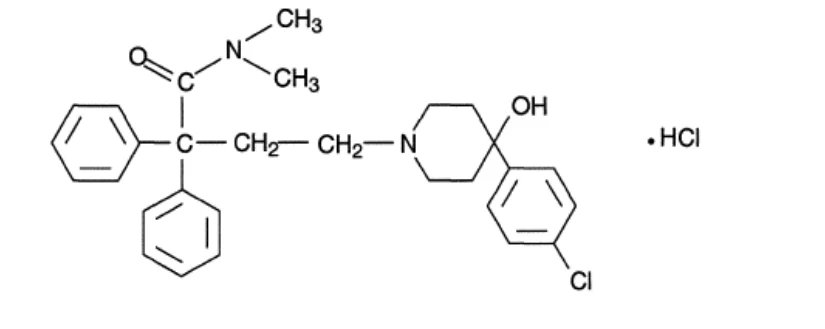
Physicochemical properties: Loperamide hydrochloride is a white to faintly yellowish amorphous or microcrystalline powder; soluble in methanol, chloroform and ethanol, slightly soluble in water and ether; melts at about 225°C, with some decomposition.
CLINICAL TRIALS
Comparative Bioavailability Studies
A randomized, single dose, standard 2-way crossover comparative bioavailability study, conducted under fasting conditions, was performed on healthy male volunteers. The results obtained from 16 volunteers who completed the study are summarized in the following table. The rate and extent of absorption of loperamide were measured and compared following a single oral dose (5 x 2 mg caplets) of Apo-Loperamide (Loperamide Hydrochloride) 10 mg (Apotex Inc.) and Imodium (Loperamide Hydrochloride) 10 mg caplets (5 x 2 mg caplets) (Janssen Pharmaceutica Inc.)
Loperamide (5 x 2 mg) From measured data Geometric Mean Arithmetic Mean (CV %) | ||||
|---|---|---|---|---|
| Parameter | Test* | Reference† | % Ratio of Geometric Means** | Confidence Interval ** |
AUCT (ng.hr/mL) | 30.3 34.4 (44.5) | 30.8 34.8 (43.1) | 98.4 | 86.0 – 112.6 |
AUCI (ng.hr/mL) | 33.7 37.6 (42.1) | 33.9 37.9 (40.8) | 99.4 | 87.5 – 112.9 |
CMAX (ng/mL) | 1.9 2.09 (34.1) | 1.87 2.13 (42.8) | 101.9 | 90.53-114-8 |
TMAX*** (h) | 4.50 (39) | 5.06 (28) | ||
T½*** (h) | 14.0 (24) | 15.2 (23) | ||
* Apo-Loperamide (Loperamide Hydrochloride) 2 x 5 mg tablets (Apotex Inc.)
† Imodium (Loperamide Hydochloride) 2 x 5 mg tablets (Janssen Pharmaceutica Inc.) was purchased at a Canadian retail pharmacy.
** Based on least square estimate of geometric means
*** Expressed as the arithmetic mean (CV%) only.
Metabolism and Pharmacokinetics
Three male volunteers received orally 2.0 mg of 3H-loperamide (specific activity 64 mCi/mM) in gelatine capsules. Control samples of blood, urine and feces were obtained before administration. Blood was collected on heparin 1, 2, 4, 8, 24, 72 and 168 hours thereafter. Urine was collected for seven days and feces for eight days. The radioactive content of each sample was measured and the fractions due to loperamide, metabolites and volatile radioactivity were determined by the inverse isotope dilution technique and lyophilization. The fate of orally administered 3H-loperamide in man appeared to be similar to that in rats. The peak plasma level of loperamide occurred 4 hours after treatment and was less than 2 ng/mL or about 0.3% of the administered dose. About 1% of the administered dose was excreted unaltered with the urine and 6% as nonvolatile metabolites. About 40% of the administered dose was excreted with the feces, mainly within the first four days; 30% of this amount was due to unchanged drug.
Treatment of Chronic Diarrhea
Eleven studies conducted in Europe and the United States have evaluated the use of loperamide for the symptomatic control of chronic diarrhea. These studies included 230 male and female patients (20 to76 years of age) who had a documented history of chronic diarrhea or had undergone extensive intestinal resections.
Seven studies were based on essentially a common protocol: a double-blind, crossover comparison of loperamide with a control agent, either a placebo (3 studies, 53 patients) or a known effective anti-diarrheal, diphenoxylate (4 studies, 58 patients), at once or twice the marketed dosage strength. The patients were always randomly allocated to either treatment sequence. A drug-free prestudy relapse period and drug-free relapse interval between treatment sequences was provided in all studies comparing loperamide with diphenoxylate. Drug efficacy was based on the frequency and consistency of stools, fecal output, carmine transit time, number of capsules or daily dosage, investigators' or patients' preferences.
One study involving 15 patients was based on an original protocol. After a relapse period, all patients were treated with loperamide; the successfully treated patients thereafter entered a double-blind trial to substantiate the effects of the open phase.
Three studies included 104 male and female patients (20 to 76 years of age), and were conducted according to a common protocol. After a drug-free period, the patients were treated with loperamide for one month. After this open trial, the patients were randomly assigned to double-blind treatment with either placebo or loperamide. When patients relapsed, the code was broken.
Loperamide was then prescribed for those patients who were found to be on placebo, and the prestudy antidiarrheal was again prescribed for patients relapsing on loperamide. The codes of those patients who did not relapse were broken after about one month of double-blind medication. Those patients who were controlled by loperamide continued taking the medication to obtain long-term control.
In these controlled studies, loperamide has been found useful for the symptomatic control:
a. of chronic diarrhea of various organic and functional etiologies (e.g. Crohn's disease, chronic ulcerative colitis, postradio-therapy diarrhea, irritable colon);
b. and of intestinal peristalsis and transit time in patients with ileostomies, colostomies, and other intestinal resections.
The long-term evaluations in chronic diarrhea included 104 male and female patients studied for up to 44 months. Loperamide was found to be an effective agent for long-term treatment of chronic diarrhea and that improvement was maintained for several years without increasing the dose.
Treatment of Acute Diarrhea
Five studies carried out in Europe and the United States have assessed the use of a flexible dose schedule with loperamide in the treatment of acute diarrhea. These studies included 554 patients treated with loperamide. Drug efficacy was assessed on the basis of stool frequency and consistency, dosage and recurrence of unformed stools. The noticeable features of these studies were:
a. after a single 4 mg dose, the first liquid or unformed stools recurred after 24 hours or more, indicating the restoration of intestinal peristalsis and transit time to normal;
b. a single 4 mg dose had a rapid, regular and long-lasting effect;
c. the number of stools is reduced and their consistency is improved.
In these studies, loperamide used in a flexible dosage regimen effected the symptomatic control of acute diarrhea.
Clinical Laboratory Studies
In selected studies, haematology, blood chemistry, urinalysis and electrocardiograph examinations as well as slit-lamp and clinical ophthalmology examinations were carried out. A review of all laboratory data obtained from these patients treated with loperamide failed to show any short-term or long-term drug-related effects.
Evaluation of Drug Abuse Liability
Four special studies have examined loperamide for opiate-like effects in humans. These studies showed that single high doses (16 mg) did not produce pupillary constriction and naloxone, a morphine antagonist, had no effect on pupil size even after prolonged use of loperamide.
The optimum dose level as a function of time was evaluated in three studies with patients on long-term loperamide treatment. In these studies:
a. patients given loperamide at a median dose of 2 mg twice daily for 12 months maintained improvement without increasing dose;
b. patients treated up to 44 months progressively reduced their daily requirements;
c. patients treated with 2 to 12 mg of loperamide daily up to 38 months maintained improvement without increasing dose.
In addition, clinical studies with loperamide have not shown this drug to produce subjectively pleasant effects in man or animals. Those subjective effects which may be expected are related to the control of diarrhea or, in the case of overdosage, constipation.
DETAILED PHARMACOLOGY
Animal Data
Pharmacodynamics
Motility in the gut is the result of cholinergic and noncholinergic biphasic stimulation of the intestinal musculature. The cholinergic mediator, acetylcholine (ACh), is responsible for the first phase of peristalsis, while prostaglandins (PG) are thought to mediate the second phase. Loperamide has been shown to inhibit release of both ACh and PG from isolated guinea pig ileum, as well as directly block the action of PG on smooth muscle preparations from rats. The net result is a reduction in the number of peristaltic waves, the fluid expelled by each wave, and overall gut motility. Loperamide produces a sustained inhibition of the peristaltic activity of the guinea pig ileum in vitro at doses as low as 0.005 mg/L. The inhibitory effects are dose-related, the activity of both the longitudinal and circular muscles being affected.
At dose levels inhibiting peristaltic activity, loperamide antagonizes the spasmogenic effects of electrical- and nicotine-induced stimulation of this preparation. As well, the angiotensin-5- hydroxytryptamine-, bradykinin-barium chloride- and histamine-induced contractions of the guinea pig ileum preparation are inhibited by doses of 0.14 mg/L or more.
On the other hand, loperamide is inactive against 5-hydroxytryptamine on the rat fundus, epinephrine on the rabbit spleen, acetylcholine on the rabbit duodenum and isoproterenol on the hen rectal caecum preparations at dose levels of up to 10 mg/L. A moderate negative inotropic effect is produced on the cat papillary muscle at 3 and 10 mg/L, and a moderate negative chronotropic effect is produced on the guinea pig atrium at 0.16 mg/L. This antagonism is thought to be unspecific.
In mice, loperamide is a potent blocker of gastrointestinal motility both by the subcutaneous route (ED50 = 0.59 mg/kg) and the intraperitoneal route (ED50 = 0.35 mg/kg). At oral doses up to 40 mg/kg in mice and rats, loperamide is devoid of any general pharmacological activity. Pulmonary function is not affected by high oral doses and the cardiovascular effects of intravenous loperamide are mainly due to the vehicle used.
Loperamide also acts on the anal sphincter to increase both maximum basal and maximum squeeze pressure, as well as reduce urgency and incontinence.
Absorption/Secretion
Changes in ion permeability of the mucosal surface are associated with the presence of various endotoxins, prostaglandins, hormones and other substances, resulting in secretory diarrhea. Substances such as vasoactive intestinal polypeptide, prostaglandin E2, cholera toxin and both the heat-stable and labile enterotoxins of E. coli increase intracellular cyclic nucleotides which result in the opening of mucosal chloride channels allowing excess loss of chloride followed by sodium and water into the intestinal lumen. On isolated tissue, devoid of motility, loperamide has been shown to reduce the chloride loss associated with the presence of prostaglandin, cholera toxin, theophylline, 1, 8-dihydroxyanthraquinone, and castor oil. Loperamide, administered orally, blocks castor oil-induced diarrhea in rats and has an ED50 value of 0.15 mg/kg (1 hour). The antidiarrheal action is rapid, regular and long lasting. Loperamide has also been shown to decrease secretion caused by E. coli enterotoxin both in vivo and in vitro. This is accomplished by increasing the chloride secretion into the plasma at the serosal membrane, thus effectively decreasing chloride as well as sodium and water loss at the mucosal surface. This effect on chloride secretion can be blocked with naloxone.
Substances such as serotonin, acetylcholine and other cholinergic agonists are believed to cause diarrhea by increasing intracellular calcium levels. Intracellular calcium combines with calmodulin to activate adenyl cyclase, which again results in an increase in cellular cyclic nucleotides, hence an increase in chloride permeability. Loperamide inhibits the calcium-calmodulin-mediated increase in enzyme function in vitro at concentrations as low as 4 μM. This action appears to be separate from the opiate receptor binding properties of loperamide.
Safety
Loperamide, carefully evaluated in a series of experimental procedures for any central narcotic actions and associated subjective stimuli, showed that the dissociation between gastrointestinal and CNS effects is complete with this compound. The antidiarrheal activity of loperamide is evident at low oral and parenteral doses; however, atoxic oral doses are not analgesic in rats and morphine-like behavioural effects cannot be induced in mice even at toxic subcutaneous and intraperitoneal doses. Unlike fentanyl, morphine, codeine and diphenoxylate, loperamide after chronic administration of doses as high as 300 times the antidiarrheal dose, does not produce physical dependence in mice or narcotic withdrawal symptoms in rats, and no preference for loperamide can be experimentally established. Also, loperamide cannot substitute for fentanyl in rats with a learned preference for narcotics. Initial difference in taste qualities of loperamide and fentanyl are excluded as a possible explanation of the observations. Finally, the discrimination learning procedure provides the most direct and conclusive evidence to the inability of loperamide to induce subjective stimuli specifically associated with the central action produced by all narcotic drugs tested.
Metabolism and Pharmacokinetics
Tritium-labelled loperamide was administered orally to eight groups of five fasted male Wistar rats (250 ± 10 g) at a dosage of 1.25 mg/kg. Urine and feces were collected for up to 4 days. The rats were killed at different times from 1 to 96 hours after drug administration in order to examine blood, organs and tissues. In one rat, the bile was cannulated for 48 hours. The radioactive content of each sample was measured and the fractions due to loperamide, metabolites, and volatile radioactivity were determined by the inverse isotope dilution technique and lyophilization. Only 5% of the drug and its metabolites was recovered from the urine, the bulk being excreted with the feces. Drug plasma levels were low at all times. Maximum plasma levels of unchanged loperamide did not exceed 0.22% of the administered dose corresponding to about 75 mg/mL of plasma. The gastrointestinal tract contained about 85% of loperamide 1 hour after dosing. Brain levels were extremely low, never exceeding 22 ng/g brain tissue, or 0.005% of the administered dose. The existence of an enterohepatic shunt was shown, but the uptake of the drug into the general circulation was low. Differentiation between total radioactivity and nonvolatile radioactivity demonstrated that most of the residual organ radioactivity was due to tritiated water.
TOXICOLOGY
Pre-clinical Safety Data
Toxicity studies on loperamide of up to 12 months in the dog and 18 months in the rat have not shown any toxic effect other than some reduction in body weight gain and food consumption at daily doses of up to 5mg/kg/day {30 times the Maximum Human Use Level (MHUL)} and 40mg/kg/day (240 times MHUL) respectively. The No Toxic Effect Levels (NTEL) in these studies were 1.25mg/kg/day (8 times MHUL) and 10mg/kg/day (60 times MHUL) in dogs and rats respectively. Results of in vivo and in vitro studies carried out indicated that loperamide is not genotoxic. There was no carcinogenic potential. In reproduction studies, very high doses of loperamide (40 mg/kg/day-240 times MHUL) impaired fertility and fetal survival in association with maternal toxicity in rats. Lower doses had no effects on maternal or fetal health and did not affect peri- and post-natal development.
Pre-clinical effects were observed only at exposures considered sufficiently in excess of the maximum human exposure, indicating little relevance to clinical use.
Acute
The acute toxicity of loperamide (7-day mortality) has been assessed in several species by various routes. The following values were obtained:
Table 4: Acute Toxicity of Loperamide in Several Species
| Species | Routes of Administration | LD50(mg/kg) |
| Mouse | p.o. | 105 |
| s.c. | 75 | |
| i.p. | 28 | |
| Adult rat | p.o. | 185 |
| i.v. | 5.1 | |
| Young male rat | p.o. | 135 |
| Young female rat | p.o. | 261 |
| Guinea pig | p.o. | 41.5 |
| Dog | p.o. | >40 |
| i.v. | 2.8 |
The therapeutic ratio (LD50/ED50 "8 hour" castor oil test) for loperamide when given orally to rats is 1:125. This compares to diphenoxylate, morphine and codeine which have therapeutic ratios of 1:55, 1:13 and 1:5.5, respectively. As well, the oral safety margin is wider than the intravenous.
Subacute
Rats
Wistar rats (10 males and 10 females per dose group) were given loperamide in their diet at 40, 10 and 2.5 mg/100 g of food seven days a week for 15 weeks. Control animals received diet only. No drug-induced mortality was observed. Health, behaviour and appearance were normal in all groups, except that the 40 mg/100 g food-dosed animals showed a swollen abdomen during the first four weeks. No effects could be detected on hemograms, serum analyses and urinalyses except a decrease of creatinine in the dosed animals. Weight gain and food consumption were lower in the 40 mg/100 g food-dosed animals. At this 40 mg/100 g food dose, some minor macroscopic and microscopic changes are probably related to reduced food consumption.
Chronic
Rats
Wistar rats (30 males and 30 females per dose group) were given loperamide in their diet at 40, 10 and 2.5 mg/100 g of food seven days a week, while control animals received diet only. Interim sacrifices of 20 animals per dose group were carried out at 6, 12 and 18 months on study. No drug-induced mortality was observed. Health, behaviour and appearance were normal in all groups throughout the entire experimental period. Weight gain and food consumption were lower in the 40 mg/100 g food-dosed animals especially during the initial 3 months of dosing. As for the subacute toxicity study, no effects could be detected on hemograms serum analyses and urinalyses, except a decrease of creatinine at 10 and 40 mg/100 g food-dosed animals and dose-related hyperemia of the vascular system of the intestine and mesenterium, but no other dose- or drug-related changes.
Dogs
Beagle dogs (3 males and 3 females per dose group) were given loperamide in gelatin capsules at 5.0, 1.25 and 0.31 mg/kg six days a week for 12 months. Some depression was seen during the first week of drug administration at 1.25 and 5 mg/kg. Behaviour and appearance were normal during the rest of the experiment, except that haemorrhagic stools were seen from time to time at 5 mg/kg and soft stools at 0.31 and 1.25 mg/kg, especially during the first 6 weeks of drug administration. Blood pressure, heart rate, electrocardiogram, hemograms, serum analysis and urinalysis were normal throughout the experiment. Gross pathologic and histologic examinations failed to reveal any dose or drug-related changes.
Reproductive studies
Fertility and General Reproductive Performance in Rats
Adult Wistar rats (2 groups per dose level) were given loperamide in their diet at 40, 10 and 2.5 mg/100 g of food as follows:
| Group A | 20 males |
|
| 20 females |
| |
| Group B | 20 males |
|
| 20 females |
|
Loperamide has no effect on male fertility when administered orally to males for at least 60 days prior to mating at doses of 40, 10 and 2.5 mg/100 g food, or approximately 40, 10 and 2.5 mg/kg. No pregnancies occurred among the females dosed at 40 mg/100 g food for at least 14 days prior to mating and during the complete period of gestation. No data on offspring are available for this group. In the other groups there was no difference in the number of implantations per dam, litter size, percentage of live, dead and resorbed fetuses; distribution of live, dead and resorbed fetuses in the left and right uterine horns; and body weight of live young. There was no evidence of teratogenicity.
Peri- and Post-natal Studies in Rats
Mature female Wistar rats (20 animals per dose group) were given loperamide in their diet at 40, 10 and 2.5 mg/100 g of food from day 16 of pregnancy throughout a three-week lactation period.
Control animals received diet only. Food consumption and body weight gain were affected in the 40 mg/100 g food-dosed females, resulting in a decrease of fetal weight gain and survival rate.
There was no difference between the control group and the 2.5, 10 and 40 mg/100 g food-dosed groups in pregnancy rate, duration of gestation, litter size, percentage of live and stillborn fetuses. There were no abnormalities in any young.
Table 5: Peri-and Post-Natal Studies with Loperamide in Rats
| Dose (mg/100 g food) | ||||||||
| 0 | 2.5 | 10 | 40 | |||||
| Adult rat data | ||||||||
| Pregnancy rate (%) | 95 | 95 | 100 | 95 | ||||
| Mortality rate (%) | 0 | 0 | 5 | 0 | ||||
| Litter data | ||||||||
| Mean litter size | 9.8 | 11.2 | 11.7 | 9.6 | ||||
| Average weight at birth (g) | 5.9 | 6.0 | 5.9 | 5.5 | ||||
| Live fetuses (%) | 91.5 | 95.5 | 98.5 | 92.7 | ||||
| Dead fetuses (%) | 8.5 | 4.5 | 1.5 | 7.3 | ||||
| Survival rate at weaning (%) | 79.6 | 90.6 | 71.0 | 13.8 | ||||
| Abnormalities | 0 | 0 | 0 | 0 | ||||
Teratology
Rats
Pregnant primiparous female Wistar rats (20 animals per dose group) were given loperamide in their diet at 40, 10 and 2.5 mg/100 g of food from day 6 through day 15 of pregnancy. On day 22, fetuses were delivered by caesarean section. At 40 mg/100 g food, only 1 female out of 20 became pregnant, thus confirming the results of the fertility study in rats. There was no significant difference between the control group and the 2.5 and 10 mg/100 g food-dosed groups in pregnancy rate; number of implantations per dam; litter size, percentage of live, dead and resorbed fetuses; distribution of live, dead and resorbed fetuses in the left and right uterine horns; and body weight of live young. No macroscopic, visceral, or skeletal malformations were seen.
Table 6: Teratology in Rats
| Dose (mg/100 g food) | ||||||||
| 0 | 2.5 | 10 | 40 | |||||
| Adult rat data | ||||||||
| Pregnancy rate (%) | 100 | 100 | 95 | 5 | ||||
| Mortality rate (%) | 0 | 0 | 0 | 0 | ||||
| Litter data | ||||||||
| Mean litter size | 10.6 | 9.3 | 9.9 | 8.0 | ||||
| Average weight at birth (g) | 5.3 | 5.5 | 5.2 | 4.5 | ||||
| Live fetuses (%) | 93.5 | 92.5 | 91.7 | 88.9 | ||||
| Dead fetuses (%) | 4.2 | 0.0 | 0.5 | 0.0 | ||||
| Resorbed fetuses (%) | 2.3 | 7.5 | 7.8 | 11.1 | ||||
| Abnormalities | 0 | 0 | 0 | 0 | ||||
Rabbits
Primiparous female New Zealand white rabbits, fertilized by artificial insemination (15-20 animals per dose group) were given loperamide by gavage at 40, 20 and 5 mg/kg from day 6 through 18 post-insemination. Control animals received an equivalent volume of isotonic saline vehicle. Animals were sacrificed on day 28. No differences in pregnancy rate could be noted. The mortality rate was higher in the 40 mg/kg dosed rabbits and was mainly due to enteritis. There was no difference in pregnancy rate between dosed and controlled. The average weight gain and litter size treated females was affected, and the average weight at delivery was lower in the young of the 40 mg/kg dosed females. There was little or no difference in the percentage of live, dead and resorbed fetuses. No macroscopic visceral or skeletal abnormalities were seen except in 1 fetus with bifurcated ribs of the control group and 1 fetus with cyclopia of the 40 mg/kg dosed group.
It is not believed that this case of cyclopia is drug related as cases of cyclopia and agnathia have been encountered in control fetuses of earlier experiments with the same New Zealand rabbit strain.
Table 7: Teratology in Rabbits
| Dose (mg/100 g food) | ||||||||
| 0 | 5.0 | 20 | 40 | |||||
| Adult rabbit data | ||||||||
| Pregnancy rate (%) | 70 | 60 | 70 | 80 | ||||
| Mortality rate (%) | 20 | 10 | 25 | 60 | ||||
| Litter data | ||||||||
| Mean litter size | 6.5 | 5.4 | 5.3 | 5.3 | ||||
| Average weight at birth (g) | 40.9 | 41.4 | 38.1 | 34.4 | ||||
| Live fetuses (%) | 98.6 | 95.2 | 89.2 | 87.0 | ||||
| Dead fetuses (%) | 0 | 0 | 0 | 4.3 | ||||
| Resorbed fetuses (%) | 1.4 | 4.8 | 10.8 | 8.7 | ||||
| Abnormalities | 1 | 0 | 0 | 1 | ||||
REFERENCES
- 1. Baker, G.F. and Segal, M.B.: The effect of loperamide on the ion fluxes across the isolated rabbit colon. Biochem. Pharmacol. 30:3371-3373, 1981.
- 2. Binder, H.J.: Net fluid and electrolyte secretions: The pathophysiological basis of diarrhoea. Viewpoints on Digestive Diseases 12(2): 1980.
- 3. Brostrom, M.A., Brostrom, C.O., Breckenridge, B.M., and Wolff, J.D.: Calcium-dependent regulation of brain adenylate cyclase. Adv. Nucleotide Res. 9:85-99, 1978.
- 4. Cornett, J.W., Aspeling, R.L., and Mallegol, D.: A double-blind comparative evaluation of loperamide versus diphenoxylate with atropine in acute diarrhea. Current Ther. Research 21:629-637, 1977.
- 5. Data on file, McNeil Consumer Healthcare.
- 6. de Coster, M., Kerremans, R., and Beckers, J.: A comparative double-blind study of two antidiarrhoeals, difenoxine and loperamide. Tijdschr Gastroenterol. 15:337-342, 1972.
- 7. Demeulenaere, L., Verbeke, S., Muls, M., and Reyntjens, A.: Loperamide: An open multicentre trial and double-blind crossover comparison with placebo in patients with chronic diarrhea. Current Therapeutic Res. 16:32-39, 1974.
- 8. Dom, J., Leyman, R., Schuermans, V., and Brugmans, J.: Loperamide (R 18 553), a novel type of antidiarrheal agent. Part 8: Clinical investigation. Use of a flexible dosage schedule in a double-blind comparison of loperamide with diphenoxylate in 614 patients suffering from acute diarrhea. Arzneim.-Forsch. (Drug Research), 24:1660-1665, 1974.
- 9. DuPont, H.L., Flores Sanchez, J., Ericsson, C.D., Mediola Gomez, J., DuPont, M.W., Cruz Luna, A., Mathewson, J.J.: Comparative efficacy of loperamide hydrochloride and bismuth subsalicylate in the management of acute diarrhea. Am. J. Med. 88 (6A): 15S-19S, 1990.
- 10. Farack, U.M., Kautz, U., and Loeschke, K.: Loperamide reduces the intestinal secretion but not mucosal cAMP accumulation induced by cholera toxin. Naunyn Schmiedebergs Arch. Pharmacol. 317:178-179, 1981.
- 11. Galambos, J.T., Hersh, T., Schroder, S., and Wenger, J.: Loperamide: A new antidiarrheal agent in the treatment of chronic diarrhea. Gastroenterology 70:1026-1029, 1976.
- 12. Hardcastle, J., Hardcastle, P.T., Read, N.W., and Redfern, J.S.: The action of loperamide in inhibiting prostaglandin-induced intestinal secretion in the rat. Br. J. Pharmacol. 74:563-569, 1981.
- 13. Heykants, J., Micheils, M., Knaeps, A., and Brugmans, J.: Loperamide (R 18 553), a novel type of antidiarrheal agent. Part 5: the pharmacokinetics of loperamide in rats and man. Arzneim.-Forsch. (Drug Research), 24:1649-1653, 1974.
- 14. Hughes, S., Higgs, N.B., and Turnberg, L.A.: Antidiarrhoeal activity of loperamide: studies of its influence on ion transport across rabbit ileal mucosa in vitro. Gut. 23: 974-979, 1982.
- 15. Ilundain, A. and Naftalin R.J.: Opiates increase chloride permeability of the serosal border of rabbit ileum. J. Physiol. 316:56-57, 1981.
- 16. Karim, S.M.M. and Adaikan, P.G.: The effect of loperamide on prostaglandin-induced diarrhea in rats and man. Prostaglandins 13:321-331, 1977.
- 17. Koerner, M.M.: Differential effects of loperamide on gut motility. Gastroenterology 82:1255, 1982.
- 18. Loperamide: Its mechanism of action and possible role in the treatment of secretory diarrheas. A position paper prepared for Janssen Pharmaceutica by ADIS Press Ltd. Submitted for publication.
- 19. Marsboom, R., Herin, V., Verstraeten, A., Vandesteene, R., and Fransen, J.: Loperamide (R 18 553), a novel type of antidiarrheal agent. Part 4: studies on subacute and chronic toxicity and the effect on reproductive processes in rats, dogs and rabbits. Arzneim.-Forsch. (Drug Research), 24:1645-1649, 1974.
- 20. McKay, J.S., Linaker, B.D., and Turnberg, L.A.: The influence of opiates on ion transport across rabbit ileal mucosa. Gastroenterology 80:279-284, 1981.
- 21. Merritt, J.E., Brown, B.L., and Tomlinson, S.: Loperamide and calmodulin. The Lancet 319:283, 1982.
- 22. Naftalin, R.J.: The role of intracellular calcium in the induction of intestinal secretion. Clin. Res. Rev. 1(Supple. 1):63-71, 1981.
- 23. Niemegeers, C.J.E., Lenaerts, F.M., and Janssen, P.A.J.: Loperamide (R 18 553), a novel type of antidiarrheal agent. Part 1: in vivo oral pharmacology and acute toxicity. Comparison with morphine, codeine, diphenoxylate and difenoxine. Arzneim.-Forsch. (Drug Research), 24:1633-1636, 1974.
- 24. Niemegeers, C.J.E., Lenaerts, F.M., and Janssen, P.A.J.: Loperamide (R 18 553), a novel type of antidiarrheal agent. Part 2: in vivo parenteral pharmacology and acute toxicity in mice. Comparison with morphine, codeine and diphenoxylate. Arzneim.-Forsch. (Drug Research), 24:1636-1641, 1974.
- 25. Palmer, K.R., Corbett, C.L., and Holdsworth, C.D.: Double-blind crossover study comparing loperamide, codeine phosphate and diphenoxylate in the treatment of chronic diarrhea. Gastroenterology 79:1271-1275, 1980.
- 26. Powell, D.W.: Muscle or mucosa: The site of action of antidiarrheal opiates. Gastroenterology 80: 406-408, 1981.
- 27. Read, M., Read, N.W., Barber, D.C., and Duthie, H.L.: Effects of loperamide on anal sphincter function in patients complaining of chronic diarrhea with fecal incontinence and urgency. Digestive Diseases and Sciences 27:807-814, 1982.
- 28. Read, N.W.: Diarrhoea: The failure of colonic salvage. The Lancet 320:481-483, 1982.
- 29. Sandhu, B., Tripp, J.H., Candy, D.C.A., and Harries, J.T.: Loperamide inhibits cholera toxin induced small intestinal secretion. The Lancet 314:689-690, 1979.
- 30. Sandhu, B.K., Tripp, J.H., Candy, D.C.A., and Harries, J.T.: Loperamide: Studies on its mechanism of action. Gut 22:658-662, 1981.
- 31. Schuermans, V., Van Lommel, R., Dom, J., and Brugmans, J.: Loperamide (R 18 553), a novel type of antidiarrheal agent. Part 6: Clinical pharmacology. Placebo-controlled comparison of the constipating activity and safety of loperamide, diphenoxylate and codeine in normal volunteers. Arzneim.-Forsch. (Drug Research), 24:1653-1657, 1974.
- 32. Tytgat, G.M., Huibregtse, K., Dagevos, J., and Van Den Ende, A.: Effect of loperamide on fecal output and composition in well-established ileostomy and ileorectal anastomosis. Digestive Diseases and Sciences 22:669-676, 1977.
- 33. Van Neuten, J.M. and Schuurkes, J.A.J.: Effect of loperamide on intestinal motility. Clin. Res. Rec. 1(Suppl. 1):175-185, 1981.
- 34. Van Neuten, J.M., Janssen, P.A.J., and Fontaine, J.: Loperamide (R 18 553), a novel type of antidiarrheal agent. Part 3: in vitro studies on the peristaltic reflex and other experiments on isolated tissues. Arzneim.-Forsch. (Drug Research), 24:1641-1645, 1974.
- 35. Verhaegen, H., De Cree, J., and Schuermans, V.: Loperamide (R 18 553), a novel type of antidiarrheal agent. Part 7: Clinical investigation. Efficacy and safety of loperamide in patients with severe chronic diarrhea. Arzneim.-Forsch. (Drug Research), 24:1657-1660, 1974.
- 36. Verhaeren, E.H.C., Dreessen, M.J., and Lemli, J.A.: Influence of 1, 8 dihydroxanthraquinone and loperamide on the paracellular permeability across colonic mucosa. J. Pharmacy and Pharmacol. 33:526-528, 1981.
- 37. Watt, J., Candy, D.C.A., Gregory, B., Tripp, J.H., and Harries, J.T.: Loperamide modifies Escherichia coli heat-stable enterotoxin-induced intestinal secretion. Paediatric Gastroenterology and Nutrition. 1:583-586, 1982.
- 38. Wingate D., Phillips, S.F., Lewis, S.J. et al.: Guidelines for adults on self-medication for the treatment of acute diarrhoea. Aliment Pharmacol Ther 2001;15:773-782.
- 39. Yagasaki, O., Suzuki, H., and Sohji, Y.: Effects of loperamide on acetylcholine and prostaglandin release from isolated guinea pig ileum. Japan J. Pharmacol 28:873-883, 1978.
- 40. Product Monograph - IMODIUM® Quick-Dissolve and IMODIUM® Calming Liquid, IMODIUM® Liquid Gels. McNeil Consumer Healthcare. Date of Revision: May 24, 2019 (Control No.: 225985).