


Product Monograph - Apo-Megestrol
INDICATIONS AND CLINICAL USES
APO-MEGESTROL (megestrol acetate) is indicated for adjunctive or palliative treatment of recurrent, inoperable or metastatic carcinoma of the breast and endometrium and for palliative treatment of hormone responsive advanced (stage D2) carcinoma of the prostate. APO-MEGESTROL should not be used in lieu of currently accepted procedures such as surgery and radiation. Objective or subjective responses or arrest of tumor growth may occur for one to several months while on therapy.
APO-MEGESTROL is also indicated for the treatment of anorexia, cachexia or weight loss secondary to metastatic cancer.
CONTRAINDICATIONS
APO-MEGESTROL (megestrol acetate) is contraindicated in those people who are sensitive to megestrol acetate or any ingredients in the tablets. APO-MEGESTROL should not be used as a diagnostic test for pregnancy.
WARNINGS
THE USE OF PROGESTATIONAL AGENTS DURING THE FIRST FOUR MONTHS OF PREGNANCY IS NOT RECOMMENDED.
Progestational agents have been used beginning within the first trimester of pregnancy in an attempt to prevent habitual abortion or treat threatened abortion. There is no adequate evidence that such use is effective and there is evidence of potential harm to the fetus when such drugs are given during the first four months of pregnancy. Use of progestational agents, with their uterine–relaxant properties, in patients with fertilized defective ova may cause a delay in spontaneous abortion.
Several reports suggest an association between intrauterine exposure to progestational drugs in the first trimester of pregnancy and genital abnormalities in male and female fetuses. The risk of hypospadias, 5 to 8 per 1000 male births in the general population, may be approximately doubled with exposure to these drugs. There are insufficient data to quantify the risk to exposed female fetuses, however some of these drugs induce mild virilization of the external genitalia of the female fetus.
If the patient is exposed to APO-MEGESTROL (megestrol acetate) during the first four months of pregnancy or if she becomes pregnant while taking this drug, she should be apprised of the potential risks to the fetus. Women of childbearing potential should be advised to avoid becoming pregnant.
PRECAUTIONS
General
Therapy with APO-MEGESTROL (megestrol acetate) for weight loss should only be instituted after treatable causes of weight loss are sought and addressed. These treatable causes include possible malignancies, systematic infections, gastrointestinal disorders affecting absorption, endocrine disease and renal or psychiatric disease.
Laboratory evidence of adrenal suppression has been observed rarely in patients shortly after discontinuation of megestrol acetate therapy. The significance of these findings has not been fully established. The possibility of adrenal suppression should be considered in all patients taking or withdrawing from chronic megestrol acetate therapy. Replacement stress doses of glucocorticoids may be indicated.
Use APO-MEGESTROL with caution in patients with a history of thrombophlebitis. Close, customary surveillance is indicated as in any patient being treated for recurrent or metastatic cancer. Patients receiving large doses of progestational agents such as APO-MEGESTROL continuously for prolonged periods should be observed closely for possible adrenal cortical suppression.
Pediatric Use
Safety and effectiveness in pediatric patients have not been established.
Nursing Mothers
Because many drugs are excreted in human breast milk and because of the potential for adverse reactions in nursing infants, nursing should be discontinued when receiving APO-MEGESTROL therapy.
HIV Infected Women
Although megestrol acetate has been used extensively in women for the treatment of endometrial and breast cancers, its use in HIV infected women has been limited. All 10 women in clinical trials reported breakthrough bleeding.
Drug Interactions
Possible interactions of APO-MEGESTROL with concomitant medications have not been investigated.
Information for Patients
Patients should be advised to use APO-MEGESTROL as directed and report any adverse reaction experiences to their physician. Women of childbearing potential should be advised to avoid becoming pregnant and should exercise adequate contraceptive control. If patients become pregnant while taking APO-MEGESTROL, they should promptly notify their physician.
ADVERSE REACTIONS
Weight gain is a frequent side effect of megestrol acetate when it is used in patients with cancer of the breast or endometrium. This gain has been associated with increased appetite. It is this effect which forms the basis for use of megestrol acetate in patients with anorexia, cachexia or weight loss. Weight gain is associated with an increase in fat and body cell mass.
Untoward reactions that have been reported to occur in patients receiving megestrol acetate include nausea, vomiting, edema and breakthrough uterine bleeding and occur in approximately 1% to 2% of patients.
Gynecomastia and loss of hearing have also been reported. Dyspnea, pain, heart failure, hypertension, hot flashes, mood changes, cushingoid facies, tumor flare (with or without hypercalcemia), hyperglycemia, alopecia, carpal tunnel syndrome, diarrhea, lethargy and rash have also been reported.
Thromboembolic phenomenon including thrombophlebitis and pulmonary embolism (in some cases fatal) have also been reported.
Pituitary adrenal axis abnormalities including glucose intolerance, new onset diabetes, exacerbation of preexisting diabetes with decreased glucose tolerance and Cushing’s syndrome
have been reported with the use of megestrol acetate.
In clinical trials of megestrol acetate in patients with acquired immune deficiency syndrome, overall, there was no statistically significant difference between active and placebo treatment in patients reporting at least one adverse event. Events reported in ≥5% of these study patients included diarrhea, impotence, rash, flatulence, asthenia and pain. Aside from impotence, all occurred more commonly in patients receiving placebo treatment.
Constipation and urinary frequency also have been reported in patients who received high doses of megestrol acetate in other clinical trials.
SYMPTOMS AND TREATMENT OF OVERDOSAGE
Usual safety measures as with the overdose of any medication should be instituted. However, no serious unexpected side effects have resulted from studies involving megestrol acetate administered in dosages as high as 1600 mg/day for 6 months or more. Megestrol acetate has not been tested for dialyzability; however, due to its low solubility, it is postulated that dialysis would not be an effective means of treating overdose.
DOSAGE AND ADMINISTRATION
For the following indications, at least two months of continuous treatment with APO-MEGESTROL (megestrol acetate) is recommended.
For palliative or adjunctive treatment of breast carcinoma: 160 mg or 125 mg/m2 daily (40 mg q.i.d. or 160 mg q.d.).
For endometrial carcinoma: 80 - 320 mg or 62.5 - 250 mg/m2 daily in divided doses (40 - 80 mg one to four times daily or one to two 160 mg tablets daily).
For palliative treatment of hormone responsive advanced (Stage D2) carcinoma of the prostate: 120 mg (93.8 mg/m2) as a single daily dose in combination with diethylstilbestrol tablet, 0.1 mg.
For anorexia, cachexia, or significant weight loss in patients with cancer: usual adult dose: 400 to 800 mg as a single daily dose.
PHARMACEUTICAL INFORMATION
Drug Substance
Brand Name: APO-MEGESTROL
Common Name: Megestrol acetate
Chemical Names: 1) Pregna-4,6-diene-3, 20-dione, 17-(acetyloxy)-6-methyl;
- 2) 17-Hydroxy-6-methylpregna-4,6-diene-3, 20-dione acetate.
Structural Formula:
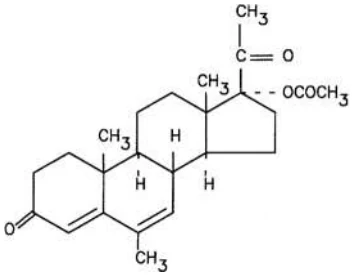
Molecular Formula: C24H32O4
Molecular Weight: 384.51 g/mol
Description: Megestrol acetate is a white to creamy–white, odourless, crystalline powder. Megestrol acetate is insoluble in water, sparingly soluble in alcohol, slightly soluble in ether and in fixed oils. It is soluble in acetone and very soluble in chloroform. Megestrol acetate is unstable under aqueous conditions at pH 7 or above. It has a melting point of 213 – 219°C, but the range between the beginning and the end of melting does not exceed 3⁰C.
Composition
APO-MEGESTROL (megestrol acetate tablets USP) 40 mg and 160 mg contain the following non– medicinal ingredients: colloidal silicon dioxide, croscarmellose sodium, lactose, magnesium stearate and microcrystalline cellulose. APO-MEGESTROL (megestrol acetate tablets USP) 40 mg also contain Brilliant Blue FCF Lake 12% (dye).
Stability and Storage Recommendations
Store APO-MEGESTROL (megestrol acetate tablets USP) at room temperature (15 -30°C) in well-closed containers.
Special Instructions
Exposure or overdose at levels approaching recommended dosing levels could result in side effects described above (see WARNING and ADVERSE EVENTS). Women at risk of pregnancy should avoid such exposure.
AVAILABILITY OF DOSAGE FORMS
APO-MEGESTROL (megestrol acetate tablets USP) 40 mg: each light blue, round, flat–faced, bevelled–edged, scored tablet, engraved “40” on one side, contains 40 mg megestrol acetate. Available in bottles of 100 and 250 tablets.
APO-MEGESTROL (megestrol acetate tablets USP) 160 mg: each white, oval, biconvex, scored tablet engraved “160” on one side, contains 160 mg megestrol acetate. Available in bottles of 100 and 250 tablets.
PHARMACOLOGY
Animal Pharmacology
Besides its progestational effect, megestrol acetate also has antigonadotropic, antiuterotropic, and antiandrogenic/antimyotropic actions. It has a slight but definite glucocorticoid activity and a very slight mineralocorticoid action. It is inactive as an estrogen, androgen, or anabolic agent.
There were marginal or no significant effects in routine anticancer screening in mice and rats for mammary fibroadenoma or adenocarcinoma, methylcholanthrene carcinoma, acute leukemia and Dunning leukemia, and spontaneous uterine leiomyosarcoma. Malignant lymphoma in mice may have been stimulated.
Human Pharmacology
Pharmacokinetics and Bioavailability
Megestrol acetate tablets 40 mg, 160 mg regular and 160 mg micronized were administered to 24 healthy male volunteers (age 19 to 44 years) in a three way crossover bioequivalence study, balanced for sequence, with a week between dose administrations. The 40 mg tablets were administered q.i.d. at 8:00, 12:00, 18:00 and 22:00 hours, while the 160 mg tablets were administered at 8:00 h. Plasma samples were collected up to 96 hours after administration and analyzed for megestrol acetate.
Table 1 presents a summary of the mean (SD) pharmacokinetic parameters. The rates of absorption were essentially identical for all three formulations. Based on AUC, the extent of absorption were essentially the same for all three formulations. Neither mean retention time (MRT) nor half–life were different between formulations, however there was a high degree of subject variability. Cmax values were not comparable for all formulations. Relative to the 40 mg
q.i.d. dose, the 160 mg regular and 160 mg micronized tablets had mean bioavailabilities of 97% and 118%, respectively.
| Table 1 | |||
| Pharmacokinetic Parameter | 40 mg Q.I.D. | 160 mg Regular | 160 mg Micronized |
| Cmax (ng/mL) | 107.3 (30.2) | 88.9 (36.8) | 133.7 (35.4) |
| Tmax (ng/mL) | 2.5* (1.6) | 2.8 (1.4) | 2.8 (0.8) |
| AUC (ng.hr/mL) | 2248.8 (811.3) | 1979.7 (736.7) | 2473.5 (530.7) |
| MRT (hr) | 47.2 (35.4) | 52.5 (35.9) | 33.5 (8.9) |
| Thalf (hr) | 33.2 (30.9) | 37.6 (27.1) | 23.5 (8.0) |
| * After the initial dose | |||
Megestrol acetate tablets, 750 mg (3 x 250 mg) and oral suspension 750 mg (40 mg/mL) were administered once daily to 24 asymptomatic, HIV seropositive male patients in a two–period bioequivalence study. Each treatment was administered for 14 days with no washout period between treatments. Steady-state plasma megestrol acetate concentrations were determined over a 24 hour period and pharmacokinetic parameters were determined non–compartmentally. When using the suspension as the reference dosage form, there was no significant difference in Tmax and Cmax plasma values for the tablet and suspension and the values fell within an 80 to 120% range; suggesting similar rates of bioavailability for the formulations. The mean AUC value for the tablet was 12% greater than for the suspension. Thus, it would appear that no clinically significant difference would be found between a dose of three 250 mg tablets and 750 mg of 40 mg/mL suspension, and they would be therapeutically interchangeable. Relative to the oral suspension, the 250 mg tablet had a mean bioavailability of 116%. The pharmacokinetic parameters are presented in Table 2.
| Table 2 | ||
| Pharmacokinetic Parameter | 750 mg Tablet (3 x 250 mg) | 750 mg Oral Suspension (18.75 mL x 40 mg/mL) |
| Cmax (ng/mL) | 458.0 (183.0) | 490.0 (238.0) |
| Tmax (ng/mL) | 3.0 (1.0 - 6.0) | 3.0 (0.0 - 8.0)* |
| AUC (ng.hr/mL) | 7650.0 (3780.0) | 6779.0 (3048.0) |
| * Median value and range | ||
In a pharmacokinetic study in patients with AIDS, ten, adult, male, cachectic patients (age 26 to 49 years) with an involuntary weight loss greater than 10% of baseline received daily oral doses of 800 mg of an oral suspension containing 40 mg/mL of micronized megestrol acetate for 21 days. Plasma samples were taken just prior to dosing on days 19, 20 and 21 and at intervals for 48 hours after dosing on day 21. All plasma samples were analyzed for intact megestrol acetate.
A high degree of intra patient variability in rate of absorption was observed. Table 3 provides a summary of the median pharmacokinetic parameters.
| Table 3 | ||
| AUC0–24 (ng.hr/mL) | Cmax (ng/mL) | Tmax (hr) |
| 7547.0 (1550.0 - 27090.0) | 602.0 (77.0 - 1670.0) | 5.0 (1.0 - 8.0) |
TOXICOLOGY
Acute Toxicity
Megestrol acetate when given orally to mice is non–toxic at levels of 5 g/kg.
Subacute and Chronic Toxicity
Megestrol acetate given orally to rats for 3 months at doses of 1 mg/kg and 20 mg/kg had no effect on the growth of both males and females. Adrenal atrophy was seen in the females at the 20 mg/kg dose. Uterine sections showed endometrial hyperplasia, due to the progestational activity of megestrol acetate.
A trend towards increased frequency of respiratory infections, decreased lymphocyte counts and increased neutrophil counts was observed in a two–year chronic toxicity/carcinogenicity study of megestrol acetate conducted in rats.
Administration for up to 7 years of megestrol acetate to female dogs is associated with an increased incidence of both benign and malignant tumors of the breast. Comparable studies in monkeys for up to 10 years are not associated with an increased incidence of malignant tumours. The relationship of the dog tumors to humans is unknown but should be considered in assessing the benefit to risk ratio when prescribing megestrol acetate and in surveillance of patients on therapy.
Two long–term studies were performed on beagle dogs and monkeys. Groups of 20 female beagle dogs were given 0, 0.01, 0.10, or 0.25 mg/kg/day of megestrol acetate (0, 1, 10, or 25 times the anticipated human dose, on a mg/kg basis) or 0.25 mg/kg/day of chlormadinone acetate. Groups of 20 female rhesus monkeys were given 0, 0.01, 0.10 or 0.50 mg/kg/day (0, 1, 10, or 50 times the anticipated human dose, on a mg/kg basis) or 0.50 mg/kg/day of chlormadinone acetate. Up to the end of 7 years, 2 dogs at doses of 0.1 mg/kg/day and 5 dogs at 0.25 mg/kg/day exhibited mammary carcinoma with metastasis. Multiple mammary nodules were also seen in all dogs in these two dosage groups as well as one or two nodules in 3 of the 12 control animals. At the end of 5 years, one monkey at a dose of 0.01 mg/kg/day and one monkey at a dose of 0.10 mg/kg/day exhibited palpable nodules but were not malignant. Reduction in menses in the monkeys with near cessation of cyclic activity at 0.05 mg/kg/day, and a decreased evidence of estrus and mucoid vaginal discharges were noted in the beagle dogs.
At the end of the sixth year, elevations in erythrocyte sedimentation rate (ESR) were seen in dogs at the 0.1 and 0.25 mg/kg doses. Decreased hemoglobin (Hgb), hematocrit (Hct), and red blood cells (RBC) were seen in the latter group and scattered lowering of Hgb was observed in the former group. Serum cholesterol and blood sugar were elevated and serum calcium depressed in the 0.25 mg/kg/group. Serum cholesterol was elevated in the 0.1 mg/kg/group. Bilateral cataracts were observed in 1 of 6 dogs on the 0.25 mg/kg/dose. In addition to the changes in the
breasts as previously described, necropsy findings in 3 of the 6 dogs at both doses included cachexia, discoloured lungs, enlarged livers, dark–green and viscous gallbladder contents, enlarged and discoloured kidneys, enlarged uteri and lymph nodes, and cystic ovaries.
In monkeys at the end of 5 years, physical, ophthalmoscopic examinations and clinical laboratory studies revealed no treatment–related effects. At the end of the 10 year study there were no compound related changes in mortality, physical appearance and behavior, body weight gain, ophthalmology, hematology, urinalysis, terminal body weights and gross tissue findings.
Minor related findings include a dose–dependent decrease in menstrual activity and in mean uterine weights, as well as a depressed estrogenic activity in the mid– and high–dose groups (0.1, 0.5 mg/kg/day). Histopathologic examination revealed inhibition of ovulation, increased numbers of hyalinized ovarian atretic follicles, increased cervical glandular dilatation, and increased cervical mucoid secretion in the mid– and high–dose groups. Cyclic endometrial changes were evident for all monkeys, but no mammary hyperplastic or neoplastic changes were found.
Carcinogenesis
Data on carcinogenesis were obtained from studies conducted in dogs, monkeys and rats treated with megestrol acetate. No males were used in the dog and monkey studies. In female beagle dogs, megestrol acetate (0.01, 0.1 or 0.25 mg/kg/day) administered for up to 7 years induced both benign and malignant tumours of the breast. In female monkeys, no tumors were found following 10 years of treatment with 0.01, 0.1 or 0.5 mg/kg/day megestrol acetate. Pituitary tumors were observed in female rats treated with 3.9 or 10 mg/kg/day of megestrol acetate for 2 years. The relationship of these tumors in rats and dogs to humans is unknown but should be considered in assessing the risk–to–benefit ratio when prescribing megestrol acetate and in surveillance of patients on therapy.
Mutagenesis
No data on mutagenesis is currently available.
Impairment of Fertility
Perinatal/postnatal (segment III) toxicity studies were performed in rats at doses of 0.05 to 12.5 mg/kg. In these low–dose studies, the reproductive capability of male offspring of megestrol acetate–treated females was impaired. Similar results were obtained in dogs. Pregnant rats treated with megestrol acetate showed a reduction in fetal weight and number of live births, and terminization of male fetuses. No toxicity data are currently available on male reproduction (spermatogenesis).
Teratology
No adequate teratology information is available at clinically relevant doses.
SUPPORTING PRODUCT MONOGRAPHS
- 1. Product Monograph - Megace® (Megestrol acetate) Tablets USP, Megace® OS (Megestrol acetate, USP) Oral Suspension. Bristol–Myers Squibb Pharmaceutical Group, Montreal, Canada. Preparation Date: October 25, 2005, Control Number: 101903.