


Product Monograph - Apo Methazide 15
INDICATIONS
This fixed combination drug is not indicated for initial therapy of hypertension. Hypertension requires therapy titrated to the individual patient. It is always better to adjust the dosage of each drug separately and when the fixed combination represents the dosage so determined, its use may be more convenient in patient management. The treatment of hypertension is not static, but must be re-evaluated as conditions in each patient warrant. For further adjustment of dosage it is best to use individual drugs.
Apo-Methazide (methyldopa and hydrochlorothiazide) is recommended for maintenance therapy of patients with essential hypertension.
CONTRAINDICATIONS
Active hepatic disease, such as acute hepatitis and active cirrhosis, is a contraindication for use of methyldopa. It should be used with caution in patients with a history of previous liver disease or dysfunction (see WARNINGS AND ADVERSE REACTIONS). Methyldopa is not recommended for patients with pheochromocytoma. Neither is it considered suitable for cases of mild or labile hypertension responsive to thiazide therapy alone.
Because of the diuretic action of hydrochlorothiazide, Apo-Methazide (methyldopa and hydrochlorothiazide) is contraindicated in anuria.
Apo-Methazide is contraindicated in persons known to be sensitive to methyldopa or to hydrochlorothiazide or other sulfonamide derived drugs.
See also Usage in Pregnancy and the Nursing Mothers Under 'Warnings'.
WARNINGS Methyldopa:
It is important to recognize that a positive Coombs test, hemolytic anemia and liver disorders may occur with methyl-dopa therapy. The rare occurrences of hemolytic anemia or liver disorders could lead to potentially fatal complications unless properly recognized and managed.
Hydrochlorothiazide:
Azotemia may be precipitated or increased by hydrochlorothiazide. Cumulative effects of the drug may develop in patients with impaired renal function. If increasing azotemia and oliguria occur during treatment, discontinue Apo-Methazide.
Thiazides should be used with caution in patients with impaired hepatic function or progressive liver disease, since minor alterations of fluid and electrolyte balance may precipitate hepatic coma.
Sensitivity reactions may occur in patients with or without a history of allergy or bronchial asthma.
The possibility of exacerbation or activation of systemic lupus erythematosus has been reported.
Usage in Pregnancy and the Nursing Mothers:
Use of any drug in women who are or may become pregnant requires that anticipated benefits be weighed against possible risks.
No unusual adverse reactions have been reported in association with the use of methyldopa during pregnancy. Methyldopa crosses the placental barrier. Though no obvious teratogenic effects have been reported, the possibility of fetal injury cannot be excluded.
Thiazides also cross the placental barrier and appear in cord blood. Hazards include fetal or neonatal jaundice, thrombocytopenia and possible other adverse reactions which have occurred in the adult.
Methyldopa and thiazides appear in breast milk. Patients taking Apo-Methazide should not nurse.
Ophthalmologic:
Acute Myopia and Secondary Angle-Closure Glaucoma
Hydrochlorothiazide, a sulfonamide, can cause an idiosyncratic reaction, resulting in acute transient myopia and acute angle-closure glaucoma. Symptoms include acute onset of decreased visual acuity or ocular pain and typically occur within hours to weeks of drug initiation. Untreated acute angle-closure glaucoma can lead to permanent vision loss.
The primary treatment is to discontinue hydrochlorothiazide as rapidly as possible. Prompt medical or surgical treatments may need to be considered if the intraocular pressure remains uncontrolled. Risk factors for developing acute angle-closure glaucoma may include a history of sulphonamide or penicillin allergy.
PRECAUTIONS Methyldopa:
Acquired hemolytic anemia has occurred rarely in association with methyldopa. Hemoglobin and/or hematocrit determinations should be performed in any patients showing clinical symptoms suggesting possibility of anemia. If anemia is present, appropriate laboratory studies should be done to determine the presence or absence of hemolysis. Discontinue Apo-Methazide if evidence of hemolytic anemia is found. Discontinuation of methyldopa alone or the initiation of adrenocortical steroids has brought about a prompt remission of the anemia. Rarely, however, fatalities have occurred.
Some patients on therapy with methyldopa develop a positive direct Coombs test. The exact mechanism and significance of this phenomenon is not known. The incidence of positive Coombs test reported has averaged between 10-20%. If a positive test is to develop, it usually does within twelve months following start of therapy with methyldopa. This phenomenon is also dose-related with the lowest incidence occurring in patients receiving 1 g or less daily. Reversal of the positive Coombs test occurs within weeks to months following discontinuation of the drug. Should transfusion be required, prior knowledge of a positive Coombs reaction will aid in evaluation of the cross match. Patients with a positive Coombs test at the time of cross match may show an incompatible minor cross match. When this occurs, an indirect Coombs test should be performed. If negative, transfusion may be carried out with such blood which is otherwise compatible in the major cross match. However, if positive, the advisability of transfusion with blood compatible in the major cross match should be determined by a hematologist or expert in transfusion problems.
Rarely, a reversible reduction of the white blood cell count with a primary effect on the granulocytes has been observed. The granulocyte count returned promptly to normal on drug discontinuance. Rare cases of clinical agranulocytosis have been reported. In each instance, the white cell count returned to normal upon discontinuing the drug.
Occasionally, fever has occurred within the first three weeks of therapy with methyldopa. In some cases this fever was associated with eosinophilia or abnormalities in one or more liver function tests, such as serum transaminases, serum alkaline phosphatase (SGPT, SGOT), bilirubin, cephalin cholesterol flocculation, prothrombin time and bromsulphalein retention. Jaundice, with or without fever, with onset usually within the first two or three months of therapy, may also occur. Rare cases of fatal hepatic necrosis have been reported. Liver biopsy performed in several patients with liver dysfunction exhibited a microscopic focal necrosis compatible with drug hypersensitivity. Periodic determination of hepatic function and a white cell and differential blood count should be done during the first six to eight weeks of therapy, or whenever an unexplained fever occurs. If fever, abnormalities in 10 liver function tests, or jaundice appear, the therapy with methyldopa should be stopped. If related to methyldopa the temperature and abnormalities in liver function have usually reverted to normal when the drug was discontinued.
Hypertension has recurred occasionally after dialysis in patients given methyldopa because the drug is removed by this procedure.
Rarely, involuntary choreoathetotic movements have been observed during therapy with methyldopa in patients with severe bilateral cerebrovascular disease. Should these movements occur, stop therapy.
Since methyldopa causes fluorescence in urine samples at the same wavelengths as catecholamines, falsely high levels of urinary catecholamines may be reported. This will interfere with the diagnosis of pheochromocytoma.
Methyldopa may interfere with measurement of urinary uric acid by the phosphotungstate method, serum creatinine by the alkaline picrate method and SGOT by colorimetric methods. Interference with spectrophotometric methods for SGOT analysis has not been reported.
Hydrochlorothiazide:
Careful checks should be kept for signs of fluids or electrolyte imbalance, hyponatremia, hypokalemia and hypochloremic alkalosis. Serum and urine electrolyte determinations are particularly important when the patient is vomiting excessively or receiving parenteral fluids. Warning signs, irrespective of cause, are dryness of mouth, thirst, weakness, lethargy, drowsiness, restlessness, muscle pains or cramps, muscular fatigue, hypotension, oliguria, tachycardia and gastro- intestinal disturbances.
Hypokalemia may develop, especially with brisk diuresis, when severe cirrhosis is present, or during concomitant use of corticosteroids or ACTH. Interference with adequate oral electrolyte intake will also contribute to hypokalemia. Hypokalemia can sensitize or exaggerate the response of the heart to the toxic effects of digitalis (e.g., increased ventricular irritability). Hypokalemia may be avoided or treated by use of potassium supplements or giving diets with a high potassium content.
Any chloride deficit is generally mild and usually does not require specific treatment except under extraordinary circumstances (as in liver disease or renal disease). Dilutional hyponatremia may occur in edematous patients in hot weather: appropriate therapy is water restriction, rather than administration of salt except in rare instances when the hyponatremia is life threatening. In actual salt depletion, appropriate replacement is the therapy of choice.
Hydrochlorothiazide may precipitate hepatic coma in cirrhotics.
The antihypertensive effects of Apo-Methazide may be enhanced in the post-sympathectomy patient.
Thiazides may decrease serum PBI levels without signs of thyroid disturbances.
Pathological changes in the parathyroid glands with hyper- calcemia and hypophosphatemia have been observed in a few patients on prolonged thiazide therapy. The common complications of hyperparathyroidism such as renal lithiasis, bone resorption, and peptic ulceration have not been seen. Thiazides should be discontinued before carrying out tests
for parathyroid function.
Hyperuricemia may occur or frank gout may be precipitated in certain patients receiving thiazide therapy.
Insulin requirements in diabetic patients may be increased, decreased or unchanged. Diabetes mellitus which has been latent may become manifest during thiazide administration.
DRUG INTERACTIONS
Drug-Drug Interactions for Hydrochlorothiazide:
| Proper Name | Ref. | Effect | Clinical comment |
| Alcohol, barbiturates, or narcotics | C | Potentiation of orthostatic hypotension may occur. | Avoid alcohol, barbiturates or narcotics, especially with initiation of therapy. |
| Amphotericin B | T | Amphotericin B increases the risk of hypokalemia induced by thiazide diuretics | Monitor serum potassium level. |
Antidiabetic agents (e.g. insulin and oral hypoglycemic agents) | CT | Thiazide-induced hyperglycemia may compromise blood sugar control. Depletion of serum potassium augments glucose intolerance. | Monitor glycemic control, supplement potassium if necessary, to maintain appropriate serum potassium levels, and adjust diabetes medications as required. |
| Antihypertensive drugs | CT | Hydrochlorothiazide may potentiate the action of other antihypertensive drugs (e.g. guanethidine, methyldopa, beta-blockers, vasodilators, calcium channel blockers, ACEI, ARB, and direct renin inhibitors). | |
Antineoplastic drugs, including cyclophosphamide and methotrexate | C | Concomitant use of thiazide diuretics may reduce renal excretion of cytotoxic agents and enhance their myelosuppressive effects. | Hematological status should be closely monitored in patients receiving this combination. Dose adjustment of cytotoxic agents may be required. |
| Bile acid sequestrants, e.g. cholestyramine | CT | Bile acid sequestrants bind thiazide diuretics in the gut and impair gastrointestinal absorption by 43-85%. | Give thiazide 2-4 hours before or 6 hours after the bile acid sequestrant. Maintain a consistent sequence of |
Administration of thiazide 4 hours after a bile acid sequestrant reduced absorption of hydrochlorothaizide by 30-35%. | administration. Monitor blood pressure, and increase dose of thiazide, if necessary. | ||
| Calcium and vitamin D supplements | C | Thiazides decrease renal excretion of calcium and increase calcium release from bone. | Monitor serum calcium, especially with concomitant use of high doses of calcium supplements. Dose reduction or withdrawal of calcium and/or vitamin D supplements may be necessary. |
| Carbamazepine | C | Carbamazepine may cause clinically significant hyponatremia. Concomitant use with thiazide diuretics may potentiate hyponatremia. | Monitor serum sodium levels. Use with caution. |
| Corticosteroids, and adrenocorticotropic hormone (ACTH) | T | Intensified electrolyte depletion, particularly hypokalemia, may occur. | Monitor serum potassium, and adjust medications, as required. |
| Digoxin | CT | Thiazide-induced electrolyte disturbances, i.e. hypokalemia, hypomagnesemia, increase the risk of digoxin toxicity, which may lead to fatal arrhythmic events. | Concomitant administration of hydrochlorothiazide and digoxin requires caution. Monitor electrolytes and digoxin levels closely. Supplement potassium or adjust doses of digoxin or thiazide, as required. |
Drugs that alter GI motility, i.e., anti- cholinergic agents, such as atropine and prokinetic agents, such as metoclopramide, domperidone | CT, T | Bioavailability of thiazide diuretics may be increased by anticholinergic agents due to a decrease in gastrointestinal motility and gastric emptying. Conversely, prokinetic drugs may decrease the bioavailability of thiazide diuretics. | Dose adjustment of thiazide may be required. |
Gout medications (allopurinol, uricosurics, xanthine oxidase inhibitors) | T, RC | Thiazide-induced hyperuricemia may compromise control of gout by allopurinol and probenecid. The co-administration of hydrochlorothiazide and allopurinol may increase the incidence of hypersensitivity reactions to allopurinol. | Dosage adjustment of gout medications may be required. |
| Lithium | CT | Thiazide diuretics reduce the renal clearance of lithium and add a high risk of lithium toxicity. | Concomitant use of thiazide diuretics with lithium is generally not recommended. If such use is deemed necessary, reduce lithium dose by 50% and |
| monitor lithium levels closely. | |||
| Nonsteroidal anti- inflammatory drugs (NSAID) | CT | NSAID-related retention of sodium and water antagonises the diuretic and antihypertensive effects of thiazides. NSAID-induced inhibition of renal prostaglandins leading to decreases of renal blood flow, along with thiazide-induced decreases in GFR may lead to acute renal failure. Patients with heart failure may be at particular risk | If combination use is necessary, monitor renal function, serum potassium, and blood pressure closely. Dose adjustments may be required. |
Selective serotonin reuptake inhibitors (SSRIs, e.g. citalopram, escitalopram, sertraline) | T, C | Concomitant use with thiazide diuretics may potentiate hyponatremia. | Monitor serum sodium levels. Use with caution. |
| Skeletal muscle relaxants of the curare family, e.g., tubocurare | C | Thiazide drugs may increase the responsiveness of some skeletal muscle relaxants, such as curare derivatives | |
| Topiramate | CT | Additive hypokalemia. Possible thiazide-induced increase in topiramate serum concentrations. | Monitor serum potassium and topiramate levels. Use potassium supplements, or adjust topiramate dose as necessary. |
Legend: C = Case Study; RCS = Retrospective Cohort Study; CT = Clinical Trial; T = Theoretical
Drug-Drug Interactions for Methyldopa:
When methyldopa is used in combination with other antihypertensive drugs, potentiation of antihypertensive action may occur. Patients should be followed carefully, to detect side effects or unusual manifestation of drug idiosyncrasies.
Patients may require reduced doses of anesthetics when on methyldopa. If hypotension does occur during anesthesia, it usually can be controlled by vasopressors. The adrenergic receptors remain sensitive during treatment with methyldopa.
ADVERSE REACTIONS Methyldopa:
Sedation, which is usually transient, may be seen during the initial period of therapy or whenever the dose is increased. Headache, asthenia, or weakness may be noted as early and transient symptoms.
Central Nervous System:
Sedation, headache, dizziness, lightheadedness, weakness and symptoms of cerebrovascular insufficiency. Rarely; paresthesias, parkinsonism, decreased mental acuity, involuntary choreo- athetotic movements, psychic disturbances including nightmares and reversible mild psychoses or depression have been reported. Bell's palsy, toxic encephalopathy have been reported.
Cardiovascular:
Bradycardia, aggravation of angina pectoris. Orthostatic hypotension (decrease daily dosage). Edema (and weight gain), usually relieved by administration of a diuretic. (Discontinue methyldopa if edema progresses or signs of heart failure appear).
Gastrointestinal:
Nausea, vomiting, distention, constipation, flatus, diarrhea, mild dryness of the mouth, sore or 'black' tongue, pancreatitis, sialadenitis.
Hepatic:
Abnormal liver function tests, jaundice, hepatocellular damage.
Hematologic:
Positive Coombs test, hemolytic anemia, leukopenia, granulo- cytopenia, thrombocytopenia. Positive tests for antinuclear antibody, LE cells, and rheumatoid factor.
Allergic:
Drug-related fever, lupus-like syndrome, myocarditis.
Other:
Nasal stuffiness, rise in BUN, breast enlargement, gynecomastia, hyperprolactinemia, lactation, impotence, decreased libido, dermatologic reactions including eczema and lichenoid eruptions, toxic epidermal necrolysis, mild arthralgia, myalgia.
Hydrochlorothiazide:
Gastrointestinal System:
Anorexia, gastric irritation, nausea, vomiting, cramps, diarrhea, constipation, jaundice (intrahepatic cholestatic jaundice), pancreatitis, sialadenitis.
Central Nervous System:
Dizziness, vertigo, paresthesias, headache, xanthopsia.
Hematologic:
Leukopenia, agranulocytosis, thrombocytopenia, aplastic anemia.
Cardiovascular:
Orthostatic hypotension (may be aggravated by alcohol, barbiturates, or narcotics).
Hypersensitivity:
Purpura, photosensitivity, rash, urticaria, necrotizing angiitis (vasculitis, cutaneous vasculitis), fever, respiratory distress including pneumonitis, anaphylactic reactions.
Other:
Hyperglycemia, glycosuria, hyperuricemia, muscle spasm, weakness, restlessness, transient blurred vision.
Whenever ADVERSE REACTIONS are moderate or severe, thiazide dosage should be reduced or therapy withdrawn.
SYMPTOMS AND TREATMENT OF OVERDOSAGE Symptoms:
Methyldopa:
Acute overdosage may produce acute hypotension with other major responses attributable to brain and gastrointestinal malfunction (excessive sedation, weakness, bradycardia, dizziness, lightheadedness, constipation, distention, flatus, diarrhea, nausea, vomiting).
Chronic overdosage may produce hypotension and syncope, especially in presence of advanced arteriosclerosis.
Hydrochlorothiazide:
Overdosage may lead to excessive diuresis with electrolyte depletion (hypokalemia, hypochloremia, hyponatremia) and dehydration.
Signs are dryness of the mouth, thirst, weakness, lethargy, drowsiness, restlessness, muscle pains or cramps, muscular fatigue, hypotension, oliguria, tachycardia, gastrointestinal disturbances, mental confusion, delirium, convulsions, shock, coma.
Treatment:
There is no specific antidote.
If ingestion is recent, gastric lavage or emesis may reduce absorption; when ingestion has been earlier, infusion may be helpful to promote urinary excretion. Otherwise, management includes symptomatic treatment with special_attention to cardiac rate and output, blood volume, electrolyte balance, dehydration, paralytic ileus, urinary function, hepatic coma and cerebral activity.
Administration of sympathomimetic drugs (e.g. norepinephrine and epinephrine) may be indicated. Administer oxygen or artificial respiration for respiratory impairment. When chronic overdosage is suspected, the drug should be discontinued.
DOSAGE AND ADMINISTRATION
Dosage must be determined for individual patients by titration of each component separately. Where the fixed combination in Apo-Methazide provides the dosage so determined, Apo-Methazide may be used for maintenance therapy. If during maintenance therapy, dosage adjustment is necessary, it is advisable to use the individual drugs.
The usual maintenance dose is 1-4 tablets twice daily.
Although occasional patients have responded to higher doses, the maximum recommended daily dose is 3.0 g of methyldopa and 100 to 200 mg of hydrochlorothiazide. Where the maximum dosage has provided inadequate blood pressure control, it is suggested that additional methyldopa be given as the single drug to obtain the optimal response.
When necessary, another antihypertensive agent may be added gradually, beginning with 50% of the usual recommended starting dose to avoid excessive reduction in blood pressure.
Patients with impaired kidney function may respond to smaller doses of the drug methyldopa is excreted primarily by the kidney. Lower doses may also be required in elderly patients.
Tolerance to Apo-Methazide may occur occasionally as either an early or late event in treatment, but it is more likely to occur between the second and third month after initiation of therapy. Patients may require titration on individual drugs to restore effective blood pressure control.
DOSAGE FORMS, COMPOSITIONS AND PACKAGING
Apo-Methazide – 15: Each pink, round, film-coated tablet contains 250 mg of methyldopa, USP and 15 mg of hydrochloro- thiazide, USP. Available in bottles of 100 and 1000 tablets.
Apo-Methazide – 25: Each white, round, film-coated tablet contains 250 mg of methyldopa, USP and 25 mg of hydrochloro- thiazide, USP. Available in bottles of 100 and 1000 tablets.
In addition to the active ingredient, Methyldopa and Hydrochlorothiazide, each tablet also contains the non-medicinal ingredients carnauba wax (powder), hydroxypropyl methylcellulose, magnesium stearate, microcrystalline cellulose, polydextrose, polyethylene glycol, red ferric oxide-red shade and titanium dioxide.
For management of a suspected drug overdose, contact your regional Poison Control Centre.
CHEMISTRY
Methyldopa:
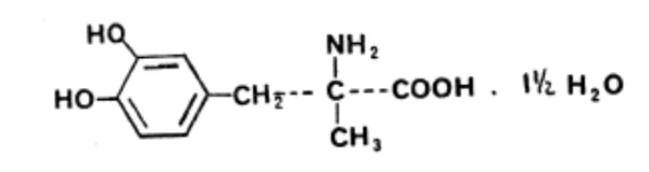
Molecular Formula: C10H13NO4. ½ H2O Molecular Weight: 238.24
Chemical Name: L-3-(3,4-dihydroxyphenyl)-2-methylanine sesguihydrate.
Description: Methyldopa occurs as a white to yellowish white, odourless, almost tasteless powder.
Hydrochlorothiazide:
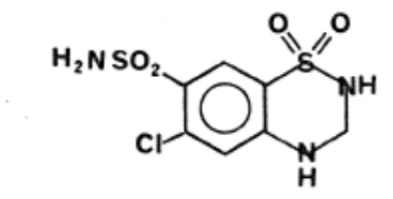
Molecular Formula: C7H8CIN3O4S2 Molecular Weight: 297.72
Chemical Name: 6-Chloro-3,4-dihydro-2H-1,2,4-benzo-thiadiazine-7-sulfonamide 1, 1-dioxide.
Description: Hydrochlorothiazide occurs as a white or almost white, odourless crystalline powder with a slightly bitter taste.
PHARMACOLOGY
Methyldopa:
Methyldopa is a decarboxylase inhibitor which inhibits the decarboxylation of dopa, thereby interfering with the formation of dihydroxypenethylamine (dopamine), a precursor of norepinephrine. The formation of serotonin from 5-hydroxytryptophane is also inhibited by methyldopa.
Methyldopa has been shown to influence the balance of physiologically important amines in various tissues. It causes a net reduction in the tissue concentration of serotonin, norepinephrine and epinephrine which varies from tissue to tissue. The reduction in the norepinephrine content of tissues is apparently related to formation of alpha-methylnorepinephrine, a metabolite of methyldopa, which displaces norepinephrine from adrenergic neurons.
Alpha-methylnorepinephrine by becoming a false transmitter may be involved in the antihypertensive action. The effect of methyldopa on adrenergic amines is reversible.
Methyldopa is structurally similar to the naturally occurring amino-acid precursors of the amines that are responsible for the adrenergic mediation of autonomic nerve impulses.
Absorption, Distribution and Excretion:
Approximately 50% of an orally administered methyldopa is absorbed. It appears rapidly in the urine, predominantly as the unchanged compound and its conjugates. Both the total quantity absorbed and the distribution of metabolites in the urine can vary considerably in different individuals and in the same patient from day to day.
Hydrochlorothiazide:
Hydrochlorothiazide is a diuretic and antihypertensive agent. It inhibits the reabsorption of sodium and chloride, in the distal segment and causes a simultaneous, usually minimal loss of bicarbonate. Hydrochlorothiazide decreases the renal excretion of calcium, presumably by a direct action on renal transport. Magnesium excretion is increased.
Absorption, Distribution and Excretion:
Absorption of hydrochlorothiazide from the gastrointestinal tract is relatively rapid since a demonstrable diuretic effect is seen within one hour and reaches a peak effect in approximately 4 hours. Its action persists for about 6-12 hours. Hydrochlorothiazide is eliminated rapidly by the kidney.
TOXICOLOGY
Methyldopa:
In a reported rat oral toxicity study of six weeks duration methyldopa was administered at doses of 1000, 2000 and 3000 mg/kg respectively. There was dose related sedation which decreased as the study progressed. Slight retardation of growth was observed at top dose, especially in the males.
In a reported rat oral toxicity study of 38 weeks duration methyldopa was administered at doses of 200, 600 and 1800 mg/kg. Flaccidity, ocular and nasal porphyrine discharge, polyuria, abdominal distention were observed. Slight loss of body weight was observed at higher doses, with males being more suscepable. On gross pathologic examination, black granular pigment was observed in the kidneys (unilateral) of many rats receiving the highest dose.
A dog toxicity study of 26 weeks duration, methyldopa 150, 450 and 1350 mg/kg was administered in gelatin capsules. Soft stools and lacrimation, were observed at all doses. Rarely emesis was also observed.
Results of published reproductive and teratogenicity studies including three generation study in mice, two litter study in rats and teratogenicity studies in rabbits did not reveal significant adverse effects.
Hydrochlorothiazide:
The reported results of 6-month chronic oral toxicity studies in rats receiving hydrochlorothiazide up to 2 gm/kg/day, and in dogs receiving up to 250 mg/kg/day, showed no toxicity attributable to drug administration.
Reproductive studies in mice and rats and teratology study in rabbits showed no effects attributed to drug administration.
Combination of Methyldopa and Hydrochlorothiazide:
Rats were administered methyldopa up to 1000 mg/kg/day plus hydrochlorothiazide 100 mg/kg/day; and dogs methyldopa up to 1000 mg/kg/day plus hydrochlorothiazide 200 mg/kg/day for four weeks. Sedation occurred in rats and diarrhea in dogs. This study revealed no clinically significant histopathological changes.
BIBLIOGRAPHY
- 1. Agenuw, T.M.; Irvine, R.O.H.; and North, J.D.K.: Methyldopa and Hydrochlorothiazide compared with Reserpine and Hydrochlorothiazide in Hypertension. British Medical Journal 2, p. 781, Sept. 28, 1963.
- 2.
Amery, A.; Bulpitt, C.; De Schaepdryver, A.; and Fagard, R., et al.: Glucose Intolerance
During Diuretic Therapy. Results of Trial by the European Working Party on Hypertension in the Elderly. The Lancet, p. 681-683, April 1, 1978.
- 3.
Beyer, K.H., Jr.: The basis for Modern Diuretic Therapy. Clinical Therapeutics, Vol. 1, No.
6, p. 425-443, 1978.
- 4.
Brest, A.N. and Moyer, J.H.: Decarboxylase inhibitors in the treatment of hypertension.
Am. J. Cardiel., 9, 116, Jan. 1962.
- 5.
Johnson, P.; Kitchin, A.H.; Lowther, C.P.; and Turner, R.W.D.: Treatment of
hypertension with methyldopa. British Medical Journal 1, p. 133; Jan. 15, 1966.
- 6. Kakaviatos, N.; Chupkovich, V.; and Finnerty, F.A.: Comparison of alpha-methyldopa with standard anti- hypertensive therapy in man. Am. J. Cardiol., 13, 489, April 1964.
- 7. Lake, R.C.; Ziegler, M.G.; Coleman, M.D.; and Kopin, I.J.: Hydrochlorothiazide-induced sympathetic hyperactivity in hypertensive patients. Clin.Pharmacol. Ther., Vol. 26, No. 4, October 1979.
- 8.
Mohamadi, M.; Bivins, L.; and Becker, K.: Effect of Thiazides on Serum Calcium. Clin.
Pharmacol. Ther., Vol. 26 (3), 390-394, Sept. 1979.
- 9.
Peck, H.M.; Mattis, P.A.; and Zawoiski, E.J.: Evaluation of Drugs for their Effects on
Reproduction and Fetal Development. Excerpta Med. Int. Congr. Ser. 85, 19-29, 1965.