


Product Monograph - Apo-Naproxen / Esomeprazole
RECENT MAJOR LABEL CHANGES
- None at time of the most recent authorization
TABLE OF CONTENTS
Sections or subsections that are not applicable at the time of authorization are not listed.
RECENT MAJOR LABEL CHANGES ....................................................................................... 2
TABLE OF CONTENTS ............................................................................................................. 2
PART I: HEALTH PROFESSIONAL INFORMATION ............................................................... 4
1 INDICATIONS ..................................................................................................................... 4
1.1 Pediatrics .................................................................................................................. 4
1.2 Geriatrics ................................................................................................................... 4
2 CONTRAINDICATIONS ..................................................................................................... 4
3 SERIOUS WARNINGS AND PRECAUTIONS BOX .......................................................... 5
4 DOSAGE AND ADMINISTRATION .................................................................................... 6
4.1 Dosing Considerations ............................................................................................. 6
4.2 Recommended Dose and Dosage Adjustment ........................................................ 6
4.4 Administration ........................................................................................................... 7
4.5 Missed Dose ............................................................................................................. 7
5 OVERDOSAGE .................................................................................................................. 7
6 DOSAGE FORMS, STRENGTHS, COMPOSITION AND PACKAGING ........................... 8
7 WARNINGS AND PRECAUTIONS .................................................................................... 8
7.1 Special Populations ................................................................................................ 17
7.1.1 Pregnant Women .................................................................................................... 17
7.1.2 Breast-feeding ......................................................................................................... 18
7.1.3 Pediatrics ................................................................................................................ 18
7.1.4 Geriatrics ................................................................................................................. 18
8 ADVERSE REACTIONS ................................................................................................... 19
8.1 Adverse Reaction Overview ................................................................................... 19
8.2 Clinical Trial Adverse Reactions ............................................................................. 19
8.5 Post-Market Adverse Reactions ............................................................................. 22
9 DRUG INTERACTIONS .................................................................................................... 24
9.2 Drug Interactions Overview .................................................................................... 24
9.3 Drug-Behavioural Interactions ................................................................................. 24
9.4 Drug-Drug Interactions ............................................................................................ 24
9.5 Drug-Food Interactions ........................................................................................... 28
9.6 Drug-Herb Interactions ............................................................................................ 28
9.7 Drug-Laboratory Test Interactions .......................................................................... 28
10 CLINICAL PHARMACOLOGY ......................................................................................... 28
10.1 Mechanism of Action ............................................................................................... 28
10.2 Pharmacodynamics ................................................................................................. 29
10.3 Pharmacokinetics .................................................................................................... 30
11 STORAGE, STABILITY AND DISPOSAL ........................................................................ 33
12 SPECIAL HANDLING INSTRUCTIONS ........................................................................... 33
PART II: SCIENTIFIC INFORMATION .................................................................................... 34
13 PHARMACEUTICAL INFORMATION .............................................................................. 34
14 CLINICAL TRIALS ........................................................................................................... 35
14.1 Clinical Trials By Indication ..................................................................................... 35
Treatment of Osteoarthritis (OA), Rheumatoid Arthritis (RA) and Ankylosing Spondylitis (AS) and Decreasing Risk of Gastric Ulcers in Patients at Risk of Developing NSAID- associated Gastric Ulcers .................................................................................................. 35
14.2 Comparative Bioavailability Studies ........................................................................ 41
16 NON-CLINICAL TOXICOLOGY ....................................................................................... 44
17 SUPPORTING PRODUCT MONOGRAPHS .................................................................... 47
PATIENT MEDICATION INFORMATION ................................................................................ 48
PART I: HEALTH PROFESSIONAL INFORMATION
1 INDICATIONS
APO-NAPROXEN / ESOMEPRAZOLE (naproxen / esomeprazole modified release tablets) is indicated for the treatment of the signs and symptoms of osteoarthritis (OA), rheumatoid arthritis (RA) and ankylosing spondylitis (AS) and to decrease the risk of developing gastric ulcers in patients at risk for developing non-steroidal anti-inflammatory drug (NSAID)-associated gastric ulcers.
APO-NAPROXEN / ESOMEPRAZOLE is not recommended for initial treatment of acute pain because the absorption of naproxen is delayed (as with other modified release formulations of naproxen).
For patients with an increased risk of developing cardiovascular (CV) and/or gastrointestinal (GI) adverse events, other management strategies that do NOT include the use of NSAIDs should be considered first (see 2 CONTRAINDICATIONS and 7 WARNINGS AND PRECAUTIONS).
Use of APO-NAPROXEN / ESOMEPRAZOLE should be limited to the lowest effective dose for the shortest possible duration of treatment in order to minimize the potential risk for cardiovascular or gastrointestinal ad verse events (see 2 CONTRAINDICATIONS and 7 WARNINGS AND PRECAUTIONS).
APO-NAPROXEN / ESOMEPRAZOLE, as a NSAID, does NOT treat clinical disease or prevent its progression.
APO-NAPROXEN / ESOMEPRAZOLE, as a NSAID, only relieves symptoms and decreases inflammation for as long as the pa
1.1 Pediatrics
Pediatrics (<18 years of age): APO-NAPROXEN / ESOMEPRAZOLE should not be used in children or adolescents under 18 years of age. The safety and efficacy of naproxen / esomeprazole modified release tablets in this population has not been established.
1.2 Geriatrics
Geriatrics (≥ 65 years of age): Evidence from naproxen clinical studies and post market experience suggest that use in the geriatric population is associated with differences in safety (see 7.1.4 Geriatrics).
2 CONTRAINDICATIONS
APO-NAPROXEN / ESOMEPRAZOLE (naproxen / esomeprazole modified release tablets) is contraindicated in:
- the peri-operative setting of coronary artery bypass graft surgery (CABG). Although naproxen / esomeprazole modified release tablets has NOT been studied in this patient population, a selective COX-2 inhibitor NSAID studied in such a setting has led to an increased incidence of cardiovascular/thromboembolic events, deep surgical infections and sternal wound complications
- the third trimester of pregnancy, because of risk of premature closure of the ductus arteriosus and prolonged parturition
women who are breastfeeding, because of the potential for serious adverse
- reactions in nursing infants
- patients with severe uncontrolled heart failure
- patients with known hypersensitivity to naproxen, esomeprazole, substituted benzimidazoles or to any of the components/excipients (see 6 DOSAGE FORMS, STRENGTHS, COMPOSITION AND PACKAGING )
- patients with history of asthma, urticaria, or allergic-type reactions after taking acetylsalicylic acid (ASA) or other NSAIDs (i.e. complete or partial syndrome of ASA-intolerance - rhinosinusitis, urticaria/angioedema, nasal polyps, asthma). Fatal anaphylactoid reactions have occurred in such individuals. Individuals with the above medical problems are at risk of a severe reaction even if they have taken NSAIDs in the past without any adverse reaction. The potential for cross-reactivity between different NSAIDs must be kept in mind (see Anaphylactoid Reactions)
- patients with active gastric/duodenal/peptic ulcer, active GI bleeding
- patients with cerebrovascular bleeding or other bleeding disorders
- patients with inflammatory bowel disease
- patients with severe liver impairment or active liver disease
- patients with severe renal impairment (creatinine clearance <30 mL/min or 0.5 mL/sec) or deteriorating renal disease (individuals with lesser degrees of renal impairment are at risk of deterioration of their renal function when prescribed NSAIDs and must be monitored) (see Renal)
- patients with known hyperkalemia (see Fluid and Electrolyte Balance)
- children and adolescents less than 18 years of age
- co-administration with rilpivirine is contraindicated
3 SERIOUS WARNINGS AND PRECAUTIONS BOX
Serious Warnings and Precautions
Risk of Cardiovascular (CV) Adverse Events: Ischemic Heart Disease, Cerebrovascular Disease, Congestive Heart Failure (NYHA II-IV) (See Cardiovascular). Naproxen is a non-steroidal anti-inflammatory drug (NSAID). Use of some NSAIDs is associated with an increased incidence of serious cardiovascular adverse events (such as myocardial infarction, stroke or thrombotic events) which can be fatal. This risk may occur as early as the first weeks of treatment. The increase in CV thrombotic risk has been observed most consistently at higher doses. The risk may increase with duration of use. Patients with cardiovascular disease or risk factors for cardiovascular disease may be at greater risk. Caution should be exercised in prescribing NSAIDs such as naproxen, which is a component of APO-NAPROXEN / ESOMEPRAZOLE (naproxen / esomeprazole modified release tablets), to any patient with established cardiovascular disease (e.g., uncontrolled hypertension, peripheral arterial disease, ischemic heart disease (including but NOT limited to acute myocardial infarction, history of myocardial infarction and/or angina), cerebrovascular disease (including but NOT limited to stroke; cerebrovascular accident, transient ischemic attacks and/or amaurosis fugax) and/or congestive heart failure (NYHA II- IV)), and those with risk factors for cardiovascular events (e.g. hypertension, hyperlipidemia, diabetes mellitus, and smoking. Use of NSAIDs such as naproxen, which is a component of APO-NAPROXEN / ESOMEPRAZOLE, can promote sodium retention in a dose-dependent manner, through a renal mechanism, which can result in increased blood pressure and/or exacerbation of congestive heart failure (see Fluid and Electrolyte Balance). Randomized clinical trials with naproxen / esomeprazole modified release tablets have not been designed to detect differences in cardiovascular events in a chronic setting. Therefore, caution should be exercised when prescribing APO-NAPROXEN / ESOMEPRAZOLE. Risk of Gastrointestinal (GI) Adverse Events (see Gastrointestinal and 14 CLINICAL TRIALS). Use of NSAIDs such as naproxen, which is a component of APO-NAPROXEN / ESOMEPRAZOLE, is associated with an increased incidence of gastrointestinal adverse events (such as ulceration, bleeding, perforation and obstruction of the upper and lower gastrointestinal tract). Risk in Pregnancy: Caution should be exercised in prescribing NSAIDs such as naproxen, which is a component of APO-NAPROXEN / ESOMEPRAZOLE, during the first and second trimesters of pregnancy. Use of NSAIDs at approximately 20 weeks of gestation or later may cause fetal renal dysfunction leading to oligohydramnios and neonatal renal impairment or failure (see 7 WARNINGS AND PRECAUTIONS). APO-NAPROXEN / ESOMEPRAZOLE is contraindicated for use during the third trimester because of risk of premature closure of the ductus arteriosus and uterine inertia (prolonged parturition) (see 2 CONTRAINDICATIONS). |
|---|
4 DOSAGE AND ADMINISTRATION
4.1 Dosing Considerations
Use the lowest effective dose for the shortest duration consistent with individual patient treatment goals. APO-NAPROXEN / ESOMEPRAZOLE (naproxen / esomeprazole modified release tablets) does not allow for administration of lower daily doses of naproxen or esomeprazole. If a lower daily dose of either naproxen (i.e. ≤750 mg/day) or immediate-release (IR) esomeprazole (i.e. ≤40 mg/day) is more appropriate, alternate therapy should be considered. Since APO-NAPROXEN / ESOMEPRAZOLE is a combination product, carefully consider the implications of any dosing schedule on both components.
4.2 Recommended Dose and Dosage Adjustment
Osteoarthritis/Rheumatoid Arthritis/Ankylosing Spondylitis
The recommended daily dosage of APO-NAPROXEN / ESOMEPRAZOLE is:
- 375/20 mg (naproxen / esomeprazole modified release tablets) twice a day or
- 500/20 mg (naproxen / esomeprazole modified release tablets) twice a day
Special Populations
Geriatrics: See 7.1.4 Geriatrics.
Pediatrics (<18 years): APO-NAPROXEN / ESOMEPRAZOLE is not recommended for use in pediatric patients (see 2 CONTRAINDICATIONS).
Hepatic Insufficiency: APO-NAPROXEN / ESOMEPRAZOLE is not recommended for use in patients with severe hepatic impairment (see 2 CONTRAINDICATIONS and Hepatic/Biliary/Pancreatic).
Renal Insufficiency: APO-NAPROXEN / ESOMEPRAZOLE is not recommended for use in patients with severe renal impairment or deteriorating renal disease (see 2 CONTRAINDICATIONS and Renal).
Genetic Polymorphism: Dosage adjustment based on CYP 2C19 status is not necessary (see Endocrine and Metabolism).
4.4 Administration
APO-NAPROXEN / ESOMEPRAZOLE must be swallowed whole with water, and not split, chewed or crushed. APO-NAPROXEN / ESOMEPRAZOLE should be taken at least 30 minutes before meals.
4.5 Missed Dose
The missed dose should be taken as soon as remembered, and then the regular dosing schedule should be continued. Two doses of APO-NAPROXEN / ESOMEPRAZOLE should not be taken at the same time.
5 OVERDOSAGE
There is no clinical data on overdosage with naproxen / esomeprazole modified release tablets. Any effects of an overdose with APO-NAPROXEN / ESOMEPRAZOLE would be expected to reflect those of the monocomponents of naproxen and esomeprazole, taken separately.
Naproxen:
Significant overdosage may be characterized by drowsiness, dizziness, disorientation, heartburn, indigestion, epigastric pain, abdominal discomfort, nausea, vomiting, transient alterations in liver function, hypoprothrombinemia, renal dysfunction, metabolic acidosis and apnea. A few patients have experienced convulsions, but it is not clear whether or not these were naproxen related.
Gastrointestinal bleeding may occur. Hypertension, acute renal failure, respiratory depression and coma may occur after the ingestion of NSAIDs but are rare.
Anaphylactoid reactions have been repeated with therapeutic ingestion of NSAIDs, and may occur following an overdose.
Patients should be managed by symptomatic and supportive care following NSAIDs overdose. There are no specific antidotes. Prevention of further absorption (e.g. activated charcoal) may be indicated in patients seen within 4 hours of ingestion with symptoms or following a large overdose. Forced diuresis, alkalinization of urine, hemodialysis, or hemoperfusion may not be useful due to high protein binding.
Esomeprazole:
Limited information is available on the effects of higher doses in man, and specific recommendations for treatment cannot be given. Experience from a patient who deliberately ingested an overdose of EC-esomeprazole (280 mg), demonstrated symptoms that were transient, and included weakness, loose stools and nausea. Single doses of 80 mg EC-esomeprazole have been shown to be uneventful. No specific antidote is known. Esomeprazole is extensively protein-bound and is therefore not readily dialyzable. Treatment should be symptomatic and general supportive measures should be utilized.
| For management of a suspected drug overdose, contact your regional poison control centre. |
|---|
6 DOSAGE FORMS, STRENGTHS, COMPOSITION AND PACKAGING
Table 1 – Dosage Forms, Strengths, Composition
| Route of Administration | Dosage Form / Strength/Composition | Non-medicinal Ingredients |
|---|---|---|
| Oral Use | Modified release tablets / 375 mg enteric-coated naproxen / 20 mg immediate release esomeprazole Modified release tablets / 500 mg enteric-coated naproxen / 20 mg immediate release esomeprazole | Carnauba wax, croscarmellose sodium, glycerol monostearate, hypromellose, iron oxide black, iron oxide yellow, macrogols, magnesium stearate, methacrylic acid-ethyl acrylate copolymer (1:1) dispersion, methyl parahydroxybenzoate, polydextrose, polysorbate, povidone, propylene glycol, propyl parahydroxybenzoate, silica colloidal anhydrous, titanium dioxide and triethyl citrate |
Dosage Forms
APO-NAPROXEN / ESOMEPRAZOLE tablet contains an enteric-coated (EC) naproxen core and immediate-release (IR) esomeprazole film coat. The formulation is designed to release the active ingredients in a sequential fashion: esomeprazole is rapidly released in the stomach followed by the delayed release of naproxen in the small intestine.
APO-NAPROXEN / ESOMEPRAZOLE (naproxen / esomeprazole modified release tablets) 375/20 mg tablets are yellow, oval film coated tablets printed ‘375/20’ in black ink on one side.
APO-NAPROXEN / ESOMEPRAZOLE (naproxen / esomeprazole modified release tablets) 500/20 mg tablets are yellow, oval film coated tablets printed ‘500/20’ in black ink on one side.
Packaging
APO-NAPROXEN / ESOMEPRAZOLE 375/20 mg or 500/20 mg tablets are supplied in high-density polyethylene (HDPE) bottles of 60 tablets. Desiccant is included in the bottle.
7 WARNINGS AND PRECAUTIONS
Please see 3 SERIOUS WARNINGS AND PRECAUTIONS BOX.
General
Frail or debilitated patients may tolerate side effects less well and therefore special care should be taken in treating this population. To minimize the potential risk for an adverse event, the lowest effective dose should be used for the shortest possible duration. As with other NSAIDs, caution should be used in the treatment of elderly patients who are more likely to be suffering from impaired renal, hepatic or cardiac function. For high risk patients, alternate therapies that do not involve NSAIDs should be considered.
APO-NAPROXEN / ESOMEPRAZOLE, which contains naproxen, is NOT recommended for use with other NSAIDs, with the exception of low-dose ASA for cardiovascular prophylaxis, because of the absence of any evidence demonstrating synergistic benefits and the potential for additive adverse reactions (see Acetylsalicylic acid (ASA) or other NSAIDs).
APO-NAPROXEN / ESOMEPRAZOLE should not be used concomitantly with other naproxen containing drugs since they all circulate in plasma as the naproxen anion.
Results from studies in healthy subjects have shown a pharmacokinetic/pharmacodynamic interaction between clopidogrel (300 mg loading dose/75mg daily maintenance dose) and esomeprazole (40 mg once daily) resulting in decreased exposure to the active metabolite of clopidogrel by an average of 40% and resulting in decreased maximum inhibition of (ADP induced) platelet aggregation by an average of 14%. Based on these data, concomitant use of esomeprazole and clopidogrel should be avoided (see 9.4 Drug-Drug Interactions).
Concomitant use of Proton Pump Inhibitors (PPIs) with Methotrexate: Literature suggests that concomitant use of PPIs with methotrexate (primarily at high dose) may elevate and prolong serum levels of methotrexate and/or its metabolite, possibly leading to methotrexate toxicities. A temporary withdrawal of the PPI may be considered in some patients receiving treatments with high dose methotrexate (see 9.4 Drug-Drug Interactions).
In the presence of any alarm symptom (e.g., significant unintentional weight loss, recurrent vomiting, dysphagia, hematemesis or melena), and/or when gastric ulcer is suspected or present, malignancy should be excluded, as treatment may alleviate symptoms and delay diagnosis.
Concomitant use with Antiretroviral Drugs: PPIs have been reported to interact with some antiretroviral drugs. The clinical importance and the mechanisms behind these interactions are not always known. A change in gastric pH may change the absorption of the antiretroviral drug. Other possible mechanisms are via CYP 2C19.
- Rilpivirine: Co-administration is contraindicated due to significant decrease in rilpivirine exposure and loss of therapeutic effect (see 2 CONTRAINDICATIONS and 9.4 Drug-Drug Interactions).
Atazanavir and Nelfinavir: Co-administration with atazanavir or nelfinavir is not recommended due to decreased atazanavir and nelfinavir exposure (see 9.4 Drug-Drug Interactions) (see the REYATAZ AND VIRACEPT Product Monographs).
If the combination of APO-NAPROXEN / ESOMEPRAZOLE with atazanavir is judged unavoidable, close clinical monitoring is recommended in combination with the use of 400 mg atazanavir/100 mg ritonavir dose (see REYATAZ Product Monograph).
- Saquinavir: If APO-NAPROXEN / ESOMEPRAZOLE is co-administered with saquinavir/ritonavir, caution and monitoring for potential saquinavir toxicities, including gastrointestinal symptoms, increased triglycerides, deep vein thrombosis and QT prolongation are recommended. Dose reduction of saquinavir should be considered from the safety perspective for individual patients (see 9.4 Drug-Drug Interactions) (see INVIRASE Product Monograph).
Infection
Naproxen, a component of APO-NAPROXEN / ESOMEPRAZOLE, as with other NSAIDs, may mask signs and symptoms of an underlying infectious disease.
Antibiotic Combination Therapy: Pseudomembranous colitis has been reported with nearly all antibacterial agents, including clarithromycin and amoxicillin, which are used together with PPIs for the treatment of H. pylori, and may range in severity from mild to life threatening.Therefore, it is important to consider this diagnosis in patients who present with diarrhea subsequent to the administration of antibacterial agents.
Treatment with antibacterial agents alters the normal flora of the colon and may permit overgrowth of Clostridia. Studies indicate that a toxin produced by Clostridium difficile is a primary cause of “antibiotic-associated colitis”.
After the diagnosis of pseudomembranous colitis has been established, therapeutic measures should be initiated. Mild cases of pseudomembranous colitis usually respond to discontinuation of the drug alone. In moderate to severe cases, consideration should be given to management with fluids and electrolytes, protein supplementation, and treatment with an antibacterial drug clinically effective against Clostridium difficile colitis.
Clostridium difficile Associated Diarrhea: Decreased gastric acidity due to any means, including any proton pump inhibitors, increases gastric counts of bacteria normally present in the gastrointestinal tract. Treatment with proton pump inhibitors can lead to an increased risk of gastrointestinal infections such as Salmonella, Campylobacter and Clostridium difficile.
An increased risk for Clostridium difficile infection (CDI) and Clostridium difficile associated diarrhea (CDAD) has been observed in association with PPI use in several observational studies. CDI/CDAD should be considered in the differential diagnosis for diarrhea that does not improve. Additional risk factors for CDI and CDAD include recent hospitalization, the use of antibiotics, old age and the presence of comorbidities.
Patients should be prescribed PPIs at the lowest dose and for the shortest duration required for the condition being treated and be reassessed to ascertain whether continued PPI therapy remains beneficial.
Carcinogenesis and Mutagenesis
There is no evidence from animal data that either naproxen or esomeprazole are carcinogenetic or mutagenic. In the long-term repeat-dose/carcinogenicity studies with omeprazole, gastric enterochromaffin-like (ECL) cell carcinoids were noted in the rat, but not the mouse or dog. It has been demonstrated that this is a result of an indirect mode of action, rather than being a direct effect of omeprazole on the ECL-cells; prolonged acid suppression leads to prolonged hypergastrinemia, provoking ECL cell hyperplasia, which eventually progresses into ECL cell carcinoids (see 16 NON-CLINICAL TOXICOLOGY).
Treatment with esomeprazole for up to 1 year in more than 800 patients resulted in moderate increases in serum gastrin levels. However, no significant pathological changes in the gastric oxyntic endocrine cells were observed.
Short-term treatment and long-term treatment with the racemate, omeprazole, capsules in a limited number of patients for up to 11 years have not resulted in any significant pathological changes in gastric oxyntic endocrine cells.
Cardiovascular
Naproxen is a non–steroidal anti-inflammatory drug (NSAID). Use of some NSAIDs is associated with an increased incidence of serious cardiovascular adverse events (such as myocardial infarction, stroke or thrombotic events) which can be fatal. This risk may occur as early as the first weeks of treatment. The increase in CV thrombotic risk has been observed most consistently at higher doses. The risk may increase with the duration of use. Patients with cardiovascular disease or risk factors for cardiovascular disease may be at greater risk.
Caution should be exercised in prescribing APO-NAPROXEN / ESOMEPRAZOLE, which contains naproxen, to patients with established cardiovascular disease (e.g. uncontrolled hypertension, congestive heart failure, ischemic heart disease, peripheral arterial disease, and/or cerebrovascular disease) or with risk factors for cardiovascular disease, cerebrovascular disease or renal disease, such as any of the following (NOT an exhaustive list):
- Hypertension
- Dyslipidemia/Hyperlipidemia
- Diabetes Mellitus
- Congestive Heart Failure (NYHA I)
- Coronary Artery Disease (Atherosclerosis)
- Peripheral Arterial Disease
- Smoking
- Creatinine Clearance < 60 mL/min or 1 mL/sec
Use of NSAIDs such as naproxen, which is a component of APO-NAPROXEN / ESOMEPRAZOLE, can lead to new hypertension or can worsen pre-existing hypertension, either of which may increase the risk of cardiovascular events as described above. Thus blood pressure should be monitored regularly. Consideration should be given to discontinuing APO-NAPROXEN / ESOMEPRAZOLE, should hypertension either develop or worsen with its use.
Use of NSAIDs such as naproxen, which is a component of APO-NAPROXEN / ESOMEPRAZOLE, can induce fluid retention and edema, and may exacerbate congestive heart failure, through a renally-mediated mechanism (see Fluid and Electrolyte Balance).
For patients with a high risk of developing an adverse CV event, other management strategies that do NOT include the use of NSAIDs should be considered first. To minimize the potential risk for an adverse CV event, the lowest effective dose should be used for the shortest possible duration.
Endocrine and Metabolism
Corticosteroids: APO-NAPROXEN / ESOMEPRAZOLE is NOT a substitute for corticosteroids. It does NOT treat corticosteroid insufficiency. Abrupt discontinuation of corticosteroids may lead to exacerbation of corticosteroid-responsive illness. Patients on prolonged corticosteroid therapy should have their therapy tapered slowly if a decision is made to discontinue corticosteroids (see Glucocorticoids).
Hypomagnesemia, Hypokalemia and Hypocalcemia: The chronic use of PPIs may lead to hypomagnesemia. Moreover, hypokalemia and hypocalcemia have been reported in the literature as accompanying electrolyte disorders.
Cyanocobalamin (Vitamin B12) Deficiency: The prolonged use of PPIs, may impair the absorption of protein-bound Vitamin B12 and may contribute to the development of cyanocobalamin (Vitamin B12) deficiency.
Genetic Polymorphism: The CYP 2C19 and CYP 3A4 isozymes are responsible for metabolism of esomeprazole. The CYP 2C19 isozyme, which is involved in the metabolism of all available proton pump inhibitors, exhibits polymorphism. Some 3% of Caucasians and 15 - 20% of Asians lack CYP 2C19 and are termed “poor metabolizers”. At EC-esomeprazole steady state (40 mg for 5 days), the ratio of AUC in poor metabolizers to AUC in the rest of the population is approximately 2. Dosage adjustment of APO-NAPROXEN / ESOMEPRAZOLE based on CYP 2C19 status is not necessary (see 4.2 Recommended Dose and Dosage Adjustment and Special Populations and Conditions).
Gastrointestinal
Serious GI toxicity (sometimes fatal), such as ulceration, inflammation, GI bleeding, perforation and obstruction of the upper and lower gastrointestinal tract, can occur at any time, with or without warning symptoms, in patients treated with NSAIDs such as naproxen, which is a component of APO-NAPROXEN / ESOMEPRAZOLE. While naproxen / esomeprazole modified release tablets has been shown to significantly decrease the occurrence of gastric ulcers compared to EC-naproxen alone, ulceration and associated complications can still occur. Minor upper GI problems, such as dyspepsia, commonly occur at any time. Health care providers should remain alert for ulceration and bleeding in patients treated with naproxen / esomeprazole modified release tablets, even in the absence of previous GI tract symptoms. Most spontaneous reports of fatal GI events are in elderly or debilitated patients and therefore special care should be taken in treating this population. To minimize the potential risk for an adverse GI event, the lowest effective dose should be used for the shortest possible duration. For high risk patients, alternate therapies that do not involve NSAIDs should be considered (see 7.1.4 Geriatrics).
Patients should be informed about the signs and/or symptoms of serious GI toxicity and instructed to discontinue using APO-NAPROXEN / ESOMEPRAZOLE and seek emergency medical attention if they experience any such symptoms. The utility of periodic laboratory has NOT been demonstrated, nor has it been adequately assessed. Most patients who develop a serious upper GI adverse event on NSAID therapy have no symptoms. Upper GI ulcers, gross bleeding or perforation, caused by NSAIDs, appear to occur in approximately 1% of patients treated for 3-6 months, and in about 2-4% of patients treated for one year. These trends continue, thus increasing the likelihood of developing a serious GI event at some time during the course of therapy. Even short-term therapy has its risks.
Caution should be taken if prescribing APO-NAPROXEN / ESOMEPRAZOLE to patients with a history of ulcer disease or gastrointestinal bleeding. If GI bleeding or ulceration occurs, APO-NAPROXEN / ESOMEPRAZOLE should be discontinued immediately and appropriate treatment sought.
Other risk factors for GI ulceration and bleeding include the following: Helicobacter pylori infection, increased age, prolonged use of NSAID therapy, excess alcohol intake, smoking, poor general health status or concomitant therapy with any of the following:
- Anti-coagulants (e.g. warfarin)
- Anti-platelet agents (e.g. ASA, clopidogrel)
- Oral corticosteroids (e.g. prednisone)
- Selective Serotonin Reuptake Inhibitors (SSRIs) (e.g. citalopram, fluoxetine, paroxetine, sertraline)
In studies comprising patients who were older than 50 years of age and/or had a prior history of peptic ulcer, naproxen / esomeprazole modified release tablets was shown to significantly lower gastric ulcer rates compared to EC-naproxen, regardless of concomitant therapy with low-dose ASA (see 14 CLINICAL TRIALS).
Gastrointestinal symptomatic response to therapy with naproxen / esomeprazole modified release tablets does not preclude the presence of gastric malignancy.
Withdrawal of long-term PPI therapy can lead to aggravation of acid related symptoms and may result in rebound acid hypersecretion. Long-term use of naproxen / esomeprazole is associated with an increased risk of fundic gland polyps especially beyond one year (see 8.5 Post-Market Adverse Reactions). Most fundic gland polyps are asymptomatic. Use the lowest dose and shortest duration of PPI therapy appropriate to the condition being treated.
Genitourinary
Some NSAIDs are associated with persistent urinary symptoms (bladder pain, dysuria, urinary frequency), hematuria or cystitis. The onset of these symptoms may occur at any time after the initiation of therapy with a NSAID. Should urinary symptoms occur, in the absence of an alternate explanation, treatment with APO-NAPROXEN / ESOMEPRAZOLE should be stopped to ascertain if symptoms disappear. This should be done before urological investigations or treatments are carried out.
Hematologic
NSAIDs inhibiting prostaglandin biosynthesis interfere with platelet function to varying degrees; patients who may be adversely affected by such an action, such as those on anti-coagulants or suffering from hemophilia or platelet disorders should be carefully observed when APO-NAPROXEN / ESOMEPRAZOLE is administered.
Anti-coagulants: Numerous studies have shown that the concomitant use of NSAIDs and anti- coagulants increases the risk of bleeding. Concurrent therapy of APO-NAPROXEN / ESOMEPRAZOLE, which contains the NSAID naproxen, with warfarin requires close monitoring of the international normalized ratio (INR).
Even with therapeutic INR monitoring, increased bleeding may occur.
Anti-platelet Effects: NSAIDs inhibit platelet aggregation and have been shown to prolong bleeding time in some patients. Unlike ASA, their effect on platelet function is quantitatively less, or of shorter duration, and is reversible.
NSAIDs have no proven efficacy as anti-platelet agents and should NOT be used as a substitute for ASA or other anti-platelet agents for prophylaxis of cardiovascular thromboembolic diseases. Anti-platelet therapies (e.g. ASA) should NOT be discontinued (see Acetylsalicylic acid (ASA) or other NSAIDs).
Blood dyscrasias: Blood dyscrasias (such as neutropenia, leukopenia, thrombocytopenia, aplastic anemia and agranulocytosis) associated with the use of NSAIDs are rare, but could occur with severe consequences.
Anemia is sometimes seen in patients receiving NSAIDs. This may be due to fluid retention, GI blood loss, or an incompletely described effect upon erythropoiesis. Patients on long -term treatment with NSAIDs, should have their hemoglobin or hematocrit checked if they exhibit any signs or symptoms of anemia or blood loss.
Hepatic/Biliary/Pancreatic
With NSAIDs, borderline elevations of one or more liver enzyme tests (AST, ALT, alkaline phosphatase) may occur in up to 15% of patients. These abnormalities may progress, may remain essentially unchanged, or may be transient with continued therapy.
Chronic alcoholic liver disease and probably other forms of cirrhosis reduce the total plasma concentration of naproxen, but the plasma concentration of unbound naproxen is increased. The implication of this finding for naproxen dosing is unknown, but caution is advised when high doses are required. It is prudent to use the lowest effective dose.
A patient with symptoms and/or signs suggesting liver dysfunction, or in whom an abnormal liver function test has occurred, should be evaluated for evidence of the development of a more severe hepatic reaction while on therapy with this drug. Severe hepatic reactions including jaundice and cases of fatal hepatitis, liver necrosis and hepatic failure, some of them with fatal outcomes, have been reported with NSAIDs.
Although such reactions are rare, if abnormal liver tests persist or worsen, if clinical signs and symptoms consistent with liver disease develop (e.g. jaundice), or if systemic manifestations occur (e.g. eosinophilia, associated with rash, etc.), this drug should be discontinued.
If there is a need to prescribe this drug in the presence of impaired liver function, it must be done under strict observation.
Hepatic Insufficiency: APO-NAPROXEN / ESOMEPRAZOLE is not recommended for use in patients with severe hepatic impairment due to increased risk of NSAID associated bleeding and/or renal failure (see 2 CONTRAINDICATIONS).
In patients with mild to moderate hepatic impairment APO-NAPROXEN / ESOMEPRAZOLE should be used with caution and hepatic function closely monitored.
Immune
Aseptic Meningitis: Rarely, with some NSAIDs, the symptoms of aseptic meningitis (stiff neck, severe headaches, nausea and vomiting, fever or clouding of consciousness) have been observed. Patients with autoimmune disorders (systemic lupus erythematosus, mixed connective tissue diseases, etc.) seem to be pre-disposed. Therefore, in such patients, the health care provider must be vigilant to the development of this complication.
Subacute cutaneous lupus erythematosus: Subacute cutaneous lupus erythematosus (SCLE) has been reported with the use of PPIs. If lesions occur, especially in sun-exposed areas of the skin, and if accompanied by arthralgia, the patient should seek medical help promptly and the health care professional should consider stopping APO-NAPROXEN / ESOMEPRAZOLE. The occurrence of SCLE with previous PPI treatment may increase the risk of SCLE with other PPIs (see 8.5 Post-Market Adverse Reactions).
Monitoring and Laboratory Tests
During treatment with antisecretory drugs, chromogranin A (CgA) increases due to decreased gastric acidity. Increased CgA levels may interfere with investigations for neuroendocrine tumours. To avoid this interference, APO-NAPROXEN / ESOMEPRAZOLE treatment should be stopped 14 days before CgA measurements (see 9.7 Drug-Laboratory Test Interactions).
Patients on long-term treatment with APO-NAPROXEN / ESOMEPRAZOLE should have their blood pressure monitored regularly and an ophthalmic examination should be carried out at periodic intervals (see Cardiovascular and Ophthalmologic).
Hemoglobin, hematocrit, red blood cells (RBCs), white blood cells (WBCs), and platelets should be checked in patients on long-term treatment with APO-NAPROXEN / ESOMEPRAZOLE. Additionally, concurrent therapy with warfarin requires close monitoring of the international normalized ratio (INR) (see Hematologic).
Serum transaminase and bilirubin should be monitored regularly during APO-NAPROXEN / ESOMEPRAZOLE therapy (see Hepatic/Biliary/Pancreatic).
Serum creatinine, creatinine clearance and serum urea should be checked in patients during APO-NAPROXEN / ESOMEPRAZOLE therapy. Electrolytes including serum potassium should be monitored periodically (see Renal).
Monitoring of plasma lithium concentration is recommended when stopping or starting APO-NAPROXEN / ESOMEPRAZOLE therapy.
Pregnancy: If APO-NAPROXEN / ESOMEPRAZOLE is administered in the middle (approximately 20 weeks) to the end of the second trimester, it is recommended that pregnant women on APO-NAPROXEN / ESOMEPRAZOLE be closely monitored for amniotic fluid volume since naproxen / esomeprazole modified release tablets may result in reduction of amniotic fluid volume and even oligohydramnios (see 7.1 Special Populations). APO-NAPROXEN / ESOMEPRAZOLE is contraindicated for use in the third trimester of pregnancy.
Musculoskeletal
Bone Fracture: Several published observational studies suggest that proton pump inhibitor (PPI) therapy may be associated with an increased risk for osteoporosis-related fractures of the hip, wrist, or spine. The risk of fracture was increased in patients who received high-dose, defined as multiple daily doses, and long-term PPI therapy (a year or longer). Patients should use the lowest dose and shortest duration of PPI therapy appropriate to the condition being treated. Patients at risk for osteoporosis-related fractures should be managed according to established treatment guidelines (see 4 DOSAGE AND ADMINISTRATION and 8.5 Post-Market Adverse Reactions).
APO-NAPROXEN / ESOMEPRAZOLE (a combination PPI/NSAID) is approved for use twice a day and does not allow for administration of a lower daily dose of the PPI (see 4 DOSAGE AND ADMINISTRATION).
Neurologic
Some patients may experience drowsiness, dizziness, blurred vision, vertigo, tinnitus, hearing loss or insomnia with the use of NSAIDs, such as naproxen, a component of APO-NAPROXEN / ESOMEPRAZOLE. If patients experience such adverse reaction(s), they should exercise caution in carrying out activities that require alertness.
Ophthalmologic
Blurred and/or diminished vision has been reported with the use of NSAIDs. If such symptoms develop, APO-NAPROXEN / ESOMEPRAZOLE, which contains naproxen, should be discontinued and an ophthalmologic examination performed. Ophthalmologic examination should be carried out at periodic intervals in any patient receiving APO-NAPROXEN / ESOMEPRAZOLE for an extended period of time.
Peri-Operative Considerations
See 2 CONTRAINDICATIONS, Coronary Artery Bypass Graft Surgery.
Psychiatric
Some patients may experience depression with the use of NSAIDs, such as naproxen, a component of APO-NAPROXEN / ESOMEPRAZOLE. See Neurologic.
Renal
Long term administration of NSAIDs to animals has resulted in renal papillary necrosis and other abnormal renal pathology. In humans, there have been reports of acute interstitial nephritis, hematuria, low grade proteinuria and occasionally nephrotic syndrome.
Renal insufficiency due to NSAID use is seen in patients with pre-renal conditions leading to reduction in renal blood flow or blood volume. Under these circumstances, renal prostaglandins help maintain renal perfusion and glomerular filtration rate (GFR). In these patients, administration of a NSAID may cause a reduction in prostaglandin synthesis leading to impaired renal function. Patients at greatest risk of this reaction are those with pre-existing renal insufficiency (GFR <60 mL/min or 1 mL/s), dehydrated patients, patients on salt restricted diets, those with congestive heart failure, cirrhosis, liver dysfunction, taking angiotensin-converting enzyme inhibitors, angiotensin receptor blockers, cyclosporin, diuretics, and those who are elderly. Serious or life-threatening renal failure has been reported in patients with normal or impaired renal function after short term therapy with
NSAIDs. Even patients at risk who demonstrate the ability to tolerate a NSAID under stable conditions may decompensate during periods of added stress (e.g. dehydration due to gastroenteritis). Discontinuation of NSAIDs is usually followed by recovery to the pre-treatment state.
Caution should be used when initiating treatment with NSAIDs, such as naproxen, a component of APO-NAPROXEN / ESOMEPRAZOLE, in patients with considerable dehydration. Such patients should be rehydrated prior to initiation of therapy. Caution is also recommended in patients with pre-existing kidney disease.
Advanced Renal Disease: See 2 CONTRAINDICATIONS.
Fluid and Electrolyte Balance: Use of NSAIDs such as naproxen, a component of APO-NAPROXEN / ESOMEPRAZOLE, can promote sodium retention in a dose-dependent manner, which can lead to fluid retention and edema, and consequences of increased blood pressure and exacerbation of congestive heart failure. Thus, caution should be exercised in prescribing APO-NAPROXEN / ESOMEPRAZOLE in patients with a history of congestive heart failure, compromised cardiac function, hypertension, increased age or other conditions predisposing to fluid retention (see Cardiovascular).
Use of NSAIDs such as naproxen, a component of APO-NAPROXEN / ESOMEPRAZOLE, can increase the risk of hyperkalemia, especially in patients with diabetes mellitus, renal failure, increased age, or those receiving concomitant therapy with adrenergic blockers, angiotensin -converting enzyme inhibitors, angiotensin-II receptor antagonists, cyclosporin, or some diuretics.
Electrolytes should be monitored periodically (see 2 CONTRAINDICATIONS).
Renal Insufficiency: APO-NAPROXEN / ESOMEPRAZOLE is not recommended for use in patients with severe renal impairment or deteriorating renal disease (see 2 CONTRAINDICATIONS).
In patients with mild to moderate renal impairment APO-NAPROXEN / ESOMEPRAZOLE should be used with caution and renal function closely monitored.
Reproductive Health: Female and Male Potential
See 7.1.1 Pregnant Women.
Fertility
Naproxen, as with any drug known to inhibit cyclooxygenase/prostaglandin synthesis, may impair fertility. Animal and clinical studies indicate that NSAIDs like naproxen can suppress ovulation. Withdrawal of APO-NAPROXEN / ESOMEPRAZOLE, which contains naproxen, should be considered in women who are attempting to conceive or are undergoing investigation of infertility.
Respiratory
ASA-induced asthma is an uncommon but very important indication of ASA and NSAID sensitivity. It occurs more frequently in patients with asthma who have nasal polyps.
Sensitivity/Resistance
Anaphylactoid Reactions: As with NSAIDs in general, anaphylactoid reactions have occurred in patients without known prior exposure to naproxen, a component of APO-NAPROXEN / ESOMEPRAZOLE. In post - marketing experience, rare cases of anaphylactic/anaphylactoid reactions and angioedema have been reported in patients receiving naproxen. APO-NAPROXEN / ESOMEPRAZOLE, which contains naproxen, should
NOT be given to patients with the ASA-triad. This symptom complex typically occurs in asthmatic patients who experience rhinitis with or without nasal polyps, or who exhibit severe, potentially fatal bronchospasm after taking ASA or other NSAIDs (see 2 CONTRAINDICATIONS).
ASA-Intolerance: APO-NAPROXEN / ESOMEPRAZOLE, which contains naproxen, should NOT be given to patients with complete or partial syndrome of ASA-intolerance (rhinosinusitis, urticaria/angioedema, nasal polyps, asthma) in whom asthma, anaphylaxis, urticaria/angioedema, rhinitis or other allergic manifestations are precipitated by ASA or other NSAIDs. Fatal anaphylactoid reactions have occurred in such individuals. As well, individuals with the above medica l problems are at risk of a severe reaction even if they have taken NSAIDs in the past without any adverse reaction (see 2 CONTRAINDICATIONS).
Cross-sensitivity: Patients sensitive to one NSAID may be sensitive to any of the other NSAIDs as well.
Skin
Serious skin reactions: Use of some NSAIDs, such as naproxen, have been associated with rare post-market cases of serious, fatal, or otherwise life-threatening skin reactions, including:
- drug reaction with eosinophilia and systemic symptoms (DRESS),
- Stevens-Johnson syndrome,
- toxic epidermal necrolysis,
- exfoliative dermatitis, and
- erythema multiforme.
Patients appear to be at higher risk for these events early in the course of therapy, with the onset of cases usually occurring within the first month of treatment. These reactions may be reversible if the causative agent is discontinued and appropriate treatment instituted. Patients should be advised that they should discontinue their NSAID at the first appearance of a skin rash, mucosal lesions, or any other signs of hypersensitivity, and contact their physician immediately for assessment and advice, including which therapies to discontinue.
DRESS typically, although not exclusively, presents with fever, rash, lymphadenopathy, and/or facial swelling. Other clinical manifestations may include hepatitis, nephritis, hematological abnormalities, myocarditis, or myositis. Sometimes symptoms of DRESS may resemble an acute viral infection, and eosinophilia is often present. Because this disorder is variable in its presentation, other organ systems not noted here may be involved. It is important to note that early manifestations of hypersensitivity, such as fever or lymphadenopathy, may be present even though rash is not evident.
7.1 Special Populations
7.1.1 Pregnant Women
APO-NAPROXEN / ESOMEPRAZOLE is CONTRAINDICATED for use during the third trimester of pregnancy because of risk of premature closure of the ductus arteriosus and the potential to prolong parturition (see 16 NON-CLINICAL TOXICOLOGY).
Caution should be exercised in prescribing APO-NAPROXEN / ESOMEPRAZOLE during the first and second trimesters of pregnancy.
Use of NSAIDs may cause fetal renal dysfunction leading to oligohydramnios and, in some cases, neonatal renal impairment.
If APO-NAPROXEN / ESOMEPRAZOLE is used, the dose should be kept low and the duration of treatment as short as possible.
Inhibition of prostaglandin synthesis may adversely affect pregnancy and/or embryo-fetal development. Data from epidemiological studies suggest an increased risk of miscarriage and of cardiac malformation after use of a prostaglandin synthesis inhibitor in early pregnancy.
In animals, administration of a prostaglandin synthesis inhibitor has been shown to result in increased pre- and post-implantation loss and embryo-fetal lethality. In addition, increased incidences of various malformations, including cardiovascular, have been reported in animals given a prostaglandin synthesis inhibitor during the organogenesis period.
APO-NAPROXEN / ESOMEPRAZOLE, which contains naproxen, is not recommended in labour and delivery because naproxen containing products, through their prostaglandin synthesis inhibitory effect, may adversely affect fetal circulation and inhibit uterine contractions, thus increasing the risk of uterine hemorrhage.
7.1.2 Breast-feeding
APO-NAPROXEN / ESOMEPRAZOLE should not be used by women who are breastfeeding because of the potential for serious adverse reactions in nursing infants (see 2 CONTRAINDICATIONS).
7.1.3 Pediatrics
Pediatrics and adolescents (<18 years of age): APO-NAPROXEN / ESOMEPRAZOLE should not be used in children or adolescents under 18 years of age. The safety and efficacy of naproxen / esomeprazole modified release tablets in this population has not been established (see 1.1 Pediatrics and 2 CONTRAINDICATIONS).
7.1.4 Geriatrics
Geriatrics (≥65 years of age): Patients older than 65 years and frail or debilitated patients are more susceptible to a variety of adverse reactions from NSAIDs. The incidence of these adverse reactions increases with dose and duration of treatment. In addition, these patients are less tolerant to ulceration and bleeding. Most reports of fatal GI events are in this population.
Older patients are also at risk of lower esophageal injury including ulceration and bleeding. For such patients, consideration should be given to a starting dose lower than the one usually recommended, with individual adjustment when necessary and under close supervision.
Of the total number of patients who received naproxen / esomeprazole modified release tablets (n=1157) in clinical trials, 387 were ≥65 years of age, of which 85 patients were 75 years and over. No meaningful differences in efficacy (reduction in gastric ulcer rates or pain relief) or safety were observed between these subjects and younger subjects. Elderly patients in the naproxen / esomeprazole modified release tablets group compared with the naproxen group (n=426) were consistently observed to have significantly lower gastric ulcer rates, 1.5% vs 28.5% in patients ≥65 years of age (p<0.001), and 0% vs 19.2% in patients ≥75 years of age (p=0.019). Naproxen / esomeprazole modified release tablets non-inferiority to celecoxib for pain relief was maintained in elderly patients >65 years of age, generally considered to be at greater risk of GI side effects. The incidence of adverse events was generally consistent between age populations (see Gastrointestinal and 14 CLINICAL
TRIALS).
Geriatrics (>71 years of age): Benefits of use of PPIs should be weighed against the increased risk of fractures as patients in this category may already be at high risk for osteoporosis-related fractures. If the use of PPIs is required, they should be managed carefully according to established treatment guidelines (see 4.2 Recommended Dose and Dosage Adjustment and 8 ADVERSE REACTIONS).
8 ADVERSE REACTIONS
8.1 Adverse Reaction Overview
Since APO-NAPROXEN / ESOMEPRAZOLE (naproxen / esomeprazole modified release tablets) contains both naproxen and esomeprazole, the same pattern of undesirable effects reported for these individual substances may occur.
The most common adverse reactions seen with naproxen are gastrointestinal, of which peptic ulcer, with or without bleeding, is the most severe. Fatalities have occurred particularly in the elderly. Other common adverse reactions include dyspepsia, stomach pain, nausea and vomiting.
Common reactions seen with esomeprazole in clinical trials include headache, diarrhea, flatulence, abdominal pain, nausea, vomiting and dizziness, which are thought to be causally related.
The most commonly reported adverse reactions with naproxen / esomeprazole modified release tablets are erosive gastritis, dyspepsia and gastritis. No new safety findings were identified during naproxen / esomeprazole modified release tablets treatment compared to the established safety profile for the individual substances.
8.2 Clinical Trial Adverse Reactions
Clinical trials are conducted under very specific conditions. The adverse reaction rates observed in the clinical trials; therefore, may not reflect the rates observed in practice and should not be compared to the rates in the clinical trials of another drug. Adverse reaction information from clinical trials may be useful in identifying and approximating rates of adverse drug reactions in real-world use.
Adverse event data is provided from controlled studies using naproxen / esomeprazole modified release tablets, involving 2317 patients ranging in duration from 3-12 months. Patients received either 500/20 mg of naproxen / esomeprazole modified release tablets twice daily (n=1157), 500 mg of enteric-coated (EC) naproxen twice daily (n=426), 200 mg of celecoxib once daily (n=488), or placebo (n=246).
All adverse reactions, regardless of causality, occurring in ≥2% of patients from two 6 -month randomized, double-blind, parallel-group controlled clinical studies (Study 301 and 302) conducted in patients at risk of developing NSAID-associated ulcers compared to EC-naproxen are presented in the below table.
Table 2 – Adverse Reactions, Regardless of Causality, Occurring ≥2%in Arthritisa Patients at Risk of NSAID-induced Ulcers from Studies 301 and 302 (pooled, 6 months duration)
| Preferred term (sorted by SOC) | NAPROXEN / ESOMEPRAZOLE MODIFIED RELEASE TABLETS 500/20 mg twice daily (n=428) % | EC-Naproxen 500 mg twice daily (n=426) % | |||
|---|---|---|---|---|---|
| Gastrointestinal Disorders | |||||
| Gastritis Erosive | 19.4 | 38.0 | |||
| Dyspepsia | 18.0 | 26.8 | |||
| Gastritis | 17.1 | 14.1 | |||
| Diarrhea | 6.1 | 5.2 | |||
| Gastric Ulcer | 5.6 | 23.7 | |||
| Abdominal Pain Upper | 5.6 | 8.7 | |||
| Nausea | 5.1 | 4.9 | |||
| Hiatus Hernia | 4.2 | 5.9 | |||
| Abdominal Distension | 3.7 | 3.8 | |||
| Flatulence | 3.7 | 3.1 | |||
| Esophagitis | 3.5 | 7.5 | |||
| Constipation | 2.6 | 2.8 | |||
| Abdominal pain | 2.3 | 1.6 | |||
| Erosive Duodenitis | 2.1 | 11.7 | |||
| Abdominal pain lower | 2.1 | 2.6 | |||
| Duodenitis | 1.4 | 7.3 | |||
| Gastritis hemorrhagic | 1.2 | 2.1 | |||
| Gastroesophageal reflux disease | 0.9 | 3.5 | |||
| Duodenal ulcer | 0.7 | 5.4 | |||
| Erosive esophagitis | 0.5 | 5.6 | |||
| Infections and Infestations | |||||
| Upper respiratory tract infection | 4.9 | 3.8 | |||
| Bronchitis | 2.3 | 1.9 | |||
| Urinary tract infection | 2.3 | 1.4 | |||
| Sinusitis | 1.9 | 2.1 | |||
| Nasopharyngitis | 0.9 | 2.3 | |||
| Musculoskeletal and Connective Tissue Disorders | |||||
| Arthralgia | 1.2 | 2.3 | |||
| Nervous System Disorders | |||||
| Headache | 2.6 | 1.4 | |||
| Dysgeusia | 2.1 | 1.4 | |||
| Respiratory, Thoracic and Mediastinal Disorders | |||||
| Cough | 2.3 | 2.6 | |||
a Studies also included 23% patients with chronic musculoskeletal conditions requiring ongoing NSAID therapy
Patients taking naproxen / esomeprazole modified release tablets had significantly fewer pre-specified NSAID-associated upper GI adverse events (including duodenal ulcers) (53.3%) compared to patients taking EC naproxen alone (70.4%).
As well, patients taking naproxen / esomeprazole modified release tablets had significantly less discontinuations due to adverse reactions compared to patients taking EC-naproxen alone (7.9% vs. 12.5% respectively). The most common reasons for discontinuations due to adverse events in the naproxen / esomeprazole modified release tablets treatment group were upper abdominal pain (1.2%, n=5), duodenal ulcer (0.7%, n=3) and erosive gastritis (0.7%, n=3). Among patients receiving naproxen alone, the most common reasons for discontinuations due to adverse events were duodenal ulcer 5.4% (n=23), dyspepsia 2.8% (n=12) and upper abdominal pain 1.2% (n=5). The proportion of patients discontinuing treatment due to pre-specified NSAID-associated upper gastrointestinal adverse events (including duodenal ulcers) in patients treated with naproxen / esomeprazole modified release tablets was 4.0% compared to 12.0% for patients taking EC-naproxen (p<0.001).
Adverse reaction data for naproxen / esomeprazole modified release tablets, regardless of causality, occurring in ≥2 % of patients, and greater than placebo from two 3-month randomized double-blind, placebo-controlled clinical studies conducted in patients with osteoarthritis of the knee are presented below.
Table 3 – Adverse Reactions, Regardless of Causality, Occurring ≥2%in Patients with Osteoarthritis of the Knee From Studies 307 and 309 (3 months duration)
Preferred term (sorted by SOC) | NAPROXEN / ESOMEPRAZOLE MODIFIED RELEASE TABLETS 500 mg/20 mg twice daily (n=490) % | Celecoxib 200 mg once daily (n=488) % | Placebo (n=246) % | |||
|---|---|---|---|---|---|---|
| Gastrointestinal Disorders | ||||||
| Dyspepsia | 8.4 | 10.7 | 12.2 | |||
| Diarrhea | 5.5 | 2.9 | 3.7 | |||
| Abdominal Pain Upper | 4.1 | 4.3 | 3.3 | |||
| Constipation | 3.5 | 2.0 | 1.2 | |||
| Nausea | 3.5 | 3.1 | 3.7 | |||
| Nervous System Disorders | ||||||
| Dizziness | 3.1 | 0.8 | 2.0 | |||
| Headache | 2.7 | 3.7 | 5.3 | |||
| General Disorders and Administration Site Conditions | ||||||
| Peripheral edema | 3.1 | 1.2 | 1.2 | |||
| Musculoskeletal and Connective Tissue Disorders | ||||||
| Arthralgia | 1.4 | 2.9 | 1.6 | |||
| Back pain | 1.2 | 2.9 | 2.0 | |||
| Respiratory, Thoracic and Mediastinal Disorders | ||||||
| Cough | 1.4 | 0.6 | 2.8 | |||
| Infections and Infestations | ||||||
| Sinusitis | 1.0 | 1.2 | 2.4 | |||
Similar percentages of subjects receiving either naproxen / esomeprazole modified release tablets or celecoxib withdrew from these studies due to treatment emergent adverse events (6.9% and 7.8% respectively). There were no adverse reactions in which more than 1% of subjects withdrew from any treatment group.
The long-term safety of naproxen / esomeprazole modified release tablets was evaluated in an open label clinical trial of 239 patients, of which 135 patients received 500/20 mg of naproxen / esomeprazole modified release tablets for 12 months. There were no differences in frequency or types of adverse reactions seen in the long-term safety study compared to shorter-term treatment in the randomized controlled studies above.
In the pooled data from all naproxen / esomeprazole modified release tablets clinical trials in patients (n=2317), there were 4 reports of atrial fibrillation/flutter. All 4 events occurred in patients assigned to naproxen / esomeprazole modified release tablets but all were assessed as unrelated or unlikely to be related to study drug.
8.5 Post-Market Adverse Reactions
Because post-marketing events are reported voluntarily from a population of uncertain size, it is not always possible to reliably estimate their frequency or clearly establish a causal relationship to the product.
NSAIDS
The following post-marketing adverse events have been reported with NSAIDS including naproxen and naproxen sodium.
Blood and Lymphatic System Disorders: agranulocytosis, aplastic anemia, eosinophilia, hemolytic anemia, leucopenia, thrombocytopenia
Cardiac Disorders: palpitations, cardiac failure has been reported in association with NSAID treatment, congestive heart failure
Eye Disorders: visual disturbances, corneal opacity, papillitis, papilledema
Ear and Labyrinth Disorders: hearing impairment, hearing disturbances, tinnitus, vertigo
Gastrointestinal: Inflammation, bleeding (sometimes fatal, particularly in the elderly), ulceration, perforation and obstruction of the upper and lower GI tract. Esophagitis, gastritis, pancreatitis, stomatitis. Exacerbation of ulcerative colitis and Crohn’s disease. Heartburn, dyspepsia, abdominal pain, nausea, vomiting, diarrhea, flatulence, constipation, hematemesis, melena.
General Disorders and Administration Site Conditions: edema, thirst, pyrexia (chills and fever), malaise
Hepatobiliary Disorders: hepatitis (some cases of hepatitis have been fatal), jaundice.
Immune System Disorders: anaphylactoid reactions
Infections: aseptic meningitis
Investigations: abnormal liver function tests, raised serum creatinine
Metabolic and Nutrition Disorders: hyperkalemia
Musculoskeletal and Connective Tissue Disorders: myalgia, muscle weakness.
Nervous System Disorders: dizziness, drowsiness, headache, light-headedness, retrobulbar optic neuritis convulsions, cognitive dysfunction, inability to concentrate
Psychiatric Disorders: depression, dream abnormalities, insomnia
Renal and Urinary Disorders: hematuria, interstitial nephritis, nephrotic syndrome, renal disease, renal failure, renal papillary necrosis
Reproductive System and Breast Disorders: female infertility
Respiratory, Thoracic and Mediastinal Disorders: dyspnea, pulmonary edema, asthma, eosinophilic pneumonitis.
Skin and Subcutaneous Tissue Disorders: ecchymoses, itching (pruritus), purpura, skin eruptions, sweating, alopecia, epidermal necrolysis, very rarely toxic epidermal necrolysis, erythema multiforme, bullous reactions, including Stevens-Johnson syndrome, erythema nodosum, fixed drug eruption, lichen planus, pustular reaction, skin rashes, SLE, urticaria, photosensitivity reactions, including rare cases resembling porphyria cutanea tarda (“pseudoporphyria”) or epidermolysis bullosa and angioneurotic edema. If skin fragility, blistering or other symptoms suggestive of pseudoporphyria occur, treatment should be discontinued and the patient monitored.
Vascular Disorders: hypertension, vasculitis, stroke
Esomeprazole
Blood and lymphatic system disorders: Rare reports (<0.1%) of leukopenia and thrombocytopenia; Very rarely (<0.01%) agranulocytosis, pancytopenia
Ear and labyrinth disorders: Uncommon reports (<1%) of vertigo
Eye disorders: Rare reports (<0.1%) of blurred vision
Gastrointestinal disorders: Rare reports (<0.1%) of stomatitis; Very rarely (<0.01%) microscopic colitis.
Fundic gland polyps (FGPs) have been reported. See Gastrointestinal.
General disorders and administration site conditions: Uncommon reports (<1%) of peripheral edema; Rare report (<0.1%) of Malaise
Hepatobiliary disorders: Rare reports (<0.1%) of hepatitis with or without jaundice; Very rarely (<0.01%) hepatic failure
Immune system disorders: Rare reports (<0.1%) of hypersensitivity reactions (e.g. angioedema, anaphylactic reaction/shock)
Infections and infestations: Rare reports (<0.1%) of GI candidiasis
Investigations: Uncommon reports (<1%) of increased liver enzymes
Metabolism and nutrition disorders: Rare reports (<0.1%) of hyponatremia; Very rarely (<0.01%) hypomagnesemia (severe hypomagnesemia may result in hypocalcemia, and hypomagnesemia may also result in hypokalemia)
Musculoskeletal and connective tissue disorders: Rare reports (<0.1%) of myalgia, arthralgia; Very rarely (<0.01%) muscular weakness
Osteoporosis and osteoporosis-related fractures have been reported with multiple daily doses and long-term PPI therapy.
Nervous system disorders: Uncommon reports (<1%) of paresthesia and somnolence; Rare reports (<0.1%) of taste disturbance; Very rarely (<0.01%) hepatic encephalopathy
Psychiatric disorders: Uncommon reports (<1%) of insomnia; Rare reports (<0.1%) of depression, agitation, confusion; Very rarely (<0.01%) aggression, hallucination
Respiratory, thoracic and mediastinal disorders: Rare reports (<0.1%) of bronchospasm
Renal and urinary disorders: Very rarely (<0.01%) interstitial nephritis
Reproductive system and breast disorders: Very rarely (<0.01%) gynecomastia
Skin and subcutaneous tissue disorders: Rare reports (<0.1%) of alopecia, rash, dermatitis, photosensitivity, hyperhidrosis; Very rarely (<0.01%) erythema multiforme, Stevens-Johnson syndrome, toxic epidermal necrolysis, acute generalized exanthematous pustulosis, drug reaction with eosinophilia and systemic symptoms (DRESS) (some fatal)
Subacute cutaneous lupus erythematosus (SCLE). See Immune.
9 DRUG INTERACTIONS
9.2 Drug Interactions Overview
Esomeprazole magnesium is metabolized by the cytochrome P-450 system (CYP), mainly in the liver, through CYP 2C19 and CYP 3A4. There are no clinically significant interactions between esomeprazole and diazepam, phenytoin, quinidine or cisapride (not marketed in Canada). Drugs known to inhibit CYP 2C19 or CYP 3A4 or both (such as clarithromycin and voriconazole) may lead to increased esomeprazole serum levels by decreasing the rate of esomeprazole’s metabolism. Drugs known to induce CYP 2C19 or CYP 3A4 or both (such as rifampin and St.John’s Wort) may lead to decreased esomeprazole serum levels by increasing the esomeprazole metabolism (see 9.6 Drug-Herb Interactions).
9.3 Drug-Behavioural Interactions
There are no specific studies about effects on the ability to drive vehicles and to use machinery. It should be taken into account that some of the adverse effects (e.g. dizziness) reported following the use of naproxen / esomeprazole modified release tablets may reduce the ability to react. Patients who experience visual disturbances or other central nervous system disturbances should refrain from these activities.
Concurrent use of alcohol with an NSAID may increase the risk of gastrointestinal side effects, including ulceration and hemorrhage.
9.4 Drug-Drug Interactions
Studies conducted with naproxen / esomeprazole modified release tablets have shown no interactions between its two components, naproxen and esomeprazole. Interaction studies have not been conducted with naproxen / esomeprazole modified release tablets and other drugs. Interactions for APO-NAPROXEN / ESOMEPRAZOLE would be expected to reflect those of the monocomponents, taken separately, which are detailed below.
NSAID related Drug-Drug Interactions
Acetylsalicylic acid (ASA) or other NSAIDs: The use of APO-NAPROXEN / ESOMEPRAZOLE in addition to an NSAID, (including over-the-counter ones (such as ASA and ibuprofen) for analgesic and/or anti- inflammatory effects and non-ASA NSAIDs, including cyclooxygenase 2 selective inhibitors) is NOT recommended because of the absence of any evidence demonstrating synergistic benefits and the potential for additive adverse reactions.
The exception is the use of low-dose ASA for cardiovascular protection, when another NSAID containing product, such as APO-NAPROXEN / ESOMEPRAZOLE is being used for its analgesic/anti-inflammatory effect, keeping in mind that combination NSAID therapy is associated with additive adverse reactions.
However, in clinical trials, patients taking naproxen / esomeprazole modified release tablets in combination with low-dose ASA did not have an increased occurrence of gastric ulcers compared to patients taking naproxen / esomeprazole modified release tablets alone. Ulcer complications such as bleeding, perforation and obstruction were not studied in naproxen / esomeprazole modified release tablets trials.
Clinical pharmacodynamic data suggest that concomitant naproxen usage for more than one day consecutively may inhibit the effect of low-dose ASA on platelet activity and this inhibition may persist for up to several days after stopping naproxen therapy. Thus, patients taking low- dose ASA for cardio protection who require intermittent analgesics, consider use of an NSAID that does not interfere with the antiplatelet effect of ASA, or non-NSAID analgesics where appropriate (see Interaction with ASA). The clinical relevance of this interaction is not known.
Some NSAIDs (e.g. ibuprofen) may interfere with the anti-platelet effects of low-dose ASA, possibly by competing with ASA for access to the active site of cyclooxygenase -1.
Albumin Bound Drugs: The naproxen anion may displace from their binding sites other drugs which are also albumin-bound and may lead to drug interactions. For example, in patients receiving bishydroxycoumarin or warfarin, the addition of APO-NAPROXEN / ESOMEPRAZOLE, which contains naproxen, could prolong the prothrombin time. These patients should, therefore, be under careful observation. Similarly, patients receiving APO-NAPROXEN / ESOMEPRAZOLE and a hydantoin, sulfonamide or sulfonylurea should be observed for adjustment of dose if required.
Antacids: The rate of absorption of naproxen is altered by concomitant administration of antacids but is not adversely influenced by the presence of food.
Anti-coagulants: See Anti-coagulants.
Anti-hypertensives: NSAIDs may diminish the anti-hypertensive effect of angiotensin converting enzyme (ACE) inhibitors and angiotensin receptor blockers (ARBs). Concomitant use of NSAIDs with ACE inhibitors or ARBs may increase the risk of renal dysfunction, especially in patients with pre-existing poor renal function. The combination of NSAIDs and ACE-inhibitors or ARBs should be given with caution in patients who are elderly, volume depleted, or with impaired renal function (see Renal).
Combinations of ACE inhibitors, angiotensin-II antagonists, or diuretics with NSAIDs might have an increased risk for acute renal failure and hyperkalemia. Blood pressure and renal function (including electrolytes) should be monitored more closely in this situation, as occasionally there can be a substantial increase in blood pressure.
Naproxen and other NSAIDs can reduce the antihypertensive effect of propranolol and other beta blockers as well as other antihypertensive agents.
Anti-platelet Agents (including ASA): There is an increased risk of bleeding, via inhibition of platelet function, when anti-platelet agents are combined with NSAIDs, such as naproxen, a component of APO-NAPROXEN / ESOMEPRAZOLE (see Anti-platelet Effects).
Cyclosporin: Inhibition of renal prostaglandin activity by NSAIDs may increase the plasma concentration of cyclosporin and/or the risk of cyclosporin induced nephrotoxicity. Patients should be carefully monitored during concurrent use.
Cholestyramine: Concomitant administration of cholestyramine can delay the absorption of naproxen, but does not affect its extent.
Digoxin: Concomitant administration of an NSAID with digoxin can result in an increase in digoxin concentrations which may result in digitalis toxicity. Increased monitoring and dosage adjustments of digitalis glycosides may be necessary during and following concurrent NSAID therapy.
Diuretics: Clinical studies as well as post-marketing observations have shown that NSAIDs can reduce the effect of diuretics.
Glucocorticoids: Some studies have shown that the concomitant use of NSAIDs and oral glucocorticoids increases the risk of GI adverse events such as ulceration and bleeding. This is especially the case in older (> 65 years of age) individuals.
Lithium: Monitoring of plasma lithium concentrations is advised when stopping or starting a NSAID, as increased lithium concentrations can occur.
Methotrexate: Caution is advised in the concomitant administration of naproxen and methotrexate since naproxen and other NSAIDs have been reported to reduce the tubular secretion of methotrexate in an animal model, thereby possibly enhancing its toxicity. When given together with proton pump inhibitors, methotrexate levels have been reported to increase in some patients. This may indicate that both naproxen and esomeprazole could enhance the toxicity of methotrexate. The clinical relevance is likely to be greater in patients receiving high doses of methotrexate and in patients with renal dysfunction. Caution should be used when APO-NAPROXEN / ESOMEPRAZOLE is administered concomitantly with methotrexate. In patients administered high doses of methotrexate a temporary withdrawal of APO-NAPROXEN / ESOMEPRAZOLE is recommended (see General).
Probenecid: Probenecid given concurrently increases naproxen anion plasma levels and extends its plasma half-life significantly. Caution is advised when probenecid is administered concurrently.
Selective Serotonin Reuptake Inhibitors (SSRIs): Concomitant administration of NSAIDs and SSRIs may increase the risk of gastrointestinal ulceration and bleeding (see Gastrointestinal).
Tacrolimus: As with all NSAIDs caution is advised when tacrolimus is co-administered because of the increased risk of nephrotoxicity.
Esomeprazole related Drug-Drug Interactions
Diazepam: Concomitant administration of EC-esomeprazole (30 mg once daily for 5 days) resulted in a 45% decrease in the clearance of diazepam (metabolized by CYP2C19) in healthy male volunteers. Studies in females have not been conducted. Increased levels of diazepam were seen some 12 hours after dosing and later when the plasma levels of diazepam were below its therapeutic range. Therefore, this interaction is unlike ly to be of clinical significance.
Warfarin: Concomitant administration of 40 mg EC-esomeprazole (once daily for 3 weeks) to male and female patients on stable anticoagulation therapy with warfarin, resulted in a 13% increase in trough plasma levels of R-warfarin (the less potent enantiomer) while that of S- warfarin was unchanged. Coagulation times were stable throughout the entire study period. No clinically significant interaction was observed. However, from post marketed use, cases of elevated international normalized ratio (INR) of clinical significance have been reported during concomitant treatment with warfarin. Close monitoring is recommended when initiating and ending treatment with warfarin or other coumarin derivatives (please refer to approved Product Monograph for warfarin or relevant coumarin derivative).
Cilostazol (not marketed in Canada): Omeprazole as well as esomeprazole act as inhibitors of CYP 2C19. Omeprazole, given in doses of 40 mg to healthy subjects in a cross -over study, increased Cmax and AUC for cilostazol by 18% and 26% respectively, and one of its active metabolites, 3,4-dihydrocilostazol, by 29% and 69% respectively.
Clopidogrel: Results from studies in healthy subjects have shown a pharmacokinetic/pharmacodynamic interaction between clopidogrel (300 mg loading dose/75 mg daily maintenance dose) (metabolized by CYP2C19) and esomeprazole (40 mg once daily) resulting in decreased exposure to the active metabolite of clopidogrel by an average of 40%, and resulting in decreased maximum inhibition of (ADP induced) platelet aggregation by an average of 14%.
It is, however, uncertain to what extent this interaction is clinically important. One prospective, randomized (but incomplete) study (in over 3 760 patients comparing placebo with omeprazole 20 mg in patients treated with clopidogrel and ASA) and non-randomized, post-hoc analyses of data from large, prospective, randomized clinical outcome studies (in over 47 000 patients) did not show any evidence of an increased risk for adverse cardiovascular outcome when clopidogrel and PPIs, including esomeprazole, were given concomitantly.
Results from a number of observational studies are inconsistent with regard to increased risk or no increased risk for CV thromboembolic events when clopidogrel is given together with a PPI.
When clopidogrel was given together with a fixed dose combination of esomeprazole 20 mg + ASA 81 mg compared to clopidogrel alone in a study in healthy subjects there was a decreased exposure by almost 40% of the active metabolite of clopidogrel. However, the maximum levels of inhibition of (ADP induced) platelet aggregation in these subjects were the same in the clopidogrel and the clopidogrel + the combined (esomeprazole + ASA) product groups, likely due to the concomitant administration of low dose ASA.
No clinical studies on the interaction between clopidogrel and naproxen / esomeprazole modified release tablets have been performed. See General.
Tacrolimus: Concomitant administration of esomeprazole has been reported to increase the serum levels of tacrolimus.
Phenytoin: Concomitant administration of 40 mg EC-esomeprazole (once daily for 2 weeks) to male and female epileptic patients stabilized on phenytoin, resulted in a 13% increase in trough plasma levels of phenytoin. This minor interaction is unlikely to be of clinical relevance as dose reduction was not required in any patient nor was the profile and frequency of adverse events affected.
Results from a range of interaction studies with EC-esomeprazole versus other drugs indicate that daily doses of 40 mg EC-esomeprazole, given for 5 to 21 days in male and/or female subjects, has no clinically relevant interactions with CYP 1A2 (caffeine), CYP 2C9 (S-warfarin), and CYP 3A (quinidine, estradiol and cisapride (not marketed in Canada).
Methotrexate: Case reports, published population pharmacokinetic studies, and retrospective analyses suggest that concomitant administration of PPIs and methotrexate (primarily at high dose) may elevate and prolong serum levels of methotrexate and/or its metabolite hydroxymethotrexate. However, no formal drug interaction studies of methotrexate with PPIs have been conducted (see General and NSAID related Drug-Drug Interactions).
Voriconazole: Concomitant administration of EC-esomeprazole with a combined inhibitor of CYP 2C19 and CYP 3A4, such as voriconazole, may result in more than double the levels of esomeprazole exposure. Dose adjustment of esomeprazole is not normally required.
As with all drugs that reduce gastric acidity, changes in plasma levels of other drugs whose absorption is pH dependent (e.g. absorption of ketoconazole, itraconazole or erlotinib) must be taken into account when co-administered with esomeprazole. The absorption of ketoconazole, itraconazole or erlotinib can decrease during treatment with esomeprazole.
Digoxin: The absorption of digoxin can increase during treatment with esomeprazole and other drugs that reduce gastric acidity. Concomitant treatment with omeprazole (20 mg daily) and digoxin in ten healthy subjects increased the bioavailability of digoxin by an average of 10% (up to 30% in two out of ten subjects). Therefore, patients may need to be monitored when digoxin is taken concomitantly with esomeprazole.
Antiretroviral Drugs
Rilpivirine: Co-administration is contraindicated due to significant decrease in rilpivirine exposure and loss of therapeutic effect (see 2 CONTRAINDICATIONS).
Atazanavir: Co-administration of APO-NAPROXEN / ESOMEPRAZOLE with atazanavir is not recommended. Concomitant administration of omeprazole (20 or 40 mg once daily) substantially reduced plasma Cmax and AUC of atazanavir (96% and 94%, respectively, with 40 mg once daily dose of omeprazole) in healthy volunteers administered atazanavir or atazanavir/ritonavir (see REYATAZ Product Monograph).
Nelfinavir: Co-administration of APO-NAPROXEN / ESOMEPRAZOLE with nelfinavir is not recommended. Concomitant administration of omeprazole (40 mg once daily) with nelfinavir (1250 mg twice daily) markedly reduced the AUC and Cmax for nelfinavir (by 36% and 37%, respectively and its active metabolite M8 (by 92% and 89%, respectively) (see VIRACEPT Product Monograph).
Saquinavir: Co-administration of saquinavir requires caution and monitoring, along with potential dose reduction of saquinavir, due to increased saquinavir exposure and thus the risk of saquinavir-related toxicities (see the INVIRASE Product Monograph).
Concomitant administration of omeprazole (40 mg daily) with saquinavir/ritonavir (1000/100 mg twice daily) increased saquinavir AUC by 82% and Cmax by 75%.
9.5 Drug-Food Interactions
Concomitant administration of food can delay the absorption of the naproxen component of APO-NAPROXEN / ESOMEPRAZOLE, but does not affect its extent of absorption. Concomitant administration of food however, does not delay the absorption of the esomeprazole component of APO-NAPROXEN / ESOMEPRAZOLE , but significantly reduces its extent of absorption (see 4.4 Administration and Food Effect).
9.6 Drug-Herb Interactions
Use of St. John’s Wort may lead to decreased esomeprazole serum levels by increasing the esomeprazole metabolism (see Esomeprazole related Drug-Drug Interactions).
9.7 Drug-Laboratory Test Interactions
During treatment with antisecretory drugs, CgA increases due to decreased gastric acidity. Increased CgA levels may interfere with investigations for neuroendocrine tumours. To avoid this interference, APO-NAPROXEN / ESOMEPRAZOLE treatment should be stopped 14 days before CgA measurements to allow CgA levels that might be spuriously elevated following PPI treatment to return to reference range (see Monitoring and Laboratory Tests).
10 CLINICAL PHARMACOLOGY
10.1 Mechanism of Action
APO-NAPROXEN / ESOMEPRAZOLE (naproxen / esomeprazole modified release tablets) has been developed as a sequential-delivery tablet formulation combining an immediate release esomeprazole magnesium layer and an enteric- coated (EC) naproxen core. As a result, esomeprazole is released first in the stomach, prior to the dissolution of naproxen in the small intestine. The enteric coating prevents naproxen release at pH levels below 5 providing protection against possible local gastric toxicity of naproxen.
Naproxen is a nonsteroidal anti-inflammatory drug (NSAID) with analgesic properties. The mechanism of action of naproxen, like that of other NSAIDs, is not completely understood but may be related to prostaglandin synthetase inhibition.
Esomeprazole (the S-isomer of omeprazole) is a specific inhibitor of the gastric enzyme H+, K+-ATPase (the proton pump) which is responsible for acid secretion by the parietal cells of the stomach. Esomeprazole accumulates in the acidic environment of the parietal cells after absorption, where it is converted into the active form. This active sulphenamide specifically binds the H+, K+-ATPase (proton pump), to block the final step in acid production, thus reducing gastric acidity.
10.2 Pharmacodynamics
Anti-Inflammatory and Analgesic activity
Naproxen has been shown to possess anti inflammatory and analgesic activity as assessed by a variety of animal test procedures (see 16 NON-CLINICAL TOXICOLOGY).
Interaction with ASA: In a healthy volunteer study, 10 days of concomitant administration of naproxen 220 mg once daily with low-dose immediate-release aspirin (81 mg) showed an interaction with the antiplatelet activity of aspirin as measured by % serum thromboxane B2 inhibition at 24 hours following the day 10 dose [98.7% (aspirin alone) vs 93.1% (naproxen and aspirin)]. The interaction was observed even following discontinuation of naproxen on day 11 (while aspirin dose was continued) but normalized by day 13. In the same study, the interaction was greater when naproxen was administered 30 minutes prior to aspirin [98.7% vs 87.7%] and minimal when aspirin was administered 30 minutes prior to naproxen [98.7% vs 95.4%].
Following administration of naproxen 220 mg twice-daily with low-dose immediate-release aspirin (first naproxen dose given 30 minutes prior to aspirin), the interaction was minimal at 24 h following day 10 dose [98.7% vs 95.7%]. However, the interaction was more prominent after discontinuation of naproxen (washout) on day 11 [98.7% vs 84.3%] and did not normalize completely by day 13 [98.5% vs 90.7%] (see NSAID related Drug-Drug Interactions).
Antisecretory Activity
The effect of naproxen / esomeprazole modified release tablets on intragastric pH was determined in 25 healthy volunteers in a 4 -way cross-over study. Three naproxen / esomeprazole modified release tablets combinations (naproxen 500 mg combined with either immediate-release (IR) esomeprazole 10, 20, or 30 mg) were administered twice daily over 9 days versus twice daily administration of 500 mg naproxen and once daily EC-esomeprazole 20 mg. The aim was to evaluate the effect of naproxen / esomeprazole modified release tablets, containing different doses of IR- esomeprazole, on intragastric pH, compared to EC-esomeprazole 20 mg administered once daily. The results are shown below.
Table 4 – Percent of time with intragastric pH >4.0 on Day 9 in Healthy Volunteers
| NAPROXEN / ESOMEPRAZOLE MODIFIED RELEASE TABLETS (E10) (N=25) | NAPROXEN / ESOMEPRAZOL E MODIFIED RELEASE TABLETS (E20) (N=25) | NAPROXEN / ESOMEPRAZOL E MODIFIED RELEASE TABLETS (E30) (N=25) | Naproxen plus EC E20 (N=25) | |||||||||
|---|---|---|---|---|---|---|---|---|---|---|---|---|
| % Time Gastric pH>4.0a | ||||||||||||
| LS Mean (hours) | 41.1 (9.8) | 71.5 (17.1) | 76.8 (18.4) | 57.2 (13.7) | ||||||||
| SD | 3.0 | 3.0 | 3.0 | 3.0 | ||||||||
| % CV | 55 | 18 | 16 | 18 | ||||||||
a Gastric pH was measured over a 24-hour period
E10, E20, E30 = immediate-release esomeprazole (10, 20 or 30 mg respectively) EC E20 = enteric-coated esomeprazole 20 mg
Based on these results, 20 mg IR-esomeprazole was chosen as the most appropriate dose for naproxen / esomeprazole modified release tablets.
Serum Gastrin Effects
During treatment with all antisecretory drugs serum gastrin increases in response to the decreased acid secretion. The effect of esomeprazole on serum gastrin concentrations was evaluated in approximately 2,700 patients in clinical trials up to 8 weeks and in over 1,300 patients for up to 6-12 months (daily doses of either 20 or 40 mg). The mean fasting gastrin level increased in a dose-related manner. This increase reached a plateau (approximately 100 pg/mL) within two to three months of therapy and returned to baseline levels (approximately 30- 40 pg/mL) within four weeks after discontinuation of therapy.
An increased number of ECL cells possibly related to the increased serum gastrin levels, have been observed in some patients during long term treatment with esomeprazole. The findings are considered to be of no clinical significance.
10.3 Pharmacokinetics
Table 5 – Summary of Naproxen / Esomeprazole Modified Release Tablets Pharmacokinetic Parameters in Healthy Volunteers
| Cmax | Tmax | t½ (h) | AUC0-∞ | ||||||||||||||
|---|---|---|---|---|---|---|---|---|---|---|---|---|---|---|---|---|---|
| Na (ng/mL) | Ea (ng/mL) | N (h) | E (h) | N (h) | E (h) | N (hr*ng/mL) | E (hr*ng/mL) | ||||||||||
| Single dose mean (AM) | 80.5 | 1034 | 3.00 | 0.50 | 9.14 | 1.24 | 601 (AUC0-10AM) | 1874 (AUC0-10AM) | |||||||||
| Single dose mean (PM) | 73.5 | 468 | 2.50 | 0.75 | 14.9 | 1.48 | 721 (AUC0-14 PM) | 1120 (AUC0-14 PM) | |||||||||
a N = EC-naproxen, E = IR-esomeprazole
Studies conducted with naproxen / esomeprazole modified release tablets have shown no pharmacokinetic (PK) interaction between its two components, naproxen and esomeprazole. This is consistent with the PK findings of each drug dosed
independently.
Absorption:
Naproxen:
At steady state following administration of naproxen / esomeprazole modified release tablets twice daily, peak plasma concentrations of naproxen are reached within a median time of 3 hours following both the morning and the evening dose. Time to peak plasma concentrations of naproxen is slightly longer on the first day of administration, with median times of 4 hours and 5 hours for the morning and evening dose, respectively.
Naproxen is rapidly and completely absorbed from the gastrointestinal tract. Steady state conditions are normally achieved after 4-5 doses.
Bioequivalence between the naproxen component of naproxen / esomeprazole modified release tablets and EC-naproxen, based on area under the plasma concentration-time curve (AUC, AUC0-t), and maximum plasma concentration (Cmax) of naproxen, has been demonstrated for both the 375 mg and 500 mg strengths, under fasting and fed conditions. The mean naproxen plasma concentration-time profiles were comparable for both strengths to the respective reference product, NAPROSYN E (see Food Effect and 14.2 Comparative Bioavailability Studies).
Esomeprazole:
Following administration of naproxen / esomeprazole modified release tablets twice daily, esomeprazole is rapidly absorbed with peak plasma concentration reached within a median time of 0.5 to 0.75 hours following the morning and evening dose on both the first day of administration and at steady state. The peak plasma concentrations of esomeprazole are higher at steady state compared to the first day of dosing of naproxen / esomeprazole modified release tablets. A decrease of first pass metabolism and systemic clearance of esomeprazole with repeated dosing also contributes to the higher plasma concentrations at steady state.
The pharmacokinetics of naproxen and esomeprazole following administration of naproxen / esomeprazole modified release tablets 500/20 mg are depicted below.
Figure 1 – Mean Plasma Concentrations of Naproxen and Esomeprazole Following Single Dose Administration of naproxen / esomeprazole modified release tablets 500/20 mg
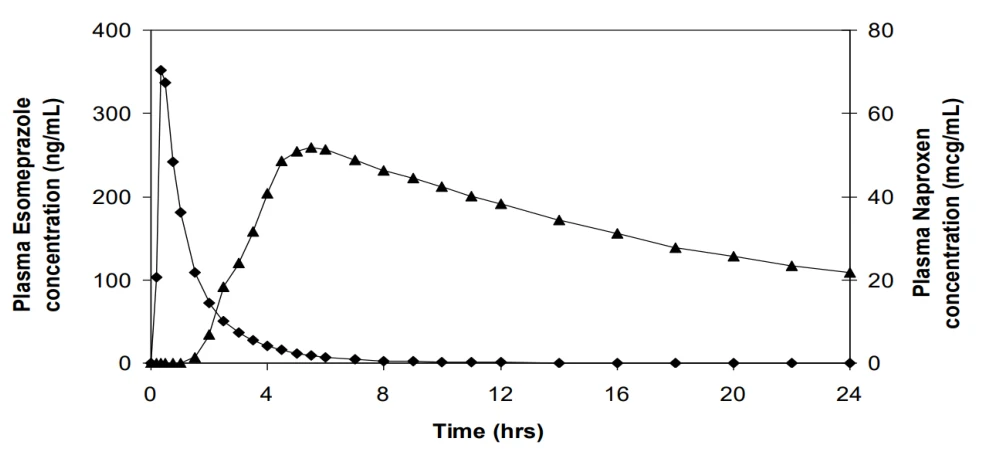
Legend: ♦ esomeprazole; ▲ naproxen
This is in line with the sequential release design of naproxen / esomeprazole modified release tablets in that esomeprazole is rapidly released (tmax 0.5 -0.75 hours), followed by the delayed release of naproxen (tmax 4-5 hours).
Pharmacokinetics of esomeprazole in combination with antibiotics
Interactions between EC-esomeprazole (20 mg b.i.d.), amoxicillin (1 g b.i.d.) and clarithromycin (500 mg b.i.d.), were evaluated in a 4-way cross-over study (each study period was 7 days). When given as the triple combination, the bioavailability (AUC and Cmax) of amoxicillin and clarithromycin were not significantly changed in healthy volunteers, compared with either drug given alone. The AUC and Cmax of the 14-hydroxyclarithromycin metabolite were both increased by 53% during dosing with the triple combination, compared to values following dosing with clarithromycin alone. There were also significant increases in the AUC (two-fold increase) and Cmax (39%) values for esomeprazole during concomitant administration with the antibiotic drugs, compared with esomeprazole alone.
Food Effect
Administration of naproxen / esomeprazole modified release tablets with food does not affect the extent of absorption of naproxen but significantly delays the absorption by about 8 hours and decreases peak plasma concentration by about 12%.
Administration of naproxen / esomeprazole modified release tablets with food does not delay the absorption of esomeprazole but significantly reduces the extent of absorption, resulting in 52% and 75% reductions of area under the plasma concentration versus time curve and peak plasma concentration, respectively.
Administration of naproxen / esomeprazole modified release tablets at least 30 minutes before food intake has only minimal or no effect on the extent and time to absorption of naproxen and has no significant effect on the rate or extent of esomeprazole absorption compared to administration under fasted conditions.
Distribution:
Naproxen:
At therapeutic levels, naproxen is greater than 99% albumin bound.
Esomeprazole:
The apparent volume of distribution at steady state of esomeprazole in healthy subjects is approximately 0.22 L/kg body weight. Esomeprazole is 97% protein bound and optical ly stable in vivo, with negligible inversion to the other isomer.
Metabolism:
Naproxen:
Naproxen is extensively metabolized in the liver by the cytochrome P450 system (CYP), primarily CYP2C9, to 6-O-desmethyl naproxen. Neither the parent drug nor the metabolites induce metabolizing enzymes. Both naproxen and 6-O-desmethyl naproxen are further metabolized to their respective acyl glucuronide conjugated metabolites. Consistent with the half-life of naproxen, the area under the plasma concentration-time curve increases with repeated dosing of naproxen / esomeprazole modified release tablets twice daily.
Esomeprazole:
Esomeprazole is completely metabolized by the cytochrome P450 system, mainly in the liver (via CYP 2C19 and CYP 3A4). The major metabolites of esomeprazole (hydroxyl, desmethyl and sulphone metabolites) have no effect on gastric acid secretion.
The area under the plasma esomeprazole concentration -time curve increases with repeated administration of naproxen / esomeprazole modified release tablets. This increase is dose-dependent and results in a non-linear dose-AUC relationship after repeated administration. This time- and dose-dependency is partly due to a decrease of first pass metabolism and systemic clearance probably caused by an inhibition of the CYP 2C19 enzyme by esomeprazole and/or its sulphone metabolite.
Elimination:
Naproxen:
Following administration of naproxen / esomeprazole modified release tablets twice daily, the mean elimination half-life for naproxen is approximately 9 hours and 15 hours following the morning and evening dose, respectively with no change with repeated dosing. The mean biological half-life of the anion in humans is approximately 13 hours.
The clearance of naproxen is 0.13 mL/min/kg. Approximately 95% of the naproxen from any dose is excreted in the urine, primarily as naproxen (<1%), 6-O-desmethyl naproxen (<1%) or their conjugates (66% to 92%). Small amounts, 3% or less of the administered dose, are excreted in the feces. In patients with renal failure, metabolites may accumulate.
Esomeprazole:
Following administration of naproxen / esomeprazole modified release tablets twice daily, the mean elimination half-life of esomeprazole is approximately 1 hour following both the morning and evening dose on day 1, with a slightly longer elimination half life at steady state (1.2-1.5 hours).
Almost 80% of an oral dose of esomeprazole is excreted as metabolites in the urine, the remainder in the feces. Less than 1% of the parent drug is found in the urine.
Special Populations and Conditions
- Geriatrics: There is no specific data on the pharmacokinetics of naproxen / esomeprazole modified release tabletsin patients over age 65 (see 7 WARNINGS AND PRECAUTIONS).
11 STORAGE, STABILITY AND DISPOSAL
Store at room temperature (15°C-30°C).
APO-NAPROXEN / ESOMEPRAZOLE (naproxen / esomeprazole modified release tablets) tablets are provided in bottles. Store in original container and keep bottles tightly closed as APO-NAPROXEN / ESOMEPRAZOLE tablets are moisture sensitive.
Keep out of reach of children.
See 12 SPECIAL HANDLING INSTRUCTIONS.
12 SPECIAL HANDLING INSTRUCTIONS
Any unused medicinal product or waste material should be disposed of in accordance with local requirements.
PART II: SCIENTIFIC INFORMATION
13 PHARMACEUTICAL INFORMATION
Drug Substance
Proper name: naproxen
Chemical name: (+)-(S)-6-methoxy alpha methyl 2 naphthaleneacetic acid
Molecular formula and molecular mass: C14H14O3
230.26 g/mol
Structural formula:
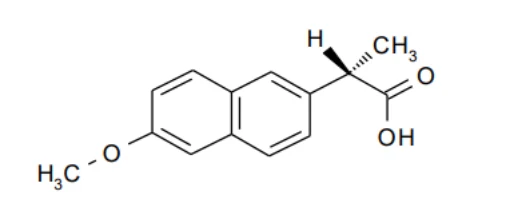
Physicochemical properties: Naproxen is an odorless white crystalline powder with a melting point of 152 – 158°C. It is highly lipid soluble, sparingly soluble in water at low pH and highly soluble in water at high pH.
Drug Substance
Proper name: esomeprazole magnesium trihydrate
Chemical name: Di-(S)-5-methoxy-2-[[(4-methoxy-3,5-dimethyl-2 pyridinyl)methyl]-sulfinyl]-1H- benzimidazole magnesium trihydrate
Molecular formula and molecular mass: C34H36N6O6S2 Mg·3H2O
767.2 g/mol (trihydrate)
713.1 g/mol (anhydrous basis)
Structural formula:
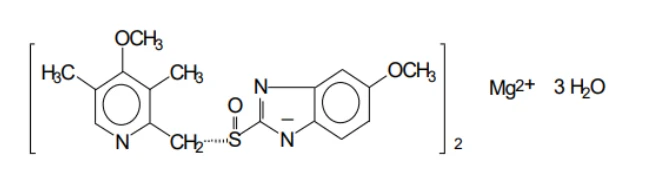
Physicochemical properties: Esomeprazole magnesium is a white to slightly coloured crystalline powder, containing 3 water molecules of hydration. It is sparingly soluble in water and solubility is dependent on the pH of the solution. The pKa of the benzimidazole (omeprazole base) is 8.8, and that of the pyridinium ion, 4.0.
14 CLINICAL TRIALS
14.1 Clinical Trials By Indication
Treatment of Osteoarthritis (OA), Rheumatoid Arthritis (RA) and Ankylosing Spondylitis (AS) and Decreasing Risk of Gastric Ulcers in Patients at Risk of Developing NSAID- associated Gastric Ulcers
Trial Design and Study Demographics
Table 6 – Summary of patient demographics for clinical trials in the treatment of OA, RA and AS and Decreasing Risk of Developing Gastric Ulcers
| Study # | Study design | Dosage, route of administration and duration | Study subjects (n) | Mean age (Range) | Sex | ||||
|---|---|---|---|---|---|---|---|---|---|
| Study 301 | 6-month, randomized, double-blind, parallel-group, outpatient, active-controlled, multi-centre study that compared GU occurrence in patients at risk for developing NSAID- associated ulcers who took naproxen / esomeprazole modified release tablets twice daily and those who took EC naproxen 500 mg twice daily. | Naproxen / esomeprazole 500/20 mg orally twice daily EC-naproxen 500 mg orally twice daily | Naproxen / esomeprazo le n= 218 EC- naproxen n= 216 | Naproxen / esomeprazol e 60.8 years (30-90 years) EC-naproxen 61.9 years (43-90 years) | Naproxen / esomepra zole Female: n=150 Male: n=68 EC- naproxen Female: n=149 Male: n=67 | ||||
| Study 302 | 6-month, randomized, double-blind, parallel-group, outpatient, active-controlled, multi-centre study that compared GU occurrence in patients at risk for developing NSAID- associated ulcers who took naproxen / esomeprazole modified release tablets twice daily and those who took EC naproxen 500 mg twice daily. | Naproxen / esomeprazole 500/20 mg orally twice daily EC-naproxen 500 mg orally twice daily | Naproxen / esomepra zolen= 210 EC- naproxen n= 210 | Naproxen / esomeprazol e 59.6 years (27-85 years) EC-naproxen 59.4 years (29-82 years) | Naproxen / esomepra zole Female: n=132 Male: n=78 EC- naproxen Female: n=142 Male: n=68 | ||||
| Study 307 | 3 month, randomized, double-blind, parallel-group, outpatient, | Naproxen / esomeprazole 500/20 mg | Naproxen / esomeprazo le | Naproxen / esomeprazol e | Naproxen / esomepra | ||||
| Study # | Study design | Dosage, route of administration and duration | Study subjects (n) | Mean age (Range) | Sex | ||||
| active- and placebo- controlled, multi- centre, study to show that naproxen / esomeprazole modified release tablets is non-inferior to celecoxib, a widely used COX-2 inhibitor, in the treatment of signs and symptoms of OA of the knee. | orally twice daily Celecoxib 200 mg orally once daily Placebo Placebo orally daily | n=246 Celecoxib n=242 Placebo n=124 | 62.5 years (50-84 years) Celecoxib
Placebo years (50-83 years) | zole Female: n=161 Male: n=85 Celecoxib Female: n=148 Male: n=94 Placebo Female: n=82 Male: n=42 | |||||
| Study 309 | 3 month, randomized, double- blind, parallel-group, outpatient, active- and placebo- controlled, multi- centre, study to show that naproxen / esomeprazole modified release tablets is non-inferior to celecoxib, a widely used COX-2 inhibitor, in the treatment of signs and symptoms of OA of the knee. | Naproxen / esomeprazole 500/20 mg orally twice daily Celecoxib 200 mg orally once daily Placebo Placebo orally daily | Naproxen / esomeprazo le N=241 Celecoxib N=244 Placebo n=122 | Naproxen / esomeprazol e 61.7 years (50-88 years) Celecoxib 62.3 years (50-89 years) Placebo 61.6 years (50-87 years) | Naproxen / esomepra zole Female: n=157 Male: n=84 Celecoxib Female: n=153 Male: n=91 Placebo Female: n=77 Male: n=45 | ||||
COX-2 cyclooxygenase-2; EC Enteric-coated; GU Gastric Ulcer; NSAID non-steroidal anti-inflammatory drug; OA Osteoarthritis
Randomized clinical trials with naproxen / esomeprazole modified release tablets (naproxen / esomeprazole modified release tablets) have NOT been designed to detect differences in cardiovascular adverse events in a chronic setting.
The efficacy and safety of naproxen / esomeprazole modified release tablets in osteoarthritis, rheumatoid arthritis and ankylosing spondylitis was established through demonstrating bioequivalence of the naproxen component in naproxen / esomeprazole modified release tablets to enteric-coated (EC) naproxen, as well as in randomized controlled trials using naproxen / esomeprazole modified release tablets (see 14.2 Comparative Bioavailability Studies).
Studies with naproxen / esomeprazole modified release tablets – Efficacy in Reducing Ulcers
In two 6-month randomized, double-blind, active-controlled studies, patients (n=854; 33/67 %M/F, 86/12/2 % Caucasian/Black/Other; median age 59 years (range 27 – 90 years)) with chronic inflammatory arthritis requiring daily use of NSAIDs or chronic musculoskeletal conditions requiring ongoing NSAID therapy, and were at risk of GI toxicity from daily NSAID use, were randomized to either naproxen / esomeprazole modified release tablets 500/20 mg twice daily or EC-naproxen 500 mg twice daily. Approximately 24% of each treatment group were using low-dose ASA (≤325 mg/day).
Studies with naproxen / esomeprazole modified release tablets – Efficacy in Osteoarthritis
In two 3-month double-blind, placebo-controlled studies in patients (n=1219; 36/64 %M/F, 80/16/4 %Caucasian/Black/Other; median age 60 to 61 years (range 49 – 90 years)) with osteoarthritis of the knee (as per American College of Rheumatology (ACR) standards), some of whom were on low-dose ASA (n=282), naproxen / esomeprazole modified release tablets was given as 500/20 mg twice daily, and was compared to celecoxib 200 mg given once daily.
Study Results
Studies with naproxen / esomeprazole modified release tablets – Efficacy in Reducing Ulcers
In the individual studies, a significantly lower proportion of patients on naproxen / esomeprazole modified release tablets had gastric ulcers compared to those on EC-naproxen throughout 6 months (primary endpoint) and as early as the first month of treatment (ITT populations, p<0.001 for all comparisons).
Table 7 – Cumulative Observed Incidence of Arthritisa Patients Developing Gastric Ulcers Throughout 6 months From Studies 301 and 302 (ITT population)
| Study 301 | Study 302 | Pooled | ||||||||||||||||||
|---|---|---|---|---|---|---|---|---|---|---|---|---|---|---|---|---|---|---|---|---|
Naproxen / Esomepra zole modified release tablets 500/20 mg bid (N=218) | EC- naproxen 500 mg bid (N=216) | Naproxen / Esomepraz ole modified release tablets 500/20 mg bid (N=210) | EC-naproxen 500 mg bid (N=210) | Naproxen / Esomepra zole modified release tablets 500/20 mg bid (N=428) | EC-naproxen 500 mg bid (N=426) | |||||||||||||||
| 0 to 1 month | ||||||||||||||||||||
| Incidence (%) | 1.4 | 13.0 | 1.9 | 10.0 | 1.6 | 11.5 | ||||||||||||||
| 95% CI | (0.3 – 4.0) | (8.8 – 18.2) | (0.5 – 4.8) | (6.3 – 14.9) | (0.7 – 3.3) | (8.6 – 14.9) | ||||||||||||||
| p-value b | <0.001 | <0.001 | - | |||||||||||||||||
| 0 to 3 months | ||||||||||||||||||||
| Incidence (%) | 1.8 | 19.4 | 4.8 | 17.6 | 3.3 | 18.5 | ||||||||||||||
| Study 301 | Study 302 | Pooled | ||||||||||||||||||
Naproxen / Esomepra zole modified release tablets 500/20 mg bid (N=218) | EC- naproxen 500 mg bid (N=216) | Naproxen / Esomepraz ole modified release tablets 500/20 mg bid (N=210) | EC-naproxen 500 mg bid (N=210) | Naproxen / Esomepra zole modified release tablets 500/20 mg bid (N=428) | EC-naproxen 500 mg bid (N=426) | |||||||||||||||
| 95% CI | (0.5 – 4.6) | (14.4 –25.4) | (2.3 – 8.6) | (12.7 – 23.5) | (1.8 – 5.4) | (15.0 – 22.6) | ||||||||||||||
| p-value b | <0.001 | <0.001 | ||||||||||||||||||
| 0 to 6 months (primary endpoint) | ||||||||||||||||||||
| Incidence (%) | 4.1 | 23.1 | 7.1 | 24.3 | 5.6 | 23.7 | ||||||||||||||
| 95% CI | (1.9 – 7.7) | (17.7 – 29.4) | (4.1 – 11.5) | (18.6 – 30.7) | (3.6 – 8.2) | (19.7 – 28.0) | ||||||||||||||
| p-value b | <0.001 | <0.001 | ||||||||||||||||||
a Studies also included 23% patients with chronic musculoskeletal conditions requiring ongoing NSAID therapy
b p values based on CMH test stratified by low-dose ASA use at randomization.
A significantly lower proportion of patients who took naproxen / esomeprazole modified release tablets compared to EC-naproxen had pre-specified NSAID-associated upper gastrointestinal adverse events and/or duodenal ulcer (53.3% vs 70.4%, p<0.001). In these trials, patients receiving naproxen / esomeprazole modified release tablets had a mean duration of therapy of 152 days compared to 124 days in patients receiving EC-naproxen alone. A significantly higher proportion of patients taking EC-naproxen (12.0%) discontinued from the studies due to pre-specified NSAID-associated upper GI adverse events (including duodenal ulcers) compared to naproxen / esomeprazole modified release tablets (4.0%) in both trials (p<0.001).
Naproxen / esomeprazole modified release tablets was effective across subgroups of patients considered to be at greater risk of GI side effects due to a prior history of gastric or duodenal ulcers (within 5 years of the study), increased age or concomitant use of low-dose ASA.
- a Studies also included 23% patients with chronic musculoskeletal conditions requiring ongoing NSAID therapy
- b p values based on CMH test stratified by low-dose ASA use at randomization
- c p values based on Fisher’s exact test
Dyspeptic symptoms, as measured by the Symptoms of Dyspepsia Assessment (SODA) for both abdominal pain and non-pain symptoms, and for satisfaction, were lower in those patients who took naproxen / esomeprazole modified release tablets compared to those who took EC-naproxen. Significantly greater improvements versus baseline in abdominal pain and non-pain symptoms and satisfaction with dyspepsia related health, as measured by SODA, were achieved with naproxen / esomeprazole modified release tablets compared to EC-naproxen (p<0.001 in all domains, combined analysis).
As well, a significantly greater proportion of patients taking naproxen / esomeprazole modified release tablets reported heartburn resolution at 1, 3, and 6 months (63.7%, 71.0%, and 76.1% of patients) compared to those taking EC-naproxen (44.0%, 46.3%, and 53.8% of patients) (p<0.001 at all time points).
Studies with naproxen / esomeprazole modified release tablets – Efficacy in Osteoarthritis
Naproxen / esomeprazole modified release tablets was found to be non-inferior to celecoxib, as measured by the co-primary endpoints, change from baseline WOMAC
Naproxen / esomeprazole modified release tablets, 500/20 mg bid | |||||
| N | N | ||||
| 33 | 36 | p<0.001 b | |||
| 395 | 390 | p<0.001 b | |||
| 202 | 208 | <0.001 b | |||
| 157 | 142 | <0.001 b | |||
| 294 | 303 | <0.001 b | |||
| 134 | 123 | <0.001 b | |||
| 55 | 67 | <0.001 b | |||
| 99 | 102 | <0.001c | |||
| 329 | 324 | <0.001c | |||
(Western Ontario and McMaster Universities Osteoarthritis Index) scores on domains of pain and physical function as well as on Patient Global Assessment Scores.
Table 9 – Comparison of naproxen / esomeprazole modified release tablets vs Celecoxib in WOMAC Pain, Function, and PGA- VAS, Change From Baseline at Week 12 from Studies 307 and 309 (ITT population)
| Study 307 | Study 309 | Pooled | |||||||||||||||
|---|---|---|---|---|---|---|---|---|---|---|---|---|---|---|---|---|---|
Naproxen / Esomepra zole modified release tablets 500/20 mg bid (N=246) | Celecoxib 200 mg od (N=242) | Naproxen / Esomepra zole modified release tablets 500/20 mg bid (N=241) | Celecoxib 200 mg od (N=244) | Naproxen / Esomepra zole modified release tablets 500/20 mg bid (N=487) | Celecoxib 200 mg od (N=486) | ||||||||||||
| WOMAC Pain | |||||||||||||||||
| Week 12 LS mean change | -42.0 | -41.8 | -44.2 | -42.9 | -43.1 | -42.3 | |||||||||||
| % Change from baseline | 60.4 | 60.3 | 63.2 | 61.3 | 61.7 | 60.7 | |||||||||||
| WOMAC Function | |||||||||||||||||
| Week 12 LS mean change | -36.4 | -36.3 | -38.9 | -36.8 | -37.6 | -36.6 | |||||||||||
| % Change from baseline | 54.6 | 54.4 | 58.0 | 54.9 | 56.3 | 54.7 | |||||||||||
| PGA-VAS | |||||||||||||||||
| Week 12 LS mean change | 21.2 | 21.6 | 29.0 | 25.6 | 25.0 | 23.6 | |||||||||||
| % Change from baseline | 66.6 | 70.1 | 86.0 | 89.5 | 75.9 | 79.5 | |||||||||||
PGA-VAS Patient Global Assessment on a Visual Analogue Scale; WOMAC Western Ontario and McMaster Universities Osteoarthritis Index
Naproxen / esomeprazole modified release tablets treatment resulted in a significantly greater percentage of heartburn-free days than celecoxib (LS mean 76.4% naproxen / esomeprazole modified release tablets vs 68.8% celecoxib) and significantly less rescue antacid use than celecoxib. The discontinuation rate due to adverse events was similar in patients receiving naproxen / esomeprazole modified release tablets (6.9 %) and celecoxib
(7.8%).
14.2 Comparative Bioavailability Studies
Studies comparing the bioavailability of single doses of EC-naproxen in APO-NAPROXEN / ESOMEPRAZOLE 375/20 mg and 500/20 mg with that of corresponding NAPROSYN E (manufactured by Roche) strengths were conducted in healthy volunteers under both fasted and fed conditions.
Single dose cross-over studies were used to compare bioavailability. Thirty-seven volunteers (15/22 M/F, range 18 - 38 years) participated in the fasted study to compare bioavailability between APO-NAPROXEN / ESOMEPRAZOLE 500/20 mg and NAPROSYN E while a minimum of 21 volunteers participated in the corresponding fed study (21 included in APO-NAPROXEN / ESOMEPRAZOLE analysis and 22 in the NAPROSYN E analysis; 8/13 M/F, 18 – 46 years).
Similarly, bioavailability was compared between APO-NAPROXEN / ESOMEPRAZOLE 375/20 mg and corresponding NAPROSYN E in 24 volunteers in both the fasted (15/9 M/F, range 18 – 45 years) and fed state (17/7 M/F, range 18 – 48 years).
These results are summarized in the tables below. The naproxen component in APO-NAPROXEN / ESOMEPRAZOLE was shown to be bioequivalent to NAPROSYN E under both fasted and fed conditions for both strengths.
Naproxen Fasted and Fed Study (1 x 375 mg) From measured data Geometric LS Mean Arithmetic Mean (CV %) | ||||||||
|---|---|---|---|---|---|---|---|---|
| Fasted Study (1x375 mg) | Fed Study (1x375 mg) | |||||||
| Parameter | Test* APO-NAPROXEN / ESOMEPRAZ OLE 375/20 mg | Reference† NAPROSYN E 375 mg | % Ratio of Geometric Means | Confidence Interval# | Test* APO-NAPROXEN / ESOMEPRA ZOLE 375/20 mg | Reference† NAPROSYN E 375 mg | % Ratio of Geometric Means | Confidence Interval# |
AUCT (μg*h/mL) | 992.8 1007 (17.2) | 1004 1021 (18.8) | 98.93 | 97.0 - 100.9 | 941.5 963.6 (14.5) | 956.8 976.5 (13.7) | 98.41 | 96.07 - 100.8 |
AUCI (μg*h/mL) | 1067 1085 (19.0) | 1074 1097 (21.2) | 99.33 | 97.23 - 101.5 | 1017 1053 (15.4) | 1036 1068 (14.8) | 98.15 | 95.93 - 100.4 |
| Cmax (μg/mL) | 50.9 52.5 (26.1) | 56.4 57.7 (22.8) | 90.33 | 84.84 - 96.2 | 57.6 57.8 (20.0) | 60.6 60.5 (16.8) | 95.07 | 88.79 - 101.8 |
TMAX§ (h) | 4.0 (2.0 - 16.0) | 2.8 (1.5 - 8.0) | Not applicable | Not applicable | 10.0 (4.0 - 24.0) | 8.0 (2.0 - 22.0) | Not applicable | Not applicable |
| T½+ (h) | 18.0 (13.5) | 17.9 (15.1) | Not applicable | Not applicable | 17.7 (12.3) | 18.0 (15.5) | Not applicable | Not applicable |
* APO-NAPROXEN / ESOMEPRAZOLE 375/20 mg tablet, Apotex Inc., Canada
† NAPROSYN E 375 mg tablet, Hoffmann-La Roche Ltd., Canada
§ Expressed as the median (range) only
+ Expressed as arithmetic mean (CV%)
# Based on LS estimates
Naproxen Fasted and Fed Study (1 x 500 mg) From measured data Geometric LS Mean Arithmetic Mean (CV %) | ||||||||
|---|---|---|---|---|---|---|---|---|
| Fasted Study (1x500 mg) | Fed Study (1x500 mg) | |||||||
| Parameter | Test* APO-NAPROXEN / ESOMEPR AZOLE 500/20 mg | Reference† NAPROSYN E 500 mg | % Ratio of Geometric Means | Confidence Interval# | Test* APO-NAPROXEN / ESOMEPRAZ OLE 500/20 mg | Reference† NAPROSYN E 500 mg | % Ratio of Geometric Means | Confidence Interval# |
AUCT (μg*h/mL) | 1220 1219 (15.3) | 1236 1235 (13.2) | 98.77 | 96.67 - 100.9 | 1139 1156 (11.8) | 1171 1185 (15.6) | 97.23 | 91.86 - 102.9 |
AUCI (μg*h/mL) | 1312 1300 (16.6) | 1326 1318 (15.5) | 98.95 | 96.67 - 101.3 | 1240 1274 (14.8) | 1270 1291 (17.9) | 97.62 | 92.00 - 103.6 |
| Cmax (μg/mL) | 66.0 69.8(18.6) | 66.8 70.5 (22.1) | 98.82 | 92.53 - 105.5 | 72.3 73.6 (20.2) | 70.2 71.0 (19.6) | 102.87 | 93.68 - 113.0 |
TMAX§ (h) | 4.0 (2.5 - 16.0) | 4.0 (1.5 - 12.0) | Not applicable | Not applicable | 12.0 (6.0 - 24.0) | 12.0 (2.0 - 29.8) | Not applicable | Not applicable |
| T½+ (h) | 17.6 (14.5) | 18.1 (15.9) | Not applicable | Not applicable | 18.1 (25.4) | 16.9 (17.1) | Not applicable | Not applicable |
* APO-NAPROXEN / ESOMEPRAZOLE 500/20 mg tablet, Apotex Inc., Canada
† NAPROSYN E 500 mg tablet, Hoffmann-La Roche Ltd., Canada
§ Expressed as the median (range) only
+ Expressed as arithmetic mean (CV%)
# Based on LS estimates
16 NON-CLINICAL TOXICOLOGY
General Toxicology
No non-clinical pharmacology or toxicology studies have been conducted with naproxen / esomeprazole modified release tablets itself, or with a combination of naproxen and esomeprazole, as naproxen / esomeprazole modified release tablets is a fixed combination of compounds already approved as free combination therapy. There are no known interactions between naproxen and esomeprazole that would indicate any novel or synergistic adverse pharmacodynamic (PD), pharmacokinetic/toxicokinetic (PK/TK), toxicity, physical/chemical interaction, or tolerability issues as a result of their combination. For a detailed presentation of the animal pharmacology and toxicology of naproxen and esomeprazole separately, please refer to the Product Monographs for NAPROSYN and NEXIUM. An assessment of the non-clinical effects of a naproxen / esomeprazole combination such as naproxen / esomeprazole modified release tablets is given in the section below (see also 16 NON-CLINICAL TOXICOLOGY).
Carcinogenicity
Both naproxen and esomeprazole were negative in the Ames test, but esomeprazole was clastogenic in an in vitro chromosome aberration test in peripheral human lymphocytes. Omeprazole, the R-enantiomer of omeprazole and lansoprazole induced the same type and degree of chromosome aberrations under the same experimental conditions. However, esomeprazole did not show any evidence of mutagenic potential in vivo, despite extensive exposure in the treated animals.
In a 2 year oral carcinogenicity study in rats, naproxen was administered at doses of 8, 16 and 24 mg/kg a day. Naproxen was not carcinogenic in this study.
In the long-term repeat-dose/carcinogenicity studies with omeprazole gastric enterochromaffin- like (ECL) cell carcinoids were noted in the rat, but not the mouse or dog. It has been demonstrated that this is a result of an indirect mode of action, rather than being a direct effect of omeprazole on the ECL-cells; prolonged acid suppression leads to prolonged hypergastrinemia, provoking ECL cell hyperplasia, which eventually progresses into ECL cell carcinoids.
Reproductive and Developmental Toxicology
No skeletal or visceral anomalies or other reproductive or de velopmental toxicities were noted in the embryo-fetal and reproductive studies performed with naproxen in rats and rabbits. However, naproxen was seen to have a dystocic effect on parturition, which was evident in peri- and postnatal reproductive toxicity studies in rats, together with some maternal toxicity and fetal deaths. The inhibition of prostaglandin synthesis by NSAIDs may be related to a decreased uterine contractibility, which could be the cause of the delayed onset of labour in the rats.
Slight maternal toxicity was observed in pregnant rats treated with esomeprazole/ omeprazole, but no adverse effects on embryo-fetal survival and development were noted. Neither did treatment of pregnant rabbits with esomeprazole/omeprazole indicate any potential for disturbance of embryo-fetal development. However, severe and dose-related maternal toxicity was noted at relatively low doses and exposure to the drugs, resulting in some minor litter effects.
Again, it is anticipated that the combined administration of naproxen and esomeprazole in reproductive toxicity studies would simply result in the known effects of the two compounds separately, including maternal toxicity, effects on parturition, and some increase in minor litter effects.
Single- and Repeat-dose Toxicity
The principal findings after single- or repeat-dose oral naproxen administration consist of gastrointestinal (GI) irritation (including erosions, ulceration and bleeding), predominantly in the small intestine, and renal injury. Numerous other findings that are considered to be secondary to the GI effects have also been noted. Dogs in particular showed a maximum tolerated dose that was far below that which was well tolerated in other species.
Repeated esomeprazole administration to rats and dogs resulted in the effects that are to be expected from this class of acid secretion inhibitors, namely histopathological changes in the stomach, accompanied by a dose-dependent increase in stomach weight and serum gastrin levels. These effects are the results of gastrin stimulation and/or inhibition of gastric acid secretion. Another notable effect seen in the studies in rats was some slight hematological changes indicating a mild microcytic, hypochromic iron deficiency anemia.
The combined administration of naproxen and esomeprazole is not expected to demonstrate any new toxicity or exacerbation of the know toxicities of the individual components. It is expected that the combined administration of naproxen and esomeprazole in repeat-dose toxicity studies would simply result in the known effects of the 2 compounds separately, most probably dominated by the irritative effects on the GI tract from naproxen.
Other Toxicity Studies
Benzimidazole PPIs are unstable in an acidic environment, and as such, have traditionally been EC in order to reduce gastric acid degradation prior to absorption from the small intestine. It is pertinent in this context that the esomeprazole component of naproxen / esomeprazole modified release tablets is immediate release (IR), and not EC (i.e., protected from gastric acid), and thus, some degradation of esomeprazole in the acid environment of the stomach and a somewhat reduced bioavailability were anticipated. However, the vast majority of non-clinical studies, particularly the toxicity studies, supporting both omeprazole and esomeprazole registrations were completed using IR active ingredients, and therefore degradation in the stomach of the animals in these studies was highly probable.
Additional nonclinical studies with the objective of investigating the pH levels noted in the stomachs of both rats and dogs under the conditions used in the previous toxicity studies with esomeprazole have been performed. Results of these investigations showed that pH levels in animal gastric juice were relevant for patients treated with naproxen / esomeprazole modified release tablets.
Subsequent in vitro investigation and comparison of the acid degradation of esomeprazole in gastric juice from rats, dogs, and humans showed that the profiles of chemical degradation products were qualitatively similar across species, although some quantitative differences were observed. The measurement of the pH in the dog and rat stomachs showed that the animals in the previous toxicity studies with IR esomeprazole were exposed to a mixture of acid degradation products of esomeprazole formed in their stomachs, and the in vitro study showed that the degradation profile was similar in the gastric juice from both humans and animals.
Similarly, a second in vitro study showed that the degradation products of radiolabelled esomeprazole formed in both gastric fluid from humans and rats, and simulated intestinal fluid were generally qualitatively and quantitatively similar. Based on these results, it can be anticipated that treatment of patients with IR-esomeprazole will not result in exposure to any additional acid degradation products of esomeprazole, compared to that resulting from treatment of rats or dogs with IR-esomeprazole or humans with EC-esomeprazole.
Animal Pharmacology
Primary Pharmacological Effects: Naproxen has been shown to possess anti-inflammatory and analgesic activity as assessed by a variety of animal test procedures. It appears that naproxen acts, at least in part, in a manner similar to other anti-inflammatory agents via an inhibition of prostaglandin biosynthesis.
Esomeprazole inhibits the gastric H+, K+-ATPase, the enzyme identified as the proton pumps in the parietal cell, leading to a profound gastric acid secretion inhibition. Due to this unique mechanism of action and specific effect on acid secretion, esomeprazole has no other significant PD effects that are unrelated to the inhibition of gastric acid secretion.
The 2 components in naproxen / esomeprazole modified release tablets thus exert their pharmacological activity through very specific and quite different mechanisms. It is therefore not anticipated that there will be any direct and/or adverse pharmacological interaction between these 2 compounds.
Pharmacokinetic Data:
Absorption and Distribution
Naproxen was rapidly absorbed in all species studied (including man), with an elimination half - life ranging between 2 and 35 hours. A large fraction of the drug is distributed to the blood, primarily as unchanged naproxen. In humans, naproxen shows a very high plasma protein binding (PPB) of >99% at therapeutic plasma concentrations. The degree of PPB in animals is comparatively lower.
Esomeprazole is rapidly absorbed from the GI tract after oral administration, in both the rat and dog. However, the bioavailability in the rat is only 34%, suggesting a high first -pass effect.
After absorption, esomeprazole is rapidly distributed to extravascular sites, with an elimination half-life of about 10 minutes in the rat and about 30 to 50 minutes in the dog. The degree of PPB is about 85% to 90% in both the rat and dog, and about 97% in humans.
It is not anticipated that naproxen or esomeprazole will have any effect on the absorption and/or general distribution of the other drug. However, as naproxen shows a very high degree of PPB in humans, there is a potential that the PK of other highly protein bound drugs such as esomeprazole could be altered on co-administration. However, there have been no indications of any PK interactions between naproxen and esomeprazole or the racemate omeprazole when used as co-therapy (but as individual components) in the clinical situation. Neither was any interaction between naproxen and esomeprazole noted in the clinical pharmacology studies of naproxen / esomeprazole modified release tablets and/or the individual components.
Metabolism and Excretion
Both naproxen and its metabolites are predominantly (86 to 94%) excreted in the urine in all species, with the exception of the dog. In this species, significant amounts (50%) of naproxen are excreted in the feces, indicating an enterohepatic circulation, which explains the long half - life of naproxen in the dog.
Both esomeprazole and omeprazole are extensively metabolised in the liver, via the CYP enzyme system. The investigations performed did not indicate any major differences in the qualitative metabolic disposition or the structure of the metabolites formed between th e two compounds, species or sexes. The metabolites are rapidly eliminated via both the urine and feces.
Both naproxen and esomeprazole are metabolised via the CYP enzyme system in the liver, but (at least in humans) by different CYP isoenzymes. It is, therefore, unlikely that there will be any metabolic competition and/or interaction between these 2 drugs at the CYP enzyme level. Both compounds are primarily excreted as glucuronide conjugates, via the urine for naproxen or via both the bile and urine for esomeprazole. Consistent with PK data from co-therapy in the clinical situation, it is not believed that any competition and/or interaction will occur following administration of therapeutically relevant combination doses of naproxen and esomeprazole to man.
17 SUPPORTING PRODUCT MONOGRAPHS
- 1. NAPROSYN [375 and 500 mg Enteric-Coated Tablet, 750 mg Sustained-Release Tablet, 25 mg/mL Suspension], submission control number 159220, Product Monograph, Hoffman la Roche. Jan, 8, 2013.
- 2. NEXIUM [20 mg, 40 mg delayed release tablets, 10 mg delayed release granules], submission control number 223396, Product Monograph, AstraZeneca Canada Inc. Jun 3, 2019.