


Product Monograph - Apo-Norethindrone
RECENT MAJOR LABEL CHANGES
| N/A |
|---|
TABLE OF CONTENTS
Sections or subsections that are not applicable at the time of authorization are not listed.
RECENT MAJOR LABEL CHANGES ............................................................................................. 2
TABLE OF CONTENTS ............................................................................................................... 2
PART I: HEALTH PROFESSIONAL INFORMATION ....................................................................... 4
1 INDICATIONS ................................................................................................................ 4
1.1 Pediatrics ............................................................................................................... 4
1.2 Geriatrics ............................................................................................................... 4
2 CONTRAINDICATIONS .................................................................................................. 4
3 SERIOUS WARNINGS AND PRECAUTIONS BOX ............................................................. 5
4 DOSAGE AND ADMINISTRATION .................................................................................. 5
4.1 Dosing Considerations ........................................................................................... 5
4.2 Recommended Dose and Dosage Adjustment ...................................................... 5
4.4 Administration ....................................................................................................... 5
4.5 Missed Dose .......................................................................................................... 5
5 OVERDOSAGE ............................................................................................................... 5
6 DOSAGE FORMS, STRENGTHS, COMPOSITION AND PACKAGING .................................. 6
7 WARNINGS AND PRECAUTIONS ................................................................................... 6
7.1 Special Populations .............................................................................................. 10
7.1.1 Pregnant Women ............................................................................................ 10
7.1.2 Breast-feeding ................................................................................................. 11
7.1.3 Pediatrics ......................................................................................................... 11
7.1.4 Geriatrics ......................................................................................................... 11
8 ADVERSE REACTIONS ................................................................................................. 11
8.1 Adverse Reaction Overview ................................................................................. 11
8.5 Post-Market Adverse Reactions .......................................................................... 12
9 DRUG INTERACTIONS ................................................................................................. 12
9.2 Drug Interactions Overview ................................................................................. 12
9.3 Drug-Behavioural Interactions ............................................................................. 12
9.4 Drug-Drug Interactions ........................................................................................ 13
9.5 Drug-Food Interactions ........................................................................................ 14
9.6 Drug-Herb Interactions ........................................................................................ 14
9.7 Drug-Laboratory Test Interactions ....................................................................... 14
10 CLINICAL PHARMACOLOGY ........................................................................................ 15
10.1 Mechanism of Action ........................................................................................... 15
10.2 Pharmacodynamics ............................................................................................. 15
10.3 Pharmacokinetics ................................................................................................ 15
11 STORAGE, STABILITY AND DISPOSAL .......................................................................... 16
12 SPECIAL HANDLING INSTRUCTIONS ............................................................................ 16
PART II: SCIENTIFIC INFORMATION ........................................................................................ 17
13 PHARMACEUTICAL INFORMATION ............................................................................. 17
14 CLINICAL TRIALS ......................................................................................................... 17
14.1 Clinical Trials by Indication .................................................................................. 17
14.2 Study Results ....................................................................................................... 18
15 MICROBIOLOGY ......................................................................................................... 19
16 NON-CLINICAL TOXICOLOGY ...................................................................................... 19
PATIENT MEDICATION INFORMATION ................................................................................... 20
PART I: HEALTH PROFESSIONAL INFORMATION
1 INDICATIONS
APO-NORETHINDRONE (norethindrone acetate tablets U.S.P.) is indicated for the treatment of:
- Amenorrhea
- Endometriosis
- Abnormal uterine bleeding due to hormonal imbalance in the absence of organic pathology, such as submucous fibroids or uterine cancer
APO-NORETHINDRONE should be prescribed only to women with intact uteri.
APO-NORETHINDRONE has not been approved for use as Hormone Replacement Therapy (HRT) by menopausal or post-menopausal women.
1.1 Pediatrics
Pediatrics (< 18 years of age): No data are available to Health Canada; therefore, Health Canada has not authorized an indication for pediatric use.
1.2 Geriatrics
Geriatrics: No data are available to Health Canada; therefore, Health Canada has not authorized an indication for geriatric use.
2 CONTRAINDICATIONS
- Norethindrone acetate is contraindicated in patients who are hypersensitive to this drug or to any ingredient in the formulation, including any non-medicinal ingredient, or component of the container. For a complete listing, see 6 DOSAGE FORMS, STRENGTHS, COMPOSITION AND PACKAGING.
- active or past history of confirmed venous thromboembolism (such as deep vein thrombosis or pulmonary embolism) or active thrombophlebitis.
- active or past history of arterial thromboembolic disease (e.g. stroke, myocardial infarction, coronary heart disease).
- liver dysfunction or disease as long as liver function tests have failed to return to normal.
- known or suspected estrogen-dependent or progestin-dependant malignant neoplasia (e.g. endometrial cancer).
- known, suspected, or past history of breast cancer
- undiagnosed abnormal genital bleeding.
- partial or complete loss of vision due to ophthalmic vascular disease.
- known or suspected pregnancy.
- missed abortion (an abortion in which the fetus dies but is retained within the uterus for two months or longer).
3 SERIOUS WARNINGS AND PRECAUTIONS BOX
Serious Warnings and Precautions
|
|---|
4 DOSAGE AND ADMINISTRATION
4.1 Dosing Considerations
- Adapt dosage to the specific indications and therapeutic response of the individual patient. This dosage schedule assumes the interval between menses to be 28 days.
4.2 Recommended Dose and Dosage Adjustment
- Amenorrhea, abnormal uterine bleeding due to hormonal imbalance in the absence of organic pathology: 2.5 to 10 mg starting with the fifth day of the menstrual cycle and ending on the 25th day.
- Endometriosis: Initial daily dose of 5 mg for 2 weeks with increments of 2.5 mg/day every 2 weeks until 15 mg/day is reached. Therapy may be held at this level from 6 to 9 months or until breakthrough bleeding demands temporary termination.
4.4 Administration
APO-NORETHINDRONE is intended for oral administration only.
Take with food or after a meal to prevent stomach upset.
A study has shown that systemic exposure to norethindrone acetate increased by 27% when administered with a high-fat meal but the clinical significance of this is not known.
4.5 Missed Dose
If a dose is missed, patient should take it as soon as they remember. If it is near the time of the next dose, skip the missed dose and resume your usual dosing schedule. Do not double the dose to catch up.
5 OVERDOSAGE
Symptoms of overdose
Progestin (e.g. Norethindrone acetate) overdosage has been characterized by depressed mood, tiredness, acne and hirsutism.
Treatment of overdose
Symptomatic treatment should be given.
| For management of a suspected drug overdose, contact your regional poison control centre. |
|---|
6 DOSAGE FORMS, STRENGTHS, COMPOSITION AND PACKAGING
Table 1 - Dosage Forms, Strengths, Composition and Packaging
Grooved, salmon-coloured, slightly mottled tablet, debossed “PD” on one side.
Sodium: 0.30 mg. Gluten-, paraben-, sulfite- and tartrazine-free. Energy: 1.4 kJ (0.34 kcal).
APO-NORETHINDRONE is available in 5 mg tablet strength in bottles of 30 tablets each.
7 WARNINGS AND PRECAUTIONS
Please see 3 SERIOUS WARNINGS AND PRECAUTIONS BOX.
Carcinogenesis and Mutagenesis
Breast cancer
Some epidemiological studies of oral contraceptive users have reported an increased relative risk of developing breast cancer, particularly at a younger age and apparently related to duration of use.3 These studies have predominately involved combined oral contraceptives and there is insufficient data to determine whether the use of progestin-only pills similarly increases the risk. Women with breast cancer should not use APO-NORETHINDRONE because the role of female hormones in breast cancer has not been fully determined.
It is recommended that progestins not be given to women with existing breast cancer or those with a previous history of the disease (see 2 CONTRAINDICATIONS).
Other known risk factors for the development of breast cancer such as nulliparity, obesity, early menarche, late age at first full term pregnancy and at menopause should also be evaluated.
Endometrial hyperplasia and endometrial carcinoma
The role of progestin, when combined with estrogen, is to prevent endometrial hyperplasia/carcinoma in women with intact uteri.
Although the evidence is based on small numbers of women, the results of studies on progestogens suggest that women who use progestogen-only contraceptives have a reduced risk for endometrial cancer. It is unclear whether APO-NORETHINDRONE provides protection against endometrial cancer.
| Route of Administration | Dosage Form / Strength/Composition | Non-medicinal Ingredients |
| Oral | Tablet 5 mg | Acacia, cornstarch, FD&C Red No. 3, FD&C Yellow No. 10, lactose, magnesium stearate, sugar and talc |
Ovarian cancer
Some recent epidemiologic studies have found that the use of hormone replacement therapy (estrogen-alone and estrogen plus progestin therapies), in particular for five or more years, has been associated with an increased risk of ovarian cancer.
A recent prospective cohort study done on Danish women aged 50 through 79 years from 1995 through 2005 concluded that regardless of the duration of use, the formulation, regimen, progestin type, and route of administration, hormone therapy was associated with an increased risk of ovarian cancer.
Cardiovascular
The results of the Heart and Estrogen/progestin Replacement Studies (HERS and HERS II) and the Women's Health Initiative (WHI) trial indicate that the use of estrogen plus progestin is associated with an increased risk of coronary heart disease (CHD) in postmenopausal women. The results of the WHI trial indicate that the use of estrogen-alone and estrogen plus progestin is associated with an increased risk of stroke in postmenopausal women.
It is however unclear from the literature if progestin alone increases the probability of acquiring cardiovascular diseases.
WHI trial findings
In the combined estrogen plus progestin arm of the WHI trial, among 10,000 women over a one-year period, there were:
- 8 more cases of stroke (29 on combined HRT versus 21 on placebo)
- 7 more cases of CHD (37 on combined HRT versus 30 on placebo).
In the estrogen-alone arm of the WHI trial of women with prior hysterectomy, among 10,000 women over a one-year period, there were/was:
- 12 more cases of stroke (44 on estrogen-alone therapy versus 32 on placebo)
- no statistically significant difference in the rate of CHD.
HERS and HERS II findings
In the Heart and Estrogen/progestin Replacement Study (HERS) of postmenopausal women with documented heart disease (n=2763, average age 66.7 years), a randomized placebo-controlled clinical trial of secondary prevention of coronary heart disease (CHD), treatment with 0.625 mg/day oral conjugated equine estrogen (CEE) plus 2.5 mg oral medroxyprogesterone acetate (MPA) demonstrated no cardiovascular benefit. Specifically, during an average follow-up of 4.1 years, treatment with CEE plus MPA did not reduce the overall rate of CHD events in postmenopausal women with established coronary heart disease. There were more CHD events in the hormone-treated group than in the placebo group in year 1, but not during the subsequent years.
From the original HERS trial, 2321 women consented to participate in an open label extension of HERS known as HERS II. Average follow-up in HERS II was an additional 2.7 years, for a total of 6.8 years overall. After 6.8 years, hormone therapy did not reduce the risk of cardiovascular events in women with CHD.
Blood pressure
Progestin intake can cause existing blood pressure levels to rise and can lead to mild, moderate or serious hypertension. Caution must be taken in case of persons already suffering from hypertension.
Endocrine and Metabolism
Glucose and lipid metabolism
A worsening of glucose tolerance and lipid metabolism has been observed in significant percentage of peri- and post-menopausal patients. Therefore, diabetic patients or those with a predisposition to diabetes should be observed closely to detect any alterations in carbohydrate or lipid metabolism, especially in triglyceride blood levels.
A decrease in glucose tolerance has been observed in a small percentage of patients on Estrogen/progestogen combination drugs. The mechanism of this decrease is obscure. For this reason, diabetic patients should be carefully observed while receiving progestogen therapy.
Women with familial hyperlipidemias need special surveillance. Lipid-lowering measures are recommended additionally, before treatment is started.
Heme metabolism
Women with porphyria need special surveillance. Norethindrone acetate tablets can induce attacks of porphyria. Abdominal pain is the most common symptom to look for. Other symptoms include tachycardia, hypertension, restlessness, fine tremors, excess sweating, nausea, vomiting, constipation, pain in the limbs, head, neck, or chest, muscle weakness, and sensory loss. If recurrence of porphyria is suspected APO-NORETHINDRONE should be discontinued.
Calcium and phosphorus metabolism
Progestins may precipitate hypercalcemia. Progestins should be used with caution in patients with metabolic and malignant bone diseases associated with hypercalcemia and in patients with renal insufficiency.
Hypothyroidism
Patients who require thyroid hormone replacement therapy and who are also taking progestins should have their thyroid function monitored regularly to assure that thyroid hormone levels remain in an acceptable range (see 9.7 Drug-Laboratory Test Interactions).
Other conditions
APO-NORETHINDRONE contains lactose. In patients with rare hereditary galactose intolerance, lactase deficiency or glucose-galactose malabsorption, the severity of the condition should be taken into careful consideration before prescribing APO-NORETHINDRONE. The patient should be closely monitored.
Genitourinary
Vaginal bleeding
Abnormal vaginal bleeding, due to its prolongation, irregularity or heaviness, occurring during therapy should prompt appropriate diagnostic measures to rule out the possibility of uterine malignancy and the treatment should be re-evaluated.
Uterine leiomyomata
Pre-existing uterine leiomyomata may increase in size during estrogen use. Growth, pain or tenderness of uterine leiomyomata requires discontinuation of medication and appropriate investigation.
Hematologic
Venous thromboembolism
Available data indicate that use of progestin by postmenopausal women is associated with an increased risk of developing venous thromboembolism (VTE).
Generally recognized risk factors for VTE include a personal history, a family history (the occurrence of VTE in a direct relative at a relatively early age may indicate genetic predisposition), severe obesity (body mass index > 30 kg/m2) and systemic lupus erythematosus. The risk of VTE also increases with age and smoking.
Care should be used when prescribing progestins to a population that may be predisposed to thrombotic disorders.
Hepatic/Biliary/Pancreatic
Gallbladder diseases
The effects of progesterone on the sphincter of Oddi and the gallbladder may contribute to the greater prevalence of gallstones and biliary motility disorder among women.
Jaundice
Caution is advised in patients with a history of liver and/or biliary disorders. If cholestatic jaundice develops during treatment, the treatment should be discontinued and appropriate investigations carried out.
Liver function tests
Liver function tests should be done periodically in subjects who are suspected of having hepatic disease. For information on endocrine and liver function tests, see Monitoring and Laboratory Tests.
Impaired liver function
Steroid hormones are metabolized by the liver; therefore, these drugs should be administered with caution in patients with impaired liver function.
Immune
Systemic lupus erythematosus
Particular caution is indicated in women with systemic lupus erythematosus. If signs of thromboembolism are present, APO-NORETHINDRONE should be discontinued.
Monitoring and Laboratory Tests
Before APO-NORETHINDRONE is administered, the patient should have a complete physical examination including a blood pressure determination. Breasts and pelvic organs should be appropriately examined and a Papanicolaou smear should be performed. Endometrial biopsy should be done only when indicated. Baseline tests should include mammography, measurements of blood glucose, calcium, triglycerides and cholesterol, and liver function tests.
The first follow-up examination should be done within 3 to 6 months after initiation of treatment to assess response to treatment. Thereafter, examinations should be made at intervals at least once a year. Appropriate investigations should be arranged at regular intervals as determined by the physician.
The importance of regular self-examination of the breasts should be discussed with the patient.
Neurologic
Cerebrovascular insufficiency
Patients who develop visual disturbances, classical migraine, transient aphasia, paralysis or loss of consciousness should discontinue medication.
Patients with a previous history of classical migraine and who develop a recurrence or worsening of migraine symptoms should be reevaluated.
Dementia
It is unclear from the literature if progestins alone increase the risk of having dementia.
Epilepsy
Particular caution is indicated in women with epilepsy, as progestins may cause an exacerbation of this condition.
Ophthalmologic
Discontinue medication pending examination if there is a sudden partial or complete loss of vision, or if there is a sudden onset of proptosis, diplopia. If examination reveals papilledema or retinal vascular lesions, withdraw the medication.
Psychiatric
Patients who have a history of mental depression should be carefully observed and the drug discontinued if the depression recurs to a serious degree.
Renal
Fluid retention
Since APO-NORETHINDRONE may cause some degree of fluid retention, conditions that might be influenced by this factor, such as asthma, or cardiac or renal dysfunction, require careful observation. If, in any of the above-mentioned conditions, a worsening of the underlying disease is diagnosed or suspected during treatment, the benefits and risks of treatment should be reassessed based on the individual case.
Reproductive Health: Female and Male Potential
Fertility
No data are available.
Function
Menopause
The age of the patient constitutes no absolute limiting factor although treatment with progestogens may mask the onset of the climacteric.
7.1 Special Populations
7.1.1 Pregnant Women
APO-NORETHINDRONE is contraindicated in pregnancy. There may be an increased risk of birth defects in children whose mothers take this drug during the first four months of pregnancy. If the patient is exposed to APO-NORETHINDRONE during pregnancy or if she becomes pregnant while taking this drug, she should be apprised of the potential risk to the fetus. Additionally, progestational agents are not recommended as diagnostic tests for pregnancy.
7.1.2 Breast-feeding
Detectable amounts of progestogens have been identified in the milk of mothers receiving them. The effect of this on the nursing infant has not been determined.
7.1.3 Pediatrics
Pediatrics (< 18 years of age): No data are available to Health Canada; therefore, Health Canada has not authorized an indication for pediatric use.
7.1.4 Geriatrics
Geriatrics: No data are available to Health Canada; therefore, Health Canada has not authorized an indication for geriatric use.
8 ADVERSE REACTIONS
8.1 Adverse Reaction Overview
See 7 WARNINGS AND PRECAUTIONS regarding potential induction of malignant neoplasms and adverse effects similar to those of oral contraceptives.
The following adverse reactions have been reported with estrogen/progestin combination in general:
| Blood and lymphatic system disorders | Altered coagulation tests (see 7 WARNINGS AND PRECAUTIONS, 9.7 Drug-Laboratory Test Interactions). |
|---|---|
| Cardiac disorders | Palpitations; increase in blood pressure (see 7 WARNINGS AND PRECAUTIONS); coronary thrombosis. |
| Endocrine disorders | Increased blood sugar levels; decreased glucose tolerance. |
| Eye disorders | Neuro-ocular lesions, e.g., retinal thrombosis and optic neuritis; visual disturbances; steepening of the corneal curvature; intolerance to contact lenses. |
| Gastrointestinal disorders | Nausea; vomiting; abdominal discomfort (cramps, pressure, pain, bloating). |
| General disorders and administration site conditions | Fatigue; changes in appetite; changes in body weight (increase or decrease); change in libido. |
| Hepatobiliary disorders | Gallbladder disorder; asymptomatic impaired liver function; cholestatic jaundice. |
| Musculoskeletal and connective tissue disorders | Musculoskeletal pain including leg pain not related to thromboembolic disease (usually transient, lasting 3 to 6 weeks) may occur. |
| Nervous system disorders | Aggravation of migraine episodes; headaches; dizziness; neuritis. |
| Psychiatric disorders | Mental depression; nervousness; irritability |
| Renal and urinary disorders | Cystitis; dysuria; sodium retention; edema. |
| Reproductive system and breast disorders | Breakthrough bleeding; spotting; change in menstrual flow; dysmenorrhea; vaginal itching/discharge; dyspareunia; amenorrhea; endometrial hyperplasia; pre-menstrual-like syndrome; reactivation of endometriosis; changes in cervical erosion and amount of cervical secretion; breast swelling and tenderness. |
| Skin and subcutaneous tissue disorders | Chloasma or melasma, which may persist when drug is discontinued; erythema multiform; erythema nodosum; haemorrhagic eruption; loss of scalp hair; hirsutism and acne. |
| Vascular disorders | Isolated cases of: thrombophlebitis; thromboembolic disorders. |
8.5 Post-Market Adverse Reactions
The following adverse drug reactions have been documented: cerebral infarction, palpitations, hypersensitivity reactions, suppressed lactation, brain stem infarction, cardiac arrest, increased blood prolactin, transient ischemia, hypercholesterolemia.
9 DRUG INTERACTIONS
9.2 Drug Interactions Overview
Physicians and health care providers should be made aware of other drug products concomitantly used by the patient, including herbal and natural products.
The metabolism of progestogens may be increased by concomitant administration of compounds know to induce drug-metabolizing enzymes, specifically Cytochrome P450 enzymes.
Cases of possible drug interaction between Norethindrone acetate tablets (Norethindrone Acetate) and Cyclosporin as well as Norethisterine and Linezoid have been described.
HIV protease inhibitors and non-nucleoside Reverse Transcriptase Inhibitors (ex: Ritonavir and Nelfinavir) may increase or decrease the plasma levels of a progestin.
Concurrent administration of Cyclosporin and Norethindrone acetate tablets (Norethindrone Acetate) has been reported to lead to increased plasma Cyclosporin levels and/or decreased plasma Norethindrone Acetate levels.
When used in combination with cytotoxic drugs, it is possible that progestogens may reduce the haematological toxicity of chemotherapy.
Special care should be taken when progestogens are administered with other drugs which also cause fluid retention, such as NSAIDs and vasodilators.
Refer to Oral Contraceptives 1994, health Canada (adapted from Dickey RP, ed.: Managing Contraceptive Pill Patients, 5th edition, EMIS Inc. Medical Publishers 1987), for other possible drug interactions with estrogen/progestin products.
9.3 Drug-Behavioural Interactions
The risk of VTE increases with smoking.
9.4 Drug-Drug Interactions
Table 2 - Established or Potential Drug-Drug Interactions
| Proper/Common name | Source of Evidence | Effect | Clinical comment |
| Proper/Common name | Source of Evidence | Effect | Clinical comment |
| Anticonvulsivants, such as carbamazepine, ethosuximide, phenobarbital, phenytoin, primidone, lamotrigine | T | May decrease the efficacy of APO-NORETHINDRONE | Caution is warranted and therapeutic concentration monitoring is recommended |
| Antifungals, such as griseufulvin | T | May decrease the efficacy of APO-NORETHINDRONE | Caution is warranted and therapeutic concentration monitoring is recommended |
| Sedatives and hypnotics, such as benzodiazepines, barbiturates, chloral hydrate, gluthethimide, meprobamate | T | May decrease the efficacy of APO-NORETHINDRONE | Caution is warranted and therapeutic concentration monitoring is recommended |
| Anti-Infectives, such as Rifampicin, Rifabutin, Nevirapine, Efavirenz, Tetracyclines, Ampicillin, Oxacillin, Cotrimaxazole | T | May decrease the efficacy of APO-NORETHINDRONE | Caution is warranted and therapeutic concentration monitoring is recommended |
| Bosentan | T | May decrease the efficacy of APO-NORETHINDRONE | Caution is warranted and therapeutic concentration monitoring is recommended |
| Cyclosporine | C | Concurrent administration of Cyclosporin and Norethindrone acetate tablets has been reported to lead to increased plasma Cyclosporin levels and/or decreased plasma Norethindrone acetate levels. | Caution is warranted and therapeutic concentration monitoring is recommended |
| Norethisterine | C | Cases of possible drug interaction with Norethindrone acetate tablets have been described | Caution is advised |
| Linezolid | C | Cases of possible drug interaction with Norethindrone acetate tablets have been described | Caution is advised |
| HIV protease inhibitors and non-nucleoside Reverse Transcriptase Inhibitors, such as ritonavir and nelfinavir | T | May increase or decrease the plasma levels of progestins | Caution is warranted and therapeutic concentration monitoring is recommended |
| Cytotoxic drugs | T | Progestogens may reduce the haematological toxicity of chemotherapy | Caution is warranted and therapeutic concentration monitoring is recommended |
| NSAIDs | T | Cumulative effect on fluid retention | Special care should be taken when progestogens are administered with other drugs which also cause fluid retention |
| Vasodilators | T | Cumulative effect on fluid retention | Special care should be taken when progestogens are administered with other drugs which also cause fluid retention |
Legend: C = Case Study; CT = Clinical Trial; T = Theoretical
9.5 Drug-Food Interactions
Interactions with food have not been established.
9.6 Drug-Herb Interactions
It was found that some herbal products (e.g. St. John’s wort) which are available as over-the-counter (OTC) products might interfere with steroid metabolism and therefore alter the efficacy and safety of estrogen/progestin products.
9.7 Drug-Laboratory Test Interactions
The results of certain endocrine and liver function tests may be affected by progestins products:
- increased prothrombin time and partial thromboplastin time; increased levels of fibrinogen and fibrinogen activity; increased coagulation factors VII, VIII, IX, X; increased norepinephrine-induced platelet aggregability; decreased antithrombin III;
- other binding proteins may be elevated in serum i.e., corticosteroid binding globulin (CBG), sex-hormone binding globulin (SHBG), leading to increased circulating corticosteroids and sex steroids respectively; free or biologically active hormone concentrations are unchanged;
- increased serum triglycerides and phospholipids concentration;
In addition, the following laboratory results may be altered by the concomitant use of estrogens with progestogens: hepatic function; coagulation tests and increase in PBI (protein-bound iodine) and BEI (butanol-extractable iodine).
The results of the above laboratory tests should not be considered reliable unless therapy has been discontinued for two to four weeks.
The pathologist should be informed that the patient is receiving progestin when relevant specimens are submitted.
The pregnanediol determination may be altered by the use of progestogens.
10 CLINICAL PHARMACOLOGY
10.1 Mechanism of Action
Norethindrone acetate tablets transforms proliferative endometrium into secretory endometrium.
Endometriosis is an estrogen-dependent disorder in women of reproductive age that is characterized by the presence of endometrial-like tissue outside the uterine lining. The putative mechanism of action of APO-NORETHINDRONE in the treatment of endometriosis is by the inhibition of pituitary gonadotropin production and thereby decrease in gonadotropin section, which leads to endometrial decidualization, atrophy of endometriotic implants and decrease in circulating estrogen levels.
Progestin compounds enhance cellular differentiation and generally oppose the actions of estrogens by decreasing estrogen receptor levels, increasing local metabolism of estrogens to less active metabolites, or inducing gene products that blunt cellular responses to estrogen.
10.2 Pharmacodynamics
APO-NORETHINDRONE may also demonstrate some estrogenic, anabolic or antiandrogenic activity but these activities should not be relied upon.
Any possible influence of prolonged progestogen therapy on pituitary, ovarian, adrenal, hepatic or uterine functions awaits further study.
10.3 Pharmacokinetics
Absorption
Norethindrone acetate is rapidly absorbed, with maximum plasma concentration of norethindrone generally occurring at about 2 hours post-dose.
Distribution:
Norethindrone Acetate is 36% bound to sex hormone-binding globulin (SHBG) and 61% bound to albumin. Volume of distribution of norethindrone acetate is about 4 L/kg.
Metabolism:
Norethindrone acetate is completely and rapidly deacetylated to norethindrone (NET) after oral administration, and the disposition of norethindrone acetate is indistinguishable from that of orally administered Norethindrone. Norethindrone acetate undergoes extensive biotransformation, primarily via reduction, followed by sulfate and glucuronide conjugation. The majority of metabolites in the circulation are sulfates, with glucuronides accounting for most of the urinary metabolites.
Elimination
Plasma clearance value for norethindrone acetate is approximately 0.4 L/hr/kg. norethindrone acetate is excreted in both urine and feces, primarily as metabolites. The mean terminal elimination half-life of Norethindrone Acetate following a single dose administration of APO-NORETHINDRONE is approximately 9 hours.
Special Populations and Conditions
Pregnancy and Breast-feeding
Several reports suggest an association between intrauterine exposure to female sex hormones and congenital anomalies, including congenital heart defects and limb reduction defects. One study estimated a 4.7 fold increased risk of limb reduction defects in infants exposed in utero to sex hormones (oral contraceptives, hormone withdrawal test for pregnancy, or attempted treatment for threatened abortion). Some of these exposures were very short and involved only a few days of treatment. The data suggest that the risk of limb reduction defects in exposed fetuses is somewhat less than 1 in 1,000.
Renal Insufficiency
In premenopausal women with chronic renal failure undergoing peritoneal dialysis who received multiple doses of an oral contraceptive containing ethinyl estradiol and norethindrone acetate, plasma norethindrone acetate concentration was unchanged compared to concentrations in premenopausal women with normal renal function.
11 STORAGE, STABILITY AND DISPOSAL
Store at controlled room temperature (15 - 30°C).
Keep in a safe place out of the reach and sight of children.
12 SPECIAL HANDLING INSTRUCTIONS
Not applicable.
PART II: SCIENTIFIC INFORMATION
13 PHARMACEUTICAL INFORMATION
Drug Substance
Proper name: Norethindrone Acetate
Chemical name: 19-Norpregn-4-en-20-yn-3-one, 17-(acetyloxy)-, (17∀).
Molecular formula and molecular mass: C22H28O3 340.46 g/mol
Structural formula:
Physicochemical properties: synthetic, orally active progestin that is the acetic acid ester of norethindrone. It is a white or creamy white, crystalline powder.
14 CLINICAL TRIALS
14.1 Clinical Trials by Indication
Treatment of amenorrhea, endometriosis and abnormal uterine bleeding
Norethindrone Acetate was developed by Junkmann in 1959. A cumulative dose of 10 to 40 mg of Norethindrone Acetate was given to oestrogen-primed castrated women over a period of 10 days in order to produce a full secretory-phase endometrium.
Foss et al treated 90 patients with Norethindrone and Norethindrone Acetate with various pathologies including primary and secondary amenorrhoea, oligomenorrhoea, some dysmenorrhoea and a larger series of menometrorrhagia cases. Table 3 shows the number of patients treated in each group.
A total of 69 patients were treated with Norethindrone and 56 patients treated with Norethindrone Acetate as shown in Table 3. Some patients received Norethindrone alone or Norethindrone Acetate alone, while others were treated with both steroids at different times. Norethindrone Acetate was given to 10 patients with secondary amenorrhoea for a total of 22 cycles for all the patients. Norethindrone Acetate was given in doses of 2, 4, or 6 mg. daily, for 10 days. A secretory phase was observed in the endometrium in all patients except one.
In the whole group of 38 cases of menometrorrhagia treated with Norethindrone Acetate given various doses over a 10-day period, control of menstrual loss was obtained in 75% of 205 cycles for all the patients. Foss et al concluded that the control of prolonged excessive regular or irregular menstruation was effective with Norethindrone and Norethindrone Acetate.
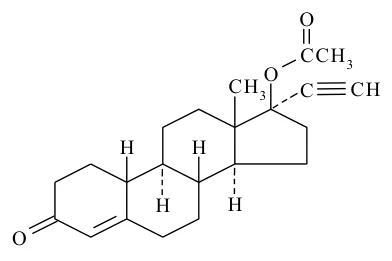
Table 3- Number of Patients Treated
| Norethindrone | Norethindrone Acetate | ||||||||
|---|---|---|---|---|---|---|---|---|---|
| No. of patients | No. of cycles | No. of patients | No. of cycles | ||||||
Menorrhagia Primary amenorrhoea Secondary amenorrhoea Oligomenorrhoea Dysmenorrhoea | 26 7 25 5 6 | 101 76 320 23 15 | Menorrhagia Secondary amenorrhoea Others | 38 10 8 | 205 22 20 | ||||
| Total | 69 | 535 | Total | 56 | 247 | ||||
14.2 Study Results
Forty-one patients with pelvic endometriosis form the basis of the study from Snaith et al. In 18 cases, initial diagnoses were made via laparotomy, without previous hormone therapy or surgery: treatment post-laparotomy and conservative surgery ranged from 800 to 6,000 mg of Norethindrone Acetate in total over a period of 7 to 8 weeks. All cases improved but how much of the improvement was the result of the conservative surgery (with extirpation of as much endometriosis as possible) is debatable.
Bishop et al described the use of Norethindrone Acetate that was administered to 20 dysmenorrhoeic women in 102 cycles for all the patients, with the object of inhibiting ovulation and thereby causing painless uterine bleeding. Pain was inhibited in 73% to 90% of patients with dosages of Norethindrone Acetate ranging from 15 mg to 20 mg daily.
In a study to evaluate the efficacy, safety and tolerability of an estrogen progestogen combination versus a low-dose Norethindrone Acetate for the treatment of symptomatic rectovaginal endometriotic post-surgical persistent pain, Vercellini et al. took 90 women with recurrent moderate to severe pain after unsuccessful conservative surgery for symptomatic rectovaginal endometriosis. Patients were treated with Norethindrone Acetate, 2.5 mg/day or with continuous treatment of oral ethinyl E2 in combination with Cyproterone Acetate. Five patients in the Norethindrone Acetate cohort were withdrawn due to adverse events, six patients were withdrawn due to treatment inefficacy and one patient, due to loss of follow-up. According to an intention-to-treat analysis, 28 out of 45 patients (62%) in the ethinyl E2 in combination with Cyproterone Acetate cohort and 33 out of 45 patients (73%) in the Norethindrone Acetate cohort were satisfied with the received treatment. Vercellini et al. concluded that low-dose Norethindrone Acetate could be considered an effective, tolerable and inexpensive first-choice medical alternative to repetitive surgery for treatment of symptomatic rectovaginal endometriotic lesions.
In a study by Muneyyirci-Delale et al, 52 women with symptomatic and laparoscopically confirmed endometriosis were given Norethindrone Acetate in order to evaluate its efficacy. Norethindrone Acetate was continued for 6 months to > 1 year and was started at the beginning of the menstrual cycle at a daily dose of 5mg which was increased by 2.5 mg up to 20 mg/day until amenorrhoea was achieved. Chronic pelvic pain and dymenorrhoea regressed in 89% and 92% respectively. At the end of treatment,
94% of women had few or no symptoms. Breakthrough bleeding was experienced by 30 of the 52 patients. Three patients dropped out because of inefficacy and one other because of breast tenderness.
15 MICROBIOLOGY
No microbiological information is required for this drug product.
16 NON-CLINICAL TOXICOLOGY
General Toxicology: High-dose administration of various estrogenic and progestogenic agents alone or in combination to susceptible strains of rodents has been shown to increase the incidence of specific tumors in the pituitary, uterus, breast, ovary, and liver. Administration of Norethindrone Acetate alone to rodents at several multiples of the human dose resulted in no treatment related mortality, hematological changes or behavioural changes. However, Norethindrone Acetate appears to cause cholestasis in rats. Rats given Norethindrone Acetate at 40 mg/kg-day for 5 days showed a 34% reduction in total bile flow.
Some beagle dogs treated with medroxyprogesterone acetate developed mammary nodules. Although nodules occasionally appeared in control animals, they were intermittent in nature whereas nodules in treated animals were larger and more numerous, and persisted. The laboratory dog, particularly the beagle, has unique endocrine properties such that caution should be exercised when extrapolating the results to human exposures. Progestins stimulate the production of growth hormone, which in turn leads to an increase in the number of palpable mammary tumors. Their significance in respect to humans has not been established.
The results of long-term monkey studies indicate that overall, long-term treatment with high doses of progestins fails to produce significant signs of systemic toxicity or tumor development. There were no hematologic or target organ pathologic findings attributable to steroid treatment. Only an occasional mammary nodule or local mammary hyperplasia was observed in monkeys given high doses of progestin for a period of 5 to 10 years.