


Product Monograph - Apo-Teriflunomide
RECENT MAJOR LABEL CHANGES
| 1 INDICATIONS, 1.1 Pediatrics | 02/2023 |
|---|---|
| 3 SERIOUS WARNINGS AND PRECAUTIONS BOX | 02/2023 |
| 4 DOSAGE AND ADMINISTRATION, 4.1 Dosing Considerations | 02/2023 |
| 4 DOSAGE AND ADMINISTRATION, 4.2 Recommended Dose and Dosage Adjustment | 02/2023 |
| 7 WARNINGS AND PRECAUTIONS, Cardiovascular | 02/2023 |
| 7 WARNINGS AND PRECAUTIONS, Hepatic/Biliary/Pancreatic | 01/2024 |
| 7 WARNINGS AND PRECAUTIONS, Reproductive Health: Female and Male Potential | 02/2023 |
| 7 WARNINGS AND PRECAUTIONS, Skin | 02/2023 |
| 7 WARNINGS AND PRECAUTIONS, Respiratory | 01/2024 |
| 7 WARNINGS AND PRECAUTIONS, 7.1 Special Populations, 7.1.3 Pediatric | 01/2024 |
TABLE OF CONTENTS
Sections or subsections that are not applicable at the time of authorization are not listed.
RECENT MAJOR LABEL CHANGES ............................................................................................. 2
TABLE OF CONTENTS ............................................................................................................... 2
PART I: HEALTH PROFESSIONAL INFORMATION ....................................................................... 4
1 INDICATIONS .................................................................................................................. 4
1.1 Pediatrics .................................................................................................................... 4
1.2 Geriatrics .................................................................................................................... 4
2 CONTRAINDICATIONS ..................................................................................................... 4
3 SERIOUS WARNINGS AND PRECAUTIONS BOX ................................................................ 5
4 DOSAGE AND ADMINISTRATION .................................................................................... 5
4.1 Dosing Considerations ................................................................................................ 5
4.2 Recommended Dose and Dosage Adjustment ........................................................... 6
4.5 Missed Dose ............................................................................................................... 7
5 OVERDOSAGE ................................................................................................................. 7
6 DOSAGE FORMS, STRENGTHS, COMPOSITION AND PACKAGING .................................... 7
7 WARNINGS AND PRECAUTIONS ..................................................................................... 8
7.1 Special Populations ................................................................................................ 17
7.1.1 Pregnant Women ................................................................................................... 17
7.1.2 Breast-feeding ........................................................................................................ 18
7.1.3 Pediatrics ................................................................................................................ 18
7.1.4 Geriatrics ................................................................................................................ 18
8 ADVERSE REACTIONS .................................................................................................... 19
8.1 Adverse Reaction Overview ...................................................................................... 19
8.2 Clinical Trial Adverse Reactions ................................................................................ 19
8.4 Abnormal Laboratory Findings: Hematologic, Clinical Chemistry and Other Quantitative Data ..................................................................................................... 23
8.5 Post-Market Adverse Reactions ............................................................................... 23
9 DRUG INTERACTIONS ................................................................................................... 24
9.2 Drug Interactions Overview ...................................................................................... 24
9.4 Drug-Drug Interactions ............................................................................................. 25
9.5 Drug-Food Interactions ............................................................................................. 28
9.6 Drug-Herb Interactions ............................................................................................. 28
9.7 Drug-Laboratory Test Interactions ............................................................................ 28
10 CLINICAL PHARMACOLOGY ........................................................................................... 28
10.1 Mechanism of Action ................................................................................................ 28
10.2 Pharmacodynamics .................................................................................................. 28
10.3 Pharmacokinetics ..................................................................................................... 29
11 STORAGE, STABILITY AND DISPOSAL............................................................................. 32
12 SPECIAL HANDLING INSTRUCTIONS .............................................................................. 32
PART II: SCIENTIFIC INFORMATION ........................................................................................ 33
13 PHARMACEUTICAL INFORMATION ............................................................................... 33
14 CLINICAL TRIALS ........................................................................................................... 33
14.1 Clinical Trials by Indication ..................................................................................... 33
14.2 Comparative Bioavailability Studies ....................................................................... 39
15 MICROBIOLOGY ............................................................................................................ 40
16 NON-CLINICAL TOXICOLOGY ......................................................................................... 40
17 SUPPORTING PRODUCT MONOGRAPHS ....................................................................... 42
PATIENT MEDICATION INFORMATION ................................................................................... 43
PART I: HEALTH PROFESSIONAL INFORMATION
1 INDICATIONS
APO-TERIFLUNOMIDE (teriflunomide) is indicated for:
- monotherapy for the treatment of patients with relapsing remitting multiple sclerosis (RRMS) to reduce the frequency of clinical exacerbations and to delay the accumulation of physical disability.
APO-TERIFLUNOMIDE should only be prescribed by clinicians who are experienced in the diagnosis and management of multiple sclerosis.
1.1 Pediatrics
Pediatrics (< 18 years of age): The safety and efficacy of teriflunomide have not been established in pediatric patients and APO-TERIFLUNOMIDE is not recommended in this patient population.
1.2 Geriatrics
Clinical studies of teriflunomide did not include patients over 65 years old. APO-TERIFLUNOMIDE should be used with caution in patients aged 65 years and over. Physicians who choose to treat geriatric patients should consider that treatment with APO-TERIFLUNOMIDE in the context of a greater frequency of other concomitant diseases and concomitant drug therapy warrants caution and may necessitate additional or more frequent monitoring (see 7 WARNINGS AND PRECAUTIONS, 7.1 Special Populations, 7.1.4 Geriatrics).
2 CONTRAINDICATIONS
APO-TERIFLUNOMIDE (teriflunomide) is contraindicated in patients:
- with known hypersensitivity to teriflunomide, leflunomide (the parent compound) or to any of the nonmedicinal ingredients in the formulation.
- who are currently treated with leflunomide. Co-administration of teriflunomide with leflunomide is contraindicated.
- with severe hepatic impairment (see 7 WARNINGS AND PRECAUTIONS, Hepatic/Biliary/Pancreatic).
- who are pregnant or women of childbearing potential not using reliable contraception (see 7 WARNINGS AND PRECAUTIONS, Reproductive Health: Female and Male Potential). APO-TERIFLUNOMIDE may cause fetal harm when administered to a pregnant woman. Pregnancy must be excluded before start of treatment.
- with immunodeficiency states (e.g. AIDS).
- with impaired bone marrow function or significant anemias, leucopenia, neutropenia or thrombocytopenia.
- with serious active infections.
3 SERIOUS WARNINGS AND PRECAUTIONS BOX
Serious Warnings and Precautions
Hepatotoxicity Severe liver injury including fatal liver failure occurred rarely in the post marketing setting. Concomitant use of APO-TERIFLUNOMIDE with other potentially hepatotoxic drugs may increase the risk of severe liver injury. Obtain transaminase and bilirubin levels within 6 months before initiation of APO-TERIFLUNOMIDE therapy. Monitor ALT levels at least monthly for at least six months after starting APO-TERIFLUNOMIDE (see 7 WARNINGS AND PRECAUTIONS, Hepatic/Biliary/Pancreatic). If drug induced liver injury is suspected, discontinue APO-TERIFLUNOMIDE and start an accelerated elimination procedure with cholestyramine or charcoal (see 7 WARNINGS AND PRECAUTIONS, Accelerated Elimination Procedure). APO-TERIFLUNOMIDE is contraindicated in patients with severe hepatic impairment. Patients with pre-existing liver disease may be at increased risk of developing elevated serum transaminases when taking APO-TERIFLUNOMIDE. Risk of Teratogenicity Based on animal data, teriflunomide may cause major birth defects if used during pregnancy. Pregnancy must be excluded before starting APO-TERIFLUNOMIDE. APO-TERIFLUNOMIDE is contraindicated in pregnant women or women of childbearing potential who are not using reliable contraception. Pregnancy must be avoided during APO-TERIFLUNOMIDE treatment or prior to the completion of an accelerated elimination procedure after APO-TERIFLUNOMIDE treatment (see 2 CONTRAINDICATIONS, 7 WARNINGS AND PRECAUTIONS, Reproductive Health: Female and Male Potential, Accelerated Elimination Procedure and 7.1 Special Populations, 7.1.1 Pregnant Women). |
|---|
4 DOSAGE AND ADMINISTRATION
4.1 Dosing Considerations
Monitoring recommended prior to initiating and during treatment:
Obtain transaminase and bilirubin levels within 6 months before initiation of APO-TERIFLUNOMIDE therapy. Monitor ALT levels at least monthly for at least six months after starting APO-TERIFLUNOMIDE (see 7 WARNINGS AND PRECAUTIONS, Hepatic/Biliary/Pancreatic).
Obtain a complete blood cell count (CBC) within 6 months before the initiation of treatment with APO-TERIFLUNOMIDE and periodically during treatment. Further monitoring should be based on signs and symptoms of infection (see 7 WARNINGS AND PRECAUTIONS, Hematologic).
Prior to initiating APO-TERIFLUNOMIDE, screen patients for latent tuberculosis infection (see 7 WARNINGS AND PRECAUTIONS, Immune - Infections).
Check blood pressure before start of APO-TERIFLUNOMIDE treatment and periodically throughout treatment (see 7 WARNINGS AND PRECAUTIONS, Cardiovascular).
- Obtain a negative pregnancy test before initiation of treatment with APO-TERIFLUNOMIDE (see 7 WARNINGS AND PRECAUTIONS, 7.1 Special Populations, 7.1.1 Pregnant Women).
4.2 Recommended Dose and Dosage Adjustment
The recommended dose of APO-TERIFLUNOMIDE is 14 mg orally once daily which can be taken with or without food.
Pediatric patients
The safety and efficacy of teriflunomide have not been established in pediatric patients and APO-TERIFLUNOMIDE is not recommended in this patient population.
Geriatric patients
Clinical studies of teriflunomide did not include patients over 65 years old. APO-TERIFLUNOMIDE should be used with caution in patients aged 65 years and overdue the greater frequency of other concomitant diseases and concomitant drug therapy (see 2 CONTRAINDICATIONS, 7 WARNINGS AND PRECAUTIONS, 7.1 Special Populations, 7.1.4 Geriatrics, 10 CLINICAL PHARMACOLOGY, 10.3 Pharmacokinetics, Special Populations and Conditions).
Hepatic impairment
No dosage adjustment is necessary for patients with mild and moderate hepatic impairment. Teriflunomide is contraindicated in patients with severe hepatic impairment (see 2 CONTRAINDICATIONS, 7 WARNINGS AND PRECAUTIONS, Hepatic/Biliary/Pancreatic).
Renal impairment
No dosage adjustment is necessary for patients with severe renal impairment (see 7 WARNINGS AND PRECAUTIONS, Renal).
Patients with severe renal impairment undergoing dialysis were not evaluated. Teriflunomide is not recommended in this population.
4.5 Missed Dose
If a dose is missed, treatment should be continued with the next dose as planned.
5 OVERDOSAGE
There is no experience regarding teriflunomide symptomatic overdose or intoxication in humans.
Teriflunomide 70 mg daily up to 14 days was well tolerated by healthy subjects.
In the event of relevant overdose or toxicity, cholestyramine or activated charcoal is recommended to accelerate elimination (see 7 WARNINGS AND PRECAUTIONS, General, Accelerated Elimination Procedure).
| For management of a suspected drug overdose, contact your regional poison control centre. |
|---|
6 DOSAGE FORMS, STRENGTHS, COMPOSITION AND PACKAGING
Table – Dosage Forms, Strengths, Composition and Packaging
| Route of Administration | Dosage Form / Strength / Composition | Non-medicinal Ingredients |
|---|---|---|
| Oral | Film-coated tablet/14 mg | Colloidal silicon dioxide, croscarmellose sodium, indigotine AL lake 12-14% (BLUE #2), lactose monohydrate, magnesium stearate, meglumine, microcrystalline cellulose, polyethylene glycol, polyvinyl alcohol, talc, and titanium dioxide |
APO-TERIFLUNOMIDE is available in film-coated tablets containing 14 mg of teriflunomide: Pale blue, arc pentagonal, biconvex coated tablet. Engraved "14" on one side, "APO" on the other side.
APO-TERIFLUNOMIDE is supplied as:
- Carton of 28 tablets of 14 mg containing 1 wallet composed of 2 folded blister cards of 14 tablets per blister card
- Bottle of 30 tablets
7 WARNINGS AND PRECAUTIONS
Please see 3 SERIOUS WARNINGS AND PRECAUTIONS BOX.
General
Accelerated Elimination Procedure
Teriflunomide is eliminated slowly from the plasma.
Without an accelerated elimination procedure, it takes on average 8 months to reach plasma concentrations less than 0.02 mg/L, however, due to individual variations in drug clearance it may take as long as 2 years. An accelerated elimination procedure could be used at any time after discontinuation of APO-TERIFLUNOMIDE.
Elimination can be accelerated by either of the following procedures:
- Administration of cholestyramine 8 g every 8 hours for 11 days. If cholestyramine 8 g three times a day is not well tolerated, cholestyramine 4 g three times a day can be used.
- Administration of 50 g oral activated charcoal powder every 12 hours for 11 days.
If either elimination procedure is poorly tolerated, treatment days do not need to be consecutive unless there is a need to lower teriflunomide plasma concentration rapidly.
At the end of 11 days, both regimens successfully accelerated teriflunomide elimination, leading to more than 98% decrease in teriflunomide plasma concentrations.
Use of the accelerated elimination procedure may potentially result in a gradual return of disease activity if the patient had been responding to APO-TERIFLUNOMIDE treatment.
Both cholestyramine and activated powdered charcoal may interact with the absorption of some concomitant medications. In particular, it can influence the absorption of oestrogens and progestogens such that reliable contraception with oral contraceptives may not be guaranteed during the accelerated elimination procedure with cholestyramine or activated charcoal. Use of alternative contraceptive method is recommended.
Lactose
Because APO-TERIFLUNOMIDE tablets contain lactose, patients with rare hereditary problems of galactose intolerance, lactase deficiency or glucose-galactose malabsorption, should not take APO-TERIFLUNOMIDE.
Cardiovascular
In the multiple sclerosis placebo-controlled studies, mean change from baseline to endpoint value in systolic blood pressure was 2.6 mmHg for teriflunomide 14 mg, and -0.8 mmHg for placebo. The change from baseline in diastolic blood pressure was 1.8 mmHg for teriflunomide 14 mg and -0.5 mmHg for placebo.
Hypertension was reported as an adverse reaction in 4.2% of patients treated with 14 mg of teriflunomide, compared with 2% on placebo for up to 2 years in the placebo-controlled trials. During a long-term extension safety study, new onset hypertension was reported as a treatment emergent adverse event in 13.4% of patients overall who were treated with teriflunomide 14 mg for a median duration of approximately 5 years. At each 6-month interval during long-term treatment, treatment emergent adverse events of new onset hypertension were reported in up to 3% of patients treated with teriflunomide. Check blood pressure before the initiation of treatment with APO-TERIFLUNOMIDE and periodically throughout treatment. Elevated blood pressure should be appropriately managed during treatment with APO-TERIFLUNOMIDE.
Hematologic
A mean decrease in white blood cell (WBC) count of approximately 15% (mainly neutrophils and lymphocytes) and in platelet count of approximately 10% was observed in placebo-controlled trials with teriflunomide as compared to baseline. The decrease in mean WBC count occurred during the first 6 weeks and WBC count remained at the decreased level during treatment (see 8 ADVERSE REACTIONS).
The majority of patients recovered from decreased neutrophils and/or lymphocyte cell counts in less than 8 weeks, whether continuing on teriflunomide or after discontinuation.
Rare cases of pancytopenia, agranulocytosis and thrombocytopenia have been reported in the postmarketing setting with leflunomide. A similar risk is expected for teriflunomide.
Obtain a complete blood cell count (CBC) within 6 months before initiating treatment with APO-TERIFLUNOMIDE and periodically during treatment. Further monitoring should be based on signs and symptoms suggestive of infection.
In any situation in which the decision is made to switch to or from APO-TERIFLUNOMIDE, from or to another agent with a known potential for hematologic suppression, monitoring for hematologic toxicity is recommended, because there will be overlap of systemic exposure to both compounds, due to the slow elimination from plasma of teriflunomide and some of the other therapies (eg, natalizumab, fingolimod). Use of an accelerated elimination procedure may decrease this risk when switching to another therapy, but may also potentially result in return of disease activity if the patient had been responding to APO-TERIFLUNOMIDE treatment (see 10 CLINICAL PHARMACOLOGY, 10.3 Pharmacokinetics; 7 WARNINGS AND PRECAUTIONS, Accelerated Elimination Procedure).
In patients with pre-existing anemia, leucopenia, and/or thrombocytopenia as well as in patients with impaired bone marrow function or those at risk of bone marrow suppression, the risk of hematological disorders is increased. If such effects occur, the accelerated elimination procedure should be considered.
Hepatic/Biliary/Pancreatic
Hepatic
Liver function abnormalities have been reported in some patients treated with teriflunomide in clinical trials. Severe liver injury including fatal liver failure occurred rarely in the post marketing setting. Patients with pre-existing liver disease may be at increased risk of developing elevated serum transaminases when taking APO-TERIFLUNOMIDE. Patients with pre-existing acute or chronic liver disease, or those with serum alanine aminotransferase (ALT) greater than two times the upper limit of normal (ULN) before initiating treatment, should not normally be treated with APO-TERIFLUNOMIDE. APO-TERIFLUNOMIDE is contraindicated in patients with severe hepatic impairment (see 2 CONTRAINDICATIONS).
Elevations of liver enzymes have been observed in patients receiving teriflunomide.
In placebo-controlled trials, ALT greater than three times the ULN occurred in 44/786 (5.6%) of patients on teriflunomide 14 mg and 30/806 (3.7%) of patients on placebo, during the treatment period of up to 2 years. These elevations occurred mostly within the first 6 months of treatment. Half of the cases returned to normal without drug discontinuation. In clinical trials, teriflunomide was discontinued if the ALT elevation exceeded 3 times the ULN on two consecutive tests.
Of the patients who underwent discontinuation of teriflunomide and accelerated elimination in controlled trials, serum transaminase levels returned to normal within approximately 2 months.
In controlled clinical trials, one serious case of “toxic hepatitis” was reported in a 35-year-old female patient. The patient developed ALT 32 times the ULN and jaundice 5 months after initiation of teriflunomide 14 mg treatment. The patient was hospitalized for 5 weeks and recovered after plasmapheresis and cholestyramine accelerated elimination procedure. Although the etiology of the hepatic event remained unclear, a causal role of teriflunomide in this case is possible.
Cases of drug-induced liver injury (DILI) have been observed in the post-marketing setting, sometimes life-threatening (see 8 ADVERSE REACTIONS, 8.5 Post-Market Adverse Reactions). The time to onset of DILI ranged from days to years after initiating treatment with teriflunomide. Drug-induced liver injury events were reported in patients with and without relevant risk factors, such as a history of drug-induced hepatotoxicity or concomitant use of other hepatotoxic drugs, including some drugs used for managing multiple sclerosis. Due to the potential for severe liver injury, exercise caution and closely monitor patients if other known or potentially hepatotoxic drugs are used in combination with APO-TERIFLUNOMIDE or if there is a history of drug-induced hepatotoxicity (see 3 SERIOUS WARNINGS AND PRECAUTIONS BOX, Hepatotoxicity and Risk of Teratogenicity).
For all patients, obtain serum transaminase and bilirubin levels within 6 months before initiating treatment with APO-TERIFLUNOMIDE. Monitor ALT levels at least monthly for at least six months after starting APO-TERIFLUNOMIDE. Additional monitoring is recommended if APO-TERIFLUNOMIDE is used with other potentially hepatotoxic drugs or if there is a history of drug-induced hepatotoxicity. Consider discontinuing APO-TERIFLUNOMIDE if serum transaminase increase (greater than three times the ULN) is confirmed. Monitor serum transaminase and bilirubin on APO-TERIFLUNOMIDE therapy, particularly in patients who develop symptoms suggestive of hepatic dysfunction, such as unexplained nausea, vomiting, abdominal pain, fatigue, anorexia, or jaundice and/or dark urine. Patients should be advised to immediately report signs or symptoms of hepatotoxicity. If liver injury is suspected to be teriflunomide-induced, discontinue APO-TERIFLUNOMIDE and start an accelerated elimination procedure (see 7 WARNINGS AND PRECAUTIONS, General, Accelerated Elimination Procedure) and monitor liver tests weekly until normalized. If teriflunomide-induced liver injury is unlikely because some other probable cause has been found, resumption of teriflunomide therapy may be considered.
Due to a potential for additive hepatotoxic effects, alcohol consumption should be avoided during treatment with APO-TERIFLUNOMIDE.
Hypoproteinemia
Since teriflunomide is highly protein bound and as the binding is dependent upon the concentrations of albumin, unbound plasma teriflunomide concentrations are expected to be increased in patients with hypoproteinemia, e.g. in nephrotic syndrome. Teriflunomide is not recommended in patients with conditions of severe hypoproteinemia.
Hepatic Impairment
APO-TERIFLUNOMIDE is contraindicated in patients with severe hepatic impairment (see 2 CONTRAINDICATIONS, 7 WARNINGS AND PRECAUTIONS, Hepatic/Biliary/Pancreatic).
Mild and moderate hepatic impairment had no impact on the pharmacokinetics of teriflunomide. No dosage adjustment is anticipated for patients with mild and moderate hepatic impairment.
Pancreatitis
Very rare cases of acute symptomatic pancreatitis with no alternative etiologies, have been reported during treatment with teriflunomide in adult MS patients (see 8 ADVERSE REACTIONS, 8.5 Post-Market Adverse Reactions).
In a clinical trial of pediatric MS patients the frequency of pancreatitis was higher in patients treated with teriflunomide than in patients that received placebo and, higher than what has been observed in adult MS patients (see 8.2 Clinical Trial Adverse Reactions, Pediatric population).
For patients with symptoms of acute pancreatitis that are suspected to be teriflunomide-induced, discontinue APO-TERIFLUNOMIDE and start an accelerated elimination procedure (see 7 WARNINGS AND PRECAUTIONS, General, Accelerated Elimination Procedure).
Immune
Infections
Patients with active acute or chronic infections should not start treatment until the infection(s) is resolved. If a patient develops a serious infection during treatment, consider suspending treatment with APO-TERIFLUNOMIDE and using an accelerated elimination procedure (see 7 WARNINGS AND PRECAUTIONS, General, Accelerated Elimination Procedure). Reassess the benefits and risks prior to resumption of therapy. Instruct patients receiving APO-TERIFLUNOMIDE to report symptoms of infections to a physician.
APO-TERIFLUNOMIDE is contraindicated in patients with severe immunodeficiency, bone marrow disease, or severe, uncontrolled infections (see 2 CONTRAINDICATIONS). Medications like teriflunomide that have immunomodulatory potential may cause patients to be more susceptible to infections, including opportunistic infections.
In placebo-controlled studies of teriflunomide, no overall increase in the risk of serious infections was observed with teriflunomide 14 mg 2.5% compared to placebo 2.5%. However, one fatal case of klebsiella pneumonia sepsis occurred in a patient taking teriflunomide 14 mg for 1.7 years. In clinical studies with teriflunomide, cytomegalovirus hepatitis reactivation has been observed. Fatal infections, especially Pneumocystis jiroveci pneumonia and aspergillosis, have been reported in the postmarketing setting, in patients receiving leflunomide for treatment of rheumatoid arthritis. Most of the reports were confounded by concomitant immunosuppressant therapy and/or comorbid illness which, in addition to rheumatoid disease, may predispose patients to infection.
In clinical studies with teriflunomide, cases of tuberculosis have been observed. Prior to initiating APO-TERIFLUNOMIDE, screen patients for latent tuberculosis infection. The safety of APO-TERIFLUNOMIDE in individuals with latent tuberculosis infection is unknown, as tuberculosis screening was not systematically performed in clinical studies. For patients testing positive in tuberculosis screening, treat by standard medical practice prior to initiating treatment with APO-TERIFLUNOMIDE.
Hypersensitivity
Cases of hypersensitivity, angioedema and anaphylactic reaction have been reported during the post-marketing period (see 8 ADVERSE REACTIONS, 8.5 Post-Market Adverse Reactions).
Advise the patient to discontinue APO-TERIFLUNOMIDE and seek immediate medical care if any signs or symptoms of anaphylaxis or angioedema occurs.
Concomitant use of Immunosuppressive or Immunomodulating Therapies
As leflunomide is the parent compound of teriflunomide, co-administration of APO-TERIFLUNOMIDE with leflunomide is contraindicated.
Co-administration with antineoplastic or immunosuppressive therapies has not been evaluated and is not recommended due to the potential risk of additive immune system effects.
Switching to or from APO-TERIFLUNOMIDE
Based on the clinical data related to concomitant administration of teriflunomide with interferon beta or with glatiramer acetate, no waiting period is required when initiating APO-TERIFLUNOMIDE after interferon beta or glatiramer acetate or when starting interferon beta or glatiramer acetate after APO-TERIFLUNOMIDE.
For switches to or from natalizumab or fingolimod see 7 WARNINGS AND PRECAUTIONS, Hematologic.
Due to the characteristics and duration of alemtuzumab immune suppressive effects, initiating treatment with APO-TERIFLUNOMIDE after alemtuzumab is not recommended unless the benefits of APO-TERIFLUNOMIDE treatment clearly outweigh the risks for the individual patient.
Vaccination
Two clinical studies have shown that teriflunomide treated patients mounted appropriate immune responses when vaccinated with inactivated neoantigen (first vaccination), or recall antigen (reexposure). No clinical data are available on the efficacy and safety of live vaccinations in patients taking teriflunomide. Vaccination with live vaccines is, however, not recommended. The long half-life of teriflunomide should be considered when contemplating administration of a live vaccine after stopping APO-TERIFLUNOMIDE.
Monitoring and Laboratory Tests
- Check blood pressure before initiation of treatment with APO-TERIFLUNOMIDE and periodically throughout treatment. Blood pressure should be appropriately managed during treatment with APO-TERIFLUNOMIDE.
- Obtain a complete blood cell (CBC) count before initiation of treatment with APO-TERIFLUNOMIDE and periodically during treatment. Further monitoring should be based on signs and symptoms suggestive of infection.
- Obtain serum transaminases and bilirubin levels within 6 months before initiation of treatment with APO-TERIFLUNOMIDE. Monitor ALT levels at least monthly for at least six months after starting APO-TERIFLUNOMIDE.
- Obtain a negative pregnancy test before initiation of treatment with APO-TERIFLUNOMIDE.
Neurologic
Peripheral Neuropathy
In placebo-controlled studies, peripheral neuropathy, including both polyneuropathy and mononeuropathy (e.g., carpal tunnel syndrome), was reported more frequently in patients taking teriflunomide than in patients taking placebo. In the pivotal, placebo-controlled studies, the incidence of peripheral neuropathy confirmed by nerve conduction studies was 2.2% (15 patients out of 685) on 14 mg of teriflunomide, compared with 0.6% (4 patients out of 708) on placebo. Treatment was discontinued in 2 patients with confirmed peripheral neuropathy on 14 mg of teriflunomide; one of them recovered following treatment discontinuation. The other case of peripheral neuropathy did not resolve with continued treatment. There have also been reports of peripheral neuropathy in patients receiving leflunomide.
Age older than 60 years, concomitant neurotoxic medications, and diabetes may increase the risk for peripheral neuropathy. If a patient taking APO-TERIFLUNOMIDE develops symptoms consistent with peripheral neuropathy, such as bilateral numbness or tingling of hands or feet, consider discontinuing APO-TERIFLUNOMIDE therapy and performing an accelerated elimination procedure (see 7 WARNINGS AND PRECAUTIONS, General, Accelerated Elimination Procedure).
Renal
Severe renal impairment had no impact on the pharmacokinetics of teriflunomide. No dosage adjustment is necessary for patients with severe renal impairment.
Patients with severe renal impairment undergoing dialysis were not evaluated. Teriflunomide is not recommended in this population.
Reproductive Health: Female and Male Potential
Teratogenic Risk
Use in Women of Childbearing Potential
APO-TERIFLUNOMIDE is contraindicated in women who are pregnant or women of child bearing potential not using reliable contraception. If the patient becomes pregnant while taking this drug, the patient should be apprised of the potential hazard to a fetus. If pregnancy does occur during treatment, the drug should be immediately discontinued and an accelerated elimination procedure should be initiated (see 7 WARNINGS AND PRECAUTIONS, General, Accelerated Elimination Procedure). Under these conditions, the patient should be referred to an obstetrician/gynecologist, preferably experienced in reproductive toxicity, for further evaluation and counseling.
There are no adequate and well-controlled studies of teriflunomide in pregnant women.
However, based on animal studies, teriflunomide may increase the risk of fetal death or teratogenic effects when administered to pregnant women (see 16 NON-CLINICAL TOXICOLOGY, Reproductive and Developmental Toxicology).
In animal studies, teriflunomide has been shown to be selectively teratogenic and embryolethal in multiple species when administered during pregnancy at doses less than those used clinically.
Women of childbearing potential must not be started on APO-TERIFLUNOMIDE until pregnancy is excluded and it has been confirmed that they are using reliable contraception (see 2 CONTRAINDICATIONS). Before starting treatment with APO-TERIFLUNOMIDE, patients must be fully counseled on the potential for serious risk to the fetus (see 3 SERIOUS WARNINGS AND PRECAUTIONS BOX, Hepatotoxicity and Risk of Teratogenicity). The patient must be advised that if there is any delay in onset of menses or any other reason to suspect pregnancy, they must notify the physician immediately for pregnancy testing and, if positive, the physician and patient must discuss the risk to the fetus.
Upon discontinuing APO-TERIFLUNOMIDE, it is recommended that all women of childbearing potential not using reliable contraception undergo an accelerated elimination procedure (see 7 WARNINGS AND PRECAUTIONS, General, Accelerated Elimination Procedure). Women receiving APO-TERIFLUNOMIDE treatment who wish to become pregnant must discontinue APO-TERIFLUNOMIDE and undergo an accelerated elimination procedure, which includes verification that teriflunomide plasma concentrations decreases to at least 0.02 mg/L. Human plasma concentrations of teriflunomide less than 0.02 mg/L are expected to have minimal risk.
APO-TERIFLUNOMIDE can increase the plasma concentration of oral contraceptives 1.54-fold, therefore consideration should be given to the type or dose of oral contraceptives used (see 9 DRUG INTERACTIONS).
Use in Males
Teriflunomide is detected in human semen. Animal studies to specifically evaluate the risk of male-mediated fetal toxicity have not been conducted. To minimize any possible risk, men not wishing to father a child and their female partners should use reliable contraception. Men wishing to father a child should discontinue use of APO-TERIFLUNOMIDE and undergo an accelerated elimination procedure (see 7 WARNINGS AND PRECAUTIONS, General, Accelerated Elimination Procedure) to decrease the plasma concentration of teriflunomide to less than 0.02 mg/L.
Respiratory
Interstitial lung disease (ILD), including acute interstitial pneumonitis has been reported with teriflunomide in the post marketing setting.
ILD, and worsening of interstitial lung disease have been reported during treatment with leflunomide, the parent compound of teriflunomide. ILD is a potentially fatal disorder and may occur acutely at any time during treatment with a variable clinical presentation. The risk is increased in patients with a history of ILD.
Serious cases of pulmonary hypertension, some with a fatal outcome, have been reported with teriflunomide in the post marketing setting (see 8 ADVERSE REACTIONS, 8.5 Post-Market Adverse Reactions). The time to onset of pulmonary hypertension ranged from days to years after initiating treatment with teriflunomide. In several cases the patients had underlying hypertension, pulmonary hypertension, pulmonary embolism, or ILD.
New onset or worsening of pulmonary symptoms, such as persistent cough and dyspnea, with or without associated fever, may be a reason for discontinuation of the therapy and for further investigation, as appropriate. If discontinuation of the drug is necessary, consider initiation of an accelerated elimination procedure (see 7 WARNINGS AND PRECAUTIONS, General, Accelerated Elimination Procedure).
Skin
Severe cutaneous adverse reactions (SCARs)
Cases of serious skin reactions, sometimes fatal, including Stevens-Johnson syndrome (SJS), toxic epidermal necrolysis (TEN), and drug reaction with eosinophilia and systemic symptoms (DRESS), have been reported in the postmarketing setting in patients treated with teriflunomide for MS.
If skin and/or mucosal reactions (ulcerative stomatitis) are observed which raise the suspicion of severe generalised major skin reactions (Stevens-Johnson syndrome, toxic epidermal necrolysis, or drug reaction with eosinophilia and systemic symptoms), APO-TERIFLUNOMIDE must be discontinued, and an accelerated elimination procedure initiated immediately (see 7 WARNINGS AND PRECAUTIONS, General, Accelerated Elimination Procedure).
In such cases patients should not be re-exposed to APO-TERIFLUNOMIDE (see 2 CONTRAINDICATIONS).
New onset of psoriasis (including pustular psoriasis) and worsening of pre-existing psoriasis have been reported during use of teriflunomide. Discontinuation of treatment and initiation of an accelerated elimination procedure may be considered, taking into account the patient’s disease and medical history (see 8 ADVERSE REACTIONS, 8.5 Post-Market Adverse Reactions).
7.1 Special Populations
7.1.1 Pregnant Women
APO-TERIFLUNOMIDE is contraindicated for pregnant women or women of childbearing age not using reliable contraception (see 2 CONTRAINDICATIONS and 7 WARNINGS AND PRECAUTIONS, Reproductive Health: Female and Male Potential).
There are no adequate and well-controlled studies of teriflunomide in pregnant women.
However, based on animal studies, teriflunomide may increase the risk of fetal death or teratogenic effects when administered to pregnant women (see 16 NON-CLINICAL TOXICOLOGY, Reproductive and Developmental Toxicology).
Women of childbearing potential must not be started on APO-TERIFLUNOMIDE until pregnancy is excluded and it has been confirmed that they are using reliable contraception. Before starting treatment with APO-TERIFLUNOMIDE, patients must be fully counseled on the potential for serious risk to the fetus (see 7 WARNINGS AND PRECAUTIONS, Reproductive Health: Female and Male Potential).
Teriflunomide Enhanced Pharmacovigilance Pregnancy Active Surveillance Program:
Patients who have become pregnant or suspect they could be pregnant while taking APO-TERIFLUNOMIDE or up to two years after discontinuing APO-TERIFLUNOMIDE treatment should contact their healthcare professional. An Enhanced Pharmacovigilance Pregnancy Active Surveillance Program has been established to collect information about the effect of teriflunomide exposure during pregnancy. Physicians are encouraged to enroll pregnant women in the Enhanced Pharmacovigilance Pregnancy Active Surveillance Program, or pregnant women may enroll themselves in the Enhanced Pharmacovigilance Pregnancy Active Surveillance Program by calling 1-800-667-4708 or 416-401-7780 (follow prompts), and can access the program details and educational materials at the following website https://www1.apotex.com/products.
Labour and Delivery
There is no adequate information regarding the effects of teriflunomide on labour and delivery in pregnant women.
7.1.2 Breast-feeding
Animal studies have shown excretion of teriflunomide in breast milk.
It is not known whether this drug is excreted in human milk. Because many drugs are excreted in human milk and because of the potential for serious adverse reactions in nursing infants from teriflunomide, a decision should be made whether to discontinue nursing or to discontinue the drug, taking into account the importance of the drug to the mother.
7.1.3 Pediatrics
Pediatrics (< 18 years of age): The safety and efficacy of teriflunomide have not been established in pediatric patients and teriflunomide tablets is not recommended in this patient population (see 7 WARNINGS AND PRECAUTIONS, Hepatic/Biliary/Pancreatic; 8.2 Clinical Trial Adverse Reactions, Pediatric Population).
7.1.4 Geriatrics
Clinical studies of teriflunomide did not include patients over 65 years old teriflunomide tablets should be used with caution in patients aged 65 years and over. Physicians who choose to treat geriatric patients should consider that treatment with teriflunomide tablets in the context of a greater frequency of other concomitant diseases and concomitant drug therapy warrants caution and may necessitate additional or more frequent monitoring.
8 ADVERSE REACTIONS
8.1 Adverse Reaction Overview
The following most common adverse reactions were reported with a frequency ≥10% in the 14 mg teriflunomide group and a difference of ≥1% as compared to placebo: alopecia, diarrhea, ALT increased, and nausea.
The safety findings during long-term treatment with teriflunomide were generally consistent with those reported during the 2-year placebo controlled clinical trials (see 8 ADVERSE REACTIONS, Long-term safety).
Teriflunomide is the main metabolite of leflunomide. The safety profile of leflunomide in patients suffering from rheumatoid arthritis may be pertinent when prescribing teriflunomide in MS patients.
8.2 Clinical Trial Adverse Reactions
Because clinical trials are conducted under very specific conditions the adverse reaction rates observed in the clinical trials may not reflect the rates observed in practice and should not be compared to the rates in the clinical trials of another drug. Adverse drug reaction information from clinical trials may be useful in identifying and approximating rates of adverse reaction in real-world use.
Adult
Placebo Controlled Trials
A total of 786 patients on teriflunomide 14 mg once daily and 806 on placebo constituted the safety population in the pooled analysis of placebo-controlled studies in patients with relapsing remitting forms of MS (RRMS) (see 14 CLINICAL TRIALS).
Table 1 - Adverse Reactions in Placebo controlled studies (occurring in ≥ 1% of patients, and reported for teriflunomide 14 mg at ≥1% higher rate than for placebo)
| Teriflunomide | ||
|---|---|---|
PRIMARY SYSTEM ORGAN CLASS Preferred Term (%) | 14 mg (N=786) | Placebo (N=806) |
| INFECTIONS AND INFESTATIONS | ||
| Influenza | 72 (9.2%) | 60 (7.4%) |
| Sinusitis | 47 (6.0%) | 31 (3.8%) |
| Gastroenteritis viral | 23 (2.9%) | 11 (1.4%) |
| Oral herpes | 19 (2.4%) | 10 (1.2%) |
| Teriflunomide | ||
|---|---|---|
PRIMARY SYSTEM ORGAN CLASS Preferred Term (%) | 14 mg (N=786) | Placebo (N=806) |
| BLOOD AND LYMPHATIC SYSTEM DISORDERS | ||
| Neutropenia | 54 (6.9%) | 13 (1.6%) |
| NERVOUS SYSTEM DISORDERS | ||
| Paraesthesia | 66 (8.4%) | 57 (7.1%) |
| Carpal tunnel syndrome | 16 (2.0%) | 8 (1.0%) |
| VASCULAR DISORDERS | ||
| Hypertension | 33 (4.2%) | 16 (2.0%) |
| RESPIRATORY, THORACIC AND MEDIASTINAL DISORDERS | ||
| Dyspnoea | 13 (1.7%) | 5 (0.6%) |
| GASTROINTESTINAL DISORDERS | ||
| Diarrhoea | 113 (14.4%) | 63 (7.8%) |
| Nausea | 97 (12.3%) | 63 (7.8%) |
| Abdominal pain upper | 44 (5.6%) | 35 (4.3%) |
| Toothache | 25 (3.2%) | 15 (1.9%) |
| SKIN AND SUBCUTANEOUS TISSUE DISORDERS | ||
| Alopecia | 111 (14.1%) | 35 (4.3%) |
| Rash | 39 (5.0%) | 27 (3.3%) |
| MUSCULOSKELETAL AND CONNECTIVE TISSUE DISORDERS | ||
| Musculoskeletal pain | 28 (3.6%) | 19 (2.4%) |
| RENAL AND URINARY DISORDERS | ||
| Pollakiuria | 16 (2.0%) | 8 (1.0%) |
| REPRODUCTIVE SYSTEM AND BREAST DISORDERS | ||
| Menorrhagia | 12 (1.5%) | 3 (0.4%) |
| INVESTIGATIONS | ||
| Alanine aminotransferase increased | 110 (14.0%) | 62 (7.7%) |
| Aspartate aminotransferase increased | 24 (3.1%) | 10 (1.2%) |
| Weight decreased | 21 (2.7%) | 8 (1.0%) |
| Teriflunomide | ||
|---|---|---|
PRIMARY SYSTEM ORGAN CLASS Preferred Term (%) | 14 mg (N=786) | Placebo (N=806) |
| Gamma-glutamyltransferase increased | 18 (2.3%) | 7 (0.9%) |
| Neutrophil count decreased | 17 (2.2%) | 8 (1.0%) |
| White blood cell count decreased | 11 (1.4%) | 2 (0.2%) |
The most frequently reported (in > 1% of patients treated with teriflunomide) Treatment Emergent Adverse Events leading to discontinuation are neutropenia 8 (1%), alopecia 12 (1.5%) and alanine aminotransferase increased 14 (1.7%).
Cardiovascular deaths
Four cardiovascular deaths, including three sudden deaths, and one myocardial infarction in a patient with a history of hyperlipidemia and hypertension were reported among approximately 2600 patients exposed to teriflunomide in the premarketing database. These cardiovascular deaths occurred during uncontrolled extension studies, one to nine years after initiation of treatment. A relationship between teriflunomide and cardiovascular death has not been established.
Hypophosphatemia
In clinical trials, 17% of 14 mg teriflunomide-treated subjects had mild hypophosphatemia (≥ 0.6 mmol/L and < lower limit of normal), compared to 6% of placebo-treated subjects; 5% of 14 mg teriflunomide-treated subjects had moderate hypophosphatemia (≥0.3 mmol/L and <0.6 mmol/L), compared to 1% of placebo-treated subjects. No subject on teriflunomide 14 mg had a serum phosphorus <0.3 mmol/L.
Mean changes from baseline in inorganic phosphorus over time showed an effect of teriflunomide compared to placebo. The decrease in inorganic phosphorus in the teriflunomide groups was apparent as early as Week 2. The mean inorganic phosphorus level with teriflunomide decreased steadily within the first 6 to 12 weeks and stabilized thereafter until the end of the study. At Week 12 the mean changes from baseline in inorganic phosphorus were -0.01 mmol/L, and -0.14 mmol/L on placebo, and 14 mg, respectively.
Alopecia
Alopecia was reported as hair thinning, decreased hair density, hair loss, associated or not with hair texture change, in 14.6% of patients treated with 14 mg teriflunomide versus 4.5% in patients treated with placebo. Most cases were described as diffuse or generalized over scalp (no complete hair loss reported) and occurred most often during the first 6 months and with resolution in 100 of 115 (87%) patients treated with teriflunomide 14 mg; with almost all cases resolving while on therapy. Discontinuation because of alopecia was 1.5% in the 14 mg teriflunomide group, versus, 0.1% in the placebo group.
Long-term safety
A long term extension of one of the placebo-controlled clinical trials (TEMSO) in patients with RRMS evaluated the safety of teriflunomide in patients treated with teriflunomide for an overall median treatment duration of approximately 5 years (maximum treatment duration approximately 8.5 years). The safety findings during long-term treatment with teriflunomide were generally consistent with those reported during the 2-year placebo controlled clinical trials (see 7 WARNINGS AND PRECAUTIONS, Monitoring and laboratory tests; 8 ADVERSE REACTIONS, 8.2 Clinical Trial Adverse Reactions, Placebo Controlled Trials).
Pediatric Population
In a clinical trial that included pediatric MS patients, pancreatitis was observed in 1.8% (2/109) of patients that received teriflunomide compared to no patients (0/57) that received placebo; one of these cases was serious. Two additional cases of pancreatitis were reported during treatment with teriflunomide in the open-label phase of the study. Clinical symptoms included abdominal pain, nausea and/or vomiting. Serum amylase and lipase were elevated in these patients. The time to onset was approximately one to three years. All patients recovered or were recovering after treatment discontinuation and an accelerated elimination procedure (see 7 WARNINGS AND PRECAUTIONS General, Accelerated Elimination Procedure; 7 WARNINGS AND PRECAUTIONS, Hepatic/Biliary/Pancreatic).
The following adverse reactions were also reported more frequently in the pediatric MS clinical trial than in the adult MS clinical trials:
Alopecia was reported in 22.0% of patients treated with teriflunomide versus 12.3% in patients treated with placebo.
Infections were reported in 66.1% of patients treated with teriflunomide versus 45.6% in patients treated with placebo. Among them, nasopharyngitis and upper respiratory tract infections were reported more frequently with teriflunomide.
Creatine phosphokinase increase was reported in 5.5% of patients treated with teriflunomide versus 0% in patients treated with placebo. The majority of the cases were associated with documented physical exercise.
Paraesthesia was reported in 11.0% of patients treated with teriflunomide versus 1.8% in patients treated with placebo.
Abdominal pain was reported in 11.0% of patients treated with teriflunomide versus 1.8% in patients treated with placebo.
8.4 Abnormal Laboratory Findings: Hematologic, Clinical Chemistry and Other Quantitative Data
Clinical Trial Findings
In placebo-controlled studies, neutrophil count < 1.5x10⁹/L was observed in 16% of patients on teriflunomide 14 mg compared with 6% of patients on placebo; lymphocyte count <0.8x10⁹/L was observed in 11% of patients on teriflunomide 14 mg compared with 6% of patients on placebo.
Table 2 - Abnormal Hematologic Results
| Teriflunomide 14 mg (N=786) | Placebo (N=806) | |
|---|---|---|
Neutrophil count < 1.5x10⁹/L | 125/783 (16%) | 48/804 (6%) |
Lymphocyte count <0.8x10⁹/L | 88/783 (11%) | 48/804 (6%) |
Lymphocyte count <0.5x10⁹/L | 19/783 (2.4%) | 5/804 (0.6%) |
8.5 Post-Market Adverse Reactions
In post-marketing experience with teriflunomide, the following adverse reactions have been identified:
Hypersensitivity reactions (see 7 WARNINGS AND PRECAUTIONS, Immune, Hypersensitivity).
Immediate or delayed, some of which were severe, such as anaphylaxis and angioedema
Skin and Subcutaneous Tissue Disorders (see 7 WARNINGS AND PRECAUTIONS, Skin)
- Severe skin reactions including toxic epidermal necrolysis (TEN), Stevens Johnson syndrome (SJS) and drug reaction with eosinophilia and systemic symptoms (DRESS)
- Psoriasis (including pustular psoriasis and nail psoriasis)
- Nail disorders
Respiratory, thoracic and mediastinal disorders (see 7 WARNINGS AND PRECAUTIONS, Respiratory)
- Interstitial lung disease (ILD)
- Pulmonary hypertension
Gastrointestinal Disorders (see 7 WARNINGS AND PRECAUTIONS Hepatic/Biliary/Pancreatic, Skin)
Stomatitis (such as aphthous or ulcerative)
- Pancreatitis in adult and pediatric patients
- Colitis
Hepatobiliary Disorders (see 3 SERIOUS WARNINGS AND PRECAUTIONS BOX, Hepatotoxicity and Risk of Teratogenicity and 7 WARNINGS AND PRECAUTIONS, Hepatic/Biliary/Pancreatic)
Hepatic Disorders
- Liver failure
- Drug-induced liver injury (DILI)
Because these reactions are reported voluntarily from a population of uncertain size, it is not possible to reliably estimate their frequency.
9 DRUG INTERACTIONS
9.2 Drug Interactions Overview
The primary biotransformation pathway for teriflunomide is hydrolysis, with oxidation being a minor pathway, with limited involvement of cytochrome P450 (CYP) or flavin monoamine oxidase enzymes.
As leflunomide is the parent compound of teriflunomide, co-administration of teriflunomide with leflunomide is contraindicated.
Caution is recommended if APO-TERIFLUNOMIDE is used in combination with other hepatotoxic drugs due to a potential for additive hepatotoxic effects or if APO-TERIFLUNOMIDE is used in patients with a history of drug-induced hepatotoxicity (see 7 WARNINGS AND PRECAUTIONS, Hepatic/Biliary/Pancreatic; 8 ADVERSE REACTIONS, 8.5 Post-Market Adverse Reactions).
Co-administration with antineoplastic or immunosuppressive therapies used for treatment of multiple sclerosis has not been evaluated and is not recommended due to the potential risk of additive immune system effects. Caution should also be exercised when switching patients to or from another agent with a known potential for hematologic suppression because there will be overlap of systemic exposure to both compounds (see 7 WARNINGS AND PRECAUTIONS, Hematologic).
9.4 Drug-Drug Interactions
Potential for other drugs to affect APO-TERIFLUNOMIDE
Based on in vitro studies, teriflunomide is a substrate of the efflux transporter BCRP. BCRP inhibitors (such as cyclosporine, eltrombopag, gefitinib) may increase exposure of teriflunomide.
Rifampin did not affect the pharmacokinetics of teriflunomide.
Potential for teriflunomide to affect other drugs
The drugs listed in this table are based on either drug interaction case reports or studies, or potential interactions due to the expected magnitude and seriousness of the interaction (i.e., those identified as contraindicated).
Table 3 - Established or Potential Drug-Drug Interactions
| Proper name | Source of Evidence | Effect | Clinical comment |
|---|---|---|---|
| CYP2C8 substrates | CT | Increase in drug concentration | There was an increase in mean repaglinide Cmax and AUC (1.64 - and 2.28-fold, respectively), following repeated doses of teriflunomide and a single dose of 0.25 mg repaglinide, suggesting that teriflunomide is an inhibitor of CYP2C8 in vivo. The magnitude of interaction could be higher at the recommended repaglinide dose. Therefore, monitoring patients with concomitant use of drugs metabolized by CYP2C8, such as repaglinide, paclitaxel, pioglitazone, or rosiglitazone is recommended as they may have higher exposure. |
| Proper name | Source of Evidence | Effect | Clinical comment |
|---|---|---|---|
| Oral contraceptives | CT | Increase in drug concentration | There was an increase in mean ethinylestradiol Cmax and AUC0-24 (1.58- and 1.54-fold, respectively) and levonorgestrel Cmax and AUC0-24 (1.33- and 1.41-fold, respectively) following repeated doses of teriflunomide. While this interaction of teriflunomide is not expected to adversely impact the efficacy of oral contraceptives, consideration should be given to the type or dose of oral contraceptives used in combination with teriflunomide. |
| CYP1A2 substrates | CT | Decrease in drug concentration | Repeated doses of teriflunomide decreased mean Cmax and AUC of caffeine (CYP1A2 substrate) by 18% and 55 %, respectively, suggesting that in vivo teriflunomide is a weak inducer of CYP1A2. Therefore, drugs metabolized by CYP1A2 (such as duloxetine, theophylline and tizanidine) should be used with caution during treatment with teriflunomide, as it could lead to the reduction of efficacy of these drugs. |
| Warfarin | CT | Decrease in INR | A 25% decrease in peak international normalized ratio (INR) was observed when teriflunomide was coadministered with warfarin as compared with warfarin alone. Therefore, when warfarin is coadministered with teriflunomide, close INR follow-up and monitoring is recommended. |
| CYP2B6, CYP3A, CYP2C9, CYP2C19 and CYP2D6 substrates | CT | No effect | Teriflunomide did not affect the pharmacokinetics of bupropion (a CYP2B6 substrate), midazolam (a CYP3A substrate), S-warfarin (a CYP2C9 substrate), omeprazole (a CYP2C19 substrate) and metoprolol (a CYP2D6 |
| Proper name | Source of Evidence | Effect | Clinical comment |
|---|---|---|---|
| substrate). | |||
| Organic anion transporter (OAT) 3 substrates | CT | Increase in drug concentration | There was an increase in mean cefaclor Cmax and AUC (1.43- and 1.54-fold, respectively), following repeated doses of teriflunomide, suggesting that teriflunomide is an inhibitor of OAT3 in vivo. Therefore, when teriflunomide is coadministered with substrates of OAT3, such as cefaclor, penicillin G, ciprofloxacin, indomethacin, ketoprofen, furosemide, cimetidine, methotrexate, zidovudine, caution should be observed. |
| BCRP and /or organic anion transporting polypeptide (OATP) 1B1 and 1B3 substrates | CT | There was an increase in mean rosuvastatin Cmax and AUC (2.65- and 2.51-fold, respectively), following repeated doses of teriflunomide. However, there was no apparent impact of this increase in plasma rosuvastatin exposure on the HMG-CoA reductase activity. If used together, the dose of rosuvastatin should not exceed 10 mg once daily. For other substrates of BCRP (e.g., methotrexate, mitoxantrone, topotecan, sulfasalazine, daunorubicin, doxorubicin) and the OATP family, especially HMG-Co reductase inhibitors (e.g., simvastatin, atorvastatin pravastatin, methotrexate, nateglinide, repaglinide, rifampin), concomitant administration of teriflunomide should also be undertaken with caution. Monitor patients closely for signs and symptoms of excessive exposure to the drugs and consider reduction of the dose of these drugs. |
Legend: C = Case Study; CT = Clinical Trial; T = Theoretical
9.5 Drug-Food Interactions
Food does not have a clinically relevant effect on teriflunomide pharmacokinetics. Therefore, teriflunomide, once daily can be taken with or without food.
9.6 Drug-Herb Interactions
Interactions with herbal products have not been established.
9.7 Drug-Laboratory Test Interactions
Interactions with laboratory tests have not been established.
10 CLINICAL PHARMACOLOGY
10.1 Mechanism of Action
Teriflunomide is an immunomodulatory agent with anti-inflammatory properties that selectively and reversibly inhibits the mitochondrial enzyme dihydroorotate dehydrogenase (DHO-DH), required for the de novo pyrimidine synthesis. As a consequence teriflunomide blocks the proliferation of stimulated lymphocytes, which need de novo synthesis of pyrimidine to expand, may diminish the numbers of activated lymphocytes in peripheral blood. The exact mechanism by which teriflunomide exerts its therapeutic effect in MS is not known but may involve reduced numbers of activated lymphocytes available for migration into the central nervous system (CNS).
10.2 Pharmacodynamics
Potential to prolong the QT interval
In a placebo controlled thorough QT study performed in healthy subjects, teriflunomide at mean steady state concentrations did not show any potential for prolonging the QTcF interval compared with placebo.
Immune system
Effect on antibody response
In a clinical study, teriflunomide-treated patients mounted appropriate immune responses to a seasonal influenza vaccination. Patients achieved post-vaccination antibody titers, consistent with seroprotection. Also, the immunogenicity of rabies vaccine was assessed in a placebo-controlled study in healthy volunteers. This study showed that although the antibody levels (mean titers 15.2 IU/mL post vaccination) were well above the threshold for seroprotection (≥0.5 IU/mL) the immunologic response was decreased during treatment with teriflunomide. Compared to placebo, antibody titers in response to rabies vaccine were 47% lower in subjects receiving teriflunomide.
Effects on immune cell numbers in the blood
In the placebo-controlled studies, teriflunomide 14 mg once a day led to a mild mean reduction in lymphocyte count, of less than 0.3 x 10⁹/L, which occurred over the first 3 months of treatment; these reductions were maintained until the end of the treatment.
Effect on renal tubular functions
In the placebo-controlled studies, mean decreases in serum uric acid at a range of 20 to 30% were observed in patients treated with teriflunomide compared to placebo.
Mean decrease in serum phosphorus was 10 to 15% in the teriflunomide group compared to placebo.
These effects are considered to be related to increase in renal tubular excretion and not related to changes in glomerular functions.
10.3 Pharmacokinetics
Teriflunomide is the main active metabolite of leflunomide and is responsible for leflunomide’s activity in vivo. At recommended doses, teriflunomide and leflunomide result in a similar range of plasma concentrations of teriflunomide.
Based on a population pharmacokinetic analysis of teriflunomide using data from healthy subjects and MS patients, median t1/2z was approximately 19 days after repeated doses of 14 mg. It takes approximately 3 months to reach steady-state concentrations. The estimated AUC accumulation ratio is approximately 30 after repeated doses of 14 mg.
Absorption
Median time to reach maximum plasma concentrations occurs between 1 to 4 hours post-dose following oral administration of teriflunomide. Food does not have a clinically relevant effect on teriflunomide pharmacokinetics.
Distribution
Teriflunomide is extensively bound to plasma protein (>99%), and is mainly distributed in plasma. The volume of distribution is 11 L after a single intravenous (IV) administration.
Metabolism
Teriflunomide is moderately metabolized and is the major circulating moiety detected in plasma. The primary biotransformation pathway to minor metabolites of teriflunomide is hydrolysis, with oxidation being a minor pathway. Secondary pathways involve oxidation, N-acetylation and sulfate conjugation.
Elimination
Teriflunomide was excreted in the gastrointestinal tract mainly through the bile as unchanged drug and possibly by direct secretion. The metabolites of teriflunomide are mainly excreted by the kidneys. Over 21 days, 60.1% of the administered dose was excreted via feces (37.5%) and urine (22.6%). After the accelerated elimination procedure with cholestyramine, an additional 23.1% was recovered (mostly in feces). After a single IV administration, the total body clearance of teriflunomide was 30.5 mL/h.
Accelerated Elimination Procedure: Cholestyramine and activated charcoal
Teriflunomide is eliminated slowly from the plasma. Without an accelerated elimination procedure, it takes on average 8 months to reach plasma concentrations less than 0.02 mg/L, but because of individual variations in drug clearance it may take as long as 2 years. An accelerated elimination procedure could be used at any time after discontinuation of APO-TERIFLUNOMIDE (see 7 WARNINGS AND PRECAUTIONS, General, Accelerated Elimination Procedure). Use of the accelerated elimination procedure may potentially result in a gradual return of disease activity if the patient had been responding to APO-TERIFLUNOMIDE treatment.
Special Populations and Conditions
- Pediatrics
The safety and efficacy of teriflunomide have not been established in pediatric patients and APO-TERIFLUNOMIDE is not recommended in this patient population. In a clinical trial that included pediatric patients aged 10 to 17, pancreatitis was reported more frequently in patients who received teriflunomide compared to those who received placebo (see 7 WARNINGS AND PRECAUTIONS, Hepatic/Biliary/Pancreatic; 8.2 Clinical Trial Adverse Reactions, Pediatric Population).
A population pharmacokinetic model was developed to describe the pharmacokinetics of teriflunomide in 135 pediatric patients with RRMS (10 to 17 years) once daily dosing.
Allometric scaling by body weight was used to describe the changes in the apparent oral clearance and distribution volumes of teriflunomide in the pediatric subjects. Overall exposures in pediatric patients weighing more than 40 kg were within the range of exposures in adult patients with RMS after 14 mg once daily; however, the median steady state AUC0-24 and Cmax were about 17% higher. Six out of the 102 pediatric patients weighing more than 40 kg reached adult exposure levels with a 7 mg daily dose. Pharmacokinetic modelling predicts that if these patients would have received 14mg daily, their exposure would still have been within the range of exposures seen in adults treated with 14 mg daily. There is limited experience in pediatric patients with body weight below 40 kg.
Median t1/2z was approximately 20 days. Steady state is estimated to be reached approximately after 3 months.
- Geriatrics
The pharmacokinetics in patients aged 65 and over has not been studied. APO-TERIFLUNOMIDE should be used with caution in patients aged 65 years and over.
- Sex
No dosage adjustment is necessary based on body weight and gender. In a population pharmacokinetic analysis, body weight and gender had a limited impact on teriflunomide pharmacokinetics (≤35% increase in mean steady-state AUC0-24).
- Hepatic Insufficiency
Mild and moderate hepatic impairment had no impact on the pharmacokinetics of teriflunomide. Therefore, no dose adjustment is anticipated in mild and moderate hepatic impaired patients. The pharmacokinetics of teriflunomide in severe hepatic impairment has not been evaluated. However, teriflunomide is contraindicated in patients with severe hepatic impairment (see 2 CONTRAINDICATIONS, 7 WARNINGS AND PRECAUTIONS, Hepatic/Biliary/Pancreatic).
- Renal Insufficiency
Severe renal impairment had no impact on the pharmacokinetic of teriflunomide. Therefore, no dose adjustment is anticipated in severe renal impaired patients (7 WARNINGS AND PRECAUTIONS, Renal). Patients with severe renal impairment undergoing dialysis were not evaluated. Teriflunomide is not recommended in this population.
- Patients with early RRMS
TOPIC was a double-blind, placebo-controlled study that evaluated once daily doses of teriflunomide 7 mg and 14 mg for up to 108 weeks. Patients were required to have had a first clinical event consistent with acute demyelination, which occurred within 90 days of randomization, with two or more T2 lesions of at least 3 mm diameter that were characteristic of multiple sclerosis. A total of 618 patients were randomized to receive 7 mg (n=205) or 14 mg (n=216) of teriflunomide or placebo (n=197). Patients had a mean age of 32 years, EDSS at baseline of 1.7, and mean disease duration of two months. The primary endpoint was time to a second clinical episode (relapse). The risk of a second clinical attack over two years was statistically significantly less in the teriflunomide 14 mg treatment group compared to the placebo group. The impact of early treatment with teriflunomide on the long term evolution of the disease in this patient population is not known. Adverse events in this study were quantitatively and qualitatively similar to those reported in the clinical trials with patients diagnosed with more advanced RRMS (see 7 WARNINGS AND PRECAUTIONS, 8 ADVERSE REACTIONS).
11 STORAGE, STABILITY AND DISPOSAL
Store at room temperature 15°C to 30°C.
For blister card wallet, remove tablet only when ready to use.
Keep out of reach and sight of children.
12 SPECIAL HANDLING INSTRUCTIONS
Not applicable.
PART II: SCIENTIFIC INFORMATION
13 PHARMACEUTICAL INFORMATION
Drug Substance
Proper name: teriflunomide
Chemical name: (Z)-2-Cyano-3-hydroxy-N-(4-trifluoromethylphenyl)but-2-enamide
Molecular formula and molecular mass: C12H9F3N2O2 & 270.21 g/mol
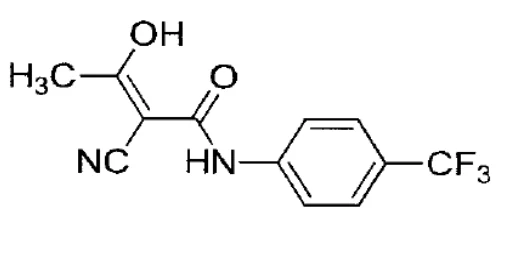
Structural formula:
Physicochemical properties: white to almost white powder that is sparingly soluble in acetone, slightly soluble in polyethylene glycol and ethanol, very slightly soluble in isopropanol and practically insoluble in water.
14 CLINICAL TRIALS
The efficacy of teriflunomide was established in two Phase 3, placebo-controlled studies in patients with relapsing remitting MS.
14.1 Clinical Trials by Indication
Treatment Of Patients with Relapsing Remitting Multiple Sclerosis (RRMS)
STUDY 1
TEMSO: Teriflunomide Multiple Sclerosis Oral trial was a double-blind, placebo- controlled study that evaluated once daily doses of teriflunomide 7 mg and 14 mg primarily in patients with relapsing remitting multiple sclerosis (RRMS) over 108 weeks.
Study demographics and trial design
Table 4 – Summary of patient demographics in TEMSO trial
| Study | Trial design | Dosage, route of administration and duration | Randomized study subjects (n=number) | Mean age (range) | Gender |
|---|---|---|---|---|---|
| TEMSO | Randomized, double-blind, placebo-controlled, parallel-group | Teriflunomide 7 mg or 14 mg, or placebo, once daily for 108 weeks |
| 37.9 (18-55) | F: 72.2% M: 27.8% |
A total of 1088 patients with RMS were randomized to receive 7 mg (n=366) or 14 mg (n=359) of teriflunomide or placebo (n=363).
At entry, patients had an Expanded Disability Status Scale (EDSS) score ≤5.5. The median age of the study population was 38 years, the median disease duration was 6.83 years, and the median EDSS at baseline was 2.50. A total of 91.4% had relapsing remitting MS (RRMS) and 8.6% had a progressive form of MS with relapses. The median time on treatment was 756 days for placebo and for teriflunomide 14 mg.
All patients had a definite diagnosis of MS exhibiting a relapsing clinical course, with or without progression, and experienced at least 1 relapse over the year preceding the trial or at least 2 relapses over the 2 years preceding the trial. Subjects had not received interferon-beta for at least 4 months or any other preventive MS medications for at least 6 months before entering the study, nor were these medications permitted during the study. Neurological evaluations were performed at screening, every 12 weeks until week 108 and at unscheduled visits for suspected relapse. MRI was performed at screening, weeks, 24, 48, 72, and 108.
The primary endpoint was the annualized relapse rate (ARR). The key secondary efficacy variable was confirmed progression of disability for at least 12 weeks. The key prespecified MRI endpoint was total lesion volume (defined as sum of T2 and hypointense T1 lesion volume in mL).
Study Results
The ARR was significantly reduced in patients treated with 14 mg of teriflunomide compared to patients who received placebo (ARR: 0.369; p=0.0005 in the 14 mg groups) (Table 5).
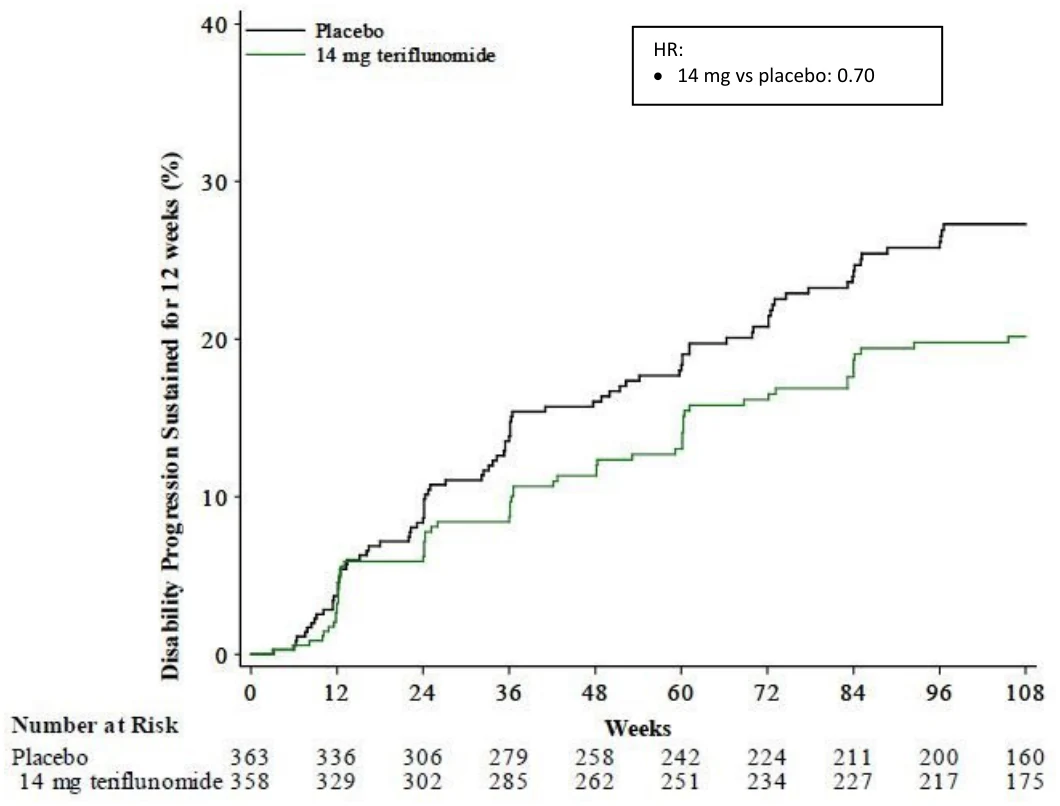
The risk of disability progression sustained for 12 weeks (as measured by at least a 1-point increase from baseline EDSS ≤ 5.5 or a 0.5 point increase for those with a baseline EDSS > 5.5) was statistically significantly reduced only in the teriflunomide 14 mg group compared to placebo (Table 5 and Figure 1). The estimated percentage of patients with a 12-week sustained disability progression at Week 108 was 27.3%, and 20.2% in the placebo and the 14 mg teriflunomide groups, respectively.
The effect of teriflunomide on several magnetic resonance imaging (MRI) variables including the total lesion volume of T2 and hypointense T1 lesions was assessed. The change in total lesion volume from baseline was lower in the 14 mg group than in the placebo group. Patients in the teriflunomide group had fewer gadolinium- enhancing lesions per T1-weighted scan than those in the placebo group (Table 5).
The results for this study are shown in Table 5 and Figure 1.
Table 5- Clinical and MRI Results of TEMSO Study
Teriflunomide 14 mg N=358 | Placebo N=363 | |
| Clinical Endpoints | ||
| Annualized relapse rate (primary endpoint) | 0.369 (p = 0.0005) | 0.539 |
| Relative risk reduction | 31.5% | |
Percent disability progression at week 1081 Hazard ratio Relative risk reduction | 20.2% 0.70 30% | 27.3% |
| Percent of patients remaining relapse-free at week 1081 | 56.5% | 45.6% |
| MRI Endpoints | ||
Median change from baseline in Total lesion volume2 (mL) at week 108 Percent change relative to placebo | 0.345 69% | 1.127 |
Mean number of Gd-enhancing T1-lesions per scan Relative reduction | 0.261 80% | 1.331 |
1 Values derived from Kaplan-Meier estimates
2Total lesion volume: sum of T2 and hypointense T1 lesion volume in mL
Figure 1 - Kaplan-Meier plot of time to disability progression sustained for 12 weeks - ITT population (Study 1)
STUDY 2
TOWER: Teriflunomide Oral in People With Relapsing Remitting Multiple Sclerosis was a double-blind, placebo-controlled study that evaluated once daily doses of teriflunomide 7 mg and 14 mg in patients with relapsing remitting multiple sclerosis (RRMS) with mean treatment duration of approximately 18 months.
Study demographics and trial design
Table 6 – Summary of patient demographics in TOWER trial
| Study | Trial design | Dosage, route of administration and duration | Randomized study subjects (n=number) | Mean age (range) | Gender |
|---|---|---|---|---|---|
| TOWER | Randomized, double-blind, parallel group, placebo- controlled study | Teriflunomide 7 mg or 14 mg, or placebo, once daily, up to a fixed end for all patients 48 weeks after the last patient randomized |
| 37.9 (18-56) | F: 71.1% M: 28.9% |
All patients had a definite diagnosis of MS exhibiting a relapsing clinical course, with or without progression, and experienced at least 1 relapse over the year preceding the trial or at least 2 relapses over the 2 years preceding the trial. Subjects had not received interferon-beta or any other preventive MS medications for at least 3 months before entering the study, nor were these medications permitted during the study.
Neurological evaluations were performed at screening, every 12 weeks until completion and at unscheduled visits for suspected relapse.
The primary endpoint was the annualized relapse rate (ARR). The key secondary objective was to assess the effect of the two doses of teriflunomide in comparison to placebo, on disability progression.
A total of 1169 patients were randomized to receive 7 mg (n=408) or 14 mg (n=372) of teriflunomide or placebo (n=389). The median age was 38 years and the study population was primarily Caucasian (82.1%) and Asian/Oriental (14.5%). The median time since first diagnosis of MS was 6.25 years, a majority of the patients had relapsing remitting MS (97.5%), and the median number of relapses within the past one year was 1.0. Median EDSS at baseline was 2.50.
Study Results
The ARR was significantly reduced in patients treated with 14 mg of teriflunomide compared to patients who received placebo (ARR: 0.319; p=0.0001 in the 14 mg groups) (Table 7).
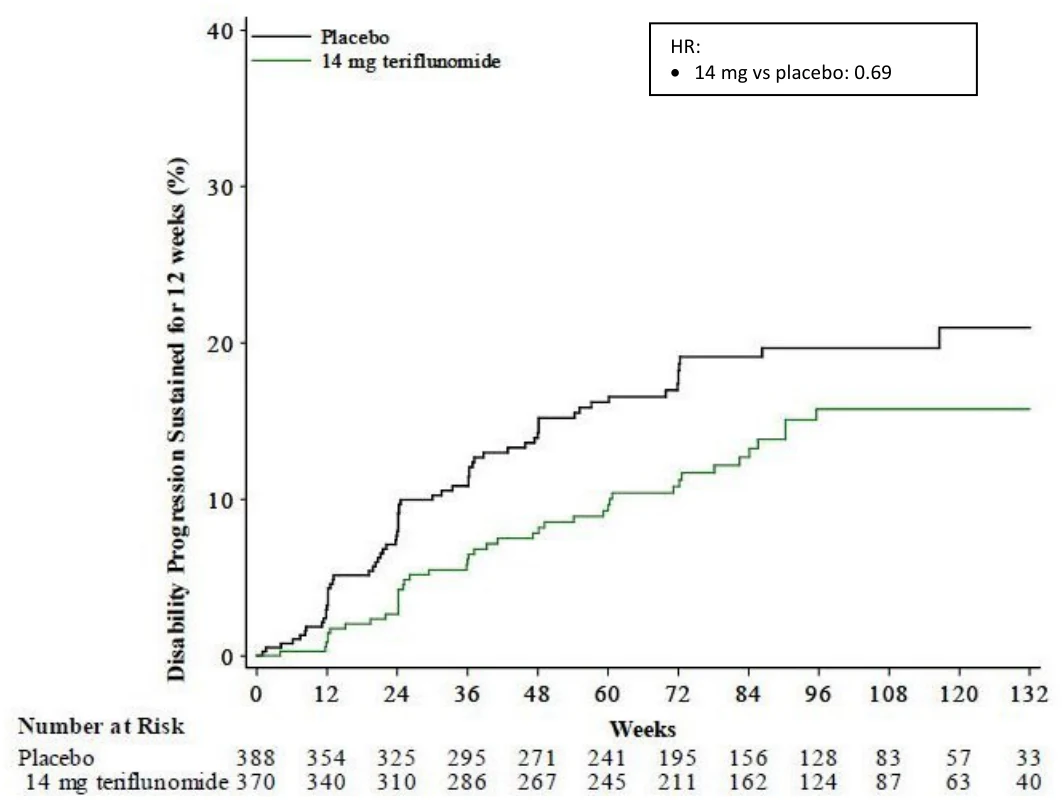
The risk of disability progression sustained for 12 weeks (as measured by at least a 1-point increase from baseline EDSS ≤ 5.5 or a 0.5 point increase for those with a baseline EDSS > 5.5) was statistically significantly reduced only in the teriflunomide 14 mg group compared to placebo (Table 7 and Figure 2). The estimated percentage of patients with a 12-week sustained disability progression at Week 108 was 19.7%, and 15.8% in the placebo and the 14 mg teriflunomide groups, respectively.
Table 7 – Clinical Results of TOWER Study
Teriflunomide 14 mg N=370 | Placebo N=388 | |
| Clinical Endpoints | ||
| Annualized relapse rate (primary endpoint) | 0.319 (p = 0.0001) | 0.501 |
| Relative risk reduction | 36.3% | |
| Percent of patients remaining relapse-free at week 1081 | 57.1% | 46.8% |
Percent disability progression at week 1081 Hazard ratio Relative risk reduction | 15.8% 0.69 31% | 19.7% |
| 1 Values derived from Kaplan-Meier estimates | ||
Figure 2 – Kaplan-Meier plot of time to disability progression sustained for 12 weeks - ITT population (Study 2)
14.2 Comparative Bioavailability Studies
A randomized, single-dose, double-blinded, two-treatment, two-period, 2-way crossover comparative bioavailability study of APO-Teriflunomide 14 mg Tablets (Apotex Inc.) and Aubagio® 14 mg Tablets (Genzyme Canada, a division of sanofi-aventis Canada Inc.) was performed in 34 healthy, adult, male subjects under fasting conditions. Comparative bioavailability data from 33 subjects that were included in the statistical analysis are presented in the following table.

SUMMARY TABLE OF THE COMPARATIVE BIOAVAILABILITY DATA
Teriflunomide (1 x 14 mg) Geometric mean Arithmetic Mean (CV%) | ||||
| Parameter | Test1 | Reference2 | % Ratio of Geometric Means | 90% Confidence Interval (%) |
| AUC0-72 (ng•h/mL) | 101525.2 102147.1 (10.8) | 102997.8 103638.8 (11.1) | 98.6 | 96.9 - 100.3 |
Cmax (ng/mL) | 2114.3 2143.7 (15.6) | 2243.8 2272.3 (16.1) | 94.2 | 90.6- 98.0 |
| Tmax3 (h) | 2.11 (67.6) | 1.87 (73.9) | ||
1 APO-Teriflunomide (teriflunomide) tablets, 14 mg (Apotex Inc.) 2 Aubagio® (teriflunomide) tablets, 14 mg (Genzyme Canada, a division of sanofi-aventis Canada Inc.). 3 Expressed as arithmetic means (CV %) only. Due to the long elimination half-life of teriflunomide, AUCI and T1/2 could not be accurately calculated from the data obtained in this study. | ||||
15 MICROBIOLOGY
No microbiological information is required for this drug product.
16 NON-CLINICAL TOXICOLOGY
Genotoxicity: Teriflunomide was not clastogenic in vivo in the 3 species tested: mouse (micronucleus test), Chinese hamster (chromosome aberration test), and rat (repeat-dose chromosome aberration test). Positive results were seen in an in vitro chromosome aberration test in human lymphocytes after 3-hour treatment both with and without metabolic activation. Supplementation with uridine (to supplement the pyrimidine pool) reduced the cytotoxicity and the magnitude of the clastogenic effect. The positive response is considered to be an indirect effect due to the pharmacologic mechanism of action of nucleotide pool imbalance resulting from DHODH inhibition.
4-Trifluoromethylaniline (4-TFMA), a minor metabolite of teriflunomide, was clastogenic in the in vitro chromosome aberration test in Chinese hamster cells. 4-TFMA was not clastogenic in vivo in the 2 species tested: mouse (micronucleus test) and Chinese hamsters (chromosome aberration test). Equivocal results were seen in the unscheduled DNA synthesis (UDS) test in rat liver.
Mutagenesis: Teriflunomide was not mutagenic, in the in vitro bacterial reverse mutation (Ames) and hypoxanthine-guanine-phosphoribosyl transferase (HPRT) tests. Teriflunomide was positive in an in vitro chromosomal aberration assay in human lymphocytes, with and without metabolic activation. Addition of uridine (to supplement the pyrimidine pool) reduced the magnitude of the clastogenic effect; however, teriflunomide was positive in the in vitro chromosomal aberration assay, even in the presence of uridine.
4-Trifluoromethylaniline (4-TFMA), a minor metabolite of teriflunomide, was mutagenic in the Ames and HPRT tests. 4-TFMA was positive in the in vitro chromosomal aberration assay in mammalian cells but negative in in vivo micronucleus and chromosomal aberration assays.
Carcinogenicity: No evidence of carcinogenicity was observed in a 2-year bioassay in rats at oral doses of teriflunomide up to the maximally tolerated dose of 4 mg/kg/day (approximately 1/2 the maximum human teriflunomide systemic exposure based on AUC0-24). Moreover, no evidence of carcinogenicity was observed in a 2 -year bioassay in mice at oral doses of teriflunomide up to the maximally tolerated dose of 12 mg/kg/day (approximately 5 to 6 times the maximum human teriflunomide systemic exposure based on AUC0-24).
Reproductive and Developmental Toxicology: Teratogenicity: In studies conducted in pregnant rats and rabbits, oral administration of teriflunomide resulted in embryolethality, reduced fetal body weight, and/or malformations. In rats, exposure at the no- observed-effect-level (1.0 mg/kg/day) for teratogenicity and embryolethality was less than the human exposure at 14 mg/day on a mg/kg basis. Primary malformations in rats were microophthalmia or anophthalmia; accompanied by aplasia lentis and decreased orbit size; hydrocephalus; edematous fetus; hematocyst on parietal bone; brachygnathia inferior; bent tarsal region of the hindpaw; fragmented, dysplastic and fused skull bones; multiple anomalies of the vertebral column; and alterations of ribs and pectoral girdle. In rabbits, exposure at the no-observed-effect-level (1.0 mg/kg/day) was also less than the human exposure at 14 mg/day on a mg/kg basis. Malformations of the forelimbs (short and misshapen ulna, absent radius, brachydactyly); absence of kidney, adrenal, and ureter; cleft lip and palate; growth retardation; hyperflexion of the forepaws; malpositioned branch of the carotid; anomalies of the lung lobes and sternebrae; and delayed ossification of several bones were observed.
In a study where teriflunomide was administered to pregnant rats during gestation and lactation, teriflunomide did not affect sexual maturation, learning, memory, motor activity, startle response, reproductive ability, estrous cycles, mating behavior, fertility and fecundity, or early embryonic development. Adverse effects observed in the offspring at 0.3 mg/kg/day included limb defects and impaired coat growth sometimes associated with skin discoloration. Corneal opacity, eye discharge, and negative pupillary reflex occurred in a few pups. Mean fetal weight per litter was slightly decreased. Effects on coat growth resolved but limb defects persisted in a few pups after weaning. The no-observed-effect-level in the offspring was 0.10 mg/kg/day. Of importance, similar adverse findings were not seen in an exploratory study where teriflunomide was administered at 1.0 mg/kg/day during the gestation period and not during lactation to avoid transfer of teriflunomide in the milk. Under those conditions, the no-observed-effect-level in the offspring was 1.0 mg/kg/day.
Impairment of fertility: In separate male and female fertility studies, oral administration of teriflunomide to rats prior to and during mating (both sexes), and continuing to Day 6 of gestation (females) had no effect on fertility up to the highest doses tested (10 and 8.6 mg/kg/day in males and females, respectively), which is approximately 7 and 6 times the recommended human dose (RHD) on a mg/m2 basis, respectively. However, effects on the fetus were observed in the female fertility study that consisted of embryolethality and isolated malformations at doses of 2.6 mg/kg/day and above and decreased fetal body weight down to the lowest dose tested of 0.84 mg/kg/d. In males, a slight decrease in epididymal sperm count (-12.5%) was observed at the highest dose (10 mg/kg/day) with no microscopic correlate in the testes or epididymides.
17 SUPPORTING PRODUCT MONOGRAPHS
