


Product Monograph - Argatroban for Injection
RECENT MAJOR LABEL CHANGES
| None at the time of authorization. |
|---|
TABLE OF CONTENTS
Certain sections or subsections that are not applicable at the time of the preparation of the most recent authorized Product Monograph are not listed.
RECENT MAJOR LABEL CHANGES ...................................................................................................... 2
TABLE OF CONTENTS ........................................................................................................................ 2
PART I: HEALTH PROFESSIONAL INFORMATION ................................................................................. 4
1 INDICATIONS ............................................................................................................................. 4
1.1 Pediatrics ............................................................................................................................................ 4
1.2 Geriatrics ............................................................................................................................................ 4
2 CONTRAINDICATIONS................................................................................................................. 4
4 DOSAGE AND ADMINISTRATION ................................................................................................ 4
4.1 Dosing Considerations ........................................................................................................................ 4
4.2 Recommended Dose and Dosage Adjustment ................................................................................... 4
4.3 Reconstitution of the concentrate (100 mg/mL) formulation ............................................................ 6
5 OVERDOSAGE ............................................................................................................................ 7
6 DOSAGE FORMS, STRENGTHS, COMPOSITION AND PACKAGING ................................................. 7
7 WARNINGS AND PRECAUTIONS .................................................................................................. 8
7.1 Special Populations ............................................................................................................................. 9
7.1.1 Pregnant Women .................................................................................................................... 9
7.1.2 Breast-feeding ......................................................................................................................... 9
7.1.3 Pediatrics ................................................................................................................................. 9
7.1.4 Geriatrics ................................................................................................................................. 9
8 ADVERSE REACTIONS ............................................................................................................... 10
8.1 Adverse Drug Reaction Overview ..................................................................................................... 10
8.2 Clinical Trial Adverse Drug Reactions ............................................................................................... 10
8.5 Post-Market Adverse Drug Reactions ............................................................................................... 14
9 DRUG INTERACTIONS ............................................................................................................... 15
9.2 Drug Interactions Overview .............................................................................................................. 15
9.3 Drug-Behavioural Interactions .......................................................................................................... 15
ARGATROBAN FOR INJECTION PRODUCT MONOGRAPH (argatroban)
9.4 Drug-Drug Interactions ..................................................................................................................... 15
9.5 Drug-Food Interactions ..................................................................................................................... 17
9.6 Drug-Herb Interactions ..................................................................................................................... 17
9.7 Drug-Laboratory Test Interactions.................................................................................................... 17
10 CLINICAL PHARMACOLOGY ...................................................................................................... 17
10.1 Mechanism of Action ........................................................................................................................ 17
10.2 Pharmacodynamics........................................................................................................................... 17
10.3 Pharmacokinetics ............................................................................................................................. 19
11 STORAGE, STABILITY AND DISPOSAL......................................................................................... 20
PART II: SCIENTIFIC INFORMATION .................................................................................................. 21
13 PHARMACEUTICAL INFORMATION ........................................................................................... 21
14 CLINICAL TRIALS ....................................................................................................................... 21
15 MICROBIOLOGY ....................................................................................................................... 21
16 NON-CLINICAL TOXICOLOGY ..................................................................................................... 22
- 17. SUPPORTING PRODUCT MONOGRAPHS .................................................................................... 28
PATIENT MEDICATION INFORMATION ............................................................................................. 29
PART I: HEALTH PROFESSIONAL INFORMATION
1 INDICATIONS
Argatroban for Injection is indicated as anticoagulant therapy in patients with heparin-induced thrombocytopenia syndrome, who, in the opinion of their attending physician, require anticoagulation.
1.1 Pediatrics
Based on the data submitted and reviewed by Health Canada, the safety and efficacy of argatroban in pediatric patients has not been established; therefore, Health Canada has not authorized an indication for pediatric use.
1.2 Geriatrics
Evidence from clinical studies and experience suggests that use of argatroban in the geriatric population is not associated with differences in safety or effectiveness.
2 CONTRAINDICATIONS
Argatroban for Injection is contraindicated in patients
with active major bleeding (for example: overt bleeding in a critical organ/area or bleeding
causing a fall in hemoglobin level ≥ 2g/dL or leading to a transfusion of ≥ 2 units)
- who are hypersensitive to the drug or to any ingredient in the formulation
- with hereditary fructose intolerance
4 DOSAGE AND ADMINISTRATION
4.1 Dosing Considerations
Argatroban for Injection concentrate (100 mg/mL) must be diluted prior to its infusion. Argatroban for Injection concentrate should not be mixed with other drugs prior to dilution in a suitable intravenous fluid (see 4.3 reconstitution).
4.2 Recommended Dose and Dosage Adjustment
Initial Dosage for Patients with Heparin-Induced Thrombocytopenia: Discontinue heparin therapy and obtain baseline aPTT. The recommended initial dose of Argatroban for Injection for adult patients without hepatic impairment is 2 mcg/kg/min, administered as a continuous infusion (see Table 1).
Table 1. Standard Infusion Rates for 2.0 mcg/kg/min Dose.
(1 mg/mL final concentration)
| Body Weight (kg) | Infusion Rate (mL/hr) |
|---|---|
| 50 | 6 |
| 60 | 7 |
| 70 | 8 |
| 80 | 10 |
| 90 | 11 |
| 100 | 12 |
| 110 | 13 |
| 120 | 14 |
| 130 | 16 |
| 140 | 17 |
Monitoring therapy: In general, therapy with Argatroban for Injection is monitored using the aPTT. Anticoagulant effects (including the aPTT) typically attain steady-state levels within 2.5 hours following initiation of argatroban or with dosage adjustment. Check the aPTT two hours after initiation of therapy to confirm that the patient has attained the desired therapeutic range.
Dosage adjustment: The dose can be adjusted as clinically indicated (not to exceed 10 mcg/kg/min), until the steady-state aPTT is 1.5 to 3.0 times the initial baseline value (not to exceed 100 seconds).
Patients with Hepatic Impairment: For patients with heparin-induced thrombocytopenia with hepatic impairment, the initial dose of Argatroban for Injection should be reduced. For patients with moderate hepatic impairment, an initial dose of 0.5 mcg/kg/min is recommended, based on the approximate four-fold decrease in argatroban clearance relative to those with normal hepatic function. The aPTT should be monitored closely and the dosage should be adjusted as clinically indicated.
Achievement of a steady state aPTT levels may take longer and require more Argatroban for Injection dose adjustments in patients with moderate hepatic impairment compared to patients with normal hepatic functions. Also, upon cessation of Argatroban for Injection infusion in the patients with moderate hepatic impairment, full reversal of anticoagulant effects may require longer than four (4) hours due to decreased clearance and increased elimination half life of argatroban.
Argatroban for Injection should be used with caution in patients with severely impaired hepatic function. For these patients, the initial suggested dose is not to exceed 0.05 mcg/kg/min; the aPTT should be monitored closely and the dosage adjustment should be performed as clinically indicated.
Patients with Renal Impairment: In a study of over 20 patients with renal impairment, and some who required dialysis, dosage adjustment was not necessary and dosages up to 5.0 mcg/kg/min were administered with no medically significant safety concerns.
Use in Pediatrics (<18 years of age): The safety and efficacy of argatroban have not been established in children and adolescent patients <18 years of age. Health Canada has not authorized an indication for pediatric use.
Use in Geriatrics (≥65 years of age): In the prospective study in HIT and HITTS, the effectiveness of argatroban was not affected by patient age. Dosage adjustment is not necessary in patients 65 years of age and older.
Conversion to oral anticoagulant therapy:
Initiating Oral Anticoagulant Therapy: When converting to oral anticoagulant therapy, a loading dose of warfarin should not be used because of the potential for combined effects on INR by the combination of argatroban and warfarin. Initiate therapy using the expected daily dose of warfarin.
Co-Administration of Warfarin and Argatroban at Doses up to 2 mcg/kg/min: The concomitant use of argatroban with warfarin results in prolongation of INR beyond that produced by warfarin alone. Therefore, the previously established relationship between INR and bleeding risk are altered (for details, see 10 CLINICAL PHARMACOLOGY). INR should be measured daily while Argatroban for Injection and warfarin are co-administered. In general, with doses of argatroban up to 2 mcg/kg/min, Argatroban for Injection can be discontinued when the INR is >4.0. After Argatroban for Injection is discontinued, repeat the INR measurement in 4 to 6 hours. If the repeat INR is below the desired therapeutic range, resume the infusion of Argatroban for Injection and repeat the procedure daily until the desired therapeutic range on warfarin alone is reached. The relationship between INR on combined therapy and warfarin alone is dependent on both the dose of argatroban and the thromboplastin reagent used.
Co-Administration of Warfarin and Argatroban at Doses Greater than 2 mcg/kg/min: For doses greater than 2 mcg/kg/min, the relationship between INR on warfarin alone, and warfarin plus argatroban is less predictable. In this case, in order to predict the INR on warfarin alone, temporarily reduce the dose of Argatroban for Injection to 2 mcg/kg/min. Repeat the INR on Argatroban for Injection and warfarin 4 to 6 hours after Argatroban for Injection reduction and follow the process outlined above for dosing Argatroban for Injection at up to 2 mcg/kg/min.
4.3 Reconstitution of the concentrate (100 mg/mL) formulation
Preparation for Intravenous Administration: Argatroban for Injection concentrate (100 mg/mL) should be diluted in 0.9% Sodium Chloride Injection, USP; 5% Dextrose injection, USP or Lactated Ringer's Injection, USP; to a final concentration of 1 mg/mL (see Table 2). Use 1 vial (for 2.5 mL total) per 250 mL diluent bag, or 2 vials (for 5.0 mL total) per 500 mL diluent bag. The constituted solution must be mixed by repeated inversion of the diluent bag for one minute. Upon preparation, the solution may show slight but brief haziness due to the formation of microprecipitates that rapidly dissolve upon mixing. Use of diluents at room temperature is recommended. Colder temperatures can slow down the rate of dissolution of precipitates. The final solution must be clear before use. The pH of the intravenous solution prepared as recommended is 3.2-7.5.
Table 2. Intravenous Preparations
| N x Vial size | Volume of diluent | Recommended diluents* | Final Concentration |
|---|---|---|---|
1 x 2.5 mL (100 mg/mL) | 250 mL | 0.9% Sodium Chloride Injection, USP; or 5% Dextrose injection, USP; or Lactated Ringer's Injection | 1 mg/mL |
2 x 2.5 mL (100 mg/mL) | 500 mL | Same recommended diluents as listed above | 1 mg/mL |
*The constituted solution must be mixed by repeated inversion of the diluent bag for one minute.
The diluted solutions are stable for 24 hours at 15-25°C in ambient indoor light, and stable for 48 hours at 2-8°C in the dark (see 11 STORAGE, STABILITY AND DISPOSAL).
5 OVERDOSAGE
Symptoms/Treatment: Excessive anticoagulation, with or without bleeding, may be controlled by discontinuing Argatroban for Injection or by decreasing the Argatroban for Injection infusion dosage. In clinical trials, anticoagulation parameters generally returned to baseline within 2 to 4 hours after discontinuation of the drug (although this may take longer for those with hepatic impairment). Argatroban infusion doses of up to 40 mcg/kg/min have been administered to healthy subjects up to four hours without drug-related adverse events.
No specific antidote to argatroban is available; if life-threatening bleeding occurs and excessive plasma levels of argatroban are suspected, the following steps should be followed:
- Stop or reduce Argatroban for Injection administration immediately;
- Determine activated partial thromboplastin time (aPTT) and other coagulation indices as appropriate;
- Provide symptomatic and supportive therapy.
6 DOSAGE FORMS, STRENGTHS, COMPOSITION AND PACKAGING
| Route of Administration | Dosage Form/Strength/Composition | Non-medicinal Ingredients |
|---|---|---|
| Intravenous | Concentrate solution 250 mg / 2.5 mL vial (100 mg/mL) | D-sorbitol, dehydrated alcohol, water for injection |
For the most recent information in the management of a suspected drug overdose, contact your regional poison control centre or Health Canada’s toll-free number, 1-844 POISON-X (1-844-764-7669).
Packaging information: USP Type I neck amber tubular vial, teflon chlorobutyl rubber stopper and Parrot green flip off aluminum seal.
Argatroban for Injection
Argatroban for Injection concentrate solution (100 mg/mL) is supplied as 2.5 mL solution in single-use vials at the concentration of 100 mg/mL. Each vial contains 250 mg of argatroban.
The stopper is not made with natural rubber latex.
Composition: Argatroban for Injection concentrate solution (100 mg/mL) is a sterile clear, colorless to pale yellow, slightly viscous solution. Each mL of sterile, nonpyrogenic solution contains 100 mg argatroban.
Non-medicinal ingredients: Sorbitol USP, dehydrated alcohol USP and water for injection.
7 WARNINGS AND PRECAUTIONS
General
Argatroban for Injection is intended for use as an anticoagulant in patients with heparin-induced thrombocytopenia (HIT) syndrome. Hemorrhage can occur, especially in patients with disease states associated with a risk of bleeding. All patients should be carefully monitored.
Argatroban for Injection is intended for intravenous administration. All parenteral anticoagulants must be discontinued before administration of Argatroban for Injection.
Cardiovascular
Hemorrhage: Hemorrhage can occur at virtually any site in the body in patients receiving Argatroban for Injection. An unexplained fall in hematocrit, fall in blood pressure, or any other unexplained symptom should lead to serious consideration of a hemorrhagic event. Argatroban for Injection should be used with extreme caution in disease states and other circumstances in which there is an increased danger of hemorrhage. These include severe hypertension; immediately following lumbar puncture; spinal anesthesia; major surgery especially involving the brain, spinal cord, or eye; hematologic conditions associated with increased bleeding tendencies such as hemophilia, gastrointestinal lesions such as ulcerations.
Hepatic/Biliary/Pancreatic
Caution should be exercised when administering Argatroban for Injection to patients with hepatic disease, by starting with a lower dose and carefully titrating until the desired level of anticoagulation is achieved. Achievement of steady state aPTT levels may take longer and require more Argatroban for Injection dose adjustments in patients with moderate hepatic impairment compared to patients with normal hepatic function. The aPTT should be closely monitored and the dosage should be adjusted as indicated clinically. Argatroban for Injection should be used with caution in patients with severely impaired hepatic function, and only if the clinical benefit outweighs the risk. Close monitoring and dosage adjustment should be done as clinically indicated. Also, upon cessation of Argatroban for Injection infusion in patients with hepatic impairment, full reversal of anticoagulant effects may require longer than 4 hours due to decreased clearance and increased elimination half-life of argatroban (See 4 DOSAGE AND ADMINISTRATION).
Monitoring and Laboratory Tests
Anticoagulation effects associated with argatroban infusion at doses up to 40 mcg/kg/min are well-correlated with the activated partial thromboplastin time (aPTT). If aPTT monitoring is problematic (such as for those having antiphospholipid antibodies), other global clot-based tests sensitive to argatroban include the prothrombin time (PT), the International Normalized Ratio (INR), the activated clotting time (ACT) and thrombin time (TT). Plasma argatroban concentrations also correlate well with anticoagulant effects (see 10 CLINICAL PHARMACOLOGY).
The concomitant use of argatroban and warfarin results in prolongation of the PT and INR beyond that produced by warfarin alone. Alternative approaches for monitoring concurrent Argatroban for Injection and warfarin therapy are described in a subsequent section (see 9 DRUG INTERACTIONS and 4 DOSAGE AND ADMINISTRATION).
Renal
Dosage adjustment was not necessary in patients with renal impairment and dosages up to 5.0 mcg/kg/min were administered with no medically significant safety concerns (see 4 DOSAGE AND ADMINISTRATION).
7.1 Special Populations
7.1.1 Pregnant Women
There are no adequate and well controlled studies in which pregnant women have received argatroban. Although animal reproductive studies have not revealed harm to the fetus (see 16 NON-CLINICAL TOXICOLOGY), these studies are not always predictive of the effects of a drug in humans. Argatroban for Injection should only be used in pregnancy if the benefits outweigh the risks.
7.1.2 Breast-feeding
Nursing women should discontinue breast feeding while taking Argatroban for Injection because of the potential risk for serious adverse reactions in nursing infants. Although it is not known whether this drug is excreted in human milk, experiments in rats show that argatroban is detected in milk.
7.1.3 Pediatrics
The safety and effectiveness of argatroban in patients below the age of 18 years have not been established. Therefore, Health Canada has not authorized an indication for pediatric use.
7.1.4 Geriatrics
Dosage adjustment is not necessary in patients 65 years of age and older.
8 ADVERSE REACTIONS
8.1 Adverse Drug Reaction Overview
Adverse events occurring with argatroban are those which are anticipated for patients presenting with HIT or HITTS (heparin-induced thrombocytopenia with thrombosis) syndrome. The incidence of any of the primary efficacy endpoints of death, amputations or new thrombosis has been considered as the most serious adverse events.
The most common adverse event was bleeding, but major bleeding events with argatroban did not occur more frequently than in historical controls.
Other common adverse reactions included diarrhea, dyspnea, hypotension, apnea, chest pain, sepsis, dizziness, fever ventricular tachycardia and nausea and vomiting.
8.2 Clinical Trial Adverse Drug Reactions
Clinical trials are conducted under very specific conditions. The adverse reaction rates observed in the clinical trials; therefore, may not reflect the rates observed in practice and should not be compared to the rates in the clinical trials of another drug. Adverse reaction information from clinical trials may be useful in identifying and approximating rates of adverse drug reactions in real-world use.
The following safety information is based upon the 568 patients treated with argatroban in the prospective pivotal clinical studies in patients with heparin-induced thrombocytopenia with and without thrombosis syndrome.
568 adult patients were treated with argatroban and 193 adult patients made up the historical control group. Patients were required to have a clinical diagnosis of heparin-induced thrombocytopenia, either without thrombosis (HIT) or with thrombosis (HITTS) and be males or non-pregnant females between the age of 18 and 80 years old. HIT/HITTS was defined by a fall in platelet count to less than 100,000/mcL or a 50% decrease in platelets after the initiation of heparin therapy with no apparent explanation other than HIT. Patients with HITTS also had presence of an arterial or venous thrombosis documented by appropriate imaging techniques or supported by clinical evidence such as acute myocardial infarction, stroke, pulmonary embolism, or other clinical indications of vascular occlusion. Patients who required anticoagulation with documented histories of positive HIT antibody test were also eligible in the absence of thrombocytopenia or heparin challenge (e.g., patients with latent disease).
Serious Adverse Events: Study Days 0-37: Table 3 shows the incidence of the primary efficacy endpoints [death (all cause), amputations (all cause), or new thrombosis, during study days 0-37; recorded as the most severe event] in the prospective and follow-on trials combined. These events qualify as (Serious Adverse Events). Table 3 illustrates the safety profile of argatroban with regard to these serious outcomes as compared to a historical control group.
Table 3. Serious Adverse Events
| HIT | HITTS | |||||
|---|---|---|---|---|---|---|
| Argatroban | Historical Control | Argatroban | Historical Control | |||
| n=285 | n=147 | n=283 | n=46 | |||
| Death, n(%) | 48 (17) | 32 (22) | 61 (22) | 13 (28) | ||
| Amputation, n(%) | 9 (3) | 3 (2) | 32 (11) | 4 (9) | ||
New Thrombosis, n (%) | 16 (6) | 22 (15) | 27 (10) | 9 (20) | ||
Bleeding Event Frequency: In the first prospective pivotal trial, no statistically significant differences in the incidence of major bleeding were observed between the historical control group and the argatroban group in either the HIT arm (8.2% versus 3.1%; p=0.0784) or HITTS arm (2.2% versus 10.4%; p=0.124). In the second pivotal trial, no statistically significant differences in the incidence of major bleeding were observed between the historical control group and the argatroban group in either the HIT arm (8.2% vs. 3.2%; p=0.1190) or HITTS arm (2.2% vs. 4.3%; p=0.683). No clinically significant difference in minor bleed incidence was observed in either trial comparing argatroban treated patients to historical controls. There were no cases of drug-related intracranial hemorrhage noted in either trial.
Most Common Reported Adverse Events in the Prospective Pivotal Clinical Trials:
The adverse events reported in this section are consistent with those which would be anticipated for a severely ill patient population who present with HIT/HITTS syndrome. In general, these patients had a mean age of 60+ years and were on complex concomitant medications. No clinically significant safety trends with regard to argatroban exposure are apparent from both pivotal trials adverse event data. There may be some evidence of a clinical trend for treated patients to experience milder gastrointestinal disturbances, such as nausea, or diarrhea.
Comparative Summary of Adverse Events for Prospective Pivotal Clinical Trials:
The following is a comparative summary of non-hemorrhagic adverse events in pivotal studies that were experienced in heparin-induced thrombocytopenia (HIT) patients treated with argatroban. All adverse events occurring with frequency of ≥5% in treated patients, in either trial, are listed in descending order of frequency as they occurred in the first pivotal trial.
Table 4. Comparative Summary of Adverse Events – HIT
| Adverse Event | ARG-911 n = 160 | ARG-915 n = 125 | Historic Control; n = 147 |
|---|---|---|---|
| ≥5% | % | % | % |
| Diarrhea | 11 | 2 | 2 |
| Dyspnea | 8 | 9 | 9 |
| Hypotension | 7 | 5 | 3 |
| Adverse Event | ARG-911 n = 160 | ARG-915 n = 125 | Historic Control; n = 147 |
|---|---|---|---|
| Apnea | 6 | 0 | 5 |
| Chest Pain | 6 | 2 | 2 |
| Sepsis | 6 | 3 | 14 |
| Dizziness | 5 | 2 | 0 |
| Vomiting | 5 | 3 | 0 |
| Fever | 4 | 6 | 2 |
| Nausea | 4 | 6 | 0 |
| Tachycardia Ventricular | 3 | 7 | 3 |
The following is a comparative summary of non-hemorrhagic adverse events in pivotal studies that were experienced in heparin-induced thrombocytopenia with thrombotic syndrome (HITTS) patients treated with argatroban. All adverse events occurring with frequency of ≥5% in treated patients, in either trial, are listed in descending order of frequency as they occurred in the first pivotal trial.
Table 5. Comparative Summary of Adverse Events – HITTS
| Adverse Event | ARG-911 n = 149 | ARG-915 n = 139 | Historic Control n = 46 |
|---|---|---|---|
| ≥5% | % | % | % |
| Hypotension | 9 | 8 | 0 |
| Pain | 9 | 3 | 4 |
| Apnea | 8 | 0 | 7 |
| Cardiac Arrest | 8 | 8 | 9 |
| Constipation | 8 | 1 | 2 |
| Fever | 8 | 9 | 2 |
| Peripheral Ischemia | 8 | 6 | 7 |
| Urinary Tract Infection | 8 | 4 | 4 |
| Infection | 7 | 4 | 4 |
| Pulmonary | 7 | 4 | 13 |
| Adverse Event | ARG-911 n = 149 | ARG-915 n = 139 | Historic Control n = 46 |
|---|---|---|---|
| Embolism | |||
| Rash | 7 | 4 | 2 |
| Thrombophlebitis | 7 | 0 | 2 |
| Confusion | 6 | 1 | 0 |
| Sepsis | 6 | 8 | 9 |
| Thrombophlebitis (Deep) | 6 | 4 | 15 |
| Vomiting | 6 | 3 | 0 |
| Peripheral Gangrene | 5 | 1 | 4 |
| Pleural Effusion | 5 | 3 | 4 |
| Dyspnea | 4 | 12 | 9 |
| Diarrhea | 4 | 7 | 0 |
| Tachycardia Ventricular | 4 | 5 | 4 |
| Acute Renal Failure | 3 | 5 | 7 |
| Nausea | 3 | 6 | 2 |
| Pneumonia | 2 | 5 | 15 |
| Respiratory Insufficiency | 1 | 6 | 0 |
| Cardiac Failure | 0 | 5 | 0 |
Adverse Events Resulting from Repeated or Chronic Administration: Adverse event rates in patients receiving multiple courses of argatroban were similar to rates observed in patients receiving short courses of the drug. Patients receiving chronic administration (greater than 14 days of continuous therapy) of argatroban had adverse event rates at a similar frequency to those receiving shorter courses of argatroban.
8.5 Post-Market Adverse Drug Reactions
Table 6. Summary of Post-Market Adverse Drug Reactions
| System Organ Class | Adverse Event |
|---|---|
| Blood and lymphatic system: | coagulopathy, Evans syndrome, hypofibrinogenemia, thrombocytopenia |
| Cardiac: | acute myocardial infarction, arrhythmia, heart failure, cardiomyopathy, coronary artery occlusion |
Congenital, familial and genetic: | atrial septal defect, ventricular septal defect |
| Ear and labyrinth: | deafness |
| Eye: | conjunctival hemorrhage, pupils unequal |
| Gastrointestinal: | hemorrhage, pancreatitis, retroperitoneal hematoma, intestinal ischemia, hematochezia, diverticulum intestinal hemorrhagic |
General disorders and administration site conditions: | drug resistance, injection site hemorrhage, mucosal hemorrhage, multi-organ failure, necrosis, procedural complications |
| Hepatobiliary: | hepatic failure, hepatic function abnormal, hepatitis, hepatotoxicity, ischemic hepatitis, liver disorder |
| Immune system: | anaphylactic shock, anaphylactoid reaction, drug hypersensitivity, transplant rejection |
| Infections and infestations: | chronic hepatitis C, perihepatic abscess, septic shock |
| Investigations: | aPTT abnormal, bleeding time prolonged, blood fibrinogen decreased, blood pressure decreased, coagulation time abnormal, fibrin D dimer increased, fibrinolysis granulocyte count decreased, hemoglobin decreased, INR abnormal, laboratory test abnormal, lipase increased, liver function test abnormal, platelet count abnormal, prothrombin time abnormal, thyroid function abnormal, white blood cell count decreased |
| Metabolism and nutrition: | enzyme abnormality, hyperkalemia, hypoglycemia, hypoproteinanemia, lactic acidosis |
Musculoskeletal and connective tissue: | arthritis, compartment syndrome, myopathy, rhabdomyolysis |
| Neoplams benign, malignant and unspecified: | pancreatic carcinoma metastatic |
| Nervous system: | aphasia, basilar migraine, brain injury, brain oedema, cerebrovascular accident, cerebral hemorrhage, convulsion, hemorrhage, loss of consciousness, paralysis, transient ischemic attack, unresponsive to stimuli |
| Psychiatric: | agitation |
| Renal and urinary: | hematuria, renal failure, renal impairment |
| Reproductive system and breast: | vaginal hemorrhage |
Respiratory, thoracic and mediastinal: | acute pulmonary oedema, asthma, epistaxis, hemoptysis, pneumonia aspiration, pulmonary hemorrhage, respiratory failure |
| Skin and subcutaneous tissue: | panniculitis, skin burning sensation, skin necrosis, Stevens-Johnson syndrome, urticaria |
| Vascular: | aneurysm ruptured, aortic thrombosis, circulatory collapse, embolism, hematoma, hemorrhagic infarction, labile blood pressure, peripheral vascular disorder, shock hemorrhagic, thrombosis |
9 DRUG INTERACTIONS
9.2 Drug Interactions Overview
There is a potential for drug-drug interactions between Argatroban for Injection and anticoagulant medications. Bleeding risks are variable depending on the co-administered drug. Therefore, patients should be carefully monitored for aPTT, PT, and INR values.
9.3 Drug-Behavioural Interactions
Interactions with individual behaviours have not been established.
9.4 Drug-Drug Interactions
The drugs listed in this table are based on either drug interaction case reports or studies, or potential interactions due to the expected magnitude and seriousness of the interaction (i.e., those identified as contraindicated).
| Drug Interaction | Effect | Clinical comment |
|---|---|---|
| Aspirin/Acetaminophen | There are no pharmacokinetic or pharmacodynamic drug-drug interactions between argatroban and concomitantly administered aspirin or acetaminophen. | |
| Digoxin | In 12 healthy volunteers, a 5 day intravenous infusion of argatroban (2 mcg/kg/min) did not affect the steady-state pharmacokinetics of oral digoxin (0.375 mg daily for 15 days). | |
| Erythromycin | In 10 healthy subjects, orally | These data suggest oxidative |
| administered erythromycin | metabolism by CYP3A4/5 is not an | |
| (both a substrate for and a | important elimination pathway in vivo | |
| potent inhibitor of CYP3A4/5) at | for argatroban. Based on these results, | |
| 500 mg QID for 7 days had no | other CYP3A4/5 inhibitors such as | |
| effect on the pharmacokinetics | ketoconazole and itraconazole are | |
| of argatroban at a dose of 1 | unlikely to inhibit the metabolism of | |
| mcg/kg/min for 5 hours. | argatroban. As there has been no | |
| clinical experience with the co- | ||
| administration of argatroban and other | ||
| CYP3A4/5 - metabolized drugs, such as | ||
| fluconazole, indinavir, ritonavir, | ||
| or their analogues, the potential for possible interaction is unknown. | ||
Heparin (Heparin is contraindicated in patients with heparin- induced thrombocytopenia; therefore, co- administration of argatroban and heparin is unlikely) | Contraindicated due to bleeding risk | If Argatroban for Injection is to be initiated after cessation of heparin therapy, sufficient time should be allowed for the effects of heparin on the aPTT to decrease prior to the initiation of Argatroban for Injection therapy. As the half-life of heparin is highly variable, the maximum being about 2 hours, a period of time equal to two half-lives, or 4 hours is recommended. Nevertheless, because of the variability in heparin metabolism, aPTT should always be the primary indicator as to when argatroban therapy may be initiated. |
| Lidocaine | Argatroban did not inhibit the metabolism of concomitantly administered lidocaine using a 1.5 mg/kg bolus plus 2 mg/kg/hour infusion for 16 hours. | |
| Thrombolytic agents | No clinically significant safety concern. | Argatroban at doses up to 3 mcg/kg/min has been administered in two clinical studies with either rt-PA or streptokinase. |
| Warfarin | There are no pharmacokinetic drug-drug interactions with argatroban. However, the concomitant use of argatroban and warfarin results in prolongation of the prothrombin time (PT) and International Normalized Ratio (INR). | Previously established relationships between PT/INR and bleeding risk no longer apply (see 10 CLINICAL PHARMACOLOGY and 4 DOSAGE AND ADMINISTRATION . |
9.5 Drug-Food Interactions
Interactions with food have not been established.
9.6 Drug-Herb Interactions
Interactions with herbal products have not been established.
9.7 Drug-Laboratory Test Interactions
Argatroban for Injection is an antithrombotic agent, which is highly specific for thrombin. The co-administration of argatroban with warfarin produces a combined effect on prothrombin time (PT) and International Normalized Ratio INR values (see 9 DRUG INTERACTIONS). Previously established relationships between PT/INR and bleeding risk no longer apply (see 10 CLINICAL PHARMACOLOGY).
10 CLINICAL PHARMACOLOGY
10.1 Mechanism of Action
Argatroban is a small-molecule, direct thrombin inhibitor that reversibly binds to the thrombin active site. Its mechanism of action is distinct from heparin, an indirect thrombin inhibitor, which requires the co-factor antithrombin III for antithrombotic activity. Argatroban exerts its anticoagulant effects by inhibiting thrombin-catalyzed or induced reactions, including fibrin formation; activation of coagulation factor XIII, factor V, factor VIII, and protein C; and platelet aggregation.
Argatroban is highly selective for thrombin with an inhibitory constant (Ki) of 5-39 nM. At therapeutic concentrations, argatroban has no or minimal effect on related serine proteases (trypsin, factor Xa, plasmin, and kallikrein).
Argatroban is also capable of inhibiting the action of clot-associated thrombin. In contrast, the heparin- antithrombin III complex is incapable of inhibiting clot-associated thrombin.
Experience in a limited number of patients who received multiple doses of argatroban indicates no antibody formation.
10.2 Pharmacodynamics
Argatroban is a potent and selective thrombin inhibitor with anticoagulant properties both “in vitro” and “in vivo”. Its activity does not depend upon the presence of antithrombin III. Unlike heparin, argatroban is able to inhibit both the amidolytic and platelet activities of clot-associated thrombin. Pharmacological studies have shown that argatroban is a potent antithrombotic agent when administered as an intravenous infusion in a wide variety of animal models both of erythrocyte-rich (venous) and platelet- rich (arterial) thrombosis, although the doses required to inhibit arterial thrombosis are higher than those necessary to inhibit venous thrombosis in experimental models. In addition, argatroban has been shown to enhance experimental thrombolysis and maintain vascular recanalization when administered with either rt-PA, streptokinase or sc-UPA (Saruplase).
Argatroban is highly specific in that it has no effect on a battery of other proteases or other platelet activating agents except at concentrations several orders of magnitude greater than those required to inhibit thrombin. Argatroban caused a slight increase in the largely predominant anticoagulant effect of heparin using the aPTT as the coagulant parameter, but the effect of the combination was not statistically significant when compared to heparin alone and is not relevant in the context of the use of argatroban in the indication HIT/HITTS. When co-administered with anticoagulant doses of argatroban via the same venous catheter in the rat, rt-PA has no inhibitory effect on the anticoagulant effect of argatroban.
Moreover, there is no significant loss of fibrinolytic activity of rt-PA. The concomitant administration of argatroban with aspirin, indomethacine, sulfinpyrazone, quinidine, ouabain, tolbutamide, clofibrate, furosemide, or ticlopidine did not affect the anticoagulant properties of argatroban in the rat. However, administration of argatroban to rats 24 hours after oral warfarin increased the anticoagulant effect of the latter. None of the general pharmacological tests suggest that argatroban has any potential adverse effects at pharmacologically relevant doses.
Figure 1. Relationship at Steady State between Argatroban Dose, Plasma Argatroban and Anticoagulant Effect.
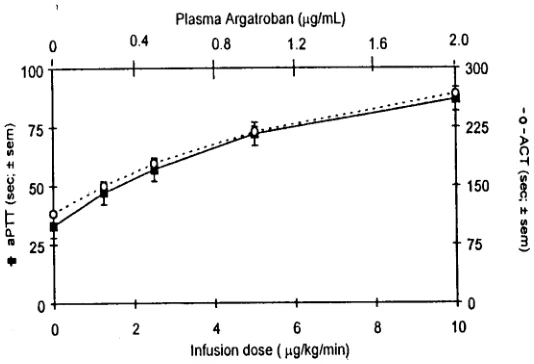
When argatroban is administered by continuous infusion, anticoagulant effects and plasma concentrations of argatroban follow similar, predictable temporal response profiles, with low intersubject variability. Immediately upon initiation of argatroban infusion, anticoagulant effects are produced as plasma argatroban concentrations begin to rise. Steady-state levels of both drug and anticoagulant effect are typically attained in 1-3 hours and are maintained until the infusion is discontinued or the dosage adjusted. Steady-state argatroban plasma concentrations increase proportionally with dose (for infusion doses up to 40 mcg/kg/min in healthy subjects) and are well-correlated with steady-state anticoagulant effects. For infusion doses up to 40 mcg/kg/min, argatroban increases, in a dose-dependent fashion, the activated partial thromboplastin time (aPTT), the activated clotting time (ACT), the prothrombin time (PT) and International Normalized Ratio (INR), and the thrombin time (TT). Representative steady-state plasma argatroban concentrations and anticoagulant effects are shown in Figure 1 for argatroban infusion doses up to 10 mcg/kg/min.
Effect on International Normalized Ratio (INR): Because argatroban is a direct thrombin inhibitor, co-administration of argatroban and warfarin produces a combined effect on the laboratory measurement of the INR. However, concurrent therapy, compared to warfarin monotherapy, exerts no additional effect on vitamin-K-dependent factor Xa activity. It is anticipated that there will be no enhanced bleeding risk resulting from the combined effect on INR lab value.
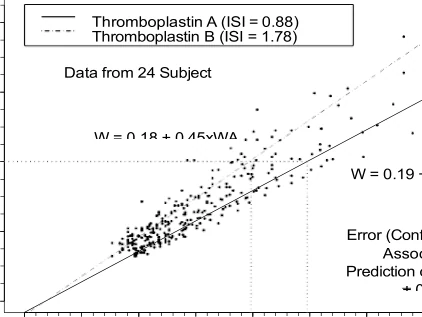
The relationship between INR on co-therapy and warfarin alone is dependent on both the dose of argatroban and the thromboplastin reagent used. This relationship is influenced by the International Sensitivity Index (ISI) of the thromboplastin. Data for two commonly utilized thromboplastins with ISI values of 0.88 (Innovin, Dade) and 1.78 (Thromboplastin C Plus, Dade) are presented in Figure 2 for an argatroban dose of 2 mcg/kg/min. Thromboplastins with higher ISI values than shown result in higher INRs on combined therapy of warfarin and argatroban. These data are based on results obtained in normal individuals (see 9 DRUG INTERACTIONS and 4 DOSAGE AND ADMINISTRATION, Oral
Anticoagulant Therapy).
Figure 2. Relationship of Argatroban and Warfarin on International Normalized Ratio (INR)
8
6
4
2
0
0 1 2 3 4
INR Warfarin Alone (W)
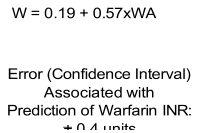
Predicted INR for warfarin alone from a co-therapy INR of 4.0 is demonstrated by Figure 2. To calculate INR for warfarin alone (INRW), based on INR for co-therapy of warfarin and argatroban (INRWA), use the equation next to the appropriate curve. Example: At a dose of 2 mcg/kg/min and an INR performed with Thromboplastin A, the equation 0.19 + 0.57 (INRWA) = INRW would allow a prediction of the INR on warfarin alone (INRW). Solving for an INRWA value of 4.0 on combined therapy: INRw =0.19 +0.57 (4)=2.47 as the value for INR on warfarin alone. The error associated with a prediction is +/- 0.4 units.
10.3 Pharmacokinetics
Metabolism, Excretion, and Protein Binding: Using human liver microsomes and whole cell preparations in vitro, four oxidative metabolites were detected (M1, M2, M3 and trace amounts of M4). The formation of each of these metabolites was catalyzed in vitro by the human liver microsomal cytochrome P450 enzymes CYP3A4/5. The M1 oxidative metabolite was not quantifiable in plasma of volunteers who received drug. These data together with the lack of effect of erythromycin (a potent CYP3A4/5 inhibitor) on argatroban pharmacokinetics suggest that CYP3A4/5 mediated metabolism is not an important elimination pathway in vivo.
The major route of excretion of argatroban is via fecal elimination, presumably via biliary secretion. In a study in which [14C]argatroban (5 mcg/kg/min) was infused for 4 hours to healthy subjects, the majority of the radioactivity was recovered in the feces (approximately 65% of the administered dose) over 7 days and urine (approximately 22% of the administered dose) within 6 days. Unchanged argatroban accounted for the majority (approximately 16% of the administered dose) of the radioactivity in urine. The precise composition of the remainder of the radioactivity in urine and feces was not fully evaluated. Plasma radioactivity was undetectable by 24 hours. Argatroban is 54% bound to human serum proteins, with binding to albumin and α1-acid glycoprotein being 20% and 34%, respectively.
The pharmacokinetic profile of argatroban is well characterized by a two-compartment model with first-order elimination. Total body clearance is approximately 5.1 mL/min/kg (0.31 L/hr/kg) for infusion doses up to 40 mcg/kg/min, and the volume of the central compartment and the volume of distribution are approximately 84 and 174 mL/kg, respectively. Upon cessation of argatroban infusion, plasma argatroban concentrations rapidly decline with α and β elimination half-lives of approximately 7 and 54 minutes, respectively. After four hours, little or no argatroban remains in plasma.
INR Warfarin Plus Argatroban (WA)
The plasma clearance of the R and S stereoisomers is similar. In vivo, the plasma concentration ratio of R to S stereoisomers remains essentially constant over time and is approximately equal to the dose ratio (65:35). Hepatic impairment appears to equally affect the plasma concentration of the R and S stereoisomers since their ratio in plasma remains unchanged relative to that observed in healthy subjects. The less common S isomer is approximately twice as potent as the R isomer.
Special Populations and Conditions:
Age/Gender: The pharmacokinetics of argatroban have been evaluated by age and gender in healthy subjects and in special populations including those with renal impairment, hepatic impairment, unstable angina, or patients undergoing coronary interventional procedures. There are no effects of age or gender on the pharmacokinetic parameters of argatroban, with exception of clearance in elderly males being about 80% of that in elderly females.
Hepatic Impairment: Moderate hepatic impairment is associated with a four-fold decreased clearance for argatroban as well as an increased elimination half-life of 2.5 hours (see 4 DOSAGE AND ADMINISTRATION)
Renal Impairment: Renal dysfunction did not affect the pharmacokinetic or pharmacodynamic parameters of argatroban.
11 STORAGE, STABILITY AND DISPOSAL
Argatroban for Injection concentrate solution (100 mg/mL)
Vials of Argatroban for Injection concentrate solution are stable until the date indicated on the package when stored at 15-25°C in original package. Do not refrigerate or freeze. Store in carton until use. PROTECT FROM LIGHT. If the solution is cloudy, or if an insoluble precipitate is noted, the vial should be discarded.
Reconstituted solutions: Solutions prepared as recommended (see 4 DOSAGE AND ADMINISTRATION) are stable at 15-25°C in ambient indoor light for 24 hours; therefore, light resistant measures such as foil protection for intravenous lines are unnecessary. Solutions are physically and chemically stable for up to 48 hours when stored at 2 to 8°C in the dark. Prepared solutions should not be exposed to direct sunlight. No significant potency losses have been noted following simulated delivery of the solution through intravenous tubing.
PART II: SCIENTIFIC INFORMATION
13 PHARMACEUTICAL INFORMATION
Drug substance
Common Name: Argatroban
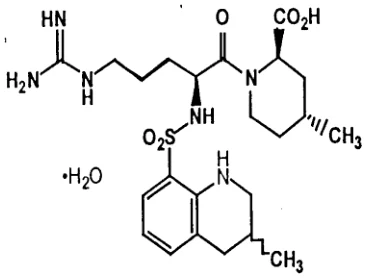
Chemical Name:1-[5-[(aminoiminomethyl)amino]-1-oxo-2[[(1,2,3,4-tetrahydro-3-methyl-8- quinolinyl)sulfonyl]amino]pentyl]-4-methyl-2-piperidinecarboxylic acid, monohydrate.
Molecular Formula C23H36N6O5S.H20
Molecular Mass: 526.66
Structural Formula:
Physicochemical Properties:
Argatroban is a synthetic, small-molecule, direct thrombin inhibitor derived from L-arginine. Argatroban has 4 asymmetric carbons. One of the asymmetric carbons has an R configuration (stereoisomer Type I) and an S configuration (stereoisomer Type II). Argatroban consists of a mixture of R and S stereoisomers at a ratio of approximately 65:35.
Argatroban is a white, odorless crystalline powder that is freely soluble in glacial acetic acid, slightly soluble in ethanol, and insoluble in acetone, ethyl acetate and ether.
14 CLINICAL TRIALS
The clinical trial data on which the original indication was authorized is not available.
15 MICROBIOLOGY
No microbiological information is required for this drug product.
16 NON-CLINICAL TOXICOLOGY
Acute Toxicity Studies
| Species/ strains | No. per group | Route | Compound | Dose level (mg/kg) | Observations |
|---|---|---|---|---|---|
| Mice: ddY | 10 4-5 4-5 | IV PO IP | Argatroban | 174-230 NS NS | LD50: 211.4 mg/kg LD50: 6200 mg/kg LD50: 600-800 mg/kg |
| Rat: Wistar | 29 4-5 4-5 | IV PO IP | Argatroban | 100-200 NS NS | LD50: 138 mg/kg |
| Dog: Beagle | 3 4 | IV PO | Argatroban | 30-65.8 NS | LD50: > 65.8 mg/kg LD50: > 1000 mg/kg |
| Rabbit: Japanese White | 9 | IV | Argatroban | 100-200 | LD50: 100-150 mg/kg |
| Mice: ddY | 10 | PO IV IP SC | Argatroban | 15 g/kg 81 167-1307 108-14860 | LD50: > 15 g/kg LD50: > 81 mg/kg LD50: M: 474 mg/kg F: 640 mg/kg LD50: M: 3750 mg/kg F: 3900 mg/kg |
| Rat: Wistar | 10 | PO IV IP SC | Argatroban | 15 g/kg 81 68-726: M 141-726: F 50-7000: M 50-5000: F | LD50: > 15 g/kg LD50: > 81 mg/kg LD50: M: 320 mg/kg F: 409 mg/kg LD50: M: 620 mg/kg F: 1565 mg/kg |
Rat: Sprague- Dawley | 5 | IV | Argatroban | 16.7, 50, 150 | Dose related increase in aPTT and PT reversible by end of study. |
| Rat: Wistar- slc | 5 | IV | Argatroban | 180-540 | LD50: 304 mg/kg |
| Rat: Wistar- slc | 5 | IV | Product G Product H | 450 60 | LD50: > 450 mg/kg LD50: > 60 mg/kg |
| Dog: Beagle | 1 | IV | Argatroban | 100, 200 | 1 M and 1 F died at 200 mg/kg Hind limb paralysis at 100 and 200 mg/kg Increase in WBC, GPT, GOT |
| Dog: Beagle | 2 | IV | Argatroban | M: 3.3, 9.6, | No deaths |
| Species/ strains | No. per group | Route | Compound | Dose level (mg/kg) | Observations |
|---|---|---|---|---|---|
28.9 F: 3.3, 10.4, 27.7 | NOEL: < 3.3 mg/kg Dose related increase in aPTT and PT reversible within 24-48 hrs. |
IP= Intraperitoneal; IV = Intravenous; PO = Oral; SC = Subcutaneous; NOEL = No-observable-effect-level; NS = Not specified
Long-Term Toxicity Studies
| Species/ strains | No. per group | Route | Compound | Dose levels (mg/k) | Duration | Key observations |
|---|---|---|---|---|---|---|
Rat: Sprague- Dawley | 15 | IV | Argatroban | C, 3, 9, 27 | 1X daily / 6 months | Minimal variations in aPTT and PT levels for duration of study Nontoxic dose: 9 mg/kg |
| Dog: Beagle | 4 | IV | Argatroban | 3, 10, 30 | 24 hr/day /28 days | No overt toxicity 30 mg/kg/day: No AE dose level |
| Dog: Beagle | 4 | IV | Argatroban | 1, 3, 9 | 1X daily/ 6 months | Occasional vomiting after admin. In 3 mg/kg or more groups Non toxic dose: 1 mg/kg |
| Rat: Sprague- Dawley | 8 | IV | Argatroban | 60/day | 24 hr/day /14 days | No adverse systemic effects. Argatroban caused modest irritation at site of catheter implantation. |
| Dog: Beagle | 1-2 | IV | Argatroban | 60/day | 24 hr/day / 13 days | Hepatic Kupffer cell pigmentation attributed to test compound |
| Dog: Beagle | 3 | IV | Argatroban | 2.5/day | 1 injection /day for 1 month | 2.5 mg/kg/day considered, systemically a no-effect dose. |
| Rat: Sprague- Dawley | 12 | IV | Argatroban | 5/day | 1X Daily /30 days | Slight perivenous hemorrhage related to antithrombotic action of drug. NOEL: 5 mg/kg/day |
| Dog: Beagle | 4 | IV | Argatroban | 15, 30, 60 | 24 hr/day /1 month | No overt toxicity. NOEL: 60 mg/kg/day |
| Dog: Beagle | 3 | IV | Argatroban | 3, 9, 27 | 1X daily/ 1 month | No abnormalities in clinical signs or pathology non toxic dose = mg/kg |
| Species/ strains | No. per group | Route | Compound | Dose levels (mg/k) | Duration | Key observations |
|---|---|---|---|---|---|---|
| Dog: Beagle | 4 | IV | Argatroban | 3, 10, 30 | 24 hr/day /28 days | No overt toxicity. NOEL = 30 mg/kg/day |
| Rat: Wistar- slc | 10 | IV | Argatroban | 3, 9, 27 | 1X daily/ 1 month | Increase in F hematocrit and decrease in F body weight gain at 27 mg/kg/day Non toxic dose = 9 mg/kg |
Rat: Sprague- Dawley | 10 | IV | Argatroban | 3, 10, 30 | 1X daily / 28 days | No deaths or remarkable finding NOEL = 30 mg/kg |
AE = Adverse events; IP= Intraperitoneally; IV = Intravenous; PO = Orally; NOEL = No-observable-effect- level
Mutagenicity
Carcinogenesis, Mutagenesis, Impairment of Fertility: In vitro assays designed to assess the mutagenic potential of argatroban in bacteria (Ames, rec-A), effects on DNA synthesis (W1-38 cells), or the ability of argatroban to induce chromosomal aberrations were conducted both in the presence or absence of metabolic activation. The results indicate that argatroban does not possess mutagenic potential.
| Species/strains | Route | Compound | Concentration (mcg/mL) | Duration | Key observations |
|---|---|---|---|---|---|
| CHO cells (Chromosome test) | In vitro | Argatroban | 1,3,10,30,100, 300, 1000 | 16 hrs incubation | No Chromosomal aberrations |
Human normal diploid culture cells (UDS test) | In vitro | Argatroban | 1,3,10,30,100, 300, 1000 | 5.5 hrs incubation | No increase in DNA synthesis |
B. Subtilis (Rec-Assay) | In vitro | Argatroban | 6250, 12500, 25000, 50000 | 18 hrs incubation | Weak positive response at 12500 mcg /mL or more Possible DNA damaging effect on B.subtilis. |
S.typhimurium; E. Coli | In vitro | Argatroban | 200 mcg/plate 500 mcg /plate 1000 mcg /plate | 45 hrs incubation | Argatroban was not mutagenic with or without metabolic activation. |
S.typhimurium; E. Coli | In vitro | Argatroban | 5, 10, 50, 100, 500, 1000, 5000 mcg/plate | 48 hrs incubation | Argatroban was not mutagenic with or without metabolic activation |
ARGATROBAN (argatroban) Page 25 of 32
| CHO cells | In vitro | Argatroban | 10, 25, 50, 100, 250, 500, 1000, 2500 | 24 or 48 hrs exposure | Argatroban was not clastogenic. |
|---|---|---|---|---|---|
| CHO cells | In vitro | Argatroban | 500, 750, 1000, 1500, 2000, 2500, 3000 | - | Argatroban was not cytotoxic either in the absence or presence of rat liver S-9 mix. |
| Mouse | IV | Argatroban | 27 mg/kg | 24 or 48 hrs | No induction of cytogenic damage to mouse bone marrow cells |
Rat hepatocyte (Sprague- Dawley) | In vitro | Argatroban | 1.5, 4.74, 15, 47.4, 150, 474, 1500 | 24 hrs incubation | Induction of Unscheduled DNA Synthesis (UDS) |
| Rat hepatocyte (Fischer 344) | In vitro | Argatroban | 1 mg/mL - 10-8 mg/mL | 18-20 hrs | Test material precipitated at 1 mg/mL. No induction of DNA repair at # 5 x 10⁻¹ mg/mL |
IV = Intravenous
Reproduction and Teratology
Overall, in reproductive studies with argatroban in animals, there were no indications of impaired parental reproductive capacity, embryotoxicity, fetotoxicity, teratogenicity, or effects on weaning, lactation, normal development, or reproductive competence of progeny. The parental "no-effect doses" were 54.9 mg/m2 in rats and 127.4 mg/m2 in rabbits; fetal "no-effect doses" were 164.7 mg/m2 in rats and 127.4 mg/m2 in rabbits.
Pregnancy in Animals: Reproduction studies performed in rats and rabbits at doses up to two times the recommended dose in man have revealed no evidence of impaired fertility or harm to the fetus due to argatroban.
Nursing Mothers: Experiments in rats show that argatroban is detected in milk. It is not known whether this drug is excreted in human milk.
ARGATROBAN (argatroban) Page 26 of 32
| Species/ strains | No. per group | Route | Compound | Dose levels (mg/kg) | Duration | Key observations |
|---|---|---|---|---|---|---|
Rat: SPF Wistar | 28 | IV | Argatroban | 3, 9, 27 | M: daily 60 days prior to mating F: daily 14 days prior to mating to day 7 of gestation | NOEL (toxicity) = 9 mg/kg NOEL (fetal devel.) = 27 mg/kg |
Rat: SPF Wistar | 40-45 | IV | Argatroban | 3, 9, 27 | F: Daily days 7-17 of gestation | No significant toxic effects on dams or pups. |
Rat: SPF Wistar | 23 | IV | Argatroban | 3, 9, 27 | Daily day 17 of gestation to day 21 post partum | NOEL (maternal rats) = 9 mg/kg NOEL (maternal reproductive performance and F1 generation development) = 27 mg/kg |
| Rabbit: NZW | 17 | IV | Argatroban | 0.5, 1.0, 2.0 | Daily days 6-18 of gestation | NOEL (maternal rabbits) = 0.5 mg/kg NOEL (fetal rabbits) 1.0 mg/kg No teratogenic effects. |
| Rabbit: NZW | 18 | IV | Argatroban | 10.8 | Daily days 6-18 of gestation | NOEL (maternal rabbits) = 10.8 mg/kg NOEL (fetal rabbits) 10.8 mg/kg No teratogenic effects. |
|---|
IV = Intravenous; NOEL = No-observable-effect-level
Other Studies
| Species/ strains | No. per group | Route | Compound | Dose levels (mg/kg) | Duration | Key observations |
|---|---|---|---|---|---|---|
| Guinea pigs | 50 total | ID | Argatroban | 2, 10, 50 | 3X at 2 week intervals | Argatroban not antigenetic in guinea pigs. |
ARGATROBAN (argatroban) Page 27 of 32
| Mice | 40 total | IP | Argatroban | 2, 10, 50 | 3X at 2 week intervals | Argatroban not antigenetic in mice. |
|---|---|---|---|---|---|---|
| Guinea pigs (Hartley) | 10 | IP IM | Argatroban | 0.3, 6 5 | 1X every other day X6 3X / week | No Passive Cutaneous Anaphylaxis (PCA) symptoms found against argatroban. |
| Guinea pigs (Hartley) | 10 | SC IV | Argatroban + Freunds adjuvant Argatroban | 5 mg/mL 10 mg/ kg/2mL | Single Single dose | Results indicate that argatroban may not have any antigenicity. |
Rat (CD) Plasma | - | In vitro | Argatroban | 0.35 mL | Single dose | Argatroban did not precipitate in rat plasma. |
Rabbit (NZW) Blood | - | In vitro | Argatroban | 1 mL | - | Argatroban does not cause hemolysis. |
| Rat (Wistar) Blood | - | In vitro | Argatroban | 500 mcM | - | Argatroban has weak direct action on erythrocyte membrane. |
| Rabbit (NZ) | 3 | IM PV | Argatroban | 1 mg 0.2 mg | 1 or 5 injections 2 injections | Argatroban produced a very slight local reaction when administered by the IM and PV routes. |
|---|---|---|---|---|---|---|
| Rat Erythrocyte | - | In vitro | Argatroban | 50 mcL, 250 mcL | - | Argatroban only produced slight hemolysis in vitro and negligible hemolysis in vivo at low and high micellar concentrations. |
| Rat Erythrocyte | - | In vitro | Argatroban | 1 mg/mL | - | Argatroban produced no hemolysis. |
ARGATROBAN (argatroban) Page 28 of 32
| Dog erythrocyte | - | In vitro | Argatroban | 1 mg/mL | 1/2 dilution 1/10 dilution | Argatroban produced very slight hemolysis at 1/2 dilution: M = 12%; F = 7% and very minor hemolysis at 1/10 dilution: M = 2%; F = 3% |
|---|
ID = Intradermal; IM = Intramuscular; IP = Intraperitoneal; SC = Subcutaneous; PV=Perivenous
17. SUPPORTING PRODUCT MONOGRAPHS
- 1. Pr Argatroban (Concentrate Solution, 100mg/ml (250mg/2.5 mL) argatroban), submission control 282415, Product Monograph, Sandoz Canada Inc. (2024-06-28)