


Product Monograph - Atropine Sulfate Injection USP
RECENT MAJOR LABEL CHANGES
No major label changes related to safety and efficacy have been made within the past 24 months
TABLE OF CONTENTS
Sections or subsections that are not applicable at the time of authorization are not listed.
RECENT MAJOR LABEL CHANGES .......................................................................................... 2
TABLE OF CONTENTS ............................................................................................................ 2
PART I: HEALTH PROFESSIONAL INFORMATION .................................................................... 4
1 INDICATIONS ............................................................................................................. 4
1.1 Pediatrics .................................................................................................................. 4
1.2 Geriatrics .................................................................................................................. 4
2 CONTRAINDICATIONS ................................................................................................ 4
4 DOSAGE AND ADMINISTRATION ................................................................................ 5
4.1 Dosing Considerations ............................................................................................. 5
4.2 Recommended Dose and Dosage Adjustment ........................................................ 5
4.4 Administration ......................................................................................................... 6
5 OVERDOSAGE ............................................................................................................ 6
6 DOSAGE FORMS, STRENGTHS, COMPOSITION AND PACKAGING ................................ 6
7 WARNINGS AND PRECAUTIONS ................................................................................. 7
7.1 Special Populations .................................................................................................. 8
7.1.1 Pregnant Women ............................................................................................... 8
7.1.2 Breast-feeding .................................................................................................... 8
7.1.3 Pediatrics ............................................................................................................ 8
7.1.4 Geriatrics ............................................................................................................ 8
8 ADVERSE REACTIONS................................................................................................. 8
8.1 Adverse Reaction Overview ..................................................................................... 8
8.2 Clinical Trial Adverse Reactions ............................................................................... 8
8.3 Post-Market Adverse Reactions ............................................................................... 8
9 DRUG INTERACTIONS ................................................................................................ 9
9.3 Drug-Behavioural Interactions ................................................................................. 9
9.4 Drug-Drug Interactions ............................................................................................ 9
9.5 Drug-Food Interactions ............................................................................................ 9
9.6 Drug-Herb Interactions ............................................................................................ 9
9.7 Drug-Laboratory Test Interactions........................................................................... 9
10 CLINICAL PHARMACOLOGY ........................................................................................ 9
10.1 Mechanism of Action ......................................................................................... 9
10.3 Pharmacokinetics ............................................................................................. 10
11 STORAGE, STABILITY AND DISPOSAL ........................................................................ 10
12 SPECIAL HANDLING INSTRUCTIONS .......................................................................... 10
PART II: SCIENTIFIC INFORMATION ..................................................................................... 11
13 PHARMACEUTICAL INFORMATION .......................................................................... 11
14 CLINICAL TRIALS ...................................................................................................... 11
14.1 Trial Design and Study Demographics ............................................................. 11
14.2 Study Results .................................................................................................... 11
15 MICROBIOLOGY ...................................................................................................... 11
16 NON-CLINICAL TOXICOLOGY .................................................................................... 11
PATIENT MEDICATION INFORMATION ................................................................................ 12
PART I: HEALTH PROFESSIONAL INFORMATION
1 INDICATIONS
ATROPINE SULFATE INJECTION USP (atropine sulfate) is indicated:
- as an antisialogogue for pre-anesthetic medication to prevent or reduce secretions of the respiratory tract.
- to restore cardiac rate and arterial pressure during anesthesia when vagal stimulation, produced by intra-abdominal surgical traction, causes a sudden decrease in pulse rate and cardiac action.
- to lessen the degree of atrioventricular (A-V) heart block when increased vagal tone is a major factor in the conduction defect, as in some cases due to digitalis.
- to overcome severe bradycardia and syncope due to a hyperactive carotid sinus reflex.
- as an antidote (with external cardiac massage) for cardiovascular collapse from the injudicious use of a choline ester (cholinergic) drug.
- in the treatment of anticholinesterase poisoning from organophosphorus insecticides.
- as an antidote for the “rapid” type of mushroom poisoning due to the presence of the alkaloid muscarine, in certain species of fungus such as Amanita muscaria.
1.1 Pediatrics
The safety and efficacy of atropine in the pediatric population has not be systematically studied (see 4 DOSAGE AND ADMINISTRATION – Recommended Dose and Dosage Adjustment, 7 WARNINGS AND PRECAUTIONS - General).
1.2 Geriatrics
Evidence from clinical studies and experience suggests that use in the geriatric population is associated with differences in safety or effectiveness (see 7 WARNINGS AND PRECAUTIONS - General).
2 CONTRAINDICATIONS
Atropine Sulfate Injection USP is contraindicated:
- In patients who are hypersensitive to this drug or to any ingredient in the formulation, including any non-medicinal ingredient, or component of the container. For a complete listing, see 6 Dosage forms, strengths, composition and packaging
- In patients with known or suspected glaucoma
- In patients with pyloric stenosis
- In patients with prostatic hypertrophy
4 DOSAGE AND ADMINISTRATION
4.1 Dosing Considerations
- Atropine Sulfate Injection USP may be administered subcutaneously, intramuscularly or intravenously.
- Doses of atropine up to 1 mg are mildly stimulant to the central nervous system (CNS). Higher doses may induce mental disturbances and depression of the CNS. Children and elderly people are particularly susceptible.
- Atropine should be used cautiously in all patients with fever.
- Atropine should be used with caution in conditions characterized by tachycardia such as thyrotoxicosis, cardiac insufficiency and in cardiac surgery where it may further accelerate the heart rate.
- Dosing in pediatric populations has not been well studied.
- In general, dose selection for an elderly patient should be cautious, usually starting at the low end of the dosing range, reflecting the greater frequency of decreased hepatic, renal, or cardiac function, and of concomitant disease or other drug therapy.
4.2 Recommended Dose and Dosage Adjustment
- The average adult dose is 0.5 mg (5 mL of a 0.1 mg/mL solution), range 0.4 to 0.6 mg (4 to 6 mL).
- Dosing in pediatric populations has not been well studied.
Pre-anesthesia:
- As an antisialagogue, it is usually injected intramuscularly prior to induction of anesthesia. This produces only minimal blocking of vagal activity.
- In children, the dosage ranges from 0.1 mg in the newborn to 0.6 mg in a child aged 12 years, injected subcutaneously 30 minutes before surgery.
- During surgery, the drug is given intravenously when reduction in pulse rate and cessation of cardiac action are due to increased vagal activity; however, if the anesthetic is cyclopropane, doses less than 0.4 mg should be used and should be given slowly to avoid the possible production of ventricular arrhythmia.
- Usual doses are used to reduce severe bradycardia and syncope associated with hyperactive carotid sinus reflex.
Bradycardia:
- For bradyarrhythmias, the usual intravenous adult dosage ranges from 0.4 to 1 mg (4 to 10 mL of a 0.1 mg/mL solution) every one to two hours as needed; larger doses up to a maximum of 2 mg may be required.
- In children, intravenous dosage ranges from 0.01 to 0.03 mg per kg of body weight.
- Atropine is also a specific antidote for cardiovascular collapse resulting from injudicious administration of choline ester. When cardiac arrest has occurred, external cardiac massage or other method of resuscitation is required to distribute the drug after intravenous injection.
Anticholinesterase poisoning:
In anticholinesterase poisoning from exposure to insecticides, large doses of at least 2 to 3 mg (20 to 30 mL of a 0.1 mg/mL solution) should be administered parenterally and repeated until signs of
- atropine intoxication appear. In the “rapid” type of mushroom poisoning, atropine should be given in doses sufficient to control parasympathomimetic signs before coma and cardiovascular collapse supervene.
4.4 Administration
- Parenteral drug products should be inspected visually for particulate matter and discoloration prior to administration, whenever solution and container permit.
- Do not use unless the solution is clear and container or seal intact. Discard if it contains a precipitate.
5 OVERDOSAGE
Symptoms of overdosage include palpitation, dilated pupils, difficulty in swallowing, hot dry skin, thirst, dizziness, restlessness, tremor, fatigue and ataxia. Toxic doses lead to marked palpitation, restlessness and excitement, hallucinations, delirium and coma. Depression and circulatory collapse occur only with severe intoxication. In such cases, blood pressure declines and death due to respiratory failure may ensue, following paralysis and coma.
In the event of toxic overdosage a short-acting barbiturate or diazepam may be given, as needed, to control marked excitement and convulsions. Large doses for sedation should be avoided because central depressant action may coincide with the depression occurring late in atropine poisoning. Central stimulants are not recommended. Physostigmine, given as an atropine antidote by slow intravenous injection of 1 to 4 mg (0.5 to 1.0 mg in children), rapidly abolishes delirium and coma caused by large doses of atropine. Since physostigmine is rapidly destroyed, the patient may again lapse into coma after one to two hours, and repeated doses may be required. Artificial respiration with oxygen may be necessary. Ice bags and alcohol sponges help to reduce fever, especially in children.
The fatal adult dose of atropine is not known; 200 mg doses have been used and doses as high as 1000 mg have been given.
In children, 10 mg or less may be fatal. With a dose as low as 0.5 mg, undesirable minimal symptoms or responses of overdosage may occur. These increase in severity and extent with larger doses of the drug (excitement, hallucinations, delirium and coma with a dose of 10 mg or more). Atropine is not removed by dialysis.
| For management of a suspected drug overdose, contact your regional poison control centre. |
6 DOSAGE FORMS, STRENGTHS, COMPOSITION AND PACKAGING
Table 1 – Dosage Forms, Strengths, Composition and Packaging
| Route of Administration | Dosage Form / Strength/Composition | Non-medicinal Ingredients |
| Intravenous, Intramuscular, Subcutaneous | Sterile solution, 0.1 mg/mL | Sodium chloride, water for injection. May contain sodium hydroxide and/or sulfuric acid for pH adjustment |
Atropine Sulfate Injection USP is a sterile, nonpyrogenic solution of atropine sulfate monohydrate in water for injection with sodium chloride sufficient to render the solution isotonic. It is administered parenterally by subcutaneous, intramuscular or intravenous injection.
Each milliliter (mL) contains atropine sulfate, monohydrate 0.1 mg and sodium chloride 9 mg (for tonicity) in water for injection, pH 4.2 (3.0 to 6.5) adjusted with sulfuric acid and/or sodium hydroxide.
The solution contains no bacteriostat, antimicrobial agent nor added buffer (except for pH adjustment) and is intended for use only as a single-dose injection. When smaller doses are required, the unused portion should be discarded.
Table 2 - Atropine Sulfate Injection USP Presentations
| Container | Concentration | Total Content (Atropine) | Needle | |
| Abboject® Syringe | 10 mL | 0.1 mg/mL | 1.0 mg | 20-gauge |
| LifeShield® Abboject® Syringe | 10 mL | 0.1 mg/mL | 1.0 mg | 20-gauge |
Note: Medication, fluid path and needle are sterile and nonpyrogenic if caps and needle cover are undisturbed and the package is intact.
7 WARNINGS AND PRECAUTIONS
General
Atropine Sulfate Injection USP is a highly potent drug and due care is essential to avoid overdosage especially with intravenous administration.
Atropine Sulfate Injection USP should be used with caution in all patients and particularly individuals over 40 years of age as they may be more susceptible to its adverse effects.
Cardiovascular
Atropine should be used with caution in conditions characterized by tachycardia such as thyrotoxicosis, cardiac insufficiency and in cardiac surgery where it may further accelerate the heart rate.
Ophthalmologic
Conventional systemic doses may precipitate acute glaucoma in susceptible patients.
Renal
Conventional systemic doses may convert partial organic pyloric stenosis into complete obstruction, and lead to complete urinary retention in patients with prostatic hypertrophy.
Respiratory
Conventional systemic doses may cause inspissation of bronchial secretions and formation of dangerous viscid plugs in patients with chronic lung disease.
7.1 Special Populations
7.1.1 Pregnant Women
Animal reproduction studies have not been conducted with atropine. In humans, atropine readily crosses the placental barrier and enters the fetal circulation. It is not known whether atropine can cause fetal harm when given to a pregnant woman or can affect reproduction capacity. Atropine should be given to a pregnant woman only if clearly needed.
7.1.2 Breast-feeding
Atropine inhibits lactation. Since trace amounts of atropine is excreted in breast milk and may cause antimuscarinic effects in the infant, the use of atropine during breastfeeding is not recommended.
7.1.3 Pediatrics
Atropine should be used with caution in children as they are more susceptible than adults to the toxic effects of anticholinergic agents. Recommendations for use in pediatric patients are not based on clinical trials.
7.1.4 Geriatrics
Atropine should be used with caution in geriatric patients since they may be more susceptible to its adverse effects. Atropine may cause mental confusion, especially in the elderly.
8 ADVERSE REACTIONS
8.1 Adverse Reaction Overview
Most of the side effects of atropine are directly related to its antimuscarinic action. Dryness of the mouth, blurred vision, photophobia and tachycardia commonly occur with chronic administration of therapeutic doses. Anhidrosis also may occur and produce heat intolerance or impair temperature regulation in persons living in a hot environment. Constipation and difficulty in micturition may occur in elderly patients. Occasional hypersensitivity reactions have been observed, especially skin rashes, which in some instances progressed to exfoliation.
8.2 Clinical Trial Adverse Reactions
This information is not available for this drug product.
8.3 Post-Market Adverse Reactions
Common adverse events include: tachycardia, dry and hot skin, mydriasis, light sensitivity, blurred vision, dry mouth, dysphagia, constipation, headache, insomnia, restlessness and dizziness. Patients with Down’s syndrome appear to have an increased susceptibility to atropine.
Less common adverse events include bradycardia following low-dose atropine (as low dose may be parasympathomimetic), palpitations, arrhythmias, paradoxical heart block, hypertension, increased myocardial ischemia; ataxia, confusion, agitation, somnolence, seizures and psychosis; vomiting, impaired GI motility and ileus; urinary retention; increased intraocular pressure and cycloplegia; and rarely severe allergic reactions including anaphylaxis. Elderly patients are more prone to hallucinations, delirium, agitation and confusion.
9 DRUG INTERACTIONS
9.3 Drug-Behavioural Interactions
This information is not available for this drug product.
9.4 Drug-Drug Interactions
- The effects of atropine may be enhanced by the concomitant administration of other drugs with anticholinergic properties such as tricyclic antidepressant, MAOI’s, phenothiazines, amantadine, some antihistamines, butyrophenones and disopyramide.
- Reduced gastrointestinal motility caused by atropine may decrease the absorption of other drugs such as mexiletine and ketoconazole. Delay in mexiletine absorption was reversed by the combination of atropine and intravenous metoclopramide during pretreatment for anesthesia.
- Atropine induced dry mouth may prevent dissolution of sublingual preparations such as the nitrates, reducing their effectiveness.
9.5 Drug-Food Interactions
Interactions with food have not been established.
9.6 Drug-Herb Interactions
Interactions with herbal products have not been established.
9.7 Drug-Laboratory Test Interactions
Interactions with laboratory tests have not been established.
10 CLINICAL PHARMACOLOGY
10.1 Mechanism of Action
Atropine Sulfate Injection USP is commonly classified as an anticholinergic or antiparasympathetic (parasympatholytic) drug. More precisely, however, it is termed an antimuscarinic agent since it antagonizes the muscarine-like actions of acetylcholine and other choline esters.
Atropine inhibits the muscarinic actions of acetylcholine on structures innervated by postganglionic cholinergic nerves, and on smooth muscles which respond to endogenous acetylcholine but are not so innervated. As with other antimuscarinic agents, the major action of atropine is a competitive or surmountable antagonism which can be overcome by increasing the concentration of acetylcholine at receptor sites of the effector organ (e.g., by using anticholinesterase agents which inhibit the enzymatic destruction of acetylcholine). The receptors antagonized by atropine are the peripheral structures that are stimulated or inhibited by muscarine (i.e., exocrine glands and smooth and cardiac muscle). Responses to postganglionic cholinergic nerve stimulation also may be inhibited by atropine but this occurs less readily than with responses to injected (exogenous) choline esters.
Atropine-induced parasympathetic inhibition may be preceded by a transient phase of stimulation, especially on the heart, where small doses first slow the rate before characteristic tachycardia develops due to paralysis of vagal control. Atropine exerts a more potent and prolonged effect on heart, intestine and bronchial muscle than scopolamine, but its action on the iris, ciliary body and certain secretory glands is weaker than that of scopolamine. Unlike the latter, atropine, in clinical doses, does not depress the central nervous system but may stimulate the medulla and higher cerebral centers. Although mild vagal excitation occurs, the increased respiratory rate and (sometimes) increased depth of respiration produced by atropine are more probably the result of bronchiolar dilatation. Accordingly, atropine is an unreliable respiratory stimulant and large or repeated doses may depress respiration.
Adequate doses of atropine abolish various types of reflex vagal cardiac slowing or asystole. The drug also prevents or abolishes bradycardia or asystole produced by injection of choline esters, anticholinesterase agents or other parasympathomimetic drugs, and cardiac arrest produced by stimulation of the vagus. Atropine also may lessen the degree of partial heart block when vagal activity is an etiologic factor. In some patients with complete heart block, the idioventricular rate may be accelerated by atropine; in others, the rate is stabilized. Occasionally, a large dose may cause atrioventricular (A-V) block and nodal rhythm.
Atropine, in clinical doses, counteracts the peripheral dilatation and abrupt decrease in blood pressure produced by choline esters. However, when given by itself, atropine does not exert a striking or uniform effect on blood vessels or blood pressure. Systemic doses slightly raise systolic and lower diastolic pressures and can produce significant postural hypotension. Such doses also slightly increase cardiac output and decrease central venous pressure. Occasionally, therapeutic doses dilate cutaneous blood vessels, particularly in the “blush” area (atropine flush), and may cause atropine “fever” due to suppression of sweat gland activity in infants and small children.
Sodium chloride added to render the solution isotonic for injection of the active ingredient is present in amounts insufficient to affect serum electrolyte balance of sodium (Na+) and chloride (CI-) ions.
10.3 Pharmacokinetics
Elimination
Atropine disappears rapidly from the blood following injection and is distributed throughout the body. Much of the drug is destroyed by enzymatic hydrolysis, particularly in the liver; from 13 to 50% is excreted unchanged in the urine. Traces are found in various secretions, including milk. Atropine readily crosses the placental barrier and enters the fetal circulation.
11 STORAGE, STABILITY AND DISPOSAL
Store between 20°C and 25°C. Protect from freezing and excessive heat.
12 SPECIAL HANDLING INSTRUCTIONS
Single-dose; discard unused portion.
PART II: SCIENTIFIC INFORMATION
13 PHARMACEUTICAL INFORMATION
Drug Substance
Proper name: Atropine Sulfate
Chemical name: Benzeneacetic acid, α-(hydroxymethyl)-, 8-methyl-8-azabicyclo[3.2.1.]oct-3-yl ester, endo –(±)-, sulfate (2:1) (salt), monohydrate.
Molecular formula and molecular mass: [(C17H23NO3)2 ˑ H2SO4 ] 676.82
Structural formula:
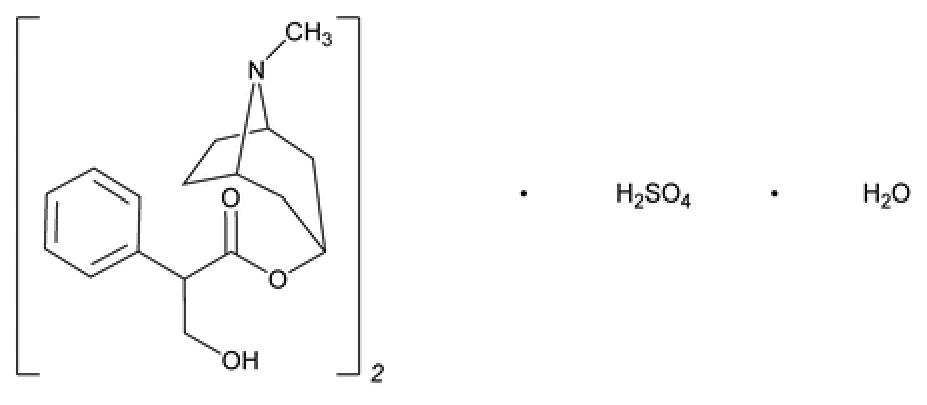
Physicochemical properties:
Slightly soluble in water, freely soluble in alcohol, benzene, slightly soluble in chloroform and diluted acids, pKa = 4.35 / 9.43
14 CLINICAL TRIALS
14.1 Trial Design and Study Demographics
This information is not available for this drug product.
14.2 Study Results
This information is not available for this drug product.
15 MICROBIOLOGY
No microbiological information is required for this drug product.
16 NON-CLINICAL TOXICOLOGY
This information is not available for this drug product.