


Product Monograph - Auro-Ziprasidone
RECENT MAJOR LABEL CHANGES
N/A
TABLE OF CONTENTS
Sections or subsections that are not applicable at the time of authorization are not listed.
RECENT MAJOR LABEL CHANGES ............................................................................................. 2
TABLE OF CONTENTS……………………………………………………………………………………………………………..2
PART I: HEALTH PROFESSIONAL INFORMATION ...................................................................... 4
1 INDICATIONS........................................................................................................................ 4
1.1 PEDIATRICS ........................................................................................................................ 4
1.2 GERIATRICS........................................................................................................................ 4
2 CONTRAINDICATIONS........................................................................................................... 5
3 SERIOUS WARNINGS AND PRECAUTIONS ............................................................................. 5
4 DOSAGE AND ADMINISTRATION........................................................................................... 6
4.1 DOSING CONSIDERATIONS ..................................................................................................... 6
4.2 RECOMMENDED DOSE AND DOSAGE ADJUSTMENT....................................................................... 6
4.4 ADMINISTRATION ................................................................................................................ 7
4.5 MISSED DOSE .................................................................................................................... 7
5 OVERDOSAGE....................................................................................................................... 7
6 DOSAGE FORMS, STRENGTHS, COMPOSITION AND PACKAGING ........................................... 8
7 WARNINGS AND PRECAUTIONS ........................................................................................... 9
7.1 SPECIAL POPULATIONS .........................................................................................................19
7.1.1 PREGNANT WOMEN .......................................................................................................19
7.1.2 BREAST-FEEDING .............................................................................................................20
7.1.3 PEDIATRICS ....................................................................................................................21
7.1.4 GERIATRICS....................................................................................................................21
8 ADVERSE REACTIONS ..........................................................................................................22
8.1 ADVERSE REACTION OVERVIEW..............................................................................................22
8.2 CLINICAL TRIAL ADVERSE REACTIONS........................................................................................23
8.2.1 CLINICAL TRIAL ADVERSE REACTIONS – PEDIATRICS ...................................................................28
8.3 LESS COMMON CLINICAL TRIAL ADVERSE REACTIONS....................................................................32
8.5 POST-MARKET ADVERSE REACTIONS........................................................................................35
9 DRUG INTERACTIONS ..........................................................................................................35
9.2 DRUG INTERACTIONS OVERVIEW.............................................................................................35
9.3 DRUG-BEHAVIOURAL INTERACTIONS ........................................................................................36
9.4 DRUG-DRUG INTERACTIONS ..................................................................................................36
9.5 DRUG-FOOD INTERACTIONS ..................................................................................................38
9.6 DRUG-HERB INTERACTIONS...................................................................................................38
9.7 DRUG-LABORATORY TEST INTERACTIONS ..................................................................................38
10 CLINICAL PHARMACOLOGY ...............................................................................................38
10.1 MECHANISM OF ACTION ....................................................................................................38
10.2 PHARMACODYNAMICS .......................................................................................................38
10.3 PHARMACOKINETICS..........................................................................................................39
11 STORAGE, STABILITY AND DISPOSAL ..................................................................................41
12 SPECIAL HANDLING INSTRUCTIONS ...................................................................................41
PART II: SCIENTIFIC INFORMATION ........................................................................................42
13 PHARMACEUTICAL INFORMATION ....................................................................................42
14 CLINICAL TRIALS ................................................................................................................42
14.1 TRIAL DESIGN AND STUDY...................................................................................................42
14.2 STUDY RESULTS ...............................................................................................................43
14.3 COMPARATIVE BIOAVAILABILITY STUDIES .................................................................................45
15 MICROBIOLOGY ................................................................................................................45
16 NON-CLINICAL TOXICOLOGY ..............................................................................................46
17 SUPPORTING PRODUCT MONOGRAPHS ............................................................................48
PATIENT MEDICATION INFORMATION ...................................................................................49
PART I: HEALTH PROFESSIONAL INFORMATION
1 INDICATIONS
Schizophrenia
AURO-ZIPRASIDONE (ziprasidone hydrochloride) is indicated for the treatment of schizophrenia and related psychotic disorders. The prescriber should consider the finding of ziprasidone’s greater capacity to prolong the QT/QTc interval compared to other antipsychotic drugs (see 2 CONTRAINDICATIONS, 7 WARNINGS AND PRECAUTIONS).
The efficacy of ziprasidone was established in short-term (4- and 6-week) controlled trials of schizophrenic inpatients (see 14 CLINICAL TRIALS).
Ziprasidone has been shown to be effective in maintaining clinical improvement during long- term therapy (1-year). The health professional who elects to use AURO-ZIPRASIDONE for extended periods should periodically re-evaluate the long-term usefulness of the drug for the individual patient.
Bipolar Disorder
AURO-ZIPRASIDONE is indicated for the treatment of acute manic or mixed episodes associated with bipolar disorder. The prescriber should consider the finding of ziprasidone’s greater capacity to prolong the QT/QTc interval compared to other antipsychotic drugs (see 2 CONTRAINDICATIONS, 7 WARNINGS AND PRECAUTIONS).
The efficacy of ziprasidone in acute mania was established in 2 placebo-controlled, double- blind, 3-week studies which compared ziprasidone with placebo and 1 double-blind, 12- week (3-week placebo-controlled, active comparator acute phase and 9-week active comparator phase) study which compared ziprasidone to haloperidol and placebo, in patients meeting DSM-IV criteria for Bipolar I Disorder (see 14 CLINICAL TRIALS).
The effectiveness of ziprasidone for longer-term use and for prophylactic use in mania has not been systematically evaluated in controlled clinical trials. Therefore, health professionals who elect to use ziprasidone for extended periods should periodically re-evaluate the long- term risks and benefits of the drug for the individual patient.
1.1 Pediatrics
Pediatrics (< 18 years of age): Based on the data submitted and reviewed by Health Canada, the safety and efficacy of ziprasidone in pediatric patients has not been established; therefore, Health Canada has not authorized an indication for pediatric use. (see 7.1.3 Pediatrics).
1.2 Geriatrics
AURO-ZIPRASIDONE is not indicated for use in elderly patients with dementia (see 3 SERIOUS
WARNINGS AND PRECAUTIONS and 10.3 Pharmacokinetics, Special Populations and Conditions).
The greater frequency of decreased hepatic, renal, or cardiac function, characteristic of the elderly, as well as concomitant disease and use of other drugs may impact the pharmacokinetics of AURO-ZIPRASIDONE in this population. Caution should be used when treating geriatric patients with AURO-ZIPRASIDONE (see 10.3 Pharmacokinetics, Special Populations and Conditions, and 4 DOSAGE AND ADMINISTRATION).
2 CONTRAINDICATIONS
QT Prolongation: Because of ziprasidone’s dose-related prolongation of the QT interval and the known association of fatal arrhythmias with QT prolongation by some other drugs, AURO-ZIPRASIDONE is contraindicated in patients with:
- known history of QT prolongation (including congenital long QT syndrome);
- recent acute myocardial infarction; or
- uncompensated heart failure (see 7 WARNINGS AND PRECAUTIONS, Cardiovascular).
Pharmacokinetic/pharmacodynamic studies between ziprasidone and other drugs that prolong the QT interval have not been performed. An additive effect of ziprasidone and other drugs that prolong the QT interval cannot be excluded. Therefore, ziprasidone should not be given with dofetilide, sotalol, quinidine, other Class Ia and III anti-arrhythmias, mesoridazine, thioridazine, chlorpromazine, droperidol, pimozide, sparfloxacin, gatifloxacin, moxifloxacin, halofantrine, mefloquine, pentamidine, arsenic trioxide, levomethadyl acetate, dolasetron mesylate, probucol or tacrolimus. Ziprasidone is also contraindicated with drugs that have demonstrated QT prolongation as one of their pharmacodynamic effects and have this effect described in their respective Product Monograph as a contraindication or a warning (see 7 WARNINGS AND PRECAUTIONS, Cardiovascular).
- Hypersensitivity: AURO-ZIPRASIDONE is contraindicated in patients who are hypersensitive to ziprasidone or to any ingredient in the formulation or component of the container. For a complete listing see 6 DOSAGE FORMS, STRENGTHS, COMPOSITION AND PACKAGING.
3 SERIOUS WARNINGS AND PRECAUTIONS
Serious Warnings and Precautions Increased Mortality in Elderly Patients with Dementia Elderly patients with dementia treated with atypical antipsychotic drugs are at an increased risk of death compared to placebo. Analyses of 13 placebo-controlled trials with various antipsychotics (modal duration of 10 weeks) in these patients showed a mean 1.6-fold increase in the death rate in the drug-treated patients. Although the causes of death were varied, most of the deaths appeared to be either cardiovascular |
| (e.g., heart failure, sudden death) or infectious (e.g., pneumonia) in nature (see 7.1.4 Geriatrics, Use in Geriatric Patients with Dementia). |
4 DOSAGE AND ADMINISTRATION
4.1 Dosing Considerations
- Dosage adjustments are generally not required on the basis of age, gender, race, or renal impairment.
- The absorption of ziprasidone is increased up to two-fold in the presence of a meal.
- Concomitant treatment with other drugs that have been consistently observed to prolong the QT/QTc interval should be avoided. See also: 7 WARNINGS and PRECAUTIONS, Recommendations Regarding Risk Factors for QT Prolongation.
4.2 Recommended Dose and Dosage Adjustment
- Pediatrics: Health Canada has not authorized an indication for pediatric use (see 7.1.3 Pediatrics)
Adults:
Schizophrenia
Initial Treatment:
AURO-ZIPRASIDONE may be administered at an initial daily dose of 40 mg BID with a meal. However, individual patients may benefit from an initial dose of 20 mg BID. Daily dosage may subsequently be adjusted on the basis of clinical status up to 80 mg BID. Dosage adjustments, if indicated, should generally occur at intervals of not less than 2 days, since steady-state is achieved within 1 to 3 days.
Efficacy in schizophrenia was studied in a dose range of 20 to 100 mg BID in short-term, placebo-controlled clinical trials. There were trends toward dose response within the range of 20 to 80 mg BID, but results were not consistent. An increase to a dose greater than 80 mg BID is not generally recommended. The safety of doses above 100 mg BID has not been systematically evaluated in clinical trials.
Maintenance Treatment:
It is recommended that responding patients with schizophrenia be continued on AURO-ZIPRASIDONE at the lowest dose needed to maintain remission. The efficacy of AURO-ZIPRASIDONE 20, 40, or 80 mg BID in maintenance treatment has been established over a 12-month treatment period.
Patients should be periodically reassessed to determine the need for maintenance treatment. While there is no body of evidence available to answer the question of how long the patient should be treated with AURO-ZIPRASIDONE, the effectiveness of maintenance treatment is well established for many other antipsychotic drugs.
Bipolar Disorder
Initial Treatment:
Oral ziprasidone should be administered at an initial daily dose of 40 mg BID with a meal. The dose should then be increased to 60 mg or 80 mg BID on the second day of treatment and subsequently adjusted on the basis of toleration and efficacy within the range 40-80 mg BID. In the flexible-dose clinical trials, the mean daily dose administered was approximately 120 mg.
Maintenance Treatment:
There is no body of evidence available from controlled trials to guide a clinician in the longer-term management of a patient who improves during treatment of mania with ziprasidone. While it is generally agreed that pharmacological treatment beyond an acute response in mania is desirable, both for maintenance of the initial response and for prevention of new manic episodes, there are no systematically obtained data to support the use of ziprasidone in such longer-term treatment (i.e., beyond 3 weeks).
Geriatrics: Given the greater sensitivity of this population, a lower starting dose, slower titration, and careful monitoring during the initial dosing period may be considered for elderly patients when clinical factors warrant (see 7.1.4 Geriatrics).
AURO-ZIPRASIDONE is not indicated for treatment of elderly patients with dementia (see 3 SERIOUS WARNINGS AND PRECAUTIONS).
- Hepatic Impairment: Lower doses should be considered for hepatic insufficiency, considering that < 1% of ziprasidone is cleared renally, and there is a lack of experience with ziprasidone in patients with severe hepatic impairment.
4.4 Administration
AURO-ZIPRASIDONE should be administered BID, with a meal. Swallow capsules whole, do not open, crush, or chew the capsules.
4.5 Missed Dose
The missed dose should be taken at the next scheduled dose. Doses should not be doubled.
5 OVERDOSAGE
Symptoms
In premarketing trials, accidental or intentional overdosage of ziprasidone was documented in 10 patients. All of these patients survived without sequelae. In the patient taking the largest confirmed amount, 3240 mg, the only symptoms reported were minimal sedation, slurring of speech, and transitory hypertension (200/95).
In post-marketing use, the most common adverse events reported in association with ziprasidone overdose generally included extrapyramidal symptoms, somnolence, tremor, and anxiety. Hypertension, hypotension, diarrhea, tachycardia, and prolongation of the QTc and QRS intervals have also been reported.
Treatment
There is no specific antidote to ziprasidone, and it is not dialyzable. The possibility of multiple drug involvement should be considered.
In case of acute overdosage, establish and maintain an airway and ensure adequate oxygenation and ventilation. Intravenous access should be established and gastric lavage (after intubation, if patient is unconscious) and administration of activated charcoal together with a laxative should be considered. The possibility of obtundation, seizure, or dystonic reaction of the head and neck following overdose may create a risk of aspiration with induced emesis.
Cardiovascular monitoring should commence immediately and should include continuous electrocardiographic monitoring to detect possible arrhythmias. If antiarrhythmic therapy is administered, disopyramide, procainamide, and quinidine carry a theoretical hazard of additive QT-prolonging effects that might be additive to those of ziprasidone.
Hypotension and circulatory collapse should be treated with appropriate measures such as intravenous fluids. If sympathomimetic agents are used for vascular support, epinephrine and dopamine should not be used, since beta stimulation combined with α1-antagonism associated with ziprasidone may worsen hypotension. Similarly, it is reasonable to expect that the alpha- adrenergic-blocking properties of bretylium might be additive to those of ziprasidone, resulting in problematic hypotension.
In cases of severe extrapyramidal symptoms, anticholinergic medication should be administered.
Close medical supervision and monitoring should continue until the patient recovers.
| For management of a suspected drug overdose, contact your regional poison control centre. |
6 DOSAGE FORMS, STRENGTHS, COMPOSITION AND PACKAGING
Table – Dosage Forms, Strengths, Composition and Packaging
| Route of Administration | Dosage Form / Strength/Composition | All Non-medicinal Ingredients |
| Oral | Capsules / 20 mg, 40 mg, 60 mg, and 80 mg | Ethylcellulose, lactose monohydrate, magnesium stearate, pregelatinised starch. Capsule shell Ingredients: FD & C Blue 2, titanium dioxide, gelatin and sodium lauryl sulfate. |
Description and Packaging:
20 mg: Blue opaque cap /Off- white opaque body, size ‘5’ hard gelatin capsule shells filled with creamy to pale pinkish granular powder and imprinted with ‘ZPD’ on cap and ‘20’ on body with black ink. Available in blister pack of 2 x 14 Capsules and HDPE bottles of 30, 60, 100 & 500 Capsules.
40 mg: Blue opaque cap /Blue opaque body, size ‘3’ hard gelatin capsule shells filled with creamy to pale pinkish granular powder and imprinted with ‘ZPD’ on cap and ‘40’ on body with black ink. Available in blister pack of 2 x 14 Capsules and HDPE bottles of 30, 60, 100 & 500 Capsules.
60 mg: Off- white opaque cap /Off- white opaque body, size ‘2’ hard gelatin capsule shells filled with creamy to pale pinkish granular powder and imprinted with ‘ZPD’ on cap and ‘60’ on body with black ink. Available in blister pack of 2 x 14 Capsules and HDPE bottles of 30, 60, 100 & 500 Capsules.
80 mg: Blue opaque cap /Off- white opaque body, size ‘1’ hard gelatin capsule shells filled with creamy to pale pinkish granular powder and imprinted with ‘ZPD’ on cap and ‘80’ on body with black ink. Available in blister pack of 2 x 14 Capsules and HDPE bottles of 30, 60, 100 & 500 Capsules.
7 WARNINGS AND PRECAUTIONS
Please see 3 SERIOUS WARNINGS AND PRECAUTIONS.
General
Disruption of the body’s ability to reduce core body temperature has been attributed to antipsychotic agents. Appropriate care is advised when prescribing ziprasidone for patients who will be experiencing conditions which may contribute to an elevation in core body temperature, e.g., exercising strenuously, exposure to extreme heat, receiving concomitant medication with anticholinergic activity, or being subject to dehydration.
Ziprasidone has not been evaluated or used to any appreciable extent in patients with a recent history of myocardial infarction or unstable heart disease. Patients with these diagnoses were excluded from pre-marketing clinical studies. Because of the risks of QT/QTc prolongation and orthostatic hypotension with ziprasidone, caution should be observed in cardiac patients (see 2 CONTRAINDICATIONS, as well as 7 WARNINGS AND PRECAUTIONS, QT Prolongation and Orthostatic Hypotension).
AURO-ZIPRASIDONE capsules contain lactose. This should be considered when prescribing to patients with rare hereditary problems of galactose intolerance, lactase deficiency or glucose-galactose malabsorption.
Carcinogenesis and Mutagenesis
For animal data, see 16 NON-CLINICAL TOXICOLOGY.
Cardiovascular
QT Prolongation (see also 2 CONTRAINDICATIONS):
AURO-ZIPRASIDONE is associated with moderate QT/QTc interval prolongation, as described in the subsections below.
Recommendations Regarding Risk Factors for QT Prolongation
Many drugs that cause QT/QTc prolongation are suspected to increase the risk of a rare, potentially fatal polymorphic ventricular tachyarrhythmia known as torsades de pointes. Generally, the risk of torsades de pointes increases with magnitude of the QT/QTc prolongation produced by the drug.
Torsades may be asymptomatic or experienced by the patient as dizziness, palpitations, syncope or seizures. If sustained, torsades de pointes can progress to ventricular fibrillation and sudden cardiac death.
As per Health Canada’s QT/QTc Guidelines, in the general population, certain circumstances may increase the risk of the occurrence of torsades de pointes in association with the use of drugs that prolong the QT/QTc interval, including (1) bradycardia; (2) electrolyte disturbances (e.g., hypokalemia, hypomagnesemia, or hypocalcemia); (3) concomitant use of other drugs that prolong the QT/QTc interval; (4) presence of congenital prolongation of the QT interval; (5) family history of sudden cardiac death at < 50 years; (6) personal history of cardiac disease or arrhythmias; (7) acute neurological events, e.g., stroke; (8) being female or 65 years of age or older; (9) nutritional deficits e.g., eating disorders; (10) diabetes mellitus. Therefore:
- Ziprasidone should not be used in combination with other drugs that are known to prolong the QT/QTc interval (see 2 CONTRAINDICATIONS and 9.4 Drug-Drug Interactions). Additionally, clinicians should be alert to the identification of other drugs that have been consistently observed to prolong the QT/QTc interval. Such drugs should not be prescribed with ziprasidone.
- Ziprasidone should also not be used in patients with congenital long QT syndrome, or in patients with a history of cardiac arrhythmias, with recent acute myocardial infarction, or with uncompensated heart failure (see 2 CONTRAINDICATIONS).
- If patients with stable cardiac disease are treated, an ECG review should be considered before treatment is started.
- Persistently prolonged QT/QTc intervals may also increase the risk of further prolongation and arrhythmia, but it is not clear that routine screening ECG measures are effective in detecting such patients. Rather, if cardiac symptoms, such as palpitations, vertigo, syncope or seizures occur then the possibility of a malignant cardiac arrhythmia should be considered and a cardiac evaluation including an ECG should be performed. If the QTc interval for a patient is > 500 msec, then it is recommended that the treatment be stopped.
It is recommended that patients being considered for ziprasidone treatment who are at risk for significant electrolyte disturbances (e.g., diuretic therapy, protracted diarrhea or vomiting, water intoxication, eating disorder, and alcoholism), have baseline serum potassium and magnesium measurements performed and levels corrected if necessary.
- Hypokalemia (and/or hypomagnesemia) may increase the risk of QT prolongation and arrhythmia. It is essential to periodically monitor serum electrolytes in patients for whom diuretic therapy is introduced during ziprasidone treatment.
- Patients receiving treatment with drugs that prolong the QT/QTc interval should be counselled appropriately, regarding risk factors, symptoms suggestive of arrhythmia and risk management strategies (see 9.4 Drug-Drug Interactions).
Studies Specifically Designed to Assess QT Prolongation
Comparative study (128-054): Six antipsychotics:
A study directly comparing the QT/QTc prolonging effect of ziprasidone with several other drugs effective in the treatment of schizophrenia was conducted in patient volunteers
(n = 28-35 per drug). In the first phase of the trial, ECGs were obtained at the time of maximum plasma concentration when the drug was administered alone. In the second phase of the trial, ECGs were obtained at the time of maximum plasma concentration while the drug was co-administered with an inhibitor of the CYP450 metabolism of the drug.
In the first phase of the study, the mean change in QTc from baseline was calculated for each drug, using a sample-based correction that makes adjustments for the effect of heart rate on the QT interval. The mean increase in QTc from baseline for ziprasidone (baseline correction) at 160 mg/day was 15.9 msec, which was approximately 9 to 14 msec greater than for four of the comparator drugs (haloperidol at 15 mg/day [7.1 msec], quetiapine at 750 mg/day [5.7 msec], risperidone at 16 mg/day [3.6 msec], and olanzapine at 20 mg
/day [1.7 msec], but was approximately 14 msec less than the prolongation observed for thioridazine at 300 mg/day [30.1 msec].
In the second phase of the study, the effect of ziprasidone on QTc length (16.6 msec) was not augmented by the presence of a metabolic inhibitor (ketoconazole 200 mg BID). The mean increase for the other comparator drugs was haloperidol [13.3 msec], quetiapine [8.0 msec], olanzapine [3.0 msec], and risperidone [2.6 msec], compared to thioridazine [29.6 msec].
QT Effects at 2x maximum recommended ziprasidone dose:
A study examining the effect of 3 doses of orally administered ziprasidone (including twice the recommended clinical dose, n = 29) and haloperidol (the highest dose level was comparably high, n = 30) on the QTc interval was conducted in clinically stable patients with schizophrenia and schizoaffective disorder. The study comprised 4 consecutive periods, including drug tapering (phase 1), wash out (phase 2), drug therapy (phase 3) followed by the study drug wash out and initiation of outpatient drug therapy (phase 4).
Serial baseline electrocardiograms (ECGs) were collected under controlled conditions on the last day (day 0) of period 2 at times matched to those collected during study drug administration (phase 3) at the time of estimated peak drug exposure. At each steady- state dose level, three ECGs and a pharmacokinetic sample were collected at the predicted time of peak exposure to administered drug (Tmax). One of the three ECGs was collected at Tmax and the other two were collected one hour on either side of Tmax.
The mean increase in QTc from baseline for ziprasidone at 40 mg/day was 4.5 msec, and at 160 mg/day was 19.5 msec (comparable to the study described above). A further increase in dose to 320 mg/day (twice the maximum recommended clinical dose) led to an increase in QTc of 22.5 msec, which was only 3 msec more than after 160 mg/day in this study, suggesting a plateau. In comparison, there was no mean QTc increase apparent at the lowest haloperidol dose (2.5 mg/day). At the 2 higher doses of haloperidol, (15 and 30 mg/day), mean QTc increases ranged from 6.6 to 7.2 msec. No subject in either treatment group experienced a QTc interval ≥ 450 msec or an increase from baseline of ≥ 75 msec.
Data from Non-QT specific ziprasidone studies
In placebo-controlled trials, ziprasidone increased the QTc interval compared to placebo by approximately 10 msec at the highest recommended daily dose of 160 mg, which was the basis for subsequent QT-specific studies. The clinical trial data for ziprasidone did not reveal an excess risk of mortality for ziprasidone compared to other antipsychotic drugs or placebo.
Electrocardiogram readings revealing QTc intervals exceeding the potentially clinically relevant threshold of 500 msec in clinical trials with ziprasidone occurred in: 2/3266 (0.06%) patients receiving ziprasidone and 1/538 (0.19%) patients receiving placebo. One patient had a history of prolonged QTc and a screening measurement of 489 msec; QTc was 503 msec during ziprasidone treatment. The other patient, who was receiving ziprasidone for more than 6.5 years without interruption, had a QTc of 503 msec at week 189, and 435 msec 19 weeks later, while maintained on the same oral dose of ziprasidone. There were confounding factors that contributed to the occurrence of these cases.
Post-Marketing Data (see also 8.5 Post-Market Adverse Reactions)
There have been rare post-marketing reports of torsades de pointes (in the presence of multiple confounding factors) (see 8.5 Post-Market Adverse Reactions). Torsades de pointes have not been observed in association with the use of ziprasidone at recommended doses in clinical trials, but experience is too limited to rule out increased risk.
In view of the clinical trial data demonstrating a moderate QT prolongation effect of ziprasidone, a review of 5-year, post-marketing spontaneous data from the FDA AERS database was conducted using a set of heart-related search terms.
Small elevations in spontaneous reporting rates were observed for ziprasidone compared with two other atypical antipsychotics, for both fatal cases, and “all” cases (i.e., fatal plus non-fatal).
Accumulated case reports should not be used as a basis for determining the incidence of a reaction or estimating risk for a particular product, as neither the total number of reactions occurring, nor the number of patients exposed to the health product is known. Because of the multiple factors that influence reporting, quantitative comparisons of health product safety cannot be made from the data. Comparison of reporting rates cannot be employed to confirm or refute a hypothesis, due to well-known, inherent limitations with spontaneous reporting of adverse events.
Orthostatic Hypotension:
Ziprasidone may induce orthostatic hypotension associated with dizziness, tachycardia and, in some patients, syncope, especially during the initial dose-titration period, probably reflecting its α1-adrenergic antagonist properties. Syncope was reported in 0.6% (22/3834) of the patients treated with ziprasidone.
Ziprasidone should be used with particular caution in patients with known cardiovascular disease (history of myocardial infarction or ischemic heart disease, heart failure or conduction abnormalities), cerebrovascular disease or conditions which would predispose patients to hypotension (dehydration, hypovolemia and treatment with antihypertensive medications). Patients with a history of clinically significant cardiac disorders were excluded from the trials.
Dependence/Tolerance
Ziprasidone has not been systematically studied, in animals or humans, for its potential for abuse, tolerance or physical dependence. While clinical trials did not reveal any tendency for drug- seeking behaviour, these observations were not systematic and it is not possible to predict on the basis of this limited experience the extent to which AURO-ZIPRASIDONE will be misused, diverted and/or abused once marketed. Consequently, patients should be evaluated carefully for a history of drug abuse, and such patients should be observed closely for signs of AURO-ZIPRASIDONE misuse or abuse (e.g., development of tolerance, increases in dose, drug-seeking behaviour).
Driving and Operating Machinery
Since ziprasidone has the potential to impair judgment, thinking, or motor skills, patients should be cautioned about performing activities requiring mental alertness, such as operating a motor vehicle (including automobiles) or operating hazardous machinery, until they are reasonably certain that ziprasidone therapy does not affect them adversely.
Endocrine and Metabolism
- Hyperglycemia:
As with some other antipsychotics, hyperglycemia, exacerbation of pre-existing diabetes, and diabetic coma have been reported very rarely during the use of ziprasidone. However, no causal relationship with ziprasidone has been established (see 8.5 Post-Market Adverse Reactions). Diabetic ketoacidosis (DKA) has occurred in patients with no reported history of hyperglycemia. Patients should have baseline and periodic monitoring of blood glucose and body weight.
Assessment of the relationship between atypical antipsychotic use and glucose abnormalities is complicated by the possibility of an increased background risk of diabetes mellitus in patients with schizophrenia and the increasing incidence of diabetes mellitus in the general population. Given these confounders, and that there is no data in drug-naïve patients, the relationship between atypical antipsychotic use and hyperglycemia-related adverse events is not completely understood. However, epidemiological studies, which did not include ziprasidone, suggest an increased risk of treatment-emergent hyperglycemia- related adverse events in patients treated with the atypical antipsychotics. Because ziprasidone was not marketed at the time these studies were performed, it is not known if ziprasidone is associated with this increased risk. Precise risk estimates for hyperglycemia- related adverse events in patients treated with atypical antipsychotics are not available.
Any patient treated with atypical antipsychotics should be monitored for symptoms of hyperglycemia, including polydipsia, polyuria, polyphagia, and weakness. Patients who develop symptoms of hyperglycemia during treatment with atypical antipsychotics should undergo fasting blood glucose testing. In some cases, hyperglycemia has resolved when the atypical antipsychotic was discontinued; however, some patients required continuation of anti-diabetic treatment despite discontinuation of the suspect drug. Patients with risk factors for diabetes mellitus (e.g., obesity, family history of diabetes) who are starting treatment with atypical antipsychotics should undergo fasting blood glucose testing at the beginning of treatment and periodically during treatment. Patients with an established diagnosis of diabetes mellitus who are started on atypical antipsychotics should be monitored regularly for worsening of glucose control.
- Hyperprolactinemia:
As with other drugs that antagonize dopamine D2 receptors and/or serotonin 5-HT2 receptors, AURO-ZIPRASIDONE may elevate prolactin levels in humans. Elevations associated with ziprasidone treatment are generally mild and may decline during administration.
Increased prolactin levels were also observed in animal studies with this compound, and were associated with an increase in mammary gland neoplasia in mice; a similar effect was not observed in rats (see 16 NON-CLINICAL TOXICOLOGY, Carcinogenicity).
Tissue culture experiments indicate that approximately one-third of human breast cancers are prolactin-dependent in vitro, AURO-ZIPRASIDONE should only be administered to patients with previously detected breast cancer if the benefits outweigh the potential risks.
Although disturbances such as galactorrhea, amenorrhea, gynecomastia, and impotence have been reported with prolactin-elevating compounds, the clinical significance of elevated serum prolactin levels is unknown for most patients. Long-standing hyperprolactinemia when associated with hypogonadism may lead to decreased bone mineral density in both female and male subjects. Caution should be exercised when considering ziprasidone treatment in patients with pituitary tumors. Neither clinical studies nor epidemiological studies conducted to date have shown an association between chronic administration of this class of drugs and tumorigenesis in humans. The available evidence is considered too limited to be conclusive at this time.
Gastrointestinal
Patients should be advised of the risk of severe constipation during AURO-ZIPRASIDONE treatment, and that they should tell their doctor if constipation occurs or worsens, as they may need laxatives (see 8.5 Post Market Adverse Reactions).
Genitourinary
- Priapism:
Rare cases of priapism have been reported with antipsychotic use, such as AURO-ZIPRASIDONE. This adverse reaction, as with other psychotropic drugs, did not appear to be dose-dependent and did not correlate with duration of treatment. The likely mechanism of action of priapism is a relative decrease in sympathetic tone. Severe priapism may require surgical intervention.
Hematologic
- Venous Thromboembolism:
Venous thromboembolism (VTE), including fatal pulmonary embolism, has been reported with antipsychotic drugs, including AURO-ZIPRASIDONE, in case reports and/or observational studies. When prescribing AURO-ZIPRASIDONE, all possible risk factors for VTE should be identified before and during treatment with AURO-ZIPRASIDONE and preventive measures undertaken.
- Neutropenia, granulocytopenia, and agranulocytosis:
Neutropenia, granulocytopenia, and agranulocytosis have been reported during antipsychotic use (see 8.5 Post Market Adverse Reactions). Therefore, it is recommended that patients have their complete blood count (CBC) tested prior to starting AURO-ZIPRASIDONE and then periodically throughout treatment.
Possible risk factors for leukopenia/neutropenia include pre-existing low white blood cell count (WBC) and history of drug induced leukopenia/neutropenia. Patients with a pre- existing low WBC or a history of drug induced leukopenia/neutropenia should have their complete blood count (CBC) monitored frequently during the first few months of therapy and AURO-ZIPRASIDONE should be discontinued at the first sign of decline in WBC, in the absence of other causative factors.
Patients with neutropenia should be carefully monitored for fever or other symptoms or signs of infection and treated promptly if such symptoms or signs occur. Patients with severe neutropenia (absolute neutrophil count < 1 x 10⁹/L) should discontinue AURO-ZIPRASIDONE and have their WBC followed until recovery.
Hepatic/Biliary/Pancreatic
In patients with hepatic insufficiency, lower doses should be considered (see 4.2
Recommended Dose and Dosage Adjustment, Hepatic Impairment and 10.3 Pharmacokinetics, Hepatic Insufficiency).
Monitoring and Laboratory Tests
Patients being considered for ziprasidone treatment that are at risk of significant electrolyte disturbances should have baseline serum potassium and magnesium measurements. Low serum potassium and magnesium should be repleted before proceeding with treatment. Patients who are started on diuretics during ziprasidone therapy need periodic monitoring of serum potassium and magnesium. Ziprasidone should be discontinued in patients who are found to have persistent QTc measurements > 500 msec (see 7 WARNINGS AND PRECAUTIONS, QT Prolongation).
Neurologic
Neuroleptic Malignant Syndrome (NMS) :
A potentially fatal symptom complex sometimes referred to as NMS has been reported in association with the administration of antipsychotic drugs, including AURO-ZIPRASIDONE.
Clinical manifestations of NMS are hyperpyrexia, muscle rigidity, altered mental status, and evidence of autonomic instability (irregular pulse or blood pressure, tachycardia, diaphoresis, and cardiac dysrhythmia). Additional signs may include elevated creatinine phosphokinase, myoglobinuria (rhabdomyolysis), and acute renal failure.
In arriving at a diagnosis, it is important to identify cases where the clinical presentation includes both serious medical illness (e.g., pneumonia, systemic infection, etc.), and untreated or inadequately treated extrapyramidal signs and symptoms (EPS). Other important considerations in the differential diagnosis include central anticholinergic toxicity, heat stroke, drug fever, and primary central nervous system pathology.
The management of NMS should include: 1) immediate discontinuation of antipsychotic drugs including AURO-ZIPRASIDONE and other drugs not essential to concurrent therapy; 2) intensive symptomatic treatment and medical monitoring; and 3) treatment of any concomitant serious medical problems for which specific treatments are available. There is no general agreement about specific pharmacological treatment regimens for uncomplicated NMS.
If a patient requires antipsychotic drug treatment after recovery from NMS, the potential reintroduction of drug therapy should be carefully considered. The patient should be carefully monitored, since recurrences of NMS have been reported.
Tardive Dyskinesia (TD):
A syndrome consisting of potentially irreversible, involuntary and disabling dyskinetic movements may develop in patients treated with antipsychotic drugs. Although the prevalence of the tardive dyskinesia syndrome appears to be highest among the elderly, especially elderly women, it is impossible to rely upon prevalence estimates to predict, at the inception of antipsychotic treatment, which patients are likely to develop the tardive dyskinesia syndrome. Whether antipsychotic drug products differ in their potential to cause tardive dyskinesia is unknown.
The risk of developing tardive dyskinesia, and the likelihood that it will become irreversible are believed to increase as the duration of treatment and the total cumulative dose of antipsychotic drugs administered to the patient increase. However, the syndrome can develop, although much less commonly, after relatively brief treatment periods at low doses.
There is no known treatment for established cases of tardive dyskinesia, although the syndrome may remit, partially or completely, if antipsychotic treatment is withdrawn. Antipsychotic treatment itself however may suppress (or partially suppress) the signs and symptoms of the tardive dyskinesia syndrome and thereby may possibly mask the underlying process. The effect that symptomatic suppression has upon the long-term course of the tardive dyskinesia syndrome is unknown.
Given these considerations, AURO-ZIPRASIDONE should be prescribed in a manner that is most likely to minimize the occurrence of tardive dyskinesia. Chronic antipsychotic treatment should generally be reserved for patients who 1) suffer from a chronic illness that is known to respond to antipsychotic drugs, and 2) for whom alternative, equally effective but potentially less harmful treatments are not available or appropriate. In patients who do require chronic treatment, the smallest dose and the shortest duration of treatment producing a satisfactory clinical response should be sought. The need for continued treatment should be reassessed periodically.
If signs and symptoms of tardive dyskinesia appear in a patient on AURO-ZIPRASIDONE, drug discontinuation should be considered. However, some patients may require treatment with AURO-ZIPRASIDONE despite the presence of the tardive dyskinesia syndrome.
Falls:
Antipsychotic drugs (which includes ziprasidone) may cause somnolence, postural hypotension, and motor and sensory instability, which could lead to falls and, consequently, fractures or other injuries. For patients with diseases, conditions, or medications that could exacerbate these effects, a fall risk assessment should be completed when initiating antipsychotic treatment and recurrently for patients on long- term antipsychotic therapy.
Somnolence:
Somnolence was a commonly reported adverse event in patients treated with ziprasidone. In the 4- and 6-week placebo-controlled trials in patients with schizophrenia, somnolence was reported in 14% of patients on ziprasidone compared to 7% of patients on placebo (see 8 ADVERSE REACTIONS).
Seizures:
During clinical trials, seizures occurred in 0.4% of patients treated with ziprasidone. There were confounding factors that may have contributed to the occurrence of seizures in many of these cases. Nevertheless, as with other antipsychotic drugs, ziprasidone should be used cautiously in patients with a history of seizures or with conditions that potentially lower the seizure threshold, e.g., Alzheimer’s dementia. Conditions that lower the seizure threshold may be more prevalent in a population of 65 years or older.
Serotonin toxicity / Serotonin syndrome:
Serotonin toxicity, also known as serotonin syndrome, is a potentially life-threatening condition in patients taking multiple serotonergic agents or who have had considerable exposure to a single serotonin-augmenting drug. In isolated cases, there have been reports of serotonin syndrome temporally associated with the therapeutic use of ziprasidone in combination with other serotonergic medicinal products such as SSRIs (see 8.5 Post-Market Adverse Reactions).
Serotonin toxicity is characterized by neuromuscular excitation, autonomic stimulation
(e.g. tachycardia, flushing) and altered mental state (e.g. anxiety, agitation, hypomania). In accordance with the Hunter Criteria, serotonin toxicity diagnosis is likely when, in the presence of at least one serotonergic agent, one of the following is observed:
- spontaneous clonus
- inducible clonus or ocular clonus with agitation or diaphoresis
- tremor and hyperreflexia
- hypertonia and body temperature >38°C and ocular clonus or inducible clonus.
If concomitant treatment with ziprasidone and serotonergic agents is clinically warranted, careful observation of the patient is advised. If serotonin toxicity is suspected, discontinuation of the serotonergic agents should be considered.
Psychiatric
Suicide:
The possibility of a suicide attempt is inherent in psychotic illness; thus, close supervision and appropriate clinical management of high-risk patients should accompany drug therapy.
Prescriptions for AURO-ZIPRASIDONE should be written for the smallest quantity of capsules consistent with good patient management, in order to reduce the risk of overdose.
Renal
Dose adjustments are not required for patients with renal impairment (see 10.3 Pharmacokinetics, Renal Insufficiency).
Reproductive Health: Female and Male Potential
There are no adequate and well-controlled studies in women and men exposed to ziprasidone.
Skin
Severe Cutaneous Adverse Reactions:
Severe cutaneous adverse reactions (SCARs), including Stevens-Johnson syndrome (SJS), toxic epidermal necrolysis (TEN) and drug reaction with eosinophilia and systemic symptoms (DRESS) are potentially life threatening adverse drug reactions that have been reported with atypical antipsychotic exposure. SCARs commonly present as a combination of the following symptoms: malaise, mucosal ulceration, extensive cutaneous rash or exfoliative dermatitis, fever, lymphadenopathy and possible eosinophilia. Discontinue AURO-ZIPRASIDONE if severe cutaneous adverse reactions occur (see 8.5 Post-Market Adverse Reactions).
Drug reaction with eosinophilia and systemic symptoms (DRESS) has been reported with ziprasidone exposure. DRESS consists of a combination of three or more of the following: cutaneous reaction (such as rash or exfoliative dermatitis), eosinophilia, fever, lymphadenopathy and one or more systemic complications such as hepatitis, nephritis, pneumonitis, myocarditis, and pericarditis.
Other severe cutaneous adverse reactions, such as Stevens-Johnson syndrome, have been reported with ziprasidone exposure (see 8.5 Post Market Adverse Reactions).
Severe cutaneous adverse reactions are sometimes fatal. Discontinue ziprasidone if severe cutaneous adverse reactions occur.
Rash:
In pre-marketing trials with ziprasidone, about 5% of patients developed rash (173/3834) and/or urticaria (12/3834), with discontinuation in about one-sixth of these cases. The occurrence of rash was related to dose of ziprasidone, although the finding might also be explained by the longer exposure time in the higher dose patients. Several patients with rash had signs and symptoms of associated systemic illness, e.g., elevated white blood cells (WBC). Most patients improved promptly with adjunctive treatment with antihistamines or steroids and/or upon discontinuation of ziprasidone, and all patients experiencing these events were reported to recover completely. Upon appearance of rash for which an alternative etiology cannot be identified, ziprasidone should be discontinued.
7.1 Special Populations
7.1.1 Pregnant Women
There are no adequate and well-controlled studies in pregnant women. Women of childbearing potential receiving ziprasidone should therefore be counselled on the need to use an effective method of contraception during treatment with AURO-ZIPRASIDONE.
Patients should be advised to notify their health professional if they become pregnant or intend to become pregnant. AURO-ZIPRASIDONE should not be used during pregnancy unless the expected benefits to the mother markedly outweigh the potential risks to the fetus.
Teratogenic effects:
In animal studies, ziprasidone demonstrated developmental toxicity, including possible teratogenic effects at doses similar to human therapeutic doses. When ziprasidone was administered to pregnant rabbits during the period of organogenesis, an increased incidence of fetal structural abnormalities (ventricular septal defects and other cardiovascular malformations and kidney alterations) was observed at a dose of 30 mg/kg/day (3 times the maximum recommended human dose (MRHD) of 200 mg/day on a mg/m2 basis). There was no evidence to suggest that these developmental effects were secondary to maternal toxicity. The developmental no-effect dose was 10 mg/kg/day (equivalent to the MRHD on an mg/m2 basis).
In rats, embryofetal toxicity (decreased fetal weights, delayed skeletal ossification) was observed following administration of 10 to 160 mg/kg/day (0.5 to 8 times the MRHD on a mg/m2 basis) during organogenesis or throughout gestation, but there was no evidence of teratogenicity. Doses of 40 and 160 mg/kg/day (2 and 8 times the MRHD on a mg/m2 basis) were associated with maternal toxicity. The developmental no-effect dose was 5 mg/kg/day
(0.2 times the MRHD on a mg/m2 basis).
There was an increase in the number of pups born dead and a decrease in postnatal survival through the first 4 days of lactation among the offspring of female rats treated during gestation and lactation with doses of 10 mg/kg/day (0.5 times the MRHD on a mg/m2 basis) or greater. Offspring developmental delays and neurobehavioral functional impairment were observed at doses of 5 mg/kg/day (0.2 times the MRHD on a mg/m2 basis) or greater. A no- effect level was not established for these effects.
Non teratogenic effects:
Neonates exposed to antipsychotic drugs (including AURO-ZIPRASIDONE) during the third trimester of pregnancy are at risk for extrapyramidal and/or withdrawal symptoms following delivery. There have been reports of agitation, hypertonia, hypotonia, tremor, somnolence, respiratory distress and feeding disorder in these neonates. These complications have varied in severity; while in some cases symptoms have been self-limited, in other cases neonates have required intensive care unit support and prolonged hospitalization.
AURO-ZIPRASIDONE should not be used during pregnancy unless the expected benefits to the mother markedly outweigh the potential risks to the fetus.
Labor and Delivery
The effect of ziprasidone on labor and delivery in humans is not known.
7.1.2 Breast-feeding
There are no adequate and well-controlled studies in lactating women. Limited data indicate that ziprasidone is excreted into breast milk at very low levels. It is recommended that women taking AURO-ZIPRASIDONE should not breast-feed.
7.1.3 Pediatrics
Pediatrics (< 18 years of age): Based on the data submitted and reviewed by Health Canada, the safety and efficacy of ziprasidone in pediatric patients under the age of 18 years has not been established; therefore, Health Canada has not authorized an indication for pediatric use and its use is not recommended.
Weight gain has been observed with atypical antipsychotic use in pediatric and adolescent patient populations. Independent of any drug-specific effects, weight gain can be associated with adverse changes in other metabolic parameters (e.g., glucose and lipid metabolism).
Abnormal childhood weight and metabolic status can have adverse effects on cardiovascular outcomes in adulthood. Weight gain and adverse effects on other metabolic parameters associated with atypical antipsychotics can be more frequent or more severe in pediatric and adolescent patients than in the adult patients.
The following adverse events in the two studies in pediatrics are of note because they are not typical of the adult population treated with ziprasidone: abnormally decreased bicarbonate values; elevations in testosterone, elevations in insulin, total neutrophils, monocytes and ALT; fatigue; abdominal pain, insomnia; restlessness. There are also adverse events of note due to a greater incidence rate compared to adults, or a greater differential over placebo: blurred vision; extrapyramidal symptoms (aggregated); sedation/somnolence; nausea; vomiting; and elevations in serum prolactin (see 8.2.1 Clinical Trial Adverse Reactions – Pediatrics).
The long-term safety, including cardiometabolic effects and effects on growth, maturation and behavioural development in patients under 18 years of age has not been systematically evaluated.
The ziprasidone pediatric study in schizophrenia was terminated due to lack of efficacy (Placebo- controlled study A1281134, and open-label extension 1135).
7.1.4 Geriatrics
The number of patients 65 years or older with schizophrenia or related disorders, exposed to ziprasidone during clinical trials was limited (n = 109). In general, there was no indication of any different tolerability of ziprasidone or for reduced clearance of ziprasidone in the elderly compared to younger adults. Nevertheless, geriatric patients generally have decreased cardiac, hepatic and renal function, and more frequent use of concomitant medication. The presence of multiple factors that might increase the pharmacodynamic response to ziprasidone, or cause poorer tolerance or orthostasis, should lead to consideration of a lower starting dose, slower titration, and careful monitoring during the initial dosing period for elderly patients.
Use in Geriatric Patients with Dementia
Overall Mortality
Elderly patients with dementia treated with atypical antipsychotic drugs have an increased mortality compared to placebo in a meta-analysis of 13 controlled trials of various atypical antipsychotic drugs. AURO-ZIPRASIDONE is not indicated for the treatment of elderly patients with dementia (e.g., dementia-related psychosis) (see 3 SERIOUS WARNINGS AND PRECAUTIONS).
Dysphagia
Esophageal dysmotility and aspiration have been associated with antipsychotic drug use. Aspiration pneumonia is a common cause of morbidity and mortality in elderly patients, in particular those with advanced Alzheimer’s dementia. Ziprasidone and other antipsychotic drugs should be used cautiously in patients at risk for aspiration pneumonia.
Cerebrovascular Adverse Events (CVAEs), including Stroke in Elderly Patients with Dementia
In placebo-controlled trials with some atypical antipsychotics, there was a higher incidence of cerebrovascular adverse events (cerebrovascular accidents and transient ischemic attacks) including fatalities compared to placebo-treated subjects. AURO-ZIPRASIDONE is not indicated for the treatment of patients with dementia (e.g., dementia-related psychosis). (see 3 SERIOUS WARNINGS AND PRECAUTIONS).
Lower Threshold for Seizure
Conditions that lower the seizure threshold, such as Alzheimer’s dementia, may be more prevalent in a population of 65 years or older. Ziprasidone and other antipsychotic drugs should be used cautiously in patients with a history of seizures or with conditions that potentially lower the seizure threshold.
8 ADVERSE REACTIONS
8.1 Adverse Reaction Overview
In the schizophrenia studies, the most commonly observed adverse events associated with the use of ziprasidone (incidence of 5% or greater) and observed at a rate on ziprasidone at least twice that of placebo were somnolence (14%), extrapyramidal symptoms (14%), and respiratory tract infection (8%).
An analysis for dose response in the schizophrenia 4-study pool revealed an apparent relation of adverse event to dose for the following events: asthenia, postural hypotension, anorexia, dry mouth, increased salivation, arthralgia, anxiety, dizziness, dystonia, hypertonia, somnolence, tremor, rhinitis, rash, and abnormal vision.
In bipolar mania clinical trials, the most common adverse events associated with the use of ziprasidone (incidence of 5% or greater) and observed at a rate on ziprasidone at least twice that of placebo were somnolence, akathisia, dizziness, dystonia, and extrapyramidal syndrome.
Explorations for interactions on the basis of gender did not reveal any clinically meaningful differences in the adverse event occurrence on the basis of this demographic factor.
8.2 Clinical Trial Adverse Reactions
Clinical trials are conducted under very specific conditions. The adverse reaction rates observed in the clinical trials; therefore, may not reflect the rates observed in practice and should not be compared to the rates in the clinical trials of another drug. Adverse reaction information from clinical trials may be useful in identifying and approximating rates of adverse drug reactions in real-world use.
The following findings are based on a pool of two 6-week, and two 4-week placebo-controlled trials for schizophrenia and a pool of three 3-week flexible dose trials for bipolar mania in which ziprasidone was administered in doses ranging from 10 to 200 mg/day.
Schizophrenia
A total of 4.1% (29/702) of patients treated with ziprasidone in short-term, placebo-controlled studies discontinued treatment due to an adverse event, compared with 2.2% (6/273) on placebo and 8.2% (7/85) on the active control drug. The most common event associated with dropout was rash, including 7 dropouts for rash among ziprasidone patients (1%) compared to no placebo patients (see 7 WARNINGS AND PRECAUTIONS, Rash).
Table 1 enumerates the incidence, rounded to the nearest percent, of treatment-emergent adverse events that occurred during acute therapy (up to 6 weeks) in predominantly schizophrenic patients, including only those events that occurred in 1% or more of patients treated with ziprasidone and for which the incidence in patients treated with ziprasidone was greater than the incidence in placebo-treated patients.
Table 1. Treatment-Emergent Adverse Event Incidence in Short-Term Placebo-Controlled Trials – Schizophrenia
| Body System | Percentage of patients reporting | ||||
|---|---|---|---|---|---|
Ziprasidone (n = 702) | Placebo (n = 273) | ||||
| Body as a Whole | |||||
| Asthenia | 5 | 3 | |||
| Accidental Injury | 4 | 2 | |||
| Chest Pain | 3 | 2 | |||
| Cardiovascular | |||||
| Tachycardia | 2 | 1 | |||
| Postural Hypotension | 1 | 0 | |||
| Digestive | |||||
| Nausea | 10 | 7 | |||
| Constipation | 9 | 8 | |||
| Body System | Percentage of patients reporting |
|---|
Ziprasidone (n = 702) | Placebo (n = 273) | |
|---|---|---|
| Dyspepsia | 8 | 7 |
| Diarrhea | 5 | 4 |
| Dry Mouth | 4 | 2 |
| Anorexia | 2 | 1 |
| Musculoskeletal | ||
| Myalgia | 1 | 0 |
| Nervous | ||
| Extrapyramidal Symptoms* | 14 | 8 |
| Somnolence | 14 | 7 |
| Akathisia | 8 | 7 |
| Dizziness** | 8 | 6 |
| Respiratory | ||
| Respiratory Tract Infection | 8 | 3 |
| Rhinitis | 4 | 2 |
| Cough Increased | 3 | 1 |
| Skin and Appendages | ||
| Rash | 4 | 3 |
| Fungal Dermatitis | 2 | 1 |
| Special Senses | ||
| Abnormal Vision | 3 | 2 |
* Extrapyramidal Symptoms includes the following adverse event terms: extrapyramidal syndrome, hypertonia, dystonia, dyskinesia, hypokinesia, tremor, paralysis and twitching. None of these adverse events occurred individually at an incidence greater than 5% in schizophrenia trials.
** Dizziness includes the adverse event terms dizziness and lightheadedness
Explorations for interactions on the basis of gender did not reveal any clinically meaningful differences in the adverse event occurrence on the basis of this demographic factor.
In the schizophrenia studies, the most commonly observed adverse events associated with the use of ziprasidone (incidence of 5% or greater) and observed at a rate on ziprasidone at least twice that of placebo were somnolence (14%), extrapyramidal symptoms (14%), and respiratory tract infection (8%).
An analysis for dose response in the schizophrenia 4-study pool revealed an apparent relation of adverse event to dose for the following events: asthenia, postural hypotension, anorexia, dry mouth, increased salivation, arthralgia, anxiety, dizziness, dystonia, hypertonia, somnolence, tremor, rhinitis, rash, and abnormal vision.
Extrapyramidal Symptoms (EPS) – Schizophrenia: The incidence of reported EPS for ziprasidone-treated patients in the short-term, placebo-controlled trials was 14% vs. 8% for placebo. Medications to treat EPS and movement disorders were allowed; but if clinically meaningful movement disorder side effects were observed by the clinician or volunteered by the subject, or if a clinically meaningful movement disorder, present at screening, increased in severity or required the administration of anticholinergics or propanolol, these symptoms and their severity were recorded as adverse event. Objectively collected data from those trials on the Simpson Angus Rating Scale (for EPS) and the Barnes Akathisia Scale (for akathisia) did not generally show a difference between ziprasidone and placebo.
Table 2. Treatment-Emergent Extrapyramidal Symptoms Assessed by Adverse Events Incidence in Short-Term, Schizophrenia Placebo-Controlled Trials
| Extrapyramidal Symptoms | Percentage of Subjects Reporting Event | ||||
Ziprasidone n = 702 | Placebo n = 273 | ||||
| Dystonic events1 | 4.0% | 2.2% | |||
| Parkinsonism events2 | 10.7% | 5.1% | |||
| Akathisia events3 | 8.4% | 7.0% | |||
| Dyskinetic events4 | 1.9% | 2.9% | |||
| Residual events5 | 0.3% | 0.4% | |||
| Any extrapyramidal event | 21.7% | 15% | |||
1Patients with the following COSTART terms were counted in this category: dystonia, oculogyric crisis
2Patients with the following COSTART terms were counted in this category: abnormal gait, akinesia, cogwheel rigidity, extrapyramidal syndrome, hypokinesia, muscular hypertonia, tremor
3Patients with the following COSTART terms were counted in this category: akathisia
4Patients with the following COSTART terms were counted in this category: dyskinesia, paralysis, tardive dyskinesia
5Patients with the following COSTART terms were counted in this category: twitching
Dystonia: Symptoms of dystonia, prolonged abnormal contractions of muscle groups, may occur in susceptible individuals during the first few days of treatment. Dystonic symptoms include: spasm of the neck muscles, sometimes progressing to tightness of the throat, swallowing difficulty, difficulty breathing, and/or protrusion of the tongue. While these symptoms can occur at low doses, they occur more frequently and with greater severity with high potency and at higher doses of first generation antipsychotic drugs. An elevated risk of acute dystonia is observed in males and younger age groups.
Vital Sign Changes: Ziprasidone is associated with orthostatic hypotension (see 7 WARNINGS AND PRECAUTIONS, Orthostatic Hypotension).
ECG Changes: Ziprasidone is associated with an increase in the QTc interval (see 7 WARNINGS AND PRECAUTIONS, QT Prolongation). In schizophrenia trials, ziprasidone was associated with a mean increase in heart rate of 1.4 beats per minute compared to a 0.2 beats per minute decrease among placebo patients.
Weight Gain: The proportions of patients meeting a weight gain criterion of ≥ 7% of body weight were compared in a pool of four 4- and 6-week placebo-controlled schizophrenia clinical trials, revealing a statistically significantly greater incidence of weight gain for ziprasidone (10%) compared to placebo (4%). A median weight gain of 0.5 kg was observed in ziprasidone patients compared to no median weight change in placebo patients. In this set of clinical trials, weight gain was reported as an adverse event in 0.4% of ziprasidone and 0.4% of placebo patients.
During long-term therapy with ziprasidone, a categorization of patients at baseline on the basis of body mass index (BMI) revealed the greatest mean weight gain and highest incidence of clinically significant weight gain (> 7% of body weight) in patients with low BMI (< 23) compared to normal (23-27) or overweight patients (> 27). There was a mean weight gain of
1.4 kg for those patients with a “low” baseline BMI, no mean change for patients with a “normal” BMI, and a 1.3 kg mean weight loss for patients who entered the program with a “high” BMI.
Bipolar Disorder
For ziprasidone-treated subjects in short-term, placebo-controlled studies 5.5% (25/457) discontinued treatment due to adverse events, compared with 3.1% (7/224) on placebo. The most common events associated with dropout (≥ 0.5%) in the ziprasidone-treated patients were events affecting the nervous system (17/457; 3.7%), the digestive system (5/457; 1.1%), and body as a whole (4/457; 0.9%).
Table 3 enumerates the incidence of treatment-emergent adverse events that occurred during therapy in bipolar patients, including only those events that occurred in 2% or more of patients treated with ziprasidone and for which the incidence in patients treated with ziprasidone was greater than the incidence in placebo-treated patients.
Table 3. Treatment-Emergent, Adverse Event Incidence in Short-Term (up to 3 weeks), Placebo-Controlled Trials - Bipolar Mania
Body System and COSTART Preferred Term | Ziprasidone (n = 457) | Placebo (n = 224) |
| Body as a whole | ||
| Headache | 67 (14.7%) | 31 (13.8%) |
| Asthenia | 21 (4.6%) | 3 (1.3%) |
| Pain | 15 (3.3%) | 5 (2.2%) |
| Accidental Injury | 14 (3.1%) | 3 (1.3%) |
| Cardiovascular | ||
| Hypertension | 10 (2.2%) | 3 (1.3%) |
| Digestive | ||
| Nausea | 32 (7.0%) | 13 (5.8%) |
| Dyspepsia | 30 (6.6%) | 11 (4.9%) |
| Constipation | 25 (5.5%) | 11 (4.9%) |
| Diarrhea | 17 (3.7%) | 7 (3.1%) |
| Vomiting | 17 (3.7%) | 5 (2.2%) |
| Tooth Disorder | 17 (3.7%) | 5 (2.2%) |
| Dry mouth | 16 (3.5%) | 6 (2.7%) |
| Increased salivation | 12 (2.6%) | 1 (0.4%) |
| Nervous | ||
| Somnolence | 104 (22.8%) | 19 (8.5%) |
| Extrapyramidal Syndrome | 62 (13.6%) | 11 (4.9%) |
| Akathisia | 59 (12.9%) | 10 (4.5%) |
| Dizziness | 49 (10.7%) | 9 (4.0%) |
| Dystonia | 32 (7.0%) | 3 (1.3%) |
| Tremor | 23 (5.0%) | 6 (2.7%) |
| Hypertonia | 22 (4.8%) | 3 (1.3%) |
| Agitation | 19 (4.2%) | 9 (4.0%) |
| Anxiety | 17 (3.7%) | 6 (2.7%) |
| Dyskinesia | 11 (2.4%) | 1 (0.4%) |
| Respiratory | ||
| Pharyngitis | 10 (2.2%) | 1 (0.4%) |
| Skin and Appendages | ||
| Pruritus | 15 (3.3%) | 5 (2.2%) |
| Special senses | ||
| Abnormal vision | 18 (3.9%) | 4 (1.8%) |
In bipolar mania clinical trials, the most common adverse events associated with the use of ziprasidone (incidence of 5% or greater) and observed at a rate on ziprasidone at least twice that of placebo were somnolence, akathisia, dizziness, dystonia, and extrapyramidal syndrome.
ECG Changes: Ziprasidone is associated with an increase in the QTc interval (see 7 WARNINGS AND PRECAUTIONS, QT Prolongation).
Extrapyramidal Symptoms (EPS) – Bipolar Disorder: The incidence of reported extrapyramidal syndrome and other EPS-related adverse events in the short-term, placebo-controlled trials was greater for ziprasidone-treated patients. Medications to treat EPS and movement disorders were allowed; but if clinically meaningful movement disorder side effects were observed by the clinician or volunteered by the subject, or if a clinically meaningful movement disorder present at screening increased in severity or required the administration of anticholinergics or propanolol, these symptoms and their severity were recorded as adverse events. EPS-related adverse events in all studies were usually mild, dose-related and reversible upon dose reduction and/or administration of antiparkinsonian medication. Objectively collected data from those trials on the Simpson Angus Rating Scale (for EPS) and the Barnes Akathisia Scale (for akathisia) did not generally show a difference between ziprasidone and placebo.
Table 4. Treatment-Emergent Extrapyramidal Symptoms Assessed by Adverse Events Incidence in Short-Term, Bipolar Mania Placebo-Controlled Trials
| Extrapyramidal Symptoms | Percentage of Subjects Reporting Event | ||||
Ziprasidone n = 457 | Placebo n = 224 | ||||
| Dystonic events1 | 8.3% | 1.8% | |||
| Parkinsonism events2 | 23.6% | 8.9% | |||
| Akathisia events3 | 13.1% | 4.5% | |||
| Dyskinetic events4 | 3.9% | 0.9% | |||
| Residual events5 | 0.4% | 0.9% |
| Any extrapyramidal event | 40.3% | 15.6% |
1Patients with the following COSTART terms were counted in this category: dystonia, myoclonus, oculogyric crisis, torticollis, trismus.
2Patients with the following COSTART terms were counted in this category: abnormal gait, extrapyramidal syndrome, hypertonia, hypokinesia, muscular hypertonia, tremor
3Patients with the following COSTART terms were counted in this category: akathisia, hyperkinesia
4Patients with the following COSTART terms were counted in this category: dyskinesia, paralysis, tardive dyskinesia
5Patients with the following COSTART terms were counted in this category: twitching
8.2.1 Clinical Trial Adverse Reactions – Pediatrics
The safety and efficacy of ziprasidone in children under the age of 18 years have not been established and its use is not recommended (see 7.1.3 Pediatrics).
All of the adverse events described above for adults with bipolar disorder and schizophrenia should be considered in the case of children and adolescents taking AURO-ZIPRASIDONE. In placebo- controlled clinical trials, the most frequent adverse reactions (reported with a frequency > 10%) were sedation, somnolence, headache, fatigue, dizziness, nausea, vomiting, and decreased appetite and extrapyramidal disorders. The pediatric safety profile of ziprasidone was similar to the adult profile, except for an increased incidence of sedation and somnolence in pediatric patients.
Additional adverse events of note from each of two studies in the pediatric population, are summarized in the following tables. The listed events are those that are either i) worse in children than in adults (greater frequency rates compared to studies in adults of the same disorder, or greater difference from placebo rates, or greater severity), or ii) identified only in pediatric populations, and for which drug rates are greater than placebo.
Table 5. Adverse Events during short-term (4 weeks) treatment of children and adolescents with Bipolar Disorder (ages 10 -17 years), that were identified as worse in children compared to adults or unique to children, and greater than placebo.
| Body System and MedDRA term | Percentage of Subjects With Adverse events | ||||||
Ziprasidone (n = 149) | Placebo (n = 88) | ||||||
| Eye Disorders | |||||||
| Vision blurred | 6% | 1% | |||||
| Gastrointestinal Disorder | |||||||
| Nausea | 14% | 7% | |||||
| Vomiting | 8% | 1% | |||||
| Abdominal paina | 13% | 7% | |||||
| General Disorders | |||||||
| Fatigue | 15% | 7% | |||||
| Investigations | |||||||
| Prolactin increasedb | 11% 6 % (male) 17 % (female) | 1% 3% (male) 0 % (female) | |||||
| Insulin increasedc | 6% | 0% | |||||
| Total neutrophils (Abs) increasedd | 4% | 0% | |||||
| Increased ALTe | 2 % | 0% | |||||
| Increased testosterone (females)f | 17% | 3% | |||||
| Nervous system disorders | |||||||
| Extrapyramidal symptomsg | 30% | 7% | |||||
| Sedation, somnolence | 56% | 14% | |||||
| Respiratory, thoracic and mediastinal disorders | |||||||
| Upper respiratory tract infection | 5% | 0% | |||||
| Psychiatric Disorders | |||||||
| Insomnia | 9% | 3% | |||||
| Restlessness | 5% | 1% | |||||
Includes data up to 6 days after last dose of study drug.
Subjects were counted only once per treatment in each row.
Medical Dictionary for Regulatory Activities (v14.0) coding applied
- a Abdominal pain includes the following adverse reaction terms: abdominal discomfort, abdominal pain, abdominal pain upper, abdominal pain lower.
b Prolactin levels: > 19.47 mcg/L males (> 1.1 ULN = 17.7 mcg/L); > 32.12 mcg/L females (> 1.1 ULN = 29.2 mcg/L) at any time. Two
subjects had an increased prolactin level greater than 60 mcg/L (females, on ziprasidone, 64 mcg/L and 101 mcg/L). For the term prolactin, “n” for ziprasidone = 114 and for placebo = 71.
c Insulin levels: > 32.4 UU/mL (> 1.2 ULN = 27 UU/mL) at any time. The maximum value observed was 56 UU/mL. For the term insulin,
“n” for ziprasidone = 88, and for placebo = 54.
d Total neutrophils (abs) levels: > 9360 per mcL (> 1.2 ULN = 7800 per mcL) at any time. Values ranged up to 15600 per mcL. For the term
total neutrophils (abs), “n” for ziprasidone = 107 and for placebo = 74.
- e ALT levels > 3 X ULN = 30 U/L males and 20 U/L females. For the term ALT, “n” for ziprasidone = 132, and for placebo = 84.
f Testosterone: > 1.2 X ULN = 40 ng/dL and > 1.2 X baseline in subjects with abnormal baseline (i.e., 4 of 8 females in the ziprasidone
group and 1 or 1 female in the placebo group). Increased Testosterone (females), “n” for ziprasidone = 46, and for placebo = 29.
- g “Extrapyramidal symptoms” includes the following adverse reaction terms: akathesia, musculoskeletal stiffness, tremor, extrapyramidal disorder, dystonia, drooling, dyskinesia, muscle twitching, tic, muscle spasms, cogwheel rigidity, gait disturbance, torticollis.
Table 6. Adverse Events during short-term (6 weeks) treatment of children and adolescents with Schizophrenia (ages 13 -17 years), that were identified as worse in children compared to adults or unique to children, and greater than placebo.
| Body System and MedDRA term | Percentage of Subjects With Adverse events | ||||||
Ziprasidone (n = 193) | Placebo (n = 90) | ||||||
| Gastrointestinal Disorder | |||||||
| Nausea | 10% | 2% | |||||
| Vomiting | 6% | 3% | |||||
| General Disorders | |||||||
| Fatigue | 9% | 4% | |||||
| Investigations | |||||||
| Prolactin increaseda | 20% 24% (male) 14% (female) | 5% 8 % (male) 0% (female) | |||||
| Bicarbonate decreasedb | 17% | 6% | |||||
| Monocytes increasedc | 7% | 2% | |||||
| Nervous system disorders | |||||||
| Extrapyramidal symptomsd | 25% | 7% | |||||
| Sedation, somnolence | 24% | 7% | |||||
| Dizziness | 9% | 1% | |||||
Includes data up to 6 days after last dose of study drug. Subjects were counted only once per treatment in each row.
Medical Dictionary for Regulatory Activities (v14.0) coding applied
- a Prolactin levels: > 19.47 mcg/L males (> 1.1 ULN = 17.7 mcg/L); > 32.12 mcg/L females (> 1.1 ULN = 29.2 mcg/L) at any time. One subject had an increased prolactin level greater than 60 mcg/L (female, on ziprasidone, 98.3 mcg/L). For the term prolactin increased, “n” for ziprasidone = 50 and for placebo = 20.
b Bicarbonate levels: < 19.8 mEq/L (< 0.9 LLN = 22 per mcL) at any time. Lowest observed ziprasidone value was 15 mEq/L.
For the term bicarbonate decreased, “n” for ziprasidone = 95 and for placebo = 49.
c Monocyte levels: > 11% (> 1.2 ULN = 9-10%) at any time. Highest observed ziprasidone value was 17%. For the term
monocytes increased, “n” for ziprasidone = 172 and for placebo = 84.
d “Extrapyramidal symptoms” includes the following adverse reaction terms: gait disturbance, muscle rigidity, muscle
spasms, muscle twitching, torticollis, musculoskeletal stiffness, akathisia, drooling, dyskinesia, dystonia, extrapyramidal disorder, hypokinesia, parkinsonian rest tremor, tremor, masked facies.
Weight Gain in Children and Adolescents: In one 4-week, placebo-controlled trial in child and adolescent patients (10-17 years of age) with bipolar disorder, the mean increase in body weight was 0.7 kg in the ziprasidone group and 0.8 kg in the placebo group. Of ziprasidone treated patients, 6.9 % gained ≥ 7% of their bodyweight, compared to 3.7% of placebo-treated patients.
In the open-label study that enrolled patients from the above bipolar trial, 41% of patients (67/169) completed 26 weeks of therapy with ziprasidone. After 26 weeks of treatment, the mean increase in body weight was 3.9 kg, and 30% of the patients gained ≥ 7% of their body weight in completers, not adjusted for normal growth. In order to adjust for normal growth over 26 weeks, an increase of at least 0.5 standard deviation from baseline in BMI Z-score was used as a measure of a clinically significant change; 16% of patients on ziprasidone met this criterion after 26 weeks of treatment.
In one 6-week, placebo-controlled trial in adolescent patients (13-17 years of age) with schizophrenia, the mean change in body weight was -0.1 kg in the ziprasidone group and 0.0 kg in the placebo group. Of ziprasidone treated patients 4 % gained > 7% of their bodyweight, compared to 0% of placebo-treated patients.
In the open-label study that enrolled patients from the above schizophrenia trial, 34% of patients (76/221) completed 26 weeks of therapy with ziprasidone, and 13 % of the patients gained ≥ 7% of their body weight, not adjusted for normal growth. After 26 weeks of treatment, the mean increase in body weight was 1.7 kg. In order to adjust for normal growth over 26 weeks an increase of at least 0.5 standard deviation from baseline in BMI Z-score was used as a measure of a clinically significant change; 8% of patients on ziprasidone met this criterion after 26 weeks of treatment.
Extrapyramidal Symptoms (EPS) in Children and Adolescent Population: The pediatric EPS data are from one short-term placebo controlled, monotherapy study in each of bipolar patient population (4 week duration; 10-17 years of age) and schizophrenic population (6 week duration; 13-17 years of age). Across the two placebo-controlled studies, the incidences of adverse events potentially related to EPS showed a greater differential between ziprasidone and placebo compared to trials of adults with these indications (Incidence of EPS on ziprasidone was 30% and 25% for bipolar and schizophrenia respectively, compared to 7% for placebo in both studies). The identified events included akathisia, drooling, dyskinesia, dystonia, gait disturbance, extrapyramidal disorder, muscle spasms/twitching, musculoskeletal stiffness, tremor, and torticollis.
- Bipolar Open-label Data: In the 26-week open label extension study, a total of 18% (29/162) experienced EPS during that period. All reported EPS events were of mild or moderate severity. Of the subjects experiencing EPS 21 % (6/29) had dose reductions, and 7% (2/29) were discontinued from drug. In the pediatric bipolar patient population, EPS events of note in addition to those mentioned above include: tic, cogwheel rigidity, restless legs syndrome, and dysarthria
- Schizophrenia Open-label Data: In the 26-week, open label extension study that enrolled subjects from the placebo-controlled schizophrenia trial, a total of 15% (34/221) experienced EPS during that period. Of these, 8% (3/34) experienced an EPS event as severe. Of the subjects experiencing EPS 30% (10/34) had dose reductions, and none were discontinued from drug. In the schizophrenia patient population, EPS events of note in addition to the aggregated events listed above include: tardive dyskinesia, restless legs syndrome, masked facies and oculogyric crisis
While the majority of extrapyramidal adverse events resolved within the duration of each study period, there were cases in which the events remained unresolved at the end of both the controlled and open-label trials.
QTc Prolongation Effects: Ziprasidone was associated with a mild to moderate dose-related prolongation of the QT interval in the pediatric clinical trials. There are insufficient data to determine whether this population is more vulnerable than adults to QT prolongation effects from ziprasidone.
Laboratory Abnormalities: The laboratory abnormalities observed during the double-blind phase of the two pediatric studies are presented in Tables 5 and 6 (bipolar mania and schizophrenia respectively). Of note in the open-label phases, an ALT value of 763 U/L was observed in a patient, along with akathesia and fatigue, and an elevated AST value. No follow- up information is available. Decreased bicarbonate was reported at 32% (44/136) in the open- label bipolar study, and 23% (47/201) in the open-label schizophrenia study. Increased prolactin was reported at 7% (10/134) and 20% (17/86) respectively. One subject in the open- label schizophrenia study had an adverse event of increased prolactin of moderate severity.
Suicide-Related Events: In the ziprasidone pediatric studies, periodic searches were conducted of the adverse event database of each study to identify all possibly suicide-related adverse events (PSRAEs). These were reviewed by a blinded independent panel of experts and classified according to the C-CASA suicidality classification system (Columbia Classification Algorithm for Suicide Assessment) The incidence rates below exclude events classified as overdose due to dosing error.
In one 4-week, placebo-controlled trial in child and adolescent patients (10-17 years of age) with bipolar disorder, the incidence of PSRAEs was 5.4% (8/149) for ziprasidone and 5.9% (5/88) for placebo. In the 26-week, open-label study that enrolled patients from the above trial (N = 162), the incidence of PSRAEs was 9.3% (15/162).
In one 6-week, placebo-controlled trial in adolescent patients (13-17 years of age) with schizophrenia, the incidence of PSRAEs was 2.3% (5/193) for ziprasidone and 2.2% (2/90) for placebo. In the 26-week, open-label study that enrolled patients from the above trial
(N = 221). The incidence of PSRAEs was 4.1% (9/221). There was one completed suicide (a 17 year old female with a diagnosis of schizophrenia, disorganized type, receiving 160 mg ziprasidone).
The safety and efficacy of ziprasidone in children under the age of 18 years have not been established and its use is not recommended.
8.3 Less Common Clinical Trial Adverse Reactions
Less Common Clinical Trial Adverse Events (< 1%) – Schizophrenia
All reported treatment-emergent events are included except those already listed in Table 1 or in other sections. It is important to emphasize that, although the events reported occurred during treatment with ziprasidone capsules, they were not necessarily caused by the therapy.
The adverse events are categorized by body system and listed in order of decreasing frequency according to the following definitions: frequent adverse events are those occurring in at least 1/100 patients (only those not already listed in the tabulated results from placebo-controlled trials appear in this listing); infrequent adverse events are those occurring in 1/100 to 1/1000 patients; rare events are those occurring in fewer than 1/1000 patients.
Body As A Whole - Frequent: abdominal pain, flu syndrome, fever, accidental fall, face edema, chills, photosensitivity reaction, flank pain, hypothermia, motor vehicle accident; Rare: feeling hot.
Cardiovascular System - Frequent: hypertension; Infrequent: bradycardia, angina pectoris, atrial fibrillation; Rare: first degree AV block, bundle branch block, phlebitis, pulmonary embolus, cardiomegaly, cerebral infarct, cerebrovascular accident, deep thrombophlebitis, myocarditis, thrombophlebitis.
Digestive System - Frequent: vomiting; Infrequent: rectal hemorrhage, dysphagia, tongue edema; Rare: gum hemorrhage, jaundice, fecal impaction, gamma glutamyl transpeptidase increased, hematemesis, cholestatic jaundice, hepatitis, hepatomegaly, leukoplakia of mouth, fatty liver deposit, melena.
Endocrine - Rare: hypothyroidism, hyperthyroidism, thyroiditis.
Hemic and Lymphatic System - Infrequent: anemia, ecchymosis, leukocytosis, leukopenia, eosinophilia, lymphadenopathy; Rare: thrombocytopenia, hypochromic anemia, lymphocytosis, monocytosis, basophilia, lymphedema, polycythemia, thrombocythemia.
Metabolic and Nutritional Disorders - Infrequent: thirst, transaminase increased, peripheral edema, hyperglycemia, creatine phosphokinase increased, alkaline phosphatase increased, hypercholesteremia, dehydration, lactic dehydrogenase increased, albuminuria, hypokalemia; Rare: BUN increased, creatinine increased, hyperlipemia, hypocholesteremia, hyperkalemia, hypochloremia, hypoglycemia, hyponatremia, hypoproteinemia, glucose tolerance decreased, gout, hyperchloremia, hyperuricemia, hypocalcemia, hypoglycemic reaction, hypomagnesemia, ketosis, respiratory alkalosis.
Musculoskeletal System - Infrequent: tenosynovitis; Rare: myopathy.
Nervous System - Frequent: agitation, tremor, dyskinesia, hostility, paresthesia, confusion, vertigo, hypokinesia, hyperkinesia, abnormal gait, oculogyric crisis, hypesthesia, ataxia, amnesia, cogwheel rigidity, delirium, hypotonia, akinesia, dysarthria, withdrawal syndrome, buccoglossal syndrome, choreoathetosis, diplopia, incoordination, neuropathy; Rare: myoclonus, nystagmus, torticollis, circumoral paresthesia, opisthotonos, reflexes increased, trismus.
Respiratory System - Frequent: dyspnea; Infrequent: pneumonia, epistaxis; Rare: hemoptysis, laryngismus.
Skin and Appendages - Infrequent: maculopapular rash, urticaria, alopecia, eczema, exfoliative dermatitis, contact dermatitis, vesiculobullous rash. Drug reaction with eosinophilia and systemic symptoms (DRESS).
Special Senses - Infrequent: conjunctivitis, dry eyes, tinnitus, blepharitis, cataract, photophobia; Rare: eye hemorrhage, visual field defect, keratitis, keratoconjunctivitis.
Urogenital System - Infrequent: impotence, abnormal ejaculation, amenorrhea, hematuria, menorrhagia, female lactation, polyuria, urinary retention, metrorrhagia, male sexual dysfunction, anorgasmia, glycosuria; Rare: gynecomastia, vaginal hemorrhage, nocturia, oliguria, female sexual dysfunction, uterine hemorrhage.
Less Common Clinical Trial Adverse Events (< 1%) – Bipolar Disorder
All reported treatment-emergent events are included except those already listed in Table 3 or in other sections. It is important to emphasize that, although the events reported occurred during treatment with ziprasidone capsules, they were not necessarily caused by the therapy.
The adverse events are categorized by body system and listed in order of decreasing frequency according to the following definitions: frequent adverse events are those occurring in at least 1/100 patients (only those not already listed in the tabulated results from placebo-controlled trials appear in this listing); infrequent adverse events are those occurring in 1/100 to 1/1000 patients; rare events are those occurring in fewer than 1/1000 patients.
Body As A Whole - Frequent: abdominal pain, back pain, neck pain; Infrequent: chest pain, infection, abscess, face edema, fever, flu syndrome, hot flushes, allergic reaction, cellulitis, chest pain substernal, chills infection bacterial, lab test abnormal, suicidal ideation.
Cardiovascular System - Infrequent: hypotension, tachycardia, palpitation, bundle branch block, migraine, bradycardia, hemorrhage, pallor, postural hypotension, QT interval prolonged, syncope.
Digestive System - Frequent: gastritis, flatulence, tongue edema, dysphagia, anorexia; Infrequent: increased appetite, gastroenteritis, duodenitis, fecal impaction, gingivitis, gum hemorrhage, mouth ulceration, periodontitis, stomach ulcer.
Hemic and Lymphatic System - Infrequent: bruise, leukopenia.
Metabolic and Nutritional Disorders - Infrequent: edema, peripheral edema, thirst, hypocalcemia, respiratory alkalosis, SGPT increased, weight gain, weight loss.
Musculoskeletal System - Frequent: myalgia; Infrequent: arthralgia, joint disorder, leg cramps, myasthenia, bone pain, arthrosis, bone fracture accidental, myopathy, painful swelling.
Nervous System - Frequent: Insomnia, paralysis, depression, speech disorder, abnormal dreams, abnormal gait, hypesthesia, oculogyric crisis; Infrequent: manic reaction, muscular hypertonia, thinking abnormal, hypokinesia, withdrawal syndrome, bipolar affective disorder – manic, grand mal convulsion, nervousness, twitching, vertigo, amnesia, apathy, ataxia, bipolar affective disorder – depressive, confusion, delusions, depersonalization, hallucinations, hyperkinesia, manic depressive reaction, paresthesia, personality disorder, sleep disorder, torticollis, trismus.
Respiratory System - Frequent: respiratory tract infection, dyspnea, rhinitis, cough increased, respiratory disorder; Infrequent: asthma, sinusitis, bronchitis, hiccup, hypoxia.
Skin and Appendages - Frequent: rash, fungal dermatitis. Infrequent: sweating, acne, maculopapular rash, dry skin, urticaria, alopecia, dermatitis, exfoliative dermatitis, herpes simplex, skin disorder.
Special Senses - Frequent: ear pain; Infrequent: photophobia, conjunctivitis, tinnitus, ear disorder, otitis media, dry eyes, otitis externa.
Urogenital System - Frequent: vaginitis, dysmenorrhea; Infrequent: urinary frequency, polyuria, urinary tract infection, dyspareunia, female lactation, mastitis female, uterine spasm, dysuria, penile erection, urinary incontinence, anorgasmia, breast pain.
8.5 Post-Market Adverse Reactions
Adverse event reports not listed above that have been received from spontaneous post- marketing reports for ziprasidone since market introduction are shown below (no causal relationship with ziprasidone has been established).
Cardiac Disorders: Tachycardia, torsades de pointes (in the presence of multiple confounding factors - see 7 WARNINGS AND PRECAUTIONS, QT Prolongation);
Gastrointestinal Disorders: Dysphagia, swollen tongue, severe constipation (see 7 WARNINGS AND PRECAUTIONS, Gastrointestinal);
Hemic and Lymphatic System - neutropenia, granulocytopenia and agranulocytosis;
Immune System Disorders: Allergic;
Metabolic and Nutritional Disorders: diabetic coma, lipids abnormal;
Nervous System Disorders: Facial droop, neuroleptic malignant syndrome, serotonin syndrome (alone or in combination with serotonergic medicinal products), tardive dyskinesia;
Psychiatric Disorders: Insomnia, mania/hypomania;
Renal and Urinary Disorders: Enuresis, urinary incontinence;
Reproductive System and Breast Disorders: Galactorrhea, priapism;
Skin and subcutaneous Tissue Disorders: Angioedema, rash; Stevens Johnson Syndrome, Drug reaction with eosinophilia and systemic symptoms (DRESS);
Vascular Disorders: Postural hypotension, syncope;
Sleep-related Disorders: Atypical antipsychotic drugs, including ziprasidone, have been reported with cases of sleep apnoea, with or without concomitant weight gain. In patients who have a history of or are at risk for sleep apnoea, AURO-ZIPRASIDONE should be prescribed with caution.
Risks of somnambulism (sleep walking) and sleep-related eating disorder have been reported with the use of atypical antipsychotics, including ziprasidone.
9 DRUG INTERACTIONS
9.2 Drug Interactions Overview
Based upon the pharmacodynamic and pharmacokinetic profile of ziprasidone, possible interactions could be anticipated:
- Ziprasidone should not be used with any drug that prolongs the QT interval (see 2 CONTRAINDICATIONS and 7 WARNINGS AND PRECAUTIONS).
- Given the primary CNS effects of ziprasidone, caution should be used when it is taken in combination with alcohol and other centrally acting drugs.
- Because of its potential for inducing hypotension, ziprasidone may enhance the effects of certain antihypertensive agents.
- Concomitant use of CYP3A4 inhibitors/inducers could cause changes in the concentration of ziprasidone.
- Ziprasidone may antagonize the effects of levodopa and dopamine agonists.
9.3 Drug-Behavioural Interactions
Smoking: Based on in vitro studies utilizing human liver enzymes, ziprasidone is a substrate for CYP1A2, however, the contribution of this pathway is minor. Consistent with these in vitro results, population pharmacokinetic evaluation has not revealed any significant differences in ziprasidone pharmacokinetics between smokers and nonsmokers.
CNS Drugs/Alcohol: Given the primary CNS effects of ziprasidone, caution should be used when it is taken in combination with other centrally acting drugs, including alcohol and cannabis.
9.4 Drug-Drug Interactions
The drugs listed in this table are based on either drug interaction case reports or studies, or potential interactions due to the expected magnitude and seriousness of the interaction (i.e., those identified as contraindicated).
Table 7 - Established or Potential Drug-Drug Interactions
| Proper/Common name | Source of Evidence | Effect | Clinical comment |
CNS Drugs (e.g. antiparkinson agents, SSRIs, antipsychotics) | T | Given the primary CNS effects of ziprasidone, caution should be used when it is taken in combination with other centrally acting drugs. | |
Mood Stabilisers (e.g. lithium) | CT | Ziprasidone, at a dose of 40 mg BID, administered concomitantly with lithium at a dose of 450 mg BID for 7 days did not affect the steady-state level or renal clearance of lithium. | As ziprasidone and lithium are associated with cardiac conduction changes, the combination may pose a risk for pharmacodynamic interaction, including arrhythmias. |
| CYP3A4 Inducers / Inhibitors | |||
| Ketoconazole | CT | Potent inhibitor of CYP3A4, at a dose of 400 mg per day for 5 days, increased the AUC and Cmax of ziprasidone (80 mg BID) by approximately 35-40%. The serum concentration of S- methyl-dihydroziprasidone, at the expected Tmax of ziprasidone, was increased by 55% during ketoconazole treatment. No additional QTc prolongation was observed. Other potent inhibitors of CYP3A4 would be expected to have similar effects. | Coadministration of potent CYP3A4 inhibitors has the potential of increasing ziprasidone serum concentrations. The clinical importance of this potential has not been clearly defined. |
| Carbamazepine | CT | An inducer of CYP3A4; administration of 200 mg BID for 25 days resulted in a decrease of approximately 36% in the AUC of ziprasidone (20 mg BID). | This effect may be greater when higher doses of carbamazapine are administered. |
| Rifampin | T | An inducer of CYP3A4; co- administration could cause decreased concentrations of ziprasidone. | |
Drugs that prolong QT interval (e.g. dofetilide, sotalol, quinidine, other Class Ia and III anti-arrhythmias, mesoridazine, thioridazine, chlorpromazine, droperidol, pimozide, sparfloxacin, gatifloxacin, moxifloxacin, halofantrine, mefloquine, pentamidine, arsenic trioxide, levomethadyl acetate, dolasetron mesylate, probucol or tacrolimus) | T | Ziprasidone causes a mild to moderate prolongation of the QT interval. | An additive effect of ziprasidone and other drugs that prolong the QT interval cannot be excluded. |
Legend: C = Case Study; CT = Clinical Trial; T = Theoretical
9.5 Drug-Food Interactions
The absorption of ziprasidone is increased up to two-fold in the presence of food, so ziprasidone should always be taken with food (see 4.4 Administration). Do not take with grapefruit or grapefruit juice as they are potent CYP3A4 inhibitors and could increase the concentration of ziprasidone.
9.6 Drug-Herb Interactions
Interactions between ziprasidone and the herbal remedy St. John’s Wort may occur and may result in decreased concentrations of ziprasidone.
9.7 Drug-Laboratory Test Interactions
Interactions with laboratory tests have not been established.
10 CLINICAL PHARMACOLOGY
10.1 Mechanism of Action
The mechanism of action of ziprasidone, as with other drugs having efficacy in schizophrenia, is unknown. However, it has been proposed that the efficacy of this drug in schizophrenia is mediated through a combination of dopamine type 2 (D2) and serotonin type 2 (5HT2) antagonism.
Antagonism at receptors other than dopamine and 5HT2 with similar receptor affinities may explain some of the other therapeutic and side effects of ziprasidone. Antagonism of histamine H1 receptors may explain the somnolence observed with ziprasidone. Antagonism of α1-adrenergic receptors may explain the orthostatic hypotension observed with ziprasidone.
10.2 Pharmacodynamics
Ziprasidone exhibited high in vitro binding affinity for the dopamine D2 and D3, the serotonin 5-HT2A, 5-HT2C, 5-HT1A, 5-HT1D, and α1-adrenergic receptors (Ki = 4.8, 7.2, 0.4, 1.3, 3.4, 2, and 10 nM, respectively), and moderate affinity for the histamine H1 receptor (Ki = 47 nM). Ziprasidone functioned as an antagonist at the D2, 5-HT2A, and 5-HT1D receptors, and as an agonist at the 5-HT1A receptor.
Ziprasidone inhibited synaptic reuptake of serotonin and norepinephrine. No appreciable affinity was exhibited for other receptor/binding sites tested, including the cholinergic muscarinic receptor (IC50 > 1 mcM).
Cardiac Electrophysiology
Ziprasidone causes a mild to moderate dose-related prolongation of the QT interval.
10.3 Pharmacokinetics
Overview
The multiple-dose pharmacokinetics of ziprasidone are dose-proportional within the proposed clinical dose range, and ziprasidone accumulation is predictable with multiple dosing. Steady- state is attained within 1-3 days when dosing as recommended. The mean terminal phase half-life after multiple dosing in normal volunteers and schizophrenic patients is between 6 and 10 hours, with a range of individual values from 3 to 18 hours.
Ziprasidone’s activity is primarily due to the parent drug. Ziprasidone is extensively metabolized after oral administration with only a small amount excreted in the urine (< 1%) or feces (< 4%) as unchanged drug. Ziprasidone is unlikely to interfere with the metabolism of drugs metabolized by cytochrome P450 enzymes.
Absorption
Following oral administration of multiple doses of ziprasidone with food, peak serum concentrations typically occur 6 to 8 hours post-dose. The absolute bioavailability of a 20 mg dose under fed conditions is approximately 60%. The absorption of ziprasidone is increased up to two-fold in the presence of food.
Distribution
Ziprasidone has a mean apparent volume of distribution of 1.5 L/kg. Twice daily dosing generally leads to attainment of steady state within 1–3 days.
Ziprasidone is greater than 99% bound to plasma proteins, binding primarily to albumin and α1-acid glycoprotein. The in vitro plasma protein binding of ziprasidone was not altered by warfarin or propranolol, two highly protein-bound drugs, nor did ziprasidone alter the binding of these drugs in human plasma. Thus, the potential for drug interactions with ziprasidone due to displacement is minimal.
Metabolism
Ziprasidone is extensively metabolized after oral administration with only a small amount excreted as unchanged drug in the urine (< 1%) or feces (< 4%). Unchanged ziprasidone represents about 44% of total drug-related material in serum.
Ziprasidone is primarily cleared via three metabolic routes (one route begins with reduction, the other two with oxidation) to yield four major circulating metabolites: S- methyldihydroziprasidone, via reduction then methylation, and benzisothiazolepiperazine (BITP) sulphoxide, BITP-sulphone, and ziprasidone sulphoxide via oxidation routes.
Based on in vivo abundance of excretory metabolites, approximately two-thirds of ziprasidone metabolic clearance is mediated via reduction and methylation to generate S- methyldihydroziprasidone, while cytochrome P450-catalyzed oxidation mediates less than one third of ziprasidone clearance.
In vitro studies using human liver subcellular fractions indicate that the metabolite S methyldihydroziprasidone is generated in two steps: the reduction reaction is mediated by aldehyde oxidase and potentially also by glutathione, while the subsequent methylation is mediated by thiol methyltransferase. There are no known clinically relevant inhibitors or inducers of aldehyde oxidase. In vitro studies using human liver microsomes and recombinant enzymes indicate that CYP3A4 is the major CYP contributing to the two routes of oxidative metabolism of ziprasidone. CYP1A2 may contribute to a much lesser extent.
Elimination
The mean terminal phase half-life after multiple dosing in normal volunteers and schizophrenic patients is between 6 and 10 hours, with a range of individual values from 3 to 18 hours. Approximately 20% of ziprasidone dose is excreted in the urine, with approximately 66% being eliminated in the feces. S methyldihydroziprasidone is mainly eliminated by biliary excretion and CYP3A4 metabolism. The sulphoxide is eliminated through renal excretion and by secondary metabolism catalyzed by CYP3A4.
Special Populations and Conditions
- Pediatrics (< 18 years): Safety and efficacy of ziprasidone in children have not been established; therefore, Health Canada has not authorized an indication for pediatric use.
- Geriatrics and Sex: In a multiple-dose (8 days of treatment) study involving n = 32 subjects, there was no difference in the pharmacokinetics of ziprasidone between men and women or between elderly (> 65 years) and young (18 to 45 years) subjects. Additionally, population pharmacokinetic evaluation of patients in controlled trials has revealed no evidence of clinically significant age or gender related differences in the pharmacokinetics of ziprasidone. Dosage modifications for age or gender are, therefore, not recommended.
- Ethnic Origin: No specific pharmacokinetic study was conducted to investigate the effects of race. Population pharmacokinetic evaluation has revealed no evidence of clinically significant race-related differences in the pharmacokinetics of ziprasidone. Dosage modifications for race are, therefore, not recommended.
- Hepatic Insufficiency: As ziprasidone is cleared substantially by the liver, the presence of hepatic impairment would be expected to increase the AUC of ziprasidone; a multiple-dose study at the lowest therapeutic dose of 20 mg BID for 5 days in subjects with clinically significant (Childs-Pugh Class A and B) cirrhosis (n = 13) revealed an increase in AUC0-12 of 19% and 34% respectively, compared to a matched control group (n = 13). A half-life of 7.1 hours was observed in subjects with cirrhosis compared to
4.8 hours in the control group. The effect of liver impairment on the serum concentrations of the metabolites is unknown.
- Renal Insufficiency: Because ziprasidone is highly metabolized with less than 1% of the drug excreted unchanged, renal impairment alone is unlikely to have a major impact on the pharmacokinetics of ziprasidone. The pharmacokinetic characteristics of ziprasidone following 8 days of treatment with 20 mg BID were similar among subjects with varying degrees of renal impairment (n = 27), and subjects with normal renal function (n = 9), indicating that dosage adjustment based upon the degree of renal impairment is not
- required. Ziprasidone is not removed by hemodialysis.
11 STORAGE, STABILITY AND DISPOSAL
Store at controlled room temperature between 15-30◦C.
12 SPECIAL HANDLING INSTRUCTIONS
No special handling is necessary for this drug product.
PART II: SCIENTIFIC INFORMATION
13 PHARMACEUTICAL INFORMATION
| Drug Substance |
| Proper name: Ziprasidone Hydrochloride Monohydrate |
| Chemical name: 5-[2-[4-(1,2-Benzisothiazol-3-yl) piperazin-1-yl]ethyl]-6-chloro-1,3-dihydro-2H-indole-2-one hydrochloride monohydrate. |
| Molecular formula: C21H21ClN4OS.HCl.H2O |
| Molecular mass: 467.42 g/mol |
| Structural formula: |
| Physicochemical properties: |
| Description: White or slightly pink powder |
| Solubility: Practically insoluble in water, methanol and methylene chloride. |
| Polymorphism: Ziprasidone Hydrochloride is exists in different polymorphic forms. However, Aurobindo Pharma Limited manufactures the monohydrate form reported by innovators in their US patent 5, 312, 925. |
| Melting Point: Decomposition at 318ºC by DSC. |
| Log P (Ziprasidone)1 : 4.30 |
| pKa : 6.68 (Determination performed in DMSO : H2O, 4:1, v/v) |
| Hygroscopicity2 : Non-hygroscopic in nature |
| Water : Between 3.7 and 5.0 |
14 CLINICAL TRIALS
14.1 Trial Design and Study Demographics
Schizophrenia Trials
The efficacy of oral ziprasidone hydrochloride in the treatment of schizophrenia was established in 4 short-term (4- to 6-week) and 1 long-term (52-week) placebo-controlled trials
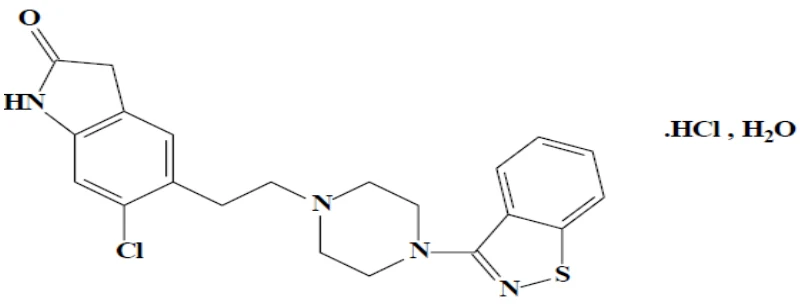 |
of psychotic inpatients who met DSM-III-R criteria for schizophrenia. Each study included 2-3 fixed doses of ziprasidone as well as placebo. Four of the five trials were able to
distinguish ziprasidone from placebo; 1 short-term study did not. Although a single fixed-dose haloperidol arm was included as a comparative treatment in 1 of the 3 short-term trials, this single study was inadequate to provide a reliable and valid comparison of ziprasidone and haloperidol.
Several instruments were used for assessing psychiatric signs and symptoms in these studies, among them the Brief Psychiatric Rating Scale (BPRS) and the Positive and Negative Syndrome Scale (PANSS), both multi-item inventories of psychopathology traditionally used to evaluate the effects of drug treatment in psychosis. The BPRS psychosis cluster (conceptual disorganization, hallucinatory behaviour, suspiciousness, and unusual thought content) is considered a particularly useful subset for assessing actively psychotic schizophrenic patients. A second traditional assessment, the Clinical Global Impression (CGI), reflects the impression of a skilled observer, fully familiar with the manifestations of schizophrenia, about the overall clinical state of the patient. In addition, the Scale for the Assessment of Negative Symptoms (SANS) was employed in some clinical trials.
Bipolar Disorder Trials
The short-term efficacy of oral ziprasidone in treatment of manic or mixed episodes associated with bipolar disorder, with or without psychotic features was established in 3 studies. The doses used in these studies reflect those approved for the treatment of schizophrenia.
Primary rating instruments used for assessing manic symptoms in these trials were: (1) the Mania Rating Scale (MRS), which is derived from the Schedule for Affective Disorders and Schizophrenia-Change Version (SADS-CB) with items grouped as the Manic Syndrome subscale (elevated mood, less need for sleep, excessive energy, excessive activity, grandiosity), the Behavior and Ideation subscale (irritability, motor hyperactivity, accelerated speech, racing thoughts, poor judgment) and impaired insight; and (2) the Clinical Global Impression – Severity of Illness Scale (CGI-S), which was used to assess the clinical significance of treatment response.
14.2 Study Results
Schizophrenia Trials
In a 4-week, placebo-controlled trial (n = 139) comparing 2 fixed doses of ziprasidone (20
and 60 mg BID) with placebo, only the 60 mg BID dose was superior to placebo, on the BPRS total score and the CGI-S score. This higher dose group was not superior to placebo on the BPRS psychosis cluster or on the SANS.
- In a 6-week, placebo-controlled trial (n = 302) comparing 2 fixed dose of ziprasidone (40 and 80 mg BID) with placebo, both dose groups were superior to placebo on the BPRS total score, the BPRS psychosis cluster score, the CGI severity score, and the PANSS total and negative subscale scores. Although the 80 mg BID dose group has a numerically greater effect than 40 mg BID dose group, the difference was not statistically significant.
- In a 6-week, placebo-controlled trial (n = 419) comparing 3 fixed doses of ziprasidone (20, 60 and 100 mg BID) with placebo, all three dose groups were superior to placebo on the PANSS total score, the BPRS total score, the BPRS psychosis cluster, and the CGI-S. Only the 100 mg BID dose group was superior to placebo on the PANSS negative subscale score. There was no clear evidence for a dose-response relationship within the 20 mg BID and 100 mg BID dose range.
In a 4-week, placebo-controlled trial (n = 200) comparing 3 fixed doses of ziprasidone
(5, 20 and 40 mg BID), none of the dose groups was statistically superior to placebo on any outcome of interest.
- A double-blind, randomized, parallel-group study was conducted in n = 294 symptomatically stable inpatients with DSM-III-R diagnosis of chronic schizophrenia, who had been hospitalized for a period of not less than 2 months at study entry. Patients were randomized to 1 of 3 fixed doses of ziprasidone (20, 40, or 80 mg BID) or placebo and followed for 52 weeks. Patients were observed for “impending psychotic relapse”, defined as 2 consecutive study visit assessments showing a score of ≥ 6 (much worse or very much worse) on the CGI-improvement scale, and/or a score of ≥ 6 (moderately severe) on the hostility or uncooperativeness items of the PANSS. Ziprasidone was significantly superior to placebo in both time to relapse and rate of relapse, with no significant difference between the different dose groups.
There were insufficient data to examine population subsets based on age and race. Examination of population subsets based on gender did not reveal any differential responsiveness.
An analysis of the effect of ziprasidone on patients with clinically significant depressive symptoms (Montgomery-Asberg Depression Rating Scale, MADRS) ≥ 14 was conducted in 2 multicentre, placebo-controlled studies in acute schizophrenia. A statistically significant improvement versus placebo (p < 0.05) in the MADRS was observed in patients receiving ziprasidone 60 mg twice daily (n = 32) in one study and 80 mg twice daily (n = 56) in another study. The validity of this scale in patients with schizophrenia however is not established.
Bipolar Disorder Trials
In a 3-week, double-blind, placebo-controlled, randomized trial (n = 210) the dose of ziprasidone was 40 mg BID on Day 1 and 80 mg BID on Day 2. Titration within the range of 40- 80 mg BID (in 20 mg BID increments) was permitted for the duration of the study. Ziprasidone was significantly more effective than placebo in reduction of MRS total score and the CGI-S score. The ziprasidone group demonstrated statistically significant improvement by Day 2 (SADS-CB-derived MRS) or Day 4 (CGI S) of double-blind treatment. The mean daily dose of ziprasidone in this study was 132 mg.
In a 3-week, double-blind, placebo-controlled flexible dosing study (n = 205), ziprasidone was initiated at 40 mg BID and could be adjusted by a maximum of 40 mg/day starting on Day 2, within the range of 40 to 80 mg BID. Ziprasidone was significantly superior to placebo in reduction of the SADS-CB derived MRS total score. Statistically significant improvement was apparent at the earliest timepoint assessed (Day 2) and was maintained from Day 7 to endpoint (Day 21 or early discontinuation). The mean daily dose of ziprasidone during this study was 112 mg.
444) to placebo in the treatment of mania at Week 3 and evaluated maintenance of effect for ziprasidone (40-80 mg BID) and haloperidol (4-15 mg BID) at Week 12. Ziprasidone was superior to placebo in analyses of mean change from baseline to Week 3 on the MRS. The effect of ziprasidone was significant as early as Day 2. The responder rate (at least 50% decrease in MRS from baseline) at week 3 was significantly higher in the ziprasidone group (36.9%) compared to the placebo group. The mean daily dose of drug for all days of treatment was 121 mg.
14.3 Comparative bioavailability studies
A double blind, balanced, randomized, two-treatment, two-sequence, two-period, single-dose, crossover, bioequivalence study of 1 x 20 mg AURO-ZIPRASIDONE Capsule (Test) of Aurobindo Pharma Limited, India manufactured for Auro Pharma Inc. (Canada) and 1 x 20 mg Zeldox® (ziprasidone hydrochloride) Capsule (Reference) of Pfizer Canada Inc., Canada was conducted in 32 healthy, adult, male subjects under fed conditions.
Summary Table of Comparative Bioavailability Data
Ziprasidone (1 x 20 mg) From measured data Geometric Mean Arithmetic Mean (CV %) | ||||
|---|---|---|---|---|
| Parameter | Test* | Reference† | % Ratio of Geometric Means | 90% Confidence Interval |
AUC0→t (hr.ng/mL) | 670.8 711.1 (36.2) | 710.1 740.7 (29.9) | 94.5 | 86.6-103.1 |
AUC0→∞ (hr.ng/mL) | 681.5 722.1 (36.5) | 722.1 753.7 (30.1) | 94.4 | 86.7-102.8 |
| Cmax (ng/mL) | 81.5 92.1 (49.6) | 77.0 81.6 (35.1) | 105.8 | 92.9-120.5 |
| Tmax§ (hr) | 5.5 (3.0-16.0) | 6.3 (2.5-16.0) | ||
| T½$ (hr) | 5.0 (16.0) | 4.9 (16.6) | ||
*AURO-ZIPRASIDONE (Ziprasidone) Capsules 20 mg, by Auro Pharma Inc.
† Zeldox (Ziprasidone) Capsules 20 mg, of Pfizer Canada Inc. (Canada) were purchased from Canada.
§ Expressed as the median (range) only.
$ Expressed as arithmetic mean (%CV) only.
15 MICROBIOLOGY
No microbiological information is required for this drug product.
16 NON-CLINICAL TOXICOLOGY
General Toxicology:
Decreased motor activity occurred at all dose levels (10, 40 and 200 mg daily) in S-D rats fed ziprasidone orally over a 6 month period compared to controls. This was seen in both sexes but was more pronounced in the intermediate and high dose groups. Dose-related decreases in body weight gain were observed mostly in males. Several high dose males exhibited aggressive behaviour upon handling. Stress related or secondary changes such as adrenal hypertrophy were observed at the intermediate and high dose groups. The No Observed Adverse Effect Level (NOAEL) was determined to be 10 mg/kg/day.
In a 12 month toxicity study performed on Beagle dogs fed 5, 10 or 20 mg ziprasidone per day orally, all treatment-related effects were consistent with the pharmacologic properties of the compound, and included sedation, tremors, face pressing, pawing, cage biting, limb lifting/unusual positives postures, increased activity, aggressive behaviour, prolapse of the nictitating membrane and mammary gland development (intermediate dose females). Significant weight loss occurred in high dose males. There were no treatment-related effects noted in clinical pathology or histopathology parameters. Plasma drug concentrations exhibited a wide animal-to-animal variation within a given treatment group. Also, a difference in exposure was noted between male and female animals at the high and intermediate dose levels. The NOAEL was determined to be 10 mg/kg/day.
Carcinogenicity:
Mice
Ziprasidone was administered in the diet of CD-1 mice (50/sex/dose) at an initial dose of 50 mg/kg for the three treated groups. Two groups of 50/sex control mice received unsupplemented feed. On Day 15, the mid and high doses were increased to 100 mg/kg, and on Day 29 the high dose was increased to 200 mg/kg. The final dose levels were therefore 50, 100 and 200 mg/kg. It was concluded, at the end of this 24-month study, that treatment at the mid and high doses produced a statistically significant reduction both in body weight gain during the growth phase of the animals and in body weight in mice at the end of the study compared to controls. This was associated with a reduction in food and water consumption. Histopathological findings were limited to females and consisted of a dose-related increase in the incidence of hyperplasia and neoplasia in the pituitary gland (shown immunohistochemically to be prolactin-producing) and secondary changes in the mammary gland, ovaries and uterus. These findings were seen at 50 to 200 mg/kg/day, corresponding to systemic exposure about 1-4 times greater than that in humans; a no-effect dose level for these effects was not established.
Proliferative changes in the pituitary and mammary glands are not unexpected findings in rodents following treatment with this class of compounds, and are associated with increased prolactin concentrations.
Rats
Ziprasidone was administered in the diet of Long-Evans rats (50/sex/level) for 2 years at dose levels of 2, 6 and 12 mg/kg/day. All groups (low, intermediate and high) began at 2 mg/kg/day, and after 2 weeks the intermediate and high dose groups were raised to 6 mg/kg/day. After another two weeks, the high dose level group was increased to 12 mg/kg/day. Two identical control groups (50/sex/group) received non-medicated diet.
At dose levels up to 12 mg/kg/day, causing body weight decrements of approximately 10 to 20% relative to controls, ziprasidone showed no oncogenic potential in the rat.
Genotoxicity:
The results of a comprehensive battery of in vivo and in vitro genetic toxicology studies were generally negative, the exception being a slight increase in mutation frequency in Salmonella typhimurium TA 1537, but only at or near insoluble levels. Such results were not considered to represent a genotoxic hazard by ziprasidone due to the small response which lacked a true dose-relationship (positive only at the highest level tested), a reduction to non-significant levels by microsomal enzymes, a lack of mutagenic activity in urine from drug-treated mice, findings that gene mutation assays in mammalian cells in vitro were negative, and there was no indication of chromosomal mutation induction in mammalian cells either in vivo or in vitro.
Reproductive and Developmental Teratology:
There are no adequate and well-controlled studies in pregnant women.
Fertility and reproduction studies were conducted in rats. In a study where rats were fed ziprasidone 5, 10 or 40 mg/kg/day starting 10 days prior to mating for males and 2 weeks prior to mating and through gestation and lactation for females, sedation occurred at all dose levels but fertility was unaffected. Post-natal functional development testing indicated a slight delay in development that would be predicted based on the deficits in the body weights of the pups.
The NOAEL for fertility, defined as successful copulation and pregnancy, is 40 mg/kg, the highest dose tested. The NOAEL for reproduction and fetal/neonatal outcome is 5 mg/kg based on decreased gestational body weight gain at the 10 and 40 mg/kg dose levels, altered estrous cycles, decreased number of implantation sites, and number of viable pups at birth in litters from F0 dams at 40 mg/kg and decreased fetal body weights in the F1 offspring at the 10 and 40 mg/kg dose level. For all adult animals who were directly treated, the NOAEL is 5 mg/kg based on non-reproductive parameters.
In another studies where rats were fed ziprasidone 10, 40 or 160 mg/kg/day from 4 weeks prior to mating for males and 2 weeks prior to mating through gestation and post partum10 days for females, sedation noted for all treatment groups. Food intake and body weights were decreased in a dose-related manner in male rats in all treated groups. Other signs included rough hair coat in males at 160 mg/kg and chromodacryorrhea in animals from both the 40 and 160 mg/kg dose groups.
Fertility was decreased in mating groups containing female rats treated with 160 mg/kg. The number of pups per litter was decreased at 160 mg/kg/day, while the proportion of pups born alive were decreased in litters from animals treated with 160 mg/kg. Survival of pups to postnatal day 4 decreased in all treated litters compared to control litters, particularly in the high dose group. The sedation observed in the dams after dosing was likely responsible for the decreased pup survival in the 160 mg/kg dose group.
Teratology studies were performed on female SD rats fed 5, 10 or 40 mg/kg/day of ziprasidone for 13 gestation days (days 6 – 18) and through lactation day 21. None of the dams died as a consequence of treatment. Mild to moderate sedation occurred at all dose levels, but did not interfere with food consumption, parturition, lactation or adequate maternal care of offspring. Mean body weight was significantly lower for the 40 mg/kg dams throughout gestation and lactation. Food consumption was not affected for any treated group.
The NOAEL for maternal effects is 10 mg/kg based on body weight inhibitions seen at 40 mg/kg. The NOAEL for postnatal development and behaviour of offspring is 5 mg/kg based on body weight inhibitions at 10 and 40 mg/kg, increased number of pups born dead and reduced number of pups alive on post natal day 4, delays in eye opening and air righting, and increased motor activity in females at 40 mg/kg.
Teratology studies were also performed on female rabbits fed 30 mg/kg/day of ziprasidone for 13 gestation days (days 6 – 18). All animals survived the dosing period, except one high dose animal which was found moribund and sacrificed on gestational day 27. The only clinical sign noted was occasional loose or soft stool in 6/29 animals of the 30 mg/kg group. Mean maternal body weight gain and food consumption, indications of maternal toxicity, were significantly decreased during part or all of the treatment period. Reproductive parameters, mean fetal body weights and placental weights were unaffected by treatment. Visceral examination of the fetuses showed one fetus in each of the control and 30 mg/kg dose groups with a ventricular septal defect.
The findings support the conclusion that ziprasidone is not teratogenic in rabbits and confirm the previously noted NOAEL for fetuses to be 30 mg/kg.
Special Toxicology:
Ziprasidone is not a Class B Poison or a harmful substance upon either oral or dermal exposure. It is not considered a corrosive material, and it is not an ocular irritant. It did not produce a phototoxic reaction in BALB/c mice or induce either a systemic anaphylaxis reaction or passive cutaneous anaphylaxis reaction in guinea pigs.
17 SUPPORTING PRODUCT MONOGRAPHS
- 1. PrZELDOX® (Capsules, 20, 40, 60, and 80 mg), submission control 255625, Product Monograph, Upjohn Canada ULC. December 22, 2021.