


Product Monograph - Baclofen Injection USP
RECENT MAJOR LABEL CHANGES
N/A
TABLE OF CONTENTS
Sections or subsections that are not applicable at the time of authorization are not listed. RECENT MAJOR LABEL CHANGES ........................................................................................... 2
TABLE OF CONTENTS ............................................................................................................... 2
PART I: HEALTH PROFESSIONAL INFORMATION ...................................................................... 4
- 1
INDICATIONS ............................................................................................................... 4
- 1.1 Pediatrics .................................................................................................................... 4
- 1.2 Geriatrics .................................................................................................................... 4
- 2 CONTRAINDICATIONS .................................................................................................. 4
- 3 SERIOUS WARNINGS AND PRECAUTIONS BOX ............................................................. 5
- 4
DOSAGE AND ADMINISTRATION.................................................................................. 5
- 4.1 Dosing Considerations ............................................................................................ 5
- 4.2 Recommended Dose and Dosage Adjustment ........................................................ 5
- 4.4 Administration ........................................................................................................ 8
- 5 OVERDOSAGE .............................................................................................................. 9
- 6 DOSAGE FORMS, STRENGTHS, COMPOSITION AND PACKAGING………………………………10
- 7
WARNINGS AND PRECAUTIONS……………………………………………………………………………….10
- 7.1 Special Populations ............................................................................................... 16
- 7.1.1 Pregnant Women ............................................................................................ 16
- 7.1.2 Breast-feeding ................................................................................................. 16
- 7.1.3 Pediatrics ........................................................................................................ 16
- 7.1.4 Geriatrics......................................................................................................... 16
- 8
ADVERSE REACTIONS ................................................................................................. 16
- 8.1 Adverse Reaction Overview .................................................................................. 16
- 8.2 Clinical Trial Adverse Reactions ............................................................................ 16
8.5 Post-Market Adverse Reactions ............................................................................ 19
- 9
DRUG INTERACTIONS ................................................................................................ 19
- 9.2 Drug Interactions Overview .................................................................................. 19
- 9.3 Drug-Behavioural Interactions .............................................................................. 20
- 9.4 Drug-Drug Interactions ......................................................................................... 20
- 9.5 Drug-Food Interactions ......................................................................................... 21
- 9.6 Drug-Herb Interactions ......................................................................................... 21
- 9.7 Drug-Laboratory Test Interactions ........................................................................ 21
- 10
CLINICAL PHARMACOLOGY ........................................................................................ 22
- 10.1 Mechanism of Action ...................................................................................... 22
- 10.2 Pharmacodynamics ......................................................................................... 22
- 10.3 Pharmacokinetics ............................................................................................ 23
- 11 STORAGE, STABILITY AND DISPOSAL ......................................................................... 24
- 12 SPECIAL HANDLING INSTRUCTIONS ........................................................................... 24
PART II: SCIENTIFIC INFORMATION ....................................................................................... 26
- 13 PHARMACEUTICAL INFORMATION ............................................................................ 26
- 14
CLINICAL TRIALS ........................................................................................................ 27
- 14.1 Clinical Trials by Indication .............................................................................. 27
- 15 MICROBIOLOGY ......................................................................................................... 27
- 16 NON-CLINICAL TOXICOLOGY ...................................................................................... 27
- 17 SUPPORTING PRODUCT MONOGRAPHS……………………………………………………………………….29
PATIENT MEDICATION INFORMATION .................................................................................. 30
PART I: HEALTH PROFESSIONAL INFORMATION
1 INDICATIONS
Baclofen Injection USP (baclofen injection) is indicated for:
- The management of patients with severe spasticity due to spinal cord injury or multiple sclerosis who are unresponsive to oral baclofen or who experience unacceptable side effects at effective oral doses.
Baclofen Injection USP therapy may be considered as an alternative to destructive neurosurgical procedures.
Prior to implantation of a device for chronic intrathecal infusion, patients must demonstrate a positive clinical response to a baclofen injection screening trial (see 4.2 Recommended Dose and Dosage Adjustment Screening Phase).
Baclofen injection has been used in patients with other spasticity of cerebral origin, e.g. spasticity following hypoxic encephalopathy, head injury, or stroke; however, clinical experience is limited.
1.1 Pediatrics
Pediatrics (< 18 years of age):
The safety and efficacy of baclofen injection have not been studied in patients under 18 years of age. Its use in pediatric patients is not recommended unless the benefits outweigh the risk.
1.2 Geriatrics
Geriatrics (> 65 years of age): Elderly patients may be more susceptible to the side effects of oral baclofen in the titration stage and this may also apply to intrathecal baclofen.
2 CONTRAINDICATIONS
Baclofen Injection USP (baclofen injection) is contraindicated in patients with:
- Known or suspected hypersensitivity to baclofen or to any of the excipients. (see 6 DOSAGE FORMS, STRENGTHS, COMPOSITION AND PACKAGING).
Baclofen Injection USP should not be administered by intravenous, intramuscular, subcutaneous or epidural routes.
3 SERIOUS WARNINGS AND PRECAUTIONS BOX
Abrupt discontinuation of Baclofen Injection USP, regardless of the cause, has resulted in sequelae that include high fever, altered mental status, exaggerated rebound spasticity, and muscle rigidity, that in rare cases has advanced to rhabdomyolysis, multiple organ-system failure and death. Prevention of abrupt discontinuation of Baclofen Injection USP requires careful attention to proper programming and monitoring of the infusion system, refill scheduling and procedures, and pump alarms. Patients and caregivers should be advised of the importance of keeping scheduled refill visits and should be educated on the early symptoms of Baclofen Injection USP withdrawal. Special attention should be given to patients at apparent risk (e.g. spinal cord injuries at T-6 or above, communication difficulties, history of withdrawal symptoms from oral or Baclofen Injection USP) (see 7 WARNINGS AND PRECAUTIONS, General). Consult the technical manual of the implantable infusion system for additional postimplant clinician and patient information. |
|---|
4 DOSAGE AND ADMINISTRATION
4.1 Dosing Considerations
- Baclofen Injection USP should not be administered by intravenous, intramuscular, subcutaneous or epidural routes.
- Establishment of the optimum dose schedule requires that each patient undergoes an initial screening phase with intrathecal bolus, followed by a very careful individual dose titration prior to maintenance therapy. This is due to the great variability in the effective individual therapeutic dose.
- The first dose should be performed with resuscitative equipment on standby in case of life-threatening or intolerable adverse reactions.
- Patients must be monitored closely in a fully equipped and staffed environment during the screening phase and dose titration period immediately following implant. Implantation of pumps should only be performed in experienced centres in order to minimize the risks in the perioperative phase.
- Recommended Dose and Dosage Adjustment
Screening Phase:
Prior to initiation of chronic infusion of intrathecal baclofen, patients must demonstrate a response to intrathecal baclofen bolus in a screening trial. A test bolus dose of Baclofen Injection USP is usually administered via a lumbar puncture or an intrathecal catheter to elicit a response.
The usual initial test dose is 25 microgram (mcg) or 50 mcg and is stepped up by 25 mcg increments at least 24 hours apart, until an approximately 4- to 8-hour response is observed; the dose should be given by barbotage over at least one minute. If an adverse reaction occurs at a dose of 25 mcg, a lower dose, such as 10 mcg may be tested.
Patients should demonstrate a positive clinical response in order to be considered responders to treatment. A positive clinical response is characterized by a significant decrease in muscle tone and / or frequency and / or severity of spasms. There is great variability in sensitivity to intrathecal baclofen.
Patients who do not respond to a 100 mcg test dose should not be given further increases of dose or be considered for continuous intrathecal infusion. However, in rare instances some patients, particularly those with spasticity of cerebral origin, have received higher test bolus doses.
Note: Baclofen Injection USP manufactured by JAMP Pharma Corporation is only available in
2 mg / mL ampoules. Commercially available baclofen 0.05 mg / mL ampoules should be used for the screening phase.
Dose Titration Phase:
After confirmation that the patient is responsive to Baclofen Injection USP (baclofen injection) by means of test bolus doses, intrathecal infusion is established using a suitable delivery system (see 4.4 Administration, Drug Delivery Devices).
To determine the initial total daily dose of Baclofen Injection USP following implant, the screening dose which gave a positive effect should be doubled and administered over a 24-hour period, unless the efficacy of the bolus dose was maintained for more than 12 hours. In this case, the starting daily dose should be the screening dose delivered over a 24-hour period. No dose increases should be administered in the first 24 hours.
After the first 24 hours, the dosage should be adjusted slowly on a daily basis to achieve the desired effect, with dosage increments limited to 10 to 30% to avoid possible overdosing. With programmable pumps, the dose should be increased only once every 24 hours. For non-programmable pumps with a 76 cm catheter delivering 1 mL / day, intervals of 48 hours are suggested for evaluation of response. If the daily dose has been significantly increased and no clinical effect is achieved, check for proper pump function and catheter patency.
The clinical goal is to maintain as normal a muscle tone as possible, and to minimize the frequency and severity of spasms without inducing intolerable side effects.
There is limited experience with doses greater than 1000 mcg / day.
Maintenance Therapy:
The lowest dose producing an adequate response should be used. Most patients require gradual increases in dose over time to maintain optimum response during chronic therapy due to decreased responsiveness to therapy or due to disease progression.
The daily dose may be gradually increased by 10 to 30% to maintain adequate symptom control by adjusting the dosing rate of the pump and / or the concentration of Baclofen Injection USP in the reservoir. The daily dose may also be reduced by 10 to 20% if patients experience side effects. A sudden requirement for substantial dose escalation suggests a catheter complication (i.e., catheter kink or dislodgement) or pump malfunction.
Maintenance dosage for long-term continuous infusion of intrathecal baclofen ranges from 10 mcg / day to 1200 mcg / day, most patients being adequately maintained on 300 mcg / day to 800 mcg / day. The specific concentration that should be used depends on the total daily dose required as well as the delivery rate of the pump. Please consult pump manufacturer's manual for specific recommendations.
During long-term treatment approximately 10% of patients become refractory to increasing doses. This ‘tolerance’ may be treated by gradually reducing Baclofen Injection USP dose over a 2- to 4-week period and switching to alternative methods of spasticity management (e.g. intrathecal preservative-free morphine sulfate). After a few days the sensitivity to baclofen may be restored and treatment should be resumed at the initial continuous infusion dose and followed by a titration phase to avoid overdose accidents.
This must be performed in a hospital unit. Caution should be exercised when switching from Baclofen Injection USP to morphine and vice versa (see 9.4 Drug–Drug Interactions).
Regular clinical review remains a necessity throughout to assess dosage requirements, functioning of the delivery system, and monitoring for possible adverse drug reactions or evidence of infection.
Pediatrics (< 18 years of age): (see 1.1 Pediatrics)
Geriatrics (≥ 65 years of age): (see 1.2 Geriatrics, and 7.1.4 Geriatrics).
Hepatic Impairment: No studies have been performed in patients with hepatic impairment receiving baclofen injection therapy. No dosage adjustment is recommended as the liver does not play any significant role in the metabolism of baclofen after intrathecal administration of baclofen injection.
However, patients with severe hepatic impairment should be treated with caution, as they are in general more sensitive to therapeutic effects / adverse effects of drugs.
Renal Impairment: No studies have been performed in patients with renal impairment receiving baclofen injection therapy. Caution should be exercised while administering Baclofen Injection USP in patients with renal impairment because baclofen is primarily excreted unchanged through the kidneys. Baclofen Injection USP should only be administered to end-stage renal failure patients when benefits outweigh risks. Patients with severe renal impairment should be treated with extra caution, as they are in general more sensitive to therapeutic effects / adverse effects of drugs. Severely renal impaired patients should be closely monitored for prompt diagnosis of early signs and / or symptoms of toxicity (see 7 WARNINGS AND PRECAUTIONS, Renal).
- 4.4 Administration Delivery Regimen:
Baclofen Injection USP is most often administered in a continuous infusion mode immediately following implant. After the patient has stabilized with regard to daily dose and functional status, and provided the pump allows it, a more complex mode of delivery may be started to optimize control of spasticity at different times of the day. For example, patients who have increased spasm at night may require a 20% increase in their hourly infusion rate. Changes in flow rate should be programmed to start two hours before the time of desired clinical effect.
Drug Delivery Devices:
Intrathecal administration of Baclofen Injection USP through an implanted delivery system should only be undertaken by physicians with the necessary knowledge and experience. Specific instructions for programming and / or refilling the implantable pump are given by the pump manufacturers and must be strictly adhered to. Consult pump manufacturer's literature for information on the appropriate use and care of these devices.
Evidence demonstrating the efficacy of baclofen injection was obtained using the Medtronic SynchroMed Programmable Infusion System. Other pumps proven to be suitable for intrathecal baclofen administration may be used.
The Medtronic SynchroMed II Programmable Infusion System is an implantable drug delivery system with refillable reservoirs which, after general or local anesthesia, is implanted in a subcutaneous pocket usually on the abdominal wall. This device is connected to an intrathecal catheter that passes subcutaneously to the subarachnoid space.
The Medtronic SynchroMed II Programmable Infusion System has either a 20 mL or 40 mL drug reservoir and may be programmed to different flow rates. The lithium hybrid cathode battery of the pump has a life span of 4 to 7 years and therefore requires replacement.
Baclofen injection proved to be stable in the implanted SynchroMed II Programmable Infusion System for 180 days.
Details regarding the availability and use of this drug delivery device can be obtained from the manufacturer.
General guidelines regarding the use of all implantable systems are located under 7 WARNINGS AND PRECAUTIONS.
5 OVERDOSAGE
Special attention must be given to recognizing the signs and symptoms of overdosage at all times, especially during the initial "screening" and "dose titration" phase of treatment and also during reintroduction of Baclofen Injection USP (baclofen injection) after a period of interruption of therapy.
Signs of overdose may appear suddenly or insidiously.
Less sudden and / or less severe forms of overdose may present with signs of drowsiness, lightheadedness, dizziness, somnolence, seizures, loss of consciousness, hypothermia, excessive salivation, nausea and / or vomiting, tachycardia and tinnitus and cephalad progression of hypotonia. Respiratory depression, apnea, and coma result from serious overdosage.
Serious overdose may occur, for example, by inadvertent delivery of catheter contents during catheter patency / position analysis. Errors in programming, excessively rapid dose increases, and concomitant treatment with oral baclofen are other possible causes of overdosage. Possible pump malfunction should also be investigated.
Symptoms of severe baclofen injection overdose (coma) were reported in a sensitive adult patient after receiving a 25 mcg intrathecal bolus dose.
Treatment:
There is no specific antidote for treating overdoses of intrathecal baclofen, however, the following steps should generally be undertaken:
- 1. Residual Baclofen Injection USP solution should be removed from the pump as soon as possible.
- 2. Patients with respiratory depression should be intubated if necessary, until the drug is eliminated.
If lumbar puncture is not contraindicated, consideration should be given in the early stage of the intoxication to withdrawing 30 to 40 mL of CSF to reduce CSF baclofen concentration.
Institute measures to support cardiovascular function.
In the event of convulsions, administer diazepam I.V. with caution.
For management of a suspected drug overdose, contact your regional poison control centre or Health Canada’s toll-free number, 1-844 POISON-X (1-844-764-7669). |
|---|
6 DOSAGE FORMS, STRENGTHS, COMPOSITION AND PACKAGING
Table 1 – Dosage Forms, Strengths, Composition and Packaging
| Route of Administration | Dosage Form / Strength/Composition | Non-medicinal Ingredients |
|---|---|---|
| Parenteral (Intrathecal) | Injection / Baclofen 10 mg / 5 mL | Sodium chloride and Water for injection. |
Description
Baclofen Injection USP (baclofen injection) 2 mg / mL:
Each 5 mL ampoule of clear and colourless solution contains 10 mg baclofen for intrathecal administration
Baclofen Injection USP 2 mg / mL is provided in cartons of 5 ampoules.
7 WARNINGS AND PRECAUTIONS
Please see 3 SERIOUS WARNINGS AND PRECAUTIONS BOX.
General
Because of the possibility of potential life-threatening CNS depression, cardiovascular collapse and / or respiratory failure, physicians must be adequately trained in intrathecal infusion therapy.
Specific instructions for programming and / or refilling the implantable pump are given by the pump manufacturers and must be strictly adhered to. Consult pump manufacturer's literature for information on the appropriate use and care of these devices.
Because of the risks associated with the screening procedure and the adjustment of dosage following pump implantation, these procedures must be conducted in a medically supervised and adequately equipped environment (see 4 DOSAGE AND ADMINISTRATION).
Resuscitative equipment should be available.
The pump system should not be implanted until the patient's response to bolus intrathecal injection of Baclofen Injection USP (baclofen injection) has been properly evaluated and found to be clinically safe and effective.
Following surgical implantation of the pump, particularly during the initial phase of pump use the patient should be monitored closely until it is certain that the patient's response to the infusion is acceptable and reasonably stable.
Whenever the dosing rate of the pump and / or the concentration of Baclofen Injection USP in the reservoir is adjusted, close medical monitoring is required until it is certain that the patient's response to the infusion is acceptable and reasonably stable.
It is mandatory that the patient and all those involved in the care of the patient receive adequate information regarding the risks of Baclofen Injection USP treatment. All medical personnel and care givers should be instructed in:
- 1) the signs and symptoms of overdose;
- 2) procedures to be followed in the event of overdose and
- 3) proper home care of the pump and insertion site.
Inflammatory mass at the tip of implanted catheter with Baclofen Injection USP:
Cases of inflammatory mass at the tip of the implanted catheter have been reported in patients receiving baclofen injection monotherapy. The most frequent symptom associated with these masses is decreased therapeutic response (worsening spasticity, return of spasticity when previously well controlled, withdrawal symptoms, poor response to escalating doses, or frequent or large dosage increases). It is known that inflammatory mass at intrathecal tip can result in pain and serious neurological impairment. Clinicians should monitor patients on Baclofen Injection USP therapy carefully for any new neurological signs or symptoms. In patients with new neurological signs or symptoms suggestive of an inflammatory mass, consider a neurosurgical consultation since many of the symptoms of inflammatory mass are similar to the symptoms experienced by patients with severe spasticity from their disease. A diagnostic imaging procedure may be appropriate to confirm or rule-out inflammatory mass. Inflammatory masses have also been reported in patients receiving pharmacy compounded drugs or admixtures, including opioids. Diagnosis and management of inflammatory mass in these patients should take into consideration the pharmacology of the drugs in addition to Baclofen Injection USP.
Abrupt Drug Withdrawal:
Abrupt discontinuation of Baclofen Injection USP, regardless of the cause, has resulted in sequelae that include high fever, altered mental status, exaggerated rebound spasticity, and muscle rigidity, that in rare cases has advanced to rhabdomyolysis, multiple organ-system failure and death.
Prevention of abrupt discontinuation of Baclofen Injection USP requires careful attention to proper programming and monitoring of the infusion system, refill scheduling and procedures, and pump alarms. Patients and caregivers should be advised of the importance of keeping scheduled refill visits and should be educated on the early symptoms of Baclofen Injection USP withdrawal. Special attention should be given to patients at apparent risk (e.g. spinal cord injuries at T-6 or above, communication difficulties, history of withdrawal symptoms from oral or Baclofen Injection USP). Consult the technical manual of the implantable infusion system for additional postimplant clinician and patient information.
In the first 9 years of post-marketing experience, 27 cases of withdrawal temporally related to the cessation of baclofen injection therapy were reported; six patients died. In most cases, symptoms of withdrawal appeared within hours to a few days following interruption of baclofen injection therapy. Common reasons for abrupt interruption of baclofen injection therapy included malfunction of the catheter (especially disconnection), low volume in the pump reservoir, device malfunction and end of pump battery life; human error may have played a causal or contributing role in some cases. Device malfunction resulting in altered drug delivery leading to withdrawal symptoms including death has been reported.
All patients receiving Baclofen Injection USP therapy are potentially at risk for withdrawal. Early symptoms of baclofen withdrawal may include return of baseline spasticity, pruritus, hypotension, paresthesias and priapism (prolonged and potentially painful erections requiring immediate medical attention). Some clinical characteristics of the advanced baclofen injection withdrawal syndrome may resemble autonomic dysreflexia, infection (sepsis), malignant hyperthermia and tachycardia, neuroleptic malignant syndrome, or other conditions associated with a hypermetabolic state or widespread rhabdomyolysis.
Rapid, accurate diagnosis and treatment in an emergency room or intensive care setting are important in order to prevent the potentially life threatening central nervous system and systemic effects of Baclofen Injection USP withdrawal. The suggested treatment for Baclofen Injection USP withdrawal is the restoration of Baclofen Injection USP at or near the same dosage as before therapy was interrupted. However, if restoration of intrathecal delivery is delayed, treatment with GABA ergic agonist drugs such as oral baclofen, or oral, enteral, or intravenous benzodiazepines may prevent potentially fatal sequelae. Oral baclofen alone should not be relied upon to halt the progression of the effects of Baclofen Injection USP withdrawal.
Seizures have been reported during overdose and with withdrawal from baclofen injection as well as in patients maintained on therapeutic doses of baclofen injection.
Therefore, except for serious adverse reactions and overdose related emergencies, the dose should always be reduced slowly when the drug is discontinued (over a period of approximately 1-2 weeks).
Neonatal Withdrawal:
Drug withdrawal reactions including, irritability, high-pitched crying, tremor, hypertonicity, excessive sucking, disordered sleep, hyperthermia, mottling, and postnatal convulsions have been reported in neonates after intrauterine exposure to oral baclofen injection. Neonates with risk of intrauterine exposure to Baclofen Injection USP should be carefully monitored for the development of signs consistent with withdrawal. If clinical manifestations of withdrawal develop, non-pharmacologic measures should be considered (for instance, minimizing sensory or environmental stimulation, maintaining temperature stability, increasing the frequency of feeds). Initiation of pharmacotherapy may be considered in neonates with moderate to severe signs of withdrawal to prevent further complications (See, 7.1.1 Pregnant Women).
Screening:
Patients should be infection free prior to the screening trial with Baclofen Injection USP (baclofen injection) because the presence of a systemic infection may interfere with an assessment of the patient's response to bolus intrathecal baclofen.
Careful monitoring of respiratory and cardiovascular functions is essential during initial test dose administration (screening phase), especially in patients with cardiopulmonary disease and respiratory muscle weakness as well as those being treated concomitantly with benzodiazepine type preparations or opiates who are at higher risk of respiratory depression.
Pump implantation:
Patients should be infection free prior to pump implantation because the presence of infection may increase the risk of surgical complications. Moreover, a systemic infection may complicate attempts to adjust the dose.
Patient monitoring:
Following surgical implantation of the pump, particularly during the initial phases of pump use, and on each occasion that the dosing rate of the pump and / or the concentration of baclofen in the reservoir is adjusted, the patient should be monitored closely until it is certain that the patient's response to the infusion is acceptable and stable.
Pump adjustment and titration:
In most patients, it will be necessary to increase the dose gradually over time to maintain effectiveness; a sudden requirement for substantial dose escalation typically indicates a catheter complication (i.e., catheter kink or dislodgement).
Reservoir Filling:
Reservoir refilling must be performed by fully trained and qualified personnel following the directions provided by the pump manufacturer. Refill intervals should be carefully calculated to prevent depletion of the reservoir, as this would result in the return of severe spasticity and possibly symptoms of withdrawal. Depending on individual daily dose requirements and the flow rate of the pump, refill intervals generally vary between one and three months.
Strictly aseptic filling is required to avoid microbial contamination and serious infection. A period of observation appropriate to the clinical situation should follow each refill or manipulation of the drug reservoir.
Extreme caution must be used when filling an implantable pump equipped with an injection port that allows direct access to the intrathecal catheter. Direct injection into the catheter through the access port may cause a life-threatening overdose.
In order to prevent excessive weakness and falling, Baclofen Injection USP should be used with caution when spasticity is needed to sustain upright posture and balance in locomotion or whenever spasticity is used to maintain function.
It may be important to maintain some degree of muscle tone and allow occasional spasms to help support circulatory function and possibly prevent the formation of deep vein thrombosis.
An attempt should be made to discontinue concomitant oral antispastic medication to avoid possible overdose or adverse drug interactions, preferably before initiating baclofen infusion, with careful monitoring by the physician. However, abrupt reduction or discontinuation of concomitant antispastics during chronic intrathecal therapy with baclofen should be avoided.
Driving and Operating Machinery
Central nervous systems (CNS) depressant effects, such as somnolence and sedation have been reported in some patients on intrathecal baclofen. Other listed events include ataxia, hallucinations, diplopia and withdrawal symptoms (see 8 ADVERSE REACTIONS). Patients should be cautioned regarding the operation of automobiles or dangerous machinery, and activities made hazardous by decreased alertness. Patients should also be cautioned that the central nervous system effects of baclofen may be additive to those of alcohol and other CNS depressants.
Gastrointestinal
Interaction of intrathecal baclofen with underlying, non-CNS related diseases is unlikely because the systemic availability of the drug after intrathecal administration is substantially lower than after oral administration. Caution should be exercised in patients with history of peptic ulcers and based on observations after oral baclofen therapy, in those with , pre-existing sphincter hypertonia, and impaired hepatic function (see 7 WARNINGS AND PRECAUTIONS, Hepatic/Biliary/Pancreatic and 4.2 Recommended Dose and Dosage Adjustment, Hepatic Impairment).
Hepatic/Biliary/Pancreatic
In rare instances, elevated glutamic-oxaloacetic transaminase (SGOT), alkaline phosphatase and glucose levels in the serum have been recorded when using oral baclofen.
Musculoskeletal
Scoliosis:
The onset of scoliosis or worsening of a pre-existing scoliosis has been reported in patients treated with baclofen injection. Signs of scoliosis should be monitored during treatment with Baclofen Injection USP.
Neurologic
In patients with abnormal CSF flow, the spread of the drug and therefore, the distribution of antispastic activity may be inadequate.
Patients suffering from cerebrovascular insufficiency or Parkinson's disease should be treated cautiously with Baclofen Injection USP and kept under careful surveillance as exacerbations of these conditions have been observed with oral baclofen administration.
Special attention should be given to patients known to suffer from epilepsy as seizures have been reported during overdose with, and withdrawal from, baclofen injection, as well as in patients maintained on therapeutic doses of baclofen injection.
Baclofen Injection USP should be used with caution in patients with a history of autonomic dysreflexia. The presence of nociceptive stimuli or abrupt withdrawal of Baclofen Injection USP may cause an autonomic dysreflexic episode.
Since unwanted effects are more likely to occur in elderly patients or in patients with spastic states of cerebral origin, it is recommended that a very cautious dosage schedule be adopted in such cases and that the patient should be kept under appropriate surveillance. Patients should be monitored for signs of overdose, central nervous system depression and toxic encephalopathy such as drowsiness, impairment of consciousness, coma, respiratory depression, hallucinations, agitation, and convulsions.
Psychiatric
Patients suffering from psychotic disorders, schizophrenia, or confusional states should be treated cautiously with Baclofen Injection USP and kept under careful surveillance as exacerbations of these conditions have been observed with oral baclofen administration.
Close supervision of patients should accompany therapy with Baclofen Injection USP. Patients (and caregivers of patients) should be alerted about the need to monitor for clinical worsening, suicidal behaviour or thoughts or unusual changes in behaviour and to seek medical advice immediately if these symptoms present. Suicide and suicide-related events have been reported in patients treated with intrathecal baclofen (see 8 ADVERSE REACTIONS).
Respiratory
Baclofen Injection USP should be used with caution in patients with respiratory insufficiency, as these conditions may be exacerbated by baclofen.
Renal
No studies have been performed in patients with renal impairment receiving baclofen injection therapy. After oral baclofen dosing, severe neurological outcomes including clinical manifestations of toxic encephalopathy (e.g. somnolence, depressed level of consciousness and coma) have been reported in patients with renal impairment. Caution should be exercised while administering Baclofen Injection USP in patients with renal impairment because baclofen is primarily excreted unchanged through the kidneys. Baclofen Injection USP should only be administered to end-stage renal failure patients when benefit outweighs risk. Patients with severe renal impairment should be treated with extra caution, as they are in general more sensitive to therapeutic effects / adverse effects of drugs.
Severely renal impaired patients should be closely monitored for prompt diagnosis of early signs and / or symptoms of toxicity (see 5 OVERDOSAGE).
7.1 Special Populations
7.1.1 Pregnant Women
There are no adequate and well-controlled studies of baclofen injection in pregnant women. Baclofen injection has been detected in maternal plasma and is known to cross the placental barrier (see 16 NON-CLINICAL TOXICOLOGY). Post-marketing reports on mothers who used baclofen injection during pregnancy suggest a higher than expected rate of preterm delivery and delivery by caesarian section. Further, these preterm births have resulted in low birth weights according to what would be expected for gestational age. Therefore, Baclofen Injection USP should not be used during pregnancy unless the potential benefits to the mother outweigh the potential risks to the fetus.
Infants exposed to baclofen through maternal oral dosing during pregnancy are at risk of experiencing baclofen withdrawal at birth; identification of this condition may be confounded due to delayed appearance of withdrawal symptoms in this population.
(See 7 WARNINGS AND PRECAUTIONS, General and 16 NON-CLINICAL TOXICOLOGY, Reproductive and Developmental Toxicology).
7.1.2 Breastfeeding
Oral baclofen at therapeutic doses passes into breast milk. Baclofen Injection USP should not be used in nursing women unless the potential the benefits outweigh the risks.
7.1.3 Pediatrics
(see 1.1 Pediatrics)
7.1.4 Geriatrics
Several patients over the age of 65 years have been treated with baclofen injection during the clinical trials without increased risks compared to younger patients. Problems specific to this age group are not expected as doses are individually titrated. (see 1.2 Geriatrics)
8 ADVERSE REACTIONS
8.1 Adverse Reaction Overview
Baclofen has been shown to have general CNS depressant properties, causing sedation, somnolence, and respiratory and cardiovascular depression.
8.2 Clinical Trial Adverse Reactions
Clinical trials are conducted under very specific conditions. Therefore, the adverse reaction rates observed in the clinical trials, may not reflect the rates observed in practice and should not be compared to the rates in the clinical trials of another drug. Adverse reaction information from clinical trials may be useful in identifying and approximating rates of adverse drug reactions in real-world use.
The most commonly reported adverse events with baclofen injection in clinical trials were drowsiness, weakness in the lower extremities, dizziness and seizures.
Adverse drug reactions from clinical trials are listed in the table below according to system organ classes in MedDRA. Within each system organ class, the adverse drug reactions are ranked under headings of frequency, the most frequent reactions first. Within each frequency grouping, adverse drug reactions are presented in order of decreasing seriousness. In addition, the corresponding frequency category using the following convention (CIOMS III) is also provided for each adverse drug reaction: very common (≥1/10); common (≥1/100, <1/10); uncommon (≥1/1,000, <1/100); rare (≥1/10,000, <1/1,000); very rare (<1/10,000), including isolated reports.
| Table 2 - Incidence of Most Frequent Adverse Events in US Clinical Trials | |||||||||||
|---|---|---|---|---|---|---|---|---|---|---|---|
| Adverse Event | Screening N = 244 | Titration N = 214 | Maintenance N = 214 | ||||||||
| N | % | N | % | N | % | ||||||
| Somnolence | 13 | 5.3 | 11 | 5.1 | 18 | 8.4 | |||||
| Weakness, Lower Extremities | 1 | 0.4 | 11 | 5.1 | 15 | 7.0 | |||||
| Dizziness | 6 | 2.4 | 5 | 2.3 | 12 | 5.6 | |||||
| Convulsion | 1 | 0.4 | 4 | 1.9 | 11 | 5.1 | |||||
| Headache | 0 | 0 | 3 | 1.4 | 9 | 4.2 | |||||
| Nausea / Vomiting | 3 | 1.2 | 5 | 2.3 | 3 | 1.4 | |||||
| Numbness/Itching/Tingling | 2 | 0.8 | 1 | 0.5 | 8 | 3.7 | |||||
| Hypotension | 3 | 1.2 | 0 | 0 | 5 | 2.3 | |||||
| Vision Blurred | 0 | 0 | 2 | 0.9 | 5 | 2.3 | |||||
| Constipation | 0 | 0 | 2 | 0.9 | 5 | 2.3 | |||||
| Hypotonia | 2 | 0.8 | 3 | 1.4 | 2 | 0.9 | |||||
| Dysarthria | 0 | 0 | 1 | 0.5 | 6 | 2.8 | |||||
| Coma (Overdose) | 0 | 0 | 4 | 1.9 | 3 | 1.4 | |||||
| Lethargy | 1 | 0.4 | 0 | 0 | 4 | 1.9 | |||||
| Weakness, Upper Extremities | 1 | 0.4 | 0 | 0 | 4 | 1.9 | |||||
| Hypertension | 1 | 0.4 | 2 | 0.9 | 2 | 0.9 | |||||
| Dyspnea | 1 | 0.4 | 2 | 0.9 | 1 | 0.5 | |||||
In addition to the more common adverse events reported above, the following adverse events were observed during clinical trials elsewhere or reported by clinicians.
Cardiac disorders:
Uncommon: Bradycardia
Rare: Pulmonary embolism
Eye disorders:
Common: Accommodation disorder, Diplopia Gastrointestinal disorders:
Common: Dry mouth, Diarrhea, Decreased appetite, Increased salivation
Uncommon Dysphagia, Hypogeusia, Ileus
General disorders and administration site conditions: Common: Asthenia, Chills, Fatigue, Pyrexia, Pain Uncommon: Hypothermia
Metabolism and nutritional disorders:
Uncommon: Albuminuria, Dehydration, Hyperglycemia and Weight loss, Musculoskeletal and connective tissue disorders:
Common: Hypertonia Nervous system disorders:
Common: Lethargy, Paresthesia, Sedation,
Uncommon: Ataxia, Memory impairment, Nystagmus Psychiatric disorders:
Common: Anxiety, Agitation, Confusional state, Depression, disorientation, insomnia
Uncommon: Suicide ideation and suicide attempt, hallucination, paranoia, euphoric mood Renal and urinary disorders:
Common: Urinary incontinence, Urinary retention Respiratory, thoracic and mediastinal disorders:
Common: Pneumonia, Respiratory depression Reproduction system and breast disorders:
Common: Sexual dysfunction
Skin and subcutaneous tissue disorders:
Common: Facial and / or Peripheral edema pruritus, Urticaria
Uncommon: Alopecia, Hyperhidrosis
Vascular disorders:
Uncommon: Deep vein thrombosis, Flushing, Pallor
Adverse events associated with the delivery system (e.g. mass at the tip of the catheter, catheter dislocation with possible complications, pocket infection, meningitis, overdose due to wrong manipulation of the device) have been reported, whereby in some cases a causal relationship with baclofen cannot be excluded (see 7 WARNINGS AND PRECAUTIONS). These are in addition to those listed above. Device malfunction resulting in altered drug delivery leading to withdrawal symptoms including death has been reported. In a fatal case of a child (causality with baclofen uncertain), inflammatory signs in the posterior horns and signs of arachnoiditis in proximity of the catheter tip were observed. This corresponds to observations in dogs, where chronic inflammatory reactions to the foreign body of the catheter were observed, independently of baclofen concentration.
8.5 Post-Market Adverse Reactions
The following adverse drug reactions have been derived from post-marketing experience with baclofen injection via spontaneous case reports and literature cases. Because these reactions are reported voluntarily from a population of uncertain size, it is not possible to reliably estimate their frequency which is therefore categorized as not known. Adverse reactions are listed according to system organ classes in MedDRA. Within each system organ class, ADRs are presented in order of decreasing seriousness.
Cardiac disorders: tachycardia
Immune system disorders: Hypersensitivity
Musculoskeletal and connective tissue disorders: scoliosis (see 7 WARNINGS AND PRECAUTIONS, Musculoskeletal)
Nervous system disorders: dysphoria, tinnitus
Respiratory, thoracic and mediastinal disorders: bradypnea Reproductive system and breast disorders: erectile dysfunction
9 DRUG INTERACTIONS
9.2 Drug Interactions Overview
There is little experience with the use of baclofen injection in combination with systemic medications to predict specific drug-drug interactions, although it is suggested that the low baclofen systemic exposure observed after intrathecal administration could reduce the potential for pharmacokinetic interactions (see 10 CLINICAL PHARMACOLOGY).
9.3 Drug-Behavioural Interactions
Not applicable.
9.4 Drug-Drug Interactions
| [Proper / Common name] | Source of Evidence | Effect | Clinical comment |
|---|---|---|---|
| Levodopa / Dopa Decarboxylase (DDC) inhibitor (carbidopa): | Concomitant use of oral baclofen injection and levodopa (alone or in combination with a DDC inhibitor, carbidopa) resulted in increased risk of adverse events such as visual hallucinations, confusional state, headache and nausea. Worsening of the symptoms of Parkinsonism has also been reported. | Thus, similar interaction can be anticipated for intrathecal Baclofen Injection USP | |
Anesthetics e.g. fentanyl, propofol | Concomitant use of intrathecal baclofen and general anesthetics (e.g. fentanyl, propofol) may increase the risk of cardiac disturbances and seizures. | Thus, caution should be exercised when anesthetics are administered to patients receiving intrathecal Baclofen Injection USP. | |
| Morphine | The combined use of morphine and intrathecal baclofen was responsible for hypotension in one patient. The potential for this combination to cause dyspnea or other CNS symptoms cannot be excluded. | The co administration of other intrathecal agents with baclofen injection Intrathecal has not been tested and the safety of these combinations is unknown. | |
Alcohol and other compounds affecting CNS (e.g. analgesics, neuroleptics, barbiturates, benzodiazepines , anxiolytics) | The central nervous system depressant effects of alcohol and other compounds affecting the CNS may be additive to the effects of Baclofen Injection USP. Increased sedation may occur when Baclofen Injection USP is taken concomitantly with other drugs causing CNS depression, including other muscle relaxants (such as tizanidine), synthetic opiates, hypnotics, anxiolytics or alcohol (see 7 WARNINGS AND PRECAUTIONS, Driving and |
| [Proper / Common name] | Source of Evidence | Effect | Clinical comment | ||
|---|---|---|---|---|---|
| Operating Machinery). The risk of respiratory depression is also increased. Careful monitoring of respiratory and cardiovascular functions is essential, especially in patients with cardiopulmonary disease and respiratory muscle weakness. | |||||
| Tricyclic antidepressants | When using oral baclofen, concurrent treatment with tricyclic antidepressants may potentiate the effect of baclofen, resulting in pronounced muscular hypotonia. In addition, concomitant use of tricyclic antidepressants can cause sedation, drowsiness and potentiate the effects of baclofen resulting in pronounced muscular hypotonia. | Therefore, caution is advised when using Baclofen Injection USP in this combination. | |||
| Lithium | Concomitant use of oral baclofen and lithium resulted in aggravated hyperkinetic symptoms. | Caution should be exercised when Baclofen Injection USP is used concomitantly with lithium. | |||
| Antihyperten-sive s and other drugs known to lower blood pressure | Since concomitant treatment with drugs that lowers blood pressure is likely to increase the decrease in blood pressure, it is recommended to monitor blood pressure and adjust the dosage of concomitant medications accordingly. | ||||
9.5 Drug-Food Interactions
Interactions with food have not been established.
9.6 Drug-Herb Interactions
Interactions with herbal products have not been established.
9.7 Drug-Laboratory Test Interactions
Interactions with laboratory tests have not been established.
10 CLINICAL PHARMACOLOGY
10.1 Mechanism of Action
The precise mechanisms of action of baclofen as an antispastic agent are not fully understood. Baclofen inhibits both monosynaptic and polysynaptic reflex transmission at the spinal level, possibly by decreasing excitatory neurotransmitter release from primary afferent terminals. Actions at supraspinal sites may also contribute to its clinical effect. Baclofen is an analogue of the inhibitory neurotransmitter gamma-aminobutyric acid (GABA) and may exert its effects by stimulation of the GABAB receptor subtype.
Baclofen has been shown to have general Central Nervous System (CNS) depressant properties as indicated by the production of sedation with tolerance, somnolence, ataxia and respiratory and cardiovascular depression. A dose-dependent inhibitory effect on erectile function has been shown in men through GABAB receptor stimulation.
In neurological diseases associated with spasm of the skeletal muscles, Baclofen Injection USP may have beneficial action on reflex muscle contractions, painful spasm, automatism, hyperreflexia, trismus and clonus. Neuromuscular transmission is not affected by baclofen. Baclofen may also reduce pain associated with spasticity.
10.2 Pharmacodynamics
Intrathecal Bolus:
The onset of action is generally half an hour to one hour after administration of an intrathecal bolus dose. Peak antispastic effect is seen at approximately 4 hours after dosing and effects may last 4 to 8 hours. Onset, peak response, and duration of action vary with individual patients depending on the dose and severity of symptoms.
Continuous Intrathecal Infusion:
The antispastic action is first seen at 6 to 8 hours after initiation of continuous infusion. Maximum efficacy is observed in 24 to 48 hours.
Non-Clinical Secondary Pharmacological Activity:
Intrathecal baclofen exerts an antinociceptive effect in rats and cats. These effects are independent of any debilitation of voluntary motor function. In addition, intrathecal baclofen affects lower urinary tract dynamics of the anesthetized dog. Vesical and urethral pressure was significantly decreased.
Within 30 minutes of injection, relaxation of the bladder and a reduction in urethral resistance occurred.
10.3 Pharmacokinetics
Because of slow CSF circulation and a baclofen concentration gradient from the lumbar to the cisternal CSF, the pharmacokinetic parameters as described below should be interpreted considering a high inter- and intra-patient variability.
Absorption
After baclofen injection Intrathecal administration, the concentration of baclofen in the Cerebrospinal Fluid (CSF) is approximately 100 times higher than what is found following oral administration.
Distribution
After single intrathecal bolus injection / short-term infusion, the volume of distribution in intrathecal compartment, calculated from CSF levels, ranges from 22 to 157 mL.
Continuous intrathecal infusion daily doses of 50 to 1200 mcg result in lumbar CSF concentrations of baclofen as high as 130 to 1240 ng / mL at steady state. According to the half-life measured in the CSF, CSF steady state concentrations will be reached within 1-2 days. During Intrathecal infusion the plasma concentrations do not exceed 5 ng / mL.
Elimination
The clearance of intrathecal baclofen, calculated from intrathecal bolus or continuous infusion studies, approximate its CSF turnover, suggesting elimination via bulk-flow removal of CSF. Direct infusion into the spinal subarachnoid space bypasses absorption processes and allows exposure to the receptor sites in the dorsal horn of the spinal cord.
After a bolus lumbar injection of 50 or 100 mcg baclofen injection in 7 patients, the average CSF elimination half-life was 1.51 hours over the first four hours and the average CSF clearance was approximately 30 mL / hour.
A study, conducted in 10 patients, suggests that the mean CSF clearance for continuous intrathecal infusion of baclofen injection is approximately 30 mL / hour.
Limited pharmacokinetic data suggest that a lumbar-cisternal baclofen concentration gradient of about 4:1 is established during continuous baclofen infusion. This is based upon simultaneous CSF sampling via cisternal and lumbar tap during continuous baclofen infusion at the lumbar level in doses associated with therapeutic efficacy. The interpatient variability was considerable. This gradient suggests that spasticity in the lower extremities may be relieved with little effect on the upper limbs and with fewer cerebral adverse reactions due to diminished effects on the brain.
Special Populations and Conditions
Geriatrics No pharmacokinetic data is available in elderly patients after administration of baclofen injection. When a single dose of the oral formulation is administered, data suggest that elderly patients have a slower rate of absorption and elimination, a
- -life, but a similar systemic exposure to baclofen compared to young adults.
- Hepatic impairment No pharmacokinetic data is available in patients with hepatic impairment after administration of baclofen injection. However, as the liver does not play a significant role in the disposition of baclofen it is unlikely that its pharmacokinetics would be altered to a clinically significant level in patient with hepatic impairment.
- Renal impairment No pharmacokinetic data is available in patients with renal impairment after administration of baclofen injection. Since baclofen is primarily eliminated unchanged through the kidneys, accumulation of unchanged drug in patients with renal impairment cannot be excluded. Severe neurological outcomes have been reported in patients with renal impairment after oral administration, thus Baclofen Injection USP should be given with special care and caution in these patients (see 7 WARNINGS AND PRECAUTIONS, Renal).
11 STORAGE, STABILITY AND DISPOSAL
Store at 15-30°C. Protect from heat. Do not freeze. Do not heat sterilize. Baclofen Injection USP must be kept out of reach and sight of children.
12 SPECIAL HANDLING INSTRUCTIONS
Baclofen Injection USP is intended for intrathecal injection and continuous intrathecal infusion as indicated by the delivery specifications of the infusion system.
Each ampoule is intended for single-use only. Discard any unused portion.
Parenteral drug products should be inspected for particulate matter and discolouration prior to administration whenever solution and container permit.
The concentration to be used depends upon the total daily dose required as well as the delivery rate of the pump. Please consult manufacturer's manual for specific recommendations.
Note: Baclofen Injection USP manufactured by JAMP Pharma Corporation is only available in
2 mg / mL ampoules. Commercially available 0.05 mg / mL or 0.5 mg / mL should be used for patients who require these concentrations.
For patients who require concentrations other than 2 mg / mL, Baclofen Injection USP must be diluted, under aseptic conditions, with sterile preservative-free sodium chloride injection and used immediately.
As a rule, Baclofen Injection USP ampoules for intrathecal administration should not be mixed with other infusion or injection solutions. Dextrose proved to be incompatible due to a chemical reaction with baclofen. See 4.4 Administration for more detailed information.
PART II: SCIENTIFIC INFORMATION
13 PHARMACEUTICAL INFORMATION
Drug Substance
Proper name: Baclofen
Chemical name: 4-amino-3-(p-chlorophenyl) butyric acid
Molecular formula and molecular mass: C10H12ClNO2; 213.66 g / mol
Structural formula:
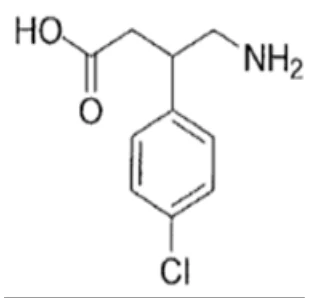
Physicochemical properties: White to almost white powder. Slightly soluble in water; very slightly soluble in ethanol (96%), practically insoluble in acetone. It dissolves in dilute mineral acids and in dilute solutions of alkali hydroxides.
pKa, 1 = 3.87 (carboxyl group) and pKa, 2 = 9.62 (amino group) in water at
20 oC.
14 CLINICAL TRIALS
14.1 Clinical Trials by Indication
Not Available
15 MICROBIOLOGY
No microbiological information is required for this drug product.
16 NON-CLINICAL TOXICOLOGY
General Toxicology:
Acute Toxicity:
LD50 values following intrathecal dosing are not available.
Long-Term Toxicity:
The oral toxicity of baclofen has been thoroughly investigated. Baclofen Injection USP requires the use of much smaller doses to achieve a therapeutic effect, with consequential lower systemic exposure.
Repeat-dose Toxicity:
Repeated intrathecal administration of baclofen to rats and dogs was not associated with irritation or inflammation of the spinal cord and surrounding tissues. Inflammation of the spinal cord was observed in one rabbit in a study that administered intrathecal baclofen to 3 rabbits weekly over a period of 3 to 6 months.
Local tolerance:
Subacute and subchronic studies with continuous intrathecal baclofen infusion in two species (rat, dog) revealed no signs of local irritation or inflammation on histological examination. Preclinical studies in animal models have demonstrated that the formation of inflammatory mass is directly related to high dose and / or high concentration of intrathecal opioids and no inflammatory mass is formed with intrathecal baclofen as a sole agent.
Genotoxicity:
Baclofen was negative for mutagenic and genotoxic potential in tests in bacteria, mammalian cells, yeast and Chinese hamsters.
Carcinogenicity:
A 2-year rat study (oral administration) showed that baclofen is not carcinogenic. In the same study a dose-related increase in incidence of ovarian cysts and a less marked increase in enlarged and / or hemorrhagic adrenal glands was observed.
Reproductive and Developmental Toxicology:
Oral baclofen showed no significant adverse effects on fertility or postnatal development at non- maternally toxic dose levels in rats (approximately 2.1-times the maximum oral mg / kg dose in adults). At maternally toxic dose levels (8.3-times the maximum oral mg / kg dose in adults), baclofen increased the incidence of omphalocoeles (ventral hernias) in rats, an effect not seen in mice or rabbits. Delayed fetal growth (ossification of bones) in the fetuses of rats and rabbits was also observed at maternotoxic doses.
Rat: Doses of 4.4-5 and 17.7-21.3 mg/kg/day were administered orally to two groups of female rats during pre-mating, mating, gestation and lactation. The only significant effect was a reduction in litter size and survivability of offspring (possibly due to agalactia) in the high dose group. In another rat study, doses of 5 and 10 mg/kg/day were administered by gavage during the last trimester of pregnancy and throughout the lactation period. Five of 31 dams in the high dose group showed severe weight loss from days 15-21 of gestation as well as agalactia and the entire litter of each of these dams died by day 2 postpartum. In a third study, baclofen doses of 30 mg/kg/day produces symptoms of ataxia and drowsiness in dams and the death of 4 of 24 dams dosed from gestation Days 1 to 12. At this high dose level, there was a slight increase in the resorption rate; however, the number and size of the fetuses remained normal and no malformations were reported.
Rat and Mouse: Doses of 5 and 20 mg/kg/day were administered by gavage to two groups of pregnant rats on days 6-15 of gestation. The only significant finding was the presence of abdominal hernias in 4 / 160 fetuses in the high dose group. In a second similar study, 1 / 229 control fetuses and 2 / 293 fetuses from dams receiving 20 mg/kg/day had abdominal hernias (See 7.1.1 Pregnant Women). Comparable lesions did not occur in a similar mouse study.
The average number of stillbirths or viable newborns did not differ significantly between control and medicated groups. The average weight of neonates from the high dose group was significantly reduced.
Rabbit: Doses of 1, 5 and 10 mg/kg/day were administered by gavage to groups of rabbits from the 6th to 18th day of gestation. There was an increased incidence of unossified phalangeal nuclei of forelimbs and hindlimbs in the fetuses from the high dose group. In another study, a slight increase in resorption rates was observed in rabbits receiving 10 and 15 mg/kg/day of oral baclofen.
Baclofen did not cause teratogenic effects in mice, rats, and rabbits at doses up to 125-times the maximum intrathecal mg / kg dose. Baclofen given orally increased the incidence of omphaloceles (ventral hernias) in fetuses of rats given approximately 500-times the maximum intrathecal dose expressed as a mg / kg dose. This abnormality was not seen in mice or rabbits. Baclofen dosed orally caused delayed fetal growth (ossification of bones) at doses that also caused maternal toxicity in rats and rabbits, and when given intraperitoneally, baclofen at high doses caused widening of the vertebral arch in rat fetuses.
17 SUPPORTING PRODUCT MONOGRAPHS
- 1. PrLIORESAL® (baclofen injection, 0.05 mg/mL), submission control No. 235751. Product Monograph, Novartis Pharmaceuticals Canada Inc., (MAY 21, 2024)