


Patient Medication Information: uses, side effects, how to take - Bar-Buprenorphine
Serious Warnings and Precautions
Seek immediate medical help for your baby.
|
|---|
What is BAR-Buprenorphine used for?
BAR-Buprenorphine is used for the long-term management of pain, when:
- the pain is severe enough to require daily, around-the-clock pain medication
- the doctor determines that other treatment options are not able to effectively manage your pain
BAR-Buprenorphine is NOT used (“as needed”) to treat pain that you only have once in a while.
How does BAR-Buprenorphine work?
BAR-Buprenorphine contains buprenorphine which is a pain medication belonging to the class of medicines known as opioids which includes codeine, fentanyl, morphine and oxycodone. It relieves pain by acting on specific nerve cells of the spinal cord and brain.
What are the ingredients in BAR-Buprenorphine?
Medicinal ingredient: buprenorphine
Non-medicinal ingredients: Protective liner: polyethylene terephthalate
Backing layer: polyethylene terephthalate
Drug in adhesive layer: aluminum acetylacetonate, levulinic acid, oleyl oleate, polyacrylate (dry solids) and povidone
BAR-Buprenorphine comes in the following dosage forms:
Transdermal patches 5 mg, 10 mg, 15 mg and 20 mg buprenorphine per patch, delivering 5 mcg, 10 mcg, 15 mcg and 20 mcg buprenorphine per hour, respectively, for 7 days.
Do not use BAR-Buprenorphine if:
- your doctor did not prescribe it for you
- you are allergic to buprenorphine, other opioids, or any of the other ingredient in the formulation or component of the container of BAR-Buprenorphine
you have mild or short term pain that can be controlled by the occasional use of pain medication including those available without a prescription
you have severe asthma, trouble breathing or any other lung problems
- you have appendicitis or a problem with your pancreas called pancreatitis
- you have a condition where the small bowel does not work properly (paralytic ileus) or you have severe pain in your abdomen
- you have a head injury
- if you are at risk for seizures
you suffer from alcoholism
- you are being treated for narcotic withdrawal
- you are taking, or have taken within the past 2 weeks, a monoamine oxidase inhibitor medication (e.g., phenelzine sulphate, tranylcypromine sulphate, moclobemide or selegiline)
- you are pregnant or plan to become pregnant, breast-feeding, or in labour
- you have myasthenia gravis
- you have severe liver disease
- you are under 18 years of age
- are going to have, or recently had, a planned surgery
To help avoid side effects and ensure proper use, talk to your healthcare professional before you take BAR-Buprenorphine. Talk about any health conditions or problems you may have, including if you:
- have a history of illicit or prescription drug or alcohol abuse
- have severe kidney, liver or lung disease
- have heart disease
- have low blood pressure
- have past or current depression
- have problems with your thyroid, adrenal or prostate gland
- suffer from chronic or severe constipation
- have, or had in the past, hallucinations or other severe mental problems
- suffer from migraines
Other warnings you should know about:
Do not expose the patch area to sources of heat such as heating pads, electric blankets, heated waterbeds, heat lamps, saunas and hot tubs, intensive sunbathing, etc. This may increase the drug's ability to go through the skin and result in an overdose. This may also occur if you develop a fever.
Opiod dependence and addition: There are important differences between physical dependence and addiction. It is important that you talk to your doctor if you have questions or concerns about abuse, addiction or physical dependence.
Pregnancy, nursing, labour and delivery: Do not use BAR-Buprenorphine while pregnant, nursing, during labour or delivery. Opioids can be transferred to your baby through breast milk, or while still in the womb. BAR-Buprenorphine can then cause life-threatening breathing problems in your unborn baby or nursing infant.
Driving and using machines: Before you do tasks which may require special attention, you should wait until you know how you react to BAR-Buprenorphine. BAR-Buprenorphine can cause:
- drowsiness
- dizziness or
- light headedness
This can usually occur after you take your first dose and when your dose is increased.
Disorder of the adrenal gland: You may develop a disorder of the adrenal gland called adrenal insufficiency. This means that your adrenal gland is not making enough of certain hormones. You may experience symptoms such as:
- nausea, vomiting
- feeling tired, weak or dizzy
- decreased appetite
You may be more likely to have problems with your adrenal gland if you have been taking opioids for longer than one month. Your doctor may do tests, give you another medication, and slowly take you off BAR-Buprenorphine.
Serotonin Syndrome: BAR-Buprenorphine can cause serotonin syndrome, a rare but potentially life-threatening condition. It can cause serious changes in how your brain, muscles and digestive system work. You may develop serotonin syndrome if you take BAR-Buprenorphine with certain anti-depressants or migraine medications.
Serotonin syndrome symptoms include:
- fever, sweating, shivering, diarrhea, nausea, vomiting
- muscle shakes, jerks, twitches or stiffness, overactive reflexes, loss of coordination
- fast heartbeat, changes in blood pressure
- confusion, agitation, restlessness, hallucinations, mood changes, unconsciousness, and coma
Sexual Function/Reproduction: Long term use of opioids may lead to a decrease in sex hormone levels. It may also lead to low libido (desire to have sex), erectile dysfunction or being infertile.
Tell your healthcare professional about all the medicines you take, including any drugs, vitamins, minerals, natural supplements or alternative medicines.
The following may interact with BAR-Buprenorphine:
- alcohol, including prescription and non-prescription medications containing alcohol. Do not drink alcohol while taking BAR-Buprenorphine. This can lead to drowsiness, depressed breathing, unusually slow or weak breathing, serious side effects or a fatal overdose
- other sedative drugs which may enhance the drowsiness caused by BAR-Buprenorphine
- other opioid analgesics (for pain)
- general anesthetics (used during surgery)
- drugs used to help you sleep or to reduce anxiety
- antidepressants (for depression and mood disorders). Do not take BAR-Buprenorphine with monoamine oxidase (MAO) inhibitors or if you have taken MAO inhibitors in the last 14 days before treatment with BAR-Buprenorphine
- drugs used to treat serious mental or emotional disorders, such as schizophrenia
- antihistamines (for allergies)
- anti-emetics (for prevention of vomiting)
- drugs used to treat muscle spasms and back pain
- warfarin and other coumarin anticoagulants (for prevention/treatment of blood clots)
- anti-retroviral, anti-fungal and antibiotic drugs
- grapefruit juice
- St. John’s Wort
How to use BAR-Buprenorphine:
BAR-Buprenorphine an adhesive, rectangular or square patch that is placed on your skin. The patch slowly releases buprenorphine over a period of 7 days.
BAR-Buprenorphine should only be used on the skin.
- always remove the old patch before applying a new one. This is important to avoid overdose.
- apply on clean, dry, intact, non-hairy area on your upper chest, upper back, or upper arm. If the area you choose has body hair, clip (do not shave) the hair close to the skin with scissors.
- if you need to clean the skin where the patch will be applied, use only clear water.
Do not:
- apply heat to the area before or after applying the patch.
- chew, swallow, put it in your mouth, or use the patch in any way other than on the skin.
- wear more than one patch at a time, unless your doctor tells you to.
- use the BAR-Buprenorphine patch if the seal is broken or the patch is cut, damaged or changed in any way.
- apply your patch in front of children since they may copy your actions.
You can bathe, swim, or shower while wearing BAR-Buprenorphine. If the patch falls off, discard the patch properly. Apply a new patch at a different skin site. Make sure the new skin area is dry. Tell your doctor that this has happened. Take note of the time you applied the new patch and change it only after the required number of hours.
Where to Apply BAR-Buprenorphine:
Select a dry, hairless or nearly hairless area, on your upper chest (left or right), upper back (left or right) side of chest (left or right) or upper outer arm (left or right) (see Figure A).
Application Areas
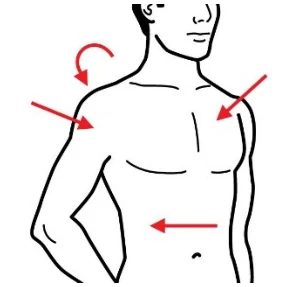
Figure A
Within each of the application AREAS there is more than one possible SITE for applying the patch.
Possible application SITES in upper chest areas (left or right) (see Figure B), or the upper back areas (left or right) (see Figure C) or the right side of the chest and upper arm (see Figure D) or the left side of the chest and upper arm (see Figure E).
| O R | O R | O R | ||||
| Figure B | Figure C | Figure D | Figure E |
Do not apply more than one patch at the same time unless prescribed by your doctor.
If your doctor tells you to use two patches make sure you apply both patches at the same time and at the same site right next to each other (see Figure F). Make sure you always:
- apply both patches at the same time
- remove both patches at the same time
Do not use more than a total combined dose from all patches of 20 mcg per hour.
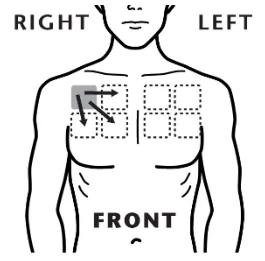 | 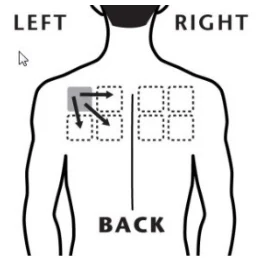 | 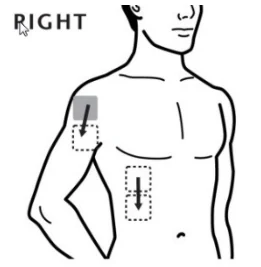 | 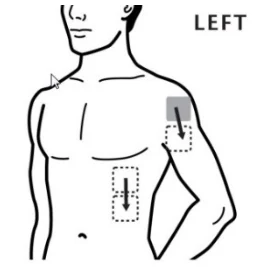 |
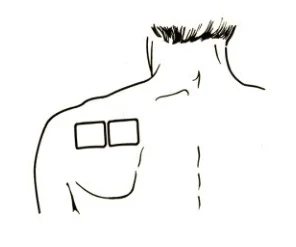
Figure F
If the area (site) you choose has body hair, do not shave the hair. Clip the hair close to the skin with scissors (see Figure G).
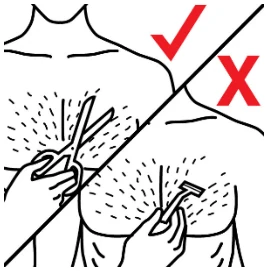
Figure G
Do not put the patch on skin that is excessively oily, burned, broken out, cut, irritated or damaged in any way. If you need to clean the skin where the patch will be applied, use only clear water. Soaps, oils, lotions, alcohol or other products may irritate the skin under the patch.
How to Apply BAR-Buprenorphine:
Step 1 - Each patch is sealed in its own protective pouch. Do not remove the patch from the pouch until you are ready to use it. When you are ready, remove the patch from the pouch.
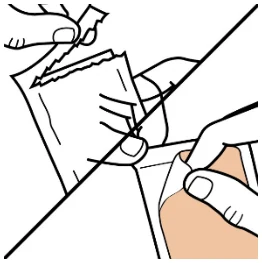
Figure H
Step 2 - A protective liner covers the sticky side of the patch – the side that will be put on your skin. Remove the thin section of liner located at one side of the patch and apply the thin sticky side of the patch to a dry area of your upper chest, upper back, side of chest, or upper outer arm (see Figure H).
Step 3 - Remove the remainder of the liner and immediately press the patch firmly on your skin with the palm of your hands for about 30 seconds. Try not to touch the sticky side of the patch. Throw away the liner (see Figure I).
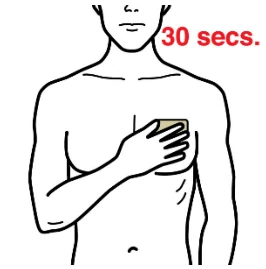
Figure I
Not all adhesive products stick to all patients. If an edge of the patch does not stick well, or loosens after application, tape the edges down with first aid tape. When applying the first aid tape, do not cover any printing on the BAR-Buprenorphine patch. In the event that the patch falls off, discard it and put a new one on at a different skin site. If two patches were applied at the same time and one falls off, remove the second patch from the body. Throw both of these patches away. Apply two new patches next to each other on a different skin site (see Disposal instrutions below).
Step 4 - Wash your hands, with water, when you have finished applying the patch.
Step 5 - After wearing the patch for 7 days, or as directed by your doctor, remove it (see Disposal instrutions below). Then choose a different area (to apply a new patch and repeat steps 1 to 4 in order. The same area should not be re-used within 3 weeks. This will reduce the possibility of developing a rash. After 3 weeks when returning to a previously used area, vary the skin sites if possible.
Contact your doctor or pharmacist if you have any questions about applying BAR-Buprenorphine.
Safety and Handling:
BAR-Buprenorphine is sealed to keep the drug adhesive layer from getting on your hands or body. If the drug adhesive layer accidentally touches the skin, wash the area with large amounts of water. Do not use soap, alcohol, or other solvents as these may increase the drug’s ability to go through the skin.
Serious medical consequences, including death, can occur when patches are accidentally transferred to other people during skin-to-skin contact, for example while hugging, sharing a bed or moving a patient. If your patch dislodges and accidentally sticks to the skin of another person, take the patch off the other person immediately and call a doctor. This is true for both fresh and used patches, as there is drug that remains in the patch after use.
Usual Adult Starting Dose:
Dosage is individualized. Be sure to follow your doctor’s dosing instructions exactly. Do not increase or decrease your dose without consulting your doctor. Taking higher doses can lead to more side effects and a greater chance of overdose.
Because the medicine in BAR-Buprenorphine is gradually released from the patch, and slowly absorbed through the skin, do not expect immediate relief after you apply your first patch. During this initial period, your doctor may ask you to take additional pain medicine until you experience the full benefits of BAR-Buprenorphine.
Be aware that removing the patch does not completely remove the source of drug, as drug is deposited under the skin and will continue to be released into the bloodstream, although briefly, after patch removal.
If you continue to have pain, call your doctor.
Stopping your Medication:
Please do not suddenly stop taking BAR-Buprenorphine as it may cause unwanted side effects.
Your doctor will monitor and guide you on how to slowly stop taking BAR-Buprenorphine. You should do it slowly to avoid uncomfortable symptoms such as having:
- body aches
- diarrhea
- goosebumps
- loss of appetite
- nausea
- feeling nervous or restless
- runny nose
- sneezing
- tremors or shivering
- stomach cramps
- rapid heart rate (tachycardia)
- having trouble with sleeping
- an unusual increase in sweating
- heart palpitations
- an unexplained fever
- weakness
- yawning.
By reducing or stopping your opioid treatment, your body will become less used to opioids. If you start treatment again, you will need to start at the lowest dose. You may overdose if you restart at the last dose you took before you slowly stopped taking BAR-Buprenorphine.
Refilling Prescriptions for BAR-Buprenorphine:
A new written prescription is required from your doctor each time you need more BAR-Buprenorphine. Therefore, it is important that you contact your doctor before your current supply runs out.
Only obtain prescriptions for this medicine from the doctor in charge of your treatment. Do not seek prescriptions from other doctors unless you switch to another doctor for your pain management.
Overdose:
| If you think you have taken too much BAR-Buprenorphine, contact your healthcare professional, hospital emergency department or regional Poison Control Centre immediately, even if there are no symptoms. |
Signs of overdose may include:
- unusually slow or weak breathing
- dizziness
- confusion
- extreme drowsiness
If a person is having the above signs of overdose, check all areas of their skin and remove any patches. There may be more than one patch, if a previous patch was not removed. Get immediate emergency medical help.
Missed Dose:
If a patch is left on for more than 7 days, remove the patch and apply a new patch following the instructions given (see Where to Apply BAR-Buprenorphine and How to Apply BAR-Buprenorphine).
What are possible side effects from using BAR-Buprenorphine?
These are not all the possible side effects you may feel when taking BAR-Buprenorphine. These effects may be more pronounced if you have a fever. If you experience any side effects not listed here, or develop a fever while using the patch, contact your healthcare professional.
Side effects may include:
- application site reactions (e.g., itching, redness and/or rash)
- anorexia
- constipation
- dizziness
- drowsiness, insomnia
- dry mouth
- headache
- lack of muscle strength
- nausea, vomiting
- sweating
- low sex drive, impotence (erectile dysfunction), infertility
Talk with your doctor or pharmacist about ways to prevent constipation when you start using BAR-Buprenorphine.
Opioid withdrawal symptoms such as nausea, vomiting, diarrhea, anxiety and shivering are possible when converting from your previous opioid analgesic to treatment with BAR-Buprenorphine. Contact your doctor if you experience these symptoms when switching to or from BAR-Buprenorphine.
Serious side effects and what to do about them
| Symptom / effect | Talk to your healthcare professional | Stop taking drug and get immediate medical help | ||
|---|---|---|---|---|
| Only if severe | In all cases | |||
| Rare | Overdose: Hallucinations, confusion, inability to walk normally, slow or weak breathing, extreme sleepiness, sedation, or dizziness, floppy muscles/low muscle tone, cold and clammy skin. | √ | ||
| Respiratory Depression: Slow, shallow or weak breathing. | √ | |||
| Allergic Reaction: Rash, hives, swelling of the face, lips, tongue or throat, difficulty swallowing or breathing. | √ |
Serious side effects and what to do about them
| Symptom / effect | Talk to your healthcare professional | Stop taking drug and get immediate medical help |
|---|
| Only if severe | In all cases | |||
| Bowel Blockage (impaction): Abdominal pain, severe constipation, nausea. | √ | |||
| Fast, Slow or Irregular Heartbeat: Heart palpitations. | √ | |||
| Rare | Low Blood Pressure: Dizziness, fainting, light-headedness. | √ | ||
| Serotonin Syndrome: agitation or restlessness, loss of muscle control or muscle twitching, tremor, diarrhea | √ |
If you have a troublesome symptom or side effect that is not listed here or becomes bad enough to interfere with your daily activities, talk to your healthcare professional.
Reporting Side Effects
You can report any suspected side effects associated with the use of health products to Health Canada by:
NOTE: Contact your health professional if you need information about how to manage your side effects. The Canada Vigilance Program does not provide medical advice. |
Storage:
- Keep unused or expired BAR-Buprenorphine in a secure place to prevent theft, misuse or accidental exposure.
- Store BAR-Buprenorphine between 15°C and 30°C. Do not freeze.Keep BAR-Buprenorphine in its protective pouch until you are ready to use it.
- The inside of car can reach temperature much higher than 30ºC on a sunny day. Do not carry the pouch in your pocket as it may reach body temperature (36ºC).
- Keep BAR-Buprenorphine under lock, out of sight and reach of children and pets.
- Never take medicine in front of small children as they will want to copy you. Accidental ingestion by a child is dangerous and may result in death. If a child accidentally takes BAR-Buprenorphine, get emergency help right away.
Disposal:
Remove the patch you have been wearing, before putting on a new BAR-Buprenorphine patch. Fold the used patch in half so the sticky side sticks to itself. If the drug adhesive layer accidentally contacts the skin, the area should be washed with clear water.
Wash your hands, with water only, after removing the patch.
BAR-Buprenorphine should never be thrown into household trash, where children and pets may find it. It should be returned to a pharmacy for proper disposal.
If you want more information about BAR-Buprenorphine:
- Talk to your healthcare professional
- Find the full product monograph that is prepared for healthcare professionals and includes this patient medication information by visiting the Health Canada website ; or by contacting the manufacturer, Bard Pharmaceuticals (1990) Inc., at 1-800-387-4501.