


Product Monograph - Bortezomib for Injection (Auro Pharma)
1 INDICATIONS
Bortezomib for Injection (bortezomib) is indicated:
- as part of combination therapy for the treatment of patients with previously untreated multiple myeloma who are unsuitable for stem cell transplantation.
- as part of a medically recognized combination therapy for induction treatment of patients with previously untreated multiple myeloma who are suitable for stem cell transplantation (studies were conducted with intravenous administration of bortezomib).
- for the treatment of progressive multiple myeloma in patients who have received at least one prior therapy and who have already undergone or are unsuitable for stem cell transplantation. Bortezomib administered subcutaneously was studied in this patient population where it was shown to be non-inferior to the intravenous administration (defined as retaining at least 60% of the intravenous administration effect) (see 14 CLINICAL TRIALS).
- as part of combination therapy for the treatment of patients with previously untreated mantle cell lymphoma who are unsuitable for stem cell transplantation.
- for the treatment of patients with mantle cell lymphoma who have relapsed or were refractory to at least 1 prior therapy.
1.1 Pediatrics
Pediatrics (< 18 years of age): No data are available to Health Canada; therefore, Health Canada has not authorized an indication for pediatric use.
1.2 Geriatrics
Geriatrics (> 65 years of age): No overall differences in safety or effectiveness of bortezomib were observed between younger patients and patients ≥ 65 years of age. Greater sensitivity of some older individuals cannot be ruled out (see 8 ADVERSE REACTIONS, 10 CLINICAL PHARMACOLOGY, and 14 CLINICAL TRIALS).
2 CONTRAINDICATIONS
- Bortezomib for Injection is contraindicated in patients with hypersensitivity to bortezomib, boron or any of the excipients.
- Bortezomib for Injection is contraindicated for intrathecal administration. Fatal events have occurred with intrathecal administration of bortezomib.
3 SERIOUS WARNINGS AND PRECAUTIONS BOX
Serious Warnings and Precautions
|
|---|
4 DOSAGE AND ADMINISTRATION
4.1 Dosing Considerations
Bortezomib for Injection may be administered:
|
|---|
- Subcutaneously (at a concentration of 2.5 mg/mL)
Because each route of administration has a different reconstituted concentration, caution should be used when calculating the volume to be administered.
For subcutaneous administration, the reconstituted solution is injected into the thighs (right or left) or abdomen (right or left). Injection sites should be rotated for successive injections. New injections should be given at least 2.5 cm from an old site and never into areas where the site is tender, bruised, erythematous, or indurated.
If local injection site reactions occur following Bortezomib for Injection administration subcutaneously, a less concentrated Bortezomib for Injection solution (1 mg/mL instead of a 2.5 mg/mL) may be administered subcutaneously (see 4.3 Reconstitution, 4.4 Administration and follow reconstitution instructions for 1 mg/mL). Alternatively, the intravenous route of administration should be considered (see 4.3 Reconstitution and 4.4 Administration).
In clinical trials, local skin irritation was reported in 5% of patients, but extravasation of bortezomib was not associated with tissue damage. In a clinical trial of subcutaneous bortezomib, a local reaction was reported in 6% of patients as an adverse event, mostly redness.
Treatment must be administered under the supervision of a physician qualified and experienced in the use of antineoplastic agents.
Bortezomib has not been formally studied in patients with impaired renal function. Patients with compromised renal function should be monitored carefully, especially if creatinine clearance is ≤ 30 mL/minute (see 7 WARNINGS AND PRECAUTIONS and 8 ADVERSE REACTIONS).
Bortezomib has been studied in patients with impaired hepatic function. Patients with mild hepatic impairment do not require a starting dose adjustment and should be treated as per the recommended Bortezomib for Injection dose. Patients with moderate or severe hepatic impairment should be started on a reduced dose. See Dose Modification in Patients with Hepatic Impairment and 7 WARNINGS AND PRECAUTIONS.
There is no evidence to suggest that dose adjustments are necessary in elderly patients (see 8 ADVERSE REACTIONS).
The safety and effectiveness of bortezomib in children and adolescents have not been established.
4.2 Recommended Dose and Dosage Adjustment
Dosage in Previously Untreated Multiple Myeloma
Patients Suitable for Stem Cell Transplantation
The recommended starting dose of Bortezomib for Injection, in combination with other medicinal products used for the treatment of multiple myeloma, is 1.3 mg/m2 body surface area to be administered intravenously twice weekly on days 1, 4, 8, and 11, followed by a rest period of up to 20 days, which is considered a treatment cycle. Three to six cycles should be administered. At least 72 hours should elapse between consecutive doses of Bortezomib for Injection.
For Bortezomib for Injection dosage adjustments for transplant eligible patients follow dose modification guidelines described under Dosage in Relapsed Multiple Myeloma and Relapsed/Refractory Mantle Cell Lymphoma and Dose Modification in Patients with Hepatic Impairment.
For dosing instructions for other medicinal products combined with Bortezomib for Injection, please see corresponding Product Monographs.
Patients Not Suitable for Stem Cell Transplantation
Bortezomib for Injection is administered in combination with oral melphalan and oral prednisone for nine 6-week treatment cycles as shown in Table 1. In Cycles 1-4, Bortezomib for Injection is administered twice weekly (Days 1, 4, 8, 11, 22, 25, 29 and 32). In Cycles 5-9, Bortezomib for Injection is administered once weekly (Days 1, 8, 22 and 29). At least 72 hours should elapse between consecutive doses of Bortezomib for Injection.
Table 1: Dosage Regimen for Patients with Previously Untreated Multiple Myeloma
Twice Weekly Bortezomib for Injection (Cycles 1-4)
| Week | 1 | 2 | 3 | 4 | 5 | 6 | ||||||
|---|---|---|---|---|---|---|---|---|---|---|---|---|
| Bortezomib for Injection (1.3 mg/m2) | Day 1 | -- | -- | Day 4 | Day 8 | Day 11 | rest period | Day 22 | Day 25 | Day 29 | Day 32 | rest period |
Melphalan (9 mg/m2) Prednisone (60 mg/m2) | Day 1 | Day 2 | Day 3 | Day 4 | -- | -- | rest period | -- | -- | -- | -- | rest period |
| Once Weekly Bortezomib for Injection (Cycles 5-9 when used in combination with Melphalan and Prednisone) | ||||||||||||
| Week | 1 | 2 | 3 | 4 | 5 | 6 | ||||||
| Bortezomib for Injection (1.3 mg/m2) | Day 1 | -- | -- | -- | Day 8 | rest period | Day 22 | Day 29 | rest period | |||
Melphalan (9 mg/m2) Prednisone (60 mg/m2) | Day 1 | Day 2 | Day 3 | Day 4 | -- | rest period | -- | -- | rest period | |||
See 14 CLINICAL TRIALS
Dose Modification Guidelines for Combination Therapy with Bortezomib for Injection, Melphalan and Prednisone
Dose modification and re-initiation of therapy when Bortezomib for Injection is administered in combination with melphalan and prednisone:
Prior to initiating a new cycle of therapy:
- Platelet count should be ≥70 x 109/L and the ANC should be ≥ 1.0 x 10⁹/L
- Non-hematological toxicities should have resolved to Grade 1 or baseline
Table 2: Dose Modifications During Subsequent Cycles of Combination Bortezomib for Injection, Melphalan and Prednisone Therapy
| Toxicity | Dose modification or delay |
|---|---|
| Hematological toxicity during a cycle: | |
| If prolonged (≥ 5 days) Grade 4 neutropenia or thrombocytopenia, or thrombocytopenia with bleeding is observed in the previous cycle. | Consider reduction of the melphalan dose by 25% in the next cycle. |
| If platelet count ≤30 ×109/L or ANC <0.75 x 10⁹/L on a Bortezomib for Injection dosing day (other than day 1 | Bortezomib for Injection dose should be withheld |
| If several Bortezomib for Injection doses in a cycle are withheld (≥ 3 doses during twice-weekly administration or ≥ 2 doses during weekly administration) | Bortezomib for Injection dose should be reduced by 1 dose level (from 1.3 mg/m2 to 1 mg/m2, or from 1 mg/m2 to 0.7 mg/m2) |
| Grade ≥ 3 non-hematological toxicities | Bortezomib for Injection therapy should be withheld until symptoms of the toxicity have resolved to Grade 1 or baseline. Then, Bortezomib for Injection may be reinitiated with one dose level reduction (from 1.3 mg/m2 to 1 mg/m2, or from 1 mg/m2 to 0.7 mg/m2). For Bortezomib for Injection-related neuropathic pain and/or peripheral neuropathy, hold and/or modify Bortezomib for Injection as outlined in Table 3. |
|---|
Please refer to the melphalan and prednisone Product Monographs for additional information.
Dosage in Relapsed Multiple Myeloma and Relapsed/Refractory Mantle Cell Lymphoma
The recommended starting dose of Bortezomib for Injection is 1.3 mg/m2 body surface area administered twice weekly for two weeks (Days 1, 4, 8, and 11) followed by a 10-day rest period (Days 12- 21). This 3-week period is considered a treatment cycle. For extended therapy beyond 8 cycles, Bortezomib for Injection may be administered on a maintenance schedule of once weekly for 4 weeks (Days 1, 8, 15, and 22) followed by a 13-day rest period (Days 23 to 35). At least 72 hours should elapse between consecutive doses of Bortezomib for Injection to minimize drug accumulation.
For tolerability reasons, dose reduction to 1.0 mg/m2 has been found effective. Bortezomib for Injection therapy should be withheld at the onset of any Grade 3 non-hematological or any Grade 4 hematological toxicities, excluding neuropathy as discussed below (see 7 WARNINGS AND PRECAUTIONS). Once the symptoms of the toxicity have resolved, Bortezomib for Injection treatment may be re-initiated at a 25% reduced dose (1.3 mg/m2 reduced to 1.0 mg/m2; 1.0 mg/m2 reduced to 0.7 mg/m2). If toxicity is not resolved or if it recurs at the lowest dose, discontinuation of Bortezomib for Injection must be considered unless the benefit of treatment clearly outweighs the risk.
Treatment with Bortezomib for Injection may be associated with a dose-related, transient decrease in platelet count. It is recommended that platelets be monitored before each dose, and that therapy be held if platelet counts are < 25 x 109/L and re-initiated at a reduced dose after resolution (see 7 WARNINGS AND PRECAUTIONS).
In a supportive Phase II relapsed multiple myeloma study in which the majority of patients were not refractory and had received less than 2 prior lines of therapy, a dose of 1.0 mg/m2 was investigated (see 14 CLINICAL TRIALS).
It is recommended that patients with a confirmed complete response receive 2 additional cycles of Bortezomib for Injection beyond a confirmation. It is also recommended that responding patients who do not achieve a complete remission receive a total of 8 cycles of Bortezomib for Injection therapy.
Currently there are limited data concerning retreatment with bortezomib.
Patients who experience Bortezomib for Injection-related neuropathic pain and/or peripheral sensory neuropathy, motor neuropathy or autonomic neuropathy are to be managed as presented in Table 3. Patients with pre-existing severe neuropathy may be treated with Bortezomib for Injection only after careful risk/benefit assessment.
Table 3: Recommended Dose Modification for Bortezomib for Injection-Related Neuropathy
| Severity of Neuropathy | Modification of Dose and Regimen |
|---|---|
| Grade 1 (paresthesia, weakness and/or loss of reflexes) without pain or loss of function | No action |
| Grade 1 with pain or Grade 2 (interfering with function but not with activities of daily living) | Reduce Bortezomib for Injection to 1.0 mg/m2 |
| Grade 2 with pain or Grade 3 (interfering with activities of daily living) | Withhold Bortezomib for Injection treatment until symptoms of toxicity have resolved. When toxicity resolves, re-initiate Bortezomib for Injection treatment and reduce dose to 0.7 mg/m2 and change treatment schedule to once per week |
| Grade 4 (sensory neuropathy which is disabling or motor neuropathy that is life-threatening or leads to paralysis) and/or severe autonomic neuropathy | Discontinue Bortezomib for Injection. |
NCI Common Toxicity Criteria
Dosage in Previously Untreated Mantle Cell Lymphoma
Bortezomib for Injection is administered intravenously in combination with intravenously infused rituximab, cyclophosphamide, and doxorubicin, and oral prednisone as shown in Table 4. Bortezomib for Injection is administered at 1.3 mg/m2 body surface area twice weekly for two weeks on days 1, 4, 8, and 11, followed by a 10-day rest period on days 12-21. This 3-week period is considered a treatment cycle. Six Bortezomib for Injection cycles are recommended, although for patients with a response first documented at cycle 6, two additional Bortezomib for Injection cycles may be given. At least 72 hours should elapse between consecutive doses of Bortezomib for Injection.
Table 4: Dosage Regimen for Patients with Previously Untreated Mantle Cell Lymphoma.
| Twice Weekly Bortezomib for Injection (Cycles 1-6)1 | ||||||||
|---|---|---|---|---|---|---|---|---|
| Week | Week 1 | Week 2 | Week 3 | |||||
| Bortezomib for Injection (1.3 mg/m2) | Day 1 | -- | -- | Day 4 | -- | Day 8 | Day 11 | Rest period (Day 12 -21) |
Rituximab (375 mg/m2) Cyclophosphamide (750mg/m2) Doxorubicin (50 mg/m2) | ||||||||
| Day 1 | -- | -- | -- | |||||
| -- | -- | |||||||
| -- | -- | |||||||
| Prednisone (100 mg/m2) | Day 1 | |||||||
| Day 2 | Day 3 | Day 4 | ||||||
| Day 5 | -- | |||||||
| -- | -- | |||||||
Two additional Bortezomib for Injection cycles may be given for patients with a first response documented at Cycle 6.
See 14 CLINICAL TRIALS
Dose adjustments:
Prior to initiating a new cycle of therapy:
- Platelet count should be ≥ 100 x 109/L
- Absolute neutrophil count (ANC) should be ≥ 1.5 x 10⁹/L
- Hemoglobin should be ≥ 8 g/dL (≥ 4.96 mmol/L)
- Non-hematologic toxicity should have recovered to Grade 1 or baseline
Platelet counts should be monitored prior to each dose of Bortezomib for Injection. Complete blood counts (CBC) with differential should be frequently monitored throughout treatment with Bortezomib for Injection.
Bortezomib for Injection treatment must be withheld at the onset of any ≥ Grade 3 Bortezomib for Injection-related non - hematological toxicities (excluding neuropathy, see Table 3) or ≥ Grade 3 hematological toxicities. For dose adjustments, see Table 5 below. Colony stimulating factors may be administered for hematologic toxicity according to local standard practice. Platelet transfusion for the treatment of thrombocytopenia may be considered.
Table 5: Dose adjustments during treatment for patients with previously untreated mantle cell lymphoma
| Toxicity | Posology modification or delay |
|---|---|
| Hematological toxicity | |
platelet count < 10 ×109/L | Bortezomib for Injection therapy should be withheld for up to 2 weeks until the patient has an ANC ≥ 0.75 ×10⁹/L and a platelet count ≥ 25 ×109/L.
|
| Bortezomib for Injection therapy should be withheld for up to 2 days. Doses of drug withheld within a cycle should be skipped, and the dose should not be made up later in the cycle. |
| Grade ≥ 3 non-hematological toxicities | Bortezomib for Injection therapy should be withheld until symptoms of the toxicity have resolved to Grade 2 or better. Then, Bortezomib for Injection may be reinitiated with one dose level reduction (from 1.3 mg/m2 to 1 mg/m2, or from 1 mg/m2 to 0.7 mg/m2). For Bortezomib for Injection -related neuropathic pain and/or peripheral neuropathy, hold and/or modify Bortezomib for Injection as outlined in Table 3. |
|---|
For dosing adjustment instructions for rituximab, cyclophosphamide, doxorubicin, or prednisone, see manufacturer's Product Monographs.
Dose Modification in Patients with Hepatic Impairment
Patients with mild hepatic impairment do not require a starting dose adjustment and should be treated per the recommended Bortezomib for Injection dose. Patients with moderate or severe hepatic impairment should be started on Bortezomib for Injection at a reduced dose of 0.7 mg/m2 per injection during the first cycle, and a subsequent dose escalation to 1.0 mg/m2 or further dose reduction to 0.5 mg/m2 may be considered based on patient tolerance (see Table 6).
Table 6: Recommended Starting Dose Modification for Bortezomib for Injection in Patients with Hepatic Impairment
| Bilirubin Level | SGOT (AST) Levels | Modification of Starting Dose | ||||
|---|---|---|---|---|---|---|
| Mild | ≤1.0x ULN | >ULN | None | |||
| >1.0x-1.5x ULN | Any | None | ||||
| Moderate | >1.5x-3x ULN | Any | Reduce Bortezomib for Injection to 0.7 mg/m2 in the first cycle. Consider dose escalation to 1.0 mg/m2 or further dose reduction to 0.5 mg/m2 in subsequent cycles based on patient tolerability. | |||
| Severe | >3x ULN | Any | ||||
Abbreviations: SGOT = serum glutamic oxalo acetic transaminase;
AST = aspartate aminotransferase; ULN = upper limit of the normal range.
4.3 Reconstitution
Bortezomib for Injection is a cytotoxic agent. Caution should be used during handling and preparation. Proper aseptic technique should be used since no preservative is present. Use of gloves and other protective clothing to prevent skin contact is recommended.
Different volumes of normal (0.9%) saline injection USP are used to reconstitute the product for the different routes of administration. The reconstituted concentration of bortezomib for the subcutaneous administration (2.5 mg/mL) is greater than the reconstituted concentration of bortezomib for intravenous administration (1 mg/mL). Because each route of administration has a different reconstituted concentration, caution should be used when calculating the volume to be administered (see 4.1 Dosing Considerations).
For each 3.5 mg single-use vial of bortezomib reconstitute with the following volume of normal (0.9%) saline injection USP based on the route of administration:
Table 7: Reconstitution Volumes and Final Concentration for Intravenous and Subcutaneous Administration
| Vial size | Route of administration | Volume of Diluent (normal [0.9%] saline injection USP) | Final bortezomib concentration (mg/mL) |
|---|---|---|---|
| 3.5 mg/vial | Intravenous | 3.5 mL | 1 mg/mL |
| 3.5 mg/vial | Subcutaneous | 1.4 mL | 2.5 mg/mL |
Stability:
Bortezomib for Injection contains no antimicrobial preservative. When reconstituted as directed, Bortezomib for Injection may be stored at 25°C. Reconstituted Bortezomib for Injection should be administered within eight hours of preparation. The reconstituted material may be stored for up to eight hours in the original vial or in a syringe. The total storage time for the reconstituted material must not exceed eight hours when exposed to normal indoor lighting.
4.4 Administration
After determining patient body surface area (BSA) in square metres, use the following equations to calculate the total volume (mL) of reconstituted Bortezomib for Injection to be administered:
Intravenous Administration (1 mg/mL concentration):
Bortezomib for Injection dose (mg/m2) x patient BSA (m2) =Total Bortezomib for Injection 1 mg/ml volume (mL) to be administered
Subcutaneous Administration (2.5 mg/mL concentration):
Bortezomib for Injection dose (mg/m2) x patient BSA (m2) =Total Bortezomib for Injection 2.5mg/ml volume(mL) to be administered
Stickers that indicate the final bortezomib concentration, and whether administration should be subcutaneous only, are provided with each Bortezomib for Injection vial. These stickers should be placed directly on the syringe of Bortezomib for Injection once Bortezomib for Injection is prepared to help alert practitioners of the correct route of administration for Bortezomib for Injection.
The reconstituted product should be a clear and colorless solution. Parenteral drug products should be inspected visually for particulate matter and discoloration prior to administration whenever solution and container permit. If any discoloration or particulate matter is observed, the reconstituted product should not be used.
4.5 Missed Dose
A minimum of 72 hours is required between doses. In a Day 1, 4, 8 and 11 dose schedule, if Day 4, 8 or 11 dose is missed, that dose is not made up.
5 OVERDOSAGE
Cardiovascular safety pharmacology studies in monkeys and dogs show that single IV doses approximately two to three times the recommended clinical dose on a mg/m2 basis are associated with hypotension, increases in heart rate, decreases in contractility, altered temperature control and death. The decreased cardiac contractility and hypotension responded to acute intervention with positive inotropic or pressor agents. In dog studies, increase s in the QT and corrected QT interval were observed at lethal doses (see 10 CLINICAL PHARMACOLOGY).
Accidental overdosage of at least twice the recommended dose has been associated with the acute onset of symptomatic hypotension and thrombocytopenia with fatal outcomes.
There is no known specific antidote for Bortezomib for Injection overdosage. In the event of an overdosage, the patient’s vital signs should be monitored and appropriate supportive care given to maintain blood pressure (such as fluids, pressors, and/or inotropic agents) and body temperature (see 7 WARNINGS AND PRECAUTIONS and 4 DOSAGE AND ADMINISTRATION).
| For management of a suspected drug overdose, contact your regional poison control centre. |
|---|
6 DOSAGE FORM S, STRENGTHS, COM POSITION AND PACKAGING
| Route of Administration | Dosage Form / Strength/Composition | Non-medicinal Ingredients |
|---|---|---|
| Intravenous or subcutaneous | sterile lyophilized powder for injection/3.5 mg | Mannitol and Nitrogen |
Bortezomib for Injection is supplied in individually cartoned 10 mL vials containing 3.5 mg of bortezomib as the mannitol boronic ester, as a white to off-white powder.
The vial stopper is not made with natural rubber latex.
7 WARNINGS AND PRECAUTIONS
General
Amyloidosis
Limited clinical information is available on the use of bortezomib in patients with previously treated light-chain (AL) amyloidosis.
There is no information for bortezomib in patients with concurrent multiple myeloma and AL amyloidosis. Therefore, when considering the treatment of patients with multiple myeloma who also have AL amyloidosis, potential risk of complications due to organ involvement must be taken into account. Close monitoring of organ function (cardiac, renal, hepatic, and nervous systems) should be performed regularly to guide dose adjustments and duration of therapy.
Dose Preparation:
Bortezomib has a narrow therapeutic window and has shown high acute toxicity in all animal species evaluated. Fatalities have been reported after accidental administration of at least twice the recommended dose in patients (see 5 OVERDOSAGE). Careful attention is required to ensure the recommended dose is not exceeded.
The recommended starting dose of Bortezomib for Injection is 1.3 mg/m2. Bortezomib for Injection may be administered intravenously at a concentration of 1 mg/mL, or subcutaneously at a concentration of 2.5 mg/mL (see 4 DOSAGE AND ADMINISTRATION). When administered intravenously, Bortezomib for Injection is administered as a 3 to 5 second bolus intravenous injection. Bortezomib for Injection is for intravenous or subcutaneous use only. Bortezomib for Injection should not be administered by any other route.
Because each route of administration has a different reconstituted concentration, caution should be used when calculating the volume to be administered.
Tumour Lysis Syndrome:
Because Bortezomib for Injection is a cytotoxic agent and can rapidly kill malignant plasma cells, the complications of tumor lysis syndrome may occur. The patients at risk of tumor lysis syndrome are those with high tumor burden prior to treatment. These patients should be monitored closely and appropriate precautions taken.
Carcinogenesis and Mutagenesis
Carcinogenicity studies have not been conducted. Bortezomib was clastogenic in mammalian cells in the in vitro chromosomal aberration assay. Bortezomib was not mutagenic in bacteria (Ames assay) and in the in vivo micronucleus assay in mice (see 16 NON-CLINICALTOXICOLOGY).
Cardiovascular
Hypotension
Bortezomib treatment is commonly associated with orthostatic/postural hypotension which is not an acute reaction and is observed throughout treatment (see 8 ADVERSE REACTIONS). In the Phase II and III relapsed multiple myeloma studies, the incidence of hypotension (postural, orthostatic, and hypotension NOS) was 11% and 12%, respectively. In the Phase II study, there was no prior history of orthostatic hypotension in these patients but half had pre -existing hypertension, one-third had evidence of peripheral neuropathy, and orthostatic hypotension was associated with syncope in some patients. In another Phase II study, there was evidence of autonomic nervous system abnormalities following bortezomib therapy. The mechanism is unknown although it may be due to bortezomib-induced autonomic neuropathy. Most cases required pharmacological treatment, including hydration and/or adjustment of antihypertensive medications. Administration of mineralocorticoids and/or sympathomimetics was infrequently required. Caution should be used when treating patients with a history of syncope, patients receiving medications known to be associated with hypotension, and patients who are dehydrated. Patients should be instructed to seek medical advice if they experience symptoms of dizziness, light-headedness or fainting spells.
Congestive Heart Failure
Acute development or exacerbation of congestive heart failure and/or new onset of decreased left ventricular ejection fraction has been reported, including reports in patients with few or no risk factors for decreased left ventricular ejection fraction. Patients with risk factors for or existing heart disease should be closely monitored.
QT Prolongation
There have been isolated cases of QT-interval prolongation in clinical studies; causality has not been established.
Pericarditis
Events of pericarditis (<1%) have been reported in clinical trials and during post-marketing use of bortezomib. New or worsening cases of pericarditis should be investigated promptly.
In the Phase III relapsed multiple myeloma study of intravenous bortezomib versus dexamethasone, the incidence of any treatment-emergent cardiac disorder was 15% and 13% in the bortezomib and dexamethasone groups, respectively. The incidence of heart failure events (acute pulmonary edema, cardiac failure, congestive cardiac failure, cardiogenic shock, and pulmonary edema) was similar in the bortezomib and dexamethasone groups, 5% and 4%, respectively.
Driving and Operating Machinery
Bortezomib for Injection may be associated with fatigue, dizziness, syncope, orthostatic/postural hypotension or blurred vision. Therefore, patients are advised to be cautious when operating machinery, or when driving.
Gastrointestinal
Gastrointestinal events, including nausea, diarrhea, constipation, and vomiting occur frequently during bortezomib treatment (see 8 ADVERSE REACTIONS). Events usually occur earlier in treatment (Cycles 1 and 2), and may persist for several cycles, sometimes requiring administration of antiemetic’s and antidiarrheal. Fluid and electrolyte replacement should be administered if the patient becomes dehydrated. Cases of intestinal obstruction, including ileus, have been reported and patients who experience constipation should be closely monitored (see 7 WARNINGS AND
PRECAUTIONS, Neurologic, Autonomic Neuropathy).
Hematologic
Bortezomib is associated with thrombocytopenia and neutropenia (see 8 ADVERSE REACTIONS). A cyclical pattern of platelet and neutrophil decrease and recovery has remained consistent in the studies of multiple myeloma and mantle cell lymphoma, with no evidence of cumulative thrombocytopenia or neutropenia in any of the regimens studied. Of the bortezomib dosing days in each cycle of bortezomib treatment, platelets were lowest on Day 11, and neutrophils were generally lowest on Days 8-11, of each cycle. Platelets and neutrophils typically recovered to baseline by the next cycle.
Platelet counts should be monitored prior to each dose of Bortezomib for Injection. Complete blood counts (CBC) with differential should be frequently monitored throughout treatment with Bortezomib for Injection. Bortezomib for Injection therapy should be held when the platelet count is <25,000/uL or <30,000/ uL when used in combination with melphalan and prednisone (see 4 DOSAGE AND ADMINISTRATION). There have been reports of gastrointestinal and intracerebral hemorrhage in association with bortezomib. Transfusion and supportive care should be considered.
In the single-agent multiple myeloma study of bortezomib vs dexamethasone, the mean platelet count nadir measured was approximately 40% of baseline. The severity of thrombocytopenia related to pre-treatment platelet count is shown in Table 8. The incidence of significant bleeding events (≥ Grade 3) was similar on both the bortezomib (4%) and dexamethasone (5%) arms.
Table 8: The Severity of Thrombocytopenia Related to Pre-Treatment Platelet Count in the Phase III Relapsed Multiple Myeloma Study of Intravenous bortezomib versus Dexamethasone.
| Pre-treatment Platelet Count1 | Number of Patients (N=331)2 | Number (%) of Patients with Platelet Count <10 x 109/L | Number (%) of Patients with Platelet Count 10 x 109 – 25 x 109/L |
|---|---|---|---|
| ≥75 x 109/L | 309 | 8 (3%) | 36 (12%) |
| ≥50 x 109/L - <75 x 109/L | 14 | 2 (14%) | 11 (79%) |
| ≥10 x 109/L - <50 x 109/L | 7 | 1 (14%) | 5 (71%) |
- 1. A baseline platelet count of 50 x 109/L was required f or study eligibility.
- 2. Data were missing at baseline for 1 patient.
In the combination study of bortezomib with rituximab, cyclophosphamide, doxorubicin and prednisone (VcR-CAP) in previously untreated mantle cell lymphoma patients, the incidence of thrombocytopenia adverse reactions (≥ Grade 4) was 32% versus 1% for the rituximab, cyclophosphamide, doxorubicin, vincristine, and prednisone (R-CHOP) arm. The incidence of bleeding adverse reactions (≥ Grade 3) associated with low platelet counts (Grade 3 or higher) within the same or prior cycle, up to the end of the bleeding event was 1% ( 3 patients) in the VcR-CAP treatment arm and <1% (1 subject) in the R-CHOP treatment arm.
There were no deaths due to bleeding events in either arm. There were no CNS bleeding events in the VcR-CAP arm; there was 1 bleeding event in the R-CHOP arm. Platelet transfusions were given to 23% of the patients in the VcR-CAP arm and 3% of the patients in the R-CHOP arm.
The incidence of neutropenia adverse reactions (≥ Grade 4) was 70% in the VcR-CAP arm and was 52% in the R-CHOP arm. The incidence of febrile neutropenia (≥ Grade 4) was 5% in the VcR-CAP arm and was 6% in the R-CHOP arm. Colony-stimulating factor support was provided at a rate of 78% in the VcR-CAP arm and 61% in the R-CHOP arm.
Hepatic/Biliary/Pancreatic
Bortezomib is metabolized by liver enzymes. Bortezomib exposure is increased in patients with moderate or severe hepatic impairment; these patients should be treated with Bortezomib for Injection at reduced starting doses and closely monitored for toxicities (see 4 DOSAGE AND ADMINISTRATION).
Rare cases of acute liver failure have been reported in bortezomib-treated patients receiving multiple concomitant medications and with serious underlying medical conditions. Other reported hepatic events include asymptomatic increases in liver enzymes, hyperbilirubinemia, and hepatitis. Such changes may be reversible upon discontinuation of Bortezomib for Injection. There is limited re-challenge information in these patients.
Monitoring and Laboratory Tests
Platelet counts should be monitored prior to each dose of Bortezomib for Injection. Complete blood counts (CBC) with differential should be frequently monitored throughout treatment with Bortezomib for Injection.
Chest radiography should be done prior to initiating Bortezomib for Injection therapy (see 7 WARNINGS AND PRECAUTIONS, Respiratory).
Neurologic
Peripheral Neuropathy
Treatment with bortezomib is commonly associated with peripheral neuropathy that is predominantly sensory. However, cases of severe motor neuropathy with or without sensory peripheral neuropathy have been reported, including those with fatal outcomes. Very rare cases of Guillain-Barré syndrome and rare cases of aspiration pneumonia in association with motor neuropathy have also been reported.
In clinical trials in relapsed multiple myeloma, of the patients who experienced treatment - emergent neuropathy, 70% had previously been treated with neurotoxic agents and 80% had signs or symptoms of peripheral neuropathy at baseline. Worsening of existing neuropathy is dose related and cumulative. Patients with pre-existing symptoms (numbness, pain or a burning feeling in the feet or hands) and/or signs of peripheral neuropathy (hyperesthesia, hypoesthesia, paresthesia, neuropathic pain or weakness) may experience worsening during treatment with Bortezomib for Injection and it is recommended that all patients should be monitored for symptoms of neuropathy.
Complete resolution of peripheral neuropathy to baseline has been documented in 14% of patients with severe symptoms in the Phase II studies in relapsed multiple myeloma, with limited follow-up data available. In the Phase III relapsed multiple myeloma study, following dose adjustments, improvement in or resolution of peripheral neuropathy was reported in 51% of patients with ≥ Grade 2 peripheral neuropathy, and the median time to improvement or resolution was 107 days. Bortezomib was discontinued because of peripheral neuropathy in 8% of patients in the Phase III study, and was the most common adverse event leading to treatment discontinuation. Improvement in or resolution of peripheral neuropathy was reported in 71% of patients who discontinued due to peripheral neuropathy or who had ≥ Grade 3 peripheral neuropathy in the Phase II multiple myeloma studies (see 8 ADVERSE REACTIONS). The mechanism underlying bortezomib induced peripheral neuropathy is not known and the complete time-course of this toxicity has not been fully characterized. Full reversibility has not been demonstrated in preclinical studies (see 16 NON-CLINICALTOXICOLOGY).
In the Phase III relapsed multiple myeloma study comparing bortezomib administered intravenously vs subcutaneously, the incidence of Grade≥2 peripheral neuropathy events was 24% for subcutaneous and 41% for intravenous. Grade ≥3 peripheral neuropathy occurred in 6% of subjects in the subcutaneous treatment group, compared with 16% in the intravenous treatment group. Therefore, patients with pre-existing peripheral neuropathy or at high risk of peripheral neuropathy may benefit from starting Bortezomib for Injection subcutaneously. Starting Bortezomib for Injection subcutaneously may be considered for patients with pre -existing or at risk of peripheral neuropathy. Patients with pre-existing severe neuropathy should be treated with Bortezomib for Injection only after careful risk-benefit assessment.
Patients experiencing new or worsening peripheral neuropathy may require a change in the dose, schedule or cessation of Bortezomib for Injection therapy (see 4 DOSAGE AND ADMINISTRATION).
Autonomic Neuropathy
Autonomic neuropathy may contribute to some adverse reactions, such as postural hypotension, diarrhea, constipation with ileus and pyrexia. Severe autonomic neuropathy resulting in treatment interruption or discontinuation has been reported (see 4 DOSAGE AND ADMINISTRATION).
Seizures
Seizures are uncommonly reported in patients without previous history of seizures. Caution should be exercised when treating patients with any risk factors.
Posterior reversible encephalopathy syndrome:
There have been rare reports of posterior reversible encephalopathy syndrome (PRES)
(formerly RPLS) in patients receiving bortezomib. PRES is a rare, reversible, neurological disorder which can present with seizure, hypertension, headache, lethargy, confusion, blindness, and other visual and neurological disturbances. Brain imaging, preferably MRI (Magnetic Resonance Imaging), is used to confirm the diagnosis. In patients developing PRES, discontinue Bortezomib for Injection.
The safety of reinitiating bortezomib therapy in patients previously experiencing PRES is not known.
Progressive Multifocal Leukoencephalopathy (PML):
Cases of John Cunningham (JC) virus infection of unknown causality, resulting in PML and death, have been reported in patients treated with bortezomib. Very rare postmarketing cases of PML have been reported in patients treated with bortezomib in combination with, or following other therapies. Signs and symptoms of PML include new onset or worsening neurological signs or symptoms such as confusion or problems thinking, loss of balance, blurred vision or loss of vision, decreased strength or weakness in an arm or leg or change in the way of walking or talking. If such signs or symptoms are observed, PML should be considered in the differential diagnosis, and further evaluation is recommended, including consideration of a neurologist consultation. Discontinue Bortezomib for Injection if PML is diagnosed.
Renal
Hypercalcemia and renal failure are complications of multiple myeloma most often associated with high tumor burden. Supportive treatments for these complications include bisphosphonates (for hypercalcemia and myeloma bone disease), hydration and other measures depending on the patient’s status and the type and severity of the complications (see 14 CLINICAL TRIALS).
Bortezomib has not been formally studied in patients with impaired renal function. Limited clinical information is available on the use of bortezomib in patients with varying degrees of impaired renal function (see 14 CLINICAL TRIALS). No clinical information is available on the use of bortezomib in patients on hemodialysis. Patients with renal impairment, especially if creatinine clearance is
≤ 30 mL/min, should be closely monitored for toxicities when treated with Bortezomib for Injection (see 10 CLINICAL PHARMACOLOGY, Special Populations and Conditions ).
Reproductive Health: Female and Male Potential
- Fertility
Fertility studies with bortezomib have not been performed. Degenerative effects in ovaries and testes in the general toxicity studies suggest a potential effect on male and female fertility (see 16 NON-CLINICAL TOXICOLOGY).
- Teratogenic Risk
Bortezomib was not teratogenic in rats and rabbits at the highest dose tested (0.45 and 0.55 mg/m2, respectively) but caused post-implantation loss in rabbits (see 16 NON-CLINICAL TOXICOLOGY).
Respiratory
There have been rare reports of acute diffuse infiltrative pulmonary disease of unknown etiology such as pneumonitis, interstitial pneumonia, lung infiltration and Acute Respiratory Distress Syndrome (ARDS) in patients receiving bortezomib. Some of these events have been fatal. A pre- treatment chest radiography should be done to determine if any additional diagnostic measures are necessary and to serve as a baseline for potential post -treatment pulmonary changes.
In the event of new or worsening pulmonary symptoms (e.g., cough, dyspnea), a prompt diagnostic evaluation should be performed and patients treated appropriately. The benefit/risk ratio should be considered prior to continuing Bortezomib for Injection therapy.
In a clinical trial, two patients given high-dose cytarabine (2 g/m2 per day) by continuous infusion over 24 hours with daunorubicin and bortezomib for relapsed acute myelogenous leukemia died of ARDS early in the course of therapy. Therefore, this specific regimen is not recommended.
7.1 Special Populations
7.1.1 Pregnant Women
Women of child-bearing potential should avoid becoming pregnant while being treated with Bortezomib for Injection. Males and females of child-bearing capacity should use effective contraceptive measures during treatment and for 3 months following treatment.
No placental transfer studies have been conducted with bortezomib. There are no adequate and well-controlled studies in pregnant women. If Bortezomib for Injection is used during pregnancy, or if the patient becomes pregnant while receiving this drug, the patient should be aware of the potential hazard to the fetus.
7.1.2 Breast-feeding
It is not known whether bortezomib is excreted in milk. Because many drugs are excreted in milk and because of the potential for serious adverse reactions from bortezomib in nursing infants, women should be advised against breast-feeding while being treated with Bortezomib for Injection.
7.1.3 Pediatrics
Pediatrics (< 18 years of age): No data are available to Health Canada; therefore, Health Canada has not authorized an indication for pediatric use.
8 ADVERSE REACTIONS
8.1 Adverse Reaction Overview
The most commonly reported adverse reactions during treatment with bortezomib are nausea, diarrhea, constipation, vomiting, fatigue, pyrexia, thrombocytopenia, anemia, neutropenia, peripheral neuropathy (including sensory), headache, paraesthesia, decreased appetite, dyspnea, rash, herpes zoster and myalgia.
Serious adverse reactions reported during treatment with bortezomib include cardiac failure, tumor lysis syndrome, pulmonary hypertension, posterior reversible encephalopathy syndrome, acute diffuse infiltrative pulmonary disorders and rarely autonomic neuropathy. These were uncommonly reported.
Multiple Myeloma and Mantle Cell Lymphoma
Herpes Zoster Virus Reactivation:
The administration of bortezomib has been associated with herpes zoster reactivation. In the randomized Phase III study in relapsed multiple myeloma, the incidence of herpes zoster occurring on treatment with bortezomib was 13% (42/331) versus 5% (15/332) in the high-dose dexamethasone group. In the randomized study in patients with previously untreated multiple myeloma, the overall incidence of herpes zoster reactivation was more common in subjects treated with intravenous bortezomib, melphalan and prednisone (VMP) than in the control group treated with melphalan and prednisone (14% vs. 4%, respectively). In this study, antiviral prophylaxis was administered to 26% (90/340) of patients in the VMP treatment group. In this treatment group, herpes zoster virus reactivation was less common in subjects receiving prophylactic antiviral therapy (3% [3/90]) than in subjects who did not receive prophylactic antiviral therapy (17% [43/250]). In patients with previously untreated MCL, the incidence of herpes zoster infection was 6.7% in the VcR-CAP arm and 1.2% in the R-CHOP arm. In the post-market setting, cases of herpes meningoencephalitis and ophthalmic herpes have been reported.
8.2 Clinical Trial Adverse Reactions
Because clinical trials are conducted under very specific conditions, the adverse reaction rates observed in the clinical trials may not reflect the rates observed in practice and should not be compared to the rates in the clinical trials of another drug. Adverse drug reaction information from clinical trials is useful for identifying drug-related adverse events and for approximating rates.
Multiple Myeloma
Randomized Open-Label Combination Phase III Clinical Study in Patients with Previously Untreated Multiple Myeloma (Front-Line Therapy, Intravenous Bortezomib)
In the Bortezomib, melphalan, prednisone (VMP) and melphalan, prednisone (MP) treatment groups, respectively, 99% and 97% of subjects experienced at least 1 treatment-emergent adverse event. Seventy-eight percent of subjects in the VMP treatment group had Blood and Lymphatic System Disorders considered related to study drug, compared with 70% in the MP treatment group.
The most commonly reported adverse events thrombocytopenia (52% vs. 47%), neutropenia (49% vs. 46%), and leukopenia (33% vs. 30%) were comparable between the 2 treatment groups (VMP vs. MP). The incidence of lymphopenia was higher in the VMP group (24% vs. 17%). However, anemia was observed in only 43% of subjects in the VMP group compared to 55% in the MP group. The Gastrointestinal Disorders SOC Grades 3 and ≥4 were reported more frequently in the VMP treatment group as compared to the MP treatment group (nausea: 48% vs. 28%; diarrhea: 46% vs. 17%; constipation: 37% vs. 16%; vomiting: 33% vs. 16%). As well, the incidence of Nervous System Disorders was higher in the VMP group (VMP vs. MP): peripheral neuropathy (47% vs. 5%), neuralgia (36% vs. 1%), and paraesthesia (13% vs. 4%). The incidence of termination of all study treatment because of adverse events was similar for the VMP and MP treatment groups (15% vs. 14%, respectively).
A total of 155 (46%) patients from the VMP treatment group experienced a serious adverse event (SAE) during the study compared with 121 (36%) patients from the MP treatment group. The most frequently reported serious adverse events in both treatment groups were in the Infections and Infestation SOC (VMP: 17%; MP: 15%), with pneumonia being the predominant serious adverse event in both treatment groups (VMP: 11%, MP: 7%). The incidence of serious adverse events belonging to the Nervous System Disorders was 5% in the VMP treatment group and 2% in the MP treatment group.
Drug-related adverse events that led to death during the study occurred in 2% of subjects in both treatment groups (6 subjects in the VMP treatment group and 8 subjects in the MP treatment group). The most frequent drug-related adverse events leading to death were of infectious origin: drug-related pneumonia/bronchopneumonia led to death in 3 subjects in the VMP treatment group and 4 subjects in the MP treatment group and drug-related sepsis led to death in 1 subject in the VMP treatment group and 3 subjects in the MP treatment group.
Table 9 describes safety data from 340 patients with previously untreated multiple myeloma who received intravenous bortezomib (1.3 mg/m2) in combination with melphalan (9 mg/m2) and prednisone (60 mg/m2) in a prospective Phase 3 study. Overall, the safety profile of bortezomib in combination with melphalan/prednisone is consistent with the known safety profiles of both bortezomib and melphalan/prednisone.
Table 9: Most Commonly Reported Adverse Events (≥ 10%in Intravenous bortezomib, Melphalan and Prednisone arm) with Grades 3 and ≥4 Intensity in the Previously Untreated Multiple Myeloma Study
| Bortezomib, Melphalan and Prednisone | Melphalan and Prednisone | |||||||||||||||||||
|---|---|---|---|---|---|---|---|---|---|---|---|---|---|---|---|---|---|---|---|---|
| (N=340) | (N=337) | |||||||||||||||||||
| Med DRA System Organ Class | Total | Toxicity | Grade, n (%) | Total | Toxicity Grade, n (%) | |||||||||||||||
| Preferred Term | n (%) | 3 | ≥4 | n (%) | 3 | ≥4 | ||||||||||||||
| Blood and Lymphatic System Disorders | ||||||||||||||||||||
| Thrombocytopenia | 178 (52) | 68 (20) | 59 (17) | 159 (47) | 55 (16) | 47 (14) | ||||||||||||||
| Neutropenia | 165 (49) | 102 (30) | 35 (10) | 155 (46) | 79 (23) | 49 (15) | ||||||||||||||
| Anemia | 147 (43) | 53 (16) | 9 (3) | 187 (55) | 66 (20) | 26 (8) | ||||||||||||||
| Leukopenia | 113 (33) | 67 (20) | 10 (3) | 100 (30) | 55 (16) | 13 (4) | |||||||||||
|---|---|---|---|---|---|---|---|---|---|---|---|---|---|---|---|---|---|
| Lymphopenia | 83 (24) | 49 (14) | 18 (5) | 58 (17) | 30 (9) | 7 (2) | |||||||||||
| Gastrointestinal Disorders | |||||||||||||||||
| Nausea | 164 (48) | 14 (4) | 0 | 94 (28) | 1 (<1) | 0 | |||||||||||
| Diarrhea | 157 (46) | 23 (7) | 2 (1) | 58 (17) | 2 (1) | 0 | |||||||||||
| Constipation | 125 (37) | 2 (1) | 0 | 54 (16) | 0 | 0 | |||||||||||
| Vomiting | 112 (33) | 14 (4) | 0 | 55 (16) | 2 (1) | 0 | |||||||||||
| Abdominal Pain | 49 (14) | 7 (2) | 0 | 22 (7) | 1 (<1) | 0 | |||||||||||
| Abdominal Pain Upper | 40 (12) | 1 (<1) | 0 | 29 (9) | 0 | 0 | |||||||||||
| Dyspepsia | 39 (11) | 0 | 0 | 23 (7) | 0 | 0 | |||||||||||
| Nervous System Disorders | |||||||||||||||||
| Peripheral Neuropathy | 159 (47) | 43 (13) | 2 (1) | 18 (5) | 0 | 0 | |||||||||||
| Neuralgia | 121 (36) | 28 (8) | 2 (1) | 5 (1) | 1 (<1) | 0 | |||||||||||
| Dizziness | 56 (16) | 7 (2) | 0 | 37 (11) | 1 (<1) | 0 | |||||||||||
| Headache | 49 (14) | 2 (1) | 0 | 35 (10) | 4 (1) | 0 | |||||||||||
| Paresthesia | 45 (13) | 6 (2) | 0 | 15 (4) | 0 | 0 | |||||||||||
| General Disorders and Administration Site Conditions | |||||||||||||||||
| Pyrexia | 99 (29) | 8 (2) | 2 (1) | 64 (19) | 6 (2) | 2 (1) | |||||||||||
| Fatigue | 98 (29) | 23 (7) | 2 (1) | 86 (26) | 7 (2) | 0 | |||||||||||
| Asthenia | 73 (21) | 20 (6) | 1 (<1) | 60 (18) | 9 (3) | 0 | |||||||||||
| Edema Peripheral | 68 (20) | 2 (1) | 0 | 34 (10) | 0 | 0 | |||||||||||
| Infections and Infestations | |||||||||||||||||
| Pneumonia | 56 (16) | 16 (5) | 13 (4) | 36 (11) | 13 (4) | 9(3) | |||||||||||
| Herpes Zoster | 45 (13) | 11 (3) | 0 | 14 (4) | 6 (2) | 0 | |||||||||||
| Bronchitis | 44 (13) | 4 (1) | 0 | 27 (8) | 4 (1) | 0 | |||||||||||
| Nasoparyngitis | 39(11) | 1(<1) | 0 | 27(8) | 0 | 0 | |||||||||||
| Musculoskeletal and Connective Tissue Disorders | |||||||||||||||||
| Back Pain | 58 (17) | 9(3) | 1(<1) | 62(18) | 11(3) | 1 (<1) | |||||||||||
| Pain In Extremity | 47 (14) | 8 (2) | 0 | 32 (9) | 3 (1) | 1 (<1) | |||||||||||
| Bone Pain | 37 (11) | 7 (2) | 1 (<1) | 35 (10) | 7 (2) | 0 | |||||||||||
| Arthralgia | 36 (11) | 4 (1) | 0 | 50 (15) | 2 (1) | 1 (<1) | |||||||||||
| Metabolism and Nutrition Disorders | |||||||||||||||||
| Anorexia | 77 (23) | 9 (3) | 1 (<1) | 34 (10) | 4 (1) | 0 | |||||||||||
| Hypokalaemia | 44 (13) | 19 (6) | 3 (1) | 25 (7) | 8 (2) | 2 (1) | |||||||||||
| Skin and Subcutaneous Tissue Disorders | |||||||||||||||||
| Rash | 66 (19) | 2 (1) | 0 | 24 (7) | 1 (<1) | 0 | |||||||||||
| Pruritus | 35 (10) | 3 (1) | 0 | 18 (5) | 0 | 0 | |||||||||||
| Respiratory, Thoracic and Mediastinal Disorders | |||||||||||||||||
| Cough | 71 (21) | 0 | 0 | 45 (13) | 2 (1) | 0 | |||||||||||
| Dyspnoea | 50 (15) | 11 (3) | 2 (1) | 44 (13) | 5 (1) | 4 (1) | |||||||||||
| Psychiatric Disorders | |||||||||||||||||
| Insomnia | 69 (20) | 1 (<1) | 0 | 43 (13) | 0 | 0 | |||||||||||
| Vascular Disorders | |||||||||||||||||
| Hypertension | 45 (13) | 8 (2) | 1 (<1) | 25 (7) | 2 (1) | 0 | |||||||||||
| Hypotension | 41 (12) | 4 (1) | 3 (1) | 10 (3) | 2 (1) | 2 (1) | |||||||||||
Randomized Open-Label Phase III Clinical Studies of Intravenous bortezomib -based Combination Induction Treatment in Patients with Previously Untreated Multiple Myeloma Suitable for Stem Cell Transplantation (pooled safety data from 3 studies)
Safety data was collected from three randomized, open-label, Phase 3 studies (MMY-3003, IFM 2005-01, and MMY-3010) in which bortezomib at a dose of 1.3 mg/m2 was used as part of the induction treatment administered to patients with newly diagnosed multiple myeloma who were eligible for stem cell transplantation. Data from these studies were pooled, and the safety comparison of interest was the bortezomib -based induction regimen (i.e, bortezomib/ Adriamycin®/dexamethasone [VcAD], bortezomib /dexamethasone [VcD], and bortezomib /thalidomide/dexamethasone [VcTD] treatment groups) versus non-bortezomide -based induction regimen (i.e., vincristine/Adriamycin/dexamethasone [VAD] and thalidomide/dexamethasone [TD] treatment groups). The pooled safety population consisted of 1,555 subjects.
During induction, 94% and 96% of subjects in the non-bortezomib based and bortezomib-based groups, respectively, experienced at least 1 treatment-emergent adverse event. Across both the non-bortezomib based and bortezomib based groups, very common (≥10%) treatment-emergent adverse events during the induction phase were constipation (non -Vc-based: 28%; Vc-based: 31%), anemia (non-Vc-based: 29%; Vc-based: 27%), nausea (non-Vc-based: 27%; Vc-based:28%), thrombocytopenia (non-Vc-based: 22%; Vc-based: 31%), leukopenia (non-Vc-based:27%; Vc-based: 25%), fatigue (non-Vc-based: 21%; Vc-based: 20%), hepatic function abnormal (non-Vc-based: 20%; Vc-based: 21%), and pyrexia (non-Vc-based: 20%; Vc-based: 20%). Peripheral neuropathy was reported more frequently in the Vc-based group (19%) as compared with the non-Vc based group (7%). Patients did not have any evidence of peripheral neuropathy at baseline.
Serious treatment-emergent adverse events were reported by 37% of subjects in the non - bortezomib based group and 41% of subjects in the bortezomib-based group. Across both the non- bortezomib based and bortezomib based groups, the most frequently reported treatment-emergent serious adverse events during the Induction Phase were pneumonia (non-Vc-based: 6%; Vc- based: 5%), pyrexia (non-Vc-based: 5%; Vc-based: 5%), pulmonary embolism (non-Vc-based:
2%; Vc-based: 3%), deep vein thrombosis (non-Vc-based: 2%; Vc-based: 2%), vomiting (non-
Vc-based: 1%; Vc-based: 2%), diarrhea (non-Vc-based: 1%; Vc-based: 2%), and peripheral sensory neuropathy (non-Vc-based: 0%; Vc-based: 3%). Diverticular perforation was also reported (non-Vc-based: 0.1%; Vc-based: 0.4%). Incidences of serious adverse events were comparable between the treatment groups.
Two percent of subjects in each treatment group had a treatment-emergent drug-related adverse event that resulted in death. The most frequently reported drug-related, Grade 3 or higher, and serious adverse events resulting in death were pneumonia, septic shock, sepsis and multi-organ failure. One case of sudden death considered related to bortezomib by the investigator was reported. One case of fatal viral myocarditis was considered possibly related to study treatment (bortezomib /doxorubicin/dexamethasone) by the investigator. There were no notable differences between the treatment groups in the incidences of adverse events resulting in death.
Fifty-nine percent and 63% of subjects in the non-bortezomib based and bortezomib based groups, respectively, experienced at least 1 treatment-emergent adverse event with a toxicity Grade of 3 or higher; drug-related Grade 3 or higher treatment-emergent adverse events were reported by 45% and 51% of subjects, respectively.
Very common (≥10%) treatment-emergent adverse events from the pivotal IFM 2005-01 study are presented in Table 10. Very common (≥10%) treatment-emergent adverse events from the pooled studies are presented in Table 11.
Table 10: Very Common Reported Adverse Events (≥10%in Bortezomib-based arm) with Grade ≥3 Intensity in the Phase III Study of Bortezomib-based Combination Induction Treatment in Patients with Previously Untreated Multiple Myeloma Suitable for Stem Cell Transplantation (IFM-2005 Safety for Induction Analysis Se t)
| MedDRA SOC | Non Bortezomib Based N=239 Total Grade ≥3 | Bortezomib-based N=239 Total Grade ≥3 | ||||||
|---|---|---|---|---|---|---|---|---|
| Preferred term | n (%) | n (%) | n (%) | n (%) | ||||
| Gastrointestinal disorders | ||||||||
| Constipation | 61 (26) | 1 (<1) | 60 (25) | 1 (<1) | ||||
| Nausea | 70 (29) | 1 (<1) | 50 (21) | 4 (2) | ||||
| Diarrhea | 24 (10) | 1 (<1) | 30 (13) | 4 (2) | ||||
| General disorders and administration site conditions | ||||||||
| Asthenia | 48 (20) | 3 (1) | 53 (22) | 8 (3) | ||||
| Pyrexia | 56 (23) | 6 (3) | 32 (13) | 2 (1) | ||||
| Edema peripheral | 19 (8) | 1 (<1) | 29 (12) | 0 | ||||
| Nervous system disorders | ||||||||
| Paresthesia | 36 (15) | 2 (1) | 47 (20) | 5 (2) | ||||
| Neuropathy peripheral | 5 (2) | 1 (<1) | 29 (12) | 8 (3) | ||||
| Musculoskeletal and connective tissue disorders | ||||||||
| Back pain | 27 (11) | 5 (2) | 35 (15) | 5 (2) | ||||
| Blood and lymphatic system disorders | ||||||||
| Anemia | 54 (23) | 21 (9) | 46 (19) | 12 (5) | ||||
| Thrombocytopenia | 11 (5) | 3 (1) | 27 (11) | 7 (3) | ||||
| Psychiatric disorders | ||||||||
| Insomnia | 24 (10) | 1 (<1) | 31 (13) | 1 (<1) | ||||
Table 11: Very Common Treatment-emergent Adverse Events (≥10%in the Bortezomib Based Treatment Group) in the Pooled Phase III Studies of Bortezomib based Combination Induction Treatment in patients with Previously Untreated Multiple Myeloma Suitable for Stem Cell Transplantation (pooled from three studies)
| MedDRA SOC | Non Bortezomib-Based N=776 | Bortezomib-based N=779 | ||
|---|---|---|---|---|
| Preferred Term | Total n (%) | Grade ≥3 n (%) | Total n (%) | Grade ≥3 n (%) |
| General disorders and administration site conditions | ||||
| Fatigue | 161 (21) | 21 (3) | 158 (20) | 21 (3) |
| Pyrexia | 159 (21) | 36 (5) | 153 (20) | 25 (3) |
| Oedema peripheral | 75 (10) | 4 (1) | 117 (15) | 2 (<1) |
| Asthenia | 91 (12) | 10 (1) | 110 (14) | 16 (2%) |
| Oedema | 61 (8) | 1 (<.1) | 79 (10) | 3 (<1) |
| Gastrointestinal disorders | ||||
| Constipation | 214 (28) | 8 (1) | 242 (31) | 10 (1) |
| Nausea | 206 (27) | 9 (1) | 215 (28) | 22 (3) |
| Diarrhoea | 110 (14) | 6 (1) | 133 (17) | 23 (3) |
| Vomiting | 87 (11) | 6 (1) | 95 (12) | 18 (2) |
| Nervous system disorders | ||||
| Neuropathy peripheral | 54 (7) | 4 (1) | 147 (19) | 20 (3) |
| Paraesthesia | 80 (10) | 2 (<1) | 101 (13) | 11 (1) |
| Peripheral sensory neuropathy | 55 (7) | 1 (<1) | 101 (13) | 19 (2) |
| Infections and infestations | ||||
| Herpes zoster | 18 (2) | 5 (1) | 86 (11) | 24 (3) |
| Blood and lymphatic system disorders | ||||
| Thrombocytopenia | 171 (22) | 27 (4) | 239 (31) | 63 (8) |
| Anaemia | 222 (29) | 77 (10) | 211 (27) | 55 (7) |
| Leukopenia | 206 (27) | 120 (16) | 196 (25) | 109 (14) |
| Leukocytosis | 84 (11) | 3 (<1) | 79 (10) | 7 (1) |
| Musculoskeletal and connective tissue disorders | ||||
| Back pain | 94 (12) | 20 (3) | 100 (13) | 25 (3) |
| Metabolism and nutrition disorders | ||||
| Hypocalcaemia | 151 (20) | 24 (3) | 160 (21) | 21 (3) |
| Enzyme abnormality | 105 (14) | 7 (1) | 131 (17) | 8 (1) |
| Hyperglycaemia | 138 (18) | 31 (4) | 122 (16) | 26 (3) |
| Hypokalaemia | 102 (13) | 23 (3) | 112 (14) | 17 (2) |
| Hyponatraemia | 82 (11) | 12 (2) | 100 (13) | 29 (4) |
| Hepatobiliary disorders | ||||
| Hepatic function abnormal | 159 (21) | 27 (4) | 165 (21) | 30 (4) |
| Psychiatric disorders | ||||
| Insomnia | 82 (11) | 6 (1) | 96 (12) | 6 (1) |
Randomized Open-Label Phase III Multiple Myeloma Clinical Study (Intravenous bortezomib)
The incidence of treatment-emergent adverse events during the study was 100% in bortezomib treated patients and 98% in dexamethasone-treated patients. Among the 331 bortezomib treated patients, the most commonly reported adverse events overall were asthenic conditions (61%), diarrhea (58%), nausea (57%), constipation (42%), peripheral neuropathy (36%), vomiting, pyrexia, thrombocytopenia (each 35%), anorexia and decreased appetite (34%), anemia and headache (each
26%), dyspnea (25%), myalgia, muscle cramps, spasms and stiffness (24%), rash (24%), and cough and paresthesia (each 21%). The most commonly reported adverse events among the 332 patients in the dexamethasone group were psychiatric disorders (49%), asthenic conditions (45%), insomnia (27%), anemia (22%), and diarrhea (21%). Fourteen percent (14%) of patients in the bortezomib treatment arm experienced a Grade 4 adverse event; the most common Grade 4 toxicities were thrombocytopenia (4%), neutropenia (2%) and hypercalcemia (2%). Sixteen percent (16%) of dexamethasone-treated patients experienced a Grade 4 adverse event; the most common toxicity was hyperglycemia (2%).
A total of 144 (44%) patients from the bortezomib treatment arm experienced a serious adverse event (SAE) during the study, as did 144 (43%) dexamethasone -treated patients. An SAE is defined as any event, regardless of causality, that results in death, is life -threatening, requires hospitalization or prolongs a current hospitalization, results in a significant disability or is deemed to be an important medical event. The most commonly reported SAEs in the bortezomib treatment arm were pyrexia (6%), diarrhea (5%), dyspnea and pneumonia (4%), and vomiting (3%). In the dexamethasone treatment group, the most commonly reported SAEs were pneumonia (7%), pyrexia (4%), and hyperglycemia (3%).
A total of 145 patients, including 84 (25%) of 331 patients in the bortezomib treatment group and 61 (18%) of 332 patients in the dexamethasone treatment group were discontinued from the treatment due to adverse events assessed as drug-related by the investigators. Among the 331 bortezomib treated patients, the most commonly reported drug-related event leading to discontinuation was peripheral neuropathy (8%). Among the 332 patients in the dexamethasone group, the most commonly reported drug-related events leading to treatment discontinuation were psychotic disorder and hyperglycemia (2% each).
Of the 669 patients enrolled in this study, 37% were 65 years of age or older. The incidence of Grade 3 and 4 events was 64%, 78% and 75% for bortezomib patient’s ≤ 50, 51-64 and ≥ 65 years of age, respectively.
Four deaths were considered to be bortezomib related in the Phase III multiple myeloma study:
1 case each of cardiogenic shock, respiratory insufficiency, congestive heart failure and cardiac arrest. Four deaths were considered dexamethasone-related: 2 cases of sepsis, 1 case of bacterial meningitis, and 1 case of sudden death at home.
Non-randomized Phase II Relapsed Multiple Myeloma Clinical Studies (Intravenous Bortezomib)
Two Phase II studies (see 14 CLINICAL TRIALS) evaluated 228 patients with multiple myeloma receiving bortezomib for Injection 1.3 mg/m2/dose twice weekly for 2 weeks followed by a 10-day rest period (21-day treatment cycle length) for a maximum of 8 treatment cycles.
The most commonly reported adverse events were asthenic conditions (65%), nausea (64%), diarrhea (55%), anorexia and decreased appetite (43%), constipation (43%), thrombocytopenia (43%), peripheral neuropathy (37%), pyrexia (36%), vomiting (36%), and anemia (32%). Fourteen percent (14%) of patients experienced at least one episode of Grade 4 toxicity, with the most common toxicity being thrombocytopenia (3%) and neutropenia (3%).
During the studies, a total of 113 (50%) of the 228 patients experienced SAEs. The most commonly reported SAEs included pyrexia (7%), pneumonia (7%), diarrhea (6%), vomiting (5%), dehydration (5%), and nausea (4%).
Adverse events thought by the investigator to be drug -related and leading to discontinuation occurred in 18% of patients. The reasons for discontinuation included peripheral neuropathy (5%), thrombocytopenia (4%), diarrhea (2%), and fatigue (2%).
In the Phase II clinical study of 202 patients, 35% of whom were 65 years of age or older, the incidence of > Grade 3 adverse events was 74%, 80% and 85% for bortezomib treated patients
≤50, 51-64 and ≥65 years of age, respectively.
Two deaths were reported and considered by the investigator to be possibly related to study drug: one case of cardiopulmonary arrest and one case of respiratory failure.
Patients from the two Phase II studies who, in the investigators’ opinion, would experience additional clinical benefit were allowed to receive bortezomib beyond 8 cycles on an extension study (see 14 CLINICAL TRIALS). Compared to the parent studies, patients in this extension study experienced a greater incidence of selected adverse events including edema overall (41% versus 29%), Grade 4 adverse events (22% versus 5%), and serious adverse events (48% versus 33%). As well, there was a greater incidence of lower limb edema (27% versus 10%), hyperglycemia (19% versus 5%), increased blood creatinine (13% versus 3%), productive cough (13% versus 2%), hypoproteinemia (10% versus 0%) and chest wall pain (10% versus 0%) in this extension study compared to the parent Phase II studies. Most of these adverse events were mild or moderate in intensity, and none was reported as an SAE. Of the commonly reported side effects attributable to bortezomib treatment, there was no evidence of their increase with cumulative dosing.
Mantle Cell Lymphoma
Non-randomized Phase II Study in Patients with Relapsed/Refractory Mantle Cell Lymphoma (Intravenous Bortezomib)
Safety data for patients with relapsed/refractory mantle cell lymphoma were evaluated in a Phase II study, which included 155 patients treated with bortezomib at the recommended dose of 1.3 mg/m2 twice weekly on Days 1, 4, 8 and 11 of a 21-day cycle. The most commonly reported adverse events were asthenic conditions (72%), peripheral neuropathy (55%), constipation (50%), diarrhea (47%), nausea (44%), decreased appetite (39%), vomiting (27%), rash (28%), edema (28%), anemia (17%), dizziness (excluding vertigo) (23%), dyspnea (23%), thrombocytopenia (21%), and insomnia (21%). The safety profile of bortezomib in these patients was similar to that observed in patients with multiple myeloma. Notable differences between the two patient populations were that thrombocytopenia, neutropenia, anemia, nausea, vomiting and pyrexia were reported more often in the patients with multiple myeloma than in those with mantle cell lymphoma; whereas peripheral neuropathy, rash and pruritus were higher among patients with mantle cell lymphoma compared to patients with multiple myeloma. The most common adverse event leading to the discontinuation of bortezomib treated patients was peripheral neuropathy (10%).
The most common treatment-emergent adverse drug reactions occurring at ≥10% incidence for Phase III and Phase II relapsed multiple myeloma studies are presented in Table 12 and Table 13, respectively, by System Organ Class. As well, the most common treatment-emergent adverse drug reactions occurring at ≥10% incidence for the Phase II mantle cell lymphoma study is presented in Table 14 by System Organ Class.
Table 12: Most Commonly Reported Adverse Events (≥10%in Intravenous Bortezomib arm), with Grades 3 and 4 Intensity in the Phase III Multiple Myeloma Randomized Study (N=663)
| System Organ Class | Bortezomib (n=331) | Treatment Group Dexamethasone (n=332) | |||||||
|---|---|---|---|---|---|---|---|---|---|
| [n (%)] | [n (%)] | ||||||||
| All Events | Grade 3 Events | Grade 4 Events | All Events | Grade 3 Events | Grade 4 Events | ||||
Blood and lymphatic system disorders | |||||||||
| Thrombocytopenia | 115 (35) | 85 (26) | 12 (4) | 36 (11) | 18 (5) | 4 (1) | |||
| Anemia NOS | 87 (26) | 31 (9) | 2 (<1) | 74 (22) | 32 (10) | 3 (<1) | |||
| Neutropenia | 62 (19) | 40 (12) | 8 (2) | 5 (2) | 4 (1) | 0 | |||
| Gastrointestinal disorders | |||||||||
| Diarrhea NOS, loose stools | 192 (58) | 24 (7) | 0 | 70 (21) | 6 (2) | 0 | |||
| Nausea | 190 (57) | 8 (2) | 0 | 46 (14) | 0 | 0 | |||
| Constipation | 140 (42) | 7 (2) | 0 | 49 (15) | 4 (1) | 0 | |||
| Vomiting NOS | 117 (35) | 11 (3) | 0 | 20 (6) | 4 (1) | 0 | |||
| Abdominal pain NOS | 53 (16) | 6 (2) | 0 | 12 (4) | 1 (<1) | 0 | |||
| Dyspepsia | 32 (10) | 2 (<1) | 0 | 28 (8) | 0 | 0 | |||
| General disorders and administration site conditions | |||||||||
Asthenia (fatigue, weakness, malaise, fatigue aggravated, lethargy) | 201 (61) | 39 (12) | 1 (<1) | 148 (45) | 20 (6) | 0 | |||
| Pyrexia | 116 (35) | 6 (2) | 0 | 54 (16) | 4 (1) | 1 (<1) | |||
Edema lower limb, edema peripheral, peripheral swelling, edema NOS1 | 56 (17) | 0 | 0 | 65 (20) | 1 (<1) | 0 | |||
| Rigors | 37 (11) | 0 | 0 | 8 (2) | 0 | 0 | |||
| Pain NOS | 33 (10) | 7 (2) | 0 | 12 (4) | 2 (<1) | 1 (<1) | |||
| Infections and infestations | |||||||||
| Nasopharyngitis | 45 (14) | 1 (<1) | 0 | 22 (7) | 0 | 0 | |||
Herpes Zoster (including multi-dermatomal or disseminated) | 42 (13) | 6 (2) | 0 | 15 (5) | 4 (1) | 1 (<1) | |||
| Metabolism and nutrition disorders | |||||||||
| Anorexia, appetite decreased NOS | 112 (34) | 9 (3) | 0 | 31 (9) | 1 (<1) | 0 | |||
| Musculoskeletal and connective tissue disorders | |||||||||
Bone pain, bone pain aggravated | 54 (16) | 12 (4) | 0 | 53 (16) | 11 (3) | 0 | |||
| Muscle cramps, muscle spasms, muscle stiffness, myalgia | 78 (24) | 2 (<1) | 0 | 66 (20) | 5 (2) | 0 | ||
|---|---|---|---|---|---|---|---|---|
| Arthralgia, joint stiffness | 49 (15) | 3 (<1) | 0 | 35 (11) | 5 (2) | 0 | ||
| Pain in the limb | 50 (15) | 5 (2) | 0 | 24 (7) | 2 (<1) | 0 | ||
| Back pain | 46 (14) | 10 (3) | 0 | 33 (10) | 4 (1) | 0 | ||
| Musculoskeletal pain | 33 (10) | 3 (<1) | 0 | 11 (3) | 3 (<1) | 0 | ||
| System Organ Class | Bortezomib (n=331) | Treatment Group Dexamethasone (n=332) | ||||||
| [n (%)] | [n (%)] | |||||||
| All Events | Grade 3 Events | Grade 4 Events | All Events | Grade 3 Events | Grade 4 Events | |||
| Nervous system disorders | ||||||||
| Peripheral neuropathy NOS, peripheral neuropathy aggravated, peripheral sensory neuropathy | 119 (36) | 24 (7) | 2 (<1) | 28 (8) | 1 (<1) | 1 (<1) | ||
| Headache NOS | 85 (26) | 3 (<1) | 0 | 43 (13) | 2 (<1) | 0 | ||
| Paraesthesia, burning sensation NOS | 70 (21) | 5 (2) | 0 | 28 (8) | 0 | 0 | ||
| Dizziness (excluding vertigo) | 45 (14) | 3 (<1) | 0 | 34 (10) | 0 | 0 | ||
| Psychiatric disorders | ||||||||
| Insomnia | 60 (18) | 1 (<1) | 0 | 90 (27) | 5 (2) | 0 | ||
| Respiratory, thoracic and mediastinal disorders | ||||||||
| Dyspnoea NOS, dyspnoea | 84 (25) | 17 (5) | 1 (<1) | 65 (20) | 9 (3) | 2 (<1) | ||
| Exertional cough | 70 (21) | 2 (<1) | 0 | 35 (11) | 1 (<1) | 0 | ||
| Skin and subcutaneous tissue disorders | ||||||||
| Rash NOS, rash pruritic, rash erythematous, rash generalized, rash macular, rash papular, erythema, urticaria NOS | 79 (24) | 6 (2) | 0 | 28 (8) | 0 | 0 | ||
| Vascular disorders | ||||||||
| Orthostatic hypotension, hypotension NOS, postural hypotension | 38 (11) | 3 (<1) | 0 | 6 (2) | 2 (<1) | 1 (<1) | ||
- 1.
Preferred terms mapped to General Disorders and Administration Site Conditions SOC or Musculoskeletal and Connective Tissue Disorders SOC
Table 13: Most Commonly Reported (≥10%Overall) Adverse Events Reported from 2 Phase II Clinical Trials in Multiple Myeloma Patients (N=228)
| System Organ Class | Intravenous Bortezomib -Treated Patients at 1.3 mg/m2/dose (N=228) | ||
|---|---|---|---|
All Events n (%) | Grade 3 Events n (%) | Grade 4 Events n (%) | |
| Blood and lymphatic system disorders | |||
| Thrombocytopenia | 97 (43) | 61 (27) | 7 (3) |
| Anemia NOS or anemia NOS aggravated, hemoglobin decreased, red blood cell count decreased1 | 74 (32) | 21 (9) | 0 |
| Neutropenia or neutropenia aggravated | 54 (24) | 29 (13) | 6 (3) |
| Eye disorders | |||
| Vision blurred | 25 (11) | 1 (<1) | 0 |
| Gastrointestinal disorders | |||
| Nausea or nausea aggravated | 145 (64) | 15 (7) | 0 |
| Diarrhea NOS or loose stools | 125 (55) | 16 (7) | 2 (1) |
| Constipation or constipation aggravated | 99 (43) | 5 (2) | 0 |
| Vomiting NOS | 82 (36) | 16 (7) | 1 (<1) |
| Abdominal pain NOS, abdominal pain upper or abdominal discomfort | 45 (20) | 5 (2) | 0 |
| Dyspepsia | 30 (13) | 0 | 0 |
| General disorders and administration site conditions | |||
| Asthenia (fatigue, weakness, malaise, fatigue aggravated, lethargy) | 149 (65) | 42 (18) | 1 (<1) |
| Pyrexia | 82 (36) | 9 (4) | 0 |
| Edema peripheral, edema lower limb, peripheral swelling2 | 48 (21) | 2 (1) | 0 |
| Rigors | 27 (12) | 1 (<1) | 0 |
| Pain NOS | 22 (10) | 3 (1) | 0 |
| Infections and infestations | |||
| Upper respiratory tract infection NOS | 41 (18) | 0 | 0 |
Herpes zoster (including multi dermatomal or disseminated) | 26 (11) | 2 (1) | 0 |
| Pneumonia NOS | 23 (10) | 12 (5) | 0 |
| Metabolism and nutrition disorders | |||
| Anorexia, appetite decreased NOS | 99 (43) | 6 (3) | 0 |
| Dehydration | 42 (18) | 15 (7) | 0 |
| Weight decreased, failure to thrive3 | 26 (11) | 2 (1) | 0 |
| Musculoskeletal and connective tissue disorders | |||
| Arthralgia, joint stiffness | 63 (28) | 11 (5) | 0 |
| Pain in the limb | 59 (26) | 16 (7) | 0 |
Muscle cramps, muscle spasms, muscle stiffness, myalgia | 60 (26) | 8 (4) | 0 |
| Bone pain, bone pain aggravated | 39 (17) | 11 (5) | 0 |
| Back pain | 31 (14) | 9 (4) | 0 |
| Nervous system disorders | |||
| Peripheral neuropathy NOS, peripheral neuropathy aggravated, peripheral sensory neuropathy | 84 (37) | 31 (14) | 0 |
| Headache NOS | 63 (28) | 8 (4) | 0 |
| Dizziness (excluding vertigo) | 48 (21) | 3 (1) | 0 |
| Paresthesia, burning sensation NOS | 32 (14) | 5 (2) | 0 |
| System Organ Class | Intravenous Bortezomib -Treated Patients at 1.3 mg/m2/dose (N=228) | ||
|---|---|---|---|
All Events n (%) | Grade 3 Events n (%) | Grade 4 Events n (%) | |
| Dysgeusia | 29 (13) | 1 (<1) | 0 |
| Hypoesthesia | 26 (11) | 1 (<1) | 0 |
| Psychiatric disorders | |||
| Insomnia | 62 (27) | 3 (1) | 0 |
| Anxiety NEC | 32 (14) | 0 | 0 |
| Respiratory, thoracic and mediastinal disorders | |||
Dyspnea NOS, dyspnea exertional, dyspnea exacerbated | 66 (29) | 8 (4) | 1 (<1) |
| Cough | 39 (17) | 1 (<1) | 0 |
| Epistaxis | 23 (10) | 1 (<1) | 0 |
| Skin and subcutaneous tissue disorders | |||
| Rash NOS, rash pruritic, rash erythematous, rash generalized, rash macular, rash pruritic, erythema, urticaria NOS | 63 (28) | 1 (<1) | 0 |
| Pruritus NOS, pruritus generalized | 28 (12) | 0 | 0 |
| Vascular disorders | |||
| Orthostatic hypotension, hypotension NOS, postural hypotension | 27 (12) | 8 (4) | 0 |
- 1. Preferred terms mapped to Blood and Lymphatic System Disorders System Organ Class (SOC) or Investigations SOC
- 2. Preferred terms mapped to General Disorders and Administration Site Conditions SOC or Musculoskeletal and Connective Tissue Disorders SOC
- 3.
Preferred terms mapped to Investigations SOC or Metabolism and Nutrition Disorders SOC
Table 14: Most Commonly Reported Adverse Events (≥10%overall) Reported in the Phase II Mantle Cell Lymphoma Study
| System Organ Class | Intravenous Bortezomib-Treated Patients at 1.3 mg/m2/dose (N=155) | ||
|---|---|---|---|
| All Events n (%) | ≥Grade 3 n (%) | ||
| Blood and lymphatic system disorders | |||
| Thrombocytopenia | 33 (21) | 17 (11) | |
| Anemia | 27 (17) | 4 (3) | |
| Gastrointestinal disorders | |||
| Constipation | 77 (50) | 4 (3) | |
| Diarrhea | 73 (47) | 11 (7) | |
| Nausea | 68 (44) | 4 (3) | |
| Vomiting | 42 (27) | 4 (3) | |
| Abdominal pain | 24 (15) | 8 (5) | |
| General disorders and administration site conditions | |||
| Asthenic conditions | 112 (72) | 29 (19) | |
| Edema | 44 (28) | 4 (3) | |
| Pyrexia | 30 (19) | 2 (1) | |
| Infections and infestations | |||
| Upper respiratory tract infection | 24 (15) | 1 (<1) | |
| Metabolism and nutrition disorders | |||
| Appetite decreased | 60 (39) | 5 (3) | |
| Musculoskeletal and connective tissue disorders | |||
| Arthralgia | 20 (13) | 2 (1) | |
| Myalgia | 15 (10) | 0 | |
| Nervous system disorders | |||
Peripheral neuropathy1 Dizziness (excluding vertigo) | 85 (55) 36(23) | 20 (13) 5(3) | |
| Headache | 26 (17) | 0 | |
| Psychiatric disorders | |||
| Insomnia | 33 (21) | 1 (<1) | |
| Respiratory, thoracic and mediastinal disorders | |||
| Dyspnea | 35 (23) | 7 (5) | |
| Cough | 30 (19) | 0 | |
| Skin and subcutaneous tissue disorders | |||
| Rash | 43 (28) | 4 (3) | |
| Vascular disorders | |||
| Hypotension | 23(15) | 5(3) | |
- 1.
Peripheral neuropathy includes all terms under peripheral neuropathy NEC (peripheral
neuropathy NOS, peripheral neuropathy aggravated, peripheral sensory neuropathy, and peripheral motor neuropathy, and neuropathy NOS).
Randomized Phase III Study in Patients with Previously Untreated Mantle Cell Lymphoma (Intravenous Bortezomib)
Safety data for patients with previously untreated mantle cell lymphoma (MCL) were evaluated in a phase III study, which included 240 patients treated with bortezomib at the recommended dose of 1.3 mg/m2 in combination with rituximab, cyclophosphamide, doxorubicin, and prednisone [VcR-CAP] versus 242 patients treated with rituximab, cyclophosphamide, doxorubicin, vincristine, and prednisone [R-CHOP]. In general, the safety profile of bortezomib in these patients was similar to that observed in patients with multiple myeloma. The most commonly reported adverse reactions are presented in Table 15. The most common (≥ 10%) Grade 3 or higher adverse reactions were neutropenia (VcR-CAP: 83% vs R-CHOP: 65%), thrombocytopenia. (VcR-CAP: 56% vs R-CHOP: 5%), leukopenia (VcR-CAP: 43% vs R-CHOP: 27%), lymphopenia (VcR-CAP: 25% vs R-CHOP: 7%), anemia (VcR-CAP: 13% vs R-CHOP: 11%), and febrile neutropenia (15% vs 13%).
The incidence of bleeding adverse reactions (≥ Grade 3) associated with low platelet counts (Grade 3 or higher) within the same or prior cycle, up to the end of the bleeding event was 1% (3 patients) in the VcR-CAP treatment arm and <1% (1 subject) in the R-CHOP treatment arm. All of the bleeding events resolved without sequelae in the VcR-CAP arm.
Infections were reported for 31% of patients in the VcR-CAP arm and 23% of the patients in the R-CHOP arm. Respiratory tract and lung infections were reported, with the predominant preferred term of pneumonia (VcR-CAP 8% versus R-CHOP 5%). The incidence of herpes zoster reactivation was 4.6% in the VcR-CAP arm and 0.8% in the R-CHOP arm. Antiviral prophylaxis was mandated by protocol amendment.
Treatment discontinuation due to an adverse drug reaction occurred in 7.9% of subjects in the VcR-CAP arm compared to 5.8% in the R-CHOP arm. The most common adverse reaction leading to discontinuation in the VcR-CAP arm compared to R-CHOP arm was peripheral sensory neuropathy (1.3% vs 0.4%).
Table 15. Most Commonly Reported Adverse Reactions (≥ 5%) with Grades 3 and ≥ 4 Intensity in the Phase III Mantle Cell Lymphoma Study of VcR-CAP versus R-CHOP
System Organ Class Preferred Term | VcR-CAP n=240 | R-CHOP n=242 | |||||||
|---|---|---|---|---|---|---|---|---|---|
| Total n (%) | Toxicity Grade 3 n (%) | Toxicity Grade ≥4 n (%) | Total n (%) | Toxicity Grade 3 n (%) | Toxicity Grade ≥4 n (%) | ||||
| Blood and lymphatic system disorders | |||||||||
| Neutropenia | 209 (87) | 32 (13) | 168 (70) | 172 (71) | 31 (13) | 125 (52) | |||
| Leukopenia | 116 (48) | 34 (14) | 69 (29) | 87 (36) | 39 (16) | 27 (11) | |||
| Anaemia | 106 (44) | 27 (11) | 4 (2) | 71 (29) | 23 (10) | 4 (2) | |||
| Thrombocytopenia | 172 (72) | 59 (25) | 76 (32) | 42 (17) | 9 (4) | 3 (1) | |||
| Febrile neutropenia | 41 (17) | 24 (10) | 12 (5) | 33 (14) | 17 (7) | 15 (6) | |||
| Lymphopenia | 68 (28) | 25 (10) | 36 (15) | 28 (12) | 15 (6) | 2 (1) | |||
System Organ Class Preferred Term | VcR-CAP n=240 | R-CHOP n=242 | |||||||
|---|---|---|---|---|---|---|---|---|---|
| Total n (%) | Toxicity Grade 3 n (%) | Toxicity Grade ≥4 n (%) | Total n (%) | Toxicity Grade 3 n (%) | Toxicity Grade ≥4 n (%) | ||||
| Nervous system disorders | |||||||||
| Peripheral sensory neuropathy | 53 (22) | 11 (5) | 1 (< 1) | 45 (19) | 6 (3) | 0 | |||
| Neuropathy peripheral | 18 (8) | 4 (2) | 0 | 18 (7) | 2 (1) | 0 | |||
| Hypoaesthesia | 14 (6) | 3 (1) | 0 | 13 (5) | 0 | 0 | |||
| Paraesthesia | 14 (6) | 2 (1) | 0 | 11 (5) | 0 | 0 | |||
| Neuralgia | 25 (10) | 9 (4) | 0 | 1 (< 1) | 0 | 0 | |||
| General disorders and administration site conditions | |||||||||
| Fatigue | 43 (18) | 11 (5) | 1 (< 1) | 38 (16) | 5 (2) | 0 | |||
| Pyrexia | 48 (20) | 7 (3) | 0 | 23 (10) | 5 (2) | 0 | |||
| Asthenia | 29 (12) | 4 (2) | 1 (< 1) | 18 (7) | 1 (< 1) | 0 | |||
| Oedema peripheral | 16 (7) | 1 (< 1) | 0 | 13 (5) | 0 | 0 | |||
| Gastrointestinal disorders | |||||||||
| Nausea | 54 (23) | 1 (< 1) | 0 | 28 (12) | 0 | 0 | |||
| Constipation | 42 (18) | 1 (< 1) | 0 | 22 (9) | 2 (1) | 0 | |||
| Stomatitis | 20 (8) | 2 (1) | 0 | 19 (8) | 0 | 1 (< 1) | |||
| Diarrhoea | 59 (25) | 11 (5) | 0 | 11 (5) | 3 (1) | 1 (< 1) | |||
| Vomiting | 24 (10) | 1 (< 1) | 0 | 8 (3) | 0 | 0 | |||
| Abdominal distension | 13 (5) | 0 | 0 | 4 (2) | 0 | 0 | |||
| Infections and infestations | |||||||||
| Pneumonia | 20 (8) | 8 (3) | 5 (2) | 11 (5) | 5 (2) | 3 (1) | |||
| Skin and subcutaneous tissue disorders | |||||||||
| Alopecia | 31 (13) | 1 (< 1) | 1 (< 1) | 33 (14) | 4 (2) | 0 | |||
| Metabolism and nutrition disorders | |||||||||
| Hyperglycaemia | 10 (4) | 1 (< 1) | 0 | 17 (7) | 10 (4) | 0 | |||
| Decreased appetite | 36 (15) | 2 (1) | 0 | 15 (6) | 1 (< 1) | 0 | |||
| Hypokalaemia | 11 (5) | 3 (1) | 1 (< 1) | 6 (3) | 1 (< 1) | 0 | |||
| Vascular disorders | |||||||||
| Hypertension | 15 (6) | 1 (< 1) | 0 | 3 (1) | 0 | 0 | |||
| Psychiatric disorders | |||||||||
| Insomnia | 16 (7) | 1 (< 1) | 0 | 8 (3) | 0 | 0 | |||
Key: R-CHOP=rituximab, cyclophosphamide, doxorubicin, vincristine, and prednisone;
VcR-CAP=bortezomib, rituximab, cyclophosphamide, doxorubicin, and prednisone
Summary of Clinical Trials of Bortezomib Administered Intravenously versus Subcutaneously in Patients with Relapsed Multiple Myeloma
The safety and efficacy of bortezomib administered subcutaneously were evaluated in one Phase III study at the recommended dose of 1.3 mg/m2. This was a randomized, comparative study of bortezomib intravenous vs subcutaneous in 222 patients with relapsed multiple myeloma. The safety described below and in Table 16 reflects exposure to either bortezomib subcutaneous (n=147) or bortezomib intravenous (n=74).
Table 16: Incidence of Bortezomib Adverse Drug Reactions Reported in ≥ 10% of Patients in the Phase III Relapsed Multiple Myeloma Study Comparing Bortezomib Intravenous (IV) and Subcutaneous (SC)
| ------------------- IV ------------------- | ------------------- SC ------------------- | |||||||||||||||
| (N=74) | (N=147) | |||||||||||||||
| MedDRA System Organ Class | Total | ---- Toxicity Grade, n (%) ---- | Total | ---- Toxicity Grade, n (%) ---- | ||||||||||||
| Preferred Term | n (%) | 3 | ≥ 4 | n (%) | 3 | ≥ 4 | ||||||||||
| Blood and lymphatic system disorders | ||||||||||||||||
| Anaemia | 26 (35) | 6 (8) | 0 | 53 (36) | 14 (10) | 4 (3) | ||||||||||
| Leukopenia | 16 (22) | 4 (5) | 1 (1) | 29 (20) | 9 (6) | 0 | ||||||||||
| Neutropenia | 20 (27) | 10 (14) | 3 (4) | 42 (29) | 22 (15) | 4 (3) | ||||||||||
| Thrombocytopenia | 27 (36) | 8 (11) | 6 (8) | 52 (35) | 12 (8) | 7 (5) | ||||||||||
| Gastrointestinal disorders | ||||||||||||||||
| Abdominal pain | 8 (11) | 0 | 0 | 5 (3) | 1 (1) | 0 | ||||||||||
| Abdominal pain upper | 8 (11) | 0 | 0 | 3 (2) | 0 | 0 | ||||||||||
| Constipation | 11 (15) | 1 (1) | 0 | 21 (14) | 1 (1) | 0 | ||||||||||
| Diarrhea | 27 (36) | 3 (4) | 1 (1) | 35 (24) | 2 (1) | 1 (1) | ||||||||||
| Nausea | 14 (19) | 0 | 0 | 27 (18) | 0 | 0 | ||||||||||
| Vomiting | 12 (16) | 0 | 1 (1) | 17 (12) | 3 (2) | 0 | ||||||||||
| General disorders and administration site conditions | ||||||||||||||||
| Asthenia | 14 (19) | 4 (5) | 0 | 23 (16) | 3 (2) | 0 | ||||||||||
| Fatigue | 15 (20) | 3 (4) | 0 | 17 (12) | 3 (2) | 0 | ||||||||||
| Pyrexia | 12 (16) | 0 | 0 | 28 (19) | 0 | 0 | ||||||||||
| Infections and infestations | ||||||||||||||||
| Herpes zoster | 7 (9) | 1 (1) | 0 | 16 (11) | 2 (1) | 0 | ||||||||||
| Investigations | ||||||||||||||||
| Weight decreased | 2 (3) | 1 (1) | 0 | 22 (15) | 0 | 0 | ||||||||||
| Metabolism and nutrition disorders | ||||||||||||||||
| Decreased appetite | 7 (9) | 0 | 0 | 14 (10) | 0 | 0 | ||||||||||
| Musculoskeletal and connective tissue disorders | ||||||||||||||||
| Pain in extremity | 8 (11) | 2 (3) | 0 | 8 (5) | 1 (1) | 0 | ||||||||||
| Back pain | 8 (11) | 1 (1) | 1 (1) | 21 (14) | 1 (1) | 0 | ||||||||||
| Nervous system disorders | ||||||||||||||||
| Headache | 8 (11) | 0 | 0 | 5 (3) | 0 | 0 | ||||||||||
| Neuralgia | 17 (23) | 7 (9) | 0 | 35 (24) | 5 (3) | 0 | ||||||||||
| Peripheral sensory neuropathy (NEC) | 39 (53) | 11 (15) | 1 (1) | 56 (38) | 8 (5) | 1 (1) | ||||||||||
| Psychiatric disorders | ||||||||||||||||
| ------------------- IV ------------------- | ------------------- SC ------------------- | ||||||||||
| (N=74) | (N=147) | ||||||||||
| MedDRA System Organ Class | Total | ---- Toxicity Grade, n (%) ---- | Total | ---- Toxicity Grade, n (%) ---- | |||||||
| Preferred Term | n (%) | 3 | ≥ 4 | n (%) | 3 | ≥ 4 | |||||
| Insomnia | 8 (11) | 0 | 0 | 18 (12) | 0 | 0 | |||||
| Respiratory, thoracic and mediastinal disorders | |||||||||||
| Dyspnoea | 9 (12) | 2 (3) | 0 | 11 (7) | 2 (1) | 0 | |||||
| Vascular disorders | |||||||||||
| Hypertension | 3 (4) | 0 | 0 | 14 (10) | 3 (2) | 0 | |||||
Note: Percentages in 'Total' column for each group calculated with the number of subjects in each group as denominator.
Percentages of toxicity grade sub-groups calculated with the number of subjects in each group as denominator.
In general, safety data were similar for the subcutaneous and intravenous treatment groups. Differences were observed in the rates of some Grade ≥ 3 adverse events. Differences of ≥ 5% were reported in neuralgia (3% subcutaneous vs. 9% intravenous), peripheral neuropathy (6% subcutaneous vs. 16% intravenous), and thrombocytopenia (13% subcutaneous vs. 19% intravenous).
Six percent of patients were reported to have had an adverse local reaction to SC administration, mostly redness. Only 2 (1%) subjects were reported as having severe reactions. These severe local reactions were 1 case of pruritus and 1 case of redness. These reactions seldom led to dose modifications and all resolved in a median of 6 days.
Dose reductions occurred due to drug related adverse events in 31% of patients in the subcutaneous treatment group compared with 43% of the intravenously treated patients.
The most common adverse events leading to a dose reduction included peripheral sensory neuropathy (17% in the subcutaneous treatment group compared with 31% in the intravenous treatment group; and neuralgia (11% in the subcutaneous treatment group compared with 19% in the intravenous treatment group).
Serious Adverse Events and Events Leading to Treatment Discontinuation in the Relapsed Multiple Myeloma Study of bortezomib Subcutaneous versus Intravenous
The incidence of serious adverse events was similar for the subcutaneous treatment group (36%) and the intravenous treatment group (35%). The most commonly reported SAEs in the subcutaneous treatment arm were pneumonia (6%) and pyrexia (3%). In the intravenous treatment group, the most commonly reported SAEs were pneumonia (7%), diarrhea (4%), peripheral sensory neuropathy (3%) and renal failure (3%).
In the subcutaneous treatment group, 27 patients (18%) discontinued study treatment due to a drug-related adverse event compared with 17 patients (23%) in the intravenous treatment group. Among the 147 subcutaneously treated patients, the most commonly reported drug- related event leading to discontinuation was peripheral sensory neuropathy (5%) and neuralgia (5%). Among the 74 treated patients in the intravenous treatment group, the most commonly reported drug-related events leading to treatment discontinuation were peripheral sensory neuropathy (9%) and neuralgia (9%).
Two patients in the subcutaneous treatment group and 1 patient (1%) in the intravenous treatment group died due to a drug-related adverse event during treatment. In the subcutaneous group the causes of death were one case of pneumonia and one of sudden death. In the intravenous group the cause of death was coronary artery insufficiency.
Serious Adverse Events from Other Clinical Studies (hematological malignancy and solid tumor’s)
The following clinically important serious adverse events that are not described above have been reported in clinical trials in patients treated with bortezomib administered as monotherapy or in combination with other chemotherapeutics. These studies were conducted in patients with hematological malignancies and in solid tumors.
Blood and lymphatic system disorders: Disseminated intravascular coagulation
Cardiac disorders: Angina pectoris, atrial fibrillation aggravated, atrial flutter, bradycardia, sinus arrest, cardiac amyloidosis, cardiac arrest, congestive heart failure, myocardial ischemia, myocardial infarction, pericarditis, pericardial effusion, pulmonary edema, ventricular tachycardia
One case of torsades de pointes (not described above) has been reported in a patient receiving bortezomib; causality has not been established.
Ear and labyrinth disorders: Hearing impaired
Eye disorders: Diplopia
Gastrointestinal disorders: Ascites, dysphagia, fecal impaction, gastroenteritis, gastritis hemorrhagic, gastrointestinal hemorrhage, hematemesis, hemorrhagic duodenitis, ileus paralytic, large intestinal obstruction, paralytic intestinal obstruction, small intestinal obstruction, large intestinal perforation, stomatitis, melena, pancreatitis acute
General disorders and administration site conditions: Injection site erythema
Hepatobiliary: Cholestasis, hepatic hemorrhage, hyperbilirubinemia, portal vein thrombosis, hepatitis and liver failure
Immune system disorders: Anaphylactic reaction, drug hypersensitivity, immune complex mediated hypersensitivity, acute renal failure (proliferative glomerulonephropathy), diffuse polyarthritis and rash
Infections and infestations: Aspergillosis, bacteremia, urinary tract infection, herpes viral infection, listeriosis, septic shock, toxoplasmosis, oral candidiasis
Injury, poisoning and procedural complications: Skeletal fracture, subdural hematoma
Metabolism and nutrition disorders: Hypocalcemia, hyperuricemia, hypokalemia, hyperkalemia, hypernatremia, hyponatremia, tumor lysis syndrome
Nervous system: Ataxia, coma, dizziness, dysarthria, dysautonomia, encephalopathy, cranial palsy, grand mal convulsion, hemorrhagic stroke, motor dysfunction, spinal cord compression, paralysis, paraplegia, transient ischemic attack
Psychiatric: Agitation, confusion, mental status changes, psychotic disorder, suicidal ideation
Renal and urinary: Calculus renal, bilateral hydronephrosis, bladder spasm, hematuria, hemorrhagic cystitis, urinary incontinence, urinary retention, renal failure – acute and chronic, glomerular nephritis proliferative
Respiratory, thoracic and mediastinal: Acute respiratory distress syndrome, aspiration pneumonia, atelectasis, chronic obstructive airways disease exacerbated, dysphagia, epistaxis, hemoptysis, hypoxia, lung infiltration, pleural effusion, pneumonitis, respiratory distress, respiratory failure.
Skin and subcutaneous tissue disorders: Urticaria, face edema, leukocytoclastic vasculitis
Vascular: Cerebrovascular accident, deep venous thrombosis, peripheral embolism, pulmonary embolism, pulmonary hypertension
8.4 Abnormal Laboratory Findings: Hematologic, Clinical Chemistry and Other Quantitative Data
Hematological abnormalities are expected in patients with advanced multiple myeloma. With bortezomib, cyclical thrombocytopenia was seen, with a general progressive decrease in platelet count during the bortezomib dosing period ( Days 1 to 11) and a return to baseline in platelet count during the rest period (Days 12 to 21) in each treatment cycle. A trend towards an increase in hemoglobin and absolute neutrophil count (ANC) across treatment cycles was noted especially with an improvement in the underlying disease. A trend towards a decrease in the absolute lymphocyte count was noted across the 8 treatment cycles; however, no trend was noted by cycle. Effects on electrolytes and calcium (hyper- and hypokalemia, hyper- and hyponatremia, hyper- and hypocalcemia) and hypophosphatemia, hypochloremia and hypomagnesemia were noted.
8.5 Post-Market Adverse Reactions
The following adverse events have been reported from post -marketing experience:
- Blood and lymphatic system disorders: thrombotic microangiopathy.
- Eye Disorders: chalazion/blepharitis
Neurologic/psychiatric events: seizures, mental status changes, encephalopathy, acute psychosis, bilateral hearing loss, dysautonomia, posterior reversible
encephalopathy syndrome, autonomic neuropathy, optic neuropathy and blindness, progressive multifocal leukoencephalopathy (John Cunningham [JC] virus infection), Guillain-Barré syndrome, demyelinating polyneuropathy
- Cardiovascular events: tachycardia, heart failure, cardiac tamponade, pericarditis, cardiac and cardiopulmonary arrest, complete heart block, cardiogenic shock
- Pulmonary events: pulmonary hypertension, pneumonitis, respiratory failure, pulmonary alveolar hemorrhage, pleural effusion, acute pulmonary edema, acute diffuse infiltrative pulmonary disease
- Serious bleeding events: subarachnoid hemorrhage, intracerebral hemorrhage, disseminated intravascular coagulation, ischemic stroke, ischemic colitis, spinal cord ischemia
- Hypersensitivity events: immune complex type diseases, angioedema, anaphylactic reaction
- Hepatic/biliary/pancreatic abnormalities: increased transaminases, alkaline phosphatase, gamma-glutamyl transferase, hepatocellular damage, hepatitis, pancreatitis
- Renal abnormalities: acute renal failure, nephrotic syndrome, renal tubular acidosis, renal necrosis, hemolytic uremic syndrome, graft loss and renal graft loss
- Bacterial and viral infections: sepsis and septic shock, herpes meningoencephalitis, ophthalmic herpes
- Skin and subcutaneous tissue disorders: Stevens-Johnson Syndrome, toxic epidermal necrolysis, acute febrile neutrophilic dermatosis (Sweet’s syndrome), leukocytoclastic vasculitis
- Gastrointestinal disorders: ischemic colitis, paralytic ileus, intestinal obstruction
- Metabolism and nutrition disorders: hyper- and hypocalcemia, hyper- and hypokalemia, severe hyponatremia, inappropriate ADH secretion, tumor lysis syndrome
- Other: amyloidosis
9 DRUG INTERACTIONS
9.4 Drug-Drug Interactions
Bortezomib is a substrate for cytochrome P450 (CYP) 3A4, 2C19, 1A2, 2D6 and 2C9 in human liver microsomes and a weak inhibitor of CYP isozymes 1A2, 2C9, 2D6 and 3A4 (IC50 ≥ 30 μM or 11.5 μg/mL) and CYP2C19 (IC50 ≥ 18 μM or 6.9 μg/mL).
Table 17 - Established or Potential Drug-Drug Interactions
| Drug Class/Common name | Source of Evidence | Effect | Clinical comment |
|---|---|---|---|
Strong CYP3A4 inducers (e.g. rifampicin, carbamazepine, phenytoin, phenobarbital and St. John’s Wort) | CT | Rifampicin, a potent CYP3A4 inducer, showed a mean bortezomib AUC reduction of 45% based on data from 6 patients. | The concomitant use of Bortezomib for Injection with strong CYP3A4 inducers is not recommended as efficacy may be reduced. |
| Weaker CYP3A4 inducers (e.g. dexamethasone) | CT | There was no significant effect on bortezomib pharmacokinetics based on data from 7 patients. | |
Potent CYP3A inhibitor (e.g.ketoconazole) | CT | The bortezomib AUC mean increased by 35% (90% CI: 1.032-1.772 fold), in the presence of ketoconazole, based on data from 12 patients. | Use Bortezomib for Injection with caution When coadministering with potent CYP3A4 inhibitors such as ketoconazole and ritonavir. |
| Potent inhibitor of CYP2C19 (e.g.omeprazole) | CT | There was no significant effect on the pharmacokinetics of bortezomib, based on data from 17 patients | |
| melphalan-prednisone | CT | 17% increase in mean bortezomib AUC based on data from 21 patients |
Legend: C = Case Study; CT = Clinical Trial; T = Theoretical
9.5 Drug-Food Interactions
Interactions with food have not been established.
9.6 Drug-Herb Interactions
Interactions with herbal products have not been established.
9.7 Drug-Laboratory Test Interactions
Interactions with results of laboratory tests have not been established.
10 CLINICAL PHARMACOLOGY
10.1 Mechanism of Action
Bortezomib is a reversible inhibitor of the chymotrypsin-like activity of the 26S proteasome in mammalian cells. The 26S proteasome is a large protein complex that degrades ubiquitinated proteins. The ubiquitin-proteasome pathway plays an essential role in regulating the intracellular concentration of specific proteins, thereby maintaining homeostasis within cells. Inhibition of the 26S proteasome prevents this targeted proteolysis which can affect multiple signaling cascades within the cell. This disruption of normal homeostatic mechanisms can lead to cell death.
Bortezomib-mediated proteasome inhibition affects cancer cells in a number of ways, including, but not limited to, altering regulatory proteins, which control cell cycle progression and Nuclear Factor kappa B (NF-ĸB) activation. Inhibition of the proteasome results in cell cycle arrest and apoptosis. NF-κB is a transcription factor whose activation is required for many aspects of tumorigenesis, including cell growth and survival, angiogenesis, cell: cell interactions, and metastasis.
The mechanism of action of bortezomib suggests that it should be active in MCL. Proteasome inhibition blocks degradation of IkB and inhibits NF -kB. NF-kB activates transcription of many genes that inhibit apoptosis and promote proliferation in lymphoma cells. Proteasome inhibition also leads to accumulation of p27 and other cyclin D kinase inhibitors. Low levels of p27 correlate with poor survival in MCL.
In vitro, bortezomib affects the ability of myeloma cells to interact with the bone marrow environment. Proteasome activity in peripheral blood cells and/or packed whole blood was measured by fluorogenic kinetic assays for both the chymotryptic and tryptic activities of the proteasome.
In in vivo studies conducted in Lewis Lung, human prostate carcinoma, and multiple myeloma plasmacytoma xenografts, bortezomib dose-dependently reduced tumor volume when administered intravenously, twice weekly, as a single agent at doses varying between 0.9 and
3.0 mg/m2.
10.2 Pharmacodynamics
Bortezomib is a selective, reversible proteasome inhibitor and experiments have demonstrated that bortezomib is cytotoxic to a variety of cancer cell types. Bortezomib causes a reduction of tumor growth in vivo in many preclinical tumor models, including multiple myeloma.
The level of proteasome inhibition obtained at the therapeutic dose of 1.3 mg/m2 appears consistent across different studies. Table 18 summarizes data from a Phase I study relative to a range of doses (1.2 to 1.38 mg/m2) similar to the dose used in Phase II studies (1.3 mg/m2), demonstrating a similar mean maximum inhibition and an equally similar inter -individual variability.
Table 18: Comparative Values of Proteasome Inhibition Level Across Studies1
| Study / Dose (mg/m2) | Cycle 1, Day 1, 1 Hour Post-Dose | ||
|---|---|---|---|
| N | Mean Percent (%) Inhibition of 20S Proteasome Activity | Range (%) | |
| Phase I Study LCC9834/00-31 (1.2 -1.38) | 18 | 63 | 36-92 |
| Phase II Study M34100-025 (1.3) | 141 | 61 | 14-97 |
| Phase II Study M34100-024 (1.3) | 11 | 71 | 51-89 |
- 1. Based on whole blood assay
Non-Clinical Safety Pharmacology
In monkeys, administration of single IV dosages of ≥3.0 mg/m2 (approximately twice the recommended clinical dose) resulted in altered temperature control and heart rate elevations, followed by profound progressive hypotension, bradycardia, and death 12 -14 hours post-dose. Doses ≥1.2 mg/m2 induced dose-proportional changes in cardiac parameters (Table 19).
In conscious telemetered Beagle dogs, a single intravenous administration of bortezomib at
5.0 or 6.0 mg/m2 induced a decline in blood pressure, an increase in heart rate, and a decrease in cardiac contractility and left ventricular end diastolic pressure. Twenty -four hours after bortezomib treatment, animals responded to acute, intravenous, pharmacologic interventions using dopamine and/or phenylephrine, with amelioration of the negative pressor and contractility effects (Table 19).
In conscious telemetered Beagle dogs, a single intravenous administration of bortezomib at
1.3 mg/m2 had no effect on arterial blood pressure, heart rate, ECG intervals or respiratory rate. At 4.0 mg/m2, loose feces, bloated abdomens, vomiting, laboured breathing, slow capillary refill time, cold extremities and gums, hind limb tremors, lip-licking, salivation and subdued behaviour were observed which resulted in the sacrifice of 4 out of 6 dogs. When compared with pre -dose baseline values, QTc intervals increased (Table 19).
Table 19: Summary of Safe ty Pharmacology Studies
| Study Title | Species/ Number of Animals | Dosage/ Route | Principal Findings |
|---|---|---|---|
| Cardiovascular Safety Pharmacology Study of Bortezomib in Telemetered Monkeys1 | Cynomol-gus monkeys, 1M/group (telemetered animals) | Single dose IV at 1.2, 2.4, 3.0, and 3.6 mg/m2 | Mortality at doses ≥3.0 mg/m2. Rapid breathing, soft feces/diarrhea, tremors, and drooling at 3.6 mg/m2hypo activity at dosages ≥3.0 mg/m2, emesis at dosages ≥2.4 mg/m2. ↑HR, BT, severe ↓BP, death 13 to 14 hours post-dose at dosages ≥3.0 mg/m2. 2.4 mg/m2: ↑HR, BT, ↓BP for 12-24 hours, cyclicity affected for 5 days. 1.2 mg/m2: ↑HR, BT, BP, cyclicity affected for 1 day. |
| Investigative Cardiovascular Safety Study Following Intravenous Administration of Bortezomib in Telemetered Male Beagle Dogs1 | Beagle dogs, 4M/group in definitive study, 5M in pilot study (telemetered animals) | Single dose IV at 5 mg/m2 (pilot study) or 6 mg/m2 (definitive study) | ↑HR, ↓BP, ↓contractility, ↓left ventricular end diastolic pressures within 24 hours post-dose. ECG changes: ↑PR, QRS, QT, QTc intervals 12-22 hours post-dose. Animals’ responses to the combined dopamine and phenylephrine challenges pre- and post- dosing were unchanged. In addition, animals responded to acute dopamine and/or phenylephrine, with amelioration of the negative pressor and contractility effects. |
Cardiovascular Effects of Bortezomib in Conscious,Telemetered Beagle Dogs | Beagle dogs, 4M/group (teleme- tered animals) | Single dose IV at 1.3 mg/m2 and 4.0 g/m2 | MortalMortality at the 4.0 mg/m2 dose. 4.0 mg/m2: ↑HR, ↓BP, ↓RR, PR, and QT intervals, and sustained prolongation of QTc intervals. 1.3 mg/m2: no adverse clinical signs and no consistent effect on hemodynamic parameters. |
1.Non-GLP study
10.3 Pharmacokinetics
A Phase I study was conducted in relapsed multiple myeloma patients to characterize the pharmacokinetics of bortezomib following single and multiple doses.
Table 20 - Summary of Bortezomib Pharmacokinetic Parameters following Intravenous Bolus Administration in Relapsed Multiple Myeloma Patients
| Cmax (ng/mL) | t½ (h) | CL (L/h) | |||
|---|---|---|---|---|---|
| 1.0 mg/m2 Dose Group (n=12) | |||||
| First dose mean | 57 | 102 | |||
| Repeat dose mean | 67-106 | 40-193 | 15 | ||
| 1.3 mg/m2 Dose Group (n=12) | |||||
| First dose mean | 112 | 112 | |||
| Repeat dose mean | 89-120 | 49-109 | 32 | ||
In the PK/PD substudy in a Phase III trial, following an intravenous bolus or subcutaneous injection of a 1.3 mg/m2 dose to multiple myeloma patients (n=14 for IV, n=17 for SC) , the total systemic exposure after repeat dose administration (AUClast) was comparable for subcutaneous and intravenous administration. The Cmax after SC administration (20.4 ng/mL) was lower than IV (223 ng/mL).
Absorption:
When administered intravenously, bortezomib has 100% bioavailability.
Distribution:
The mean distribution volume of bortezomib ranged from 489 to 1884 L/m2 following single or repeat-dose intravenous administration of 1.0 mg/m2 or 1.3 mg/m2 to patients with multiple myeloma. This suggests that bortezomib distributes widely to peripheral tissues. In vitro bortezomib binding to human plasma protein averaged 83% over a concentration range of 10 to 1000 ng/mL.
Metabolism:
Bortezomib is primarily metabolized via cytochrome P450-mediated deboronation to metabolites that subsequently are hydroxylated. In vitro studies indicate that CYP3A4 and 2C19 are quantitatively the major isoforms with CYP1A2, 2C9 and 2D6 having a minor contribution to the overall metabolism of bortezomib. Evaluated deboronated -bortezomib metabolites are inactive as 26S proteasome inhibitors. Pooled plasma data from 8 patients at 10 min and 30 min after dosing indicate that the plasma levels of metabolites are low compared to the parent drug.
Elimination:
The pathway of elimination of bortezomib has not been characterized in humans. The predominant route of elimination is biliary excretion in the rat whereas in the monkey, renal elimination is higher than biliary/fecal elimination.
Special Populations and Conditions
- Pediatrics, Geriatrics, Sex, Ethnic Origin and Renal Insufficiency:
There are no data on effects of bortezomib on the pharmacokinetics in these special populations and conditions.
- Hepatic Insufficiency
The effect of hepatic impairment (see 4 DOSAGE AND ADMINISTRATION, Table 16 for definition of hepatic impairment) on the pharmacokinetics of bortezomib was assessed in 60 cancer patients at bortezomib doses ranging from 0.5 to 1.3 mg/m2. When compared to patients with normal hepatic function, mild hepatic impairment did not alter dose -normalized bortezomib AUC. However, the dose-normalized mean AUC values were increased by approximately 60% in patients with moderate or severe hepatic impairment. A lower starting dose is recommended in patients with moderate or severe hepatic impairment, and those patients should be monitored closely.
Non-Clinical Pharmacokinetics
The kinetic and metabolic profile of bortezomib is similar in rats and monkeys. In distribution studies in rats and monkeys, bortezomib is rapidly distributed after IV administration. The highest tissue concentrations of radioactivity were initially in organs of excretion and metabolism
(I.e. kidney and liver), in some tissues related to endocrine (i.e. adrenal and pituitary gland), and secretory functions (i.e. salivary gland) and in regions of rapidly dividing cells (i.e. mucosal lining of the alimentary canal, bone marrow, and spleen). Radioactivity was not detectable in the brain, spinal cord and various regions of the eye and optic nerve. Radioactivity was detected in pituitary and choroid plexus, suggesting that the blood -brain barrier does not protect against entry into at least these parts of the CNS.
In the majority of the tissues investigated, the highest concentration of radioactivity was observed at 1 h after dosing. In a few tissues (like lymph nodes, spleen and thymus), the highest concentration occurred at a later observed time point (24 to 144 hours after dosing). Studies in a mouse model of efficacy also indicated uptake of [14C]-bortezomib into tumors.
Kinetic analysis of repeated dose studies using the clinical dosing regimen of IV dosing twice weekly for 2 weeks followed by one week rest in the monkey shows an increase in the terminal elimination half-life and a decrease in clearance with repeated dosing. The area under the
plasma concentration versus time curve (0 to 24 h) approximately doubled from the first to the second cycle with no further increases in AUC at cycle 13 (Table 21).
Table 21: Mean (SD) Area Under the Plasma Concentration Versus Time Curve for Bortezomib in Monkeys Following 13 Cycle s of Dosing Twice Weekly, 10 Days Off
| 0.6 mg/m2 | 0.9 mg/m2 | 1.2 mg/m2 | |||||||
|---|---|---|---|---|---|---|---|---|---|
| Week Cycle | T1/2-z Vz Cl AUC0-24 (hr)(L/kg) (L/hr/kg)(hr*ng/mL) | T1/2-z Vz Cl AUC0-24 (hr) (L/kg) (L/hr/kg) (hr*ng/mL) | T1/2-z Vz Cl AUC0-24 (hr) (L/kg) (L/hr/kg) (hr*ng/mL) | ||||||
| 2.65 13.7 3.57 12.3 | 9.91 22.2 1.9 34.6 | 7.78 17.6 1.74 51.3 | |||||||
| 1 1 | -0.236 -3.69 -0.829 (2.69) | (3.86) (4.88) (1.09) (10.4) | (3.16) (5.59) (0.522) -10.6 |
|---|---|---|---|
| 5 2 | 12.9 15.1 0.841 45.1 | 12.4 11.7 0.676 82.9 | 9.68 10.5 0.778 111 |
| (2.92) -3.27 -0.19 (7.73) | (3.64) -3.22 (0.191) (15.2) | (2.59) (2.72) (0.214) (29.5) | |
| 37 13 | 47.9 26 0.644 38.5 | 130 49.5 0.309 58.4 | 95.3 53 0.395 72.8 |
| (43.9) (12.8) -0.479 (5.56) | (77.2) (10.2) (0.109) (13.8) | (28.4) (18.9) (0.129) (13.8) | |
| 38 13 | 55 26.4 0.429 45.4 | 46.7 26.5 0.388 74.9 | 53.4 31.7 0.423 92.3 |
| (30.8) (5.68) (0.207) (10.9) | (12) (9.42) -0.054 (17.8) | (11.7) (6.75) (0.102) (14.3) |
The binding of bortezomib to rat, cynomolgus monkey and human plasma proteins was similar across the three species. Over a bortezomib concentration range of 10 to 1000 ng/mL, the in vitro protein binding averaged 84.9% in rat plasma, 72.4% in cynomolgus monkey plasma and 82.9% in human plasma. The percent of bortezomib bound to plasma proteins was not concentration dependent.
In vitro and in vivo studies indicated that bortezomib is extensively metabolized in rats, monkeys and humans, producing greater than 30 metabolites through P450 dependent and independent pathways. Bortezomib has not been shown to be metabolized via phase II pathways, e.g., glucuronidation and sulfation.
Bortezomib has been shown to be a poor inhibitor of human recombinant expressed CYP isozymes, with IC50 ≥ 30 μM or 11.5 μg/mL for CYP 1A2, 2C9, 2D6 and 3A4, and IC50 ≥18 μM or 6.9 μg/mL for 2C19. Bortezomib did not induce the activities of CYP 3A4 and 1A2 in primary cultured human hepatocytes. In addition, bortezomib does not appear to be a substrate for p- glycoprotein (Pgp) and several other drug efflux pumps.
Biliary excretion is the primary route of elimination of [14C]-bortezomib-derived radioactivity in rats. In intact rats, 38.6% of the administered radioactivity was recovered in feces, 21.1% was recovered in urine, and 6.12% was recovered in expired air in 72 hours.
In the monkey, [14C]-bortezomib-derived radioactivity was excreted in both the urine and bile. Within the first 24 hours, 30 to 40% of the total recovered radioactivity was excreted via urine or feces. The remaining 60 to 70% of the recovered radioactivity was eliminated slowly during the next 120 hours.
Transfer of bortezomib across the placenta and secretion in milk have not been determined.
11 STORAGE, STABILITY AND DISPOSAL
Store unopened vials between 15 and 30o C. Retain in original package to protect from light.
Single-use vials. Discard unused portion.
The product may be stored for up to eight hours in a syringe; however, total storage time for the reconstituted material must not exceed eight hours when exposed to normal indoor lighting.
12 SPECIAL HANDLING INSTRUCTIONS
Bortezomib for Injection is a cytotoxic agent. Caution should be used during handling and preparation. Proper aseptic technique should be used since no preservative is present. Use of gloves and other protective clothing to prevent skin contact is recommended.
PART II: SCIENTIFIC INFORMATION
13 PHARMACEUTICAL INFORMATION
Drug Substance
| Proper name | Bortezomib |
|---|---|
| Chemical name | [(1R)-3-Methyl-1-({(2S)-3-phenyl-2-[(pyrazin-2-yl carbonyl) amino] propanoyl} amino)butyl]boronic acid |
| Molecular formula | C19H25BN4O4.H2O |
| Molecular mass | 402.24 g/mol |
| Structural formula | |
| Physicochemical properties | White to off-white powder, Slightly hygroscopic. Bortezomib is a modified dipeptidyl boronic acid. The product is provided as a mannitol boronic ester which, in reconstituted form, consists of the mannitol ester in equilibrium with its hydrolysis product, the monomeric boronic acid. |
| pH (1% of aqueous solution) | 6.5 |
| Melting range (0C) | 95.3 - 105.5 |
Solubility profile in different solvents at ~250C:
| Solvent | Solubility (Inference as per USP) |
| Water | Practically insoluble |
| Methanol | Freely soluble |
| Acetonitrile | Freely soluble |
| Ethyl acetate | Soluble |
| Ethanol | Sparingly soluble |
| Dimethyl formamide | Freely soluble |
| Tetrahydrofuran | Freely soluble |
| Dimethylsulfoxide | Freely soluble |
| Acetone | Freely soluble |
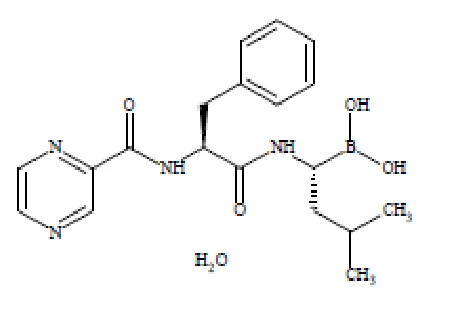 |
| Dichloromethane | Soluble |
| n-Hexane | Practically insoluble |
Aqueous solubility profile at 370C :
| Buffer PH | Solubility (mg/mL) | Inference |
| 1.2 pH Buffer | 0.07 | Practically insoluble |
| 2.0 pH Buffer | 0.07 | Practically insoluble |
| 3.0 pH Buffer | 0.05 | Practically insoluble |
| 4.0 pH Buffer | 0.05 | Practically insoluble |
| 4.5 pH Buffer | 0.06 | Practically insoluble |
| 5.0 pH Buffer | 0.05 | Practically insoluble |
| 6.0 pH Buffer | 0.04 | Practically insoluble |
| 6.8 pH Buffer | 0.07 | Practically insoluble |
| 7.0 pH Buffer | 0.07 | Practically insoluble |
| 8.0 pH Buffer | 0.09 | Practically insoluble |
14 CLINICAL TRIALS
14.1 Clinical Trials by Indication
Multiple Myeloma
Randomized, Open-Label Clinical Study in Patients with Previously Untreated Multiple Myeloma (Front-Line Therapy)
A prospective Phase III, international, randomized (1:1), open -label clinical study of 682 patients was conducted to determine whether a combination of intravenous bortezomib with oral melphalan and prednisone represented a major improvement in time to progression (TTP) when compared to oral melphalan and prednisone in patients with previously untreated multiple myeloma. In the VMP treatment group during Cycles 1 to 4, subjects received bortezomib 1.3 mg/m2 as an i.v. bolus injection on Days 1, 4, 8, 11, 22, 25, 29, and 32 followed by a 10-day rest period (Days 33 to 42), and oral melphalan 9 mg/m2 and oral prednisone 60 mg/m2 once daily on Days 1 to 4, followed by a 38-day rest period (Days 5 to 42). During Cycles 5 to 9, subjects received bortezomib 1.3 mg/m2 as an i.v. bolus injection on Days 1, 8, 22, and 29 followed by a 13- day rest period (Days 30 to 42), and oral melphalan 9 mg/m2 and oral prednisone 60 mg/m2 once daily on Days 1 to 4, followed by a 38-day rest period (Days 5 to 42).
Patients in the MP treatment group received oral melphalan 9 mg/m2 and oral prednisone
60 mg/m2 once daily on Days 1 to 4, followed by a 38-day rest period (Days 5 to 42) during the Cycles 1-9.
Treatment was administered for a maximum of 9 cycles (approximately 54 weeks) and was discontinued early for disease progression or unacceptable toxicity (see Product Monograph, Part I,
DOSAGE AND ADMINISTRATION. Baseline demographics and patient characteristics are summarized in Table 22.
Table 22: Summary of Baseline Patient and Disease Characteristics in the VISTA Study
| Patient Characteristics | VMP N=344 | MP N=338 | ||||||||||
|---|---|---|---|---|---|---|---|---|---|---|---|---|
| Median age in years (range) | 71.0 (57, 90) | 71.0 (48, 91) | ||||||||||
| Gender: male/female | 51% / 49% | 49% / 51% | ||||||||||
| Race: Caucasian/Asian/black/other | 88% / 10% / 1% / 1% | 87% / 11% / 2% / 0% | ||||||||||
| Karnofsky performance status score ≤70 | 35% | 33% | ||||||||||
| Hemoglobin <100 g/L | 37% | 36% | ||||||||||
| Platelet count <75 x 109/L | <1% | 1% | ||||||||||
| Disease Characteristics | ||||||||||||
| Type of myeloma (%): IgG/IgA/Light chain | 64% / 24% / 8% | 62% / 26% / 8% | ||||||||||
| Median β2-microglobulin (mg/L) | 4.2 | 4.3 | ||||||||||
| Median albumin (g/L) | 33.0 | 33.0 | ||||||||||
| Creatinine clearance ≤30 mL/min [n (%)] | 20 (6%) | 16 (5%) | ||||||||||
| ISS Staging n (%) | ||||||||||||
| I | 64 (19) | 64 (19) | ||||||||||
| II | 161 (47) | 159 (47) | ||||||||||
| III | 119 (35) | 115 (34) | ||||||||||
VMP=bortezomib, melphalan, prednisone; MP = melphalan, prednisone
At the time of the third pre-specified interim analysis, the primary endpoint, time to progression, was met and patients in the MP arm were offered VMP treatment. TTP was defined as the time from randomization to the date of the first observation of either disease progression or relapse from immunofixation-negative CR. PFS, a secondary endpoint, was defined as the time between randomization and either disease progression or death, whichever occurred first. Survival continued to be followed after the interim analysis. Median follow-up was 16.3 months, with an additional follow-up of overall survival at 60.1 months. Efficacy results are presented in Table 23 and Figure 1, 2 and 3
Table 23: Summary of Efficacy Analyses in the Phase III Previously Untreated Multiple Myeloma Study1
| Efficacy Endpoint | VMP n=344 | MP n=338 | p-value | Odds Ratio9 |
|---|---|---|---|---|
| Time to Progression – | ||||
| Events n (%) | 101 (29) | 152 (45) | ||
| Median2 (95% CI) | 20.7 mo (17.6, 24,7) | 15.0 mo (14.1, 17.9) | 0.0000024 | |
| Hazard ratio3 | 0.54 | |||
| (95% CI) | (0.42,0.70) | |||
| Progression-free Survival | ||||
| Events n (%) | 135 (39) | 190 (56) | ||
| Median2 (95% CI) | 18.3 mo (16.6, 21.7) | 14.0 mo (11.1, 15.0) | 0.000014 | |
| Hazard ratio | 0.61 | |||
| (95% CI) | (0.49, 0.76) | |||
| Overall Survival11 | ||||
| Events (deaths) n (%) | 176 (51.2) | 211 (62.4) | 0.000434 | |
| Median2 (95% CI) | 56.4 mo (52.8, 60.9) | 43.1 mo (35.3, 48.3) | ||
| Hazard ratio3 | 0.695 | |||
| (95% CI) | (0.567, 0.852) | |||
| Response Rate | ||||
| Population5 n = 668 | n=337 | n=331 | ||
| CR6 n (%) | 102 (30) | 12 (4) | <10-104 | 11.2 (6.1, 20.6) |
| PR6 n (%) | 136 (40) | 103 (31) | ||
| nCR n (%) | 5 (1) | 0 | ||
| CR + PR6 n (%) | 238 (71) | 115 (35) | <10-107 | 4.5 (3.2,2.6) |
| CR + PR + MR6 n (%) | 270 (80) | 187 (56) | <10-74 | 3.2 (2.2,4.5) |
| Reduction in Serum M-protein | ||||
| population8 n=667 | n=336 | n=331 | ||
| >=90% n (%) | 151 (45) | 34 (10) | ||
| Time to First Response in CR + PR | ||||
| Median | 1.4 mo | 4.2 mo | ||
| Time to Best Response in CR + PR | ||||
| Median | 2.3 mo | 4.9 mo | ||
| Time to CR | ||||
| Median | 4.2 mo | 5.3 mo | ||
| Mediana Response Duration | ||||
| CR6 | 24.0 mo | 12.8 mo | ||
| CR + PR6 | 19.9 mo | 13.1 mo | ||
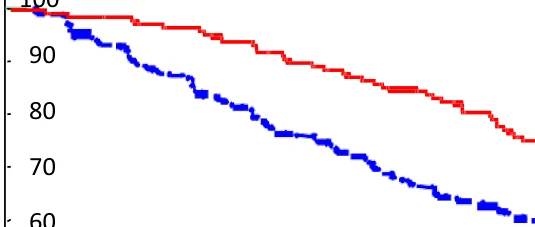
P e rc e n ta g e o f P a ti e n ts
| Time to Next Therapy | ||||
|---|---|---|---|---|
| Events n (%) | 224 (65.1) | 260 (76.9) | ||
| Median2 (95% CI) | 27.0 mo (24.7, 31.1) | 19.2 mo (17.0, 21.0) | <0.00000110,4 | |
| Hazard ratio3 (95% CI) | 0.557(0.462, 0.671) |
- 1.
All results are based on the analysis performed at a median follow -up duration of 16.3 month except for the
overall survival analysis that was performed at a median follow -up duration of 60.1 months CR=complete response; nCR= near complete response; PR= partial response; MR = minimal response
- 2. Kaplan-Meier estimate.
- 3. Hazard ratio estimate is based on a Cox proportional-hazard model adjusted for stratification factors: beta2- microglobulin, albumin, and region. A hazard ratio less than 1 indicates an advantage for VMP
- 4. Nominal p-value based on the stratified log-rank test adjusted f or stratification factors: beta2-microglobulin, albumin, and region
- 5. Response population includes patients who had measurable disease at baseline
- 6. EBMT criteria
- 7. p-value f or Response Rate (CR + PR) from the Cochran-Mantel-Haenszel chi-square test adjusted for the stratification factors
- 8. All randomized patients with secretory disease
- 9. Mantel-Haenszel estimate of the common odds ratio f or stratified tables is used.
- 10. Actual p-value is less than 10-10
- 11.
Survival update based on a median duration of follow-up of 60.1 months.
100
90
80
70
60
50
40 VMP
30
MP
20
10
0 p = 0.000002 †
0 2 4 6 8 10 12 14 16 18 20 22 24 26
| Number of patients at risk: | Time (months) | |||||||||
|---|---|---|---|---|---|---|---|---|---|---|
| VM-P (n*) 344 309 | 280 | 258 | 240 | 200 | 159 114 | 81 | 53 | 35 | 20 | 13 |
| MP (n*) 338 298 | 264 | 218 | 200 | 160 | 128 90 | 61 | 41 | 20 | 6 | 3 |
*Patients remaining after the indicated time point
† p-value from log -rank test
Figure 1: Time to Progression VMP vs. MP
A survival update was performed with a median duration of follow-up at 60.1 months.
A significant survival benefit favouring the VMP treatment group was demonstrated (hazard ratio=0.695; p=0.00043) (see Table 23 and Figure 2). The median survival in MP treatment group is estimated at 43.1 months, while the median survival on the VMP treatment group is estimated at 56.4 months. The 1-year, 2-year, 3-year, and 5-year survival rates based on Kaplan-Meier estimates in the VMP and MP treatment groups are presented in Table 24.
Table 24: Summary of 1-, 2-, 3- and 5-Year Survival Benefit in Previously Untreated Patients Based on Kaplan-Meier Estimate
| Efficacy Endpoint | VMP (N=344) | MP (N=338) |
|---|---|---|
| 1-Year Survival % | 88.6 | 81.7 |
| (95% CI) | (85.2, 92.0) | (77.5; 85.9) |
| 2-Year Survival % | 77.6 | 68.7 |
| (95% CI) | (73.1; 82.2) | (63.7; 73.8) |
| 3-Year Survival % | 68.5 | 54.0 |
| (95% CI) | (63.2, 73.7) | (48.2, 59.8) |
| 5-Year Survival % | 46.0% | 34.4% |
| (95% CI) | (40.3, 51.8) | (28.9, 39.9) |
VMP=bortezomib, melphalan, prednisone; MP = melphalan, prednisone
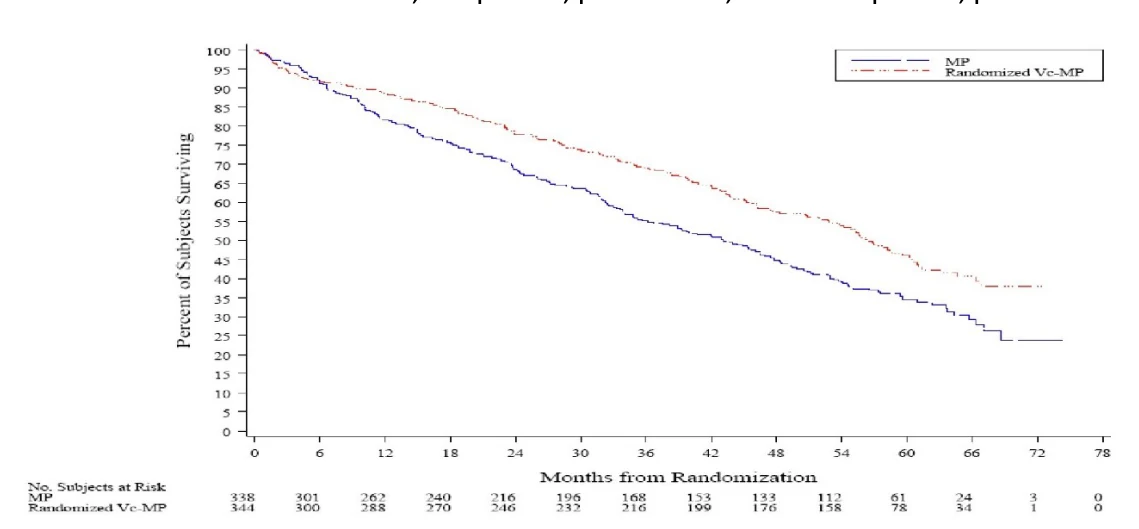
Figure 2: Overall Survival Based on Kaplan-Meier Estimate VMP vs. MP
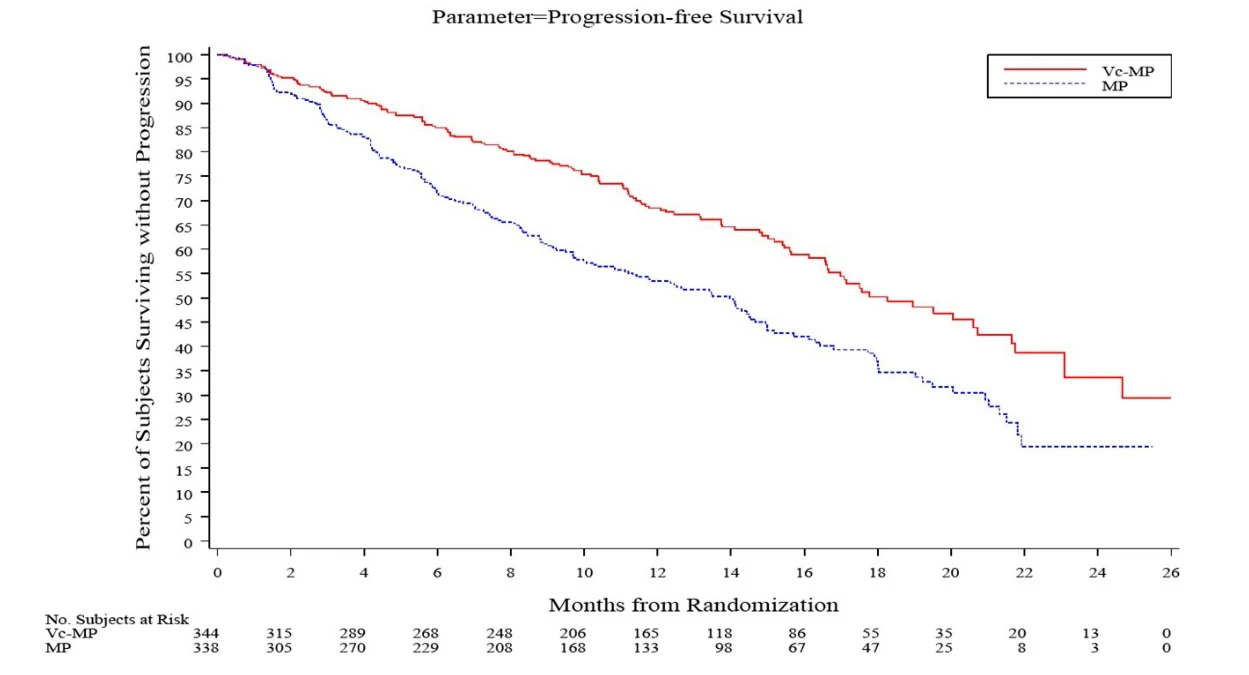
Figure 3: Progression-Free Survival VM P vs. MP
To explore the association of response status (CR, PR, or no response) over-time on the long- term outcomes, including TTP, PFS, and OS, multivariate Cox regression analyses with time - dependent covariates were performed that also adjusted for baseline prognostic factors. Strong associations were seen between response (CR + PR) and longer TTP, PFS, and OS, and there was incremental benefit in terms of those outcomes for the achievement of CR compared with PR.
Subgroup Analyses
TTP, PFS and OS were evaluated relative to baseline stratification factors, demographic data (sex, race, and age) and disease characteristics (ISS staging and bone marrow cytogenetic abnormalities). The prespecified analyses of the TTP, PFS and OS across all subgroups were consistent with the overall analyses of these endpoints. The hazard ratios for most subgroups (age, sex, race, ISS staging and bone marrow cytogenetic abnormalities) were consistently <1 demonstrating a survival benefit for subjects in the Vc-MP treatment group compared with the MP treatment group. At the 5-year update, the hazard ratios for two small subgroups (North American subgroup, n=32; high risk cytogenetic subgroup, n=39) were slightly greater than 1.
TTP, PFS, OS, ORR and CR were evaluated for 3 renal function categories (≤ 30 mL/min; 31 to 60 mL/min and >60 mL/min). For all endpoints the benefit of VMP over MP is maintained in all 3 renal function subgroups. The hazard ratios for all subgroups were consistently <1, demonstrating a benefit for subjects in the VMP treatment group compared with the MP treatment group for all 3 renal function subgroups.
Randomized, Open-Label Clinical Studies in Patients with Previously Untreated Multiple Myeloma who are Suitable for Stem Cell Transplantation
A Phase III trial (IFM-2005-01) was conducted to demonstrate the safety and efficacy of bortezomib, as part of combination therapy for induction prior to stem cell transplantation in patients with previously untreated multiple myeloma. Bortezomib was administered intravenously in this study. Patients were randomized to either bortezomib/dexamethasone (VcD) or vincristine/Adriamycin®1 (doxorubicin)/dexamethasone (VAD) as follows (Figure 4):
- VcD (n=121): subjects received four 21-day cycles of bortezomib/dexamethasone.
- VcD + DCEP (n=119): subjects received four 21-day cycles of bortezomib/dexamethasone and two cycles of induction intensification with dexamethasone, cyclophosphamide, etoposide or etoposide phosphate, and cis-platinum (DCEP)
- VAD (n=121): subjects received four 28-day cycles of VAD
- VAD + DCEP (n=121): subjects received four 28-day cycles of VAD and two cycles of induction intensification with DCEP.
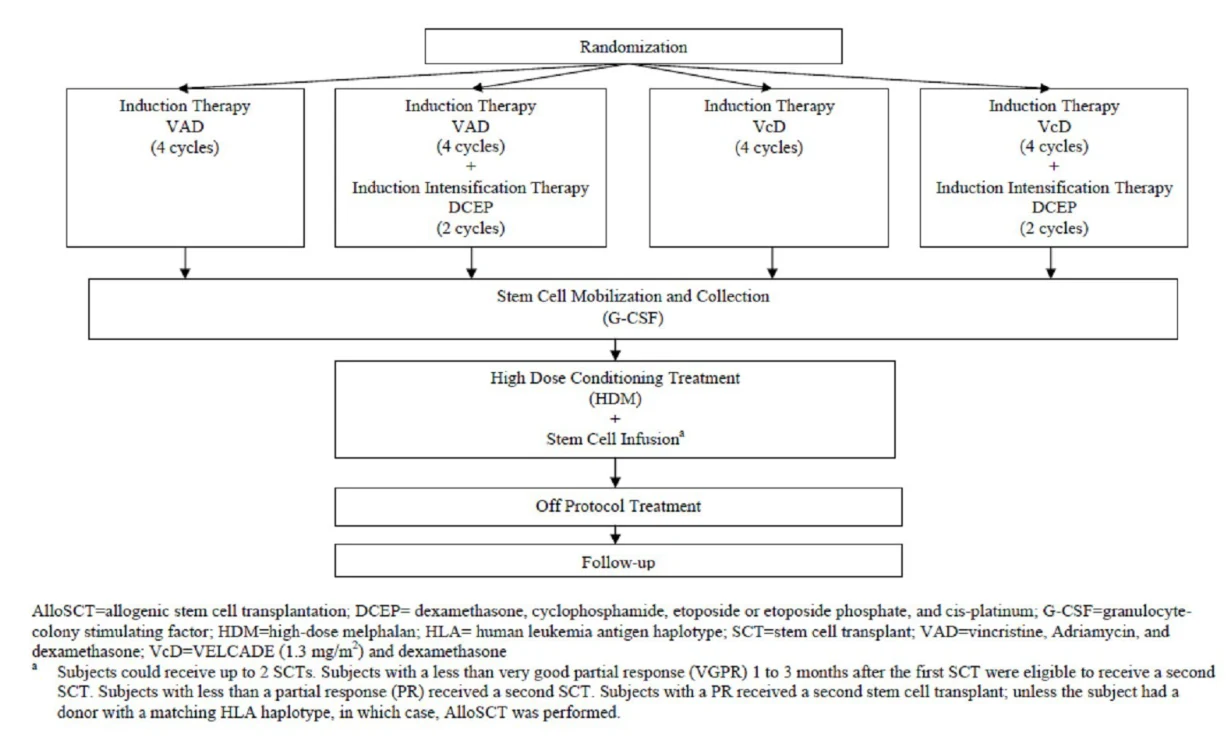
Figure 4: IFM 2005-01 study design
In the VcD treatment group during Cycles 1-4, subjects received bortezomib 1.3 mg/m2 as i.v. bolus injections on Days 1, 4, 8 and11, and dexamethasone 40 mg p.o once daily on Days 1 to 4 and 9-12 in Cycle 1 and Cycle 2 and Days 1 to 4 for Cycle 3 and Cycle 4.
Subjects in the VAD treatment group received vincristine 0.4 mg and Adriamycin® 9 mg/m2 as a continuous intravenous infusion on Days 1 to 4 for all cycles, and dexamethasone 40 mg p.o once daily on Days 1 to 4, 9-12, and 17 to 20 in Cycle 1 and Cycle 2 and Days 1 to 4 for Cycle 3 and Cycle 4.
Subjects who underwent induction intensification received, on Days 1 to 4 for two cycles, dexamethasone 40 mg/day p.o, as well as cyclophosphamide 400 mg/m2/day, etoposide or etoposide phosphate 40 mg/m2/day and cis-platinum 15 mg/m2/day as continuous intravenous infusion.
Baseline demographics and patient characteristics are summarized in Table 25.
Table 25: Summary of Baseline Patient and Disease Characteristics in the IFM 2005-01 Study
| Patient Characteristics | VAD groups N=242 | VcD groups N=240 |
|---|---|---|
| Median age in years (range) | 55.3 (26, 65) | 57.0 (31, 65) |
| <55 years of age, n (%) | 92 (38) | 101 (42) |
| ≥55 years of age, n (%) | 150 (62) | 139 (58) |
| Gender: male/female | 52% / 48% | 58% /42% |
| WHO performance status, n (%) | ||
| 0 | 99 (44) | 93 (42) |
| 1 | 101 (45) | 97 (44) |
| 2 | 22 (10) | 28 (13) |
| 3 | 2 (1) | 2 (1) |
| Hemoglobin <80 g/L | 7% | 7% |
| Platelet count <50 x 109/L, n (%) | 2 (1) | 1 (<1) |
| Disease Characteristics | ||
| Type of myeloma (%): IgG/IgA/Light chain | 62/ 22/13 | 60 / 22 /15 |
| Median β2-microglobulin (mg/L) | 3.44 | 3.5 |
| Median albumin (g/dL) | 4.0 | 3.9 |
| Creatinine clearance <60 mL/min [n (%)] | 63 (26) | 53 (23) |
| ISS Staging n (%) | ||
| I | 100 (42) | 102 (43) |
| II | 83 (35) | 78 (33) |
| III | 55 (23) | 60 (25) |
VcD=bortezomib, dexamethasone. VAD=vincristine, Adriamycin®, dexamethasone
Efficacy results from Study IFM-2005-01 are summarized in Table 26:
Table 26: Primary efficacy results for IFM 2005-01 (Phase III Study of Bortezomib (i.v) and dexamethasone (p.o) Combination Induction Treatment in Patients with Previously Untreated Multiple Myeloma Suitable for Stem Cell Transplantation)
| Efficacy Endpoint Category | VAD (n=242) | VcD (n=240) | Odds Ratioa | P-valueb | |||||||||||
| n (%) | 95% CI for % | n (%) | 95% CI for % | ||||||||||||
| Post-Induction Response Rate, n (%) | |||||||||||||||
| Complete response (CR) | 3 (1.2) | 0.3; 3.6 | 13 (5.4) | 2.9; 9.1 | 4.71 (1.31, 16.93) | 0.01 | |||||||||
| Near CR (nCR) | 12 (5.0) | 2.6; 8.5 | 22 (9.2) | 5.8; 13.5 | |||||||||||
| CR + nCR | 15 (6.2) | 3.5; 10.0 | 35 (14.6) | 10.4; 19.7 | 2.58 (1.37, 4.85) | 0.03 | |||||||||
| Very good partial response (VGPR) | 21 (8.7) | 5.5; 13.0 | 54 (22.5) | 17.4; 28.3 | |||||||||||
| CR + nCR + VGPR | 36 (14.9) | 10.6; 20.0 | 89 (37.1) | 31.0; 43.5 | 3.36 (2.16, 5.21) | <0.001 | |||||||||
| Partial response (PR) | 111 (45.9) | 39.5; 52.4 | 96 (40.0) | 33.8; 46.5 | |||||||||||
| Overall response rate (CR+nCR+VGPR+PR) | 147 (60.7) | 54.3; 66.9 | 185 (77.1) | 71.2; 82.2 | 2.18 (1.46, 3.24) | <0.001 | |||||||||
| Minimal response (MR) | 35 (14.5) | 10.3; 19.5 | 18 (7.5) | 4.5; 11.6 | |||||||||||
| No Change | 27 (11.2) | 7.5; 15.8 | 10 (4.2) | 2.0; 7.5 | |||||||||||
| Progressive disease | 10 (4.1) | 2.0; 7.5 | 12 (5.0) | 2.6; 8.6 | |||||||||||
| Not evaluable | 23 (9.5) | 6.1; 13.9 | 15 (6.3) | 3.5; 10.1 | |||||||||||
VAD=vincristine, doxorubicin (Adriamycin), dexamethasone; VcD=bortezomib, dexamethasone
- 1. Mantel-Haenszel estimate of the common odds ratio for stratified tables is used. Note: An odds ratio>1 indicates an advantage for the VcD group.
- 2. P-value from the Cochran Mantel-Haenszel chi-squared test.
Randomized, Open-Label Clinical Study in Relapsed or Refractory Multiple Myeloma comparing bortezomib IV to Dexamethasone
A prospective Phase III, international, randomized (1:1), stratified, open-label clinical trial enrolling 669 patients was designed to determine whether bortezomib resulted in improvement in time to progression (TTP) compared to high-dose dexamethasone in patients with progressive multiple myeloma who had received 1 to 3 prior therapies. Patients considered to be refractory to prior high-dose dexamethasone were excluded, as were those with baseline Grade ≥2 peripheral neuropathy or platelet counts < 50 x 109/L. A total of 627 patients were evaluable for response. The study excluded patients with a corrected serum calcium of ≥3.5 mmol/L. All patients with hypercalcemia were required to receive intravenous bisphosphonates concomitantly with bortezomib or dexamethasone (depending on treatment randomization).
Stratification factors were based on the number of lines of prior therapy the patient had previously received (1 previous line versus more than 1 line of therapy), time of progression relative to prior treatment (progression during or within 6 months of stopping their most recent therapy versus relapse > 6 months after receiving their most recent therapy), and screening
β2-microglobulin levels ≤2.5 mg/L versus > 2.5 mg/L).
Baseline patient and disease characteristics are summarized in Table 27.
Table 27: Summary of Base line Patient and Disease Characteristics in the Phase III Multiple Myeloma Trial
| Patient Characteristics | Bortezomib N=333 | Dexamethasone N=336 | |
|---|---|---|---|
| Median age in years (range) | 62.0 (33, 84) | 61.0 (27, 86) | |
| Gender: male/female | 56% / 44% | 60% / 40% | |
| Race: Caucasian/Black/other | 90% / 6% / 4% | 88% / 7% / 5% | |
| Karnofsky performance status score ≤ 70 | 13% | 17% | |
| Hemoglobin <100 g/L | 32% | 28% | |
| Platelet count <75 x 109/L | 6% | 4% | |
| Disease Characteristics | |||
| Type of myeloma (%): IgG/IgA/Light chain | 60% / 23% / 12% | 59% / 24% / 13% | |
| Median β2-microglobulin (mg/L) | 3.7 | 3.6 | |
| Median albumin (g/L) | 39.0 | 39.0 | |
| Creatinine clearance ≤ 30 mL/min [n (%)] | 17 (5%) | 11 (3%) | |
Median Duration of Multiple Myeloma Since Diagnosis (Years) | 3.5 | 3.1 | |
| Number of Prior Therapeutic Lines of Treatment | |||
| Median | 2 | 2 | |
| 1 prior line | 40% | 35% | |
| > 1 prior line | 60% | 65% | |
| All Patients | (N=333) | (N=336) | |
| Any prior steroids, e.g., dexamethasone, VAD | 98% | 99% | |
| Any prior anthracyclines, e.g., VAD, mitoxantrone | 77% | 76% | |
| Any prior alkylating agents, e.g., MP, VBMCP | 91% | 92% | |
| Any prior thalidomide therapy | 48% | 50% | |
| Prior vinca alkaloids | 74% | 72% | |
| Prior stem cell transplant/other high-dose therapy | 67% | 68% | |
| Prior experimental or other types of therapy | 3% | 2% | |
Patients in the bortezomib treatment group were to receive eight 3 -week treatment cycles followed by three 5-week treatment cycles of bortezomib. Within each 3-week treatment cycle, bortezomib 1.3 mg/m2/dose alone was administered by IV bolus twice weekly for 2 weeks on Days 1, 4, 8 and 11 followed by a 10-day rest period (Days 12 to 21). Within each 5-week treatment cycle, bortezomib 1.3 mg/m2/dose alone was administered by IV bolus once weekly for 4 weeks on Days 1, 8, 15, and 22 followed by a 13-day rest period (Days 23 to 35) (see 4 DOSAGE AND ADMINISTRATION).
Patients in the dexamethasone treatment group were to receive four 5 -week treatment cycles followed by five 4-week treatment cycles. Within each 5-week treatment cycle, dexamethasone 40 mg/day PO was administered once daily on Days 1 to 4, 9 to 12, and 17 to 20 followed by a 15-day rest period (Days 21-35). Within each 4-week treatment cycle, dexamethasone 40 mg/day PO was administered once daily on Days 1 to 4 followed by a 24-day rest period (Days 5 to 28). Patients with documented progressive disease on dexamethasone were offered bortezomib at a standard dose and schedule on a companion study.
Following a preplanned interim analysis of time to progression, the dexamethasone arm was halted and all patients randomized to dexamethasone were offered bortezomib, regardless of disease status. At this time of study termination, a final statistical analysis was performed.
In the bortezomib arm, 34% of patients received at least one bortezomib dose in all 8 of the
3-week cycles of therapy, and 13% received at least one dose in all 11 cycles. The average number of bortezomib doses during the study was 22, with a range of 1 to 44. In the dexamethasone arm, 40% of patients received at least one dose in all 4 of the 5-week treatment cycles of therapy and 6% received at least one dose in all 9 cycles.
The time to event analyses and response rates from the Phase III trial are presented in Table 28
Response and progression were assessed using the European Group for Blood and Marrow Transplantation (EBMT) criteria. Complete response (CR) required < 5% plasma cells in the marrow, 100% reduction in M-protein, and a negative immunofixation test (IF -). Partial Response (PR) required ≥50% reduction in serum myeloma protein and ≥90% reduction of urine myeloma protein on at least 2 occasions for a minimum of at least 6 weeks along with stable bone disease and normal calcium. Near complete response (nCR) was defined as meeting all the criteria for complete response including 100% reduction in M-protein by protein electrophoresis; however, M-protein was still detectable by immune fixation (IF+).
Table 28: Summary of Efficacy Analyses in the Randomized Phase III Previously Treated Multiple Myeloma Study
| Efficacy Endpoint | All Patients | 1 Prior Line of Therapy | > 1 Prior Line of Therapy | ||||||||||||||||||||||||
|---|---|---|---|---|---|---|---|---|---|---|---|---|---|---|---|---|---|---|---|---|---|---|---|---|---|---|---|
| Bortezomib N=333 | Dex N=336 | Bortezomib N=132 | Dex N=119 | Bortezomib N=200 | Dex N=217 | ||||||||||||||||||||||
Time to progression -Event n (%) | 147 (44) | 196 (58) | 55 (42) | 64 (54) | 92 (46) | 132 (61) | |||||||||||||||||||||
| Median 1(95% CI) | 6.2 mo (4.9, 6.9) | 3.5 mo (2.8, 4.2) | 7.0 mo (6.2, 8.8) | 5.5 mo (3.4, 6.3) | 4.9 mo (4.2, 6.3) | 2.9 mo (2.8, 3.5) | |||||||||||||||||||||
Hazard ratio 2 (95% CI) | 0.55 (0.44, 0.69) | 0.56 (0.38, 0.81) | 0.55 (0.41, 0.72) | ||||||||||||||||||||||||
| p-value 3 | <0.0001 | 0.0021 | <0.0001 | ||||||||||||||||||||||||
Response Rate population 4 n=627 | n=315 | n=312 | n=128 | n=110 | n=187 | n=202 | |||||||||||||||||||||
| CR 5 n (%) | 20 (6) | 2 (<1) | 8 (6) | 2 (2) | 12 (6) | 0 (0) | |||||||||||||||||||||
| PR 5 n (%) | 101 (32) | 54 (17) | 49 (38) | 27 (25) | 52 (28) | 27 (13) | |||||||||||||||||||||
| nCR,5 6 n (%) | 21 (7) | 3 (<1) | 8 (6) | 2 (2) | 13 (7) | 1 (<1) | |||||||||||||||||||||
| CR + PR n (%) | 121 (38) | 56 (18) | 57 (45) | 29 (26) | 64 (34) | 27 (13) | |||||||||||||||||||||
| p-value 7 | <0.0001 | 0.0035 | <0.0001 | ||||||||||||||||||||||||
| Median Response Duration | |||||||||||||||||||||||||||
| CR5 | 9.9 mo | NE 8 | 9.9 mo | NE | 6.3 mo | NA9 | |||||||||||||||||||||
| nCR5 | 11.5 mo | 9.2 mo | NE | NE | 11.5 mo | 9.2 mo | |||||||||||||||||||||
| CR+PR5 | 8.0 mo | 5.6 mo | 8.1 mo | 6.2 mo | 7.8 mo | 4.1 mo | |||||||||||||||||||||
- 1. Kaplan-Meier estimate
- 2. Hazard ratio is based on Cox proportional-hazard model with the treatment as single independent variable. A hazard ratio less than 1 indicates an advantage for bortezomib.
- 3. p-value based on stratified log-rank test including randomization stratification factors.
- 4. Response population includes patients who had measurable disease at baseline and received at least 1 dose of study drug.
- 5. EBMT criteria1: nCR meets all EBMT criteria for CR but has positive IF. Under EBMT criteria, nCR is in the PR category.
- 6. In 2 patients the IF was unknown.
- 7. p-value for Response Rate (CR+PR) from the Cochran-Mantel-Haenszel chi-square test adjusted for the stratification factors.
- 8. Not Estimable
- 9. Not Applicable, no patients in category
There was a statistically significant increase in TTP on the bortezomib arm (see Figure 5).
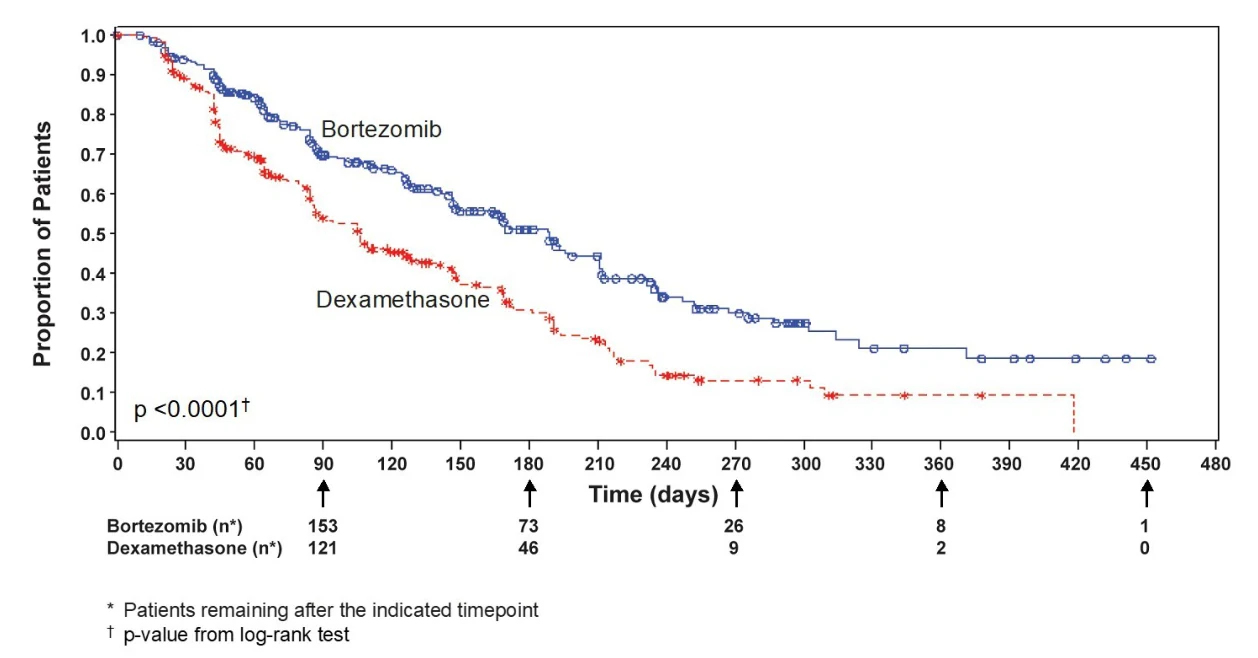
Figure 5: Time to Progression in the Randomized Phase III Multiple Myeloma Trial (Bortezomib vs. Dexamethasone) (N=669)
There was a statistically significant improvement in both overall and 1 -year survival on the bortezomib arm (see Table 29, Figure 6 and Figure 7) as compared to the dexamethasone arm in all patients as well as in patients who had received 1 prior line of therapy. The efficacy endpoints appear durable, based on the median follow-up of 21.9 months (data not shown).
Table 29: Summary of 1-Year and Overall Survival Benefit in the Randomized Phase III Multiple Myeloma Study
| Efficacy Endpoint | All Patients | 1 Prior Line of Therapy | > 1 Prior Line of Therapy | |||||||||||||
Bortezomib N=333 | Dex N=336 | Bortezomib N=132 | Dex N=119 | Bortezomib N=200 | Dex N=217 | |||||||||||
| 1-Year Survival % (95% CI) | 80 (74, 85) | 66 (59, 72) | 89 (82, 95) | 72 (62, 83) | 73 (64, 82) | 62 (53, 71) | ||||||||||
| p-value | 0.0025 | 0.0082 | 0.0787 | |||||||||||||
Overall Survival Events (deaths) n (%) | 51 (15) | 84 (25) | 12 (9) | 24 (20) | 39 (20) | 60 (28) | ||||||||||
Hazard ratio (95% CI) | 0.57 (0.40, 0.81) | 0.42 (0.21, 0.85) | 0.63 (0.42, 0.94) | |||||||||||||
| p-value | 0.0013 | 0.0130 | 0.0231 | |||||||||||||
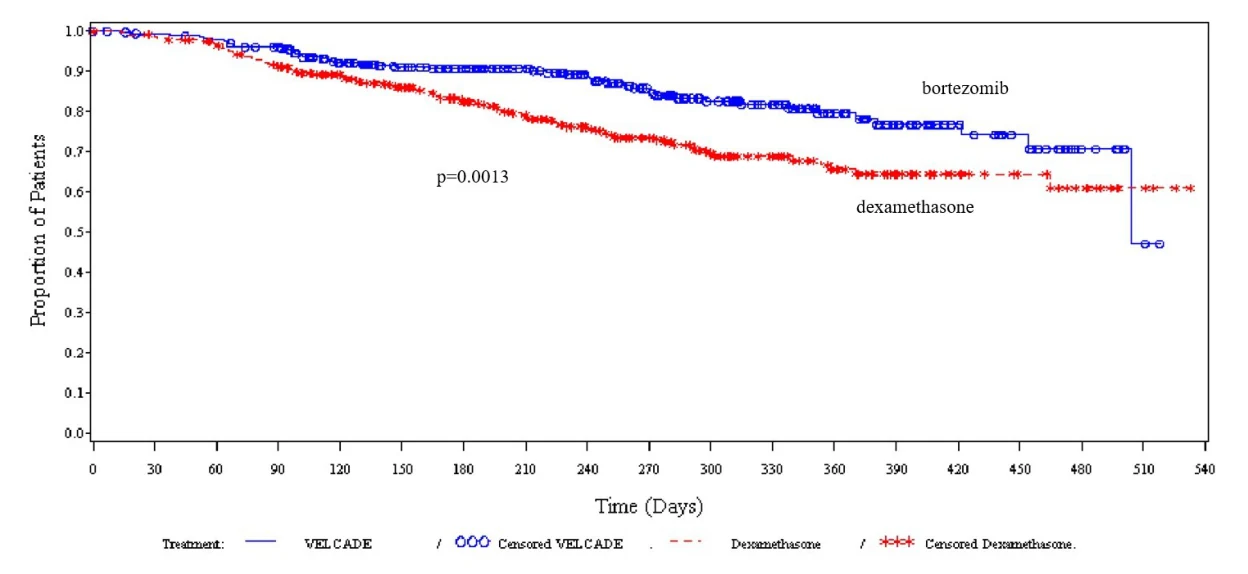
Figure 6: Overall Survival in the Randomized Phase III Multiple Myeloma Trial (Bortezomib v s. Dexamethasone) (N=669)
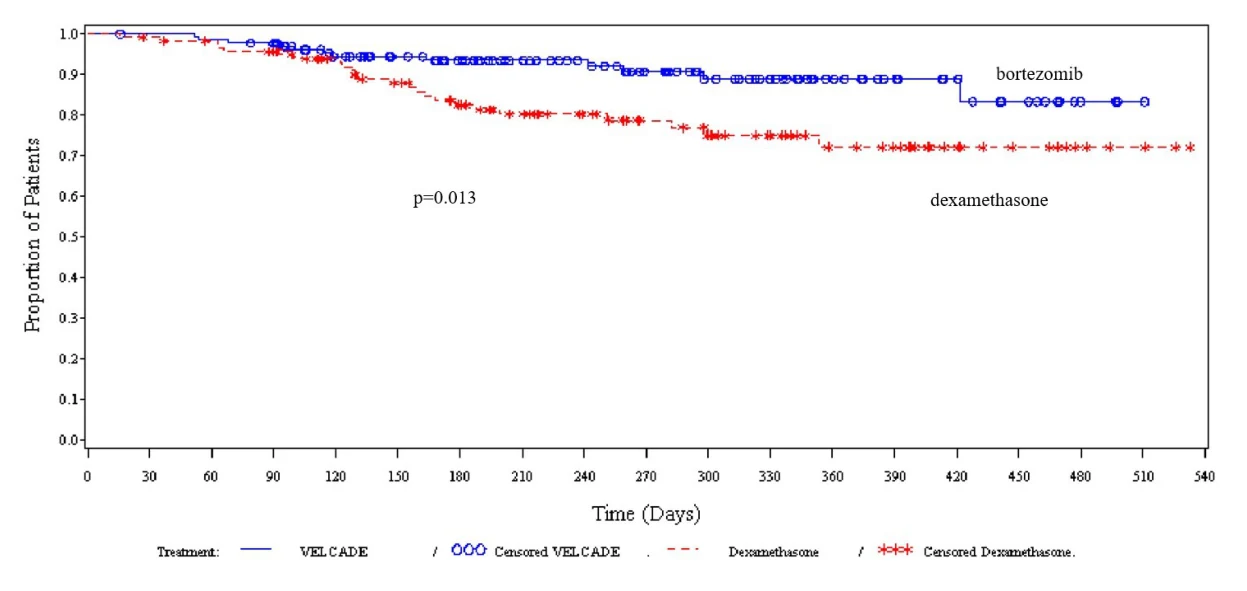
Figure 7: Overall Survival in Patients with One Prior Line of Therapy in the Randomized Phase III Multiple Myeloma Trial (Bortezomib vs. Dexamethasone) (N=251)
Regardless of β2-microglobulin levels at baseline, TTP and overall survival were significantly longer on the bortezomib arm (β2-microglobulin ≤ 2.5 mg/L: p=0.0004, p=0.0222, respectively;
> 2.5 mg/L: p<0.0001, p=0.0061, respectively). Similarly, the response rate was significantly higher on the bortezomib arm regardless of screening β2-microglobulin levels (β2-microglobulin
≤ 2.5 mg/L: p=0.0049; > 2.5 mg/L: p<0.0001).
Randomized, Open-Label Clinical Study in Relapsed Multiple Myeloma comparing Bortezomib Intravenous and Subcutaneous
An open label, randomized, Phase III non-inferiority study compared the efficacy and safety of the subcutaneous administration of bortezomib versus the intravenous administration. This study included 222 patients with relapsed multiple myeloma, who were randomized in a 2:1 ratio to receive 1.3 mg/m2 of bortezomib by either the subcutaneous or intravenous route for 8 cycles. Patients who did not obtain an optimal response (less than Complete Response (CR)) to therapy with bortezomib alone after 4 cycles were allowed to receive dexamethasone 20 mg daily on the day of and after bortezomib administration (82 patients in the subcutaneous treatment group and 39 patients in the intravenous treatment group). Patients with baseline Grade ≥2 peripheral neuropathy or neuropathic pain, or platelet counts <50,000/μL were excluded. A total of 218 patients were evaluable for response.
Stratification factors were based on the number of lines of prior therapy the patient had received (1 previous line versus more than 1 line of therapy), and international staging system (ISS) stage (incorporating beta2-microglobulin and albumin levels; Stages I, II, or III).
Baseline patient and disease characteristics are summarized in Table 30.
Table 30: Summary of Baseline Patient and Disease Characteristics in the Phase III Trial of Bortezomib Intravenous vs. Subcutaneous
| Patient Characteristics | IV N=74 | SC N=148 | ||||||||
|---|---|---|---|---|---|---|---|---|---|---|
| Median age in years (range) | 64.5 (38; 86) | 64.5 (42; 88) | ||||||||
| Gender: male/female | 64% / 36% | 50% / 50% | ||||||||
| Race: caucasian/Asian | 96% / 4% | 97% / 3% | ||||||||
| Karnofsky performance status score 70 | 16% | 22% | ||||||||
| Disease Characteristics | ||||||||||
| Type of myeloma: IgG/IgA/Light chain | 72% / 19% / 8% | 65% / 26% / 8% | ||||||||
| ISS staginga I/II/III | 27%/41%/32% | 27%/41%/32% | ||||||||
| Median β2-microglobulin (mg/L) | 4.25 | 4.20 | ||||||||
| Median albumin (g/L) | 3.60 | 3.55 | ||||||||
| Creatinine clearance ≤30 mL/min [n (%)] | 2 (3%) | 5 (3%) | ||||||||
Median Duration of Multiple Myeloma Since Diagnosis (Years) | 2.93 | 2.68 | ||||||||
| Number of Prior Therapeutic Lines of Treatment | ||||||||||
| 1 prior line | 65% | 62% | ||||||||
| > 1 prior line | 35% | 38% | ||||||||
This study met its primary objective of non-inferiority that single-agent subcutaneous bortezomib retains at least 60% of the overall response rate after 4 cycles relative to single-agent intravenous bortezomib (Table 31).
Table 31: Summary of Efficacy Analyses for the Subcutaneous Administration of Bortezomib Compared to Intravenous
| IV Bortezomib | SC Bortezomib | |
|---|---|---|
| Per-Protocol Population | n=68 | n=132 |
| Response Rate at 4 cycles | ||
| ORR (CR+PR) n (%) | 30 (44) | 55 (42) |
| p-value (1) | 0.00675 0.00675 | |
| CR n (%) | 6(9) | 8(6) |
| PR n (%) | 24(35) | 47(36) |
| nCR n (%) | 3(4) | 8(6) |
1.P-value is f or the non-inferiority hypothesis that the SC arm retains at least 60% of the response rate in the IV arm.
Table 32: Summary of Secondary Efficacy Analyses for the Subcutaneous (SC) Administration of Bortezomib Compared to Intravenous (IV)
IV Bortezomib SC Bortezomib
Per-Protocol Population n=68 n=132 Response Rate at 8 cycles
ORR (CR+PR) n (%) 36 (53) 68 (52)
CR n (%) 9 (13) 14 (11)
PR n (%) 27 (40) 54 (41)
nCR n (%) 6 (9) 12 (9)
TTP, months 9.4 10.4
Progression Free Survival (median), months 8.0 10.2
1-year Overall Survival, % 79.9 71.6
Phase II Single-Arm Clinical Study in Re lapsed Multiple Myeloma
Study Demographics and Trial Design:
The safety and efficacy of intravenous bortezomib were evaluated in an open -label, single-arm, multicentre clinical trial of 202 enrolled patients, 183 of whom had relapsed and refractory myeloma. Patients had received at least 2 prior lines of treatment and were progressing on their most recent treatment. The majority of patients had a very good performance status (only 20% ≤ 70 KPS) as patients with low performance status (KPS ≤60) were excluded from this study. Baseline patient and disease characteristics are summarized in Table 33. Type and duration of multiple myeloma are summarized in Table 34.
An IV bolus injection of bortezomib 1.3 mg/m2/dose was administered twice weekly for 2 weeks (on Days 1, 4, 8 and 11) followed by a 10-day rest period (Days 12 to 21) for a maximum of 8 treatment cycles. The study employed dose modifications for toxicity (see 4 DOSAGE AND ADMINISTRATION). Patients who experienced a response to bortezomib treatment were allowed to continue bortezomib treatment in an extension study.
Table 33: Summary of Patient Population and Disease Characteristics1 in the Phase II Multiple Myeloma Trial
| N=202 | ||
|---|---|---|
| Patient Characteristics: | ||
| Median Age in Years (Range) | 59 (34, 84) | |
| Gender: Male/Female | 60%/40% | |
| Race: Caucasian/Black/Other | 81%/10%/8% | |
| Karnofsky Performance Status Score #70 | 20% | |
| Hemoglobin <100 g/L | 44% | |
| Platelet count <75 x 109/L | 21% | |
| Disease Characteristics: | ||
| Type of myeloma (%): IgG/IgA/Light chain | 60%/24%/14% | |
| Median β2-microglobulin (mg/L) | 3.5 | |
| Median Creatinine Clearance (mL/min) | 73.9 | |
| Abnormal Cytogenetics | 35% | |
| Chromosome 13 Deletion | 15% | |
| Median Duration of Multiple Myeloma since Diagnosis in Years 4 | ||
| Previous Therapy | ||
| Any Prior Steroids, e.g., dexamethasone, VAD | 99% | |
| Any Prior Alkylating Agents, e.g., MP, VBMCP | 92% | |
| Any Prior Anthracyclines, e.g., VAD, mitoxantrone | 81% | |
| Any Prior Thalidomide Therapy | 83% | |
| Received at Least 2 of the Above | 98% | |
| Received at Least 3 of the Above | 92% | |
| Received All 4 of the Above | 66% | |
| Any Prior Stem Cell Transplant / Other High-Dose Therapy | 64% | |
| Prior Experimental or Other Types of Therapy | 44% | |
| Refractory Disease | 91% | |
- 1.
Based on number of patients with baseline data available
Table 34: Type and Duration of Multiple Myeloma (All Patients Treated, N=202)
Total (N=202) Characteristic | |
| Type of myeloma [N, (%)] | |
| N | 202 |
| IgG | 122 (60) |
| Kappa | 86 (43) |
| Lambda | 36 (18) |
| IgA | 48 (24) |
| Kappa | 30 (15) |
| Lambda | 17 (8) |
| Kappa + Lambda | 1 (<1) |
| IgD lambda | 2 (<1) |
| IgM lambda | 1 (<1) |
| Light chain | 28 (14) |
| Unspecified | 1 (<1) |
Patients with oligo- or non-secretory myeloma Durie-Salmon stage at diagnosis [N (%)] | 19 (9) |
| N | 185 |
| IA | 17 (9) |
| IIA | 33 (18) |
| IIB | 2 (<1) |
| IIIA | 117 (63) |
| IIIB | 16 (9) |
| Duration since diagnosis (years) | |
| N | 202 |
| Mean (±SD) | 4.5 (3.00) |
| Median | 4.0 |
| Minimum, Maximum | 1.0, 18.0 |
Study Results:
Response rates to bortezomib alone, median duration of response, time to progression and overall survival are presented in Table 35. Overall survival and time to progression were based on 202 patients. However, a total of 188 patients were evaluable for response, as 9 patients with non-measurable disease could not be evaluated for response and 5 patients were excluded because of inadequate prior therapy. Response rates to bortezomib alone were determined by an independent review committee (IRC) based on criteria published by Blade and others. Complete response required < 5% plasma cells in the marrow, 100% reduction in M protein, and a negative immunofixation test (IF-).
Ninety-eight percent (98%) of patients received a starting dose of 1.3 mg/m2 with 28% of these receiving this dose throughout the study while 33% of patients who started at a dose of
1.3 mg/m2 had dose reductions.
The overall response rate was 28% and the median time to response was 38 days. The median survival of all patients enrolled was 17 months. In general, patients who had a confirmed CR received 2 additional cycles of bortezomib treatment beyond confirmation.
Of 202 patients enrolled, 35% were 65 years of age or older. Nineteen percent (19%) of patients aged 65 years or older experienced responses (CR or PR) versus 32% in patients under the age of 65.
By multivariate analysis, the response rate was independent of the number or type of previous therapies. Responses were seen in patients with chromosome 13 abnormalities. There was a decreased likelihood of response in patients > 65 years of age and with > 50% plasma cells in the bone marrow at screening.
Table 35: Summary of Disease Outcomes for Bortezomib Monotherapy in Refractory and
Re lapsed Multiple Myeloma in a Phase II Clinical Study
| Response Analyses N=188, 1.3 mg/m2 dose | N (%) | (95% CI) |
|---|---|---|
| Overall Response Rate (Bladé) (CR+PR) | 52 (27.7) | (21, 35) |
| Complete Response (CR) | 5 (2.7) | (1, 6) |
| Partial Response (PR) | 47 (25) | (19, 32) |
| Kaplan-Meier Estimated Median Duration of Response (CR+PR) | 385 Days | (234, 538) |
| Median Time to Progression - All Patients (N=202) | 213 Days | (154, 297) |
| Median Overall Survival1 - All Patients (N=202) | 518 Days | (434, 643) |
Note: Responses subsequent to the use of dexamethasone are excluded.
- 1. Bortezomib alone or in combination with dexamethasone
The protocol allowed patients to receive dexamethasone in conjunction with bortezomib. if they had a sub-optimal response to bortezomib alone (i.e., 40 mg dexamethasone with each dose of bortezomib administered as 20 mg PO on the day of and 20 mg PO the day after bortezomib administration if the patient had progressive disease after 2 cycles of bortezomib, or progressive or stable disease after 4 cycles of bortezomib). A total of 74 patients were administered dexamethasone in combination with bortezomib and were assessed for response but were excluded in the assessment of disease outcomes for bortezomib monotherapy. Eighteen percent (13/74) of patients had an improved response (MR (11%) or PR (7%)) with combination treatment.
A Randomized, Phase II, Dose-Response Study in Relapsed or Refractory Multiple Myeloma
In a randomized open-label, single-arm, multicentre study in 54 patients with multiple myeloma who had progressed or relapsed on or after front-line therapy, 28 patients received 1.0 mg/m2/dose and 26 patients received 1.3 mg/m2/dose twice weekly for two weeks (Days 1, 4, 8, and 11) followed by a 10-day rest period (Days 12 to 21). The majority of these patients were not refractory to treatment and had received less than 2 prior lines of therapy. A single complete response was seen at each dose with an additional 2 near complete responses (immunofixation positive) in the 1.0 mg/m2 dose group. Based on an update of secondary efficacy endpoints, the median time to progression (TTP) for the 1.0 mg/m2 dose was 127 days (4.2 months), while the median TTP for the
1.3 mg/m2 dose was 357 days (11.7 months). The median survival for the 1.0 mg/m2 dose group was 813 days (26.7 months), while the median survival for the 1.3 mg/m2 dose group has not yet been reached.
A Phase II Open-Label Extension Study in Multiple Myeloma
Patients from the two Phase II studies who in the investigators’ opinion would experience additional clinical benefit were allowed to receive intravenous bortezomib beyond 8 cycles on an extension study. Sixty-three (63) patients from the Phase II multiple myeloma studies were enrolled and received a median of 7 additional cycles of bortezomib therapy for a total median of 14 cycles (range 7 to 32). The overall median dosing intensity was the same in both the parent protocol and extension study. Sixty-seven percent (67%) of patients initiated the extension study at the same or higher dose intensity at which they completed the parent protocol, and 89% of patients maintained the standard 3-week dosing schedule during the extension study. No new cumulative or new long-term toxicities were observed with prolonged bortezomib treatment, although the incidence of some adverse events was higher in this extension study than in the parent studies (see 8 ADVERSE REACTIONS).
Mantle Cell Lymphoma
A Phase II Single-Arm Clinical Study in Mantle Cell Lymphoma
The safety and efficacy of bortezomib in relapsed or refractory mantle cell lymphoma were evaluated in an open-label, single-arm, multicentre study of 155 patients with progressive disease who had received at least 1 prior therapy. The median age of the patients was 65 years (42, 89), 81% were male, and 92% were Caucasian. Of the total, 75% had one or more extra- nodal sites of disease, and 77% were stage 4. Data on B symptoms were not collected for these patients. In 91% of the patients, prior therapy included all of the following: an anthracycline or mitoxantrone, cyclophosphamide, and rituximab. A total of thirty seven percent (37%) of patients were refractory to their last prior therapy. Baseline patient and disease characteristics are summarized in Table 36.
Table 36: Summary of Base line Patient and Disease Characteristics in the Phase II Mantle Cell Lymphoma Study
| N=155 | |
|---|---|
| Patient Characteristics | |
| Median Age in years (range) | 65 (42, 89) |
| Gender: male/female | 81%/19% |
| Race: Caucasian/black/other | 92% /4% /5% |
| Karnofsky Performance Status, <90 | 29% |
| Disease Characteristics | |
| Median Time Since Initial Diagnosis to First Dose (years) | 2.3 |
| Diagnosed < 3 years Prior to First Dose | 66% |
| MCL Stage III or IV at Screening | 92% |
| International Prognostic Index ≥3 | 44% | |
|---|---|---|
| Elevated Lactate Dehydrogenase | 36% | |
| ≥2 Involved Extranodal Sites | 34% | |
| Histopathology: Diffuse Growth Pattern | 79% | |
| Bone Marrow Positive for MCL | 55% | |
| Number of Prior Lines of Therapy | ||
| 1 | 54% | |
| 2 | 42% | |
| 3 | 4% | |
| Received Prior Regimen Containing | ||
| Anthracycline/Mitoxantrone | 98% | |
| Alkylating Agents | 97% | |
| Rituximab | 96% | |
| Received at Least 2 of the Above 3 | 100% | |
| Received All of the Above 3 | 91% | |
| Received Prior High-Intensity Therapy | 37% | |
| Received SCT or hyper-CVAD with/without rituximab | 32% | |
| Received Prior High-Intensity Therapy as Last Prior Regimen | 30% | |
| Received SCT or hyper-CVAD with/without rituximab as Last Prior Regimen | 26% | |
SCT=stem cell transplant, hyper-CVAD= hyper fractionated cyclophosphamide, vincristine, doxorubicin, and dexamethasone alternating with methotrexate and cytarabine
Intravenous bortezomib was administered at the recommended dose of 1. 3 mg/m2 twice weekly on Days 1, 4, 8 and 11 of a 21-day cycle. The median number of cycles administered across all patients was 4 (range 1-17); and 8 in responding patients. The mean number of treated cycles across all patients was 5.7. The median time to response was 40 days (range 31 to 204 days). Response rates to bortezomib are described in Table 37. Bortezomib demonstrated similar efficacy regardless of the number of prior lines of therapy, with the exception that duration of response was longer in patients who had received only one prior line. Response rates to bortezomib were determined according to the International Workshop Criteria (IWRC) based on independent radiologic review of CT scans.
Table 37: Summary of Disease Outcomes in a Phase II Mantle Cell Lymphoma Study
All Patients (N = 141) | 1 Prior Line of Therapy (N = 77) | > 1 Prior Line of Therapy (N = 64) | ||||
| ‡Response Analyses | N (%) | 95% CI | N (%) | 95% CI | N (%) | 95% CI |
| CR+CRu+PR | 47 (33) | (26, 42) | 23 (30) | (20, 41) | 24 (38) | (26, 50) |
| CR+CRu | 11 (8) | (4, 14) | 5 (6) | (2, 15) | 6 (9) | (4, 19) |
| CR | 9 (6) | (3, 12) | 5 (6) | (2, 15) | 4 (6) | (2, 15) |
| CRu | 2 (1) | (0, 5) | 0 | 2(3) | (0, 11) | |
| PR | 36 (26) | (19, 34) | 18 (23) | (14, 34) | 18 (28) | (18, 41) |
| Time to Event Analyses | No. of Events (%) | Median (95% CI) | No. of Events (%) | Median (95% CI) | No. of Events (%) | Median (95% CI) |
| Kaplan-Meier Estimated Duration of Response | ||||||
| CR+CRu+PR | 20 (43) | 9.2 months | 11 (48) | 9.4 months | 9 (38) | 6.1 months |
| (N=47) | (4.9, 13.5) | (5.4, 13,4) | (4.2, NE) | |||
CR+CRu (N=11) | 3 (27) | 13.5 months (13.5, NE) | 1 (20) | 13.4 months (NE, NE) | 2 (33) | NE (4.7, NE) |
| Kaplan-Meier Estimated Time to Progression (N=155) | 75 (48) | 6.2 months (4.0, 6.9) | 43 (51) | 6.5 months (3.8, 7.2) | 32 (45) | 5.4 months (3.2, 7.3) |
‡‡Kaplan-Meier Estimated Treatment-free Interval, CR+CRu (N=11) | 13.8 months | (13.4, NE) | ||||
Median Time to Next Treatment CR+CRu+PR (N=45) CR+CRu (N=11) | 12.7 mths 19.4 mths | (9.33 NE) (17.8 NE) | ||||
NE=not estimable; CR=complete response; CRu= complete response unconfirmed; PR= partial response
- 1. Based on International Response Workshop Criteria (IRWC).
- 2. Additional analyses
The Kaplan-Meier curves for the duration of response and the time to progression are presented in Figures (8 and 9).
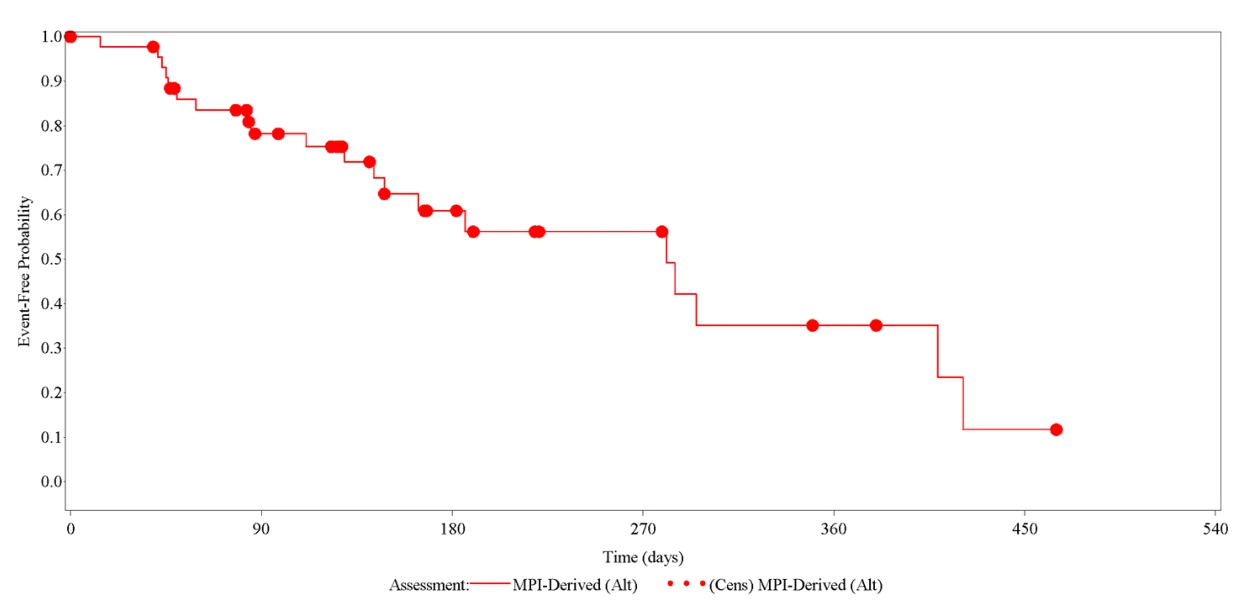
Figure 8: Duration of Response in the Phase II Mantle Cell Lymphoma Study (N=47)
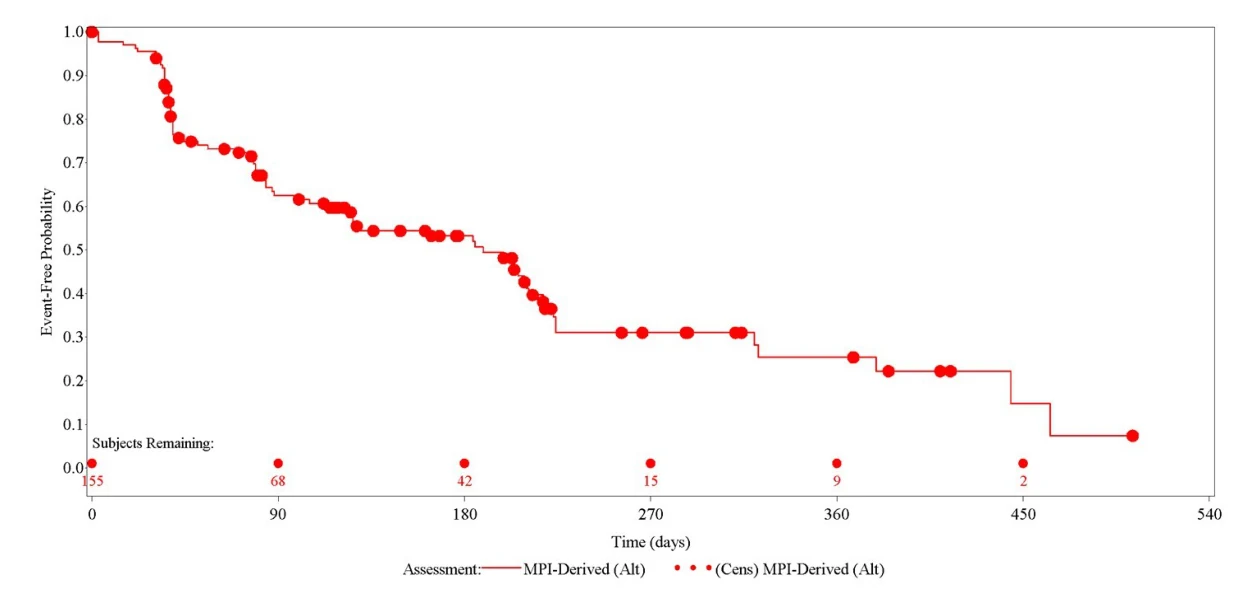
Figure 9: Time to Progression in the Phase II Mantle Cell Lymphoma Study (N=155)
With a median duration of follow up of more than 26 months for surviving patients, the median overall survival was 23.6 months with the median survival for responders (CR/CRu/PR) being
35.6 months. The Kaplan-Meier estimate of 1-year survival was 93.5% in responders (CR, CRu, PR). The Kaplan-Meier curve for overall survival of all treated patients is provided in Figure 10.
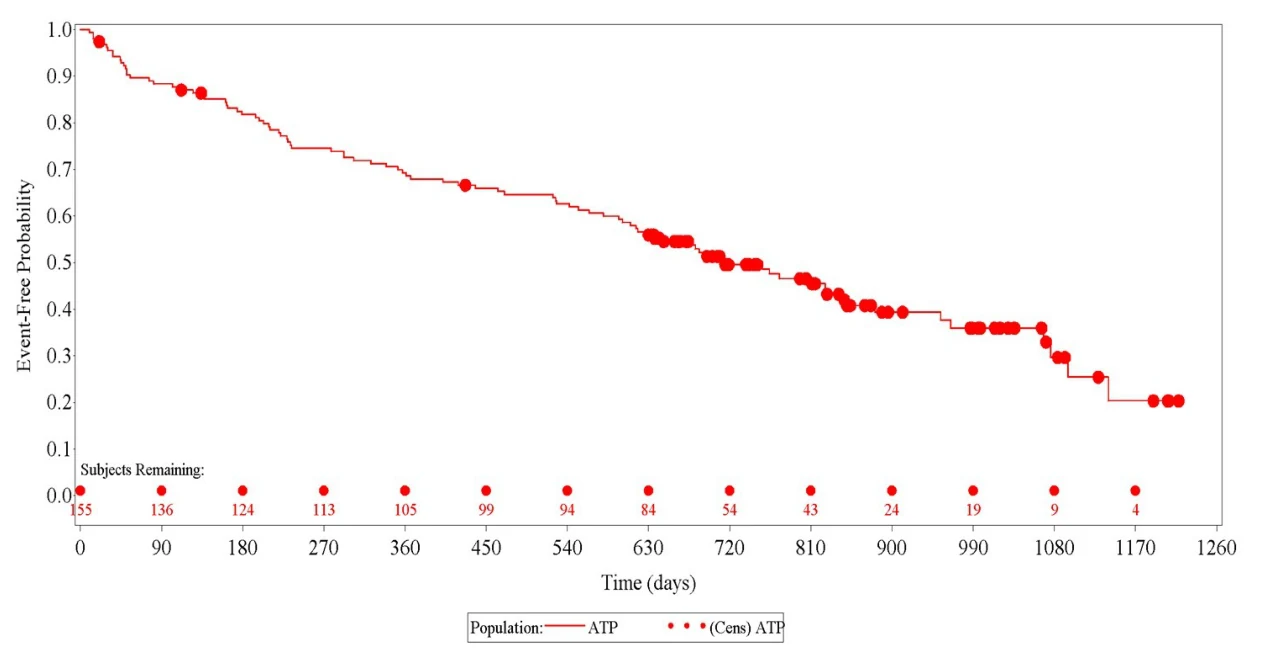
Figure 10: Overall Survival in the Phase II Mantle Cell Lymphoma Study (N=155)
The results of the above Phase II study are supported by a second multicentre study sponsored by the National Cancer Institute of Canada Clinical Trials Group (NCIC CTG). In this single arm Phase II study of 29 patients, which included 15 patients who relapsed after 1 or 2 prior chemotherapy regimens, single agent bortezomib provided durable responses (10.3 months) for patients, with relapsed MCL achieving a response rate of 47%. The results of this study along with the results of the previous Phase II MCL study, provide support that bortezomib provides clinical benefit in the form of durable responses. The clinical benefit is manifested by delaying the need for alternate cytotoxic chemotherapy and delay the onset of symptoms typically associated with progressive disease.
Randomized Phase III Clinical Study in Patients with Previously Untreated Mantle Cell Lymphoma
A randomized, open-label, Phase 3 study (LYM-3002) was conducted in 487 adult patients with previously untreated mantle cell lymphoma (Stage II, III or IV) who were unsuitable (ineligible, or not considered for other non-medical reason) for bone marrow transplant. The study was conducted to determine whether bortezomib administered in combination with rituximab, cyclophosphamide, doxorubicin, and prednisone (VcR-CAP) resulted in improvement in progression free survival (PFS) when compared to the combination of rituximab, cyclophosphamide, doxorubicin, vincristine, and prednisone (R-CHOP). This clinical study utilized independent pathology confirmation and independent radiologic response assessment.
Patients in the VcR-CAP treatment arm received bortezomib (1.3 mg/m2) administered intravenously on days 1, 4, 8, and 11 (rest period days 12-21); rituximab (375 mg/m2) on Day 1; cyclophosphamide (750 mg/m2) on Day 1; doxorubicin (50 mg/m2) on Day 1; and prednisone (100 mg/m2) on Day 1 through Day 5 of the 21-day treatment cycle. For patients with a response first documented at cycle 6, two additional treatment cycles were given.
Patient and disease characteristics are shown in Table 38.
Table 38: Summary of Baseline Patient and Disease Characteristics in the Phase III Previously Untreated Mantle Cell Lymphoma Study
| Patient Characteristics | VcR-CAP N=243 | R-CHOP N=244 | |||
|---|---|---|---|---|---|
| Median age in years (range) | 65 (38; 86) | 66 (34; 82) | |||
| Gender: male/female | 73%/27% | 75%/25% | |||
| Race: caucasian/Asian | 62%/36% | 71%/28% | |||
| Disease Characteristics | |||||
| Bone marrow aspirate positive: yes/no | 56%/39% | 58%/40% | |||
| Bone marrow biopsy positive: yes/no | 62%/35% | 64%/35% | |||
| Disease stage: II/III/IV | 5%/20%/75% | 7%/17%/76% | |||
| International Prognostic Index (IPI) score: Low-intermediate/high-intermediate/high | 31%/35%/19% | 29%/36%/19% | |||
The median number of cycles received by patients in both treatment arms was 6 with 17% of patients in the R-CHOP group and 14% of subjects in the VcR-CAP group receiving 2 additional cycles. The majority of the patients in both groups received 6 or more cycles, 83% in the R-CHOP group and 84% in the VcR-CAP group.
The primary efficacy endpoint was progression-free survival based on Independent Review Committee (IRC) assessment. Secondary endpoints included overall response rate (CR/CRu/PR) and complete response (CR/CRu) rate, response duration, and overall survival (OS). The response criteria used to assess efficacy were based on the International Workshop to Standardize Response Criteria for Non-Hodgkin’s Lymphoma (IWRC).
Efficacy results at a median follow-up of 40 months are presented in Table 39. The combination of VcR-CAP resulted in a statistically significant prolongation of PFS compared with R-CHOP.
Table 39: Summary of Efficacy Outcomes in a Phase 3 Mantle Cell Lymphoma Study in Previously Untreated Patients (LYM-3002)
| Efficacy endpoint | VcR-CAP | R-CHOP | |
|---|---|---|---|
| n: ITT patients | 243 | 244 | |
| Progression free survival (IRC)1 | |||
| Events n (%) | 133 (54.7) | 165 (67.6) | HR3(95% CI)=0.63 (0.50;0.79) p-value4 < 0.001 |
| Median2 (95% CI) (months) | 24.7 (19.8; 31.8) | 14.4 (12; 16.9) | |
| Response Rate | |||
| n: response-evaluable patients | 229 | 228 | |
| Overall complete response (CR+CRu)5 n(%) | 122 (53.3) | 95(41.7) | |
| Overall radiological response (CR+CRu+PR)6 n(%) | 211 (92.1) | 204 (89.5) | |
| Response Duration | |||
| Duration of complete response (CR+CRu)7 | |||
| n: response-evaluable patients | 122 | 95 | |
| Median2 (95% CI) (months) | 42.1 (30.7; 49.1) | 18.0 (14.0; 23.4) | |
| Duration of Response (CR+CRu+PR)8 | |||
| n: response-evaluable subjects | 211 | 204 | |
| Median2(95% CI) (months) | 36.5 (26.7; 46.7) | 15.1 (12.5; 17.0) | |
CR=Complete Response; CRu=Complete response unconfirmed; PR=Partial Response;
CI=Confidence Interval, HR=hazard ratio; ITT=intent to treat
- 1. Based on Independent Review Committee (IRC) assessment (radiological data only).
- 2. Based on Kaplan-Meier product limit estimates.
- 3. Hazard ratio estimate is based on a Cox’s model stratified by IPI risk and stage of disease. A hazard ratio < 1 indicates an advantage for VcR-CAP.
- 4. Based on Log rank test stratified with IPI risk and stage of disease.
- 5. Include all CR + CRu, by IRC, with verification by bone marrow and LDH.
- 6. Include all radiological CR+CRu+PR by IRC without verification by bone marrow and LDH.
- 7. Calculated from first date of complete response (CR+CRu by IRC, bone marrow and LDH) to date of PD or death due to PD.
- 8. Calculated from first date of response (include all radiological CR+CRu+PR by IRC) to date of PD or death due to PD.
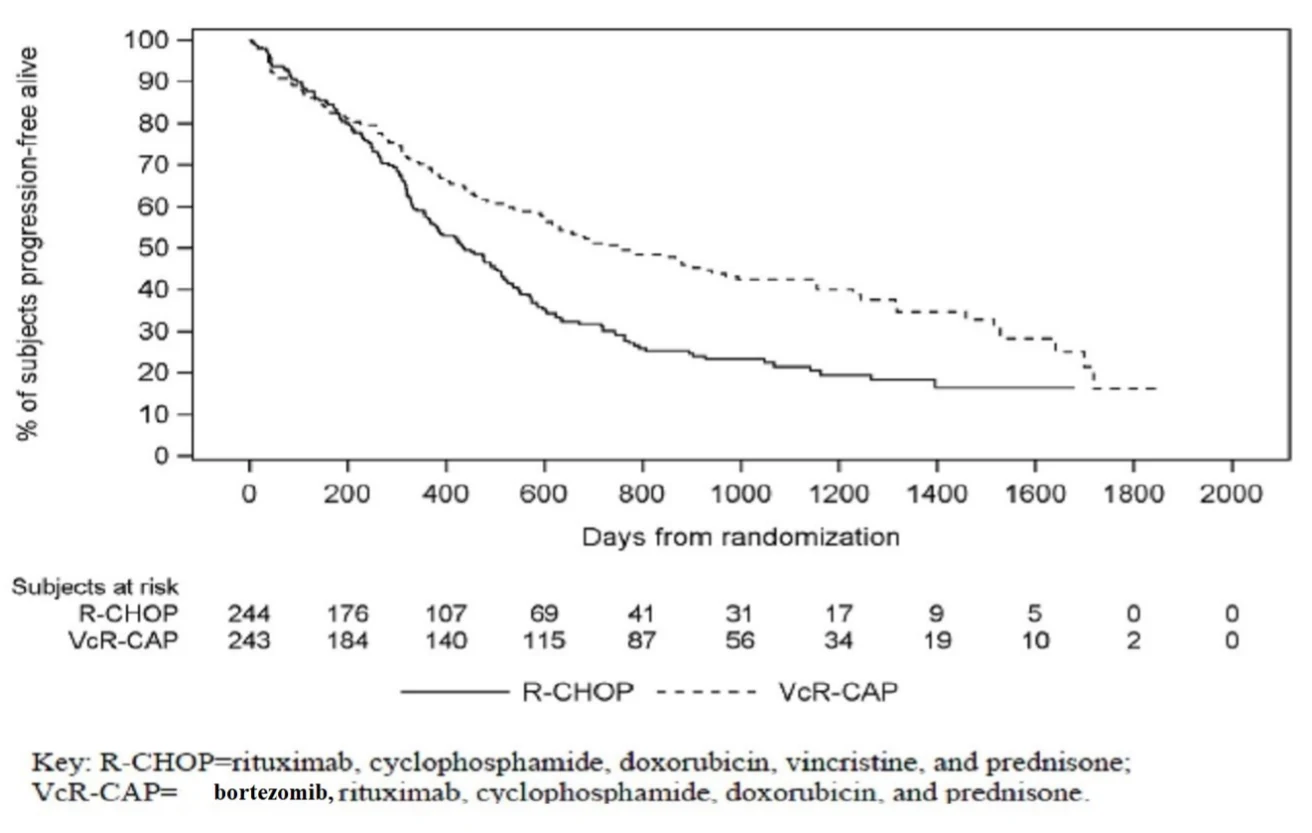
Figure 11: Kaplan-Meier plot of progression-Free survival: per Independent Review Committee; ITT-analysis set.
There was a trend towards prolonged overall survival favoring the VcR-CAP group with a median duration of follow-up of 40 months. Median OS (56.3 months in the R-CHOP group, and not reached in the VcR CAP group) favored the VcR-CAP group, (estimated HR [95%CI] =0.80[0.59, 1.10]; p=0.173). The overall survival data is not yet mature and will be confounded by post-progression therapy.
15 MICROBIOLOGY
No microbiological information is required for this drug product.
16 NON-CLINICAL TOXICOLOGY
General Toxicology
In animal studies at a dose and schedule similar to that recommended for patients (twice weekly dosing for 2 weeks followed by 1 week rest), toxicities observed included severe anemia and thrombocytopenia, gastrointestinal, neurological, testicular, ovarian and lymphoid system toxicities. Neurotoxic effects of bortezomib in animal studies included axonal swelling and degeneration in peripheral sensory nerves, dorsal spinal roots, and tracts of the spinal cord. Additionally, in the monkey, multifocal hemorrhage and necrosis in the brain, eye, and heart were observed, these effects considered related to anemia/thrombocytopenia-induced ischemia.
The range between lethal and non-lethal doses after both acute and repeated dose administration is narrow in all species evaluated (mice, rat, monkey and dog). In repeated dose studies, bortezomib lethality occurred after multiple cycles (twice weekly for 2 weeks, 10 days off) at 0.9 mg/m2 in both rats and monkeys, i.e. lower than proposed clinical dose with hematopoietic, gastrointestinal and lymphoid system lesions considered to be contributing factors to the debilitated state and early death and lethality.
Table 40 summarizes some single-dose and repeat-dose toxicity studies conducted in rats and monkeys.
Table 40: Summary of Single-Dose and Repeat-Dose Toxicology Studies
| Study Title | Species/ Number of Animals | Dosage/Route | Principal Findings |
| Single-Dose | |||
Single Dose Intravenous Toxicity and Toxicokinetic Study with Bortezomib in Rats1 | Sprague-Dawley rats 5/sex/group main study animals and 6-9/sex/group TK | Single dose IV at 0, 0.18, 0.6, and 1.8 mg/m2 | Mortality at 1.8 mg/m2, 2/5 F on Day 2. No abnormal clinical signs. ↑WBC, ↓erythroid parameters, platelets at 1.8 mg/m2. ↑BUN/creat., AST/ALT in individuals at 1.8 mg/m2. No test article-related macroscopic or microscopic findings. NOAEL and MTD were 0.6 mg/m2. |
| Repeat-Dose | |||
| 26-Week Intravenous Injection Toxicity | Sprague-Dawley rats 10/sex/group main study and 10/sex/group | Twice weekly IV for 2 consecutive weeks with 1 week off (1 cycle). | Mortality at 1.2/0.9 mg/m2. ↓Body weights in males at dosages ≥0.6 mg/m2. |
| Study of Bortezomib in the Albino Rat1 | recovery animals and 12/sex/group TK/PD | 26 weeks equals 9 cycles. 0, 0.3, 0.6, and 1.2/0.9 mg/m2. 8-Week recovery period. | ↓Food consumption at 1.2/0.9 mg/m2. ↓Platelet counts and erythrocytic parameters and cholesterol levels at all dosages and potassium at dosage ≥0.6 mg/m2 and total protein, albumin and globulin at 1.2/0.9 mg/m2. ↑WBC, fibrinogen, blood glucose and phosphorus at all dosages. ↑Liver weights at all dosages and kidneys (females only) at dosages ≥0.6 mg/m2. ↓Thymus and epidydimal weights at 1.2/0.9 mg/m2. Microscopic changes to liver, GI and salivary gland at all dosages. Microscopic changes to kidneys, lymphoid organs/tissues, spleen, nasolacrimal ducts, fat (males only) and ovaries at ≥0.6 mg/m2. |
Anterior and/or posterior uveitis (males only) and testicular changes at 1.2/0.9 mg/m2. Hypo cellularity/necrosis of bone marrow at dosages ≥0.6 mg/m2. Reversibility observed except for platelet counts, glucose levels, liver and spleen microscopic changes although trend noted. NOAEL was not determined. MTD was 0.6 mg/m2. | |||
| 4-Week IV Toxicity Study with Bortezomib in Cynomolgus Monkeys1 | Cynomolgus monkeys 3/sex/group main study animals and 2/sex/group recovery animals | Twice-weekly IV for 4 weeks at 0, 0.54, 0.8, and 1.2 mg/m2/dose with a 2-week recovery | Mortality at 1.2 mg/m2 in 1M on Day 26. ↑Monocytes, ↓lymphocytes at dosages ≥0.8 mg/m2. ↓Erythroid parameters in males at 1.2 mg/m2. ↑Fibrinogen, ↓total protein at 1.2 mg/m2. Minimal to mild axonal degeneration, slight lymphocytic depletion of the spleen and mild tubular nephrosis and slight glomeruli changes at 1.2 mg/m2. Trend towards recovery was noted except for ↓lymphocyte count in one male and axonal degeneration in one female at 1.2 mg/m2. NOAEL was 0.54 mg/m2. MTD was 0.80 mg/m2/dose. |
| A 38-Week (13-Cycles) IV Injection Toxicity Study of Bortezomib in the Cynomolgus Monkey1 | Cynomolgus monkeys 3/sex/group main study animals and 3/controls/sex and 1F at 0.6 mg/m2 and 3M and 2F at 1.2 mg/m2 assigned to recovery evaluation. | Twice-weekly IV with one week off (3 week cycle) for 38 weeks at 0, 0.6, 0.9, and 1.2 mg/m2 with an 8-week recovery | Mortality at dosages ≥0.9 mg/m2. 1/6 M and 2/6F at 1.2 mg/m2 and 1/3F at 0.9 mg/m2. Cause of deteriorating condition was GI intolerance in 1 animal and severe anemia and thrombocytopenia in 3 animals. ↓Erythrocyte, leukocyte and platelet parameters at all dosages with onset between Day 72 and 170. ↑Fibrinogen values at all dosages starting on Day 170. Bone marrow changes at all dosages generally reflective of haematological changes. ↑Liver and kidney weights at all dosages. Microscopic findings in bone marrow, lymphoid organ/tissues at all dosage levels. Peripheral nervous system, kidney, intestinal tract and liver/gallbladder findings at dosages ≥0.9 mg/m2. Recovery: Bone marrow, mandibular lymph nodes and spleen demonstrated reversible hyperplastic response. Kidney, thymus and PNS showed incomplete reversibility. NOAEL was not determined. MTD was 0.6 mg/m2. |
- 1. GLP study
TK = toxicokinetic
PD = pharmacodynamics
Genotoxicity
As summarized in Table 41, bortezomib showed clastogenic activity (structural chromosomal aberrations) in the in vitro chromosomal aberration assay using Chinese hamster ovary cells. Bortezomib was not genotoxic when tested in the in vitro mutagenicity assay (Ames test) and in vivo micronucleus assay in mice.
Table 41: Summary of Mutagenicity Studies
| Study Title | Species/ Number of Animals | Dosage/Route | Principal Findings |
|---|---|---|---|
In vitro Mammalian Chromosome Aberration Test in Chinese Hamster Ovary Cells1 | Chinese Hamster Ovary cell line | ≤200 μg/mL | Bortezomib was positive for induction of structural chromosome aberrations and negative for induction of numerical chromosome aberrations in CHO cells |
| Mammalian Erythrocyte Micronucleus Test in Mice1 | ICR mice 5/sex/group | Single dose IV at 0, 0.75, 1.50, and 3.00 mg/m2 | Bortezomib showed no clastogenic potential under the test conditions. |
| Bacterial Reverse Mutagenicity Assay1 | Salmonella typhimurium and Escherichia coli | ≤5000 μg/plate | Bortezomib showed no mutagenic potential under the test conditions. |
- 1. GLP study
Reproductive and Developmental Toxicity
There are no dedicated studies to assess effects on fertility but with degenerative effects in the ovary at ≥0.3 mg/m2 and degenerative changes in the testes at 0.9/1.2 mg/m2 in the 6-month rat toxicity study, reduced fertility is expected. Due to maternal toxicity, embryo fetal development studies were conducted at sub-therapeutic doses; however, bortezomib was administered daily (Table 42).
Table 42: Summary of Embryo Fetal Development Studies
| Study Title | Species/ Number of Animals | Dosage/Route | Principal Findings |
|---|---|---|---|
| An Intravenous Injection Teratology Study of Bortezomib in the Sprague-Dawley Rat1 | Time-mated Sprague- Dawley Rats/22 females/group | Daily IV from gestation day 6 to 17 inclusive at 0, 0.15, 0.30, and 0.45 mg/m2/day. | ↓Transitory body weight at 0.45 mg/m2. ↓Food consumption at 0.45 mg/m2. No selective embryo-lethal or fetal-toxic effects were observed at dosages ≤0.45 mg/m2. |
| An Intravenous Injection Teratology Study of Bortezomib in the New Zealand White Rabbit1 | Time-mated New Zealand White rabbits/22 females/group | Daily IV administration from gestation Day 7 to 19 inclusive at 0, 0.11, 0.28, and 0.55 mg/m2/day. | Mortality in one female at 0.55 mg/m2 and 4 does showed signs of abortion and related clinical signs ↓Weight gain and food consumption at 0.55 mg/m2 ↓Numbers of live fetuses and fetal weight at 0.55 mg/m2 No selective embryo-lethal or fetal-toxic effects were observed at dosages ≤0.28 mg/m2. NOAEL and MTD were 0.28 mg/m2 |
- 1. GLP study
17 SUPPORTING PRODUCT MONOGRAPHS
- 1. Pr VELCADE (Lyophilized powder, 3.5 mg/vial), submission control number: 257318, Product Monograph, Janssen Inc. (FEB 7, 2022)