


Product Monograph - Cafergot Tab
CLINICAL PHARMACOLOGY
The mechanism of action of CAFERGOT* in relieving migraine is not completely understood. Ergotamine is a ligand at serotonergic 5-HT1 receptors (5-HT1A, 5-HT1B, 5-HT1D, and 5-HT1F), 5-HT2 receptors, adrenergic receptors (α1 and α2), and dopaminergic receptors (D1 and D2). The addition of caffeine to ergotamine tartrate facilitates the absorption of ergotamine and may increase migraine pain relief effects.
Ergotamine
Absorption
Ergotamine is rapidly and incompletely (approximately 62% of the oral dose) absorbed by the gastro-intestinal tract. Peak plasma levels are reached about 1-2 hours after ingestion. The bioavailability of unchanged drug is about 2% when the drug is administered orally. It has been suggested that the therapeutic effects of the drug are partially due to active metabolites. Several ergotamine metabolites have biologic activity similar to that of the parent drug itself and are often present in concentrations several times that of the parent compound.
Distribution
Limited information is available about the tissue distribution of ergotamine in humans.
Following oral or intravenous administration in rats, ergotamine was detected in high concentrations in the liver and lung and in lower concentrations in the kidney, heart, and brain.
About 98% of the drug is protein bound. Studies based on an in vitro model system using porcine brain endothelial cells have shown that ergot alkaloids such as ergotamine are able to cross the blood-brain barrier reaching the central nervous system (CNS) in a high concentration.
Metabolism
Ergotamine is extensively metabolized in the liver and cleared from the blood by first-pass hepatic metabolism resulting in low or undetectable systemic drug concentrations. It is extensively metabolized by the CYP3A4 enzyme system.
Elimination
Parent drug and metabolites are mainly excreted in the feces via biliary elimination, only a small amount is excreted in the urine. Their elimination from plasma is biphasic with alpha and beta half-lives of 10 minutes and 3.4 hours respectively.
Caffeine
Absorption
After oral administration, caffeine is rapidly and almost completely absorbed from the gastrointestinal (GI) tract and peak plasma concentrations are reached in 15-120 minutes.
Distribution
Plasma protein binding of caffeine is 10-30%. Caffeine is distributed relatively uniformly throughout all body tissues, including cerebrospinal fluid, breast milk, saliva, and semen. The volume of distribution is about 0.7 L/kg. Caffeine crosses the placental barrier.
Metabolism
Caffeine is to a large extent metabolized by CYP1A2 to paraxanthine. Paraxanthine is further metabolized to uracil and uric acid derivatives by demethylation and hydroxylation. Plasma elimination half-life is about 3.5 hours.
Elimination
Caffeine is cleared rapidly through metabolism and excretion in the urine. Hepatic biotransformation prior to excretion results in about equal amounts of 1-methylxanthine and 1-methyluric acid. Of the 70% of the dose that has been recovered in the urine, only 3% was unchanged drug. The clearance of caffeine is increased by smoking and may be prolonged in patients with hepatic disease.
Ergotamine/Caffeine Interaction
Co-administration of caffeine increases the absorption of ergotamine through rapid dissolution and increased solubility of ergotamine. After rectal administration of 2.1 mg of ergotamine, caffeine (100 mg) co-administration increased peak plasma levels of ergotamine 2-fold, while reducing the time to reach peak plasma levels by half. Similar results from oral administration are not known. Therefore, the bioavailability of ergotamine present in CAFERGOT* may be higher than that reported with ergotamine administration alone.
Pharmacokinetics: Interactions
Ergotamine has been shown to be both an inhibitor and substrate of cytochrome P450 3A4 catalyzed reactions.
| Pharmacokinetic interactions (increased blood levels of ergotamine) have | ||||
| been reported in patients treated with ergotamine and macrolide antibiotics (e.g., troleandomycin, | ||||
| clarithromycin, erythromycin), and in patients treated with ergotamine and protease inhibitors | ||||
| (e.g. ritonavir) presumably due to inhibition of cytochrome P450 3 | A4 | metabolism of ergotamine | ||
| (see CONTRAINDICATIONS). No pharmacokinetic interactions involving other cytochrome | ||||
| P450 isoenzymes are known. | ||||
INDICATIONS AND CLINICAL USE
Adults
CAFERGOT* (ergotamine tartrate and caffeine) may be used for the clinical management of acute attacks of migraine with or without aura.
| CAFERGOT* Tablets are not intended for the prophylactic therapy of migraine or for use in the |
management of sporadic hemiplegic, basilar-type,
| or ophthalmoplegic migraine (see |
CONTRAINDICATIONS). Safety and efficacy have not been established for cluster headache which is present in an older, predominantly male population.
Pediatrics (< 18 years of age)
The safety and efficacy of CAFERGOT* in children has not been studied and its use in this age group is not recommended (see PRECAUTIONS: Pediatrics (< 18 years of age)).
Geriatrics (> 65 years of age)
Experience of the use of CAFERGOT* in patients aged over 65 years is limited. Therefore the use of CAFERGOT* in patients over 65 years is not recommended (see PRECAUTIONS:
Geriatrics (> 65 years of age)).
CONTRAINDICATIONS
CAFERGOT* tablets are contraindicated in patients:
with history, symptoms, or signs of ischemic cardiac, cerebrovascular or peripheral vascular syndromes, valvular heart disease or cardiac arrhythmias (especially tachycardias). In addition, patients with other significant underlying cardiovascular diseases (eg. atherosclerotic disease, congenital heart disease) should not receive
CAFERGOT*. Ischemic cardiac syndromes include, but are not limited to, angina pectoris of any type (e.g., stable angina of effort and vasospastic forms of angina such as the Prinzmetal’s variant), all forms of myocardial infarction, and silent myocardial ischemia. Cerebrovascular syndromes include, but are not limited to, strokes of any type as well as transient ischemic attacks (TIAs). Peripheral vascular disease includes, but is not limited to, ischemic bowel disease, Buerger’s disease or
Raynaud’s syndrome (see WARNINGS).
- with uncontrolled or severe hypertension (see WARNINGS).
- with sporadic hemiplegic, familial hemiplegic, basilar-type, or ophthalmoplegic migraine and headache attributed to arteritis.
- with severe renal impairment.
- with severe hepatic impairment.
- with hypersensitivity to ergot alkaloids, caffeine or any component of the formulation.
- with known peripheral arterial disease, obliterative vascular disease, sepsis, or following vascular surgery or shock.
- taking peripheral and central vasoconstrictors because the combination may result in additive or synergistic elevation of blood pressure.
- who are pregnant, ergotamine has oxytocic and vasoconstrictor effects on the placenta and umbilical cord, and may cause fetal distress and miscarriage.
- who are nursing, ergotamine is excreted in breast milk and may cause symptoms of vomiting, diarrhea, weak pulse and unstable blood pressure in infants.
5HT1 receptor agonists: Ergot-containing drugs have been reported to cause prolonged vasospastic reactions. Because CAFERGOT* may also cause coronary vasospasm and these effects may be additive, the use of CAFERGOT* within 24 hours before or after treatment with other 5HT1 receptor agonists (eg. triptans), or ergotamine-containing drugs or their derivatives (eg. dihydroergotamine, methysergide) is contraindicated.
CYP3A4 Inhibitors: CAFERGOT* is contraindicated within 72 hours of treatment with the following potent CYP3A4 inhibitors: macrolide antibiotics (e.g. clarithromycin, erythromycin, troleandomycin), HIV protease or reverse transcriptase inhibitors (e.g.
delavirdine, indinavir, nelfinavir, and ritonavir), and azole antifungals (e.g. ketoconazole, itraconazole, voriconazole). CAFERGOT* is contraindicated within 72 hours with drugs that have demonstrated potent CYP3A4 inhibition and have this potent effect described in the CONTRAINDICATIONS, or WARNINGS AND PRECAUTIONS sections of their labeling (see WARNINGS: CYP 3A4 Inhibitors and also PRECAUTIONS: Drug
Interactions).
WARNINGS
WARNING
| Serious and/or life-threatening ischemia has been associated with the | |||||
co-administration
| of | ||||||
| CAFERGOT* with potent CYP 3A4 inhibitors including protease inhibitors and macrolide | ||||||
| antibiotics. Because CYP 3A4 inhibition elevates the serum levels of CAFERGOT*, the risk | ||||||
| for vasospasm leading to cerebral | ischemia, cardiac ischemia | and/or ischemia of the extremities | ||||
| is increased. Hence, concomitant use of these medications is contraindicated. (See also | ||||||
| CONTRAINDICATIONS) | ||||||
CYP 3A4 Inhibitors
Co-administration of ergotamine with potent CYP 3A4 inhibitors such as HIV protease or reverse transcriptase inhibitors or macrolide antibiotics has been associated with acute ergot toxicity (ergotism) characterized by vasospasm and vascular ischemia of the extremities, with some cases resulting in amputation. For this reason, these drugs should not be given concomitantly with ergotamine (see CONTRAINDICATIONS: CYP 3A4 Inhibitors). Ergotism can also involve signs and symptoms of vascular ischemia of other tissues such as renal, cardiac, cerebral or gastrointestinal vasospasm. There have been rare reports of cerebral ischemia in patients on protease or reverse transcriptase inhibitor therapy when CAFERGOT* (ergotamine tartrate and caffeine) was co-administered, at least one resulting in death. Because of the increased risk for ergotism and other serious vasospastic adverse events, ergotamine use is contraindicated with these drugs and other potent inhibitors of CYP 3A4 (see WARNINGS: CYP 3A4 Inhibitors and also PRECAUTIONS: Drug Interactions).
| While these reactions have not been reported with less potent CYP 3A4 inhibitors, there is a | |
| potential risk fo | |
r serious toxicity including vasospasm when less potent CYP 3A4 inhibitors are used with ergotamine. Examples of less potent CYP 3A4 inhibitors include: saquinavir, fluconazole, fluoxetine, grapefruit juice, fluvoxamine, zileuton, metronidazole, and clotrimazole. This list is not exhaustive, and the prescriber should consider the effects on CYP 3A4 of other agents being considered for concomitant use with ergotamine.
| Fibrotic Complications: | |
| There have been reports of patients on CAFERGOT* therapy developing retroperitoneal and/or | |
| pleuropulmonary fibrosis. There have also been rare reports of fibrotic thickening of the aortic, | |
| mitral, tricuspid, and/or pulmonary valves with long-term continuous use of CAFERGOT*. | |
| CAFERGOT* should not be used for chronic daily administration (see DOSAGE AND | |
| ADMINISTRATION). | |
Risk of Myocardial Ischemia and/or Infarction and Other Adverse Cardiac Events:
CAFERGOT* has been associated with transient chest pain and tightness which may resemble angina pectoris. In rare cases, the symptoms have been identified as being the likely result of coronary vasospasm or myocardial ischemia. Rare cases of serious coronary events or arrhythmia have occurred following use of another 5-HT1 agonist. CAFERGOT* should not be given to patients who have documented ischemic or vasospastic coronary artery disease
(see CONTRAINDICATIONS).
It is strongly recommended that CAFERGOT* not be given to patients in whom unrecognized coronary artery disease (CAD) is predicted by the presence of risk factors
(e.g. hypertension, hypercholesterolemia, smoker, obesity, diabetes, strong family history of
CAD, females who are surgically or physiologically postmenopausal, or males who are over
40 years of age) unless a cardiovascular evaluation provides satisfactory clinical evidence that the patient is reasonably free of coronary artery and ischemic myocardial disease or other significant underlying cardiovascular disease. The sensitivity of cardiac diagnostic procedures to detect cardiovascular disease or predisposition to coronary artery vasospasm is modest, at best. If, during the cardiovascular evaluation, the patient’s medical history or electrocardiographic investigations reveal findings indicative of or consistent with coronary artery vasospasm or myocardial ischemia, CAFERGOT* should not be administered (see
CONTRAINDICATIONS).
For patients with risk factors predictive of CAD who are determined to have a satisfactory cardiovascular evaluation, the first dose of CAFERGOT* should be administered in the setting of a physician’s office or similar medically staffed and equipped facility. Because cardiac ischemia can occur in the absence of clinical symptoms, consideration should be given to obtaining, on the first occasion of use, an electrocardiogram (ECG) during the interval immediately following CAFERGOT*, in these patients with risk factors. However, an absence of drug-induced cardiovascular effects on the occasion of the initial dose does not preclude the possibility of such effects occurring with subsequent administrations.
It is recommended that patients who are intermittent long-term users of CAFERGOT* and who have or acquire risk factors predictive of CAD, as described above, undergo periodic interval cardiovascular evaluation as they continue to use CAFERGOT*.
If symptoms consistent with angina occur after the use of CAFERGOT*, ECG evaluation should be carried out to look for ischemic changes.
The systematic approach described above is intended to reduce
the likelihood that patients with unrecognized cardiovascular disease
will be inadvertently exposed to CAFERGOT*.
Chest tightness/pain has been reported after administration of CAFERGOT*. Because 5-HT1 agonists may cause coronary vasospasm, patients who experience signs or symptoms suggestive of angina following CAFERGOT* should be evaluated for the presence of CAD or a predisposition to variant angina before receiving additional doses, and should be monitored electrocardiographically if dosing is resumed and similar symptoms recur. Similarly, patients who experience other symptoms or signs suggestive of decreased arterial flow, such as ischemic bowel syndrome or Raynaud’s syndrome following CAFERGOT* administration should be evaluated for atherosclerosis or predisposition to vasospasm (see CONTRAINDICATIONS and
PRECAUTIONS).
Cardiac Events and Fatalities associated with 5-HT1 Agonists:
In special cardiovascular studies (see below), another 5-HT1 agonist has been shown to cause coronary vasospasm. CAFERGOT* has not been tested under similar conditions, however, owing to the common pharmacodynamic actions of 5-HT1 agonists, the possibility of cardiovascular effects of the nature described below should be considered for all agents of this class. Serious adverse cardiac events including acute myocardial infarction, life-threatening disturbances of cardiac rhythm, and death have been reported to have occurred following the administration ergotamine and other 5-HT1 agonists. Considering the extent of use of ergotamine and other 5-HT1 agonists in patients with migraine, the incidence of these events is extremely low.
Cerebrovascular Events and Fatalities associated with 5-HT1 Agonists
Cerebral haemorrhage, stroke, and other cerebrovascular events have been reported in patients treated with ergotamine and other 5-HT1 agonists, and some have resulted in fatalities. In a number of cases, it appears possible that the cerebrovascular events were primary, the ergotamine having been administered in the incorrect belief that the symptoms experienced were a consequence of migraine, when they were not. It should be noted that patients with migraine may be at increased risk of certain cerebrovascular events (e.g. stroke, haemorrhage, transient ischemic attack).
Special Cardiovascular Pharmacology Studies with another 5-HT1 Agonist:
In subjects (n=10) with suspected coronary artery disease undergoing angiography, a 5-HT1 agonist at a subcutaneous dose of 1.5 mg produced an 8% increase in aortic blood pressure, an 18% increase in pulmonary artery blood pressure, and an 8% increase in systemic vascular resistance. In addition, mild chest pain or tightness was reported by four subjects. Clinically significant increases in blood pressure were experienced by three of the subjects (two of whom also had chest pain/discomfort). Diagnostic angiogram results revealed that 9 subjects had normal coronary arteries and 1 had insignificant coronary artery disease. In an additional study with this same drug, migraine patients, (n=35) free of cardiovascular disease were subjected to assessments of myocardial perfusion by positron emission tomography while receiving a subcutaneous 1.5 mg dose in the absence of a migraine attack. Reduced coronary vasodilatory reserve (~10%), increased coronary resistance (~20%), and decreased hyperaemic myocardial blood flow (~10%) were noted. The relevance of these findings to the use of the recommended oral dose of this 5-HT1 agonist is not known.
Other Vasospasm Related Events
Ergotamine and other 5-HT1 agonists may cause vasospastic reactions other than coronary artery vasospasm. This action appears to be dose-related. These reactions are manifested by intense arterial vasoconstriction, producing signs and symptoms of peripheral vascular ischemia (e.g., muscle pains, numbness, coldness and pallor or cyanosis of the digits), angina or unusual syndromes, such as mesenteric ischemia. Consequently, CAFERGOT* should be discontinued immediately if signs or symptoms of vasoconstriction develop.
Increase in Blood Pressure
Significant elevation in blood pressure, including hypertensive crisis, has been reported on rare occasions in patients receiving other 5-HT1 agonists with and without a history of hypertension.
Very rarely these increases in blood pressure have been associated with significant clinical events. Isolated reports of chest pain, pulmonary edema, coronary vasospasm, transient cerebral ischemia, angina and subarachnoid hemorrhage have been received (see
CONTRAINDICATIONS). In patients with controlled hypertension, CAFERGOT* should be administered with caution, as transient increases in blood pressure and peripheral vascular resistance have been observed in a small portion of patients.
PRECAUTIONS
General
CAFERGOT* should only be used where a clear diagnosis of migraine has been established.
Cluster Headache: There is insufficient information on the efficacy and safety of
CAFERGOT* in the treatment of cluster headache, which is present in an older, predominantly male population. The need for prolonged use and the demand for repeated medication in this condition renders the dosing information inapplicable for cluster headache.
Medication Overuse Headache: Overuse of acute migraine treatments has been associated with the exacerbation of headache (medication overuse headache, MOH) in susceptible patients.
Withdrawal of the treatment may be necessary. Chronic overuse of CAFERGOT* may result in dependence and tolerance, leading to ever-increasing doses, exceeding what is considered safe
(see WARNINGS, Fibrotic Complications and PRECAUTIONS, Prolonged or excessive usage).
Administration
Patients who are being treated with CAFERGOT* should be informed of the maximum doses allowed and of the first symptoms of overdosage: hypoesthesia, paresthesia (e.g. numbness, tingling) in the fingers and toes, non-migraine-related nausea and vomiting, symptoms of myocardial ischemia (e.g. precordial pain) and symptoms of ergotism including cerebral ischemia (e.g. limb weakness, blurred vision and slurred speech).
CAFERGOT* should only be used for the treatment of acute migraine attacks and not for prevention.
Like all drugs, CAFERGOT* must be kept out of the reach of children.
Prolonged or Excessive Usage
Although signs and symptoms of ergotism rarely develop, care should be exercised to remain within the limits of recommended dosage. Excessive or prolonged dosage is not recommended since vasospasms may occur. Such symptoms as tingling in the fingers or toes should be reported to the physician immediately and the drug should be discontinued at once. If, contrary to recommendations, ergotamine-containing drugs including CAFERGOT* are used excessively over years, they may induce fibrotic changes, in particular of the pleura and the retroperitoneum. There have also been rare reports of fibrotic changes of the cardiac valves (see WARNINGS: Fibrotic Complications).
Cardiovascular
Owing to its vasoconstrictor properties, ergotamine may cause myocardial ischemia or, in rare cases, infarction, even in patients with no known history of coronary heart disease (see WARNINGS: Risk of Myocardial Ischemia and/or Infarction and Other Adverse Cardiac Events).
Neurologic
Care should be taken to exclude other potentially serious neurologic conditions before treating headache in patients not previously diagnosed with migraine or who experience a headache that is atypical for them. There have been rare reports where patients received 5HT1 agonists for severe headaches that were subsequently shown to have been secondary to an evolving neurologic lesion. For newly diagnosed patients or patients presenting with atypical symptoms, the diagnosis of migraine should be reconsidered if no response is seen after the first dose of
CAFERGOT*.
Visual Disturbances
Cases with sudden and transient loss of vision have been reported in post-marketing use. This adverse event may be related to vasospasm and ischaemic episode. Patients should stop using CAFERGOT* immediately if they experience visual disturbances and seek medical help in a timely manner.
Driving and Using Machines
Visual disturbances, dizziness and feelings of anxiety (trembling, sweating etc) have been reported with CAFERGOT*. If a patient is affected they should not drive, operate machinery or take part in activities where these reactions may put themselves or others at risk.
Hepatic Impairment
Patients with mild to moderate hepatic impairment, especially cholestatic patients should be appropriately monitored.
Drug interactions
Strong CYP3A4 inhibitors
The concomitant use of cytochrome P450 3A4 (CYP 3A4)
| inhibitors such as macrolide | |
| antibiotics (e.g. troleandomycin, erythromycin, clarithromycin), HIV protease or reverse | |
| transcriptase inhibitors (e.g. ritonavir, indinavir, nelfinavir, delavirdine) or azole antifungals (e.g. | |
ketoconazole, itraconazole, voriconazole) and CAFERGOT* must be avoided (see CONTRAINDICATIONS: CYP3A4 Inhibitors), since this can result in an elevated exposure to ergotamine and ergot toxicity (vasospasm and ischemia of the extremities and other tissues). No pharmacokinetic interactions involving other cytochrome P450 isoenzymes are known.
Moderate/weak CYP3A4 inhibitors
Moderate to weak CYP3A4 inhibitors such as cimetidine, clotrimazole, fluconazole, grapefruit juice, quinupristin/dalfopristin and zileuton can also increase the exposure to ergotamine and caution is required for their concomitant use (see WARNINGS: CYP 3A4 Inhibitors).
CYP3A4 inducers
Drugs (e.g. nevirapine, rifampicin) inducing CYP3A4 can lead to decrease in pharmacological action of ergotamine.
Vasoconstrictors
Concurrent use of vasoconstrictor agents including preparations containing ergot alkaloids, and
5-HT1 receptor agonists (triptans), nicotine (e.g. heavy smoking) and sympathomimetics must be avoided since this may result in enhanced vasoconstriction (see CONTRAINDICATIONS).
Because there is a theoretical basis for these effects being additive, ergot-containing or ergot-type medications and nicotine are contraindicated within 24 hours of CAFERGOT* administration (see CONTRAINDICATIONS).
Caffeine-specific interactions
Any possible increase in plasma concentration of caffeine due to interaction with other drug(s) or the consumption of high levels of caffeine, may translate to increased absorption of ergotamine. Caffeine undergoes extensive metabolism by CYP1A2 and drugs that enhance or reduce this enzyme activity can modulate the metabolic clearance of caffeine.
Fluoroquinolones, mexiletine, fluvoxamine, and oral contraceptives can increase the plasma exposure of caffeine.
Interactions of caffeine with sympathomimetics can lead to increased blood pressure.
Beta-blockers
Among patients treated concomitantly with ergotamine-containing preparations and propranolol a few cases of vasospastic reactions have been reported.
Selective serotonin reuptake inhibitors/serotonin norepinephrine reuptake inhibitors (SSRI/SNRI) and serotonin syndrome
There have been very few case reports of serotonin syndrome after intravenous administration of a related compound (dihydroergotamine) concomitantly with SSRI/SNRIs. No such interactions have been reported to date with CAFERGOT* (ergotamine and caffeine). However, cases of life-threatening serotonin syndrome have been reported during combined use of SSRI/SNRIs and triptans. Therefore, if concomitant treatment with CAFERGOT* and SSRIs (e.g., fluoxetine, fluvoxamine, paroxetine, sertraline) or SNRIs (e.g., venlafaxine) is clinically warranted, careful observation of the patient is advised, particularly during treatment initiation and dose increases. Serotonin syndrome symptoms may include mental status changes (e.g., agitation, hallucinations, coma), autonomic instability (e.g., tachycardia, labile blood pressure, hyperthermia), neuromuscular aberrations (e.g., hyperreflexia, incoordination) and/or gastrointestinal symptoms (e.g., nausea, vomiting, diarrhea).
Estrogen-based contraceptives and smoking
CAFERGOT* should not be used in patients on estrogen-based contraceptives or those who are smoking. Estrogen-based contraceptives and smoking
| are independent risk factors of thrombosis. | ||
| The interactions of ergotamine, estrogen-based contraceptives, and smoking are complex; the | ||
| combination of these conditions may significantly increase the risk of thrombosis. | ||
Special Populations
Women of childbearing potential
Women planning to become pregnant should not take CAFERGOT*. When pregnancy is confirmed in women taking CAFERGOT*, the treatment should be discontinued immediately. (see CONTRAINDICATIONS)
Pregnant women
CAFERGOT* is contraindicated during pregnancy because ergotamine has oxytocic and vasoconstrictor effects on the placenta and umbilical cord. Ergotamine is associated with increased motor activity of the uterus and may cause fetal distress and miscarriage. In animal reproductive studies, an increased number of still births and/or peri-/post-natal mortality were observed following administration of oral ergotamine/caffeine (1:100) to the female rat. At high oral doses, ergotamine induced delayed ossification in the mouse and rat, and a higher number of overall fetal anomalies were observed in mice, rats and rabbits. These observations have been attributed to reduced uteroplacental blood flow (see TOXICOLOGY: Reproductive toxicity).
Nursing women
CAFERGOT* is contraindicated in nursing mothers. Ergotamine is excreted in breast milk and may cause symptoms of vomiting, diarrhea, weak pulse and unstable blood pressure in infants. Caffeine is also excreted in breast milk.
Sexual function/reproduction
In male rats receiving the combination of oral ergotamine and caffeine (1:100), fertility was not impaired (see TOXICOLOGY: Reproductive toxicity).
Pediatrics (< 18 years of age)
The safety and efficacy of CAFERGOT* have not been studied in children under 18 years of age. Use of the drug in this age group is, therefore, not recommended
Geriatrics (> 65 years of age)
The safety and efficacy of CAFERGOT* have not been studied in individuals over 65 years of age. The risk of adverse reactions to this drug may be greater in elderly patients as they are more likely to have decreased hepatic function, be at higher risk for CAD, and experience blood pressure increases that may be more pronounced. Its use in this age group is, therefore, not recommended.
Special disease conditions
As with all drugs, CAFERGOT* should be administered with caution to patients with diseases that may alter the absorption, metabolism, or excretion of drugs, such as impaired hepatic function (see PRECAUTIONS, Hepatic Impairment).
ADVERSE REACTIONS
Postmarketing experience
The most common of all side effects are nausea and vomiting. Depending on the dose of ergotamine, signs and symptoms of vasoconstriction may occur.
Adverse reactions are ranked under heading of frequency, the most frequent first, using the following convention: very common (≥1/10); common (≥ 1/100, < 1/10); uncommon (≥ 1/1,000, < 1/100); rare (≥ 1/10,000, < 1/1,000) very rare (< 1/10,000), including isolated reports.
| Immune system | |||
| Rare: Hypersensitivity reactions (such as skin rash, face edema, urticaria and dyspnea) | |||
| Nervous system | |||
| Common: Dizziness | |||
| Uncommon: | |||
Paresthesia (e.g. tingling), hypoesthesia (e.g. numbness) Not known: Somnolence, drug-induced (medication overuse) headaches‡ Eye disorders
Not known: Visual Impairment
Ear and labyrinth
Rare: Vertigo
| Cardiac | ||
| Uncommon: Cyanosis | ||
| Rare: | ||
Bradycardia, tachycardia
Very rare: Myocardial ischemia, myocardial infarction Not known: Endocardial fibrosis†
Vascular
Uncommon: Peripheral vasoconstriction
Rare: Blood pressure increased
Very rare: Gangrene
Respiratory, thoracic and mediastinal
Rare: Dyspnea
Not known: Pleural fibrosis†
Gastrointestinal
Common: Nausea and vomiting (not migraine related), abdominal pain
Uncommon: Diarrhea
Not known: Retroperitoneal fibrosis† Skin and subcutaneous tissue
| Rare: Rash, face edema, urticaria | |||||||
| Musculoskeletal and connective tissue | |||||||
| Uncommon: Pain in extremities | |||||||
| Rare: Myalgia | |||||||
| General disorders and administration site conditions | |||||||
| Uncommon: Weakness in extremities | |||||||
| Investigations | |||||||
| Rare: Absence of pulse | |||||||
| Injury, poisoning and procedural complications | |||||||
Rare: Ergotism (intense arterial vasoconstriction, producing signs and symptoms of vascular ischemia of the extremities and other tissues [such as renal, cardiac, cerebral, or gastrointestinal vasospasm])
†If ergotamine containing drugs are used excessively over years, they may induce fibrotic changes, in particular of the pleura and the retroperitoneum. There have also been rare reports of fibrotic changes of the cardiac valves.
‡The occurrence of drug-induced (medication overuse) headaches has been reported during prolonged and uninterrupted treatment with CAFERGOT* (see PRECAUTIONS: Medication Overuse Headache).
OVERDOSAGE
| Symptoms: | ||
| In humans, the minimum lethal dose of ergotamine ranges from 15 to 20 mg. The following | ||
| cases of ergotamine tartrate overdosage are cited to provide broad guidelines only. | ||
- 1) An overdosage of 44 mg ergotamine tartrate taken by an adult female, presumably all absorbed, was followed by recovery on supportive therapy only.
| ||
| Although vomiting was induced shortly after ingestion, the child was not exposed to | ||
| expert treatment for some 13 hours after ingestion. | ||
| Ergotamine poisoning results in nausea, vomiting, diarrhea, thirst, muscle pain, cold and pale | |||
| skin, itching, a rapid and weak pulse, bradycardia or tachycardia, pain suggestive of angina, rise | |||
| and/or fall of blood pressure (usually in that order), mental confusion, dizziness, headache, | |||
| depression | , somnolence, | hypotension, convulsion, shock, possible unconsciousness, coma, | |
| symptoms and complications of | |||
ergotism. Ergotism may present with an intense arterial vasoconstriction, producing signs and symptoms of vascular ischemia of the extremities such as numbness, tingling and pain in the extremities, cyanosis, and absence of pulse. If the condition is allowed to progress untreated, gangrene may result. Ergotism can also involve signs and symptoms of vascular ischemia of other tissues such as renal, cardiac, cerebral, or gastrointestinal vasospasm. Most cases of ergotism are associated with chronic intoxication and/or overdose. Neurological changes can rarely include convulsions and hemiplegia. Respiratory depression can occur.
TREATMENT OF OVERDOSAGE
In the case of orally ingested drug, administration of activated charcoal is recommended. In the case of very recent oral intake gastric lavage may be considered.
Treatment should be symptomatic and supportive. In the event of severe vasospastic reactions, intravenous administration of a peripheral vasodilator such as nitroprusside, phentolamine or dihydralazine, local application of warmth to the affected area, and nursing care to prevent tissue damage is recommended. In the event of coronary constriction, appropriate treatment such as nitroglycerine should be initiated.
For management of a suspected drug overdose, contact your regional Poison Control Centre.
DOSAGE AND ADMINISTRATION
CAFERGOT* (ergotamine tartrate and caffeine) should be given at the first symptoms of a migraine attack. CAFERGOT* should not be administered prophylactically.
Dosage:
| The first time CAFERGOT* is taken, an initial dose of 2 tablets of CAFERGOT* is | ||
| recommended. If relief is not obtained within half an hour a further tablet should be | ||
| taken; this may be repeated at half-hourly intervals (see maximum daily dosage). | ||
| For subsequent attacks the initial dose may be increased up to 3 tablets, depending on the | ||
| dose required in previous attacks. If necessary, additional doses may be taken at half- | ||
| hourly intervals up to the maximum dosage indicated below. | ||
| If supplemental antimigraine medication is required, a minimum of 6-8 hours should elapse | |
| before the use of any ergotamine or dihydroergotamine-containing preparations; and at least 24 | |
| hours should elapse before the use of a triptan. Conversely, CAFERGOT* should not be taken | |
| until at least 6 hours have elapsed following the use of a triptan or ergotamine or | |
| dihydroergotamine-containing preparations. | |
| Maximum dose per attack per day | ||
| 6 mg ergotamine tartrate = 6 tablets | ||
.
| Maximum weekly dose | |||
| 10 mg ergotamine tartrate = 10 tablets. | |||
Special populations
Renal impairment
CAFERGOT* is contraindicated in patients with severe renal impairment (see CONTRAINDICATIONS).
Hepatic impairment
Patients with mild to moderate hepatic impairment should be appropriately monitored (see PRECAUTIONS: Hepatic impairment). CAFERGOT* is contraindicated in patients with severe hepatic impairment (see CONTRAINDICATIONS).
Pediatric
Safety and efficacy has not been studied in pediatric patients thus CAFERGOT* should not be used in children under 18 years of age.
PHARMACEUTICAL INFORMATION
| Drug Substance | ||
| Trade Name: CAFERGOT* | ||
| Common Name: Ergotamine tartrate and caffeine | ||
| Ergotamine tartrate | ||||
| Chemical name: Ergotaman-3',6',8 trione, 12'-hydroxy-2'-methyl-5'-(phenyl-methyl-), | ||||
| (5'")-,[R-(R*,R*)]-2,3-dihydroxy-butanedioate (2:1) (salt) | ||||
| Structural Formula: | ||||
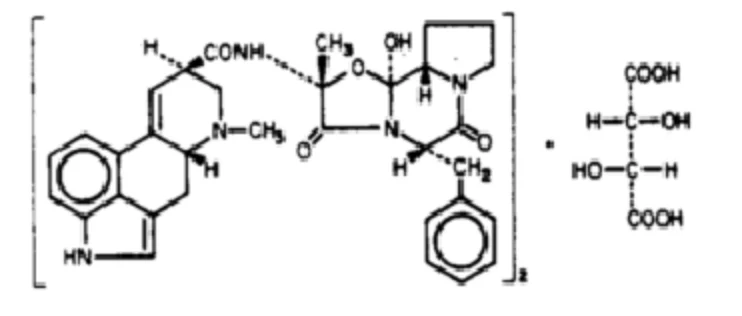
Molecular formula (C33H35N5O5)2.C4H6O6
Molecular weight 1313.43
| Description: Colourless, odourless crystals or white to yellowish-white crystalline powder. | |
| Slightly soluble in water and in alcohol; pH (25% in water) = 4-6 | |
Caffeine
| Chemical Name: 1-H-Purine-2,6-dione,3,7-dihydro 1,3, 7-trimethyl-1,3,7- | |
| Trimethylxanthine | |
| Structural Formula: |
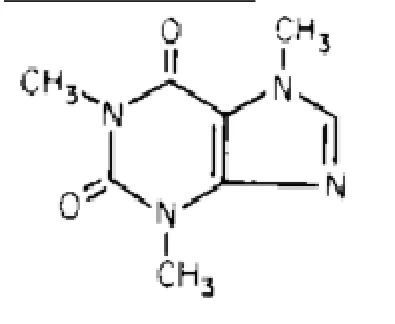
Molecular formula: C18H10N4O2
Molecular weight: 194.19
| Description: Odourless, silky white crystals usually matted together or white crystalline powder. | ||
| Sparingly soluble in water, very soluble in boiling water; slightly soluble in alcohol and ether pH | ||
| (1% in water)=6.9 | ||
Composition:
Each CAFERGOT* tablet contains 1 mg ergotamine tartrate USP and 100 mg caffeine USP. Each tablet also contains the following inactive ingredients: cellulose microcrystalline, iron oxide pigment yellow, magnesium stearate, maize starch, talc and tartraric acid.
Storage Requirements:
Store CAFERGOT* tablets below 25°C, protect from light.
CAFERGOT* must be kept out of the reach and sight of children.
AVAILABILITY OF DOSAGE FORMS
CAFERGOT* Tablets
| Circular, flat, speckled yellowish-white with isolated dots of pigment, compressed tablets, flat- | |
| faced, bevelled edge, 9 mm in diameter with “XL” and a score on one side. Cartons containing | |
| 10 blisters of 10 tablets each. | |
TOXICOLOGY
Single dose toxicity
Ergotamine
The LD50 values of ergotamine determined after single oral administrations were 3200 and 1300 mg/kg in the mouse and rat, respectively. After single intravenous (i.v.) treatments, the LD50 values were 265 and 38 mg/kg in the mouse and rat, respectively.
Caffeine
Acute oral toxicity studies revealed LD50 values of 185 mg/kg for mice and 200-400 mg/kg for rats. Clinical signs included dyspnea and staggering. After single i.v. treatments, the LD50 values were 101 and 105 mg/kg in mice and rats, respectively.
Ergotamine/Caffeine
LD50 values after single i.v. injection of ergotamine/caffeine (1:50) were found to be 111 mg/kg in mice, 124 mg/kg in rats, and 40 mg/kg in rabbits. In the same species, LD50 values for a 1:100 mixture were similar with 104, 125, and 59 mg/kg, respectively. After single oral administration in mice, the LD50 was 474 and 502 mg/kg for ergotamine/caffeine mixtures of 1:50 and 1:100, respectively. In the latter study, clinical signs included motor excitation, piloerection, drowsiness, lateral decubitus, and accelerated breathing.
Repeated-dose toxicity
Ergotamine
Information on the repeated-dose toxicity of ergotamine was primarily obtained from an oral 26-week toxicity study in beagle dogs (0, 0.04, 0.2, 1.0 mg/kg/day, in gelatin capsules; 3 animals/sex/group). In this study, ergotamine induced vomiting and salivation at all dose levels.
Decreased heart rate was observed with 0.2 and 1.0 mg/kg/day, with prolonged PQ and QT intervals. In addition, dose dependent superficial necrosis at the ear margin was seen. Ear-margin necrosis is a common finding in lop-eared dogs following administration of ergot alkaloids, most likely caused by the marked vasoconstrictor effect of these drugs.
Repeated-dose toxicity studies with ergotamine in other species also showed signs of ischemia in some parts of the body, such as the tail in rats, ear margins in rabbits, and the tongue-tip in sheep. The pathogenesis of this effect has been studied extensively and was attributed to unrelieved vasoconstriction, followed by degenerative changes of the endothelium and clot formation.
Caffeine
In two 90-day studies in mice and rats (12 animals/sex), caffeine was administered via the drinking water at doses of up to 167-180 mg/kg/day (mice) and 272-287 mg/kg/day (rats). Doses of approximately 170 mg/kg per day in mice and approximately 160 mg/kg per day in rats caused no significant clinical or histological toxic effects.
In all dose groups, effects on salivary glands were observed, which were regarded as an adaptive and reversible response to the sympathomimetic effect of caffeine. Of note, in these studies no histopathological changes were found in the gonads of rats and mice. Earlier findings of testicular atrophy and decreased absolute testis weights could not be confirmed.
Ergotamine/Caffeine
No long-term toxicity studies with ergotamine/caffeine combination have been conducted.
Mutagenicity
No mutagenicity study has been performed with ergotamine/caffeine combinations. In vivo models showed no evidence of mutagenic activity of ergotamine, however in vitro models have showed clastogenic potential in cultured human lymphocytes and in mouse bone marrow cells.
The overall evidence from numerous genetic toxicity studies indicates that caffeine has no genotoxic potential at exposures relevant to man.
Carcinogenicity
The carcinogenic potential of ergotamine or ergotamine/caffeine combinations has not been studied. Studies in rodents showed no carcinogenic activity of caffeine.
Reproductive toxicity
The combination of oral ergotamine and caffeine (1:100) revealed no teratogenic potential in pregnant rats and rabbits. At high oral ergotamine doses, developmental toxicity (e.g. decreased fetal body weight, incidence of subcutaneous edema, delayed skeletal ossification and/or malformations, and increased pre- and post-natal mortality) was observed in experimental animals. This observation has been attributed to reduced uteroplacental blood flow resulting from prolonged vasoconstriction of the uterine vessels and/or increased myometrial tone induced by ergotamine. Abortions and fetal deaths have also been reported in non-experimental animals (sheep and cows), associated with signs of ergotism in the dams following ergotamine administration in mid-pregnancy.
Caffeine was found to be teratogenic in experimental animals at very high doses only.
Fertility
Ergotamine/caffeine (1:100) was administered orally (in feed) to male Sprague-Dawley rats (45 animals/group) at approximate daily doses of 0, 50 mg/kg (ergotamine 0.5 mg/kg plus caffeine
50 mg/kg) and 150 mg/kg (ergotamine 1.5 mg/kg plus caffeine 150 mg/kg) for 13 weeks before breeding with untreated females (45 animals/group). Half of the females were sacrificed on day
15 post coitum and examined; the other half were allowed to nurse their young until weaning.
There was a slight reduction of the fertility index in animals of the high dose group compared with control animals (70% vs. 89%); this was considered an insignificant finding. Pre- and post-natal development of the offspring was similar in all groups.
In male rats receiving the combination of oral ergotamine and caffeine (1:100), fertility was not impaired.
REFERENCES
- 1. Peyronneau MA, Delaforge M, Riviere R, Renaud JP, Mansuy D. (1994) High affinity of ergopeptides for cytochromes P450 3A. Importance of their peptide moiety for P450 recognition and hydroxylation of bromocriptine. Eur J Biochem. Aug 1; 223 (3): 947-56
- 2. Silberstein and McCrory (2003). Ergotamine and dihydroergotamine: history, pharmacology, and efficacy. Headache, 43(2):144-66