


Product Monograph - Caffeine Citrate Oral Solution USP
SUMMARY PRODUCT INFORMATION
| Route of Administration | Dosage Form / Strength | Clinically Relevant Non-Medicinal Ingredients |
| I.V. | Solution for infusion and oral solution / 20 mg / mL | Citric acid monohydrate, sodium citrate, water for injection. For a complete listing see DOSAGE FORMS, STRENGTHS, COMPOSITION AND PACKAGING section |
| Oral | ||
1 INDICATIONS
Caffeine Citrate Oral Solution USP, 20 mg / mL solution for infusion and oral use, is indicated:
- For the short-term treatment of primary apnea of premature newborns.
Treatment must be initiated under the supervision of a physician experienced in neonatal intensive care. Caffeine Citrate Oral Solution USP is for use in Neonatal Intensive Care Units only. Measurement of baseline caffeine levels, monitoring of plasma concentrations as well as dose adjustments during therapy is advisable.
Healthcare professionals should pay special attention to dosage recommendations, contraindications, warnings, and precautions for use.
1.1 Pediatrics
Based on the data submitted and reviewed by Health Canada, the safety and efficacy of caffeine citrate in preterm newborn infants is presented. Caffeine Citrate Oral Solution USP is not indicated in other age groups.
1.2 Geriatrics
Caffeine Citrate Oral Solution USP is only indicated in preterm infants.
2 CONTRAINDICATIONS
Caffeine Citrate Oral Solution USP is contraindicated in patients who are hypersensitive to this drug or to any ingredient in the formulation, including any non-medicinal ingredient, or component of the container. For a complete listing, see DOSAGE FORMS, STRENGTHS, COMPOSITION AND PACKAGING.
3 SERIOUS WARNINGS AND PRECAUTIONS BOX
4 DOSAGE AND ADMINISTRATION
4.1 Dosing Considerations
Treatment with caffeine citrate should be administered under the supervision of a physician experienced in neonatal intensive care and in the neonatal intensive care unit in which adequate facilities are available for patient surveillance and monitoring.
4.2 Recommended Dose and Dosage Adjustment
Caffeine Citrate Oral Solution USP and Caffeine Citrate Injection USP contain the same formulation at the same concentration and are therefore interchangeable.
The recommended dose regimen in previously untreated infants is a loading dose of 20 mg caffeine citrate per Kg body weight administered by slow intravenous infusion over 30 minutes, using a syringe infusion pump or other metered infusion device. After an interval of 24 hours, maintenance doses of 5 mg per Kg body weight may be administered by slow intravenous infusion over 10 minutes every 24 hours. Alternatively, maintenance doses of 5 mg per Kg body weight may be administered by oral administration, such as through a nasogastric tube every 24 hours.
The recommended loading dose and maintenance doses of caffeine citrate are provided in Table 1 which clarifies the relationship between injection volumes and administered doses expressed as caffeine citrate
The dose expressed as caffeine base is one-half the dose when expressed as caffeine citrate (20 mg caffeine citrate is equivalent to 10 mg caffeine base).
Serious Warnings and Precautions
- Caffeine increases heart rate, left ventricular output, and stroke volume. See Warnings and Precautions - Cardiovascular.
- Caffeine citrate causes a generalised increase in metabolism. See Warnings and Precautions - Endocrine and Metabolism.
Methylxanthines have been associated with development of necrotizing enterocolitis.
See Warnings and Precautions - Gastrointestinal.
- Caffeine is a central nervous system stimulant and may cause seizures. See Warnings and Precautions - Neurologic.
- Renal impairment may increase the potential for caffeine accumulation. See Warnings and Precautions - Renal.
Table 1: Recommended Dose Regimen
| Dose of caffeine citrate (Volume) | Dose of caffeine citrate (mg / Kg body weight) | Route | Frequency | |||||
| Loading dose | 1 mL / Kg body weight | 20 mg / Kg body weight | Intravenous infusion (over 30 minutes) | Once | ||||
| Maintenance dose* | 0.25 mL / Kg body weight | 5 mg / Kg body weight | Intravenous infusion (over 10 minutes) or by oral administrati on | Every 24 hours* | ||||
| * Beginning 24 hours after the loading dose. | ||||||||
In preterm newborn infants with insufficient clinical response to the recommended loading dose, a second loading dose of 10 – 20 mg / Kg maximum may be given after 24 hours.
Higher maintenance doses of 10 mg / Kg body weight could be considered in case of insufficient response, taking into account the potential for accumulation of caffeine due to the long half- life in preterm newborn infants and the progressively increasing capacity to metabolise caffeine in relation to post-menstrual age (see Pharmacokinetics).
Where clinically indicated, caffeine plasma levels should be monitored. The diagnosis of apnea of prematurity may need to be reconsidered if patients do not respond adequately to a second loading dose or maintenance dose of 10 mg / Kg / day (see WARNINGS AND PRECAUTIONS).
Dosage adjustments and monitoring
Plasma concentrations of caffeine may need to be monitored periodically throughout treatment in cases of incomplete clinical response or signs of toxicity. Additionally, doses may need to be adjusted according to medical judgment following routine monitoring of caffeine plasma concentrations in higher risk situations such as:
- very premature infants (< 28 weeks gestational age and / or body weight <1000 g) particularly when receiving parenteral nutrition.
- infants with hepatic and renal impairment (see WARNINGS AND PRECAUTIONS and Pharmacokinetic properties).
- infants with seizure disorders.
- infants with known and clinically significant cardiac disease.
- infants receiving co-administration of medicinal products known to interfere with caffeine metabolism (see DRUG-DRUG INTERACTIONS).
- infants whose mothers consume caffeine while providing breast milk for feeding.
- infants whose mothers may have ingested large quantities of caffeine prior to delivery (see WARNINGS AND PRECAUTIONS).
- infants who have previously been treated with theophylline, which is metabolized to caffeine.
Caffeine has a prolonged half-life in premature newborn infants and there is potential for accumulation which may necessitate monitoring infants treated for an extended period (see Pharmacokinetics).
Blood samples for monitoring should be taken just before the next dose in the case of therapeutic failure and 2 to 4 hours after the previous dose when suspecting toxicity.
Although a therapeutic plasma concentration range of caffeine has not been defined, caffeine levels in studies associated with clinical benefit ranged from 8 to 30 mg / L and safety has been acceptable at plasma levels below 50 mg / L.
Duration of treatment
The optimal duration of treatment has not been established. In clinical practice, treatment is usually continued until the infant has reached a post-menstrual age of 37 weeks, by which time, apnea of prematurity usually resolves spontaneously. This limit may however be revised according to clinical judgment in individual cases depending on the response to treatment, the continuing presence of apneic episodes despite treatment, or other clinical considerations. It is recommended that caffeine citrate administration should be stopped when the patient has 5 – 7 days without a significant apneic attack.
If the patient has recurrent apnea, caffeine citrate administration can be restarted with either a maintenance dose or a half loading dose, depending upon the time interval from stopping caffeine citrate to recurrence of apnea. Because of the slow elimination of caffeine in this patient population, there is no requirement for dose tapering on cessation of treatment.
As there is a risk for recurrence of apnea after cessation of caffeine citrate treatment monitoring of the patient should be continued for approximately one week.
Hepatic and renal impairment:
There is limited experience in patients with renal and hepatic impairment. In a post authorisation safety study, the frequency of adverse reactions in a small number of very premature infants with renal / hepatic impairment appeared to be higher as compared to premature infants without organ impairment (see WARNINGS AND PRECAUTIONS, ADVERSE REACTIONS).
In the presence of renal impairment, there is increased potential for accumulation. A reduced daily maintenance dose of caffeine citrate is required, and the dose should be guided by plasma caffeine measurements.
In very premature infants, clearance of caffeine does not depend on hepatic function. Hepatic caffeine metabolism develops progressively in the weeks following birth and therefore for older infants hepatic disease may indicate a need for monitoring caffeine plasma levels and may require dose adjustments (see WARNINGS AND PRECAUTIONS and Pharmacokinetics).
4.3 Administration
Caffeine citrate can be administered by intravenous infusion and by the oral route. The medicinal product must not be administered by intramuscular, subcutaneous, intrathecal or intraperitoneal injection. Caffeine Citrate Oral Solution USP and Caffeine Citrate Injection USP contain the same formulation at the same concentration and are therefore considered interchangeable.
Caffeine Citrate Oral Solution USP should be inspected visually for particulate matter and discoloration prior to administration. Vials containing discoloured solution or visible particulate matter should be discarded.
Aseptic technique must be strictly observed throughout handling of the medicinal product since no preservative is present.
When given intravenously, caffeine citrate should be administered by controlled intravenous infusion, using a syringe infusion pump or other metered infusion device only. Caffeine citrate can be used without dilution.
5 OVERDOSAGE
Following overdose, published plasma caffeine levels have ranged from approximately 50 mg / L to 350 mg / L.
Symptoms
Signs and symptoms reported in the literature after caffeine overdose in preterm infants include hyperglycaemia, hypokalaemia, fine tremor of the extremities, restlessness, hypertonia, opisthotonus, tonic clonic movements, seizures, tachypnoea, tachycardia, vomiting, gastric irritation, gastro-intestinal haemorrhage, pyrexia, jitteriness, increased blood urea and increased white blood cell count, non-purposeful jaw and lip movements. Caffeine overdose has been associated with the development of intraventricular haemorrhage and long-term neurological sequelae.
Management
Treatment of caffeine overdose is primarily symptomatic and supportive. Plasma potassium and glucose concentrations should be monitored, and hypokalaemia and hyperglycaemia corrected. Plasma caffeine concentrations have been shown to decrease after exchange transfusion.
Convulsions should be treated according to the standard of care.
For management of a suspected drug overdose, contact your regional poison control centre.
6 DOSAGE FORMS, STRENGTHS, COMPOSITION AND PACKAGING
Caffeine Citrate Oral Solution USP is supplied as a 5 mL sterile, glass vial containing 3 mL of solution, with a stopper not made with natural rubber latex in a plastic box containing 10 vials. After opening the vial, the medicinal product should be used immediately. The composition of Caffeine Citrate Oral Solution USP is as follows:
Table 2: Composition of Caffeine Citrate Oral Solution USP
| Unit formula per each 1 mL in the vial corresponding to Unit formula per mL (mg / mL) | |
| Drug substance: | |
| Caffeine | 10.0 |
| equivalent to Caffeine citrate (1) | 20.0 |
| Excipients: | |
| Citric acid monohydrate (2) | 5.0 |
| Sodium citrate (2) | 8.3 |
| Water for injection | q.s. to 1.0. mL |
Notes: (1) Caffeine citrate is formed in situ from the reaction of Caffeine, Citric acid monohydrate and Sodium citrate (buffer) dissolved in water for injection; (2) Components of the buffer. An overfilling of 0.30 mL is applied to each vial to guarantee the claimed volume (3 mL) when removing the product from the vial. | |
This medicinal product must not be mixed or concomitantly administered in the same intravenous line with other medicinal products except those mentioned in section STORAGE, STABILITY AND DISPOSAL.
7 WARNINGS AND PRECAUTIONS
General
Apnea
Apnea of prematurity is a diagnosis of exclusion. Other causes of apnea (e.g., central nervous system disorders, primary lung disease, anaemia, sepsis, metabolic disturbances, cardiovascular abnormalities, or obstructive apnea) should be ruled out or properly treated prior to initiation of treatment with caffeine citrate. Failure to respond to caffeine treatment (confirmed as necessary by determination of adequate plasma caffeine levels) could be an indication of another cause of apnea.
Caffeine consumption
In newborn infants born to mothers who consumed large quantities of caffeine prior to delivery, baseline plasma caffeine concentrations should be measured prior to initiation of treatment with caffeine citrate, since caffeine readily crosses the placenta into the fetal circulation (see sections DOSAGE AND ADMINISTRATION and Pharmacokinetics).
Theophylline
In newborns previously treated with theophylline, baseline plasma caffeine concentrations should be measured prior to initiation of treatment with caffeine citrate because preterm infants metabolise theophylline to caffeine.
Cardiovascular
Cardiovascular reactions
Caffeine has been shown to increase heart rate, left ventricular output, and stroke volume. Therefore, caffeine citrate should be used with caution in newborns with known cardiovascular disease. There is evidence that caffeine causes tachyarrhythmias in susceptible individuals. In newborns, this is usually a simple sinus tachycardia. If there have been any unusual rhythm disturbances on a cardiotocograph (CTG) trace before the baby is born, caffeine citrate should be administered with caution.
Endocrine and Metabolism
Caffeine citrate causes a generalised increase in metabolism, which may result in higher energy and nutrition requirements during therapy.
The diuresis and electrolyte loss induced by caffeine citrate may necessitate correction of fluid and electrolyte disturbances.
Gastrointestinal
Necrotising enterocolitis
Necrotizing enterocolitis is a common cause of morbidity and mortality in premature newborn infants and there have been reports of a possible association between the use of methylxanthines and development of necrotizing enterocolitis. However, a causal relationship between caffeine or other methylxanthine use and necrotizing enterocolitis has not been established. As for all preterm infants, those treated with caffeine citrate should be carefully monitored for the development of necrotizing enterocolitis (see ADVERSE REACTIONS).
Caffeine citrate should be used with caution in infants suffering gastro-oesophageal reflux, as caffeine may exacerbate this condition. In addition, treatment with medications which decrease gastric acid secretion may in theory increase the risk of necrotizing enterocolitis (see DRUG INTERACTIONS).
Hepatic / Biliary / Pancreatic
Hepatic impairment
Caffeine citrate should be administered with caution in preterm newborn infants with impaired renal or hepatic function. In a post-authorization safety study (PASS), the frequency of adverse reactions in a small number of very premature infants with renal / hepatic impairment appeared to be higher as compared to premature infants without organ impairment (see sections DOSAGE AND ADMINISTRATION, ADVERSE REACTIONS and Pharmacokinetics).
Doses should be adjusted by monitoring caffeine plasma concentrations to avoid toxicity in this population.
In very premature infants, clearance of caffeine does not depend on hepatic function. Hepatic caffeine metabolism develops progressively in the weeks following birth and for the older infants, hepatic disease may indicate a need for monitoring caffeine plasma levels and may require dose adjustments (see sections WARNINGS AND PRECAUTIONS and Pharmacokinetics).
Neurologic
Seizures
Caffeine is a central nervous system stimulant and seizures have been reported in cases of caffeine overdose. Extreme caution must be exercised if caffeine citrate is used in newborns with seizure disorders.
Renal
In the presence of renal impairment, there is increased potential for accumulation. A reduced daily maintenance dose of caffeine citrate is required, and the dose should be guided by plasma caffeine measurements.
Please see WARNINGS AND PRECAUTIONS- Hepatic / Biliary / Pancreatic section.
7.1 Special Populations
7.1.1 Pregnant Women
Not applicable, as this is not relevant to the indication in preterm newborn infants.
7.1.2 Breast-feeding
Caffeine is excreted into breast milk and readily crosses the placenta into the fetal circulation (see Pharmacokinetics).
Breast-feeding mothers of newborn infants treated with caffeine citrate should not ingest caffeine-containing foods and beverages or medicinal products containing caffeine (see section Pregnancy and Breast-feeding), since caffeine is excreted into breast milk (see Pharmacokinetics).
7.1.3 Pediatrics
Caffeine Citrate Oral Solution USP is administered to the preterm newborn infants. Caffeine Citrate Oral Solution USP is not indicated in other age groups.
8 ADVERSE REACTIONS
8.1 Adverse Reaction Overview
In a post-market safety study, adverse reactions were more frequent in subgroups with organ impairment.
8.2 Clinical Trial Adverse Reactions
Because clinical trials are conducted under very specific conditions the adverse reaction rates observed in the clinical trials may not reflect the rates observed in practice and should not be compared to the rates in the clinical trials of another drug. Adverse drug reaction information from clinical trials is useful for identifying drug related adverse events and for approximating rates.
Tabulated list of adverse reactions
Adverse reactions described in the short- and long-term published literature and obtained from a post-authorisation safety study that have been associated with caffeine citrate are listed below, by System Organ Class and Preferred Term (MedDRA).
Table 3: Adverse Reactions
| System Organ Class |
Adverse Reactions
| Frequency | |||
| Infections and Infestations | Sepsis | Not known | |
| Immune system disorders | Hypersensitivity reaction | Rare | |
| Metabolism and nutrition disorders | Hyperglycaemia | Common | |
Hypoglycaemia, failure to thrive, feeding intolerance | Not known | ||
| Nervous system disorders | Convulsion | Uncommon | |
Irritability, feeling jittery, restlessness, brain injury | Not known | ||
| Ear and labyrinth disorders | Deafness | Not known | |
| Cardiac disorders | Tachycardia | Common | |
| Arrhythmia | Uncommon | ||
Increased left ventricular output and increased stroke volume | Not known | ||
| Gastrointestinal disorders | Regurgitation, increased gastric aspirate, necrotising enterocolitis | Not known | |
General disorders and administration site conditions | Infusion site phlebitis, infusion site inflammation | Common | |
| Investigations | Urine output increased, urine sodium and calcium increased, haemoglobin decreased, thyroxine decreased | Not known | |
| Frequency is defined as: very common (≥ 1 / 10), common (≥ 1 / 100 to ≤ 1 / 10), uncommon (≥ 1 / 1,000 to ≤ 1 / 100), rare (≥ 1 / 10,000 to ≤ 1 / 1,000), very rare (≤ 1 / 10,000) and not known (cannot be estimated from the available data). | |||
Description of selected adverse reactions
Necrotizing Enterocolitis: Necrotising enterocolitis is a common cause of morbidity and mortality in premature newborn infants. There have been reports of a possible association between the use of methylxanthines and development of necrotising enterocolitis, however, a causal relationship between caffeine or other methylxanthine use and necrotising enterocolitis has not been established.
In a double-blind placebo-controlled study of caffeine citrate in 85 preterm infants (see ACTION AND CLINICAL PHARMACOLOGY), necrotising enterocolitis was diagnosed in the blinded phase of the study in two infants on active treatment and one on placebo, and in three infants on caffeine during the open-label phase of the study. Three of the infants who developed necrotising enterocolitis during the study died. A large multicentre study (n = 2006) investigating long-term outcome of premature infants treated with caffeine citrate (see ACTION AND CLINICAL PHARMACOLOGY) did not show an increased frequency of necrotising enterocolitis in the caffeine group when compared to placebo. As for all preterm infants, those treated with caffeine citrate should be carefully monitored for the development of necrotising enterocolitis (see WARNINGS AND PRECAUTIONS).
Caffeine may suppress erythropoietin synthesis and hence reduce haemoglobin concentration with prolonged treatment.
Transient falls in thyroxine (T4) have been recorded in infants at the start of therapy, however these have not been sustained with continued therapy.
Reporting of suspected adverse reactions
Reporting suspected adverse reactions after authorisation of the medicinal product is important. It allows continued monitoring of the benefit / risk balance of the medicinal product. Healthcare professionals are asked to report any suspected adverse reactions via visiting the web page on Adverse Reaction Reporting (https://www.canada.ca/en/health-canada/services/drugs-health- products/medeffect-canada/adverse-reaction-reporting.html) for information on how to report online, by mail or by fax; or calling toll-free at 1-866-234-2345.
8.3 Less Common Clinical Trial Adverse Reactions
Less Common Clinical Trial Adverse Reactions are listed in Table 3.
8.6 Post-Market Adverse Reactions
In a post-authorisation safety study on 506 preterm infants treated with caffeine citrate, safety data have been collected in 31 very premature infants with renal / hepatic impairment. Adverse reactions appeared to be more frequent in this subgroup with organ impairment than in other observed infants without organ impairment. Cardiac disorders (tachycardia, including one single case of arrhythmia) were mostly reported.
9 DRUG INTERACTIONS
9.2 Overview
Cytochrome P450 1A2 (CYP1A2) is the major enzyme involved in the metabolism of caffeine in humans. Therefore, caffeine has the potential to interact with active substances that are substrates for CYP1A2, inhibit CYP1A2, or induce CYP1A2. However, caffeine metabolism in preterm newborn infants is limited due to their immature hepatic enzyme systems. Although few data exist on interactions of caffeine with other active substances in preterm newborn infants, lower doses of caffeine citrate may be needed following co-administration of active substances which are reported to decrease caffeine elimination in adults (e.g., cimetidine and ketoconazole) and higher caffeine citrate doses may be needed following co-administration of active substances that increase caffeine elimination (e.g., phenobarbital and phenytoin). Where doubt exists about possible interactions, plasma caffeine concentrations should be measured.
As bacterial overgrowth in the gut is associated with the development of necrotising enterocolitis, co-administration of caffeine citrate with medicinal products that suppress gastric acid secretion (antihistamine H2 receptor blockers or proton-pump inhibitors) may in theory increase the risk of necrotising enterocolitis (see WARNINGS AND PRECAUTIONS and ADVERSE REACTIONS).
9.3 Drug-Drug Interactions
Inter-conversion between caffeine and theophylline occurs in preterm newborn infants. These active substances should not be used concurrently.
Table 4: Established Drug-Drug Interactions
| Caffeine Citrate | Source of Evidence | Effect | Clinical comment |
| Theophylline | Theoretical | Theophylline is metabolised into caffeine. | In newborns previously treated with theophylline, baseline plasma caffeine concentrations should be measured prior to initiation of treatment with caffeine citrate because preterm infants metabolize theophylline to caffeine. |
9.4 Drug-Food Interactions
Interactions with food have not been established.
9.5 Drug-Herb Interactions
Interactions with herbal products have not been established.
9.6 Drug-Laboratory Test Interactions
Interactions with laboratory tests have been established.
10 ACTION AND CLINICAL PHARMACOLOGY
Caffeine citrate belongs to the pharmacotherapeutic group of psychoanaleptics, xanthine derivatives ATC code: N06BC01.
10.1 Mechanism of Action
Caffeine is structurally related to the methylxanthines theophylline and theobromine. Most of its effects have been attributed to antagonism of adenosine receptors, both A1 and A2A subtypes, demonstrated in receptor binding assays and observed at concentrations approximating those achieved therapeutically in this indication.
10.2 Pharmacodynamics
Caffeine acts as a CNS stimulant. Several mechanisms have been proposed as the basis of caffeine’s effect in apnea of prematurity, including: (1) respiratory centre stimulation, (2) increased minute ventilation, (3) decreased threshold to hypercapnia, (4) increased response to hypercapnia, (5) increased skeletal muscle tone, (6) decreased diaphragmatic fatigue, (7) increased metabolic rate, and (8) increased oxygen consumption.
10.3 Pharmacokinetics
Table 5: Summary of caffeine citrate Pharmacokinetic Parameters in premature infants
| Cmax | Tmax | t½ (h) | AUC0-∞ | CL | Vd | |
| Single dose mean | 6 to 10 mg / L | 30 min to 2 hr | Newborn infants: 3 - 4 days 9 months: 5 hours | 0.8 to 0.9 L / Kg |
Caffeine citrate readily dissociates in aqueous solution. The citrate moiety is rapidly metabolized on infusion or ingestion.
Absorption: The onset of action of caffeine from caffeine citrate is within minutes of commencement of infusion. After oral administration of 10 mg caffeine base / Kg body weight to preterm newborn infants, the peak plasma caffeine concentration (Cmax) ranged from 6 to 10 mg / L and the mean time to reach peak concentration (tmax) ranged from 30 min to 2 h. The extent of absorption is not affected by formula feeding but tmax may be prolonged.
Distribution: Caffeine is rapidly distributed into the brain following caffeine citrate administration. Caffeine concentrations in the cerebrospinal fluid of preterm newborn infants approximate to their plasma levels. The mean volume of distribution (Vd) of caffeine in infants (0.8 - 0.9 L / Kg) is slightly higher than that in adults (0.6 L / Kg). Plasma protein binding data are not available for newborn infants or infants. In adults, the mean plasma protein binding in vitro is reported to be approximately 36 %.
Caffeine readily crosses the placenta into the fetal circulation and is excreted into breast milk.
Metabolism: Caffeine metabolism in preterm newborn infants is very limited due to their immature hepatic enzyme systems and most of the active substance is eliminated in urine. Hepatic cytochrome P450 1A2 (CYP1A2) is involved in caffeine biotransformation in older individuals.
Inter-conversion between caffeine and theophylline has been reported in preterm newborn infants; caffeine levels are approximately 25 % of theophylline levels after theophylline administration and approximately 3 – 8 % of caffeine administered would be expected to convert to theophylline.
Elimination: In young infants, the elimination of caffeine is much slower than that in adults due to immature hepatic and / or renal function. In newborn infants, caffeine clearance is almost entirely by renal excretion. Mean half-life (t1/2) and fraction excreted unchanged in urine (Ae) of caffeine in infants are inversely related to gestational / postmenstrual age. In newborn infants, the t1/2 is approximately 3 - 4 days and the Ae is approximately 86 % (within 6 days). By 9 months of age, the metabolism of caffeine approximates to that seen in adults (t1/2 = 5 hours and Ae = 1 %).
Studies examining the pharmacokinetics of caffeine in newborn infants with hepatic or renal insufficiency have not been conducted.
In the presence of significant renal impairment, considering the increased potential for accumulation, a reduced daily maintenance dose of caffeine is required, and the doses should be guided by blood caffeine measurements. In premature infants with cholestatic hepatitis, a prolonged caffeine elimination half-life with an increase of plasma levels above the normal limit of variation has been found suggesting a particular caution in the dosage of these patients (see DOSAGE AND ADMINISTRATION and WARNINGS AND PRECAUTIONS).
Special Populations and Conditions
Pediatrics: Caffeine Citrate Oral Solution USP is to be used only in preterm infants. Caffeine Citrate Oral Solution USP is not indicated in other age groups.
Geriatrics: Caffeine Citrate Oral Solution USP is only indicated in preterm infants.
Pregnancy and Breast-feeding: Caffeine in animal studies at high doses was shown to be embryotoxic and teratogenic. These effects are not relevant with regard to short term administration at therapeutic doses in the preterm infant population (see NON-CLINICAL TOXICOLOGY). Caffeine is excreted into breast milk and readily crosses the placenta into the circulation (see Pharmacokinetics). Breast-feeding mothers of newborn infants treated with caffeine citrate should not ingest caffeine-containing foods, beverages or medicinal products containing caffeine. In newborn infants born to mothers who consumed large quantities of caffeine prior to delivery, baseline plasma caffeine concentrations should be measured prior to initiation of treatment with caffeine citrate (see WARNINGS AND PRECAUTIONS).
Hepatic Insufficiency: Please see WARNINGS AND PRECAUTIONS- Hepatic / Biliary / Pancreatic.
Renal Insufficiency: Please see WARNINGS AND PRECAUTIONS-Renal.
11 STORAGE, STABILITY AND DISPOSAL
Store unopened vials at 15° to 30°C.
After opening the vial, the medicinal product should be used immediately.
Parenteral solutions must be inspected visually for particulate matter and discoloration prior to administration. The solution must not be used if it is discoloured, or foreign particulate matter is present.
For single use only. Any unused portion left in the vial should be discarded.
Unused portions should not be saved for later administration.
12 SPECIAL HANDLING INSTRUCTIONS
This medicinal product does not require any special storage condition.
PART II: SCIENTIFIC INFORMATION
13 PHARMACEUTICAL INFORMATION
Drug Substance
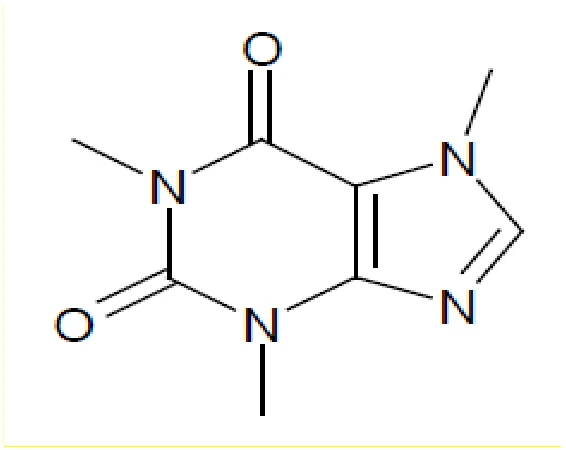
Proper name: Caffeine
Chemical name: 1, 3, 7-Trimethyl-3, 7-dihydro-1H-purine-2, 6-dione
Molecular formula and molecular mass:
Molecular formula: C8H10N4O2
Molecular mass: 194.2
Structural formula:
Physicochemical properties: Caffeine is white or almost white, crystalline powder or silky. Sparingly soluble in water, freely soluble in boiling water, slightly soluble in ethanol (96 per cent). It dissolves in concentrated solution of alkali benzoates or salicylates. The melting range of caffeine is from 235°C to 239°C.
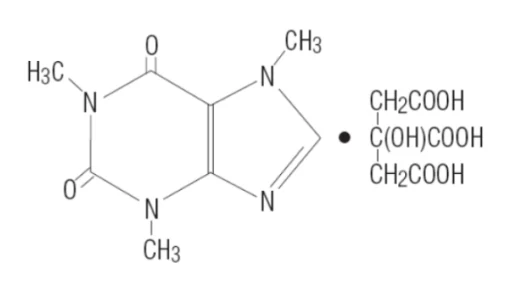
Proper name: Caffeine Citrate (formed in-situ)
Chemical name: 2-hydroxypropane-1, 2, 3-tricarboxylic acid; 1, 3, 7-trimethylpurine-2, 6-dione
Molecular formula: C14H18N4O9
Molecular mass: 386.31
Structural Formula:
14 CLINICAL TRIALS
14.1 Trial Design and Study Demographics
The clinical efficacy of caffeine citrate was assessed in a multicentre, randomised, double-blind study that compared caffeine citrate to placebo in 85 preterm infants (gestational age 28 to <33 weeks) with apnea of prematurity. Infants received 20 mg / Kg caffeine citrate loading dose intravenously. A daily maintenance dose of 5 mg / Kg caffeine citrate was then administered either intravenously or orally (through a feeding tube) for up to 10 - 12 days. The protocol allowed infants to be “rescued” with open-label caffeine citrate treatment if their apnea remained uncontrolled. In that case, infants received a second loading dose of 20 mg / Kg caffeine citrate after treatment day 1 and before treatment day 8.
Table 6: Summary of patient demographics for Primary Apnea clinical trial
| Trial design | Dosage, route of administration and duration | Study subjects (n) | age weeks (/range) | Sex |
| Prospective, randomized, DB, parallel, placebo– controlled comparison with an open label rescue phase | Caffeine: loading dose of caffeine citrate 20 mg / Kg IV followed by 5 mg / Kg / day orally; I.V., oral; Up to 10 days | [Efficacy Assessment] 82 infants: Caffeine 45, Placebo 37 [Safety Assessment] 85 infants: Caffeine 46, Placebo 39 | 28 to 32 | Efficacy Caffeine Male: 55.6% Female: 44.4% Placebo Male: 70.3% Female: 29.7% |
14.2 Study Results
The number of infants with an aggregate of 7 - 10 days of at least a 50 % reduction in apnea events or elimination of apnea was significantly higher in the caffeine citrate than in the placebo group 68.9 % vs 43.2 %, p = 0.02 and 24.4 % vs 0%, p = 0.005 respectively).
16 NON-CLINICAL TOXICOLOGY
Non-clinical data revealed no major hazard for humans based on studies of repeated dose toxicity of caffeine. However, at high doses convulsions were induced in rodents. At therapeutic doses some behavioural changes in newborn rats were noted, most likely as a consequence of increased adenosine receptor expression that persisted into adulthood. Caffeine was shown to be devoid of mutagenic and oncogenic risk. Teratogenic potential and effects on reproductive performance observed in animals are not considered relevant to its use at therapeutic doses in the preterm infant population.
17 SUPPORTING PRODUCT MONOGRAPHS
- 1. Peyona. (Intravenous / oral, 20 mg / mL), submission control # 225810, Product Monograph, Chiesi Farmaceutici SpA. March 3, 2020