


Product Monograph - Carbetocin Injection
RECENT MAJOR LABEL CHANGES
TABLE OF CONTENTS
Sections or subsections that are not applicable at the time of authorization are not listed
PART I: HEALTH PROFESSIONAL INFORMATION ..................................................................................... 4
- 1.
INDICATIONS ............................................................................................................................... 4
1.1 PEDIATRICS ................................................................................................................................... 4
1.2 GERIATRICS ................................................................................................................................... 4
- 2. CONTRAINDICATIONS .................................................................................................................. 4
- 4.
DOSAGE AND ADMINISTRATION .................................................................................................. 4
4.2 RECOMMENDED DOSE AND DOSAGE ADMINISTRATION ............................................................ 5
4.4 ADMINISTRATION ......................................................................................................................... 5
- 5. OVERDOSAGE .............................................................................................................................. 5
- 6. DOSAGE FORMS, STRENGTHS, COMPOSITION AND PACKAGING ................................................... 5
- 7.
WARNINGS AND PRECAUTIONS ................................................................................................... 6
7.1 SPECIAL POPULATIONS ................................................................................................................. 7
7.1.1 PREGNANT WOMEN: .................................................................................................................... 7
7.1.2 BREAST-FEEDING .......................................................................................................................... 7
7.1.3 PEDIATRICS ................................................................................................................................... 7
7.1.4 GERIATRICS ................................................................................................................................... 7
8 ADVERSE REACTIONS ................................................................................................................... 7
8.2 CLINICAL TRIAL ADVERSE REACTIONS .......................................................................................... 7
8.5 POST-MARKET ADVERSE REACTIONS ......................................................................................... 10
- 9.
DRUG INTERACTIONS ................................................................................................................. 10
9.2 DRUG INTERACTIONS OVERVIEW ............................................................................................... 10
9.3 DRUG-BEHAVIOURAL INTERACTIONS ......................................................................................... 11
9.4 DRUG-DRUG INTERACTIONS....................................................................................................... 11
9.5 DRUG-FOOD INTERACTIONS ....................................................................................................... 11
| 4 DOSAGE AND ADMINISTRATION MAR 2025 |
| 8 ADVERSE REACTIONS MAR 2025 |
| 14 CLINICAL TRIALS MAR 2025 |
| PATIENT MEDICATION INFORMATION MAR 2025 |
9.6 DRUG-HERB INTERACTIONS ....................................................................................................... 11
9.7 DRUG-LABORATORY TEST INTERACTIONS .................................................................................. 11
- 10.
CLINICAL PHARMACOLOGY ........................................................................................................ 11
10.1 MECHANISM OF ACTION ............................................................................................................ 11
10.2 PHARMACODYNAMICS ............................................................................................................... 12
10.3 PHARMACOKINETICS .................................................................................................................. 13
11 STORAGE, STABILITY AND DISPOSAL .......................................................................................... 14
12 SPECIAL HANDLING INSTRUCTIONS ............................................................................................ 14
PART II: SCIENTIFIC INFORMATION ...................................................................................................... 15
13 PHARMACEUTICAL INFORMATION ............................................................................................. 15
14 CLINICAL TRIALS ........................................................................................................................ 16
14.1 CLINICAL TRIALS BY INDICATION ................................................................................................ 16
15 MICROBIOLOGY ......................................................................................................................... 19
16 NON-CLINICAL TOXICOLOGY ...................................................................................................... 19
17 SUPPORTING PRODUCT MONOGRAPHS ..................................................................................... 20
PATIENT MEDICATION INFORMATION ................................................................................................. 21
PART I: HEALTH PROFESSIONAL INFORMATION
1. INDICATIONS
Carbetocin Injection is indicated for:
- the prevention of uterine atony and postpartum hemorrhage following cesarean section under epidural or spinal anaesthesia.
Carbetocin Injection is not authorized for use in women following labour or vaginal delivery.
1.1 Pediatrics
Pediatrics (< 18 years of age): The safety and efficacy of carbetocin have not been established in the pediatric population. Accordingly, Carbetocin Injection is not recommended for use in this patient group.
1.2 Geriatrics
Geriatrics (> 65 years of age): No data are available to Health Canada; therefore, Health Canada has not authorized an indication for geriatric use.
2. CONTRAINDICATIONS
Because of its long duration of action relative to oxytocin, uterine contractions produced by Carbetocin Injection cannot be stopped by simply discontinuing the medication. Therefore, Carbetocin Injection should not be administered:
- Prior to delivery of the infant for any reason, including elective or medical induction of labour. Inappropriate use of Carbetocin Injection during pregnancy could theoretically mimic the symptoms of oxytocin overdosage, including hyperstimulation of the uterus with strong (hypertonic) or prolonged (tetanic) contractions, tumultuous labour, uterine rupture, cervical and vaginal lacerations, postpartum hemorrhage, utero-placental hypoperfusion and variable deceleration of fetal heart, fetal hypoxia, hypercapnia, or death.
- In patients with a history of hypersensitivity to oxytocin or Carbetocin Injection.
- In patients with serious cardiovascular disorders.
- Carbetocin Injection is not recommended for use in children.
4. DOSAGE AND ADMINISTRATION
4.2 Recommended Dose and Dosage Administration
Health Canada has not authorized an indication for pediatric use.
4.4 Administration
Caesarean section – Intravenous injection
A single intravenous dose of 100 mcg (1 mL) of Carbetocin Injection is administered by bolus injection, slowly over 1 minute, only when delivery of the infant has been completed by cesarean section under epidural or spinal anesthesia. Carbetocin Injection can be administered either before or after delivery of the placenta.
Administer carbetocin directly into a peripheral vein using a needle or pin-less IV tubing. A needle is not provided with the Carbetocin injection prefilled syringe. Should you require the use of a needle to inject Carbetocin Injection directly into a vein, the adaptable luer lock tip can accommodate a 20 - 25 gauge needle.
No further doses of Carbetocin Injection should be administered.
5. OVERDOSAGE
Overdosage of Carbetocin Injection can be expected to produce enhanced pharmacological effects. Therefore, when Carbetocin Injection is administered postpartum, overdosage may be associated with uterine hyperactivity and pain. Symptoms of uterine hyperactivity include: uterine hypertonus, abdominal pain, discomfort associated with too frequent or too strong uterine contractions. At single doses up to 800 mcg, tachycardia was observed.
Overdosage of oxytocin may lead to hyponatraemia and water intoxication in severe cases, especially when associated with excessive concomitant fluid intake. Symptoms of water intoxication include:
- 1. Headache, anorexia, nausea, vomiting and abdominal pain
- 2. Lethargy, drowsiness, unconsciousness and grand-mal type seizures
As carbetocin is an analogue of oxytocin, the possibility of a similar event cannot be excluded.
Treatment consists of symptomatic and supportive management.
| For management of a suspected drug overdose, contact your regional poison control centre. |
6. DOSAGE FORMS, STRENGTHS, COMPOSITION AND PACKAGING
Table 1 Dosage Forms, Strengths, Composition and Packaging
Route of Administration | Dosage Form / Strength/Composition | Non-medicinal Ingredients |
|---|---|---|
| Intravenous | Solution / 100 mcg / mL | Glacial acetic acid, sodium chloride, water for injection. |
Carbetocin Injection is available in 1 mL pre-filled syringe. Each pre-filled syringe contains
100 mcg carbetocin. Boxes contain 5 pre-filled syringes each. The pre-filled syringes are clear and colourless glass.
The tip cap and stopper are not made with natural rubber latex.
7. WARNINGS AND PRECAUTIONS
General
Carbetocin Injection should only be used at well-equipped specialist obstetrics units.
Some patients may not have an adequate uterine contraction after a single injection of Carbetocin Injection. In these patients, administration of Carbetocin Injection should not be repeated and more aggressive treatment with additional doses of other available uterotonic drugs is warranted.
In cases of persistent uterine bleeding after administration of Carbetocin Injection, the presence of retained placental fragments, coagulopathy, or trauma to the genital tract should be ruled out.
Carbetocin Injection is intended for single administration intravenous (IV) Only.
Significant antidiuretic effect is not anticipated and has not been demonstrated at the recommended dose. However, since carbetocin is related in structure to oxytocin, which has been shown to have an intrinsic antidiuretic effect, the risk of water intoxication cannot be excluded.
Patients with eclampsia and pre-eclampsia should be carefully monitored for all signs and symptoms.
The safety of carbetocin in these patients has not been evaluated in formal clinical trials.
Carbetocin has not been studied in cases involving patients with known coagulopathy or evidence of liver, renal or endocrine disease.
Cardiovascular
Should be used with extreme caution in patients with cardiovascular disease, especially coronary artery disease.
Endocrine and Metabolism
Specific studies have not been undertaken in gestational diabetes mellitus.
Neurologic
Should be used cautiously in the presence of migraine and epilepsy.
Respiratory
Should be used cautiously in the presence of asthma.
7.1 Special Populations
7.1.1 Pregnant Women:
Carbetocin Injection use during pregnancy, prior to the delivery of the infant, is contraindicated (see CONTRAINDICATIONS).
7.1.2 Breast-feeding
Small amounts of carbetocin have been shown to cross over from plasma into the breast milk of nursing women who were given a 70 mcg dose intramuscularly, between 7 and 14 weeks postpartum. The mean peak concentration in breast milk was approximately 50 times lower than in plasma, and the ratio of the milk to plasma area under the concentration versus time curves (M/PAUC) was only 2-3%. The small amount of carbetocin transferred into breast milk or colostrum after a single injection, and subsequently ingested by a breast feeding infant, would not be expected to present a significant safety concern. This is due to the fact that carbetocin would be rapidly degraded by peptidases in the infant gastrointestinal tract.
Oxytocin is known to cause contraction of the myoepithelial cells surrounding the mammary alveoli, thereby stimulating milk let-down. There is no sufficient evidence to determine whether carbetocin can also stimulate milk let-down. However, milk let-down was found to occur normally in 5 nursing women after receiving a 70 mcg carbetocin dose by the intramuscular route.
7.1.3 Pediatrics (< 18 years of age):
No data are available to Health Canada; therefore, Health Canada has not authorized an indication for pediatric use.
7.1.4 Geriatrics (> 65 years of age):
Not recommended for use.
8 ADVERSE REACTIONS
8.2 Clinical Trial Adverse Reactions
Clinical trials are conducted under very specific conditions. The adverse reaction rates observed in the clinical trials; therefore, may not reflect the rates observed in practice and should not be compared to the rates in the clinical trials of another drug. Adverse reaction information from clinical trials may be useful in identifying and approximating rates of adverse drug reactions in real-world use.
Caesarean Section The more commonly observed adverse reactions in the clinical trials of patients undergoing elective cesarean section are summarized by frequency in Table 2 (Boucher 19980 F 1, Dansereau 19991 F 2, Barton 19932 F 3)
Table 2: Very Common (≥10%) and Common (≥1% and <10%) Adverse Drug Reactions for Carbetocin in Clinical Trials of Elective Caesarean Section
| System Organ Class | Very common ≥ 1/10 | Common ≥ 1/100 and < 1/10 |
|---|---|---|
| Blood and lymphatic system disorders | Anaemia | |
| Nervous system disorders | Headache, tremor | Dizziness, anxiety |
| Vascular disorders | Hypotension, flushing | Tachycardia |
| Respiratory, thoracic and mediastinal disorders | Chest pain, dyspnoea | |
| Gastrointestinal disorders | Nausea, abdominal pain, vomiting | Metallic taste |
| Skin and subcutaneous tissue disorders | Pruritus | |
| Musculoskeletal and connective tissue | Back pain | |
| General disorders and administration site conditions | Feeling of warmth | Chills, pain, sweating |
The adverse drug reactions observed with carbetocin during the clinical trials were of the same type and frequency as the adverse events observed with oxytocin and placebo when administered after cesarean section under epidural or spinal anesthesia. The more commonly observed adverse reactions in the clinical trials of patients undergoing cesarean section are summarized by frequency in Table 3
Table 3: Adverse Drug Reactions for Carbetocin (≥1%) in Clinical Trials of Cesarean Section
1 Boucher M. Effectiveness of carbetocin and oxytocin on interoperative blood loss and uterine tone in patients undergoing caesarean section, 1998. CLN 6.3.6.
2 Dansereau J, et al. Double-blind comparison of carbetocin vs oxytocin in preventing uterine atony post caesarean section. Int. J. Gyn. Obs. 1999; 46 (suppl.2):77. CLN 6.3.9.
3 Barton SR, et al. A randomized, parallel group, double-blind, placebo-controlled multicenter clinical trial, to evaluate the safety and efficacy of a single dose of carbetocin to control uterine bleeding after elective caesarean section. Study period: Feb 1992 to Jul 1993. CLN 6.3.10.
| Attilakos et al, 20103 F 4* | Borruto et al, 20094 F 5** | El Behery et al, 20155 F 6*** | |||||||||||||||||
|---|---|---|---|---|---|---|---|---|---|---|---|---|---|---|---|---|---|---|---|
System Organ Class (MedDRA) | Carbetocin N=188 (%) | Oxytocin N=189 (%) | Carbetocin N=52 (%) | Oxytocin N=52 (%) | Carbetocin N=90 (%) | Oxytocin N=90 (%) | |||||||||||||
| Blood and lymphatic system disorders | |||||||||||||||||||
| Anaemia | 23 | - | |||||||||||||||||
| Cardiac disorders | |||||||||||||||||||
| Tachycardia | 1.1 | - | |||||||||||||||||
| Arrhythmia | - | 28.8 | |||||||||||||||||
| Nervous system disorders | |||||||||||||||||||
| Headache | 13.4 | 28.8 | 25.6 | 33.3 | |||||||||||||||
| Tremor | 1.1 | 2.1 | 11.5 | - | |||||||||||||||
| Dizziness | 1.1 | 1.6 | 3.8 | - | |||||||||||||||
| Vascular disorders | |||||||||||||||||||
Hypotension Fall in blood pressure (causing dizziness, lightheadedn ess, feeling faint) | 2.1 | 1.1 | 21.1 | 23 | |||||||||||||||
| Flushing | 2.2 | 1.6 | 25 | - | |||||||||||||||
| Respiratory, thoracic and mediastinal disorders | |||||||||||||||||||
| Chest Pain | 3.8 | - | |||||||||||||||||
Dyspnoea Shortness of breath Difficulty in breathing | 1.1 | 1.6 | 9.6 | 7.6 | |||||||||||||||
| Gastrointestinal disorders | |||||||||||||||||||
| Nausea | 5.3 | 4.2 | 26.9 | 38.4 | 3.3 | 25.6 | |||||||||||||
| Vomiting | 2.7 | 4.2 | 7.6 | - | |||||||||||||||
Abdominal Pain | 40.3 | 38.4 | |||||||||||||||||
Metallic Taste | 1.1 | 0.5 | 5.7 | - | |||||||||||||||
| Skin and subcutaneous tissue disorders | |||||||||||||||||||
Pruritus Skin rashes | 9.6 | 19.2 | |||||||||||||||||
| Musculoskeletal and connective tissue disorders | |||||||||||||||||||
4 Attilakos G, Psaroudakis D, Ash J, et al. Carbetocin versus oxytocin for the prevention of postpartum haemorrhage following caesarean section: the results of a double-blind randomised trial. BJOG. 2010; 117:929–936.
5 Borruto F, Treisser A, Comparetto C. Utilization of carbetocin for prevention of postpartum hemorrhage after cesarean section: a randomized clinical trial. Arch Gynecol Obstet. 2009; 280:707–712.
6 El Behery, M. et al. Carbetocin versus oxytocin for prevention of postpartum hemorrhage in obese nulliparous women undergoing emergency caesarean delivery. J Matern Fetal Neonatal Med. 2016; 29(8):1257-60.
| Attilakos et al, 20103 F 4* | Borruto et al, 20094 F 5** | El Behery et al, 20155 F 6*** | ||||||||||||
|---|---|---|---|---|---|---|---|---|---|---|---|---|---|---|
System Organ Class (MedDRA) | Carbetocin N=188 (%) | Oxytocin N=189 (%) | Carbetocin N=52 (%) | Oxytocin N=52 (%) | Carbetocin N=90 (%) | Oxytocin N=90 (%) | ||||||||
| Back Pain | 3.8 | - | ||||||||||||
| General disorders and administration site conditions | ||||||||||||||
Heat Sensation | 19.2 | - | ||||||||||||
| Chills | ||||||||||||||
| Pain | 3.8 | - | ||||||||||||
| Sweating | 1.1 | 30 | ||||||||||||
| Fever | 8.9 | - | ||||||||||||
Loss of appetite | - | 9.6 | ||||||||||||
* 60% elective and 40% emergency cesarean section patient population
** Mixed planned and emergency cesarean patient population
*** All emergency cesarean sections
The nature and frequency of the adverse drug reactions experienced by study participants receiving intravenous carbetocin were similar for patients undergoing either elective or emergency cesarean sections. Intravenous carbetocin was very commonly associated with anaemia, nausea, abdominal pain, pruritus, flushing, vomiting, feeling of warmth, hypotension, headache and tremor. Commonly associated adverse events included back pain, dizziness, metallic taste, sweating, chest pain, dyspnoea, chills, tachycardia and anxiety.
8.5 Post-Market Adverse Reactions
Cardiac disorders: bradycardia*, myocardial ischemia*, QT prolongation*
*Reported with oxytocin (carbetocin is an analogue of oxytocin)
Immune system disorders: Hypersensitivity (including anaphylactic reaction) with a frequency not known.
9. DRUG INTERACTIONS
9.2 Drug Interactions Overview
During clinical trials, carbetocin has been administered in association with a number of analgesics, antibiotics, antiretrovirals, spasmolytics and agents used for epidural or spinal anaesthesia, and no drug interactions have been identified. However, dedicated interaction studies have not been undertaken.
No specific drug interactions have been reported with carbetocin. However, since carbetocin is closely related in structure to oxytocin, it is possible that some of the same drug interactions known to be associated with oxytocin cannot be excluded with carbetocin.
- Oxytocin may potentiate the blood pressure enhancing effect of vasoconstriction agents. Severe hypertension has been reported when oxytocin was given 3 to 4 hours following prophylactic administration of a vasoconstrictor in conjunction with caudal block anaesthesia.
- Some inhalation-anaesthetics, such as halothane and cyclopropane, may have a hypotensive effect and weaken the effect of oxytocin on the uterus. Arrhythmias have been reported for oxytocin during concomitant use.
- Prostaglandins have been found to potentiate the effect of oxytocin. Therefore, prostaglandins and oxytocin are not recommended to be used together. If they are concomitantly administered, the patient should be carefully monitored.
- Oxytocin should be considered as potentially arrhythmogenic, particularly in patients with other risk factors for Torsades de Pointes such as drugs which prolong the QT interval or in patients with history of long QT syndrome.
9.3 Drug-Behavioural Interactions
There have been no reports of abuse or dependence with Carbetocin.
9.4 Drug-Drug Interactions
Interactions with other drugs have not been established.
9.5 Drug-Food Interactions
Interactions with food have not been established.
9.6 Drug-Herb Interactions
Interactions with herbal products have not been established.
9.7 Drug-Laboratory Test Interactions
Interactions with laboratory tests have not been established.
10. CLINICAL PHARMACOLOGY
10.1 Mechanism of Action
Carbetocin Injection is a long-acting synthetic nonapeptide analogue of oxytocin with agonist properties. It can be administered intravenously as a single dose immediately following delivery by cesarean section under epidural or spinal anesthesia, to prevent uterine atony and postpartum hemorrhage.
The clinical and pharmacological properties of carbetocin are similar to those of naturally occurring oxytocin, another posterior pituitary hormone. Like oxytocin, carbetocin selectively binds to oxytocin receptors present on the smooth musculature of the uterus, resulting in rhythmic contractions of the uterus, increased frequency of existing contractions, and increased uterine tone. The oxytocin receptor content of the uterus is very low in the non-pregnant state, and increases during pregnancy, reaching a peak at the time of delivery. Therefore, carbetocin has no effect on the non-pregnant uterus, and has a potent uterotonic effect on the pregnant and immediate postpartum uterus.
The onset of uterine contraction following carbetocin administration by either the intravenous or intramuscular route is rapid, with a firm contraction being obtained within 2 minutes. The total duration of action of a single intravenous injection of carbetocin on uterine activity is about one hour suggesting that carbetocin may act long enough to prevent postpartum hemorrhage in the immediate postpartum period. In comparison to oxytocin, carbetocin induces a prolonged uterine response when administered postpartum, in terms of both amplitude and frequency of contractions.
A single 100 mcg dose of carbetocin administered IV immediately after the delivery of the infant is comparable to oxytocin in preventing uterine atony and minimizing uterine bleeding.
Carbetocin administration also appears to enhance uterine involution in the early postpartum period.
10.2 Pharmacodynamics
In vivo studies in rats demonstrated that carbetocin has an uterotonic effect comparable to oxytocin. The maximum intensity is lower but the duration is longer.
The dose-response relationship of carbetocin and uterine contraction was evaluated in an open- label clinical trial involving 18 healthy pregnant women undergoing elective cesarean section under epidural anesthesia(Boucher, 19906F7). Here the intravenous dose of carbetocin required to produce sustained tetanic contraction after cesarean section was determined. “Minimally effectiveness dose” was determined, and was defined as the dose that produces adequate uterine contraction in 100% of patients. A single 100 mcg intravenous injection was capable of
maintaining contraction after cesarean section.
An exploratory study in women after normal vaginal delivery was undertaken to determine the intravenous dose of carbetocin required to produce a sustained contraction of the postpartum uterus. Seventeen (17) women received a single intravenous dose of 8-100 mcg carbetocin on day 1 to 2 postpartum. In total, 14 women achieved tetanic uterine contraction while no response was observed in 3 women after 10, 12 and 40 mcg carbetocin, respectively. Dose levels of 50 mcg and 100 mcg carbetocin produced a tetanic uterine contraction. Results of the above trial
are seen in the following table.
7 Boucher M. Dose-ranging study of effectiveness of carbetocin in producing uterine contraction following delivery of the infant at caesarean section. Study period May 1990 to Nov 1990. CLN 6.3.5
Table 4: Breakdown of Patients by Number of Doses Required to Produce Tetany
| Increment size ( mcg) | Case No. | No. of increments administered | Total dose ( mcg) | Tetantic dose (mcg) | Efficacy of a single dose | |
|---|---|---|---|---|---|---|
| 100 | 5 | 1 | 100 | 100 | 1/1 (100%) | |
| 50 | 1 | 1 | 50 | 50 | 1/1 (100%) | |
| 10 | 2 3 4 6 7 8 9 10 14 15 | 2 4 4 2 3 1 1 1 1 1 | 20 40 40 20 30 10 10 10 10 10 | 20 No tetanya 30 10 10 No tetanyb 10 10 10 10 | 6/10 (60%) | |
| 2 | 11 12 13 16 17 | 5 5 4 6 5 | 10 10 8 12 10 | 10 8 8 No tetanyc No tetanyd | 0/5 (0%) |
a Record not analyzable. Patient reported cramping starting 2 minutes after first injection which continued for about 5 minutes after injection of last dose.
b Record not analyzable. Patient reported cramping starting 2 minutes after first injection. c Record not analyzable. Patient reported no cramping.
d Record not analyzable. Patient reported definite contractions starting at 1 min. 40 sec., and lasting for 60 min. after injection.
The onset of uterine activity after intravenous carbetocin is rapid, occurring within 1.2 ± 0.5 minutes. Total duration of a single injection of intravenous carbetocin on uterine activity is about one hour.
10.3 Pharmacokinetics
The clearance of carbetocin from the body (both total and renal), the volume of distribution, and the distribution and elimination half-life do not appear to be dose dependent, whereas Cmax and AUC0-4 show proportional changes with increasing dose.
The pharmacokinetics of carbetocin have been investigated in healthy female subjects. Carbetocin shows a biphasic elimination after intravenous administration with linear pharmacokinetics in the dose range of 400 to 800 micrograms. The geometric mean terminal half-life is 33 minutes after intravenous administration. Renal clearance of the unchanged form is low, with <1% of the injected dose excreted unchanged by the kidney, indicating that carbetocin, like oxytocin, is eliminated mainly by non-renal routes.
The pharmacokinetic parameters of intravenous carbetocin are seen in the following Table 5.
Table 5 Summary Statistics of Key Carbetocin Pharmacokinetic Parameters following Intravenous (IV) Administration
| Parameter | Geometric Mean (Geometric %CV) |
|---|---|
Carbetocin 100 mcg IV (N = 19) | |
| AUC0-∞ (ng*h/mL) | 2.762 (21.6%) |
| AUCt (ng*h/mL) | 2.697 (21.8%) |
| Cmax (ng/mL) | 7.232 (17.4%)a |
| tmax (h)b | NA |
| t1/2 (h) | 0.5480 (25.8%) |
AUC0-∞ = area under the concentration-time curve from time 0 extrapolated to infinity; AUCt = area under the concentration-time curve from time 0 to the last quantifiable concentration; Cmax = observed maximum concentration; %CV = coefficient of variation (percent);
IV = intravenous; NA = not applicable; tmax = time of observed maximum concentration, t1/2 = terminal half-life.
a Measured concentration at 5 minutes postdose
After IV administration, less than 1% of the carbetocin dose is excreted unchanged in urine.
Small amounts of carbetocin are transferred into human breast milk. In 5 healthy nursing mothers, plasma carbetocin concentrations peaked at 1035 ± 218 pg/ml between 15 and 30 min of administering the drug. Peak concentrations in milk at 120 min were approximately 56 times lower than peak concentrations in plasma.
11 STORAGE, STABILITY AND DISPOSAL
Carbetocin Injection must be stored at refrigerator temperature (2°C - 8°C). Protect from light. Single dose pre-filled syringe. Use only if the syringe contents are clear and colourless. Once the pre-filled syringe has been opened, the product should be used immediately. Discard the unused portion.
12 SPECIAL HANDLING INSTRUCTIONS
None. Carbetocin Injection does not require special handling.
PART II: SCIENTIFIC INFORMATION
13 PHARMACEUTICAL INFORMATION
Drug Substance
Proper name: Carbetocin (INN)
Chemical name: 1-desamino-1-monocarba-2-(0-methyl)-tyrosine oxytocin
Molecular formula and molecular mass: C45H69N11O12S
988.17 g/mol
Structural formula:
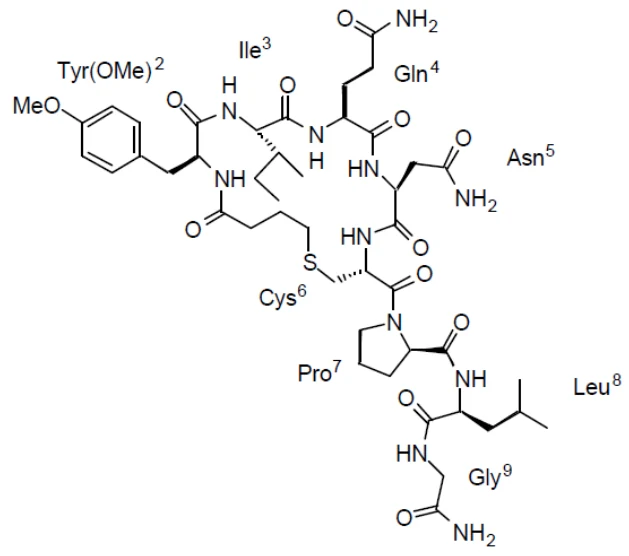
Physicochemical properties: Carbetocin is a white, fluffy lyophilized powder, soluble in water, ethanol, methanol and acetic acid. Carbetocin is insoluble in ether and petroleum ether. The pH of carbetocin is 3.9.
Other Names:
[2-0-methyltyrosine]-1-deaminocarba-1-oxytocin
[6,1,B-deaminocystathionine,2-0-methyl-tyrosine-oxytocin] [tyr(me)2]-deamino-1-carba-oxytocin
14 CLINICAL TRIALS
14.1 Clinical Trials by Indication
Caesarean Section Program
Study Design – Elective Caesarean Section
Three pivotal randomised controlled clinical trials were conducted in support of the use of carbetocin in healthy pregnant women undergoing elective caesarean section.
Table 6: Summary of Clinical Trials in Patients Undergoing Elective Caesarean Section
| Study # | Trial design | Dosage, route of administration and duration | Study subjects (n=number) | Population | Primary endpoint |
|---|---|---|---|---|---|
Boucher et al, 1998 CLN 6.3.6 Efficacy Safety | group trial | Carbetocin: 100 mcg IV bolus Oxytocin: 32.5 IU, 16 h IV infusion | Carbetocin: n = 29 Oxytocin: n = 28 | Healthy pregnant women undergoing elective caesarean section under epidural anaesthesia | Intra- operative blood loss |
Dansereau et al, 1999 CLN 6.3.9 Efficacy Safety | group trial | Carbetocin: 100 mcg IV bolus Oxytocin: 25 IU, 8 h IV infusion | Carbetocin: n = 329 Oxytocin: n = 330 | Healthy pregnant women undergoing elective caesarean section under epidural anaesthesia | Incidence of need for additional oxytocin intervention |
Barton et al, 1993 CLN 6.3.10 Efficacy Safety | Randomised placebo- controlled, double- blind, parallel- group trial | Carbetocin: 100 mcg IV bolus Placebo: 0.9% sodium chloride IV | Carbetocin: n = 64 Placebo: n = 58 | Healthy pregnant women undergoing elective caesarean section under epidural anaesthesia | Incidence of need for additional oxytocin intervention |
Study Design – Emergency and Elective Caesarean Section
Three randomised controlled trials were conducted including pregnant subjects undergoing emergency and elective Caesarean section.
Table 7: Summary of Clinical Trials including Patients Undergoing Emergency and Elective Caesarean Section
| Study | Trial design | Dosage, route of administration and duration | Study subjects (n=number) | Population | Primary endpoint |
|---|---|---|---|---|---|
Attilakos et al, 2010* Efficacy Safety | Randomised, active- controlled, double-blind, parallel- group trial | Carbetocin: 100 mcg IV Oxytocin: 5 IU IV | Carbetocin: n = 188 Oxytocin n = 189 | Healthy pregnant women undergoing elective or emergency caesarean section under regional anaesthesia | Incidence of need for additional oxytocin intervention |
Borruto et al, 2009** Efficacy Safety | Randomised, active- controlled, single- blinded, parallel- group trial | Carbetocin: 100 mcg IV Oxytocin: 10 IU, 2 h IV infusion | Carbetocin: n = 52 Oxytocin n = 52 | Pregnant women with at least one risk factor for PPH undergoing elective or emergency caesarean section under peridural anaesthesia | Patients requiring additional oxytocic intervention for uterine atony |
El Behery et al, 2015*** Efficacy Safety | Carbetocin: 100 mcg IV Oxytocin: 20 IU, 8 h IV infusion | Carbetocin: n = 90 Oxytocin n = 90 | Obese (BMI>30), nulliparous, pregnant women undergoing emergency caesarean section | Major primary postpartum haemorrhage defined as blood loss ≥ 1000 mL within 24 h of delivery |
*60% elective and 40% emergency caesarean section patient population
**Mixed planned and emergency caesarean patient population
***All emergency caesarean sections
Caesarean Section Study Results
Elective Caesarean Section
Boucher (1998) showed no significant difference between carbetocin 100 mcg IV and oxytocin 32.5 IU, 16 h IV infusion in terms of preventing excessive intraoperative blood loss. The mean blood loss in the carbetocin group was 159 ± 92 mL vs. 188 ± 115 mL in the oxytocin group (p=0.30). However, the percentage of subjects with blood loss ≤200 mL in the carbetocin group was significantly higher than in the oxytocin group (79% vs. 53%; p<0.05). No subjects in the carbetocin group required additional oxytocic therapy for uterine atony or excessive bleeding whereas additional oxytocic intervention was required in 3 subjects in the oxytocin group (11%).
This study demonstrated that a single intravenous bolus injection of carbetocin was at least as effective as 16 hours of continuous oxytocin infusion, in terms of efficacy in maintaining uterine contraction after cesarean section, and in preventing excessive intraoperative blood loss following cesarean delivery. This study confirmed the ability of a 100 mcg intravenous dose of carbetocin to maintain adequate uterine tone after cesarean section. Carbetocin also appeared to accelerate the initial stages of uterine involution, associated with the return of the uterus to the non-pregnant size and position.
A second double-blind trial, (Dansereau, 1999), compared a single intravenous dose of 100 mcg carbetocin to an 8-hour oxytocin infusion in 659 healthy pregnant women after elective cesarean section done under epidural or spinal anesthesia. The primary objective was to compare the safety and efficacy of the two treatments in maintaining adequate uterine contraction after cesarean section. The primary efficacy variable was the incidence rate of the need for further oxytocic therapy for 48 hours after delivery. Carbetocin was associated with lower incidence of "need for additional oxytocic intervention" when compared to oxytocin: such intervention occurred in 15 (5%) of the patients receiving Carbetocin 100 mcg IV compared to 32 (10%) of the patients administered oxytocin (p=0.031). Carbetocin was associated with a significantly longer time to intervention when compared to 25 IU oxytocin: 2.03 versus 0.18 hours respectively (medians)
Barton (1993) evaluated the safety and efficacy of carbetocin versus placebo for control of bleeding after cesarean section. This multicentre trial included 122 patients. Efficacy was determined as the requirement for intervention with additional oxytocic therapy following test drug administration. When given as a single bolus intravenous dose of 100 mcg after delivery of the infant at elective cesarean section done under epidural, carbetocin was found to be significantly more effective than placebo in preventing uterine atony and excessive bleeding with only 13% of patients requiring intervention with further oxytocic therapy compared to 72% of patients in the placebo group (p=0.001).
Emergency and Elective Cesarean Section
Attilakos (2010) demonstrated that carbetocin 100 mcg IV was significantly better than oxytocin 5 IU IV in reducing the need for additional oxytocic intervention. Additional oxytocic intervention was required in 33.5% of the subjects receiving carbetocin compared to 45.5% of the subjects receiving oxytocin (relative risk 0.74, 95% CI: 0.57-0.95; p=0.023). There were no significant differences between the treatment groups with respect to number of subjects experiencing postpartum haemorrhage with blood loss>1000 mL, estimated intraoperative blood loss, difference in haemoglobin, uterine tone, and incidence of blood transfusions.
The trial by Borruto (2009) showed that additional oxytocic intervention was required in significantly fewer subjects in the carbetocin group compared to the oxytocin group (3.8% vs.
9.6%; p<0.01). Also, significantly fewer subjects in the carbetocin group compared to the oxytocin group required uterine massage (38.4% vs. 57.7%, p<0.01). The mean time to intervention (oxytocin infusion as well as uterine massage) was comparable between the two treatment groups. The position of the fundus was below the umbilicus in a greater number of subjects in the carbetocin group (indicating enhanced uterine involution) at all times points after transfer to the ward reaching statistical significance after 24 h (p<0.05). The percentage of subjects with blood loss ≤500 mL was higher in the carbetocin 100 mcg IV group than in the oxytocin 10 IU, 2 h IV infusion group (81% vs. 55%; p=0.05). There was no significant difference in mean blood loss between the two treatment groups although it was 30 mL less in the carbetocin group (p=0.5).
The results of the El Behery (2015) study in women with an increased risk of postpartum hemorrhage are summarized in Table 8. The carbetocin group had statistically significantly lower incidence of postpartum hemorrhage (p=0.03), estimated blood loss (p=0.002) and need for transfusion (p=0.04) when compared to the oxytocin group. Haemoglobin levels before and 24-h postpartum were similar. 2.22% of patients in the carbetocin group versus 71.11% of patients in the oxytocin group needed additional uterotonics (p=0.002). The uterine contractility was better in the carbetocin group at 2-h and 12-h postpartum (p<0.05).
Table 8 – Summary of Results from Clinical Trials in Emergency and Elective Cesarean Section
| Study | Carbetocin 100 mcg IV | Oxytocin**** | p value |
|---|---|---|---|
| Need for Additional Oxytocic n/N (%) | |||
| Attilakos et al.*1 | 63/188 (33.5) | 86/189 (45.5) | RR 0.74 (95% CI: 0.57-0.95) 0.023 |
| Borruto et al.2 | 2/52 (3.8) | 5/52 (9.6) | RR 1.83 (95% CI: 0.9-2.6) <0.01 |
| El Behery et al.3 | 2/90 (2.2) | 64/90 (71.1) | 0.0002 |
| Incidence of PPH n/N (%) | |||
| Attilakos et al.1 | 9/186 (4.8) | 9/189 (4.8) | ns |
| Borruto et al.2 | - | - | - |
| El Behery et al.*3 | 2/90 (2.2) | 12/90 (13.33) | 0.03 |
| Blood Loss (mLs) | |||
| Attilakos et al.***1 | 500 (400-700) | 500 (400-600) | |
| Borruto et al. (IOP)**2 | 370.1 | 400.5 | 0.5 |
| El Behery et al. **3 | 689 ± 580 | 1027 ± 659 | 0.002 |
| Mean Hemoglobin Decrease dL | |||
| Attilakos et al.**1 | 1.6 (95% CI 1.5-1.8) | 1.6 (95% CI 1.5-1.8) | |
| Borruto et al.2 | - | - | - |
| El Behery et al.**3 | 1.74 (0.87) | 0.94 (0.64) | 0.03 |
| Need for Transfusion | |||
| Attilakos et al.1 | 4/188 (2.1) | 5/189 (2.6) | <0.99 |
| Borruto et al.2 | - | - | - |
| El Behery et al.3 | 0/90 (0) | 14/90 (15.6) | 0.04 |
| El Behery et al.3 | 0/90 (0) | 14/90 (15.6) | 0.04 |
* Primary Outcome Measure, ** Mean ± SD, *** Median (IQR), ns – non-significant, IOP – intraoperative
**** Attilakos et al. = 5 IU, Borruto et al. = 10 IU, El Behery et al. = 20 IU
1 60% elective and 40% emergency cesarean section patient population
2 Mixed planned and emergency cesarean patient population
3 All emergency cesarean sections
15 MICROBIOLOGY
No microbial information is required for this drug product.
16 NON-CLINICAL TOXICOLOGY
In acute toxicology studies, the LD50 was estimated at 10 mg/kg in an intravenous rat study. Marked clinical signs (lethargy, hunched posture, piloerection, rapid breathing and uncoordinated movement) were noted for all animals. Using this LD50, the corresponding dose for a 100 g rat would be 1,000 mcg, which is ten times the dose used in humans.
Four groups of 20 rats were given carbetocin intravenous at doses of up to 1.0 mg/kg/day for 28 days. There were no deaths or clinical signs attributable to treatment.
Sixteen female beagles were given carbetocin by intravenous injection daily for 28 days at doses of up to 1.0 mg/kg/day. There were no deaths or clinical signs attributable to treatment. No treatment related changes in hematology, clinical chemistry or urinalysis occurred.
Carbetocin was found to be devoid of mutagenic activity in a battery of mutagenicity tests. Carcinogenicity studies have not been performed.
Reproduction and teratology studies have not been performed since the drug is intended for a single administration immediately after delivery.
17 SUPPORTING PRODUCT MONOGRAPHS
- 1. DURATOCIN® (carbetocin injection; 100 mcg / vial), Submission Control No.: 236432, Product Monograph, Ferring Inc., April 28, 2020.
- 2. DURATOCIN® (carbetocin injection; Solution; 100 mcg / vial), Submission Control No.: 284214, Product Monograph, Ferring Inc: July 22, 2024.