


Product Monograph - Carboprost Tromethamine Injection
INDICATIONS AND CLINICAL USE
Carboprost Tromethamine Injection is indicated for the treatment of:
Postpartum hemorrhage due to uterine atony which has not responded to conventional methods of management.
Prior treatment should include the use of intravenously administered oxytocin, manipulative techniques such as uterine massage and, unless contraindicated, intramuscular ergot preparations. Studies have shown that in such cases, the use of carboprost tromethamine injection has resulted in satisfactory control of hemorrhage, although it is unclear whether or not ongoing or delayed effects of previously administered ecbolic agents have contributed to the outcome. In a high proportion of cases, carboprost tromethamine injection used in this manner has resulted in the cessation of life threatening bleeding and the avoidance of emergency surgical intervention.
CONTRAINDICATIONS
- 1. Hypersensitivity to any of the components of the preparation (carboprost, tromethamine, sodium chloride, benzyl alcohol).
- 2. Patients with known active cardiac, pulmonary, renal, or hepatic disease.
- 3. Acute pelvic inflammatory disease.
WARNINGS AND PRECAUTIONS
General
Carboprost Tromethamine Injection, like other potent oxytocic agents, should be used with strict adherence to recommended dosages, by medically trained personnel in hospital surroundings with appropriate intensive care and acute surgical facilities.
Carboprost Tromethamine Injection should not be used for induction of labour.
Carboprost Tromethamine Injection must not be given intravenously.
Carboprost Tromethamine Injection should not be used during pregnancy (see WARNINGS AND PRECAUTIONS, Special Populations, Pregnant Women).
Carboprost Tromethamine Injection is not indicated in pediatric patients. This product contains benzyl alcohol. Benzyl alcohol has been reported to be associated with a fatal "Gasping Syndrome" in premature infants (see WARNINGS AND PRECAUTIONS, Special Populations, Pediatrics).
Cardiovascular
Carboprost Tromethamine Injection should be used cautiously in patients with a history of hypo- or hypertension, or cardiovascular disease.
On rare occasions, cardiovascular collapse has been reported with some of the prostaglandins, so this should always be considered when using Carboprost Tromethamine Injection.
Nine of 248 patients (4%) treated for postpartum hemorrhage had an increase of blood pressure reported as a side effect. The degree of hypertension was moderate and it is not certain as to whether this was in fact due to a direct effect of carboprost tromethamine injection or a return to a status of pregnancy-associated hypertension manifest by the correction of hypovolemic shock. In any event, the cases reported did not require specific therapy for the elevated blood pressure.
In a post-marketing trial of 333 cases of postpartum hemorrhage, investigator's considered 17 cases (5%) of increased blood pressure to be drug related.
Endocrine and Metabolism
Carboprost Tromethamine Injection should be used cautiously in patients with a history of diabetes.
Hematologic
Prostaglandins in general affect platelet aggregation by inhibiting it. Clinical experience on the effect of carboprost tromethamine injection on human coagulation factors is limited. Due to this lack of information, it is advised that coagulation parameters be measured.
Carboprost Tromethamine Injection should be used cautiously in patients with a history of anemia.
Hepatic/Biliary/Pancreatic
Carboprost Tromethamine Injection should be used cautiously in patients with a history of hepatic disease or jaundice.
Immune
Chorioamnionitis was identified as a complication contributing to postpartum uterine atony and hemorrhage in eight of 115 patients, 3 of which failed to respond to carboprost tromethamine injection. This complication during labour may have an inhibitory effect on the uterine response to Carboprost Tromethamine Injection similar to what has been reported for other oxytocic agents.
Musculoskeletal
Animal studies lasting several weeks at high doses have shown that prostaglandins of the E and F series can induce proliferation of bone. Such effects have also been noted in newborn infants who have received prostaglandin E1 during prolonged treatment. There is no evidence that short term administration of carboprost tromethamine injection can cause similar bone effects.
Neurologic
Carboprost Tromethamine Injection should be used cautiously in patients with a history of epilepsy.
Ophthalmologic
Carboprost Tromethamine Injection should be used with caution in patients with a history of glaucoma or raised intra-ocular pressure.
Renal
Carboprost Tromethamine Injection should be used cautiously in patients with a history of renal disease.
Respiratory
Carboprost Tromethamine Injection should be used cautiously in patients with a history of asthma.
Bronchoconstriction has been reported after exposure to carboprost tromethamine injection, but it is rarely clinically important except in asthmatic patients.
Sensitivity/Resistance
Cases of hypersensitivity reactions including anaphylactic reaction, anaphylactic shock, anaphylactoid reaction, and angioedema have been reported in patients treated with carboprost tromethamine injection in the post-marketing experience (see ADVERSE REACTIONS – Post-Market Adverse Drug Reactions).
Sexual Function/Reproduction
Carboprost Tromethamine Injection should be used cautiously in patients with previously compromised (scarred) uteri.
Other
Use of carboprost tromethamine injection is associated with transient pyrexia that may be due to hypothalamic thermoregulation. Fever was reported by 8 of 115 (7%) patients treated in an open-label clinical trial of patients with postpartum hemorrhage due to uterine atony who had not responded to conventional non-surgical treatment of fundal massage, intravenous oxytocin and/or intramuscular methylergonovine.
Special Populations
Pregnant Women: Animal studies have shown reproductive toxicity and any dose of carboprost that produces increased uterine tone could put the embryo or fetus at risk. Carboprost Tromethamine Injection is indicated in the postpartum period. It is not indicated for use during pregnancy.
Carboprost Tromethamine Injection contains benzyl alcohol which can cross the placenta.
Nursing Women: Human pharmacokinetics studies were not conducted on the excretion of carboprost tromethamine in breast milk. However, based on plasma clearance rates it is recommended that breast feeding not occur for at least 6 hours after administration.
Pediatrics: The safety and efficacy of carboprost tromethamine injection in the pediatric population have not been established. Carboprost Tromethamine Injection is not indicated in pediatric patients.
Carboprost Tromethamine Injection contains benzyl alcohol. Benzyl alcohol has been associated with serious adverse events, including fatal “gasping syndrome” in pediatric patients. Manifestations of the disease included: metabolic acidosis, respiratory distress, gasping respirations, central-nervous system dysfunction, convulsions, intracranial hemorrhages, hypotonia, cardiovascular collapse and death.
ADVERSE REACTIONS
Adverse Drug Reaction Overview
The adverse effects of carboprost tromethamine are generally transient and reversible when therapy ends. The most frequent adverse reactions are related to its contractile effect on smooth muscle.
In patients studied, approximately two-thirds (66%) experienced vomiting and diarrhoea, approximately one third (33%) had nausea, one eighth (12%) had a temperature increase greater than 1.1°C, and one-fourteenth (7%) experienced flushing.
Prior treatment with, or concomitant administration of anti-emetics and antidiarrhoeal drugs significantly reduces the very high incidence of the gastrointestinal side effects common to all prostaglandins. Their use should be considered an integral part of the management of patients.
Clinical Trial Adverse Drug Reactions
The table below lists the adverse effects identified through clinical trials by System Organ Class (SOC) and frequency. Within each frequency grouping, adverse events are presented in order of decreasing seriousness.
System Organ Class | Very common (≥ 1/10) | Common (≥ 1/100 to < 1/10) | Uncommon (≥ 1/1000 to < 1/100) | Not known |
|---|---|---|---|---|
| Cardiac disorders | Tachycardia | |||
| Ear and labyrinth disorders | Tinnitus Vertigo | |||
| Eye disorders | Eye pain Vision Blurred | |||
| Gastrointestinal disorders | Diarrhoea† Vomiting† Nausea† | Haematemesis Epigastric pain Dry mouth | Gastralgia | |
| General disorders and administration site conditions | Retrosternal discomfort | Chills, Shivering | Tightness in chest Injection site pain | |
| Infections and Infestations | Endometritis† | Septic shock Urinary tract infection | ||
| Investigations | Body temperature increased | |||
| Musculoskeletal and connective tissue disorders | Back pain Myalgia Torticollis | |||
| Nervous system disorders | Headache† | Syncope vasovagal Pre-syncope Lethargy Dystonia Paraesthesia Dysgeusia Dizziness† Somnolence | ||
| Psychiatric disorders | Sleep disorder | |||
| Reproductive system and breast disorders | Retained placenta or membranes Uterine haemorrhage | Uterine rupture Perforation of uterus Pelvic pain† Breast tenderness |
System Organ Class | Very common (≥ 1/10) | Common (≥ 1/100 to < 1/10) | Uncommon (≥ 1/1000 to < 1/100) | Not known |
|---|---|---|---|---|
| Respiratory, thoracic and mediastinal disorders | Cough | Respiratory distress Hyperventilation† Dyspnoea Asthma Wheezing Hiccups | ||
| Skin and subcutaneous tissue disorders | Diaphoresis Perspiration | |||
| Vascular disorders | Flushing Hot flush | Hypertension |
† Events reported for both intramuscular and intra-amniotic routes of administration. All other events were reported only for the intramuscular route. The safety of the IMM and IV routes has not been fully established at this time.
Post-Market Adverse Drug Reactions
The following adverse reactions have been identified during post-approval use of carboprost tromethamine injection:
Infections and Infestations: Upper respiratory tract infection.
Immune System Disorders: Hypersensitivity reactions (e.g., anaphylactic reaction, anaphylactic shock, anaphylactoid reaction, angioedema) (see WARNINGS AND PRECAUTIONS).
Endocrine disorders: Thyrotoxic crisis. Psychiatric disorders: Anxiety, nervousness. Nervous system disorders: Syncope.
Cardiac disorders: Palpitations.
Respiratory, thoracic and mediastinal disorders: Throat tightness, choking sensation, epistaxis, dry throat, bronchospasm, pharyngeal oedema, pulmonary oedema.
Gastrointestinal disorders: Retching.
Skin and subcutaneous tissue disorders: Rash.
Musculoskeletal and connective tissue disorders: Leg cramps, blepharospasm.
Reproductive system and breast disorders: Uterine sacculation.
General disorders and administration site conditions: Chest pain, excessive thirst, asthenia.
DRUG INTERACTIONS
Concomitant use with other oxytocic agents is not recommended. However, 578 (92%) out of 628 patients who received carboprost tromethamine injection had prior treatment with conventional oxytocics such as oxytocin and ergometrine (ergonovine) maleate. It must be considered that Carboprost Tromethamine Injection may augment the activity of these oxytocic agents.
Drug-Lifestyle Interactions
No studies on the effects of carboprost tromethamine injection on the ability to drive and use machines have been performed.
DOSAGE AND ADMINISTRATION
Dosing Considerations
Carboprost Tromethamine Injection must not be given intravenously.
Parenteral drug products should be inspected visually for particulate matter and discoloration prior to administration, whenever solution and container permit.
Recommended Dose and Dosage Adjustment
Carboprost Tromethamine Injection is administered by deep intramuscular injection. Initially a 250 mcg (1 mL, the entire contents of the vial) dose of Carboprost Tromethamine Injection is given.
In clinical trials, 80% of successful cases responded to ≤ 250 mcg and 95% of successful cases responded to ≤ 500 mcg. In some cases, multiple dosing of 250 mcg at intervals of 15 to 90 minutes was carried out with successful outcome. The need for additional injections and the interval at which these should be given can be determined only by the attending physician as dictated by the course of clinical events. The total dose of Carboprost Tromethamine Injection should not exceed 2 mg (8 doses).
OVERDOSAGE
Overdosage with Carboprost Tromethamine Injection should result in the accentuation of expected side effects such as nausea, vomiting and diarrhea. Elevated blood pressure and body temperature may occur. Supportive therapy, particularly fluid replacement, should be given if serious vomiting and diarrhea occur.
Although prostaglandin antagonists are known to exist, no experience has been obtained at the present time with their usage in overdosage. Therefore, no specific therapy for overdosage is available.
| For management of a suspected drug overdose, contact your regional poison control centre. |
|---|
ACTION AND CLINICAL PHARMACOLOGY
Mechanism of Action
Carboprost tromethamine injection given intramuscularly during the immediate postpartum period stimulates myometrial contractions. The result of postpartum contractions provides effective hemostasis at the site of placentation. The mechanism of action of these contractions has not been determined.
Pharmacodynamics
Uterine atony is the leading cause of postpartum hemorrhage. Extensive clinical experience with prostaglandins in term labour induction trials and pregnancy termination has established them as effective uterotonic agents. Prostaglandins appear to be involved in postpartum hemostatic mechanisms by virtue of their pharmacodynamic properties relative to myometrial stimulation, vasoactive effects and platelet function. Carboprost tromethamine, a methylated analogue of PGF2α, has been shown to be a more potent uterotonic agent with longer duration of action than the parent compound.
Carboprost tromethamine also stimulates the smooth muscle of the human gastrointestinal tract. This activity may produce the vomiting and/or diarrhea that is common when carboprost tromethamine is used. In laboratory animals and humans, carboprost tromethamine can elevate body temperature. With the clinical doses of carboprost tromethamine, some patients do experience transient temperature increases.
In laboratory animals, and in humans, large doses of carboprost tromethamine can raise blood pressure, probably by contracting the vascular smooth muscle. With the doses of carboprost tromethamine used for terminating pregnancy, this effect has not been clinically significant. In some patients, carboprost tromethamine may cause transient bronchoconstriction.
Pharmacokinetics
Five women who had spontaneous vaginal deliveries (at term) were treated immediately postpartum with a single intramuscular injection of 250 mcg carboprost tromethamine. Peripheral blood samples were collected at several times during the four hours following treatment and carboprost tromethamine plasma levels were determined by radioimmunoassay. The highest plasma concentration of carboprost tromethamine was observed at 15 minutes in two patients (3009 and 2916 picograms/mL); at 30 minutes in two patients (3097 and 2792 picograms/mL); and at 60 minutes in one patient (2718 picograms/mL).
STORAGE AND STABILITY
Carboprost Tromethamine Injection must be refrigerated between 2-8°C.
DOSAGE FORMS, COMPOSITION AND PACKAGING
Each mL of Carboprost Tromethamine Injection contains 332 mcg of carboprost tromethamine (equivalent to 250 mcg of carboprost), 9.45 mg of benzyl alcohol, 9 mg of sodium chloride, 83 mcg of tromethamine and Water for Injection. When necessary, pH was adjusted with sodium hydroxide and/or hydrochloric acid.
Carboprost Tromethamine Injection is a clear colorless solution available as 1 mL of fill volume in 2 mL, 13mm USP type I clear glass vial fitted with 13 mm grey chlorobutyl S2-F451 4432/5O/GRY B2-4O Westar® RS rubber stopper and sealed with 13 mm pink matte top aluminum flip off seal in boxes of 10.
PART II: SCIENTIFIC INFORMATION
PHARMACEUTICAL INFORMATION
Drug Substance
Proper name: Carboprost tromethamine
Chemical name:
- a) (15S)-15-methyl prostaglandin F2α tromethamine salt
- b) 7-[3α,5α-dihydroxy-2β-[(3S)-3-hydroxy-3-methyl-trans-1α-octenyl]-1 -cyclopentyl]-cis- 5-heptenoic acid compound with 2-amino-2-(hydroxymethyl)-1,3-propanediol
- c) (5Z,9α,11α,13E,15S)-9,11,15-trihydroxy-15-methylprosta-5,13-dienoic acid tromethamine salt
- d) (15S)-15-methyl PGF2α -THAM
Molecular formula: C25H47O8N
Molecular mass: 489.65 g/mol
Structural Formula:
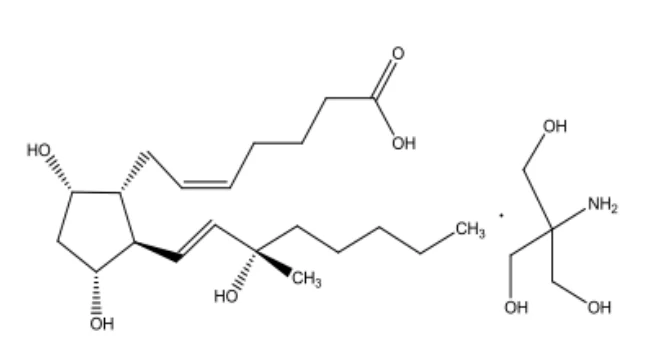
Physicochemical properties: Carboprost tromethamine is a white to slightly off-white crystalline powder. It generally melts between 95° to 105°C, depending on the rate of heating. It dissolves readily in water at room temperature at concentrations greater than 75 mg/mL.
DETAILED PHARMACOLOGY
Carboprost is a synthetic compound with a structural modification that has been shown to block the initial step in metabolic degradation, and has altered its biological activity accordingly. This compound interrupted pregnancy in the hamster and the monkey, accelerated the transport of ova through the fallopian tubes in rabbits, and increased the tone of longitudinal muscle of the human oviduct in vitro. Carboprost was about 10 times as potent a uterine stimulant as prostaglandin F2α when administered intravenously or intramuscularly and it is also active on vaginal application. In general, carboprost's minimal effective dose was lower and its effect lasted longer than prostaglandin F2α. The binding affinity of carboprost to a human myometrial in vitro preparation or to a bovine luteal particulate fraction was lower than prostaglandin F2α.
In the anaesthetized dog, intramuscular or intravenous carboprost produced a greater and more sustained rise in pulmonary artery pressure than prostaglandin F2α and intramuscular carboprost also elicited a more prolonged increase in pulmonary vascular resistance, caused a greater initial fall in systemic arterial oxygen tension and cardiac output and a greater increase in systemic resistance. Carboprost was also shown to be more potent than prostaglandin F2α in altering the relative blood pressure of the anaesthetized, pentolinium treated rat.
Carboprost, in doses of 30 or 60 mcg, lowered the body temperature of the Rhesus monkey by
0.5 or 1.5⁰C respectively for 4 to 5 hours.
Carboprost stimulated platelet aggregation in vitro, inhibited gastric secretions in dogs and had no analgesic activity in rats as measured by the hotplate method.
Animal Drug Kinetics
Following single intravenous administration of 200 mcg of carboprost to two Rhesus monkeys, the initial disappearance half-life of carboprost from plasma was approximately one minute as compared with 20 to 30 seconds for prostaglandin F2α. After three minutes, however, the rate of disappearance from plasma slowed markedly so that significant plasma levels of 16 to 19 ng/mL were still present 30 minutes after dosing. By contrast, prostaglandin F2α plasma levels return to baseline values five minutes after dosing. Intravenous infusion of carboprost at the rate of 1 mcg per minute for 30 minutes elevated the plasma level to 4.2 ng/mL. Detectable levels (2 ng/mL) were still present 90 minutes after discontinuing the infusion whereas, prostaglandin
F2α concentrations returned to baseline levels within five minutes after discontinuation. In the Rhesus monkey, a single intramuscular injection of 20 to 130 mcg of carboprost gave peak plasma levels of drug of 0.4 to 5 ng/mL at 30 to 60 minutes which then declined to baseline levels 6 to 8 hours after injection. These plasma concentrations were comparable to those resulting from the continuous infusion of carboprost for 30 minutes at the rate of 1 mcg per minute and indicated rapid uptake from the site of injection as well as rapid distribution. Monkeys were injected during both the follicular and luteal phase of the menstrual cycle, but no significant differences in plasma levels of carboprost were observed. Co-injection of epinephrine did not affect the rate of absorption from the injection site.
In the Rhesus monkey, absorption of carboprost from the vagina was slower than that of prostaglandin F2α. Maximum blood levels were only 0.016% of the dose and after 22.5 hours only 12% of the dose was excreted in the urine.
Urinary excretion represents the major route of elimination of carboprost in monkeys. Urinary excretion of metabolites is rapid and nearly complete 24 hours after subcutaneous or intramuscular administration in Cynomolgus monkeys, with the majority of the dose being excreted within the first 5 to 10 hours.
Following the intramuscular administration of 3H-carboprost in rats, 64% of the dose was excreted in the urine, mostly in the first 24 hour period after dosing. Less than 0.2% remained in the body 72 hours after dosing and a similar excretion and residue pattern was observed after intravenous dosing.
Human Drug Kinetics
Blood samples collected during the 0 to 5 and 5 to 15 minutes intervals following intravenous administration of radiolabelled carboprost to a normal female were analyzed for intact drug. Of the total radioactivity extracted from the earlier sample, 80% was still carboprost. In the 5 to 15 minutes sample, 30% was still intact drug and it was evident that carboprost remains in the peripheral circulation much longer than does prostaglandin F2α.
When pregnant women (second trimester) were administered carboprost by continuous intravenous infusion for six hours at the rate of 2.5 mcg/minute, the plasma level of intact drug increased from 1.1 to 1.3 ng/mL after 1 to 2 hours and then remained essentially constant for the balance of the infusion period. When the infusion rate was increased to 5 mcg/minute, the plasma level rose continuously until the infusion was stopped. Following cessation of the infusion, plasma levels decreased, with a half-life of approximately 30 to 45 minutes.
Peak plasma levels of 1 to 1.6 ng/mL were obtained 20 to 30 minutes after a single intramuscular injection of 100 to 400 mcg of carboprost to pregnant women. Levels gradually declined to 0.2 to 0.4 ng/mL three hours after drug administration. When carboprost (250 mcg) was given intramuscularly every two hours to pregnant women, pre-injection plasma levels of carboprost stabilized after four injections at 1.2 ng/mL, approximately the same as that during the intravenous infusion of 2.5 mcg/minute (300 mcg every two hours). The data indicate that the intramuscular route, at comparable total dosages, resulted in minimum plasma drug levels similar to those obtained by continuous intravenous infusion.
Limited drug distribution data from other routes of administration of carboprost have also been obtained. Tritium labelled carboprost (2.5 mg), administered intra-amniotically to mid-trimester abortion patients, disappeared from the amniotic fluid with a half-life of 27 to 31 hours, about twice that of prostaglandin F2α. The disappearance rate of total radio-activity from the fluid was similar for carboprost and prostaglandin F2α, indicating less rapid metabolism of the synthetic analogue. Urinary excretion accounted for 6 to 30% of the dose.
Significant amounts of free drug and lesser amounts of metabolites (total of 0.4 to 2.9 mcg/gm of tissue) were found in fetal lung, liver and kidney.
Urinary excretion represents the major route of elimination of carboprost in man. Urinary excretion of metabolites is rapid and nearly complete 24 hours after intravenous or subcutaneous administration in women. About 80% of the dose is excreted within the first 5 to 10 hours and an additional 5% of the dose is excreted in the next 20 hours. After subcutaneous administration in women, the extent and rate of urinary excretion of the metabolic products of carboprost and prostaglandin F2α are very similar.
Three metabolites of carboprost have been characterized from human (and monkey) urine.
These account for approximately 75% of the urinary metabolites. About 1% of the dose is excreted as intact drug. The remaining uncharacterized metabolites C of which there are several, all in small amounts C are both more and less polar than the parent compound. The major metabolite found in plasma or amniotic fluid is the dinor metabolite.
TOXICOLOGY
Acute Toxicity
| Species | Route | LD50 |
|---|---|---|
| Mouse | intravenous | 131.6 mg/kg |
| Rat | intravenous | 25.1 mg/kg |
Depression, defecation, emaciation and severe dehydration were the signs of toxicity in the above studies. For reference, the recommended clinical dose of 250 mcg with a 2 mg maximum represents at least a thousand-fold margin of safety.
In another study, carboprost was not well tolerated by rats receiving a single dose in excess of
3.2 mg/kg. Rapid weight loss, diarrhea and depression were the signs of intolerance.
Myometrial Irritation Study - Monkey
The uteri of Rhesus monkeys showed focal coagulation necrosis and sero-hemorrhagic endometritis when examined 3 and 7 days following intramyometrial injection of 0.125 mg or
1.25 mg carboprost. Necrosis extending through much of the myometrial wall was found in two of four monkeys injected with 1.25 mg and one of four injected with 0.125 mg. No uterine contractions were noted.
Myometrial Irritation Study - Monkey
Hypertonic saline (20%) and 5 mg PGF2α were injected intramyometrially into various sites of pregnant monkey uterus. Saline caused myometrial necrosis, hemorrhage and thrombosis.
There was no histologic change caused by PGF2α, although uterine contractions were achieved. The authors concluded that myometrial necrosis was unlikely to occur after intramyometrial injection of PGF2α.
Irritation Study - Rabbit
Rabbits administered intramuscular injections of 0.014 mg/kg carboprost showed no evidence of local tissue irritation 4, 7 and 14 days following injection.
Three Day Study - Monkey
In a 3 day acute tolerance study, one monkey was given carboprost intramuscularly at dosage levels of 0.5, 1.6 and 3.2 mg/kg on successive days and another monkey received successive daily doses of 0.32, 1.0 and 10 mg/kg. Emesis, diarrhea and weight loss were found in the male monkey receiving the first regimen and the female monkey experienced diarrhea, emesis, abdominal cramps and depression following daily administration of 1.0 mg/kg. The female monkey showed weight loss at the end of the treatment period.
Long-Term Toxicity
Eight Day Study - Monkey
No evidence of toxicological response was seen in female monkeys receiving intravaginal injections of carboprost at a dosage level of 0.08 mg/kg/day over 8 days.
One Month Study - Monkey
Four groups of monkeys, consisting of 2 male and 2 female animals each, received daily intramuscular injections at dosage levels of 0, 0.008, 0.025 and 0.08 mg/kg/day of carboprost respectively over a one-month time span. No evidence of drug-related toxicity was found.
One Month Study - Rat
Four groups of rats consisting of 5 male and 5 female animals each, received daily subcutaneous injections amounting to 0, 0.5, 1.0 and 2.0 mg/kg/day of carboprost respectively over a one- month period. Evidence of adverse response to drug administration was minimal. Depression was the most consistent clinical response.
Reproduction and Teratology
Segment I Study - Rat
In one study, male rats were injected subcutaneously with 0.25, 0.5, or 1.0 mg/kg for 3 or 6 days before breeding and in a second study, female rats were treated with the same carboprost dosage schedule. In both studies, diarrhea and weight loss were seen but the drug did not interfere with breeding or conception. Dams given 1.0 mg/kg delivered fewer fetuses per litter, but the average fetal body weights were comparable to the control weights.
Segment II Study - Rabbit
Carboprost was given to bred rabbits by subcutaneous injection at doses ranging between 0.0025 and 0.5 mg/kg body weight on 3 consecutive days during the period of active organogenesis. At doses larger than 0.025 mg/kg, carboprost interfered with implantation, was embryolethal or induced abortion, depending on when it was administered. Dams carried fetuses to term only when given the smaller doses of 0.0025 or 0.005 mg/kg. These low doses were not teratogenic and did not interfere with reproduction.
Segment III Study - Rat
Carboprost was given daily by subcutaneous injection to bred rats at doses ranging from 0.001 to 1.0 mg/kg beginning on the 15th day of gestation. Dams given doses larger than 0.025 mg/kg aborted between day 15 to 20 of gestation. Other dams, given doses as small as 0.003 mg/kg, aborted or delivered litters one or two days before full term. Most of their pups died shortly after birth and those that survived for several hours postpartum either died before weaning or weighed less than control pups because lactation was impaired.
Only the 0.001 mg/kg dose of carboprost did not induce labour prematurely. Dams given that dose carried normal litters to term, had normal deliveries and raised their offspring until weaning at 21 days postpartum.
REFERENCES
- 1. Ananthasubramaniam L, Kantal R, Sivaraman R, Raghavan KS. Management of intractable postpartum hemorrhage secondary to uterine atony with intramuscular 15(S)15-methyl PGF2α. Acta Obstet Gynecol Scand (Suppl) 1988;145:17-19.
- 2. Baskett TF. Management of atonic postpartum haemorrhage with 15-methyl prostaglandin F2α. J SOGC 1992;May:135-6.
- 3. Buttino L, Garite TJ. The use of 15-methyl F2α prostaglandin (Prostin 15M) for the control of postpartum hemorrhage. Am J Perinatol 1986 Jul; 3(3):241-3.
- 4. Cooley DM, Glosten B, Romaine Roberts J, Eppes PD, Barnes RB. Bronchospasm after intramuscular 15-methyl prostaglandin F2α and endotracheal intubation in a nonasthmatic patient. Anesth Analg 1991;73:87-9.
- 5. Gratton RJ, Natale R, Milne JK. Obstetrical emergencies. J SOGC 1993;Jan: 33-8.
- 6. Hayashi RH, Castillo MS, Noah ML. Management of severe postpartum hemorrhage with a prostaglandin F2α analogue. Obstet Gynecol 1984;63(6):806-8.
- 7. Oleen MA, Mariano JP. Controlling refractory atonic postpartum hemorrhage with Hemabate sterile solution. Am J Obstet Gynecol 1990 January;162(1):205-8.
- 8. Toppozada M, El-Bossaty M, El-Rahman HA, Shams El-Din AH. Control of intractable atonic postpartum hemorrhage by 15-methyl prostaglandin F2α. Obstet Gynecol 1981;58(3):327-30.
- 9. HEMABATE® STERILE SOLUTION (Injection, 250 mcg / mL), submission control 170114, Product Monograph, Pfizer Canada Inc. February 21, 2014.