


Product Monograph - Cardura-1 Tab 1mg
INDICATIONS AND CLINICAL USE
Hypertension
CARDURA (doxazosin mesylate) is indicated in the treatment of mild to moderate essential hypertension. It is employed in a general treatment program in association with a thiazide diuretic and/or other antihypertensive agents, as needed, for proper patient response.
CARDURA may be tried as a sole therapy in those patients for whom treatment with other agents caused adverse effects or is inappropriate.
Benign Prostatic Hyperplasia (BPH)
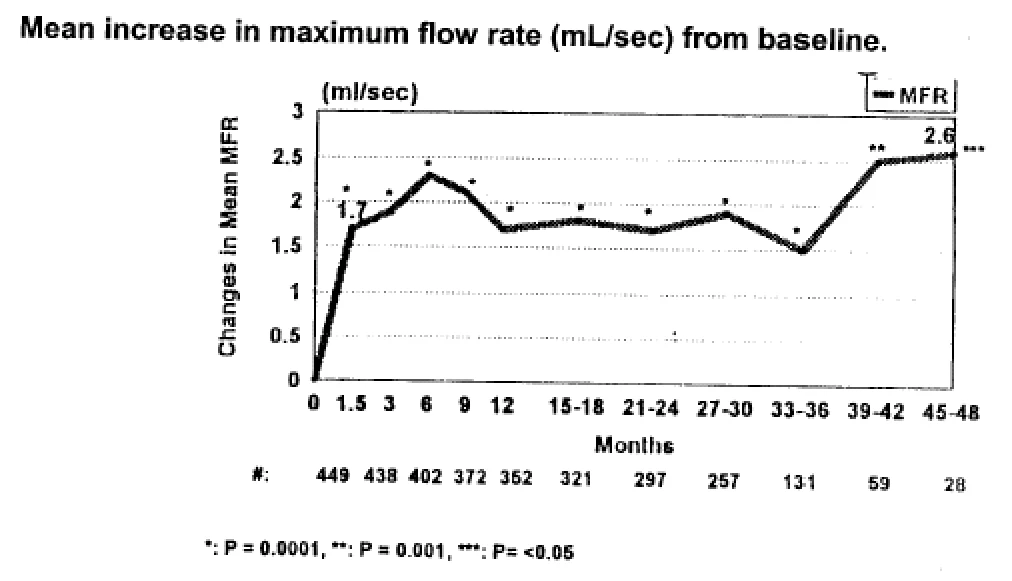
CARDURA is also indicated for the treatment of symptoms of benign prostatic hyperplasia (BPH). The onset of effect is rapid, with improvement in peak flow and symptoms observed within 1-2 weeks. The effect on these variables was maintained over the entire study duration (≤4 years). CARDURA may be used in BPH patients who are either hypertensive or normotensive. While the reduction in blood pressure in normotensive patients with BPH is clinically insignificant, patients with hypertension and BPH have both conditions effectively treated with doxazosin monotherapy (see DOSAGE and ADMINISTRATION for dosage regimens).
A number of clinical conditions can mimic symptomatic BPH (i.e., stricture of urethra, stricture of bladder neck, urinary bladder stones, neurogenic bladder dysfunction secondary to diabetes, Parkinsonism, etc.). These conditions should therefore be ruled out before doxazosin therapy is initiated.
CONTRAINDICATIONS
CARDURA is contraindicated in:
- Patients who are hypersensitive to this drug or to any ingredient in the formulation or component of the container. For a complete listing, see PHARMACEUTICAL INFORMATION, Composition section of the product monograph.
- Patients with a known sensitivity to other quinazolines (e.g. prazosin, terazosin).
- Patients with rare hereditary problems of galactose intolerance, the Lapp lactase deficiency or glucose-galactose malabsorption because lactose is a non-medicinal ingredient in CARDURA.
WARNINGS
Syncope and "First Dose" Effect
CARDURA (doxazosin mesylate) can cause marked hypotension, especially postural hypotension and syncope in association with the first dose or first few doses of therapy. A similar effect can occur if therapy is reinstated following interruption for more than a few doses. Postural effects are most likely to occur between 2-6 hours after dose.
In controlled studies of CARDURA, the incidence of syncopal episodes was 0.7%. An initial dose of 1 mg/day resulted in a 4% incidence of postural side effects with no cases of syncope. In controlled clinical trials for BPH in normotensive patients, there was a 0.2% occurrence of syncope with CARDURA. In controlled trials in patients with both BPH and hypertension receiving CARDURA, the incidence of syncope was 0.8%.
The likelihood of syncopal episodes or excessive hypotension can be minimized by limiting the initial dose of CARDURA to 1 mg, by increasing the dosage slowly, and by introducing any additional antihypertensive drugs into the patient's regimen with caution (see DOSAGE AND ADMINISTRATION).
Patients should be advised of the possibility of syncopal and orthostatic symptoms, and to avoid driving or hazardous tasks for 24 hours: after the initial dose of CARDURA, after the dose is increased, and after interruption of therapy when treatment is resumed. They should be cautioned to avoid situations where injury could result should syncope occur.
If syncope occurs, the patient should be placed in the supine position. If this measure is inadequate, volume expansion with intravenous fluids or vasopressor therapy may be used. A transient hypotensive response is not a contraindication to further doses of CARDURA.
Orthostatic Hypotension
While syncope is the most severe orthostatic effect of CARDURA, other symptoms of lowered blood pressure such as dizziness, lightheadedness or vertigo can occur. These were common in clinical trials in hypertension, occurring in ≤23% of all patients treated and causing discontinuation of therapy in about 2%. In placebo-controlled titration trials, there was an increased frequency of orthostatic effects in patients given ≥8 mg (10%) compared to patients given 1-4 mg (5%) or placebo (3%).
In placebo-controlled trials in BPH, the incidence of orthostatic hypotension with CARDURA was ≤1%. With maintenance doses of ≤8 mg/day in normotensive patients with BPH, the average decreases in both sitting and standing blood pressure were small: 5/2 mm Hg with CARDURA and 1/1 mm Hg with placebo.
Patients with occupations in which such events represent potential problems should be treated with particular caution.
Concomitant administration of doxazosin with a PDE-5 inhibitor such as sildenafil, tadalafil or vardenafil, should be used with caution as it may lead to symptomatic hypotension.
Patients should be advised of the need to lie down when symptoms of lowered blood pressure occur, and to be careful when arising from a lying position. If dizziness, lightheadedness or palpitations are bothersome, they should be reported to the physician so that dose adjustment can be considered. Patients should also be told that drowsiness or somnolence can occur with CARDURA, requiring caution in people who must drive or operate heavy machinery.
If hypotension occurs, place the patient in the recumbent position and institute supportive measures as necessary.
Priapism
Rarely (probably less frequently than once in every several thousand patients), α1-antagonists such as doxazosin have been associated with priapism. Because this condition can lead to permanent impotence if not promptly treated, patients should be advised about the seriousness of the condition.
Hematological Events
Analysis of hematologic data from patients receiving CARDURA in controlled clinical trials showed that the mean white blood cell (WBC) (n=474) and mean neutrophil counts (n=419) were decreased by 2.4% and 1.0% respectively, compared to placebo. A search through a data base of 2,400 patients revealed 4 cases in which drug-related neutropenia could not be ruled out. Two had a single low value on the last day of treatment. Two had stable, non-progressive neutrophil counts in the 1000/mm3 range over periods of 20 and 40 weeks. No patients became symptomatic as a result of the low WBC or neutrophil counts.
In BPH patients treated with doxazosin, the incidence of clinically significant WBC abnormalities was 0.4%.
In post-marketing experience, rare cases of hematopoietic events such as leukopenia and thrombocytopenia have been reported.
Hepatic Events
In post-marketing experience, rare cases of abnormal liver function tests, cholestasis, jaundice and hepatitis have been reported.
Peripheral Edema
Fluid retention resulting in weight gain may occur during CARDURA therapy. In placebo-controlled monotherapy trials, patients receiving CARDURA gained a mean of 0.6 kg compared to a mean loss of 0.1 kg for placebo-treated patients. The overall incidence of body weight gain reported as a side effect in controlled clinical trials was 0.8%.
PRECAUTIONS
General
CARDURA (doxazosin mesylate) therapy does not modify the natural history of benign prostatic hyperplasia (BPH). It does not retard or stop the progression of BPH, nor does it improve urine flow sufficiently to significantly reduce the residual urine volume. However, significant reduction of the mean residual volume have been shown in patients with baseline residual volumes of >50 mL. The patient may continue to be at risk of developing urinary retention and other BPH complications during doxazosin therapy.
Long-Term Safety and Efficacy
The long-term safety and efficacy (i.e., >4 years) has not yet been established for the use of doxazosin in the treatment of benign prostatic hyperplasia.
Prostatic Cancer
Carcinoma of the prostate and BPH cause many of the same symptoms. These two diseases frequently coexist. Therefore, patients thought to have BPH should be examined prior to starting CARDURA therapy to rule out the presence of carcinoma of the prostate. CARDURA should not be used in patients with PSA >10 ng/mL unless cancer of the prostate has been ruled out.
Ophthalmologic
The Intraoperative Floppy Iris Syndrome (IFIS, a variant of small pupil syndrome) has been observed during cataract surgery in some patients on or previously treated with alpha1 blockers. As IFIS may lead to increased procedural complications during the operation, current or past use of alpha blockers should be made known to the ophthalmologic surgeon in advance of surgery.
Use in Patients with Impaired Liver Function
As with any drug wholly metabolized by the liver, doxazosin should be administered with caution to patients with evidence of impaired hepatic function or to patients receiving drugs known to influence hepatic metabolism.
Use in Patients with Impaired Renal Function
The use of CARDURA in patients with impaired renal function requires careful monitoring. Clinical studies indicate that the disposition of CARDURA in patients with renal insufficiency is similar to that in patients with normal renal function, however accumulation of the drug with chronic dosing may occur. Less than 10% of the dose of doxazosin is excreted in the urine as unchanged drug and metabolites.
Concomitant Conditions
Doxazosin should not be prescribed to patients with symptomatic BPH who have the following concomitant conditions:
- Chronic fibrous or granulomatous prostatitis,
- Chronic urinary retention,
- Gross hematuria,
- High residual urine (>200 mL),
- History of pelvic irradiation,
- History of prior prostatic surgery,
- Hydronephrosis,
- Peak urine flow of ≤5 mL/sec,
- Presence of calculi in urinary bladder,
- Presence of carcinoma of the prostate,
- Presence of large median lobe of prostate,
- Presence of neurogenic bladder dysfunction (diabetes mellitus, Parkinsonism, uninhibited neurogenic bladder, etc.),
- Presence of prostatic calculi,
- Recent history of epididymitis,
- Urethral stricture.
Doxazosin should also not be prescribed to patients having experienced within the past 6 months:
- A myocardial infarction,
- Transient ischemic attacks, or
- Cerebrovascular accident.
Use in Pregnancy
There are no studies in pregnant women. CARDURA is not recommended in pregnant women unless the potential benefit outweighs the potential risk to mother and fetus.
CARDURA crosses the placental barrier.
Animal data: Studies in pregnant rabbits and rats at daily oral doses of ≤40 and ≤20 mg/kg, respectively, have revealed no evidence of teratogenic effect. A dosage regimen of 82 mg/kg/day in the rabbit was associated with reduced fetal survival, an increase in embryomortality as well as increases in fetal and placental weights.
In peri- and post-natal studies in rats, postnatal development at maternal doses of 40 or 50 mg/kg/day of doxazosin was delayed as evidenced by slower body weight gain and a slightly later appearance of anatomical features and reflexes.
Use in Nursing Mothers
Animal data: Studies in lactating rats given a single oral dose of 1 mg/kg of [2-14C]-doxazosin indicate that doxazosin accumulates in rat breast milk with a maximum of concentration about 20 times greater than the maternal plasma concentration.
A single case report demonstrated transfer of doxazosin into human breast milk. Caution should be exercised when CARDURA is administered to a nursing mother and in general, nursing should be interrupted.
Use in Children
The use of CARDURA is not recommended in children since safety and efficacy have not been established.
Use in Elderly
CARDURA should be used cautiously in elderly patients because of the possibility of postural hypotension. There was an age-related trend towards an increased incidence of postural hypotension and postural dizziness in elderly hypertensive patients treated with this drug.
Cardiac Toxicity in Animals
An increased incidence of myocardial necrosis or fibrosis was displayed by Sprague-Dawley rats after 6 months of dietary administration at concentrations calculated to provide 80 mg doxazosin/kg/day, and after 12 months of dietary administration at concentrations calculated to provide 40 mg doxazosin/kg/day.
Myocardial fibrosis was observed in both rats and mice treated in the same manner with 40 mg doxazosin/kg/day for 18 months. No cardiotoxicity was observed at lower doses (≤10 or ≤20 mg/kg/day, depending on the study) in either species.
These lesions were not observed after 12 months of oral dosing in dogs and Wistar rats at maximum doses of 20 and 100 mg/kg/day, respectively. There is no evidence that similar lesions occur in humans.
Drug Interactions
Doxazosin is highly (98%) bound to plasma protein. In vitro data in human plasma indicates that doxazosin mesylate has no effect on protein binding of digoxin, warfarin, phenytoin or indomethacin.
CARDURA has been administered to patients receiving thiazide diuretics, beta-adrenergic blocking agents and non-steroidal anti-inflammatory drugs. No unexpected interactions were reported. An additive hypotensive effect was observed when CARDURA was co-administered with thiazide diuretics and beta-adrenergic blocking agents. There is limited experience with CARDURA in combination with ACE inhibitors or calcium channel blockers.
Digoxin
Serum digoxin concentrations were not affected by treatment with doxazosin.
Cimetidine
In a randomized, open-label, placebo-controlled, cross-over study in 22 healthy male subjects, the single co-administration of 1 mg doxazosin with 400 mg b.i.d. cimetidine resulted in a 10% increase in mean AUC of doxazosin (p=0.006), and a slight but not statistically significant increase in mean Cmax and mean half-life of doxazosin. The effect of further administration of cimetidine has not been studied.
PDE-5 Inhibitors
Symptomatic hypotension has been reported during the concomitant use of PDE-5 inhibitors (e.g. sildenafil, tadalafil, vardenafil) and CARDURA (see WARNINGS).
CYP3A4 Inhibitors
In vitro studies suggest that doxazosin is a substrate of CYP 3A4. Caution should be exercised when concomitantly administering doxazosin with a strong CYP 3A4 inhibitor, such as clarithromycin, indinavir, itraconazole, ketoconazole, nefazodone, nelfinavir, ritonavir, saquinavir, telithromycin or voriconazole (see ACTIONS AND CLINICAL PHARMACOLOGY, Pharmacokinetics).
ADVERSE REACTIONS
Hypertension
CARDURA (doxazosin mesylate) has been administered to approximately 4,000 patients in clinical trials of whom 1,679 patients were included in controlled trials. The most serious adverse event (AE) occurring in the controlled clinical trials was syncope occurring in 0.7% of patients and resulting in a discontinuation rate of 0.2%.
The most frequent AEs in controlled clinical trials were: headache (16.5%), fatigue/malaise (14.8%), dizziness (14.6%), postural dizziness (8.7%) and edema (6.6%). Discontinuation of CARDURA due to AEs was required in 7% of patients.
AEs which occurred with an incidence of ≥ 1% in the controlled clinical trials in patients with mild to moderate essential hypertension were as shown in the following table.
Table 1 – Incidence of Adverse Events ≥ 1% in the controlled clinical trials in patients with mild to moderate essential hypertension
| Body System/Adverse Event | CARDURA n = 1679 (%) |
|---|---|
| All Adverse Events | 49.0% |
Nervous System Disorders Headache Dizziness Postural Dizziness Somnolence Paresthesia Hypoesthesia | 16.5 14.6 8.7 4.9 1.7 1.6 |
General Disorders and Administration Site Conditions Fatigue Edema Asthenia Pain (general body) | 14.8 6.6 2.7 1.3 |
| Body System/Adverse Event | CARDURA n = 1679 (%) |
|---|---|
Gastrointestinal Disorders Nausea Dry Mouth Diarrhea Dyspepsia Abdominal Pain Flatulence Constipation | 3.9 3.4 2.9 2.1 1.6 1.4 1.3 |
Respiratory, Thoracic and Mediastinal Disorders Dyspnea Rhinitis | 3.9 3.0 |
Blood and Lymphatic Disorders Decrease in Platelets Decrease in White Blood Cells Decrease in Hematocrit Decrease in Hemoglobin Decrease in Neutrophil Count | 3.9 2.4 1.6 1.4 1.0 |
Cardiac Disorders Palpitation Chest Pain Tachycardia | 3.6 2.7 1.6 |
Reproductive System and Breast Disorder Sexual Dysfunction | 3.5 |
Ear and Labyrinth Disorders Vertigo | 3.0 |
Eye Disorders Vision/Accommodation Abnormalities Conjunctivitis/Eye Pain | 2.4 1.2 |
Psychiatric Disorders Anxiety/Nervousness Insomnia Depression/Apathy | 2.3 2.2 1.6 |
Skin and Subcutaneous Tissue Disorders Rash Increased Sweating | 1.7 1.4 |
| Body System/Adverse Event | CARDURA n = 1679 (%) |
|---|---|
Musculoskeletal and Connective Tissue Disorders Muscle Cramps Myalgia | 1.7 1.3 |
Renal and Urinary Disorders Micturition Frequency Polyuria | 1.2 1.0 |
Less Common Clinical Trial Adverse Drug Reactions (<1%)
The following other AEs occurred in hypertensive patients with an incidence of <1% in controlled clinical trials (n=1679):
Blood and Lymphatic Disorders: lymphadenopathy
Cardiac Disorders: angina pectoris, arrhythmia
Ear and Labyrinth Disorders: tinnitus
Eye Disorders: abnormal lacrimation, photophobia
Gastrointestinal Disorders: fecal incontinence, vomiting
General Disorders and Administration Site Conditions: face edema, fever/rigors, general edema, thirst
Infections and infestations: infection
Metabolism and Nutrition Disorders: anorexia, gout, hypokalemia, increased appetite, weight increase
Musculoskeletal and Connective Tissue Disorders: arthralgia, back pain, muscle weakness, twitching
Nervous System Disorders: amnesia, ataxia, depersonalization, hypertonia, migraine, movement disorders, paresis, syncope, tremor
Psychiatric Disorders: abnormal thinking, agitation, emotional lability, paroniria
Renal and Urinary Disorders: urinary disorder, urinary incontinence
Reproductive System and Breast Disorder: breast pain
Respiratory, Thoracic and Mediastinal Disorders: bronchospasm/bronchitis, coughing, epistaxis, pharyngitis, sinusitis
Skin and Subcutaneous Tissue Disorders: alopecia, dry skin, eczema, pallor, pruritus, purpura
Special Senses: taste perversion
Vascular Disorders: flushing, hot flushes, hypotension, peripheral ischemia, postural hypotension
Benign Prostatic Hyperplasia
CARDURA (doxazosin mesylate) has been administered once daily to 665 both hypertensive and normotensive patients with BPH in controlled clinical trials. The most serious AE occurring in the controlled trials was syncope (0.5%).
The most frequent AEs in controlled trials were dizziness (15.6%), headache (9.8%) and fatigue (8%).
Discontinuation rate of CARDURA due to AEs was 9%.
AEs which occurred with an incidence of ≥ 1% in the controlled clinical trials in normotensive or hypertensive patients with BPH were as shown in the following table.
Table 2 – Incidence of Adverse Events of ≥ 1% in the controlled clinical trials in normotensive or hypertensive patients with BPH
| ADVERSE EVENT | INCIDENCE | ||
|---|---|---|---|
| Short Term* (n=665) | Long Term** (n=450) | ||
| All Adverse Events | 45.0% | 66.0% | |
Nervous System Disorders Dizziness Headache Somnolence Hypertonia Paresthesia Tremor | 15.6% 9.8% 3.0% <1% <1% - | 20.7% 12.2% 4.9% 1.1% 1.1% 1.1% | |
General Disorders and Administration Site Conditions Fatigue Edema Pain Asthenia | 8.0% 2.7% 2.0% <1% | 11.6% 4.9% 5.1% 1.1% | |
| ADVERSE EVENT | INCIDENCE |
|---|
| Short Term* (n=665) | Long Term** (n=450) |
|---|
| All Adverse Events | 45.0% | 66.0% |
|---|---|---|
Respiratory, Thoracic and Mediastinal Disorders Dyspnea Respiratory Disorder | 2.6% 1.1% | <1% 2.5% |
Gastrointestinal Disorders Diarrhea Abdominal Pain Dyspepsia Nausea Dry Mouth Constipation | 2.3% 2.3% 1.8% 1.5% 1.4 % <1% | 3.8% 1.8% 2.4% 3.1% <1% 1.3% |
Musculoskeletal and Connective Tissue Disorders Back Pain Leg Cramps Arthralgia | 1.8% <1% <1% | 2.9% 1.6% 1.3% |
Vascular Disorders Hypotension | 1.7% | 2.5% |
Eye Disorders Abnormal Vision | 1.4% | 2.2% |
Cardiac Disorders Palpitation Chest Pain Arrhythmia Myocardial Infarction | 1.2% 1.2% - <1% | 1.8% 3.8% 1.1% 1.3% |
Psychiatric Disorders Insomnia Anxiety Depression Decreased Libido | 1.2% 1.1% <1% <1% | 1.3% <1% 3.1% 2.7% |
Infections and infestations Urinary Tract Infection | 1.2% | 1.1% |
Reproductive System and Breast Disorder Impotence Prostatic Disorder Ejaculation Failure | 1.1% <1% <1% | 4.9% 1.8% 1.1% |
| ADVERSE EVENT | INCIDENCE |
|---|
| Short Term* (n=665) | Long Term** (n=450) |
|---|
| All Adverse Events | 45.0% | 66.0% |
|---|---|---|
Skin and Subcutaneous Tissue Disorders Increased Sweating Dermatitis Rash | 1.1% - <1% | <1% 1.3% 1.3% |
Renal and Urinary Disorders Urinary Retention Hematuria | <1% <1% | 1.6% 1.8% |
Ear and Labyrinth Disorders Tinnitus | <1% | 1.3% |
* Placebo-controlled clinical trials; treated with doxazosin from 1-203 days.
** Open label extension of 3 placebo controlled clinical trials; treated for up to 50 months.
Less Common Clinical Trial Adverse Drug Reactions (<1%)
Short-term controlled clinical trials:
The following other AEs occurred in normotensive or hypertensive patients with BPH with an incidence of <1% in short-term controlled clinical trials (n=665):
Blood and Lymphatic Disorders: lymphadenopathy
Cardiac Disorders: angina, bradycardia, myocardial infarction, tachycardia
Ear and Labyrinth Disorders: earache, tinnitus
Eye Disorders: cataract, conjunctivitis, eye pain, visual field defect
Gastrointestinal Disorders: constipation, flatulence, gingivitis, melena, vomiting
General Disorders and Administration Site Conditions: allergy, asthenia, fever, influenza like symptoms, malaise, rigors, sudden death
Infections and infestations: fungal infection, sepsis, upper respiratory tract infection, viral infection
Metabolism and Nutrition Disorders: gout, hyperglycemia, increased appetite, weight increase
Musculoskeletal and Connective Tissue Disorders: arthralgia, arthritis, hernia, leg cramps, myalgia, tendon disorder
Neoplasms Benign, Malignant and Unspecified: carcinoma
Nervous System Disorders: amnesia, ataxia, depersonalization, hypertonia, hypoesthesia, paresthesia, speech disorder, syncope
Psychiatric Disorders: abnormal thinking, confusion, decreased libido, depression, emotional lability, impaired concentration, nervousness, paroniria
Renal and Urinary Disorders: abnormal urine, cystitis, dysuria, hematuria, micturition disorder, renal pain, urinary incontinence, urinary retention
Reproductive System and Breast Disorder: ejaculation failure, epididymitis, genital pruritus, prostatic disorder
Respiratory, Thoracic and Mediastinal Disorders: bronchitis, bronchospasm, coughing, epistaxis, pneumonia, rhinitis, sinusitis
Skin and Subcutaneous Tissue Disorders: aggravated psoriasis, dry skin, eczema, erythematous rash, maculopapular rash, pallor, pruritus, rash, urticaria
Special Senses: taste perversion
Vascular Disorders: flushing, hot flushes, postural hypotension, subarachnoid haemorrhage
Long-term controlled clinical trials:
The following other AEs occurred in normotensive or hypertensive patients with BPH with an incidence of <1% in long-term controlled clinical trials (n=450):
Cardiac Disorders: abnormal ECG, angina pectoris, atrial fibrillation, cardiac failure, extra systoles, myocardial ischemia, tachycardia
Ear and Labyrinth Disorders: deafness, earache, otitis media
Eye Disorders: conjunctivitis, diplopia, eye abnormality, eye pain, myopia, visual field defect
Gastrointestinal Disorders: diverticulitis, dry mouth, enlarged abdomen, esophagitis, flatulence, gastric ulcer, melena, rectal haemorrhage, tenesmus, tongue disorder, tooth disorder, tooth hypoplasia, vomiting
General Disorders and Administration Site Conditions: allergic reaction/allergy, fever, malaise, rigor
Hepatobiliary Disorders: cholelithiasis
Infections and Infestations: fungal infection, herpes simplex, herpes zoster
Metabolism and Nutrition Disorders: dehydration, hyperglycemia, hyperuricemia, increased appetite, SGOT increase, SGPT increase, weight increase
Musculoskeletal and Connective Tissue Disorders: arthritis, myalgia, polymyalgia rheumatica
Neoplasms Benign, Malignant and Unspecified: breast neoplasm, carcinoma, pulmonary carcinoma
Nervous System Disorders: amnesia, convulsions, depersonalization, encephalopathy, hypokinesia, migraine, syncope
Psychiatric Disorders: abnormal thinking, anxiety, impaired concentration, nervousness
Renal and Urinary Disorders: abnormal urine, cystitis, dysuria, oliguria, polyuria, urinary incontinence
Reproductive System and Breast Disorder: abnormal semen, epididymitis, perineal pain, sexual dysfunction
Respiratory, Thoracic and Mediastinal Disorders: bronchitis, epistaxis, pharyngitis, rhinitis
Skin and Subcutaneous Tissue Disorders: increased sweating, maculopapular rash, nail disorder, photosensitivity reaction, pruritus, purpura, seborrhea, skin disorder, skin hypertrophy, urticaria
Vascular Disorders: aggravated hypertension, aneurysm, cerebrovascular disorder/accident, flushing, hypertension, intermittent claudication
Data from long-term (≤50 months), open BPH studies (n=450) indicate higher rates of dizziness in younger hypertensive (27%) and normotensive (22%) patients, impotence in younger hypertensive (8%) patients, and discontinuation rates in patients due to AEs (16.7%) compared to data from short-term placebo-controlled BPH studies (n=665).
Uncontrolled Trials and Post-Marketing Experience
The following additional AEs have also been reported in patients with essential hypertension and in normotensive or hypertensive patients with BPH: cholestasis, ejaculation disorders such as retrograde ejaculation, gynecomastia, hepatitis, Intraoperative Floppy Iris Syndrome (see PRECAUTIONS, Ophthalmologic), jaundice, parosmia, priapism, and renal calculus.
Laboratory Abnormalities
No clinically relevant adverse effects were noted on serum potassium, serum glucose, uric acid, blood urea nitrogen (BUN) or creatinine. Decreases in white blood cells, neutrophils, platelets (see WARNINGS), hemoglobin and hematocrit have been reported. Abnormal liver function tests have occurred.
SYMPTOMS AND TREATMENT OF OVERDOSAGE
No data are available regarding overdosage with CARDURA (doxazosin mesylate) in humans.
Should administration of CARDURA lead to hypotension, support of the cardiovascular system is of first importance. Restoration of blood pressure and normalization of heart rate may be accomplished by keeping the patient in the supine position. If this measure is inadequate, shock should first be treated with volume expanders. If necessary, vasopressors should be used. Renal function should be monitored and supported as needed. As CARDURA is highly protein bound, dialysis may not be of benefit.
DOSAGE AND ADMINISTRATION
Dosage must be individualized. Doxazosin may be administered either in the morning or in the evening.
The absorption of CARDURA (doxazosin mesylate) is not affected by food.
When CARDURA is being added to existing antihypertensive therapy, the patient should be carefully monitored for the occurrence of hypotension (see WARNINGS – Syncope and “First Dose” Effect). If a diuretic or other antihypertensive agent is being added to a CARDURA regimen, reducing the dose of CARDURA and retitration, with careful monitoring, may be necessary.
If CARDURA administration is discontinued for several days, or longer, therapy should be reinstituted using the initial dosing regimen.
Hypertension - 1-16 mg Once Daily
The initial dose of CARDURA in patients with hypertension is 1 mg given once daily and this dose should not be exceeded. This starting dose is intended to minimize postural hypotensive effects. The maximum reduction in blood pressure normally occurs between 2-6 hours after a dose.
The dose may be slowly increased to achieve the desired blood pressure response. The usual dose range is 1-8 mg once daily. The maximum recommended daily dose is 16 mg once daily.
Increases in dose >4 mg increased the likelihood of excessive postural effects including syncope, postural dizziness/vertigo and postural hypotension. At a titrated dose of 16 mg once daily, the frequency of postural effects is about 12% compared to 3% for placebo.
Benign Prostatic Hyperplasia - 1-8 mg Once Daily
The initial dosage of CARDURA is 1 mg given once daily (see WARNINGS – Syncope and “First Dose” Effect). Depending on the individual patient's urodynamics and BPH symptomatology, dosage may then be increased to 2 mg and thereafter to 4 mg and 8 mg once daily, the maximum recommended dose. The recommended titration interval is 1-2 weeks. Blood pressure should be evaluated routinely in these patients.
Doxazosin should be discontinued if the drug has been increased to the maximum tolerated dose and improvement in urinary flowmetry is <25%, or if doxazosin side effects are more bothersome than BPH symptoms, or if the patient develops a urinary complication secondary to BPH while on doxazosin therapy.
OVERDOSAGE
| For management of a suspected drug overdose, contact your regional Poison Control Centre. |
PHARMACEUTICAL INFORMATION
Chemistry
| Trade name: | CARDURA* |
| Proper name: | Doxazosin mesylate |
| Chemical Name: | 1-(4-Amino-6,7-dimethoxy-2-quinazolinyl)-4-(1,4-benzodioxan-2-ylcarbonyl)piperazine methanesulfonate |
| Structural Formula: | 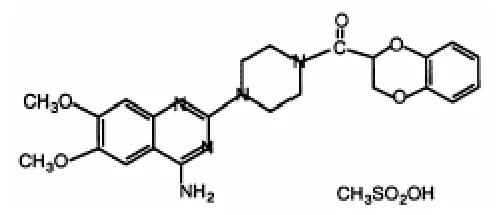 |
| Molecular Formula: | C23H25N5O5·CH4O3S |
| Molecular Weight: | 547.6 |
| Description: | Doxazosin mesylate is a white to off-white crystalline solid of uniform appearance. It is freely soluble in dimethylsulphoxide, soluble in dimethylformamide, slightly soluble in methanol, ethanol, and water (0.8% w/v at 25°C), and very slightly soluble in acetone and methylene chloride. The pKa of the doxazosin moiety is 6.93 at 25°C and the melting point of doxazosin mesylate is 273.7°C. |
Composition
CARDURA is formulated as tablets containing doxazosin mesylate equivalent to 1, 2 and 4 mg of doxazosin.
Non-Medicinal Ingredients: colouring agents (Yellow Lake Blend for the 2 mg and FD&C Yellow #6 Aluminum Lake for the 4 mg), lactose, magnesium stearate, microcrystalline cellulose, sodium lauryl sulphate, and sodium starch glycolate.
Stability and Storage Recommendations
CARDURA (doxazosin mesylate) Tablets 1, 2 and 4 mg: store at room temperature, 15-30°C.
AVAILABILITY OF DOSAGE FORMS
Availability
CARDURA is available as capsular scored tablets containing doxazosin mesylate equivalent to 1, 2 or 4 mg of doxazosin.
1mg: capsular shaped, white to off white tablet with upper engraved “Cardura” and lower bisected and engraved “1mg”
2mg: capsular shaped yellow tablet with upper engraved “Cardura”, lower bisected and engraved “2mg”
4mg: capsular shaped yellow to orange (pale orange) tablet with upper engraved “Cardura”, lower bisected and engraved “4mg
CARDURA is supplied in opaque plastic (high density polyethylene) bottles of 100 tablets
PHARMACOLOGY
Animal Pharmacology - In Vivo
In anaesthetized cats, doxazosin caused adrenaline reversal and was more effective in antagonizing pressor responses to phenylephrine (ED50=0.06 mg/kg, i.v.) than to noradrenaline, (ED50 <10 mg/kg, i.v.) indicating selective effect on post-junctional alpha1- as opposed to alpha2-adrenoceptors. This was confirmed by the lack of effect of doxazosin on the alpha2-mediated pressor responses induced by alpha-methylnor-adrenaline. The lack of effect of doxazosin on pre-junctional alpha2-adrenoceptors was confirmed in anaesthetized dogs.
Animal Pharmacology - In Vitro
In the perfused isolated rabbit ear artery and in the rabbit pulmonary artery rings, doxazosin had a selective effect on post-synaptic alpha1-adrenoceptors. The superfused rabbit pulmonary artery preparation was used to show that doxazosin is highly selective (pre-synaptic activity EC20=2 x 10⁻⁵M vs post-synaptic activity EC20=2.4 x 10⁻⁸M); for the post- as opposed to the pre-junctional alpha receptors in this tissue.
Miscellaneous Actions
At high doses, doxazosin increased both alcohol and pentobarbitone sleeping time in mice and may possess mild CNS sedative activity per se, increased basal gastric acid secretion and gastrointestinal motility in rats, and had antidiuretic activity in normotensive rats and dogs.
Human Pharmacology
Hypertension
A comparison of the blood pressure lowering effect of CARDURA (doxazosin mesylate) in patients ≥65 years old (n=204), and those <65 years old (n=1,344) show similar falls in blood pressure. The changes in standing systolic/diastolic pressures were -15/-12 mm Hg for patients ≥65 years old and -13/-11 mm Hg for the patients <65 years old.
Pharmacokinetic studies at steady state in hypertensive patients given doxazosin doses of 2-16 mg once daily showed linear kinetics and dose proportionality. In two studies, following the administration of 2 mg orally once daily, the mean accumulation ratios (steady state AUC vs first dose AUC) were 1.2 and 1.7.
Benign Prostatic Hyperplasia (BPH)
In three placebo-controlled studies of 14-16 weeks' duration obstructive symptoms (hesitation, intermittency, dribbling, weak urinary stream, incomplete emptying of the bladder) and irritative symptoms (nocturia, daytime frequency, urgency, burning) of BPH were evaluated at each visit by patient-assessed symptom questionnaires. The bothersomeness of symptoms was measured with a modified Boyarsky questionnaire. Symptom severity/frequency was assessed using a modified Boyarsky questionnaire or an AUA-based questionnaire. Uroflowmetric evaluations were performed at times of peak (2-6 hours post-dose) and/or trough (24 hours post-dose) plasma concentrations of CARDURA.
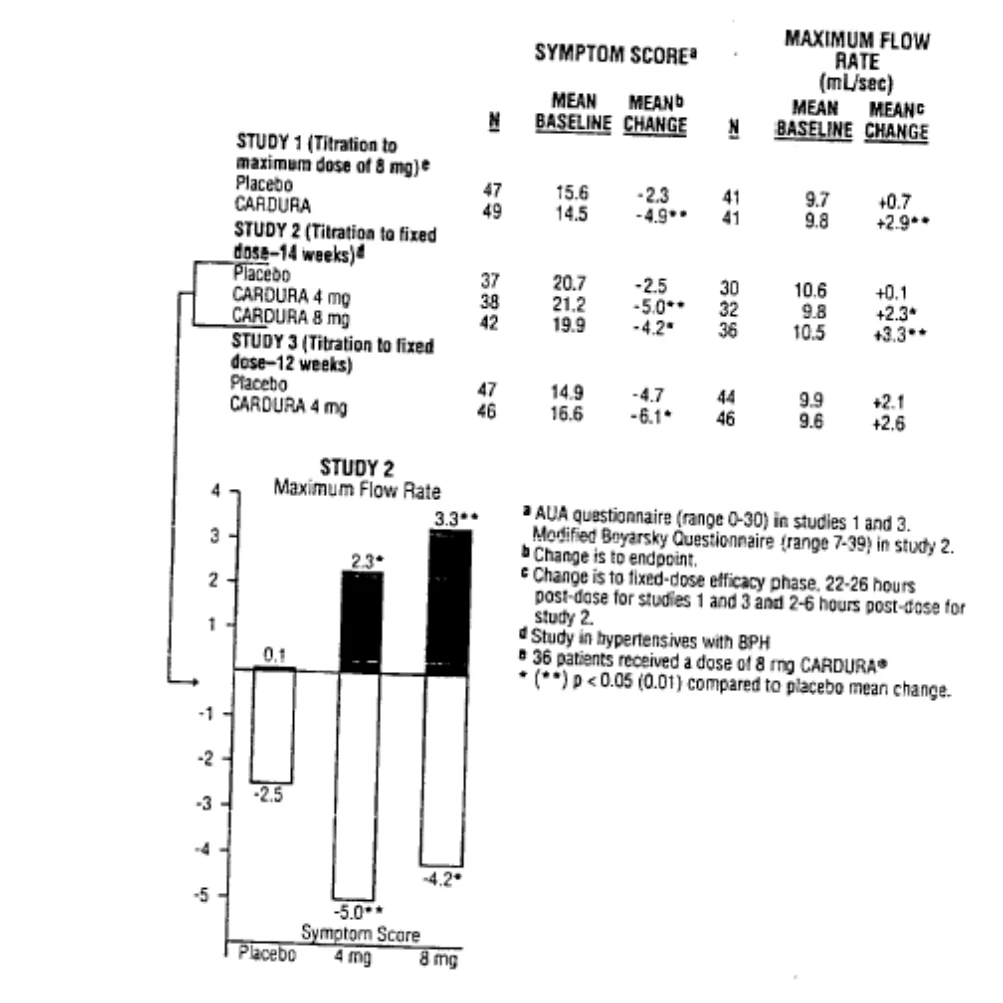
The results from the three placebo-controlled studies (N=609) showing significant efficacy with 4 mg and 8 mg doxazosin are summarized in Table 3. In all three studies, CARDURA resulted in statistically significant relief of obstructive and irritative symptoms compared to placebo. Statistically significant improvements of 2.3-3.3 mL/sec in maximum flow rate were seen with CARDURA in Studies 1 and 2, compared to 0.1-0.7 mL/sec with placebo.
Table 3 Summary of effectiveness data in placebo controlled trials
 |
|---|
In one fixed dose study (Study 2), CARDURA therapy (4-8 mg, once daily) resulted in a significant and sustained improvement in maximum urinary flow rate of 2.3-3.3 mL/sec (Table 3) compared to placebo (0.1 mL/sec). In this study, the only study in which weekly evaluations were made, significant improvement with CARDURA vs placebo was seen after 1 week. The proportion of patients who responded with a maximum flow rate improvement of ≥3 mL/sec was significantly larger with CARDURA (34-42%) than placebo (13-17%). A significantly greater improvement was also seen in average flow rate with CARDURA (1.5 mL/sec) than with placebo (0.2 mL/sec).
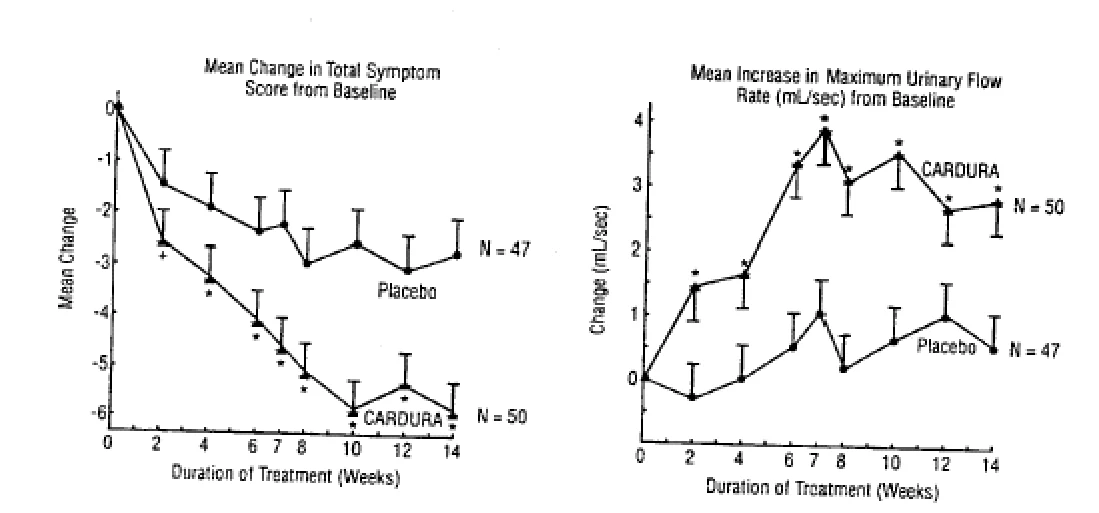
The onset and time course of symptom relief and increased urinary flow from study 1 are illustrated in Figure 1.
Figure 1
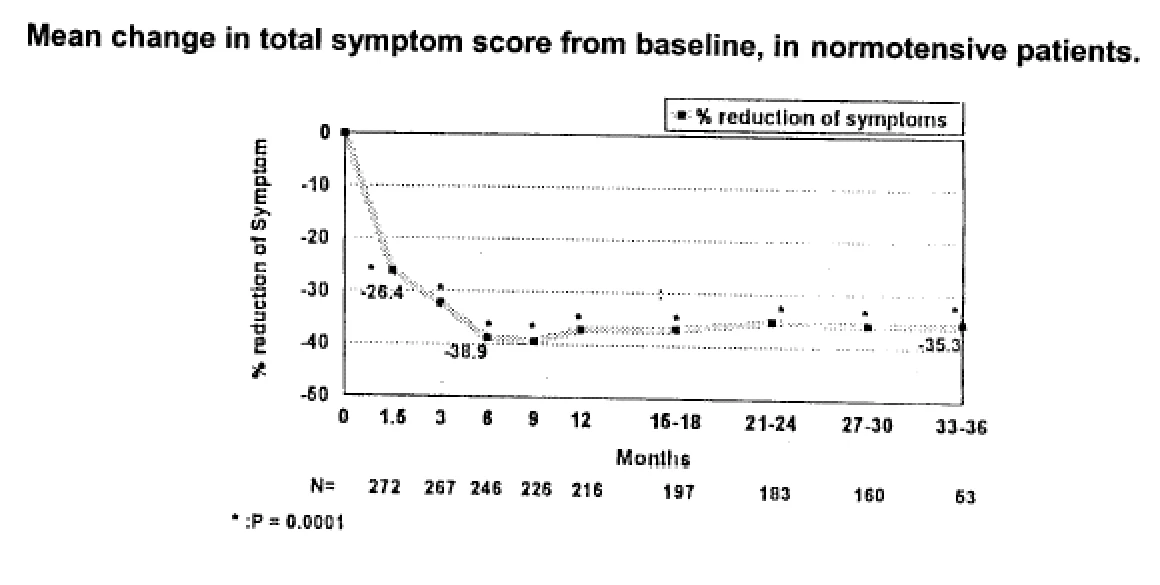
In BPH patients (n=450) treated for ≤4 years in open-label studies, CARDURA therapy resulted in significant improvement above baseline in urinary flow rates and BPH symptoms. The significant effects of CARDURA were maintained over the entire treatment period, as shown in Figure 2.
Figure 2
Although blockade of α1-adrenoceptors also lowers blood pressure in hypertensive patients with increased peripheral vascular resistance, CARDURA treatment of normotensive men with BPH did not result in a clinically significant blood pressure lowering effect (Table 4). The proportion of normotensive patients with a sitting systolic blood pressure <90 mm Hg and/or diastolic blood pressure <60 mm Hg at any time during treatment with CARDURA 1-8 mg once daily was 6.7% and not statistically significantly different from that with placebo (5%).
Table 4 Mean Changes in Blood Pressure from Baseline to the Mean of the Final Efficacy Phase in Normotensive (Diastolic BP < 90 mm Hg) in All Double-Blind, Placebo-Controlled U.S. Studies.
| Group | n | Baseline | Mean Change | |
|---|---|---|---|---|
| Systolic BP | CARDURA | 183 | 128.8 | -4.9* |
| Sitting (mmHg) | Placebo | 85 | 128.4 | -1.4 |
| Diastolic BP | CARDURA | 183 | 79.6 | -2.4* |
| Sitting (mmHg) | Placebo | 85 | 79.2 | -1.2 |
* p ≤ 0.05 compared to placebo
TOXICOLOGY
Acute Toxicology
| SPECIES | SEX | ROUTE | LD50 (Confidence Limits) mg/base/kg |
|---|---|---|---|
| Mice | M F | p.o. p.o. | > 1,000 > 1,000 |
| Rats | M F | p.o. p.o. | > 1,200 > 1,200 |
After oral administration of the drug, the animals displayed vulval opening (females), ptosis and prostration, with the signs lasting ≤2 days depending on dose level. The 3 deaths which occurred were between days 2 and 5.
| Toxicology | |||||
|---|---|---|---|---|---|
| Subacute and Chronic Toxicity | |||||
| SPECIES | ROUTE | DOSE mg/kg/day | ANIMAL PER DOSE LEVEL | DURATION | FINDINGS |
| rat | Oral (gavage) | 0 5 10 20 | 10 or 20 M + 10 or 20 F | 14 weeks followed by 4 weeks drug withdrawal | Dose-related ptosis, listlessness, subcutaneous vasodilation, vaginal dilatation & descended testes; reductions in plasma potassium & glucose levels in males at the end of the study which disappeared after withdrawal of treatment. Necropsy or histopathological examination revealed no drug related abnormalities. |
| Rat (Japanese study) | Oral (gavage) | 0 20 60 150 300 600 | 20 M 20 F | 1 month | At all dose levels: dose related decrease in spontaneous movement, depression, ptosis, prostration, descent of testes & opening of vagina. At 150, 300 & 600 mg/kg/day dose-related growth inhibition was noted. At 600 mg/kg/day - decrease in food consumption & urinary incontinence was seen. An increase in hemoglobin, hematocrit, erythrocytes & neutrophils & a decrease in lymphocytes were also reported. Mortality occurred in 16/20 males & in 13/20 female rats within one month. Elevation in the SGOT & SGPT levels was seen at 600 & 300 mg/kg/day & at 150 mg/kg/day (males). The elevations of the SGOT & SGPT generally corresponded to the severity of the hepatic lesions. An increase in total bilirubin was noted at 300 & 600 mg/kg/day & at 150 mg/kg/day (males). Histological examination showed drug related changes at dose levels of 150 mg/kg & higher; dose related hepatic cell degeneration & necrosis in males; myocardial necrosis/fibrosis at 300 & 600 mg/kg, & organ changes similar to those seen in wasting conditions due to malnutrition. |
| dog | oral | 0 1 4 16 | 3M + 3F | 13 weeks | At all doses: lowered blood pressure. Necropsy or histopathological examination revealed no drug related abnormalities. |
| Toxicology |
|---|
| Subacute and Chronic Toxicity |
|---|
| SPECIES | ROUTE | DOSE mg/kg/day | ANIMAL PER DOSE LEVEL | DURATION | FINDINGS |
|---|---|---|---|---|---|
| rat | Oral (diet) | 0 5 20 80 | 20M + 20F | 6 months | Ptosis, vasodilatation, sedation, opening of the vagina & descended testes; at 80 mg/kg in females there was a reduction in the growth & food intake. Drug-related changes included decreases of plasma glucose & potassium & either an increase (at 5 mg/kg) or decrease (at 80 mg/kg) of total proteins, at months 3 & 6. Also at 5 & 20 mg/kg hemoconcentration & at 80 mg/kg hemodilution were observed. At 80 mg/kg, in males there was an increase in the incidence of myocardial necrosis (16/20 treated vs 7/20 control rats). |
| rat | oral | 0 5 20 50 100 | 30M + 30F | 12 months (interim sacrifice at 3 months & post-treatment sacrifice at 3 months) | At 20, 50 & 100 mg/kg in males there was impairment of body weight gain. At 20 & 50 mg/kg a decrease in urinary volume was noted. Post-mortem showed an increase in heart weights of males at 100 mg/kg & of spleen weight of males at the 50 & 100 mg/kg dose levels & in all female groups. Hepatic single cell degeneration & necrosis was observed at 50 & 100 mg/kg after 3 months & at 100 mg/kg after 12 months. |
| Rat (age 12 months old at start of study) | oral | 0 10 20 40 | 24 M | 12 months | At 40 mg/kg there was an adverse effect on body weight &, in the 2nd half of the study, an increase in mortality. There was also an increase of myocardial fibrosis (22/23 rats at 40 mg/kg vs 15/24 in control rats). At 20 mg/kg & 40 mg/kg testicular atrophy was seen. The non-cardiotoxic dose level was 20 mg/kg. |
Toxicology
| Subacute and Chronic Toxicity |
|---|
| SPECIES | ROUTE | DOSE mg/kg/day | ANIMAL PER DOSE LEVEL | DURATION | FINDINGS | ||||
|---|---|---|---|---|---|---|---|---|---|
| dog | oral | 0 1 5 20 | 4M + 4F | 12 months | Dose related ptosis, sedation, asthenia, vasodilatation, dacryorrhea, salivation & relaxation of the nictitating membrane. Swollen vulvae of most of the treated females were seen. At 20 mg/kg decrease in body weight, lowered blood pressure & raised heart rate were shown to occur. At the end of the study at 5 & 20 mg/kg most dogs showed a persistent pupillary constriction which diminished within days of cessation of treatment. All treated dogs showed a bilateral prominence of the nictitating membrane. At 20 mg/kg, a swelling of the optic disc was seen at 6 months (2/8) & 12 months (5/8). There was also an increase in plasma cholesterol at the end of the study. There was no evidence of drug-related effect on organ weights, macroscopic or microscopic findings. | ||||
Special Study (Ophthalmology Study) | |||||||||
| dog | oral | between 25 & 50 mg/kg (according to tolerance) | 2M + 2F | 28 days | The expected pupillary constriction & relaxation of the nictitating membrane was observed; there were no changes in the optic disc. Ocular reflexes were normal. The effects regressed over 2-3 weeks post-treatment. | ||||
| Mutagenicity | ||||||||||||||||
|---|---|---|---|---|---|---|---|---|---|---|---|---|---|---|---|---|
| STUDY | TEST ORGANISM | DOSE | ROUTE | MAJOR FINDING | ||||||||||||
Ames Test (modified) Quantitative Plate Assay & Metabolic Activation Assay with hepatic microsomes | Salmonella Typhimurium: strains TA 1535, TA 1538, TA 98 & TA 100 | 2.0 - 0.002 mg/plate for TA 98 & TA 100 1.0 - 0.01 mg/plate for TA 1535 & TA 1538 | in vitro | No evidence of mutation frequency. | ||||||||||||
| Ellenberger & Mohn: Forward Mutation (galactose locus) Assay | Escherichia coli 341/113 | 10 to 0.1 mg/mL of culture medium | in vitro | No evidence for mutagenicity observed. | ||||||||||||
Slater et al: Assays utilizing DNA Repair deficient E. coli | Pol A (E. coli p3478) Pol A+ (E. coli W3110) | 5 and 10 mg/disc | in vitro | No evidence of DNA damaging activity. However, this result is somewhat impaired by the absence of any cytotoxic activity on either the Pol A+ or Pol A strain. | ||||||||||||
| Quantitative Plate Assay of Mouse Urine | Salmonella Typhimurium: TA 1535, TA 98, TA 100 TA 1537 & TA 1538 | 1.0 to 0.05 mg/kg | in vitro i.p. | No mutagenic activity was seen. | ||||||||||||
| In-Vivo Cytogenetics | mouse-bone marrow | 1 mg/kg (single dose) 0.5 mg/kg/day (for 5 days) | in vivo i.p. s.c. | No indication of chromosome breakage or mutagenicity observed. | ||||||||||||
| In-Vitro cytogenetics | human lymphocytes | 10 μg/mL of culture medium | in vitro | No evidence of induced-chromosome damage observed. | ||||||||||||
Mutagenicity studies revealed no drug or metabolite related effects at either chromosomal or subchromosomal levels.
Carcinogenicity
Chronic dietary administration (≤24 months) of doxazosin mesylate at maximally tolerated concentrations (highest dose 40 mg/kg/day) revealed no evidence of carcinogenicity in rats.
Doxazosin was also administered for ≤18 months in the diet of mice, at doses ≤40 mg/kg/day, with no evidence of carcinogenicity observed. This mouse study however, was compromised by the failure to use a maximally tolerated dose of doxazosin. A subsequent 24-month dietary study of doxazosin mesylate, at maximally tolerated concentrations (highest dose 120 mg/kg/day), showed no carcinogenic effect in mice. The highest doses evaluated in the rat and mouse studies are associated with AUCs (a measure of systemic exposure) that are 8x and 4x, respectively, the human AUC at a dose of 16 mg/day.
| Reproduction and Teratology | ||||||||||
|---|---|---|---|---|---|---|---|---|---|---|
| SPECIES | ROUTE | DOSE mg/kg/day | ANIMAL PER GROUP | DURATION | FINDINGS | |||||
| General Fertility | ||||||||||
| rat (Charles River CD) | oral | 0 5 10 20 | 10 or 20M + 40F | Males 60-70 days prior to mating. Females 14 days prior to mating and throughout gestation. | Male fertility At 10 & 20 mg/kg an effect on male fertility was observed: reduction in both the copulation frequency (~17%) & in the proportion of these copulations resulting in pregnancy (~23%). There was no evidence of teratogenicity, no effect on parturition, fetal growth or development, nor on postnatal development of reproductive performance of the offspring. | |||||
| Male Fertility Study (reversibility) | ||||||||||
| rat (Charles River CD) | oral | 0 20 | 25M | Males (25 group) dosed for 13, 27 or 62 days. Each allowed to mate with untreated female, at least 2 times, for up to 7 days and nights. Females sacrificed on day 14 post-copulation. | No effect on copulation frequency. For the duration of treatment (males): reduction in the proportion of copulations resulting in pregnancy (i.e., fewer, 70-78%, females became pregnant vs controls, 92-100%). This effect was reversible within 2 weeks of drug withdrawal. | |||||
| Teratology | ||||||||||
| rabbit (New Zealand White) | oral | 0 10 20 40 | 19F | Days 7 to 18 of gestation | No effects were observed. | |||||
| Reproduction and Teratology |
|---|
| SPECIES | ROUTE | DOSE mg/kg/day | ANIMAL PER GROUP | DURATION | FINDINGS |
|---|---|---|---|---|---|
| Peri- and Post-Natal Study | |||||
| rats (Charles River CD) | oral | 0 2.5 10 40 | 20F | Day 15 of gestation until parturition and throughout lactation. | Dams: Ptosis, vasodilation and vaginal opening. At 10 & 40 mg/kg, increased weight gain during gestation. At 40 mg/kg increased weight gain during lactation. Food intake also increased during gestation. Pups: At 40 mg/kg/day: reduced body weights during lactation. Delayed development as evidenced by appearance of reflexes and incisors and opening of the auditory meatus and the palpebrae. The open-field test also revealed diminished defecation in the high-dose group. |
Studies in rats showed reduced fertility in males treated with doxazosin at oral doses of 20 (but not 5 or 10) mg/kg/day, about 4x the AUC exposures obtained with a 12 mg/day human dose. This effect was reversible within 2 weeks of drug withdrawal.
BIBLIOGRAPHY
Alabaster VA, Davey MJ. The alpha-1 adrenoceptor antagonist profile of doxazosin; preclinical pharmacology. Br J Clin Pharmacol 1986;21(Suppl 1):9s-17s.
Barry AC, Kirby RS. Doxazosin: Antihypertensive effect in hypertensive vs normotensive BPH patients with BPH. AJH 1993;6(5 Pt. 2):94A(Abstract 1101).
Bartels ACC, de Vries PMJM, Oe LP, et al. Doxazosin in the treatment of patients with mild or moderate hypertension and mild or moderate renal insufficiency. Am Heart J 1988;116:1772-1777.
Castrignano R, D'Angelo M, Pati T, et al. A single-blind study of doxazosin in the treatment of mild to moderate essential hypertensive patients with concomitant non-insulin-dependent diabetes mellitus. Am Heart J 1988;116:1778-1784.
Cox DA, Leader JP, Milson JA, Singleton W. The antihypertensive effect of doxazosin: a clinical overview. Br J Clin Pharmacol 1986;21(Suppl 1):83s-90s.
Cubeddu LX, Pool JL, Bloomfield R. Effect of doxazosin monotherapy on blood pressure and plasma lipids in patients with essential hypertension. Am J Hypertens 1988;1:158-167.
de Leeuw PW, Van Es PN, De Bos R, Birkenhager WH. Acute renal effects of doxazosin in man. Br J Clin Pharmacol 1986;21(Suppl 1):41s-43s.
Elliott HL, Meredith PA, Vincent J, et al. Clinical pharmacological studies with doxazosin. Br J Clin Pharmacol 1986;21:27S-31S.
Englert RG, Mauersberger H. A single-blind study of doxazosin in the treatment of essential hypertension when added to nonresponders to angiotensin-converting enzyme inhibitor therapy. Am Heart J 1988;116:1826-1832.
Frick MH, Cox DA, Himanen P, et al. Serum lipid changes in a one-year, multicenter, double-blind comparison of doxazosin and atenolol for mild to moderate essential hypertension. Am J Cardiol 1987;59:61G-67G.
Gillenwater JY, Conn RL, Chrysant SG, Roy J, et al. Doxazosin for the treatment of benign prostatic hyperplasia in patients with mild to moderate essential hypertension: a double-blind, placebo-controlled, dose-response multicenter study. J Urol 1995;154:110-115.
Gillin, AG, Fletcher MB, Horvath, JS, Hutton BF, Bautovich GJ, Tiller DJ. Comparison of doxazosin and atenolol in mild hypertension, and effects on exercise capacity, hemodynamics and left ventricular function. Am J Cardiol 1989;63:950-954.
Graham RM. Selective alpha-1 adrenergic antagonists: therapeutically relevant antihypertensive agents. Am J Cardiol 1984;53(3):16A-20A.
Hayduk K, Schneider HT. Antihypertensive effects of doxazosin in systemic hypertension and comparison with terazosin. Am J Cardiol 1987;59:95G-98G.
Holme I, Fauchald P, Rugstad HE, Stokke HP. Preliminary results of the Norwegian doxazosin postmarketing surveillance study: a twelve-week experience. Am Heart J 1991;121(Number 1, Part 2):2260-2267.
Horder M-H, Barlage U. Double-blind comparative study of doxazosin and captopril. Muench Med Wschr 1988;130:819-822.
Kaplan SA, Meade D'Alisera P, Quiñones S, Solda KA. Doxazosin in physiologically and pharmacologically normotensive men with benign prostatic hyperplasia. Urology 1995;46(4):512-517.
Kaye B, Cussans NJ, Faulkner JK, Stopher DA, Reid JL. The metabolism and kinetics of doxazosin in man, mouse, rat and dog. Br J Clin Pharmacol 1986;21(Suppl 1):19s-25s.
Kirby RS, Chapple CR, Christmas TJ. Doxazosin: Minimal blood pressure effects in normotensive BPH patients. J Urol 1993; 149(4):434A(Abstract 886).
Kirby RS, Chapple CR, Sethia K, et al. Morning vs evening dosing with doxazosin in benign prostatic hyperplasia: efficacy and safety. Prostatic Cancer and Prostatic Diseases 1998;1:163-171.
Langdon CG, Packard RS. Doxazosin in hypertension: Results of a general practice study in 4809 patients. BJCP 1994;48(6):293-298.
Lepor H, Baumann M, Shapiro E. Binding and functional properties of doxazosin in the human prostate adenoma and canine brain. The Prostate 1990;16:29-38.
Lund-Johansen P, Omvik P, Haugland H. Acute and chronic haemodynamic effects of doxazosin in hypertension at rest and during exercise. Br J Clin Pharmacol 1986;21:45S-54S.
Scott PJW, Hosie J, Scott MGB. A double-blind and crossover comparison of once-daily doxazosin and placebo with steady-state pharmacokinetics in elderly hypertensive patients. Eur J Clin Pharmacol 1988;34:119-123.
Smyth P, Pringle S, Jackson G, et al. 24 hour control of blood pressure by once daily doxazosin: a multicentre double-blind comparison with placebo. Eur J Clin Pharmacol 1988;34:613-618.
Torvick D, Madsbu H-P. An open one-year comparison of doxazosin and prazosin for mild to moderate essential hypertension. Am J Cardiol 1987;59:68G-72G.
Torvick D, Madsbu H-P. Multicenter 12 week double-blind comparison of doxazosin, prazosin and placebo in patients with mild to moderate essential hypertension. Br J Clin Pharmacol 1986;(21 Suppl 1):69s.
Trost BN, Wiedmann P, Riesen W, et al. Comparative effects of doxazosin and hydrochlorothiazide on serum lipids and blood pressure in essential hypertension. Am J Cardiol 1987;59:99G-104G.
van Zweften P, Timmermans P, van Brummelen P. Role of alpha adrenoceptors in hypertension and antihypertensive drug treatment. Am J Med 1984;(77):17.
Wessels F. Double-blind comparison of doxazosin and enalapril in patients with mild or moderate essential hypertension. Am Heart J 1991;121(Number 1, Part 2):299-303.
Young RA, Brogden RN. Doxazosin: A review of its pharmacodynamic and pharmacokinetic properties, and therapeutic efficacy in mild or moderate hypertension. Drugs 1988;35:525-541.