


Product Monograph - Carmustine for Injection USP
RECENT MAJOR LABEL CHANGES
| None at the time of the most recent authorization. |
TABLE OF CONTENTS
Sections or subsections that are not applicable at the time of authorization are not listed.
RECENT MAJOR LABEL CHANGES....................................................................................................... 2
TABLE OF CONTENTS ......................................................................................................................... 2
PART I: HEALTH PROFESSIONAL INFORMATION................................................................................. 4
1 INDICATIONS ................................................................................................................................ 4
1.1 Pediatrics ............................................................................................................................... 4
1.2 Geriatrics ............................................................................................................................... 4
2 CONTRAINDICATIONS ................................................................................................................... 4
3 SERIOUS WARNINGS AND PRECAUTIONS BOX .............................................................................. 5
4 DOSAGE AND ADMINISTRATION ................................................................................................... 5
4.1 Dosing Considerations ............................................................................................................ 5
4.2 Recommended Dose and Dosage Adjustment.......................................................................... 5
4.3 Reconstitution ........................................................................................................................ 6
4.4 Administration ....................................................................................................................... 7
4.5 Missed Dose ........................................................................................................................... 7
5 OVERDOSAGE ............................................................................................................................... 7
6 DOSAGE FORMS, STRENGTHS, COMPOSITION AND PACKAGING ................................................... 7
7 WARNINGS AND PRECAUTIONS .................................................................................................... 8
7.1 Special Populations............................................................................................................... 10
7.1.1 Pregnant Women.................................................................................................................. 10
7.1.2 Breast-feeding ...................................................................................................................... 11
7.1.3 Pediatrics.............................................................................................................................. 11
7.1.4 Geriatrics.............................................................................................................................. 11
8 ADVERSE REACTIONS .................................................................................................................. 11
9 DRUG INTERACTIONS.................................................................................................................. 13
9.1 Drug-Drug Interactions ......................................................................................................... 13
9.2 Drug-Food Interactions ......................................................................................................... 13
9.3 Drug-Herb Interactions ......................................................................................................... 13
9.4 Drug-Laboratory Test Interactions ......................................................................................... 13
10 CLINICAL PHARMACOLOGY ...................................................................................................... 14
10.1 Mechanism of Action ............................................................................................................ 14
10.2 Pharmacodynamics .............................................................................................................. 14
10.3 Pharmacokinetics ................................................................................................................. 14
11 STORAGE, STABILITY AND DISPOSAL........................................................................................ 15
12 SPECIAL HANDLING INSTRUCTIONS ......................................................................................... 15
PART II: SCIENTIFIC INFORMATION.................................................................................................. 17
13 PHARMACEUTICAL INFORMATION .......................................................................................... 17
14 CLINICAL TRIALS ...................................................................................................................... 17
15 MICROBIOLOGY....................................................................................................................... 17
16 NON-CLINICAL TOXICOLOGY .................................................................................................... 18
PATIENT MEDICATION INFORMATION ............................................................................................ 22
PART I: HEALTH PROFESSIONAL INFORMATION
1 INDICATIONS
Carmustine for Injection USP is indicated as palliative therapy to surgery and radiotherapy as a single agent or in established combination therapy with other chemotherapeutic agents in the following:
- Brain tumours - glioblastoma, medulloblastoma, astrocytoma and metastatic brain tumours.
- Multiple myeloma - in combination with glucocorticoid such as prednisone.
- Hodgkin's disease - as secondary therapy in combination with other approved drugs in patients who relapse while being treated with primary therapy, or who fail to respond to primary therapy.
- Non-Hodgkin's lymphomas - as secondary therapy in combination with other approved drugs in patients who relapse while being treated with primary therapy, or who fail to respond to primary therapy.
- Tumours of the Gastrointestinal tract.
- Malignant melanoma when used in combination with other antineoplastic drugs.
1.1 Pediatrics
Pediatrics (<18 years of age): No data are available to Health Canada; therefore, Health Canada has not authorized an indication for pediatric use (see 7.1.3 Pediatrics).
1.2 Geriatrics
Geriatrics (≥65 years of age): Evidence from clinical studies and experience suggests that use in the geriatric population is associated with differences in safety or effectiveness.
2 CONTRAINDICATIONS
Patients who are hypersensitive to Carmustine for Injection USP (carmustine), to other nitrosoureas or to any excipients. For a complete listing, see
6 DOSAGE FORMS, STRENGTHS, COMPOSITION AND PACKAGING.
- Pregnant women and Breastfeeding (see 7.1.1 Pregnant Women, 7.1.2 Breastfeeding).
3 SERIOUS WARNINGS AND PRECAUTIONS BOX
4 DOSAGE AND ADMINISTRATION
4.1 Dosing Considerations
- Patients with impaired renal function.
- Pediatric and Geriatric patients.
- In patients with Combination/Concomitant therapy with other myelosuppressive drugs or in whom the bone marrow reserves are depleted.
4.2 Recommended Dose and Dosage Adjustment
The recommended dose of Carmustine for Injection USP as a single agent in previously untreated patients is 200 mg/m² intravenously every 6 weeks. This may be given as a single dose or divided into daily injections such as 100 mg/m² on 2 successive days.
A repeat course of Carmustine for Injection USP should not be given until circulating blood elements have returned to acceptable levels (platelets above 100,000 cells/mm³, leukocytes above 4,000 cells/mm³) and this usually occurs within six weeks. Blood counts should be monitored frequently and repeat courses should not be given before six weeks because of delayed hematologic toxicity.
Doses subsequent to the initial dose should be adjusted according to the hematologic response of the patient to the preceding dose, in both monotherapy as well as in combination therapy with other myelosuppressive medicinal products. The following schedule is suggested as a guide to dosage adjustment: Table 1
| Nadir After Prior Dose | Percentage of Prior Dose to be Given | |
| Leukocytes | Platelets | |
| > 4000 | > 100,000 | 100% |
| 3000 - 3999 | 75,000 - 99,999 | 100% |
Serious Warnings and Precautions
- Carmustine for Injection USP should only be used by physicians with special experience in the field of chemotherapy.
Carmustine for Injection USP can cause common serious side effects such as
- Severe bone marrow depression or Myelosupression
- Hepatic toxicity
- Severe (end-stage) Renal impairment
- Complete blood count, Hepatic and Renal function tests are checked prior to treatment and regularly monitored during therapy.
- Carmustine for Injection USP should be used with extreme caution in children (<18 years of age) due to high risk of pulmonary toxicity.
| 2000 - 2999 | 25,000 - 74,999 | 70% |
| < 2000 | < 25,000 | 50% |
In cases where the nadir after initial dose does not fall in the same row for leucocytes and platelets (e.g. leucocytes > 4,000 and platelets < 25,000) the value given the lowest percentage of prior dose should be used (e.g. platelets < 25,000 then a maximum of 50% of prior dose should be given).
Patients with impaired renal function
In patients with impaired renal function, the dose of carmustine should be reduced depending on the glomerular filtration rate.
Geriatrics (65 years of age)
In general, dose selection for an elderly patient should be cautious, usually starting at the low end of the dose range, reflecting the greater frequency of decreased hepatic, renal, or cardiac function, and take into consideration concomitant disease or other therapy with other medicinal products.
As elderly patients are more likely to have decreased renal function, care should be taken in selecting the dose, monitoring renal function, and reducing the dose accordingly.
Pediatrics (<18 years of age)
Carmustine is contraindicated (see 2 CONTRAINDICATIONS) due to the high risk of pulmonary toxicity (see 8 ADVERSE REACTIONS).
4.3 Reconstitution
Preparation of Intravenous Solutions
To facilitate reconstitution, allow the powder vial and supplied sterile diluent (Dehydrated Alcohol Injection USP) to come to controlled room temperature (15°C to 30°C) before mixing.
Dissolve Carmustine for Injection USP (100 mg powder) completely with 3 mL of the supplied sterile diluent and dilute to 30 mL by aseptically adding 27 mL of Sterile Water for Injection to the alcohol solution. Each mL of the resulting infusion solution concentrate will contain 3.3 mg of carmustine in 10% ethanol (pH 4.0-6.8). Carmustine must be completely dissolved in ethanol before sterile water for injection is added.
Reconstitution as recommended results in a clear, colorless to yellowish solution that can be stored in a refrigerator (2°C-8°C) for 48 hours. The infusion solution concentrate must be checked for precipitations before use. If precipitates have formed, they can be dissolved again by warming the vial to room temperature with gentle shaking.
To prepare the ready-to-use infusion, the infusion solution concentrate (30 mL) is to be diluted immediately with 500 mL of Sodium Chloride for Injection or 5% Dextrose for Injection. The 530 mL diluted solution (i.e. the ready-to-use solution) should be mixed for at least 10 seconds before administration. The ready-to-use infusion should be used within 8 hours and protected from light.
Administration of the infusion should be performed using a PVC free PE infusion set i.e. glass or polypropylene containers.
Table 2- Reconstitution
| Vial Size | Volume of Diluent to be added to Vial | Approximate Available Volume | Concentration per mL |
30 mL amber glass vial containing 100 mg powder | 3 mL sterile diluent | 27 mL (Sterile Water for Injection) | 3.3 mg of carmustine in 10% ethanol |
4.4 Administration
The reconstituted solution should be used intravenously only and should be administered by slow IV infusion over a 1- to 2-hour period, protected from light. Rapid IV infusion in less than one hour may produce intense pain and burning at the site of injection (see 8 ADVERSE REACTIONS).
The lyophilized dosage formulation contains no preservatives and is not intended as a multiple dose vial. The ready-to-use infusion can be stored in the refrigerator (2°C-8°C) for 24 hours and, protected from light, for an additional 6 hours at room temperature (15°C - 25°C). (For more information see 11 STORAGE, STABILITY AND DISPOSAL).
4.5 Missed Dose
Not applicable.
5 OVERDOSAGE
In the case of overdosage, the patient should be treated symptomatically.
6 DOSAGE FORMS, STRENGTHS, COMPOSITION AND PACKAGING
Table 3- Dosage Forms, Strengths, Composition and Packaging:
For management of a suspected drug overdose, contact your regional poison control centre.
| Route of Administration | Dosage Form/ Strength/Composition | Non-medicinal Ingredients |
| Intravenous (iv) | Lyophilized powder, 100 mg/vial | Powder - no excipients Sterile Diluent - Dehydrated Alcohol Injection USP |
Carmustine for Injection USP is available in a package that includes a 30 mL amber glass vial with a rubber (not made with natural rubber latex) stopper containing 100 mg of carmustine (powder) and a glass vial with a rubber (not made with natural rubber latex) stopper containing 3 mL of sterile diluent.
7 WARNINGS AND PRECAUTIONS
Carmustine should only be used by physicians with special experience in the field of chemotherapy.
General
Parenteral administration
The intra-arterial compatibility has not been tested. Severe tissue damage can be expected in case of inadvertent intra-arterial administration. Experimental direct injection of Carmustine to the carotid artery has been associated with ocular toxicity.
During administration of carmustine, administration site reactions may occur. Given the possibility of extravasation, close monitoring of the infusion site is recommended for possible infiltration during administration. A special method for handling extravasation is currently unknown. Accidental contact of the reconstituted infusion solution with the skin has resulted in burns and excessive pigmentation in the affected areas. Local soft tissue toxicity resulting from extravasation of carmustine has been reported. Infiltration of carmustine may cause swelling, pain, erythema, burning, and skin necrosis.
Comorbidities and poor disease status
Patients with comorbidities and poorer disease status are at higher risk for adverse events. This is especially important for elderly patients.
Carcinogenesis and Mutagenesis
Carmustine is carcinogenic in rats and mice, producing a marked increase in tumor incidence in doses approximating those employed clinically. The benefit to the mother versus the risk of toxicity to the mother and fetus must be carefully weighed. See 16 NON-CLINICAL TOXICOLOGY for discussion on animal data.
Driving and Operating Machinery
No studies on the effects on the ability to drive and use machines have been performed, however, it should be taken into account that the amount of alcohol in this medicinal product may affect the ability to drive and use machines.
Hematologic
Bone marrow toxicity
Delayed and cumulative bone marrow toxicity is a common and severe toxic adverse reaction of Carmustine. Complete blood count should be monitored frequently for at least six weeks after a dose. In case of a decreased number of circulating platelets, leucocytes or erythrocytes either from previous chemotherapy or other cause the dose should be adjusted (see Table 1, 4.2 Recommended Dose and Dosage Adjustment). In addition to this, the liver, kidney and lung function should be examined and monitored regularly during the carmustine therapy. Repeat doses of Carmustine should not be given more frequently than every six weeks.
The myelosuppression is dose and cumulative dose related, and often biphasic. Thrombocytopenia is generally more pronounced than leukopenia, but both are dose-limiting adverse effects. Anaemia is common but is usually less pronounced. The bone marrow toxicity of Carmustine is cumulative and therefore the dosage adjustment must be considered based on nadir blood counts from prior dose (see 4.2 Recommended Dose and Dosage Adjustment).
Respiratory
Lung toxicity has been observed in up to 30% of patients. The early onset of lung toxicity (within 3 years of treatment) resulted in pulmonary infiltrates and / or pulmonary fibrosis, some of which were fatal. The patients were between 22 months and 72 years old. The risk factors include smoking, respiratory diseases, existing radiographic abnormalities, sequential or simultaneous chest irradiation and the combination with other active substances that can cause lung damage. The incidence of side effects is likely to be dose dependent. Cumulative doses of 1200-1500 mg / m2 have been associated with an increased likelihood of pulmonary fibrosis. Spirometry (FVC, DLCO) should be performed regularly during treatment. Patients who have a baseline value of <70% of the expected forced expiratory vital capacity (FVC) or the carbon monoxide diffusion capacity (DLCO) are particularly at risk.
Cases of very late onset pulmonary fibrosis (up to 17 years after treatment) have been observed in patients who received carmustine in childhood or adolescence.
Long-term follow-up of 17 patients who survived childhood brain tumors showed that 8 of them died of pulmonary fibrosis. Two of these 8 deaths occurred within the first 3 years of treatment and 6 within 8-13 years of treatment. The mean age (at the time of treatment) of the deceased patients was 2.5 years (1-12 years) and the mean age of the long-term survivors was 10 years (5-16 years). All patients younger than 5 years at the time of treatment died of pulmonary
fibrosis. Neither the carmustine dose nor the addition of vincristine or irradiation to the spine had any effect on the fatal outcome.
Pulmonary fibrosis was noted in all remaining survivors who were available for follow-up. The risk-benefit ratio of carmustine therapy must be carefully considered due to the high risk of lung toxicity.
Hepatic/Biliary/Pancreatic
Hepatic necrosis may occur after administration of doses higher than those recommended in the dosage instructions.
Monitoring and Laboratory Tests
In addition to Complete Blood Count, hepatic, and renal should also be checked prior to treatment and regularly monitored during therapy (see 8 ADVERSE REACTIONS).
Renal
Renal changes with decrease in kidney size, progressive azotemia, and renal failure have been observed after high cumulative doses and after long-term treatment with carmustine and related nitrosoureas.
Reproductive Health: Female and Male Potential
Fertility
In animal experiments, carmustine is embryotoxic and teratogenic in rats and embryotoxic in rabbits at doses that are equivalent to human doses. Carmustine also affects the fertility of male rats at doses slightly higher than the human dose. At doses roughly equivalent to those used in clinical studies, carmustine is carcinogenic in rats and mice by causing a marked increase in the incidence of tumors. See 16 NON-CLINICAL TOXICOLOGY for discussion on animal data.
7.1 Special Populations
7.1.1 Pregnant Women
There are no adequate data from the use of carmustine in pregnant women. Animal studies have shown reproductive toxicity (see 16 NON-CLINICAL TOXICOLOGY). Carmustine must not be used during pregnancy (see 2 CONTRAINDICATIONS).
7.1.2 Breast-feeding
It is not known whether carmustine or metabolites are excreted in breast milk. A risk to the newborn / child cannot be excluded. Due to the potential for serious side effects in the infant, breast-feeding should not be performed during use (see 2 CONTRAINDICATIONS).
7.1.3 Pediatrics
Carmustine for Injection USP should be used with extreme caution in children due to the high risk of pulmonary toxicity (see 3 SERIOUS WARNINGS AND PRECAUTIONS, 8 ADVERSE REACTIONS).
7.1.4 Geriatrics
No data from clinical studies of carmustine are available for patients 65 years of age and over to determine whether they respond differently than younger patients. Other reported clinical experience has not identified differences in responses between elderly and younger patients. In general, dose selection for an elderly patient should be cautious, usually starting at the low end of the dose range, reflecting the greater frequency of decreased hepatic, renal, or cardiac function and of concomitant disease or other drug therapy.
Carmustine and its metabolites are substantially excreted by the kidney, and the risk of toxic reactions to this drug may be greater in patients with impaired renal function. Because elderly patients are more likely to have decreased renal function, care should be taken in dose selection and renal function should be monitored (see 4.2 RECOMMENDED DOSE AND DOSAGE ADJUSTMENT).
8 ADVERSE REACTIONS
Summary of the safety profile:
The table includes adverse events that were presented during drug treatment but may not necessarily have a causal relationship with the drug. Because clinical trials are conducted under very specific conditions, the adverse event rates observed may not reflect the rates observed in clinical practice. Adverse events are generally included if they were reported in more than 1 % of patients in the product monograph or pivotal trials, and/or determined to be clinically important. When placebo-controlled trials are available, adverse events are included if the incidence is >5 % higher in the treatment group.
High dose is defined as >200 mg/m2.
Tabulated list of adverse reactions
The following table includes adverse reactions of carmustine listed by MedDRA system organ class and frequency convention presented in order of decreasing seriousness:
Very common (≥1/10) Common (≥1/100 to <1/10)
Uncommon (≥1/1,000 to <1/100) Rare (≥1/10,000 to < 1/1,000)
Very rare (<1/10,000)
Not known (frequency cannot be estimated from the available data).
Within each frequency grouping, adverse reactions are presented in order of decreasing seriousness:
| MedDRA-System organ class | Frequency |
|---|
Adverse reactions
| Clinically important side effects are in italics in the table | ||||||||||||||||||||
|---|---|---|---|---|---|---|---|---|---|---|---|---|---|---|---|---|---|---|---|---|
| Infections and parasitic diseases | Not known | Opportunistic infections (including fatal ones) | ||||||||||||||||||
Benign, malignant, and unspecified neoplasms (including cysts and polyps) | Common | Acute leukemia, bone marrow dysplasia; after long-term use. | ||||||||||||||||||
| Not known | Secondary malignancies | |||||||||||||||||||
| Blood and lymphatic system disorders | Very common | Myelosuppression (see 7 WARNINGS AND PRECAUTIONS) | ||||||||||||||||||
| Common | Anaemia | |||||||||||||||||||
Immune system disorders | Not known | Allergic reaction | ||||||||||||||||||
| Nervous system disorders | Very common | Headache | ||||||||||||||||||
| Rare | Encephalopathy (high dose therapy and dose limiting) | |||||||||||||||||||
| Not known | Muscle pain | |||||||||||||||||||
| Eye diseases | Very common | Ocular toxicity, transient conjunctival injection, and blurred vision; Retinal hemorrhage | ||||||||||||||||||
| Rare | Neuroretinitis | |||||||||||||||||||
| Heart disease | Very common | Hypotension due to alcohol content from diluents (high dose therapy) | ||||||||||||||||||
| Not known | Tachycardia, anginal pain complaints | |||||||||||||||||||
| Vascular disease | Very common | Phlebitis | ||||||||||||||||||
| Rare | Veno-occlusive disease (high dose therapy) | |||||||||||||||||||
Respiratory, thoracic and mediastinal disorders | Very common | Lung toxicity1 (see 7 WARNINGS AND PRECAUTIONS) | ||||||||||||||||||
| Rare | Interstitial fibrosis (at lower doses) | |||||||||||||||||||
| Gastrointestinal disorders | Very common | Nausea and vomiting2, frequently appears within 2-4 hours after administration, lasts for 4-6 hours and are dose-related | ||||||||||||||||||
| Not known | Neutropenic enterocolitis | |||||||||||||||||||
| MedDRA-System organ class | Frequency | Adverse reactions Clinically important side effects are in italics in the table | ||||||||||||
|---|---|---|---|---|---|---|---|---|---|---|---|---|---|---|
| Liver and biliary diseases | Common | Hepatotoxicity, reversible, onset with a delay up to 60 days after administration (high-dose therapy and dose-limiting), manifested by a reversible increase in bilirubin, alkaline phosphatase and SGOT. | ||||||||||||
| Skin and subcutaneous tissue disorders | Very common | Dermatitis when applied topically, gets better with reduced concentration of the compound product; Hyperpigmentation, temporary, in the case of accidental skin contact. | ||||||||||||
| Common | Reaction at the injection site | |||||||||||||
| Not known | Risk of extravasation: Vesicant | |||||||||||||
| Kidney and urinary tract disorders | Rare | Renal toxicity (increased at high cumulative doses). | ||||||||||||
| Reproductive system and breast disorders | Rare | Gynecomastia | ||||||||||||
| Not known | Infertility, teratogenesis | |||||||||||||
General disorders and administration site conditions | Common | Burning sensation at the injection site | ||||||||||||
| Very rare | Thrombophlebitis | |||||||||||||
1 At post-marketing clinical follow-up, the pulmonary toxicity was also manifested as pneumonitis and interstitial lung disease
2 Prior administrations of antiemetic and sedatives is effective in diminishing and sometimes preventing this adverse event
9 DRUG INTERACTIONS
9.1 Drug-Drug Interactions
Cimetidine
Concomitant use leads to delayed, major, suspected, increased carmustine toxic effect (due to the inhibition of carmustine metabolism) or increased myelotoxicity (e.g. leukopenia and neutropenia).
9.2 Drug-Food Interactions
Not applicable.
9.3 Drug-Herb Interactions
Not applicable.
9.4 Drug-Laboratory Test Interactions
Not applicable.
10 CLINICAL PHARMACOLOGY
10.1 Mechanism of Action
Carmustine (1,3-bis (2-chloroethyl) -1-nitrosourea) is a cell-cycle phase nonspecific antineoplastic agent of the nitrosourea type, which exerts tumour cytotoxicity via multiple mechanisms. As an alkylating agent, it can alkylate reactive sites on nucleoproteins, thus interfering with DNA and RNA synthesis and DNA repair. It is able to form interstrand crosslinks in DNA, which prevents DNA replication and transcription. In addition, carmustine is known to carbamoylate lysine residues on proteins causing irreversible inactivation of enzymes including glutathione reductase. The carbamoylating activity of carmustine is generally considered less significant than the alkylating activity in its action on tumours, but carbamoylation may serve to inhibit DNA repair.
10.2 Pharmacodynamics
The antineoplastic and toxic activities of carmustine may be due to its metabolites. Carmustine and related nitrosoureas are unstable in aqueous solutions and degrade spontaneously to reactive intermediates that are capable of alkylation and carbamoylation. The alkylating intermediates are believed to be responsible for the antitumor effect of carmustine. However, opinion is divided over the role of the carbamoylating intermediates as mediators of the biological effects of the nitrosoureas. On one hand, their carbamoylating activity was reported to contribute to the cytotoxic properties of their parent drugs by inhibiting DNA repair enzymes. On the other hand, it has been speculated that the carbamoylating species may mediate some of toxic effects of carmustine.
Carmustine crosses the blood-brain barrier readily because of its lipophilic nature.
10.3 Pharmacokinetics
Distribution
Intravenously administered Carmustine is rapidly degraded, with no drug intact detectable after 15 minutes. Because of the good lipid solubility and the lack of ionization at the physiological pH, Carmustine is very well transferred through the blood-brain barrier. Levels of radioactivity in the CSF are at least 50 % higher than those measured concurrently in plasma. The kinetic of carmustine in humans is characterized by a two-chamber model. After the intravenous infusion over 1 hour, the carmustine-plasma level drops in a biphasic manner.
Biotransformation
It is presumed that the metabolites of carmustine causes its antineoplastic and toxic activity.
Elimination
Approximately 60-70 % of a total dose is excreted in the urine in 96 hours and about 10 % as respiratory CO2. The fate of the remainder 20-30 % is undetermined.
11 STORAGE, STABILITY AND DISPOSAL
The solution for infusion is unstable in polyvinyl chloride (PVC) containers. The carmustine solution can be administered from glass bottles or polypropylene container only, using PVC-free infusion set.
This medicinal product must not be mixed with other medicinal products except those mentioned (see 4.3 RECONSTITUTION).
The unopened vials containing the dry powder should be transported and stored at refrigerated temperature (2˚C-8˚C). Alternatively, Carmustine for Injection USP can be transported on dry ice and then stored at refrigerated temperature (2˚C-8˚C). The recommended storage conditions for the unopened vials will prevent significant decomposition until the expiry date stated on the package. The lyophilized product does not contain any preservatives and is only suitable for single use.
Physical phenomena ranging from pointed flakes to a rigid mass can occur in the unopened vial without any decomposition of the active ingredient carmustine. The storage of carmustine at
27˚C or higher temperatures leads to the liquefaction of the substance, because carmustine has a low melting point (approx. 30.5˚C to 32.0˚C). A film of oil will appear on the bottom of the vial as a sign of disintegration. These may no longer be used. If it is unclear whether the product has been adequately refrigerated when the product is received, the larger vial in each individual carton should be inspected immediately. To check, the vial is held in bright light. Carmustine appears as a very small amount of dry flakes or as a dry, rigid mass. If so, Carmustine for Injection USP is suitable for use and should be refrigerated immediately. Glassware was used for the stability data reported in this section. Only glass vessels should therefore be used for production and application.
After reconstitution and dilution
The ready-to-use infusion (see 4.3 RECONSTITUTION, 4.4 ADMINISTRATION) should be used within 8 hours and protected from light.
The ready-to-use infusion can be stored in the refrigerator (2°C-8°C) for 24 hours and, protected from light, for an additional 6 hours at room temperature (15°C-25°C).
The solution should be protected from light until end of administration.
Do not use this drug after the expiry date which is stated on the label and carton after expiry. The expiration date refers to the last day of that month.
12 SPECIAL HANDLING INSTRUCTIONS
Each pack contains 1 vial with 100 mg powder (amber glass type I with rubber stopper) and 1 vial (transparent glass type I) with 3 mL sterile solvent.
Carmustine should only be used by doctors who have experience in tumor therapy.
For single use only. Use only clear and colorless to yellowish solutions. Only use glass containers for the production and application.
The precautionary measures required for handling cytostatics must be strictly observed. Various guidelines have been published on this subject. There is no general agreement that the practices recommended in these guidelines are necessary or appropriate.
Accidental contact of the finished infusion solution with the skin has caused burns and excessive pigmentation in the affected areas. If Carmustine for Injection USP lyophilisate or solution comes into contact with the skin or mucous membrane, the skin or mucous membrane should be washed thoroughly with water immediately.
To minimize the risk of dermal exposure, impervious gloves should always be worn when handling vials containing Carmustine for Injection USP. This includes all handling of the preparation in clinics, pharmacies, storage rooms, home care wards. In addition, during unpacking and inspection, during transport within a building and during the preparation and administration of the dose.
Guidelines for the safe handling and disposal of antineoplastic agents must be observed.
SPECIAL INSTRUCTIONS: Handling and Disposal
Procedures for proper handling and disposal of anti-cancer drugs should be considered. Several guidelines on this subject have been published. There is no general agreement that all of the procedures recommended in the guidelines are necessary or appropriate.
Accidental contact of reconstituted Carmustine for Injection USP with the skin has caused burning and hyperpigmentation of the affected area.
Personnel preparing Carmustine for Injection USP should wear safety glasses and disposable gowns and masks. To minimize the risk of dermal exposure, always wear impervious gloves when handling vials containing Carmustine for Injection USP lyophilized powder for injection. This includes all handling activities in clinical settings, pharmacies, storerooms, and home healthcare settings, including during unpacking and inspection, transport within a facility, and dose preparation and administration.
- 1. Preparation of Carmustine for Injection USP should be done in a vertical laminar flow hood (Biological Safety Cabinet - Class II).
- 2. All needles, syringes, vials and other materials which have come in contact with Carmustine for Injection USP should be segregated and incinerated at 1000°C or more. Sealed containers may explode. Intact vials should be returned to the Manufacturer for destruction. Proper precautions should be taken in packaging these materials for transport.
- 3. Personnel regularly involved in the preparation and handling of Carmustine for Injection USP should have bi- annual blood examinations.
PART II: SCIENTIFIC INFORMATION
13 PHARMACEUTICAL INFORMATION
DRUG SUBSTANCE
Trade Name: Carmustine for Injection USP
Proper Name: Carmustine
Chemical Name: 1,3 Bis (2-chloroethyl)-1-nitrosourea
Structural Formula:
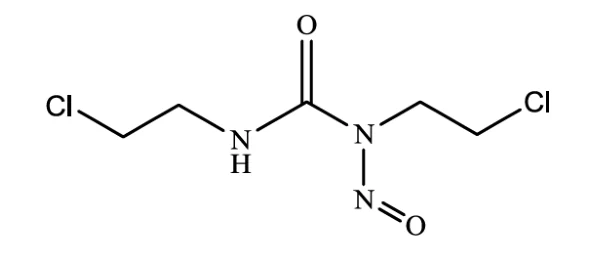
Molecular Formula: C5H9Cl2N3O2
Molecular Weight: 214.06
Physicochemical properties: Carmustine for Injection USP (carmustine) is a
nitrosourea which comes in the form of thin, lacy, brittle, pale yellow flakes having a melting point of 30.5 - 32.0°C. It is light sensitive and vesicant and decomposes readily at room temperature. It is poorly soluble in water and in saline; quite soluble in propylene glycol; soluble in 50% alcohol and highly soluble in lipids.
It is most stable at pH 4, but in more acidic as well as in aqueous solutions of pH greater than 7, it is short lived.
14 CLINICAL TRIALS
Not applicable.
15 MICROBIOLOGY
No microbiological information is required for this drug product.
16 NON-CLINICAL TOXICOLOGY
PHARMACOLOGY
ANIMAL
Plasma Level
After a single IV injection of 10 mg/kg in the dog, the plasma level of intact carmustine reaches a peak level of 30 mcg/mL with a half-life of less than 15 minutes. The same half-life has also been found in the mouse. It is interesting to note that plasma samples taken as early as 5 minutes after oral or parenteral administration in the monkey did not contain intact carmustine.
In the monkey, the half-life of 14C labeled carmustine and its degradation products as determined by 14C counts is prolonged up to 22 hours after a single IV injection of 10 mg/kg.
One minute after IV infusion, intact carmustine could be detected in the CSF of the dog and it reaches 48% of the plasma concentration after equilibration.
Following IV injection, intact carmustine was not characterized in the CSF of the monkey.
Studies with 14C labeled carmustine showed that in the dog, after a 10 mg/kg IV injection, radioactivity enters the CSF rapidly and reaches 18% of the plasma level one minute following drug administration. Equilibration occurs by 15 minutes and the concentration of carmustine reaches about 60% that of plasma.
In the monkey, 15 minutes after IV injection, the level of carmustine in the CSF was 73% that of plasma and after 90 minutes as high as 90%.
Urinary Excretion
Ten minutes after a single intravenous injection in the dog, intact carmustine begins to appear in the urine. The excretion reaches a peak at about 2 hours and then gradually tapers off until 3 hours later. Nevertheless, in no case is the total amount of unchanged carmustine excreted in 4 hours in excess of 0.1% of the dose.
In mice, the urinary excretion of 14C carmustine is fast. For instance, 4 hours after a 10 mg/kg IV injection it reached 62% of the administered dose. This excretion is initially faster after intraperitoneal administration than subcutaneous or oral, but after 24 hours no significant differences are noted between the different dose routes: the excretion level being close to 80%.
In the monkey, 48 hours after a 10 mg/kg IV injection of 14C carmustine, an average of 68% of
14C radioactivity is recovered in the urine. Further urinary excretion is minimal after 48 hours.
In the dog, the urinary excretion is rather slow with 16% in 2 hours and 30% in 6 hours after a 10 mg/kg IV dose of 14C carmustine.
Pulmonary Excretion
Expired CO2 was collected from mice given an intraperitoneal dose of 14C labeled carmustine. The 24 hours’ recovery of 14C CO2 accounted for an average of 8.5% of the radioactive dose. After IV administration into monkeys no more than 2% of the dose was collected as 14CO2.
HUMAN
Protein Binding
The average extent of binding of carmustine with human plasma proteins is about 80% at 0°C. (The experiments were carried out at 0°C because of the extreme instability of carmustine in plasma).
Plasma Level
Plasma samples taken as early as 5 minutes after oral or parenteral drug administration did not contain intact carmustine. Plasma levels of the radioactivity were prolonged with a half-life of about 34 hours for the orally and 67 hours for the intravenously administered 14C carmustine.
C.S.F.
After IV administration of 14C carmustine, radioactive 14C was found in the CSF of man equilibrating with plasma radioactivity in about 1 hour showing 97 and 30% of plasma level in 2 men, respectively.
Urinary Excretion
Extremely small amounts of intact carmustine were detected in urine samples collected at one- half hour following drug administration (IV or oral). After the second half hour urine samples did not contain unaltered carmustine.
Urinary excretion of the radioactivity was strikingly similar in all patients regardless of the route of administration (IV or oral) and quite comparable to monkeys. By 96 hours, an average of 65% of the isotope had been recovered in the urine.
Pulmonary Excretion
Over 24 hours, the radioactivity excretion of 14C carmustine as 14CO2 was approximately 10% of the dose after oral administration and 6% when given IV. Although carmustine is well absorbed after oral, intraperitoneal and subcutaneous administration, it is mainly used by the intravenous route. The active moiety of carmustine is still unknown but the high degradation rate of carmustine in plasma suggests that the biological activity as well as the delayed toxicity of carmustine are related at least partly to its degradation products. The in vitro decomposition of carmustine has been studied quite extensively. However, to date, nothing is known on its biodegradation except for the fact that part of it is excreted as CO2 as determined with 14C labeled carmustine.
TOXICOLOGY
Acute Toxicity
LD50 of carmustine was established in the rat and the mouse after different administration routes.
| Species | Dose Range (mg/kg) | Route | Calculation of LD50 Based on Observations period of | LD50 (mg/kg) |
| Mouse | 25.1 - 79.4 | IV | 21 days | 45 |
| Mouse | 50.0 - 60.0 | IM | 48 days | 23 |
| Mouse | 15.9 - 100.0 | Oral (methyl- cellulose) | 21 days | 42 |
| Mouse | 20.0 - 112.0 | IP | 25 days | 45 |
| Rat | 14.0 - 50.0 | IV | 23 days | 20 |
| Rat | 10.0 - 39.8 | Oral | 23 days | 20 |
| Rat | 10.0 - 39.8 | Oral in saline | 23 days | 20 |
It is interesting to note the similarities between the IV and oral route toxicity both in the mouse and the rat.
Delayed toxic manifestations of carmustine have been shown in various animals including the mouse, rat, dog and monkey. They involve chronologically the following systems:
Hematopoietic System
Initially carmustine deletes the several hematopoietic elements of the marrow and lymphoidal components of the spleen and nodes resulting in marked and prolonged (2-3 weeks) leukopenia and thrombocytopenia. Marrow depression was reversible if the animal survived.
Liver
Although delayed toxicities are commonly seen after exposure of experimental animals to alkylating agents, carmustine has shown striking delayed hepatic toxic manifestations ranging from 14 to 119 days.
After a single oral dose of carmustine in rats, the hepatic function was assessed by a series of standard techniques. By 1 week, all doses of carmustine prolonged pentobarbital hypnosis and BSP retention, later, elevations of serum bilirubin appeared, but these were delayed by as long as 63 days at the lowest dose. Serum bilirubin was direct-reacting at early stages but later shifted to indirect-reacting coincidental with a reduction of BSP retention.
Histopathologic study revealed early pericholangitis and necrosis of bile ductules. Later biliary hyperplasia and cirrhosis developed. These findings disclose a unique ability of carmustine to produce a prolonged and progressive bimodal toxicity resulting in hyperbilirubinemia. These
toxic manifestations were also coupled with an increase in ALT and AST as well as alkaline phosphatase.
Renal
Renal damage without distinctive kidney pathology was reflected by elevated BUN in the monkey and the dog following oral or IV dosage of carmustine.
Others
It may be noted that weight loss during treatment with carmustine was often seen and it appears that this is a manifestation of distinct toxic effects of carmustine. Pertinent to that observation is the finding that carmustine causes a significant reduction in glucose (54.4%) and water (50.0%) absorption from the gut.