


Product Monograph - Casgevy
Recent Major Label Changes
| 7 Warnings and Precautions, Carcinogenesis and Genotoxicity | 2025-08 |
|---|
Table of Contents
Certain sections (as indicated in section 2.1. of the PM Guidance) or subsections that are not applicable at the time of the preparation of the most recent authorized product monograph are not listed.
Recent Major Label Changes ................................................................................................. 2
Table of Contents ................................................................................................................. 2
Part 1: Healthcare Professional Information.......................................................................... 4
1 Indications ................................................................................................................ 4
1.1 Pediatrics ................................................................................................................ 4
1.2 Geriatrics ................................................................................................................ 4
2 Contraindications ...................................................................................................... 4
4 Dosage and Administration ....................................................................................... 4
4.1 Dosing Considerations ........................................................................................... 4
4.2 Recommended Dose and Dosage Adjustment ...................................................... 6
4.4 Administration ....................................................................................................... 6
4.5 Missed Dose ......................................................................................................... 10
5 Overdose ................................................................................................................ 10
6 Dosage Forms, Strengths, Composition, and Packaging ............................................ 11
7 Warnings and Precautions ....................................................................................... 11
7.1 Special Populations .............................................................................................. 13
7.1.1 Pregnancy ......................................................................................................... 13
7.1.2 Breastfeeding ................................................................................................... 13
7.1.3 Pediatrics .......................................................................................................... 13
7.1.4 Geriatrics .......................................................................................................... 13
8 Adverse Reactions ................................................................................................... 13
8.1 Adverse Reaction Overview ................................................................................. 13
8.2 Clinical Trial Adverse Reactions ........................................................................... 13
8.2.1 Clinical Trial Adverse Reactions – Pediatrics.................................................... 20
8.3 Less Common Clinical Trial Adverse Reactions .................................................... 20
8.4 Abnormal Laboratory Findings: Hematologic, Clinical Chemistry, and Other Quantitative Data ............................................................................................................. 20
9 Drug Interactions .................................................................................................... 22
9.2 Drug Interactions Overview ................................................................................. 22
9.4 Drug-Drug Interactions ........................................................................................ 22
9.5 Drug-Food Interactions ........................................................................................ 22
9.6 Drug-Herb Interactions ........................................................................................ 22
9.7 Drug-Laboratory Test Interactions....................................................................... 22
10 Clinical Pharmacology ............................................................................................. 22
10.1 Mechanism of Action ........................................................................................... 22
10.2 Pharmacodynamics .............................................................................................. 23
10.3 Pharmacokinetics ................................................................................................. 26
11 Storage, Stability and Disposal ................................................................................. 26
12 Special Handling Instructions ................................................................................... 26
Part 2: Scientific Information .............................................................................................. 28
13 Pharmaceutical Information .................................................................................... 28
14 Clinical Trials ........................................................................................................... 28
14.1 Clinical Trials by Indication .................................................................................. 28
15 Microbiology ........................................................................................................... 35
16 Non-Clinical Toxicology ........................................................................................... 35
17 Supporting Product Monographs ............................................................................. 36
Patient Medication Information ......................................................................................... 37
Part 1: Healthcare Professional Information
1 Indications
CASGEVY (exagamglogene autotemcel) is an autologous genome edited hematopoietic stem cell-based therapy indicated for the treatment of patients 12 years of age and older with:
- sickle cell disease (SCD) with recurrent vaso-occlusive crises (VOCs); OR
- transfusion-dependent β-thalassemia (TDT)
1.1 Pediatrics
Pediatrics (≥ 12 years of age): Based on the data submitted and reviewed by Health Canada, the safety and efficacy of CASGEVY in adolescents (aged ≥ 12 years of age) has been established. Therefore, Health Canada has authorized an indication for pediatric use in patients 12 years of age and older (see 8.2.1 Clinical Trial Adverse Reactions – Pediatrics and 14 Clinical Trials).
1.2 Geriatrics
Geriatrics (≥ 65 years of age): The safety and efficacy of CASGEVY has not been established in geriatric patients as clinical studies of CASGEVY were restricted to adult patients who were 35 years of age or younger.
2 Contraindications
Consult the product monographs of the drugs used in mobilization (e.g., plerixafor, filgrastim) and myeloablative conditioning (e.g., busulfan).
CASGEVY is contraindicated in patients who are hypersensitive to this drug or to any ingredient in the formulation (e.g., DMSO, dextran 40, mannitol), including any non-medicinal ingredient, or component of the container. For a complete listing, see 6 Dosage Forms, Strengths, Composition, and Packaging.
4 Dosage and Administration
4.1 Dosing Considerations
- Before mobilization, apheresis and myeloablative conditioning are initiated, confirm that hematopoietic stem cell transplantation (HSCT) is appropriate for the patient.
- CASGEVY can only be given in a treatment centre with experience in stem cell transplantation, and in the treatment of patients with SCD and TDT.
- For autologous use only. Do not infuse CASGEVY if the information on the patient-specific label does not match the intended patient.
- For one-time, single-dose intravenous use only; do NOT use a leukodepleting filter.
- Do not sample, alter, or irradiate the medicinal product.
- CASGEVY must be administered between 48 hours and 7 days after the last dose of the myeloablative conditioning agent.
- Additional educational materials, including Patient Cards and Guides for Healthcare Professionals and Patients/Caregivers are available through the manufacturer.
Mobilization and Apheresis
Patients are required to undergo CD34+ hematopoietic stem and progenitor cell (HSPC) mobilization followed by apheresis to isolate the CD34+ cells for medicinal product manufacturing.
In clinical trials in SCD, single-agent plerixafor was administered for mobilization. Do not use granulocyte-colony stimulating factor (G-CSF) products for mobilization in patients with sickle cell disease.
In TDT clinical trials, both G-CSF and plerixafor were used for mobilization (see 14 Clinical Trials).
Maximize CD34+ cell collection to obtain as many CD34+ cells as possible for product manufacturing during each mobilization and apheresis cycle. Perform two consecutive days of cell collection for product manufacturing per cycle, if clinically tolerated. A total collection target of at least 20 × 106 CD34+ cells/kg is recommended for product manufacture. Collected cells should be sent for product manufacturing even if the total collection target is not achieved. An additional 2 × 10⁶ CD34+ cells/kg is required to be collected as backup for rescue therapy in an event of non-engraftment with CASGEVY. A third day of cell collection can be used to obtain backup rescue cells, if needed. If the minimum dose of CASGEVY is not met after initial medicinal product manufacturing, the patient will need to undergo additional cycles of mobilization and apheresis. Each mobilization and apheresis cycle must be separated by a minimum of 14 days.
The backup collection of ≥ 2 × 10⁶ CD34+ cells/kg of unmodified rescue cells must be collected from the patient and be cryopreserved prior to myeloablative conditioning and infusion with CASGEVY. The unmodified cells may be needed for rescue treatment under any one of the following conditions: compromise of CASGEVY after initiation of myeloablative conditioning and before CASGEVY infusion; neutrophil engraftment failure; or loss of engraftment after infusion with CASGEVY (see 7 Warnings and Precautions).
See 14 Clinical Trials for descriptions of the mobilization regimen used in the clinical studies. Refer to the prescribing information for the mobilization agent(s) prior to treatment.
Disease modifying therapies (e.g., hydroxyurea for SCD and luspatercept for TDT) should be discontinued 8 weeks before the planned start of mobilization.
Sickle Cell Disease:
Prior to apheresis it is recommended that patients be transfused with a goal of maintaining HbS levels < 30% of total Hb while keeping total Hb concentration ≤ 110 g/L.
Transfusion-Dependent β-thalassemia:
Prior to apheresis procedure it is recommended that patients be transfused with a goal to maintain hemoglobin (Hb) ≥ 110 g/L.
Myeloablative Conditioning
Full myeloablative conditioning must be administered before infusion of CASGEVY. In clinical studies busulfan was administered for 4 consecutive days intravenously (IV) via a central venous catheter at a planned starting dose of 3.2 mg/kg/day once daily (qd) or 0.8 mg/kg every 6 hours (q6h). Busulfan plasma levels were measured by serial blood sampling and the dose adjusted to maintain exposure in the target range.
See 14 Clinical Trials for additional details regarding the conditioning regimen used in clinical studies. Consult prescribing information for the myeloablative conditioning agent(s) prior to treatment (see 17 Supporting Product Monographs).
Disease modifying therapies (e.g., hydroxyurea for SCD and luspatercept for TDT) should be discontinued 8 weeks before the start of myeloablative conditioning. Iron chelation therapy should be stopped at least 7 days prior to myeloablative conditioning.
In patients with sickle cell disease it is recommended to transfuse for at least the 8 weeks prior to the initiation of myeloablative conditioning, with a goal of maintaining HbS levels of < 30% of total Hb while keeping total Hb concentration ≤ 110 g/L.
In patients with TDT it is recommended to maintain hemoglobin (Hb) ≥ 110 g/L for 60 days prior to myeloablative conditioning.
Prophylaxis for seizures should be considered. Refer to the prescribing information of the conditioning agent used for information on drug interactions.
Prior to starting the myeloablative conditioning regimen, confirm availability of the complete set of vials comprising the total dose of CASGEVY and unmodified rescue cells, and inspect the vial(s) for any breaks or cracks. See the Lot Information Sheet provided with the product shipment for confirmation of the number of vials and total dose of CASGEVY.
CASGEVY must be administered between 48 hours and 7 days after the last dose of the myeloablative conditioning agent.
4.2 Recommended Dose and Dosage Adjustment
The minimum recommended dose of CASGEVY is 3 × 10⁶ viable CD34+ cells/kg.
CASGEVY is provided as a single dose for infusion containing a suspension of CD34+ cells in one or more vials. See the Lot Information Sheet provided with the product shipment for additional information pertaining to dose.
4.4 Administration
Receipt and Storage of CASGEVY
- CASGEVY is shipped to the treatment centre frozen in the vapour phase of liquid nitrogen in a cryoshipper.
- Confirm patient identifiers on the product label(s) and Lot Information Sheet.
- If there are any concerns about the product, packaging or shipping temperatures upon receipt, contact VERTEX at 1-877-634-8789.
- Transfer CASGEVY from the vapour phase of the nitrogen cryoshipper to the vapour phase of liquid nitrogen (≤ -135 °C) storage located at the treatment centre.
Preparation for CASGEVY Administration
CASGEVY contains human cells. Follow universal precautions (wearing gloves, protective clothing, and eye protection) and local biosafety guidelines applicable for handling and disposal of such products to avoid potential transmission of infectious diseases. All material that has been in contact with CASGEVY (solid and liquid waste) should be handled and disposed of as potentially infectious waste in accordance with local biosafety guidelines (see 12 Special Handling Instructions for additional details).
Before thawing a vial, confirm CASGEVY is printed on the vial label and that the patient’s identity matches the unique patient information on the CASGEVY vial(s). Do not remove the CASGEVY vials from cryo-storage if the information on the patient-specific label does not match the intended patient’s information, and contact VERTEX at 1-877-634-8789.
Coordinate the timing of CASGEVY thaw and infusion. CASGEVY must be infused within 20 minutes of thawing the vial. Confirm the infusion time in advance and adjust the start time of the thaw so that CASGEVY is available for infusion when the patient is ready. Thaw and infuse one vial at a time.
Premedication: Administer an antipyretic (e.g., acetaminophen) and an antihistamine (e.g., diphenhydramine hydrochloride) prior to administering CASGEVY.
A dose of CASGEVY may be contained in one or more cryopreserved patient-specific vial(s). The number of vials provided is stated on the Lot Information Sheet. Ensure that each vial is accounted for and confirm that each vial is within the expiry date by comparing the product label information to the information on the accompanying Lot Information Sheet.
Inspect the vial(s) for any breaks or cracks prior to thawing. If a vial is compromised, do not infuse the contents. Call VERTEX at 1-877-634-8789.
Gather the supplies that are needed to thaw and withdraw the product from the vial(s). With the exception of the water bath, these supplies are single use. Gather sufficient supplies for each vial to be administered:
- Water bath
- Alcohol swabs
- Vial adapter (to allow for needle-less extraction)
- 18 micron stainless steel filter
- 30 mL luer-lock syringe
- 0.9% sodium chloride (saline, 5 to 10 mL needed for each vial)
- 10 mL luer-lock syringe for saline rinse
Thawing the CASGEVY Vials
- When the dose consists of multiple vials, thaw and administer one vial at a time. While thawing and administering a vial, remaining vials must remain in cryo-storage at ≤ -135 °C.
- Thaw each vial at 37 °C using a water bath. Ensure water bath temperature does not exceed 40 °C.
- Thaw each vial holding the vial neck, gently agitating clockwise and counterclockwise. This can take between 10 to 15 minutes.
- Do not leave CASGEVY unattended during thaw.
- Thawing is complete when ice crystals are no longer visible in the vial.
- Remove vial from water bath immediately once thawed.
- The thawed product should appear as a translucent cellular suspension, which may contain proteinaceous particles or cellular aggregates.
- Do not wash, spin down and/or resuspend CASGEVY in new media prior to infusion.
- Do not sample, alter, irradiate, or refreeze CASGEVY.
- Infuse within 20 minutes of thaw.
Administration of CASGEVY
CASGEVY is for autologous use only. The patient’s identity must match the patient identifiers on the CASGEVY vial(s). Do not infuse CASGEVY if the information on the patient-specific label does not match the intended patient’s information.
A patient’s dose may consist of multiple vials. Use the Lot Information Sheet to confirm the total number of vials to be administered. All vials must be administered. The entire volume of each vial provided should be infused. If more than one vial is provided, administer each vial completely before proceeding to thaw and infuse the next vial.
- 1. Attaching the vial adapter and filter
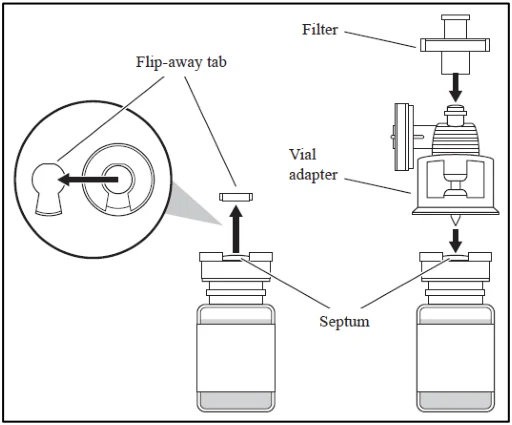
- a. Remove the flip-away tab of the vial cap; clean the septum with an alcohol swab.
- b. Remove the cap on the vial adapter spike.
- c. With the thumb and forefinger of both hands, push the adapter into the vial septum, applying equal pressure until there is a single audible “pop”.
- d. Pull up on the adapter until you feel it lock.
- e. Attach the filter to the vial adapter.
- 2. Withdrawing CASGEVY from the vial
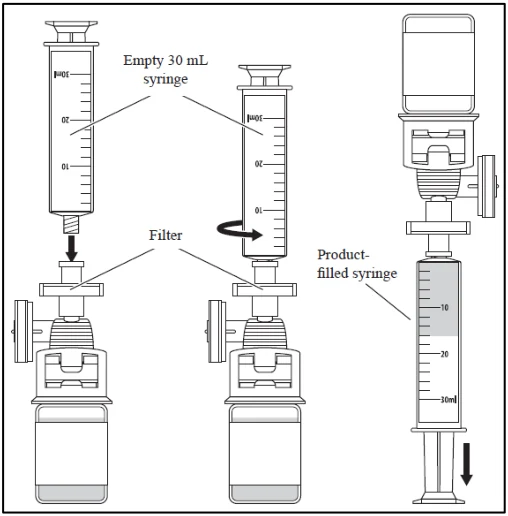
- a. Attach an empty 30 mL syringe to the filter.
- b. Withdraw the entire vial contents of the vial.
- c. Remove the product-filled syringe from the filter and set aside.
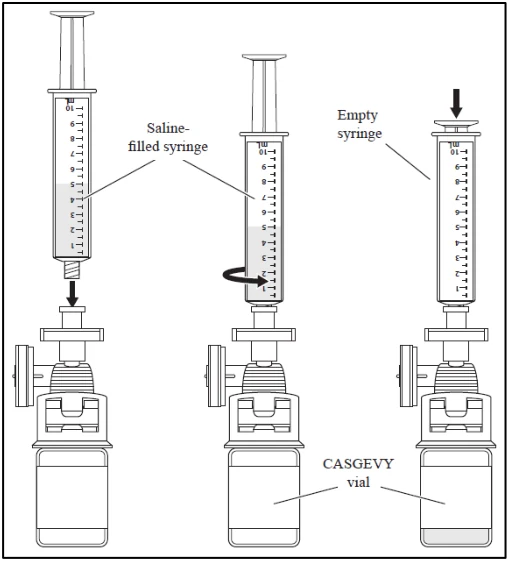
- d. Draw 5 - 10 mL of saline into the empty 10 mL syringe.
- e. Attach the saline-filled syringe to the filter.
- f. Inject the saline into the CASGEVY vial and remove the empty syringe from the filter. Discard the empty syringe.
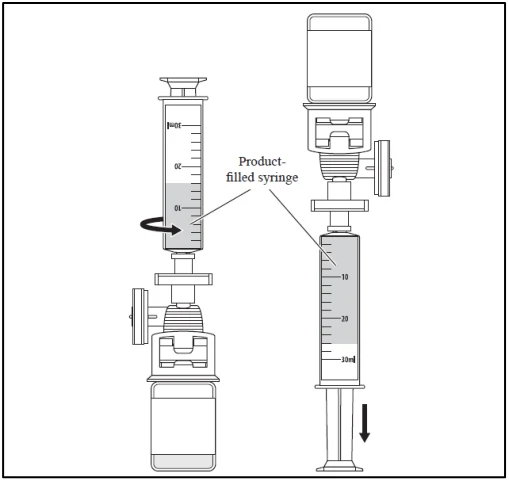
- g. Attach the product-filled syringe to the filter.
- h. Withdraw the contents of the vial into the syringe, then remove the syringe from the filter.
- i. Peel the product/patient identifier label from the Lot Information Sheet and affix to the product-filled syringe.
- 3. Administer CASGEVY through central venous catheter
- a. Perform a two-person confirmation and verification of patient’s identification at the bedside prior to the infusion of each vial.
- b. Administer CASGEVY as an intravenous bolus (IV push) within 20 minutes of product thaw. Do not use an in-line blood filter or infusion pump when infusing CASGEVY. The total volume of CASGEVY administered within one hour must not exceed 2.6 mL/kg.
- c. After administration of each vial of CASGEVY, flush the primary line with saline solution, using enough volume to flush the tubing and the length of the IV catheter.
Repeat steps 1-3 for each remaining vial. If the patient-specific product was provided in more than 1 vial, administer each vial completely before proceeding to thaw and infuse the next vial. All vials must be administered.
After CASGEVY Administration
Follow standard procedures for monitoring and patient management after HSCT after CASGEVY infusion.
- Irradiate any blood products required within the first 3 months after CASGEVY infusion.
- Patients should not donate blood, organs, tissues, or cells at any time in the future.
- Restarting iron chelation after CASGEVY infusion may be necessary. Avoid the use of non-myelosuppressive iron chelators for at least 3 months and use of myelosuppressive iron chelators for at least 6 months after CASGEVY infusion. Phlebotomy can be used in lieu of iron chelation, when appropriate (see 9 Drug Interactions ).
Special Populations
Renal Impairment
CASGEVY has not been studied in patients with renal impairment, defined as estimated glomerular filtration rate < 60 mL/min/1.73 m2. Patients should be assessed for renal impairment to ensure HSCT is appropriate.
Hepatic Impairment
CASGEVY has not been studied in patients with advanced liver disease (see 14 Clinical Trials). Patients should be assessed for hepatic impairment to ensure HSCT is appropriate.
Patients Seropositive for Human Immunodeficiency Virus (HIV), Hepatitis B Virus (HBV) or Hepatitis C Virus (HCV)
CASGEVY has not been studied in patients with HIV-1, HIV-2, HBV or HCV. Perform screening for HIV-1, HIV-2, HBV and HCV and any other infectious agents in accordance with local guidelines before collection of cells for manufacturing. CASGEVY should not be used in patients with active HIV-1, HIV-2, HBV or HCV infections.
Patients with Prior HSCT
CASGEVY has not been studied in patients who have received a prior allogeneic or autologous HSCT. Treatment with CASGEVY is not recommended in these patients.
4.5 Missed Dose
Not applicable.
5 Overdose
Not applicable.
6 Dosage Forms, Strengths, Composition, and Packaging
Table 1 – Dosage Forms, Strengths, and Composition
| Route of Administration | Dosage Form / Strength/Composition | Non-medicinal Ingredients |
| Intravenous | Cell suspension in patient-specific vials 4-13 × 106 cells/mL 1.5 - 20 mL per vial 1 - 9 vials per carton A single patient may require multiple cartons for a complete dose | Cryostor® CS5 (contains DMSO, dextran 40, mannitol, multiple electrolytes for injection) see 7 Warnings and Precautions |
CASGEVY is supplied in cryopreservation medium in vials made of cyclic olefin copolymer, packed in an outer paperboard carton.
Each lot of CASGEVY is shipped from the manufacturing facility to the treatment centre storage facility in a liquid nitrogen dry shipper. One shipper contains a single carton, which may contain multiple vials, all intended for a single patient. More than one Drug Product lot may be required for a single patient dose.
The actual quantitative information regarding strength and dose for CASGEVY is provided in the Lot Information Sheet. The Lot Information Sheet is included inside the lid of the liquid nitrogen dry shipper used to transport CASGEVY.
7 Warnings and Precautions
Individual patients must be considered suitable candidates for HSCT if they are to receive CASGEVY, taking into account the warnings and precautions of mobilization and myeloablative conditioning agents required as part of the overall therapy.
Carcinogenesis and Genotoxicity
Gene-Editing Related Oncogenesis
No cases of myelodysplasia, leukemia, or lymphoma have been reported in clinical studies with CASGEVY. There is a theoretical risk of hematologic oncogenesis related to gene editing. Monitor patients at least annually (including complete blood count) for 15 years after treatment with CASGEVY. If myelodysplasia, leukemia, or lymphoma are detected, contact VERTEX at (1-877-634-8789) to determine how to appropriately sample for further analysis.
The risk of unintended, off-target editing in an individual’s CD34+ cells cannot be ruled out. A search spanning the human genome identified off-target editing at a single variant site. The variant was identified in 3.3% (3/91) of patient samples analyzed (edited CD34+ cells). The currently identified off-target site is located in an intron of a gene not expressed in hematopoietic cells so no ill effects are expected (see 16 Non-Clinical Toxicology). The clinical significance of other potential off-target editing is not known.
Hematologic
Potential Neutrophil Engraftment Failure
Neutrophil engraftment failure is a potential risk in hematopoietic stem cell transplants, including after infusion with CASGEVY. In clinical trials, all patients treated with CASGEVY achieved neutrophil engraftment.
Patients should be monitored for absolute neutrophil counts (ANC) and infections should be managed according to standard guidelines and medical judgment. In the event of neutrophil engraftment failure, patients should be infused with unmodified rescue CD34+ cells (see 4.1 Dosing Considerations).
Prolonged Time to Platelet Engraftment
Longer median platelet engraftment times were observed with CASGEVY treatment than are typically observed with allogeneic HCST. There is an increased risk of bleeding until platelet engraftment is achieved. In clinical trials, there was no association observed between incidence of bleeding events and time to platelet engraftment.
Monitor patients for bleeding according to standard guidelines and medical judgement. Conduct frequent platelet counts until platelet engraftment and platelet recovery are achieved. Perform blood cell count determination and other appropriate testing whenever clinical symptoms suggestive of bleeding arise (see 8 Adverse Reactions ).
Immune
Hypersensitivity Reactions
Serious hypersensitivity reactions, including anaphylaxis, can occur during or following infusion of CASGEVY. Monitor patients for hypersensitivity reactions during and after infusion.
Live Vaccines
The safety of immunization with live viral vaccines during or following CASGEVY treatment has not been studied.
Reproductive Health
Women of Childbearing Potential/Contraception in Males and Females
A negative serum pregnancy test must be confirmed prior to the start of each mobilization cycle and re-confirmed prior to myeloablative conditioning. Women of childbearing potential and men capable of fathering a child must use effective method of contraception from start of mobilization through at least 6 months after administration of CASGEVY due to the risks associated with myeloablative conditioning with busulfan. Advise patients of the risks associated with myeloablative conditioning agents. There are insufficient exposure data to provide a precise recommendation on duration of contraception following treatment with CASGEVY.
Fertility
There are no data on the effects of exagamglogene autotemcel on human fertility. Effects on male and female fertility have not been evaluated in animal studies. Infertility has been observed with myeloablative conditioning; therefore, fertility preservation options should be discussed with patients and their family before proceeding with treatment (i.e., prior to mobilization), particularly in prepubertal individuals where fertility preservation options are limited.
7.1 Special Populations
7.1.1 Pregnancy
There are no clinical data from the use of exagamglogene autotemcel in pregnant women and no animal reproductive and developmental toxicity studies have been conducted with exagamglogene autotemcel. Due to the potential for fetal harm of myeloablative conditioning regimens, including teratogenicity, CASGEVY must not be administered during pregnancy. Pregnancy after CASGEVY infusion should be discussed with the treating physician (see guidance on contraception, above).
7.1.2 Breastfeeding
Breastfeeding should be discontinued during myeloablative conditioning due to the potential for serious outcomes including the potential for tumorigenicity. The developmental and health benefits of breastfeeding should be considered along with the mother's clinical need for CASGEVY and any potential adverse effects on the breastfed child from the mobilization and myeloablative conditioning agents used prior to CASGEVY administration or from the underlying maternal condition. Breastfeeding after infusion of CASGEVY should be discussed with the treating physician.
7.1.3 Pediatrics
No data in patients less than 12 years of age are available to Health Canada; therefore, Health Canada has not authorized an indication of pediatric use in patients less than 12 years of age.
7.1.4 Geriatrics
Patients Aged 65 Years and Older
CASGEVY has not been studied in patients > 35 years of age. The safety and efficacy of CASGEVY in a geriatric population has not been established.
8 Adverse Reactions
8.1 Adverse Reaction Overview
The following serious adverse reactions are described under 7 Warnings and Precautions:
- Potential Neutrophil Engraftment Failure
- Prolonged Time to Platelet Engraftment
- Hypersensitivity Reactions
8.2 Clinical Trial Adverse Reactions
Clinical trials are conducted under very specific conditions. Therefore, the frequencies of adverse reactions observed in the clinical trials may not reflect frequencies observed in clinical practice and should not be compared to frequencies reported in clinical trials of another drug.
The safety of CASGEVY was evaluated in two open-label, single-arm studies (study 121 and study 111) and one long-term follow-up study (study 131), in which 98 adolescent and adult patients with SCD or TDT were treated with CASGEVY after undergoing myeloablative conditioning with busulfan. The adverse event profile was generally consistent with that expected from busulfan myeloablative conditioning and HSCT.
Patients with SCD
Summary of the Safety Profile
The median (min, max) duration of follow-up for the 44 patients with SCD after being administered CASGEVY was 19.3 (0.8, 48.1) months.
Serious adverse reactions after myeloablative conditioning and CASGEVY infusion were observed in 45% of patients in study 121. The most common serious adverse reactions (≥ 2 patients) were cholelithiasis, pneumonia, abdominal pain, constipation, pyrexia, abdominal pain upper, non-cardiac chest pain, oropharyngeal pain, pain, and sepsis.
One (2%) patient died due to a COVID-19 infection and subsequent respiratory failure. The event was not related to CASGEVY.
Tabulated List of Adverse Reactions
Table 2 presents the non-laboratory adverse reactions observed after myeloablative conditioning and CASGEVY infusion in at least 10% of patients with SCD. Adverse reactions are listed by MedDRA body system organ class and preferred term.
Table 2 – Adverse reactions in ≥ 10% of patients with SCD who underwent busulfan myeloablative conditioning and received CASGEVY in study 121: Day 1 to month 24 after CASGEVY infusion *
| MedDRA † System Organ Class | exagamglogene autotemcel N= 44 n (%) |
|---|---|
| Blood and Lymphatic System Disorders | |
| Febrile neutropenia | 24 (55) |
| Cardiac Disorders | |
| Tachycardia ‡ | 9 (20) |
| Eye Disorders | |
| Vision blurred | 6 (14) |
| Gastrointestinal Disorders | |
| Mucositis §, # | 43 (98) |
| Nausea | 31 (70) |
| Abdominal pain ** | 27 (61) |
| Vomiting | 25 (57) |
| Constipation | 20 (45) |
| Diarrhea | 17 (39) |
| Gastritis | 11 (25) |
| Gastroesophageal reflux disease | 8 (18) |
| Dyspepsia | 5 (11) |
| Hematochezia | 5 (11) |
| General Disorders and Administration Site Conditions | |
| Pyrexia | 18 (41) |
| Fatigue | 16 (36) |
| Edema peripheral | 12 (27) |
| Pain | 11 (25) |
| Drug withdrawal syndrome | 9 (20) |
| Hepatobiliary Disorders | |
| Cholelithiasis | 8 (18) |
| Infections and Infestations | |
| COVID-19 †† | 12 (27) |
| Oral candidiasis | 9 (20) |
| Upper respiratory tract infection ‡‡ | 9 (20) |
| Pneumonia | 5 (11) |
| Viral infection §, §§ | 5 (11) |
| Injury, Poisoning and Procedural Complications | |
| Procedural pain | 9 (20) |
| Infusion related reactions §, ## | 6 (14) |
| Investigations | |
| Weight decreased | 8 (18) |
| Metabolism and Nutrition Disorders | |
| Decreased appetite | 21 (48) |
| Musculoskeletal and Connective Tissue Disorders | |
| Musculoskeletal pain §, *** | 29 (66) |
| Arthralgia | 19 (43) |
| Nervous System Disorders | |
| Headache | 22 (50) |
| Dizziness | 10 (23) |
| Paraesthesia | 5 (11) |
| Psychiatric Disorders | |
| Anxiety | 9 (20) |
| Insomnia | 7 (16) |
| Renal and Urinary Disorders | |
| Dysuria | 7 (16) |
| Respiratory, Thoracic and Mediastinal Disorders | |
| Oropharyngeal pain §, ††† | 11 (25) |
| Epistaxis | 9 (20) |
| Cough | 7 (16) |
| Skin and Subcutaneous Tissue Disorders | |
| Pruritus | 22 (50) |
| Pigmentation disorder ‡‡‡ | 17 (39) |
| Skin exfoliation | 10 (23) |
| Rash §§§ | 8 (18) |
| Alopecia | 7 (16) |
| Dry skin | 6 (14) |
| Vascular Disorders | |
| Hypertension | 7 (16) |
| Hot flush | 5 (11) |
* Table includes non-laboratory adverse events associated with busulfan myeloablative conditioning and treatment with CASGEVY. Adverse event profile generally consistent with that expected from busulfan myeloablative conditioning and HSCT.
† MedDRA version 26.0.
‡ Tachycardia includes sinus tachycardia and tachycardia.
§ Encompasses preferred terms that belong to other system organ class.
# Mucositis includes anal inflammation, mucosal inflammation, pharyngeal inflammation, and stomatitis.
** Abdominal pain includes abdominal discomfort, abdominal pain, abdominal pain lower, abdominal pain upper, and abdominal tenderness.
†† COVID-19 includes COVID-19 and SARS-CoV-2 test positive.
‡‡ Upper respiratory tract infection includes upper respiratory tract infection and viral upper respiratory tract infection.
§§ Viral infection includes adenovirus infection, influenza, parvovirus B19 test positive, viral infection, and viral test positive.
## Infusion related reactions includes terms on Day 1 of CASGEVY infusion that were consistent with common infusion-related signs and symptoms: abdominal pain in 3 (7%) patients; and infusion-related reaction, nausea, non-cardiac chest pain, pruritus, sinus tachycardia and vomiting in 1 (2%) patient each.
*** Musculoskeletal pain includes back pain, bone pain, chest pain, costochondritis, musculoskeletal chest pain, myalgia, neck pain, non-cardiac chest pain, pain in extremity, and tendon pain.
††† Oropharyngeal pain includes oral pain, oropharyngeal pain, and pain in jaw.
‡‡‡ Pigmentation disorder includes nail pigmentation, skin hyperpigmentation, and skin hypopigmentation.
§§§ Rash includes dermatitis, rash, rash macular, rash maculo-papular, rash papular, and urticaria.
Platelet Engraftment in Patients with SCD
Platelet engraftment in patients with SCD is defined as 3 consecutive measurements of platelet counts ≥ 50 × 109/L, obtained on 3 different days after CASGEVY infusion without administration of platelet transfusions for 7 days. In study 121, the median (min, max) time to platelet engraftment for patients with SCD was 35 (23, 126) days (n=43). There was no association observed between bleeding events and time to platelet engraftment.
Neutrophil Engraftment in Patients with SCD
Neutrophil engraftment is defined as 3 consecutive measurements of ANC ≥ 0.5 × 10⁹ cells/L on 3 different days after CASGEVY infusion, without use of the unmodified rescue CD34+ cells. In study 121, the median (min, max) time to neutrophil engraftment was 27 (15, 40) days (n=44). There was no association observed between infections and time to neutrophil engraftment. There was no use of rescue CD34+ cells in any patient.
Patients with TDT
Summary of the Safety Profile
The median (min, max) duration of follow-up for 54 patients with TDT after being administered CASGEVY was 22.8 (2.1, 51.1) months.
Serious adverse reactions after myeloablative conditioning and CASGEVY infusion were observed in 35% of patients with TDT. The most common serious adverse reactions (≥ 2 patients) were veno-occlusive liver disease, pneumonia, COVID-19, hypoxia, thrombocytopenia, and upper respiratory tract infection.
Tabulated List of Adverse Reactions
Table 3 presents the non-laboratory adverse reactions observed after myeloablative conditioning and CASGEVY infusion in at least 10% of patients in study 111. Adverse reactions are listed by MedDRA body system organ class and preferred term.
Table 3 – Adverse reactions in ≥ 10% of patients with TDT who underwent busulfan myeloablative conditioning and received CASGEVY in study 111: Day 1 to month 24 after CASGEVY infusion *
| MedDRA † System Organ Class | exagamglogene autotemcel N= 54 n (%) |
|---|---|
| Blood and Lymphatic System Disorders | |
| Febrile neutropenia | 33 (61) |
| Cardiac Disorders | |
| Tachycardia ‡ | 11 (20) |
| Eye Disorders | |
| Vision blurred | 8 (15) |
| Gastrointestinal Disorders | |
| Mucositis §, # | 48 (89) |
| Nausea | 23 (43) |
| Abdominal pain ** | 22 (41) |
| Vomiting | 22 (41) |
| Constipation | 18 (33) |
| Diarrhea | 15 (28) |
| Gastritis | 6 (11) |
| Gingival bleeding | 6 (11) |
| General Disorders and Administration Site Conditions | |
| Pyrexia | 15 (28) |
| Fatigue | 8 (15) |
| Asthenia | 7 (13) |
| Pain | 6 (11) |
| Hepatobiliary Disorders | |
| Veno-occlusive liver disease | 7 (13) |
| Infections and Infestations | |
| COVID-19 §, †† | 20 (37) |
| Upper respiratory tract infection ‡‡ | 6 (11) |
| Viral infection §, §§ | 6 (11) |
| Injury, Poisoning and Procedural Complications | |
| Infusion related reactions §, ## | 13 (24) |
| Transfusion reactions *** | 9 (17) |
| Procedural pain | 8 (15) |
| Metabolism and Nutrition Disorders | |
| Decreased appetite | 14 (26) |
| Musculoskeletal and Connective Tissue Disorders | |
| Musculoskeletal pain §, ††† | 26 (48) |
| Arthralgia | 19 (35) |
| Nervous System Disorders | |
| Headache | 30 (56) |
| Dizziness | 8 (15) |
| Psychiatric Disorders | |
| Insomnia | 9 (17) |
| Renal and Urinary Disorders | |
| Hematuria | 7 (13) |
| Respiratory, Thoracic and Mediastinal Disorders | |
| Epistaxis | 20 (37) |
| Oropharyngeal pain §, ‡‡‡ | 11 (20) |
| Cough | 10 (19) |
| Rhinitis §, §§§ | 8 (15) |
| Skin and Subcutaneous Tissue Disorders | |
| Rash ### | 19 (35) |
| Pruritus | 15 (28) |
| Petechiae | 12 (22) |
| Alopecia | 11 (20) |
| Pigmentation disorder **** | 6 (11) |
| Vascular Disorders | |
| Hypertension | 6 (11) |
* Table includes non-laboratory adverse events associated with busulfan myeloablative conditioning and treatment with CASGEVY. Adverse event profile generally consistent with that expected from busulfan myeloablative conditioning and HSCT.
† MedDRA version 26.0.
‡ Tachycardia includes sinus tachycardia and tachycardia.
§ Encompasses preferred terms that belong to other system organ class.
# Mucositis includes anal inflammation, mucosal inflammation, pharyngeal inflammation, and stomatitis.
** Abdominal pain includes abdominal discomfort, abdominal pain, abdominal pain lower, abdominal pain upper, abdominal tenderness, and epigastric discomfort.
†† COVID-19 includes COVID-19, COVID-19 pneumonia, and SARS-CoV-2 test positive.
‡‡ Upper respiratory tract infection includes nasopharyngitis and upper respiratory tract infection.
§§ Viral infection includes influenza, respiratory tract infection viral, viral infection, and viral test positive.
## Infusion related reactions includes terms on Day 1 of CASGEVY infusion that were consistent with common infusion-related signs and symptoms: abdominal pain and nausea in 4 (7%) patients each; vomiting in 3 (6%) patients; pruritis in 2 (4%) patients; and abdominal pain lower, chills, sinus tachycardia, and tachycardia in 1 (2%) patient each.
*** Transfusion reactions related to transfusion of blood products, includes allergic transfusion reaction and transfusion reaction.
††† Musculoskeletal pain includes back pain, bone pain, chest pain, musculoskeletal chest pain, musculoskeletal pain, myalgia, neck pain, non-cardiac chest pain, pain in extremity, and spinal pain.
‡‡‡ Oropharyngeal pain includes oral pain, oropharyngeal pain, and pain in jaw.
§§§ Rhinitis includes rhinitis, rhinitis allergic, and rhinorrhea.
### Rash includes dermatitis, dermatitis acneiform, rash, rash erythematous, rash maculo-papular, rash pruritic, and urticaria.
**** Pigmentation disorder includes skin hyperpigmentation.
Platelet engraftment in patients with TDT
Platelet engraftment in patients with TDT is defined as 3 consecutive measurements of platelet counts ≥ 20 × 109/L, obtained on 3 different days after CASGEVY infusion without administration of platelet transfusions for 7 days. In study 111, the median (min, max) time to platelet engraftment was 44 (20, 200) days (n=53). There was no association observed between bleeding events and time to platelet engraftment. Patients without a spleen had an earlier median time to platelet engraftment than patients with an intact spleen. Median (min, max) time to platelet engraftment was 34.5 (20, 78) days in patients without a spleen and 46 (27, 200) days in patients with an intact spleen.
Neutrophil engraftment in patients with TDT
Neutrophil engraftment is defined as 3 consecutive measurements of ANC ≥ 0.5 × 10⁹ cells/L on 3 different days after CASGEVY infusion, without use of the unmodified rescue CD34+ cells. In study 111, the median (min, max) time to neutrophil engraftment was 29 (12, 56) days (n=54). There was no association observed between infections and time to neutrophil engraftment. There was no use of rescue CD34+ cells in any patient.
8.2.1 Clinical Trial Adverse Reactions – Pediatrics
The safety profile was generally consistent among adolescent and adult patients. Engraftment times were similar in adolescent and adult patients.
Patients with SCD (study 121)
The safety of CASGEVY in study 121 was evaluated in 19 patients with SCD aged 12 to less than 18 years. The median (min, max) time to platelet engraftment was 44.5 (23, 81) days in adolescent patients and 32 (23, 126) days in adult patients. The median (min, max) time to neutrophil engraftment was 28 (24, 40) days in adolescent patients and 25.5 (15, 38) days in adult patients.
Patients with TDT (study 111)
The safety of CASGEVY in study 111 was evaluated in 19 patients with TDT aged 12 to less than 18 years. The median (min, max) time to platelet engraftment was 45 (20, 199) days in adolescent patients and 40 (24, 200) days in adult patients. The median (min, max) time to neutrophil engraftment was 31 (19, 56) days in adolescent patients and 29 (12, 40) days in adult patients.
8.3 Less Common Clinical Trial Adverse Reactions
Other clinically important adverse reactions that occurred in less than 10% of patients with SCD include the following:
- Hepatobiliary disorders: Veno-occlusive liver disease (1 [2%] patient)
Other clinically important adverse reactions that occurred in less than 10% of patients with TDT include the following:
- Immune system disorders: Hemophagocytic lymphohistiocytosis (1 [2%] patient),
- Injury, poisoning and procedural complications: delayed neutrophil engraftment (1 [2%] patient)
- Nervous system disorders: Cerebellar hemorrhage (intracranial hemorrhage) (1 [2%] patient)
8.4 Abnormal Laboratory Findings: Hematologic, Clinical Chemistry, and Other Quantitative Data
Clinical Trial Findings
Table 4 presents the Grade 3 or 4 laboratory abnormalities that occurred in at least 10% of patients with SCD.
Table 4 – Grade 3 or 4 laboratory abnormalities in ≥ 10% of patients with SCD who underwent busulfan myeloablative conditioning and received CASGEVY in study 121: Day 1 to month 24 After CASGEVY infusion *
| Laboratory abnormality | Patients with SCD (study 121) (N=44) † (%) |
|---|---|
| Neutropenia | 100 |
| Thrombocytopenia | 100 |
| Leukopenia | 98 |
| Anemia | 84 |
| Lymphopenia | 50 |
| CD4 lymphocyte count decreased | 23 |
| Activated partial thromboplastin time prolonged | 16 |
| Hyperbilirubinaemia | 14 |
* Table includes laboratory abnormalities associated with busulfan myeloablative conditioning and treatment with CASGEVY. Laboratory abnormalities generally consistent with that expected from busulfan myeloablative conditioning and HSCT.
† The denominator for CD4 lymphocytes decreased is 43 and the denominator for all other laboratory data is 44, based on evaluable data at the time of the interim analysis.
Table 5 presents the Grade 3 or 4 laboratory abnormalities that occurred in at least 10% of patients with TDT.
Table 5 – Grade 3 or 4 laboratory abnormalities in ≥ 10% of patients with TDT who underwent busulfan myeloablative conditioning and received CASGEVY in study 111: Day 1 to month 24 after CASGEVY infusion *
| Laboratory abnormality | Patients with TDT (study 111) (N=54) † (%) |
|---|---|
| Neutropenia | 100 |
| Thrombocytopenia | 100 |
| Leukopenia | 98 |
| Anemia | 93 |
| Lymphopenia | 80 |
| Hyperbilirubinemia | 24 |
| CD4 lymphocytes decreased | 23 |
| Alanine aminotransferase increased | 20 |
| Hypokalemia | 19 |
| Gamma-glutamyl transferase increased | 17 |
| Activated partial thromboplastin time prolonged | 13 |
| Hypocalcemia | 13 |
| Aspartate aminotransferase increased | 11 |
* Table includes laboratory abnormalities associated with busulfan myeloablative conditioning and treatment with CASGEVY. Laboratory abnormalities generally consistent with those expected from busulfan myeloablative conditioning and HSCT.
† The denominator for CD4 lymphocytes decreased is 52 and the denominator for all other laboratory data is 54, based on evaluable data at the time of the interim analysis.
9 Drug Interactions
9.2 Drug Interactions Overview
The drug-drug interactions of mobilization and myeloablative conditioning agents must be considered.
No formal drug interaction studies have been performed. CASGEVY is not expected to interact with the hepatic cytochrome P-450 family of enzymes or drug transporters.
9.4 Drug-Drug Interactions
Use of hydroxyurea should be discontinued at least 8 weeks prior to start of mobilization and at least 8 weeks prior to the start of conditioning. There is no experience on the use of hydroxyurea after CASGEVY infusion.
Discontinue the use of luspatercept at least 8 weeks prior to start of mobilization and conditioning, as the interaction potential with mobilization and myeloablative conditioning agents is not known.
Iron chelators should be discontinued at least 7 days prior to initiation of myeloablative conditioning, due to potential interaction with the conditioning agent. Some iron chelators are myelosuppressive. If iron chelation is required, avoid the use of non-myelosuppressive iron chelators for at least 3 months and use of myelosuppressive iron chelators for at least 6 months after CASGEVY infusion. Phlebotomy can be used instead of iron chelation, when appropriate.
9.5 Drug-Food Interactions
Interactions with food have not been established.
9.6 Drug-Herb Interactions
Interactions with herbal products have not been established.
9.7 Drug-Laboratory Test Interactions
Interactions with laboratory tests have not been established.
10 Clinical Pharmacology
10.1 Mechanism of Action
CASGEVY is a cellular therapy consisting of autologous CD34+ HSPCs, obtained by apheresis, which are edited by CRISPR/Cas9-technology. A specific guide RNA enables CRISPR/Cas9 to make a precise DNA double-strand break, which disrupts the critical transcription factor (GATA1) binding site in the erythroid specific enhancer region of the BCL11A gene. As a result of the permanent editing, GATA1 binding is disrupted and BCL11A expression reduced. Reduced BCL11A expression results in increased γ-globin expression and fetal hemoglobin (HbF) protein production in erythroid cells, addressing the underlying causes of disease. In patients with severe sickle cell disease (SCD), HbF expression is expected to reduce the intracellular hemoglobin S (HbS) concentration, preventing the red blood cells from sickling.
In patients with transfusion-dependent β-thalassemia (TDT), γ-globin production corrects the α-globin to non-α-globin imbalance thereby reducing ineffective erythropoiesis and hemolysis and increasing total hemoglobin levels, primarily in the form of HbF, eliminating the dependence on regular red blood cell (RBC) transfusions.
10.2 Pharmacodynamics
Sickle Cell Disease
Fetal Hemoglobin and Total Hemoglobin
HbF and total Hb over time are provided in Table 6 for all patients administered CASGEVY for the treatment of sickle cell disease (full analysis set). HbF and total Hb over time for the subset of patients included in the primary efficacy analysis were consistent with full analysis set.
Table 6 – Proportion of hemoglobin comprised of HbF (%) and total Hb (g/L) over time in patients with SCD in study 121
CASGEVY Full Analysis Set (FAS) (N=44) | |||||||||
|---|---|---|---|---|---|---|---|---|---|
| Proportion of total Hb comprised of HbF (%) * | Total Hb (g/L) * | ||||||||
| Month 6 | |||||||||
| n | 38 | 38 | |||||||
| Mean (SD) | 43.9 (8.6) | 125 (18) | |||||||
| Median (min, max) | 44.3 (14.9, 68.4) | 123 (72, 159) | |||||||
| Month 12 | |||||||||
| n | 32 | 31 | |||||||
| Mean (SD) | 43.4 (4.6) | 130 (15) | |||||||
| Median (min, max) | 42.9 (35.1, 52.1) | 129 (103, 157) | |||||||
| Month 18 | |||||||||
| n | 27 | 27 | |||||||
| Mean (SD) | 42.3 (5.8) | 133 (19) | |||||||
| Median (min, max) | 43.1 (27.5, 53.3) | 127 (110, 173) | |||||||
| Month 24 | |||||||||
| n | 17 | 17 | |||||||
| Mean (SD) | 42.1 (5.2) | 131 (18) | |||||||
| Median (min, max) | 42.2 (33.3, 49.1) | 130 (105, 173) | |||||||
* %HbF/Hb data not available for all patients at all timepoints.
SD: Standard Deviation.
Total Hb (g/L) and HbF (g/L) levels over time is provided in Figure 1 for all patients administered CASGEVY for the treatment of sickle cell disease.
Figure 1 – Mean Total Hb and HbF levels over time in patients with SCD *,†
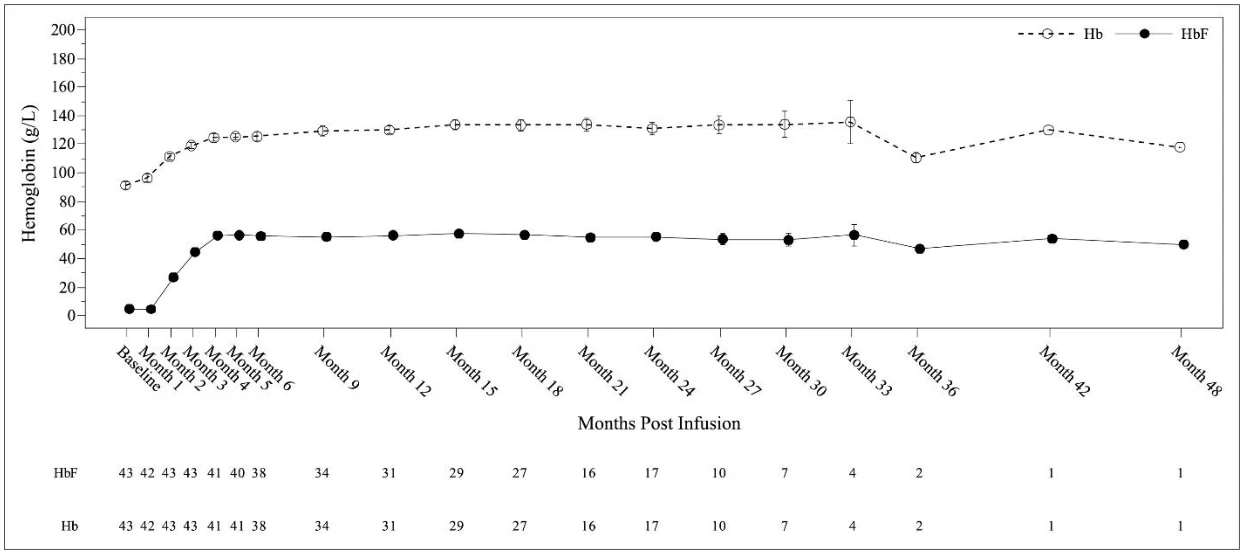
* Mean values are plotted in the line, mean +SE and mean -SE values are plotted as bars at each visit. The numbers of patients with values available at the corresponding visits are shown beneath the figure.
† The average total Hb at month 36 is reduced due to one patient having a lower total Hb across all timepoints. This patient achieved VF12 and HF12.
Increased mean (SD) total Hb was observed by month 3 after CASGEVY infusion, which increased to approximately 125 (18) g/L at month 6 and remained relatively stable thereafter. The mean (SD) proportion of Hb comprised by HbF was 43.9% (8.6%) at month 6 and was maintained thereafter.
Consistent with the increase in HbF levels, the mean (SD) proportion of circulating erythrocytes expressing HbF (F-cells) at month 3 was 70.1% (13.8%). At month 6, the mean (SD) proportion of F-cells was 94.0% (12.4%) with the proportion remaining stable thereafter, indicating sustained pan-cellular expression of HbF.
Transfusion-dependent β-thalassemia
Fetal Hemoglobin and Total Hemoglobin
Total Hb and HbF levels over time are provided in Table 7 for all patients administered CASGEVY for the treatment of transfusion-dependent β-thalassemia (full analysis set). HbF and total Hb over time for the subset of patients included in the primary efficacy analysis were consistent with full analysis set.
Table 7 – Total Hb (g/L) and HbF levels over time in patients with TDT in study 111
CASGEVY Full Analysis Set (FAS) (N=54) | |||||||||
|---|---|---|---|---|---|---|---|---|---|
| Total Hb (g/L) * | Total HbF (g/L) * | ||||||||
| Month 6 | |||||||||
| n | 48 | 48 | |||||||
| Mean (SD) | 122 (20) | 109 (27) | |||||||
| Median (min, max) | 125 (65, 164) | 116 (11, 145) | |||||||
| Month 12 | |||||||||
| n | 44 | 43 | |||||||
| Mean (SD) | 128 (21) | 115 (25) | |||||||
| Median (min, max) | 129 (62, 172) | 123 (44, 153) | |||||||
| Month 18 | |||||||||
| n | 35 | 32 | |||||||
| Mean (SD) | 128 (22) | 116 (24) | |||||||
| Median (min, max) | 129 (65, 177) | 121 (43, 154) | |||||||
| Month 24 | |||||||||
| n | 23 | 23 | |||||||
| Mean (SD) | 129 (24) | 115 (27) | |||||||
| Median (min, max) | 135 (77, 169) | 120 (67, 154) | |||||||
* Hb/HbF data not available for all patients at all timepoints.
Total Hb (g/L) and HbF (g/L) levels over time are provided in Figure 2 for all patients administered CASGEVY for the treatment of β-thalassemia.
Figure 2 – Mean Total Hb (g/L) and HbF (g/L) levels over time in patients with TDT *
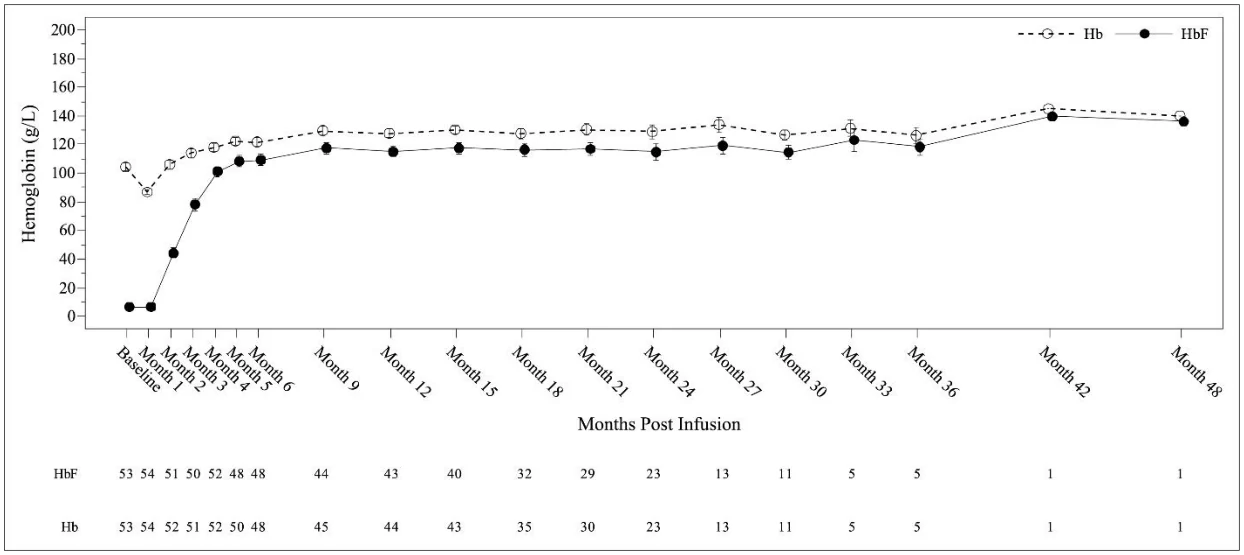
*Mean values are plotted in the line, mean +Standard Error (SE) and mean -SE values are plotted as bars at each visit. The numbers of patients with values available at the corresponding visits are shown beneath the figure.
Increased mean (SD) total Hb and HbF were observed by month 3 after CASGEVY infusion, which increased to 122 (20) g/L and 109 (27) g/L, respectively, at month 6. After month 6, levels of total Hb and HbF were maintained thereafter, with HbF comprising ≥ 88% of total Hb.
10.3 Pharmacokinetics
CASGEVY is an autologous cellular therapy consisting of CD34+ cells that have been edited ex-vivo. The nature of CASGEVY is such that conventional studies on pharmacokinetics, absorption, distribution, metabolism, and elimination are not applicable.
11 Storage, Stability and Disposal
Receipt and Storage of CASGEVY
- CASGEVY is shipped to the treatment centre frozen in the vapour phase of liquid nitrogen.
- Confirm patient identifiers on the product label(s) and Lot Information Sheet.
- If there are any concerns about the product, packaging or shipping temperatures upon receipt, contact VERTEX at 1-877-634-8789.
- Transfer CASGEVY from the vapour phase nitrogen shipper to the treatment centre vapour phase of liquid nitrogen storage at ≤ -135 °C until ready for thaw and administration.
- Keep the vial(s) in the carton until ready to thaw.
- Thaw one vial at a time. Do not thaw until ready to infuse. Do not refreeze after thawing.
Stability
- CASGEVY is stable for 24 months when stored frozen in the vapour phase of liquid nitrogen.
- A vial of CASGEVY must be infused within 20 minutes after thawing.
Disposal
- Unused medicinal product and all material that has been in contact with CASGEVY (solid and liquid waste) should be handled and disposed of as potentially infectious waste in accordance with local guidelines on handling human-derived material.
12 Special Handling Instructions
Precautions to be Taken Before Handling or Administering the Medicinal Product
Do not sample, alter, or irradiate the medicinal product. Irradiation could lead to inactivation of the product.
This medicinal product contains human blood cells. Healthcare professionals handling CASGEVY should take appropriate precautions (wearing gloves, protective clothing and eye protection) to avoid potential transmission of infectious diseases.
Precautions to be Taken for Handling
Keep the vial(s) in the carton until ready to thaw.
Thaw and infuse one vial at a time. Do not refreeze after thawing (see 4 Dosage and Administration for full thawing instructions).
Accidental Exposure
In case of accidental exposure local guidelines on handling of human-derived material should be followed. Work surfaces and materials which have potentially been in contact with CASGEVY must be decontaminated with appropriate disinfectant.
Part 2: Scientific Information
13 Pharmaceutical Information
Drug Substance
Non-proprietary name of the drug substance: exagamglogene autotemcel
Physicochemical properties: Translucent cell suspension, which may contain small inherent proteinaceous particles or visible cell aggregates
Product Characteristics:
CASGEVY is prepared from the patient's own HSPCs, which are obtained via apheresis. The autologous cells are enriched for CD34+ cells, and the CRISPR/Cas9 editing component is introduced ex-vivo by electroporation. The edited CD34+ cells are suspended in a sterile cryopreservation medium and shipped as a frozen suspension in patient-specific vial(s). The product is thawed prior to infusion. The thawed product is a translucent cellular suspension, which may contain small inherent proteinaceous particles or visible cell aggregates.
14 Clinical Trials
14.1 Clinical Trials by Indication
Sickle Cell Disease
Study Design and Demographics
Study 121 is an ongoing multicentre, single-arm study to evaluate the safety and efficacy of single-dose CASGEVY in adult and adolescent patients aged 12 to 35 years old, with severe sickle cell disease. Upon completion of 24 months of follow-up in study 121, patients are invited to enroll in study 131, an ongoing long-term follow-up study to collect safety and efficacy outcomes for up to 15 years after CASGEVY infusion.
Patients were eligible for the study if they had a history of severe sickle cell disease, defined as having at least 2 severe vaso-occlusive crisis (VOC) events per year during the 2 years prior to screening, which were defined as any of the following:
- Acute pain event requiring a visit to a medical facility and administration of pain medications (opioids or intravenous [IV] nonsteroidal anti-inflammatory drugs [NSAIDs]) or RBC transfusions
- Acute chest syndrome
- Priapism lasting > 2 hours and requiring a visit to a medical facility
- Splenic sequestration
Patients were excluded if they had advanced liver disease, history of untreated Moyamoya disease, or presence of Moyamoya disease that in the opinion of the investigator put the patient at risk of bleeding. Patients aged 12 to 16 years were required to have normal transcranial doppler (TCD) and patients aged 12 to 18 years were excluded if they had any history of abnormal TCD in the middle cerebral artery and the internal carotid artery. Patients with an available 10/10 human leukocyte antigen matched related hematopoietic stem cell donor were excluded. In addition, patients were ineligible if they had 10 unplanned hospitalizations or emergency department visits related to chronic pain, rather than SCD-related acute pain crises, in the year before screening.
Other exclusions included having an LVEF less than 45% by echocardiogram; positivity for various infectious disease markers such as HIV-1 or HIV-2, HBV, syphilis, or HCV.
As of the data cutoff, 63 SCD patients had enrolled in the study, 58 had undergone mobilization, and 44 had received CASGEVY forming the full analysis set (FAS). Of the 44 patients in the FAS, 30 were followed for a sufficient length of time (16 months) to be included in analyses of primary and key secondary outcomes. These 30 patients were included in the primary efficacy set (PES). The key demographics and baseline characteristics for the FAS and the PES are shown in Table 8.
Table 8 – Study 121 Demographics and Baseline Characteristics *
| Demographics and disease characteristics | CASGEVY Full Analysis Set (FAS) (N=44) | CASGEVY Primary Efficacy Set (PES) (N=30) † |
|---|---|---|
| Age (years), n (%) | ||
| Adults (≥ 18 and ≤ 35 years) | 32 (72.7%) | 24 (80.0%) |
| Adolescents (≥ 12 and < 18 years) | 12 (27.3%) | 6 (20.0%) |
| All ages (≥ 12 and ≤ 35 years) | ||
| Median (min, max) | 20 (12, 34) | 21 (12, 34) |
| Sex, n (%) | ||
| Male | 24 (54.5%) | 16 (53.3%) |
| Female | 20 (45.5%) | 14 (46.7%) |
| Race, n (%) | ||
| Black or African American | 38 (86.4%) | 26 (86.7%) |
| White | 3 (6.8%) | 1 (3.3%) |
| Other | 3 (6.8%) | 3 (10.0%) |
| Genotype, n (%) | ||
| βS/βS | 40 (90.9%) | 29 (96.7%) |
| βS/β0 | 3 (6.8%) | 1 (3.3%) |
| βS/β+ | 1 (2.3%) | 0 |
| Annualized rate of severe VOCs in the 2 years prior to enrolment (events/year) | ||
| Median (min, max) | 3.5 (2.0, 18.5) | 3.3 (2.0, 9.5) |
| Annualized rate of hospitalizations due to severe VOCs in the 2 years prior to enrolment (events/year) | ||
| Median (min, max) | 2.5 (0.5, 9.5) | 2.0 (0.5, 8.5) |
| Annualized duration of hospitalization due to severe VOCs in the 2 years prior to enrolment (days/year) | ||
| Median (min, max) | 14.0 (2.0, 136.5) | 12.3 (2.0, 64.6) |
| Annualized units of RBCs transfused for SCD-related indications in the 2 years prior to enrolment (units/year) | ||
| Median (min, max) | 5.0 (0, 86.1) | 3.3 (0, 75.5) |
* Analysis conducted based on June 2023 data cut.
† The primary efficacy set (PES), is a subset of the full analysis set (FAS). The PES was defined as all patients who had been followed for at least 16 months after CASGEVY infusion. Patients who had less than 16 months follow-up due to death or discontinuation due to CASGEVY-related adverse events, or continuously received RBC transfusions for more than 10 months after CASGEVY were also included in this set.
Mobilization and Apheresis
Patients underwent red blood cell exchange or simple transfusions for a minimum of 8 weeks before the planned start of mobilization and continued receiving transfusions or red blood cell exchanges until the initiation of myeloablative conditioning. Hemoglobin S (HbS) levels were maintained at < 30% of total Hb while keeping total Hb concentration ≤ 110 g/L.
To mobilize stem cells for apheresis, patients in study 121 were administered plerixafor at a planned dose of 0.24 mg/kg via subcutaneous injection approximately 2 to 3 hours prior to each planned apheresis. Patients underwent apheresis for up to 3 consecutive days to achieve the target collection of cells for manufacture and for the unmodified rescue CD34+ cells.
The median (min, max) and mean (SD) number of mobilization and apheresis cycles required for manufacture CASGEVY and for the collection of rescue CD34+ cells were 2 (1, 6) and 2.30 (1.41), respectively. Six out of 58 patients (10%) who started mobilization did not receive CASGEVY therapy due to not achieving the minimum dose.
Pre-Treatment Conditioning
All patients received full myeloablative conditioning with busulfan prior to receiving CASGEVY. Busulfan was administered for 4 consecutive days intravenously (IV) via a central venous catheter at a planned starting dose of 3.2 mg/kg/day once daily (qd) or 0.8 mg/kg every 6 hours (q6h). Busulfan plasma levels were measured by serial blood sampling and the dose adjusted to maintain exposure in the target range.
For once daily dosing, the four-day target cumulative busulfan exposure was 82 mg*h/L (range 74 to 90 mg*h/L), corresponding to AUC0-24h of 5000 μM*min (range: 4500 to 5500 μM*min). For dosing every 6 hours, the four-day target cumulative busulfan exposure was 74 mg*h/L (range 59 to 89 mg*h/L), corresponding to AUC0-6h of 1125 μM*min (range: 900 to 1350 μM*min).
All patients received anti-seizure prophylaxis with agents other than phenytoin prior to initiating busulfan conditioning. Phenytoin was not used for anti-seizure prophylaxis because of its induction of cytochrome P-450 and resultant increased clearance of busulfan.
Prophylaxis for hepatic veno-occlusive disease (VOD)/hepatic sinusoidal obstruction syndrome was administered per regional and institutional guidelines.
CASGEVY Administration
Patients were administered CASGEVY with a median (min, max) dose of 4.0 (2.9, 14.4) × 106 CD34+ cells/kg as an IV infusion.
All patients were administered an antihistamine and an antipyretic prior to CASGEVY infusion.
After CASGEVY Administration
G-CSF was not recommended within the first 21 days after CASGEVY infusion.
As CASGEVY is an autologous therapy, immunosuppressive agents were not required after initial myeloablative conditioning.
Study Results
An interim analysis (IA) was conducted with 30 patients eligible for the primary efficacy analysis (i.e., the primary efficacy set [PES]). At the time of the interim analysis 44 patients had been administered CASGEVY. The median (min, max) total duration of follow-up for the FAS was 19.3 (0.8, 48.1) months from the time of CASGEVY infusion, and the median (min, max) total duration of follow-up for the PES was 26.0 (17.8, 48.1) months.
The efficacy of CASGEVY was based on evaluation of 30 patients. The primary endpoint was the proportion of patients who did not experience any severe VOCs for at least 12 consecutive months any time within the first 24 months after CASGEVY infusion in study 121 (VF12, primary efficacy endpoint). For this endpoint, a severe VOC was defined as either (a) an acute pain event requiring a visit to a medical facility and administration of pain medications (opioids or intravenous [IV] nonsteroidal anti-inflammatory drugs [NSAIDs]) or RBC transfusions, (b) acute chest syndrome, (c) priapism lasting > 2 hours and requiring a visit to a medical facility, or (d) splenic sequestration. All patients had at least 16 months of follow-up after CASGEVY infusion. The proportion of patients who did not require hospitalization due to severe VOCs for at least 12 consecutive months (HF12, key secondary endpoint) was also assessed. The evaluations of VF12 and HF12 began 60 days after the last RBC transfusion for post-transplant support or SCD management. After CASGEVY infusion, patients in the PES had a median time to last RBC transfusion of 19.0 days (range: 11, 52).
Efficacy data for the 30 patients in the primary efficacy analysis (PES) are presented in Table 9, below.
Table 9 – Efficacy Outcomes in patients with SCD – Primary Efficacy Set (PES)
| Endpoint | CASGEVY Interim Analysis * (N=30) † |
|---|---|
| Proportion of patients achieving VF12 ‡ (%) | |
| n (%) | 29 (96.7%) |
| (95% CI) | (82.8%, 99.9%) |
| Proportion of patients free from hospitalization due to severe VOCs for at least 12 months (HF12) # (%) | |
| n (%) | 30 (100%) |
| (95% CI) | (88.4%, 100%) |
| Duration of severe VOC-free period in patients who have achieved VF12 (months) | |
| n | 29 |
| Median (min, max) | 22.2 (14.8, 45.5) |
* Analysis conducted based on June 2023 data cut.
† N represents the total number of patients in the primary efficacy set (PES), a subset of the full analysis set (FAS). The PES was defined as all patients who had been followed for at least 16 months after CASGEVY infusion. Patients who had less than 16 months follow-up due to death or discontinuation due to CASGEVY-related adverse events, or continuously received RBC transfusions for more than 10 months after CASGEVY were also included in this set.
‡ VF12 is defined as: no severe VOCs for at least 12 consecutive months after CASGEVY infusion. The evaluation of VF12 starts 60 days after last RBC transfusion for post-transplant support or SCD management.
# HF12 defined as: no severe VOC-related inpatient hospitalizations sustained for at least 12 months after CASGEVY infusion. The evaluation of HF12 starts 60 days after last RBC transfusion for post-transplant support or SCD management.
Transfusion-dependent β-thalassemia
Study Design and Demographics
Study 111 is an ongoing, multicentre, single-arm study to evaluate the safety and efficacy of single-dose CASGEVY in adult and adolescent patients aged 12 to 35 years of age with transfusion-dependent β-thalassemia (TDT). Upon completion of 24 months of follow-up in study 111, patients are invited to enroll in study 131, an ongoing long-term follow-up study to collect safety and efficacy outcomes for up to 15 years after CASGEVY infusion.
Patients were eligible for the study if they had a history of requiring at least 100 mL/kg/year or 10 units/year of RBC transfusions in the 2 years prior to enrollment and did not have a 10/10 human leukocyte antigen (HLA) matched related hematopoietic stem cell donor.
Patients who had severely elevated iron in the heart (i.e., patients with cardiac T2* less than 10 msec by magnetic resonance imaging [MRI] or left ventricular ejection fraction [LVEF], 45% by echocardiogram), advanced liver disease, or renal impairment (glomerular filtration rate <60 mL/min/1.73 m2) were excluded from the study. MRI of the liver was performed on all patients. Patients with MRI results demonstrating liver iron content ≥ 15 mg/g underwent liver biopsy for further evaluation. Patients with a liver biopsy demonstrating bridging fibrosis or cirrhosis were excluded. In addition, patients who were positive for human immunodeficiency virus-1 (HIV-1) or human immunodeficiency virus-2 (HIV-2), hepatitis B virus (HBV), syphilis or hepatitis C (HCV) were excluded.
The key demographics and baseline characteristics for all patients administered CASGEVY in study 111 are shown in Table 10, below.
Table 10 – Study 111 Demographics and Baseline Characteristics *
| Demographics and Disease Characteristics | CASGEVY Full Analysis Set (FAS) (N=54) | CASGEVY Primary Efficacy Set (PES) † (N=42) |
|---|---|---|
| Age, n (%) | ||
Adults (≥ 18 and ≤ 35 years) Adolescents (≥ 12 and < 18 years) | 35 (64.8%) 19 (35.2%) | 29 (69%) 13 (31%) |
| All ages (≥ 12 and ≤ 35 years) | ||
| Median (min, max) | 20 (12, 35) | 20 (12, 35) |
| Sex, n (%) | ||
| Female | 25 (46.3%) | 21 (50%) |
| Male | 29 (53.7%) | 21 (50%) |
| Race, n (%) | ||
| Asian | 23 (42.6%) | 16 (38.1%) |
| White | 18 (33.3%) | 17 (40.5%) |
| Multiracial | 3 (5.6%) | 3 (7.1%) |
| Other | 2 (3.7%) | 1 (2.4%) |
| Not collected | 8 (14.8%) | 5 (11.9%) |
| Genotype, n (%) | ||
| β0/β0-like ‡ | 33 (61.1%) | 25 (59.5%) |
| Non-β0/β0-like | 21 (38.9%) | 17 (40.5%) |
| Baseline annualized RBC transfusion volume (mL/kg) | ||
| Median (min, max) | 205.7 (48.3, 330.9) | 201.0 (115.2, 330.9) |
| Baseline annualized RBC transfusion episodes | ||
| Median (min, max) | 16.5 (5.0, 34.5) | 16.5 (10.5, 34.5) |
| Spleen intact, n (%) | 38 (70.4%) | 30 (71.4%) |
| Baseline liver iron concentration (mg/g) | ||
| Median (min, max) | 3.5 (1.2, 14.0) | 3.8 (1.2, 14.0) |
| Baseline cardiac iron T2* (msec) | ||
| Median (min, max) | 34.4 (12.4, 61.1) | 34.8 (12.4, 61.1) |
| Baseline serum ferritin (pmol/L) | ||
| Median (min, max) | 3115.5 (584.2, 10837.3) | 3157.0 (584.2, 10837.3) |
* Analysis conducted based on April 2023 data cut.
† The primary efficacy set (PES), is a subset of the full analysis set (FAS). The PES was defined as all patients who had been followed for at least 16 months after CASGEVY infusion. Patients who had less than 16 months follow-up due to death or discontinuation due to CASGEVY-related adverse events, or continuously received RBC transfusions for more than 10 months after CASGEVY were also included in this set.
‡ Low to no endogenous β-globin production (β0/β0, β0/IVS-I-110 and IVS-I-110/IVS-I-110).
Mobilization and Apheresis
To maintain a total Hb concentration ≥ 110 g/L patients underwent RBC transfusions prior to mobilization and apheresis and continued receiving transfusions until the initiation of myeloablative conditioning.
To mobilize stem cells for apheresis, patients in study 111 were administered granulocyte-colony stimulating factor (G-CSF). Patients with a spleen were administered a planned dose of 5 μg/kg G-CSF approximately every 12 hours via intravenous or subcutaneous injection for 5 to 6 days. Splenectomized patients were administered a planned dose of 5 μg/kg G-CSF once daily for 5 to 6 days. The dose was increased to every 12 hours in splenectomized patients if there was no increase in white blood cell (WBC) or peripheral blood CD34+ counts.
After 4 days of G-CSF administration, all patients received plerixafor at a planned dose of 0.24 mg/kg administered via subcutaneous injection approximately 4 to 6 hours prior to each planned apheresis.
Apheresis was carried out for up to 3 consecutive days to achieve the target collection of cells for manufacture and for the unmodified rescue CD34+ cells.
The mean (SD) and median (min, max) number of mobilization and apheresis cycles required for manufacture of CASGEVY and for the collection of rescue CD34+ cells were 1.3 (0.6) and 1 (1, 4), respectively.
Pre-treatment Conditioning
All patients received full myeloablative conditioning with busulfan prior to treatment with CASGEVY. Busulfan was administered for 4 consecutive days intravenously (IV) via a central venous catheter at a planned starting dose of 3.2 mg/kg/day once daily (qd) or 0.8 mg/kg every 6 hours (q6h). Busulfan plasma levels were measured by serial blood sampling and the dose adjusted to maintain exposure in the target range.
For once daily dosing, four-day target cumulative busulfan exposure was 82 mg*h/L (range: 74 to 90 mg*h/L), corresponding to AUC0-24h of 5000 μM*min (range: 4500 to 5500 μM*min). For dosing every 6 hours, the four-day target cumulative busulfan exposure was 74 mg*h/L (range: 59 to 89 mg*h/L), corresponding to AUC0-6h of 1125 μM*min (range: 900 to 1350 μM*min).
All patients received anti-seizure prophylaxis with agents other than phenytoin prior to initiating busulfan conditioning. Phenytoin was not used for anti-seizure prophylaxis because of its induction of cytochrome P-450 and resultant increased clearance of busulfan. Prophylaxis for hepatic veno-occlusive disease (VOD)/hepatic sinusoidal obstruction syndrome was administered, per regional and institutional guidelines.
CASGEVY Administration
Patients were administered CASGEVY with a median (min, max) dose of 8.0 (3.0, 19.7) x 106 CD34+ cells/kg as an IV infusion.
All patients were administered an antihistamine and an antipyretic prior to CASGEVY infusion.
After CASGEVY Administration
G-CSF was not recommended within the first 21 days after CASGEVY infusion.
As CASGEVY is an autologous therapy, immunosuppressive agents were not required after initial myeloablative conditioning.
Study Results
An interim analysis (IA) was conducted with 42 patients eligible for the primary efficacy analysis. At the time of the interim analysis 54 patients had been administered CASGEVY. The median (min, max) total duration of follow-up for the FAS was 22.8 (2.1, 51.1) months from the time of CASGEVY infusion, and the median (min, max) total duration of follow-up for the PES was 26.2 (16.1, 51.1).
The efficacy of CASGEVY was established based on evaluation of 42 patients with at least 16 months of follow-up. The primary endpoint was the proportion of patients achieving transfusion independence for 12 consecutive months (TI12), defined as maintaining a weighted average Hb ≥ 90 g/L without RBC transfusions for at least 12 consecutive months any time within the first 24 months after CASGEVY infusion in study 111, evaluated starting 60 days after the last RBC transfusion for post-transplant support or TDT disease management.
At the time of the interim analysis, 42 patients were evaluable for TI12. Of these, 39/42 (92.9%, 95% CI: 80.5%, 98.5%) had achieved TI12. The median (min, max) time to last RBC transfusion for patients who achieved TI12 was 28 (11, 91) days following CASGEVY infusion. The three patients who did not achieve TI12 had reductions in annualized RBC transfusion volume requirements of 83.4%, 86.9% and 98.5%, and reductions in annualized transfusion frequency of 82.4%, 73.4% and 96.0%, respectively, compared to baseline requirements.
Efficacy data for the 42 patients in the primary efficacy analysis are presented in Table 11, below.
Table 11 – Efficacy outcomes in patients with TDT - Primary Efficacy Set (PES)
| Endpoint | CASGEVY Interim Analysis * (N=42) † |
|---|---|
| Proportion of patients achieving TI12 ‡, § | |
| n (%) | 39 (92.9%) |
| (95% CI) | (80.5%, 98.5%) |
| Duration of transfusion-independent period in patients who have achieved TI12 (months) | |
| n | 39 |
| Median (min, max) | 22.3 (13.5, 48.1) |
* Analysis conducted based on April 2023 data cut.
† N represents the total number of patients in the primary efficacy set (PES), a subset of the full analysis set (FAS). The PES was defined as all patients who had been followed for at least 16 months after CASGEVY infusion. Patients who had less than 16 months follow-up due to death or discontinuation due to CASGEVY-related adverse events, or continuously received RBC transfusions for more than 10 months after CASGEVY infusion were also included in this set.
‡ TI12 defined as maintaining weighted average Hb ≥ 90 g/L without RBC transfusions for at least 12 consecutive months any time after CASGEVY infusion. The evaluation of TI12 starts 60 days after last RBC transfusion for post-transplant support or TDT disease management.
§ Normal mean weighted average total Hb levels (mean [SD] 132 [14] g/L) were observed in all patients who achieved TI12.
SD: Standard Deviation
15 Microbiology
No microbiological information is required for this drug product.
16 Non-Clinical Toxicology
Conventional mutagenicity, carcinogenicity and reproductive and developmental toxicity studies have not been conducted. No studies on the effects of CASGEVY on fertility have been conducted.
The toxicity and tumorigenicity of CASGEVY were evaluated in sub-lethally irradiated, immunodeficient (NSG) mice. No evidence of target organ toxicity or tumorigenicity was observed in a 20-week study.
During preclinical development, the potential for off-target editing was assessed at over 5000 sites, including those nominated based on human genetic variation. No off-target editing was observed in edited CD34+ cells from healthy donors and patients. A post-marketing non-clinical study (study U270) evaluated 33 additional candidate off-target editing sites nominated based on the presence of genetic variation. No off-target editing was observed at 32 of these sites in edited CD34+ cells from patients. One site had off-target editing at a low rate (≤1%) due to a minor variant allele present in 3 of 91 patient samples (3.3%). This variant leads to a canonical TGG protospacer-adjacent motif in the intronic region of the gene encoding for carbamoyl-phosphate synthetase 1 (CPS1). Gene editing in this minor allele is not expected to have any ill effects in patients as the off-target site is within an intron and CPS1 is not expressed in hematopoietic cells.
In vitro studies showed CD34+ cells edited with exagamglogene autotemcel had impaired growth for the first few days following electroporation while long-term growth kinetics, reported by a fold-change in cell numbers, were similar to control CD34+ cells that were not electroporated.
17 Supporting Product Monographs
BUSULFEX (busulfan for injection, 6 mg/mL vials), control No. 02240602, product monograph, Otsuka Pharmaceutical Co LTD.
MOZOBIL (plerixafor for injection, 20 mg/mL vials), control No. 02377225, product monograph, Sanofi-Aventis Canada Inc.
NEUPOGEN (filgrastim injection, 300 mcg/mL and 600 mcg/mL vials), control No. 270479, product monograph, Amgen Canada Inc.