


Product Monograph - Cefazolin for Injection (Teva Canada)
Recent Major Label Changes
| None at time of the most recent authorization | NA |
|---|
Table of Contents
Certain sections or subsections that are not applicable at the time of the preparation of the most recent authorized product monograph are not listed.
Recent Major Label Changes .................................................................................................... 2
Table of Contents ..................................................................................................................... 2
Part 1: Healthcare Professional Information ............................................................................ 4
1 Indications ............................................................................................................................ 4
1.1 Pediatrics ............................................................................................................................. 5
1.2 Geriatrics ............................................................................................................................. 5
2 Contraindications .................................................................................................................. 5
4 Dosage and Administration ................................................................................................... 5
4.2 Recommended Dose and Dosage Adjustment ..................................................................... 5
4.3 Reconstitution ..................................................................................................................... 7
4.4 Administration ..................................................................................................................... 8
5 Overdose .............................................................................................................................. 9
6 Dosage Forms, Strengths, Composition, and Packaging ......................................................... 9
7 Warnings and Precautions .................................................................................................. 10
General .................................................................................................................................... 10
Gastrointestinal ....................................................................................................................... 10
Immune ................................................................................................................................... 10
Monitoring and Laboratory Tests ............................................................................................ 10
Overgrowth of Non-Susceptible Organisms ............................................................................ 10
Renal ....................................................................................................................................... 10
Sensitivity/Resistance .............................................................................................................. 11
Skin .......................................................................................................................................... 11
7.1 Special Populations ............................................................................................................ 11
7.1.1 Pregnancy ....................................................................................................................... 11
7.1.2 Breastfeeding ................................................................................................................. 11
7.1.3 Pediatrics ........................................................................................................................ 11
8 Adverse Reactions ............................................................................................................... 12
9 Drug Interactions ................................................................................................................ 12
9.4 Drug-Drug Interactions ...................................................................................................... 12
9.7 Drug-Laboratory Test Interactions ..................................................................................... 12
10 Clinical Pharmacology ....................................................................................................... 13
10.1 Mechanism of Action ....................................................................................................... 13
10.3 Pharmacokinetics ............................................................................................................ 13
11 Storage, Stability, and Disposal ......................................................................................... 14
Part 2: Scientific Information ................................................................................................. 15
13 Pharmaceutical Information .............................................................................................. 15
14 Clinical Trials ..................................................................................................................... 15
15 Microbiology ..................................................................................................................... 16
16 Non-Clinical Toxicology ..................................................................................................... 17
Patient Medication Information ............................................................................................ 19
Part 1: Healthcare Professional Information
1 Indications
CEFAZOLIN FOR INJECTION (cefazolin sodium) is indicated in the treatment of the following infections when caused by susceptible strains of the listed organisms:
Respiratory Tract Infections caused by Streptococcus pneumoniae, Klebsiella pneumoniae, Hemophilus influenzae, Staphylococcus aureus (penicillin-sensitive and penicillin-resistant) and group A beta-haemolytic streptococci.
Urinary Tract Infections caused by Escherichia coli, Proteus mirabilis, Klebsiella pneumoniae and some strains of enterobacter, and enterococci. See note below.
Skin and Soft Tissue Infections caused by Staphylococcus aureus (penicillin-sensitive and penicillin- resistant), group A beta-haemolytic streptococci and other strains of streptococci.
Bone and Joint Infections caused by Staphylococcus aureus.
Septicemia caused by Streptococcus pneumoniae, Staphylococcus aureus (penicillin-sensitive and penicillin resistant), Proteus Mirabilis, Escherichia coli and Klebsiella pneumoniae. See note below.
Endocarditis caused by Staphylococcus aureus (penicillin-sensitive and penicillin-resistant) and group A beta haemolytic streptococci.
Determine susceptibility of the causative organism to cefazolin sodium, by performing appropriate culture and susceptibility studies should be performed. (See 15 Microbiology for disc susceptibility tests and dilution techniques).
Note: Most strains of Enterococci, indole positive Proteus (P. vulgaris), Enterobacter cloacae, Morganella morganii, Providencia rettgeri and methicillin-resistant Staphylococci are resistant. Serratia, Pseudomonas, and Acinetobacter calcoaceticus (formerly Mima and Herellea species) are almost uniformly resistant to cefazolin. (See 15 Microbiology).
Perioperative Prophylaxis: In patients undergoing potentially contaminated surgical procedures, and in patients in whom infection would pose a serious risk (e.g., during open-heart surgery and prosthetic arthroplasty), the preoperative, intraoperative and postoperative administration of CEFAZOLIN FOR INJECTION may reduce the incidence of certain post-operative infections.
Identification of the causative organisms should be made by culture should signs of infection occur, so that appropriate therapy may be instituted.
To reduce the development of drug-resistant bacteria and maintain the effectiveness of CEFAZOLIN FOR INJECTION and other antibacterial drugs, CEFAZOLIN FOR INJECTION should be used only to treat infections that are proven or strongly suspected to be caused by susceptible bacteria. When culture and susceptibility information are available, they should be considered in selecting or modifying antibacterial therapy. In the absence of such data, local epidemiology and susceptibility patterns may contribute to the empiric selection of therapy.
1.1 Pediatrics
Pediatrics (< 1 month): The safety and efficacy of CEFAZOLIN FOR INJECTION in prematures and infants under one month of age has not been established (see 4.2 Recommended Dose and Dosage Adjustment, Pediatric Use).
1.2 Geriatrics
Geriatrics: No data are available to Health Canada; therefore, Health Canada has not authorized an indication for geriatric use.
2 Contraindications
CEFAZOLIN FOR INJECTION is contraindicated in patients who are hypersensitive to this drug or to any ingredient in the formulation, including any non-medicinal ingredient, or component of the container, or to the cephalosporin group of antibiotics. For a complete listing, see 6 Dosage Forms, Strengths, Composition, and Packaging.
4 Dosage and Administration
4.2 Recommended Dose and Dosage Adjustment
After reconstitution CEFAZOLIN FOR INJECTION may be administered either intramuscularly or intravenously. In both cases total daily dosages are the same.
Adults:
Adult Dosage Guide
| Type of Infection | Dose | Frequency |
|---|---|---|
| Mild infections caused by susceptible Gram-positive cocci | 250 mg to 500 mg | Every 8 hours |
| Acute, uncomplicated urinary tract infections* | 1 g | Every 12 hours |
| Moderate to severe infections | 500 mg to 1 g | Every 6 to 8 hours |
*This dosage recommendation applies to intramuscular use. The efficacy of cefazolin sodium when administered intravenously at 12-hour intervals has not been established.
CEFAZOLIN FOR INJECTION has been administered in dosages of 6 g per day in serious infections such as endocarditis.
Treatment should be continued for at least 10 days in beta-haemolytic streptococcal infections to minimize possible complications associated with the disease.
Dosage in Patients with Reduced Renal Function:
After an initial loading dose appropriate to the severity of the infection, the following reduced dosage schedule is recommended:
Dosage Guide for Patients with Renal Impairment
Creatinine Clearance (mL/s) | Serum Creatinine (mMol/L) | Dosage |
|---|---|---|
| ≤0.91 | ≥140 | 250 mg to 1 g every 6-12 hours |
| 0.58-0.90 | 141-273 | 250 mg to 1 g every 8-12 hours |
| 0.18-0.57 | 274-406 | 125 mg to 500 mg every 12 hours |
| ≤0.17 | ≥407 | 125 mg to 500 mg every 18 hours |
Perioperative Prophylactic Use:
The recommended dosage regimen to prevent postoperative infection in contaminated or potentially contaminated surgery is:
a. One gram intravenously or intramuscularly administered ½ hour to 1 hour prior to the start of surgery so that at the time of the initial surgical incision adequate antibiotic levels are present in the serum and tissues.
b. For lengthy operative procedures (e.g., 2 hours or more) 0.5-1.0 g administered intravenously or intramuscularly during surgery. (Administration should be modified according to the duration of the operative procedure and the time of greatest exposure to infective organisms.)
c. Postoperatively, 0.5-1.0 gram intravenously or intramuscularly every 6 to 8 hours for 24 hours postoperatively. The prophylactic administration of CEFAZOLIN FOR INJECTION maybe continued for 3 to 5 days following the completion of surgery in which the occurrence of infection may be particularly devastating (e.g., open-heart surgery and prosthetic arthroplasty).
Pediatric Use:
A total daily dosage of 25 to 50 mg per kg (approximately 10 to 20 mg per pound) of body weight, divided into three or four equal doses, is effective for most mild to moderately severe infections in children.
For severe infections total daily dosage maybe increased to 100 mg per kg (45 mg per pound) of body weight. The use of CEFAZOLIN FOR INJECTION in prematures and in infants under one month is not recommended since the safety for use in these patients has not been established (see 1.1 Pediatrics).
Pediatric Dosage Guide – 25 mg/kg/day
Weight
25 mg/kg/day
Divided Into 3 Doses
25 mg/kg/day
Divided into 4 doses lb
kg
Approximate Single
Dose mg/q8h
Volume Needed
of 125 mg/mL*
Solution
Approximate
Single Dose
mg/q6h
Volume Needed of 125 mg/mL*
Solution
10
4.5
40 mg
0.35 mL
30 mg
0.25 mL
20
9
75 mg
0.60 mL
55 mg
0.45 mL
30
13.6
115 mg
0.90 mL
85 mg
0.70 mL
40
18.1
150 mg
1.20 mL
115 mg
0.90 mL
50
22.7
190 mg
1.50 mL
140 mg
1.10 mL
* 125 mg/mL concentration may be obtained by reconstituting the 500 mg vial with 3.8 mL of diluent.
Pediatric Dosage Guide-50 mg/kg/day
Weight
50 mg/kg/day
Divided Into 3 Doses
50 mg/kg/day
Divided into 4 doses lb
kg
Approximate Single
Dose mg/q8h
Volume Needed
of 225 mg/mL*
Solution
Approximate
Single Dose
mg/q6h
Volume Needed of 225 mg/mL*
Solution
10
4.5
75 mg
0.35 mL
55 mg
0.25 mL
20
9
150 mg
0.70 mL
110 mg
0.50 mL
30
13.6
225 mg
1.00 mL
170 mg
0.75 mL
40
18.1
300 mg
1.35 mL
225 mg
1.00 mL
50
22.7
375 mg
1.70 mL
285 mg
1.25 mL
* 225 mg/mL concentration may be obtained by reconstituted the 500 mg vial with 2.0 mL of diluent.
Treatment with 60 percent of the normal daily dose may be administered in divided doses every 12 hours to children with mild to moderate renal impairment (Ccr 0.67-1.17 mL/s). Children with moderate to severe renal impairment (Ccr 0.33- 0.87 mL/s) should be given 25 percent of the normal daily dose in equally divided doses every 12 hours, and children with severe renal impairment (Ccr 0.08-0.33 mL/s) should receive 10 percent of the normal daily dose every 24 hours.
All dosage recommendations apply after an initial loading dose.
4.3 Reconstitution
Reconstituted Solutions
Parenteral drug products should be SHAKEN TO DISSOLVE ALL POWDER when reconstituted, and inspected visually for particulate matter prior to administration. The drug solutions should be discarded if particulate matter is evident in reconstituted fluids.
Reconstituted solutions may range in colour from pale yellow to yellow without a change in potency.
(1) For Intramuscular Injection:
Single Dose Vials:
Reconstitute according to the table which follows. SHAKE TO DISSOLVE ALL POWDER.
Single Dose Vial Reconstitution Table
Strength
(mg)
Diluent
Volume to
be Added
to Vial (mL)
Approximate
Available
Volume (mL)
Nominal
Concentration
(mg/mL)
500
Sodium Chloride Injection
or
Sterile Water for Injection
2
3.8
2.2
4
225
125
1000
Sterile Water for Injection
2.5
3
334
(2) For Direct Intravenous (bolus) Injection:
Single Dose Vial:
Reconstitute as directed above. SHAKE TO DISSOLVE ALL POWDER. A minimum of 10 mL of Sterile Water for Injection should be used to dilute the reconstituted solution.
Pharmacy Bulk Vial:
Pharmacy Bulk Vials should be used for intravenous use only. Add, according to the table below, Sterile Water for Injection or Sodium Chloride Injection. SHAKE TO DISSOLVE ALL POWDER.
Pharmacy Bulk Vial Reconstitution Table
| Strength | Amount of Diluent | Approximate Available Volume | Approximate Concentration |
|---|---|---|---|
| 10 grams | 45 mL 96 mL | 50 mL 100 mL | 200 mg/mL 100 mg/mL |
The vial is intended for single puncture and multiple dispensing, and the vial contents should be used within 8 hours.
(3) For intermittent or continuous intravenous infusion, reconstituted CEFAZOLIN FOR INJECTION may be further diluted as follows:
Single Dose Vials:
Reconstitute according to the Single Dose Vial Reconstitution Table above. SHAKE TO DISSOLVE ALL POWDER. Further dilute the reconstituted CEFAZOLIN FOR INJECTION to 50 to 100 mL in one of the following solutions:
Sodium Chloride Injection 0.9%
Dextrose Injection 5% or 10%
Dextrose 5% in Lactated Ringer’s Injection
Dextrose 5% and Sodium Chloride Injection 0.9% (also may be used with Dextrose 5% and Sodium Chloride Injection 0.45% or 0.2%)
Lactated Ringer’s Injection
Ringer’s Injection
Sodium Bicarbonate 5% in Sterile Water for Injection
Pharmacy Bulk Vial:
Reconstitute according to the Pharmacy Bulk Vial Reconstitution Table. SHAKE TO DISSOLVE ALL POWDER. Further dilute aliquots in 50 to 100 mL of Sterile Water for Injection or one of the solutions listed above.
The further diluted solutions above should be used within 24 hours at room temperature or 72 hours under refrigeration from the time of initial puncture.
4.4 Administration
Note: See 4.3 Reconstitution for reconstitution and dilution directions.
Intramuscular Administration:
Inject the reconstituted solution into a large muscle mass. Pain on injection of CEFAZOLIN FOR INJECTION occurs infrequently.
Intravenous Administration:
Direct (bolus) injection: Inject the appropriately diluted reconstituted solution slowly over 3 to 5 minutes directly into a vein or through tubing for patients receiving parenteral fluids. (See list of solutions for intravenous infusion in 4.3 Reconstitution.)
Intermittent or Continuous Infusion: The reconstituted solution can be administered along with primary intravenous fluid management programs in a volume control set or in a separate secondary i.v. bottle. (See list of solutions for intravenous infusion in 4.3 Reconstitution.)
5 Overdose
There is a lack of experience with acute CEFAZOLIN FOR INJECTION overdosage. Supportive therapy should be instituted according to symptoms in cases of suspected overdosage.
6 Dosage Forms, Strengths, Composition, and Packaging
Table 1: Dosage Forms, Strengths, and Composition
| Route of Administration | Dosage Form/Strength/Composition | Non-Medicinal Ingredients |
|---|---|---|
| Intravenous | Powder For Solution 500 mg, 1 g and 10 g cefazolin (as cefazolin sodium) per vial | None |
| Intramuscular | Powder For Solution 500 mg and 1 g cefazolin (as cefazolin sodium) per vial | None |
Description
CEFAZOLIN FOR INJECTION is supplied as a powder in clear glass vials equivalent to 500 mg or 1 g of cefazolin. CEFAZOLIN FOR INJECTION is also available as a Pharmacy Bulk Vial in vials equivalent to 10 g of cefazolin.
The availability of the pharmacy bulk vial is intended for hospitals with a recognized IV admixture program.
Composition
For the most recent information in the management of a suspected drug overdose, contact your regional poison control centre or Health Canada’s toll-free number, 1-844 POISON-X (1-844-764-7669).
Each vial contains cefazolin sodium. Each gram of cefazolin sodium contains 48 mg of sodium. CEFAZOLIN FOR INJECTION does not contain any preservative.
7 Warnings and Precautions
General
In beta-haemolytic streptococcal infections, treatment should be continued for at least 10 days, to minimize possible complications associated with the disease.
Gastrointestinal
In patients with a history of lower gastrointestinal disease, particularly colitis, CEFAZOLIN FOR INJECTION should be prescribed with caution.
Immune
CEFAZOLIN FOR INJECTION should be used with caution in penicillin-allergic patients. There is clinical evidence of partial cross-allergenicity of the penicillins and the cephalosporins. There are instances of patients who have had reactions to both penicillins and cephalosporins (including fatal anaphylaxis after parenteral use). Clinical and laboratory evidence of partial cross-allergenicity of the two drug classes exists.
CEFAZOLIN FOR INJECTION should be administered cautiously and then only when absolutely necessary to any patient who has demonstrated allergy, particularly to drugs. Immediate emergency treatment with epinephrine is indicated for serious anaphylactoid reactions. As indicated, oxygen, intravenous steroids, and airway management, including intubation, should also be employed.
Monitoring and Laboratory Tests
ClinitestR tablets solution, but not enzyme-based tests such as ClinistixR and Tes-TapeR, may falsely indicate glucose in the urine of patients on cefazolin.
Positive direct and indirect Coombs’ tests have been reported during treatment with cefazolin. These may also occur in neonates whose mothers received cephalosporins before delivery. The clinical significance of this effect has not been established.
Overgrowth of Non-Susceptible Organisms
The overgrowth of non-susceptible organisms may result from the prolonged use of CEFAZOLIN FOR INJECTION. It is essential that the patient be carefully observed.
Renal
Caution should be exercised in treating patients with pre-existing renal damage although CEFAZOLIN FOR INJECTION has not shown evidence of nephrotoxicity.
Patients with low urinary output due to impaired renal function should be administered reduced daily dosages of CEFAZOLIN FOR INJECTION (see 4.2 Recommended Dose and Dosage Adjustment, Dosage in Patients with Reduced Renal Function). Blood levels of CEFAZOLIN FOR INJECTION in dialysis patients remain fairly high and should be monitored.
Probenecid may decrease renal tubular secretion of cefazolin when used concurrently with CEFAZOLIN FOR INJECTION, resulting in increased and prolonged cefazolin blood levels (see 9.4 Drug-Drug Interactions).
Seizures may occur with the administration of CEFAZOLIN FOR INJECTION, particularly in patients with renal impairment when the dosage is not reduced appropriately. Discontinue CEFAZOLIN FOR INJECTION if seizures occur or make appropriate dosage adjustments in patients with renal impairment. Anticonvulsant therapy should be continued in patients with known seizure disorders.
Sensitivity/Resistance
Development of Drug Resistant Bacteria
Prescribing CEFAZOLIN FOR INJECTION in the absence of a proven or strongly suspected bacterial infection is unlikely to provide benefit to the patient and risks the development of drug-resistant bacteria.
Skin
Severe Cutaneous Adverse Reactions
Severe cutaneous adverse reactions (SCAR) such as acute generalized exanthematous pustulosis (AGEP), drug reaction with eosinophilia and systemic symptoms (DRESS), Stevens-Johnson syndrome (SJS), and toxic epidermal necrolysis (TEN) have been reported in association with beta-lactam treatment. When SCAR is suspected, CEFAZOLIN FOR INJECTION should be discontinued and appropriate therapy and/or measures should be taken.
7.1 Special Populations
7.1.1 Pregnancy
The safety of the use of CEFAZOLIN FOR INJECTION during pregnancy has not been established.
7.1.2 Breastfeeding
Very low concentrations of cefazolin are found in the milk of nursing mothers. CEFAZOLIN FOR INJECTION should be administered with caution to a nursing woman.
7.1.3 Pediatrics
The safety of the use of CEFAZOLIN FOR INJECTION in prematures and infants under one month of age has not been established (see 4.2. Recommended Dose and Dosage Adjustment, Pediatric Use).
8 Adverse Reactions
The following adverse reactions have been reported:
Gastrointestinal: Diarrhea, oral candidiasis (oral thrush), vomiting, nausea, stomach cramps, anorexia. During antibiotic treatment symptoms of pseudo membranous colitis can appear. There have been rare reports of nausea and vomiting. There have been reports of pseudo membranous colitis with the use of cephalosporins. It is therefore important to consider its diagnosis in patients who develop diarrhea in association with antibiotic use.
Haematologic: Cases of impaired blood coagulation have been reported during cefazolin treatment. Patients with risk factors causing vitamin K deficiency or affecting other clotting mechanisms (parenteral alimentation, dietary deficiencies, reduced hepatic and renal function) may be at increased risk of bleeding during cefazolin treatment. Monitoring of patients and vitamin K supplementation should be considered as indicated.
Blood clotting disturbances including prolongation of the prothrombin time, increased INR and bleeding. Neutropenia, anemia, leukopenia, thrombocythemia, positive direct and indirect antiglobulin (Coombs’) tests.
Hepatobiliary and Renal: Without clinical evidence of renal or hepatic impairment transient increases in AST (SGOT), ALT (SGPT), BUN and alkaline phosphatase levels have been observed. Transient hepatitis and cholestatic jaundice have been reported rarely, as with some penicillins and some other cephalosporins.
Immune system disorders: Allergic reactions occur infrequently and include: anaphylaxis, eosinophilia, itching, drug fever, skin rash.
Local Reactions: Phlebitis at the site of injection has occurred rarely. Infrequently there is pain at the site of injection following intramuscular injection. Some induration has been reported.
Other: Vulvar pruritus, genital moniliasis, vaginitis and anal pruritus.
9 Drug Interactions
9.4 Drug-Drug Interactions
The renal tubular secretion of CEFAZOLIN FOR INJECTION may be decreased when probenecid is used concurrently, resulting in increased and prolonged CEFAZOLIN FOR INJECTION blood levels.
9.7 Drug-Laboratory Test Interactions
ClinitestR tablets solution, but not enzyme-based tests such as ClinistixR and Tes-TapeR, may falsely indicate glucose in the urine of patients on cefazolin.
Positive direct and indirect Coombs’ tests have been reported during treatment with cefazolin. These may also occur in neonates whose mothers received cephalosporins before delivery. The clinical significance of this effect has not been established.
10 Clinical Pharmacology
10.1 Mechanism of Action
CEFAZOLIN FOR INJECTION is a cephalosporin antibiotic for parenteral administration. Cefazolin exerts its bactericidal effect by inhibiting bacterial cell wall synthesis.
10.3 Pharmacokinetics
Cefazolin is about 85% bound to serum protein. The peak level in serum is approximately 32-42 mg/mL after an intramuscular (i.m.) injection of 500 mg. Over 80% of injected cefazolin is excreted in the urine during the first 24 hours after i.m. injection; most is excreted during the first 4-6 hours.
The blood levels of cefazolin listed on the following tables were determined following intramuscular and intravenous administration.
Serum Concentration (mg/mL) Following Administration:
(Time After Intravenous Injection in Minutes)
| 5 | 15 | 30 | 60 | 120 | 240 | |
|---|---|---|---|---|---|---|
| Cefazolin 1 g | 188.4 | 135.8 | 106.8 | 73.7 | 45.6 | 16.5 |
(Time After Intramuscular Injection in Hours)
| Cefazolin | ½ | 1 | 2 | 4 | 6 | 8 |
|---|---|---|---|---|---|---|
| 1 g | 65.8 | 68.3 | 60.6 | 29.3 | 11.2 | 6.5 |
| 500 mg | 36.2 | 36.8 | 37.9 | 15.5 | 6.3 | 3 |
| 250 mg | 15.5 | 17 | 13 | 5.1 | 2.5 | <1.5 |
The serum half-life is approximately 1.8 hours following intravenous administration and 2.0 hours after intramuscular administration.
The mean peak serum levels of cefazolin in hospitalized patients are approximately equivalent to those seen in normal volunteers.
Healthy volunteers received a continuous intravenous infusion of 3.5 mg/kg for 1 hour (approximately 250 mg) and 1.5 mg/kg hourly for the next two hours (approximately 100 mg). A steady serum level of 28 mg/mL was attained at the third hour.
Cefazolin levels in synovial fluid and serum are similar four hours after drug administration.
Levels in cord blood are equivalent to 40% of those found in maternal blood.
In patients without obstructive biliary disease, serum levels of cefazolin can be up to five times lower than bile levels of cefazolin. However, bile levels of cefazolin are considerably lower than serum levels in patients with obstructive biliary disease.
Cefazolin is excreted unchanged in the urine. Approximately 60% of the drug is excreted in the first six hours, and this increases to 70%-80% within 24 hours. Peak urine concentrations of approximately 2400 mcg/mL and 4000 mcg/mL are achieved following intramuscular doses of 500 mg and 1 gram, respectively.
11 Storage, Stability, and Disposal
CEFAZOLIN FOR INJECTION should be stored between 15° - 30°C, protected from light.
Reconstituted CEFAZOLIN FOR INJECTION may be stored for 24 hours at controlled room temperature not exceeding 25°C, or for 72 hours under refrigeration (2 to 8°C), protected from light.
CEFAZOLIN FOR INJECTION solution reconstituted with bacteriostatic diluent and used for intramuscular administration as multiple-dose containers should be used within 7 days when stored under refrigeration.
The Pharmacy Bulk Vial is intended for multiple dispensing for intravenous use only, employing a single puncture. Following reconstitution, the solution should be dispensed and diluted for use within eight hours. Any unused reconstituted solution should be discarded after eight hours.
Part 2: Scientific Information
13 Pharmaceutical Information
Drug Substance:
Non-proprietary name of the drug substance: Cefazolin sodium
Chemical name: Monosodium (6R, 7R)-3{[(5-methyl-1,,3,4-thiadiazol-2-yl)thio]methyl}-8-oxo-7-[2-(1H-tetrazol-1-yl)acetamido}-5 -thia-1-azabicyclo[4.2.0]oct-2-ene-2-carboxylate.
Molecular formula: C14H13N8Na04S3
Molecular weight: 476.5
Structural formula:
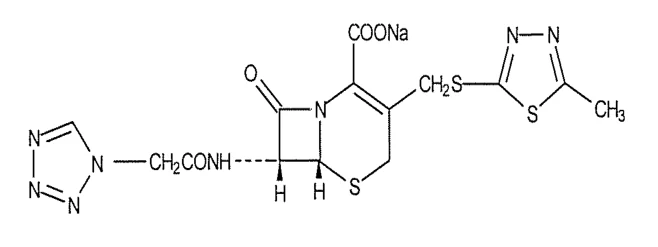
Physicochemical properties: Cefazolin sodium is a white to off-white, practically odourless, solid. The drug is freely soluble in water and very slightly soluble in alcohol. It is practically insoluble in chloroform and ether. The pH is between 4.5 and 6.0, in an aqueous solution containing 100 mg of cefazolin per millilitre.
14 Clinical Trials
Clinical trial information is not available.
15 Microbiology
Cefazolin Activity Against Clinical Isolates
No. of Strains | Cumulative Percentage Susceptible to Strains Indicated Concentration (µg/mL) | ||||||||||||||||||||||||
|---|---|---|---|---|---|---|---|---|---|---|---|---|---|---|---|---|---|---|---|---|---|---|---|---|---|
| <0.05 | <0.1 - 0.78 | 1.56 - 3.13 | 6.25 - 12.5 | 25 – 50 | 100 | ||||||||||||||||||||
| S. aureus | 700 | 0.14 | 59.1 | 90.6 – 92.4* | 97.3 | 99.7 | 99.9 | ||||||||||||||||||
| S. pyogenes | 5 | 80+ | 100 | ||||||||||||||||||||||
| S. faecalis | 2 | 50 | 100 | ||||||||||||||||||||||
| S. pneumoniae | 6 | 100+ | |||||||||||||||||||||||
| E. coli | 484 | 8.7 | 67.9 | 92.1 | 95.9 | 97.7 | |||||||||||||||||||
| P. mirabilis | 30 | 50 | 86.7 | 90 | 90 | ||||||||||||||||||||
| K. pneumoniae | 138 | 2.9 | 53.6 | 73.2 | 91.3 | 93.5 | |||||||||||||||||||
| Enterobacter | 31 | 6.5 | 29.0 | 64.5 | 77.4 | ||||||||||||||||||||
| H. influenzae | 30 | 13.3 | 70.0 | 100 | |||||||||||||||||||||
| N. gonorrhoeae | 13 | 38.5 | 100 | ||||||||||||||||||||||
| Shigella spp. | 2 | 50 | 50 | 100 | |||||||||||||||||||||
| Salmonella spp. | 8 | 100 | |||||||||||||||||||||||
Staphylococci (coagulase - negative) | 295 | 66 | 82 | 90 | 93 | 100 | |||||||||||||||||||
* Reported as 3.13-6.25 µ.g/mL
+ Reported as ≤ 0.1 µ.g /mL
Disc Susceptibility Tests:
The following criteria should be used to interpret tests using a standardized 30 µg cephalosporin-class disc:
Zones of 18 mm or greater indicate that the tested organisms are susceptible and are likely to respond to therapy. Zones of 15 to 17 mm indicate organisms of intermediate susceptibility which may be susceptible if high dosage is used or if the infection is confined to tissues and fluids (e.g., urine) in which high antibiotic levels are attained. Zones of 14 mm or less are produced by resistant organisms.
The cephalothin disc should not be used for testing susceptibility to other cephalosporins.
Dilution Techniques:
If the minimal inhibitory concentration (MIC) for cefazolin is not more than 16 mg/mL, then a bacterial isolate may be considered susceptible. If the MIC is equal to or greater than 64 mg/mL, organisms are considered to be resistant.
The ranges of MIC for the control strains were:
E. coli ATCC 25922 1.0-4.0 mg/mL
S. aureus ATCC 25923 0.25-1.0 mg/mL
16 Non-Clinical Toxicology
General toxicology
Acute Toxicity:
Parenteral and oral cefazolin demonstrated low toxicity in rodents, canines and rabbits tested in acute toxicity studies.
Species
Route Of
Administration
LD50
LD (g/kg)
mice
intravenous
intraperitoneal
subcutaneous
oral
≥3.9
≥4.0
7.6
>11.0
rats
intravenous
intraperitoneal
subcutaneous
oral
≥3.0
7.4
>10
>11.0
rabbits
intravenous
>2.0
dogs
intravenous
>2.0
Subacute and Chronic Toxicity:
Rats and dogs were studied in subacute and chronic parenteral toxicity of cefazolin. Rats were treated for 3 and 6 months subcutaneously and for one month intraperitoneally. The highest doses ranged from 2000 mg/kg per day in the 6 month study to 4000 mg/kg per day in the 1 and 3 month studies. Anemia was the only significant abnormality attributable to s.c. drug administration. In all experiments there was a definite dose-related depression of SGPT levels.
Leukocytosis and hypererythropoiesis accompanied the anemia, which was probably related to hemorrhaging at the injection site.
The lowering of the SGPT was dependent upon both the dose and the duration of treatment. This was not statistically significant at the low doses and was reversible upon withdrawal of the drug.
Equivalent chronic studies in dogs produced similar results: at the higher doses there was a fall in SGPT and frank anemia resulted from high subcutaneous doses. Dogs treated intravenously did not develop the anemia indicating that it was probably associated with hemorrhaging at the site of injection.
Reproductive and developmental toxicology
Rabbits and mice were administered cefazolin in doses of 240 mg/kg/day and 2400 mg/kg/day. No teratologic effects were observed. No adverse effects on mating, fertility, gestation, delivery and lactation were observed in rats administered 2000 mg/kg per day. Baby rats whose mothers were injected with 1200 mg/kg/day of cefazolin prior to delivery and throughout lactation were observed and there was no effect on the birth, or peri- and postnatal development.
Special toxicology
Nephrotoxicity:
The nephrotoxicity of cefazolin was studied following intravenous injections of rabbits and subcutaneous injections of mice and rats. The mean nephrotoxic intravenous dose in rabbits was between 300 and 400 mg/kg/day. No evidence of renal damage was produced when cefazolin was injected subcutaneously into mice at a dose of 8 g/kg/day for up to 3 days and into rats at a dose of 4 g/kg/day for up to 7 days.