


Product Monograph - Cefepime for Injection, USP
SUMMARY PRODUCT INFORMATION
Route of Administration | Dosage Form / Strength | All Nonmedicinal Ingredients |
Parenteral (1 g - I.M/I.V) (2 g – I.V) | Powder for injection 1 g and 2 g cefepime per vial (as cefepime hydrochloride) | Contains 707 mg of L-arginine per gram of Cefepime. The L-arginine is added to control the pH of the reconstituted solution at 4.0 – 6.0. |
INDICATIONS AND CLINICAL USE
Treatment
Cefepime for Injection, USP (cefepime hydrochloride for injection) is indicated in the treatment of the following infections when caused by susceptible strains of the designated microorganisms:
ADULTS
Lower respiratory tract infections: Nosocomial and community acquired pneumonia caused by Pseudomonas aeruginosa, Staphylococcus aureus (methicillin-susceptible strains), Streptococcus pneumoniae, Escherichia coli, and Haemophilus influenzae.
Acute exacerbations of chronic bronchitis caused by Streptococcus pneumoniae and Haemophilus influenzae.
Uncomplicated and complicated urinary tract infections, including pyelonephritis caused by Pseudomonas aeruginosa, Escherichia coli, Klebsiella pneumoniae, and Proteus mirabills.
Due to the nature of the underlying conditions which usually predispose patients to Pseudomonas infections of the lower respiratory and urinary tracts, a good clinical response accompanied by bacterial eradication may not be achieved despite evidence of in vitro sensitivity.
Skin and skin structure infections caused by Staphylococcus aureus (methicillin-susceptible strains), Streptococcus pyogenes (Group A streptococci), and Pseudomonas aeruginosa.
Peritonitis due to gangrenous and perforated appendicitis caused by Escherichia coli.
Bacterial septicemia caused by Escherichia coli, Streptococcus pneumoniae and Klebsiella pneumoniae.
Empiric therapy in febrile neutropenic patients: Cefepime as monotherapy is indicated for empiric treatment of febrile neutropenic patients. In patients at high risk for severe infection (including patients with a history of recent bone marrow transplantation, with hypotension at presentation, with an underlying hematologic malignancy, or with severe or prolonged neutropenia), antimicrobial monotherapy may not be appropriate. Insufficient data exist to support the efficacy of cefepime monotherapy in such patients.
Specimens for bacteriologic culture should be obtained prior to therapy in order to identify the causative organisms and to determine their susceptibilities to cefepime.
Treatment with cefepime for injection may be instituted empirically before results of susceptibility studies are known; however, modification of the antibiotic treatment may be required once these results become available.
In patients who are at risk of injection due to an anaerobic organism, concurrent initial therapy with an anti-anaerobic agent such as metronidazole or clindamycin is recommended before the causative organism(s) is (are) known. When such concomitant treatment is appropriate, the recommended doses of both antibiotics should be given according to the severity of the infection and the patient’s condition.
PEDIATRICS
Cefepime for Injection, USP is indicated in pediatric patients for the treatment of infections listed below when caused by susceptible bacteria:
Lower respiratory tract infections: Nosocomial and community acquired pneumonia caused by Pseudomonas aeruginosa, Staphylococcus aureus (methicillin-susceptible strains), Streptococcus pneumoniae, Escherichia coli, and Haemophilus influenzae.
Uncomplicated and complicated urinary tract infections, including pyelonephritis caused by Pseudomonas aeruginosa, Escherichia coli, Klebsiella pneumoniae, and Proteus mirabilis.
Skin and skin structure infections caused by Staphylococcus aureus (methicillin-susceptible strains), Streptococccus pyogenes (Group A streptococci), and Pseudomonas aeruginosa.
Empiric therapy in febrile neutropenic patients: Cefepime as monotherapy is indicated for empiric treatment of febrile neutropenic patients. In patients at high risk for severe infection (including patients with a history of recent bone marrow transplantation, with hypotension at presentation, with an underlying hematologic malignancy, or with severe or prolonged neutropenia), antimicrobial monotherapy may not be appropriate. Insufficient data exist to support the efficacy of cefepime monotherapy in such patients.
Specimens of bacteriologic culture should be obtained prior to therapy in order to identify the causative organisms and to determine their susceptibilities to cefepime.
Treatment with cefepime for injection may be instituted empirically before results of susceptibility studies are known; however, modification of the antibiotic treatment may be required once these results become available.
To reduce the development of drug-resistant bacteria and maintain the effectiveness of Cefepime for Injection, USP and other antibacterial drugs, Cefepime for Injection, USP should be used only to treat infections that are proven or strongly suspected to be caused by susceptible bacteria. When culture and susceptibility information are available, they should be considered in selecting or modifying antibacterial therapy. In the absence of such data, local epidemiology and susceptibility patterns may contribute to the empiric selection of therapy.
CONTRAINDICATIONS
Cefepime for Injection, USP is contraindicated in patients who have had previous hypersensitivity reactions to cefepime or any component of the formulation or the cephalosporin class of antibiotics, penicillins or other beta-lactam antibiotics. (See DOSAGE AND ADMINISTRATION)
WARNINGS AND PRECAUTIONS
General
As with other antibiotics, prolonged use of Cefepime for Injection, USP may result in overgrowth of nonsusceptible organisms. Should superinfection occur during therapy, appropriate measures should be taken.
Cefepime for Injection, USP should be used with caution in individuals with a history of gastrointestinal disease, particularly colitis.
Many cephalosporins, including cefepime, have been associated with a fall in prothrombin activity. Those at risk include patients with renal or hepatic impairment, or poor nutritional state, as well as patients receiving a protracted course of antimicrobial therapy. Prothrombin time should be monitored in patients at risk, and exogenous vitamin K administered as indicated.
Positive direct Coombs’ tests have been reported during treatment with cefepime for injection. In hematologic studies or in transfusion cross-matching procedures when antiglobulin tests are performed on the minor side or in Coombs’ testing of newborns whose mothers have received cephalosporin antibiotics before parturition, it should be recognized that a positive Coombs’ test may be due to the drug.
Hypersensitivity
Before therapy with Cefepime for Injection, USP is instituted, careful inquiry should be made to determine whether the patient has had previous immediate hypersensitivity reactions to cefepime, cephalosporins, penicillins, or other beta-lactam antibiotics. Antibiotics should be administered with caution to any patient who has demonstrated some form of allergy, particularly to drugs. If an allergic reaction to Cefepime for Injection, USP occurs, discontinue the drug and institute supportive treatment as appropriate (e.g., maintenance of ventilation, pressor amines, antihistamines, corticosteroids). Serious immediate hypersensitivity reactions may require epinephrine and other supportive therapy.
Clostridium difficile-associated disease
Clostridium difficile-associated disease (CDAD) has been reported with use of many antibacterial agents, including cefepime. CDAD may range in severity from mild diarrhea to fatal colitis. It is important to consider this diagnosis in patients who present with diarrhea, or symptoms of colitis, pseudomembranous colitis, toxic megacolon, or perforation of colon subsequent to the administration of any antibacterial agent. CDAD has been reported to occur over 2 months after the administration of antibacterial agents.
Treatment with antibacterial agents may alter the normal flora of the colon and may permit overgrowth of Clostridium difficile. C. difficile produces toxins A and B, which contribute to the development of CDAD. CDAD may cause significant morbidity and mortality. CDAD can be refractory to antimicrobial therapy.
If the diagnosis of CDAD is suspected or confirmed, appropriate therapeutic measures should be initiated. Mild cases of CDAD usually respond to discontinuation of antibacterial agents not directed against Clostridium difficile. In moderate to severe cases, consideration should be given to management with fluids and electrolytes, protein supplementation, and treatment with an antibacterial agent clinically effective against Clostridium difficile. Surgical evaluation should be instituted as clinically indicated, as surgical intervention may be required in certain severe cases. (See ADVERSE REACTIONS).
In Patients with Renal Impairment
In patients with impaired renal function (creatinine clearance ≤ 50 mL/min), the dose of Cefepime for Injection, USP should be adjusted to compensate for the slower rate of renal elimination. Because high and prolonged serum antibiotic concentrations can occur from usual dosages in patients with renal insufficiency or other conditions that may compromise renal function, the maintenance dosage should be reduced when cefepime is administered to such patients. Continued dosage should be determined by degree of renal impairment, severity of infection, and susceptibility of the causative organisms (See specific recommendations for dosing adjustments in DOSAGE AND ADMINISTRATION.) During post-marketing surveillance, serious adverse events have been reported including life-threatening or fatal occurrences of the following: encephalopathy (disturbance of consciousness including confusion, hallucinations, stupor, and coma), myoclonus, seizures (including non convulsive status epilepticus), and/or renal failure (see ADVERSE REACTIONS: In Post-marketing Experience). Most cases occurred in patients with renal impairment who received doses of cefepime that exceeded recommendations in Table 2 of DOSAGE AND ADMINISTRATION. In the majority of cases, symptoms of neurotoxicity were reversible and resolved after discontinuation of cefepime and/or after hemodialysis.
In patients with hepatic impairment
The pharmacokinetics of cefepime were unaltered in patients with impaired hepatic function who received a single 1g dose. Therefore, dosage adjustments are not required in patients with hepatic impairment.
In patients with cystic fibrosis
The pharmacokinetics of cefepime do not change to a clinically significant degree in patients with cystic fibrosis. It is not necessary to alter the dosage of cefepime in this patient population.
Special Populations
Use in Pregnancy
There are no adequate and well-controlled studies in pregnant women.
Reproduction studies performed in mice and rats showed no evidence of fetal damage at dose levels equivalent to (mouse) or slightly greater (rat) than the maximum human daily dose when the daily doses are compared to those in man on a mg/m2 basis. Because animal reproduction studies are not always predictive of human response, this drug should be used during pregnancy only if the potential benefit justifies the potential risk.
Nursing Mothers
Cefepime is excreted in human breast milk in very low concentrations. Although less than 0.01% of a 1 g intravenous dose is excreted in milk, caution should be used when cefepime is administered to a nursing woman.
Pediatric Use
The safety and effectiveness of cefepime in the treatment of uncomplicated and complicated urinary tract infections (including pyelonephritis), uncomplicated skin and skin structure infections, pneumonia (nosocomial and community acquired), and as empiric therapy in febrile neutropenic patients, have been established in the age groups 2 months up to 12 years. Use of cefepime for injection in these age groups is supported by evidence from adequate and well-controlled studies of cefepime in adults with additional pharmacokinetic and safety data from pediatric trials (See ACTION AND CLINICAL PHARMACOLOGY and ADVERSE REACTIONS).
Safety and effectiveness in pediatric patients below the age of 2 months have not been established. However, accumulation of other cephalosporin antibiotics in newborn infants (resulting from prolonged drug half-life in this age group) has been reported.
IN THOSE PATIENTS IN WHOM MENINGEAL SEEDING FROM A DISTANT INFECTION SITE OR IN WHOM MENINGITIS IS SUSPECTED OR DOCUMENTED, AN ALTERNATE AGENT WITH DEMONSTRATED CLINICAL EFFICACY IN THIS SETTING SHOULD BE USED.
In elderly subjects
Healthy elderly male and female volunteers (≥ 65 years of age) who received a single 1 g intravenous dose of cefepime had higher area under the curve (AUC) and lower renal clearance values when compared to younger subjects. However, this appeared to be a function of the decrease in creatinine clearance with increasing age. In patients with age-normalized renal function, a dosage adjustment of cefepime is not necessary. Dosage adjustments are recommended if renal function is compromised.
Of the more than 6400 adults treated with cefepime for injection in clinical studies, 35% were 65 years or older while 16% were 75 years or older. When elderly patients received the usual recommended adult dose, clinical efficacy and safety were comparable to clinical efficacy and safety in nonelderly adult patients unless the patients had renal insufficiency.
Serious adverse events have occurred in elderly patients with renal insufficiency given unadjusted doses of cefepime, including life-threatening or fatal occurrences of the following: encephalopathy (disturbance of consciousness including confusion, hallucinations, stupor and coma), myoclonus, seizures (including nonconvulsive status epilepticus) and/or renal failure. (See WARNINGS AND PRECAUTIONS and ADVERSE REACTIONS.)
This drug is known to be substantially excreted by the kidney, and the risk of toxic reactions to this drug may be greater in patients with impaired renal function. Because elderly patients are more likely to have decreased renal function, care should be taken in dose selection, and renal function should be monitored. (See ACTION AND CLINICAL PHARMACOLOGY: Special populations; WARNINGS AND PRECAUTIONS; and DOSAGE AND ADMINISTRATION.)
Susceptibility/Resistance
Development of Drug Resistant Bacteria
Prescribing Cefepime for Injection, USP in the absence of a proven or strongly suspected bacterial infection is unlikely to provide benefit to the patient and risks the development of drug-resistant bacteria.
ADVERSE REACTIONS
Clinical Trial Adverse Drug Reactions
Because clinical trials are conducted under very specific conditions the adverse reaction rates observed in the clinical trials may not reflect the rates observed in practice and should not be compared to the rates in the clinical trials of another drug. Adverse drug reaction information from clinical trials is useful for identifying drug-related adverse events and for approximating rates.
Cefepime for injection is generally well tolerated. In clinical trials (N=5598) the most common adverse events were gastrointestinal symptoms and hypersensitivity reactions. Adverse events considered to be of probable relationship to cefepime for injection are listed below.
Events that occurred at an incident of >0.1% - 1% (except where noted) were:
Hypersensitivity: rash (1.8%), pruritus, urticaria
Gastrointestinal: nausea, vomiting, oral monailiasis, diarrhea (1.2%), colitis (including pseudomembranous colitis)
Central nervous system: headache
Other: fever, vaginitis, erythema
Events that occurred between 0.05% - 0.1% were: abdominal pain, constipation, vasodilation, dyspnea, dizziness, paresthesia, genital pruritus, taste perversion, chills, unspecified moniliasis, vaginal moniliasis, urogenital infection, and vaginitis.
Events of clinical significance that occurred at an incidence of < 0.05% included anaphylaxis and seizures.
At the higher dose of 2 g q8h in febrile neutropenia, the incidence of probably-related adverse events was higher among 1048 patients who received this dose of cefepime in clinical trials. They consisted of rash (4%), diarrhea (3%), nausea (2%), vomiting (1%), pruritis (1%), fever (1%), and headache (1%).
Local reactions at the site of intravenous infusion occurred in 5.2% of patients; these included phlebitis (2.9%) and inflammation (0.1%). Intramuscular administration of cefepime for injection was very well tolerated with 2.6% of patients experiencing pain or inflammation at the injection site.
Laboratory test abnormalities that developed during clinical trials in patients with normal baseline values were transient. Those that occurred at a frequency between 1% and 2% (unless noted) were: elevations in alanine aminotransferase (3.6%), asparate aminotransferase (2.5%), alkaline phosphatase, total bilirubin, anemia, eosinophilia, prolonged prothrombin time, and partial thromboplastin time (2.8%); positive Coombs’ test without hemolysis (18.7%) also occurred. Additionally, increased phosphorous, decreased phosphorous (2.8%), increased calcium, decreased calcium (which was more common in elderly patients) and increased potassium were observed.
As with some other cephalosporins, transient elevations of blood urea nitrogen and/or serum creatinine and transient thrombocytopenia were observed in 0.5% to 1% of patients. Transient leukopenia and neutropenia were also seen (< 0.5%). During post-marketing experience, agranulocytosis has been reported rarely.
Renal insufficiency and hepatic failure have been reported in conjunction with cefepime treatment. However, a causative relationship to cefepime therapy has not been determined (see also Post Marketing Experience).
The following adverse events and altered laboratory tests have also been reported for cephalosporin-class antibiotics: Stevens-Johnson syndrome, erythema multiforme, toxic epidermal necrolysis, toxic nephropathy, aplastic anemia, hemolytic anemia, hemorrhage, hepatic dysfunction including cholestasis, false positive test for urinary glucose, and pancytopenia.
Pediatric Patients
A similar safety profile has been experienced in infants and children relative to the adult population. No specific concerns have been identified.
Post Marketing Experience
In addition to the events reported during North American clinical trials with cefepime, the following adverse experiences have been reported during worldwide post marketing experience. Because of the uncontrolled nature of spontaneous reports, a causal relationship to cefepime for injection treatment has not been determined.
As with some other drugs in this class, encephalopathy (disturbance of consciousness including confusion, hallucinations, stupor and coma), seizures (including nonconvulsive status epilepticus), myoclonus, and/or renal failure have been reported. Most cases occurred in patients with renal impairment who received doses of cefepime for injection that exceeded recommendations outlined in DOSAGE AND ADMINISTRATION. In general, symptoms of neurotoxicity resolved after discontinuation of cefepime and/or after hemodialysis however, some cases included a fatal outcome. Precautions should be taken to adjust daily dosage in patients with renal insufficiency or other conditions that may compromise renal function to reduce antibiotic concentrations that can lead or contribute to these and other serious adverse events, including renal failure.
DRUG INTERACTIONS
The combination of cefepime with an aminoglycoside has been shown to be synergistic in vitro. Although there is no evidence that cefepime adversely affects renal function at normal therapeutic doses, the usual precautions, such as the monitoring of renal function, should be applied if drugs with nephrotoxic potential (such as aminoglycosides and potential diuretics) are administered with cefepime for injection.
The administration of cefepime may result in a false-positive reaction for glucose in the urine when using a copper reduction test. It is recommended that glucose tests based on enzymatic glucose oxidase reactions be used.
DOSAGE AND ADMINISTRATION
Cefepime for Injection, USP can be administered either intravenously or intramuscularly. The dosage and route of administration should be determined according to the susceptibility of the causative organisms, the severity of the infection, and the condition and renal function of the patient. Guidelines for dosage of Cefepime for Injection, USP in adults with normal renal function are provided in Table 1.
TABLE 1
Recommended Dosage Schedule For Adults (12 years and older)
with normal renal function
| Site and Type of Infection | Dose (g) | Route | Frequency | Duration (days) |
| Mild to moderate urinary tract infection (uncomplicated and complicated), including pyelonephritis | 0.5-1 | IV or IM | q12h | 7-10 |
| Mild to moderate infections including pneumonia, bronchitis and skin and skin-structure infections | 1 | IV or IM | q12h | 10 |
| Severe infections including pneumonia, septicemia and complicated intra-abdominal infections | 2 | IV | q12h | 10 |
| Empiric therapy in febrile neutropenic patients* | 2 | IV | q8h | 7** |
*Cefepime has also been used in combination with an aminoglycoside or a glycopeptide in patient populations which excluded high risk patients (See INDICATIONS AND CLINICAL USE).
** Or until resolution of neutropenia.
Pediatric Patients (aged 2 months up to 12 years with normal renal function)
Usual recommended dosages
Empiric treatment of febrile neutropenia: Patients > 2 months of age with body weight ≤ 40kg: 50 mg/kg IV q8h for 7-10 days.
Pneumonia, urinary tract infections, skin and skin structure infections: Patients > 2 months of age with body weight ≤ 40 kg: 50 mg/kg IV q12h for 10 days.
Experience with the use of cefepime for injection in pediatric patients < 2 months of age is limited.
For pediatric patients with body weights > 40kg, adult dosing recommendations apply (see Table 1). Dosage in pediatric patients should not exceed the maximum recommended dosage in adults (2 g q8h). Experience with intramuscular administration in pediatric patients is limited.
Infection
The usual duration of therapy is 7-10 days; however, more severe infections may require longer treatment.
Impaired Hepatic Function:
No adjustment is necessary for patients with impaired hepatic function.
Impaired renal function
There is no need to adjust dosage in the elderly unless renal impairment is present. Cefepime is excreted by the kidneys almost exclusively by glomerular filtration. Therefore, in patients with impaired renal function (creatinine clearance ≤ 50 mL/min), the dose of cefepime should be adjusted to compensate for the slower rate of renal elimination. The recommended initial dose of cefepime in patients with mild to moderate renal impairment should be the same as in patients with normal renal function. An estimate of creatinine clearance should be made to determine the appropriate maintenance dose. The recommended initial dose for patients on hemodialysis and maintenance doses of Cefepime for Injection, USP in patients with renal insufficiency are presented in Table 2:
TABLE 2
Maintenance Dosing Schedule in Adult Patients With Renal Impairment
| Creatinine Clearance | Recommended Maintenance Schedule | ||||||||||||
| (mL/min/1.73 m2) | |||||||||||||
| > 50 | Normal recommended dosing schedules, no adjustments needed | ||||||||||||
| 1 g q 12h | 2 g q 12h | 2 g q 8h | |||||||||||
| 30-50 | 1 g q 24h | 2 g q 24h | 2 g q 12 h | ||||||||||
| 11 – 29 | 500 mg q24h | 1 g q24h | 2 g q24h | ||||||||||
| < 11 | 250 mg q24h | 500 mg q24h | 1 g q24h | ||||||||||
| Hemodialysis* | 500 mg q24h | 500 mg q24h | 500 mg q24h | ||||||||||
* Pharmacokinetic modeling indicates that reduced dosing for these patients is necessary. Patients receiving cefepime who are undergoing concomitant hemodialysis should be dosed as follows: 1 gram loading dose on the first day of cefepime therapy and 500 mg per day thereafter. On dialysis days, cefepime should be administered following dialysis. Whenever possible cefepime should be administered at the same time each day.
When only serum creatinine measurement is available, the following formula (proposed by Cockcroft and Gault) may be used to estimate creatinine clearance. The serum creatinine should represent a steady state of renal function:
Males: creatinine clearance (mL/min) = Weight (kg) X (140 – age)
72 X serum creatinine (mg/dL)
Females: 0.85 X value calculated using formula for males
Pediatric Patients with Impaired Renal Function
Since urinary excretion is the primary route of elimination of cefepime in pediatric patients (see ACTION AND CLINICAL PHARMACOLOGY), an adjustment of the dosage of Cefepime for Injection, USP should also be considered in this population.
A dose of 50 mg/kg in patients aged 2 months up to 12 years is comparable to a dose of 2 g in an adult. As recommended in Table 2, the same increase in interval between doses and/or reduction in dose should be used. When only serum creatinine is available, creatinine clearance may be estimated using either of the following methods (proposed by Schwartz, et al and Dechaux, et al, respectively):
Creatinine clearance (mL/min/1.73 m2) = 0.55 x height (centimeters)
serum creatinine (mg/dL)
or
Creatinine clearance (mL/min/1.73 m2) = 0.52 x height (centimeters) -3.6 serum creatinine (mg/dL)
Dialysis Patients: In patients undergoing hemodialysis, approximately 68% of the total amount of cefepime present in the body at the start of dialysis will be removed during a 3-hour dialysis period. The recommended initial dose and maintenance schedule for patients on hemodialysis are presented in Table 2.
In patients undergoing continuous ambulatory peritoneal dialysis, cefepime may be administered at the same doses recommended for patients with normal renal function, i.e., 500 mg, 1 g or 2 g (depending on the severity of the infection) at a dosage interval of every 48 hours.
ROUTE OF ADMINISTRATION
Intravenous administration: The intravenous route of administration is preferable for patients with severe or life-threatening infections, particularly if the possibility of shock is present.
For direct intravenous injection, the solution reconstituted as recommended (see Reconstituted Solutions and Compatibility) should be slowly injected directly into the vein over a period of three to five minutes. Alternatively, the injection can be made into the tubing of an administration set while the patient is receiving a compatible intravenous fluid.
For continuous intravenous infusion, reconstitute the 1 g or 2 g vial as recommended (see Reconstituted Solutions and Compatibility) and add an appropriate quantity of the resulting solution to one of the compatible intravenous fluids in an intravenous administration set. The resulting solution should be administered over a period of approximately 30 minutes.
For intermittent intravenous infusion, a Y-tube administration set can be used with compatible solutions. However, during infusion of a solution containing cefepime, it is desirable to discontinue the other solution.
Intramuscular administration: Cefepime for Injection, USP reconstituted as recommended (see Reconstituted Solutions and Compatibility) to a final concentration of 280 mg/mL is given by deep intramuscular injection into a large muscle mass (such as the upper outer quadrant of the gluteus maximus).
Although Cefepime for Injection, USP can be constituted with 0.5 % or 1.0 % lidocaine hydrochloride, it is usually not required since cefepime causes little or no pain upon intramuscular administration.
Reconstituted Solutions
For Intramuscular Injection:
The following diluents may be used for constituting Cefepime for Injection, USP for intramuscular injection:
Sterile water for injection
0.9% sodium chloride injection
5% dextrose injection
Bacteriostatic water for injection with paraben(s)
Bacteriostatic water for injection with benzyl alcohol
0.5 or 1 % lidocaine hydrochloride
Reconstitution Table – Intramuscular Injection
| Vial size (g) | Volume of diluent to be added (mL) | Approximate available volume (mL) | Approximate cefepime concentration (mg/mL) |
| 1 | 2.4 | 3.6 | 280 |
For Direct Intravenous Injection:
Constitute Cefepime for Injection, USP with 10 mL of sterile water for injection, 5 % dextrose injection or 0.9% sodium chloride injection, as directed in the reconstitution table below.
Reconstitution Table – Direct IV Injection
Vial size (g) | Volume of diluent to be added (mL) | Approximate available volume (mL) | Approximate cefepime concentration (mg/mL) |
| 1 | 10 | 11.3 | 100 |
| 2 | 10 | 12.5 | 160 |
For Intravenous Infusion:
Reconstitute the 1 g, or 2 g vial as recommended in the reconstitution table above and add an appropriate quantity of the resulting solution to one of the compatible intravenous fluids in an intravenous administration set.
At concentrations between 1 and 40 mg/mL, Cefepime for Injection, USP is compatible with the following intravenous infusion fluids:
0.9% sodium chloride injection
5 % or 10 % dextrose injection
M/6 sodium lactate injection
5 % dextrose and 0.9 % sodium chloride injection
Lactated Ringers and 5 % dextrose injection
Normosol-R and Normosol-M in 5% dextrose injection.
Stability of Reconstituted or Diluted Solutions
Solutions for intramuscular or intravenous use reconstituted as well as diluted as recommended with sterile water for injection, 0.9% sodium chloride injection or 5% dextrose injection are stable for 72 hours when stored under refrigeration (2 – 8°C) and protected from light. Solutions constituted as well as diluted with diluents other than those listed above should be used immediately after reconstitution.
Compatibility
Cefepime for Injection, USP, prepared in 0.9% sodium chloride or 5% dextrose injection at a concentration of 4 mg of cefepime/mL, is stable for 72 hours under refrigeration (2-8ºC) when admixed with:
heparin (10 or 50 units/mL),
potassium chloride (10 or 40 mEq/mL),
theophylline (0.8 mg/mL in 5 % dextrose injection).
Cefepime for injection at a concentration of 40 mg/mL in 0.9 % sodium chloride solution or 5 % dextrose injection was found to be compatible with AMIKIN* (amikacin) (6 mg/mL).
Solutions of Cefepime for Injection, USP, like solutions of most beta-lactam antibiotics, should not be added to solutions of ampicillin, metronidazole, vancomycin, gentamicin, tobramycin sulfate, or netilmicin sulfate because of physical or chemical incompatibility. However, if concurrent therapy with Cefepime for Injection, USP is indicated, each of these antibiotics can be administered separately to the same patient.
As with all parenteral products, intravenous admixtures should be inspected visually for clarity, particulate matter, precipitation, discolouration and leakage prior to administration whenever solution and container permit.
OVERDOSAGE
Cefepime for Injection, USP is eliminated primarily by the kidneys. In case of severe overdosage, especially in patients with compromised renal function, hemodialysis will aid in the removal of cefepime from the body. Peritoneal dialysis is of no value.
Accidental overdosing has occurred when large doses were given to patients with impaired renal function (see WARNINGS AND PRECAUTIONS). Symptoms of overdose include encephalopathy (disturbance of consciousness including confusion, hallucinations, stupor, and coma), myoclonus, seizures (including nonconvulsive status epilepticus), and neuromuscular excitability.
| For management of a suspected drug overdose, contact your regional Poison Control Centre. |
ACTION AND CLINICAL PHARMACOLOGY
Cefepime hydrochloride is a semi-synthetic broad-spectrum cephalosporin antibiotic intended for intramuscular or intravenous administration. Cefepime is a bactericidal agent that acts by inhibition of bacterial cell wall synthesis. It has a broad spectrum of activity against a wide range of Gram-positive and Gram-negative bacteria.
Pharmacokinetics
The average plasma concentrations of cefepime in normal adult males at various times following single 30-minute infusions and single intramuscular injections of 500 mg, 1 g and 2 g are summarized below.
Mean Plasma Concentrations of Cefepime (µg/mL)
Cefepime Dose | 0.5 hr | 1.0 hr | 2.0 hr | 4.0 hr | 8.0 hr | 12.0 hr | ||||||||
|---|---|---|---|---|---|---|---|---|---|---|---|---|---|---|
| IV | ||||||||||||||
| 500 mg | 38.2 | 21.6 | 11.6 | 5.0 | 1.4 | 0.2 | ||||||||
| 1 g | 78.7 | 44.5 | 24.3 | 10.5 | 2.4 | 0.6 | ||||||||
| 2 g | 163.1 | 85.8 | 44.8 | 19.2 | 3.9 | 1.1 | ||||||||
Cefepime Dose | 0.5 hr | 1.0 hr | 2.0 hr | 4.0 hr | 8.0 hr | 12.0 hr | ||||||||
|---|---|---|---|---|---|---|---|---|---|---|---|---|---|---|
| IM | ||||||||||||||
| 500 mg | 8.2 | 12.5 | 12.0 | 6.9 | 1.9 | 0.7 | ||||||||
| 1 g | 14.8 | 25.9 | 26.3 | 16.0 | 4.5 | 1.4 | ||||||||
| 2 g | 36.1 | 49.9 | 51.3 | 31.5 | 8.7 | 2.3 | ||||||||
Mean Plasma Concentration-Time Profiles After Single Intravenous Infusions Compared to MIC90 of Target Pathogens
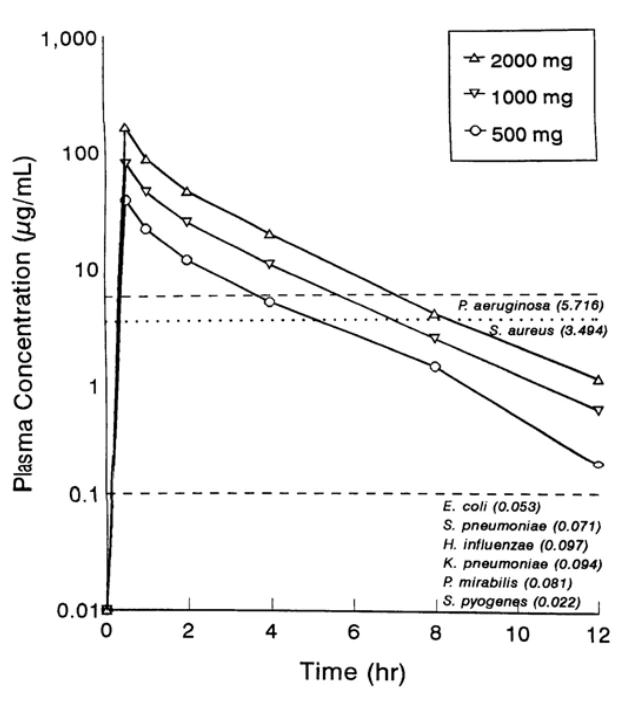
Mean Plasma Concentration – Time Profiles
After Single Intramuscular Injections Compared to MIC90 of Target Pathogens
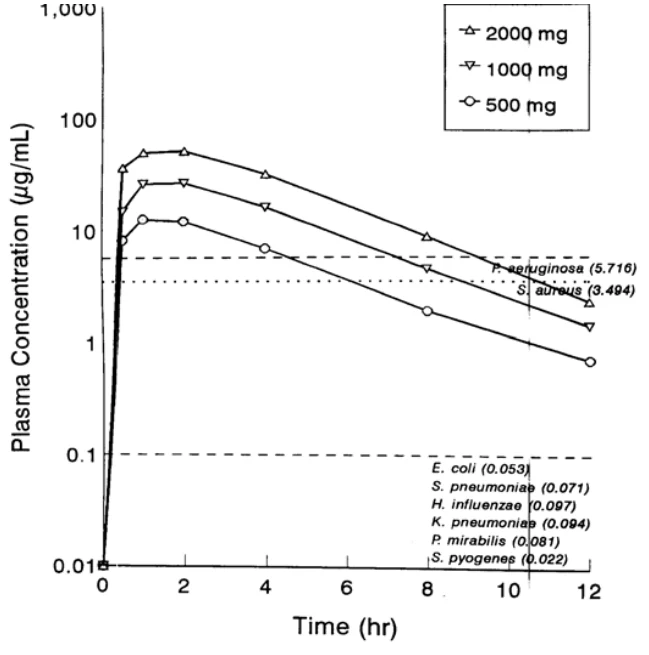
See MICROBIOLOGY for susceptibility break points.
Average elimination half-life of cefepime is approximately 2 hours, and does not vary with respect to dose over the range of 250 mg to 2 g. There was no accumulation in healthy subjects receiving doses up to 2 g intravenously every 8 hours for a period of 9 days. Total body clearance averages 120 mL/min. Average renal clearance of cefepime is 110 mL/min, suggesting that cefepime is eliminated almost exclusively by renal mechanisms, primarily glomerular filtration.
Urinary recovery of unchanged cefepime represents approximately 85% of dose, resulting in high concentrations of cefepime in the urine. Serum protein binding of cefepime averages 16.4% and is independent of its concentration in the serum. The average steady state volume of distribution is 18 L.
Following intramuscular (IM) administration, cefepime is completely absorbed. The pharmacokinetics of cefepime administered intramuscularly are linear over the range of 500 mg to 2 g and do not vary with respect to treatment duration.
Patients with Renal Impairment
Elimination half-life is prolonged in patients with various degrees of renal insufficiency, with a linear relationship between total body clearance and creatinine clearance. This serves as the basis for dosage adjustment recommendations in this group of patients (see DOSAGE AND ADMINISTRATION). The average half-life is 13 hours in patients with severe renal impairment requiring hemodialysis and 19 hours in those requiring continuous ambulatory peritoneal dialysis.
Pediatric Patients
Cefepime pharmacokinetics have been evaluated in pediatric patients following single and multiple 50 mg/kg doses on q8h (n = 29) and q12h (n =13) schedules. The mean (± SD) age of the patients was 3.6 (± 3.3) years, and ranged from 2.1 months to 11.2 years. Following a single IV dose, total body clearance and the steady state volume of distribution averaged 3.3 (± 1.0) mL/min/kg and 0.3 (± 0.1) L/kg, respectively. The overall mean elimination half-life was 1.7 (± 0.4) hours. The urinary recovery of unchanged cefepime was 60.4 (± 30.4)% of the administered dose, and renal clearance was the primary pathway of elimination, averaging 2.0 (± 1.1) mL/min/kg. There were no significant differences in the pharmacokinetics of cefepime among pediatric patients of various ages or between male (n = 25) and female patients (n = 17). There was no evidence of accumulation of cefepime in patients treated for up to 14 days with either regimen. The absolute bioavailability of cefepime after an IM dose of 50 mg/kg was 82.3 (± 15.6)% in eight patients. The exposure to cefepime, including minimum plasma concentrations at steady state, following a 50 mg/kg IV dose in a pediatric patient is comparable to that in adults treated with a 2 g IV dose. Please refer to the PHARMACOLOGY section for a comparative summary of the mean pharmacokinetics of cefepime in pediatric vs. adult patients.
STORAGE AND STABILITY
Store dry powder at room temperature (15 - 30°C) and protect from light. The dry powder may also be stored in the refrigerator (2 - 8°C), protected from light.
Solutions for intramuscular or intravenous use reconstituted as well as diluted as recommended with sterile water for injection, 0.9% sodium chloride injection or 5% dextrose injection are stable for 72 hours when stored under refrigeration (2 – 8°C) and protected from light. Solutions constituted as well as diluted with diluents other than those listed above should be used immediately after reconstitution.
Note: parenteral drugs should be inspected visually for particulate matter before administration, and not used if particulate matter is present.
As with other cephalosporins, the color of Cefepime for Injection, USP powder (white to pale yellow) and constituted solutions (colorless to yellow) may darken on storage. The product potency is not adversely affected.
SPECIAL HANDLING INSTRUCTIONS
Not applicable
DOSAGE FORMS, COMPOSITION AND PACKAGING
Cefepime for Injection, USP is supplied as a sterile dry powder containing 707 mg of L-arginine per gram of cefepime. The L-arginine is added to control the pH of the reconstituted solution at 4.0 – 6.0.
It is available in single use 20 mL clear glass molded Type I vials, sealed with grey butyl film-coated rubber stopper and flip off seal containing 1 g or 2 g of cefepime activity and supplied in cartons of 1 or 10 vials.
PART II: SCIENTIFIC INFORMATION
PHARMACEUTICAL INFORMATION
Drug Substance
Proper Name: Cefepime hydrochloride
Chemical Name:1-[[6R,7R)-7-[2-(2-amino-4-thiazolyl)-glyoxylamido]-2-carboxy-8-oxo-5-thia-1-azabicyclo[4.2.0]oct-2-en-3-yl[methyl]-1-methylpyrrolidinium chloride, 72-(Z)-(O- methyloxime), monohydrochloride, monohydrate
Structural Formula:
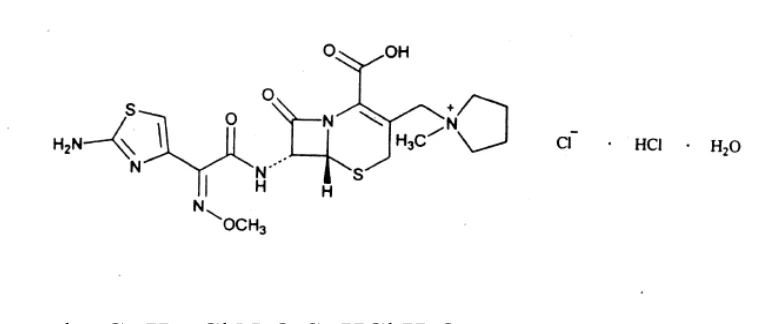
Molecular Formula: C19H25 Cl N6O5S2.HCl.H2O
Molecular Weight: 571.50
Description
Cefepime hydrochloride is a white to pale yellow powder with a melting point of 150°C. Cefepime is freely soluble in water and has a partition coefficient (1-octanol buffer) of 0.027 at 23°C.
CLINICAL TRIALS
Not applicable
MICROBIOLOGY
Cefepime is a bactericidal agent that acts by inhibition of bacterial cell wall synthesis. Cefepime has a broad spectrum of activity that encompasses a wide range of Gram-positive and Gram-negative bacteria. Cefepime is highly resistant to hydrolysis by most beta-lactamases, has a low affinity for chromosomally-encoded beta-lactamases and exhibits rapid penetration into Gram-negative bacterial cells. The molecular targets of cefepime are the penicillin binding proteins (PBP). In studies using Escherichia coli and Enterobacter cloacae, cefepime bound with highest affinity to PBP 3 followed by PBP 2, then PBPs 1a and 1b. Binding to PBP 2 occurs with significantly higher affinity than that of other parenteral cephalosporins. This may enhance its antibacterial activity. The moderate affinity of cefepime for PBPs 1a and 1b probably also contribute to its overall bactericidal activity. Cefepime has been shown to be bactericidal by time-kill analysis (killing-curves) and by determination of minimum bactericidal concentrations (MBC) for a wide variety of bacteria. The cefepime MBC/MIC ratio was ≤ 2 for more than 80% of isolates of all Gram-positive and Gram-negative species tested. Synergy with aminoglycosides has been demonstrated in vitro, primarily with Pseudomonas aeruginosa isolates.
The in vitro activity of cefepime against clinical isolates is shown below.
| Organism | Number of Isolates | Low MIC | High MIC | MIC50 mcg/mL | MIC90 mcg/mL |
|---|---|---|---|---|---|
| GRAM-NEGATIVE | |||||
| Acinetobacter anitratus | 54 | 1 | > 128.000 | 3.311 | 26.355 |
| Acinetobacter calcoaceticus | 1 | 16 | 16 | ||
| Acinetobacter lwoffi | 14 | ≤ 0.007 | 32 | 0.707 | 3.482 |
| Achromobacter xylosoxidans | 8 | 16 | 64 | 21.112 | |
| Aerococcus sp. | 1 | 8 | 8 | ||
| Aeromonas hydrophila | 6 | 0.015 | 0.25 | 0.03 | |
| Alcaligenes faecalis | 4 | 8 | 16 | ||
| Bordetalla bronchiseptica | 1 | 16 | 16 | ||
| Citrobacter amalonaticus | 2 | 0.015 | 0.03 | ||
| Citrobacter freundii | 30 | 0.015 | 2 | 0.04 | 1.32 |
| Clostridium diversus | 18 | 0.015 | 0.5 | 0.017 | 0.069 |
| Edwardsiella tarda | 1 | ≤ 0.007 | ≤ 0.007 | ||
| Enterobacter aerogenes | 36 | 0.015 | 2 | 0.029 | 0.345 |
| Enterobacter cloacae | 100 | 0.015 | 4 | 0.028 | 0.305 |
| Enterobacter gergovia | 1 | 0.015 | 0.015 | ||
| Enterobacter taylorae | 1 | 0.06 | 0.06 | ||
| Escherichia coli | 527 | ≤ 0.007 | 16 | 0.019 | 0.053 |
| Flavobacterium meningosepticum | 2 | 8 | 16 | ||
| Flavobacterium odoratum | 1 | 128 | 128 | ||
| Organism | Number of Isolates | Low MIC | High MIC | MIC50 mcg/mL | MIC90 mcg/mL |
|---|---|---|---|---|---|
| Haemophilus influenzae | 2 | 0.03 | 0.06 | ||
| Haemophilus influenzae (P+) | 13 | 0.03 | 0.5 | 0.038 | 0.097 |
| Haemophilus influenzae (P-) | 63 | ≤ 0.007 | 2 | 0.035 | 0.057 |
| Haemophilus parainfluenzae | 2 | 0.03 | 0.06 | ||
| Haemophilus parainfluenzae (P-) | 3 | 0.03 | 0.06 | ||
| Klebsiella oxytoca | 42 | ≤ 0.007 | 1 | 0.02 | 0.052 |
| Klebsiella ozaenae | 1 | 0.015 | 0.015 | ||
| Klebsiella pneumoniae | 168 | ≤ 0.007 | 16 | 0.022 | 0.094 |
| Kluyvera sp. | 1 | 0.125 | 0.125 | ||
| Moraxella catarrhalis | 5 | 0.125 | 0.5 | 0.21 | |
| Moraxella catarrhalis (P+) | 19 | 0.125 | 2 | 0.215 | 0.856 |
| Moraxella catarrhalis (P-) | 3 | 0.06 | 0.125 | ||
| Moraxella sp. | 1 | 64 | 64 | ||
| Morganella morganii | 33 | 0.015 | 16 | 0.02 | 0.097 |
| Neisseria flavescens | 1 | 0.03 | 0.03 | ||
| Neisseria gonorrhoeae | 4 | ≤ 0.007 | ≤ 0.007 | ≤ 0.007 | |
| Neisseria meningitidis | 3 | 0.03 | 0.06 | ||
| Neisseria mucosa | 2 | 0.25 | 0.25 | ||
| Neisseria subflava | 1 | 0.06 | 0.06 | ||
| Pantoea aglomerans | 4 | 0.015 | 0.03 | ||
| Pasteurella multocida | 1 | 0.5 | 0.5 | ||
| Proteus mirabilis | 144 | 0.015 | 16 | 0.037 | 0.081 |
| Proteus penneri | 1 | 0.06 | 0.06 | ||
| Proteus vulgaris | 5 | 0.03 | 2 | ||
| Providencia rettgeri | 6 | ≤ 0.007 | 0.125 | 0.021 | |
| Providencia stuartii | 10 | 0.03 | 4 | 0.03 | 1 |
| Pseudomonas aeruginosa | 237 | 0.125 | 32 | 1.485 | 5.716 |
| Pseudomonas cepacia | 2 | 8 | 16 | ||
| Pseudomonas fluorescens | 7 | 0.25 | 8 | 1.682 | |
| Pseudomonas maltophilia | 32 | 4 | 128 | 11.95 | 51.472 |
| Pseudomonas putida | 5 | 0.25 | 8 | 0.42 | |
| Pseudomonas stutzeri | 1 | 0.5 | 0.5 | ||
| Salmonella enteritidis | 1 | 0.03 | 0.03 | ||
| Salmonella sp. | 1 | 0.03 | 0.03 | ||
| Serratia marcescens | 44 | 0.03 | 4 | 0.076 | 0.277 |
| Streptococcus liquifaciens | 1 | 0.5 | 0.5 | ||
| Vibrio alginolyticus | 1 | 0.5 | 0.5 | ||
| GRAM-POSITIVE | |||||
| Aerococcus viridans | 1 | 0.03 | 0.03 | ||
| Bacillus sp. | 3 | 1 | 64 | ||
| Corynebacterium sp. | 16 | 0.06 | 16 | 0.177 | 0.66 |
| Micrococcus sp. | 2 | 0.25 | > 128.000 | ||
| Staphylococcus aureus | 489 | 0.125 | 128.000 | 1.655 | 3.494 |
| Staphylococcus aureus (MR) | 21 | 8 | > 128.000 | > 128.000 | > 128.000 |
| Staphylococcus capitis | 6 | 0.125 | 2 | 0.25 | |
| Staphylococcus cohnii | 2 | 2 | 4 | ||
| Organism | Number of Isolates | Low MIC | High MIC | MIC50 mcg/mL | MIC90 mcg/mL |
|---|---|---|---|---|---|
| Staphylococcus epidermidis | 134 | 0.03 | 32 | 0.442 | 4.245 |
| Staphylococcus epidermidis (MR) | 42 | 1 | 128 | 5.04 | 30.555 |
| Staphylococcus haemolyticus | 46 | 0.5 | > 128.000 | 3.564 | > 128.000 |
| Staphylococcus hominis | 21 | 0.25 | > 128.000 | 1.072 | > 4.925 |
| Staphylococcus saprophyticus | 1 | > 128.000 | > 128.000 | ||
| Staphylococcus simulans | 10 | 0.5 | 16 | 0.595 | 4 |
| Staphylococcus warneri | 7 | 0.25 | 2 | 0.386 | |
| Staphylococcus coagulase (-) | 1 | 4 | 4 | ||
| Streptococcus agalactiae | 6 | 0.03 | 4 | 0.038 | |
| Streptococcus bovis | 3 | 0.06 | 0.125 | ||
| Streptococcus durans | 3 | 2 | 128 | ||
| Streptococcus equinis | 1 | 0.06 | 0.06 | ||
| Streptococcus faecalis | 248 | 0.5 | > 128.000 | 23.315 | 95.977 |
| Streptococcus faecium | 30 | 4 | > 128.000 | > 128.000 | > 128.000 |
| Streptococcus milleri | 7 | 0.015 | 0.5 | 0.027 | |
| Streptococcus mitis | 23 | 0.015 | 4 | 0.054 | 1.481 |
| Streptococcus mutans | 2 | 0.03 | 0.06 | ||
| Streptococcus pneumoniae | 118 | ≤ 0.007 | 0.25 | 0.016 | 0.071 |
| Streptococcus salivarius | 2 | ≤ 0.007 | 0.03 | ||
| Streptococcus sanguis | 27 | ≤ 0.007 | 0.5 | 0.068 | 0.268 |
| Streptococcus (beta hemolytic) | 4 | 0.06 | 0.125 | ||
| Streptococcus (group A) | 155 | ≤ 0.007 | 32 | 0.011 | 0.022 |
| Streptococcus (group B) | 82 | 0.03 | 0.125 | 0.046 | 0.088 |
| Streptococcus (group C) | 7 | 0.015 | 0.5 | 0.085 | |
| Streptococcus (group D) | 1 | 16 | 16 | ||
| Streptococcus (group F) | 7 | 0.015 | 0.5 | 0.025 | |
| Streptococcus (group G) | 29 | 0.015 | 0.06 | 0.028 |
Cefepime is inactive against Clostridium difficile and against many strains of Stenotrophomonas maltophilia (formerly Xanthomonas maltophilia and Pseudomonas maltophilia).
Most strains of enterococci, e.g. Enterococcus faecalis, and methicillin-resistant staphylococci are resistant to most beta-lactam antibiotics including cefepime.
CLINICAL ISOLATES IN VITRO SUSCEPTIBILITY
In a surveillance study, more than 12,000 clinical isolates were tested in 83 U.S. hospitals using either the E-test method or the National Committee of Clinical Laboratory Standards (NCCLS) approved microdilution (Microscan) method. Antimicrobial susceptibility results obtained with the two different MIC methods are shown below:
Cumulative Percent Susceptibility of Bacterial Isolates to Cefepime Using E-Test and Microdilution Methods
| Organism | No. of Isolates | Susceptibility (%) | |
|---|---|---|---|
| Microdilution | E-Test* | ||
| GRAM-NEGATIVE | |||
| Acinetobacter anitratus | 24 | 58.3 | 50 |
| Citrobacter freundii | 19 | 100 | 100 |
| Enterobacter aerogenes | 25 | 100 | 100 |
| Enterobacter cloacae | 53 | 96.2 | 100 |
| Escherichia coli | 321 | 100 | 100 |
| Klebsiella oxytoca | 19 | 100 | 100 |
| Klebsiella pneumoniae | 112 | 99.1 | 100 |
| Proteus mirabilis | 71 | 100 | 100 |
| Pseudomonas aeruginosa | 187 | 82.4 | 87.7 |
| Serratia marcescens | 21 | 100 | 100 |
| GRAM-POSITIVE | |||
| Enterococcus faecalis | 111 | 0 | 0 |
| Enterococcus spp. | 7 | 0 | 0 |
| Staphylococcus aureus (MS) | 199 | 98.5 | 99 |
| Staphylococcus aureus (MR) | 69 | 21.7 | 23.2 |
| Staphylococcus coagulase (-) (MS) | 8 | 100 | 100 |
| Staphylococcus coagulase (-) (MR) | 11 | 45.5 | 66.7 |
| Staphylococcus epidermidis (MS) | 15 | 93.3 | 100 |
| Staphylococcus epidermidis (MR) | 21 | 45.7 | 60.9 |
* A plastic strip containing a concentration gradient of the antimicrobial agent to be used is placed on an agar plate inoculated with the organisms to be tested in the same manner as for the standard disk diffusion method.
In vitro results confirmed the susceptibility of most isolates tested to cefepime. The activity of cefepime against Enterobacter species was > 90% and against Pseudomonas aeruginosa was 78.2 to 82.5% depending on the method. Ninety-eight percent (98%) of methicillin-susceptible Staphylococcus aureus strains were susceptible to cefepime with similar results for methicillin-susceptible Staphylococcus epidermidis.
SUSCEPTIBILITY TESTS
Diffusion techniques
Quantitative methods that require measurement of zone diameters give the most precise estimates of antibiotic susceptibility. The approved procedure of the NCCLS has been recommended for use with disks to test susceptibility to cefepime. Interpretation involves correlation of diameters obtained in the disk test with the minimum inhibitory concentration (MIC) values for cefepime. Laboratory reports with standardized single-disk susceptibility results using a 30 mcg cefepime disk should be interpreted according to the following criteria.
| Microorganism | Zone diameter (mm) | ||
| Susceptible (S) | Intermediates (I) | Resistant (R) | |
| Microorganisms other than Haemophilus spp.* and S. Pneumoniae* | ≥ 18 | 15-17 | ≤ 14 |
| Haemophilus spp.* | ≥ 26 | -* | -* |
*NOTE: Isolates from these species should be tested for susceptibility using specialized testing methods. Isolates of Haemophilus spp. with zones < 26 mm should be considered equivocal and should be further evaluated. Isolates of S. Pneumoniae should be tested against a 1 mcg oxacillin disk; isolates with oxacillin zone sizes ≥ 20 mm may be considered susceptible to cefepime.
A report of “Susceptible” indicates that the pathogen is likely to be inhibited by generally achievable blood concentrations. A report of “Intermediate” indicates that the organism would be susceptible if high dosage is used or if the infection is confined to tissues and fluids (e.g., interstitial fluid and urine) in which high antibiotic levels are attained. A report of “Resistant” indicates that the achievable concentration of the antibiotic is unlikely to be inhibitory and other therapy should be selected.
Organisms should be tested with the cefepime disk because cefepime has been shown to be active in vitro against certain strains found to be resistant with other beta-lactam disks. The cefepime disk should not be used for testing susceptibility to other cephalosporins. Standardized quality control procedures require the use of control organisms. The 30 mcg cefepime disk should give the following zone diameters for the quality control strains.
Quality Control Limits for Tests with the 30 mcg Cefepime Disk
| Organism | ATCC | Zone Size Range (mm) |
|---|---|---|
| Escherichia coli | 25922 | 29 – 35 |
| Pseudomonas aeruginosa | 27853 | 24 – 30 |
| Staphylococcus aureus | 25923 | 23 – 29 |
| Neisseria gonorrhoeae | 49226 | 37 – 46 |
| Haemophilus influenzae | 49247 | 25 – 31 |
Dilution techniques
Using standardized dilution methods (broth, agar, microdilution) or equivalent, the MIC values obtained should be interpreted according to the following criteria:
| Microorganism | MIC (mcg / mL) | ||
|---|---|---|---|
| Susceptible (S) | Intermediate (I) | Resistant (R) | |
Microorganism other than Haemophilus spp.* and S. pneumoniae* | ≤ 8 | 16 | ≥ 32 |
| Haemophilus spp.* | ≤ 2 | 0 | -* |
| Streptococcus pneumoniae* | ≤ 0.5 | 1* | ≥ 2 |
*NOTE: Isolates from these species should be tested for susceptibility using specialized dilution testing methods. Strains of Haemophilus spp. with MIC’s greater than 2 mcg/mL should be considered equivocal and should be further evaluated.
As with diffusion techniques, dilution techniques require the use of laboratory control organisms. Standard cefepime powder should give the following MIC values for quality control strains:
Quality Control Ranges of MIC (mcg/mL)
| Organism | ATCC | MIC (mcg/mL) |
| Escherichia coli | 25922 | 0.016 – 0.12 |
| Staphylococcus aureus | 29213 | 1 – 4 |
| Pseudomonas aeruginosa | 27853 | 1 – 8 |
| Neisseria gonorrhoeae | 49226 | 0.016 – 0.06 |
| Haemophilus influenzae | 49247 | 0.5 – 2 |
Separate susceptibility breakpoints and zone diameter interpretative standards for Haemophilus influenzae, Neisseria gonorrhoeae and Streptococcus pneumoniae have been established for cefepime by the NCCLS. The following tables summarize the information published in Tables 2A, B, C (Aerobic Dilution) and (Disk Diffusion) of NCCLS Document M100-S5 published in December 1994.
| Organism | Zone Diameter (mm) | Interpretation |
| H. influenzae | ≥ 26 | S |
| N. gonorrhoeae | ≥ 31 | S |
| S. pneumoniae | - | - |
| Organism | MIC (mcg/mL) | Interpretation |
| H. influenzae | ≤ 2 | S |
| N. gonorrhoeae | ≤ 0.5 | S |
| S. pneumoniae | ≤ 0.5 1 ≥ 2 | S I R |
There are no breakpoints for resistance to cefepime for H. influenzae and N. gonorrhoeae since no resistant isolates to cefepime have yet been detected. There are no zone diameter criteria established for cefepime or any other cephalosporins to S. pneumoniae; disk diffusion of cephalosporin is not predictive of MICs for S. pneumoniae.
PHARMACOLOGY
Concentrations of cefepime achieved in specific tissues and body fluids following intravenous administration are listed below.
Mean Concentrations of Cefepime in Various Body Fluids (mcg/mL) and Tissues (mcg/g)
| Tissue or fluid | I.V. Dose (g) | Number of patients | Average time of sample post-dose (hr) | Mean concentration | ||||||||
| Urine | 0.5 | 8 | 0 – 4 | 292 mcg/mL | ||||||||
| 1 | 12 | 0 – 4 | 926 mcg/mL | |||||||||
| 2 | 12 | 0 – 4 | 3120 mcg/mL | |||||||||
| Bile | 2 | 26 | 9.4 | 17.8 mcg/mL | ||||||||
| Peritoneal fluid | 2 | 19 | 4.4 | 18.3 mcg/mL | ||||||||
| Blister fluid | 2 | 6 | 1.5 | 81.4 mcg/mL | ||||||||
| Bronchial mucosa | 2 | 20 | 4.8 | 24.1 mcg/g | ||||||||
| Sputum | 2 | 6 | 4 | 7.4 mcg/mL | ||||||||
| Prostate | 2 | 5 | 1 | 31.5 mcg/g | ||||||||
| Appendix | 2 | 31 | 5.7 | 5.2 mcg/g | ||||||||
| Gallbladder | 2 | 38 | 8.9 | 11.9 mcg/g | ||||||||
Mean pharmacokinetic parameters of cefepime in pediatric and adult patients are presented in the following tables.
Mean (SD) Pharmacokinetic Parameters of Cefepime in Pediatric Patients Following the IV Administration of Single and
Multiple 50 mg/kg doses, q12hr
| Group | Dose | N | CMAX (mcg/mL) | AUC* (mcg-hr/ mL) | T-HALF (hr) | CLT (mL/min/kg) | VSS (L/kg) | ||||
| 2 yr – < 6 yr | First | 7 | 188.6 (37.3) | 256 (71) | 1.60 (0.32) | 3.45 (0.86) | 0.30 (0.07) | ||||
Steady State | 7 | 174.1 (70.0) | 240 (91) | 1.55 (0.27) | 4.02 (1.82) | 0.38 (0.19) | |||||
| 6 yr – < 12 yr | First | 6 | 175.5 (51.8) | 271 (86) | 1.62 (0.20) | 3.31 (1.22) | 0.31 (0.07) | ||||
| Steady State | 6 | 182.0 (43.5) | 271 (85) | 1.55 (0.22) | 3.25 (0.95) | 0.28 (0.03) | |||||
* AUC (INF) after the first dose and AUC (TAU) at steady state
Mean (SD) Pharmacokinetic Parameters of Cefepime in Pediatric Patients and Adult Subjects Following the Administration of Single and Multiple Intravenous Doses
| Group | Dose | N | CMAX | AUC* | T-HALF | CLT† | VSS† |
| Pediatric Patients – 50 mg/kg, q8h | |||||||
| 2 mo - < 6 mo | First | 7 | 157.4 (23.0) | 303.7 (86.4) | 1.89 (0.63) | 2.97 (0.75) | 0.40 (0.08) |
| Steady State | 7 | 185.4 (30.7) | 336.9 (98.5) | 1.78 (0.75) | 2.65 (0.57) | 0.35 (0.04) | |
| 6 mo - < 2 yr | First | 10 | 173.1 (21.7) | 279.2 (99.6) | 1.57 (0.51) | 3.41 (1.33) | 0.34 (0.06) |
| Steady State | 10 | 197.1 (30.5) | 364.1 (165.7) | 1.98 (0.76) | 2.72 (1.10) | 0.34 (0.06) | |
| 2 yr - < 6 yr | First | 6 | 191.7 (19.5) | 245.1 (31.6) | 1.68 (0.23) | 3.46 (0.48) | 0.35 (0.09) |
| Steady State | 6 | 189.8 (36.2) | 265.7 (46.1) | 1.80 (0.70) | 3.21 (0.46) | 0.34 (0.08) | |
| 6 yr - < 12 yr | First | 6 | 188.9 (34.8) | 289.1 (62.8) | 1.65 (0.26) | 3.00 (0.65) | 0.33 (0.07) |
| Steady State | 4 | 179.9 (48.8) | 280.5 (66.6) | 2.05 (0.55) | 3.14 (0.95) | 0.72 (0.67) | |
| 12 yr - ≤ 18 yr | First | 4 | 114.1 (45.8) | 258.1 (178.5) | 1.84 (0.33) | 3.13 (1.35) | 0.40 (0.13) |
| Steady State | 3 | 177.4 (13.8) | 351.7 (61.5) | 2.26 (0.66) | 1.79 (0.39) | 0.45 (0.27) | |
| Adult Subjects 2 g, q8h | |||||||
| Adult | First | 7 | 142 (32.7) | 281 (43) | 2.46 (0.66) | 1.73 (0.25) | 9.25 (0.08) |
| Steady State | 7 | 145 (17.9) | 281 (55) | 2.39 (0.49) | 1.74 (0.31) | 0.23 (0.03) | |
* AUC (INF) after the first dose and AUC(TAU) at steady state
† For adult subjects, mean values divided by an average body weight of 70 kg to determine normalized values
Effect on fecal flora
Suppression of the natural gut microflora during antibiotic therapy may allow colonisation of the gut by resistant microorganisms normally excluded from the body. This can lead to serious complications such as overgrowth by Clostridium difficile and subsequent pseudomembranous colitis.
Disturbance of the fecal flora is seen particularly with cephalosporins that concentrate in the bile. Because cefepime is eliminated primarily via the kidney, this effect is less marked.
The effect of multiple intravenous doses of cefepime on fecal flora has been investigated in healthy volunteers. Little effect was observed after 6 days of treatment and colonization by resistant organisms did not occur.
TOXICOLOGY
Acute Toxicity
Species/ Strain | Route | Sex (N) | Formulation** | Doses (mg/kg) | Estimated minimum lethal dose (mg/kg) |
| Mouse / SW | IV | M (10) F (10) | base | 1000 - 2000 | > 1500* |
| Mouse / CD-1 | IV | M (10) F (10) | NaCl | 2500 – 3500 | > 3500* (M) > 3000* (F) |
| Rat / SD | IV | M (10) F (10) | /L-arg | 700 – 1500 | 1272* (M) 1067* (F) |
| IV | M (10 – 12) | NaCl | 400 – 1800 | 775 – 866* | |
| IV | M (10 – 12) F (10) | base | 300 – 900 | 667 – 669* | |
| IM | M (10) F (10) | NaCl | 3000 | > 3000 | |
| IP | M (10) F (10) | NaCl | 3000 | > 3000 | |
| SC | M (10) F (10) | NaCl | 5000 | > 5000 | |
| Rabbit / NZ | IV | M (1 – 2) F (1 – 2) | NaCl | 2000 – 2500 | > 2000 |
| Dog | IV | M (1) F (1) | NaCl | 2500 | > 2500 |
| IV | M (1) F (1) | /L-arg | 2000 | > 2000 | |
| Monkey | IV | M (1 – 2) F (1 – 2) | base | 2500 – 4000 | > 4000 |
| IV | M (1) F (1) | NaCl | 4000 | > 4000 |
* Median lethal dose
** Formulations: NaCl = Cefepime: NaCl, 1:1 mole; /L-arg = cefepime diHCI/L-arginine, 1:0.72 w/w ratio
With the exception of rabbits, where deaths due to enterotoxemia (related to the antibacterial activity of cefepime) occurred 4 to 6 days after treatment, significant toxicity in other species was limited to a brief period of time after intravenous injection of the drug. In mice and rats, deaths generally occurred within the first few minutes following intravenous administration and survivors appeared normal thereafter. Signs of toxicity in rodents included ataxia, decreased activity, respiratory difficulty, muscle twitching, tremors, straub tail and convulsions.
In dogs and monkeys, signs of toxicity were transient and consisted of salivation, emesis and or retching, tremors (dog) and dilated pupils (monkey). All animals appeared clinically normal within a few hours after treatment.
Subacute Toxicity
Species / Strain | N (sex) / Group | Dose Range (mg/kg/day) | Route | Duration | Formu- lation1 | Principal Findings |
| Rat / SD | 12 M 12 F | 0 (water for injection), 100, 400, 8002 | IV bolus | 4 weeks | Base | All groups: No clinicopathologic or histopathologic changes related to cumulative drug toxicity. ≥ 400 mg/kg: 1 death (F) in 400 mg/kg group and 6 deaths (4M, 2F) in 800 mg/kg group proceeded by ataxia, decreased activity, respiratory difficulty, muscle twitching and convulsions. Deaths within 2-10 minutes of dosing. |
| Rat / SD | 10 M 10 F | 0 (saline), 0 (L-arginine), 10, 400, 8002 | IV | 4 weeks | /L-Arg | All groups: Tissue alteration at injection site. ≥ 400 mg/kg: Increased kidney weight. 800 mg/kg: Minimal cytoplasmic vacuolation of renal tubules in 1 (F). |
| Rat / SD | 10 M 10 F | 0 (saline), 500, 1000,1500 | IP | 4 weeks | NaCl | ≥ 500 mg/kg: Irritation at injection site. Transient hind limb extension. Reddish discoloration and swelling of the scrotum. Cecal enlargement/ semifluid fecal content. ≥ 1000 mg/kg: Decreased mean liver weight. 1500 mg/kg: Decreased body weight and body weight gain. |
| Rat / SD | 10 M 10 F | 0 (saline), 100, 500, 10002 | SC | 12 weeks | NaCl | All dose groups: Slight/mild irritation at injection site. Slight to moderate increase in ALT and AST without relation to dose or duration of treatment. ≥ 500 mg/kg: 1 (M) in 500 mg/kg group and 1 (M) in 1000 mg/kg group sacrificed moribund; no relationship to drug. 1000 mg/kg: Decreased body weight and food intake. Moderate cytoplasmic vacuolation of proximal renal tubules (F). |
| Dog / Beagle | 2 M 2 F | 0 (L-arginine), 1002 | IM | 4 weeks | /L-Arg | All groups: Struggling and/or vocalization during injection and favouring of leg after injection. Salivation (F). Increased serum AST in one control and 3 cefepime dogs related to local muscle irritation. Minor irritation at injection site. |
| Dog / Beagle | 2 M 2 F | 0 (saline), 0 (L-arginine), 100, 300, 600 | IV | 4 weeks | /L-Arg | 100 mg/kg: Salivation (M) and emesis or retching (F) during last weeks. > 300 mg/kg: Salivation and emesis / retching during or after dosing. Increased urine volume in intermediate dose (M) and in high dose (M & F). 600 mg/kg: Decreased activity and slight muscle tremors (F) noted briefly after dosing. Increased serum cholesterol in 2 (F). |
| Dog / Beagle | 3 – 5 M, F | 0 (saline), 0 (L-arginine), 50, 300, 600 | IV | 4 weeks (+ 4 weeks recovery) | /L-Arg | All groups: Dose-dependent salivation, retching / emesis, flushing, pawing at head and increased heart rate prior to, during and briefly (< 30 minutes) after dosing. Dose related increase in kidney weight. ≥ 300 mg/kg: Increased (PAS+) granules in proximal renal tubules. 600 mg/kg: Hypoactivity. Slight decrease in platelets or hemoglobin and hematocrit in 1/10 dogs. Slight increases in sodium, protein, albumin and cholesterol. Significant increase in kidney weight (F). |
Subacute Toxicity (cont’d)
Species / Strain | N (sex) / Group | Dose Range (mg/kg/day) | Route | Duration | Formulation1 | Principal Findings |
| Monkey / Cynomolgus | 2 M 2 F | 0 (water for injection), 100, 300, 600 | IV | 4 weeks | Base | All dose groups: Red discoloration and scabs at injection sties. 600 mg/kg: Salivation, emesis, ataxia during or immediately after dosing. Decrease food intake and bodyweight loss in 1 (F). |
| Monkey / Cynomolgus | 1 - 2 M, F | 0 (control), 0 (L- arginine / Sodium sulfate), 600 | IV | 4 weeks | Sulfate / L-arg. | All dose groups: Red discoloration and scabs at injection sties. 600 mg/kg: Emesis after dosing. Slightly decreased food intake in 1 (F). Cylindruria (hyaline and waxy casts) and slight increase in urine protein and specific gravity. |
| Monkey / Cynomolgus | 2 M 2 F | 0 (saline), 100, 300, 600 | IV | 12 weeks | NaCl | All dose groups: Irritation at injection site. Minimal increase in (PAS+) granules in proximal renal tubules (heterolysosomes). ≥ 300 mg/kg: Urinary casts (hyaline) and increased epithelial cells in urine. 600 mg/kg: One death (F) after 78th dose. Respiratory distress, salivation, prostration with flaccid hindlimbs and tremors prior to death. Normal prior to 78th dose. |
1Formulation used: NaCl = cefepime: NaCl, 1:1 mole; /L-arg =cefepime diHCI / L- arginine, 1.0:0.72 w/w; Sulfate / L-arginine = cefepime sulfate/L-arginine, 1:0.78 w/w
2Daily dose equally divided below between a.m. and p.m. administration
Chronic Toxicity
Species / Strain | N (sex) / Group | Dose Range (mg/kg/day) | Route | Duration | Formulation1 | Principal Findings |
| Rat / SD | 25 M 25 F | 0 (saline) 0 (L-arginine), 100, 500, 10002 | SC | 26 weeks (12-week recovery period) | / L-Arg | All dose groups: Dose dependent injection site irritation with secondary alterations in RBC and/or WBC counts, increased organ weight and/or hematopoiesis in spleen, liver and bone marrow. Dose dependent increase in water intake during first 2 months. 500 mg/kg: 1 (M) sacrificed moribund during dosing; 1 (M) sacrificed during recovery period. Deaths unrelated to acute or systemic drug toxicity. Fibrosarcoma at injection site of 2 (M) with onset during recovery period. ≥ 500 mg/kg: Increased food intake at intermediate dose (F) and high dose (M & F). Increased kidney weight with increased (PAS+) granules in proximal renal tubules and exacerbation of age-related nephropathy. Enlarged ceca. 1000 mg/kg: 2 (M) sacrificed moribund during treatment. Deaths unrelated to acute or systemic drug toxicity. Decreased body weight and weight gain (M). |
Chronic Toxicity (cont’d)
Species / Strain | N (sex) / Group | Dose Range (mg/kg/day) | Route | Duration | Formulation1 | Principal Findings |
| Dog / Beagle | 5 M 5 F | 0 (saline), 0 (L-arginine), 50, 150, 450 | IV | 26 weeks (12-week recovery) | / L-Arg.1 | All dose groups: Salivation, retching/emesis and flusing after dosing with cefepime and L-arginine. 50 mg/kg: 1 (M) found dead on day 139 (not drug related). ≥ 150 mg/kg: Anemia, thrombocytopenia and/or leukopenia in 9/10 high dose and 8/10 intermediate dose dogs. Thrombocytopenia and leukopenia after 34 days and anemia after 54 days at 450 mg/kg. Effects occurred later (day 63 for thrombocytopenia and after 3 months for anemia) at 150 mg/kg. Dosing interrupted in 4 high and 1 intermediate dose dogs with reversal of hematologic alterations. Slight increase in chloride, sodium and globulin. Slight decrease in urobilinogen. Increased (PAS+) granules in cytoplasm of renal proximal tubules (heterolysosomes). Extramedullary hematopoiesis and hemosiderosis in liver and spleen related to hematologic (RBC) changes. Changes in bone marrow density in 1 intermediate and 2 high dose dogs. 450 mg/kg: 1 (F) sacrificed due to prothrombin deficiency related hemorrhage. Occasional ataxia, decreased activity (1M, 2F) and tremors (2F) with return to normal in 5 – 20 minutes. Alopecia (1M, 1F). |
1Formulations used: NaCl = cefepime: NaCl, 1:1 mole; /L-arg = cefepime diHCl/ L-arginine, 1.0:0.72 w/w; Sulfate / L-arginine = cefepime sulfate/L-arginine, 1:0.78 w/w
2Daily dose equally divided between a.m. and p.m. administration
Reproduction and Teratology
Species / Strain | N (sex) / Dose | Range (mg/kg/day) | Route | Formulation1 | Principal Findings | |||||
|---|---|---|---|---|---|---|---|---|---|---|
| SEGMENT I | ||||||||||
| Rat / SD | 23 M 23 F | 0 (saline), 250, 500 or 10002 as follows: M: 64 days prior to mating through day 7 post mating F: 14 days before mating through day 7 post mating | SC | NaCl | No adverse effects on reproductive performance or on fertility. Reduced body weight gain and food intake in intermediate F0 (M) and high dose F0 (M and F). Higher incidence of post-implantation losses at high dose but within historical range for controls; reduced body weight gain and food intake may have contributed. No malformations, a few delayed ossifications. | |||||
| Rat / SD | 24 M 24 F | 0 (saline), 0 (L-arginine) 150, 500 or 10002 as follows: M: 63 days prior to mating and during mating F: 14 days prior to mating through lactation | SC | / L-arg. | Soft stool at high dose during 1st week of treatment. Decreased body weight gain from day 28 – 63 for high dose F0 (M). Increased kidney weights at high dose with decreased pituitary and adrenal weight for high dose (M). Cecal enlargement in F0 cefepime (F). No effect on prenatal development or delivery; or on littering implantation, survival or lactation. No effects on development or behavior of F1. Decreased heart weights in F1 high dose at weaning. Decreased testicular weight in F1 high dose at 10 weeks and after mating. | |||||
| SEGMENT II | ||||||||||
Mice / CD 1 | 25 F | 0 (saline), 300, 600, 1200 on days 6 to 15 of gestation (sacrifice day 18 of gestation) | IV | NaCl | No evidence of maternal toxicity, embryotoxicity or teratogenicity. Higher incidence of delayed ossification (phalanges) at high dose. | |||||
| Rat / SD | 34 F | 0 (saline), 250, 500, 10002 on days 7 to 17 of gestation 22 F/group sacrificed on day 21; remainder delivered 11 – 12 / sex / group of F1 for perinatal and postnatal evaluation (F1 dams sacrificed on gestation day 14). | SC | NaCl | One high dose F0 dam died on 8th day of treatment. Decreased food intake for mid and high dose F0 dams. Fertility, gestation, parturition, lactation of F0 dams not affected. Slight inhibition of growth for (F) offspring. No effect on F1 development (sensory, neuromuscular or reproductive). No evidence of teratogenicity at any dose (F0 or F1). | |||||
| Rat / SD | 25 F | 0 (saline), 250, 500, 10002 on days 6 to 17 of gestation (sacrificed day 20) | SC | / L-arg. | No evidence of embryolethality, fetotoxicity or teratogenicity at any dose. Decreased food intake and maternal weight gain at high dose. | |||||
| Rat / SD | 12 F | 0 (saline), 250, 500 or 10002 on days 7 to 17 of gestation. Eight pups / litter evaluated through post-natal (PN) day 22. Remainder sacrificed PN day 4. F0 sacrificed PN day 22. | SC | / L-arg. | Food intake decreased at all cefepime dose levels in early gestation and increased in the mid and high dose groups for F0 dams on PN days 4 – 7. Decreased thyroid weight for mid and high dose F0 dams sacrificed PN day 22. No evidence of teratogenicity or effects on behavior or development. | |||||
| Rabbit / NZW | 30 F | 0 (saline), 25,50,100 on days 6 to 18 of gestation (sacrificed day 20) | IV | NaCl | One high dose non-gravid death on gestation day 25. Red urine in 2 mid and 2 high dose (F). Bodyweight decrease at high dose. Low pregnancy rate for all groups including controls. No evidence of embryotoxicity or teratogenicity at any dose. | |||||
| Rabbit / NZW | 20 F | 0 (saline), 0 (L-arginine), 25, 50, 100 on days 6 to 19 of gestation (sacrificed day 29) | IV | / L-arg. | Maternal toxicity at 100 mg/kg with gastrointestinal distress, reduced weight gain, food intake and four deaths. Slightly reduced maternal weight gain in all other groups including L-arginine control. Slightly reduced fetal weight at 100 mg/kg. No evidence of teratogenicity. | |||||
| SEGMENT III | ||||||||||
| Rat / SD | 25 F | 0 (saline), 250, 500, 10002 on gestation day 16 through lactation day 20 Selected F1 (20/sex/dose) mated; F1 (F) sacrificed following lactation. F2 sacrificed 4 days | SC | / L-arg | Decreased F0 weight gain and food intake during treatment for all cefepime groups. Decreased F1 body weight at high dose from birth through lactation. No adverse effects on F1 development including reproductive performance with no effects on F2 generation through birth. | |||||
Species / Strain | N (sex) / Dose | Range (mg/kg/day) | Route | Formulation1 | Principal Findings | |
|---|---|---|---|---|---|---|
| after birth. | ||||||
1Formulations used: NaCl = cefepime: NaCI, 1:1 mole; /L-Arg = cefepime diHCl/L- arginine, 1.0:0.72 w/w
2Daily dose equally divided between a.m. and p.m. doses
Special Studies
Following subcutaneous administration of 100 or 500 mg/kg/day to neonatal male rats on postnatal days 6 to 19, cefepime showed no evidence of testicular toxicity.
No evidence of nephrotoxicity was apparent in rabbits following the intravenous administration of cefepime in single doses ranging up to 1000 mg/kg. Following intraperitoneal administration in mice and intradermal administration in guinea pigs, both cefepime and cefepime conjugated to heterologous protein were weakly immunogenic.
The potential cardiovascular effects of cefepime administered intravenously were investigated in anesthetized rats and dogs. No significant effects were noted in rats at doses up to 400 mg/kg or in dogs at doses up to 450 mg/kg. In dogs, a 450 mg/kg bolus injection of cefepime L-arginine, or an equivalent amount of L-arginine alone, was followed by transient decreases in arterial blood pressure, heart rate, and peripheral vascular resistance. Assessments of nervous system functions did not indicate significant effects in either dogs or rats.
Mutagenicity and Genotoxicity
Cefepime was not mutagenic in the Ames/Salmonella and E. coli WP2uvrA reverse mutation assays. The results of the Chinese hamster ovary (CHO)/HGPRT mammalian cell gene mutation assay were also negative. These gene mutation assays were done both with and without exogenous metabolic activation systems. In a DNA damage and repair study with primary hepatocytes in culture, the results were also negative. The results of clastogenesis were negative in a CHO fibroblast assay, but they were positive in a primary human lymphocyte culture after a 20-hour exposure, but not after a 4-hour exposure. The results were negative in both sister chromatid exchange and chromosome aberration assays, both done in non-dividing lymphocytes indicating that cefepime did not directly damage the DNA in these human lymphocytes.
In mice, cefepime administered by the intravenous route at doses greater than 1000 mg/kg produced no evidence of genotoxicity in bone marrow. Also in mice, cefepime administered subcutaneously at doses up to 1000 mg/kg for two days or as a single intravenous dose of 1200 mg/kg produced no toxicity in a micronucleus assay.
REFERENCES
- 1.
Bosso JA, Saxon BA and Matsen JM
Comparative Activity of Cefepime, Alone and in Combination, Against Clinical Isolates of Pseudomonas aeruginosa and Pseudomonas cepacia from Cystic Fibrosis Patients Antimicrob. Agents and Chemother 35 (4): 783-784 (1991).
- 2.
Barbhaiya RH, Knupp CA, et al.
Safety, Tolerance and Pharmacokinetic of Cefepime Administered Intramuscularly to Healthy Subjects
J. Clin. Pharmacol. 30: 900-910 (1990).
- 3.
Barbhaiya RH, Forgue ST, et al.
Pharmacokinetics of Cefepime After Single and Multiple Intravenous Administration in Healthy Subjects
Antimicrob. Agents Chemother. 36: 552-557 (1992).
- 4.
Barbhaiya RH, Knupp CA and Pittman KA
Effect of Age and Gender on the Pharmacokinetics of Cefepime
Antimicrob. Agents Chemother. 36(6): 1181-1185 (1992).
- 5.
Barbhaiya RH, Knupp CA, et al.
Pharmacokinetics of Cefepime in Subjects with Renal Insufficiency
Clin. Pharmacolol. Ther. 48: 268-276 (1990).
- 6.
Barbhaiya RH, Knupp CA, et al.
Pharmacokinetics of Cefepime in Patients Undergoing Continuous Peritoneal Dialysis Antimicrob. Agents Chemother. 36(7): 1387-1391 (1992).
- 7.
Barbhaiya RH, Knupp CA, et al.
Lack of Pharmacokinetics Interaction Between Cefepime and Amikacin in Humans Antimicrob. Agents Chemother. 36(7): 1382-1386 (1992).
- 8.
Chadha D, Wise R, et al.
Cefepime Concentrations in Bronchial Mucosa and Serum Following a Single 2 Gram Intravenous Dose
J. Antimircrob. Chemother. 25: 959-963 (1990).
- 9.
Edelstein H, Chirurgi V, et al
A Randomized Trial of Cefepime (BMY-28142) and Ceftazidime for the Treatment of Pneumonia
J. Antimicrob. Chemother. 28: 569-575 (1991).
- 10.
Gentry LO and Rodriguez-Gomez G
Randomized Comparison of Cefepime and Ceftazidime for Treatment of Skin, Surgical Wound, and Complicated Urinary Tract Infections in Hospitalized Subjects Antimircrob. Agents and Chemother. 35(11): 2371-2374 (1991).
- 11.
Giamarellou H
Clinical Experience with the Fourth Generation Cephalosporins
J. Chemotherapy 8: Suppl. 2: 91-104 (1996).
- 12.
Kalman D, Barriere SL and Lamar Johnson B
Pharmacokinetic Disposition and Bactericidal Activities of Cefepime, Ceftazidime, and Cefoperazone in Serum and Blister Fluid
Antimicrob. Agents and Chemother. 36(2): 453-457 (1992).
- 13.
Kessler RE, Bies M, et al.
Comparison of a New Cephalosporin, BMY-28142, with other Broad Spectrum β-lactam Antibiotics
Antimicrob. Agents Chemother. 27: 207-216 (1985)
- 14.
Kovarik JM, ter Maarten JC, et al.
Pharmacokinetics of Cefepime in Patients with Respiratory Tract Infections Antimicrob. Agents Chemother. 34: 1885-1888 (1990).
- 15.
Neu HC
Safety of Cefepime: A New Extended-Spectrum Parenteral Cephalosporin
The Amer.J.Med. 100: 6A-68S-6A-75S (1996).
- 16.
Nye KJ, Shi YG, Andrews JM and Wise R
Pharmacokinetics and Tissue Penetration of Cefepime
J. Antimicrob. Chemother. 24: 23-28 (1989).
- 17.
Ramphal R et al.
Clinical Experience with Single Agent and Combination Regimens in the Management of Infection in the Febrile Neutropenic Patient
The Amer. J. Med. 100: 6A-83S-6A-89S (1996).
- 18.
Okamoto MP, Chin A, et al.
Analysis of Cefepime Tissue Penetration into Human Appendix
Pharmacotherpy 11: 353-358 (1991).
- 19.
Oster S, Edelstein H, et al.
Open Trial of Cefepime (BMY-28142) for Infections in Hospitalized Patients Antimicrob. Agents and Chemother. 34(6): 954-957 (1990).
- 20.
Shah PM
The Position of Recently Developed Broad-Spectrum Antibiotics in Bacterial Septicemia
Chemotherapy 8: Suppl. 2: 105-111 (1996).
- 21. NCCLS Document M 100-S5, Vol. 14, No. 16, Fifth International Supplement, December 1994.
- 22. NCCLS Document M2-A5, Vol. 13, No. 24, December 1993.
- 23. NCCLS Document M7-A3, Vol. 13, No. 25, December 1993.
- 24. Cefepime Hydrochloride Injection: Six-Month Periodic Safety Update Report, 17 May 2000, ISN 1560.1.
- 25.
Cockcroft DW and Gault MH
Prediction of creatinine clearance from serum creatinine
Nephron. 16: 31-41 (1976).
- 26.
Schwartz GJ, et al
A Simple Estimate of Glomerular Filtration Rate in Children Derived From Body Length and Plasma Creatinine.
Pediatrics 58 (2) 259-263 (1976).
- 27.
Dechaux M, et al
Créatinine Plasmatique, Clearance et Excrétion Urinaire de la Créatinine Chez I’enfant
Arch. France Péd. 35: 53-62 (1978)
- 28. Product Monograph – Cefepime for Injection (cefepime hydrochloride), 1g and 2g, Apotex Inc., Canada. Date of Revision: February 23, 2018, Submission Control No. 209347.