


Product Monograph - Cefoxitin for Injection (Teva Canada, 1 G, 2 G)
Recent Major Label Changes
| 4 Dosage and Administration, 4.3 Reconstitution | 2026-11 |
|---|
Table of Contents
Certain sections or subsections that are not applicable at the time of the preparation of the most recent authorized product monograph are not listed.
Recent Major Label Changes ................................................................................................................ 2
Table of Contents ................................................................................................................................. 2
Part 1: Healthcare Professional Information ......................................................................................... 4
- 1.
Indications ........................................................................................................................................ 4
1.1 Pediatrics ............................................................................................................................................. 5
1.2 Geriatrics ............................................................................................................................................. 5
- 2. Contraindications ............................................................................................................................. 5
- 3. Serious Warnings and Precautions Box ............................................................................................. 5
- 4.
Dosage and Administration .............................................................................................................. 6
4.1 Dosing Considerations ........................................................................................................................ 6
4.2 Recommended Dose and Dosage Adjustment ................................................................................... 6
4.3 Reconstitution ..................................................................................................................................... 9
4.4 Administration .................................................................................................................................. 10
4.5 Missed Dose ...................................................................................................................................... 11
- 5. Overdose ......................................................................................................................................... 11
- 6. Dosage Forms, Strengths, Composition, and Packaging .................................................................... 11
- 7.
Warnings and Precautions ............................................................................................................... 11
7.1 Special Populations ........................................................................................................................... 13
7.1.1 Pregnancy ....................................................................................................................................... 13
7.1.2 Breastfeeding ................................................................................................................................. 13
7.1.3 Pediatrics ........................................................................................................................................ 13
7.1.4 Geriatrics ........................................................................................................................................ 14
- 8.
Adverse Reactions ........................................................................................................................... 14
8.1 Adverse Reaction Overview .............................................................................................................. 14
- 9.
Drug Interactions ............................................................................................................................. 15
9.2 Drug Interactions Overview .............................................................................................................. 15
9.3 Drug-Behaviour Interactions ............................................................................................................. 15
9.4 Drug-Drug Interactions ..................................................................................................................... 15
9.5 Drug-Food Interactions ..................................................................................................................... 15
9.6 Drug-Herb Interactions ..................................................................................................................... 15
9.7 Drug-Laboratory Test Interactions .................................................................................................... 15
- 10.
Clinical Pharmacology .................................................................................................................... 15
10.1 Mechanism of Action ...................................................................................................................... 15
10.2 Pharmacodynamics ......................................................................................................................... 15
10.3 Pharmacokinetics ............................................................................................................................ 16
- 11. Storage, Stability, and Disposal ...................................................................................................... 24
Part 2: Scientific Information ............................................................................................................... 25
- 13. Pharmaceutical Information .......................................................................................................... 25
- 15. Microbiology ................................................................................................................................. 25
- 16. Non-Clinical Toxicology .................................................................................................................. 27
Patient Medication Information .......................................................................................................... 31
Part 1: Healthcare Professional Information
1. Indications
CEFOXITIN FOR INJECTION (cefoxitin sodium for injection) is indicated for the treatment of the following infections when due to susceptible organisms:
- Intra-abdominal infections such as peritonitis and intra-abdominal abscess
- Gynecological infections such as endometritis and pelvic cellulitis
- Septicemia
- Urinary tract infections (including those caused by Serratia marcescens and Serratia spp.)
- Lower respiratory tract infections
- Bone and joint infections caused by Staphylococcus aureus
- Soft tissue infections such as cellulitis, abscesses and wound infections
The susceptibility of the causative organism(s) to CEFOXITIN FOR INJECTION should be determined by conducting appropriate culture and susceptibility studies. Therapy may be initiated while awaiting these test results. Adjustments in treatment may be required once these results become available.
Organisms particularly appropriate for therapy with CEFOXITIN FOR INJECTION are:
Gram positive
Staphylococci: penicillinase producing and non-producing
Streptococci excluding enterococci
Gram negative (beta-lactamase producing and non-producing strains)
E. coli
Klebsiella species (including K. pneumoniae)
Proteus: indole positive and negative
Haemophilus influenzae
Providencia species
Anaerobes
Bacteroides fragilis
CEFOXITIN FOR INJECTION may also be used for the treatment of infections involving both aerobic and anaerobic strains of susceptible bacteria.
Clinical evidence suggests that cefoxitin therapy may be administered to patients who are also receiving gentamicin, tobramycin, carbenicillin, or amikacin.
Prophylactic Use
CEFOXITIN FOR INJECTION may be administered perioperatively (preoperatively, intraoperatively, and postoperatively) in patients undergoing abdominal surgery and vaginal or abdominal hysterectomy when there is a significant risk of postoperative infection or where the occurrence of postoperative infection is considered to be especially serious.
Intraoperative (after clamping the umbilical cord) and postoperative administration of CEFOXITIN FOR INJECTION may reduce the incidence of surgery-related postoperative infections in patients undergoing cesarean section.
CEFOXITIN FOR INJECTION should be administered one-half to one hour before the surgical procedure. Prophylactic administration should usually be stopped within 12 hours. Administration of any antibiotic continued beyond 24 hours following surgery has been reported to increase the possibility of adverse reactions but, in the majority of surgical procedures, does not reduce the incidence of subsequent infection.
Should signs of postsurgical infection appear, specimens for culture should be obtained for identification of the causative organism(s) so that appropriate therapy can be instituted.
To reduce the development of drug-resistant bacteria and maintain the effectiveness of CEFOXITIN FOR INJECTION and other antibacterial drugs, CEFOXITIN FOR INJECTION should be used only to treat infections that are proven or strongly suspected to be caused by susceptible bacteria. When culture and susceptibility information are available, they should be considered in selecting or modifying antibacterial therapy. In the absence of such data, local epidemiology and susceptibility patterns may contribute to the empiric selection of therapy.
1.1 Pediatrics
Pediatrics (< 18 years of age): Based on the data submitted and reviewed by Health Canada, the safety and efficacy of CEFOXITIN FOR INJECTION in pediatric patients has been established. Therefore, Health Canada has authorized an indication for pediatric use. (see 4 Dosage and Administration)
1.2 Geriatrics
Geriatrics (≥65 years of age): Evidence from clinical studies and experience suggests that use in the geriatric population could be associated with differences in safety or effectiveness. (see 4.2 Recommended Dose and Dosage Adjustment, Geriatrics and 7.1.4 Geriatrics).
2. Contraindications
- CEFOXITIN FOR INJECTION is contraindicated in patients who are hypersensitivity to cefoxitin or to other cephalosporin antibiotics or to any ingredient in the formulation, including any non-medicinal ingredient, or component of the container. For a complete listing, see 6 Dosage Forms, Strengths, Composition and Packaging.
- CEFOXITIN FOR INJECTION is not recommended for the treatment of meningitis. Appropriate antibiotic therapy should be instituted if meningitis is suspected.
3. Serious Warnings and Precautions Box
|
|---|
|
4. Dosage and Administration
4.1 Dosing Considerations
General
When CEFOXITIN FOR INJECTION is administered to patients with transient or persistent reduction of urinary output due to renal insufficiency, the total daily dose should be reduced because high and prolonged serum antibiotic concentrations may result from usual doses (see 4 Dosage and Administration).
Prolonged cefoxitin sodium treatment can result in the overgrowth of non-susceptible organisms. Repeated evaluation of the patient's condition is essential. If super-infection occurs during therapy appropriate supportive measures should be taken. Resistance may develop during antibiotic therapy and in such cases another antibiotic may be substituted (see 7 Warnings and Precautions, Sensitivity/resistance).
Solutions of CEFOXITIN FOR INJECTION like those of most beta-lactam antibiotics, should not be added to aminoglycoside solutions (e.g., gentamicin sulfate, tobramycin sulfate, amikacin sulfate) because of potential interaction.
Increased nephrotoxicity has been reported following concomitant administration of cephalosporins and aminoglycoside antibiotics (see 9.4 Drug-Drug Interactions).
4.2 Recommended Dose and Dosage Adjustment
CEFOXITIN FOR INJECTION may be administered intravenously or intramuscularly as required (See 4.3 Reconstitution)
Intravenous Administration
Intravenous administration is the preferred route for patients with bacteremia, bacterial septicemia, or other severe or life-threatening infections. The intravenous route is also preferred for patients who may be poor risks because of lowered resistance resulting from debilitating conditions such as malnutrition, trauma, surgery, diabetes, heart failure or malignancy, particularly if shock is present or impending.
Adults with Normal Renal Function:
The usual adult dose of CEFOXITIN FOR INJECTION is 1 to 2 g every 6 to 8 hours. Dosage and route of administration depend on severity of infection, susceptibility of the causative organisms, and the patient's condition. The usual adult dosages are shown in the table below.
Table 1: Usual adult dosage
| Type of Infection | Daily Dosage | Frequency and Route |
| Uncomplicated forms* of infections such as pneumonia, urinary tract infection, soft tissue infection | 3-4 g | 1 g every 6-8 h I.V. or I.M. |
| Moderately severe or severe infections | 6-8 g | 1 g every 4 h or 2 g every 6 - 8 h I.V. |
| Infections commonly needing antibiotics in higher dosage (e.g. gas gangrene) | 12 g | 2 g every 4 h or 3 g every 6 h I.V. |
*Including patients in whom bacteremia is absent or unlikely
Therapy may be initiated while awaiting the results of susceptibility tests.
Antibiotic therapy for group A beta-hemolytic streptococcal infections should continue for a minimum of 10 days to guard against the risk of rheumatic fever or glomerulonephritis. In staphylococcal and other infections involving a collection of pus, surgical drainage should be carried out where indicated.
Adults with Impaired Renal Function:
Patients with reduced renal function may require a reduced dose of CEFOXITIN FOR INJECTION. Serum levels should be monitored in patients with severe renal impairment.
In adults with renal insufficiency a loading dose of 1 to 2 g should be administered. In patients undergoing hemodialysis a loading dose should be given after each hemodialysis procedure. The table below presents recommended maintenance doses for patients with various levels of renal impairment and patients undergoing hemodialysis.
Table 2: Recommended maintenance doses for patients with various levels of renal impairment
| Renal Function | Creatinine Clearance | Dose | Frequency | |
| mL/min | mL/sec | |||
| Mild impairment | 50-30 | 0.83-0.50 | 1-2 g | every 8 -12 h |
| Moderate impairment | 29-10 | 0.48-0.17 | 1-2 g | every 12 - 24 h |
| Severe impairment | 9 - 5 | 0.15-0.08 | 0.5-1 g | every 12 -24 h |
| Essentially no function | <5 | <0.08 | 0.5 - 1 g | every 24 - 48 h |
Creatinine Clearance
When only the serum creatinine level is available, the following formula (based on sex, weight and age of the patient) may be used to convert this value into creatinine clearance (mL/sec.)
Males: Weight (kg) X (140 - age)
49 X serum creatinine (mM/L)
Females: 0.85 X the above value
Neonates (Including Premature Infants, Infants and Children)
Warning for Neonates:
Solutions containing preservatives should not be used for injection or for flushing catheters in treating neonates.
Benzyl alcohol as a preservative in bacteriostatic water for injection and bacteriostatic sodium chloride injection has been associated with toxicity in neonates. At present, data are unavailable on the toxicity of other preservatives in this age group. Therefore, any diluents used with CEFOXITIN FOR INJECTION in the treatment of neonates should not contain any preservatives (see 7.1.3 Pediatrics).
Table 3: Recommended doses for neonates
Premature Infants with Body Weights Above 1500 g | 20-40 mg/kg every 12 h I.V. |
Neonates 0-1 week of age 1-4 weeks of age | 20-40 mg/kg every 12 h I.V. 20-40 mg/kg every 8 h I.V. |
Infants 1 month to 2 years of age | 20-40 mg/kg every 6 h or every 8 h I.M. or I.V. |
| Children | 20-40 mg/kg every 6 h or every 8 h I.M. or I.V. |
The total daily dosage in infants and children with severe infections may be increased to 200 mg/kg, but should not exceed 12 g per day.
CEFOXITIN FOR INJECTION is not recommended for the treatment of meningitis. Appropriate antibiotic therapy should be instituted if meningitis is suspected.
Sufficient data is not yet available to recommend a specific dosage schedule for children with renal impairment. If cefoxitin sodium therapy proves to be necessary the dosage should be modified consistent with the recommendations for adults. (see table above).
Prophylactic Use
In Vaginal or Abdominal Hysterectomy and Abdominal Surgery:
The first 2 g dose should be administered intravenously or intramuscularly just prior to surgery (approximately one-half to one hour before initial incision), followed by the second and third 2 g doses at 2 to 6 hour intervals.
Cesarean Section:
Two grams administered intravenously as soon as the umbilical cord has been clamped. The second and third 2 g doses should be given at four and eight hours after the first dose by intravenous or intramuscular administration.
4.3 Reconstitution
As with all parenteral drug products, intravenous admixtures should be inspected visually for clarity, particulate matter, precipitate, discoloration and leakage prior to administration whenever solution and container permit. The dry material as well as solutions tend to darken, depending on storage conditions, however, product potency is not adversely affected. Dark brown solution should not be used.
For intramuscular use, the following solutions can be used for reconstitution:
sterile water for injection or, if required bacteriostatic water for injection
Table 4: I.M. reconstitution table
| Strength | Amount of Diluent to be Added* (mL) | Approximate Withdrawable Volume (mL) | Nominal Concentration (mg/mL) |
| 1 g vial | 2 | 2.5 | 400 |
| 2 g vial | 4 | 5.0 | 400 |
*Shake to dissolve and let stand until clear.
For intravenous use, the following solutions can be used for reconstitution:
Sterile Water for Injection or, if required, sterile sodium chloride 0.9% or,
sterile dextrose injection 5% or 10%
Table 5: I.V. reconstitution table
| Strength | Amount of Diluent to be Added* (mL) | Approximate Withdrawable Volume (mL) | Nominal Concentration (mg/mL) |
| 1 g vial | 10 | 10.5 | 95 |
| 2 g vial | 10 or 20 | 11.1 or 21.0 | 180 or 95 |
* Shake to dissolve and let stand until clear. The prepared solution may be further diluted to the desired volume with any of the solutions for I.V. infusion listed below.
For direct intravenous injection: Reconstitute as directed in the I.V. Reconstitution Table.
For intermittent intravenous infusion: Reconstitute as directed in the I.V. Reconstitution Table.
For continuous intravenous infusion: Reconstitute with sterile water for Injection. The reconstituted solution may be added to an appropriate intravenous bottle or bag containing any of the solutions for I.V. infusion listed below. A freshly reconstituted solution should be used for further dilution with solutions for I.V. infusion. The following solutions can be used for IV infusion:
Sodium Chloride Injection 0.9%
Dextrose Injection 5% or 10%
Dextrose 5% with 0.2% or 0.45% Saline solution
Dextrose Injection 5% and Sodium Chloride Injection 0.2%, 0.45%, or 0.9%
Ringer's Injection
Lactated Ringer's Injection
Dextrose 5% in Lactated Ringer's Injection
10% Invert Sugar in saline Solution
NORMOSOL* - M in D5W
*Registered Trademark of Abbott Laboratories
CEFOXITIN FOR INJECTION has also been found compatible when admixed in intravenous infusions with the following:
Heparin 100 units/mL in Sodium Chloride Injection 0.9%
Heparin 100 units/mL in Dextrose Injection 5%
Heparin 0.1 unit/mL (at room temperature 8 hours) in Sodium Chloride Injection 0.9%
Heparin 0.1 unit/mL (at room temperature 8 hours) in Dextrose Injection 5%
4.4 Administration
Intramuscular
Intramuscularly administered CEFOXITIN FOR INJECTION should be injected into a large muscle mass such as the upper outer quadrant of the buttock (i.e. gluteus maximus). Maintain aspiration to avoid inadvertent injection into a blood vessel.
Intravenous
The intravenous route is preferable for patients with severe life-threatening infections.
CEFOXITIN FOR INJECTION may be administered by intravenous injection either by continuous or intermittent infusion. The reconstituted CEFOXITIN FOR INJECTION must be further diluted to the desired volume with any of the recommended diluents.
Intermittent intravenous administration
Cefoxitin sodium may be administered slowly over a period of three to five minutes. Using an infusion system cefoxitin sodium may be given through the tubing by which the patient is receiving other parenteral solutions. However, during infusion of the solution containing cefoxitin sodium it is advisable to temporarily discontinue administration of any other infusion solution at the same site (by using an appropriate I.V. infusion set). Any unused portions of CEFOXITIN FOR INJECTION must be discarded.
Continuous intravenous infusions
A cefoxitin sodium solution may be added to an intravenous bottle containing an appropriate intravenous infusion fluid in the amounts calculated to give the desired antibiotic dose. BUTTERFLY* or scalp vein-type needles are preferred for this type of infusion (See section 11 Storage, Stability, and Disposal).
*Registered trademark of Abbott Laboratories
4.5 Missed Dose
No action needs to be taken if a dose is missed.
5. Overdose
No specific antidote is known. In case of an overdose of CEFOXITIN FOR INJECTION institute general supportive therapy. In patients with renal insufficiency dialysis may be performed to eliminate cefoxitin.
| For the most recent information in the management of a suspected drug overdose, contact your regional poison control centre or Health Canada’s toll-free number, 1-844 POISON-X (1-844-764-7669). |
|---|
- 6.
Dosage Forms, Strengths, Composition, and Packaging
Table 6 - Dosage Forms, strengths, and composition
| Route of Administration | Dosage Form/ Strength/Composition | Non-Medicinal Ingredients |
|---|---|---|
| Intramuscular | sterile powder / 1 g /vial or 2 g / vial cefoxitin as sodium salt | N/A |
| Intravenous | ||
Description
1 g: 10 ml Type III glass vials, with 20 mm bromobutyl rubber stopper, and 20 mm aluminium seal with light blue plastic, flip-off caps
2 g: 20 ml type III glass vials, with bromobutyl rubber stopper, and 20 mm aluminium seal with orange plastic, flip-off cap
7. Warnings and Precautions
See 3 Serious Warnings and Precautions Box
General
Before initiating therapy with CEFOXITIN FOR INJECTION it should be determined whether the patient has had previous hypersensitivity reactions to cefoxitin, cephalosporins, penicillins or other drugs. Exercise caution when administering CEFOXITIN FOR INJECTION to penicillin-sensitive patients.
Exercise caution when administering CEFOXITIN FOR INJECTION and other antibiotics to patients who have demonstrated any form of allergy, particularly to drugs.
Dependence, Tolerance and/or Abuse Liability
CEFOXITIN FOR INJECTION has not been studied for its potential to cause dependence, tolerance and/or abuse; however, there may be a theoretical risk of the occurrence of one or more of these risks. Healthcare professionals should consider the patient’s history of drug use and monitor appropriately.
Gastrointestinal
Pseudomembranous colitis has been reported with the use of virtually all antibiotics including cefoxitin; therefore, it is important to consider its diagnosis in patients who develop diarrhea during the administration of cefoxitin sodium. Antibiotics should be prescribed with caution in patients with a history of gastrointestinal disease, particularly colitis. This colitis can range from mild to life-threatening in severity. Studies have indicated that a toxin produced by Clostridium difficile is one primary cause of antibiotic-associated colitis, however, other causes should also be considered.
Immune
There is clinical and laboratory evidence to suggest a partial cross-allergenicity between cephamycins and the other beta-lactam antibiotics, penicillins and cephalosporins. Severe reactions including anaphylaxis, have been observed with most beta-lactam antibiotics.
Monitoring and Laboratory Tests
A false-positive reaction to glucose in the urine may occur with Benedict's or Fehling's solutions in patients on CEFOXITIN FOR INJECTION therapy. No false-positive reactions have been observed with the use of specific glucose oxidase methods.
Analysis of serum creatinine levels using the Jaffe method may yield falsely high creatinine levels if the serum concentration of cefoxitin exceeds 100 µg/mL. Serum samples taken for analysis of creatinine levels from patients on cefoxitin sodium therapy should not be analyzed if withdrawn within two hours of drug administration.
Renal
When CEFOXITIN FOR INJECTION is administered to patients with transient or persistent reduction of urinary output due to renal insufficiency, the total daily dose should be reduced because high and prolonged serum antibiotic concentrations may result from usual doses (see 4 Dosage and Administration).
Increased nephrotoxicity has been reported following concomitant administration of cephalosporins and aminoglycoside antibiotics.
Sensitivity/resistance
Prescribing CEFOXITIN FOR INJECTION in the absence of a proven or strongly suspected bacterial infection is unlikely to provide benefit to the patient and risks the development of drug-resistant bacteria.
Prolonged cefoxitin sodium treatment can result in the overgrowth of non-susceptible organisms. Repeated evaluation of the patient's condition is essential. If super-infection occurs during therapy appropriate supportive measures should be taken. Resistance may develop during antibiotic therapy and in such cases another antibiotic may be substituted.
Skin
Severe cutaneous adverse reactions (SCAR) such as acute generalized exanthematous pustulosis (AGEP), drug reaction with eosinophilia and systemic symptoms (DRESS), Stevens-Johnson syndrome (SJS), and toxic epidermal necrolysis (TEN) have been reported in association with beta-lactam treatment, When SCAR is suspected, CEFOXITIN FOR INJECTION should be discontinued and appropriate therapy and/or measures should be taken.
7.1 Special Populations
7.1.1 Pregnancy
The safety of CEFOXITIN FOR INJECTION in the treatment of infections during pregnancy has not been established. If the administration of cefoxitin sodium to pregnant patients is considered necessary, its use requires that the anticipated benefits be weighed against possible hazards to the fetus. No evidence of impaired fertility or harm to the fetus has been reported from reproductive and teratogenic studies where cefoxitin sodium was administered to both mice and rats.
No evidence of fetal toxicity or teratogenicity was observed in pregnant mice and pregnant rats (See section 16 Non-Clinical Toxicology).
7.1.2 Breastfeeding
Cefoxitin has been found to be secreted in breast milk of nursing mothers.
7.1.3 Pediatrics
Pediatrics (< 18 years of age): Based on the data submitted and reviewed by Health Canada, the safety and efficacy of CEFOXITIN FOR INJECTION in pediatric patients has been established. Therefore, Health Canada has authorized an indication for pediatric use. (see 4 Dosage and Administration)
In children 3 months of age or older, higher doses of CEFOXITIN FOR INJECTION (100 mg/kg/day and above) have been associated with an increased incidence of eosinophilia and elevated SGOT.
Solutions containing preservatives should not be used for injection or for flushing catheters in treating neonates.
Benzyl alcohol as a preservative in bacteriostatic water for injection and bacteriostatic sodium chloride injection has been associated with toxicity in neonates. At present, data are unavailable on the toxicity of other preservatives in this age group. Therefore, any diluents used with CEFOXITIN FOR INJECTION in the treatment of neonates should not contain any preservatives
7.1.4 Geriatrics
Geriatrics: Evidence from clinical studies and experience suggests that use in the geriatric population could be associated with differences in safety or effectiveness, particularly in geriatric patients with renal impairment (See 4.2 Recommended Dose and Dosage Adjustment).
8. Adverse Reactions
8.1 Adverse Reaction Overview
Reported adverse reactions have been mild and transient and rarely require cessation of treatment.
Allergic
Maculopapular rash, urticaria, pruritus, eosinophilia, fever and other allergic reactions including anaphylaxis have been reported.
Blood
Eosinophilia, leukopenia, neutropenia, hemolytic anemia, thrombocytopenia and bone marrow depression have been noted. During cefoxitin sodium therapy, some individuals, particularly those with azotemia, may develop positive direct Coombs tests.
Cardiovascular
Hypotension.
Gastrointestinal
Symptoms of pseudomembranous colitis can appear during or after antibiotic treatment. Nausea and vomiting have been known to occur in rare cases.
Kidney
Elevations in blood urea nitrogen and/or serum creatinine levels have been reported. Acute renal failure has been reported rarely, but is known to occur, as with other cephalosporins. Since factors predisposing to prerenal azotemia or to impaired renal function have been present, it is difficult to assess the role of cefoxitin sodium in renal function test changes.
Liver Function
Transient elevations in SGOT, SGPT, serum LDH and serum alkaline phosphatase have been reported. Jaundice has also been noted.
Local Reactions
Thrombophlebitis has been reported after intravenous administration. Some degree of pain and tenderness is usually experienced after intramuscular injections using water. Induration has occasionally been reported.
9. Drug Interactions
9.2 Drug Interactions Overview
CEFOXITIN FOR INJECTION may interact with aminoglycoside antibiotics. Drug Interactions have not been established with food, herbs or laboratory tests.
9.3 Drug-Behaviour Interactions
The interaction of CEFOXITIN FOR INJECTION with individual behavioural risks (e.g. cigarette smoking, cannabis use, and/or alcohol consumption) has not been studied.
9.4 Drug-Drug Interactions
Increased nephrotoxicity has been reported following concomitant administration of cephalosporins and aminoglycoside antibiotics.
9.5 Drug-Food Interactions
Interactions with food have not been established.
9.6 Drug-Herb Interactions
Interactions with herbal products have not been established.
9.7 Drug-Laboratory Test Interactions
Interactions with laboratory tests have not been established.
10. Clinical Pharmacology
10.1 Mechanism of Action
Cefoxitin is a cephamycin derived from cephamycin C. Evidence from in vitro studies suggests that cefoxitin exerts its bactericidal action through the inhibition of bacterial cell wall synthesis. Studies have indicated that the resistance of cefoxitin to degradation by bacterial beta-lactamases is due to the methoxy group in the 7α position.
After intravenous or intramuscular administration of a 1 g dose, high serum concentrations are attained which rapidly decline to about 2 µg/mL at 3 hours in persons with normal renal function. The area under the plasma level-time curve is comparable after bolus injection or intravenous infusion over a period of 120 minutes.
10.2 Pharmacodynamics
Animal Pharmacology
Studies performed on a number of species to evaluate the pharmacological profile of cefoxitin at meaningful dose levels, did not detect specific or significant pharmacologic effects on the cardiovascular, central nervous, gastrointestinal and respiratory systems. The only exceptions were transient G.I. motility in dogs and transient changes in blood pressure and arterial blood flow in dogs and cats at doses of 100-300 mg/kg of cefoxitin sodium.
Human Pharmacology
Cefoxitin is poorly absorbed in both animals and humans after oral administration. High serum and urine concentrations of cefoxitin are produced with parenteral administration (see below). The active form of cefoxitin is largely excreted unchanged by the kidneys (up to 6% is excreted as the deacylated metabolite). The active unchanged form of cefoxitin has a mean terminal serum half-life of approximately one hour in adults. The mean terminal serum half-life in neonates 0-7 days of age is 5.6 ± 0.5 hrs, in neonates 7 days to 1 month of age 2.5 ± 0.5 hrs and in infants 1-3 months of age 1.7 ± 0.4 hrs. Cefoxitin is rapidly discharged into the bile. Tubular excretion of cefoxitin is slowed with probenecid. Probenecid also increases and prolongs blood levels of cefoxitin. Absorption or elimination of cefoxitin were not shown to be affected by administration of lidocaine.
10.3 Pharmacokinetics
Intravenous Administration in Adults
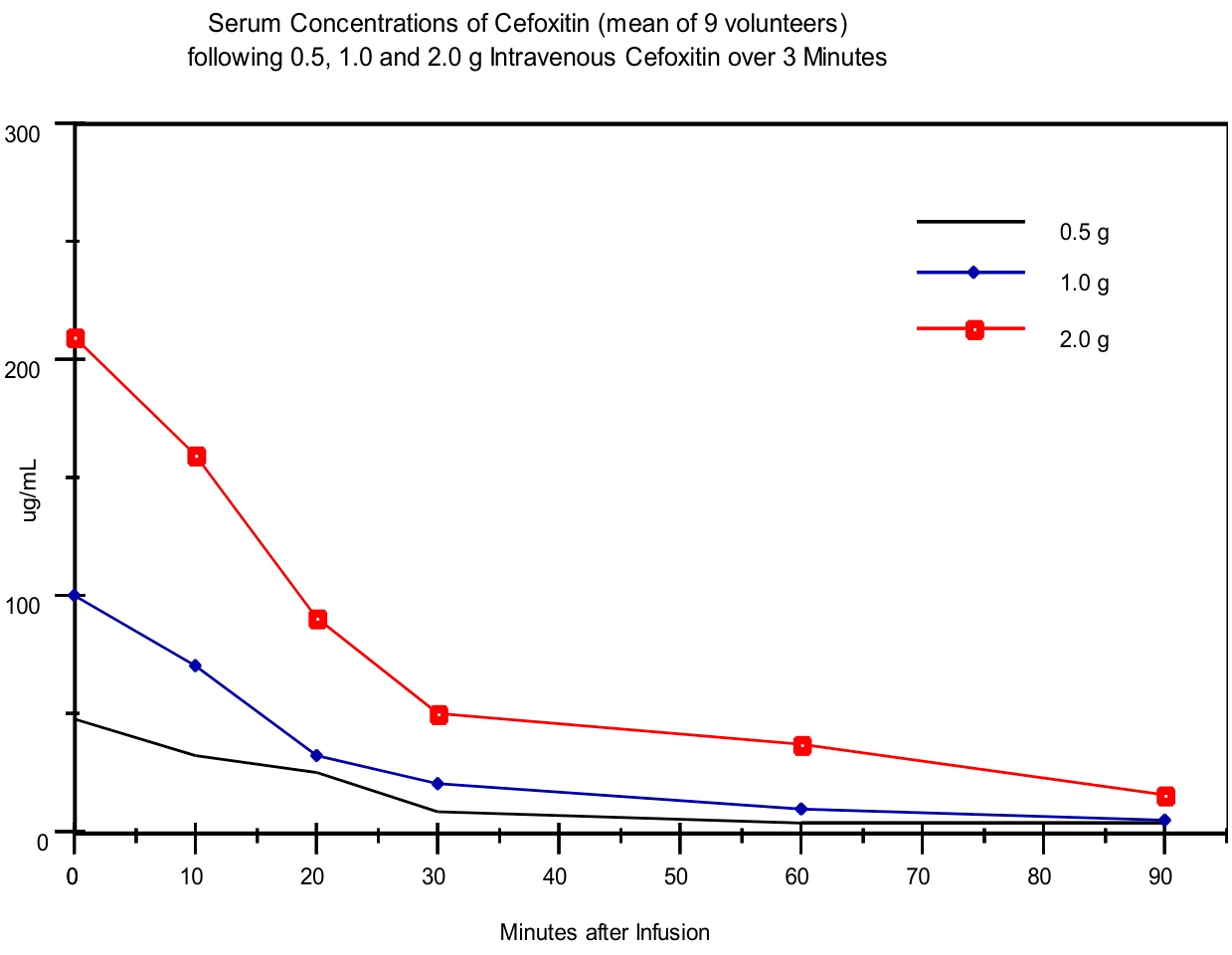
The mean (and range) peak serum concentrations of cefoxitin, after a single 0.5, 1.0 and 2.0 g I.V. dose of cefoxitin sodium administered over 3 minutes, were 47 µg/mL (25-69 µg/mL), 110 µg/mL (82-131µg/mL) and 221 µg/mL (119-318 µg/mL), respectively (see Figure 1).
The mean urinary recovery during a 12 hour collection period was approximately 78%, 77%, and 78% of the respective doses.
Figure 1:
Lower peak serum levels were achieved with a longer intravenous infusion period. After a 1.0 g infusion of cefoxitin over 3, 30, and 120 minutes the peak serum concentrations were 125 µg/mL, 72 µg/mL and 25 µg/mL, respectively (see Figure 2).
During a 12 hour collection period the mean values of total urinary recovery of 1.0 g of cefoxitin infused over 3, 30 and 120 min, were approximately 74% (0.74 g), 80% (0.80 g) and 76% (0.76 g), respectively, of the original dose.
Figure 2:
In summary, after intravenous administration over a 3-5 minute period, cefoxitin is rapidly distributed into plasma and has a serum half-life of 40-60 minutes.
Renal clearance of cefoxitin is reduced and serum levels are prolonged with pretreatment administration of probenecid. The terminal half-life with and without probenecid pretreatment was 83 minutes and 41 minutes (respectively) after 1.0 g of I.V. cefoxitin sodium (see Figure 3).
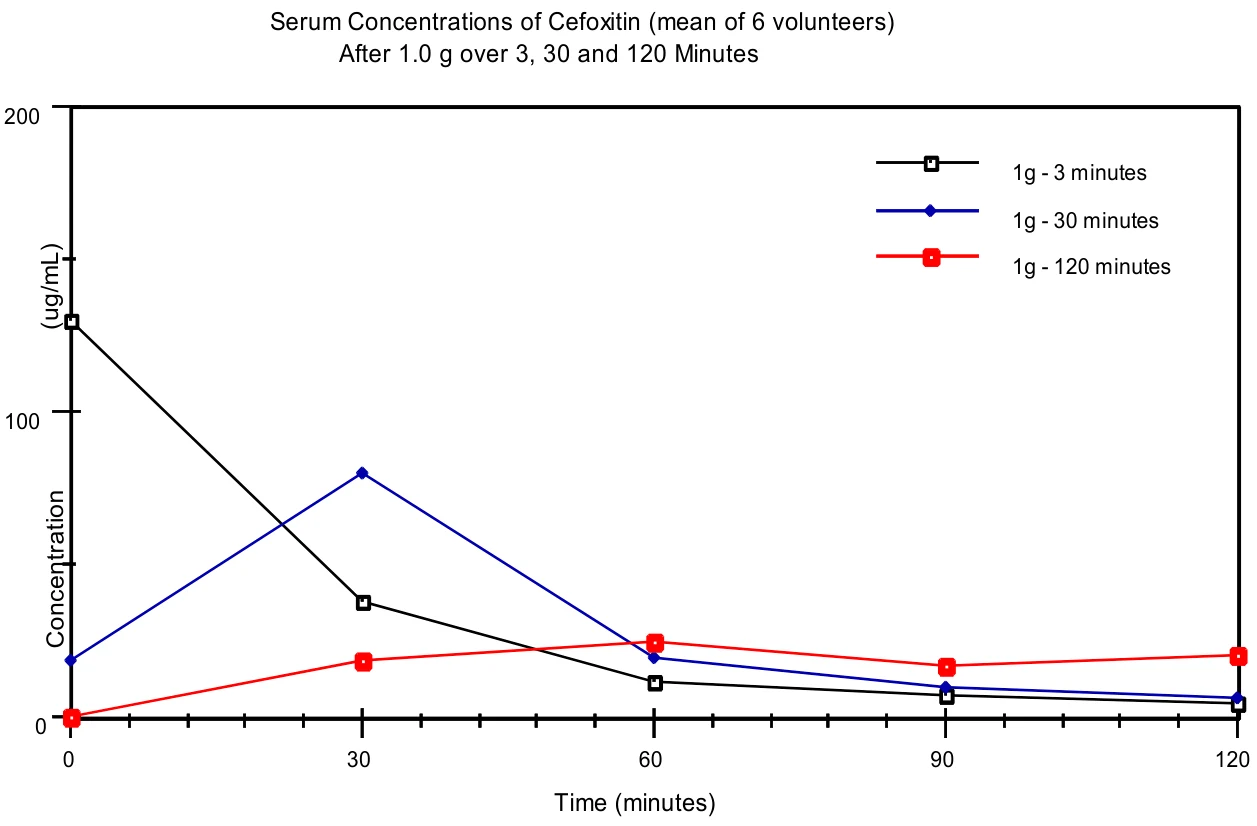
Figure 3:
120 90 60 30 0 0 50 100 150 1g Cefoxitin over 3 Minutes 1g Cefoxitin after Probenicid (1 g i.v.) Serum concentrations of Cefoxitin (mean of 6 volunteers) after 1.0 g over 3 minutes and preceded by 1.0 g Probenicid IV Time (minutes)
The mean urinary recovery was less in the first hour after administration with prior probenecid treatment (30.5% vs 54.6% without probenecid), but after 12 hours the recoveries were comparable (68.4% and 74.1%, respectively). (See Table 7).
Table 7: Urinary recovery (mg) of cefoxitin after 1 g I.V. over 3 minutes, alone or with prior probenecid.
| Hours | 0 - 1 | 1 - 2 | 2 - 3 | 3 - 4 | 4 - 12 | Total |
| Cefoxitin | 546 | 127 | 38 | 15 | 16 | 741 |
| Cefoxitin + Probenecid | 305 | 135 | 103 | 65 | 77 | 685 |
Intravenous Administration in Neonates and Infants
Pharmacokinetic and demographic data for pediatric patients are contained in the following table and figure:
Table 8: Pharmacokinetic and demographic data for pediatric patients
Group 1 Neonates (0-7 Days) | Group 2 Neonates (7 Days-1 Mo.) | Group 3 Infants (1-3 Mos.) | |
Number Age, mean (days) Dose, mean (mg/kg) Weight, mean (kg) Volume of distribution, mean (mL/kg) t½, mean ± SE (hours) | 19 1.1 (0 - 2)* 32.9 (29 - 40) 2.2 422 ± 52 5.6 ± 0.5 | 12 13.4 (7-26) 34.9 (30-40) 2.5 526 ± 108 2.5 ± 0.5 | 7 47.4 (33 -73) 30.3 (27-35) 3.2 482 ± 109 1.7 ± 0.4 |
*Range is in parentheses
Figure. 4:
Urinary Excretion and Concentrations in Adults
Cefoxitin is rapidly excreted intact into the urine by glomerular filtration, and renal tubular secretion; high urinary concentrations result. Renal clearance is greater than 250 mL/min/1.73m2 and about 75% of each dose administered is recovered within the first 3 hours after dosing. Approximately 75 to 90% of an intramuscular or intravenous dose of cefoxitin sodium is excreted over a 12- hour period and relatively high urinary concentrations result during this period, e.g., an average of 1105 µg/mL following 0.5 g I.M., 2208 µg/mL following 1.0 g I.M. and 6574 µg/mL following a 2.0 g I.V. dose. (See Table 9 for additional details).
10 8 6 4 2 0 0 20 40 60 80 100 Neonates 0-7 Days Neonates 7 Days - 1 Months Infants 1-3 Months Serum Concentrations of Cefoxitin vs. Time For Pediatric Age Groups Hours C onc entration (ug/mL)
Table 9: Mean total cefoxitin (mg) excreted in urine after single-dose administration of cefoxitin sodium for injection
| HOURS AFTER ADMINISTRATION | Total mg | % OF DOSE | |||||||
| 0-1 | 1-2 | 2-3 | 3-4 | 4-12 | |||||
1.0 g I.V. (3 min.) | 546 | 127 | 38 | 15 | 16 | 742 | 74.2% | ||
1.0 g I.V. (30 min.) | 542 | 174 | 45 | 19 | 20 | 800 | 80.0% | ||
2.0 g I.V. (3 min.) | 1396 | 325 | 150 | 46 | 62 | 1979 | 98.9% | ||
| 500 mg I.M. | 176 | 138 | 67 | 32 | 22 | 435 | 87.1% | ||
| 1.0 g I.M. | 425 | 263 | 100 | 58 | 56 | 902 | 90.2% | ||
Intramuscular Administration in Adults
After a single 0.5 and 1.0 g dose of cefoxitin sodium without lidocaine HCl a serum level of 10.2 and 19.4 µg/mL respectively was obtained within 10 minutes. A mean peak serum concentration of 10.9 and 22.5µg/mL respectively was attained. The mean terminal serum half-lives were 46 and 45 minutes respectively. The mean values of total urinary recovery after doses of 0.5 and 1.0 g were 87.1% (0.44 g) and 90.1% (0.90 g) of the dose during a 0-12 hour collection period (see Figure 5).
Figure 5:
When cefoxitin sodium was reconstituted for intramuscular injection with 0.5% or 1.0% lidocaine HCl, the lidocaine had no effect on the absorption or elimination of cefoxitin. After intramuscular administration, peak serum levels are achieved in 20-30 minutes and virtually all of the dose administered is available to the systemic circulation.
Fluid and Tissue Levels in Adults
Cefoxitin was detected in the following fluids and tissues.
Table 10 : Fluid and tissue levels in adults
Route and Dose Tissue or Fluid Concentrations
I.V. 2 g bolus Gallbladder tissue 26 µg/g
I.V. 2 g bolus Bile 127 µg/mL
I.V. 2 g multi-dose Bronchial secretions 1.5 - 3.75 µg/mL
I.V. 2 g multi-dose Pleural fluid 4 - 8 µg/mL
I.V. 2 g multi-dose Pus (liver abscess) 4 µg/mL
I.V. 2 g infusion Sputum 1.8 µg/mL
I.V. 1 g bolus Breast milk 5 - 6 mg/mL
240 210 180 150 120 90 60 30 00 0 10 20 30 Cefoxitin-0.5 g Cefoxitin-1.0g Serum Concentrations of Cefoxitin After Intramuscular Administration Minutes S erum C onc ent rat ion (ug/ mL)
Table 11: Multiple doses of CEFOXITIN FOR INJECTION (cefoxitin sodium) plus probenecid
| C.S.F. PROTEINS | |||||
| Normal | Elevated | ||||
I.V. 2 g bolus 4 hourly | Penetration in 3/6 patients (50%) C.S.F. 1.25 µg/mL serum 75 µg/mL | Penetration in 3/3 patients (100%) C.S.F. 5.0 µg/mL serum 80 µg/mL | |||
I.V. 2 g bolus with 0.5 g probenicid p.o. 4 hourly | Penetration in 7/7 patients (100%) C.S.F. 2.5 µg/mL serum 102 µg/mL | Penetration in 3/3 patients (100%) C.S.F. 2.5 µg/mL serum 66.6 µg/mL | |||
Multiple doses of CEFOXITIN FOR INJECTION (cefoxitin sodium) plus probenecid facilitates C.S.F. penetration and maintenance of higher levels.
Adults with Renal Impairment
Since cefoxitin is eliminated primarily by the kidneys, serum levels of cefoxitin are greatly prolonged in patients with renal insufficiency, particularly in those patients with creatinine clearance less than 30 mL/min. The following table presents data on the relationship between creatinine clearance and serum half-life of cefoxitin in patients with renal impairment who were given 30 mg/kg of cefoxitin in a 30-minute intravenous infusion:
Table 12: Data on the relationship between creatinine clearance and serum half-life of cefoxitin in patients with renal impairment
Creatinine Clearance mL/min.1.73 m2 | Serum Creatinine µg/mL | t½ hours | Cefoxitin Serum Concentration (µg/mL) | |||||||||||
| 10 min. | 30 | 60 | 120 | 240 | ||||||||||
| normal | 11.1 | 0.8 | 80 | 125 | 33 | 10 | 2 | |||||||
| 30-80 | 22.5 | 1.15 | 81 | 168 | 93 | 58 | 29 | |||||||
| 10-30 | 51.2 | 6.3 | 68 | 151 | 104 | 89 | 66 | |||||||
| <10 | 115.4 | 13.2 | 63 | 158 | 118 | 103 | 79 | |||||||
end stage renal function | 118.8 | 21.5a 3.7b | 74 | 189 | 147 | 114 | 108 | |||||||
a-Pre-dialysis
b-During Dialysis
- 11. Storage, Stability, and Disposal
CEFOXITIN FOR INJECTION should be stored at room temperature between 15 and 30ºC. Protect from light.
Reconstituted solution for intramuscular injection and intravenous injection should be used within 8 hours if kept at room temperature or 72 hours if stored under refrigeration (2-8ºC). The further diluted solutions for intravenous infusions should be used within 12 hours if kept at room temperature or 24 hours if stored under refrigeration (2-8ºC).
Part 2: Scientific Information
13. Pharmaceutical Information
Drug Substance
Non-proprietary name of the drug substance(s): Cefoxitin sodium
Chemical Name: Sodium 6(R)7(S)-3-(hydroxymethy)-7a-methoxy-8-oxo-7-
[2-(2-thienyl) acetamido]-5-thia-1-azabicyclo[4.2.0]oct-2-ene-2- carboxylate carbamate (ester).
Molecular formula and molecular mass: C16H16N3NaO7S2; 449.43
Structural Formula:
Physicochemical properties:
Cefoxitin sodium is a white to off-white granular or powder-like substance with a slight characteristic odor. Cefoxitin sodium solutions range from clear to a light amber color. It is very soluble in water and methanol, slightly soluble in ethanol and acetone and insoluble in ether or chloroform. Cefoxitin granules have a melting point of 149-150ºC. Each gram of cefoxitin sodium contains approximately 2.3 mEq of sodium.
The pH values of freshly constituted solutions range from 4.2 to 7.0.
14. Clinical Trials
Clinical trial information is not available.
15. Microbiology
In Vitro Susceptibility Results
The in vitro susceptibility of clinical isolates to cefoxitin is shown in the following table :
Cefoxitin is not active against Pseudomonas species, most strains of enterococci, many strains of Enterobacter cloacae, methicillin-resistant staphylococci and Listeria monocytogenes.
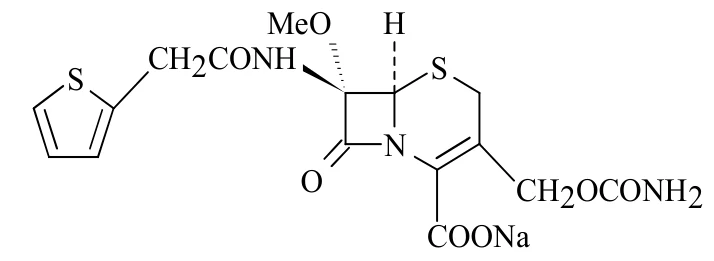
Table 13: Susceptibility of aerobic & anaerobic bacteria to cefoxitin cumulative percentage of strains inhibited by cefoxitin concentration (µg/mL)
| Organism | No. of Strains | 0.05 | 0.1 | 0.2 | 0.4 | 0.8 | 1.56 | 3.1 | 6.25 | 12.5 | 25 | 50 | 100 | 200 |
| Aerobes | ||||||||||||||
Gram-negative Acinetobacter calcoacetus Citrobacter sp. Enterobacter sp. Escherichia coli Haemophilus sp. Klebsiella pneumoniae Nesseria gonorrhoeae Proteus mirabilis Proteus (not P. mirabilis) Providencia sp. Pseudomonas aeruginosa Salmonella sp. Shigella sp. | 21 9 15 354 61 88 48 74 390 17 207 23 55 | 15 | 2 88 | 2 94 | 11 3 1 100 9 12 13 | 89 3 13 23 72 31 77 70 51 | 100 39 80 88 91 44 82 96 94 | 86 90 91 97 68 88 100 94 | 5 96 98 97 99 82 88 96 | 10 7 99 100 99 92 94 100 | 24 7 99 96 100 | 76 100 | 100 100 2 | |
Gram-Positive Staphylococcus aureus Staphylococcus epidermidis | 55 29 | 42 | 100 11 | 30 | 48 | 74 | 96 | 100 | ||||||
| Anaerobes | ||||||||||||||
Gram-negative Bacteroides fragilis Fusobacterium sp. | 50 11 | 3 46 | 6 55 | 9 64 | 48 73 | 79 82 | 84 | 97 | 97 | 100 | ||||
Gram-positive Clostridium perfringens Clostridium difficile Clostridium sp. Peptococcus sp. Peptostreptococcus Veillonella | 15 15 16 33 39 9 | 7 11 | 35 7 25 50 | 67 44 81 49 74 | 93 50 92 67 100 | 100 69 97 77 | 75 97 87 | 20 81 100 97 | 87 | 40 100 | 93 | 100 |
Beta-lactamase Stability
Cefoxitin is resistant to hydrolysis by Bacteroides fragilis, by beta-lactamase from Staphylococcus aureus (penicillinase), and by all types of beta-lactamases (Ia, Ib, Id, IIIa, IVc) from the Enterobacteriaceae family.
Susceptibility Testing
- a) Aerobes
Antibiotic susceptibility testing is recommended using the Kirby-Bauer or WHO disc methods using a disc 6 mm in diameter containing 30 µg of cefoxitin. For testing susceptibility to cefoxitin, the cefoxitin disc should be used.
In vitro tests have shown cefoxitin to have activity against certain strains of Enterobacteriaceae which were found resistant when tested with the cephalosporin class disc. Therefore, the cephalosporin disc should not be used for testing susceptibility to cefoxitin, and the cefoxitin disc should not be used for testing susceptibility to cephalosporins.
Note
Serratia marcescens strains should be tested by the broth dilution test to determine minimal inhibitory concentration.
- b) Anaerobes
For susceptibility testing of obligate anaerobes, tube or agar dilution methods are more applicable and should be used.
Organisms are considered to be susceptible according to the following table:
Aerobes: Zone (mm) Sensitivity
≥ 18 Susceptible
15-17 Intermediate susceptibility
≤ 14 Resistant
Anaerobes: MIC (ug/mL) Sensitivity
≤ 8 Susceptible
16 Intermediate susceptibility
≥ 32 Resistant
16. Non-Clinical Toxicology
Acute Toxicity
The acute toxicity data for cefoxitin is summarized below:
Table 14: Acute toxicity data for cefoxitin
| Species | Route | LD50 (g/kg) |
Mouse Rat-young adult Rat-weanling Rat-infant Rabbit | I.V. I.P. I.P. I.P. I.V. | 50 - 7.95 >10.0 >10.0 >5.0 >1.0 |
Signs of drug toxicity in mouse and rat included ataxia, bradypnea, stiff hind limbs and decreased activity, and were visible with all routes of administration. To alter the acute toxicity of carbenicillin or gentamicin, in mice, pretreatment with large doses of cefoxitin (>1.0 g/kg and greater) was required. Doses of 4 to 8 g/kg of cefoxitin were required pretreatment to alter the significant increase in toxicity of digoxin in mice. Because the doses of cefoxitin required are high, the interactions with carbenicillin, gentamicin and digoxin are probably of little clinical significance. Acute studies with aqueous solutions of cefoxitin sodium (100 mg/mL) showed no signs of irritation to the rabbit eye in acute studies and caused no hemolysis of dog erythrocytes (0.02 - 0.10 mg/mL) in vitro.
Acute Comparative Renal Studies
Single IV studies:
Acute I.V. injections of 100 to 1000 mg/kg of cefoxitin or cephalothin into mice, rats, rabbits, and monkeys showed no evidence of elevation in serum urea nitrogen or creatinine concentration. While there was no histologic damage to the kidney in rats or monkeys, a slight histologic damage was observed in rabbits.
The same experiment performed with single doses of cephaloridine of 80-480 mg/kg showed signs of renal lesions in rabbits and monkeys but not in mice or rats. Other studies have shown that pretreatment with furosemide (20 mg/kg I.V.) potentiates the severity of renal lesions in mice given 1250 to 5000 mg/kg of cephaloridine. However, several other studies revealed no renal lesions in mice given similar doses of cefoxitin or cephalothin, regardless of furosemide pretreatment.
Renal lesions were not observed in mice given single doses (up to 5000 mg/kg) of four lots of cefoxitin with or without pretreatment with furosemide. Slight renal lesions were seen in one mouse who received 5000 mg/kg of cefoxitin after pretreatment with furosemide.
Two other repeat studies were performed using the same lot. Very slight renal lesions were seen in only one mouse given 5000 mg/kg of cefoxitin after pretreatment with furosemide (20 mg/kg I.V.).
Subacute or Chronic Toxicity
Subcutaneous injections of 100 to 900 mg/kg/day of cefoxitin sodium were tolerated in rats and monkeys for periods as long as six months.
All animals displayed dose-related tissue damage at the site of injection which included necrosis, cavitation, hemorrhage, hemosiderosis, granulation and fibroplasia. At the highest dosage levels some anemia and weight loss was observed. Soft stool in monkeys and an increase in cecal size in rats were observed at all dosage levels. Detectable serum albumin levels were decreased at all doses in both studies performed.
A 27-week study performed on female monkeys where cefoxitin sodium was administered subcutaneously, showed an increase in both absolute and relative mean kidney weights. Gross or microscopic changes were not observed. A dose-related enlargement and discoloration of the inguinal, axillary and sublumbar lymph nodes were noted. These changes are associated with local tissue damage at the site of injection. A similar study performed on rats showed an increase in relative kidney weight in males receiving 300 and 900 mg/kg doses of cefoxitin. This was not accompanied by any gross or microscopic changes.
A 14-week intravenous study in monkeys revealed drug-related changes similar to the ones discussed above. The subcutaneous route was used for periods of 1 to 10 days because of difficulties with venipuncture. At doses of 300 mg/kg (in 1/6 monkeys) and 900 mg/kg (in 3/6 monkeys) small amounts of strainable lipid were detected in the cytoplasm of the proximal convoluted tubular epithelium. Other studies included the I.V. administration of 25 to 100 mg/kg/day and 100 to 900 mg/kg/day of cefoxitin sodium for eight and 30 days, respectively. Drug-related changes were observed only at high dosage levels. A low occurrence of soft stool was observed. Focal tubular dilation, inflammation, and cast formation in the kidney were seen in only one monkey treated with 900 mg/kg/day of cefoxitin sodium for 30 days.
One out of six rabbits receiving cefoxitin sodium I.V. in doses of 50 mg/kg/day and 4/6 rabbits receiving cefoxitin sodium I.V. in doses of 100 mg/kg/day showed small amounts of lipid and brownish cast in the tubular epithelium of the corticomedullary junction. Only one rabbit showed an elevation of serum creatinine and BUN levels.
A 9 day intravenous study performed on rabbits receiving 100 to 300 mg/kg/day of cefoxitin sodium showed various changes (anorexia, decreased water intake, weight loss, diarrhea, gastric esophageal ulcers, cecal edema and hemorrhage) over a 14-day observation period.
A 30-day or 14 week intramuscular study in adult beagles given 100 mg/kg/day of cefoxitin sodium displayed only inflammatory tissue changes at the injection site. Except for a decrease in detectable serum albumin, no other drug-related systemic changes were visible.
A 30-day subcutaneous study in beagle puppies given 200 or 400 mg/kg/day of cefoxitin sodium showed no treatment-related effects except for a decrease in detectable serum albumin. Changes observed with 800 mg/kg/day for 30 days and with 1600 mg/kg/day included tissue damage at the site of injection, increase in kidney weight, and a decrease in detectable serum albumin. A decrease in weight gain was observed in puppies receiving 1600 mg/kg/day of cefoxitin sodium. Only one puppy who received 1600 mg/kg/day of cefoxitin sodium showed small amounts of fat in tubular epithelium of the kidney cortex. All treatment-related changes were reversible upon discontinuation of drug.
Reproductive and developmental toxicology
No evidence of fetal toxicity or teratogenicity was observed in pregnant mice and pregnant rats receiving intravenous injections (100, 300 and 900 mg/kg/day of cefoxitin sodium) and intraperitoneal injections (100, 200 and 300 mg/kg/day of cefoxitin sodium) respectively, on days 6 through 15 of gestation. A minimal post-treatment natural weight gain of rats and a decrease of fetal weight were observed. Gestational time or pup survival were not adversely affected by subcutaneous administration of 300 to 900 mg/kg/day of cefoxitin sodium on day 15 of gestation to parturition. On days 4 and 13 post-partum a slight decrease (p<0.05) in average pup weight was observed, but the weight was similar to controls on day 21 postpartum. Subcutaneously repeated injections of cefoxitin sodium in a dose of 100 mg/kg/day in male rats for 70 consecutive days before mating had no adverse effect on fertility or reproductive performance. Repeated injections of cefoxitin sodium in a dose of 100 mg/kg/day subcutaneously in female rats 14 days before breeding continued to day 14 of gestation in 12 rats and to parturition in another 12 rats, revealed no adverse effects on fertility or reproductive performance, although a minimal increase in fetal resorption was observed.