


Product Monograph - Certican
Recent Major Label Changes
| 7 Warnings and Precautions, Hepatic/Biliary/Pancreatic | 08/2026 |
|---|
Table of Contents
Recent Major Label Changes ................................................................................................. 2
Table of Contents ................................................................................................................. 2
Part 1: Healthcare Professional Information.......................................................................... 5
- 1.
Indications..................................................................................................................... 5
1.1. Pediatrics .................................................................................................................... 5
1.2. Geriatrics .................................................................................................................... 5
- 2. Contraindications .......................................................................................................... 5
- 3. Serious Warnings and Precautions Box ........................................................................... 5
- 4.
Dosage and Administration ............................................................................................ 6
4.1. Dosing Considerations ............................................................................................... 6
4.2. Recommended Dose and Dosage Adjustment .......................................................... 6
4.4. Administration ........................................................................................................... 6
4.5. Missed Dose ............................................................................................................... 7
- 5. Overdose ....................................................................................................................... 7
- 6. Dosage Forms, Strengths, Composition, and Packaging .................................................. 7
- 7.
Warnings and Precautions ............................................................................................. 8
General ................................................................................................................................... 8
Carcinogenesis and Genotoxicity ........................................................................................... 8
Cardiovascular ........................................................................................................................ 8
Endocrine and Metabolism .................................................................................................... 8
Hematologic ........................................................................................................................... 9
Hepatic/Biliary/Pancreatic ..................................................................................................... 9
Immune ................................................................................................................................ 10
Monitoring and Laboratory Tests ......................................................................................... 10
Perioperative Considerations ............................................................................................... 12
Renal ..................................................................................................................................... 13
Reproductive Health ............................................................................................................. 13
Respiratory ........................................................................................................................... 13
Skin ....................................................................................................................................... 13
7.1. Special Populations .................................................................................................. 13
7.1.1. Pregnancy ......................................................................................................... 13
7.1.2. Breastfeeding ................................................................................................... 14
7.1.3. Pediatrics .......................................................................................................... 14
7.1.4. Geriatrics .......................................................................................................... 14
- 8.
Adverse Reactions ....................................................................................................... 14
8.1. Adverse Reaction Overview ..................................................................................... 14
8.2. Clinical Trial Adverse Reactions ............................................................................... 14
8.3. Less Common Clinical Trial Adverse Reactions ........................................................ 18
8.5. Post-Market Adverse Reactions ............................................................................... 20
- 9.
Drug Interactions ......................................................................................................... 20
9.2. Drug Interactions Overview ..................................................................................... 20
9.3. Drug-Behaviour Interactions .................................................................................... 20
9.4. Drug-Drug Interactions ............................................................................................ 21
9.5. Drug-Food Interactions ............................................................................................ 23
9.6. Drug-Herb Interactions ............................................................................................ 23
9.7. Drug-Laboratory Test Interactions........................................................................... 23
- 10.
Clinical Pharmacology .................................................................................................. 24
10.1. Mechanism of Action ............................................................................................... 24
10.2. Pharmacodynamics .................................................................................................. 24
10.3. Pharmacokinetics ..................................................................................................... 25
- 11. Storage, Stability, and Disposal .................................................................................... 27
- 12. Special Handling Instructions ....................................................................................... 27
Part 2: Scientific Information .............................................................................................. 28
- 13. Pharmaceutical Information ........................................................................................ 28
- 14.
Clinical Trials ............................................................................................................... 29
14.1. Clinical Trials by Indication ...................................................................................... 29
- 15. Microbiology ............................................................................................................... 32
- 16. Non-Clinical Toxicology ................................................................................................ 32
Patient Medication Information ......................................................................................... 41
Part 1: Healthcare Professional Information
1. Indications
PrCERTICAN® (everolimus) is indicated for:
- The prophylaxis of organ rejection in adult patients (18 years of age and over) at low to moderate immunologic risk receiving a renal transplant.
CERTICAN is to be administered with basiliximab induction concurrently with reduced doses of cyclosporine and corticosteroids. Therapeutic drug monitoring of everolimus and cyclosporine is recommended for all patients receiving these products.
1.1. Pediatrics
Pediatrics (< 18 years of age): The safe and effective use of CERTICAN in pediatric kidney transplant patients has not been established (see Pediatrics).
1.2. Geriatrics
Geriatrics (≥ 65 years of age): There is limited clinical experience on the use of CERTICAN in patients of age 65 or older. There is no evidence to suggest that elderly patients will require a different dosage recommendation from younger adult patients (see Geriatrics).
2. Contraindications
- CERTICAN is contraindicated in patients who are hypersensitive to everolimus, sirolimus or to any ingredients in the formulation, including any non-medicinal ingredient or component of the container. For a complete listing, see 6. Dosage Forms, Strenghts, Composition, and Packaging.
3. Serious Warnings and Precautions Box
- Increased susceptibility to infection and the possible development of malignancies such as lymphoma and skin cancer may result from immunosuppression. (see 7. Warnings and Precautions)
- Only physicians experienced in immunosuppressive therapy and management of organ transplant patients should use CERTICAN. Patients receiving the drug should be managed in facilities equipped and staffed with adequate laboratory and supportive medical resources. The physician responsible for maintenance therapy should have complete information requisite for the follow-up of the patient. (see 7. Warnings and Precautions)
- Increased nephrotoxicity can occur with standard doses of cyclosporine in combination with everolimus. Therefore, reduced doses of cyclosporine should be used in combination with everolimus in order to reduce renal dysfunction. It is important to) monitor the cyclosporine and everolimus whole blood trough concentrations. (see 4. Dosage and Administration, 7. Warnings and Precautions and 10. Clinical Pharmacology)
- A risk of kidney arterial and venous thrombosis resulting in graft loss, was reported mostly within the first 30 days post-transplantation. (see 7. Warnings and Precautions)
4. Dosage and Administration
4.1. Dosing Considerations
CERTICAN is for oral use only.
Treatment with CERTICAN should only be initiated and maintained by physicians who are experienced in immunosuppressive therapy following organ transplantation and who have access to everolimus whole blood levels monitoring.
4.2. Recommended Dose and Dosage Adjustment
Adult Kidney Transplant Patients
Dosage:
An initial everolimus dose of 0.75 mg orally twice daily 12 hours apart (1.5 mg /day) is recommended for adult kidney transplant patients in combination with reduced dose cyclosporine and corticosteroid. Adjust maintenance dose to achieve everolimus trough concentrations within the 3-8 ng/mL target range.
Pediatrics (< 18 years)
There are no adequate data of the use of CERTICAN in children and adolescents to support its use in patients in these age groups.
Geriatrics (≥ 65 years)
Clinical experience is limited in patients ≥ 65 years of age. A limited reduction in everolimus oral CL of 0.33% per year was estimated in adults (age range studied was 16-70 years. There are no apparent differences in the pharmacokinetics of everolimus in patients ≥ 65-70 years of age as compared with younger adults. There is no evidence to suggest that elderly patients will require a different dosage recommendation from younger adult patients.
Patients with Renal Impairment
No dosage adjustment is required (see 10.3 Pharmacokinetics).
Patients with Hepatic Impairment
For patients with mild hepatic impairment (Child-Pugh Class A), the dose should be reduced to approximately two-thirds of the normal dose. For patients with moderate hepatic impairment (Child-Pugh Class B), the dose should be reduced to approximately one half of the normal dose. For patients with severe hepatic impairment (Child-Pugh C) the dose should be reduced to at least one half of the normal dose. These recommended dose reductions are based on a single dose PK study. The efficacy and safety have not been established in these patient populations.
Everolimus whole blood trough levels (C0) should be closely monitored and everolimus dose should be adjusted based on blood concentration in patients with impaired hepatic function.
4.4. Administration
CERTICAN and cyclosporine should be administered as soon as possible after transplantation (see 7. Warnings and Precautions: Therapeutic Drug Monitoring and 14. Clinical Trials).
CERTICAN tablets should be swallowed whole with a glass of water and not crushed before use.
CERTICAN should be administered consistently with or without food at the same time as cyclosporine
Patients receiving everolimus may require dose-adjustments based on everolimus blood concentrations achieved, tolerability, individual response, change in concomitant medications and the clinical situation. Dose adjustments can be made at 4-5 day intervals. (see 7. Warnings and Precautions: Therapeutic Drug Monitoring). Oral prednisone should be initiated once oral medication is tolerated. Steroid doses may be further tapered on an individualized basis depending on the clinical status of patient and function of graft.
4.5. Missed Dose
Patients should be advised to take a missed dose as soon as possible and to take the next dose at its regular time. If it is almost time for their next dose, they should be advised to skip the missed dose, and never to take 2 doses at the same time.
5. Overdose
Reported experience with overdose in humans is very limited. There is a single case of an accidental ingestion of 1.5 mg everolimus in a 2-year-old child where no adverse events were observed. Single doses up to 25 mg have been administered to transplant patients with acceptable acute tolerability. Single doses up to 70 mg (without cyclosporine) have been given with acceptable acute tolerability.
General supportive measures should be followed in all cases of overdose.
Everolimus is not considered dialyzable to any relevant degree (<10% of everolimus removed within 6 hours of hemodialysis). In animal studies, everolimus showed a low acute toxic potential. No lethality or severe toxicity was observed after single oral doses of 2000 mg/kg (limit test) in either mice or rats.
| For the most recent information in the management of a suspected drug overdose, contact your regional poison control centre or Health Canada’s toll-free number, 1-844 POISON-X (1-844-764-7669). |
|---|
- 6. Dosage Forms, Strengths, Composition, and Packaging
Table 1 – Dosage Forms, Strengths and Composition
Description
CERTICAN tablets are available in 0.25 mg, 0.5 mg and 0.75 mg strengths.
CERTICAN 0.25 mg tablets are white to yellowish, marbled, round, flat with bevelled edge, engraved “C” on one side and “NVR” on the other.
| Route of Administration | Dosage Form/ Strength/Composition | Non-Medicinal Ingredients |
| Oral | Tablet 0.25 mg, 0.5 mg and 0.75 mg | butylated hydroxytoluene, crospovidone, hypromellose, lactose anhydrous, lactose monohydrate, magnesium stearate |
CERTICAN 0.5 mg tablets are white to yellowish, marbled, round, flat with bevelled edge, engraved “CH” on one side and “NVR” on the other.
CERTICAN 0.75 mg tablets are white to yellowish, marbled, round, flat with bevelled edge, engraved “CL” on one side and “NVR” on the other.
Packaging:
Each strength is available in boxes of 60 (6 blister strips of 10 tablets each).
7. Warnings and Precautions
See 3. Serious Warnings and Precautions Box
General
CERTICAN is intended for oral administration only. Regular monitoring of renal function is recommended in all patients. Appropriate adjustment of the immunosuppressive regimen, in particular reduction of the cyclosporine dose should be considered in patients with elevated serum creatinine levels. Caution should be exercised when co-administering other medicinal products that are known to have a deleterious effect on renal function.
CERTICAN has not been studied in patients with severe hepatic impairment. Close monitoring of everolimus whole blood trough levels (C0) in patients with impaired hepatic function is therefore recommended.
Patients administered CERTICAN with an HMG-CoA reductase inhibitor and/or fibrate should be monitored for the possible development of adverse effects as described in the 4. Dosage and Administration section (see also 9.4 Drug-Drug Interactions).
Patients with rare hereditary problems of galactose intolerance, the Lapp lactase deficiency or glucose-galactose malabsorption should not take CERTICAN, as this may result in diarrhea and malabsorption.
Carcinogenesis and Genotoxicity
Patients receiving immunosuppressants, including everolimus, are at increased risk of developing lymphomas and other malignancies, particularly of the skin (see 3. Serious Warnings and Precautions Box). The risk appears to be related to the intensity and duration of immunosuppression rather than to the use of any specific agent.
As usual for patients with increased risk for skin cancer, exposure to sunlight and ultraviolet light should be limited by wearing protective clothing and using sunscreen with a high protection factor (see 8. Adverse Reactions).
Cardiovascular System
Leucocytoclastic vasculitis has been reported in patients treated with mTOR inhibitors, including patient receiving CERTICAN. The condition resolved after discontinuation of the drug.
Endocrine and Metabolism
Hyperlipidemia
Increased serum cholesterol and triglycerides, requiring the need for anti-lipid therapy, have been reported to occur following initiation of everolimus and the risk of hyperlipidemia is increased with higher everolimus whole blood trough concentrations (see Adverse Events). Use of anti-lipid therapy may not normalize lipid levels in patients receiving CERTICAN.
Any patient who is administered everolimus should be monitored for hyperlipidemia. If detected, interventions, such as diet, exercise, and lipid-lowering agents should be initiated as outlined by the National Cholesterol Education Program guidelines. The risk/benefit should be considered in patients with established hyperlipidemia before initiating an immunosuppressive regimen containing everolimus. Similarly, the risk/benefit of continued everolimus therapy should be re-evaluated in patients with severe refractory hyperlipidemia. Everolimus has not been studied in patients with baseline cholesterol levels >350 mg/dL.
Due to an interaction with cyclosporine, clinical trials of everolimus and cyclosporine in kidney transplant patients strongly discouraged patients from receiving the HMG-CoA reductase inhibitors simvastatin and lovastatin. During everolimus therapy with cyclosporine, patients administered an HMG-CoA reductase inhibitor and/or fibrate should be monitored for the possible development of rhabdomyolysis and other adverse effects, as described in the respective labeling for these agents (see 9.4 Drug-Drug Interactions).
New onset diabetes mellitus
CERTICAN has been shown to increase the risk of new onset diabetes mellitus after transplant. Blood glucose concentrations should be monitored closely in patients treated with CERTICAN.
Hematologic
Increased Risk of Hemolytic Uremic Syndrome/Thrombotic Thrombocytopenic Purpura/Thrombotic Microandiopathy (HUS/TTP/TMA)
The concomitant use of CERTICAN with a calcineurin inhibitor (CNI) may increase the risk of CNI-induced hemolytic uremic syndrome, thrombotic thrombocytopenic purpura and thrombotic microangiopathy (see 8. Adverse Reactions).
Hepatic/Biliary/Pancreatic
Liver function impairment
Everolimus whole blood trough levels (C0) are increased in patients with moderate impaired hepatic function. Therefore, the blood level should be closely monitored and everolimus dose should be adjusted based on blood concentration in the patients.
Interaction with Strong Inhibitors and Inducers of CYP3A4
Co-administration with strong CYP3A4-inhibitors (e.g., ketoconazole, itraconazole, voriconazole, clarithromycin, telithromycin, ritonavir) and strong inducers (e.g., rifampicin, rifabutin, St. John’s wort, carbamazepine, phenytoin) is not recommended without close monitoring of everolimus whole blood trough levels (see 9.4 Drug-Drug Interactions).
Monitoring of whole blood trough levels (C0) of everolimus is recommended whenever inducers or inhibitors of CYP3A4 are co-administered or discontinued (see 9. Drug Interactions).
Immune
Management of Immunosuppression
In limited data with the complete elimination of CNI (calcineurin inhibition), there was an increased risk of acute rejection.
Serious and opportunistic infections
Patients receiving immunosuppressants, including everolimus, are at increased risk of developing bacterial, viral, fungal, and protozoal infections, including opportunistic infections. These infections may lead to serious, including fatal, outcomes. Because of the danger of over immunosuppression of the immune system which can cause increased susceptibility to infection, combination immunosuppressant therapy should be used with caution (see 8. Adverse Reactions).
Polyoma Virus Infections
Patients receiving immunosuppressants, including everolimus, are at increased risk for opportunistic infections, including BK virus associated nephropathy and JC virus associated progressive multifocal leukoencephalopathy (PML) (see 3. Serious Warnings and Precautions Box).
BK virus-associated nephropathy (BKVAN) has been observed in patients receiving everolimus. BKVAN is associated with serious outcomes; including deteriorating renal function and renal graft loss (see 8. Adverse Reactions). Patient monitoring may help detect patients at risk for BK virus-associated nephropathy. Reductions in immunosuppression should be considered for patients who develop evidence of BK virus-associated nephropathy.
Vaccinations
The use of live vaccines and close contact with those who have received live vaccines should be avoided during treatment with CERTICAN (see 9. Drug Interactions).
Monitoring and Laboratory Tests
Therapeutic Drug Monitoring - Everolimus
Routine everolimus whole blood therapeutic drug concentration monitoring is recommended for all patients using appropriate assay methodology. Based on exposure-efficacy and exposure-safety analysis, patients achieving everolimus whole blood trough levels (C0) ≥3.0 ng/mL have been found to have a lower incidence of biopsy-proven acute rejection in renal transplantation than patients whose trough levels (C0) are below 3.0 ng/mL. The recommended upper limit of the therapeutic range is 8 ng/mL. These recommended ranges for everolimus are based on chromatographic methods (see 10. Clinical Pharmacology). Careful attention should be made to clinical signs and symptoms, tissue biopsies, and laboratory parameters.
It is especially important to monitor everolimus blood concentrations, in patients with hepatic impairment, during concomitant administration of CYP3A4 inducers or inhibitors, when switching cyclosporine formulations and/or when cyclosporine dosing is reduced according to recommended target concentrations (see 10. Clinical Pharmacology).
Optimally, dose adjustments of everolimus should be based on trough concentrations (C0) obtained 4 or 5 days after a previous dosing change. There is an interaction of cyclosporine with everolimus, and consequently, everolimus concentrations may decrease if cyclosporine exposure is reduced (see 9. Drug Interactions).
Therapeutic Drug Monitoring – Cyclosporine
Both cyclosporine doses and the target range for whole blood trough concentrations should be reduced, when given in a regimen with everolimus, in order to reduce the risk of nephrotoxicity (see 7. Warnings and Precautions and 9. Drug Interactions, 10. Clinical Pharmacology).
Renal transplantation: recommended target cyclosporine blood trough-level windows
| Target cyclosporine C0 (ng/mL) | Month 1 | Months 2-3 | Months 4-5 | Months 6-12 |
| CERTICAN groups | 100-200 | 75-150 | 50-100 | 25-50 |
(see 10.2 Pharmacodynamics for measured levels).
Cyclosporine, should be initiated as soon as possible – and no later than 48 hours - after reperfusion of the graft and dose adjusted to target concentrations from Day 5 onwards.
In renal transplantation, there are limited data regarding dosing everolimus with reduced cyclosporine trough concentrations of 25-50 ng/mL after 12 months. Prior to dose reduction of cyclosporine it should be ascertained that steady-state everolimus whole blood trough concentration is at least 3 ng/mL. There is an interaction of cyclosporine on everolimus, and consequently, everolimus concentrations may decrease if cyclosporine exposure is reduced (see 9.4 Drug-Drug Interactions).
The median trough concentrations observed in the clinical trial are listed in Table 2 below:
Table 2 - Study A2309: Measured trough blood levels of cyclosporine and everolimus
| Trough levels (ng/mL) | CERTICAN group (low dose cyclosporine) | MPA (standard cyclosporine) | |||||||||||||||
|---|---|---|---|---|---|---|---|---|---|---|---|---|---|---|---|---|---|
| CERTICAN 1.5 mg | MYFORTIC®* 1.44 g | ||||||||||||||||
| Cyclosporine | C0 level | C2 level | C0 level | C2 level | |||||||||||||
| Day 7 | 195 ± 106 | 847 ± 412 | 239 ± 130 | 934 ± 438 | |||||||||||||
| Month 1 | 173 ± 84 | 770 ± 364 | 250 ± 119 | 992 ± 482 | |||||||||||||
| Month 3 | 122 ± 53 | 580 ± 322 | 182 ± 65 | 821 ± 273 | |||||||||||||
| Month 6 | 88 ± 55 | 408 ± 226 | 163 ± 103 | 751 ± 269 | |||||||||||||
| Month 9 | 55± 24 | 319 ± 172 | 149 ± 69 | 648 ± 265 | |||||||||||||
| Month 12 | 55 ± 38 | 291 ± 155 | 137 ± 55 | 587± 241 | |||||||||||||
| Everolimus | (Target C0 3-8) | ||||||||||||||||
| Day 7 | 4.5 ± 2.3 | - | - | ||||||||||||||
| Month 1 | 5.3 ± 2.2 | - | - | ||||||||||||||
| Month 3 | 6.0 ± 2.7 | - | - | ||||||||||||||
| Month 6 | 5.3 ± 1.9 | - | - | ||||||||||||||
| Month 9 | 5.3 ± 1.9 | - | - | ||||||||||||||
| Month 12 | 5.3 ± 2.3 | - | - | ||||||||||||||
| Numbers are mean ± SD of measured values with C0 = trough-level, C2 = value 2 hours post-dose. | |||||||||||||||||
Perioperative Considerations
Wound healing and Fluid Accumulation
Everolimus, like other m-TOR inhibitors, delays wound healing and increases the occurrence of wound-related complications like wound dehiscence, wound infection, incisional hernia, lymphocele and seroma. These wound-related complications may require more surgical intervention. Generalized fluid accumulation, including peripheral edema (e.g. lymphoedema) and other types of localized fluid collection, such as pericardial and pleural effusions and ascites have also been reported.
Renal Function/Nephrotoxicity
In renal and cardiac transplant, Everolimus with standard dose cyclosporine increases the risk of nephrotoxicity resulting in a lower glomerular filtration rate. Reduced doses of cyclosporine are required for use in combination with everolimus in order to reduce renal dysfunction. (See 7. Warnings and Precautions, 3. Serious Warnings and Precautions Box, 1. Indications, 10. Clinical Pharmacology) Renal function should be monitored during the administration of everolimus in combination with cyclosporine. Consider switching to other immunosuppressive therapies if renal function does not improve after dose adjustments or if the dysfunction is thought to be drug related. Caution should be exercised when using other drugs which are known to impair renal function.
Proteinuria
The use of CERTICAN with calcineurin inhibitors (CNI) in transplant recipients has been associated with increased proteinuria. The risk increases with higher everolimus blood levels.
In renal transplant patients with mild proteinuria while on maintenance immunosuppressive therapy including a CNI there have been reports of worsening proteinuria when the CNI is replaced by CERTICAN. Reversibility has been observed with interruption of CERTICAN and reintroduction of the CNI. The safety and efficacy of conversion from CNI to CERTICAN in such patients have not been established. Patients receiving CERTICAN should be monitored for proteinuria.
Renal graft thrombosis
A risk of kidney arterial and venous thrombosis, resulting in graft loss, has been reported, mostly within the first 30 days post-transplantation (see 7. Warnings and Precautions, 3. Serious Warnings and Precautions Box).
Renal
See Perioperative considerations
Reproductive Health
Fertility
Male infertility
There is literature reports of reversible azoospermia and oligospermia in patients treated with mTOR inhibitors. Preclinical toxicology studies having shown that everolimus can reduce spermatogenesis, male infertility must be considered a potential risk of prolonged CERTICAN therapy.
Respiratory
Interstitial Lung Disease/ Non-Infectious Pneumonitis
Cases of interstitial lung disease, implying lung intraparenchymal inflammation (pneumonitis) and/or fibrosis of non-infectious etiology, some fatal, have occurred in patients receiving rapamycins and their derivatives, including CERTICAN. A diagnosis of interstitial lung disease (ILD) should be considered in patients presenting with symptoms consistent with infectious pneumonia but not responding to antibiotic therapy and in whom infectious, neoplastic and other non-drug causes have been discounted through appropriate investigations. Mostly, the condition resolves after discontinuation of CERTICAN and/or addition of glucocorticoids. Fatal cases have been reported (see 8. Adverse Reactions).
Skin
CERTICAN has been associated with the development of angioedema. In the majority of cases reported patients were receiving ACE inhibitors as co-medication.
7.1. Special Populations
7.1.1. Pregnancy
Because everolimus is embryo/fetal toxic in animal studies, it may cause fetal harm when administered to pregnant women. In animal studies, embryo/fetal toxicity is manifested as mortality, malformation, and reduced fetal weights (see 16. Non-Clinical Toxicology: Reproductive and Developmental Toxicology section).
There are no adequate and well-controlled studies of everolimus use in pregnant women. Consequently, use of everolimus during pregnancy should not be considered unless the potential benefit outweighs the potential risk to the embryo/fetus. Highly effective contraception must be used before beginning everolimus therapy, during everolimus therapy and for 8 weeks after everolimus has been stopped.
7.1.2. Breastfeeding
It is not known whether everolimus is excreted in human milk. Everolimus and/or its metabolites readily transferred into milk of lactating rats at a concentration 3.5 times higher than in maternal serum. Because many drugs are excreted in human milk and because of the potential for serious adverse reactions in nursing infants from everolimus, women should avoid breast-feeding during treatment with CERTICAN (see 10. Clinical Pharmacology).
7.1.3. Pediatrics
Pediatrics (< 18 years of age): The safe and effective use of CERTICAN in pediatric kidney transplant patients has not been established (see Pediatrics).
7.1.4. Geriatrics
Geriatrics (≥ 65 years of age): There is limited clinical experience on the use of CERTICAN in patients of age 65 or older. There is no evidence to suggest that elderly patients will require a different dosage recommendation from younger adult patients (see Geriatrics).
8. Adverse Reactions
8.1. Adverse Reaction Overview
The most common (>20%) adverse events from clinical trial data from de novo kidney transplant patients treated with CERTICAN include peripheral edema, constipation, hypertension, nausea, anemia, urinary tract infection, and hyperlipidemia.
8.2. Clinical Trial Adverse Reactions
Clinical trials are conducted under very specific conditions. Therefore, the frequencies of adverse reactions observed in the clinical trials may not reflect frequencies observed in clinical practice and should not be compared to frequencies reported in clinical trials of another drug.
The data described below reflect exposure to everolimus in an open-label, randomized trial of de novo kidney transplant patients of concentration-controlled everolimus at an initial starting dose of 1.5 mg per day (target trough concentrations 3 to 8 ng/mL with reduced doses of cyclosporine (n=274) compared to mycophenolic acid (n=273) with standard doses of cyclosporine. All patients received basiliximab induction therapy and corticosteroids. The population was between 18 and 70 years; more than 43% were 50 years of age or older. More than 63% of all recipients were male and more than 64% were Caucasian. Demographic characteristics were comparable between treatment groups. The most frequent diseases leading to transplantation were balanced between groups and included hypertension/nephrosclerosis, glomerulonephritis/glomerular disease and diabetes mellitus.
Adverse reactions were systematically collected in this trial.
In this clinical trial, significantly more patients discontinued everolimus 1.5 mg/day treatment (83/277, 30.0%) than discontinued the control regimen (60/277, 21.7%). Of those patients who prematurely discontinued treatment, most discontinuations were due to adverse events: 18.1% in the everolimus group compared to 9.4% in the control group (p-value= 0.004). This difference was primarily driven by significant differences between treatment groups among female patients. In those patients discontinuing study medication adverse events were collected up to 7 days after study medication discontinuation and serious adverse events up to 30 days after study medication discontinuation.
The overall incidences of Serious Adverse Events were 56.6% in the everolimus group and 53.8 % in the MYFORTIC* group. Infections and infestations reported as SAEs had the highest incidence in both groups (19.7% in the everolimus group and 25.3% in the control group). The difference was mainly due to the higher incidence of viral infections in the MYFORTIC group, mainly CMV and BK virus infections. Injury, poisoning and procedural complications reported as SAEs had the second highest incidence in both groups (14.2% in the everolimus group and 11.7% in the control group) followed by renal and urinary disorders (10.2% in the everolimus group and 13.2% in the control group) and vascular disorders (9.5% in the everolimus group and 7.3% in the control group).
A total of 13 patients died during the first 12 months of study; 7 (2.5%) in the everolimus group and 6 (2.2%) in the control group. The most common causes of death across the study groups were related to cardiac conditions and infections.
There were 12 (4.3%) graft losses in the everolimus group and 9 (3.2%) in the control group over the 12 month study period. Of the graft losses, 4 were due to renal artery and 2 due to renal vein thrombosis in the everolimus group (2.2%) compared to 2 renal artery thromboses in the control group (0.7%) (see 7. Warnings and Precautions).
Infections
The overall incidence of bacterial, fungal and viral infections reported as adverse events was higher in the control group (68%) compared to the everolimus group (64%) and was primarily due to an increased number of viral infections (21% in the control group and 10% in the everolimus group). The incidence of cytomegalovirus (CMV) infections reported as adverse events was 8.4% in the control group compared to 1.1% in the everolimus group; and 3% of the serious CMV infections in the control group versus 0% in the everolimus group (see 7. Warnings and Precautions).
BK Virus
BK virus infections were lower in incidence in the everolimus group (2 patients, 0.7%) compared to the control group (11 patients, 4.0%). One of the two BK virus infections in the everolimus group and two of the 11 BK virus infections in the control group were also reported as SAEs. BK virus infections did not result in graft loss in any of the groups.
Wound Healing and Fluid Collections
Wound healing-related events were identified through a retrospective search and request for additional data. The overall incidence of wound-related events, including lymphocele, seroma, hematoma, dehiscence, incisional hernia, and infections was 35% in the everolimus group compared to 26% in the control group. More patients required intraoperative repair debridement or drainage of incisional wound complications and more required drainage of lymphoceles and seromas in the everolimus group compared to control.
Adverse events due to major fluid collections such as edema and other types of fluid collections was 45% in the everolimus group and 40% in the control group. (see 7. Warnings and Precautions)
Neoplasms
Adverse events due to malignant and benign neoplasms were reported in 3.3% of patients in the everolimus group and 5.9 % in the control group. The most frequently reported neoplasms in the study were basal cell carcinoma, Squamous cell carcinoma, skin papilloma and seborrhoeic keratosis. One patient in the everolimus group who underwent a melanoma excision prior to transplantation died due to metastatic melanoma (see 3. Serious Warnings and Precautions Box and 7. Warnings and Precautions).
New onset diabetes mellitus (NODM)
Although reported diabetes-related adverse events had similar incidences in the two groups, NODM based on adverse event reporting and random serum glucose values tended to be higher in the everolimus group than in the control group (9.1% v. 6.6%).
Endocrine Effects in Males
In the everolimus group, serum testosterone levels significantly decreased while the FSH levels significantly increased without significant changes being observed in the control group. In both the everolimus and the control groups mean testosterone and FSH levels remained within the normal range with the mean FSH level in the everolimus group being at the upper limit of the normal range (11.1 U/L). More patients were reported with erectile dysfunction in the everolimus treatment group compared to the control group (5.1% compared to 2.1% respectively).
Table 3 compares the incidence of treatment-emergent adverse events reported with an incidence of ≥ 10% for patients receiving everolimus with reduced dose cyclosporine or mycophenolic acid with standard dose cyclosporine, or the same incidence as for the comparator in case the event is known as an adverse drug reaction of the comparator. Within each MedDRA system organ class, the adverse reactions are presented in order of decreasing frequency.
Table 3 – Incidence Rates of Frequent (≥10% in Any Treatment Group) Adverse Events by Primary System Organ Class and Preferred Term
| Primary system organ class/ Preferred Term | CERTICAN (everolimus) 1.5 mg With reduced dose cyclosporine n = 274 (%) | MYFORTIC* (mycophenolic acid) 1.44 g With standard dose cyclosporine n = 273 (%) |
| Any Adverse Events* | 271 (98.9) | 270 (98.9) |
|---|---|---|
| Blood lymphatic system disorders | 93 (33.9) | 111 (40.7) |
| Anemia | 70 (25.5) | 68 (24.9) |
| Leukopenia | 8 (2.9) | 33 (12.1) |
| Gastrointestinal disorders | 196 (71.5) | 207 (75.8) |
| Constipation | 105 (38.3) | 117 (42.9) |
| Nausea | 79 (28.8) | 85 (31.1) |
| Diarrhea | 51 (18.6) | 54 (19.8) |
| Vomiting | 40 (14.6) | 60 (22.0) |
| Abdominal pain | 36 (13.1) | 42 (15.4) |
| Dyspepsia | 12 (4.4) | 31 (11.4) |
| Abdominal pain upper | 9 (3.3) | 30 (11.0) |
| General disorders and administrative site conditions | 181 (66.1) | 160 (58.6) |
| Edema peripheral | 123 (44.9) | 108 (39.6) |
| Pyrexia | 51 (18.6) | 40 (14.7) |
| Fatigue | 25 (9.1) | 28 (10.3) |
| Infections and Infestations | 169 (61.7) | 185 (67.8) |
| Urinary tract infection | 60 (21.9) | 63 (23.1) |
| Upper respiratory tract infection | 44 (16.1) | 49 (17.9) |
| Injury, poisoning and procedural complications | 163 (59.5) | 163 (59.7) |
| Incision site pain | 45 (16.4) | 47 (17.2) |
| Procedural pain | 40 (14.6) | 37 (13.6) |
| Investigations | 137 (50.0) | 133 (48.7) |
| Blood creatinine increased | 48 (17.5) | 59 (21.6) |
| Metabolism and Nutrition disorders | 222 (81.0) | 199 (72.9) |
| Hyperlipidemia | 57 (20.8) | 43 (15.8) |
| Hyperkalemia | 49 (17.9) | 48 (17.6) |
| Hypercholesterolemia | 47 (17.2) | 34 (12.5) |
| Dyslipidemia | 41 (15.0) | 24 (8.8) |
| Hypomagnesemia | 37 (13.5) | 40 (14.7) |
| Hypophosphatemia | 35 (12.8) | 35 (12.8) |
| Hyperglycemia | 34 (12.4) | 38 (13.9) |
| Hypokalemia | 32 (11.7) | 32 (11.7) |
| Musculoskeletal and connective tissue disorders | 112 (40.9) | 105 (38.5) |
| Pain in extremity | 32 (11.7) | 29 (10.6) |
| Back pain | 30 (10.9) | 28 (10.3) |
| Nervous system disorders | 92 (33.6) | 109 (39.9) |
| Headache | 49 (17.9) | 40 (14.7) |
| Psychiatric disorders | 90 (32.8) | 72 (26.4) |
| Insomnia | 47 (17.2) | 43 (15.8) |
| Renal and urinary disorders | 112 (40.9) | 124 (45.4) |
| Hematuria | 33 (12.0) | 33 (12.1) |
| Dysuria | 29 (10.6) | 28 (10.3) |
| Respiratory, thoracic and mediastinal disorders | 86 (31.4) | 93 (34.1) |
| Cough | 20 (7.3) | 30 (11.0) |
| Vascular disorders | 122 (44.5) | 124 (45.4) |
| Hypertension | 81 (29.6) | 82 (30.0) |
* As reported in the safety analysis population defined as all randomized patients who received at least one dose of treatment and had at least one post-baseline safety assessment.
A third treatment group of everolimus 3.0 mg per day (1.5 mg twice daily; target trough concentrations 6 to 12 ng/mL) with reduced-dose cyclosporine was included in the study described above. Although as effective as the lower dose everolimus group, the overall safety was worse and consequently higher doses of everolimus cannot be recommended. Out of 279 patients, 95 (34.1%) discontinued the study medication with 57 (20.4%) doing so because of adverse events. The most frequent adverse events leading to discontinuation of everolimus when used at this higher dose were injury, poisoning and procedural complications (everolimus 1.5 mg: 5.1%, everolimus 3.0 mg: 7.2%, and control: 2.2%), infections (1.5%, 6.1%, and 2.9% respectively), renal and urinary disorders (4.0%, 6.5%, and 3.7% respectively) and gastro-intestinal disorders (1.1%, 2.5%, and 2.2%).
Adverse events reported in either of the everolimus groups notably more frequently (5% or more) than in the MPA control group included: anemia (everolimus 1.5 mg: 25.5%, everolimus 3 mg: 30.9%, control: 24.9%), acne (9.5%, 14.7% and 8.4% respectively), dyslipidemia (15.0%, 12.9%, and 8.8%), hypercholesterolemia (17.2%, 18.0% and 12.5%), hyperlipidemia (20.8%, 21.6%, and 15.8%), lymphocele (7.7%, 12.2% and 5.9%), peripheral edema (44.9%, 43.2% and 39.6%), proteinuria (9.1%, 12.9% and 7.3%), and stomatitis/mouth ulceration (8.4%, 7.9%, and 2.6%).
8.3. Less Common Clinical Trial Adverse Reactions
Less common adverse events (* indicates evidence to suggest a possible or probable link to treatment, i.e. may be adverse reactions), occurring in ≥1% to <10% of patients treated with everolimus include:
Blood and Lymphatic System Disorders: leukocytosis, leucopenia, lymphadenopathy, thrombocythemia, thrombocytopenia*, coagulopathy*, Thrombotic Microangiopathy (TMA), Thrombotic Thrombocytopenic Purpura (TTP), and Hemolytic Uremic Syndrome (HUS)*
Cardiac and Vascular Disorders: angina pectoris, atrial fibrillation, cardiac failure congestive, palpitations, tachycardia, hypertension including hypertensive crisis*, hypotension, venous thrombosis including deep vein thrombosis*, graft thrombosis*, epistaxis, lymphocele
Endocrine Disorders: Cushingoid, hyperparathyroidism
Eye Disorders: cataract, vision blurred
Gastrointestinal Disorders: abdominal pain*, abdominal distention, dyspepsia, dysphagia, epigastric discomfort, gastroesophageal reflux disease, gingival hypertrophy, hematemesis, hemorrhoids, ileus, mouth ulceration, oropharyngeal pain, peritonitis, stomatitis*, pancreatitis*
General Disorders and Administrative Site Conditions: chest discomfort, chest pain, chills, fatigue, malaise, edema including generalized edema*, impaired healing*, pain
Hepatobiliary Disorders: hepatic enzyme increased, bilirubin increased*
Infections and Infestations: Viral, bacterial and fungal infections*, including: pneumonia, sepsisurinary tract infection, BK virus infection, bacteremia, bronchitis, candidiasis, cellulitis, folliculitis, gastroenteritis, influenza, nasopharyngitis, onychomycosis, oral candidiasis, osteomyelitis, pneumonia, sinusitis, tinea pedis, urethritis, urinary tract infection, wound infection, herpes infections, conjunctivitis
Injury Poisoning and Procedural Complications: incision site complications including infections*, perinephric collection*, seroma*, wound dehiscence*, incisional hernia, perinephric hematoma, localized intraabdominal fluid collection*, lymphocele*, lymphorrhea*
Metabolism and Nutrition Disorders: blood urea increased, acidosis, anorexia, dehydration, diabetes mellitus*, fluid retention, gout, hypercalcemia, hypercholesterolemia*, hyperphosphatemia, hypertriglyceridemia, hyperuricemia, hypocalcemia, hypoglycemia, hyponatremia, iron deficiency, vitamin B12 deficiency
Musculoskeletal and Connective Tissues Disorders: arthralgia, joint swelling, muscle spasms, muscular weakness, musculoskeletal pain, myalgia*, osteonecrosis, osteopenia, osteoporosis, spondylitis
Nervous System Disorders: dizziness, hemiparesis, hypoaesthesia, paresthesia, somnolence, syncope, tremor*
Psychiatric Disorders: agitation, anxiety, depression, hallucination
Renal and Urinary Disorders: bladder spasm, hydronephrosis, micturition urgency, nephritis interstitial, pollakiuria, polyuria, proteinuria*, pyuria, renal artery thrombosis, acute renal failure, renal impairment, urinary retention, renal tubule necrosis*
Reproductive System and Breast Disorders: erectile dysfunction*, ovarian cyst, scrotal edema
Respiratory, Thoracic, Mediastinal Disorders: atelectasis, cough, dyspnea, nasal congestion, pleural effusions*, pulmonary edema, rhinorrhea, sinus congestion, wheezing
Skin and Subcutaneous Tissue Disorders: alopecia, dermatitis acneiform, hirsutism, hyperhydrosis, hypertrichosis, skin neoplasm (malignant and unspecified), night sweats, pruritus, rash* angioneurotic edema*
Less common, serious adverse events (<1%) include:
- hemolysis*
- pancytopenia*
- male hypogonadism
- hepatic disorders*, hepatitis*, jaundice*
- interstitial lung disease/Non-infectious Pneumonitis*, pulmonary alveolar proteinosis*
- leukocytoclastic vasculitis*
The combination of fixed dose everolimus and standard doses cyclosporine in previous clinical trials resulted in frequent elevations of serum creatinine with higher mean and median serum creatinine values was observed than in the current study with reduced doses of cyclosporine. These results indicate that everolimus increases the cyclosporine-induced nephrotoxicity; and therefore should only be used in a concentration-controlled regimen with reduced doses of cyclosporine.
8.5. Post-Market Adverse Reactions
Reporting rates determined on the basis of spontaneously reported post marketing adverse drug events are generally presumed to underestimate the risks associated with drug treatment. Following adverse events have been reported spontaneously during post marketing period of CERTICAN. The causal relationship to CERTICAN cannot be excluded for spontaneously reported events. Adverse drug reactions are listed according to system organ classes in MedDRA. Within each system organ class, ADRs are presented in order of decreasing seriousness.
The events reported here include events observed in non-renal transplant recipients (heart or liver transplantation), and events labeled for everolimus in oncology indications.
Cardiac disorders: Pericardial effusion (specifically reported after heart transplantation)
Vascular disorders: Leukocytoclastic vasculitis
Respiratory, thoracic and mediastinal disorders: Pulmonary alveolar proteinosis
Skin and subcutaneous disorders: Erythroderma
9. Drug Interactions
9.2. Drug Interactions Overview
Everolimus is mainly metabolized by CYP3A4 in the liver and to some extent in the intestinal wall and is a substrate for the multidrug efflux pump, P-glycoprotein. Therefore, absorption and subsequent elimination of systemically absorbed everolimus may be influenced by medicinal products that affect CYP3A4 and/or P-glycoprotein. Concurrent treatment with strong inhibitors and inducers of CYP3A4 is not recommended. Moderate inducers of CYP3A4 may increase the metabolism of everolimus and decrease everolimus blood levels (see Table 4). Inhibitors of P-glycoprotein may decrease the efflux of everolimus from intestinal cells and increase everolimus blood concentrations. In vitro, everolimus was a competitive inhibitor of CYP3A4 and of CYP2D6, potentially increasing the concentrations of medicinal products eliminated by these enzymes. Thus, caution should be exercised when co-administering everolimus with CYP3A4 and CYP2D6 substrates with a narrow therapeutic index (see 7. Warnings and Precautions: Therapeutic Drug Monitoring).
All In-vivo interaction studies were conducted without concomitant cyclosporine. Pharmacokinetic interactions between everolimus and concomitantly administered drugs are discussed below. Drug interaction studies have not been conducted with drugs other than those described below.
9.3. Drug-Behaviour Interactions
As with other immunosuppressive agents, owing to potential risk of malignant skin changes, exposure to sunlight and ultraviolet light (UV) should be limited by wearing protective clothing and using sunscreen with a high protection factor.
9.4. Drug-Drug Interactions
The drugs listed in this table are based on drug interaction case reports, drug interaction studies, or potential drug interactions due to the expected magnitude and seriousness of the interaction (i.e., those identified as contraindicated). This table is not all inclusive.
Table 4 – Established or Potential Drug-Drug Interactions
| Non-proprietary name(s) of the drug product(s) | Source of evidence | Effect | Clinical comment |
| Non-proprietary name(s) of the drug product(s) | Source of evidence | Effect | Clinical comment |
| Non-proprietary name(s) of the drug product(s) | Source of evidence | Effect | Clinical comment |
| P-gp Inhibitors | |||
Immunosuppressants: Cyclosporine* | CT | -The steady-state Cmax and AUC estimates of everolimus were significantly increased by co-administration of cyclosporine. Everolimus had a clinically minor influence on cyclosporine PK in transplant patients receiving cyclosporine. -Increase in everolimus exposure is expected with P-gp inhibitors. | Dose adjustment of everolimus might be needed if the cyclosporine dose is altered (see 4. Dosage and Administration). |
| Strong CYP3A4 inducers | |||
Antimycobacterials: Rifampin* Rifabutin Anticonvulsants: Carbamazepine Phenytoin Herbal Products: St. John’s wort (Hypericum perforatum) | CT, T | -Rifampin increased everolimus clearance nearly 3-fold and decreased the everolimus Cmax by 58% and AUC estimates. -Decrease in everolimus exposure is expected with strong CYP3A4 inducers. | Co-administration of everolimus with strong CYP3A4 inducers is not recommended (see 7. Warnings and Precautions). |
| Strong CYP3A4 inhibitors | |||
Antifungal Agents: Ketoconazole* Itraconazole Voriconazole Anti-infectives: Erythromycin* Clarithromycin Telithromycin Ritonavir | CT, T | -Ketoconazole increased single dose estimates of everolimus Cmax, AUC and half-life. -Erythromycin increased single dose estimates of everolimus Cmax, AUC and half-life. -Increase in everolimus exposure is expected with strong CYP3A4 inhibitors. | If erythromycin is co-administered, everolimus blood concentrations should be monitored and a dose adjustment made as necessary. Co-administration of everolimus with strong CYP3A4 inhibitors is not recommended (see 7. Warnings and Precautions). |
| CYP3A4 and/or P-gp substrates | |||
Calcium channel blockers: Verapamil* | CT | Verapamil increased single dose estimates of everolimus Cmax and AUC. Everolimus half-life was not changed. | If verapamil is co-administered, everolimus blood concentrations should be monitored and a dose adjustment made as necessary. |
HMG-CoA reductase inhibitors: Atorvastatin* Pravastatin * Simvastatin Lovastatin | CT, T | -No clinically relevant pharmacokinetic interaction was observed with atorvastatin or pravastatin. -In the presence of cyclosporine, the risk of interaction with everolimus is increased with simvastatin and lovastatin. | Patients should be monitored for the development of rhabdomyolysis and other adverse events as described in the respective labeling for these products (see 7. Warnings and Precautions). Concomitant use of simvastatin or lovastatin with everolimus in kidney transplant patients receiving cyclosporine was strongly discouraged in clinical studies. |
Sedatives/hypnotics: Midazolam* | CT | Everolimus resulted in a 1.25-fold increase in midazolam Cmax (90% CI, 1.14–1.37) and a 1.30-fold increase in AUCinf (1.22–1.39). The half-life of midazolam was unaltered. | Dose adjustment of midazolam is not necessary when co-administered with everolimus. |
Somatostatin receptor agonist: Octreotide* | CT | Everolimus increased octreotide Cmin with a geometric mean ratio (everolimus/placebo) of 1.47-fold. | |
Legend: CT = Clinical Trial; T = Theoretical; *These interactions were evaluated in clinical studies
Moderate inhibitors of CYP3A4/P-gp may increase everolimus blood concentrations (e.g., fluconazole; macrolide antibiotics; nicardipine, diltiazem; nelfinavir, indinavir, amprenavir). Moderate Inducers of CYP3A4/P-gp may increase the metabolism of everolimus and decrease everolimus blood concentrations (e.g., phenobarbital, efavirenz, nevirapine).
Vaccination:
Immunosuppressants may affect the response to vaccination and vaccination during treatment with CERTICAN may therefore be less effective (see 7. Warnings and Precautions). The use of live vaccines should be avoided; examples include (not limited to) the following: intranasal influenza, measles, mumps, rubella, oral polio, BCG, yellow fever, varicella, and TY21a typhoid vaccines.
9.5. Drug-Food Interactions
Grapefruit and grapefruit juice inhibit cytochrome P450 3A4 and P-gp activity and should therefore be avoided with concomitant use of everolimus and cyclosporine (see 10. Clinical Pharmacology).
9.6. Drug-Herb Interactions
St. John's Wort (Hypericum perforatum) is a strong inducer of CYP3A4 and P-glycoprotein. Since everolimus is a substrate for both CYP3A4 and P-glycoprotein, concomitant use of St. John's Wort may reduce everolimus whole blood concentrations. Co-administration of CERTICAN with St. John's Wort is not recommended.
9.7. Drug-Laboratory Test Interactions
Interactions with laboratory tests have not been established.
10. Clinical Pharmacology
10.1. Mechanism of Action
CERTICAN (everolimus) is an orally active proliferation inhibitor and a macrolide immunosuppressant [40-O-(2-hydroxyethyl)-rapamycin] which is derived by chemical modification of the natural product rapamycin, which is a secondary macrolide metabolite produced by certain strains of Streptomyces hygroscopicus.
The immunosuppressive activity of everolimus results from its ability to inhibit the interleukin-stimulated proliferation and clonal expansion of antigen-activated T and B lymphocytes.
In cells, everolimus binds to a cytoplasmic protein, the FK506 Binding Protein-12 (FKBP-12), to form the active immunosuppressive principle. That is, the everolimus: FKBP-12 complex binds to and inhibits the mammalian Target Of Rapamycin (mTOR), a key regulatory kinase and central controller of cell growth and proliferation. In the presence of everolimus phosphorylation of p70 S6 ribosomal protein kinase (p70S6K), a substrate of mTOR, is inhibited. Consequently, phosphorylation of the ribosomal S6 protein and subsequent protein synthesis are prevented which results in cell cycle arrest and inhibition of cell proliferation. The everolimus: FKBP-12 complex has no effect on calcineurin activity.
10.2. Pharmacodynamics
Preclinical Pharmacology
Everolimus inhibits antigenic and interleukin (IL-2 and IL-15) stimulated activation and proliferation of T and B lymphocytes.
Everolimus shows potent immunosuppressive activity in vitro. In animal models, including non-human primate models, everolimus effectively prevents allograft rejection resulting in prolonged graft survival (orthotopic kidney, heterotopic heart, and unilateral lung allotransplantation in the rat; orthotopic kidney and unilateral lung allotransplantation in cynomolgus monkeys). It is also able to reverse ongoing allograft rejection as shown in rat unilateral lung allotransplantation.
In animal models, including non-human primate models, everolimus effectively prevents allograft rejection resulting in prolonged graft survival (orthotopic kidney, heterotopic heart, and unilateral lung allotransplantation in the rat; orthotopic kidney and unilateral lung allotransplantation in cynomolgus monkeys). It is also able to reverse ongoing allograft rejection as shown in rat unilateral lung allotransplantation. In vitro experiments and rat transplantation studies indicate synergistic immunosuppressive activity of everolimus and cyclosporine. The combination of everolimus and cyclosporine has also been demonstrated to be considerably more effective in cynomolgus monkey models of unilateral lung allotransplantation than either compound alone.
Everolimus has further the ability to inhibit growth factor-stimulated proliferation of vascular smooth muscle cells. Growth factor-stimulated vascular smooth muscle cell proliferation, which is triggered by injury to endothelial cells and leads to neointima formation, plays a key role in the pathogenesis of chronic rejection as defined by allograft nephropathy and cardiac allograft vasculopathy. Preclinical experiments with everolimus show inhibition of neointima formation in a rat aorta allotransplantation model. Everolimus is also found to inhibit the key events involved in restenotic lesion formation following vascular injury in multiple species including rats, rabbits, and pigs.
In addition, everolimus prevents the growth of Epstein-Barr virus-transformed lymphoma lines both in vitro and in mouse models. It has antifungal activity against clinically relevant yeasts (e.g., a number of Candida spp., including Candida albicans, Cryptococcus neoformans), but is inactive against the filamentous pathogens (Aspergillus fumigatus).Everolimus does not have significant effect on nerve system and on the cardiovascular system.
10.3. Pharmacokinetics
CERTICAN, the everolimus tablet, shows: rapid absorption, dose proportionality, and a good correlation between trough and exposure (area under the curve [AUC]). Everolimus has a short half-life, and an intracellular distribution pattern with potential impact on neuro- and nephrotoxicity.
Everolimus pharmacokinetics have been characterized after oral administration of single and multiple doses to adult kidney transplant patients, hepatically-impaired patients and healthy subjects.
Pharmacokinetics in Kidney Transplant Patients
Steady-state is reached by day 4 with an accumulation in blood levels of 2- to 3-fold compared with the exposure after the first dose.
At steady-state for the recommended starting dose of 0.75 mg bid, the pre-dose trough blood concentration (Cmin) averages 4.1 ± 2.1 ng/mL, Cmax averages 11.1 ± 4.6 ng/mL, and AUC averages 75 ± 31 ng.h/mL. Based on a population pharmacokinetic analysis oral clearance (CL/F) is 8.8 L/h (27 % interpatient variation) and the central distribution volume (Vc/F) is 110 L (36 % interpatient variation). Residual variability in blood concentration is 31 %.
Table 5 – Pharmacokinetic Parameters of Everolimus in Kidney Transplant Patients (mean +/- SD) Following Administration of 0.75mg Twice Daily
| Cmax | Tmax | Half-life (t½) | AUC | CL/F1 | Vc/F1 |
| 11.1 + 4.6 ng/mL | 1-2 h | 30 + 11h | 75 + 31 ng.h/mL | 8.8 L/h | 110 L |
1 Pharmacokinetic population analysis of everolimus from pooled studies RADB251 and RADB201
The half-life estimates from 12 maintenance renal transplant patients who received single doses of everolimus capsules at 0.75 mg or 2.5 mg with their maintenance cyclosporine regimen indicate that the pharmacokinetics of everolimus are linear over the clinically-relevant dose range. Results indicate the half-life of everolimus in maintenance renal transplant patients receiving single doses of 0.75 mg or 2.5 mg everolimus during steady-state cyclosporine treatment was 30 ± 11 hours (range 19-53 hours).
Absorption
After oral administration, peak everolimus concentrations occur 1 to 2 h post dose. Over the dose range of 0.5 mg to 2 mg bid, everolimus Cmax and AUC are dose proportional in transplant patients at steady-state.
Food Effect
In 24 healthy subjects, a high-fat breakfast (44.5 g fat) reduced everolimus Cmax by 60%, delayed tmax by a median 1.3 hours, and reduced AUC by 16% compared with a fasting administration. To minimize variability, everolimus should be taken consistently with or without food.
Distribution
The blood-to-plasma ratio of everolimus is concentration dependent ranging from 17% to 73% over the range of 5 ng/mL to 5000 ng/mL. Plasma protein binding is approximately 74% in healthy subjects and in patients with moderate hepatic impairment. The apparent distribution volume associated with the terminal phase (Vz/F) from a single-dose pharmacokinetic study in maintenance kidney transplant patients is 342 + 107 L (range 128 to 589 L).
Metabolism
Everolimus is a substrate of CYP3A4 and P-glycoprotein. Following oral administration, it is the main circulating component in human blood. Six main metabolites of everolimus have been detected in human blood, including three monohydroxylated metabolites, two hydrolytic ring-opened products, and a phosphatidylcholine conjugate of everolimus. These metabolites were also identified in animal species used in toxicity studies, and showed approximately 100-times less activity than everolimus itself. Hence, the parent substance is considered to contribute the majority of the overall pharmacological activity of everolimus.
Elimination
After a single dose of radiolabeled everolimus was given to transplant patients receiving cyclosporine, the majority (80%) of radioactivity was recovered from the feces and only a minor amount (5%) was excreted in urine. Parent drug was not detected in urine and feces.
Special populations and conditions
- Pediatrics
The safety and effective use of CERTICAN in pediatric kidney transplant patients has not been established.
- Geriatrics
A limited reduction in everolimus oral CL of 0.33% per year was estimated in adults (age range studied was 16 to 70 years. There is no evidence to suggest that elderly patients will require a different dosage recommendation from younger adult patients.
- Ethnic origin
Based on analysis of population pharmacokinetics, oral clearance (CL/F) is, on average, 20% higher in Black transplant patients.
- Hepatic Insufficiency
Relative to the AUC of everolimus in subjects with normal hepatic function, the average AUC in 6 patients with mild hepatic impairment (Child-Pugh Class A) was 1.6-fold higher; in two independently studies groups of 8 and 9 patients with moderate hepatic impairment (Child-Pugh Class B) the average AUC was 2.1-fold and 3.3-fold higher; and in 6 patients with severe hepatic impairment (Child-Pugh Class C) the average AUC was 3.6- fold higher. Mean half-lives were 52, 59, and 78 hours in mild, moderate, and severe hepatic impairment. The prolonged half-lives delay the time to reach steady-state everolimus blood levels
Everolimus whole blood trough levels (C0) should be closely monitored and everolimus dose should be adjusted based on blood concentration in patients with moderate impaired hepatic function.
- Renal Insufficiency
Post-transplant renal function (creatinine clearance range 11-107 mL/min) did not affect the pharmacokinetics of everolimus.
- 11. Storage, Stability, and Disposal
Store between 15-30°C in the original package. Protect from light and moisture.
Keep out of the reach and sight of children.
12. Special Handling Instructions
None
Part 2: Scientific Information
13. Pharmaceutical Information
Drug Substance
Non-proprietary name of the drug substance(s): Everolimus
Chemical name: (1R,9S,12S,15R,16E,18R,19R,21R,23S,24E,26E,28E,30S,32S,35R)-1,18-Dihydroxy-12-{(1R)-2-[(1S, 3R, 4R)-4-(2-hydroxyethoxy)-3-methoxycyclohexyl]-1-methylethyl}-19,30-dimethoxy-15,17,21,23, 29,35-hexamethyl-11,36-dioxa-4-azatricyclo [30.3.1.04,9]-hexatriaconta-16,24,26,28-tetraene-2,3,10,14,20-pentaone
Molecular formula and molecular mass: C53H83NO14 / 958.2
Structural formula:
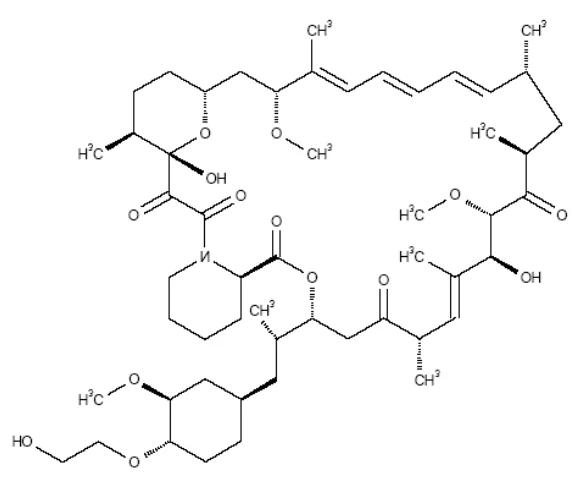
Physicochemical properties:
Physical description:
White to faintly white powder
Solubility:
The drug substance is practically insoluble in water, but it is soluble in organic solvents.
pH:
Because the solubility in water is very low (<0.01 %) the pH of an aqueous solution was not determined. The pH value of 0.1 % suspension of several batches in 1 % aqueous solution of KNO3 were measured and the values lie in the range 4-6.
pKa:
No pKa value can be determined (neutral compound).
Partition Coefficient:
Because of the low solubility of everolimus stabilized with BHT in water and in aqueous buffers, the partition coefficient could not be determined.
Melting Point:
Not applicable since the drug substance is amorphous.
14. Clinical Trials
14.1. Clinical Trials by Indication
Prevention of Organ Rejection after Renal Transplantation
Table 6 – Summary of Patient Demographics for Clinical Trials in Renal Transplantation
| Study # | Study design | Dosage, route of administration and duration | Study subjects (n) | Age (range) | Sex |
| A2309 | Multicenter, randomized, open-label, non-inferiority study of efficacy and safety comparing concentration-controlled CERTICAN with reduced NEORAL versus 1.44 g MYFORTIC* with standard dose NEORAL in de novo renal transplant recipients | Dosage: 0.75 mg BID Route of administration: oral Duration: 24 months | N= 554 | Mean age: 46.5 Range: 18-70 | Females: 33.9% Males: 65.9% |
The study population was comprised of Caucasians (69.1%), Blacks (13.2%), Asians (12.3%) and a limited proportion of Native Americans (0.2%).
The most frequent diseases leading to end stage renal disease were hypertension/nephrosclerosis (17.1%), diabetes mellitus (15.2%), and glomerulonephritis/glomerular disease (15.0%). The majority of patients were receiving hemodialysis at the time of transplantation, and approximately one-half had not had a previous blood transfusion. Over one-half of patients had at least one HLA mismatch at the A, B and DR loci and over 70% of patients had more than 3 mismatches. The mean percentage of panel reactive antibodies was 1.5% (most recent evaluation) and 3.7% (peak evaluation). Donor mean age was 41.6 years. Donors were predominantly Caucasian (70.4%), Black (8.1%) and Asian (11.4%). The majority of organs came from living donors (53.2%).
A Phase III, multi-national, open-label, randomized (1:1:1) trial was conducted comparing two concentration-controlled everolimus regimens of 1.5 mg per day starting dose (targeting 3-8 ng/mL) and 3.0 mg per day starting dose (targeting 6-12 ng/mL) with reduced doses of cyclosporine and corticosteroids, to 1.44 gm per day of mycophenolic acid (MPA) with standard doses of cyclosporine and corticosteroids. The mean cyclosporine starting dose was 5.2, 5.0 and 5.7 mg/kg body weight/day in the everolimus 1.5 mg, 3.0 mg and in mycophenolic acid groups respectively. The cyclosporine dose in everolimus group was then adjusted to the blood trough concentration ranges indicated in Table 6, whereas in the MYFORTIC group the target ranges were 200 to 300 starting Day 5: 200 to 300 ng/mL, and 100 to 250 ng/mL from Month 2 to Month 12.
All patients received basiliximab induction therapy. The study population consisted of 18-70 year old male and female low to moderate risk renal transplant recipients undergoing their first transplant. Low to moderate immunologic risk was defined in the study as an ABO blood type compatible first organ or tissue transplant recipient with anti-HLA Class I PRA <20% by a complement dependant cytotoxicity-based assay, or <50% by a flow cytometry or ELISA-based assay, and with a negative T-cell cross match. Eight hundred thirty-three (833) patients were randomized after transplantation; 277 randomized to the everolimus 1.5 mg per day group, 279 to the everolimus 3.0 mg per day group and 277 to the MYFORTIC* 1.44 gm per day group. The study was conducted at 79 renal transplant centers across Europe, South Africa, North and South America, and Asia-Pacific. At 12 months, there were no major baseline differences between treatment groups with regard to recipient or donor disease characteristics. The majority of transplant recipients in all groups (70-76%) had three or more HLA mismatches; mean percentage of panel reactive antibodies ranged from 0.9% to 2.0%. The rate of premature treatment discontinuation at 12-months was 30% v. 22% in the everolimus 1.5 mg and MYFORTIC* groups, respectively (p=0.03, Fisher’s exact test) and was driven by significant differences between groups among female patients. Results at 12-months indicated that everolimus 1.5 mg per day is comparable to MYFORTIC* with respect to efficacy failure, defined as treated biopsy-proven acute rejection, graft loss, death or loss to follow-up. The percentage of patients experiencing this endpoint and each individual variable in the everolimus and MYFORTIC* groups is shown in Table 5. The incidence of efficacy failure was 25.3% and 24.2% in the everolimus and MYFORTIC* groups respectively.
Table 7 – Results of Key Endpoints at 6 and 12 Months in Subjects with Renal Transplantation (incidence in ITT population) in A2309 Study.
| CERTICAN 1.5 mg N=277 % (n) | MPA 1.44 g N=277 % (n) | |||||||||||||
6 months | 12 months | 6 months | 12 months | |||||||||||
| Composite endpoint (1o criterion) | 19.1 (53) | 25.3 (70) | 18.8 (52) | 24.2 (67) | ||||||||||
Difference % (CERTICAN - MPA) 95% CI | 0.4% (-6.2, 6.9) | 1.1% (-6.1, 8.3) | - - | - - | ||||||||||
| Individual endpoints (2o criteria) | ||||||||||||||
| Treated BPAR | 10.8 (30) | 16.2 (45) | 13.7 (38) | 17.0 (47) | ||||||||||
| Graft loss | 4.0 (11) | 4.3 (12) | 2.9 (8) | 3.2 (9) | ||||||||||
| Death | 2.2 (6) | 2.5 (7) | 1.1 (3) | 2.2 (6) | ||||||||||
| Loss to follow-up | 3.6 (10) | 4.3 (12) | 1.8 (5) | 3.2 (9) | ||||||||||
| Combined endpoints (2o criteria) | ||||||||||||||
| Graft loss / Death | 5.8 (16) | 6.5 (18) | 4.0 (11) | 5.4 (15) | ||||||||||
| Graft loss / Death / Loss to FU | 9.4 (26) | 10.8 (30) | 5.8 (16) | 8.7 (24) | ||||||||||
The calculated mean glomerular filtration rate (using the MDRD equation) for everolimus 1.5 mg (target trough concentrations 3 to 8 ng/mL) and mycophenolic acid were comparable at Day 7 (48.69 vs 45.85), Month 1 (59.67 vs 55.89), Month 6 (57.20 vs 52.11) respectively, and at Month 12 in the ITT population (Table 6). However, urine protein results (Table 7) indicate that everolimus combined with cyclosporine is potentially associated with an increased incidence of sub-nephropathy.
Table 8 - Renal function (MDRD calculated GFR) at 12 months (ITT population)
| CERTICAN 1.5 mg N=277 | MPA 1.44 g N=277 | |
| 12-month mean GFR (mL/min/1.73 m2) | 54.6 | 52.2 |
Difference in mean (everolimus - MPA) 95% CI | 2.37 (-1.7, 6.4) | - - |
Table 9 - Study A2309: Urinary protein to creatinine ratio
| Category of proteinuria (mg/mmol) | |||||||||||
| Treatment | normal %(n) (<3.39) | mild %(n) (3.39-<33.9) | sub-nephrotic %(n) (33.9-<339) | nephrotic %(n) (>339) | |||||||
| Month 12 (TED) | CERTICAN 1.5 mg | 0.4 (1) | 64.2 (174) | 32.5 (88) | 3.0 (8) | ||||||
| MPA 1.44 g | 1.8 (5) | 73.1 (198) | 20.7 (56) | 4.1 (11) | |||||||
1 mg/mmol = 8.84 mg/g TED: Treatment endpoint (Mo 12 value or last observation carried forward) | |||||||||||
Two earlier studies compared fixed doses of everolimus 1.5 mg per day and 3 mg per day, without therapeutic drug monitoring, combined with standard doses of cyclosporine and corticosteroids to mycophenolate mofetil 2.0 gm per day and corticosteroids. Antilymphocyte antibody induction was prohibited in both studies. Both were multicenter, double-blind (for first 12 months), randomized trials (1:1:1) of 588 and 583 de novo renal transplant patients, respectively. The 12 month analysis of GFR showed increased rates of renal impairment in both the everolimus groups compared to the mycophenolate mofetil group in both studies. Therefore, reduced doses of cyclosporine should be used in combination with everolimus in order to avoid renal dysfunction and everolimus trough concentrations should be adjusted using therapeutic drug monitoring to maintain trough concentrations between 3 to 8 ng/mL. (see 3. Serious Warnings and Precautions Box, 4. Dosage and Administration and 7. Warnings and Precautions).
The co-primary composite endpoints were efficacy failure (biopsy-proven acute rejection, graft loss, death or loss to follow-up) at 6 months and graft loss, death or loss to follow-up at 12 months. CERTICAN was, overall non-inferior to MMF in these trials. In the B201 study, the incidence of biopsy-proven acute rejection at 6 months in the CERTICAN 1.5 mg/day, CERTICAN 3 mg/day and MMF groups was 21.6%, 18.2%, and 23.5%, respectively. In the B251 study the incidences for the CERTICAN 1.5 mg/day, CERTICAN 3 mg/day and MMF groups was 17.1%, 20.1%, and 23.5%, respectively. Drug concentration-pharmacodynamic analysis showed that renal function could be improved with reduced exposure to cyclosporine while conserving efficacy for as long as blood trough everolimus concentration was maintained above 3ng/mL. This concept was subsequently confirmed in two further phase III b studies (A2306 and A2307, including 237 and 256 patients respectively) which evaluated the efficacy and safety of CERTICAN 1.5 and 3 mg CERTICAN per day (initial dosing; subsequent dosing based on target trough concentration (C0) ≥ 3 ng/mL) in combination with reduced exposure to cyclosporine. In both studies, renal function was improved without compromising efficacy. In these studies however there was no non-CERTICAN comparative arm.
A dose of 3.0 mg everolimus per day in combination with reduced cyclosporine was studied. This high dose provided no additional efficacy and had higher frequencies of adverse drug reactions in comparison with the 1.5 mg everolimus per day group. This 3.0 mg dose is not recommended to use.
15. Microbiology
No microbiological information is required for this drug product.
16. Non-Clinical Toxicology
Acute Toxicology
Acute oral toxicity studies were conducted in mice and rats. Everolimus showed relatively low acute toxicity when administered orally (LD-50 was less than 2000 mg/kg). Intravenous administration, however, produced lethality at about 63 and 96 mg/kg in rats and mice, respectively.
Chronic Toxicology
The preclinical safety profile of everolimus has been evaluated in a number of animal studies. Repeated-dose toxicity studies were performed with durations up to 4 weeks in minipigs, 13 weeks in mice, 26 weeks in rats and up to 52 weeks in monkeys. The monkey was selected as a non-rodent species, since gastrointestinal intolerability of everolimus in the dog was seen after rising-doses between 2 and 18 mg/kg during only 9 days, precluding this species from treatment for longer periods. Tables 8-10 summarize the long term toxicity studies conducted with everolimus (oral administration). Effects attributable to immunosuppression were evident in all species.
Major target organs in all animal species were organs of immune system such as atrophic changes in thymus, spleen, and lymph nodes. Male and female reproductive organs were affected in all animal species (see 16. Non-Clinical Toxicology: Reproductive and Developmental Toxicology). Renal tubular degeneration was observed in mice at > 5 mg/kg/day dose. In studies with combination treatments (with cyclosporine or tacrolimus), the renal degenerative effects were enhanced, indicating that the adverse effects of cyclosporine or tacrolimus on the kidney may be exaggerated also in combination therapy in humans. Chronic myocarditis was observed in rat and monkey studies. High titers of coxsackie virus in the plasma and heart was found in monkey especially after everolimus treatment. Gastrointestinal inflammation in monkeys treated at 0.9 mg/kg/day dose for 52-weeks and intestinal effects in minipigs due to coccidial infestation caused premature termination of study. A slight depletion of cortical bone mass in the rat at higher doses might be related to hormonal imbalance. Lungs were identified as rodent-specific, and eyes as rat-specific target organ. The pancreas was affected in the minipig (4-weeks) and monkey (26-weeks) studies. Skin lesions in rodents including abrasion, ulceration, inflammation and scabs were associated with secondary effects of immunosuppression. Monkeys showed hemorrhage and arteritis in several organs.
These studies are summarized in Table 10 to Table 13.
Genotoxicity
Everolimus was devoid of clastogenic or mutagenic effects in in vitro tests (bacterial reverse mutation, mouse lymphoma thymidine kinase assay, and V79 Chinese hamster cells chromosome aberration tests) and In-vivo following two daily doses of 500 mg/kg in the mouse micronucleus assay. (mouse micronucleus test).
Carcinogenicity
Carcinogenicity studies were performed over 2 years in mice and rats. Administration of everolimus for up to 2 years did not indicate any oncogenic potential in mice and rats up to the highest dose tested (0.9 mg/kg). In these studies, AUCs in mice corresponded to at least 20 times compared to those in humans receiving 0.75 mg b.i.d., and AUCs in rats were in the same range as those in humans receiving 0.75 mg b.i.d.
These studies are summarized in Table 14.
Reproductive and developmental toxicology
The reproductive organs were the primary targets in the general toxicity studies in all species. In a 13-week male fertility oral gavage study in rats, testicular morphology was affected at 0.5 mg/kg and above, and sperm motility, sperm head count and plasma testosterone concentrations were diminished at 5 mg/kg which caused a decrease in male fertility. There was evidence of reversibility of these findings in animals examined after 13 weeks post-dosing. The 0.5 mg/kg dose in male rats resulted in AUCs in the
range of clinical exposures, and the 5 mg/kg dose resulted in AUCs approximately 5 times the AUCs in humans receiving 0.75 mg b.i.d.
Everolimus did not affect female fertility in nonclinical studies but everolimus crossed the placenta and was toxic to the conceptus. In rats, everolimus caused embryo/fetotoxicity, at systemic exposure below the therapeutic dose in human that was manifested as mortality and reduced fetal weight. The incidence of skeletal variations and malformations at 0.3 mg/kg and 0.9 mg/kg (e.g., sternal cleft) was increased. In rabbits, embryotoxicity was evident by an increase in late resorptions at a maternal toxic dose.
Juvenile toxicity
Effects on pre- and post-natal development of rats were limited to slightly affected body weight and survival in the F1-generation. There were no effects noted on the morphological development, motor activity, learning ability or fertility assessment of the F1 generation at dose level up to 0.3 mg/kg.
Table 10 - Long-Term Toxicity Studies - Oral Administration in Mice and Rats
Species (Strain) | N (sex/group) | Dose everolimus (mg/kg/bwt/day) Route Duration | Observations |
| CD-1 mice | 240 (10 males and 10 females per group) | 0, 0.15, 0.5, 1.5, 5, 15 p.o. 13 weeks | NTEL = 0.15 mg/kg/day (males); Cmax: 55 ng/mL; A.UC (0-24H): 803 ng.h/mL NTEL = 0.5 mg/kg/day (females); Cmax: 272 ng/mL; A.UC (0-24H): 1258 ng.h/mL ≥0.5 mg/kg: thymic medullary atrophy; depletion of germ cells and vacuolate. of germinal epithelium of the testes; reduced sperm content in epididymides; increased microvesiculation of adrenals (m). ≥1.5 mg/kg: increased cholesterol (m); skin lesions; few foamy alveolar macrophages (f); reduced ovarian follicular development and uterine atrophy. ≥5.0 mg/kg: increased cholesterol (m); increased cholesterol (m/f); renal tubular degeneration/karyomegaly and increased interstitial inflammation (m); few foamy alveolar macrophages (m/f) ≥15 mg/kg: increased plasma creatinine (m); decreased albumin and Alb/Glob ratio (m); renal tubular degeneration/ karyomegaly and increased interstitial inflammation (m/f). Doses lower than 1.5 mg/kg were proposed for the oncogenicity study due to skin changes. |
| rat, Hanlbm: WIST (SPF) | 40 (4 males and 4 females per group) | 0, 2.5, 10, 40 p.o. 17 days | NTEL < 2.5 mg/kg ≥2.5 mg/kg: reduced body weight gain, food intake (m); decrease in lymphocytes, platelets and albumin; thymic atrophy; lymphoid depletion of spleen and lymph nodes; atrophy/decreased secretion of prostate and seminal vesicles; increased focal myocardial degeneration; decreased extramedullary splenic hemopoiesis; increase in alveolar macrophages in lungs. ≥10 mg/kg: reduced body weight gain, food intake (m/f); increased cholesterol (m); skin lesions; bone marrow depletion (m). 40 mg/kg: increased WBC/neutrophils; degenerative changes in testes; increased incidence of diestrus stage. No major differences in toxicity profile compared with rapamycin. |
| rat Hanlbm: WIST (SPF) | 120 (10 males and 10 females per group) | 0, 1.5, 15 p.o 2 weeks | The results of this study showed no relevant differences in the toxicological profile or in exposure to everolimus between the micro-emulsion and the solid dispersion. |
Table 10 - Long-Term Toxicity Studies - Oral administration in Rats
Species (Strain) | N (sex/group) | Dose everolimus (mg/kg/bwt/day) Route Duration | Observations |
rat Hanlbm, WIST (SPF) | 62 males 62 females | 0, 0.5, 1.5, 5, 15 p.o. 4 weeks + 2 weeks recovery | NTEL approx. 0.5 mg/kg; Cmax: 8.5 ng/mL (m + f combined) ≥0.5 mg/kg: reduced body weight gain, food intake (m); hemoconcentration; low platelets; increased cholesterol (m); chronic myocarditis (m). ≥1.5 mg/kg: reduced body weight gain, food intake (m/f); increased triglycerides (f); chronic myocarditis (m/f); medullary atrophy of thymus; foamy alveolar macrophages; loss of germ cells in testes; atrophy/reduced secretion of seminal vesicles; interstitial cell hypertrophy of ovaries; depletion of secretory granules in salivary glands. ≥5 mg/g: increased neutrophils; increased cholesterol (m/f); low albumin; anterior suture line opacities in lens; swelling/disruption of anterior cortical lens fibers; atrophy/reduced secretion of prostate; uterus atrophy; thinning of cortical bone. 15 mg/kg: reduced sperm counts in testes; reduced contents in epididymides. Recovery of changes except for lungs, heart, eyes and testes. |
rat (Hanlbm Wistar) | 62 males 62 females | 0, 0.1, 0.25, 0.5, 1.5 p.o. 4 weeks + 2 weeks recovery | NTEL = 0.5 mg/kg; m: Cmax: 10 ng/mL; AUC (0-24H): 102 ng.h/mL; f: Cmax: 6 ng/mL; AUC (0-24H): 56 ng.h.mL ≥0.5 mg/kg: medullary atrophy of the thymus. 1.5 mg/kg: reduced body weight gain, food intake; anterior suture line opacities in lens; hemoconcentration; decreased platelets; increased cholesterol (m); chronic myocarditis; increased alveolar macrophages with vacuoles and multilamellar bodies; interstitial cell hyperplasia of ovaries; uterus atrophy; depletion of secretory granules in salivary glands. Recovery of changes except for heart. |
Table 10 - Long-Term Toxicity Studies - Oral administration in Rats (continued)
| Species (Strain) | N (sex/group) | Dose everolimus (mg/kg/bwt/day) Route Duration | Observations |
rat (Hanlbm Wistar) | 150 males 150 females | 0, 0.05, 0.1, 0.15, 0.5, 1.5 p.o. 26 weeks + 4 weeks recovery | NTEL = 0.15 mg/kg ; m: Cmax: 1.5 ng/mL: AUC (0-24H): 7.1 ng.h/mL; f: Cmax: 1.1 ng/mL; AUC: 8.1 ng.h/mL ≥0.15 mg/kg: reduced body weight gain (f); medullary atrophy of thymus (f). ≥0.5 mg/kg: hemoconcentration (m); low platelets (m); increased amylase (m); medullary atrophy of thymus (m); lymphoid atrophy of LN; pigment (lipofuscin) in renal tubular epithelial cells; increased hydronephrosis (m); increased alveolar macrophages and perivascular lymphoid infiltration; mucus cell hypertrophy/-plasia of stomach; follicular cell hypertrophy/vacuolation of thyroids (m). 1.5 mg/kg: reduced body weight gain (m/f), food intake; hemoconcentration (m/f), decreased albumin (m) and iron; interstitial pneumonitis (m); splenic hemosiderosis, depletion of germ cells, tubular vacuolation and spermatid giant cells in testes. Recovery of changes except for lungs or testes. Special investigations on the liver drug metabolizing enzyme levels and on the overall metabolism: minor increase in total metabolite formation and reduction of P450 2B1/2. |
m=male, f=female, NTEL=no-toxic-effect level
Table 11 - Long-Term Toxicity Studies - Oral administration in Dogs and Minipigs
Species (Strain) | N (Sex/ group) | Dose everolimus (mg/kg/bwt/day) Route Duration | Observations |
| dog (Beagle) | 1 male 1 female | 2/6/18 p.o. 3/3/3 days | No MTD. ≥2 mg/kg: Body weight loss. ≥6 mg/kg: Reduced food intake. 18 mg/kg: Sedation; diarrhea; decreased platelets and lymphocytes; prolonged part. thromboplastin time and sedimentation rate; increased cholesterol, triglycerides, total bilirubin, alkaline phosphatase; decreased glucose; multifocal ulceration in gastrointestinal tract; hemorrhagic bronchopneumonia. |
| minipig (Göttingen SPF) | 4 males 4 females | 0, 0.5, 1.5, 5 p.o. 2 weeks | ≥0.5 mg/kg: Decreased platelets and lymphocytes; increased creatinine (f); increased seminiferous tubular atrophy in testes; thymic cortical lymphocytolysis; decreased germinal centre activity in LN. ≥1.5 mg/kg: Decreased albumin,
|
| minipig (Göttingen SPF) | 12 males 16 females | 0, 1.5, 5, 15 p.o. 4 weeks + 4 weeks recovery | NTEL < 1.5 mg/kg. m: Cmax: 145 ng/mL; AUC (1-24H): 2937 ng·h/mL f: Cmax: 153 ng/mL; AUC (1-24H): 2403 ng·h/mL ≥1.5 mg/kg: Diarrhea related to increased coccidial infestation of intestine (m); reduced body weight gain and food intake (m); increased fibrinogen and neutrophils (m); decreased albumin and Alb/Glob ratio (m); decreased phosphorus, alkaline phosphatase and γ-globulins; increased α2 and β1 globulins; increased percentage. of β -lipoproteins and decreased percentage of chylomicrons (m); thymic atrophy; atrophy/decreased lymphoid activity in LN; myelitis and focal encephalitis (m); increased dermatitis; increased testicular tubular atrophy and oligospermia in epididymides. ≥5 mg/kg: Lymphoid depletion of spleen (1f); necrotic follicles in uterus; microvacuolation of adrenals. 15 mg/kg: Diarrhea related to intestinal erosion with coccidial infestation (m/f) leading to one death (m) and early sacrifices (3m/1f); reduced body weight gain and food intake (m/f); decreased platelets (m); increased urea and creatinine (2f); decreased cholinesterase; increased LDL (LDL-3 to LDL-6) and decreased HDL-2a; lymphoid depletion of spleen (m); vacuolation of exocrine pancreatic cells with necrosis (m); atrophy of vagina and uterus. Recovery of all changes except for the testes. |
Table 12 - Long-Term Toxicity Studies - Oral administration in Monkeys
Species (Strain) | N (Sex/group) | Dose everolimus (mg/kg/bwt/day) Route Duration | Observations |
monkey (Cynomolgus) | 1 male 1 female | 1 /2/4/10/20/40/60 p.o. 4/3/4/3/4/3/3 days | ≥ 2 mg/kg: Quietness (f). ≥20 mg/kg: Increased WBC. ≥40 mg/kg: Quietness (m), piloerection and huddled posture (f). 60 mg/kg: Piloerection and huddled posture (m/f); reduced lymphoid activity in thymus, spleen, LN. Histopathological examinations after exposure to escalating dosages from 1 to 60 mg/kg/day revealed changes consistent with the expected pharmacological action of an immunosuppressant. |
monkey (Cynomolgus) | 4 males 4 females | 0, 5, 15, 45 p.o. 2 weeks | NTEL < 5 mg/kg. ≥5 mg/kg: Piloerection, rash on chest; increased fibrinogen (m), activated partial thromboplastin time; decreased lymphoid activity in thymus, spleen and LN; subendocardial/interstitial hemorrhage in heart; reduced cellularity of bone marrow (f). ≥15 mg/kg: Quietness; increased fibrinogen (m/f); subendocardial/interstitial hemorrhage in heart (m). 45 mg/kg: Rough coat, huddled posture (f); body weight loss and reduced food intake; increased glucose and cholesterol (m); decreased phosphorus (m); increased globulins; subendocardial/ interstitial hemorrhage in heart (f); reduced cellularity of bone marrow (f). |
monkey (Cynomolgus) | 16 males 16 females | 0, 1.5, 5, 15 p.o. 4 weeks + 2 weeks recovery | NTEL = 1.5 mg/kg. m: Cmax: 95 ng/mL; AUC (0-24H): 975 ng·h/mL; f: Cmax: 131 ng/mL; AUC (0-24H): 1196 ng·h/mL ≥1.5 mg/kg: Reduced food intake (f); increased fibrinogen; decreased phosphorus; splenic lymphoid atrophy. ≥5 mg/kg: Increase in skin lesions; reduced food intake (m/f); reduced RBC parameters; increased α2/β globulins, decreased albumin and Alb/Glob ratio (m); thymic medullary atrophy; increased histiocytosis in small intestine (f). 15 mg/kg: Piloerection, reddening of abdomen (m); increased WBC, neutrophils, monocytes; increased alanine and aspartate aminotransferases; increased α2/β globulins and decreased albumin and Alb/Glob ratio (m/f); reduced urine sodium; increased histiocytosis in small intestine (m/f). |
Table 13 - Long-Term Toxicity Studies - Oral administration in Monkeys (continued)
Species (Strain) | N (Sex/group) | Dose everolimus (mg/kg/bwt/day) Route Duration | Observations |
monkey (Cynomolgus) | 16 males 16 females | 0, 0.1, 0.25, 0.5 p.o. 4 weeks + 2 weeks recovery | NTEL = 0.5 mg/kg. No findings indicating toxicity up to 0.5 mg/kg. |
monkey (Cynomolgus) | 26 males 26 females | 0, 0.1, 0.5, 1.5, 5 p.o. 26 weeks | NTEL = 0.5 mg/kg. m: Cmax: 68 ng/mL; AUC (0-24H): 358 ng·h/mL; f: Cmax: 59 ng/mL; AUC (0-24H): 466 ng·h/mL ≥0.5 mg/kg: Increased skin lesions (m); reduced body weight gain; splenic lymphoid atrophy; lymphoid depletion in LN; macrophage aggregation in small intestine. ≥1.5 mg/kg: Early sacrifice (2m) in weeks 14/25 due to poor health condition; increased skin lesions (m/f); reduced food intake; reduced RBC parameters; increased neutrophils/monocytes, fibrinogen; decreased phosphorus; increased cholesterol; thymic cortical and medullary atrophy; myocardial degeneration/necrosis (1m); degranulation of pancreatic exocrine cells (m); reduced follicular development and atresia of ovaries. 5 mg/kg: Early termination in weeks 9/10 due to skin lesions, poor health condition, body weight loss; increased α2/β globulins and decreased albumin and Alb/Glob ratio; increased triglycerides, increased mucosal inflammation of large intestine; myocardial degeneration/necrosis (m); degranulation of pancreatic exocrine cells and increased islet cell degeneration; vacuolation of adrenals. Virology: Coxsackievirus in plasma (including pretest) and heart tissue. |
monkey (Cynomolgus) | 16 males and 16 females | 0.1, 0.3, 0.9 p.o. 39/52 weeks | NOAEL = 0.1 mg/kg; m: Cmax: 8.5 ng/mL; AUC (0-24H): 98.0 ng·h/mL; f: Cmax: 10.1 ng/mL; AUC (0-24H): 59.6 ng·h/mL ≥0.3 mg/kg: Diarrhea/soft feces (m); reduced body weight/food intake (2m); increased neutrophils (f); inflammatory changes in gastrointestinal tract; atrophy of testes. 0.9 mg/kg: Termination after 39 weeks; 1m and 2f sacrificed early due to poor health condition consequent to diarrhea/soft feces and inflammation/ ulceration of large intestine; body weight loss and reduced food intake; increased fibrinogen (f). |
Table 14 - Carcinogenicity Studies
| Species (Strain) | N (sex/group) | Doses everolimus (mg/kg/bwt/day) Route Duration Batch No. | Number of Tumors in all animals evaluated (without consideration of causes and relevance) | Observations |
mice (CD-1) | 792 (60 X 2 controls, 60/dose group) | 0, 0.1, 0.3, 0.9 oral gavage (solid dispersion 9.09%) 101 / 104 weeks | adrenal cortex (25), adrenal medulla (3), brain (2), cecum (1), femur (3), harderian gland (66), jejunum (2), kidneys (8), liver (102), lungs (133), mammary area (8), ovaries (13), pancreas (1), pituitary (5), seminal vesicles (2), spleen (1), stomach (2), submandibular Sl. Gland (1), testes (7), thymus (1), thyroids (4), uterine cervix (10), uterus (33), abdomen (1), buccal cavity (2), h’poietic tumor (112), musculoskeletal (7) peritoneum (1), skin (2), thorax (1) | No oncogenic potential up to 0.9 mg/kg. Cmax: 178 ng/mL; AUC (0-24H): 2231 ng·h/mL Reduced body weight gain and higher survival at 0.9 mg/kg. Toxicity and pharmacological effects similar to previous toxicity studies. |
| Rats (Hanlbm Wistar ) | 712 (60 X 2 controls, 60/dose group) | 0.1, 0.3, 0.9 oral gavage 104 weeks Batch No: X081 0596, X011 0397, X176 1297 (solid dispersion 9.1%) | Adrenal cortex (3), adrenal medulla (10), brain (22), colon (1), duodenum (1), eyes (1), jejunum 1), kidneys (2), lymph node - mesenteric (39), liver (10), lungs (4), mammary area (50), ovaries (10), pancreas (11), parathyroids (4), pituitary (224), prostate (1), rectum (1), spleen (3), submand. sl.gland (2), testes (3), thymus (46), thyroids (67), urinary bladder (1), uterine cervix (5), uterus (42), vagina (1), abdomen (2), fallopian tubes (1), h’poietic tumor (4), lymph node - inguinal (1), lymph node - renal (1), musculoskeletal (2), skin (27), ureter (4) | No oncogenic potential up to 0.9 mg/kg. Cmax: 10.5 ng/mL; AUC (0-24H): 91 ng·h/mL Reduced body weight gain and higher survival at 0.3 and 0.9 mg/kg. Toxicity and pharmacological. effects similar to previous toxicity studies. |