


Product Monograph - Cervarix
RECENT MAJOR LABEL CHANGES
| Section | Date |
|---|---|
| 4 DOSAGE AND ADMINISTRATION, 4.4 Administration | APR 2023 |
TABLE OF CONTENTS
Sections or subsections that are not applicable at the time of authorization are not listed.
RECENT MAJOR LABEL CHANGES .................................................................................. 2
TABLE OF CONTENTS .................................................................................................... 2
PART I: HEALTH PROFESSIONAL INFORMATION ............................................................ 4
1 INDICATIONS ..................................................................................................... 4
1.1 Pediatrics ..................................................................................................... 4
2 CONTRAINDICATIONS ....................................................................................... 4
4 DOSAGE AND ADMINISTRATION ....................................................................... 4
4.2 Recommended Dose and Dosage Adjustment ............................................ 4
4.4 Administration ............................................................................................. 5
5 OVERDOSAGE .................................................................................................... 6
6 DOSAGE FORMS, STRENGTHS, COMPOSITION AND PACKAGING ....................... 6
7 WARNINGS AND PRECAUTIONS ........................................................................ 7
7.1 Special Populations...................................................................................... 8
7.1.1 Pregnant Women .................................................................................. 8
7.1.2 Breast-feeding ....................................................................................... 9
7.1.3 Pediatrics ............................................................................................... 9
8 ADVERSE REACTIONS ........................................................................................ 9
8.2 Clinical Trial Adverse Reactions ................................................................... 9
8.3 Less Common Clinical Trial Adverse Reactions (<1%) ................................ 14
8.5 Post-Market Adverse Reactions ................................................................ 14
9 DRUG INTERACTIONS ...................................................................................... 15
9.3 Drug-Behavioural Interactions ................................................................... 15
9.4 Drug-Drug Interactions .............................................................................. 15
9.5 Drug-Food Interactions .............................................................................. 16
9.6 Drug-Herb Interactions .............................................................................. 16
9.7 Drug-Laboratory Test Interactions ............................................................. 16
10 CLINICAL PHARMACOLOGY ............................................................................. 16
10.1 Mechanism of Action ........................................................................... 18
11 STORAGE, STABILITY AND DISPOSAL ............................................................... 19
12 SPECIAL HANDLING INSTRUCTIONS ................................................................. 19
PART II: SCIENTIFIC INFORMATION ............................................................................. 20
13 PHARMACEUTICAL INFORMATION .................................................................. 20
14 CLINICAL TRIALS .............................................................................................. 20
14.1 Clinical Trials by Indication .................................................................. 20
Prevention of cervical cancer by protecting against precancerous or dysplastic lesions caused by HPV types 16 and 18 ............................................................... 20
14.3 Immunogenicity ................................................................................... 36
15 MICROBIOLOGY .............................................................................................. 45
16 NON-CLINICAL TOXICOLOGY ........................................................................... 46
PATIENT MEDICATION INFORMATION ........................................................................ 47
PART I: HEALTH PROFESSIONAL INFORMATION
1 INDICATIONS
CERVARIX is a vaccine indicated in females from 9 to 45 years of age for the prevention of cervical cancer (squamous cell cancer and adenocarcinoma) by protecting against the following precancerous or dysplastic lesions caused by oncogenic Human Papillomavirus (HPV), types 16 and 18:
- Cervical intraepithelial neoplasia (CIN) grade 2 and grade 3
- Cervical adenocarcinoma in situ (AIS)
- Cervical intraepithelial neoplasia (CIN) grade 1
1.1 Pediatrics
Pediatrics (9-18 years of age): CERVARIX is not indicated for children younger than 9 years of age (see 8 ADVERSE REACTIONS and 14 CLINICAL TRIALS).
2 CONTRAINDICATIONS
CERVARIX should not be administered in:
- females with a known hypersensitivity to any component in the vaccine. For a complete listing, see 6 DOSAGE FORMS, STRENGTHS, COMPOSITION AND PACKAGING.
4 DOSAGE AND ADMINISTRATION
4.2 Recommended Dose and Dosage Adjustment
The vaccination schedule depends on the age of the individual.
From age 9 to and including 14 years of age at the time of the first injection, CERVARIX can be administered as either a 2 or 3 dose schedule. Limited data are available at present on long term antibody persistence for the 2 dose schedule (see 14 CLINICAL TRIALS).
From 15 to 45 years of age, only the 3-dose schedule is recommended.
- 2-dose schedule: the vaccination schedule is 0, 6 months (see 14 CLINICAL TRIALS). If flexibility in the vaccination schedule is necessary, the second dose can be administered between 5 and 7 months after the first dose.
- 3-dose schedule: The vaccination schedule is 0, 1, 6 months. If flexibility in the vaccination schedule is necessary, the second dose can be administered between 1 month and 2.5 months after the first dose and the third dose can be administered between 5 months and 12 months after the first dose.
The necessity for a booster has not been established.
4.4 Administration
CERVARIX is for intramuscular injection in the deltoid region. Do not administer this product intradermally, or subcutaneously and precautions should be taken to avoid intravascular administration.
The content of the syringe should be inspected visually both before and after shaking for any foreign particulate matter and/or abnormal physical appearance prior to administration. In the event of either being observed, discard the vaccine.
A fine white deposit with a clear, colourless supernatant may be observed upon storage of the syringe. This does not constitute a sign of deterioration.
Shake well before use. After shaking, CERVARIX is a white cloudy liquid.
Any unused product or waste material should be disposed of in accordance with local requirements.
Preparation for Administration
Pre-Filled Syringe Instructions
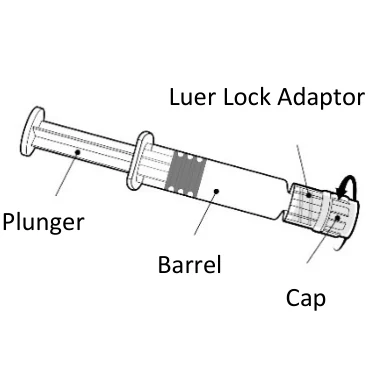 Cap Barrel Plunger Luer Lock Adaptor | Hold the syringe by the barrel, not by the plunger. Unscrew the syringe cap by twisting it anticlockwise. |
|---|---|
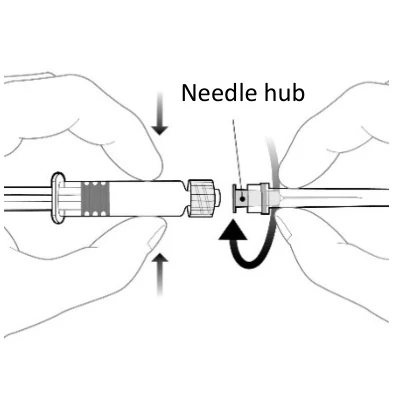 Needle hub | To attach the needle, connect the hub to the Luer Lock Adaptor and rotate a quarter turn clockwise until you feel it lock. Do not pull the syringe plunger out of the barrel. If it happens, do not administer the vaccine. |
5 OVERDOSAGE
Insufficient data are available.
| For management of a suspected drug overdose, contact your regional poison control centre. |
|---|
6 DOSAGE FORMS, STRENGTHS, COMPOSITION AND PACKAGING
To help ensure the traceability of vaccines for patient immunization record-keeping as well as safety monitoring, health professionals should record the time and date of administration, quantity of administered dose (if applicable), anatomical site and route of administration, brand name and generic name of the vaccine, the product lot number and expiry date.
Table 1 – Dosage Forms, Strengths, Composition and Packaging
Dosage Forms
CERVARIX is available as a suspension for injection.
Composition
CERVARIX (Human Papillomavirus vaccine Types 16 and 18 [Recombinant, AS04 adjuvanted]) is a non-infectious recombinant, AS04-adjuvanted vaccine.
HPV-16 and HPV-18 L1 antigens in CERVARIX are adjuvanted with AS04. The adjuvant system, AS04, is composed of 3-0-desacyl-4’-monophosphoryl lipid A (MPL) adsorbed onto aluminium (as hydroxide salt).
| Route of Administration | Dosage Forms / Strength/Composition | Non-medicinal Ingredients |
| Intramuscular injection | Suspension for injection/ One dose (0.5 mL)/20 mcg Human Papillomavirus (HPV) type 16 L1 protein1, 20 mcg Human Papillomavirus (HPV) type 18 L1 protein1 1 L1 protein in the form of non-infectious virus-like particles (VLPs) produced by recombinant DNA technology using a Baculovirus expression system. | 3-0-desacyl-4’-monophosphoryl lipid A (MPL) 50 mcg, aluminium (as aluminium hydroxide) 0.5 mg, sodium chloride 4.4 mg, sodium dihydrogen phosphate dihydrate 0.624 mg, and water for injection. |
Packaging
Pre-filled Syringes
CERVARIX is available as:
- 0.5 mL of suspension in a pre-filled syringe (type I glass) with a plunger stopper (butyl rubber) with or without needles in a pack size of 1.
Note: Multiple safety needle tips are compatible with this system.
7 WARNINGS AND PRECAUTIONS
General
CERVARIX is a prophylactic vaccine. It does not prevent progression of HPV-related lesions present at the time of vaccination.
CERVARIX does not provide protection against all oncogenic HPV types and may not prevent infection with HPV-16/18 or subsequent progression to Cervical Carcinoma, in all vaccine recipients.
CERVARIX is not a treatment for current HPV infection, precancerous lesions, or cervical cancer.
It is good clinical practice that the vaccination should be preceded by a review of the medical history (especially with regard to previous vaccination and possible occurrence of undesirable events) and a clinical examination if indicated.
Vaccination is for primary prevention and is not a substitute for regular cervical screening (secondary prevention) or for precautions against exposure to HPV and other sexually transmitted diseases. All women should continue to follow recommended cervical cancer screening procedures.
Prior to administration, the healthcare provider should review the immunization history for possible vaccine hypersensitivity and previous vaccination-related adverse reactions to allow an assessment of benefits and risks. As with any injectable vaccine, appropriate medical treatment and supervision should always be readily available in case of a rare anaphylactic event following the administration of the vaccine.
Precautions should be taken to avoid intravascular administration.
Febrile Illness
As with other vaccines, administration of CERVARIX should be postponed in individuals suffering from acute severe febrile illness. However, the presence of a minor infection, such as a cold, should not result in the deferral of vaccination.
Hematologic
As with all vaccines administered intramuscularly, CERVARIX should be given with caution to individuals with thrombocytopenia or any coagulation disorder since bleeding may occur following an intramuscular administration to these individuals.
Immune
As with any vaccine, a protective immune response may not be elicited in all vaccine recipients.
Except for asymptomatic human immunodeficiency virus (HIV) infected individuals for whom limited data are available (see 14 CLINICAL TRIALS), there are no data on the use of CERVARIX in individuals with impaired immune responsiveness such as patients receiving immunosuppressive treatment. For those individuals an adequate immune response may not be elicited. The duration of protection has not been established (see 14 CLINICAL TRIALS).
Syncope
Because vaccinees may develop syncope, sometimes resulting in falling with injury, observation for 15 minutes after administration is recommended. Syncope, sometimes associated with tonic-clonic movements and other seizure-like activity, has been reported following vaccination with CERVARIX. When syncope is associated with tonic-clonic movements, the activity is usually transient and typically responds to restoring cerebral perfusion by maintaining a supine or Trendelenburg position.
7.1 Special Populations
7.1.1 Pregnant Women
Vaccination should not be undertaken in women who are pregnant and vaccinees should be advised to take adequate precautions to avoid pregnancy for 2 months following vaccination (see 14 CLINICAL TRIALS, Pregnancy Outcomes).
Patients and healthcare providers are encouraged to report any exposure to CERVARIX vaccine during Pregnancy by calling 1-800-387-7374.
Spontaneous Abortions:
Outcomes Around Time of Vaccination: In 761 women who had their last menstrual period (LMP) within 30 days prior to, or 45 days after a vaccine dose and for whom pregnancy outcome was known, spontaneous abortion (SA) occurred in a higher proportion of women who received CERVARIX (13.6%) compared to those receiving a control substance (9.6%).
In a post-approval observational study, the relative risk of SA was assessed in women aged 15 to 25 years who received CERVARIX around their LMP (within 30 days prior to, or 45 days after any dose of CERVARIX) compared to women not exposed during this time period (LMP within 120 days to 18 months after their last dose of CERVARIX). The rate of SA for the exposed cohort was 11.6% compared to 9.0% in the non-exposed cohort. These estimated risks are aligned with the overall risk of SA in the general population. In a sensitivity analysis performed, there was an increased risk of SA detected for women exposed to 2 doses of CERVARIX, however the results were inconclusive when considered in conjunction with a larger pooled clinical trial analysis. There was no increased risk of SA in women who received any single CERVARIX dose during the risk period.
Overall, the data is insufficient to conclude if these outcomes are due to a vaccine related effect (see 14 CLINICAL TRIALS, Pregnancy Outcomes).
7.1.2 Breast-feeding
The effect on breastfed infants of the administration of CERVARIX to their mothers has not been evaluated in clinical studies. CERVARIX should only be used during breast-feeding when the possible advantages outweigh the possible risks.
Serological data suggest a transfer of anti-HPV-16 and anti-HPV-18 antibodies via the milk during the lactation period in rats. However, it is unknown whether vaccine-induced antibodies are excreted in human breast milk.
7.1.3 Pediatrics
CERVARIX is not indicated for children younger than 9 years of age (see 8 ADVERSE REACTIONS and 14 CLINICAL TRIALS). Safety and effectiveness in pediatric patients younger than 9 years of age have not been established.
8 ADVERSE REACTIONS
8.2 Clinical Trial Adverse Reactions
Clinical trials are conducted under very specific conditions. The adverse reaction rates observed in the clinical trials; therefore, may not reflect the rates observed in practice and should not be compared to the rates in the clinical trials of another drug. Adverse reaction information from clinical trials may be useful in identifying and approximating rates of adverse drug reactions in real-world use.
Studies in Females 10 Through 25 Years of Age
The safety of CERVARIX was evaluated by pooling data from controlled and uncontrolled clinical trials involving 23,713 females 10 through 25 years of age in the pre-licensure clinical development program. In these studies, 12,785 females (10 through 25 years of age [of these; 1193 of the female children were 10 through 14 years of age and 6316 were 15 through 17 years of age]) received at least one dose of CERVARIX and 10,298 females received at least one dose of a control [Hepatitis A Vaccine containing 360 EL.U. (10 through 14 years of age), Hepatitis A Vaccine containing 720 EL.U. (15 through 25 years of age), or Al(OH)3 (500 mcg, 15 through 25 years of age)].
Compliance with the full vaccination course was equally high in both the HPV vaccine and control groups.
Data on solicited local and general adverse events were collected by subjects or parents using standardized diary cards for 7 consecutive days following each vaccine dose (i.e., day of vaccination and the next 6 days). Unsolicited adverse events were recorded with diary cards for 30 days following each vaccination (day of vaccination and 29 subsequent days). Parents and/or subjects were also asked at each study visit about the occurrence of any adverse events and instructed to immediately report serious adverse events throughout the study period. These studies were conducted in North America, Latin America, Europe, Asia, and Australia.
Solicited Adverse Events
The reported frequencies of solicited local injection site reactions (pain, redness, and swelling) and general adverse events (fatigue, fever, gastrointestinal symptoms, headache, arthralgia, myalgia, and urticaria) within 7 days after vaccination in females 10 through 25 years of age are presented in Table 2. An analysis of solicited local injection site reactions by dose is presented in
Table 3. Local reactions were reported more frequently with CERVARIX when compared with the control groups; in ≥84% of recipients of CERVARIX, these local reactions were mild to moderate in intensity. Compared with dose 1, pain was reported less frequently after doses 2 and 3 of CERVARIX, in contrast to redness and swelling where there was a small increased incidence. There was no increase in the frequency of general adverse events with successive doses.
Table 2 Rates of Solicited Local Adverse Reactions and General Adverse Events in Females 10 Through 25 Years of Age Within 7 Days of Vaccination (Total Vaccinated Cohorta)
| Adverse Reaction/Event | CERVARIX* (10-25 yrs) % | HAV 720b (15-25 yrs) % | HAV 360c (10-14 yrs) % | Al(OH)3 Controld (15-25 yrs) % |
|---|---|---|---|---|
| Local Adverse Reaction | N=6431 | N=3079 | N=1027 | N=549 |
| Pain | 91.8 | 78.0 | 64.2 | 87.2 |
| Redness | 48.0 | 27.6 | 25.2 | 24.4 |
| Swelling | 44.1 | 19.8 | 17.3 | 21.3 |
| General Adverse Event | N=6432 | N=3079 | N=1027 | N=549 |
| Fatigue | 55.0 | 53.7 | 42.3 | 53.6 |
| Headache | 53.4 | 51.3 | 45.2 | 61.4 |
| GIe | 27.8 | 27.3 | 24.6 | 32.8 |
| Fever (≥99.5°F) | 12.8 | 10.9 | 16.0 | 13.5 |
| Rash | 9.6 | 8.4 | 6.7 | 10.0 |
| N=5881 | N=3079 | N=1027 | - | |
| Myalgiaf | 49.1 | 44.9 | 33.1 | - |
| Arthralgiaf | 20.8 | 17.9 | 19.9 | - |
| Urticariaf | 7.4 | 7.9 | 5.4 | - |
aTotal vaccinated cohort included subjects with at least one documented dose (N).
bHAV 720 = Hepatitis A Vaccine control group [720 EL.U. of antigen and 500 μg Al(OH)3].
cHAV 360 = Hepatitis A Vaccine control group [360 EL.U. of antigen and 250 μg of Al(OH)3].
dAl(OH)3 Control = control containing 500 μg Al(OH)3.
eGI = Gastrointestinal symptoms, including nausea, vomiting, diarrhea, and/or abdominal pain.
fAdverse events solicited in a subset of subjects.
* The number of subjects in the CERVARIX group for Local Adverse Reactions and General Adverse Events varies (6431 and 6432 respectively). The number of subjects included in the analysis is the number of subjects with a documented dose (for Local Adverse Reactions, there was one less subject with a documented dose).
Studies: HPV-001, 008 diary card subset, 012, 013, 014, 016.
Table 3 Rates of Solicited Local Adverse Reactions in Females 10 Through 25 Years of Age by Dose Within 7 Days of Vaccination (Total Vaccinated Cohorta)
| Adverse Reaction | CERVARIX (10-25 yrs) % | HAV 720b (15-25 yrs) % | HAV 360c (10-14 yrs) % | Al(OH)3 Controld (15-25 yrs) % | |||||||||||||||||||||||||
|---|---|---|---|---|---|---|---|---|---|---|---|---|---|---|---|---|---|---|---|---|---|---|---|---|---|---|---|---|---|
| Post-Dose | Post-Dose | Post-Dose | Post-Dose | ||||||||||||||||||||||||||
| 1 | 2 | 3 | 1 | 2 | 3 | 1 | 2 | 3 | 1 | 2 | 3 | ||||||||||||||||||
| N | 6415 | 6197 | 5936 | 3070 | 2919 | 2758 | 1027 | 1021 | 1011 | 546 | 521 | 500 | |||||||||||||||||
| Pain | 86.9 | 76.2 | 78.7 | 65.6 | 54.4 | 56.1 | 48.5 | 38.5 | 36.9 | 79.1 | 66.8 | 72.4 | |||||||||||||||||
| Pain, Grade 3e | 7.5 | 5.7 | 7.7 | 2.0 | 1.4 | 2.0 | 0.8 | 0.2 | 1.6 | 9.0 | 6.0 | 8.6 | |||||||||||||||||
| Redness | 27.8 | 29.6 | 35.6 | 16.6 | 15.2 | 16.1 | 15.6 | 13.3 | 12.1 | 11.5 | 11.5 | 15.6 | |||||||||||||||||
| Redness, >50 mm | 0.2 | 0.5 | 1.0 | 0.1 | 0.1 | 0.0 | 0.1 | 0.2 | 0.1 | 0.2 | 0.0 | 0.0 | |||||||||||||||||
| Swelling | 22.7 | 25.2 | 32.7 | 10.5 | 9.4 | 10.5 | 9.4 | 8.6 | 7.6 | 10.3 | 10.4 | 12.0 | |||||||||||||||||
| Swelling, >50 mm | 1.2 | 1.0 | 1.3 | 0.2 | 0.2 | 0.2 | 0.4 | 0.3 | 0.0 | 0.0 | 0.0 | 0.0 | |||||||||||||||||
a Total vaccinated cohort included subjects with at least one documented dose (N).
b HAV 720 = Hepatitis A Vaccine control group [720 EL.U. of antigen and 500 μg Al(OH)3].
c HAV 360 = Hepatitis A Vaccine control group [360 EL.U. of antigen and 250 μg of Al(OH)3].
d Al(OH)3 Control = control containing 500 μg Al(OH)3.
e Defined as spontaneously painful or pain that prevented normal daily activities.
The pattern of solicited local adverse reactions and general adverse events following administration of CERVARIX was similar between the age cohorts (10 through 14 years and 15 through 25 years).
Unsolicited Adverse Events by Subject
The frequency of unsolicited adverse events that occurred within 30 days of vaccination (≥1% for CERVARIX and greater than any of the control groups) in females 10 through 25 years of age are presented in Table 4.
Table 4 Rates of Unsolicited Adverse Events in Females 10 Through 25 Years of Age Within 30 Days of Vaccination (≥1% For CERVARIX and Greater Than HAV 720, HAV 360, or Al(OH)3 Control) (Total Vaccinated Cohorta)
| Adverse Event | CERVARIX* % N=6654 | HAV 720b % N=3186 | HAV 360c % N=1032 | Al(OH)3 Controld % N=581 |
| Headache | 5.3 | 7.6 | 3.3 | 9.3 |
| Nasopharyngitis | 3.6 | 3.4 | 5.9 | 3.3 |
| Influenza | 3.2 | 5.6 | 1.3 | 1.9 |
| Pharyngolaryngeal pain | 2.9 | 2.7 | 2.2 | 2.2 |
| Dizziness | 2.2 | 2.6 | 1.5 | 3.1 |
| Upper respiratory tract infection | 2.0 | 1.3 | 6.7 | 1.5 |
| Chlamydia infection | 2.0 | 4.4 | 0.0 | 0.0 |
| Dysmenorrhea | 2.0 | 2.3 | 1.9 | 4.0 |
| Pharyngitis | 1.5 | 1.8 | 2.2 | 0.5 |
| Injection site bruising | 1.4 | 1.8 | 0.7 | 1.5 |
| Vaginal infection | 1.4 | 2.2 | 0.1 | 0.9 |
| Injection site pruritus | 1.3 | 0.5 | 0.6 | 0.2 |
| Back pain | 1.1 | 1.3 | 0.7 | 3.1 |
| Urinary tract infection | 1.0 | 1.4 | 0.3 | 1.2 |
a Total vaccinated cohort included subjects with at least one documented dose (N).
b HAV 720 = Hepatitis A Vaccine control group [720 EL.U. of antigen and 500 μg Al(OH)3].
c HAV 360 = Hepatitis A Vaccine control group [360 EL.U. of antigen and 250 μg of Al(OH)3].
d Al(OH)3 Control = control containing 500 μg Al(OH)3.
* The number of subjects in the CERVARIX group varies between Table 2and Table 4 because Table 4 included subjects from studies HPV-001, 003, 004, 005, 008 diary card subset, 012, 013, 014, 016.
Serious Adverse Events (SAEs)
In the pooled safety database, inclusive of controlled and uncontrolled studies, which enrolled females 10 through 72 years of age, 5.3% (862/16,142) of subjects who received CERVARIX and 5.9% (814/13,811) of subjects who received control reported at least one serious adverse event, without regard to causality, during the entire follow-up period (up to 7.4 years). Among females 10 through 25 years of age enrolled in these clinical studies, 6.4% of subjects who received CERVARIX and 7.2% of subjects who received the control reported at least one serious adverse event during the entire follow-up period (up to 7.4 years).
Deaths
In completed and ongoing studies which enrolled 57,323 females 9 through 72 years of age, 37 deaths were reported during the 7.4 years of follow-up: 20 in subjects who received CERVARIX (0.06%, 20/33,623) and 17 in subjects who received control (0.07%, 17/23,700). Causes of death among subjects were consistent with those reported in adolescent and adult female populations. The most common causes of death were motor vehicle accident (5 subjects who received CERVARIX; 5 subjects who received control) and suicide (2 subjects who received CERVARIX; 5 subjects who received control), followed by neoplasm (3 subjects who received CERVARIX; 2 subjects who received control), autoimmune disease (3 subjects who received CERVARIX; 1 subject who received control), infectious disease (3 subjects who received CERVARIX; 1 subject who received control), homicide (2 subjects who received CERVARIX;
1 subject who received control), cardiovascular disorders (2 subjects who received CERVARIX), and death of unknown cause (2 subjects who received control). Among females 10 through 25 years of age, 31 deaths were reported (0.05%, 16/29,467 of subjects who received CERVARIX and 0.07%, 15/20,192 of subjects who received control).
New Onset Autoimmune Diseases (NOADs)
The pooled safety database, which included controlled and uncontrolled trials which enrolled females 10 through 25 years of age, was searched for new medical conditions indicative of potential new onset autoimmune diseases. Overall, the incidence of potential NOADs, as well as NOADs in the group receiving CERVARIX was 0.8% (95/12,533) and comparable to the pooled control group (0.8%, 87/10,730) during the 4.3 years of follow-up (mean 3.0 years) (Table 5). In the largest randomized, controlled trial (Study HPV-008) which enrolled females 15 through 25 years of age and which included active surveillance for potential NOADs, the incidence of potential NOADs and NOADs was 0.8% among subjects who received CERVARIX (78/9319) and 0.8% among subjects who received Hepatitis A Vaccine [720 EL.U. of antigen and 500 μg Al(OH)3] control (77/9235).
Table 5 Incidence of New Medical Conditions Indicative of Potential New Onset Autoimmune Disease and New Onset Autoimmune Disease Throughout the Follow-up Period Regardless of Causality in Females 10 Through 25 Years of Age (Total Vaccinated Cohorta)
| Total Number of Subjects With at Least One Medical Condition | CERVARIX (N=12,533) | Pooled Control Groupb (N=10,730) | ||
|---|---|---|---|---|
| n (%)c | n (%)c | |||
| 95 (0.8) | 87 (0.8) | |||
| Arthritisd | 9 (0.1) | 4 (0.0) | ||
| Celiac disease | 2 (0.0) | 5 (0.0) | ||
| Dermatomyositis | 0 (0.0) | 1 (0.0) | ||
Diabetes mellitus insulin-dependent (Type 1 or unspecified) | 5 (0.0) | 5 (0.0) | ||
| Erythema nodosum | 3 (0.0) | 0 (0.0) | ||
| Hyperthyroidisme | 14 (0.1) | 15 (0.1) | ||
| Hypothyroidismf | 30 (0.2) | 28 (0.3) | ||
| Inflammatory bowel diseaseg | 8 (0.1) | 4 (0.0) | ||
| Multiple sclerosis | 4 (0.0) | 1 (0.0) | ||
| Myelitis transverse | 1 (0.0) | 0 (0.0) | ||
| Optic neuritis/Optic neuritis retrobulbar | 3 (0.0) | 1 (0.0) | ||
| Psoriasish | 8 (0.1) | 11 (0.1) | ||
| Raynaud’s phenomenon | 0 (0.0) | 1 (0.0) | ||
| Rheumatoid arthritis | 4 (0.0) | 3 (0.0) | ||
| Systemic lupus erythematosusi | 2 (0.0) | 3 (0.0) | ||
| Thrombocytopeniaj | 1 (0.0) | 1 (0.0) | ||
| Vasculitisk | 1 (0.0) | 3 (0.0) | ||
| Vitiligo | 2 (0.0) | 2 (0.0) | ||
a Total vaccinated cohort included subjects with at least one documented dose (N).
b Pooled Control Group = Hepatitis A Vaccine control group [720 EL.U. of antigen and 500 mcg Al(OH)3], Hepatitis A Vaccine control group [360 EL.U. of antigen and 250 mcg of Al(OH)3], and a control containing 500 mcg Al(OH)3.
c n (%): number and percentage of subjects with medical condition.
d Term includes reactive arthritis and arthritis.
e Term includes Basedow's disease, goiter, and hyperthyroidism.
f Term includes thyroiditis, autoimmune thyroiditis, and hypothyroidism.
g Term includes colitis ulcerative, Crohn's disease, proctitis ulcerative, and inflammatory bowel disease.
h Term includes psoriatic arthropathy, nail psoriasis, guttate psoriasis, and psoriasis.
i Term includes systemic lupus erythematosus and cutaneous lupus erythematosus.
j Term includes idiopathic thrombocytopenic purpura and thrombocytopenia.
k Term includes leukocytoclastic vasculitis and vasculitis.
Studies in Females 9 Years of Age
In clinical trials, comparable results were found between the safety and reactogenicity in 9 year old subjects and subjects aged 10 to 14 years of age. There were no new or unexpected safety issues following vaccination in females 9 years of age.
Studies in Females 26 Years of Age and Older
In one large controlled study, 5752 women aged 26 years and older received at least one dose of CERVARIX or one dose of Al(OH)3 control. There were no clinically meaningful differences in overall safety outcomes between treatment groups. In addition, there were no new or unexpected safety issues in women 26 years and older compared to women 15-25 years of age.
8.3 Less Common Clinical Trial Adverse Reactions (<1%)
Blood and lymphatic system disorders
Uncommon: lymphadenopathy
General disorders and administration site conditions
Uncommon: other injection site reactions such as induration and local paresthesia
8.5 Post-Market Adverse Reactions
The following events have been spontaneously reported during post-approval use of CERVARIX. This list includes serious events or events which have suspected causal association to CERVARIX. Because these events are reported voluntarily from a population of uncertain size, it is not always possible to reliably estimate their frequency or establish a causal relationship to vaccination.
Immune System Disorders
Allergic reactions (including anaphylactic and anaphylactoid reactions), angioedema and erythema multiforme have been rarely reported (≥1/10,000 to <1/1000).
Nervous System Disorders
Syncope or vasovagal responses to injection (sometimes accompanied by tonic-clonic movements) have been rarely reported ( 1/10,000 to <1/1000).
9 DRUG INTERACTIONS
9.3 Drug-Behavioural Interactions
Effects on the ability to drive and use machines
No studies on the effects on the ability to drive or use machines have been performed.
9.4 Drug-Drug Interactions
Use with other vaccines
CERVARIX may be administered concomitantly with BOOSTRIX-POLIO (combined diphtheria, tetanus, pertussis [acellular] and inactivated poliomyelitis vaccine), BOOSTRIX (combined diphtheria, tetanus and pertussis [acellular] vaccine) or MENACTRA (meningococcal groups A, C, Y and W-135 polysaccharide diphtheria toxoid conjugate vaccine), without clinically relevant interference with antibody response to any of the components of either vaccine.
NOTE:
HPV-16 and HPV-18 antibodies: Although the criteria for non-inferiority were met for secondary immunogenicity endpoints with respect to anti-HPV-16 and anti-HPV-18 seroconversion rates and GMTs evaluated one month post Dose 3, the GMTs are observed to be consistently lower for all the co-administration groups.
Pertussis antibodies: Although the criteria for non-inferiority were met for the secondary immunogenicity endpoints anti-PT, anti-PRN and anti-FHA GMTs, evaluated one month post Dose 1 (Month 1) for HPV+B+M§ compared to B/HPV†, the GMTs were lower for the three antibodies for the co-administration group and statistically lower for anti-FHA.
Meningococcal antibodies: Although the criteria for non-inferiority were met for the secondary immunogenicity endpoints with respect to the percentage of subjects with meningococcal anti-A, anti-C, anti-Y and anti-W-135 GMTs one month post-vaccination for HPV+B+M§ compared to M/HPV‡, the GMTs were lower for the four antibodies for the co-administration group and statistically significantly lower for anti-A and anti-W-135.
§HPV+B+M = BOOSTRIX vaccine administered at Month 0. MENACTRA vaccine administered at Month 0. CERVARIX vaccine administered at Month 0, 1 and 6.
†B/HPV = BOOSTRIX vaccine administered at Month 0. CERVARIX vaccine administered at Month 1, 2 and 7.
‡M/HPV = MENACTRA vaccine administered at Month 0. CERVARIX vaccine administered at Month 1, 2 and 7.
CERVARIX may be administered concomitantly with the combined hepatitis A and hepatitis B vaccine (TWINRIX Junior) or the 10μg/0.5 mL dose of ENGERIX-B (hepatitis B recombinant vaccine). Administration of CERVARIX at the same time as TWINRIX Junior or the 10μg/0.5 mL dose of ENGERIX-B has shown no clinically relevant interference in the antibody response to the HPV16/18 antigens in CERVARIX and the hepatitis A antigen in TWINRIX Junior. Anti-hepatitis B geometric mean antibody titers were lower on co-administration of the vaccines but the percentage of subjects reaching anti-HBs ≥ 10mIU/ml (seroprotection) was 98.3% for concomitant vaccination with TWINRIX Junior and 97.8% with ENGERIX-B, and 100% for TWINRIX Junior and ENGERIX-B given alone. The clinical relevance of the reduced antibody titre and the risk of a substantially reduced immune response to hepatitis B if doses of hepatitis B vaccine are missed are not known.
If CERVARIX is to be given at the same time as another injectable vaccine, the vaccines should always be administered at different injection sites. CERVARIX should not be mixed with any other vaccine in the same syringe.
Use with hormonal contraceptives
In clinical efficacy studies, approximately 60% of females who received CERVARIX used hormonal contraceptives. There is no evidence that the use of hormonal contraceptives has an impact on the efficacy of CERVARIX.
Use with systemic immunosuppressive medications
As with other vaccines it may be expected that, in patients receiving immunosuppressive therapy, an adequate response may not be achieved.
9.5 Drug-Food Interactions
Interactions with food have not been established.
9.6 Drug-Herb Interactions
Interactions with herbal products have not been established.
9.7 Drug-Laboratory Test Interactions
Interactions with laboratory tests have not been established.
10 CLINICAL PHARMACOLOGY
Disease Burden
Worldwide, oncogenic Human Papillomavirus (HPV) types are the necessary cause of cervical cancer. Compelling epidemiological evidence confirms that persistent infection with oncogenic HPV types is responsible for virtually all cases of invasive cervical cancer. Based on a large consensus among experts, the most common HPV types identified in cervical cancer worldwide were, in decreasing order of frequency, HPV-16, -18, -45, -31, -33, -52, -58, -35, -59, -56, -39, -51, -73, -68 and -66. HPV types -16 and -18 are responsible for more than 70% of invasive cervical cancers. Together, HPV types -16, -18, -31 and -45 account for up to 80.3% of cases. In the United States, the most common HPV genotypes detected in invasive cancers are HPV type -16 (HPV-16, 53.2%), HPV-18 (13.1%), and HPV-45 (6.1%) and those in in situ cancers were HPV-16 (56.3%), HPV-31 (12.6%), and HPV-33 (8.0%). HPV is a highly prevalent family of viruses. Up to 80% of females who have ever been sexually active will acquire an HPV infection in their lifetime, which in some cases may cause cervical cancer. Oncogenic HPV types have been found in up to 75% of HPV infections.
Cervical cancers begin as asymptomatic precancerous lesions and usually develop gradually over many years. Cervical lesions are described according to the degree of cytopathology found on the Pap1 smear, with progression in degree of dysplasia.
1 Pap (Papanicolaou test detects abnormal cervical cells)
HPV is generally transmitted via skin-to-skin contact during sexual activity. Papillomavirus entry into cells may take as little as 2 to 4 hours. Condoms reduce the risk of HPV infection, but are not fully effective. The period between exposure to the infection and the development of a specific lesion is extremely variable, making it virtually impossible for most individuals to determine exactly when, and from whom, they were exposed to the virus.
Studies have shown that prior infection with HPV does not provide females with reliable immunity against subsequent infections or reduce the risk of an HPV infection becoming persistent. Approximately 50% of females generate antibodies against initial HPV infections. In females that do generate anti-HPV antibodies, levels are typically low and slow to develop and are not reliably protective. Since antibody levels in women that have cleared an HPV infection are either low or not-existent, women may be susceptible to the same or different HPV type in the future. In the absence of detectable anti-HPV antibodies, generating immune memory in response to HPV infection in previously exposed women has not been demonstrated to provide protection against future infection or disease.
In Canada, cervical cancer affects females of all ages and among females aged 20 to 44, cervical cancer ranks as second most common to breast cancer. The proportion of HPV-16 and HPV-18 related cervical cancer cases in North America is 76% and increases to 84% when HPV-16, -18, -45, and -31 are included. The annual rate of new diagnoses of cervical cancer in Canada is 7/100,000 and the annual mortality rate is 2/100,000. The annual rate of new diagnoses of adenocarcinoma of the cervix may be as high as 1.83/100,000 in Canada. Despite the significant reduction in the burden of disease from cervical cancer since the introduction of cervical cancer screening, new cases and deaths from cervical cancer continue, with approximately 1350 new cases and 390 deaths from cervical cancer estimated in 2012. The annual economic burden of HPV-related disease is estimated to be close to $300 million. The majority of the burden represents the cost of the more than 3.9 million Pap tests that produce negative or false-positive results followed by, in decreasing order, the cost of cervical intraepithelial neoplasia (CIN) grades 1/2/3, the cost of cervical cancer, and the cost of genital warts.
Infections with multiple oncogenic HPV types are common in sexually active females with cytologic abnormalities; however, almost all cervical cancer is attributable to a single HPV type. Natural history studies of HPV infection support that the risk of progression to cervical precancers and cervical cancers increases with persistent infection. In fact, HPV persistent infections tend to occur at a higher percentage with HPV-16 than with other oncogenic HPV types and that the risk of progression to cervical cancer is higher for HPV-16, -18 and -45 than other HPV types.
Worldwide, the proportion of CIN grades 2 and 3, and invasive cervical cases associated with HPV-16 and HPV-18 are 52.3% and 70.3% respectively. HPV-16 predominates in squamous cell carcinomas (55.2%) as well as in cervical adenocarcinomas (48.4%), whereas HPV-18 has been detected more than twice as frequently in adenocarcinoma (36.3%) as compared to squamous cervical carcinomas (12.8%).
Overall, incidence and mortality rates due to cervical cancer have shown a steady decline in the past 30 years due to the introduction of Pap screening programs. The reduction has been driven primarily by decreases in the rates of cervical squamous cell carcinomas, the predominant histological type. Rates of adenocarcinoma and adenosquamous carcinomas have increased over this period, particularly in females 20 to 34 years of age. Rates have plateaued in the last 5 years, suggesting that further prevention strategies beyond Pap screening may be necessary. Given that adenocarcinomas occur further in the endocervical canal, they are often more difficult to detect through normal cytological screening.
Until recently, cervical cancer screening programs have allowed for detection and removal of precancerous lesions (secondary prevention). Primary prevention of these lesions via vaccination can provide an additional opportunity to prevent cervical cancer by prevention of the infection which initiates the disease process.
10.1 Mechanism of Action
CERVARIX is a non-infectious recombinant vaccine prepared from the highly purified virus-like particles (VLPs) of the major capsid L1 protein of oncogenic HPV types 16 and 18. Since the VLPs contain no viral DNA, they cannot infect cells, reproduce or cause disease.
High and sustained antibodies against HPV are associated with protection against HPV-related infection and/or disease. Animal studies suggest that the efficacy of L1 VLP vaccines is predominantly mediated by the development of neutralizing antibody (humoral) immune responses. Vaccination with HPV L1 capsid proteins predominately induces serum neutralizing IgG antibodies; however, transudation of anti-HPV IgG neutralizing antibodies from the serum to the cervical mucosa is thought to provide a mechanism to prevent HPV entry into cervical epithelial cells which might otherwise lead to infection and cervical cancer. CERVARIX studies have demonstrated that there is a correlation between levels of anti-HPV antibodies in serum samples relative to anti-HPV antibodies in cervicovaginal secretion samples. While the minimum level of antibodies required to prevent HPV infection are not yet known, anti-papillomavirus antibodies have been shown to be sufficient to prevent infection and/or disease. These data suggest that the mechanism of action of L1 VLP vaccines is primarily mediated through a vaccine-induced antibody-mediated immune response.
The adjuvant in CERVARIX is AS04 which has been shown in clinical trials to induce a stronger and sustained immune response compared to the same antigens adjuvanted with aluminium salt [Al(OH)3] alone.
Evidence of Anamnestic (Immune Memory) Response
Based on a subset of subjects from the original study HPV-001, the administration of a challenge dose after a mean of 6.8 years following the first vaccination elicited an anamnestic immune response to HPV-16 and HPV-18 (by ELISA and pseudovirion-based neutralizing assay) at day 7. One month after the challenge dose, geometric mean titers (GMTs) exceeded those observed one month after the primary vaccination course. An anamnestic response was also observed for the related types HPV-31 and HPV-45 by ELISA. All subjects were seropositive for anti-HPV-16 and anti-HPV-18 prior to the challenge dose. GMT ratios are presented in Table 6.
Table 6 GMT Ratios and 95% CI at Day 7 and One Month After the Administration of a Challenge Dose (ATP Cohort)
| N | Time Point 1 | GMT1 | Time Point 2 | GMT2 | Ratio GMT1/GMT2 | LL | UL | |||||
|---|---|---|---|---|---|---|---|---|---|---|---|---|
| HPV-16 | ||||||||||||
| 59 | Day 7 | 6246.7 | PRE | 720.7 | 8.7 | 6.3 | 11.9 | |||||
| 40* | 1 month post 4th dose | 15402.8 | 1 month post 3rd dose | 6298.6 | 2.4 | 1.7 | 3.5 | |||||
| HPV-18 | ||||||||||||
| 59 | Day 7 | 4126.7 | PRE | 502.9 | 8.2 | 6.1 | 11.1 | |||||
| 40* | 1 month post 4th dose | 8259.3 | 1 month post 3rd dose | 5350.9 | 1.5 | 1.1 | 2.1 | |||||
| HPV-31 | ||||||||||||
| 59 | Day 7 | 2154.8 | PRE | 222.4 | 9.7 | 7.5 | 12.5 | |||||
| HPV-45 | ||||||||||||
| 59 | Day 7 | 2456.7 | PRE | 202.7 | 12.1 | 9.4 | 15.6 | |||||
* Subjects included in the ATP cohort of HPV-001 and included in the ATP cohort of the challenge dose study (HPV-024).
GMTs measured by ELISA.
N = number of subjects with results available at both time-points.
PRE = Pre-vaccination of the challenge dose.
LL/UL = Lower/Upper limit of the 95% confidence interval.
The ATP cohort included all evaluable subjects (i.e., those meeting all eligibility criteria, complying with the procedures and intervals defined in the protocol, with no elimination criteria during the study) for whom data concerning immunogenicity endpoint measures were available. This included subjects for whom assay results were available for antibodies against at least one study vaccine antigen component after vaccination.
11 STORAGE, STABILITY AND DISPOSAL
Store in a refrigerator at 2°C to 8°C. Do not freeze. Store in the original package in order to protect from light.
The expiry date of the vaccine is indicated on the label and packaging. Do not use after the expiry date shown on the label.
CERVARIX should be administered as soon as possible after being removed from the refrigerator. However, stability data generated indicated that CERVARIX remains stable and can be administered in case the vaccine has been stored outside the refrigerator up to three days at temperatures between 8°C and 25°C or up to one day at temperatures between 25°C and 37°C. If exposed to temperatures >37°C, discard vaccine.
12 SPECIAL HANDLING INSTRUCTIONS
There are no special handling instructions.
PART II: SCIENTIFIC INFORMATION
13 PHARMACEUTICAL INFORMATION
Drug Substance
Proper name: Human Papillomavirus vaccine Types 16 and 18 (Recombinant, AS04 adjuvanted)
Product Characteristics
This prophylactic HPV vaccine is composed of HPV-16 and -18 L1 proteins assembled as non-infectious Virus Like Particles (VLP).
14 CLINICAL TRIALS
14.1 Clinical Trials by Indication
Prevention of cervical cancer by protecting against precancerous or dysplastic lesions caused by HPV types 16 and 18
Table 7 Summary of Patient Demographics for Clinical Trials in Cervical Disease
| Study # | Trial Design | Dosage, route of administration | Study subjects (n=number) | Mean Age (Range) | Gender |
|---|---|---|---|---|---|
HPV-001 HPV-007 HPV-023 | Double-blind, randomized, controlled study 3 yr long term extension of HPV-001 3 yr long term extension of HPV-007 | Vaccine: HPV-16/18 L1 20 mcg /20 mcg Control: Al(OH)3 500 mcg Intramuscular injection 3 doses, 0.5 mL | Total n=1113 Vaccine n=560 Control n=553 Total n=776 Vaccine n=393 Control n=383 Total n=437 Vaccine n=224 Control n=213 | 20.2 (15-25 yrs) 23.2 (17-29 yrs) 19.9 (15-26 yrs) | Female |
| HPV-008 | Double-blind, randomized, controlled, multicentre study | Vaccine: HPV-16/18 L1 20 mcg /20 mcg Control: Hep A vaccine Intramuscular injection 3 doses, 0.5 mL | Total n=18,665 Vaccine n=9332 Control n=9333 | 20 (15-25 yrs) | Female |
| HPV-012 | Blinded, randomized, multicentre study | Vaccine: HPV-16/18 L1 20 mcg /20 mcg Intramuscular injection 3 doses, 0.5 mL | Total n=870 Vaccine n=612 (15-25 yrs) Vaccine n=158 (10-14 yrs) | 19.8-20.3* (15-25 yrs) 12.4 (10-14 yrs) | Female |
| Study # | Trial Design | Dosage, route of administration | Study subjects (n=number) | Mean Age (Range) | Gender |
|---|---|---|---|---|---|
| HPV-013 | Multicentre double-blind, randomized, controlled study | Vaccine: HPV-16/18 L1 20 mcg /20 mcg Control: Hep A vaccine Intramuscular injection 3 doses, 0.5 mL | Total n=2067 Vaccine n=1035 Control n=1032 | 12.1 (10-14 yrs) | Female |
| HPV-014 | Multicentre open age- stratified study | Vaccine: HPV-16/18 L1 20 mcg /20 mcg Intramuscular injection 3 doses, 0.5 mL | Total n=666 Vaccine n=229 (15-25 yrs) Vaccine n=226 (26-45 yrs) Vaccine n=211 (46-55 yrs) | 34.8 (15-55 yrs) | Female |
| HPV-015 | Double-blind, randomized, controlled, multicentre study | Vaccine: HPV-16/18 L1 20 mcg /20 mcg Control: Al(OH)3 500 mcg Intramuscular injection 3 doses, 0.5 mL | Total n=5752 Vaccine n=2881 Control n=2871 | 37.0 (24-72 yrs) | Female |
| HPV-010 | Observer-blind, randomized, multicentre study | Vaccine: HPV-16/18 L1 20 mcg /20 mcg Comparator : HPV-6/11/16/18 vaccine LI 20 mcg /40 mcg /40 mcg /20 mcg Intramuscular injection 3 doses, 0.5 mL | Total n= 1106 Vaccine n=553 Comparator n=553 | 30.3 (18-45 yrs) | Female |
| HPV-020 | partially-blind, controlled, partially randomized, single-centre study, with a staggered enrollment | Vaccine: HPV-16/18 L1 20 mcg /20 mcg Control: Al(OH)3 500 mcg Intramuscular injection 3 doses, 0.5 mL | Total n=150 HIV positive individuals received vaccine n=61 HIV positive individuals received control n=59 HIV negative individuals received vaccine n=30 | 22 (18-25 yrs) | Female |
| HPV-048 | Partially blind, randomised, age-stratified, multi-centre, dose-range study | Vaccine: HPV-16/18 L1 20 mcg /20 mcg or 40 mcg /40 mcg Intramuscular injection 2 or 3 doses, 0.5 mL | Total n= 960 40/40, 2 doses (0, 2 months) n=240 40/40, 2 doses (0, 6 months) n=241 20/20, 2 doses (0, 6 months) n=240 20/20, 3 doses (0, 1, 6 months) n=239 | 17.2 (9-25 yrs) | Female |
| Study # | Trial Design | Dosage, route of administration | Study subjects (n=number) | Mean Age (Range) | Gender |
|---|---|---|---|---|---|
| HPV-070 | Open-label, randomised, age-stratified, multi-centre study | Vaccine: HPV-16/18 L1 20 mcg /20 mcg Intramuscular injection 2 or 3 doses, 0.5 mL | Total n= 1032 2 doses (0, 6 months) n=550 3 doses (0, 1, 6 months) n=482 | 11.6 (9-14 yrs) 19.6 (15-25 yrs) | Female |
*mean age for 4 lots of CERVARIX
Vaccine Efficacy
Cervical intraepithelial neoplasia (CIN) grade 2 and 3 lesions or cervical adenocarcinoma in situ (AIS) are precursors of squamous cell carcinoma and adenocarcinoma of the cervix, respectively and have been used as a surrogate marker of cervical cancer. CIN2/3 and AIS (precancerous lesions) serve as surrogate markers for the prevention of cervical cancer and were efficacy endpoints used in clinical trials. Secondary endpoints included an assessment of efficacy in the prevention of 6 month persistent infection and 12 month persistent infection.
CERVARIX was assessed in 2 double-blind, randomized, controlled clinical studies that included a total of 19,778 females 15 to 25 years of age at enrolment.
The clinical study HPV-001/HPV-007 was conducted in North America and Latin America. Study HPV-023 followed subjects from the Brazilian cohort of HPV-001/HPV-007. Study entry criteria were: females who were negative for oncogenic HPV DNA (HPV-16, -18, -31, -33, -35, -39, -45, -51, -52, -56, -58, -59, -66 and -68) in cervical samples, seronegative for HPV-16 and HPV-18 antibodies and had normal cytology. This represents a population presumed naïve without current HPV infection at the time of vaccination and without prior exposure to either HPV-16 or HPV-18.
Study HPV-008 was conducted in North America, Latin America, Europe, Asia Pacific and Australia. This study enrolled females who were vaccinated regardless of baseline HPV DNA status, serostatus or cytology. These females reflect a general population inclusive of females naïve (without current infection and without prior exposure) or non-naïve (with current infection and/or with prior exposure) to HPV. Before vaccination, cervical samples were assessed for oncogenic HPV DNA (HPV-16, -18, -31, -33, -35, -39, -45, -51, -52, -56, -58, -59, -66 and -68) and serostatus of HPV-16 and HPV-18 antibodies. The final analysis of study HPV-008 was event-triggered i.e., was performed when at least 36 CIN2+ cases associated with HPV-16 or HPV-18 were accrued in the ATP cohort. The mean follow-up for the final analysis was approximately 39 months post-dose one. End of study analysis was performed at the end of the 4-year follow-up period (i.e., 48 months post-dose one) and included all subjects from the Total Vaccinated Cohort (TVC).
In studies HPV-001/HPV-007 and HPV-008 the following endpoints were evaluated:
- Histopathologically-confirmed CIN2+ (CIN2, CIN3, adenocarcinoma in-situ (AIS) or invasive cervical cancer) associated with HPV-16 or HPV-18*.
- Histopathologically-confirmed CIN1+ (CIN1, CIN2, CIN3, adenocarcinoma in-situ (AIS) or invasive cervical cancer) associated with HPV-16 or HPV-18*.
- Persistent infection (12-month definition†) with HPV-16 or HPV-18*.
- Persistent infection (6-month definition‡) with HPV-16 or HPV-18.
* These endpoints were not evaluated in study HPV-001, but were evaluated in the extension study HPV-007
† Defined as the detection of the same HPV type at all available time points over approximately a 12 month interval
‡ Defined as the detection of the same HPV type in cervical samples at two consecutive evaluations over approximately a 6-month interval
In study HPV-008, the following endpoints were also evaluated:
- CIN3+ (cervical intraepithelial neoplasia grade 3 and higher grade lesions)
- VIN1+ (vulvar intraepithelial neoplasia grade 1 and higher grade lesions)
- VaIN1+ (vaginal intraepithelial neoplasia grade 1 and higher grade lesions)
CIN3+ is the immediate precursor of invasive cervical cancer (ICC) and is generally considered a more predictive endpoint than CIN2+.
In both studies, testing for oncogenic HPV types was conducted using SPF10-LiPA25 PCR because of its high sensitivity, specificity and ability to detect degraded HPV DNA in archived biopsy samples. Type-specific HPV-16 and HPV-18 PCR was combined with SPF10-LiPA25 PCR to maintain sensitivity in the context of multiple infections. A high sensitivity for detection of any HPV-16 or HPV-18 DNA even at very low levels and in the presence of multiple HPV types in both cervical and biopsy samples was important to assure complete case detection.
The efficacy of CERVARIX was also assessed in a double-blind, randomised Phase III clinical trial (HPV-015) in which a total of 5752 women aged 26 years and older were vaccinated. The study was conducted in North America, Latin America, Asia Pacific and Europe, and allowed women with a history of HPV-associated disease/treatment to be enrolled. An interim analysis was performed when all subjects had completed the month 48 study visit. The primary analyses of efficacy were performed on the ATP cohort and the TVC cohort.
Prophylactic Efficacy Against HPV Types 16 and 18
Study HPV-008
Study HPV-008 was a double-blind, randomized, controlled clinical trial in which 18,665 healthy females 15 to 25 years of age received CERVARIX or Hepatitis A Vaccine control on a 0-, 1-, and 6-month schedule.
In this study, females were vaccinated regardless of baseline HPV DNA status, serostatus or cytology. Females with HPV DNA present at the cervix (HPV DNA positive [DNA(+)]) at study entry were considered currently infected with that specific HPV type. If HPV DNA was not detected by PCR, females were considered HPV DNA negative [DNA(-)]. Additionally, cervical samples were assessed for cytologic abnormalities and serologic testing was performed for anti-HPV-16 and anti-HPV-18 serum antibodies at baseline. Females with anti-HPV serum antibodies present were considered previously exposed to HPV and characterized as seropositive [sero(+)]. Of those, females DNA(-) for HPV-16 and HPV-18 were considered as having cleared a previous natural infection. Females without antibodies to HPV-16 and HPV-18 were characterized as seronegative [sero(-)]. Before vaccination, 73.6% of females were naïve (without current infection and without prior exposure) to HPV-16 and HPV-18.
HPV-008 Study cohorts
According to Protocol (ATP)
The According to Protocol (ATP) cohort for efficacy analysis included:
- all females who received 3 doses of vaccine for whom efficacy endpoint measures were available
- all females who were HPV DNA(-) and sero(-) at baseline for the HPV type considered in the analysis
- all females who were HPV DNA(-) at month 6 for the HPV type considered in the analysis
- normal or low-grade cytology (ASC-US or LSIL) at baseline (females with high-grade cytology were excluded)
- all females who met all eligibility criteria
- all females who complied with procedures defined in the protocol, and
- with no elimination criteria during the study
Total Vaccinated Cohort (TVC)
The total vaccinated cohort (TVC) included:
- all females who received at least 1 dose of the vaccine for whom efficacy endpoint measures were available
- all females were included irrespective of the HPV DNA status and serostatus at baseline
This cohort is representative of a broader population including females with current HPV infection and/or prior exposure.
For analyses of efficacy, case counting in the ATP cohort started on day 1 after the third dose of vaccine and in the TVC cohort, case counting started on day 1 after the first dose.
Clinical Study Results
Study HPV-008 CERVARIX was efficacious in the prevention of precancerous lesions or AIS associated with HPV-16 or HPV-18 (Table 8). As many lesions containing HPV-16/18 also contained other oncogenic HPV types (56 out of the 102 CIN2+ lesions), a type assignment algorithm was applied. For lesions in which multiple HPV types were detected, a blinded, professional-led team, assigned the HPV type most likely responsible for each lesion using HPV type information from the lesion and from prior cytological samples. The algorithm considered the HPV types detected in at least 1 of the 2 preceding cytologic samples, in addition to types detected in the lesion. This analysis excluded 9 cases of CIN2+ (4 cases in the HPV group and 5 cases in the control group) in the ATP cohort and 13 cases of CIN2+ (6 cases in the HPV group and 7 cases in the control group) in the TVC. These cases were not likely to have been caused by the vaccine HPV types to which they were associated according to the original protocol-specified analysis.
Table 8 Efficacy of CERVARIX Against Histopathological Lesions Associated with HPV-16 or HPV-18 in Women 15-25 Years of Age (HPV Type Assignment Algorithm)
| ATP Cohort* | |||||||||||||||||||
| Final Analysis | End of Study Analysis | ||||||||||||||||||
CERVARIX N=7344 | Controla N=7312 | % Efficacy (96.1% CI)b | CERVARIX N=7338 | Controla N=7305 | % Efficacyc | ||||||||||||||
| Cases | Cases | Cases | Cases | ||||||||||||||||
| CIN2/3 or AIS | 1 | 53 | 98.1 (88.4, 100) | 1 | 92 | 98.9 | |||||||||||||
| CIN1/2/3 or AIS | 2 | 90 | 97.8 (91.4, 99.8) | 3 | 154 | 98.1 | |||||||||||||
| TVC Cohort** | |||||||||||||||||||
| Final Analysis | End of Study Analysis | ||||||||||||||||||
CERVARIX N=8667 | Controla N=8682 | % Efficacy (96.1% CI)b | CERVARIX N=8694 | Controla N=8708 | % Efficacyc | ||||||||||||||
| Cases | Cases | Cases | Cases | ||||||||||||||||
| CIN2/3 or AIS | 77 | 170 | 54.7 (39.5, 66.3) | 83 | 222 | 62.8 | |||||||||||||
| CIN1/2/3 or AIS | 97 | 232 | 58.2 (46.2, 67.8) | 107 | 310 | 65.7 | |||||||||||||
* DNA(-) for the corresponding HPV type considered in the analysis at month 0 and month 6, sero(-) for HPV-16/18 at baseline; all 3 doses administered; normal cytology, ASC US or LSIL at baseline.
** At least one dose of vaccine and irrespective of their DNA status and serostatus at baseline.
a Hepatitis A Vaccine control group [720 EL.U. of antigen and 500 mcg Al(OH)3].
b The 96.1% confidence interval reflected in the final analysis results from statistical adjustment for the previously conducted interim analysis.
c The end-of-study analysis was descriptive and intended to support the efficacy results seen in the final analysis.
An ATP-generally naïve cohort, which represents a cohort of young women who are presumed naïve, was also evaluated. This cohort was similar to ATP, except that the baseline status of the subject was HPV DNA(-) to 14 oncogenic HPV types and the cytology was normal (Table 9Table 9).
Table 9 Efficacy of CERVARIX Against Histopathological Lesions Associated with HPV-16 or HPV-18 in Women 15-25 Years of Age (HPV Type Assignment Algorithm)
| ATP HPV Naïve* a | ||||||||||||||||||
| Final Analysis | End of Study Analysis | |||||||||||||||||
CERVARIX N=4678 | Controlb N=4580 | % Efficacy (96.1% CI)c | CERVARIX N=5008 | Controlb N=4993 | % Efficacyd | |||||||||||||
| Cases | Cases | Cases | Cases | |||||||||||||||
| CIN2/3 or AIS | 0 | 36 | 100 (88.7, 100) | 0 | 74 | 100 | ||||||||||||
| CIN1/2/3 or AIS | 0 | 53 | 100 (92.4, 100) | 0 | 111 | 100 | ||||||||||||
* Final analysis results include subjects DNA(-) for 14 oncogenic HPV types at baseline and month 6. End-of-study analysis results include subjects DNA(-) for 14 oncogenic types at baseline and DNA(-) for the corresponding HPV type considered in the analysis at month 6. All subjects sero(-) for HPV-16 and HPV-18 at baseline, normal cytology at baseline. All 3 doses administered. Analyses were not pre-specified for this cohort.
a This data is not representative of the expected vaccinee population.
b Hepatitis A Vaccine control group [720 EL.U. of antigen and 500 mcg Al(OH)3].
c The 96.1% confidence interval reflected in the final analysis results from statistical adjustment for the previously conducted interim analysis.
d The end-of-study analysis was descriptive and intended to support the efficacy results seen in the final analysis.
Efficacy against CIN3 or AIS was also assessed in the ATP HPV Naïve cohort. At final analysis, there were 7 cases of CIN3 or AIS in the control group and none in the vaccine group. At end-of-study, there were 17 cases of CIN3 or AIS in the control group and none in the vaccine group.
Efficacy against virological endpoints was assessed as persistent infection with oncogenic HPV types is a necessary precursor for precancerous lesions. Efficacy of CERVARIX against 12-month persistent infection is presented in Table 10.
Table 10 Efficacy of CERVARIX Against Persistent Infection Associated With HPV-16 or HPV-18 in Women 15-25 Years of Age
| ATP Cohort* | ||||||||||
| Final Analysis | End of Study Analysis | |||||||||
| CERVARIX | Controla | % Efficacy (96.1% CI)b | CERVARIX | Controla | % Efficacyd | |||||
| Cases / N | Cases / N | Cases/N | Cases/N | |||||||
Virological endpoint 12-month persistent infectionc | 20/7035 | 227/6984 | 91.4 (86.1, 95.0) | 26/7082 | 354/703 8 | 92.9 | ||||
| TVC Cohort** | ||||||||||
| Final Analysis | End of Study Analysis | |||||||||
| CERVARIX | Controla | % Efficacy (96.1% CI)b | CERVARIX | Controla | % Efficacyd | |||||
| Cases/N | Cases/N | Cases/N | Cases/N | |||||||
Virological endpoint 12-month persistent infectionc | 327/8625 | 610/8648 | 47.3 (39.2, 54.4) | 335/8648 | 767/867 1 | 57.5 | ||||
* DNA(-) for the corresponding HPV type considered in the analysis at month 0 and month 6, sero(-) for HPV-16/18 at baseline; all 3 doses administered; normal cytology, ASC US or LSIL at baseline.
** At least one dose of vaccine and irrespective of their DNA status and serostatus at baseline.
a Hepatitis A Vaccine control group [720 EL.U. of antigen and 500 mcg Al(OH)3].
b The 96.1% confidence interval reflected in the final analysis results from statistical adjustment for the previously conducted interim analysis.
c 12 month persistent infections may regress rather than progress to pre-cancer causing lesions.
d The end-of-study analysis was descriptive and intended to support the efficacy results seen in the final analysis.
Study HPV-001 / HPV-007/HPV-023
In a second double-blind, randomized, controlled study (HPV-001), the efficacy of CERVARIX in the prevention of HPV-16 or HPV-18 incident and persistent infections was compared with placebo in 1113 females 15 to 25 years of age. The population was naïve to current oncogenic HPV infection or prior exposure to HPV-16 and HPV-18 at the time of vaccination (total cohort).
A total of 776 females were enrolled in the extended follow-up study (HPV-007) to evaluate the long-term efficacy, immunogenicity, and safety of CERVARIX. In study HPV-023, a total of 437 females were followed for up to 9.4 years (approximately 113 months) after dose one. Histopathological and virological efficacy data combining Study HPV-001 and the extension Study HPV-007 are presented in Table 11.
Table 11 Efficacy of CERVARIX up to 6.4 Years Against Histopathological Lesions and Persistent Infection Associated with HPV-16 or HPV-18 in a Naïve Population of Women 15-25 Years of Age
| HPV-16/18 endpoint | CERVARIX | Control (Aluminium salt) | % Efficacy (98.67% CI)a |
|---|---|---|---|
| Cases / N | |||
| Histopathological Endpoints* associated with HPV-16 or HPV-18 | |||
| CIN2/3 or AIS*** | 0 / 481 | 9 / 470 | 100 (28.4, 100) |
| CIN1/2/3 or AIS*** | 0 / 481 | 15 / 470 | 100 (62.1, 100) |
| Virological Endpoints** associated with HPV-16 or HPV-18 | |||
| 12-month persistent infectionb | 0 / 401 | 20 / 372 | 100 (74.4, 100) |
* The protocol-specified analysis for histopathological efficacy was the Total Cohort. Cohort included females (including females who had normal cytology at baseline) who received at least one dose of vaccine and were HPV DNA(-) for 14 high risk oncogenic HPV types and sero(-) for both HPV-16 and HPV-18 at baseline.
** Virologic efficacy analyses were performed using the ATP cohort. Cohort included females (including females who had normal cytology at baseline) who received 3 doses of vaccine and were HPV DNA(-) for 14 high risk oncogenic HPV types, sero(-) for both HPV-16 and HPV-18 at baseline and HPV DNA(-) at month 6 for the corresponding HPV type.
*** The analyses of CIN1+ and CIN2+ lesions were secondary objectives of study HPV-007.
a The 98.67% confidence interval reflected in this final analysis results from statistical adjustment for analyses previously conducted.
b 12 month persistent infections may regress rather than progress to pre-cancer causing lesions.
In HPV-023 there were no new cases of infection or histopathological lesions associated with HPV-16 or HPV-18 in the vaccine group. In the placebo group, there were 4 cases of 6-month persistent infection, 1 case of 12-month persistent infection and 1 case of CIN1+ associated with HPV-16 or HPV-18.
Efficacy in Females Stratified According to DNA Status and Serostatus at Baseline for HPV-16 or HPV-18 (Study HPV-008)
Table 12 Efficacy of CERVARIX in Females 15-25 Years of Age Stratified According to DNA Status and Serostatus at Baseline for HPV-16 or HPV-18 in the TVC cohorts (HPV Type Assignment Algorithm)
| TVC Cohort* | ||||||||||||||
| Final Analysis | End of Study Analysis | |||||||||||||
| CERVARIX | Controla | % Efficacy (96.1% CI)b | CERVARIX | Controla | % Efficacyc | |||||||||
| Cases/N | Cases/N | Cases/N | Cases/N | |||||||||||
| DNA -/Sero - at baseline | ||||||||||||||
| CIN2/3 or AIS | 2/8079 | 88/8112 | 97.7 (91.1, 99.8) | 2/8107 | 129/8135 | 98.5 | ||||||||
| DNA -/Sero + at baseline | ||||||||||||||
| CIN2/3 or AIS | 1/1710 | 9/1777 | 88.5 (10.8, 99.8) | 2/1715 | 11/1781 | 81.1 | ||||||||
| DNA +/Sero - at baseline | ||||||||||||||
| CIN2/3 or AIS | 20/309 | 28/293 | 32.8 (-27.4, 65.3) | 23/310 | 32/294 | 33.4 | ||||||||
| DNA +/Sero + at baseline | ||||||||||||||
| CIN2/3 or AIS | 53/333 | 44/307 | -13.8 (-77.6, 26.7) | 55/333 | 49/307 | -5.2 | ||||||||
* At least one dose of vaccine and irrespective of their DNA status and serostatus at baseline.
a Hepatitis A Vaccine control group [720 EL.U. of antigen and 500 mcg Al(OH)3].
b The 96.1% confidence interval reflected in the final analysis results from statistical adjustment for the previously conducted interim analysis.
c The end-of-study analysis was descriptive and intended to support the efficacy results seen in the final analysis.
In females who were DNA(-) and sero(-) for HPV-16 or HPV-18, at the time of final study analysis, efficacy against CIN2/3 or AIS associated with HPV-16 or HPV-18 in the TVC cohort was 97.7% (96.1% CI: 91.1, 99.8). Vaccine efficacy analyses were performed in females who were DNA(-) and sero(+) for HPV-16 or HPV-18 with the objective to understand the potential benefit of vaccination in females who have had evidence of previous exposure but not currently infected. Vaccine efficacy against CIN2/3 or AIS associated with HPV-16 or HPV-18 in this cohort at the time of final study analysis was 88.5% (96.1% CI: 10.8, 99.8). In two small subgroups of females with evidence of current infection (DNA +/sero - and DNA +/sero +), a benefit from vaccination was not evident (see Table 12).
Efficacy Results for Non-Vaccine Oncogenic HPV Types
In study HPV-008, post-hoc analyses for vaccine efficacy, adjusted for multiplicity, were conducted in the ATP and TVC cohorts to assess the impact of CERVARIX on CIN2/3 or AIS due to 12 non-vaccine oncogenic HPV types (HPV-31, -33, -35, -39, -45, -51, -52, -56, -58, -59, -66, - 68).
The ATP cohort for these analyses included all subjects irrespective of serostatus who received 3 doses of CERVARIX and were DNA negative for the specific HPV type at baseline and month 6. The TVC cohort for these analyses included all females irrespective of the HPV DNA status and serostatus at baseline, who received at least 1 dose of the vaccine and for whom efficacy endpoint measures were available.
At the time of final study analysis, vaccine efficacy in prevention of CIN2/3 or AIS associated with HPV-31 was 91.3% (99.7% CI: 43.7, 99.8) in the ATP cohort. Vaccine efficacy in prevention of CIN2/3 or AIS associated with HPV-45 was 100.0% (99.7% CI: 29.0, 100.0) in the TVC cohort (see Table 13).
At the end of study analysis, vaccine efficacy in prevention of CIN2/3 or AIS associated with HPV-31 in the ATP cohort was 89.2%, and with HPV-33 in the ATP cohort was 78.8%. Vaccine efficacy in prevention of CIN2/3 or AIS associated with HPV-45 was 89.5% in the TVC cohort. All results are based on post-hoc multiplicity adjustments, post-hoc multiplicity adjustment is for both multiple endpoints and for previously conducted interim and final analysis (see Table 13).
Table 13 Efficacy of CERVARIX Against Non-vaccine Oncogenic HPV Types for CIN2/3 or AIS in Women 15-25 Years of Age (ATP and TVC cohorts) (HPV Type Assignment Algorithm)
| HPV type | ATP Cohort† (CIN2/3 or AIS*) | |||||||||||||
|---|---|---|---|---|---|---|---|---|---|---|---|---|---|---|
| Final Analysis | End of Study Analysis | |||||||||||||
| CERVARIX | Controla | % Efficacy (99.7% CI)b | CERVARIX | Controla | % Efficacy | |||||||||
| Cases/N | Cases/N | Cases / N | Cases / N | |||||||||||
| HPV-16 related types†† | ||||||||||||||
| HPV-31 | 2/7583 | 23/7599 | 91.3 c (43.7, 99.8) | 4/7575 | 37/7592 | 89.2 | ||||||||
| HPV-33 | 7/7720 | 22/7706 | 68.1 (-12.0, 93.4) | 7/7712 | 33/7700 | 78.8 | ||||||||
| HPV-35 | 1/7768 | 4/7764 | 74.9 (-526.2, 100.0) | 3/7760 | 6/7757 | 49.9 | ||||||||
| HPV-52 | 12//7461 | 10/7414 | -20.0 (-394.6, 69.3) | 24/7455 | 27/7409 | 11.5 | ||||||||
| HPV-58 | 6/7709 | 16/7702 | 62.3 (-54.2, 93.5) | 15/7701 | 20/7696 | 24.9 | ||||||||
| HPV-18 related types†† | ||||||||||||||
| HPV-39 | 3/7609 | 7/7614 | 56.9 (-254.9, 97.4) | 3/7602 | 12/7608 | 74.9 | ||||||||
| HPV-45 | 0/7782 | 4/7745 | 100.0 (-298.4, 100.0) | 2/7774 | 10/7738 | 80.1 | ||||||||
| HPV-59 | 1/7720 | 2/7723 | 49.7(-4087.0, 100.0) | 1/7713 | 3/7716 | 66.6 | ||||||||
| HPV-68 | 4/7633 | 8/7614 | 49.9 (-233.1, 95.2) | 10/7626 | 12/7606 | 16.8 | ||||||||
| Other types†† | ||||||||||||||
| HPV-51 | 10/7363 | 25/7352 | 59.9 (-20.8, 89.0) | 20/7356 | 39/7341 | 48.8 | ||||||||
| HPV-56 | 3/7646 | 7/7638 | 57.0 (-254.0, 97.4) | 4/7638 | 10/7631 | 60.0 | ||||||||
| HPV-66 | 4/7592 | 9/7564 | 55.5 (-175.6, 95.6) | 7/7583 | 15/7559 | 53.5 | ||||||||
| HPV type | TVC Cohort ** (CIN2/3 or AIS*) | |||||||||||
|---|---|---|---|---|---|---|---|---|---|---|---|---|
| Final Analysis | End of Study Analysis | |||||||||||
| CERVARIX | Controla | % Efficacy (99.7% CI)b | CERVARIX | Controla | % Efficacy | |||||||
| Cases/N | Cases/N | Cases/N | Cases/N | |||||||||
| HPV-16 related types†† | ||||||||||||
| HPV-31 | 28/8667 | 46/8682 | 38.9 (-25.5, 71.4) | 34/8694 | 63/8708 | 46.0 | ||||||
| HPV-33 | 24/8667 | 43/8682 | 44.0 (-20.1, 75.2) | 25/8694 | 55/8708 | 54.5 | ||||||
| HPV-35 | 6/8667 | 10/8682 | 39.8 (-201.7, 90.4) | 9/8694 | 13/8708 | 30.7 | ||||||
| HPV-52 | 36/8667 | 32/8682 | -12.9 (-140.5, 46.4) | 54/8694 | 53/8708 | -2.0 | ||||||
| HPV-58 | 20/8667 | 28/8682 | 28.3 (-75.3, 71.9) | 33/8694 | 36/8708 | 8.3 | ||||||
| HPV-18 related types†† | ||||||||||||
| HPV-39 | 10/8667 | 14/8682 | 28.3 (-161.1, 82.0) | 12/8694 | 20/8708 | 40.0 | ||||||
| HPV-45 | 0/8667 | 12/8682 | 100.0c (29.0, 100.0) | 2/8694 | 19/8708 | 89.5 | ||||||
| HPV-59 | 5/8667 | 4/8682 | -25.5 (-1369.0, 87.1) | 5/8694 | 5/8708 | -0.1 | ||||||
| HPV-68 | 8/8667 | 15/8682 | 46.5 (-102.7, 88.3) | 14/8694 | 20/8708 | 29.9 | ||||||
| Other types†† | ||||||||||||
| HPV-51 | 24/8667 | 50/8682 | 51.9 (-0.5, 78.4) | 37/8694 | 68/8708 | 45.6 | ||||||
| HPV-56 | 6/8667 | 17/8682 | 64.6 (-41.9, 93.8) | 8/8694 | 20/8708 | 60.0 | ||||||
| HPV-66 | 10/8667 | 18/8682 | 44.3 (-84.7, 85.4) | 13/8694 | 24/8708 | 45.8 | ||||||
† DNA(-) for the corresponding HPV type in the analysis at month 0 and month 6, irrespective of serostatus, all 3 doses administered. †† Types are listed in numerical order and not according to epidemiological data. * These analyses only considered the detection of DNA for the HPV type evaluated and did not consider the presence or absence of DNA of other HPV types in the lesions; therefore, a proportion of lesions had DNA detected for multiple HPV types. ** At least one dose of vaccine and irrespective of their DNA status and serostatus at baseline. a Hepatitis A Vaccine control group [720 EL.U. of antigen and 500 mcg Al(OH)3]. b The 99.7% confidence interval reflected in the final analysis is based on adjusted alpha calculated with Bonferroni method (the alpha allocated to the final analysis was divided by 12; the number of oncogenic HPV types excluding HPV-16 and HPV18 resulting in an alpha equal to 0.325%). c Statistically significant vaccine efficacy against CIN2/3 or AIS. | ||||||||||||
Overall Efficacy of CERVARIX on HPV Disease Burden
At the time of final study analysis, in the TVC population, vaccine efficacy against CIN2/3 or AIS was 30.4% (96.1% CI: 16.4, 42.1) in all females regardless of HPV DNA type in the lesion. In the TVC population, vaccine efficacy against CIN1/2/3 or AIS, CIN2/3 or AIS, and CIN3 or AIS was demonstrated in all females regardless of HPV DNA type in the lesion (Table 14).
Table 14 Efficacy of CERVARIX Against Histopathological Lesions Irrespective of HPV DNA Type in the Lesion, and HPV DNA Status and Serostatus at Baseline in Women 15-25 Years of Age (TVC)
| TVC Cohort* | ||||||||||
| Final Analysis | End of Study Analysis | |||||||||
| CERVARIX | Controla | % Efficacy (96.1% CI)b | CERVARIX | Controla | % Efficacyc | |||||
| Cases/N | Cases/N | Cases/N | Cases/N | |||||||
| CIN2/3 or AIS | 224/8667 | 322/8682 | 30.4 (16.4, 42.1) | 287/8694 | 428/8708 | 33.1 | ||||
| CIN3 or AIS | 77/8667 | 116/8682 | 33.4 (9.1, 51.5) | 86/8694 | 158/8708 | 45.6 | ||||
| CIN1/2/3 or AIS | 451/8667 | 577/8682 | 21.7 (10.7, 31.4) | 579/8694 | 798/8708 | 27.7 | ||||
* TVC which includes all vaccinated females (who received at least one dose of vaccine) irrespective of HPV DNA status and serostatus at baseline.
a Hepatitis A Vaccine control group [720 EL.U. of antigen and 500 mcg Al(OH)3].
b The 96.1% confidence interval reflected in the final analysis results from statistical adjustment for the previously conducted interim analysis.
c The end-of-study analysis was descriptive and intended to support the efficacy results seen in the final analysis.
In a sub-analysis of the population naïve to oncogenic HPV (TVC naïve), CERVARIX was also efficacious against CIN1/2/3 or AIS, CIN2/3 or AIS, and CIN3 or AIS regardless of the HPV DNA type in the lesion (Table 15Table 15).
Table 15 Efficacy of CERVARIX Against Histopathological Lesions - HPV DNA(-) for 14 Oncogenic HPV Types and Sero(-) for HPV-16 and HPV-18 at Baseline in Women 15-25 Years of Age (TVC naïve)
| TVC Naïve Cohort* | ||||||||||||
| Final Analysis | End of Study Analysis | |||||||||||
| CERVARIX | Controla | % Efficacy (96.1% CI)b | CERVARIX | Controla | % Efficacyc | |||||||
| Cases/N | Cases/N | Cases/N | Cases/N | |||||||||
| CIN2/3 or AIS | 33/5449 | 110/5436 | 70.2 (54.7, 80.9) | 61/5466 | 172/5452 | 64.9 | ||||||
| CIN3 or AIS | 3/5449 | 23/5436 | 87.0 (54.9, 97.7) | 3/5466 | 44/5452 | 93.2 | ||||||
| CIN1/2/3 or AIS | 106/5449 | 211/5436 | 50.1 (35.9, 61.4) | 174/5466 | 346/5452 | 50.3 | ||||||
* TVC naïve which includes all vaccinated females (who received at least one dose of vaccine) who had negative cytology, were HPV DNA(-) for 14 oncogenic HPV types and sero(-) for HPV-16 and HPV-18 at baseline.
a Hepatitis A Vaccine control group [720 EL.U. of antigen and 500 mcg Al(OH)3].
b The 96.1% confidence interval reflected in the final analysis results from statistical adjustment for the previously conducted interim analysis.
c The end-of-study analysis was descriptive and intended to support the efficacy results seen in the final analysis.
Clinical Efficacy in Women Aged 26 years and Older
Study HPV-015
Vaccine efficacy against the combined primary endpoint (6-month persistent infection and/or CIN1+) associated with HPV-16 or HPV-18 is summarised in Table 16. The results for each component of the combined primary endpoint are also presented in Table 16Table 16.
Table 16 Efficacy of CERVARIX in Women 26 Years of Age and Older (ATP cohorta) (HPV Type Assignment Algorithm)
| CERVARIX | Controlb | % Efficacy (97.7% CI) | ||||
| Cases/N | Cases/N | |||||
| HPV-16 or HPV-18 | 6-month persistent infection and/or CIN1+ | 7/1898 | 36/1854 | 81.1 (52.1, 94.0) | ||
| 6-month persistent infection | 6/1859 | 34/1822 | 82.9 (53.8, 95.1) | |||
| CIN1+ | 1/1898 | 7/1854 | 86.1 (-35.4, 99.9) | |||
| HPV-16 | 6-month persistent infection and/or CIN1+ | 5/1545 | 27/1521 | 82.0 (46.3, 95.6) | ||
| 6-month persistent infection | 5/1518 | 26/1495 | 81.3 (43.9, 95.4) | |||
| CIN1+ | 0/1545 | 5/1521 | 100.0 (-41.4, 100.0) | |||
| HPV-18 | 6-month persistent infection and/or CIN1+ | 2/1597 | 10/1571 | 80.3 (-10.8, 98.6) | ||
| 6-month persistent infection | 1/1566 | 8/1542 | 87.7 (-13.3, 99.9) | |||
| CIN1+ | 1/1597 | 3/1571 | 67.2 (-467.2, 99.7) | |||
a DNA(-) and sero(-) at month 0 and DNA(-) at month 6 for the relevant HPV type (HPV-16 and/or HPV-18); all 3 doses administered; normal cytology, ASCUS or LSIL at baseline. Excludes 15% of subjects with history of HPV-associated disease/treatment.
b Placebo containing Al(OH)3
Pregnancy Outcomes
Pregnancy testing was performed prior to each vaccine administration and vaccination was discontinued in case of a positive pregnancy test. In all clinical trials, females were instructed to take precautions to avoid pregnancy until 2 months after the last vaccination. Data on the outcomes of pregnancies in women exposed to the vaccine during clinical trials is presented in
Table 17, Table 18 and Table 19.
Table 17 Pregnancy Outcomes Overall for the Total Number of Pregnancies in Studies HPV-001, 003, 004, 005, 007, 008, 009, 012, 012 Ext, 013, 013 Ext, 014, 014 Ext, 015, 016 and 023 (TVC)
| Pregnancy outcomes | CERVARIX* N = 3696 | Pooled Control** N = 3580 | Total N = 7276 | ||||||||||||
| n | % | n | % | n | % | ||||||||||
| Normal Infant | 2300 | 62.23 | 2240 | 62.57 | 4540 | 62.40 | |||||||||
| Premature birth | 73 | 1.98 | 62 | 1.73 | 135 | 1.86 | |||||||||
| Abnormal infant other than congenital anomaly | 105 | 2.84 | 114 | 3.18 | 219 | 3.01 | |||||||||
| Elective termination | 216 | 5.84 | 217 | 6.06 | 433 | 5.95 | |||||||||
| Therapeutic abortion | 4 | 0.11 | 4 | 0.11 | 8 | 0.11 | |||||||||
| Ectopic pregnancies | 22 | 0.60 | 21 | 0.59 | 43 | 0.59 | |||||||||
| Spontaneous abortion | 408 | 11.04 | 388 | 10.84 | 796 | 10.94 | |||||||||
| Still birth | 20 | 0.54 | 19 | 0.53 | 39 | 0.54 | |||||||||
| Congenital anomaly | 30 | 0.81 | 28 | 0.78 | 58 | 0.80 | |||||||||
| Lost to follow-up | 24 | 0.65 | 25 | 0.70 | 49 | 0.67 | |||||||||
| Not applicable | 4 | 0.11 | 3 | 0.08 | 7 | 0.10 | |||||||||
| Pregnancy ongoing | 490 | 13.26 | 459 | 12.82 | 949 | 13.04 | |||||||||
* HPV-16/18 vaccine group (Studies HPV-001, 003, 004, 005, 007, 008, 009, 012, 012 Ext, 013, 013 Ext, 014, 014 Ext, 015, 016 and 023).
** Pooled Control = Al(OH)3, Hepatitis A control group containing 360 EL.U. hepatitis A antigen per dose and Hepatitis A control group containing 720 EL.U. hepatitis A antigen per dose.
Notes: Twin pregnancies counted as one pregnancy, Spontaneous abortion includes missed abortion, Not applicable: e.g., mole, trophoblastic tumor.
Outcomes Around Time of Vaccination
Sub-analysis were conducted to describe pregnancy outcomes in 761 women who had their last menstrual period within 30 days prior to, or 45 days after a vaccine dose and for whom pregnancy outcome was known (Table 18Table 18).
Table 18 Pregnancy Outcomes Around Vaccination for the Total Number of Pregnancies in Studies HPV-001, 003, 004, 005, 008, 009, 012, 013, 014, 015, 016 ( TVC)
| Pregnancy outcomes | CERVARIX* N = 396 | Pooled Control** N = 365 | Total N = 761 | |||||||||||
| n | % | n | % | n | % | |||||||||
| Normal Infant | 258 | 65.15 | 253 | 69.32 | 511 | 67.15 | ||||||||
| Premature birth | 10 | 2.53 | 9 | 2.47 | 19 | 2.50 | ||||||||
| Abnormal infant other than congenital anomaly | 20 | 5.05 | 17 | 4.66 | 37 | 4.86 | ||||||||
| Elective termination | 39 | 9.85 | 35 | 9.59 | 74 | 9.72 | ||||||||
| Therapeutic abortion | 1 | 0.25 | 1 | 0.27 | 2 | 0.26 | ||||||||
| Ectopic pregnancies | 2 | 0.51 | 1 | 0.27 | 3 | 0.39 | ||||||||
| Spontaneous abortion | 54 | 13.64 | 35 | 9.59 | 89 | 11.70 | ||||||||
| Still birth | 1 | 0.25 | 3 | 0.82 | 4 | 0.53 | ||||||||
| Congenital anomaly | 7 | 1.77 | 5 | 1.37 | 12 | 1.58 | ||||||||
| Lost to follow-up | 4 | 1.01 | 5 | 1.37 | 9 | 1.18 | ||||||||
| Not applicable | 0 | 0.00 | 0 | 0.00 | 0 | 0.00 | ||||||||
| Pregnancy ongoing | 0 | 0.00 | 1 | 0.27 | 1 | 0.13 | ||||||||
* HPV-16/18 vaccine group (Studies HPV-001, 003, 004, 005, 008, 009, 012, 013, 014, 015, 016)
** Pooled Control = Al(OH)3, Hepatitis A control group containing 360 EL.U. hepatitis A antigen per dose and Hepatitis A control group containing 720 EL.U. hepatitis A antigen per dose.
Notes: Pregnancies around-vaccinations: Pregnancy in subjects for which their last menstrual period occurred between 30 days before and 45 days after vaccination (pregnancies with missing date of last menstrual period are not included). Twin pregnancies counted as one pregnancy, Spontaneous abortion includes missed abortion, Not applicable: e.g. mole, trophoblastic tumor.
Pooled Safety Analysis
A pooled analysis has been conducted on data from 10,476 pregnancy reports from the overall clinical development plan for CERVARIX.
Table 19 Pregnancy outcomes over the total number of pregnancies with the date of onset of last menstrual period around vaccination (-30 to +45 days after vaccination)
| Outcome | CERVARIX* N = 473 | Co administration N = 6 | Control N = 761 | |||||||||||
| n | % | n | % | n | % | |||||||||
| Live infant no apparent congenital anomaly | 295 | 62.4 | 2 | 33.3 | 274 | 66.2 | ||||||||
| Live infant congenital anomaly | 8 | 1.7 | 0 | 0.0 | 9 | 2.2 | ||||||||
| Premature live infant no apparent congenital anomaly | 18 | 3.8 | 1 | 16.7 | 20 | 4.8 | ||||||||
| Premature live infant congenital anomaly | 3 | 0.6 | 0 | 0.0 | 0 | 0.0 | ||||||||
| Elective termination no apparent congenital anomaly | 68 | 14.4 | 1 | 16.7 | 55 | 13.3 | ||||||||
| Elective termination congenital anomaly | *1* | *1* | *1* | |||||||||||
| Therapeutic abortion | *1* | *1* | *1* | |||||||||||
| Ectopic pregnancy | 3 | 0.7 | 0 | 0.0 | 2 | 0.5 | ||||||||
| Spontaneous abortion no apparent congenital anomaly | 61 | 12.9 | 1 | 16.7 | 42 | 10.0 | ||||||||
| Spontaneous abortion congenital anomaly | *1* | *1* | *1* | |||||||||||
| Still birth no apparent congenital anomaly | 1 | 0.2 | 0 | 0.0 | 3 | 0.7 | ||||||||
| Still birth congenital anomaly | *1* | *1* | *1* | |||||||||||
| Lost to follow-up | 6 | 1.3 | 1 | 16.7 | 7 | 1.7 | ||||||||
| Molar pregnancy | 0 | 0.0 | 0 | 0.0 | 0 | 0.0 | ||||||||
| Ongoing pregnancies | *8* | *8* | *8* | |||||||||||
*1* refers to cases that appear in one of the groups with no cases in the other groups if studies are still blinded.
*8* refers to the number of ongoing pregnancies.
Study EPI-HPV-018
A post-marketing observational safety study was conducted to assess the risk of spontaneous abortion (SA) during weeks 1 to 23 of gestation in women aged 15 to 25 years with the first day of last menstrual period (LMP) within 30 days prior to, or 45 days after any dose of CERVARIX.
The rate of SA for the exposed cohort was 11.6% compared 9.0% in the non-exposed cohort (women with their LMP within 120 days to 18 months after their last dose of CERVARIX). The risk of spontaneous abortion was slightly higher in the exposed cohort then the non-exposed cohort [HR = 1.30 (95% CI: 0.80, 2.10)] but without significant difference (p-value = 0.28). These estimated risks are aligned with the overall risk of SA in the general population.
A sensitivity analysis per number of doses during the risk period, showed no risk of SA in subjects who received 1 dose during the risk period [HR = 1.11 (95% CI: 0.64, 1.91)]. However, a statistically significant risk of SA was shown in subjects who received 2 doses during the risk period [HR = 2.55 (95% CI: 1.09, 5.93)]. This finding was based on a small number of subjects (n=29) and could not be confirmed in the pooled clinical trial dataset, including a larger number of subjects (n=71). Post-hoc analyses showed that, for subjects exposed to 1 dose during the risk period, the risk was similar for subjects receiving the 1st, 2nd or 3rd dose, and for subjects vaccinated before or after LMP. Altogether, the data regarding the potential risk of SA is inconclusive.
14.3 Immunogenicity
Vaccine-Induced Immunogenicity
The WHO states that neutralizing antibodies are the likely mediator of protection. CERVARIX induced an antibody response to HPV-16 and HPV-18 that was measured using a type specific binding ELISA and pseudovirion-based neutralizing assay (PBNA), both of which show strong correlations with each other.
Because the scales for these assays are unique to each HPV type, biologically relevant benchmarks were determined using the antibody response in females who had successfully cleared a previous HPV infection prior to enrollment, and had mounted an immune response to natural infection (i.e., HPV DNA(-) and sero(+) for HPV-16 or HPV-18 at baseline). These benchmark antibody levels against HPV-16 and HPV-18 (Study HPV-008) were determined by ELISA to be 29.8 EL.U./mL and 22.6 EL.U./mL, respectively (see natural infection line in Figure 1. For PBNA, the antibody levels against HPV-16 and HPV-18 were 180.1 ED50 and 137.3 ED50, respectively. The minimum levels of antibodies (correlate of protection) required to prevent HPV infection are not yet known. However, antibody levels generated by natural infection may not protect against subsequent infections with the same or different HPV type.
Level and Duration of Immune Response
The immune response against HPV-16 and HPV-18 was evaluated in 542 subjects for a mean follow-up time of 71.1 months (5.9 years) [minimum 59.2 months (4.9 years); maximum 76.9 months (6.4 years)] after first vaccination, in Study HPV-001/HPV-007 in females 15 to 25 years of age at the time of vaccination. Greater than 99% of females remained sero(+) for both HPV-16 and HPV-18 at each time point over 76 months. In Study HPV-023 (extension of study HPV-001/HPV-007), this immune response continued to be evaluated in 304 subjects for a mean follow-up time of 106.8 months (8.9 years) [minimum 77.7 months (6.5 years); maximum 113.0 months (9.4 years)] after first vaccination in a subset of the population from Study HPV-001/HPV-007. In Study HPV-023, 100% of women were sero(+) for both HPV-16 and HPV-18 by ELISA or PBNA up to 9.4 years after first vaccination.
Immunogenicity results from studies HPV-001/HPV-007/HPV-023 are presented in Figure 1 below.
Figure 1 Evolution of GMTs for Anti-HPV-16 and Anti-HPV-18 IgG Antibodies during Studies HPV-001, HPV-007 and HPV-023 (type specific ELISA) (ATP Cohort for Immunogenicity)
Percentage of subjects that were seropositive are shown above bars. N = number of subjects with available results (the first value denotes N for the HPV group; the second value denotes N for the Placebo group). [Myy-Mzz] = Post-Dose III (yy≤Month≤zz) in study HPV-007/HPV-023.
HPV = subjects who received HPV16/18 LI VLP AS04 vaccine in study HPV-001. Placebo = subjects who received placebo in study HPV-001.
PRE = Pre-vaccination in study HPV-001. PIII (Mxx) = Post-Dose III (Month xx) in study HPV-001.
Note: antibody levels associated with clearance of naturally-acquired HPV-16/18 infection are shown by a horizontal line; GMT values for natural infection were obtained from baseline serum samples of subjects in the phase III study HPV-008 who were seropositive and HPV DNA negative for the respective HPV type.
Sero(+) defined as ≥8 EL.U./mL for anti-HPV-16 antibody and ≥7 EL.U./mL for anti-HPV-18 antibody.
Vaccine-induced GMTs for both HPV-16 and HPV-18 peaked at month 7 and thereafter reached a plateau that was sustained from month 18 with no substantial decline up to the end of the follow up period [the mean follow-up time since first vaccination in study HPV-001 was 106.8 months (minimum 77.7 months, maximum 113.0 months)]. At month 113, GMTs for both HPV-16 and HPV-18, were still at least 10-fold higher than titers observed in women previously infected but who cleared HPV infection (natural infection) and 100% of these women were sero(+) for both antigens.
In Study HPV-008, GMTs for ELISA and PBNA one month post-dose 3 were measured (Table 19Table 20). The ATP cohort for immunogenicity included all evaluable subjects for whom data concerning immunogenicity endpoint measures were available. These included females for whom assay results were available for antibodies against at least one vaccine type. Females who acquired either HPV-16 or HPV-18 infection during the trial were excluded. Of females sero(-) at baseline, 99.5% were sero(+) for anti-HPV-16 and anti-HPV-18 antibodies at month 7 post-vaccination.
Table 20 Summary of Anti-HPV Geometric Mean Titers for HPV-16 and HPV-18 for Initially Sero(-) Females (ATP for Immunogenicity)
| CERVARIX | Control | ||||||||||||
|---|---|---|---|---|---|---|---|---|---|---|---|---|---|
| N | GMT (95% CI) | N | GMT (95% CI) | ||||||||||
| ELISA* (EL.U./mL) | |||||||||||||
| Anti-HPV-16 | 865 | 9206.5 (8609.4, 9845.1) | 740 | 4.4 (4.2, 4.6) | |||||||||
| Anti-HPV-18 | 930 | 4741.3 (4452.2, 5049.1) | 772 | 3.8 (3.6, 3.9) | |||||||||
| PBNA** (ED50) | |||||||||||||
| Anti-HPV-16 | 46 | 27,364.8 (19,780.1,37,857.9) | 44 | 20.0 (20.0, 20.0) | |||||||||
| Anti-HPV-18 | 46 | 9052 (6851.8, 11,960.5) | 44 | 20.0 (20.0, 20.0) | |||||||||
N = number of females with pre-vaccination results available; GMT = geometric mean titer.
* Enzyme linked immunosorbent assay (assay cut-off 8 EL.U./mL for anti-HPV-16 antibody and 7 EL.U./mL for anti-HPV-18 antibody).
** Pseudovirion Based Neutralization Assay (assay cut-off 40 ED50 for both anti-HPV-16 antibody and anti-HPV-18 antibody.
CERVARIX induces a high level of antibodies in the serum relative to natural infection out to 9.4 years. (HPV-001/HPV-007/HPV-023, see Figure 1).
Cervicovaginal secretions (CVS) were evaluated from a subset of vaccinees in two studies for anti-HPV-16 IgG and anti-HPV-18 IgG antibodies. In Study HPV-005, the presence and level of antibodies in the CVS were shown to be well correlated to serum antibodies, suggesting that the specific HPV-L1 IgG antibodies detected in the CVS result from transudation to the site of infection.
Transudation of anti-HPV IgG antibodies from serum to the cervical mucosa has been demonstrated in clinical trials (Study HPV-014) in a linear fashion (Figure 2). Higher levels of antibodies in the serum correlate to higher levels of antibodies in the cervicovaginal secretions.
Figure 2 Correlation between serum and cervicovaginal secretion for HPV-16 and HPV-18, standardized for total IgG, all cervicovaginal secretion samples (Total Vaccinated Cohort Extension Month 24)
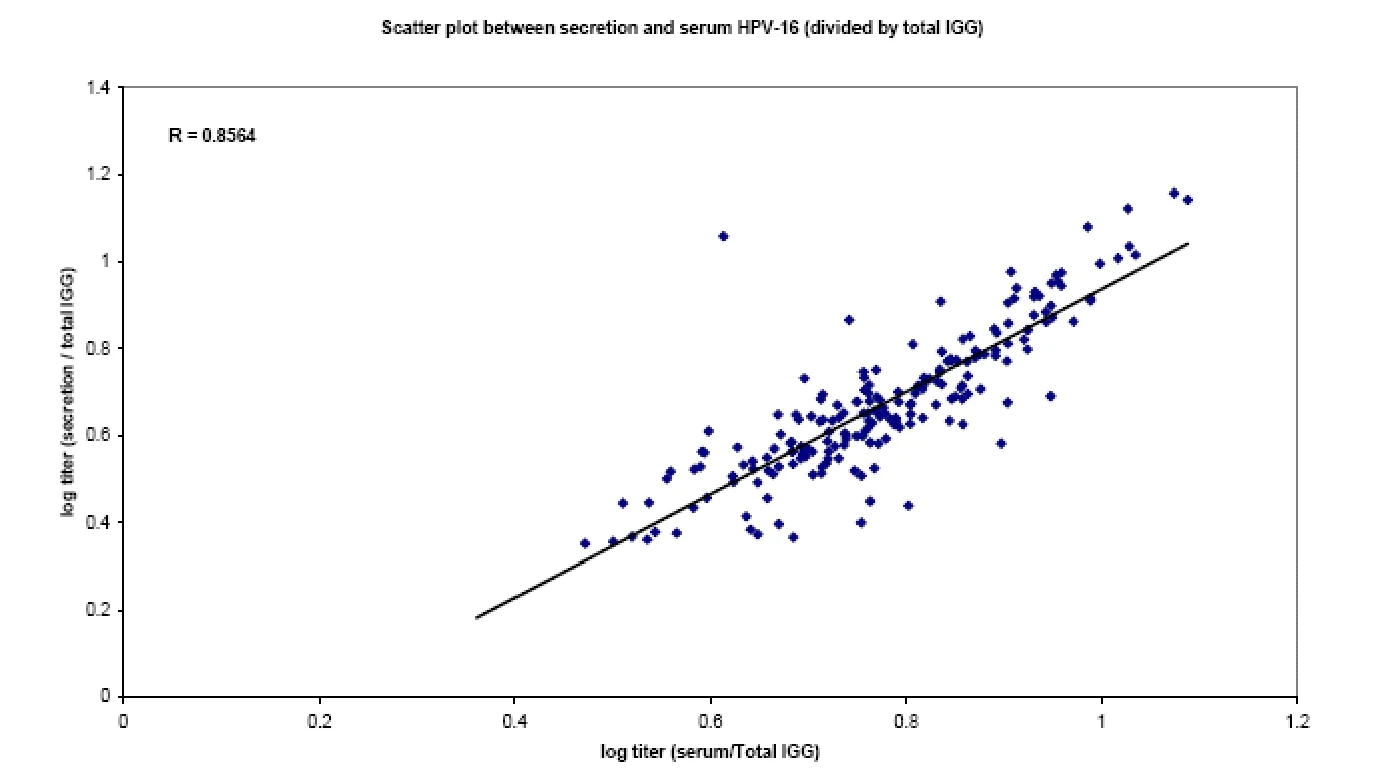
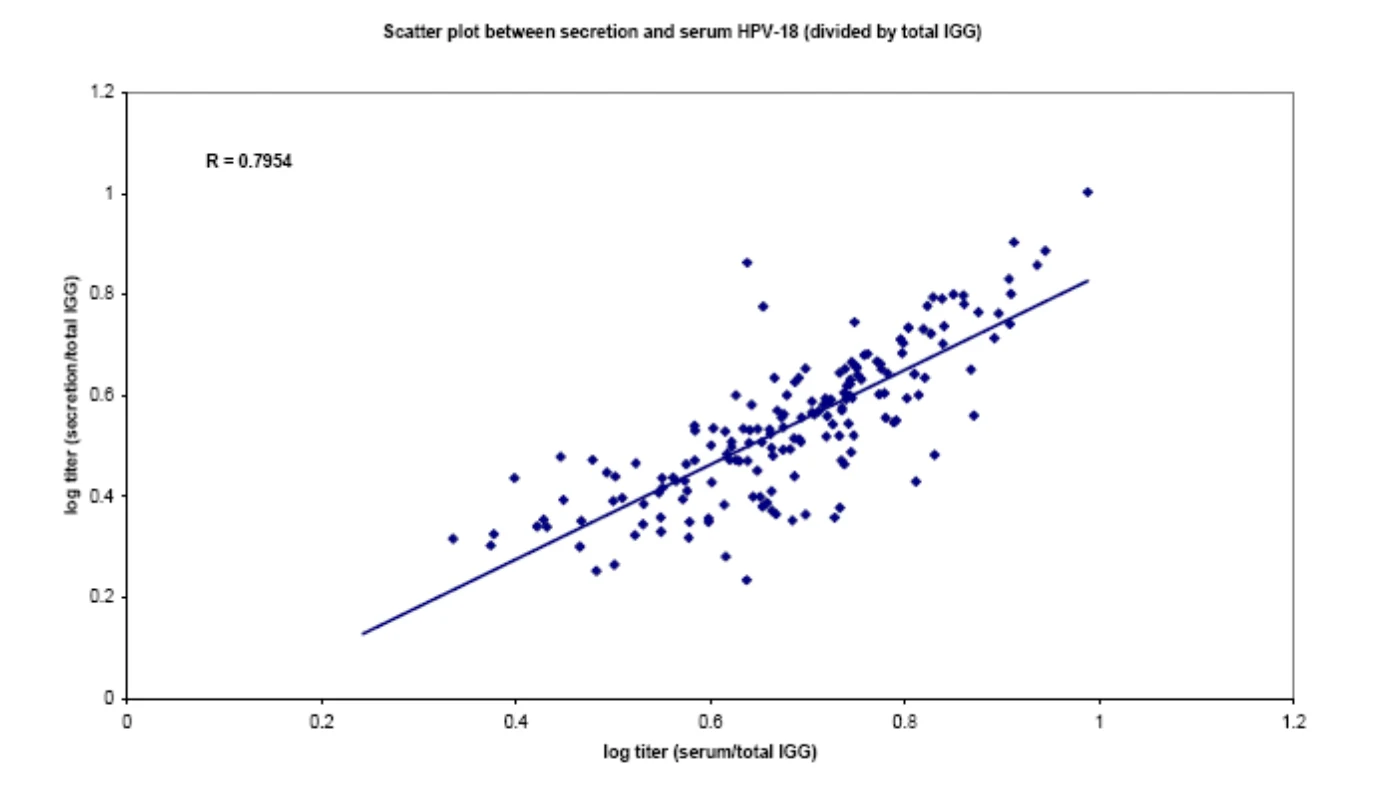
Bridging of Efficacy of CERVARIX from Young Adult Women to Adolescent Girls
Efficacy in females less than 15 years of age was assessed by comparing immunogenicity data from females 15 to 25 years of age.
In study HPV-048, a post-hoc analysis was performed to assess the non-inferiority of the immune response after the third dose of CERVARIX (administered at Months 0, 1, 6) in 9-14 years old subjects versus 15-25 years old subjects. The GMTs and GMT ratios for anti-HPV-16 and anti-HPV-18 antibodies in initially sero(-) subjects are presented in Table 20. Non-inferiority of the immune response in 9-14 years old subjects versus 15-25 years old subjects was demonstrated (see Table 20). At Month 7, all subjects (100%) remain sero(+) for anti-HPV-16 and anti-HPV-18 antibodies.
Table 21 Geometric Mean Titers and GMT Ratios for Initially Sero(-) 9-14 year old Subjects Versus 15-25 years old Subjects at Month 7 (ATP Cohort for Immunogenicity)
| CERVARIX 3-dose (Months 0, 1, 6) | GMT ratio (95% CI) | |||||||||||||
|---|---|---|---|---|---|---|---|---|---|---|---|---|---|---|
| Subjects 9-14 years | Subjects 15-25 years | |||||||||||||
| N | GMT | N | GMT | Value | LL | UL | ||||||||
| Anti-HPV-16 | 67 | 22261.3 | 111 | 10322.0 | 2.16 | 1.57 | 2.97 | |||||||
| Anti-HPV-18 | 68 | 7398.8 | 114 | 4261.5 | 1.74 | 1.32 | 2.29 | |||||||
GMT = geometric mean titer
N = number of subjects with pre-vaccination results available
95% CI = 95% confidence interval for the GMT ratio (ANOVA model – pooled variance)
LL = lower limit UL = upper limit
Non-inferiority based on the lower limit of the 95% CI of the GMT ratio for subjects 9-14 years old versus 15-25 years old was above the pre-defined limit of 0.5
In two clinical trials (HPV-012 and -013) involving 1193 females aged 10 to 14 years, all subjects seroconverted to both HPV type 16 and 18 after the third dose (at month 7) with GMTs at least 2-fold higher as compared to women aged 15 to 25 years.
Study HPV-013 was a double-blind, randomized, controlled study in which 1035 females received CERVARIX and 1032 females received a Hepatitis A Vaccine as the control vaccine with a subset of females evaluated for immunogenicity. All initially sero(-) females in the group who received CERVARIX seroconverted to both HPV-16 and HPV-18 antigens after vaccination. The GMTs for anti-HPV-16 and anti-HPV-18 antibodies in initially sero(-) females are presented in Table 21. At Month 24, 99.8% of the subjects remained sero(+) for anti-HPV-16 antibodies and all subjects (100%) remained sero(+) for anti-HPV-18 antibodies.
Table 22 Geometric Mean Titers for Initially Sero(-) Females 10 to 14 Years of Age (ATP Cohort for Immunogenicity)
Anti-HPV-16 Antibodies GMT EL.U./mL (95% CI) | Anti-HPV-18 Antibodies GMT EL.U./mL (95% CI) | ||||
|---|---|---|---|---|---|
Month 7 N=519 | Month 18 N=518 | Month 24 N=517 | Month 7 N=526 | Month 18 N=525 | Month 24 N=525 |
| 19,882.0 | 3910.1 | 3198.0 | 8248.6 | 1539.4 | 1251.3 |
| (18,600.3, 21,466.4) | (3612.7, 4232.0) | (2952.8, 3463.6) | (7658.6, 8884.1) | (1414.4, 1675.4) | (1152.7, 1358.3) |
N = number of females with pre-vaccination results available; GMT = geometric mean titer.
In Study HPV-012, the immunogenicity of CERVARIX administered to females 10 to 14 years of age was compared to that in females 15 to 25 years of age. The immune response (seroconversion) in females 10 to 14 years of age measured post-dose 3 was 100% for both HPV-16 and HPV-18 antigens and was non-inferior to that seen in females 15 to 25 years of age (Table 22). The anti-HPV-16 and anti-HPV-18 GMTs in the 10- to 14-year age group were more than 2-fold higher than in the 15- to 25-year age group.
Table 23 Geometric Mean Titers for Initially Sero(-) Females 10 to 14 Years Compared to 15 to 25 Years of Age (ATP Cohort for Immunogenicity)
| 10 to 14 Years of Age | 15 to 25 Years of Age | ||||||||||||
|---|---|---|---|---|---|---|---|---|---|---|---|---|---|
| N | GMT* EL.U./mL (95% CI) | Seropositivity Rate %** (95% CI) | N | GMT* EL.U./mL (95% CI) | Seropositivity Rate %** (95% CI) | ||||||||
| Anti-HPV-16 | 143 | 17,272.5 (15,117.9, 19,734.1) | 100 | 118 | 7438.9 (6324.6, 8749.6) | 100 | |||||||
| Anti-HPV-18 | 141 | 6863.8 (5976.3, 7883.0) | 100 | 116 | 3070.1 (2600.0, 3625.4) | 100 | |||||||
N = number of females with pre-vaccination results available; GMT = geometric mean titer.
* Non-inferiority based on the upper limit of the 2-sided 95% CI for the GMT ratio (15-25 year olds/10-14 year olds) was <2.
** Non-inferiority based on the upper limit of the 2-sided 95% CI for the difference between the seropositivity rates for 10-14 year olds and 15-25 year olds was <10%.
In an ongoing clinical trial (HPV-070) performed in girls aged 9 to 14 years receiving a 2-dose schedule (0, 6 months), all subjects seroconverted to both HPV types 16 and 18 after the second dose (at month 7). The immune response after 2 doses in females aged 9 to 14 years was demonstrated to be non-inferior (at month 7) to the immune response after 3 doses in women aged 15 to 25 years.
In study HPV-048 an exploratory post-hoc analysis showed that at Month 48, the antibodies against HPV-16 and HPV-18 in the 9-14 year old stratum of the 2-dose group (M 0,6, n=53 and n=52 for HPV-16 and HPV-18 respectively) were comparable to those observed in 15-25 year olds in the 3-dose HPV group, (M 0,1,6, n=80 and n=79 respectively for HPV-16 and HPV-18 antibodies). All initially seronegative subjects seroconverted at month 7 in the 2-dose (M 0,6) group and remained seropositive for both HPV-16 and HPV-18 antibodies at Month 48.
Based on these immunogenicity data, the efficacy of CERVARIX is inferred in females 9 to 14 years of age.
Immunogenicity in Women Aged 26 Years and Older
In study HPV-015 in women 26 years and older, at the 48-month time point, i.e., 42 months after completion of the full vaccination course, 100% and 99.4% of initially seronegative women remained seropositive for anti-HPV-16 and anti-HPV-18 antibodies, respectively. Antibody titers peaked at month 7 then gradually declined up to month 18 and stabilized to reach a plateau up to month 48.
The results of study HPV-015 confirm the strong immune response induced by CERVARIX compared with the immune response elicited after natural infection (see Figure 3 and Figure 4).
Figure 3 Kinetics for anti-HPV-16 antibodies by ELISA for subjects seronegative at baseline, by age strata (ATP cohort for immunogenicity)
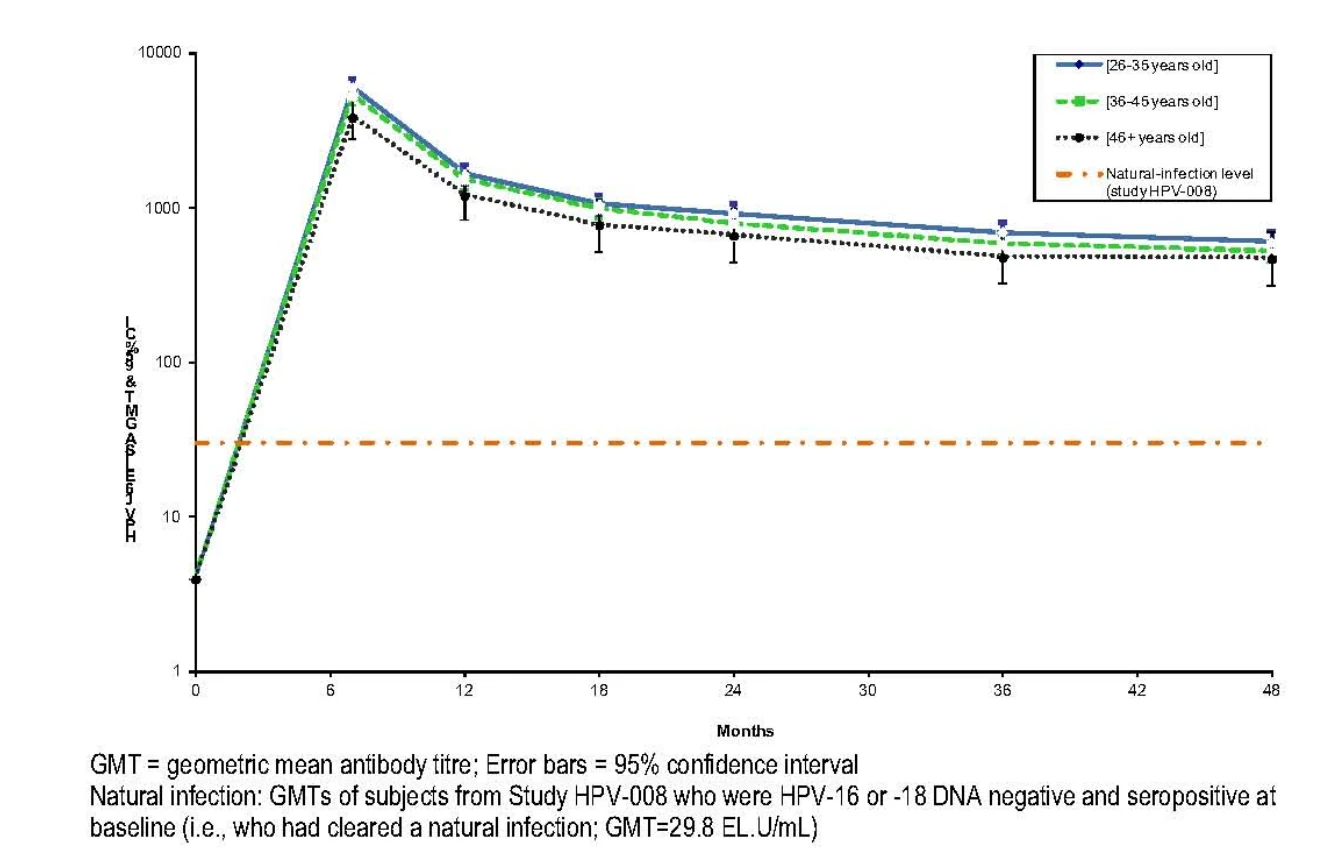
Figure 4 Kinetics for anti-HPV-18 antibodies by ELISA for subjects seronegative at baseline, by age strata (ATP cohort for immunogenicity)
GMT = geometric mean antibody titre; Error bars = 95% confidence interval
Natural infection: GMTs of subjects from Study HPV-008 who were HPV-16 or -18 DNA negative and seropositive at baseline (i.e., who had cleared a natural infection; GMT=22.6 EL.U/mL)
Immunogenicity of CERVARIX Compared to GARDASIL
Study HPV-010 was a non-inferiority comparative trial which assessed the immunogenicity of CERVARIX compared to GARDASIL in healthy adult female subjects aged 18-45 years of age. A total of 1106 subjects received at least one dose of either CERVARIX (N=553) or GARDASIL (N=553) according to the recommended schedules. Immunogenicity was analyzed for three different age groups, 18-26 (primary objective of the study), 27-35 and 36-45 (secondary objectives) years of age.
Non-inferiority of the immune response elicited by CERVARIX was demonstrated for both HPV-16 and HPV-18 neutralizing antibodies in all age cohorts at Month 7 after first vaccination (see Table 24).
Table 24 Non-Inferiority Assessment in Terms of Neutralizing Antibody Titers between CERVARIX and GARDASIL for HPV-16 and HPV-18 at Month 7 (ATP Cohort)
| CERVARIX | GARDASIL | GMT Ratio CERVARIX/GARDASIL (97.6% CI) | |||||||||
|---|---|---|---|---|---|---|---|---|---|---|---|
Age (years) | N* | GMT (ED50) | N* | GMT (ED50) | |||||||
| HPV-16 | 18-26 | 104 | 36791.8 | 103 | 10053.1 | 3.66 (2.56, 5.23) | |||||
| 27-35 | 90 | 23907.9 | 85 | 4958.4 | 4.82 (3.28, 7.09) | ||||||
| 36-45 | 96 | 17301.5 | 83 | 7634.4 | 2.27 (1.52, 3.39) | ||||||
| HPV-18 | 18-26 | 118 | 16486.9 | 131 | 2257.9 | 7.30 (5.14, 10.37) | |||||
| 27-35 | 102 | 9501.6 | 101 | 1043.0 | 9.11 (6.01, 13.82) | ||||||
| 36-45 | 110 | 9845.5 | 91 | 1438.8 | 6.84 (4.59, 10.19) | ||||||
ED50 = Estimated Dose = serum dilution giving a 50% reduction of the signal compared to a control without serum GMT = geometric mean antibody titer
N = Number of subjects with post-vaccination results available
Non-inferiority was demonstrated when the lower limit of the 97.6 CI was greater than 0.5
The 97.6% confidence interval at Month 7 is based on an overall two-sided significance level of 0.048 (0.024 for HPV-16 and 0.024 for HPV-018).
*At Month 7 for CERVARIX, 76 (36.5%), 60 (33.9%) and 47 (28.0%) subjects were excluded from the ATP cohort for immunogenicity in the 18-26, 27-35 and 36-45 age groups, respectively. For GARDASIL, the numbers were 72 (34.4%), 63 (35.2%) and 54 (32.7%).
At Month 36, the GMT ratios (CERVARIX/GARDASIL) for HPV-16 were 5.89, 3.78 and 2.18 in the 18-26, 27-35 and 36-45 age groups, respectively. For HPV-18, the GMT ratios were 12.47, 9.25 and 8.75.
In the CERVARIX group, all initially seronegative and DNA negative subjects across all age strata remained seropositive (100%), by PBNA, for HPV-16 and HPV-18 antibodies at Month 36, except for two subjects in the 36-45 age group for HPV-18 (97.2%). In the GARDASIL group, 98.4%, 100% and 100% of subjects were seropositive for HPV-16 antibodies, and 78.9%, 70.5% and 73.8% were seropositive for HPV-18 antibodies in the 18-26, 27-35 and 36-45 age groups, respectively.
Antibody levels as measured by PBNA were 2.2 to 5.9-fold higher for HPV-16 and 7.7 to 9.4-fold higher for HPV-18 across all age strata in the CERVARIX group as compared to the GARDASIL group at Month 36.
Immunogenicity in HIV infected women
In a clinical study performed in 120 HIV positive asymptomatic subjects (WHO HIV Clinical Stage 1) aged 18 to 25 years (60 subjects received CERVARIX), all subjects were seropositive to both HPV type 16 and 18 after the third dose (at Month 7) and the seropositivity for HPV type 16 and 18 was maintained up to Month 12. The GMTs appear to be lower in this population than observed in HIV negative subjects but were more than fifteen-fold higher than the response to natural HPV infection and equal to or above GMT levels for which sustained efficacy has been demonstrated.
CERVARIX was shown to be generally well tolerated in women aged 18 to 25 years infected with HIV up to six months after the last vaccine dose and over the 12 months trial period. The vaccine did not affect the CD4+ cell count, the HIV viral load and the HIV clinical stage.
15 MICROBIOLOGY
No microbiological information is required for this drug product.
16 NON-CLINICAL TOXICOLOGY
Animal toxicology and/or pharmacology
Non-clinical data reveal no special hazard for humans based on conventional studies of acute and repeated dose toxicity, local tolerance and cardiovascular/respiratory safety pharmacology.
Carcinogenesis and Mutagenesis
No studies were done on CERVARIX. However, the MPL adjuvant was not mutagenic in standard mutagenicity tests.
Reproductive Toxicology
Animal studies performed with CERVARIX administered to female rats do not indicate direct or indirect harmful effects with respect to fertility, pregnancy, embryonal/fetal development, parturition or postnatal development.
The effect of CERVARIX on embryo-fetal, peri-natal and post-natal survival and development has been assessed in rats. Such animal studies do not indicate direct or indirect harmful effects with respect to fertility, pregnancy, embryonal/fetal development, parturition or post-natal development.