


Product Monograph - Chloral Hydrate Syrup Odan
RECENT MAJOR LABEL CHANGES
| None at time of the most recent authorization | 06 / 2022 |
|---|
TABLE OF CONTENTS
Sections or subsections that are not applicable at the time of authorization are not listed.
RECENT MAJOR LABEL CHANGES .......................................................................................... 2
TABLE OF CONTENTS ............................................................................................................ 2
PART I: HEALTH PROFESSIONAL INFORMATION .................................................................... 4
1 INDICATIONS ............................................................................................................. 4
1.1 Pediatrics .................................................................................................................. 4
1.2 Geriatrics .................................................................................................................. 4
2 CONTRAINDICATIONS ................................................................................................ 4
4 DOSAGE AND ADMINISTRATION ................................................................................ 4
4.1 Dosing Considerations ............................................................................................. 4
4.2 Recommended Dose and Dosage Adjustment ........................................................ 4
4.4 Administration ......................................................................................................... 5
4.5 Missed Dose ............................................................................................................. 5
5 OVERDOSAGE ............................................................................................................ 5
6 DOSAGE FORMS, STRENGTHS, COMPOSITION AND PACKAGING ................................ 5
7 WARNINGS AND PRECAUTIONS ................................................................................. 6
7.1 Special Populations .................................................................................................. 7
7.1.1 Pregnant Women ............................................................................................... 7
7.1.2 Breast-feeding .................................................................................................... 7
7.1.3 Pediatrics ............................................................................................................ 7
7.1.4 Geriatrics ............................................................................................................ 7
8 ADVERSE REACTIONS................................................................................................. 7
8.1 Adverse Reaction Overview ..................................................................................... 7
8.2 Clinical Trial Adverse Reactions ............................................................................... 8
9 DRUG INTERACTIONS ................................................................................................ 8
9.4 Drug-Drug Interactions ............................................................................................ 8
9.5 Drug-Food Interactions ............................................................................................ 9
9.6 Drug-Herb Interactions ............................................................................................ 9
9.7 Drug-Laboratory Test Interactions........................................................................... 9
10 CLINICAL PHARMACOLOGY ........................................................................................ 9
10.1 Mechanism of Action ......................................................................................... 9
10.2 Pharmacodynamics .......................................................................................... 10
10.3 Pharmacokinetics ............................................................................................. 10
11 STORAGE, STABILITY AND DISPOSAL ........................................................................ 10
12 SPECIAL HANDLING INSTRUCTIONS .......................................................................... 11
PART II: SCIENTIFIC INFORMATION ..................................................................................... 11
13 PHARMACEUTICAL INFORMATION .......................................................................... 11
14 CLINICAL TRIALS ...................................................................................................... 11
15 MICROBIOLOGY ...................................................................................................... 11
16 NON-CLINICAL TOXICOLOGY .................................................................................... 11
PATIENT MEDICATION INFORMATION ................................................................................ 12
PART I: HEALTH PROFESSIONAL INFORMATION
1 INDICATIONS
CHLORAL HYDRATE SYRUP ODAN (Chloral Hydrate Oral Solution, Odan Std.) is indicated:
- For treatment of insomnia for short-term use; it has been shown to lose its effectiveness for both inducing and maintaining sleep after 2 weeks of administration.
- As a preoperative sedative that allays anxiety and induces sleep in candidates for surgery.
- In postoperative care and control of pain, as an adjunct to opiates and analgesics.
1.1 Pediatrics
Pediatrics (0-18 years of age): Health Canada has not authorized an indication for pediatric use (see 4.2 Recommended Dose and Dosage Adjustment, Children and 7.1.3 Pediatrics).
1.2 Geriatrics
Evidence from clinical studies and experience suggests that use in the geriatric population is associated with differences in safety or effectiveness (see 4.1 Dosing Considerations).
2 CONTRAINDICATIONS
CHLORAL HYDRATE SYRUP ODAN is contraindicated in patients:
- with marked hepatic or renal impairment.
- who are hypersensitive to this drug or to any ingredient in the formulation, including any non-medicinal ingredient, or component of the container. For a complete listing, see 6 DOSAGE FORMS, STRENGTHS, COMPOSITION AND PACKAGING.
4 DOSAGE AND ADMINISTRATION
4.1 Dosing Considerations
- Dosage must be individualized. Avoid in patients with moderate to severe renal failure (creatinine clearance < 0.8 ml/s). No dosage adjustment is necessary for patients with mild renal failure. Avoid in patients with severe hepatic dysfunction. (See 2 CONTRAINDICATIONS)
4.2 Recommended Dose and Dosage Adjustment
Adults:
- The usual hypnotic dose is 500 mg to 1 g, taken 15 to 30 minutes before bedtime or ½ hour before surgery.
- The usual sedative dose is 250 mg 3 times daily after meals. Generally, single doses or daily dosage should not exceed 2 g.
Children:
- The usual daily hypnotic dosage is 50 mg/kg, with a maximum of 1g per single dose. Daily dosage may be given in divided doses, if indicated.
- The sedative dosage is half of the hypnotic dosage. Maximum children sedative dose is 500 mg.
- The usual premedicant dose is 25 to 50 mg/kg, 30 minutes prior to procedure. May be repeated in 30 minutes using half the dose. Maximum children premedicant single dose is 1000 mg.
Geriatric:
- The usual hypnotic dose is 250 mg, 15 to 30 minutes before bedtime.
4.4 Administration
CHLORAL HYDRATE SYRUP ODAN may be administered in half a glass of water, fruit juice, or ginger ale.
4.5 Missed Dose
If a dose is missed, the next dose should be taken at the usual time. However, if it is almost time for the next dose, then the missed dose is to be skipped and not take two doses at once.
5 OVERDOSAGE
Symptoms: The signs and symptoms of chloral hydrate overdosage resemble those of barbiturates overdosage and especially affect the CNS and cardiovascular system: CNS depression, deep coma, respiratory depression, hypotension, cardiac arrhythmias. They may include: hypothermia, pinpoint pupils, blood pressure falls, comatose state, slow or rapid and shallow breathing. Gastric irritation may result in vomiting and even gastric necrosis. If the patient survives, icterus due to hepatic damage and albuminuria from renal irritation may appear.
The toxic oral dose of chloral hydrate for adults is approximately 10 g; however, death has been reported from a dose of 4 g and some patients have survived after taking as much as 30 g.
Treatment: Accidental overdosage should be treated by inducing vomiting with Ipecac syrup to empty the stomach; or by giving charcoal with sorbitol. Supportive measures, including respiratory and cardiovascular assistance and maintenance of body temperature and circulation, may be used. The airway should be protected in obtunded or unconscious patients. Cardiac monitoring is important, especially in patients with pre-existing cardiac disease. Hypotension should be treated with appropriate i.v. fluids and electrolytes; dopamine or norepinephrine may be required. Baseline hepatic and renal function tests should be obtained. Hemodialysis removes both the parent drug and the trichloroethanol metabolite.
| For management of a suspected drug overdose, contact your regional poison control centre. |
|---|
6 DOSAGE FORMS, STRENGTHS, COMPOSITION AND PACKAGING
Table – Dosage Forms, Strengths, Composition and Packaging
Description
Each 5 ml of orange flavored syrup contains 500 mg of chloral hydrate USP. Available in bottles of 500 ml.
7 WARNINGS AND PRECAUTIONS
Cardiovascular
Continued use of therapeutic doses of chloral hydrate has been shown to be without deleterious effect on the heart. Large doses of chloral hydrate, however, should not be used in patients with severe cardiac disease due to the possibility of cardiac arrhythmias and hypotension associated with larger doses.
Dependence/Tolerance
Chloral hydrate may be habit-forming: Long-term use or larger than usual therapeutic doses may result in tolerance and in physical and/or psychological dependence. Therefore, caution must be exercised when administering the drug to patients susceptible to drug abuse, mentally depressed, or suicidal.
Withdrawal: Sudden withdrawal may result in hallucinations and symptoms similar to delirium tremens (sometimes fatal), therefore chloral hydrate should be tapered gradually. Patients should be warned against sudden discontinuation of chloral hydrate except under the advice of the physician; they should also be informed of symptoms that would suggest potential adverse effects.
Driving and Operating Machinery
Chloral hydrate may cause drowsiness; therefore patients should be instructed to use caution when driving, operating a vehicle, potentially dangerous machinery or performing any hazardous task.
Endocrine and Metabolism
Chloral hydrate has been reported to precipitate attacks of acute intermittent porphyria and should be used with caution in susceptible patients.
Gastrointestinal
Because of its irritant properties, oral use of chloral hydrate should be avoided in patients with gastritis, esophagitis or gastric or duodenal ulcer.
Respiratory
Careful monitoring is required in patients with respiratory insufficiency.
Skin
| Route of Administration | Dosage Form / Strength/Composition | Non-medicinal Ingredients |
| Oral | Solution; 500 mg / 5 mL | Citric Acid, D&C Yellow #10, FD&C Red #40, Flavor Blood Orange, Glycerin, Methylparaben, Propylene Glycol, Purified Water, Sodium Benzoate, Sodium Citrate, Sodium Hydroxide, Sucrose. |
Chloral hydrate is an irritant when applied to the skin and mucous membranes (See 8.1 Adverse Reaction Overview, Skin and subcutaneous tissue disorders).
7.1 Special Populations
7.1.1 Pregnant Women
Animal reproduction studies have not been conducted with chloral hydrate. Chloral hydrate crosses the placental barrier and chronic use during pregnancy may cause withdrawal symptoms in the neonate. It is not known whether chloral hydrate can affect reproduction capacity. Chloral hydrate should be given to a pregnant woman only if clearly needed. FDA Pregnancy Category C.
7.1.2 Breast-feeding
Chloral hydrate is excreted in human milk; use by nursing mothers may cause sedation in the infant.
7.1.3 Pediatrics
Gastric irritation and vomiting may occur following administration of the oral liquid. It should be well diluted with water or other liquid such as fruit juice or ginger ale. Due to the prolonged half-lives of the chloral hydrate's metabolites, excessive CNS depression may occur due to accumulation following repeated dosing. The degree of sedation should be monitored and caregivers cautioned against exceeding prescribed dosage. Neonates should be monitored for increased bilirubin concentrations as hyperbilirubinemia may occur due to the competition of chloral hydrate metabolites with bilirubin for hepatic glucuronidation.
Patients should be monitored for CNS and respiratory depressive effects. Deaths associated with the use of chloral hydrate for sedation prior to diagnostic or therapeutic procedures have been reported, particularly in pediatric patients. In addition, particular care must be taken in calculating and administering the proper dose. Sedation with chloral hydrate in children with adenoidal hypertrophy and obstructive sleep apnea has been reported to cause episodes of life-threatening respiratory obstruction. Children with obstructive sleep apnea from other causes may be at risk as well. Laryngeal edema resulting in severe respiratory difficulty in a child has also been reported.
7.1.4 Geriatrics
In geriatric patients likely to have age-related hepatic/renal function impairment, and in debilitated patients or those patients prone to CNS depression, reduction of dose may be necessary to avoid oversedation or other adverse effects. (See 2 CONTRAINDICATIONS)
8 ADVERSE REACTIONS
8.1 Adverse Reaction Overview
Blood and lymphatic system disorders: Leukopenia and eosinophilia have occasionally occurred.
Cardiac disorders: Large doses of chloral hydrate have been reported to produce hypotension, ventricular and atrial arrhythmias, torsades de pointes, depression of myocardial contractility, and shortening of refractory periods.
Ear and labyrinth disorders: Increases in middle ear pressure in infants and children have been reported.
Eye disorders: Chloral hydrate has produced oculotoxicities manifesting as ptosis, allergic conjunctivitis and keratoconjunctivitis.
Gastrointestinal disorders: Ileus in infant has been reported. Some patients experience gastric irritation and occasionally nausea and vomiting, flatulence, diarrhea, and unpleasant taste occur. These effects can be minimized by taking chloral hydrate with a full glass of fluid.
Metabolism and nutrition disorders: Chloral hydrate has been reported to precipitate attacks of acute intermittent porphyria.
Nervous system disorders: Occasionally, a patient becomes somnambulistic and may be disoriented and incoherent and show paranoid behavior. Rarely, excitement, tolerance, addiction, delirium, drowsiness, staggering gait, ataxia, lightheadedness, vertigo, dizziness, nightmares, malaise, mental confusion, and hallucinations have been reported. Hangover effect can occur, although it is less commonly observed than with barbiturates and some benzodiazepines.
Other: Chronic poisoning may manifest with symptoms of gastritis, skin rash, peripheral vasodilation, hypotension, renal damage and myocardial depression.
Renal and urinary disorders: Rarely, ketonuria have been reported.
Respiratory, thoracic and mediastinal disorders: Life-threatening respiratory obstruction episodes have been reported in young children.
Skin and subcutaneous tissue disorders: Allergic skin rashes including hives, exzematoid dermatitis, urticaria, scarlatiniform exanthems, bulbous reactions, non-thrombocytopenic purpurea and erythema multiforme, have occasionally been reported. Some cutaneous reactions are accompanied by fever. Chloral hydrate is an irritant when applied to the skin and mucous membranes.
8.2 Clinical Trial Adverse Reactions
The clinical trial data on which the original indication was authorized is not available.
9 DRUG INTERACTIONS
9.3 Drug-Behaviour Interactions
CHLORAL HYDRATE SYRUP ODAN may produce additive CNS depressant effects when co-administered with alcohol.
9.4 Drug-Drug Interactions
Alcohol or CNS Depressants: Concurrent use may increase the CNS depressant effects of either these medications or chloral hydrate, cautions recommended and dosage of one or both agents should be reduced.
(A disulfiram-like reaction may occur in patients receiving chloral hydrate and alcohol, including tachycardia, facial flushing, and dysphoria.)
Anticoagulants, coumarin – or indandione-derivative: Chloral hydrate may transiently enhance the hypoprothrombinemic response to these medications, especially within the first 2 weeks of therapy, by displacing the anticoagulant from plasma protein binding sites. When chloral hydrate is added or removed from the therapeutic regimen, or when dosage changes are made, frequent prothrombin time determinations are recommended.
Furosemide, intravenous: Use caution if administering i.v. furosemide within 24 hours of chloral hydrate. Administration of chloral hydrate followed by intravenous furosemide within 24 hours may result in diaphoresis, hot flashes, and variable blood pressure, including hypertension.
9.5 Drug-Food Interactions
Interactions with food have not been established.
9.6 Drug-Herb Interactions
Interactions with herbal products have not been established.
9.7 Drug-Laboratory Test Interactions
Chloral hydrate may produce false-positive results for urine glucose determinations utilizing cupric sulfate as Benedict's solution and possibly with cupric sulfate tablets but the drug does not interfere with urine glucose tests utilizing glucose oxidase.
Chloral hydrate may interfere with fluorometric tests for urine catecholamines, and it has been recommended that the drug not be administered for 48 hours preceding the test.
Chloral hydrate administration may also interfere with the Reddy, Jenkins, and Thorn procedure for determining urinary 17-hydroxycorticosteroids. Administration of chloral Hydrate can result in erroneously high values for vitamin B12 in some radioassay procedure.
10 CLINICAL PHARMACOLOGY
10.1 Mechanism of Action
The mechanism of action by which the CNS is affected is not known. Chloral hydrate is readily absorbed from the gastrointestinal tract following oral administration; however, significant amounts of chloral hydrate have not been detected in the blood after oral administration. It is generally believed that the central depressant effects are due to the principal pharmacologically active metabolite trichloroethanol.
Hypnotic dosage produces mild cerebral depression and quiet, deep sleep with little or no "hangover". Chloral hydrate decreases sleep latency and nighttime awakenings with minimal effects on REM sleep REM rebound does not occur with drug withdrawal.
Blood pressure and respiration are depressed only slightly more than in normal sleep and reflexes are not significantly depressed, so the patient can be awakened and completely aroused. Higher doses may lead to depression of respiratory and vasomotor centers.
Chloral hydrate has little analgesic activity and may produce excitement or delirium in the presence of pain. Sedative or hypnotic doses have little anticonvulsant activity.
10.2 Pharmacodynamics
Following a hypnotic dose, drowsiness occurs within 10 to 15 minutes, and sleep usually occurs within 30 to 60 minutes, which lasts about 4 to 8 hours. When used as a premedication in infants and children, sedation usually occurs within 15 minutes and sleep by 40 minutes, with most fully awake within 2 hours.
10.3 Pharmacokinetics
Absorption:
Chloral hydrate is readily absorbed from the gastrointestinal tract after oral administration.
Distribution:
Chloral hydrate has been detected in CSF, umbilical cord blood, fetal blood, and amniotic fluid. Following therapeutic doses of chloral hydrate, only small, clinically insignificant amounts of the active metabolite are distributed into milk.
Metabolism:
Chloral hydrate is rapidly and extensively metabolized in the liver and erythrocytes by alcohol dehydrogenase to active trichloroethanol. A small amount of chloral hydrate and a larger portion of trichloroethanol are oxidized to an inactive metabolite, trichloroacetic acid, in the liver and kidneys. This metabolite is excreted in the urine and bile, together with trichloroethanol in free or conjugated form.
Elimination:
The average half-life of trichloroethanol in adults is 8 hours, ranging from 4 to 12 hours. The half-life is prolonged in children and infants, averaging 10 hours in children and 37 hours in pre-term infants. Trichloroethanol is 70 to 80% bound to plasma proteins and is widely distributed to all tissues including CSF, breast milk and placenta.
The half-life of trichloroacetic acid approaches 100 hours. It is highly plasma protein bound (94%), primarily to albumin.
11 STORAGE, STABILITY AND DISPOSAL
Temperature:
Store CHLORAL HYDRATE SYRUP ODAN below 40°C; preferably between 15 and 30°C.
Protect from freezing.
Light:
Store in a light-resistant container.
Moisture:
Store in a tight container.
Others:
Keep out of reach and sight of children.
12 SPECIAL HANDLING INSTRUCTIONS
None
PART II: SCIENTIFIC INFORMATION
13 PHARMACEUTICAL INFORMATION
Drug Substance
Proper name: Chloral Hydrate
Chemical name: 1,1-Ethanediol,2,2,2-trichloro-
Molecular formula and molecular mass: CCl3CH(OH)2 165.4 g/mol
Structural formula:
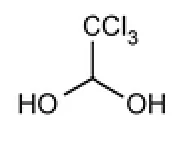
Physicochemical properties: Colorless, transparent, or white crystals having an aromatic, penetrating, and slightly acrid odor, and a slightly bitter, caustic taste. Melts at about 55°, and slowly volatilizes when exposed to air. Very soluble in water and in olive oil; freely soluble in alcohol, in chloroform, and in ether.
14 CLINICAL TRIALS
The clinical trial data on which the original indication was authorized is not available.
15 MICROBIOLOGY
No microbiological information is required for this drug product.
16 NON-CLINICAL TOXICOLOGY
Information not available.