


Product Monograph - Clorotekal
RECENT MAJOR LABEL CHANGES
None at time of the most recent authorization
RECENT MAJOR LABEL CHANGES ............................................................................................ 2
PART I: HEALTH PROFESSIONAL INFORMATION ...................................................................... 4
1 INDICATIONS ............................................................................................................... 4
1.1 Pediatrics ................................................................................................................ 4
1.2 Geriatrics ................................................................................................................ 4
2 CONTRAINDICATIONS ................................................................................................. 4
3 SERIOUS WARNINGS AND PRECAUTIONS BOX ............................................................ 5
4 DOSAGE AND ADMINISTRATION ................................................................................. 5
4.1 Dosing Considerations ............................................................................................ 5
4.2 Recommended Dose and Dosage Adjustment ....................................................... 6
4.4 Administration ........................................................................................................ 6
5 OVERDOSAGE .............................................................................................................. 7
6 DOSAGE FORMS, STRENGTHS, COMPOSITION AND PACKAGING ................................. 9
7 WARNINGS AND PRECAUTIONS .................................................................................. 9
7.1 Special Populations .............................................................................................. 11
7.1.1 Pregnant Women ................................................................................................. 11
7.1.2 Breast-feeding ..................................................................................................... 11
7.1.3 Pediatrics ............................................................................................................. 12
7.1.4 Geriatrics .............................................................................................................. 12
8 ADVERSE REACTIONS ................................................................................................ 12
8.1 Adverse Reaction Overview .................................................................................. 12
8.2 Clinical Trial Adverse Reactions ............................................................................ 12
8.3 Less Common Clinical Trial Adverse Reactions ..................................................... 13
8.5 Post-Market Adverse Reactions ........................................................................... 14
9 DRUG INTERACTIONS ................................................................................................ 15
9.1 Serious Drug Interactions ..................................................................................... 15
9.2 Drug Interactions Overview .................................................................................. 15
9.3 Drug-Behavioural Interactions .............................................................................. 16
9.4 Drug-Drug Interactions ......................................................................................... 16
9.5 Drug-Food Interactions ......................................................................................... 17
9.6 Drug-Herb Interactions ......................................................................................... 17
9.7 Drug-Laboratory Test Interactions ........................................................................ 17
10 CLINICAL PHARMACOLOGY ....................................................................................... 17
10.1 Mechanism of Action ...................................................................................... 17
10.2 Pharmacodynamics ........................................................................................ 17
10.3 Pharmacokinetics ........................................................................................... 17
11 STORAGE, STABILITY AND DISPOSAL ......................................................................... 19
12 SPECIAL HANDLING INSTRUCTIONS ........................................................................... 19
PART II: SCIENTIFIC INFORMATION ....................................................................................... 19
13 PHARMACEUTICAL INFORMATION ............................................................................ 19
14 CLINICAL TRIALS ........................................................................................................ 20
Clinical Trials By Indication ............................................................................................. 20
15 MICROBIOLOGY ........................................................................................................ 22
16 NON-CLINICAL TOXICOLOGY ..................................................................................... 23
PATIENT MEDICATION INFORMATION .................................................................................. 25
PART I: HEALTH PROFESSIONAL INFORMATION
1 INDICATIONS
CLOROTEKAL (chloroprocaine hydrochloride injection) is indicated for:
- the induction of spinal anaesthesia by intrathecal administration, in adults undergoing surgical procedures no longer than 40 minutes in duration.
1.1 Pediatrics
Pediatrics (<18 years of age): No data are available to Health Canada; therefore, Health Canada has not authorized an indication for pediatric use.
1.2 Geriatrics
Clinical studies of CLOROTEKAL did not include sufficient numbers of patients 65 years of age and older to determine whether they respond differently from younger patients. In general, elderly patients have a greater frequency of decreased hepatic, renal, or cardiac function, and of concomitant disease or other drug therapy, which may affect response to CLOROTEKAL. Exercise caution when using CLOROTEKAL in elderly patients (see 7.1.4 Geriatrics).
2 CONTRAINDICATIONS
CLOROTEKAL is contraindicated:
- in patients who are hypersensitive to this drug, medicinal products of the PABA (para-ami-nobenzoic acid) ester group, or to any ingredient in the formulation, including any non-me-dicinal ingredient, or component of the container. For a complete listing, see 6 DOSAGE FORMS, STRENGTHS, COMPOSITION AND PACKAGING.
- in patients with general and specific contraindications to spinal anaesthesia regardless of the local anaesthetic used, should be taken into account (e.g. decompensated cardiac in-sufficiency, hypovolemic shock).
- for intravenous regional anaesthesia (IVRA).
- in patients with serious problems with cardiac conduction.
- in patients with severe anaemia.
- in patients taking anticoagulants or those with congenital or acquired bleeding disorder.
- in patients with septicemia or local infection at the site of the proposed lumbar puncture.
3 SERIOUS WARNINGS AND PRECAUTIONS BOX
Serious Warnings and Precautions
|
|---|
4 DOSAGE AND ADMINISTRATION
4.1 Dosing Considerations
- CLOROTEKAL must only be administered by clinicians with the necessary knowledge and experi-ence in intrathecal anesthesia administration.
- The equipment, drugs, and personnel capable of dealing with an emergency, e.g. maintaining the patency of the airways and administering oxygen, must be immediately available, because in rare cases severe reactions, sometimes with a fatal outcome, have been reported after using local anesthetics, even in the absence of individual hypersensitivity in the patient’s case history.
- The safety of CLOROTEKAL administration via continuous spinal catheters has not been estab-lished and administration by this route is not recommended.
- Posology must be established on an individual basis in accordance with the characteristics of the specific case. When determining the dose, take into consideration the patient's physical condition and the concomitant administration of other medicinal products.
The indications relating to recommended doses are valid in adults of average height and weight (approximately 70 kg) for obtaining an effective block with one single administration. There are wide individual variations with regard to extent and duration of action. The experience of the
- essential for establishing the dose.
- The duration of action is dose-dependent (see Table 1).
4.2 Recommended Dose and Dosage Adjustment
Adults (≥ 18 years of age):
The extent and degree of spinal anesthesia depend upon several factors including dosage, specific grav-ity of the anesthetic solution, volume of solution used, force of injection, level of puncture, and posi-tion of the patient during and immediately after injection.
To obtain an effective block to the T 10 level with one single administration in an adult of average height and weight (approximately 70 kg), the recommended dose is 50 mg.
The maximum recommended dose is 50mg (5mL) of chloroprocaine hydrochloride. Doses above 50 mg have not been adequately tested for efficacy and safety.
Pediatrics (<18 years of age):
The safety and efficacy of CLOROTEKAL in children and adolescents have not been established. Health Canada has not authorized an indication for pediatric use (see 1.1 Pediatrics).
Compromised General Condition:
The clinician's experience and knowledge of the patient's physical status are of importance when decid-ing the dose. It is advisable to reduce the dose in patients in a compromised general condition. In addi-tion, in patients with established concomitant disorders (e.g. vascular occlusion, arteriosclerosis, dia-betic polyneuropathy) a reduced dose is indicated (see 7 WARNINGS AND PRECAUTIONS; 7.1.4 Geriat-rics, 10.3 Pharmacokinetics).
The duration of action of CLOROTEKAL is dose-dependent (see Table 1) and lower doses have been as-sociated with a shorter duration of anaesthesia and a higher failure rate. When selecting a dose for this population, all risks should be considered (see 14.1 Clinical Trials By Indication).
Table 1: Dosage for Adults
| Extensions of sensory blockade required to T10 | mL | mg | Average duration of action (minutes) |
|---|---|---|---|
4 5 | 40 50 | 80 100 |
4.4 Administration
Not for epidural administration.
CLOROTEKAL should be injected via intrathecal route into the intervertebral space L2/L3, L3/L4 and L4/L5.
The entire dose should be injected slowly, after having aspirated a minimum quantity of CSF to confirm the correct position. The patient’s vital functions should be checked extremely carefully maintaining continuous verbal contact.
In general, the following points should be taken into consideration:
- A free flow of cerebrospinal fluid during the performance of spinal anesthesia is indicative of entry into the subarachnoid space.
- To avoid intravascular injection, aspiration should be performed before the anesthetic solution is injected. The needle must be repositioned until no blood return can be elicited. However, the absence of blood in the syringe does not guarantee that intravascular injection has been avoided.
- Do not puncture the skin if there are signs of infection or inflammation.
- The patient should have IV fluids running via an indwelling catheter to assure functioning intra-venous access.
- Visually inspect parental drug products for particulate matter and discoloration prior to admin-istration, whenever solution and container permit.
- CLOROTEKAL is intended for single-use only. Discard any unused portion in an appropriate manner.
- CLOROTEKAL must be drawn up with a filter needle. Use CLOROTEKAL immediately after first opening. Protect from light. Do not freeze, heat, or autoclave.
- In the absence of safety studies and compatibility studies, this product must not be mixed or diluted with other products. In addition, this product should not be substituted with a different chloroprocaine product.
5 OVERDOSAGE
Acute systemic toxicity
Systemic undesirable effects are of methodological (due to use), pharmacodynamic or pharmacokinetic origin and concern the central nervous system and the cardiocirculatory system.
Iatrogenic undesirable effects occur:
- after injecting an excessive quantity of solution
- from accidental injection into a vessel
- from incorrect patient position
- from high spinal anaesthesia (marked drop in arterial pressure).
In the case of accidental intravenous administration, the toxic effect occurs within 1 minute. The intra-venous LD50 of chloroprocaine HCl is 97 mg/kg in mice, 65 mg/kg in guinea pigs and <30 mg/kg in dogs, corresponding to human equivalent doses of 7.9 mg/kg, 14.1 mg/kg and < 16.7 mg/kg, respectively. The subcutaneous LD50 of chloroprocaine HCl in mice is 950 mg/kg, corresponding to human equiva-lent dose of 77.2 mg/kg.
Symptoms
Generally, the first symptoms are paresthesia in the mouth area, feeling of numbness of the tongue, feeling dazed, problems with hearing and tinnitus. Visual problems and muscle contractions are more severe and precede a generalized convulsion. These signs must not be erroneously mistaken for neu-rotic behaviour. Subsequently loss of consciousness and tonic-clonic seizure may occur, generally last-ing between a few seconds and a few minutes. The convulsions are immediately followed by hypoxia and increased levels of carbon dioxide in the blood (hypercapnia), attributable to increased muscular activity associated with respiratory problems. In serious cases respiratory arrest may occur. Acidosis and/or hypoxia potentiate the toxic effects of local anaesthetics.
The reduction or improvement of symptoms affecting the central nervous system can be attributed to the redistribution of local anaesthetic outside the CNS, with its consequent metabolism and excretion. Regression may be rapid, unless enormous quantities have been used.
In serious cases cardiovascular toxicity may occur. Hypotension, bradycardia, arrhythmia and also car-diac arrest may occur in the presence of a high systemic concentration of local anaesthetics.
The first signs of toxic symptoms affecting the central nervous system generally precede toxic cardio-vascular effects. This statement does not apply if the patient is under general anaesthesia or heavily sedated with medicinal products such as benzodiazepine or barbiturates.
Treatment
The following measures must be taken immediately:
- Administration of CLOROTEKAL must be stopped.
- An adequate supply of oxygen must be ensured: the airways should be kept clear, O2, should be administered, artificial ventilation (intubation) if required.
- In case of cardiovascular depression circulation must be stabilized.
If convulsions occur and do not resolve spontaneously after 15-20 seconds, the administration of an intravenous anticonvulsant is recommended.
Analeptics with a central action are contraindicated in the case of intoxication caused by local anaes-thetics.
In the event of serious complications, when treating the patient it is advisable to obtain the assistance of a doctor specializing in emergency medicine and resuscitation (e.g. anaesthetist).
In patients with genetic deficiency of plasma cholinesterase an intravenous lipid solution could be ad-ministered.
| For management of a suspected drug overdose, contact your regional poison control centre or Health Canada's toll-free number, 1-844 POISON-X (1-844-764-7669). |
|---|
6 DOSAGE FORMS, STRENGTHS, COMPOSITION AND PACKAGING
Table 2 – Dosage Forms, Strengths, Composition and Packaging
CLOROTEKAL is supplied as a single-dose sterile, clear, colorless solution in a Type I glass ampoule that provides 50 mg of chloroprocaine hydrochloride in 5 mL aqueous solution (concentration: 10 mg/mL), equivalent to 44.05 mg/5 mL (8.81 mg/mL) chloroprocaine.
CLOROTEKAL is supplied in a box of 10 ampoules containing 5 mL of solution for injection.
7 WARNINGS AND PRECAUTIONS
Please see 3 SERIOUS WARNINGS AND PRECAUTIONS BOX.
General
Risks with Neuraxial Administration: Local anesthetics should only be administered by clinicians who are well versed in diagnosis and management of dose-related toxicity and other acute emergencies which might arise from the block to be employed, and then only after ensuring the immediate availabil-ity of oxygen, other resuscitative drugs, cardiopulmonary resuscitative equipment, and the personnel resources needed for proper management of toxic reactions and related emergencies (see 5 OVERDOSAGE; 8.2 Clinical Trial Adverse Reactions). Delay in proper management of dose-related tox-icity, underventilation from any cause and/or altered sensitivity may lead to the development of acido-sis, cardiac arrest, and, possibly, death. The clinician should take the appropriate measures to avoid an intravascular injection (see 4.1 Dosing Considerations). In addition, it is essential for the clinician to know how to recognize and treat undesirable effects, systemic toxicity and other complications. If signs of acute systemic toxicity or total spinal block are observed, the injection of the local anesthetic must be stopped immediately (see 5 OVERDOSAGE).
Cardiovascular
Local anesthetics should also be used with caution in patients with impaired cardiovascular function since they may be less able to compensate for functional changes associated with the prolongation of A-V conduction produced by these drugs.
Special care should be taken when administering CLOROTEKAL to patients with total or partial heart block, since local anesthetics can suppress myocardial conduction.
Hypotension and bradycardia are well known side effects of all local anesthetics (see 8.2 Clinical Trial Ad-verse Reactions; 5 OVERDOSAGE). Blood pressure should, therefore, be carefully monitored after CLOROTEKAL injection. Hypotension may be controlled by vasoconstrictors in dosages depending on the severity of hypotension and response of treatment.
| Route of Administra-tion | Dosage Form / Strength/Composition | Non-medicinal Ingredients |
| Intrathecal | Solution / 50 mg/5 mL (10 mg/mL) | hydrochloric acid 3.7% (for pH adjustment); so-dium chloride; water for injection |
A serious, undesirable effect of spinal anesthesia is high or total spinal block, with consequent cardiovas-cular and respiratory depression. Cardiovascular depression is induced by an extended block of the sym-pathetic nervous system, which may induce severe hypotension and bradycardia to the point of cardiac arrest. Careful and constant monitoring of cardiovascular vital signs and the patient's state of conscious-ness should be accomplished after CLOROTEKAL injection.
Driving and Operating Machinery
Patients should be advised to exercise caution when driving or operating a vehicle or potentially dan-gerous machinery.
Hepatic/Biliary/Pancreatic
Since ester-type local anesthetics are hydrolyzed by plasma cholinesterase produced by the liver, the risk of toxic reactions might be greater in patients with advanced hepatic disease (see 4.2 Recom-mended Dose and Dosage Adjustment, 10.3 Pharmacokinetics).
Immune
CLOROTEKAL is contraindicated in patients hypersensitive to drugs of the PABA ester group. Allergic type reactions may occur as a result of sensitivity to the local anesthetic or to other formulation ingre-dients. These reactions are characterized by signs such as urticaria, pruritus, erythema, angioneurotic edema (including laryngeal edema), tachycardia, sneezing, nausea, vomiting, dizziness, syncope, exces-sive sweating, elevated temperature, and possibly, anaphylaxis type symptomatology (including severe hypotension). Cross sensitivity among members of the ester-type local anesthetic group has been re-ported. The usefulness of screening for sensitivity has not been definitely established (see 8.5 Post-Market Adverse Reactions).
Musculoskeletal
Risk of Irreversible Chondrolysis in Patients Receiving Intra-articular Injections: Intra-articular infu-sions of local anesthetics following arthroscopic and other surgical procedures is an unapproved use and there have been post-marketing reports of irreversible chondrolysis in patients receiving such infu-sions. The majority of reported cases of irreversible chondrolysis have involved the shoulder joint; cases of gleno-humeral chondrolysis have been described in pediatric and adult patients following in-tra-articular infusions of local anesthetics with and without epinephrine for periods of 48 to 72 hours. There is insufficient information to determine whether shorter infusion periods are not associated with these findings. The time of onset of symptoms, such as joint pain, stiffness, and loss of motion, can be variable, but may begin as early as the 2nd month after surgery. Currently, there is no effective treat-ment for chondrolysis. Patients who experienced chondrolysis have required additional diagnostic and therapeutic procedures and some required arthroplasty or shoulder replacement.
Neurologic
Neurological damage may occur after spinal anesthesia, manifesting as paresthesia, loss of sensitivity, motor weakness, paralysis, cauda equina syndrome. Occasionally these symptoms persist and can be permanent. Carefully evaluate patients with underlying neuromuscular disorders and consider the risk benefit ratio prior to treatment.
Carefully and constantly monitor cardiovascular and respiratory (adequacy of ventilation) vital signs and the patient's state of consciousness after local anesthetic injection. Restlessness, headache, anxi-ety, incoherent speech problems, light headedness, paresthesia, numbness and tingling of the mouth and lips, hearing problems, tinnitus, dizziness, blurred vision, convulsions, loss of consciousness trem-ors, depression, or drowsiness may be early warning signs of central nervous system toxicity (see 3 SERIOUS WARNINGS AND PRECAUTIONS BOX.
Renal
This drug and its metabolites are known to be substantially excreted by the kidney, and the risk of toxic reactions might be greater in patients with impaired renal function (see 4.2 Recommended Dose and Dosage Adjustment - Compromised , 10.3 Pharmacokinetics).
Respiratory
Respiratory depression is induced by the block of the respiratory musculature and the diaphragm. Care-ful and constant monitoring of respiratory (adequacy of ventilation) vital signs and the patient's state of consciousness should be accomplished after CLOROTEKAL injection.
7.1 Special Populations
7.1.1 Pregnant Women
CLOROTEKAL is not recommended during pregnancy and should be used with caution in women of childbearing potential not using contraception.
The limited available data with chloroprocaine use in pregnant women are insufficient to inform a drug-associated risk of adverse developmental outcomes. There are no animal reproduction studies for chloroprocaine.
Local anesthetics rapidly cross the placenta and can cause varying degrees of maternal, fetal and neo-natal toxicity. The incidence and degree of toxicity depend upon the procedure performed, the type and amount of drug used, and the technique of drug administration. Adverse reactions in the parturi-ent, fetus and neonate involve alterations of the central nervous system, peripheral vascular tone and cardiac function. Spinal anesthesia may alter the forces of parturition through changes in uterine con-tractility or maternal expulsive efforts.
The use of CLOROTEKAL in pregnancy should only be considered if the expected benefit to the mother outweighs any potential risk to the fetus.
7.1.2 Breast-feeding
It is not known whether chloroprocaine/metabolites are excreted in human milk. Precaution should be exercised because many drugs can be excreted in human milk. A decision must be made whether to discontinue breast-feeding or to discontinue/abstain from CLOROTEKAL therapy, taking into account the benefit of breast-feeding for the child and the benefit of therapy for the woman.
7.1.3 Pediatrics
No data are available to Health Canada; therefore, Health Canada has not authorized an indication for pediatric use (see 1.1 Pediatrics).
7.1.4 Geriatrics
Patients over 65 years, particularly those with hypertension, may be at increased risk of developing hy-potension while undergoing spinal anesthesia with CLOROTEKAL. Clinical studies of CLOROTEKAL did not include sufficient numbers of subjects 65 and over to determine whether they respond differently from younger subjects. Other reported clinical experience has not identified differences in responses between the elderly and younger patients. In general an elderly patient will have greater frequency of decreased hepatic, renal, or cardiac function, and of concomitant disease or other drug therapy. Exer-cise caution when using CLOROTEKAL in elderly patients.
8 ADVERSE REACTIONS
8.1 Adverse Reaction Overview
The most commonly encountered acute adverse experiences are related to the central nervous system and the cardiovascular system. These adverse events are generally dose related and may result from rapid absorption from the injection site, diminished tolerance, or from unintentional intravascular in-jection of chloroprocaine.
In the 155 patients administered CLOROTEKAL in controlled clinical trials, the most common adverse events were bradycardia (2.6%), hypotension (3.2%), injection site pain (5.2%), nausea (2.6%) and vom-iting (1.3%). Procedural pain (26.4%) was frequently reported.
The following serious adverse reactions have been observed in clinical trials or post-market with chlo-roprocaine injection (see SERIOUS WARNINGS AND PRECAUTIONS BOX):
- Cardiovascular System Reactions: hypotension, bradycardia, cardiac arrest
- Central Nervous System Reactions: paresthesia, loss of sensitivity, motor weakness, paralysis, cauda equina syndrome and permanent neurological injury.
- Hypersensitivity Reactions: in patients with a hypersensitivity to the active substance or to other formulation ingredients.
8.2 Clinical Trial Adverse Reactions
Clinical trials are conducted under very specific conditions. The adverse reaction rates observed in the clinical trials; therefore, may not reflect the rates observed in practice and should not be compared to the rates in the clinical trials of another drug. Adverse reaction information from clinical trials may be useful for identifying and approximating rates of adverse drug reactions in real-world use.
Two Phase 2 and one Phase 3 clinical trials were conducted in adult patients administered CLOROTEKAL 1% (30 – 50 mg) in intrathecal anesthesia.
During clinical investigations, a total of 155 patients undergoing various surgical procedures received either 30 mg, 40 mg or 50 mg CLOROTEKAL.
Table 3 Adverse drug reactions reported in ≥ 1% of CLOROTEKAL treated adult patients in clinical tri-als are summarized.
| System Organ Class / Preferred Term | CLOROTEKAL 1% 30 mg n = 29 (%) | CLOROTEKAL 1% 40 mg n = 30 (%) | CLOROTEKAL 1% 50 mg n = 96 (%) | ||||||
| Cardiac disorders | |||||||||
| Bradycardia | 3 (10.3) | 1 (3.3) | 0 (0.0) | ||||||
| Gastrointestinal disorders | |||||||||
| Diarrhea | 0 (0.0) | 1 (3.3) | 0 (0.0) | ||||||
| Nausea | 2 (6.9) | 2 (6.7) | 0 (0.0) | ||||||
| Vomiting | 1 (3.5) | 1 (3.3) | 0 (0.0) | ||||||
| General disorders and administration site conditions | |||||||||
| Injection site pain | 2 (6.9) | 3 (10.0) | 3 (3.1) | ||||||
| Pain | 3 (10.3) | 1 (3.3) | 2 (2.1) | ||||||
| Injury, poisoning and procedural complications | |||||||||
| Anaesthetic complications | 0 (0.0) | 0 (0.0) | 1 (1.0) | ||||||
| Procedural pain | 15 (51.7) | 13 (43.3) | 13 (13.5) | ||||||
| Musculoskeletal and connective tissue disorders | |||||||||
| Muscle spasm | 1 (3.5) | 0 (0.0) | 0 (0.0) | ||||||
| Nervous system disorders | |||||||||
| Headache | 0 (0.0) | 0 (0.0) | 1 (1.0) | ||||||
| Presyncope* | 1 (3.5) | 0 (0.0) | 0 (0.0) | ||||||
| Vascular disorders | |||||||||
| Hypotension | 0 (0.0) | 1 (3.3) | 4 (4.2) | ||||||
| * Reported as Vagal reaction (LLT) | |||||||||
8.3 Less Common Clinical Trial Adverse Reactions
The following adverse events were reported in controlled and uncontrolled clinical trials with CLOROTEKAL at an incidence <1%
General Disorders and Administration Site Conditions: Drug Ineffective
Infections and infestations: Osteomyelitis
Injury, Poisoning and Procedural: Opening of suture, incision site hemorrhage, incision site pain
Metabolism and nutrition disorders: Hyperglycemia
Musculoskeletal and Connective Tissue Disorders: Myalgia
Nervous System Disorders: Burning sensation, hypoaesthesia, hypotonia, paresthesia
Respiratory, Thoracic and Mediastinal Disorders: Hyperventilation
8.5 Post-Market Adverse Reactions
Study 4, CHL1/01-2012/M Post Marketing phase 4 clinical study
This non-comparative observational study aimed to evaluate safety of a spinal block with 1% solution of 2-chloroprocaine hydrochloride in patients undergoing short duration surgery (max 40 min).
Overall, among the 393 included, 37 subjects (9.4%) experienced at least one Adverse Event (AE) (for a total of 48 AE). Similar to the controlled clinical trials, the most common events were hypotension (3.35%), post-lumbar puncture syndrome (headache and frequent vomiting) (1.53%), and bradycardia (1.02%).
Table 4 provides a summary of occurred AEs by MedDRA SOC and PT with a frequency > 1%.
Table 4 – Summary of Patients with AEs by SOC and MedDRA PT
| Primary system organ class Preferred term | All (393) | |||
|---|---|---|---|---|
| N | % | |||
| Subjects with at least one AE | 37 | 9.41 | ||
| Cardiac disorders | ||||
| Bradycardia | 4 | 1.02 | ||
| General disorders and administration site conditions | ||||
| Drug effect incomplete | 4 | 1.02 | ||
| Injury, poisoning and procedural complications | ||||
| Post lumbar puncture syndrome | 6 | 1.53 | ||
| Nervous system disorders | ||||
| Paresthesia | 4 | 1.02 | ||
| Vascular disorders | ||||
| Hypotension | 13 | 3.31 | ||
The following adverse reactions have been identified during post-approval of use of CLOROTEKAL. Be-cause these reactions are reported voluntarily from a population of uncertain size, it is not always pos-sible to reliably estimate their frequency or establish a causal relationship to drug exposure.
Cardiac Disorders: Bradycardia, tachycardia, arrhythmia, myocardial depression, cardiac arrest
Eye Disorders: Diplopia, photophobia
Gastrointestinal Disorders: Nausea, vomiting
General Disorders and Administration Site Conditions: Feeling hot, malaise
Immune System Disorders: Hypersensitivity (including urticaria, pruritus, erythema multiforme, angioedema with possible airway obstruction), anaphylaxis
Injury, Poisoning and Procedural Complications: Urinary retention postoperative, delayed recovery from anesthesia, anesthetic complication, drug ineffective
Musculoskeletal and Connective Tissue Disorders: Back pain, groin pain, pain in extremity, hypotonia
Nervous System Disorders: Restlessness, paresthesia, dizziness, tremor, seizure, oral paresthesia, oral hypoesthesia, hearing disability, visual disorders, blurred vision, tinnitus, speech disorders, loss of consciousness, peripheral neuropathy, somnolence, unintentional total spinal block, urinary and anal incontinence, perineal disorder and sexual dysfunction, arachnoiditis, akathisia, presyncope, burning sensation, spinal cord injury, cauda equina syndrome, hypoesthesia, dysesthesia, motor dysfunction, myoclonus, phantom pain, headache
Psychiatric Disorders: Anxiety
Respiratory, Thoracic and Mediastinal Disorders: Respiratory depression, dyspnea, respiratory arrest
Vascular Disorders: Hypertension, hypotension
9 DRUG INTERACTIONS
9.1 Serious Drug Interactions
Serious Drug Interactions
|
|---|
9.2 Drug Interactions Overview
Vasopressor and Ergot-Type Oxytocic Drugs: Concurrent administration may cause severe, persistent hypertension or cerebrovascular accidents.
Sulfonamide Drugs: The para-aminobenzoic acid metabolite of chloroprocaine inhibits the action of sulfonamides. Therefore, avoid use in any condition in which a sulfonamide drug is being employed (see 10.3 Pharmacokinetics).
Antiarrhythmics: No studies have been performed on interactions between chloroprocaine and class III antiarrhythmics (e.g., amiodarone). Carefully monitor these patients for cardiovascular effects.
Local Anesthetics: The combination of various local anesthetics may result in additive effects affecting the cardiovascular system and the central nervous system. Monitor these patients for signs and symptoms of local anesthetic toxicity.
9.3 Drug-Behavioural Interactions
The interaction of CLOROTEKAL with individual behavioural risks (e.g. cigarette smoking, cannabis use, and/or alcohol consumption) has not been studied.
9.4 Drug-Drug Interactions
Table 5 - Established or Potential Drug-Drug Interactions
| [Proper/Common name] | Source of Evi-dence | Effect | Clinical comment |
Chloroform, halothane, cyclopropane, Trichloroethylene, or other related agents | T | Effect on drug concentrations unknown | Concurrent administration may cause serious cardiac arrhythmias. Caution is warranted. |
| Vasopressors | T | Effect on drug concentrations unknown | Concurrent administration may cause severe, persistent hypertension or cerebrovascular accidents. |
| Ergot-type oxytocic drugs | T | Effect on drug concentrations unknown | Concurrent administration may cause severe, persistent hypertension or cerebrovascular accidents |
| Sulfonamides | T | Sulfonamides ac-tion inhibited | Clorotekal should not be used in any condition in which a sulfonamide drug is being employed |
| Class III antiarrhythmics | T | Effect on drug concentrations unknown | Patients should be subjected to care-ful observation and ECG monitoring, since cardiac effects may be in-creased |
| Other local anaesthetics | T | Effect on drug concentrations unknown | Caution is warranted. Monitor these patients for signs and symptoms of local anesthetic toxicity including in-creased cardiovascular and CNS ad-verse events. |
Legend: C = Case Study; CT = Clinical Trial; T = Theoretical
9.5 Drug-Food Interactions
Interactions with food have not been established.
9.6 Drug-Herb Interactions
Interactions with herbal products have not been established.
9.7 Drug-Laboratory Test Interactions
Interactions with laboratory tests have not been established.
10 CLINICAL PHARMACOLOGY
10.1 Mechanism of Action
Chloroprocaine, like other local anesthetics, blocks the generation and the conduction of nerve im-pulses, presumably by increasing the threshold for electrical excitation in the nerve, by slowing the propagation of the nerve impulse and by reducing the rate of rise of the action potential. In general, the progression of anesthesia is related to the diameter, myelination and conduction velocity of af-fected nerve fibers. Clinically, the order of loss of nerve function is as follows: (1) pain, (2) temperature, (3) touch, (4) proprioception, and (5) skeletal muscle tone.
10.2 Pharmacodynamics
Systemic absorption of local anesthetics produces effects on the cardiovascular and central nervous systems. At blood concentrations achieved with normal therapeutic doses, changes in cardiac conduc-tion, excitability, refractoriness, contractility, and peripheral vascular resistance are minimal. However, toxic blood concentrations depress cardiac conduction and excitability, which may lead to atrioventric-ular block and ultimately to cardiac arrest. In addition, with toxic blood concentrations myocardial con-tractility may be depressed and peripheral vasodilation may occur, leading to decreased cardiac output and arterial blood pressure. Following systemic absorption, toxic blood concentrations of local anes-thetics can produce central nervous system stimulation, depression, or both. Apparent central stimula-tion may be manifested as restlessness, tremors and shivering, which may progress to convulsions. De-pression and coma may occur, possibly progressing ultimately to respiratory arrest.
However, the local anesthetics have a primary depressant effect on the medulla and on higher centers. The depressed stage may occur without a prior stage of central nervous system stimulation.
10.3 Pharmacokinetics
Absorption
The rate of systemic absorption of local anesthetic drugs is dependent upon the total dose concentra-tion of drug administered, the route of administration, the vascularity of the administration site, and the presence or absence of epinephrine in the anesthetic injection.
Plasma concentrations of chloroprocaine and 2-chloro-4-aminobenzoic acid (ACBA) after intrathecal administration of 50 mg dose of CLOROTEKAL are reported in Table 6.
Table 6 - PK Variables: Plasma Concentrations (ng/mL) of Chloroprocaine and ACBA
| Analyte | Chloroprocaine | ACBA |
|---|---|---|
| Dose group | 50 mg, N=15 | 50 mg, N=15 |
| Pre-dose (0) | BLQL | BLQL |
| 5 min post-dose | BLQL | 24.9 (±20.3) |
| 10 min post-dose | BLQL | 75.8 (±67.6) |
| 30 min post-dose | BLQL | 97.6 (±61.7) |
| 60 min post-dose | BLQL | 78.4 (±48.4) |
Mean(±SD) is shown; BLQL: below the quantification limit (4.0ng/mL)
The onset of action with chloroprocaine is rapid (usually 6 to 12 minutes), and the duration of anesthe-sia, depending upon the amount used and the route of administration.
Distribution
Depending upon the route of administration, local anesthetics are distributed to some extent to all body tissues, with high concentrations found in highly perfused organs such as the liver, lungs, heart, and brain. Chloroprocaine plasma half-life in vitro is about 25 seconds.
Metabolism
Chloroprocaine is rapidly metabolized in plasma by hydrolysis of the ester linkage by pseudocholines-terase. The hydrolysis of chloroprocaine results in the production of ßdiethylaminoethanol and 2-chloro-4-aminobenzoic acid, which inhibits the action of the sulfonamides (see 9.4 Drug-Drug Interac-tions).
Elimination
The kidney is the main excretory organ for most local anesthetics and their metabolites. Urinary excre-tion is affected by urinary perfusion and factors affecting urinary pH.
Special Populations and Conditions
- Pediatrics: CLOROTEKAL is not indicated for use in pediatric patients (see 1.1 Pediat-rics).
- Geriatrics: Patients over 65 years of age, particularly those with hypertension, may be at increased risk of developing hypotension while undergoing spinal anesthesia with CLOROTEKAL. Clinical studies of CLOROTEKAL did not include sufficient numbers of subjects 65 years of age and over to determine whether they respond differently from younger subjects. Other reported clinical experience has not identified differences in responses between the elderly and younger patients. In general, an elderly patient will have greater frequency of decreased hepatic, renal, or cardiac function, and of concomitant disease or other drug therapy, which may alter CLOROTEKAL pharmaco-kinetics (see 7.1.4 Geriatrics).
- Sex: Sex has no clinically significant effect on the pharmacokinetic profile of CLOROTEKAL.
Pregnancy and Breast-feeding: Local anesthetics appear to cross the placenta by passive diffusion. However, the rate and degree of diffusion varies considerably among the different drugs as governed by: (1) the degree of plasma protein binding, (2) the degree of ionization, and (3) the degree of lipid solubility.
Fetal/maternal ratios of local anesthetics appear to be inversely related to the degree of plasma protein binding, since only the free, unbound drug is available for placental transfer. Thus, drugs with the highest protein binding capacity may have the lowest fetal/maternal ratios. The extent of placental transfer is also determined by the degree of ionization and lipid solubility of the drug. Lipid soluble, nonionized drugs readily en-ter the fetal blood from the maternal circulation.
The apparent half-life in vivo was found to be 3.1±1.6 min (range 1.5 to 6.4 min) in maternal plasma after intrapartum epidural anesthesia.
- Genetic Polymorphism: Patients with pseudocholinesterase deficiency may experi-ence prolonged activity of chloroprocaine, potentially increasing the risk of serious adverse reactions.
- Ethnic Origin: The impact of ethnic origin on chloroprocaine pharmacokinetics re-mains unknown.
- Hepatic Insufficiency: Since ester-type local anesthetics are hydrolyzed by plasma cholinesterase, produced by the liver, chloroprocaine exposure can be significantly altered by the presence of hepatic disease.
- Renal Insufficiency: Chloroprocaine and its metabolites are known to be substan-tially excreted by the kidney. Various pharmacokinetic parameters of CLOROTEKAL may be significantly altered in patients with renal impairment and may increase the risk of adverse events.
- Obesity: The impact of obesity on the pharmacokinetics of CLOROTEKAL remains un-known.
11 STORAGE, STABILITY AND DISPOSAL
Store at room temperature (15-30°C). Do not refrigerate, freeze, heat, or autoclave. Keep in carton until ready to use to protect from light.
12 SPECIAL HANDLING INSTRUCTIONS
No special handling is required.
PART II: SCIENTIFIC INFORMATION
13 PHARMACEUTICAL INFORMATION
Drug Substance
Proper name: chloroprocaine hydrochloride
Chemical name: benzoic acid,4-amino-2-chloro-2-(diethylamino) ethyl ester, monohydrochloride
Molecular formula and molecular mass: C13H20Cl2N2O2 and 307.21 mol
Structural formula:
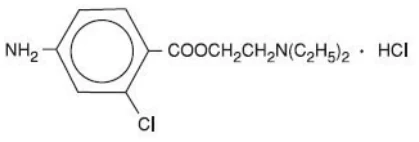
Physicochemical properties: Solid. Crystalline odorless white powder with a melting point of 173-176 ºC. Chloroprocaine hydrochloride is water-soluble over the physiological pH range as per USP and product DMF. At pH = 6.8 and 37 ℃ chloroprocaine hydrochloride water solubility is 68.66 g/L , which is well above the proposed drug product concentration of 10 mg/mL.
14 CLINICAL TRIALS
Clinical Trials By Indication
Indication: Induction of spinal anaesthesia by intrathecal administration.
A Phase 2, single-centre, prospective, randomized, observer-blind, dose-finding study (CHL.1/02-2014) compared intrathecal 1% chloroprocaine 30, 40, and 50 mg on the efficacy of spinal anesthesia.
The study enrolled forty-five patients scheduled for short duration lower limb surgery that required T12 metameric level of sensory block and identical anaesthesia procedures.
A Phase 3, multicenter, prospective, randomized, observer-blind study evaluated the safety and the ef-ficacy of 50 mg of chloroprocaine 10 mg/mL in intrathecal anesthesia versus 10 mg of bupivacaine 0.5% (not marketed in Canada), in 130 patients undergoing short duration (< 40 minutes) low abdominal sur-gery (gynecological or urological) or lower limb surgery that required T10 metameric level of sensory block and identical anesthesia procedures (Study CHL1/02- 2006/M).
Table 7 provides a brief summary of the main demographic characteristics of subjects included in the clinical trials.
Table 7 – Summary of patient demographics for clinical trials in spinal anesthesia
| Study # | Study Design | Dosage, route of administration and duration | Study subjects (n) | Age (Range) | Sex (M/F) |
|---|---|---|---|---|---|
| CHL.1/ 02- 2014 | Prospective, randomized, blind-observer | chloroprocaine 1%, 30/40/50 mg, single intrathe-cal injection | N=45 30 mg = 15 40 mg = 15 50 mg = 15 | 30 mg = 40.4±12.1 40 mg = 39.4±12.5 50 mg = 41.5±13.9 | 30 mg = 9/6 40 mg = 9/6 50 mg = 9/6 |
| CHL1/ 02- 2006/ M | Prospective, randomized, blind-observer | chloroprocaine 1%, 50 mg, single Intrathecal injection bupivacaine 0.5%, 10 mg, single intrathecal injection | N=130 CHL group = 66 BUP group = 64 | CHL group = 45.2±15.9 BUP group = 50.6±15.2 | CHL group = 42/24 BUP group = 37/27 |
Study 2, Phase 2, CHL.1/02- 2014 Efficacy Results
The primary efficacy endpoint was the time of complete regression of spinal block (defined as the time when the Bromage score returns to 0 and sensitive perception returns to the first sacral dermatomal level).
Table 8 – Results of study CHL.1/02- 2014 in lower limb surgery
| Dose | 30 mg | 40 mg | 50 mg | |||||||
|---|---|---|---|---|---|---|---|---|---|---|
| Subjects | N=15 | N=15 | N=15 | |||||||
| Primary End-point | Time to regression of sensory block to S1 (h) | 1.761±0.348 | 2.127±0.457 | 2.229±0.379 | ||||||
| Other End-points | Time to onset of sensory block at T10 (min) | 5.4±3.0 | 6.6±3.4 | 4.8±2.0 | ||||||
| Time to onset of motor block (min) | 6.3±3.2 | 6.0±3.3 | 4.4±2.3 | |||||||
| Time to achieve maximum level of sensory block (hr) | 0.224±0.140 | 0.235±0.077 | 0.234±0.098 | |||||||
| Time to resolution of motor block (hr) | 2.662±0.789 | 3.361±1.120 | 3.213±0.856 | |||||||
| Time to eligibility for home discharge (hr) | 3.021±1.012 | 3.545±1.281 | 3.530±0.887 | |||||||
Study 3, Phase 3 CHL1/02-2006/M Efficacy Results
The primary efficacy endpoint was non-inferiority of 50 mg chloroprocaine 1% versus 10 mg isobaric bupivacaine 0.5% (not marketed in Canada) in terms of onset time of sensory block at T10 (assessed by the loss of pin-prick sensation) in minutes. The evolution of both motor and sensory blocks was evalu-ated, as per protocol, after spinal injection and until the end of anaesthesia, every minute until readi-ness to surgery (loss of pinprick sensation ≥T10 and Bromage score ≥2), then every 5 min until the max-imum level of sensory block has been reached (the same level of sensory block for three consecutive observations) and successively every 30 min until fulfilment of home discharge criteria.
Out of the 130 randomized subjects, 9 were excluded from the Per Protocol (PP) set due to non-achievement of anaesthesia required by protocol. Two (out of 66) subjects in the chloroprocaine group and seven (out of 64) in the bupivacaine group had treatment failures requiring general anaesthesia or supplemental analgesia or sedation.
Table 9 – Results of study CHL1/02- 2006/M in low abdominal surgery and lower limb surgery Per Protocol set
| Chloroprocaine 1% (50 mg) | Bupivacaine 0.5% (10 mg) | Adjusted treat-ment difference (95% CI)a | ||||||||
|---|---|---|---|---|---|---|---|---|---|---|
| Dose group | 50 mg | 10 mg | ||||||||
| Subjects | N=64 | N=57 | ||||||||
| Primary Endpoint | Time to onset of sensory block at T10 (min) | 7.9 ± 6 | 9.4±6.5 | 0.186 (-3.76; 0.7381) | ||||||
| Other Endpoints | Time to regression of sensory block to S1 (min) | 109.2±25.7 | 235.5±63.9 | |||||||
| Time to onset of motor block (min) | 5.7± 4.9 | 7.6±5.9 | ||||||||
| Time to achieve maximum level of sensory block (min) | 9.7±6.4 | 16.5±11.8 | ||||||||
| Time to resolution of motor block (min) | 100.3±27.7 | 220.3±57.0 | ||||||||
| Time to eligibility for home discharge (min) | 190.3 ± 95.4 | 324.1±77.2 | ||||||||
a Based on non-parametric Wilcoxon rank rum test adjusted for randomization stratification factors confidence interval for the difference between the two mean times of sensory block to T10 (µT-µR≤4)
15 MICROBIOLOGY
No microbiological information is required for this drug product.
16 NON-CLINICAL TOXICOLOGY
General Toxicology:
The toxicological profile of chloroprocaine hydrochloride for intrathecal (IT) injection was evaluated in a dedicated preclinical program including genotoxicity, single and repeated dose toxicity in two species, neurological and juvenile evaluations. For the in vivo investigations, the intrathecal route of administra-tion was used in all tests. Due to its rapid metabolism, plasma and cerebrospinal fluid (CSF) concentra-tions of chloroprocaine hydrochloride were below the limit of quantification, rendering exposure levels and associated safety margins incalculable.
In a 7-day repeated intrathecal (lumbar) study in rats the potential toxicity of cloroprocaine hydrochlo-ride 10 mg/mL was investigated after administration of 0, 0.4 mg, 0.8 mg, 0.6 mg and 0.4 mg chloropro-caine HCl 1% + 0.015 mg ACBA with a fixed volume of 40 microliters (mcL)/animal.
One female rat receiving 40 mcL (0.8 mg) chloroprocaine died on Day 2 from respiratory depression, the volume was therefore reduced to 30 mcL (0.6 mg).
No evidence of local or systemic toxicity over the range of the chloroprocaine concentrations/doses used or for the degradants levels administered were observed.
Under the conditions of this study, NOAEL was set at 0.6 mg/animal/administration of chloroprocaine HCl and 0.4 mg/animal/administration of chloroprocaine HCl containing degradants.
In a 7-day repeated intrathecal (lumbar) toxicity study in Beagle dogs the potential toxicity induced by chloroprocaine hydrochloride 10 mg/mL, was investigated after administration of 0, 5 mg, 10 mg chlo-roprocaine HCl 1% + 0.19 mg ACBA with a fixed volume of 500 mcL/animal.
No treatment-related deaths occurred in any group. No treatment-related effect was observed in any tested group.
Under the conditions of this study, the NOAEL was set at 10 mg/animal/administration of chloropro-caine HCl and 5 mg/animal/administration of chloroprocaine HCl containing degradants.
In a 4-Week (once a week administration) intrathecal toxicity study in Beagle dogs chloroprocaine HCl was investigated at 0, 20 mg (1%), 60 mg (3%).
A single death occurred in one female treated with 60 mg chloroprocaine HCl due to a respiratory block induced by the test item. Transient, not life-threatening, respiratory distress was recorded in all surviv-ing animals treated with 60 mg chloroprocaine.
Treatment with 20 mg chloroprocaine HCl did not induce changes in respiration. No other in-life or post-mortem toxicologically relevant changes were recorded in the study; however, as the study com-prised only 5 administrations, this may not have been adequate to characterize toxicological effects.
Based on the single case of mortality, the NOAEL was set at 20 mg/dog/administration of chloropro-caine HCl.
In the 7-day rat and 7- and 28-day dog studies, dosages used may not have provided an adequate esti-mate of the maximum recommended human dose, as plasma and CSF concentrations of chloroprocaine HCl were not measured.
Genotoxicity:
Genotoxicity evaluations were performed on chloroprocaine HCl and the main degradation and metabolic product, ACBA. Both chloroprocaine and ACBA did not induce structural chromo-some aberrations as determined by the chromosome aberration test in Chinese hamster V79 cells in vitro, thus determined to be non-clastogenic.
Similarly, chloroprocaine and ACBA were non-mutagenic in the Salmonella typhimurium re-verse mutation assay.
Carcinogenicity:
Long-term studies in animals to evaluate carcinogenic potential of chloroprocaine have not been conducted.
Reproductive and Developmental Toxicology:
Reproductive and developmental toxicity studies have not been conducted with chloroprocaine.
Juvenile Toxicity:
CLOROTEKAL is indicated in adults only, thus studies on juvenile animals are not relevant for this product’s clinical indication.
Neurotoxicity:
Rats receiving 20 mcL (0.4 mg) chloroprocaine IT (2% 2-CP) showed higher nerve injury scores from sections obtained 10 mm caudal to the cauda equina 4 days following drug administration when compared to those receiving saline.
Cell morphology changes in the spinal cord were associated with 3.9 mg chloroprocaine IT (3% 2-CP) administration when compared to saline or 1.3 mg chloroprocaine (1% 2-CP) but no con-comitant inflammation nor other toxicities were noted.
Rats administered an IT solution containing chloroprocaine 1% and its degradation product, ACBA (4-amino-2-chlorobenzoic acid) at estimated concentrations 10 times higher than the limit for human injections (130 mcL/animal of 10 mg/ml chloroprocaine HCl 1%, corresponding to 1.3 mg chloroprocaine HCl + 3 mg/ml ACBA, corresponding to 0.39 mg ACBA) showed motor deficits (loss of hind leg use) up until day 5 post injection.