


Product Monograph - Cosmegen
Recent Major Label Changes
| 2025-11 |
|---|---|
| 7.1. Special Populations, Pregnancy | 2025-11 |
Table of Contents
Certain sections or subsections that are not applicable at the time of the preparation of the most recent authorized product monograph are not listed.
Recent Major Label Changes ................................................................................................. 2
Table of Contents ................................................................................................................. 2
Part 1: Health Professional Information ................................................................................ 4
- 1.
Indications ................................................................................................................ 4
1.1. Pediatrics ................................................................................................................ 4
1.2. Geriatrics ................................................................................................................ 4
- 2. Contraindications ...................................................................................................... 4
- 3. Serious Warnings and Precautions Box ...................................................................... 5
- 4.
Dosage and Administration ....................................................................................... 5
4.1. Dosing Considerations ........................................................................................... 5
4.2. Recommended Dose and Dosage Adjustment ...................................................... 5
4.3. Reconstitution ........................................................................................................ 6
- 5. Overdose .................................................................................................................. 7
- 6. Dosage Forms, Strengths, Composition and Packaging ............................................... 8
- 7.
Warnings and Precautions ......................................................................................... 8
General ............................................................................................................................... 8
COSMEGEN and Radiation Therapy ................................................................................... 8
Carcinogenesis and Mutagenesis....................................................................................... 9
Hepatic ............................................................................................................................... 9
Effect on Ability to Drive or Operate Machinery ............................................................... 9
Monitoring and Laboratory Tests ...................................................................................... 9
Reproductive Health .......................................................................................................... 9
7.1 Special Populations ................................................................................................ 9
7.1.1. Pregnancy ........................................................................................................... 9
7.1.2. Breastfeeding ..................................................................................................... 9
7.1.3. Pediatrics .......................................................................................................... 10
7.1.4. Geriatrics .......................................................................................................... 10
- 8.
Adverse Reactions ................................................................................................... 10
8.1. Adverse Reaction Overview ................................................................................. 10
- 9.
Drug Interactions .................................................................................................... 11
9.2. Drug Interactions Overview ................................................................................. 11
9.4. Drug-Drug Interactions ........................................................................................ 12
9.7. Drug-Laboratory Test Interactions....................................................................... 12
- 10.
Clinical Pharmacology ............................................................................................. 13
10.1. Mechanism of Action ....................................................................................... 13
10.3. Pharmacokinetics ............................................................................................. 13
- 11. Storage, Stability and Disposal ................................................................................. 15
- 12. Special Handling Instructions ................................................................................... 15
Part 2: Scientific Information .............................................................................................. 16
- 13. Pharmaceutical Information .................................................................................... 16
- 14.
Clinical Trials ........................................................................................................... 17
14.1. Clinical Trials by Indication .............................................................................. 17
Wilm’s tumor ................................................................................................................... 17
Childhood Rhabdomyosarcoma ....................................................................................... 17
Ewing’s Sarcoma .............................................................................................................. 18
Gestational Trophoblastic Neoplasia ............................................................................... 19
- 16. Non-Clinical toxicology ............................................................................................ 19
Patient Medication Information ......................................................................................... 20
Part 1: Health Professional Information
1. Indications
COSMEGEN (dactinomycin for injection) is indicated
as a single agent or as part of a combination chemotherapy regimen to treat:
- gestational trophoblastic neoplasia
as part of a combination chemotherapy and/or multi-modality treatment regimen to treat:
- Wilms’ tumor
- childhood rhabdomyosarcoma
- Ewing’s sarcoma
1.1. Pediatrics
Pediatrics (<18 years of age): The greater frequency of toxic effects of COSMEGEN in infants suggests that this drug should be given to infants only over the age of 6 to 12 months (see 7.1.4. Pediatrics).
1.2. Geriatrics
Geriatrics (≥65 years of age): Clinical studies of COSMEGEN did not include sufficient numbers of subjects aged 65 and over to determine whether they respond differently from younger subjects. Other reported clinical experience has not identified differences in responses between the elderly and younger patients. However, a published meta-analysis of all studies performed by the Eastern Cooperative Oncology Group (ECOG) over a 13-year period suggests that administration of COSMEGEN to elderly patients may be associated with an increased risk of myelosuppression compared to younger patients. In general, dose selection for an elderly patient should be cautious, usually starting at the low end of the dosing range, reflecting the greater frequency of decreased hepatic, renal, or cardiac function, and of concomitant disease or other drug therapy (see 7.1.5. Geriatrics).
2. Contraindications
- Patients who are hypersensitive to COSMEGEN or to any ingredient in the formulation, including any non-medical ingredient, or component of the container. For a complete listing, see 6. Dosage Forms, Strengths, Composition, and Packaging.
- COSMEGEN should not be given at or about the time of infection with chicken pox or herpes zoster because of the risk of severe generalized disease which may result in death.
3. Serious Warnings and Precautions Box
COSMEGEN should only be administered under the supervision of a physician who is experienced in the use of cancer chemotherapeutic agents.
4. Dosage and Administration
4.1. Dosing Considerations
COSMEGEN is not for oral administration. Toxic reactions due to dactinomycin are frequent and may be severe (see 8. Adverse Reactions), thus limiting in many instances the amount that may be given. However, the severity of toxicity varies markedly and is only partly dependent on the dose employed.
Careful calculation of the dosage should be performed prior to administration of each dose.
4.2. Recommended Dose and Dosage Adjustment
Intravenous Use
The dosage of COSMEGEN varies depending on the tolerance of the patient, the size and location of the neoplasm, and the use of other forms of therapy. It may be necessary to decrease the usual dosages suggested below when other chemotherapy or radiation therapy is used concomitantly or has been used previously.
The dosage of COSMEGEN is calculated in micrograms (mcg). The dose intensity per 2-week cycle should not exceed 15 mcg/kg or 400-600 mcg/m2/day of body surface intravenously for five days. Calculation of the dosage for obese or edematous patients should be on the basis of surface area in an effort to relate dosage to lean body mass.
A wide variety of single agent and combination chemotherapy regimens with COSMEGEN may be employed. Because chemotherapeutic regimens are constantly changing, dosing and administration should be performed under the direct supervision of physicians familiar with current oncologic practices and new advances in therapy. The following suggested regimens are based upon a review of current literature concerning therapy with COSMEGEN and are on a per cycle basis.
Wilms’ Tumor
Regimens of 45 mcg/kg have been administered intravenously in various combinations and schedules with other chemotherapeutic agents.
Childhood Rhabdomyosarcoma
Regimens of 15 mcg/kg intravenously daily for five days administered in various combinations and schedules with other chemotherapeutic agents.
Ewing’s Sarcoma
Regimens of 1.25 mg/m2 have been administered intravenously in various combinations and schedules with other chemotherapeutic agents.
Gestational Trophoblastic Neoplasia
12 mcg/kg intravenously daily for five days as a single agent.
500 mcg intravenously on Days 1 and 2 as part of a combination regimen with etoposide, methotrexate, folinic acid, vincristine, cyclophosphamide and cisplatin.
4.3. Reconstitution
Parenteral Products:
Table 1 – Reconstitution
| Vial Size | Volume of Diluent to be Added to Vial | Approximate Available Volume | Nominal Concentration per mL |
| 0.5 mg | 1.1 mL | 1.1 mL | 0.5 mg per mL |
COSMEGEN is HIGHLY TOXIC and both powder and solution must be handled and administered with care (see 3. Serious Warnings and Precautions box, 6. Dosage Forms, Strengths, Composition, and Packaging, and 12. Special Handling Instructions).
Reconstitute COSMEGEN by adding 1.1 mL of Sterile Water for Injection (without preservative) using aseptic precautions. The resulting solution of COSMEGEN will contain approximately 500 mcg or 0.5 mg dactinomycin per mL.
Parenteral drug products should be inspected visually for particulate matter and discoloration prior to administration, whenever solution and container permit. When reconstituted, COSMEGEN is a clear, gold-colored solution.
Once reconstituted, the solution of COSMEGEN can be added to infusion solution of Dextrose Injection 5 percent of Sodium Chloride Injection either directly or to the tubing of a running intravenous infusion.
Although reconstituted COSMEGEN is chemically stable, the product does not contain a preservative and accidental microbial contamination might result. Any unused portion should be discarded. Use of water containing preservatives (benzyl alcohol or parabens) to reconstitute COSMEGEN, results in the formation of a precipitate.
Studies conducted on dactinomycin lyophilized powder for injection demonstrate that drug product can be diluted to a concentration of 10 mcg/mL in WFI, 0.9% saline and 5% dextrose in glass or PVC infusion containers. Diluted solutions should be used immediately. Drug product diluted to concentrations lower than 10 mcg/mL and stored at ambient room temperature showed significantly lower recoveries. Therefore, drug product diluted at concentrations lower than 10 mcg/mL are not recommended for administration.
Partial removal of dactinomycin from intravenous solutions by cellulose ester membrane filters used in some intravenous in-line filters has been reported.
Since dactinomycin is extremely corrosive to soft tissue, precautions for materials of this nature should be observed.
If the drug is given directly into the vein without the use of an infusion, the “two-needle technic” should be used. Reconstitute and withdraw the calculated dose from the vial with one sterile needle. Use another sterile needle for direct injection into the vein.
Discard any unused portion of the COSMEGEN solution.
5. Overdose
Dactinomycin was lethal to mice and rats at intravenous doses of 700 and 500 mcg/kg, respectively (approximately 3.8 and 5.4 times the maximum recommended daily human dose on a body surface area basis, respectively). The oral LD50 of dactinomycin is 7.8 mg/kg and 7.2 mg/kg in the mouse and rat, respectively.
Manifestations of overdose in patients have included nausea, vomiting, diarrhea, mucositis including stomatitis, gastrointestinal ulceration, severe skin disorders including skin exfoliation, exanthema, desquamation and epidermolysis, severe hematopoietic depression, veno-occlusive disease, acute renal failure, sepsis (including neutropenic sepsis) with fatal outcome and death. No specific information is available on the treatment of overdosage with COSMEGEN. Treatment is symptomatic and supportive. It is advisable to check skin and mucous membrane integrity as well as renal, hepatic, and bone marrow functions frequently.
For the most recent information in the management of a suspected drug overdose, contact your regional poison control centre or Health Canada’s toll-free number, 1-844 POISON-X (1-844-764-7669).
6. Dosage Forms, Strengths, Composition and Packaging
Table 2 – Dosage Forms, Strengths, and Composition
| Route of Administration | Dosage Form / Strength | Clinically Relevant Nonmedical Ingredients |
|---|---|---|
| Intravenous | Lyophilized Powder/ 0.5 mg dactinomycin/vial | mannitol |
COSMEGEN is a sterile lyophilized powder and is supplied in vials containing 0.5 mg (500 micrograms) of dactinomycin and 20.0 mg of mannitol. In the dry form the compound is an amorphous yellow powder. The solution is clear and gold-colored.
7. Warnings and Precautions
General
COSMEGEN is HIGHLY TOXIC and both powder and solution must be handled and administered with care (see 3. Serious Warnings and Precautions box, 6. Dosage Forms, Strengths, Composition, and Packaging, and 12. Special Handling Instructions).
As with all antineoplastic agents, COSMEGEN is a toxic drug and very careful and frequent observation of the patient for adverse reactions is necessary. These reactions may involve any body system, most commonly the hematopoietic system resulting in myelosuppression. As such, live virus vaccines should not be administered during therapy with COSMEGEN. The possibility of an anaphylactoid reaction should be borne in mind.
Particular caution is necessary when administering COSMEGEN in the first two months after irradiation for the treatment of right-sided Wilms’ tumor, since hepatomegaly and elevated AST levels have been noted.
Nausea and vomiting due to COSMEGEN make it necessary to give this drug intermittently. It is extremely important to observe the patient daily for toxic side effects when combination chemotherapy is employed, since a full course of therapy occasionally is not tolerated. If stomatitis, diarrhea, or severe hematopoietic depression appears during therapy, these drugs should be discontinued until the patient has recovered.
COSMEGEN and Radiation Therapy
An increased incidence of gastrointestinal toxicity and marrow suppression has been reported when COSMEGEN was given with radiation therapy. Severe reactions may ensue if high doses of both COSMEGEN and radiation therapy are used or if the patient is particularly sensitive to such combined therapy (see 9. Drug Interactions ).
Carcinogenesis and Mutagenesis
Recent reports indicate an increased incidence of second primary tumors (including leukemia) following treatment with radiation and antineoplastic agents, such as COSMEGEN. Multi-modal therapy creates the need for careful, long-term observation of cancer survivors.
Based on in-vivo and in-vitro data, COSMEGEN is carcinogenic and mutagenic (see 16. Non-Clinical Toxicology)..
Hepatic
Veno-occlusive disease (primarily hepatic) may result in fatality, particularly in children younger than 48 months (see 8. Adverse Reactions, Hepatic).
Effect on Ability to Drive or Operate Machinery
There are side effects associated with this product that may affect some patients’ ability to drive or operate machinery. For a complete list of side effects that may affect some patients’ ability to drive, see 8. Adverse Reactions.
Monitoring and Laboratory Tests
Many abnormalities of renal, hepatic, and bone marrow function have been reported in patients with neoplastic disease and receiving COSMEGEN. It is advisable to check renal, hepatic, and bone marrow function frequently.
Reproductive Health
- COSMEGEN treatment and for at least 7 months after the final dose.
contraception during treatment with COSMEGEN and for 4 months after the final dose.
Fertility
Adequate fertility studies have not been published, although, reports suggest an increased incidence of infertility following treatment with other antineoplastic agents.
7.1 Special Populations
7.1.1. Pregnancy
Pregnant Women: COSMEGEN is a Category D drug and may cause fetal harm when administered to a pregnant woman. Dactinomycin has been shown to cause malformations and embryotoxicity in rat, rabbit, and hamster when given in doses of 50-100 mcg/kg intravenously. If COSMEGEN is used during pregnancy, or if the patient becomes pregnant while receiving this drug, the patient should be apprised of the potential hazard to the fetus.
7.1.2. Breastfeeding
It is not known whether COSMEGEN is excreted in human milk. Because many drugs are excreted in human milk and because of the potential for serious adverse reactions in nursing infants from COSMEGEN, a decision should be made as to discontinue nursing and/or to discontinue taking the drug, weighing the risks and benefits of the drug to the mother.
7.1.3. Pediatrics
The greater frequency of toxic effects of COSMEGEN in infants suggests that this drug should be given to infants only over the age of 6 to 12 months (see 1.1 Pediatrics).
7.1.4. Geriatrics
- to determine whether they respond differently from younger subjects. Other reported clinical experience has not identified differences in responses between the elderly and younger patients. However, a published meta-analysis of all studies performed by the Eastern Cooperative Oncology Group (ECOG) over a 13-year period suggests that administration of COSMEGEN to elderly patients may be associated with an increased risk of myelosuppression compared to younger patients. In general, dose selection for an elderly patient should be cautious, usually starting at the low end of the dosing range, reflecting the greater frequency of decreased hepatic, renal, or cardiac function, and of concomitant disease or other drug therapy (see 1.2 Geriatrics).
8. Adverse Reactions
8.1. Adverse Reaction Overview
Fatal outcomes have been reported coincident with the use of COSMEGEN. With the exception of nausea and vomiting, toxic effects usually do not become apparent until two to four days after a course of therapy is stopped, and may not be maximal until one to two weeks have elapsed. However, adverse reactions are usually reversible on discontinuance of therapy. They include the following:
Blood and lymphatic system disorders: anemia, even to the point of aplastic anemia, agranulocytosis, leukopenia, thrombocytopenia, pancytopenia, reticulocytopenia, neutropenia, febrile neutropenia, disseminated intravascular coagulation. A complete blood count should be done frequently to detect severe hematopoietic depression. If results are markedly decreased, the drug should be withheld to allow marrow recovery. This often takes up to three weeks.
Eye disorders: optic neuropathy
Gastrointestinal disorders: nausea, vomiting, abdominal pain, diarrhea, constipation, gastrointestinal ulceration, cheilitis, dysphagia, esophagitis, ulcerative stomatitis, ascites, proctitis. Nausea and vomiting, which occur early during the first few hours after administration, may be alleviated by giving antiemetics.
General disorders and administration site conditions: malaise, fatigue, fever
Hepatobiliary disorders: liver toxicity including liver function test abnormalities, hepatomegaly, hepatitis and hepatic failure with reports of death, hepatic encephalopathy, pleural effusion. Hepatic veno-occlusive disease, which may be associated with intravascular clotting disorder and multi-organ failure, has been reported in patients receiving COSMEGEN as part of a multidrug chemotherapy regimen.
Infections and infestations: sepsis (including neutropenic sepsis) with fatal outcome, infection, pharyngitis
Immune system disorders: hypersensitivity
Metabolism and nutrition disorders: anorexia, hypocalcaemia, tumor lysis syndrome
Musculoskeletal and connective tissue disorders: myalgia, growth retardation
Nervous system disorders: lethargy, peripheral neuropathy (commonly observed in patients receiving combination chemotherapy regimens that included dactinomycin)
Respiratory, thoracic and mediastinal disorders: pneumonitis, pneumothorax (observed as a result of antitumor effect of chemotherapy including dactinomycin)
Skin and subcutaneous tissue disorders: alopecia, rash, skin toxicity, dermatitis, acne, erythema multiforme, flare-up of erythema or increased pigmentation of previously irradiated skin, toxic epidermal necrolysis and Stevens Johnson syndrome have been observed from postmarketing experience.
Dactinomycin is extremely corrosive. If an extravasation occurs during intravenous use, severe damage to soft tissues will occur. In at least one instance, this has led to contracture of the arms.
Vascular disorders: thrombophlebitis, hemorrhage
9. Drug Interactions
9.2. Drug Interactions Overview
Since COSMEGEN is not highly protein bound and is not highly metabolized in the liver, pharmacokinetic interactions which would cause changes in drug blood levels by competitive binding to serum albumin or liver enzymes are not likely.
Because for some indications COSMEGEN is used in combination with various therapeutics, the potential for interactions should always be considered. It may not always be clear if a change in response is due to one or the other therapies, or if the reason for the change is due to pharmacological or pharmacokinetic factors.
Some drugs which may be used concomitantly with COSMEGEN appear to potentiate the effects, for example, other cytotoxic drug therapies, especially those with similar pharmacological effects, and medications causing blood dyscrasia. Because all interactions are not predictable, patients must be monitored very carefully during therapy.
9.4. Drug-Drug Interactions
Halogenated inhalation anesthetics
Halogenated inhalation anesthetics (e.g. enflurane, halothane) may increase hepatoxicity when combined with dactinomycin. This combination should be used cautiously.
Vaccines
Live vaccines (Bacillus Calmette Guerin, measles, mumps, poliovirus, rotavirus, rubella, smallpox, typhoid, varicella, yellow fever) should not be administered to patients that are immunocompromised by chemotherapeutic agents, such as dactinomycin, as this may lead to an increased risk of infection by the live vaccine. The decreased immune response may allow the live vaccine to produce infection, which can sometimes be fatal.
Drug-Radiation Therapy Interactions
Dactinomycin can potentiate the effects of radiation therapy. Erythema from previous radiation therapy may be reactivated by dactinomycin alone, especially with brief intervals between dactinomycin and radiotherapy, but even with an interval of several months between therapies. Normal skin as well as the buccal and pharyngeal mucosa may show early erythema. When dactinomycin and radiotherapy are administered in combination, a radiation dose smaller than usual causes erythema and vesiculation. These skin sequelae progress more rapidly through the stages of tanning and desquamation. Healing may occur in 4 to 6 weeks rather than 2 to 3 months. If high doses of both dactinomycin and radiation therapy are used, or if the patient is particularly sensitive to the combined therapy, severe reactions may occur.
This potentiation of radiation effect represents a special problem when the radiotherapy involves the mucous membrane.
When irradiation is directed toward the nasopharynx, the combination may produce severe oropharyngeal mucositis. Severe reactions may ensue if high doses of both COSMEGEN and radiation therapy are used or if the patient is particularly sensitive to such combined therapy.
Particular caution is necessary when administering COSMEGEN within two months of irradiation for the treatment of right-sided Wilms' tumor, since hepatomegaly and elevated AST levels have been noted. In general, COSMEGEN should not be concomitantly administered with radiotherapy in the treatment of Wilms’ tumor unless the benefit outweighs the risk.
9.7. Drug-Laboratory Test Interactions
COSMEGEN may interfere with bioassay procedures for the determination of antibacterial drug levels.
10. Clinical Pharmacology
10.1. Mechanism of Action
Generally, the actinomycins exert an inhibitory effect on gram-positive and gram-negative bacteria and on some fungi. However, the toxic properties of the actinomycins (including dactinomycin) in relation to antibacterial activity are such as to preclude their use as antibiotics in the treatment of infectious diseases.
Because the actinomycins are cytotoxic, they have an antineoplastic effect which has been demonstrated in experimental animals with various types of tumor implant. This cytotoxic action is the basis for their use in the palliative treatment of certain types of cancer.
Experimental evidence indicates that dactinomycin acts by forming complexes with deoxyribonucleic acid (DNA) and selectively inhibiting the DNA-directed synthesis of ribonucleic acid (RNA). Dactinomycin is thought to inhibit protein synthesis by inhibiting the synthesis of messenger RNA. Dactinomycin inhibits DNA synthesis but at much higher concentrations than are required to inhibit RNA synthesis.
Dactinomycin is a potent antiproliferative agent. Therefore, as for other agents with similar mechanisms of action, it greatly affects rapidly dividing cells, both malignant and nonmalignant. This accounts for its effectiveness in counteracting tumors, and also for the common adverse events, for example, the hematological disturbances.
10.3. Pharmacokinetics
Preclinical and clinical pharmacokinetic and pharmacodynamic data prior to marketing dactinomycin are limited. Due to limitations in analytical methodologies, pharmacokinetic data were not systematically studied prior to use in clinical treatment at the time this product was developed. This was justified by the seriousness of the indications and the lack of alternative therapies. Most of the available data are from the post-marketing period.
Distribution:
Dactinomycin is rapidly distributed into the tissues from the bloodstream. It is concentrated in nucleated cells (bone marrow, tumor cells), and has poor penetration into red blood cells and cerebrospinal fluid (does not cross the blood-brain barrier). Based upon results from nonclinical studies, dactinomycin might cross the blood-placenta barrier. It is unknown if dactinomycin is distributed into breast milk.
Metabolism:
Results of a study in patients with malignant melanoma indicate that dactinomycin (3H actinomycin D) is minimally metabolized, is concentrated in nucleated cells, and does not penetrate the blood-brain barrier. Approximately 30% of the dose was recovered in urine and feces in one week. The terminal plasma half-life for radioactivity was approximately 36 hours.
Elimination:
After a single intravenous injection of dactinomycin, approximately 85% of the drug is cleared from the blood in two minutes. Approximately 12-20% is recovered in the urine and 50-90% is excreted in the bile within 24 hours. The plasma half-life of dactinomycin may be prolonged with hepatic dysfunction.
The urinary and fecal excretion was prolonged and only about 30 percent of the dose of actinomycin was recovered in 9 days. It is thought that the long persistence of dactinomycin in nucleated cells which are not proliferating probably is responsible for the observed interaction with radiation; the dactinomycin could be interfering with the cellular ability to repair radiation damage. Thus, special precautions must be taken when combining radiation with COSMEGEN therapy, and are addressed in the product labeling.
Single-Dose vs Steady State Pharmacokinetics
After single or multiple IV doses, dactinomycin is rapidly distributed into and extensively bound to body tissues. Results of a study in patients with malignant melanoma receiving 3H-dactinomycin indicate that dactinomycin is minimally metabolized, is concentrated in nucleated cells, and does not appreciably penetrate the blood-brain barrier (<10%). Plasma concentrations of 3H-dactinomycin decrease rapidly within 2 hours and then decline slowly with a half-life of approximately 36 hours. Approximately 30% of the dose is recovered in urine and feces in one week.Variability of Pharmacokinetic Parameters
No specific data are available. Due to the use of concomitant therapies, potential interactions, including the effects of several medications being excreted by the same organs, must be considered within each indication.
Special populations and conditions
- Renal Impairment: No specific data are available regarding dactinomycin administration to patients with renal impairment. Dactinomycin is excreted in the urine unchanged only to an extent of about 15% over 1 week; therefore, dosage adjustment would not necessarily be required with renal impairment.
- Hepatic Impairment: No specific data are available regarding COSMEGEN administration to patients with hepatic impairment. Although dactinomycin undergoes minimal hepatic metabolism, dose reduction of dactinomycin with moderate or severe hepatic dysfunction may be considered. Some clinicians recommend reduction of dosage by one third or one half in patients with hyperbilirubinemia.
Gender: No studies are available exploring any differences depending on gender. To date, no differences have been observed during post-marketing surveillance.
Race: No studies have been done to explore potential differences. To date, no effects indicating differences among races have been observed during post-marketing surveillance.
11. Storage, Stability and Disposal
Store in a dry place at 25○C (77○F); excursions permitted to 15-30○C (59-86○F). Protect from light and humidity.
12. Special Handling Instructions
Since COSMEGEN is extremely corrosive to soft tissues, it is intended for intravenous use. Animal studies have shown dactinomycin to be corrosive to skin, irritating to the eyes and mucous membranes of the respiratory tract and highly toxic by the oral route. It has also been shown to be carcinogenic, mutagenic, embryotoxic and teratogenic. Due to the drug’s toxic and mutagenic properties, appropriate precautions including the use of appropriate safety equipment are recommended for the preparation of COSMEGEN for parenteral administration. Inhalation of dust or vapors and contact with skin or mucous membranes, especially those of the eyes, must be avoided. If an extravasation occurs during intravenous use, damage to soft tissues may occur. Avoid exposure during pregnancy. The National Institutes of Health presently recommends that the preparation of injectable antineoplastic drugs should be performed in a Class II laminar flow biological safety cabinet and that personnel preparing drugs of this class should wear chemical resistant, impervious gloves, safety goggles, outer garment and shoe covers. Additional body garments should be used based upon the task being performed (e.g. sleevelets, apron, gauntlets, disposable suits) to avoid exposed skin surfaces and inhalation of vapors and dust. Appropriate techniques should be used to remove potentially contaminated clothing.
Several other guidelines for proper handling and disposal of antineoplastic drugs have been published and should be considered.
Accidental Contact Measures
Should accidental eye contact occur, copious irrigation for at least 15 minutes with water, normal saline or a balanced salt ophthalmic irrigating solution should be instituted immediately, followed by prompt ophthalmologic consultation. Should accidental skin contact occur, the affected part must be irrigated immediately with copious amounts of water for at least 15 minutes while removing contaminated clothing and shoes. Medical attention should be sought immediately. Contaminated clothing should be destroyed and shoes cleaned thoroughly before reuse.
Part 2: Scientific Information
13. Pharmaceutical Information
Drug Substance
Proper name: Dactinomycin for injection
Chemical name:
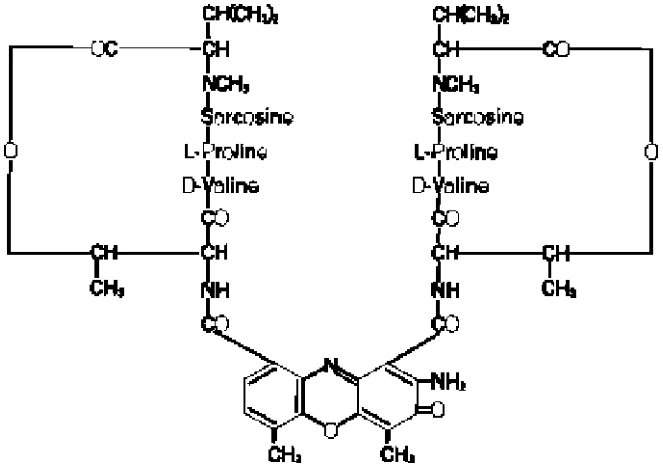
8-amino-N-(2-amino-4,6-dimethyl-3-oxo-phenoxazin-1-yl)carbonyl-N'-[8-amino-4,6-dimethyl-7-oxo-9-[[3,6,10-trimethyl-7,14-bis(1-methylethyl)-2,5,8,12,15-pentaoxo-9-oxa-3,6,13,16-tetrazabicyclo[14.3.0]nonadec-11-yl]carbamoyl]phenoxazin-1-yl]carbonyl-4,6-dimethyl-7-oxo-N,N'-bis[3,6,10-trimethyl-7,14-bis(1-methylethyl)-2,5,8,12,15-pentaoxo-9-oxa-3,6,13,16 tetrazabicyclo[14.3.0]nonadec-11-yl]-1,9-bis[[3,6,10-trimethyl-7,14-bis(1-methylethyl)-2,5,8,12,15-pentaoxo-9-oxa-3,6,13,16-tetrazabicyclo[14.3.0] nonadec-11-yl]carbamoyl]phenoxazine-1,9-dicarboxamide
Molecular formula and molecular mass: C62H86N12O16, 1255.42
Structural formula:
Physicochemical properties:
Dactinomycin is one of the actinomycins, a group of antibiotics produced by various species of Streptomyces. Dactinomycin is the principal component of the mixture of actinomycins produced by Streptomyces parvullus. Unlike other species of Streptomyces, this organism yields an essentially pure substance that contains only traces of similar compounds differing in the amino acid content of the peptide side chains.
COSMEGEN is a sterile, yellow lyophilized powder for injection by the intravenous route after reconstitution. Each vial contains 0.5 mg (500 mcg) of dactinomycin and 20.0 mg of mannitol.
14. Clinical Trials
A wide variety of single agent and combination chemotherapy regimens with COSMEGEN have been studied. Because chemotherapeutic regimens are constantly changing, the decision to employ COSMEGEN should be directly supervised by physicians familiar with current oncologic practices and new advances in therapy.
14.1. Clinical Trials by Indication
Wilm’s tumor
The neoplasm responding most frequently to COSMEGEN is Wilms' tumor. Data from the National Wilms’ Tumor Studies (NWTS-1, NWTS-2, NWTS-3 and NWTS-4) support the use of COSMEGEN in Wilms’ tumor. The NWTS-4 evaluated results in 1,687 patients with favorable histology randomized to various regimens including COSMEGEN in either a standard divided dose (STD) of 15 mcg/kg/d for 5 days or a single pulse-intensive dose (PI) of 45 mcg/kg (see table 3 below).
Table 3: The Fourth National Wilms’ Tumor Study (NWTS-4)
| The Fourth National Wilms’ Tumor Study | |||
| Stage | Regimen | 2-Year Relapse Free Survival (%) | Overall Survival (%) |
| I (favorable histology) | EE EE-4A | 92.5 94.9 | 99.7 98.7 |
| II (anaplastic) | EE EE-4A | 93.8 87.5 | 93.3 85.5 |
| II (favorable histology) | K K-4A | 89.7 85.9 | 97.6 97.0 |
| III (favorable histology) | DD DD-4A | 95.3 91.1 | 99.4 98.2 |
| IV (favorable histology) | DD DD-4A | 81.3 80.6 | 90.6 89.5 |
| EE = | COSMEGEN (STD) and vincristine (25 weeks) | ||
| EE-4A = | COSMEGEN (PI) and vincristine (18 weeks) | ||
| K = | COSMEGEN (STD) and vincristine (23 vs. 65 weeks) | ||
| K-4A = | COSMEGEN (PI) and vincristine (20 vs. 60 weeks) | ||
| DD = | COSMEGEN (STD), doxorubicin, vincristine and radiation (28 vs. 66 weeks) | ||
| DD-4A = | COSMEGEN (PI), doxorubicin, vincristine and radiation (26 vs. 54 weeks) | ||
Efficacy and toxicity were comparable between the single-dose and divided-dose regimens, as well as between the short and long administration schedules.
Childhood Rhabdomyosarcoma
The Third Intergroup Rhabdomyosarcoma Study (IRS-III) studied 1,062 previously untreated pediatric patients and young adults (<21 years of age) and compared outcomes amongst a number of treatment regimens.
COSMEGEN was included in all arms as a standard component of the treatment regimen; thus, comparative data are not available from this study. Nevertheless, it does provide information on treatment outcomes in a large group of closely studied patients. For treatment purposes, patients were stratified according to clinical group, histologic subtype, and site of disease. Patients in most strata were randomized, but clinical group I patients with favorable histology were not randomized and treated according to a single regimen.
Table 4: The Third Intergroup Rhabdomyosarcoma Study (IRS-III)
| The Third Intergroup Rhabdomyosarcoma Study | |
| Group | Number of Arms |
| Chemotherapy Regimen | |
| 5-Year Progression Free Survival (%) (mean±SEM) | |
| 5-Year Overall Survival (%) (mean±SEM) | |
I (favorable histology) | 1 (non-randomized) |
| cyclic sequential VA (1 year) | |
| 83±3 | |
| 93±2 | |
II (favorable histology, excluding orbit, head and paratesticular sites) | 2 (randomized) |
| VA, doxorubicin and RT (1 year) | |
| 77±6 | |
| 89±5 | |
| VA and RT (1 year) | |
| 56±10 | |
| 54±13 | |
III (excluding special pelvic, orbit, scalp, parotid, oral cavity, larynx, oropharynx and cheek) | 3 (randomized) |
| pulsed VAC and RT (2 years) | |
| 70±6 | |
| 70±6 | |
| pulsed VADRC-VAC, CDDP and RT (2 years) | |
| 62±5 | |
| 63±5 | |
| pulsed VADRC-VAC, CDDP, VP-16 and RT (2 years) | |
| 56±4 | |
| 64±5 | |
IV (all) | 3 (randomized) |
| pulsed VAC and RT (2 years) | |
| 27±8 | |
| 27±6 | |
| pulsed VADRC-VAC, CDDP and RT (2 years) | |
| 27±8 | |
| 31±6 | |
| pulsed VADRC-VAC, CDDP, VP-16 and RT (2 years) | |
| 30±6 | |
| 29±7 | |
| VA = | vincristine/COSMEGEN |
| VADRC = | vincristine/doxorubicin/cyclophosphamide |
| VAC = | vincristine/COSMEGEN/cyclophosphamide |
| CDDP= | Cisplatin |
| VP-16 = | Etoposide |
| RT = | radiation therapy |
Ewing’s Sarcoma
COSMEGEN in conjunction with vincristine, doxorubicin, cyclophosphamide, ifosfamide, etoposide and radiotherapy has been used in the management of both metastatic and non-metastatic Ewing’s sarcoma. Of 157 previously untreated patients with non-metastatic disease treated with COSMEGEN as part of induction and maintenance therapy in a neoadjuvant chemotherapy study (REN-3), 110 (70%) patients remained event-free with a mean follow-up of 7 years. The actuarial 5-year event-free survival (EFS) and overall survival (OS) were 71% and 76.5%, respectively.
In a study of 120 previously untreated patients with metastatic disease comparing treatment outcomes with COSMEGEN, vincristine, doxorubicin, cyclophosphamide with or without ifosfamide and etoposide, the total EFS and OS at 8 years were 20% and 30%, respectively. Outcomes were similar between the two treatment groups.
Gestational Trophoblastic Neoplasia
Single agent COSMEGEN has been used in the management of nonmetastatic gestational trophoblastic neoplasia. In a series of 31 patients with nonmetastatic disease, complete and sustained remissions were achieved with COSMEGEN alone in 94% of treated patients. Alternating combination regimens incorporating COSMEGEN in conjunction with etoposide, methotrexate, vincristine and cyclophosphamide (EMA-CO regimen) have also been used in the treatment of poor prognosis gestational trophoblastic neoplasia. Administration of EMA-CO to 148 women with poor prognosis gestational trophoblastic neoplasia resulted in 110 (80%) complete and 25 (18%) partial responses after a mean follow-up of 50.4 months. Overall survival during the study period was 85% and relapses were uncommon (5.4%). Meticulous monitoring of beta-hCG (human chorionic gonadotropin) must be incorporated into the treatment regimen.
16. Non-Clinical toxicology
Genotoxicity: Dactinomycin has been shown to be mutagenic in a number of test systems in vitro and vivo including human fibroblasts and leukocytes, and HeLa cells. DNA damage and cytogenetic effects have been demonstrated in the mouse and the rat.
Carcinogenecity: The International Agency on Research on Cancer has judged that dactinomycin is a positive carcinogen in animals. Local sarcomas were produced in mice and rats after repeated subcutaneous or intraperitoneal injection. Mesenchymal tumors occurred in male F344 rats given intraperitoneal injection of 0.05 mg/kg, 2 to 5 times per week for 18 weeks. The first tumor appeared at 23 weeks.