


Product Monograph - Curosurf
RECENT MAJOR LABEL CHANGES
Indications, Pediatrics (1.0) 06/2021
Serious Warnings and Precautions (3.0) 06/2021
Dosage and Administration, Dosing Considerations (4.1) 06/2021
Dosage and Administration, Administration (4.3) 06/2021
Warnings and Precautions, General (8.0) 06/2021
Warnings and Precautions, Immune (8.0) 06/2021
Warnings and Precautions, Ophthalmologic (8.0) 06/2021
TABLE OF CONTENTS
RECENT MAJOR LABEL CHANGES ................................................................................ 2
TABLE OF CONTENTS....................................................................................................... 3
PART I: HEALTH PROFESSIONAL INFORMATION ....................................................... 5
1 INDICATIONS ........................................................................................................... 5
1.1 Pediatrics .......................................................................................................... 5
1.2 Geriatrics .......................................................................................................... 5
2 CONTRAINDICATIONS ........................................................................................... 5
3 SERIOUS WARNINGS AND PRECAUTIONS BOX .............................................. 6
4 DOSAGE AND ADMINISTRATION ......................................................................... 6
4.1 Dosing Considerations..................................................................................... 6
4.2 Recommended Dose and Dosage Adjustment .............................................. 7
4.3 Administration................................................................................................... 8
4.4 Missed Dose..................................................................................................... 9
5 OVERDOSAGE ....................................................................................................... 10
6 DOSAGE FORMS, STRENGTHS, COMPOSITION AND PACKAGING ............ 10
7 DESCRIPTION ........................................................................................................ 10
8 WARNINGS AND PRECAUTIONS........................................................................ 10
8.1 Special Populations ....................................................................................... 13
8.1.1 Pregnant Women ........................................................................................ 13
8.1.2 Breast-feeding............................................................................................. 13
8.1.3 Pediatrics..................................................................................................... 13
9 ADVERSE REACTIONS......................................................................................... 14
9.1 Adverse Reaction Overview .......................................................................... 14
9.2 Clinical Trial Adverse Reactions ................................................................... 14
9.3 Less Common Clinical Trial Adverse Reactions .......................................... 19
9.4 Abnormal Laboratory Findings: Hematologic, Clinical Chemistry and Other Quantitative Data ..................................................................................................... 20
9.5 Post-Market Adverse Reactions.................................................................... 20
10 DRUG INTERACTIONS.......................................................................................... 20
10.1 Overview ..................................................................................................... 20
10.2 Drug-Drug Interactions ............................................................................... 20
10.3 Drug-Food Interactions ............................................................................... 20
10.4 Drug-Herb Interactions ............................................................................... 20
10.5 Drug-Laboratory Test Interactions ............................................................. 21
11 ACTION AND CLINICAL PHARMACOLOGY ...................................................... 21
11.1 Mechanism of Action .................................................................................. 21
11.2 Pharmacodynamics .................................................................................... 21
11.3 Pharmacokinetics........................................................................................ 21
12 STORAGE, STABILITY AND DISPOSAL ............................................................ 22
13 SPECIAL HANDLING INSTRUCTIONS................................................................ 22
PART II: SCIENTIFIC INFORMATION ............................................................................. 23
14 PHARMACEUTICAL INFORMATION ................................................................... 23
15 CLINICAL TRIALS .................................................................................................. 24
15.1 Trial Design and Study Demographics ...................................................... 24
15.2 Study Results .............................................................................................. 25
16 NON-CLINICAL TOXICOLOGY ............................................................................. 27
PATIENT MEDICATION INFORMATION ......................................................................... 29
PART I: HEALTH PROFESSIONAL INFORMATION
1 INDICATIONS
Curosurf® (poractant alfa) is indicated for:
- the treatment of Respiratory Distress Syndrome (RDS) in premature infants.
To treat premature infants requiring mechanical ventilation with clinical signs of surfactant deficiency and/or RDS confirmed by x-ray. The first dose of Curosurf has to be administered as soon as possible, preferably within 6 hours of birth. Based on the results of clinical trials, best results are obtained when Curosurf is administered early in the course of RDS in infants with gestational age < 30 weeks or birth weight < 1500 g.
Curosurf should only be administered by those trained and experienced in the care and resuscitation of preterm infants. The infant’s general conditions should be stabilized. Infants receiving Curosurf should receive frequent clinical and laboratory assessments so that oxygen and ventilatory support can be modified in response to respiratory changes. Appropriate management of therapy and complications is only possible when adequate diagnostic and treatment facilities are readily available.
1.1 Pediatrics
Pediatrics: Based on the data submitted and reviewed by Health Canada, the safety and efficacy of Curosurf in premature infants have been established.
1.2 Geriatrics
Geriatrics: No data are available to Health Canada; therefore, Health Canada has not authorized an indication for geriatric use.
2 CONTRAINDICATIONS
Curosurf is contraindicated in patients who are hypersensitive to this drug or to any ingredient in the formulation, including any non-medicinal ingredient, or component of the container. For a complete listing, see DOSAGE FORMS, STRENGTHS, COMPOSITION AND PACKAGING.
No specific contraindications have been identified.
3 SERIOUS WARNINGS AND PRECAUTIONS BOX
1
4 DOSAGE AND ADMINISTRATION
4.1 Dosing Considerations
- FOR INTRATRACHEAL ADMINISTRATION ONLY.
- For infants requiring mechanical ventilation, Curosurf is administered intratracheally by instillation through a 5 French end-hole catheter, and briefly disconnecting the endotracheal tube from the ventilator (see 4.3 Administration using conventional administration methods). Before administering Curosurf assure proper placement and patency of the endotracheal tube. At the discretion of the clinician, the endotracheal tube may be suctioned before administering Curosurf. The infant should be allowed to stabilize before proceeding with dosing.
- In spontaneously breathing preterm infants Curosurf may be administered through the Less Invasive Surfactant Administration (LISA) technique using a thin catheter (see 4.3 Administration using LISA method).
- Curosurf should be administered by or under the supervision of clinicians experienced in intubation, ventilation management and general care of premature infants.
- Marked improvements in oxygenation may occur within minutes of administration of Curosurf. Therefore, frequent and careful clinical observation and arterial or transcutaneous monitoring of systemic oxygenation are essential to avoid hyperoxia, which could cause an increased incidence of intracranial haemorrhage. If oxygen saturation is in excess of 95 %, FiO2 should be promptly reduced until it reaches 90 - 95 % and, if necessary, peak ventilator inspiratory pressure reduced. Failure to reduce ventilatory inspiratory pressure rapidly can result in lung distension and fatal pulmonary air leaks. Assisted ventilation should not be
Serious Warnings and Precautions
- Curosurf is intended for Intratracheal use only (see DOSAGE AND ADMINISTRATION).
- Curosurf should only be administered by those trained and experienced in the care and resuscitation of preterm infants. Prior to administering Curosurf, the infant’s general conditions should be stabilized (see INDICATIONS, WARNINGS AND PRECAUTIONS: General and Monitoring and Laboratory Tests sections below).
- The administration of exogenous surfactants, including Curosurf, can rapidly affect oxygenation and lung compliance; therefore, frequent clinical and laboratory assessments are needed to determine modifications to oxygen concentration and ventilator settings (see WARNINGS AND PRECAUTIONS: Monitoring and Laboratory Tests section below).
- Administration of Curosurf may cause bradycardia, hypotension, endotracheal tube blockage, apnea, airway obstruction, and oxygen desaturation. Stop administration and take appropriate measures to alleviate such conditions. Dosing may proceed after the patient is stable (see WARNINGS AND PRECAUTIONS).
- abruptly stopped so as not to increase the risk of apnoea.
- Transient episodes of bradycardia, hypotension, endotracheal tube blockage, apnea, airway obstruction, and oxygen desaturation have occurred during the dosing procedure of Curosurf by endotracheal tube or thin tube (LISA technique). These events require interrupting the administration of Curosurf and taking the appropriate measures to alleviate the condition. After stabilization, dosing may resume with appropriate monitoring.
- Infants whose ventilation becomes markedly impaired during or shortly after dosing may have mucous plugging of the endotracheal tube, particularly if pulmonary secretions were prominent prior to drug administration. Suctioning of all infants prior to dosing may lessen the probability of mucous plugs obstructing the endotracheal tube. If endotracheal tube obstruction from such plugs is suspected, and suctioning is unsuccessful in removing the obstruction, the blocked endotracheal tube should be replaced immediately.
4.2 Recommended Dose and Dosage Adjustment
The initial dose of Curosurf is 2.5 mL/kg (200 mg/kg) birth weight. This dose may be determined from the Curosurf dosing chart below. This dose is administered into each main bronchus via a feeding tube to ensure proper distribution (and not into the lower trachea).
Repeated doses
Up to two repeat doses of 1.25 mL/kg (100 mg/kg) birth weight each may be administered, using the same technique described for the initial dose. Repeat doses should be administered, at approximately 12-hour intervals, in infants who remain intubated and in whom RDS is considered responsible for their persisting or deteriorating respiratory status. The maximum recommended total dose (sum of the initial and up to two repeat doses) is 5 mL/kg (300-400 mg/kg).
Table 1 Curosurf Dosing Chart
| Weight (grams) | EACH DOSE (mL) | Weight (grams) | EACH DOSE (mL) | ||
|---|---|---|---|---|---|
INITIAL DOSE 2.5 mL/kg | REPEAT DOSE 1.25 mL/kg | INITIAL DOSE 2.5 mL/kg | REPEAT DOSE 1.25 mL/kg | ||
600-650 651-700 701-750 751-800 801-850 851-900 901-950 951-1000 1001-1050 1051-1100 1101-1150 1151-1200 1201-1250 1251-1300 | 1.60 1.70 1.80 2.00 2.10 2.20 2.30 2.50 2.60 2.70 2.80 3.00 3.10 3.20 | 0.80 0.85 0.90 1.00 1.05 1.10 1.15 1.25 1.30 1.35 1.40 1.50 1.55 1.60 | 1301-1350 1351-1400 1401-1450 1451-1500 1501-1550 1551-1600 1601-1650 1651-1700 1701-1750 1751-1800 1801-1850 1851-1900 1901-1950 1951-2000 | 3.30 3.50 3.60 3.70 3.80 4.00 4.10 4.20 4.30 4.50 4.60 4.70 4.80 5.00 | 1.65 1.75 1.80 1.85 1.90 2.00 2.05 2.10 2.15 2.25 2.30 2.35 2.40 2.50 |
4.3 Administration
Curosurf should be inspected visually for discoloration prior to administration. The color of Curosurf is white to creamy white. A slight color change, towards yellow, may occur on aging without denoting product degradation.
Before use, the vial should be slowly warmed to room temperature (by holding it in an incubator for about one hour or in a thermostated bath for about three minutes), and gently turned upside-down, in order to obtain a uniform suspension. DO NOT SHAKE. See STORAGE, STABILITY AND DISPOSAL, and SPECIAL HANDLING INSTRUCTIONS.
Use with conventional administration
Curosurf is administered intratracheally by instillation through a 5 French end-hole catheter (cut to a standard length of 8 cm) inserted into the infant's endotracheal tube, with the tip positioned distally in the endotracheal tube.
Slowly withdraw the entire contents of the vial of Curosurf into a 3- or 5-mL plastic syringe through a large-gauge needle (e.g., at least 20-gauge).
Attach the pre-cut 8-cm 5 end-hole French catheter to the syringe. Fill the catheter with Curosurf. Discard excess Curosurf through the catheter so that only the total dose to be given remains in the syringe. The catheter should not protrude from the endotracheal tube.
Before administering Curosurf, assure proper placement and patency of the endotracheal tube. At the discretion of the clinician, the endotracheal tube may be suctioned before administering Curosurf. The infant should be allowed to stabilize before proceeding with dosing.
Immediately before Curosurf administration, the infant's ventilator settings should be changed to a rate of 40-60 breaths/minute, inspiratory time 0.5 seconds and supplemental oxygen sufficient to maintain SaO2 > 92%, for this initial dose only. The infant is kept in a neutral position (head and body in alignment without inclination). Briefly disconnect the endotracheal tube from the ventilator. The pre-cut 5 French catheter is inserted into the endotracheal tube and the Curosurf is given in a bolus dose over 2 to 3 seconds. The infant should be positioned such that either the right or left side is dependent for this aliquot. After the first aliquot is instilled, remove the catheter from the endotracheal tube and manually ventilate the infant with 100% oxygen at a rate of 40-60 breaths/minute for one minute. Do not suction airways for 1 hour after surfactant instillation unless signs of significant airway obstruction occur.
After completion of the dosing procedure, resume usual ventilator management and clinical care. Immediately after dosing, it is recommended that the FiO2 be adjusted to maintain an SaO2 of 92-97%. In clinical trials, ventilator management was modified to maintain a PaO2 of about 55 mHG, PaCO2 of 35-45, and pH > 7.3.
Application with Less Invasive Surfactant Administration (LISA) method
In spontaneously breathing preterm infants, Curosurf can be administered through the LISA technique using a thin catheter. Continuous Positive Airways Pressure (CPAP) ventilator support can be continued throughout administration by this method. CPAP is a non-invasive respiratory support option and a means to avoid harmful effects of positive pressure ventilation (PPV).
The other standard methods for Curosurf instillation, including Intubate SURfactant Extubate (INSURE), require intubation and PPV for its distribution. Instead, LISA is performed during spontaneous breathing with CPAP.
Doses are the same as indicated for the other modalities. Slowly withdraw the entire contents of the vial of Curosurf into a 3- or 5-mL plastic syringe through a large-gauge needle (e.g., at least 20-gauge).
A small diameter (4-5F) semi-rigid catheter with a mark at 1.5 cm above the tip is placed into the trachea of infants on CPAP. The catheter is placed with this mark at the level of the vocal cord with direct visualization by laryngoscopy. Curosurf is instilled by a single bolus over 0.5 - 3 minutes. Do not administer rapidly as reflux may occur. After Curosurf instillation, the catheter is immediately removed.
Instructions for Use
- 1) Locate the notch (FLIP UP) on the coloured plastic cap.
- 2) Lift the notch and pull upwards.
- 3)
Pull the plastic cap with the aluminium portion downwards.
4 and 5) Remove the whole ring by pulling off the aluminium wrapper.
6 and 7) Remove the rubber cap to extract content.
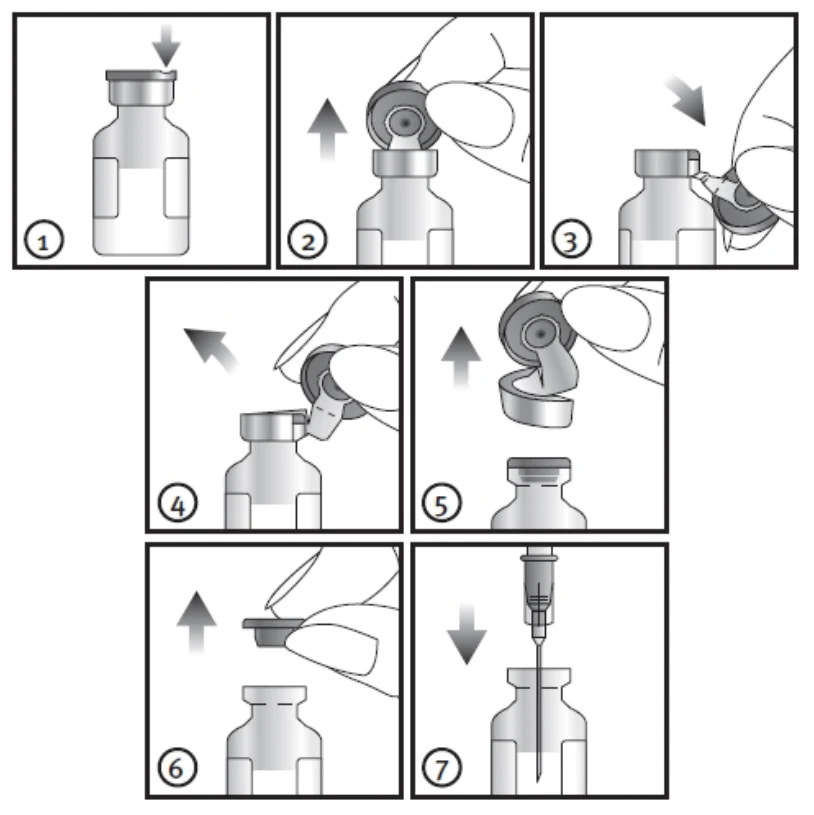
4.4 Missed Dose
Not applicable.
5 OVERDOSAGE
There is no experience with over-dosage (deliberate or accidental) following the administration of Curosurf in clinical trials or post-market setting. In the event of over-dosage, as much of the suspension as possible should be aspirated and the infant should be managed with supportive treatment, with particular attention to fluid and electrolyte balance. Based on animal data, over-dosage might result in acute airway obstruction.
6 DOSAGE FORMS, STRENGTHS, COMPOSITION AND PACKAGING
To help ensure the traceability of biologic products, health professionals should recognise the importance of recording both the brand name and the non-proprietary (active ingredient) name as well as other product-specific identifiers such as the Drug Identification Number (DIN) and the lot number/expiry date of the product supplied.
Table 2 Dosage Forms, Strengths, Composition and Packaging
Curosurf is available in sterile, ready-to-use rubber-stoppered clear glass vials containing 1.5 mL or 3 mL. Each milliliter contains 80 mg of surfactant (extract) (120 mg surfactant (extract)/1.5 mL or 240 mg surfactant (extract)/3 mL) suspended in 0.9% sodium chloride solution. One vial per carton.
7 DESCRIPTION
Curosurf Suspension for Intratracheal Use is a sterile, non-pyrogenic pulmonary surfactant intended for intratracheal use only. It is a natural porcine lung extract consisting of 99% polar lipids (mainly phospholipids) and approximately 1% hydrophobic low molecular weight proteins (surfactant associated proteins SP-B and SP-C). It is suspended in 0.9% sodium chloride solution, resulting in a composition that provides 80 mg/mL of surfactant (extract) that includes 76 mg of phospholipids and approximately 1 mg/mL of protein, of which 0.45 mg is SP-B. The amount of phospholipids is calculated from the content of phosphorus and contains 55 mg of phosphatidylcholine of which 30 mg is dipalmitoylphosphatidylcholine. The pH may be adjusted with sodium bicarbonate to a pH of 6.2 (5.5-6.5). Curosurf contains no preservatives.
8 WARNINGS AND PRECAUTIONS
Please see the SERIOUS WARNINGS AND PRECAUTIONS BOX at the beginning of Part I: Health Professional Information.
| For management of a suspected drug overdose, contact your regional poison control centre. |
| Route of Administration | Dosage Form / Strength/Composition | Non-medicinal Ingredients |
| Intratracheal | Suspension 80 mg surfactant*/mL Suspension |
|
| *Individual constituents of pig lung surfactant: phosphatidylchloline, dipalmitoylphosphatidylcholine, acidic phospholipids, surfactant proteins (SP-B & SP-C), Free fatty acids, triglycerides and cholesterol | ||
General
Curosurf should only be administered by those trained and experienced in the care, resuscitation, and stabilization of pre-term infants.
Prior to starting treatment with Curosurf the infant’s general conditions should be stabilized. Correction of acidosis, hypotension, anaemia, hypoglycemia and hypothermia is also recommended.
During administration of Curosurf, transient episodes of bradycardia, hypotension, endotracheal tube blockage, apnea, airway obstruction, and oxygen desaturation may occur. These events require stopping Curosurf administration and taking appropriate measures to alleviate the condition. After the patient is stable, dosing may proceed with appropriate monitoring. Administration of Curosurf to preterm infants with severe hypotension has not been studied.
Infants born following prolonged rupture of membranes (> 3 weeks) may not demonstrate an optimal response.
Surfactant administration can be expected to reduce the severity of RDS but will not eliminate entirely the mortality and morbidity associated with prematurity, as preterm babies may have other complications.
In cases of unsatisfactory response to treatment with Curosurf or rapid relapse, it is advisable to consider the possibility of other complications of immaturity such as patent ductus arteriosus or other lung diseases such as pneumonia before the administration of the next dose.
There is no information available on the effects of administering initial doses of Curosurf other than 1.25 mL/kg (100 mg/kg) or 2.5 mL/kg (200 mg/kg), subsequent doses other than 1.25 mL/kg (100 mg/kg), administration of more than three total doses, dosing more frequently than every 12 hours, or initiating therapy with Curosurf starting more than 15 hours after diagnosing RDS. Adequate data are not available on the use of Curosurf in conjunction with experimental therapies for RDS, e.g., high-frequency ventilation.
The administration of Curosurf to preterm infants with severe hypotension has not been studied.
The most common complication reported in the Curosurf group in clinical trials was patent ductus arteriosus, which was reported at a higher rate than in the sham group. This is not an unexpected finding, since the direction of blood flow through the ductus arteriosus is controlled largely by the degree of pulmonary vascular resistance in infants with RDS.
In most infants with RDS, pulmonary vascular resistance decreases as recovery from RDS begins, leading to the clinical appearance of pulmonary congestion from increased left-to-right blood flow. Because surfactant therapy results in a significant decrease in pulmonary vascular resistance, the left-to-right shunting of blood through the ductus may be more pronounced and thus diagnosed more frequently in infants who receive surfactant therapy for diagnosed RDS (i.e., “rescue” group).
Apnoea and sepsis neonatal may occur as a consequence of the immaturity of the infants.
Preterm newborns have relatively high incidences of cerebral haemorrhages, cerebral ischemia, periventricular leukomalacia and haemodynamic anomalies such as patent ductus arteriosus and persistence of fetal circulation despite the provision of intensive care. These infants are also at high risk of developing infections such as pneumonia and bacteraemia (e.g. septicaemia).
Preterm newborns also commonly develop haematological and electrolyte disorders which may be worsened by severe illness and mechanical ventilation. To complete the picture of complications of prematurity, the following disorders directly related to illness severity and use of mechanical ventilation, necessary for reoxygenation, may occur: pneumothorax, interstitial pulmonary emphysema and pulmonary haemorrhage. Finally, the prolonged use of high concentrations of oxygen and mechanical ventilation are associated with the development of bronchopulmonary dysplasia and retinopathy of prematurity.
Carcinogenesis and Mutagenesis
Carcinogenicity studies have not been performed with Curosurf, or other surfactants.
Mutagenicity studies of Curosurf have not indicated an increase in mutagenic potential.
Immune
In antigenicity studies in animals, Curosurf did not provoke an acute anaphylactic reaction after repeat sensitization by the intratracheal route and did not induce the formation of specific antibodies after sensitization by the subcutaneous route.
In clinical studies, Curosurf did not increase the antibody response or the degree of appearance of immune complexes compared to “sham” treatment (i.e., disconnection from respirator and manual ventilation for 2 minutes).
Infants treated with surfactant should be carefully monitored with respect to signs of infection. At the earliest signs of infection, the infant should immediately be given appropriate antibiotic therapy.
Monitoring and Laboratory Tests
After administration of exogenous surfactants, including Curosurf, pulmonary compliance (chest expansion) and oxygenation can improve rapidly, thus requiring prompt adjustment of ventilator settings. Infants receiving Curosurf should receive frequent clinical and laboratory assessments so that oxygen and ventilator support can be modified to respond to respiratory changes. The improvement of alveolar gas exchange can result in a rapid increase of arterial oxygen concentration: therefore, a rapid adjustment of the inspired oxygen concentration should be made to avoid hyperoxia. In order to maintain proper blood oxygenation values, in addition to periodic hemo-gas analysis, continuous monitoring of transcutaneous PaO2 or oxygen saturation is also advisable. Curosurf should only be administered by those trained and experienced in the care, resuscitation, and stabilization of pre-term infants.
Neurologic
After administration of Curosurf a transient depression of cerebro-electrical activity lasting from 2 to 10 minutes has been recorded. This has been observed in one study and its impact is not clear.
Intracranial haemorrhage: During post-marketing experience, episodes of intracranial haemorrhage have been observed. These have been related to reduction in mean arterial blood pressure and early peaks in arterial oxygenation (PaO2). Avoidance of high PaO2 peaks by ventilator adjustment immediately after instillation of Curosurf are recommended.
Ophthalmologic
The relation of ROP to the LISA procedure is unlikely, but possible. Desaturation, which may occur during the procedure, may trigger to some extent ROP during the neonatal transition after birth. The majority of events in clinical trials were non-serious, mild or moderate and resolved by the end of the study. Exceptions were: laser therapy (which was serious and with unknown outcome), intestinal perforation (which was serious and severe) and aphonia (which had not yet resolved by the end of the study).
Respiratory
During administration of Curosurf, transient episodes of bradycardia, endotracheal tube blockage, apnea, airway obstruction, or reduced oxygen saturation may occur. These events require stopping Curosurf administration and taking appropriate measures to alleviate the condition.
After the patient is stable, dosing may proceed with appropriate monitoring.
During treatment with Curosurf, hyperoxia, cyanosis and reflux through the endotracheal tube may also occur. In the event of reflux, administration should be stopped and, if necessary, peak inspiratory pressure on the ventilator should be increased until clearing of the endotracheal tube occurs.
After administration of Curosurf pulmonary compliance (chest expansion) and oxygenation can improve rapidly, thus requiring prompt adjustment of ventilator settings [see WARNINGS AND PRECAUTIONS, Monitoring and Laboratory Tests].
The improvement of alveolar gas exchange can result in a rapid increase of arterial oxygen concentration: therefore, a rapid adjustment of the inspired oxygen concentration should be made to avoid hyperoxia. In order to maintain proper blood oxygenation values, in addition to periodic blood gas analyses, continuous monitoring of transcutaneous PaO2 or oxygen saturation is also advisable.
Sexual Health
Reproduction
Studies to assess the effects of Curosurf (or other surfactants) on reproductive function have not been conducted.
8.1 Special Populations
8.1.1 Pregnant Women
Curosurf is not indicated for pregnant women.
8.1.2 Breast-feeding
Curosurf is not indicated during breast-feeding.
8.1.3 Pediatrics
Based on the data submitted and reviewed by Health Canada, the safety and efficacy of
Curosurf in premature infants have been established.
9 ADVERSE REACTIONS
9.1 Adverse Reaction Overview
The safety profile for conventional administration of Curosurf is derived from six randomized, multicenter, controlled trials including four rescue studies (EURO I, EURO III, EURO IV, EURO VI) and two prevention studies (50.00/CT/02/90 and 50.01/CT/04/93). Adverse reactions generally seen with Curosurf are bradycardia and hypotension; other events reported were endotracheal tube blockage and oxygen desaturation (see DOSAGE AND ADMINISTRATION section on how to minimize these events). Pulmonary haemorrhage has been reported both in clinical trials with Curosurf and in post-marketing adverse drug reaction (ADR) reports in infants who had received Curosurf.
The Non-INvasive Surfactant APPlication (NINSAPP) study compared surfactant administration via LISA technique to conventional endotracheal intubation (referred to as “conventional administration”). A total of 4 adverse reactions were reported in both the LISA and the conventional administration control groups in 4 (4.0%) and 4 (3.7%) patients, respectively. Adverse reactions reported in >1 patient in any treatment group were: pulmonary haemorrhage (in 2 [2.0%] and 2 [1.8%] patients in the LISA and control groups, respectively) and pneumothorax (in 1 [1.0%] and 2 [1.8%] patients in the LISA and control groups, respectively). All these reactions were serious, either moderate or severe in intensity and resolved by the end of the study.
9.2 Clinical Trial Adverse Reactions
Clinical trials are conducted under very specific conditions. The adverse reaction rates observed in the clinical trials may not reflect the rates observed in practice and should not be compared to the rates in the clinical trials of another drug. Adverse reaction information from clinical trials may be useful in identifying and approximating rates of adverse drug reactions in real-world use.
Use with conventional administration
The six randomized, multicenter, controlled trials of Curosurf included four rescue studies and two prevention studies conducted in approximately 3,400 infants. In the four rescue trials (EURO I, EURO III, EURO IV, EURO VI), patients were required to be diagnosed with RDS to be eligible for the study, whereas in the two prophylaxis trials (50.00/CT/02/90 and 50.01/CT/04/93), patients were randomized if they were within specific gestational age limits (24 to 30 weeks and 25 to 31 weeks, respectively).
EURO I is the only study in which patients were randomised to receive either Curosurf or a “sham” treatment. In the “sham” treatment, patients were disconnected from the respirator for 2 minutes and manually ventilated using the same protocol as for patients treated with Curosurf except that no material was instilled into the airways.
Most common (≥ 10% of patients in either treatment group) complications associated with prematurity by treatment in a randomised study (EURO I) in which Curosurf was compared to placebo (“sham”) treatment are reported in Table 3.
Table 3 EURO I TRIAL: MOST COMMON COMPLICATIONS ASSOCIATED WITH PREMATURITY (≥ 10% of patients for each treatment group)*
| Percentage and Number (n/N) of Patients a | |||||
Curosurf (200 mg/kg) | Sham b | ||||
Number of infants randomized Patients with at least one complicationa Acquired Pneumonia Acquired Septicemia Bronchopulmonary Dysplasia c Intracranial Haemorrhage d Patent Ductus Arteriosus Pneumothorax Pulmonary Interstitial Emphysema | 78 89% (69/78) 17% (13/78) 14% (11/77) 19% (15/78) 51% (40/78) 60% (47/78) 21% (16/78) 21% (16/78) | 66 91% (60/66) 21% (14/66) 18% (12/66) 22% (15/66) 64% (42/66) 48% (32/66) 36% (24/66) 38% (25/66) | |||
* At the time of the trial, adverse event reporting conventions allowed for collection of quantitative data related only to prematurity-related complications. Adverse events other than those listed above may have occurred in ≥10% of patients.
a Not all complications were assessed (as present or not present) for each patient; therefore, denominators reflect the total number of patients assessed for a specific complication b “Sham” treated patients received manual ventilation only with no surfactant instilled.
c Grades III - IV.
d Grades I - IV.
The occurrence of complications associated with prematurity was also evaluated in all the controlled trials (Studies 50.00/CT/02/90, 50.01/CT/04/93, EURO I, EURO III, EURO IV, EURO VI) combined. The rates of these complications in the controlled trials for infants who received rescue or prevention treatment with Curosurf and were randomized, are in Table 4 (pooled data from six trials).
Table 4 MOST COMMON COMPLICATIONS ASSOCIATED WITH PREMATURITY (≥ 10% of patients for each treatment group, Studies 50.00/CT/02/90, 50.01/CT/04/93, EURO I, EURO III, EURO IV, EURO VI)*
| Percentage and Number (n/N) of Patientsa | |||
| Curosurf Rescue | Curosurf Prophylaxis | ||
Number of Infants randomized Patients with at least one complication Acquired Pneumonia Acquired Septicemia Bronchopulmonary Dysplasia Intracranial Haemorrhage (All Grades) Other morbid conditions (e.g., surgery) Patent Ductus Arteriosus Pneumothorax Pulmonary Interstitial Emphysema Recurrent Apnea Retinopathy of Prematurity | 2792 78.8% (2200/2792) 16.0% (427/2673) 21.3% (575/2705) 33.0%b(771/2334) 29.8% (584/1958) 20.4 (432/2119) 38.8% (1053/2717) 13.0% (363/2789) 20.7% (137/662) 26.7% (558/2092) 14.6% (349/2387) | 269 73.2% (197/269) 6.9% (9/131) 15.8% (23/146) 21.6% (55/255) 50.6% (134/265) NA 21.2% (31/146) 5.6% (15/266) 10.2% (27/266) NA 8.9% (21/237) | |
* At the time of the trial(s), adverse event reporting conventions allowed for collection of quantitative data related only to prematurity-related complications. Adverse events other than those listed above may have occurred in ≥10% of patients.
NA Not assessed
a Not all complications were assessed (as present or not present) for each patient; therefore, denominators reflect the total number of patients assessed for a specific complication.
b The majority of patients with bronchopulmonary dysplasia in the rescue group were from EURO VI, in which bronchopulmonary dysplasia was defined as requirement for supplemental oxygen at 28 days (no radiographic evidence required).
Follow-up Evaluations: Data from follow-up evaluations at 1 year of age (76 patients, 45 treated with Curosurf) and at 2 years of age (73 patients, 44 treated with Curosurf) of infants treated in one single dose study (EURO I), showed no differences between treatment groups for weight, length, occipitofrontal circumference, persistent respiratory symptoms, incidence of cerebral palsy, visual impairment, or auditory impairment. No difference was observed between groups for developmental quotient, derived using the Griffiths Mental Developmental Scales, in 16 patients (10 treated with Curosurf and 6 controls) followed up at 5.5 years corrected age.
Histological lung examination of the 44 patients from in EURO I who died (18 patients in the Curosurf group and 26 patients in the “Sham” group) showed a difference between groups for the occurrence of pulmonary interstitial emphysema which was found in 9 patients in the “sham” group and in no patients in the Curosurf group.
Less Invasive Surfactant Administration with a Thin Catheter (LISA) Technique
The Non-INvasive Surfactant APPlication (NINSAPP) study compared surfactant administration via LISA technique to conventional endotracheal intubation.
Preterm infants of gestational age <27 and ≥23 weeks, with surfactant deficiency syndrome were enrolled in the study. In the LISA group, Curosurf, at a dose of at least 100 mg/kg, was administered via endotracheal thin catheter while continuing CPAP. In the control group patients were treated through the conventional approach consisting of intubation, surfactant (Curosurf, at least 100 mg/kg) administration and mechanical ventilation. Table 5 summarizes adverse events reported during surfactant administration.
Table 5 Adverse events during surfactant administration occurring more frequently in infants treated with Curosurf than in infants with the control treatment – NINSAPP Study (Safety population)
| System Organ Class/ Preferred term | LISA group N = 101 | Conventional administration group N = 109 |
| Number of patients (%) | Number of patients (%) | |
| Cardiac disorders | ||
| Bradycardia | 12 (11.9%) | 3 (2.8%) |
| Investigations | ||
| Oxygen desaturation | 58 (57.4%) | 29 (26.6%) |
| Nervous system disorders | ||
| Froth at the mouth | 22 (21.8%) | 3 (2.8%) |
| Respiratory, thoracic and mediastinal disorders | ||
| Apnoea | 22 (21.8%) | 14 (12.8%) |
| Coughing | 8 (7.9%) | 1 (0.9%) |
| Choking | 7 (6.9%) | 2 (1.8%) |
| Sneezing | 5 (5.0%) | 0 (0.0%) |
Table 6 Treatment-Emergent Adverse Events occurring in ≥1% of infants treated with Curosurf and occurring more frequently than in infants with the control treatment - NINSAPP Study (Safety Population)
System Organ Class/ Preferred Term | LISA group N = 101 | Conventional Administration group N = 109 |
| Number of patients (%) | Number of patients (%) | |
| Cardiac disorders | ||
| Cardio-respiratory distress | 2 (2.0%) | 1 (0.9%) |
| Cardiomyopathy | 1 (1.0%) | 0 (0.0%) |
| Pulmonary valve stenosis | 1 (1.0%) | 0 (0.0%) |
| Congenital, familial and genetic disorders | ||
| Atrial septal defect | 1 (1.0%) | 0 (0.0%) |
| Endocrine disorders | ||
| Hyperparathyroidism secondary | 1 (1.0%) | 0 (0.0%) |
| Eye disorders | ||
| Eyelid oedema | 1 (1.0%) | 0 (0.0%) |
| Ocular hyperaemia | 1 (1.0%) | 0 (0.0%) |
| Gastrointestinal disorders | ||
| Intestinal perforation | 12 (11.9%) | 10 (9.2%) |
| Necrotising colitis | 13 (12.9%) | 6 (5.5%) |
| Meconium ileus | 3 (3.0%) | 1 (0.9%) |
| Ascites | 1 (1.0%) | 0 (0.0%) |
| Duodenal perforation | 1 (1.0%) | 0 (0.0%) |
| Meconium plug syndrome | 1 (1.0%) | 0 (0.0%) |
| General disorders and administration site conditions | ||
| Oedema peripheral | 2 (2.0%) | 0 (0.0%) | ||
| Catheter site extravasation | 1 (1.0%) | 0 (0.0%) | ||
| Multi-organ failure | 1 (1.0%) | 0 (0.0%) | ||
| Pain | 1 (1.0%) | 0 (0.0%) | ||
| Peripheral swelling | 1 (1.0%) | 0 (0.0%) | ||
| Vessel puncture site haemorrhage | 1 (1.0%) | 0 (0.0%) | ||
| Infections and infestations | ||||
| Sepsis neonatal | 15 (14.9%) | 14 (12.8%) | ||
| Conjunctivitis | 5 (5.0%) | 0 (0.0%) | ||
| Rash pustular | 3 (3.0%) | 0 (0.0%) | ||
| Gastroenteritis clostridial | 2 (2.0%) | 0 (0.0%) | ||
| Cytomegalovirus infection | 1 (1.0%) | 0 (0.0%) | ||
| Gastroenteritis astroviral | 1 (1.0%) | 0 (0.0%) | ||
| Respiratory syncytial virus bronchiolitis | 1 (1.0%) | 0 (0.0%) | ||
| Injury, poisoning and procedural complications | ||||
| Face injury | 2 (2.0%) | 1 (0.9%) | ||
| Anastomotic complication | 1 (1.0%) | 0 (0.0%) | ||
| Contusion | 1 (1.0%) | 0 (0.0%) | ||
| Investigations | ||||
| Norovirus test positive | 1 (1.0%) | 0 (0.0%) | ||
| Metabolism and nutrition disorders | ||||
| Hyperglycaemia | 1 (1.0%) | 0 (0.0%) | ||
| Neoplasms benign, malignant and unspecified (incl cysts and polyps) | ||||
| Haemangioma | 5 (5.0%) | 2 (1.8%) | ||
| Nervous system disorders | ||||
| Cerebral ventricle dilatation | 2 (2.0%) | 0 (0.0%) | ||
| Cerebellar haemorrhage | 1 (1.0%) | 0 (0.0%) | ||
| Cerebral infarction | 1 (1.0%) | 0 (0.0%) | ||
| Seizure | 1 (1.0%) | 0 (0.0%) | ||
| Renal and urinary disorders | ||||
| Acute kidney injury | 1 (1.0%) | 0 (0.0%) | ||
| Respiratory, thoracic and mediastinal disorders | ||||
| Nasal discomfort | 6 (5.9%) | 1 (0.9%) | ||
| Neonatal respiratory distress syndrome | 2 (2.0%) | 0 (0.0%) | ||
| Increased viscosity of nasal secretion | 1 (1.0%) | 0 (0.0%) | ||
| Throat irritation | 1 (1.0%) | 0 (0.0%) | ||
| Skin and subcutaneous tissue disorders | ||||
| Erythema | 3 (3.0%) | 2 (1.8%) | ||
| Skin lesion | 2 (2.0%) | 1 (0.9%) | ||
| Skin erosion | 1 (1.0%) | 0 (0.0%) | ||
| Surgical and medical procedures | ||||
| Intestinal resection | 1 (1.0%) | 0 (0.0%) | ||
| Laser therapy | 1 (1.0%) | 0 (0.0%) | ||
| Skin operation | 1 (1.0%) | 0 (0.0%) | ||
| Vascular disorders | ||||
| Haematoma | 4 (4.0%) | 3 (2.8%) |
| Haemorrhagic infarction | 2 (2.0%) | 1 (0.9%) |
| Hypertension | 1 (1.0%) | 0 (0.0%) |
| Hypotension | 1 (1.0%) | 0 (0.0%) |
| Hypovolaemic shock | 1 (1.0%) | 0 (0.0%) |
| Thrombophlebitis | 1 (1.0%) | 0 (0.0%) |
Table 7 Procedure-related Adverse Events – NINSAPP Study (Safety Population)
| SOC, PT | LISA group N = 101 | Conventional administration group N = 109 | |||||||
|---|---|---|---|---|---|---|---|---|---|
| Number of patients (%) | Number of events | Number of patients (%) | Number of events | ||||||
| Any AE related to the procedure | 4 (4.0%) | 5 | 8 (7.3%) | 8 | |||||
| Eye disorders | 1 (1.0%) | 1 | 0 (0.0%) | 0 | |||||
| ROP | 1 (1.0%) | 1 | 0 (0.0%) | 0 | |||||
| Gastrointestinal disorders | 0 (0.0%) | 0 | 1 (0.9%) | 1 | |||||
| Intestinal perforation | 0 (0.0%) | 0 | 1 (0.9%) | 1 | |||||
| Injury, poisoning and procedural complications | 0 (0.0%) | 0 | 1 (0.9%) | 1 | |||||
| Endotracheal intubation complication | 0 (0.0%) | 0 | 1 (0.9%) | 1 | |||||
| Nervous system disorders | 0 (0.0%) | 0 | 1 (0.9%) | 1 | |||||
| Aphonia | 0 (0.0%) | 0 | 1 (0.9%) | 1 | |||||
| Respiratory, thoracic and mediastinal disorders | 3 (3.0%) | 3 | 5 (4.6%) | 5 | |||||
| Pulmonary haemorrhage | 2 (2.0%) | 2 | 1 (0.9%) | 1 | |||||
| Pneumothorax | 0 (0.0%) | 0 | 2 (1.8%) | 2 | |||||
| Haemoptysis | 0 (0.0%) | 0 | 1 (0.9%) | 1 | |||||
| Neonatal respiratory distress syndromea | 1 (1.0%) | 1 | 0 (0.0%) | 0 | |||||
| Stridor | 0 (0.0%) | 0 | 1 (0.9%) | 1 | |||||
| Surgical and medical procedures | 1 (1.0%) | 1 | 0 (0.0%) | 0 | |||||
| Laser therapy | 1 (1.0%) | 1 | 0 (0.0%) | 0 | |||||
a Reported as: one-side surfactant application
9.3 Less Common Clinical Trial Adverse Reactions
Infections and infestations: Septic shock
Nervous System Disorders: Haemorrhage intracranial
Respiratory, thoracic and mediastinal disorders: Pneumothorax, Bronchopulmonary dysplasia, Pulmonary haemorrhage
9.4 Abnormal Laboratory Findings: Hematologic, Clinical Chemistry and Other Quantitative Data
No clinically significant hematologic and chemistry findings associated with the administration of Curosurf were reported in clinical trials.
After administration of Curosurf, pulmonary compliance (chest expansion) and oxygenation can improve rapidly, thus requiring prompt adjustment of ventilator settings. Assisted ventilation should not be abruptly stopped so as not to increase the risk of apnoea. Infants receiving Curosurf should receive frequent clinical and laboratory assessments so that oxygen and ventilator support can be modified to respond to respiratory changes. See WARNINGS AND PRECAUTIONS, Monitoring and Laboratory Tests and DOSAGE AND ADMINISTRATION for further information.
9.5 Post-Market Adverse Reactions
Undesirable side effects collected during post-marketing experience which are not described above are listed in the table below according to System Organ Class.
Table 8 Post-Market Adverse Events by System Organ Class
| System organ Class | Adverse Reaction |
| Respiratory, thoracic and mediastinal disorders | Hyperoxia |
| Cyanosis neonatal | |
| Investigations | Oxygen saturation decreased |
| Electroencephalogram abnormal |
10 DRUG INTERACTIONS
10.1 Overview
No known drug interactions have been identified.
Post-market surveillance reports did not include events indicative of drug interactions.
10.2 Drug-Drug Interactions
Interactions with other drugs have not been established.
10.3 Drug-Food Interactions
Interactions with food have not been established.
10.4 Drug-Herb Interactions
Interactions with herbal products have not been established.
10.5 Drug-Laboratory Test Interactions
Interactions with laboratory tests have not been established.
11 ACTION AND CLINICAL PHARMACOLOGY
11.1 Mechanism of Action
Curosurf aqueous suspension for intratracheal administration compensates for the deficiency of surfactant in Respiratory Distress Syndrome (RDS) and restores surface activity to the lungs of the premature newborn.
Curosurf is a pulmonary surfactant prepared from porcine lungs, consisting of a combination of phospholipids and apoproteins. Administered intratracheally, Curosurf distributes rapidly throughout the alveolar spaces reducing surface tension at the air-liquid interface during ventilation and stabilizing the alveoli against collapse at resting transpulmonary pressures. This activity is brought about by the major component of the phospholipid fraction, dipalmitoylphosphatidylcholine (DPPC) and it is facilitated by the interaction with the surfactant specific apoproteins, which improve the spreading and adsorption of DPPC at the alveolar surface. Treatment administration as soon as possible after birth may provide a more uniform distribution of surfactant.
11.2 Pharmacodynamics
In vitro - poractant alfa lowers minimum surface tension to ≤4mN/m as measured by the Wilhelmy Balance System.
In vivo - In pharmacodynamic studies using ventilated or non-ventilated premature rabbits, poractant alfa improved lung mechanics. Static pressure-volume recordings showed enhancement of lung expansion in premature newborn rabbits following poractant alfa administration and good stability during deflation of the lungs.
Under conditions of standardized tidal volume (10 mL/kg) ventilation, high values for lung-thorax compliance were also associated with an improvement in alveolar gas exchange. Histological examination showed the poractant alfa-treated animals to have a nearly uniform alveolar expansion pattern with well-aerated terminal air spaces and well-preserved epithelium in conducting airways.
Poractant alfa administered as a single intratracheal dose of 160 mg/kg (2.0 mg/mL) to 14 immature newborn rabbits, while an additional 17 animals served as untreated controls, resulted in increased lung-thorax compliance in animals who received poractant alfa relative to controls. The amount of total protein in the lung lavage fluid was also reduced in animals who received poractant alfa relative to controls (2.5 mg/mL vs. 10 mg/mL), indicating reduced lung permeability; this is important since vascular-to-alveolar protein leakage is known to be a factor in the inactivation of pulmonary surfactant.
11.3 Pharmacokinetics
Curosurf is administered directly into the trachea. The metabolic disposition of Curosurf in humans has not been studied. No information is available about the metabolic fate of the surfactant-associated proteins in Curosurf.
Animal Metabolism
Poractant alfa is administered directly to the target organ, the lung, where biophysical effects occur at the alveolar surface.
In both adult and newborn rabbits, approximately 50% of the radio labeled component was rapidly removed from the alveoli in the first three hours after single intratracheal administration of 200 mg/kg poractant alfa-14C-DPPC (dipalmitoylphosphatidylcholine). Over a 24-hour period, approximately 45% of the labeled DPPC was cleared from the lungs of adult rabbits compared to approximately 20% in newborn animals.
In newborn rabbits, poractant alfa-14C-DPPC passed from the alveolar space into the lung parenchyma and then was secreted again into the alveoli, whereas in adult rabbits, most of the DPPC was not recycled. The half-life in the lung in toto appears to be about 25 hours in adult rabbits and 67 hours in newborn rabbits.
Very little DPPC was found in alveolar macrophages at any time for both young and adult animals and small amounts (0.33% to 0.52% of the total DPPC recovered) were found in the serum, liver, kidneys and brain of young animals at 48 hours.
12 STORAGE, STABILITY AND DISPOSAL
Curosurf should be inspected visually for discoloration prior to administration. The color of
Curosurf is white to creamy white. A slight color change, towards yellow, may occur on aging without denoting product degradation.
Curosurf is available in ready-to-use vials that should be stored in a refrigerator at +2 to +8°C. Do not use past the expiry date on the label. Vials are for single use only and all unused drug should be discarded. Protect from light. Do not shake.
13 SPECIAL HANDLING INSTRUCTIONS
Protect from light. Do not shake.
Unopened, unused vials of Curosurf that have warmed to room temperature can be returned to refrigerated storage within 24 hours for future use. Do not warm to room temperature and return to refrigerated storage more than once. Each single-use vial should be entered only once and the vial with any unused material should be discarded after initial entry.
PART II: SCIENTIFIC INFORMATION
14 PHARMACEUTICAL INFORMATION
Drug Substance
Proper name: Poractant alfa
Chemical name: none
Molecular formula and molecular mass:
Phospholipids
phosphatidylcholine (PC) or lecithin (1,2-diacyl-sn-glycero-3-phosphorylcholine)
phosphatidylglycerol (PG) (1,2-diacyl-sn-glycero-3-phosphoryl-1'-sn-glycerol)
phosphatidylinositol (PI) (1,2-diacyl-sn-glycero-3-phosphoryl-1'-inositol)
phosphatidylserine (PS) (1,2-diacyl-sn-glycero-3-phosphorylserine)
phosphatidylethanolamine (PE) (1,2-diacyl-sn-glycero-3-phosphorylethanolamine)
sphingomyelin (SM) (sphingosine ceramide of phosphorylcholine)
lysophosphatidylcholine (LPC)
The phospholipid component is present as a mixture of phospholipids with variable “R” substituents and therefore the overall molecular weight is not defined.
Low molecular weight hydrophobic proteins
Surfactant protein SP-B MW: 8.7 kDa
Surfactant protein SP-C MW: 3.7 kDa
Structural formula: N/A
Physicochemical properties: White to creamy white suspension.
Product Characteristics
Curosurf (poractant alfa) Suspension for Intratracheal Use is a sterile, non-pyrogenic pulmonary surfactant intended for intratracheal use only. It is a natural porcine lung extract consisting of 99% polar lipids (mainly phospholipids) and approximately 1% hydrophobic low molecular weight proteins (surfactant associated proteins SP-B and SP-C). It is suspended in 0.9% sodium chloride solution, resulting in a composition that provides 80 mg/mL of surfactant (extract) that includes 76 mg of phospholipids and including approximately 1 mg/mL of protein, of which 0.45 mg is SP-B. The amount of phospholipids is calculated from the content of phosphorus and contains 55 mg of phosphatidylcholine of which 30 mg is dipalmitoylphosphatidylcholine. The pH may be adjusted with sodium bicarbonate to a pH of 6.2 (5.5 – 6.5). Curosurf contains no preservatives.
15 CLINICAL TRIALS
15.1 Trial Design and Study Demographics
Table 9 Summary of patient demographics for clinical trials in respiratory distress syndrome in premature infants
| Study # | Trial design | Dosage, route of administration and duration | Study subjects (n) | Mean Gestational Age | Sex |
|---|---|---|---|---|---|
| 50.00/CT/ 02/90 | Randomized, controlled, multicenter trial of Curosurf prophylaxis versus rescue treatment | Intratracheal 200 mg/kg | Prophylaxis arm = 136 infants Rescue arm = 132 infants | Prophylaxis arm = 27.5 weeks Rescue arm = 27.4 weeks | Prophylaxis arm = 71M/65F Rescue arm = 62M/70F |
| 50.01/CT/ 04/93 | Randomized, controlled, multicenter trial of Curosurf prophylaxis versus rescue treatment | Intratracheal 100 mg/kg | Prophylaxis arm = 134 infants Rescue arm = 122 infants | Prophylaxis arm = 28.9 weeks Rescue arm = 28.3 weeks | Prophylaxis arm = 75M/59F Rescue arm = 63M/59F |
| EURO I | Randomized, controlled, multicenter trial of Curosurf rescue versus “sham” treatment | Intratracheal 200 mg/kg | Rescue arm = 77 infants “Sham” arm = 69 infants | Rescue arm = 28.8 weeks “Sham” arm = 28.4 weeks | Rescue arm = 50 M/27F “Sham” arm = 40M/29F |
| EURO III | Randomized, controlled, multicenter trial of Curosurf early treatment versus late treatment | Intratracheal 200 mg/kg | Early arm = 86 infants Late/control arm = 96 infants | Early arm = 29.9 weeks Late/control arm = 29.7 weeks | Early arm = 47M/39F Late/control arm = 57M/39F |
| Study # | Trial design | Dosage, route of administration and duration | Study subjects (n) | Mean Gestational Age | Sex |
|---|---|---|---|---|---|
| EURO IV | Randomized, controlled, multicenter trial of Curosurf single dose versus multiple doses | Intratracheal 200 mg/kg initial dose followed by 100 mg/kg doses | Single dose arm =176 infants Multiple doses arm = 167 infants | Single dose arm =29.2 weeks Multiple doses arm = 28.9 weeks | Single dose arm =99M/77F Multiple doses arm = 91M/76F |
| EURO VI | Randomized, controlled, multicenter trial of Curosurf high dose versus low dose | Intratracheal Low dose arm = 100 mg/kg doses High dose arm = 200 mg/kg initial dose followed by 100 mg/kg doses | Low dose arm = 1069 infants High dose arm = 1099 infants | Low dose arm = 29.4 weeks High dose arm = 29.3 weeks | Low dose arm = 619M/450F High dose arm = 629M/470F |
| NINSAPP Study | Randomised, prospective, multicentre, single-dose, controlled parallel-group trial of non-invasive Curosurf application during CPAP assisted spontaneous breathing versus conventional therapy of respiratory distress syndrome in extremely preterm neonates | Intratracheal 164.1 ± 52.0 mg/kg 2.0 ± 1.6 minutes, 162.8 ± 52.2 mg/kg, 1.8 ± 1.2 minutes | LISA arm = 107 preterm neonates Conventional administratio n arm = 104 preterm neonates | LISA arm: 25.3 weeks Conventional administratio n arm: 25.2 weeks | LISA arm: 63M/44F Conventional administratio n arm: 52M/ 52F |
Curosurf has been studied in controlled clinical trials (Rescue studies and Prophylaxis versus Rescue studies) in around 3600 patients.
15.2 Study Results
EURO I study:
In a study (EURO I) comparing premature rescue-infants treated with a single dose of Curosurf (200 mg/kg) to premature infants who received a "sham" treatment in which patients were disconnected from the respirator for 2 minutes and manually ventilated using the same protocol as for patients treated with Curosurf except that no material was instilled into the airways. A higher incidence of survival without bronchopulmonary dysplasia (BPD) was reported in the Curosurf group.
The results of three Pivotal studies (EURO I, 50.01/CT/04/93 and the NINSAPP Study) are summarized below:
Table 10 Efficacy Assessment - EURO I
| Treatment Group*: | Curosurf N = 77 (%) | Sham N = 69 (%) | ||||
| Number of Doses: | single dose (200 mg/kg) | single dose “sham” | ||||
| Mortality at 28 days | 24 (31) | 35 (51) | ||||
| BPD (Grade III-IV) at 28 days | 12 (16) | 18 (26) | ||||
| * Birth Weight Range: 700 - 2000 g | ||||||
50.01/CT/04/93 study:
In prophylaxis studies of premature infants at risk of developing RDS, single or multiple doses of Curosurf (100 mg/kg - 200 mg/kg) reduced mortality and the incidence of BPD and increased survival without BPD at 28 days.
Table 11 Efficacy Assessment - Prophylaxis 50.01/CT/04/93
| Gestational Age (GA) | 25 - 28 weeks | 29 - 31 weeks | ||||||||||
| Treatment* | Prophylaxis N = 49 (%) | Rescue N = 63 (%) | Prophylaxis N = 85 (%) | Rescue N = 59 (%) | ||||||||
| Survival at 28 days | Yes | 41 (84) | 49 (78) | 78 (92) | 50 (85) | |||||||
| No | 8 (16) | 14 (22) | 7 (8) | 9 (15) | ||||||||
| Survival at 42 weeks GA | Yes | 40 (82) | 45 (71) | 76 (89) | 48 (81) | |||||||
| No | 9 (18) | 18 (29) | 9 (11) | 11 (19) | ||||||||
Survival without BPD at 28 days | 16 (33) | 21 (33) | 65 (76) | 35 (59) | ||||||||
| Death or BPD at 28 days | 33 (67) | 42 (67) | 20 (24) | 24 (41) | ||||||||
| * up to 4 doses (100/mg/kg/dose) | ||||||||||||
Non-INvasive Surfactant APPlication (NINSAPP) study:
A clinical study, NINSAPP, compared the administration of Curosurf with the LISA technique and the standard of care (intubation, administration and mechanical ventilation) in spontaneously-breathing preterm newborns with RDS and gestational age between 23 and 27 weeks. The primary endpoint of the study was survival without bronchopulmonary dysplasia (BPD) at 36 gestational weeks. The efficacy was assessed using a non-inferiority design with a margin of -5% for the difference in the proportion in survival without BPD (LISA - Control). The study met its primary endpoint; the 95% confidence interval for the difference in proportions was above the -5% non-inferiority margin. Results are presented in Table 12 below.
Table 12 Efficacy Assessment – Non INvasive Surfactant APPlication (NINSAPP) Study
| Treatment Group | LISA group N = 107 | Conventional administration group N = 104 |
| Survival without BPD | 72 (67.3%) | 61 (58.7%) |
| Difference between proportion: LISA - Control (95% CI) | 8.604 (-4.045, 21.253)* | ||
| Survival without BPD by GA, | |||
| GA: 23-24+6 weeks | 21 (51.2%) | 19 (47.5%) | |
| GA: 25-26+6 weeks | 51 (77.3%) | 42 (65.6%) | |
| Death | 10 (9.3%) | 12 (11.5%) |
| BPD | 25 (23.4%) | 31 (29.8%) |
| Survival without major complications (IVH Grade ≥II, PVL, ROP requiring surgery) | 64 (59.8%) | 43 (41.3%) |
| NEC requiring surgery | 9 (8.4%) | 4 (3.8%) |
| Need for Intubation and MV within 96 hrs of surfactant administration | 56 (52.3%) | 102 (98.1%) |
* The NI margin was pre-defined in the study protocol and set to 5% IVH=Intraventricular Hemorrhage; PVL=Periventricular Leukomalacia, ROP=Retinopathy of Prematurity, NEC=Necrotizing Enterocolitis, MV=Mechanical Ventilation |
16 NON-CLINICAL TOXICOLOGY
General Toxicology
Acute Toxicity Studies:
Endotracheal administration of CUROSURF (200 mg/kg) to healthy, i.e. non-surfactant-deficient rats, guinea pigs, dogs and rabbits, produced isolated respiratory symptoms, which can be attributed to excessive volume loading of the respiratory tract by the liquid.
Intra-peritoneal administration up to 2000 mg/kg of CUROSURF caused pilo-erection and hypo-activity in mice and rats.
Subacute Toxicity Studies:
Sub-acute intra-tracheal toxicity study in dogs, rabbits and rats (14 days) showed neither clinical effects or haematological changes, nor macroscopic variations related to the CUROSURF administration. Only respiratory findings attributable to the excessive volume administered into lungs were seen.
Slight to moderate reversible centrilobular hepatocyte vacuolisation and vacuolar degeneration occurred in the liver of rats after intra-peritoneal administration of CUROSURF at the dose of 600 mg/kg/day for 4 weeks. This is a condition that is expected after intra-peritoneal administration of high doses of lipids. Acute inflammation and fibrosis occurred at the injection site at 600 mg/kg. No local or systemic treatment related effects were seen up to a 350 mg/kg dose.
Carcinogenicity:
Carcinogenicity studies have not been performed with poractant alfa.
Genotoxicity:
Poractant alfa did not show any evidence of mutagenic or clastogenic activity.
Reproductive and Developmental Toxicology:
Reproduction studies have not been performed with poractant alfa.
Special Toxicology:
Poractant alfa by the parenteral route in the guinea pig neither elicits active anaphylactic reactions, nor stimulates the production of antibodies detectable by passive cutaneous anaphylactic reaction. No anaphylactic reaction was observed by intratracheal route. Furthermore, there is no evidence of dermal sensitizing potential (Magnusson and Kligman test).
Juvenile Toxicology:
Juvenile toxicity studies have not been performed with poractant alfa.