


Product Monograph - Dantrium Capsules (Knight Therapeutics)
RECENT MAJOR LABEL CHANGES
| 4 DOSAGE AND ADMINISTRATION, 4.2 Recommended Dose and Dosage Adjustment | 12/2023 |
|---|---|
| 7 WARNINGS AND PRECAUTIONS, General | 12/2023 |
TABLE OF CONTENTS
Sections or subsections that are not applicable at the time of authorization are not listed.
RECENT MAJOR LABEL CHANGES .......................................................................................... 2
TABLE OF CONTENTS ............................................................................................................ 2
PART I: HEALTH PROFESSIONAL INFORMATION .................................................................... 4
1 INDICATIONS ............................................................................................................. 4
1.1 Pediatrics .................................................................................................................. 4
1.2 Geriatrics .................................................................................................................. 4
2 CONTRAINDICATIONS ................................................................................................ 4
3 SERIOUS WARNINGS AND PRECAUTIONS BOX ........................................................... 5
4 DOSAGE AND ADMINISTRATION ................................................................................ 5
4.1 Dosing Considerations ............................................................................................. 5
4.2 Recommended Dose and Dosage Adjustment ........................................................ 6
4.5 Missed Dose ............................................................................................................. 6
5 OVERDOSAGE ............................................................................................................ 6
6 DOSAGE FORMS, STRENGTHS, COMPOSITION AND PACKAGING ................................ 7
7 WARNINGS AND PRECAUTIONS ................................................................................. 7
7.1 Special Populations .................................................................................................. 9
7.1.1 Pregnant Women ............................................................................................... 9
7.1.2 Breast-feeding .................................................................................................... 9
7.1.3 Pediatrics ............................................................................................................ 9
7.1.4 Geriatrics ............................................................................................................ 9
8 ADVERSE REACTIONS............................................................................................... 10
8.1 Adverse Reaction Overview ................................................................................... 10
8.4 Abnormal Laboratory Findings: Hematologic, Clinical Chemistry and Other Quantitative Data ............................................................................................................. 11
9 DRUG INTERACTIONS .............................................................................................. 11
9.3 Drug-Behavioural Interactions ............................................................................... 11
9.4 Drug-Drug Interactions .......................................................................................... 11
9.5 Drug-Food Interactions .......................................................................................... 11
9.6 Drug-Herb Interactions .......................................................................................... 11
9.7 Drug-Laboratory Test Interactions......................................................................... 11
10 CLINICAL PHARMACOLOGY ...................................................................................... 12
10.1 Mechanism of Action ....................................................................................... 12
10.2 Pharmacodynamics .......................................................................................... 12
10.3 Pharmacokinetics ............................................................................................. 13
11 STORAGE, STABILITY AND DISPOSAL ........................................................................ 13
12 SPECIAL handling instructions .................................................................................. 13
PART II: SCIENTIFIC INFORMATION ..................................................................................... 14
13 PHARMACEUTICAL INFORMATION .......................................................................... 14
14 CLINICAL TRIALS ...................................................................................................... 14
14.1 Clinical Trials by Indication .............................................................................. 14
15 MICROBIOLOGY ...................................................................................................... 14
16 NON-CLINICAL TOXICOLOGY .................................................................................... 15
PATIENT MEDICATION INFORMATION ................................................................................ 17
PART I: HEALTH PROFESSIONAL INFORMATION
1 INDICATIONS
DANTRIUM CAPSULES (dantrolene sodium capsules) is indicated for:
- Controlling the manifestations of a chronic spasticity of skeletal muscle resulting from such conditions as spinal cord injury, cerebral palsy, multiple sclerosis, and stroke, whenever such spasticity results in a decrease in functional use of residual motor activity.
- The pre-operative management of malignant hyperthermia-susceptible surgical patients.
- The malignant hyperthermic crisis follow-up management of patients stabilized with the intravenous product (for information regarding the intravenous product see the Dosage and Administration section of the DANTRIUM INTRAVENOUS Product Monograph).
DANTRIUM CAPSULES is not indicated in the relief of skeletal muscle spasms due to rheumatic disorders.
1.1 Pediatrics
Pediatrics (5-18 years of age): Based on the data submitted and reviewed by Health Canada, the safety and efficacy of DANTRIUM CAPSULES in pediatric patients has been established. Therefore, Health Canada has authorized an indication for pediatric use in this subpopulation (see 7.1.3 Pediatrics).
Pediatrics (<5 years of age): Since there is insufficient experience with the use of DANTRIUM CAPSULES in young children, the drug is usually not recommended in this age group.
1.2 Geriatrics
Geriatrics: Evidence from clinical studies and experience suggests that use in the geriatric population is associated with differences in safety and effectiveness (see 7.1.4 Geriatrics).
2 CONTRAINDICATIONS
DANTRIUM CAPSULES is contraindicated in:
- Patients with known hypersensitivity to this drug or to any ingredient in the formulation or component of the container. For a complete listing, see 6 DOSAGE FORMS, COMPOSITION AND PACKAGING.
- Cases where spasticity is needed to maintain function. Skeletal muscle spasticity without suitable volitional activity (residual motor activity) may be of value in rehabilitation programs aimed toward sustaining upright posture and balance, and may assist a patient’s locomotor pattern. Relief of such spasticity would reduce rather than increase function (see 7 WARNINGS AND PRECAUTIONS, Musculoskeletal).
- Patients with compromised pulmonary function, particularly those with obstructive pulmonary disease.
- Patients with active hepatic disease, such as hepatitis and cirrhosis (see 7 WARNINGS AND PRECAUTIONS, Hepatic/Biliary/Pancreatic).
3 SERIOUS WARNINGS AND PRECAUTIONS BOX
Serious Warnings and Precautions
Hepatotoxicity DANTRIUM CAPSULES (dantrolene sodium capsules) has a potential for hepatotoxicity and symptomatic hepatitis, and should not be used in conditions other than those recommended. Risk of hepatic injury appears to be greater in female patients, in patients over 35 years of age, in patients taking other medication(s), and in patients receiving other hepatotoxic therapies concomitantly. DANTRIUM CAPSULES may exacerbate pre-existing liver dysfunction. DANTRIUM CAPSULES should not be used without appropriate evaluation and monitoring of hepatic function before and throughout treatment, including frequent determinations of alanine transferase (ALT) and aspartate transferase (AST) in blood serum. A trial administration of DANTRIUM CAPSULES is recommended and if after 45 days no observable benefit is evident, DANTRIUM CAPSULES should be discontinued. The lowest possible effective dose for the individual patient should be prescribed (see 7 WARNINGS AND PRECAUTIONS, Hepatic/Biliary/Pancreatic). Carcinogenicity There is evidence of low-grade carcinogenicity activity of DANTRIUM CAPSULES in rats. Thus, potential carcinogenicity in humans cannot be disregarded (see 7 WARNINGS AND PRECAUTIONS, Carcinogenesis and Mutagenesis). |
|---|
4 DOSAGE AND ADMINISTRATION
4.1 Dosing Considerations
- It is important that the dosage be titrated and individualized for maximum optimal effect. The lowest dose compatible with optimal response is recommended. In view of the potential for liver damage during long-term use, therapy with DANTRIUM CAPSULES should be discontinued if benefits are not evident within 45 days (see 3 SERIOUS WARNINGS AND PRECAUTIONS BOX, Hepatotoxicity).
- Prior to the administration of DANTRIUM CAPSULES, consideration should be given to the potential response to treatment. A decrease in spasticity sufficient to allow a daily function not otherwise attainable should be the therapeutic goal of treatment with DANTRIUM CAPSULES. See 10 CLINICAL PHARMACOLOGY for description of possible areas of response.
- It is important to establish a therapeutic goal (regain and maintain a specific function such as therapeutic exercise program, utilization of braces, transfer manoeuvres, etc.) before beginning DANTRIUM CAPSULES therapy. Dosage should be increased until the maximum performance compatible with the dysfunction due to underlying disease is achieved. No further increase in dosage is then indicated.
4.2 Recommended Dose and Dosage Adjustment
Chronic Spasticity
Adults: begin therapy with 25 mg once daily; increase to 25 mg two, three or four times daily and then, by increments of 25 mg, to 100 mg two, three, or four times daily, if necessary. As most patients will respond to a dose of 400 mg/day or less, rarely should doses higher than 400 mg/day be used. Each dosage level should be maintained for four to seven days, depending on the patient’s tolerance, and should be increased only if the therapeutic goal has not been attained.
The dose should not be increased beyond, and may even have to be reduced to, the amount at which the patient received maximal benefit without adverse effects.
Children (5-18 years of age): a similar approach should be utilized starting with 0.5 mg/kg of body weight twice daily; this is increased to 0.5 mg/kg three or four times daily and then by increments of 0.5 mg/kg up to as high as 3.0 mg/kg two, three, or four times daily, if necessary. Doses higher than 100 mg four times daily should not be used in children (see 7.1.3 Pediatrics).
Malignant Hyperthermia
Preoperatively: If after suitable evaluation of the patient, including family history relative to malignant hyperthermia, it is felt that a malignant hyperthermia crisis may develop during anesthesia and surgery, oral dantrolene sodium may be used prophylactically 1-2 days prior to surgery. DANTRIUM CAPSULES should be given at a dose of 1-2 mg/kg four times per day up to 3-5 hours prior to surgery.
Post Crisis Follow-up: DANTRIUM CAPSULES should also be administered following a malignant hyperthermia crisis in doses of 4 to 8 mg/kg per day in four divided doses, for a one- to three-day period to prevent recurrence of the manifestations of malignant hyperthermia.
4.5 Missed Dose
Patients should be instructed that if they miss a dose of DANTRIUM CAPSULES, they should take it as soon as possible. However, if it is almost time for the next dose, skip the missed dose and go back to the regular dosing schedule. Patients should not take two doses at once.
5 OVERDOSAGE
Symptoms and Signs
There is no known constellation of symptoms with acute overdose of DANTRIUM CAPSULES. Symptoms that may occur include, but are not limited to muscular weakness, alterations in the state of consciousness (e.g., lethargy, coma), vomiting, and diarrhea.
A single case has been reported of a patient with an 18-year history of multiple sclerosis who consumed 1600 mg of DANTRIUM CAPSULES per day for 13 days (a total of 20,800 mg). Other than feeling slightly weaker and “rubbery,” the patient appeared to suffer no clinical manifestations of overdosage. Liver function values were transiently elevated although the patient did not become jaundiced.
Recommended Management
For acute overdosage general supportive measures should be employed, along with immediate gastric lavage. Intravenous fluids should be administered in fairly large quantities to avert the possibility of crystalluria. An adequate airway should be maintained and artificial resuscitation equipment made available. Electrocardiographic monitoring should be instituted, and the patient carefully observed. No experience has been reported with dialysis, hence its value in DANTRIUM CAPSULES overdosage is not known.
| For management of a suspected drug overdose, contact your regional poison control centre. |
|---|
6 DOSAGE FORMS, STRENGTHS, COMPOSITION AND PACKAGING
Table 1 – Dosage Forms, Strengths, Composition and Packaging
DANTRIUM CAPSULES is available in opaque orange and brown capsules of 25 mg (opaque orange cap and opaque light tan to brown body). The capsules are printed with “Dantrium” “25 mg” on the cap and “0149” “0030” and a single coding bar on the body. DANTRIUM CAPSULES is supplied in bottles of 100’s.
7 WARNINGS AND PRECAUTIONS
Please see 3 SERIOUS WARNINGS AND PRECAUTIONS BOX.
General
DANTRIUM CAPSULES contains lactose and is not recommended for patients with rare hereditary problems of galactose intolerance, the Lapp lactase deficiency or glucose-galactose malabsorption (see 6 DOSAGE FORMS, STRENGTHS, COMPOSITION and PACKAGING).
Carcinogenesis and Mutagenesis
Toxicity studies in animals provided evidence of low-grade carcinogenic activity of DANTRIUM CAPSULES in the rat (see 16 NON-CLINICAL TOXICOLOGY, Carcinogenicity). In view of the animal findings, potential carcinogenicity in humans cannot be disregarded. Therefore, the potential benefits of the drug should be weighed against the possible risks of drug use for the
| Route of Administration | Dosage Form / Strength/Composition | Non-medicinal Ingredients |
| Oral | Capsules 25 mg | Edible black ink, FD&C yellow 6, gelatin, iron oxide red, iron oxide yellow, lactose, magnesium stearate, sodium lauryl sulfate, starch, talc, titanium dioxide |
individual patient. Consideration should be given as to whether the patient has responded to other medication and to benefits of the trial administration of DANTRIUM CAPSULES as recommended above (see
3 SERIOUS WARNINGS AND PRECAUTIONS BOX, Hepatotoxicity). In assessing risk acceptability, the age of the patient, the degree of disability and life expectancy should also be considered. The long term safety of DANTRIUM CAPSULES has not yet been established.
Cardiovascular
DANTRIUM CAPSULES should be used with caution in patients with impaired myocardial function.
Driving and Operating Machinery
Dantrolene sodium causes dizziness, drowsiness, and weakness; alcohol and other central nervous system (CNS) medications may intensify this effect. Patients should be instructed not to drive a motor vehicle or engage in activities requiring unimpaired judgement and coordination during the first week of DANTRIUM CAPSULES therapy.
Hepatic/Biliary/Pancreatic
Fatal and non-fatal hepatitis have occurred at various dosage levels of dantrolene sodium. The incidences reported in patients taking up to 400 mg per day are much lower than in those taking doses of 800 mg or more per day. Even sporadic short courses of the higher dosage levels markedly increased the risk of serious hepatic injury. Overt hepatitis has been observed most frequently after the second month of therapy. Spontaneous reports also suggest a higher proportion of hepatic events with fatal outcome in elderly patients.
Liver dysfunction, as evidenced by elevated concentrations of liver enzymes in blood serum, has been observed in a number of patients receiving DANTRIUM CAPSULES for less than 60 days.
Patients should be instructed to contact their physician should signs or symptoms of hepatotoxicity (e.g., discoloured feces, generalized pruritus, jaundice, anorexia, nausea, vomiting) occur during therapy. If monitoring reveals abnormal liver function, or if signs or symptoms of hepatotoxicity occur during therapy, dantrolene sodium should be withdrawn.
If a decision is made to restart treatment after recovery from hepatic dysfunction, liver function should be monitored and the drug discontinued if abnormal values are observed (see 3 SERIOUS WARNINGS AND PRECAUTIONS BOX, Hepatotoxicity).
Monitoring and Laboratory Tests
Liver function tests should be performed before therapy and during therapy at adequate intervals (see 3 SERIOUS WARNINGS AND PRECAUTIONS BOX, Hepatotoxicity).
In addition, in long-term therapy, periodic clinical and laboratory evaluation of organ systems, including haematopoietic, and renal studies, should be performed.
Musculoskeletal
Although subjective weakness attributable to DANTRIUM CAPSULES is usually transient, some patients feel excessively weak as long as DANTRIUM CAPSULES therapy is continued. Such patients may not be able to manipulate rehabilitation devices such as wheelchairs, crutches, braces, walkers, or canes. Careful attention should be given to patients utilizing these devices. DANTRIUM CAPSULES should be discontinued if the weakness persists and interferes with the use of a rehabilitation device.
Respiratory
DANTRIUM CAPSULES is contraindicated in patients with impaired pulmonary function (see 2 CONTRAINDICATIONS).
Sensitivity
The possibility of cross-sensitivity with compounds of related chemical structure exists; however, no such reactions were reported in extensive clinical trials.
Skin
Although photosensitization has not been a problem in clinical trials of DANTRIUM CAPSULES, it is possible that in some subjects the drug might evoke a phototoxic response.
7.1 Special Populations
7.1.1 Pregnant Women
The safety of DANTRIUM CAPSULES in women who are or who may become pregnant has not been established; in such patients it should be given only when the potential benefits have been weighed against possible hazard to mother and child. Dantrolene sodium crosses the placenta.
7.1.2 Breast-feeding
DANTRIUM CAPSULES should not be used in nursing mothers. Dantrolene sodium has been detected in human milk.
7.1.3 Pediatrics
Pediatrics (5-18 years of age): In view of the 3 SERIOUS WARNINGS AND PRECAUTIONS BOX, it is particularly important to assess risk acceptability before DANTRIUM CAPSULES is used in pediatric patients.
Pediatrics (<5 years of age): Since there is insufficient experience with the use of DANTRIUM CAPSULES in young children, the drug is usually not recommended in this age group.
7.1.4 Geriatrics
Geriatrics: Evidence from clinical studies and experience suggests that use in the geriatric population is associated with differences in safety and effectiveness. Spontaneous reports also suggest a higher proportion of hepatic events with fatal outcome in elderly patients (see
7 WARNINGS AND PRECAUTIONS, Hepatic/Biliary/Pancreatic).
8 ADVERSE REACTIONS
8.1 Adverse Reaction Overview
Side effects most frequently reported were drowsiness, weakness, dizziness, malaise, fatigue and diarrhea. These effects were generally transient and may be avoided with initial low doses and a gradual increase to optimal doses. Diarrhea may be of sufficient severity to warrant temporary or possibly permanent withdrawal of medication.
Less commonly reported effects are listed by systems:
Cardiovascular: Tachycardia and erratic blood pressures, phlebitis, exacerbation of cardiac insufficiency
CNS: Speech and visual disturbances, seizure, headache, lightheadedness, taste alterations, mental depression, confusion, nervousness, diplopia and insomnia
Gastrointestinal: Constipation, rarely progressing to signs of intestinal obstruction, abdominal pain, anorexia, gastric irritation and bleeding, abdominal cramps, swallowing difficulty, and nausea with or without vomiting
Hepatobiliary: Liver function test disturbances, hepatotoxicity, and liver failure (see 7 WARNINGS AND PRECAUTIONS, Hepatic/Biliary/Pancreatic)
Hypersensitivity: Pleural effusion with pericarditis or with associated eosinophilia
Musculoskeletal: Myalgia, backache
Respiratory: Respiratory depression
Skin: Acne-like rash, pruritus, urticaria, eczematoid eruption, abnormal hair growth, sweating, skin eruptions
Urogenital: Increased urinary frequency, crystalluria, difficult erection, urinary incontinence and/or nocturia, difficult urination and/or urinary retention
Other: Chills, fever, excessive tearing, feeling of suffocation
8.4 Abnormal Laboratory Findings: Hematologic, Clinical Chemistry and Other Quantitative Data
Alterations of liver function studies tests attributable to DANTRIUM CAPSULES have been observed. It is therefore advisable to perform liver function tests before and during therapy (see 7 WARNINGS AND PRECAUTIONS, Hepatic/Biliary/Pancreatic).
9 DRUG INTERACTIONS
9.3 Drug-Behavioural Interactions
Dantrolene sodium causes dizziness, drowsiness, and weakness; alcohol and other central nervous system (CNS) medications may intensify this effect.
9.4 Drug-Drug Interactions
The effects of non-depolarizing muscle relaxants may be potentiated in patients administered dantrolene sodium.
Although the primary pharmacologic effect of DANTRIUM CAPSULES is exerted directly on skeletal muscle, an apparent transient CNS effect also may exist. Therefore, caution should be exercised in the concomitant administration of tranquilizing agents.
Hyperkalemia and myocardial depression have been observed in malignant hyperthermia- susceptible patients receiving intravenous dantrolene sodium and concomitant calcium channel blockers.
The concomitant administration of dantrolene and therapies with estrogens or other potentially hepatotoxic substances may increase the risk of developing hepatotoxicity (liver damage). While a definite drug interaction with dantrolene and estrogen therapy has not been established, caution should be observed if the two drugs are to be given concomitantly. Hepatotoxicity has occurred more often in women over 35 years of age receiving concomitant estrogen therapy.
With concomitant administration of metoclopramide, the rate and speed of dantrolene absorption may be increased and thus lead to an increase in the therapeutic and undesirable effects of dantrolene.
9.5 Drug-Food Interactions
Interactions with food have not been established.
9.6 Drug-Herb Interactions
Interactions with herbs have not been established.
9.7 Drug-Laboratory Test Interactions
Interactions with laboratory tests have not been established.
10 CLINICAL PHARMACOLOGY
10.1 Mechanism of Action
Recordings of muscle tensions and electrical activity in both animal and man suggest that dantrolene sodium has a direct inhibitory effect on the development of contractile tension. Spastic patients receiving DANTRIUM CAPSULES have shown a 40 - 70% reduction in the skeletal muscle tension induced by direct electrical stimulation of the motor nerve with no alteration of the electromyogram (EMG). This decrease in contractile tension can be attributed to an effect of dantrolene sodium beyond the myoneural junction. Total paralysis does not occur since the dantrolene sodium-induced change in the contractile state of skeletal muscle is limited in magnitude. The reduction in contractile activity accounts for the ability of dantrolene sodium to diminish spasticity resulting from pathological states associated with a hyperactive stretch reflex.
DANTRIUM CAPSULES also produces central nervous system effects resulting in such manifestations as drowsiness, dizziness and generalized weakness.
10.2 Pharmacodynamics
Dantrolene sodium causes marked, dose-dependent skeletal muscle relaxation in laboratory animals with a long duration of action. The pharmacologic profile of dantrolene sodium in animals is unlike neuromuscular blocking agents in that total muscle paralysis and/or respiratory depression do not occur.
There is a wider margin between doses causing muscle relaxation and doses causing motor in coordination with dantrolene sodium than with centrally acting muscle relaxants. Skeletal muscle relaxation is not associated with anaesthetic or analgesic action. Impairment of cornea or pinna reflexes has not been observed in animals treated with dantrolene sodium.
Various studies both in vivo and in vitro demonstrated the apparent selectivity of action of dantrolene sodium for skeletal muscle. There were some non-specific depressant effects seen in several smooth muscle studies and insignificant effects in cardiac muscle in doses which cause skeletal muscle relaxation. Nerve transmission was not affected by dantrolene sodium in several animal studies.
It has been shown that dantrolene sodium has no effect on the propagated action potential recorded on the muscle membrane, and the total membrane capacitance is not decreased by the drug, indicating that it does not disrupt the function of the transverse tubular system, and acts at a point beyond the electrically excitable surface membrane. Evidence obtained in vitro with muscle preparations exposed to caffeine, an agent known to cause muscle contractions by releasing internal Ca++ stores in muscle, suggests that dantrolene sodium acts on skeletal muscle by altering the Ca++ release mechanisms. Such an action could explain the apparent specificity of dantrolene sodium for skeletal muscle.
10.3 Pharmacokinetics
Absorption: Absorption of DANTRIUM CAPSULES is slow; dose-related blood levels are obtained which peak in 4 to 6 hours after a single oral dose. The peak pharmacologic effect generally occurs in 1½ to 3 hours at concentrations of 50 to 75 percent of the peak plasma level.
Distribution: Based on assays of whole blood and plasma, slightly greater amounts of dantrolene sodium are associated with red blood cells than with the plasma fraction of blood.
Metabolism: Metabolism is rapid via hepatic microsomal enzymes. The major metabolites in humans are a 5-hydroxy analog and an acetamino analog.
Animal studies have indicated that dantrolene sodium is metabolized by hydrolysis, hydroxylation, nitro-reduction and acetylation of the resulting amine.
Four corresponding metabolites have been identified which probably do not contribute significantly to the activity of DANTRIUM CAPSULES. Maximal blood levels following oral administration are reached in approximately 1 hour. In dogs approximately 40% of an i.v. dose of dantrolene sodium is excreted as the hydroxylated metabolite in bile whereas only 1% of the dose is excreted in this manner by the rat. High biliary concentrations of this metabolite have also been found in the Rhesus monkey. Total excretion of known metabolites in the urine is estimated at approximately 3% in the dog and approximately 10% in the rat.
Elimination: Urinary excretion of dantrolene sodium and metabolites occurs in an initially rapid phase (t½, 2.5 to 3 hours) followed by a slower phase over a 24-hour period. Dantrolene sodium is also removed by biliary excretion.
11 STORAGE, STABILITY AND DISPOSAL
Store at room temperature (15°C - 30°C).
12 SPECIAL HANDLING INSTRUCTIONS
Not applicable.
PART II: SCIENTIFIC INFORMATION
13 PHARMACEUTICAL INFORMATION
Drug Substance
Proper name: dantrolene sodium
Chemical name: 1-[5-(p-nitrophenyl)-furfurylidene] amino hydantoin sodium hydrate
Molecular formula and molecular mass: C14H9N4NaO5 ·3½ H2O
399.29 (hydrous)
336.23 (anhydrous)
Structural formula:
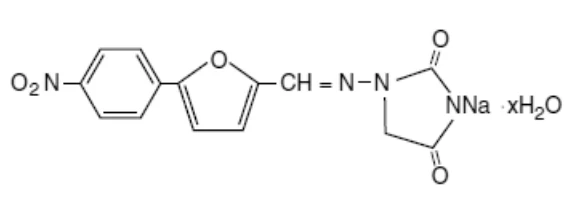
Physicochemical properties: orange powder, slightly soluble in water, but due to its slightly acidic nature the solubility increases somewhat in alkaline solution.
14 CLINICAL TRIALS
14.1 Clinical Trials by Indication
DANTRIUM CAPSULES has been studied in the treatment of selected patients with moderate to severe skeletal muscle spasticity resulting from stroke, spinal cord injury, cerebral palsy, multiple sclerosis, and other neuropathies. It seems to act directly on the skeletal muscle and has been found useful whenever manifestations of spasticity such as increased muscular resistance to stretch, clonus, and exaggerated reflex posturing interfere with therapeutic exercise programs, utilization of braces, transfer manoeuvres, posture equilibrium, ambulation, and activities of daily living.
Marked reduction or even cessation of spontaneous involuntary movements was observed in many patients receiving DANTRIUM CAPSULES. The extent to which DANTRIUM CAPSULES may contribute toward improvement in spasticity and activities in daily living can be tested by withdrawing the drug for 2 to 4 days and observing whether an exacerbation of the patient’s condition occurs.
15 MICROBIOLOGY
No microbiological information is required for this drug product.
16 NON-CLINICAL TOXICOLOGY
General Toxicology: The oral LD50 of dantrolene sodium in newborn Sprague-Dawley rats was 2902 mg/kg. No young adult rats were killed with doses up to 18,000 mg/kg. Pertinent clinical signs were inactivity, lethargy, weakness, gasping, diarrhoea, yellowing of skin colour, decreased growth rate or weight loss, and death. Tubular degeneration and necrosis, cortical abscesses and pelvic necrosis occurred in kidneys. No deaths occurred within 48 hours in adult rabbits and mice, with oral doses up to 8 or 9 g/kg, respectively. Crystals were observed in the urinary and the gallbladders of rabbits.
Three subacute toxicity studies were conducted in rats with oral doses up to 500 mg of dantrolene sodium/kg for 28 days and up to 86 mg/kg for 88 days. Body weight gains were reduced significantly by doses of 43.8 mg/kg. Relative kidney and liver weights were increased by doses of 15.5 mg/kg and absolute liver weights by 86 mg/kg for 88 days. Increased serum alkaline phosphatase and AST occurred with doses of 62.5 mg/kg. Rats dosed with 500 mg/kg for 28 days had increased serum alkaline phosphatase, AST, fasting plasma glucose, plasma urea nitrogen, serum creatinine, and decreased urine specific gravity. Renal tubules were plugged by drug crystals, and tubular dilatation, degeneration, necrosis and hematuria resulted.
Chronic toxicity studies were conducted in Beagle dogs for 1 year. Oral doses of 15 mg/kg/day produced no detectable effects. At 30 mg/kg/day, there was a suppression of weight gain and sporadic increases in bromosulphalein (BSP) retention. A regimen of increasing doses (90 mg/kg for the first 206 days followed by 180 mg/kg for 14 days and 360 mg/kg for an additional 82 days) caused marked loss in body weight, increased AST activity and BSP retention, normocytic orthochromic anaemia, urinary anisotropic crystals and, in one dog necropsied at day 270, intrahepatic cholestasis. Recovery occurred after discontinuation of drug administration.
A one-year oral toxicity study also was conducted with Rhesus monkeys. Initial doses of 0, 15, 30, and 60 mg/kg were used. Because of the lack of clinical toxicity during the first 6 months, the dosage levels were doubled at the end of the first 6 months. At 9 months the dosage level for the high dose group was again doubled and these animals were then maintained on 240 mg/kg/day until the termination of the study. A dose-dependent lowering of body weight gain was observed at 12 months. Urinary crystals were noted in one animal at the middle (60 mg/kg/day) dosage level at 11½ to 12 months. Urinalysis at 6 and 12 months also indicated drug-related increase in blood elements. During the last 6 months, a generally lower albumin/globulin ratio at all dosage levels, a slight, apparently dose-related cholesterol-lowering effect, a higher serum alkaline phosphatase, a high AST level in the two high dosage levels, and relatively lower serum creatinine levels in the high dosage groups were noted. Chronic hepatic cholangitis was observed at necropsy in some mid and high dosage level animals.
Dantrolene sodium was administered in the diet to mature Sprague-Dawley rats for 18 months at levels of 15, 30, and 60 mg/kg daily. Treated rats showed a lower body weight gain compared to controls and damage to the liver. There was an increase in the incidence of mammary adenofibromas in the females. Other drug-related changes (seen only at the 30 and 60 mg/kg daily dosage levels) were increased incidences of bile duct cystadenomas, and increased signs of malignancy in mammary tumours in females. At the 60 mg/kg daily level the number of metastasizing mammary adenocarcinomas in female rats was increased significantly; anisotropic urinary crystals were found in both male and female groups.
Carcinogenicity: Lifetime tumorigenesis studies were conducted in Sprague-Dawley and Fischer 344 rats. The treated Sprague-Dawley rats received dantrolene sodium in the diet at levels of 15, 30, and 60 mg/kg daily for 18 months and the Fischer 344 rats received the same levels for 20 months. The animals subsequently were maintained on a standard diet until 90% of each treatment group died spontaneously. Dantrolene sodium produced in the female Sprague-Dawley rats a linear, dose-related increase in the number of rats with malignant neoplasms, and a decrease in the time of onset of mammary neoplasms. There were also increased incidence of benign hepatic tumours including lymphangiomas and bile duct cystadenomas, and angiosarcomas. In Fischer rats, there was a significant, dose-related reduction in the times of onset of mammary and testicular tumours.
A two-year tumorigenesis study was conducted in Swiss mice (CD®- 1 HaM/ICR). Dantrolene sodium was fed to mice at levels of 15, 30, and 60 mg/kg/day for 15 months and then the mice were maintained on a standard diet for 9 additional months. There was an increased incidence of benign angiomatous neoplasms.
Genotoxicity: The genotoxicity potential on which the original indication was authorized is not available.
Reproductive and Developmental Toxicology: Dietary doses of 0, 15, or 45 mg/kg of dantrolene sodium were given to rats and rabbits in classical reproductive and teratogenic studies. Significant untoward effects were not observed. One litter of 14 pups from a rat treated with 45 mg/kg between days 6 to 15 of gestation had 6 malformed pups. Malformations included kinky tails, a short upper jaw, and renal agenesis. Two pups in another litter had unilateral micropthalmia. An association with treatment was considered doubtful.