


Product Monograph - Definity
RECENT MAJOR LABEL CHANGES
| 7 WARNINGS AND PRECAUTIONS, Immune | 02/2021 |
| 7 WARNINGS AND PRECAUTIONS, Cardiovascular | 09/2022 |
| 7 WARNINGS AND PRECAUTIONS, Hematologic | 09/2022 |
TABLE OF CONTENTS
Sections or subsections that are not applicable at the time of authorization are not listed.
RECENT MAJOR LABEL CHANGES .......................................................................................... 2
TABLE OF CONTENTS ............................................................................................................ 2
PART I: HEALTH PROFESSIONAL INFORMATION .................................................................... 4
1 INDICATIONS ............................................................................................................. 4
1.1 Pediatrics .................................................................................................................. 4
1.2 Geriatrics .................................................................................................................. 4
2 CONTRAINDICATIONS ................................................................................................ 4
3 SERIOUS WARNINGS AND PRECAUTIONS BOX ........................................................... 4
4 DOSAGE AND ADMINISTRATION ................................................................................ 5
4.1 Dosing Considerations ............................................................................................. 5
4.2 Recommended Dose and Dosage Adjustment ........................................................ 5
4.3 Reconstitution .......................................................................................................... 5
4.4 Administration ......................................................................................................... 6
5 OVERDOSAGE ............................................................................................................ 6
6 DOSAGE FORMS, STRENGTHS, COMPOSITION AND PACKAGING ................................ 6
7 WARNINGS AND PRECAUTIONS ................................................................................. 6
7.1 Special Populations .................................................................................................. 9
7.1.1 Pregnant Women ............................................................................................... 9
7.1.2 Breast-feeding .................................................................................................... 9
7.1.3 Pediatrics ............................................................................................................ 9
8 ADVERSE REACTIONS............................................................................................... 10
8.1 Adverse Reaction Overview ................................................................................... 10
8.2 Clinical Trial Adverse Reactions ............................................................................. 10
8.3 Less Common Clinical Trial Adverse Reactions ...................................................... 13
8.4 Abnormal Laboratory Findings: Hematologic, Clinical Chemistry and Other Quantitative Data ............................................................................................................. 13
8.5 Post-Market Adverse Reactions ............................................................................. 14
9 DRUG INTERACTIONS .............................................................................................. 14
9.2 Drug Interactions Overview ................................................................................... 14
9.4 Drug-Drug Interactions .......................................................................................... 14
9.5 Drug-Food Interactions .......................................................................................... 14
9.6 Drug-Herb Interactions .......................................................................................... 14
9.7 Drug-Laboratory Test Interactions......................................................................... 15
10 CLINICAL PHARMACOLOGY ...................................................................................... 15
10.1 Mechanism of Action ....................................................................................... 15
10.2 Pharmacodynamics .......................................................................................... 15
10.3 Pharmacokinetics ............................................................................................. 15
11 STORAGE, STABILITY AND DISPOSAL ........................................................................ 16
PART II: SCIENTIFIC INFORMATION ..................................................................................... 17
13 PHARMACEUTICAL INFORMATION .......................................................................... 17
14 CLINICAL TRIALS ...................................................................................................... 17
14.1 Clinical Trials by Indication .............................................................................. 17
15 MICROBIOLOGY ...................................................................................................... 35
16 NON-CLINICAL TOXICOLOGY .................................................................................... 35
PART I: HEALTH PROFESSIONAL INFORMATION
1 INDICATIONS
DEFINITY (perflutren injectable suspension) is indicated for:
- Echocardiography: Contrast-enhanced ultrasound imaging of cardiac structures (ventricular chambers and endocardial borders) and function (regional wall motion) in adult patients with suboptimal echocardiograms.
- Abdominal Ultrasound: Contrast-enhanced ultrasound imaging of the liver and kidneys in adult patients to improve the evaluation of pathology.
1.1 Pediatrics
Pediatrics (below the age of 16): No data are available to Health Canada; therefore, Health Canada has not authorized an indication for pediatric use.
1.2 Geriatrics
Geriatrics: No data are available to Health Canada; therefore, Health Canada has not authorized an indication for geriatric use.
2 CONTRAINDICATIONS
Perflutren injectable suspension is contraindicated:
- In patients who are hypersensitive to this drug or to any ingredient in the formulation, including any non-medicinal ingredient, or components of the container. For a complete listing, see 6 DOSAGE FORMS, STRENGTHS, COMPOSITION AND PACKAGING.
- In patients with right-to-left, bi-directional, or transient right-to-left cardiac shunts. See 7 WARNINGS AND PRECAUTIONS - Cardiovascular.
- For direct intra-arterial injection. See 7 WARNINGS AND PRECAUTIONS - Cardiovascular.
- Within 24 hours prior to extracorporeal shock wave lithotripsy.
3 SERIOUS WARNINGS AND PRECAUTIONS BOX
Serious Warnings and Precautions
Serious cardiopulmonary reactions, including fatalities, have occurred during or following DEFINITY administration.
|
4 DOSAGE AND ADMINISTRATION
4.1 Dosing Considerations
- For Single Use Only: DEFINITY contains no preservative. Bacterial contamination with the risk of post-administration septicemia can occur following the puncture of the elastomeric septum. It is essential to follow directions for preparation of DEFINITY carefully and to adhere to strict aseptic procedures during preparation.
- No dosage adjustment required in hepatic or renal impairment.
4.2 Recommended Dose and Dosage Adjustment
Bolus Administration
The recommended dose for DEFINITY is a single dose of 10 mcL/kg of the activated product by intravenous bolus injection over 30-60 seconds, followed by a 10 mL saline flush. If necessary, a second 10 mcL/kg dose may be administered 5 minutes after the first injection to prolong contrast enhancement.
Infusion
DEFINITY may also be administered via an I.V. infusion of 1.3 mL added to 50 mL of preservative-free saline. The total dose administered per kg will range from approximately 14.4 mcL/kg (90 kg person) to 21.7 mcL/kg (60 kg person).
Health Canada has not authorized an indication for pediatric use.
4.3 Reconstitution
The DEFINITY vial must be activated prior to use with a mechanical shaking device (Vialmix™). Upon activation, DEFINITY appears as a milky white suspension. The activated product has an initial concentration of perflutren of 150±100 mcL/mL.
Instructions for Reconstitution:
- 1. Allow the vial to warm to room temperature.
- 2. Activate DEFINITY by shaking the vial using the Vialmix™. Immediately after shaking, DEFINITY appears as a milky white suspension. The contents of the vial are not to be administered to the patient without first undergoing the mechanical activation procedure.
- 3. Withdraw DEFINITY from the vial using an 18- to 20-gauge syringe needle. The needle should be positioned to withdraw the material from the middle of the liquid in the inverted vial. Do not inject air into the vial.
- 4. If the product is allowed to sit for more than 5 minutes after Vialmix™ shaking, it should be resuspended with 10 seconds of hand agitation prior to syringe withdrawal.
Following activation (steps 1, 2), DEFINITY can be stored at room temperature and should be used within 12 hours of preparation. See 11 STORAGE, STABILITY AND DISPOSAL.
The contents of the vial are intended only for use in the preparation of DEFINITY and are not to be administered directly to the patient without first undergoing the preparative procedure (steps 1-4).
The contents of the vial are intended for use in a single patient.
4.4 Administration
Bolus Administration
The product is administered via intravenous bolus injection over 30-60 seconds, followed by a 10 mL saline flush.
Infusion
When administered via I.V. infusion, the rate of infusion is suggested to be initiated at 4.0 mL/minute and could be titrated as necessary to achieve optimal image enhancement but should not exceed 10 mL/min. Note: DEFINITY should be used immediately after dilution with preservative-free saline.
5 OVERDOSAGE
During clinical trials there was no incidence of an overdose with DEFINITY (perflutren injectable suspension). Should an overdose be suspected, supportive measures should be taken in response to symptoms.
| For management of a suspected drug overdose, contact your regional poison control centre. |
6 DOSAGE FORMS, STRENGTHS, COMPOSITION AND PACKAGING
DEFINITY is supplied as a sterile and non-pyrogenic liquid with a fill volume of 1.5 mL in a 2 mL clear glass vial. Each package contains four (4) single-use vials. The dosage form, strength and composition of DEFINITY is outlined in Table 1.
The VialMix™ will be provided with the initial DEFINITY order.
Table 1 - Dosage Forms, Strengths, Composition and Packaging
* The Lipid Blend is composed of the following lipids in a mole % ratio of 10:82:8: 1,2-dipalmitoyl-sn-glycero-3-phosphatidic acid, monosodium salt (DPPA); 1,2-dipalmitoyl-sn-glycero-3-phosphatidylcholine (DPPC); N-(methoxypolyethylene glycol 5000 carbamoyl)-1,2-dipalmitoyl-sn-glycero-3-phosphatidylethanolamine, monosodium salt (MPEG5000 DPPE).
7 WARNINGS AND PRECAUTIONS
Please see 3 SERIOUS WARNINGS AND PRECAUTIONS BOX.
General
| Route of Administration | Dosage Form / Strength/Composition | Non-medicinal Ingredients |
| Intravenous | Suspension/ 150 mcL/mL/ Lipid*-encapsulated perfluoropropane microspheres | Glycerin Propylene glycol Sodium chloride Sodium phosphate dibasic, heptahydrate Sodium phosphate monobasic, monohydrate Water for injection |
Diagnostic procedures that involve the use of intravenous contrast-enhancing agents containing microbubbles of gas should be carried out under the direction of a physician with a prerequisite training and a thorough knowledge of the procedure to be performed in appropriate facilities for conducting diagnostic imaging (see 7 WARNINGS AND PRECAUTIONS – Cardiovascular and Immune).
The recommended dose and mode of administration and procedures for activation of DEFINITY should be strictly adhered to.
DEFINITY should be administered with caution in patients with a history of drug allergies, asthma or hay fever, and multiple allergies.
Carcinogenesis and Mutagenesis
No clinical carcinogenicity/mutagenicity studies have been performed, see 16 NON-CLINICAL TOXICOLOGY for a summary of the animal genotoxicity studies.
Cardiovascular
- Serious Cardiopulmonary Reactions
Serious cardiopulmonary reactions, including fatalities, have occurred during or following DEFINITY administration. The risk for these reactions may be increased among patients with unstable cardiopulmonary conditions (acute myocardial infarction, acute coronary artery syndromes, worsening or unstable congestive heart failure, serious ventricular arrhythmias or respiratory failure, including patients receiving mechanical ventilation). In these patients, observe closely for at least 30 minutes after DEFINITY administration.
DEFINITY should only be administered to such patients after a careful risk/benefit assessment. Assess all patients for the presence of any condition that precludes DEFINITY administration (see 2 CONTRAINDICATIONS).
In the absence of these underlying conditions, observe patients closely during and following DEFINITY administration for at least 30 minutes for potential serious reactions.
In post-marketing use, rare but serious reactions observed during or shortly following DEFINITY administration included fatal cardiac or respiratory arrest, hypotension, hypertension, chest pain, myocardial infarction, cardiac ischemia, syncope, Kounis Syndrome, symptomatic arrhythmias (bradycardia, atrial fibrillation, supraventricular tachycardia, ventricular tachycardia or fibrillation), hypoxia, respiratory distress or decreased oxygenation and loss of consciousness or convulsions (see 8.5 Post-Market Adverse Reactions).
Always have cardiopulmonary resuscitation equipment and trained personnel readily available prior to DEFINITY administration and observe all patients for acute reactions for at least 30 minutes following the use of DEFINITY. Diagnostic procedures that involve the use of DEFINITY should be carried out under the direction of a physician with appropriate training and a thorough knowledge of the procedure to be performed.
The safety of DEFINITY in humans with compromised pulmonary vascular beds or with small cross-sectional vascular area has not been studied and it should be administered with caution to patients with chronic pulmonary disorders (e.g. severe emphysema, pulmonary vasculitis, or other causes of reduced pulmonary vascular cross-sectional area). In a special trial with a small sample size and a higher (50 mcL/kg) than recommended dose of DEFINITY, the incidence of adverse experiences was considerably higher in patients with COPD than in healthy volunteers; dyspnea, dizziness and chest pain occurred in COPD patients but not in healthy subjects. In pooled trials, the overall incidence of adverse experiences was similar in patients with or without a history of COPD.
DEFINITY should also be administered with caution to patients with congestive heart failure (CHF) or arrhythmia. In clinical trials with DEFINITY the incidence of adverse experiences was higher in patients with a history of CHF. Rhythm disorders were only observed among patients with a history of CHF.
- Systemic Embolization of DEFINITY in Patients with Cardiac Shunts
The safety of DEFINITY in patients with right-to-left, bi-directional or transient right-to-left cardiac shunts has not been studied. In these patients, encapsulated microbubbles can bypass the pulmonary particle-filtering mechanisms and directly enter the arterial circulation. Do not administer DEFINITY by intra-arterial injection (see 2 CONTRAINDICATIONS).
- Electrocardiographic (ECG) Changes
High Mechanical Index (MI) values may cause microbubble cavitation or rupture and in combination with end systolic triggering may induce premature ventricular contractions (PVC). In addition, end-systolic triggering with high MI has been reported to cause ventricular arrhythmias following administration of a microsphere product. In clinical trials with DEFINITY, the majority of patients were imaged at or below a mechanical index of 0.8. The safety of DEFINITY at MI values greater than 0.8 or with the use of high mechanical index end-systolic triggering has not been established.
A specific analysis correlating the mechanical index values (0.3 to 1.9) used in clinical trials with DEFINITY with the observed cardiac disturbances is not available. Users of diagnostic ultrasound devices should employ exposures, in any relevant mode, which are As Low As Reasonably Achievable (ALARA).
In clinical trials, treatment-related adverse cardiac events and QTc changes have been observed (see 8.2 Clinical Trail Adverse Reactions). Although no serious cardiac symptomatology or mortality attributable to QTc prolongation occurred with DEFINITY treatment in clinical trials (see 8.2 Clinical Trail Adverse Reactions), certain predisposing conditions may increase the risk for ventricular arrhythmias.
The effect of DEFINITY on patients with congenital prolongation of the QT interval or on concomitant medications known to cause prolongation of the QT interval has not been studied.
Because of limited clinical experience, DEFINITY should be used with extreme caution and only after careful risk/benefit assessment in patients with ongoing proarrhythmic conditions, previous history of symptomatic arrhythmias, family history of congenital long QT syndrome and on concomitant medications known to cause QTc prolongation. An ECG examination before use of DEFINITY may be appropriate to exclude these conditions.
Hematologic
- Sickle Cell Disease
In post-marketing use patients with sickle cell disease were observed to experience back pain at a higher frequency than observed during pre-market clinical trials in patients without sickle cell disease. Vaso-occlusive pain crisis shortly following perflutren-containing microsphere administration has been observed. Use of DEFINITY in patients with sickle cell disease should be on the basis of a benefit risk assessment by the physician (see 8.5 Post-Market Adverse Reactions).
Immune
- Hypersensitivity Reactions
Serious immediate hypersensitivity reactions which could be life threatening have been reported following the administration of DEFINITY, including in patients with prior allergic reaction(s) to polyethylene glycol (see 6 DOSAGE FORMS, STRENGTHS, COMPOSITION AND PACKAGING). Therefore, patients should be closely monitored. These reactions include anaphylactoid/anaphylactic reactions, angioedema, shock, bronchospasm, respiratory distress, swelling of the tongue, eyes, face, upper airway and throat, decreased O2 saturation, and loss of consciousness.
Diagnostic procedures using DEFINITY should be carried out under the direction of a physician experienced in the management of hypersensitivity reactions including severe allergic reactions, which might require resuscitation. Appropriate management of therapy and complications is only possible when adequate diagnostic and treatment facilities are readily available.
Reproductive Health: Female and Male Potential
DEFINITY should be used in pregnancy only if potential benefit to the mother justifies the potential risk to the fetus, see 7.1.1 Pregnant Women.
- Fertility
No data exist on the effects of DEFINITY on fertility from animal or human exposure.
7.1 Special Populations
7.1.1 Pregnant Women
There are no adequate and well controlled studies in pregnant women. Because animal reproduction studies are not always predictive of human response, DEFINITY should be used in pregnancy only if potential benefit to the mother justifies the potential risk to the fetus.
Results of reproduction toxicity studies in rats and rabbits revealed that DEFINITY in doses up to 1.0 mL/kg (24x and 15x maximal human dose based on body surface area for rats and rabbits, respectively) did not adversely affect fetal growth, survival or morphological development (see 16 NON-CLINICAL TOXICOLOGY, Reproductive and Developmental Toxicology).
7.1.2 Breast-feeding
It is unknown if DEFINITY is excreted in human milk. Caution should be exercised because many drugs can be excreted in human milk.
7.1.3 Pediatrics
Pediatrics (below the age of 16): No data are available to Health Canada; therefore, Health Canada has not authorized an indication for pediatric use.
8 ADVERSE REACTIONS
8.1 Adverse Reaction Overview
Serious cardiopulmonary reactions, including fatalities, have occurred during or following DEFINITY administration. The risk for these reactions may be increased among patients with unstable cardiopulmonary conditions. In these patients, observe closely for at least 30 minutes after DEFINITY administration. DEFINITY should only be administered to such patients after a careful risk/benefit assessment. Serious immediate hypersensitivity reactions which could be life threatening have also been reported following the administration of DEFINITY, including in patients with prior allergic reaction(s) to polyethylene glycol. Please see 3 SERIOUS WARNINGS AND PRECAUTIONS BOX.
8.2 Clinical Trial Adverse Reactions
Clinical trials are conducted under very specific conditions. The adverse event rates observed in the clinical trials; therefore, may not reflect the rates observed in practice and should not be compared to the rates in the clinical trials of another drug. Adverse event information from clinical trials may be useful in identifying and approximating rates of adverse drug reactions in real-world use.
Clinical Trials Experience During Rest
A total of 1716 patients were evaluated in clinical trials of activated DEFINITY (perflutren injectable suspension). In this group, 1063 (61.9%) were male and 653 (38.1%) were female; 1328 (77.4% were White, 258 (15.0%) were Black, 74 (4.3%) were Hispanic, and 56 (3.3%) were classified as other racial or ethnic groups. The mean age was 56.1 (range 18 to 93). Of these, 144 (8.4%) patients had at least one treatment-related adverse reaction (Table 2).
The incidence of treatment-related cardiovascular events was < 0.5% and included: abnormal ECGs, bradycardia, tachycardia, palpitation, hypertension, and hypotension. Two patients had treatment-related cardiac adverse events in addition to QTc changes (1 increase and 1 decrease) of ≥ 30 msec from baseline.
In 610 subjects (568 received DEFINITY and 42 received placebo) during rest echocardiography, ECG parameters after doses up to 40 mcL/kg were recorded for up to 72 hours after the first bolus injection. QTc prolongation of =30 msec was noted in 70 (12.3%) DEFINITY treated subjects and in 12 (28.6%) placebo treated subjects. QTc prolongation of >60 msec was noted in 20 (3.5%) DEFINITY treated subjects and 2 (4.8%) placebo treated subjects.
ECG parameters for doses up to 10 mcL/kg were monitored in 509 patients in five placebo-controlled efficacy trials using stress echocardiography (exercise treadmill and pharmacologic stress [dobutamine and dipyridamole]). ECG parameters were assessed at Baseline, 0 to 60 minutes, and 24 hours post-dose. Across all ECG parameters, comparisons of patients in the placebo and DEFINITY groups find only minor differences between the treatment groups except for what would be anticipated by undergoing a treadmill or pharmacologic stress test. There were no significant DEFINITY - related ECG changes in PR, QRS, and QTc intervals. The statistically significant increase of 7.3 (12.55) bpm in RR during the first 60 minutes post-dose is expected during stress testing. In the placebo group, 48.5% of patients had no post Baseline QTc change ≥30 msec, compared to 50.3% in the DEFINITY group.
- Deaths and serious adverse events
Among the 1716 DEFINITY patients studied, serious adverse events were reported in 30 patients, which included 8 deaths. None of the serious adverse events were considered related to DEFINITY administration. The 8 deaths occurred several days after DEFINITY administration and were attributed to underlying disorders. The other serious adverse events reported were attributed to progression or treatment of underlying disorders.
- Discontinuations
There were 15 discontinuations reported with a mean age of 41.5 years. Nine of these patients were discontinued after the first injection. One experienced a hypersensitivity reaction with urticaria and pruritis and all the other patients experienced dizziness, chest pain, dyspnea or back pain. Adverse events appeared within minutes (1 - 15 min) of the drug administration and were of moderate intensity resolving usually without treatment within minutes or hours after onset.
Sub-analyses by age, gender and race were performed. The overall incidence of adverse events was similar for the <65 year age group and the ≥65 year age group, similar in males and in females, and similar among all racial or ethnic groups.
The most frequent adverse events were reported for the Central and Peripheral Nervous System (3.1%), Body as a Whole (2.4%) and Gastrointestinal System (1.8%).
The most frequently occurring treatment-related adverse reactions were headache (2.3%), back/renal pain (1.2%), flushing (1.1%), and nausea (1.0%).
The incidence of all treatment-related new-onset adverse events occurring in ≥0.5% of all patients in DEFINITY studies at rest are summarized in Table 2.
Table 2 - Treatment-Related, New-Onset Adverse Events in Clinical Trials Occurring in ≥0.5% of All Subjects
DEFINITY n = 1716 n (%) | PLACEBO n = 183 n (%) | |
|---|---|---|
| Total Number of Subjects with an Adverse Event | 144 (8.4) | 13 (7.1) |
Application Site Disorders Injection Site Reactions | 11 (0.6) 11 (0.6) | 2 (1.1) 2 (1.1) |
Body as a Whole - General Disorders Back Pain Chest Pain | 41 (2.4) 20 (1.2) 13 (0.8) | 1 (0.5) 0 (0.0) 0 (0.0) |
Central and Peripheral Nervous System Disorders Headache Dizziness | 54 (3.1) 40 (2.3) 11 (0.6) | 5 (2.7) 4 (2.2) 1 (0.5) |
Gastrointestinal System Nausea | 31 (1.8) 17 (1.0) | 2 (1.1) 1 (0.5) |
DEFINITY n = 1716 n (%) | PLACEBO n = 183 n (%) | |
|---|---|---|
Vascular (extracardiac) disorders Flushing | 19 (1.1) 19 (1.1) | 1 (0.5) 1 (0.5) |
Although headache was the most frequently reported adverse event, its incidence was similar to placebo.
Data from clinical trials presented in the safety table has shown that DEFINITY, administered intravenously in the recommended dose as a bolus injection or as an infusion, was safe and well tolerated.
Clinical Trials Experience During Stress
A total of 2455 patients were evaluated in clinical trials of activated DEFINITY in stress echocardiography. In this group, 1236 (50.6%) were male and 1208 (49.4%) were female, 1888 (77.2%) were White, 377 (15.4%) were Black/African American, and 176 (7.2%) were classified as other racial or ethnic groups. The mean age was 58.7 years (range 21 to 90). There were 11 serious adverse events and 9/2445 patients (0.4%) discontinued because of an adverse event.
Of the 1866 patients with data on non-serious adverse events, 460 (24.7%) had at least one treatment-related adverse reaction (Table 3). For all adverse events, the overall incidence of adverse events was 21.8% for the <65 year age group and 30.8% for the ≥65 year age group. Incidences of adverse events were higher in males (31.0%) than in females (18.9%). The most common events were headache (0.9%) and back pain (0.5%).
- Deaths and serious adverse events
Among the 2445 DEFINITY patients, there were no deaths and 10 (0.4%) experienced a total of 11 serious adverse events. All of the serious adverse events, which appeared between dosing and 7 days after drug administration, appeared to be a progression of underlying cardiac and non-cardiac disease.
- Discontinuations
There were 9 discontinuations reported. Three patients experienced hypertension, 2 experienced bradycardia, and all other events associated with discontinuation were cardiac arrest, chest pain, fatigue, back disorder, back pain, muscle spasms, headache, syncope, pruritus, or flushing. Adverse events appeared within minutes (3 – 36 min) of DEFINITY administration.
The incidence of all treatment-related new-onset adverse events occurring in ≥0.5% of all patients in DEFINITY stress studies are summarized in Table 3.
Table 3 - Treatment-Related Adverse Events Reported by at Least 0.5% of Patients in Either Treatment Group by Incidence in Placebo Controlled Stress Echocardiography Efficacy Trials (N [%])
DMP 115 n = 344 n (%) | PLACEBO n = 167 n (%) | |
|---|---|---|
| Total Number of Subjects with an Adverse Events | 14 (4.1) | 1 (0.6) |
| Headache | 8 (2.3) | 0 (0.0) |
| Loose stools | 3 (0.9) | 0 (0.0) |
| Fatigue | 1 (0.3) | 1 (0.6) |
| Nausea | 2 (0.6) | 0 (0.0) |
| Dyspnoea | 0 (0.0) | 1 (0.6) |
8.3 Less Common Clinical Trial Adverse Reactions
Other treatment-related adverse events that occurred in < 0.5% of the DEFINITY-dosed patients were:
| Body as a Whole: | Fatigue, fever, hot flushes, pain, rigors and syncope |
| Cardiovascular: | Abnormal ECGs, bradycardia, tachycardia, palpitation, hypertension and hypotension |
| Digestive: | Dyspepsia, dry mouth, tongue disorder, toothache, abdominal pain, diarrhea and vomiting |
| Hematology: | Granulocytosis, leukocytosis, leukopenia, monocytosis, and eosinophilia |
| Musculoskeletal: | Arthralgia |
| Nervous System: | Leg cramps, hypertonia, vertigo and paresthesia |
| Platelet, Bleeding, and Clotting: | Hematoma |
| Respiratory: | Coughing, hypoxia, pharyngitis, rhinitis and dyspnea |
| Special Senses: | Decreased hearing, conjunctivitis, abnormal vision and taste perversion |
| Skin: | Pruritus, rash, erythematous rash, urticaria, increased sweating and dry skin |
| Urinary: | Albuminuria and abnormal urine |
| Miscellaneous: | Lymphadenopathy |
8.4 Abnormal Laboratory Findings: Hematologic, Clinical Chemistry and Other Quantitative Data
Clinical Trial Findings
Treatment-related abnormal laboratory findings that occurred in < 0.5% of the DEFINITY-dosed patients were:
| Laboratory Abnormalities: | Increased bilirubin, AST/SGOT, SGPT/ALT, creatine phosphokinase, LDH, creatinine, glucose and non-protein nitrogen |
8.5 Post-Market Adverse Reactions
- The following adverse reactions have been identified during the post-approval use of DEFINITY. Because these reactions are reported voluntarily from a population of uncertain size, it is not always possible to reliably estimate their frequency or establish a causal relationship to drug exposure.
- In post-marketing use, rare but serious reactions observed during or shortly following DEFINITY administration included fatal cardiac or respiratory arrest, hypotension, hypertension, chest pain, myocardial infarction, cardiac ischemia, syncope, Kounis Syndrome, symptomatic arrhythmias (bradycardia, atrial fibrillation, supraventricular tachycardia, ventricular tachycardia or fibrillation), hypoxia, respiratory distress or decreased oxygenation and loss of consciousness or convulsions (see 7 WARNINGS AND PRECAUTIONS, Cardiovascular).
In addition, acute allergic type reactions (e.g. anaphylactoid/anaphylactic reactions and angioedema) have been reported very rarely as part of ongoing post-marketing surveillance (see 7 WARNINGS AND PRECAUTIONS – Immune). Central nervous system reactions, including altered consciousness, seizures, and/or seizure like reactions have also been reported very rarely and may or may not be associated with immediate hypersensitivity reactions. Musculoskeletal reactions have included muscle cramps, musculoskeletal discomfort, myalgia and neck pain.
Blood and lymphatic disorders have included vaso-occlusive crisis and sickle cell anaemia with crisis. In post-marketing use patients with sickle cell disease were observed to experience back pain at a higher frequency than observed during pre-market clinical trials in patients without sickle cell disease. Vaso-occlusive pain crisis shortly following perflutren-containing microsphere administration has been observed.
9 DRUG INTERACTIONS
9.2 Drug Interactions Overview
DEFINITY may add to the QTc prolonging effects of other drugs such as erythromycin, some antipsychotics, and tricyclic antidepressants.
DEFINITY may interact with Class IA (e.g. quinidine, procainamide) or Class III (e.g. amiodarone, sotalol) antiarrhythmic agents.
9.4 Drug-Drug Interactions
Interactions with other drugs have not been established.
9.5 Drug-Food Interactions
Interactions with food have not been established.
9.6 Drug-Herb Interactions
Interactions with herbal products have not been established.
9.7 Drug-Laboratory Test Interactions
Interactions with laboratory tests have not been established.
10 CLINICAL PHARMACOLOGY
10.1 Mechanism of Action
DEFINITY is an ultrasound contrast imaging agent that is designed to improve echocardiographic and radiologic ultrasound image quality by enhancing the echogenicity of the organs/tissues of interest. DEFINITY is a sterile, non-pyrogenic suspension of phospholipid-encapsulated perfluoropropane microbubbles that is activated by shaking with the aid of the Vialmix™, and is used for contrast enhancement during cardiac and abdominal ultrasound imaging procedures.
DEFINITY microbubbles exhibit lower acoustic impedance than blood. Ultrasound waves are scattered and reflected at the microbubble-blood interface and are ultimately visualized in the ultrasound image. At the frequencies used in diagnostic ultrasound (1-7.5 MHz), the microbubbles resonate, further increasing the extent of ultrasound scattering and reflection.
10.2 Pharmacodynamics
DEFINITY has no pharmacologic action; it produces its effect by increasing the backscatter of ultrasound.
Electrocardiographic (ECG) Changes
Please see 7 WARNINGS AND PRECAUTIONS – Cardiovascular.
10.3 Pharmacokinetics
Table 4 - Summary of Perfluoropropane Blood Pharmacokinetic Parameters in Normal Subjects and Subjects with COPD
| Single IV dose | Cmax (mcL/mL)*103 n=19 | Tmax (min) n=22 | t½ (min) n=19 | AUC0-∞ (mcL/mL*min)*103 n=19 | CL (L/hr) n=19 | Vdss (L) n=19 |
|---|---|---|---|---|---|---|
| 50 mcL/kg | 3.22 | 1.77 | 1.67 | 7.83 | 2652.34 | 151.96 |
The pharmacokinetics of the perfluoropropane (PFP) component of activated DEFINITY was studied in 12 normal and 12 chronic obstructive pulmonary disease (COPD) patients following a 50 μL/kg dose. PFP was rapidly cleared from the systemic circulation (via the lungs). PFP was not detectable after 10 minutes in most subjects, either in the blood or expired air. In all subjects, maximal concentrations of PFP were achieved at approximately 1.0 to 2.0 minutes after the start of injection.
Doppler ultrasound measurements were performed with DEFINITY in conjunction with the pharmacokinetic evaluation of PFP. Doppler signal intensity corresponded well with measured and extrapolated PFP concentrations in blood. The time to maximum Doppler signal intensity tmax was shown to be similar to the PFP blood tmax (1.13 versus 1.77 minutes). The observed 99% drop in Doppler signal intensity within 10 minutes (t½ approximately 5 minutes) was in agreement with the decline in measurable blood levels of PFP. Human pharmacokinetic data on the fate of intact or degassed microbubbles is not available.
Metabolism:
PFP is a stable gas that is not metabolized. The three lipid components of DEFINITY (DPPA, DPPC and DPPE) are naturally occurring in man as blood lipids. The amount of these lipids in a dose of DEFINITY represent ~1% (DPPE), ~0.02% (DPPC) and ~0.002% (DPPA) of the naturally occurring levels in plasma and are expected to follow similar metabolic pathways as reported for endogenous phospholipids.
11 STORAGE, STABILITY AND DISPOSAL
Store in a refrigerator (2-8°C) prior to activation.
As with all parenteral drug products, intravenous admixtures should be inspected visually for clarity, particulate matter, precipitate, discolouration and leakage prior to administration whenever solution and container permit. Solutions showing haziness, particulate matter, precipitate, discolouration or leakage should not be used.
Following activation, DEFINITY can be stored at room temperature and should be used within 12 hours of preparation.
The activated vials are for single use only and unused portions should be discarded.
When activated, DEFINITY appears as a milky white suspension. If allowed to sit for more than 5 minutes after Vialmix™ shaking, it should be resuspended with 10 seconds of hand agitation prior to administration. (See 4 DOSAGE AND ADMINISTRATION - 4.3 Reconstitution).
Any unused product or waste material should be disposed of in accordance with local requirements.
PART II: SCIENTIFIC INFORMATION
13 PHARMACEUTICAL INFORMATION
Drug Substance
Proper name: Perfluoropropane
Chemical name: 1,1,1,2,2,3,3,3-Octafluoropropane
Molecular formula and molecular mass: C3F8, 188.02 g/mol
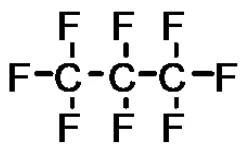
Structural formula:
Physicochemical properties: Colourless gas
14 CLINICAL TRIALS
14.1 Clinical Trials by Indication
Echocardiography
Table 5 - Summary of patient demographics for clinical trials in Echocardiography
| Study # | Study design | Dosage, route of administration and duration | Study subjects (n) | Mean age (Range) | Sex |
|---|---|---|---|---|---|
| DMP-115-901 | Phase I trial to determine the safety and tolerability (primary objective) of DEFINITY (perflutren injectable suspension) given as multiple, IV bolus injections in healthy adult male subjects. | This trial compared four ascending doses of DEFINITY (5, 10, 15, and 30 mcL/kg) and compared each dose to placebo. A total of five injections (DEFINITY or placebo) were administered; the first IV bolus injection was followed by four additional injections at approximately 5, 10, 60, and 120 minutes following the first injection. | 18 | Placebo:24.8 5 mcL/kg:22.5 10 mcL/kg:31.8 15mcL/kg:32.5 30 mcL/kg:28.5 Range All (20-44) | M 18 (100%) |
| Study # | Study design | Dosage, route of administration and duration | Study subjects (n) | Mean age (Range) | Sex |
|---|---|---|---|---|---|
| DMP-115-902 | conducted in patients referred for diagnostic echocardiography | DEFINITY was administered as a single bolus IV injection at doses of 5, 10, or 15 mcL/kg. | 56 | 54.8 (20-84) | M 29 (51.8%) F 27 (48.2%) |
| DMP 115-004 | A Phase III Randomized, Double-Blind, Multicenter, Placebo-Controlled Trial Two echocardiographic imaging sessions on the same day with safety follow-up visits at 24, 48, and 72 hours | Two IV bolus injections: one per imaging session Placebo or DMP 115, 5 or 10 mcL/kg Doses separated by a minimum of 30 min | 87 | 62.5 | M 69 (79.3%) F 18 (20.7%) |
| DMP 115-005 | A Phase III Randomized, Double-Blind, Multicenter, Placebo-Controlled Trial Two echocardiographic imaging sessions on the same day with safety follow-up visits at 24, 48, and 72 hours | Two IV bolus injections: one per imaging session Placebo or DMP 115, 5 or 10 mcL/kg Doses separated by a minimum of 30 min | 124 | 52.1 | M 70 (56.5%) F 54 (43.5%) |
| DMP 115-006 | A Phase III, Open-Label, Multicenter Trial One MRI session followed by two echocardiographic imaging sessions on the same day over approximately 3 hrs with a 24-hr safety follow-up visit | Two IV bolus injections of DMP 115 1st imaging session: 10 mcL/kg 2nd imaging session: 10 mcL/kg diluted to 2mL with saline Sessions separated by at least 20 min | 67 | 48.9 | M 35 (52.2%) F 32 (47.8%) |
| Study # | Study design | Dosage, route of administration and duration | Study subjects (n) | Mean age (Range) | Sex |
|---|---|---|---|---|---|
| DMP 115-007 | A Phase III, Open-Label, Multicenter Trial One MRI session followed by two echocardiographic imaging sessions on the same day over approximately 3 hrs with a 24-hr safety follow-up visit | Two IV bolus injections of DMP 115 1st imaging session: 10 mcL/kg 2nd imaging session: 10 mcL/kg diluted to 2mL with saline Sessions separated by at least 20 min | 59 | 55.3 | M 40 (67.8%) F 19 (32.2%) |
| DMP 115-017 | A Phase III, Multicenter, Open-Label Crossover Trial Two baseline and two echocardiographic imaging sessions (A and B); separated by 24 to 72 hrs, followed by a 24 to 72 hr safety follow-up visit Patients randomized to Session A or B on treatment Day 1 and the alternate session on treatment Day 2 | Dosing session A: Single IV infusion of DMP 115 - 1.3mL in 50mL saline Dosing session B: Two IV bolus injections of DMP 115 - 10mcL/kg each with ≤5 min between the two doses Sessions A and B separated by 24 to 72 hrs | 64 | 60.9 | M 45 (70.3%) F 19 (29.7%) |
| Study # | Study design | Dosage, route of administration and duration | Study subjects (n) | Mean age (Range) | Sex |
|---|---|---|---|---|---|
| DMP 115-501 | Prospective independent blinded read evaluation of non-contrast and DEFINITY contrast images for endocardial border delineation (ie, segment evaluability) and left ventricular opacification from the combined data of five multicenter, randomized clinical studies that utilized similar patient populations, study designs, and imaging procedures | Patients received mean doses of DEFINITY or placebo by IV infusion between 1.2 and 2.1 mL, with a total mean dose of 1.5 mL for all 5 clinical trials. | 484 in efficacy evaluable population | 56.3 (28-88) | M 270 (55.8%) F 214 (44.2%) |
- Dose Selection Trials
DMP 115-901 was a Phase I trial to determine the safety and tolerability (primary objective) of DEFINITY (perflutren injectable suspension) given as multiple, IV bolus injections in healthy adult male subjects. This trial compared four ascending doses of DEFINITY (5, 10, 15, and 30 mcL/kg) and compared each dose to placebo. A total of five injections (DEFINITY or placebo) were administered; the first IV bolus injection was followed by four additional injections at approximately 5, 10, 60, and 120 minutes following the first injection.
DMP 115-902 was conducted in patients referred for diagnostic echocardiography. DEFINITY was administered as a single bolus IV injection at doses of 5, 10, or 15 mcL/kg.
- Rest Echocardiography
Five pivotal Phase III multicenter clinical trials were performed (DMP 115-004, DMP 115-005, DMP 115-006, DMP 115-007, DMP 115-017) in a total of 401 patients with 2 or more non-evaluable segments in either the apical 2- or 4-chamber view: 42 patients were scheduled to receive placebo and 359 patients were scheduled to receive DEFINITY, 85 of whom were scheduled to receive two 5 mcL/kg doses of DEFINITY and 274 of whom were scheduled to receive two 10 mcL/kg doses of DEFINITY. The mean age was 55.0 (±16.3) years.
Of the patients receiving a 10 mcL/kg dose of DEFINITY, 174 (63.5%) were male and 100 (36.5%) were female.
- Stress Echocardiography
The efficacy of DEFINITY administration during stress echocardiography was assessed in DMP 115-501, a prospective independent blinded read evaluation of non-contrast and DEFINITY contrast images for endocardial border delineation (ie, segment evaluability) and left ventricular opacification from the combined data of five multicenter, randomized clinical studies that utilized similar patient populations, study designs, and imaging procedures. Of the 465 patients with imaging data available (312 DEFINITY and 153 placebo/unenhanced), 247 patients (167 DEFINITY and 80 placebo/unenhanced) had all three apical views available (ie, apical 2-, apical 3-, and apical 4-chamber views) and 218 patients (145 DEFINITY and 73 placebo) had at least one apical view missing for assessment.
Table 6 - Results of study DMP 115-901 in Echocardiography
| Primary Endpoints | Associated value and statistical significance for Drug at specific dosages | Associated value and statistical significance for Placebo or active control |
| The primary endpoint was the percentage of patients with optimal and excessive left ventricular cavity enhancement | Dose N % patients enhanced, % excessive 5 mcL/kg Reader 1: 2 100.0, 0 .0 Reader 2: 2 50.0, 50.0 10 mcL/kg Reader 1: 4 100.0, 0.0 Reader 2: 4 25.0 . 75.0 15 mcL/kg Reader 1: 4 75.0, 0.0 Reader 2: 4 0.0, 100.0 30 mcL/kg Reader 1: 2 100.0, 0 Reader 2 :2 0.0, 100.0 No statistical tests were performed | N % patients enhanced, % excessive Reader 1: 6 20.0 , 0.0 Reader 2: 6 0.0, 0.0 |
Table 7 - Results of study DMP 115-902 in Echocardiography
| Primary Endpoints | Associated value and statistical significance for Drug at specific dosages | Associated value and statistical significance for Placebo or active control |
|---|---|---|
| The primary efficacy endpoint was the percentage of patients with left ventricular cavity enhancement. | Dose N % patients enhanced 5 mcL/kg Reader 1: 15 100.0* Reader 2: 14 100.0* Reader 3: 14 100.0* 10 mcL/kg Reader 1:13 92.3* Reader 2: 13 84.6* Reader 3: 13 92.3* 15 mcL/kg Reader 1: 13 100.0* Reader 2: 11 100.0* Reader 3: 11 100.0* *Indicates significant difference from placebo p≤0.0167 (Fisher’s exact test) | N % patients enhanced Reader 1: 14 0.0 Reader 2: 14 0.0 Reader 3: 14 0.0 |
Table 8 - Results of study DMP 115-004 in Echocardiography
| Primary Endpoints | Associated value and statistical significance for Drug at specific dosages | Associated value and statistical significance for Placebo or active control |
|---|---|---|
Contrast-enhanced echocardiographic imaging of cardiac structure (ventricular chambers and endocardial borders) The primary endpoint was the percentage of patients with adequate or full left ventricular cavity enhancement. | Dose N % patients enhanced 5 mcL/kg Reader 1: 35 80.0** Reader 2: 35 80.0** Reader 3: 34 73.5** 10 mcL/kg Reader 1: 33 60.6** Reader 2: 33 63.6** Reader 3: 33 60.6** **Significant difference from placebo, p≤0.01 (Fisher’s exact test) | N % patients enhanced Reader 1: 18 0.0 Reader 2: 18 0.0 Reader 3: 18 0.0 |
Table 9 - Results of study DMP 115-005 in Echocardiography
| Primary Endpoints | Associated value and statistical significance for Drug at specific dosages | Associated value and statistical significance for Placebo or active control |
|---|---|---|
Contrast-enhanced echocardiographic imaging of cardiac structure (ventricular chambers and endocardial borders) The primary endpoint was the percentage of patients with adequate or full left ventricular cavity enhancement. | Dose N % patients enhanced 5 mcL/kg Reader 4: 49 28.6** Reader 5: 49 73.5** Reader 6: 49 42.9** 10 mcL/kg Reader 4: 49 42.9** Reader 5: 49 77.6** Reader 6: 49 61.2** **Significant difference from placebo, p≤0.01 (Fisher’s exact test) | N % patients enhanced Reader 4: 24 0.0 Reader 5: 24 0.0 Reader 6: 24 0.0 |
Table 10 - Results of study DMP 115-006 in Echocardiography
| Primary Endpoints | Associated value and statistical significance for Drug at specific dosages | Associated value and statistical significance for Placebo or active control |
|---|---|---|
Contrast-enhanced echocardiographic imaging of cardiac structure (ventricular chambers and endocardial borders) and function (regional wall motion) The primary endpoint was difference in relative error from MRI in EF measured during the first fundamental echocardiography session. | Reader N Mean SD 95%CI 11 63 3.2 16.7 (-1.0, 7.4) 12 63 0.2 19.8 (-4.8, 5.2) 15 63 -3.8 18.4 (-8.4, 0.9) Note: There were no significant differences between baseline and post-injection relative errors, p > 0.05. | N/A |
Table 11 - Results of study DMP 115-007 in Echocardiography
| Primary Endpoints | Associated value and statistical significance for Drug at specific dosages | Associated value and statistical significance for Placebo or active control |
|---|---|---|
Contrast-enhanced echocardiographic imaging of cardiac structure (ventricular chambers and endocardial borders) and function (regional wall motion) The primary endpoint was difference in relative error from MRI in EF measured during the first fundamental echocardiography session. | Reader N Mean SD 95%CI 13 58 -2.5 32.8 (-11.1, 6.1) 14 59 -7.3 28.7 (-14.8, 0.2) 15 59 -2.7 28.2 (-10.0, 4.7) Note: There were no significant differences between baseline and post-injection relative errors, p > 0.05. | N/A |
Table 12 - Results of study DMP 115-017 in Echocardiography
| Primary Endpoints | Associated value and statistical significance for Drug at specific dosages | Associated value and statistical significance for Placebo or active control |
|---|---|---|
Contrast-enhanced echocardiographic imaging of cardiac structure (ventricular chambers and endocardial borders) Compare images from IV infusion vs. Slow bolus injection The primary endpoint was the Percentage of Patients Demonstrating Adequate or Full Ventricular Cavity Enhancement | Infusion Bolus Baseline Reader N % Enhanced N % Enhanced N % Enhanceda (95%CI) (95%CI) (95%CI) 1 61 98.4 64 98.4 64 0 (90.0, 98.4) (90.5, 98.4) (0.0, 5.6) 2 61 90.2 64 90.6 64 0 (79.1, 94.4) (80.1, 94.7) (0.0, 5.6) 3 61 95.1 64 100 64 0 (85.4, 97.2) (92.9, 100) (0.0, 5.6) a Baseline % Enhanced was the best of the baseline values | N/A |
Table 13 - Results of study DMP 115-501 in Echocardiography
| Primary Endpoints | Associated value and statistical significance for Drug at specific dosages | Associated value and statistical significance for Placebo or active control |
|---|---|---|
| The primary endpoint was the proportion of patients with clinically important improvement in left ventricular endocardial border delineation (EBD) in stress echocardiography between randomized groups of DEFINITY contrast and noncontrast in randomized and placebo-controlled studies. | Overall for majority rule, the proportion of patients in the per-protocol population with a clinically important degree of improved EBD in the DEFINITY group was significantly higher (70.5%) (p < 0.001). The comparison was for 3 studies combined: DMP 115-018, DMP 115-022 and DMP 115-024, evaluated using Fisher’s exact test. The other two trials, (DMP 115-303 and DMP 115-304) did not include baseline measurements. | The proportion of patients with a clinically important degree of improved EBD in the placebo group was 25%. |
Dose Selection Trials
DEFINITY was safe and well tolerated when administered at all doses in DMP 115-901. Early evaluation of cavity enhancement at higher (>15 mcL/kg) doses found excessive attenuation. Doses of 5 to 15 mcL/kg of DEFINITY were recommended for efficacy dose ranging studies in echocardiographic imaging.
At 5 mcL/kg the mean duration of enhancement was limited to 54 to 102 seconds In DMP 115-902. Optimal enhancement was observed on an average for approximately 1.5 to 2 minutes in the 10 mcL/kg dose group and for 2.5 minutes in the 15 mcL/kg dose group. However, as a result of excessive contrast attenuation, the 15 mcL/kg dose required a significant time delay (85 to 100 seconds) before clinically useful contrast-enhanced images could be obtained. Based on these findings, doses of 5 and 10 mcL/kg were selected for the initial Phase III Cardiology trials. Results of this trial were published by Pantely et al., 1998.
Rest Echocardiography
- Left Ventricular Cavity Enhancement
Qualitative evaluations of adequate or full cavity enhancement were performed by multiple Institutional and Blinded Readers (Table 14). Institutional Reads were performed by the clinical investigator and Blinded Reads were performed by independent physician/readers who did not have any clinical or diagnostic information available. Adequate or full left ventricular cavity enhancement was demonstrated in 90.5% of the patients based on the combined Institutional Read data and in 42.9% to 96.9% of patients assessed during the Blinded Reads, compared to 0% of patients who received a placebo-saline injection. Quantitative measures of videodensitometry confirmed the qualitative assessments.
Table 14 - Percentage of Patients with Adequate or Full Left Ventricular Cavity Enhancement Based on the Patients’ Qualifying Viewa
| Trial | Institutional Read | Blinded Readc | ||||||
| N | Placebo % | N | DEFINITY | N | Placebo % | N | DEFINITY | |
| DMP 115-004 | 18 | 0 | 34 | 82.4** | 18 | 0.0 (0.0, 0.0) | 33 | 60.6** (60.6**, 63.6**) |
|---|---|---|---|---|---|---|---|---|
| DMP 115-005 | 24 | 0 | 50 | 96.0** | 24 | 0.0 (0.0, 0.0) | 49 | 61.2** (42.9**, 77.6**) |
| DMP115-017b | − | − | 64 | 90.6 | − | − | 64 | 96.9 (85.9, 98.4) |
| Combined | 42 | 0 | 148 | 90.5** | − | − | − | − |
** Statistically significant difference from placebo (p ≤ 0.01)
N =Sample size for Blinded Read, this is the N of the median value. DEFINITY dose = 10 mcL/kg.
a In Trials DMP 115-004 and -005, ventricular cavity enhancement results are based on images obtained from the qualifying view *(either apical 4-chamber or 2-chamber view) with at least two non-evaluable segments. In Trial DMP 115-017, the apical 4-chamber view for all patients with at least two non-evaluable segments.
b Equivalent results were obtained following administration of DEFINITY as an infusion of 1.3 mL added to 50 mL of saline.
c Results are displayed as the median and range (minimum, maximum) for the three blinded readers in each trial.
- Endocardial Border Delineation
The improvement in endocardial border delineation with DEFINITY was examined by a variety of measures: (1) the percentage change in the number of evaluable myocardial segments, (2) the percentage of patients showing at least a 1-segment improvement in evaluable endocardial borders, (3) the percentage of patients showing at least a 2-segment improvement in evaluable endocardial borders, (4) the percentage of patients demonstrating salvage of echocardiography examinations (a reduction from 4 or more non-evaluable cardiac segments to ≤ 1 non-evaluable segment), and (5) the absolute change in the measurable contiguous endocardial border length.
All measures of endocardial border delineation in these trials showed substantial improvement with DEFINITY versus baseline examinations.
Incorporating an intent-to-treat analysis, the Institutional and Blinded Read data revealed a significant positive improvement in the number of unevaluable segments that were scored as evaluable after DEFINITY administration (Table 15). The Institutional Read data demonstrated 20.8% to 54.9% improvement in the net percentage of segments that demonstrated a positive change in evaluability, which clinically corresponds, on average, to a 2- to 3-segment improvement in visualization. For the unpaired Blinded Read, the median values for the net percentage of segment improvement in the five trials ranged from 9.4% to 37.2% (or net improvement in ~1 to 2 segments).
Table 15 - Endocardial Border Delineation - Net Percentage of Segments with Change in Evaluabilitya
| Trial | Institutional Read | Blinded Read (Unpaired)c | ||||||
|---|---|---|---|---|---|---|---|---|
| N | Placebo % | N | DEFINITY | N | Placebo % | N | DEFINITY | |
| DMP 115-004 | 18 |
| 34 | 26.2*# | 18 | -1.9 (-4.2, 0.0) | 32 | 9.4# (2.3, 24.0*#) |
| DMP 115-005 | 24 | 0.3 | 50 | 40.3*# | 24 | 4.9 (-1.4, 4.9) | 49 | 13.4# (13.1*, 13.8#) |
| DMP 115-006 | − | − | 67 | 35.9# | − | − | 67 | 25.2# (20.9#, 49.6#) |
| DMP 115-007 | − | − | 59 | 20.8# | − | − | 59 | 17.7# (0.7, 41.8#) |
| DMP 115-017b | − | − | 64 | 54.9# | − | − | 64 | 37.2# (27.3#, 51.3#) |
* Statistically significant difference from placebo (p≤0.05)
# Statistically significant change in evaluability (p≤0.05)
N =Sample size for Blinded read, this in the N of the median value for all three readers. DEFINITY dose = 10mcL/kg
a In Trials DMP 115-004,-005,-006, and -007, each of the 12 cardiac segments was graded; in Trial DMP 115-017, each of the 6 cardiac segments was graded. The Net % of segments with change in Evaluability equals the % Change in the visualization of segmental endocardial borders before and after DEFINITY administration.
b Equivalent results were obtained following administration of DEFINITY as an infusion of 1.3 mL added to 50 mL of saline.
c Results are displayed as the median and range (minimum, maximum) for the three blinded readers in each trial.
- Wall Motion
For functional assessment, a statistically significant improvement in the percentage of segmental wall-motion scores that agreed with the comparator test of MRI was demonstrated for both Institutional and Blinded Readers (Table 16). When segments were categorized by type of wall motion (exact match with MRI), the improvement in agreement with MRI for DEFINITY-enhanced segmental wall motion relative to baseline was 21.3% for the combined Institutional Read data. The median values for Blinded Read data in the two trials for difference in segmental wall motion agreement versus MRI comparator were 7.9% and 29.0% (or correct wall-motion assessment in 1 to 2 additional segments after DEFINITY).
Table 16 - Improvement in Segmental Wall-Motion Percentage with DEFINITY - Exact Match with MRI‡
| Trial | Institutional Read | Unpaired Blinded Reada | ||
| N | DEFINITY | N | DEFINITY | |
| DMP 115-006 | 64 | 29.9* | 64 | 20.0* (23.2*, 38.0*) |
|---|---|---|---|---|
| DMP 115-007 | 58 | 12.0* | 59 | 7.9* (1.3, 25.1*) |
| Combined | 123 | 21.3* | − | − |
* Statistically significant difference between baseline and contrast segmental wall motion percentage (p ≤ 0.05)
‡ Exact match with MRI = Percentage difference in segmental wall motion between baseline and DEFINITY contrast-enhanced images relative to MRI. Segments were scored by MRI and echocardiography as normal/hyperkinetic, hypokinetic, akinetic, dyskinetic, or non-evaluable.
N =Sample size for Blinded read; this is the N of the median value for all three readers. DEFINITY dose = 10 mcL/kg.
a Results are displayed as the median and range (minimum, maximum) for the three blinded readers in each trial.
Stress Echocardiography
Improved endocardial border delineation was assessed for both the combined and individual study data, as defined by an improvement of the visualization of at least two segments in a patient from baseline non-contrast to stress echocardiography using the 16-segment cardiac model.
Both the combined and individual study results in patients with all three apical views available demonstrated that the proportion of patients with improved endocardial border delineation determined by an average of blinded readers’ results in the DEFINITY group was significantly higher than that of the placebo group (70.5% and 25%, respectively; p < 0.001). Similar results of improved endocardial border delineation with DEFINITY were demonstrated in patients that had at least one apical view missing for assessment for the pooled and individual clinical study data for stress echocardiography as compared to the placebo group (mean 12.4 segments visualized vs. 7.4 segments visualized; p < 0.001).
The proportion of images determined to be of adequate quality, as determined by the average of all readers, was significantly higher DEFINITY group (86.8%) compared to the placebo group (46.3%) (p < 0.001).
Endocardial border length of the apical 2- and apical 4-chamber views was also assessed as part of this blinded read evaluation. Endocardial Border Length was measured as a continuous length from the mitral annulus through the apex to the other side of the annulus. A comparison of variance was performed to provide an estimate of variability in the endocardial border length read between treatment groups in both diastole and systole and in the apical 2- and apical 4-chamber views.
Comparison of average variance of all readers for endocardial border length measurements using apical 2- and 4-chamber views during either systole or diastole was significantly higher in placebo groups as compared to the DEFINITY groups during peak stress. This is in contrast to the absence of statistical significances in the comparison of variance between the DEFINITY and placebo groups at baseline.
The safety of DEFINITY administration has been recently evaluated in several post-marketing clinical studies. In a prospective, multicenter, open-label registry of 1053 patients in routine clinical practice, there were no deaths, life-threatening reactions, or serious adverse events. Following DEFINITY administration at rest,13 (13/599; 2.17%) non-serious AEs occurred within the first 15 minutes, whereas 48 (11.4%) patients experienced at least one AE within 15 minutes of stress dose administration and an additional 23 (5.5%) of patients experienced an AE post-stress agent prior to DEFINITY dose. The most common AEs (i.e., ≥0.5%) were nausea 9 (0.9%), back pain 7 (0.7%), headache 13 (1.2%), and tremor 6 (0.6%).
In a retrospective observational Premier Perspective™ Database study in critically ill patients, discharge data collected between January 2002 and June 2008 were analyzed from 1,008,206 patients. Mortality in critically ill patients after DEFINITY echocardiography was 2.1% over the initial 48 hours, compared with 3.1% in the non-contrast echocardiography group. This represents a 32% reduction in the risk of mortality. Mortality at hospital discharge for the DEFINITY contrast group was 14.7% compared with 16.6% for the non-contrast group. In 23 major co-morbid disease states, there was no evidence for increased risk of mortality associated with DEFINITY echocardiography among patients with unstable cardiopulmonary syndromes, respiratory failure and need for mechanical ventilation, or in those with pulmonary hypertension.
A prospective, open-label safety study evaluated the effect of DEFINITY on pulmonary artery hemodynamics in patients with normal (≤ 35 mmHg, 16 patients) and elevated (> 35 mmHg, 16 patients) pulmonary artery systolic pressure (PASP) undergoing right heart catheterization.
Pulmonary artery hemodynamic measurements were conducted at baseline and up to 33 minutes after one dose of DEFINITY. DEFINITY administration did not result in any clinically or statistically significant change from baseline values in systemic and pulmonary artery hemodynamic measurements in the patients with either normal or elevated PASP.
All patients had ECG monitoring during DEFINITY administration and no clinically significant variations were seen. No deaths, serious adverse events, or other significant adverse events occurred during this study.
Abdominal Ultrasound
Table 17 - Summary of patient demographics for clinical trials in Abdominal Ultrasound
| Study # | Study design | Dosage, route of administration and duration | Study subjects (n) | Mean age (Range) | Sex |
|---|---|---|---|---|---|
| DMP 115-001 | Phase II dose selection trial conducted in patients positive for at least one liver and/or kidney abnormality. | DEFINITY was administered as a single IV bolus injection at doses of 10, 30, or 50 mcL/kg. | 24 | 59.3 (27-82) | M 10 (41.7%) F 14 (58.3%) |
| DMP 115-009 | Multicenter, Phase III, open-label, randomized, crossover trials comparing doses of DMP 115 to unenhanced ultrasound. | (10 mcL/kg and 30 mcL/kg) | 111 | 54.6 (19-83) | M 53 (47.7%) F 58 (52.3%) |
| DMP 115-010 | Multicenter, Phase III, open-label, randomized, crossover trials comparing doses of DMP 115 to unenhanced ultrasound. | (10 mcL/kg and 30 mcL/kg) | 98 | 55.3 (20-87) | M 60 (61.2%) F 38 (38.8%) |
DMP 115-001 was a Phase II dose selection trial conducted in patients positive for at least one liver and/or kidney abnormality. DEFINITY was administered as a single IV bolus injection at doses of 10, 30, or 50 mcL/kg.
DEFINITY was evaluated in two pivotal multicenter Phase III clinical trials (Trials DMP 115-009 and -010) enrolling a total of 209 patients. One hundred and thirty patients had suspected liver pathology and 79 had suspected kidney pathology.
Overall, 113 patients (54.1%) were male and 96 patients (45.9%) were female. The mean age was 54.9 (±14.3) years.
Table 18 - Results of study DMP 115-001 in Abdominal Ultrasound
| Primary Endpoints | Associated value and statistical significance for Drug at specific dosages | Associated value and statistical significance for Placebo or active control |
|---|---|---|
| The primary endpoint was the percentage of patients demonstrating enhancement (conspicuity increased) pooled across organs and timepoints for institutional and consensus reads | Institutional reads: Dose N Overall Lesion Conspicuity (%) 10 mcL/kg 6 67 30 mcL/kg 6 50 50 mcL/kg 6 67 Consensus reads: Dose N Overall Lesion Conspicuity (%) 10 mcL/kg 6 17 30 mcL/kg 6 33 50 mcL/kg 6 77 | Institutional reads: N Overall Lesion Conspicuity (%) 6 50 Consensus reads: N Overall Lesion Conspicuity (%) 6 0 |
Table 19 - Results of study DMP 115-009 in Abdominal Ultrasound
| Primary Endpoints | Associated value and statistical significance for Drug at specific dosages | Associated value and statistical significance for Placebo or active control |
| The primary endpoint was the percentage of subjects with additional diagnostic information after treatment with DEFINITY | Blinded Reader 3 10 mcL/kg DEFINITY N=108 Pts with additional information 95%CI p-val 82 (75.9%) (66.6, 82.5) <0.0001 Pts with equivalent images 95%CI 19 (17.6%) (11.2, 25.5) 30 mcL/kg DEFINITY N=110 Pts with additional information 95%CI p-val 97 (88.2%) (80.3, 92.4) <0.0001 Pts with equivalent images 95%CI 10 (9.1%) (4.7, 15.6) Blinded Reader 4 10 mcL/kg DEFINITY N=108 Pts with additional information 95%CI p-val 74 (68.5%) (58.8, 76.0) <0.0001 Pts with equivalent images 95%CI 26 (24.1%) (16.6, 32.5) 30 mcL/kg DEFINITY N=110 Pts with additional information 95%CI p-val 79 (71.8%) (62.3, 78.9) <0.0001 Pts with equivalent images 95%CI 25 (22.7%) (15.5, 31.0) The primary efficacy p-value was based on a test that the percentage of patients with additional diagnostic information is statistically significantly greater than 50% (p ≤ 0.025; Bonferroni’s adjustment). | Blinded Reader 3 Pre-contrast N=108 Pts with additional information 95%CI 7 (6.5%) (2.9, 12.5) Pre-contrast N=110 Pts with additional information 95%CI 3 (2.7%) (0.7, 7.5) Blinded Reader 4 Pre-contrast N=108 Pts with additional information 95%CI 8 (7.4%) (3.5, 13.6) Pre-contrast N=110 Pts with additional information 95%CI 6 (5.5%) (2.2, 11.1) |
Table 20 - Results of study DMP 115-010 in Abdominal Ultrasound
| Primary Endpoints | Associated value and statistical significance for Drug at specific dosages | Associated value and statistical significance for Placebo or active control |
|---|---|---|
| The primary endpoint was the percentage of subjects with additional diagnostic information after treatment with Definity | Blinded Reader 1 10 mcL/kg DEFINITY N=96 Pts with additional information 95%CI p-val 58 (60.4%) (49.9, 69.1) 0.0206 Pts with equivalent images 95%CI 24 (25.0%) (17.0, 34.1) 30 mcL/kg DEFINITY N=98 Pts with additional information 95%CI p-val 64 (65.3%) (54.9, 73.5) 0.0012 Pts with equivalent images 95%CI 29 (29.6%) (21.0, 38.8) Blinded Reader 2 10 mcL/kg DEFINITY N=96 Pts with additional information 95%CI p-val 32 (33.3%) (24.2, 42.8) 0.9995 Pts with equivalent images 95%CI 63 (65.6%) (55.2, 73.8) 30 mcL/kg DEFINITY N=98 Pts with additional information 95%CI p-val 37 (37.8%) (28.3, 47.2) 0.9923 Pts with equivalent images 95%CI 58 (59.2%) (48.8, 67.9) The primary efficacy p-value was based on a test that the percentage of patients with additional diagnostic information is statistically significantly greater than 50% (p ≤ 0.025; Bonferroni’s adjustment). | Blinded Reader 1 Pre-contrast N=96 Pts with additional information 95%CI 14 (14.6%) (8.5, 22.6) Pre-contrast N=98 Pts with additional information 95%CI 5 (5.1%) (1.9, 11.1) Blinded Reader 2 Pre-contrast N=96 Pts with additional information 95%CI 1 (1.0%) (0.1, 5.5) Pre-contrast N=98 Pts with additional information 95%CI 3 (3.1%) (0.8, 8.3) |
The 10 mcL/kg dose was effective in some patients in DMP 115-001. The 30 mcL/kg and 50 mcL/kg dose groups both showed adequate contrast enhancement. In addition, although a small number of patients were enrolled in each dose group, there appeared to be a dose-related increase in the incidence of new-onset AEs for the 50 mcL/kg dose, without any increase in efficacy over the 30 mcL/kg dose. Therefore, the higher dose (50 mcL/kg) was dropped from further evaluation in Phase III trials. Consistent with the Phase II echocardiography trials, the duration of contrast enhancement in this Phase II trial revealed a dose relationship. Based on these considerations, doses of 10 mcL/kg and 30 mcL/kg were recommended for further investigation in patients referred for diagnostic ultrasound of the liver and kidney in the Phase III trials.
The two multicenter, Phase III, open-label, randomized, crossover trials compared two doses of DMP 115 (10 mcL/kg and 30 mcL/kg) to unenhanced ultrasound. Patients with suspected liver or kidney pathology were recruited to determine if DEFINITY contrast-enhanced ultrasound provided more diagnostic information (e.g., increased lesion conspicuity, detection of additional lesions, improved delineation of pathology, improved lesion characterization) relative to standard (non-contrast enhanced) ultrasound examinations. Ultrasound diagnoses were compared with comparative diagnostic tests (MRI, CT, surgery, etc.). The potential for DEFINITY contrast-enhanced imaging to affect patient management decisions when compared with unenhanced ultrasound imaging of the liver and kidney was also evaluated.
Dose findings found the 10 mcL/kg dose essentially equivalent to the 30 mcL/kg dose. It was determined that the 10 mcL/kg dose would be the recommended dose for the abdominal ultrasound indication, and efficacy results were determined based on this dose.
Results for all readers (Blinded and Institutional) showed that the administration of 10 mcL/kg of DEFINITY was clinically effective in providing additional diagnostic information relative to baseline non-contrast examination. Three out of four blinded readers demonstrated statistically significant positive results for additional diagnostic information with DEFINITY. DEFINITY contrast-enhanced images read by three of the four Blinded Readers provided additional diagnostic information in 60% to 76% of patients (Table 21). One blinded reader found DEFINITY enhanced exams provided additional diagnostic information in ~33% of cases. In addition, DEFINITY contrast-enhanced images read by institutional readers provided additional diagnostic information for 83% of patients in each trial.
Table 21 - Percentage of Patients with Additional Diagnostic Information from the DEFINITY Ultrasound Study, Blinded Read and Institutional Read - All Patients (Trials DMP 115-009 and -010)
Blinded Read
| Trial | N | % Patients with Additional Information | (95 % CI) |
| DMP 115-009 | |||
|---|---|---|---|
| Reader 3 | 108 | 75.9* | (66.6, 82.5) |
| Reader 4 | 108 | 68.5* | (58.8, 76.0) |
| DMP 115-010 | |||
| Reader 1 | 96 | 60.4* | (49.9, 69.1) |
| Reader 2 | 96 | 33.3 | (24.2, 42.8) |
* Indicates the percentage of patients with additional diagnostic information is statistically significantly greater than 50% (p ≤ 0.025; Bonferroni’s adjustment).
Institutional Read
| Trial | N | % Patients with Additional Information | (95 % CI) |
| DMP 115-009 | 107 | 83.2** | (74.4, 88.6) |
|---|---|---|---|
| DMP 115-010 | 96 | 83.3** | (74.0, 88.9) |
| Combined | 203 | 83.3** | (77.2, 87.5) |
** Indicates the percentage of patients with additional diagnostic information is statistically significantly greater than 50% (p ≤ 0.01)
N =Sample Size; CI = Confidence Interval.
Note: DEFINITY dose = 10 mcL/kg.
Of patients with additional diagnostic information (Table 22), the combined Institutional Read data noted improved delineation of pathology in 29.0% of cases, detection of additional lesions in 8.9% of cases, improved lesion characterization in 31.4% of cases, and increased lesion conspicuity for 44.4% of patients. The blinded readers noted improved delineation of pathology for a median of 10.6% of patients, detection of additional lesions for a median of 5.2% of patients, improved lesion characterization for a median of 21.1% of patients, and increased lesion conspicuity for a median of 45.7% of patients.
Table 22 - Nature of Additional Diagnostic Information From the DEFINITY 2-D Gray Scale Ultrasound Study: Paired Blinded and Institutional Read Results for Patients with Additional Diagnostic Information - All Patients (Trials DMP 115-009 and -010)
| Reader | N | Nature of Additional Diagnostic Information - All Patients | |||
| Improved Delineation (extent) of Pathology | Detection of Additional Lesions | Improved Lesion Characterizati on | Increased Lesion Conspicuity | ||
| % Patients w/ Outcome | |||||
| DMP 115-009 | |||||
|---|---|---|---|---|---|
| Blinded Reader 3 | 88 | 9.1 | 2.3 | 33 | 28.4 |
| Blinded Reader 4 | 81 | 54.3 | 11.1 | 38.3 | 46.9 |
| Institutional Read | 89 | 38.2 | 9 | 40.4 | 49.4 |
| DMP 115-010 | |||||
| Blinded Reader 1 | 72 | 2.8 | 4.2 | 8.3 | 44.4 |
| Blinded Reader 2 | 33 | 12.1 | 6.1 | 9.1 | 60.6 |
| Institutional Read | 80 | 18.8 | 8.8 | 21.3 | 38.8 |
| Combined | |||||
| Institutional Read | 169 | 29 | 8.9 | 31.4 | 44.4 |
Note: DEFINITY dose = 10 mcL/kg
N = Sample Size
The administration of DEFINITY resulted in an improvement in diagnostic confidence for 28.2% of all patients by the combined Institutional Read and for 21.1% to 38.1% of all patients by the Blinded
Readers. Overall, the addition of DEFINITY improved diagnostic quality for 23.4% to 39.8% of all ultrasound examinations for the blinded reader assessments relative to the unenhanced baseline examinations, when read in a blinded unpaired format.
The institutional readers also evaluated whether changes in patient management would be recommended based on the addition of DEFINITY to the ultrasound examinations. For cases with suspected liver pathology, 40.8% of patients in both trials combined would have had a change in patient management recommended, while 53.0% of patients with suspected kidney pathology in both trials combined would have had a change in patient management recommended based on the DEFINITY enhanced ultrasound examination. The most frequent (23.1% of patients with additional diagnostic information from the DEFINITY examination) change in patient management would have been a decision not to perform additional diagnostic testing. Additional changes recommended included alterations in patient therapy, surgical strategy or diagnostic workup.
15 MICROBIOLOGY
No microbiological information is required for this drug product.
16 NON-CLINICAL TOXICOLOGY
General Toxicology
Transient clinical signs consisting of abnormal respiration, heart rate changes and decreased activity were observed soon after administration of DEFINITY at doses ≥0.3 mL/kg in single- and repeat-dose toxicity studies in rats and monkeys. Higher doses of DEFINITY, typically ≥1 mL/kg, resulted in more severe signs including unresponsiveness and occasionally death. The no-effect doses for clinical signs in 1-month toxicity studies in rats and monkeys were 5 and 15 times, respectively, the recommended maximum clinical dose of 0.02 mL/kg (0.01 mL/kg with possible administration of a second dose of 0.01 mL/kg).
Rats given ≥0.1 mL/kg/day of DEFINITY for 1 month exhibited perivascular and peribronchiolar eosinophil infiltration, alveolar macrophage accumulation and increased goblet cell size and number in the lungs. The incidence and severity of these findings were dose related; the no-effect and minimum-effect doses were 1.5 and 5 times the clinical dose, respectively. The lung findings were reversible following a 1-month recovery period. There were no microscopic findings in other tissues from rats given DEFINITY for 1 month at doses ≤1 mL/kg/day (≤50 times the clinical dose). In addition, there were no lung findings in rats following a single dose of DEFINITY when evaluated at doses up to 15 times the clinical dose. There were no microscopic findings in lungs or other tissues from monkeys given single or repeated doses (up to 1-month) of ≤1 mL/kg/day of DEFINITY.
No hemolysis, and little or no potential for local irritation or antigen-stimulated immune response was observed in studies with DEFINITY that were designed to evaluate in vitro hemolysis in human blood, and vascular, muscular and ocular irritation in rabbits, and antigenicity in guinea pigs.
Cardiovascular
In dogs, DEFINITY given at a dose of 1mL/kg (13.5 x maximum human dose based on body surface area) increased the respiratory rate and pulmonary pressure (300% and 188% respectively). One dog died displaying signs consistent with cardiopulmonary collapse. In dogs with artificially induced acute pulmonary hypertension, DEFINITY (tested up to 200 mcL/kg) did not alter hemodynamics (includes pulmonary arterial pressure).
In an animal study utilizing intra-arterial administration of DEFINITY, microbubble trapping was seen in small arterioles < 15 mcm, especially at branch points and in capillaries at all doses tested (1-6x the maximal human dose based on body surface area). An animal study utilizing an intravenous administration did not result in microvascular obstruction because of presumed filtering by the lungs.
Carcinogenicity
Animal studies to evaluate the carcinogenic potential of DEFINITY have not been performed.
Genotoxicity
There was no evidence of mutagenicity or clastogenicity in the following assays with DEFINITY (perflutren injectable suspension): 1) bacterial mutagenesis assay (Ames assay), 2) in vitro chromosome aberration assay (Chinese hamster ovary [CHO] cell assay) and 3) in vivo rat micronucleus assay.
Reproductive and Developmental Toxicology
No long-term animal studies have been performed to evaluate whether DEFINITY affects fertility in males or females.
There were no findings in gonads or other reproductive tissues in 1-month toxicity studies in rats and monkeys at doses ≤1 mL/kg/day.
Results from range-finding and definitive developmental (teratogenic) studies indicate that DEFINITY does not adversely affect fetal growth, survival or morphological development in rats or rabbits given doses up to and including 1.0 mL/kg/day, the highest dose evaluated. DEFINITY is not maternally toxic to rats given doses <1.0 mL/kg/day, but is maternally toxic to rabbits given doses ≥0.3 mL/kg/day. The toxicity (clinical signs) in pregnant and non-pregnant rats is similar. The no-effect dose for developmental toxicity in rats and rabbits (1.0 mL/kg/day) is 50 times the maximum recommended dose of 0.02 mL/kg for ultrasound imaging (0.01 mL/kg with possible administration of a second dose of 0.01 mL/kg).