


Product Monograph - Dermotic Oil Ear Drops
SUMMARY PRODUCT INFORMATION
| Route of Administration | Dosage Form / Strength | Clinically Relevant Nonmedicinal Ingredients |
| Topical, Otic | Otic Solution / 0.01% w/v | Refined Peanut Oil NF, Mineral Oil Light, Oleth-2, Isopropyl Myristate, Isopropyl Alcohol, Cream Fragrance, Balsam Pine Fragrance. For a complete listing see Dosage Forms, Composition and Packaging section. |
INDICATIONS AND CLINICAL USE
DermOtic® Oil Ear Drops (Fluocinolone Acetonide Otic Solution), 0.01% w/v is a medium potency fluorinated corticosteroid indicated for:
Treatment of moderate to severe Chronic Eczematous External Otitis in adults and children 12 years of age and older.
- For use in children 12 years of age and older, see WARNING AND PRECAUTIONS section, “Special populations - Paediatrics” subsection”
- Should be used only if the tympanic membrane is intact: It is not to be used if the tympanic membrane is absent, or perforated or if a tympanostomy tube is present.
The DermOtic® Oil Ear Drops (Fluocinolone Acetonide Otic Solution), 0.01% w/v formulation is also marketed as Derma-Smoothe/FS® (Fluocinolone Acetonide Topical Oil 0.01% w/v) for the indication of atopic eczema.
CONTRAINDICATIONS
DermOtic® Oil Ear Drops (Fluocinolone Acetonide Otic Solution), 0.01% w/v are contraindicated in those patients with a history of hypersensitivity to any of the components of the preparation. For a complete listing see Dosage Forms, Composition and Packaging section.
This product contains refined peanut oil NF (see WARNINGS AND PRECAUTIONS section)
Topical application to the eye (or around the eye) is contraindicated.
DermOtic ® Oil Ear Drops (Fluocinolone Acetonide Otic Solution), 0.01% w/v should be used only if the tympanic membrane is intact: It should not be used if the tympanic membrane is absent, or perforated, or if a tympanostomy tube (ear tube) is present.
This medication should not be used if there is an untreated ear infection (bacterial or fungal or viral infections)
WARNINGS AND PRECAUTIONS
DermOtic® Oil Ear Drops (Fluocinolone Acetonide Otic Solution), 0.01% w/v is formulated with 48% refined peanut oil NF. Physicians should use caution in prescribing DermOtic® Oil Ear Drops (Fluocinolone Acetonide Otic Solution), 0.01% w/v for peanut-sensitive individuals. One peanut-sensitive child experienced a flare of his atopic dermatitis after 5 days of twice daily treatment with Derma-Smoothe/FS® (DermOtic® Oil Ear Drops is also marketed as Derma-Smoothe/FS® Topical Oil) (see CLINICAL TRIALS section).
If irritation develops, DermOtic® Oil Ear Drops (Fluocinolone Acetonide Otic Solution), 0.01% w/v should be discontinued and appropriate therapy instituted. Allergic contact dermatitis with corticosteroids is usually diagnosed by observing failure to heal rather than noting a clinical exacerbation as with most topical products not containing corticosteroids. Such an observation should be corroborated with appropriate diagnostic patch test.
General
Systemic absorption of topical corticosteroids can produce reversible hypothalamic-pituitary-adrenal (HPA) axis suppression and the potential for adrenal insufficiency after sudden withdrawal of treatment. Manifestations of Cushing's syndrome, hyperglycemia, and glycosuria can also be produced in some patients by systemic absorption of topical corticosteroids while on treatment.
If concomitant skin infections are present or develop, an appropriate antifungal or antibacterial agent should be used. If a favorable response does not occur promptly, use of DermOtic® Oil Ear Drops (Fluocinolone Acetonide Otic Solution), 0.01% w/v should be discontinued until the infection has been adequately controlled.
Carcinogenesis and Mutagenesis
Long term animal studies have not been performed to evaluate the carcinogenic potential or the effect on fertility of DermOtic® Oil Ear Drops (Fluocinolone Acetonide Otic Solution), 0.01% w/v.
Studies have not been performed to evaluate the mutagenic potential of Fluocinolone Acetonide, the active ingredient in DermOtic® Oil Ear Drops (Fluocinolone Acetonide Otic Solution), 0.01% w/v. Some corticosteroids have been found to be genotoxic in various genotoxicity tests (i.e. the in vitro human peripheral blood lymphocyte chromosome aberration assay with metabolic activation, the in vivo mouse bone marrow micronucleus assay, the Chinese hamster micronucleus test and the in vitro mouse lymphoma gene mutation assay).
Endocrine and Metabolism
Glucocorticoids decrease the hypoglycemic activity of insulin and oral hypoglycemics, so that a change in dose of the antidiabetic drugs may be necessitated. In high doses, glucocorticoids also decrease the response to somatotropin. The usual doses of mineralocorticoids and large doses of some glucocorticoids cause hypokalemia and may exaggerate the hypokalemic effects of thiazides and high-ceiling diuretics. In combination with amphotericin-B, they also may cause hypokalemia. Glucocorticoids appear to enhance the ulcerogenic effects of non-steroidal anti-inflammatory drugs. They decrease the plasma levels of salicylates, and salicylism may occur on discontinuing steroids. Glucocorticoids may increase or decrease the effects of prothrombopenic anticoagulants. Estrogens, phenobarbital, phenytoin and rifampin increase the metabolic clearance of adrenal steroids and hence necessitate dose adjustments.
Immune
Cortisol and the synthetic analogs of cortisol have the capacity to prevent or suppress the development of the local heat, redness, swelling, and tenderness by which inflammation is recognized. At the microscopic level, they inhibit not only the early phenomena of the inflammatory process (edema, fibrin deposition, capillary dilation, migration of leukocytes into the inflamed area, and phagocytic activity) but also the later manifestations (capillary proliferation, fibroblast proliferation, deposition of collagen, and, still later, cicatrization).
Neurologic
Patients receiving a large dose of a higher potency topical steroid applied to a large surface area or under occlusion should be evaluated periodically for evidence of Hypothalamic-Pituitary-Adrenal (HPA) axis suppression. This may be done by using the ACTH (Adrenocorticotropic hormone) stimulation, A.M. plasma cortisol, and urinary free cortisol tests.
Patients receiving superpotent corticosteroids should not be treated for more than two weeks at a time, and only small areas should be treated at any one time due to the increased risk of HPA suppression.
If HPA axis suppression is noted, an attempt should be made to withdraw the drug, to reduce the frequency of application, or to substitute a less potent corticosteroid. Recovery of HPA axis function is generally prompt and complete upon discontinuation of topical corticosteroids. Infrequently, signs and symptoms of glucocorticosteroid insufficiency may occur requiring supplemental systemic corticosteroids.
Ophthalmologic
Avoid contact with the eyes. In case of contact, wash eyes liberally with water.
Sensitivity/Resistance
Children may be more susceptible to systemic toxicity from equivalent doses due to their larger skin surface to body mass ratios (see PRECAUTIONS-Paediatrics section). See Adverse Drug Reactions.
Skin
The following local adverse reactions have been reported infrequently with topical corticosteroids, including Fluocinolone Acetonide. They may occur more frequently with the use of occlusive dressing, especially with higher potency corticosteroids. The reactions are listed in approximate decreasing order of occurrence: burning, itching, irritation, dryness, folliculitis, acneiform eruptions, hypopigmentation, perioral dermatitis, allergic contact dermatitis, secondary infection, skin atrophy, striae and miliaria. See Adverse Drug Reactions.
Special Populations
Pregnant Women:
Corticosteroids have been shown to be teratogenic in laboratory animals when administered systemically at relatively low dosage levels. Some corticosteroids have been shown to be teratogenic after dermal application in laboratory animals. No studies have been done on DermOtic® Oil Ear Drops (Fluocinolone Acetonide Otic Solution), 0.01% w/v to show teratologic effects on animals. There are no adequate and well-controlled studies in pregnant women on teratogenic effects from DermOtic® Oil Ear Drops (Fluocinolone Acetonide Otic Solution), 0.01% w/v. Therefore, DermOtic® Oil Ear Drops (Fluocinolone Acetonide Otic Solution), 0.01% w/v should be used during pregnancy only if the potential benefit justifies the potential risk to the fetus.
Nursing Women:
Systemically administered corticosteroids appear in human milk and could suppress growth, interfere with endogenous corticosteroid production, or cause other untoward effects. It is not known whether topical administration of corticosteroids could result in sufficient systemic absorption to produce detectable quantities in human milk. Because many drugs are secreted in human milk, caution should be exercised when DermOtic® Oil Ear Drops (Fluocinolone Acetonide Otic Solution), 0.01% w/v is administered to a nursing woman.
Paediatrics:
Safety and efficacy of DermOtic® Oil Ear Drops (Fluocinolone Acetonide Otic Solution), 0.01% w/v for Chronic Eczematous External Otitis is not demonstrated in children 12 years and older; efficacy and safety data were extrapolated from data in adults.
Five (5) drops of DermOtic® Oil Ear Drops (Fluocinolone Acetonide Otic Solution), 0.01% w/v may be applied to the affected ear(s) twice daily for up to 7 days in paediatric patients 12 years and older with Chronic Eczematous External Otitis.
Because of a higher ratio of skin surface area to body mass, children are at a greater risk than adults of HPA-axis-suppression when they are treated with topical corticosteroids. They are therefore also at greater risk of glucocorticosteroid insufficiency after withdrawal of treatment, and of Cushing's syndrome while on treatment. Adverse effects including striae have been reported with inappropriate use of topical corticosteroids in infants and children.
HPA axis suppression, Cushing’s syndrome, and intracranial hypertension have been reported in children receiving topical corticosteroids. Children may be more susceptible to system toxicity from equivalent doses due to their larger skin surface to body mass ratios. Manifestations of adrenal suppression in children include linear growth retardation, delayed weight gain, low plasma cortisol levels, and absence of response to ACTH stimulation.
Manifestations of intracranial hypertension include bulging fontanelles, headache, and bilateral papilledema.
DermOtic® Oil Ear Drops (Fluocinolone Acetonide Otic Solution), 0.01% w/v is formulated with 48% refined peanut oil NF. The peanut oil used in DermOtic® Oil Ear Drops (Fluocinolone Acetonide Otic Solution 0.01% w/v) is tested for residual protein through amino acid analysis; the acceptance criterion for total protein is no more than 0.5 parts per million. Physicians should use caution in prescribing DermOtic® Oil Ear Drops (Fluocinolone Acetonide Otic Solution), 0.01% w/v for peanut-sensitive children.
Geriatrics:
Clinical studies have not been conducted in populations >65 years of age.
Monitoring and Laboratory Tests
The following tests may be helpful in evaluating patients for HPA axis suppression:
ACTH stimulation test
A.M. plasma cortisol test
Urinary free cortisol test
ADVERSE REACTIONS
Adverse Drug Reaction Overview
The following local adverse reactions have been reported infrequently with topical corticosteroids, including Fluocinolone Acetonide. They may occur more frequently with the use of occlusive dressing, especially with higher potency corticosteroids. The reactions are listed in an approximate decreasing order of occurrence: burning, itching, irritation, dryness, folliculitis, acneiform eruptions, hypopigmentation, perioral dermatitis, allergic contact dermatitis, secondary infection, skin atrophy, striae and miliaria.
One peanut sensitive child experienced a flare of his atopic dermatitis after 5 days of twice daily treatment with Derma-Smoothe/FS® applied to the body. (DermOtic Oil ® Ear Drops is also marketed as Derma-Smoothe/FS® Topical Oil).
Clinical Trial Adverse Drug Reactions
Because clinical trials are conducted under very specific conditions the adverse drug reaction rates observed in the clinical trials may not reflect the rates observed in practice and should not be compared to the rates in the clinical trials of another drug. Adverse drug reaction information from clinical trials is useful for identifying drug-related adverse events and for approximating rates.
Study 31
Efficacy in a placebo-controlled study for the treatment of Chronic Eczematous External Otitis on 154 patients (adults and children 2 years of age and older) treated with five drops per ear of DermOtic® Oil Ear Drops (Fluocinolone Acetonide Otic Solution), 0.01% w/v twice daily, after 7 days of treatment showed DermOtic® Oil Ear Drops (Fluocinolone Acetonide Otic Solution), 0.01% w/v to be superior to the placebo in clearing the signs and symptoms of Chronic Eczematous External Otitis. Across all treatment groups, the large majority of adverse events were considered to be mild or moderate, by the investigator. The incidence of adverse events at any time during the study totaled 54, where 26 of the AEs were documented as mild in intensity, 24 AEs were moderate, and 4 were recorded as severe all of which were resolved.
TABLE 1: Adverse Event Report by Incidence
| System Organ Class Name: | DermOtic® Treatment (N=139) | Placebo Treatment (N=79) | |
|---|---|---|---|
| Number of Subjects with at least One AE | 27 (19%) | 10 (12.6%) | |
Incidence of Adverse Events (Total = 54) | |||
Ear and labyrinth disorders: Ear discomfort | Burning bilateral ear canals upon study article administration | 14 1 1 | 5 |
| Ear pain | Preauricular pain – left ear | 1 | |
| Ear canal erythema | Mild erythema – right ear | 1 | |
| External ear disorder | Small amount of blood – right ear | 1* | |
| Tympanic membrane perforation | Right tympanic membrane perforation | 1 | |
| Ear pain | Bilateral ear pain | 1 | |
| Deafness neurosensory | Sensorineural hearing loss – left ear | 1 | |
| Otitis externa | Otitis externa – left ear | 1 | |
| Otitis media | Otitis media – right ear | 1 | |
| Otitis media acute | Otitis media acute – right ear | 1* | |
| Myringitis | Myringitis – right ear | 1* | |
| Otitis external fungal | Fungal otitis – left ear | 1 | |
| External eczematous otitis | External eczematous otitis | 1 1 1 | |
| Rash popular, bilateral ears | Papular rash bilateral ears | 1* | |
| Worsening of external eczematous otitis | Worsening of external eczematous otitis – right ear | 1 | |
| Fungal skin infection | Fungal skin infection – left ear | 1 |
| System Organ Class Name: | DermOtic® Treatment (N=139) | Placebo Treatment (N=79) |
|---|
| Number of Subjects with at least One AE | 27 (19%) | 10 (12.6%) |
|---|
Incidence of Adverse Events (Total = 54) | |||
|---|---|---|---|
Eye disorders: Eye pruritus | Bilateral itching eyes | 3 1 | |
| Eye irritation | Bilateral burning eyes | 1 1 | |
Gastrointestinal disorders Nausea | Nausea | 4 1 1 1 | |
| Vomiting | Vomiting | 1 | |
General disorders and administration site conditions Pyrexia | Fever | 1 1 | |
Injury, poisoning and procedural complications Open wound | Hard palate abrasion | 1 1 | |
Respiratory, thoracic and mediastinal disorders Cough | Cough | 3 1 1 | 1 1 |
| Wheezing | Wheezing | 1 | |
Nervous system disorders Headache | headache | 4 1 1 | 5 1 1 1 |
| System Organ Class Name: | DermOtic® Treatment (N=139) | Placebo Treatment (N=79) |
|---|
| Number of Subjects with at least One AE | 27 (19%) | 10 (12.6%) |
|---|
Incidence of Adverse Events (Total = 54) | |||
|---|---|---|---|
| Headache | Worsening of pre-existing intermittent headaches | 1 | |
| Dizziness postural | Dizziness | 1* | |
| Dysgeusia | Metallic taste in mouth | 1 1 | |
Metabolism and nutrition disorders Diabetes mellitus non-insulin dependent | Non-insulin dependent diabetes mellitus | 2 1 | |
| Hypoglycemia | Hypoglycemia | 1 | |
Musculoskeletal and connective tissue disorders Neck pain | Mild lateral left neck pain | 1 1 | |
Psychiatric disorders Mania | Hypermania | 1 1 | |
| Infections and infestations | 7 | 1 | |
| Gastroenteritis | Acute gastroenteritis - intermittent | 1 | |
| Influenza | Influenza | 1 | |
| Sinusitis | Sinus infection | 1 | |
| Upper respiratory tract infection | URI | 1 1 1 | |
| Nasopharyngitis | Common cold | 1 | |
| Skin infection | Skin infection | 1 | |
Investigations Body temperature increased | Elevated Temperature | 1 1 |
*Treatment-related
Data Source: Study 31 INTEGRATED Study 31A and 31B and Table 22
Most of the adverse events were not related to the study materials and were mild or moderate in intensity. When considering treatment-related adverse events, there were only seven incidence reported in five patients.
Deaths and other Serious Adverse Events
No deaths or serious adverse events were reported in any of the studies.
Withdrawals Due to Adverse Events
There were 7 withdrawals from the primary efficacy and safety study due to adverse events. Six (6) withdrawals were from the placebo group, but two of those patients were crossed over from the placebo to the open-label treatment and experienced the adverse events at or after the Derma-Smoothe/FS® open-label treatment; one of the two patients experienced a right ear myringitis, tympanic membrane perforation, and otitis media. Also, one patient from the active group was removed due to an adverse event (hypermania) considered not related to the study product.
Atopic Dermatitis Studies
Table 1: Study 25 and Study 25-S
Derma-Smoothe/FS® N = 76 * (%) | Derma-Smoothe/FS® Vehicle N = 52 (%) | |
Integumentary Hypopigmentation Erythema Papules Pustules Burning Itching Irritation | 1 (1.3) 2 (2.6) 6 (7.9) 6 (7.9) 4 (5.3) 4 (5.3) 4 (5.3) | 0 0 0 0 0 0 0 |
* Combined Study 25 and Study 25-S (Open-Label) Derma-Smoothe/FS is also marketed as DermOtic® Oil
Study 25
Study 25 was a double-blind safety and efficacy study of Derma-Smoothe/FS® versus the Derma-Smoothe/FS® vehicle in the treatment of atopic dermatitis in children 2 years and older. Derma-Smoothe/FS® was applied twice daily for 28 days. Only one adverse event was noted in Study 25. This adverse event was slight hypopigmentation, noted at the final evaluation, 2 weeks after stopping treatment with Derma-Smoothe/FS®. In Study 25, a total of 84 patients completed the study.
Study 25-S
Study 25-S was an open-label safety study of Derma-Smoothe/FS® for the treatment of atopic dermatitis (Derma-Smoothe/FS® is also marketed as DermOtic® Oil Ear Drops).
Derma-Smoothe/FS® was applied twice daily for 28 days. No adverse events were observed in Study 25-S California. Four patients in Study 25-S Chicago, Cleveland, and Miami had at least one adverse event. All patients with reported adverse events were at the Chicago site: two patients had severe papules, pustules, burning, itching, and irritation at the final visit (2 weeks after stopping study medication), and two patients had mild papules and pustules at the 4th week of treatment (the last week of treatment with study medication), and moderate erythema, papules, pustules, burning, itching, and irritation at the final visit (2 weeks after stopping study medication). All adverse events had resolved soon after the end of the study, as determined by an informal follow-up by the sponsor to each investigator after termination of the study. Seven placebo treated patients had exacerbation of the disease. In Study 25-S, a total of 25 subjects completed the study.
Study 26
Study 26 was a post-marketing (open label) safety study to evaluate the effects of Derma-Smoothe/FS® on HPA axis suppression (Derma-Smoothe/FS® is also marketed as DermOtic® Oil Ear Drops). A total of 15 people were enrolled in the safety study. One subject withdrew before week-2 evaluation and one subject was eliminated for a lack of cortisol levels at week-4. No local adverse events were reported during Study 26.
Peanut Hypersensitivity Safety Study
Chicago Peanut Allergy Study
A phase 4, controlled, open label clinical study was conducted to assess the safety of Derma-Smoothe/FS® which contains refined peanut oil NF, on subjects with known peanut allergies (Derma-Smoothe/FS® is also marketed as DermOtic® Oil Ear Drops).
The study enrolled 13 patients with atopic dermatitis, 6 to 17 years of age. Of the 13 patients, 9 were Radioallergosorbent Test (RAST) positive to peanuts and 4 had no peanut sensitivity (controls). One of the 9 peanut-sensitive patients experienced an exacerbation of atopic dermatitis after 5 days of treatment with Derma-Smoothe/FS® (see CLINICAL TRIALS section). In the Chicago Peanut Allergy Study, a total of 12 patients completed the study.
Less Common Clinical Trial Adverse Drug Reactions (<1%)
Not Applicable.
Abnormal Hematologic and Clinical Chemistry Findings
Not Applicable
Post-Market Adverse Drug Reactions
The following post-marketing adverse drug reactions occurred exclusively with the Derma-Smoothe/FS® (Fluocinolone Acetonide Topical Oil 0.01% w/v) formulation. Only 41 adverse events overall have been reported to the sponsor, including (in decreasing order of frequency): allergic reaction, alopecia, skin irritation, erythema, transient corneal irritation due to accidental exposure, nausea, and vertigo.
Clinical safety studies were on the same formulation of Fluocinolone Acetonide 0.01%, marketed as Derma-Smoothe/FS® Topical Oil. Open-label safety studies on 33 children (20 subjects ages 2 to 6 years, 13 subjects ages 7 to 12 years) with moderate to severe stable atopic dermatitis and a baseline body surface area involvement greater than 75% in 18 patients and 50% to 75% in 15 patients, were treated with Derma-Smoothe/FS® Topical Oil twice daily for 4 weeks. Morning pre-stimulation cortisol level and post-Cortrosyn stimulation cortisol level were obtained in each subject at the beginning of the trial and at the end of 4 weeks of treatment. At the end of treatment, 4 out of the 18 subjects, ages 2 to 5 years, showed low pre-stimulation cortisol levels (3.2 μg/dL to 6.6 μg/dL; normal: cortisol > 7 μg/dL ) but all had normal responses to 0.25 mg of Cortrosyn stimulation (cortisol > 18 μg/dL). No local adverse events were reported in the open-label safety study.
DRUG INTERACTIONS
Overview
There are no known genetic differences in response to DermOtic ® Oil Ear Drops (Fluocinolone Acetonide Otic Solution), 0.01% w/v for treatment of Chronic Eczematous External Otitis, and there are no known clinically relevant interactions with other medicinal products. There are no known genetic differences in response to Derma-Smoothe/FS® Topical Oil for treatment of atopic dermatitis, and there are no known clinically relevant interactions with other medicinal products. There were insufficient numbers of patients in the clinical trials of DermOtic ® Oil Ear Drops (Fluocinolone Acetonide Otic Solution), 0.01% w/v to examine potential drug-drug, drug-demographic, or drug-disease interactions.
Drug-Drug Interactions
There have been no clinical studies conducted to assess the safety of DermOtic ® Oil Ear Drops (Fluocinolone Acetonide Otic Solution), 0.01% w/v used in combination therapy. It is recommended that DermOtic ® Oil Ear Drops (Fluocinolone Acetonide Otic Solution), 0.01% w/v be used without the use of other medications.
DOSAGE AND ADMINISTRATION
Dosing Considerations
Children have a larger surface to body mass area leading to a higher susceptibility to
HPA axis suppression; however, there have been no reported cases during clinical studies or post-marketing experience of HPA axis suppression. DermOtic ® Oil Ear Drops
(Fluocinolone Acetonide Otic Solution), 0.01% w/v is for otic use. DermOtic ® Oil Ear Drops (Fluocinolone Acetonide Otic Solution), 0.01% w/v are not for oral, ophthalmic, or intravaginal use. DermOtic ® Oil Ear Drops (Fluocinolone Acetonide Otic Solution), 0.01% w/v should not be used on the face or diaper area.
- Geriatrics: Clinical studies have not been conducted in population ages >65 years of age.
Recommended Dose and Dosage Adjustment
- Chronic eczematous external otitis in Adults: using the supplied ear-dropper, apply 5 drops of DermOtic ® Oil Ear Drops (Fluocinolone Acetonide Otic Solution), 0.01% w/v into the affected ear. To apply, tilt head to one side so that the ear is facing up. Then gently pull the ear lobe backward and upward and apply 5 drops of DermOtic ® Oil Ear Drops (Fluocinolone Acetonide Otic Solution), 0.01% w/v into the ear. Keep head tilted for about a minute to allow DermOtic ® Oil Ear Drops (Fluocinolone Acetonide Otic Solution), 0.01% w/v to penetrate into the ear canal. Gently pat excess material dripping out of the ear using a clean cotton ball. Follow these instructions twice daily for 7 to 14 days.
- Chronic eczematous external otitis in children 12 years and older: DermOtic ® Oil Ear Drops (Fluocinolone Acetonide Otic Solution), 0.01% w/v may be used for up to 7 days in children 12 years or of age and older: follow the same instructions as for adults, however, if no improvement is seen within 7 days, or if symptoms worsen, contact the physician.
- Do not use DermOtic ® Oil Ear Drops (Fluocinolone Acetonide Otic Solution), 0.01% w/v with occlusion (i.e. ear plugs or cotton dressing) as this may increase absorption across the skin.
Missed Dose
If a dose of this medication is missed, it is not necessary to make up the missed dose. Skip the missed dose and continue with the next scheduled dose.
Reconstitution:
Not Applicable.
OVERDOSAGE
The possibility of overdose, using DermOtic ® Oil Ear Drops (Fluocinolone Acetonide Otic Solution), 0.01% w/v for the treatment of Chronic Eczematous External Otitis is very unlikely following topical administration of DermOtic ® Oil Ear Drops (Fluocinolone Acetonide Otic Solution), 0.01% w/v, even if it were applied to most of the body. Pediatric studies with patients suffering from atopic dermatitis on >50% of the body did not demonstrate any signs of overdosing or HPA axis suppression while using Derma-Smoothe/FS® Topical Oil, which is also marketed as DermOtic ® Oil Ear Drops (Fluocinolone Acetonide Otic Solution), 0.01% w/v. If an overdose should occur, there is no antidote.
ACTION AND CLINICAL PHARMACOLOGY
Mechanism of Action
Like other topical corticosteroids, Fluocinolone Acetonide has anti-inflammatory, antipruritic, and vasoconstrictive properties. The mechanism of the anti-inflammatory activity of the topical steroids is unclear. However, corticosteroids are thought to act by the induction of phospholipase A2 inhibitory proteins, collectively called lipocortins. It is postulated that these proteins control the biosynthesis of potent mediators of inflammation, such as prostaglandins and leukotrienes by inhibiting the release of their common precursor arachidonic acid. Arachidonic acid is released from membrane phospholipids by phospholipase A2.
Pharmacodynamics
The pathways by which topical steroids improve atopic dermatitis are not clearly understood. No studies involving the pharmacodynamics of the active Fluocinolone Acetonide or the drug product DermOtic ® Oil Ear Drops (Fluocinolone Acetonide Otic Solution), 0.01% w/v have been performed.
Pharmacokinetics
No studies in pharmacokinetics, absorption, distribution, excretion, or metabolism involving the active Fluocinolone Acetonide or the drug product DermOtic ® Oil Ear Drops (Fluocinolone Acetonide Otic Solution), 0.01% w/v have been performed. Pharmacokinetic properties of the drug class of topically applied corticosteroids remain incompletely understood.
Absorption:
Topically applied corticosteroids may be absorbed percutaneously; percutaneous absorption of topical steroids is determined by many factors including the vehicle, thickness of the stratum corneum, presence of skin disease, skin hydration, and integrity of the epidermal barrier. Topical corticosteroids can be absorbed through normal skin.
Distribution:
Dermally applied corticosteroids are distributed throughout the skin, although the distribution in the skin depends on their percutaneous absorption. Percutaneously absorbed corticosteroids can also be distributed throughout the body, entering the systemic circulation via the dermal microcirculation.
Metabolism:
The viable epidermis is known to be metabolically active and contains many of the enzymes also found in the liver, including a cytochrome P450 system which may be inducible. Steroids may undergo hydrolysis within the epidermis; sulphate conjugation also occurs. The importance of dermal metabolism of steroids to their mechanism of action is unknown.
Systemically, 90% or more of glucocorticoids is reversibly bound to protein under normal circumstances. Corticosteroid-binding globulin and albumin account for most of the plasma steroid-binding capacity. Topically applied corticosteroids undoubtedly undergo further systemic metabolic processes. All of the biologically active adrenocortical steroids and their synthetic congeners have a double bond in the 4,5 position and a ketone group at C3. Reduction of the 4,5 double bond occurs at both hepatic and extrahepatic sites, yielding inactive compounds. Reduction of the 3-ketone constituent occurs only in the liver.
Excretion:
Systemically distributed steroids are excreted in the urine as water-soluble esters and glucuronides. Neither biliary nor fecal excretion is of quantitative importance in humans. Topical steroids may also remain on the surface of the skin and may be eliminated by washing them off the skin.
Special Populations and Conditions
Paediatrics:
Safety and efficacy of DermOtic ® Oil Ear Drops (Fluocinolone Acetonide Otic Solution), 0.01% w/v for Chronic Eczematous External Otitis is not demonstrated in children; efficacy and safety were extrapolated from data in adults. Children have a larger surface to body mass area leading to a higher susceptibility to HPA axis suppression; however, there have been no reported cases during clinical studies or post-marketing experience of HPA axis suppression.
Geriatrics:
Clinical Studies have not been conducted in populations >65 years of age.
Gender:
No gender-related differences of DermOtic ® Oil Ear Drops (Fluocinolone Acetonide Otic Solution), 0.01% w/v have been observed.
Race:
DermOtic ® Oil Ear Drops (Fluocinolone Acetonide Otic Solution), 0.01% w/v is not race specific.
STORAGE AND STABILITY
Recommended storage condition for DermOtic ® Oil Ear Drops (Fluocinolone Acetonide Otic Solution), 0.01% w/v is at controlled room temperature of approximately 25o C. DermOtic ® Oil Ear Drops (Fluocinolone Acetonide Otic Solution), 0.01% w/v has a full shelf life of 18 months under the required storage conditions.
SPECIAL HANDLING INSTRUCTIONS
There are no special handling instructions when using DermOtic ® Oil Ear Drops (Fluocinolone Acetonide Otic Solution), 0.01% w/v.
DOSAGE FORMS, COMPOSITION AND PACKAGING
Dosage Forms: Oil
Composition:
Peanut Oil Refined NF
Mineral Oil Light NF
Oleth-2
Isopropyl Myristate NF
Isopropyl Alcohol USP
Cream Fragrance # 362411
Balsam Pine Fragrance # 5124
Packaging:
DermOtic ® Oil Ear Drops (Fluocinolone Acetonide Otic Solution), 0.01% w/v is supplied in 1 fl. oz. bottles containing 20 mL of DermOtic ® Oil Ear Drops (Fluocinolone Acetonide Otic Solution), 0.01% w/v. A dropper is supplied in each package.
PART II: SCIENTIFIC INFORMATION
PHARMACEUTICAL INFORMATION
Drug Substance
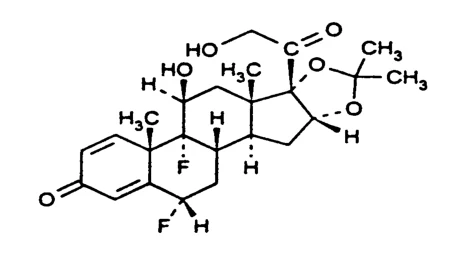
Proper Name: Fluocinolone acetonide
Chemical Name: 6α,9α-Difluoro-11β,16α,17,21-tetrahydroxypregna-1,4-diene-3,20-dione cyclic 16,17-acetal with acetone
Molecular Formula and Molecular Mass: C24H30F2O6 , 452.50
Structural Formula:
Physicochemical Properties:
Physical Form: White, crystalline powder that is odorless; stable in light.
Solubility: Fluocinolone Acetonide is soluble in alcohol, acetone and methanol; slightly soluble in chloroform; insoluble in water.
Melting Point: Melts at about 270°C, with decomposition.
Storage: Store in well-closed containers, protected from light, at temperatures not exceeding 25°C
CLINICAL TRIALS
Efficacy and Safety of Derma-Smoothe/FS® (Fluocinolone Acetonide Topical Oil 0.01% w/v) in the Treatment of Patients with Chronic Eczematous External Otitis
The primary efficacy parameter used in the two pivotal studies was the assessment of the proportion of subjects that cleared, score = 0, on the signs/symptoms of chronic eczematous external otitis, using a grading scale of 0 (cleared) to 3 (severe). Primary treatment success was defined in the protocols as a severity score of zero at Day 7 for each signs/symptom (erythema, scaling, erosion with oozing and crusting, debris, and pruritus). The secondary efficacy parameters are: i) the proportion of patients in each treatment group who have a score = 0 or 1 at Day 7 for erythema, scaling, erosion, debris, and pruritus. The difference between active and Placebo treatment were tested using Fisher's Exact test; ii) the physician and patient global assessments of improvement from baseline, tested between treatment groups by the chi-square test; and, iii) the global severity at the time of the patient's visit.
DermOtic ® Oil Ear Drops (Fluocinolone Acetonide Otic Solution), 0.01% w/v was applied to the affected ear(s) 5 drops twice daily for 7 to 14 days. Fourteen days of treatment is based on the additional seven days of treatment which occurred beyond the initial seven days of blinded treatment. After the additional 7 days of open-label treatment with DermOtic ® Oil Ear Drops (Fluocinolone Acetonide Otic Solution), 0.01% w/v (total of 14 days), there was no statistically significant difference between the two treatment groups.
Table 2: Demographics
| Study Population | All Enrolled Subjects N = 154 | ITT Population N = 151 | PP Population N = 140 | |||||||||||||||
| Characteristics | Active (N=75) | Vehicle (N=79) | p-Value | Active (N=75) | Vehicle (N=76) | p-Value | Active (N=70) | Vehicle (N=70) | p-Value | |||||||||
Gender†: Male Female | 31 44 | 31 48 | 0.87 | 31 44 | 29 47 | 0.74 | 29 41 | 25 45 | 0.60 | |||||||||
Race†: Caucasian Asian Other | 62 7 2 4 | 69 4 1 5 | 0.67 | 62 7 2 4 | 66 4 1 5 | 0.71 | 57 7 2 4 | 60 4 1 5 | 0.72 | |||||||||
| Age* (yrs) | 47.3 ± 24.3 | 46.7 ± 24.7 | 0.86 | 47.3 ± 24.3 | 46.1 ± 24.9 | 0.76 | 47.5 ± 24.2 | 45.6 ± 25.0 | 0.65 | |||||||||
| Weight* (lbs) | 163.9 ± 62.6 | 155.7 ± 54.2 | 0.39 | 163.9 ± 62.6 | 155.7 ± 55.0 | 0.40 | 162.9 ± 63.3 | 154.2 ± 56.0 | 0.39 | |||||||||
| Height* (in) | 64.1 ± 8.2 | 64.6 ± 6.9 | 0.68 | 64.1 ± 8.2 | 64.5 ± 7.1 | 0.75 | 64.0 ± 8.4 | 64.3 ± 7.1 | 0.84 | |||||||||
†Chi Square test *t-test Data Source: Study 31 INTEGRATED STUDY 31 Table 1 | ||||||||||||||||||
Table 3: Discontinued Patients
Reason for Discontinuation From the Study Combined Studies 31A and 31B All Patients | ||
| Treatment Group | ||
| Active Treatment Group | Placebo Treatment Group | |
| Number of Patients | ||
| Number Randomized | 75 | 79 |
| ITT population | 75 | 76 |
| PP population | 70 | 70 |
| Completed Study | 71 (94.6%) | 64 (84.2%) |
| Discontinued: | 4 (5.3%) | 12 (15.8%) |
| Patient request | 0 | 4 (5.3%) |
| Adverse event | 1 (1.3) | 6 (7.9%) |
| Treatment failure | 1 (1.3) | 2 (2.6%) |
| Non-compliance | 2 (2.6%) | 0 |
Data Source: Study 31 INTEGRATED STUDY 31 Table 14
Of the 151 patients in the ITT population, the majority, 135 (89.4%) completed the study. Twelve of the 16 patients who did not complete the study were in the Placebo treated group.
Out of the 16 patients that were discontinued, seven patients were withdrawn due to adverse events (6 placebo, 1 active). Majority of the adverse events were unrelated to the study drug. Two of those 6 patients were crossed over from the placebo to the open-label treatment and experienced the adverse events at or after the DermOtic ® Oil Ear Drops (Fluocinolone Acetonide Otic Solution), 0.01% w/v open-label treatment; one of the two patients experienced a right ear myringitis, tympanic membrane perforation, and otitis media. Also, one patient from the active group was removed due to an adverse event (hypermania) considered not related to the study product. Three patients were discontinued due to treatment failure. Two patients discontinued due to non-compliance, from use of interfering medication and from missed doses greater than 2 consecutive applications. Those who requested to be discontinued from the studies (4) gave the reasons of scheduling conflicts.
Table 4: Day 7 Efficacy Evaluation (ITT Population)
Efficacy Parameter Day 7 | Proportion of Subjects Classified as Success | p-Value | ||
| Active (N=75) | Placebo (N=76) | Chi Sq | CMH* | |
| Erythema | 53.3 | 32.9 | 0.014 | 0.010 |
| Scaling | 73.3 | 47.4 | 0.002 | 0.001 |
| Erosion/Oozing/Crusting | 80.0 | 64.5 | 0.045 | 0.032 |
| Debris | 66.7 | 43.4 | 0.005 | 0.006 |
| Pruritus (Subject Assessment) | 49.3 | 9.2 | <0.0001 | <0.0001 |
*CMH – stratified across study centers Data Source: Study 31 INTEGRATED STUDY 31 Table 3.1 | ||||
Table 5: Day 7 Efficacy Evaluation (PP Population)
| Efficacy Parameter | Proportion of Subjects Classified as Success | p-Value | ||
| Active (N=70) | Placebo (N=70) | Chi Sq | CMH* | |
| Erythema | 51.4 | 32.9 | 0.040 | 0.029 |
| Scaling | 72.9 | 47.1 | 0.003 | 0.002 |
| Erosion/Oozing/Crusting | 81.4 | 64.3 | 0.036 | 0.040 |
| Debris | 67.1 | 41.4 | 0.004 | 0.003 |
| Pruritus (Subject Assessment) | 50.0 | 8.6 | <0.0001 | <0.0001 |
*CMH – stratified across study centers Data Source: Study 31 INTEGRATED STUDY 31 Table 3.2 | ||||
Table 6: Day 7 Secondary Efficacy Parameter Results
Subjects with Score = 0 or 1
| Efficacy Parameter | Proportion of Subjects Classified as Success | p-Value | ||
| Active (N=75) | Placebo (N=76) | Chi Sq | CMH* | |
| Erythema | 92.0 | 72.1 | 0.001 | 0.001 |
| Scaling | 97.3 | 80.3 | 0.001 | 0.001 |
| Erosion/Oozing/Crusting | 94.7 | 86.8 | 0.159 | 0.093 |
| Debris | 96.0 | 80.3 | 0.005 | 0.003 |
| Pruritus (Subject Assessment) | 89.3 | 55.3 | <0.0001 | <0.0001 |
*CMH – stratified across study centers Data Source: Study 31 INTEGRATED STUDY 31 Table 4.1 | ||||
Study 25-S Open-Label Safety Study on Derma-Smoothe/FS® Topical Oil on Pediatric Patients with Atopic Dermatitis
Suppression of the hypothalamic-pituitary-adrenal (HPA) axis was assessed in several studies for the indication of atopic dermatitis involving pediatric populations. No evidence of suppression of the HPA axis was observed in Study 25-S following treatment with the Fluocinolone Acetonide 0.01% formulation marketed as Derma-Smoothe/FS® Topical Oil. Derma-Smoothe/FS® Topical Oil was applied twice daily for 4 weeks.
Table 7: Cortisol Concentrations
Cortisol Concentrations (ug/dL) Before and After Adrenal Stimulation: Start of Study and After 4 Weeks of Treatment with Derma-Smoothe/FS® Study 25-S California | |||
| At Start of Study (N=11) | After 4 Weeks of Treatment (N=11) | Week 0 vs. Week 4c p valuea | |
| Cortisol Concentration at Baseline (SD)b | 12.09 (3.87) | 10.73 (1.96) | 0.185 |
| Cortisol Concentration Following Stimulation (SD) | 25.30 (3.60) | 24.51 (1.93) | 0.408 |
| Increase in Cortisol After Stimulation | 13.21 (5.00) | 13.78 (2.25) | 0.742 |
a p-value from paired t-test b Baseline value is value prior to stimulation Data Source: Study 25 Statistical Report, Table 11 c Day 28: 7 day post-treatment evaluation Table 8: Cortisol Concentrations | |||
Cortisol Concentrations (ug/dL) Before and After Adrenal Stimulation: Start of Study and After 4 Weeks of Treatment with Derma-Smoothe/FS® Study 25-S Chicago, Cleveland, and Miami | |||
| At Start of Study (N=10) | After 4 Weeks of Treatment (N=10) | Week 0 vs. Week 4c p valuea | |
| Cortisol Concentration at Baseline (SD)b | 11.00 (3.95) | 11.76 (3.28) | 0.444 |
| Cortisol Concentration Following Stimulation (SD) | 28.84 (6.74) | 26.07 (5.20) | 0.056 |
| Increase in Cortisol After Stimulation | 17.84 (9.67) | 14.28 (5.60) | 0.091 |
a p-value from paired t-test b Baseline value is value prior to stimulation Data Source: Study 25 Statistical Report, Table 12 c Day 28: 7 day post-treatment evaluation | |||
Study 26 HPA Axis Open-Label Safety Study on Derma-Smoothe/FS® on Pediatric Patients with Atopic Dermatitis (2 to 5 years)
Derma-Smoothe/FS® Topical Oil was used twice daily for 28 days. No HPA axis suppression was observed following treatment of Derma-Smoothe/FS® Topical Oil.
Table 9: Cortisol Concentrations
Cortisol Concentrations (ug/dL) Before and After Adrenal Stimulation: Start of Study and After 4 Weeks of Treatment with Derma-Smoothe/FS® Study 26 | |||
| At Start of Study (N=13) | After 4 Weeks of Treatment (N=13) | Week 0 vs. Week 4 p valuea | |
| Cortisol Concentration at Baseline (SD)b | 10.73 (5.01) | 9.35 (3.82) | 0.376 |
| Cortisol Concentration Following Stimulation (SD) | 26.12 (2.97) | 24.20 (3.79) | 0.153 |
| Increase in Cortisol After Stimulation | 15.39 (4.81) | 14.85 (3.10) | 0.647 |
a p-value from paired t-test b Baseline value is value prior to stimulation Data Source: Study 26 Report, Table 2 | |||
DETAILED PHARMACOLOGY
Like other topical corticosteroids, Fluocinolone Acetonide has anti-inflammatory, antipruritic, and vasoconstrictive properties. The mechanism of the anti-inflammatory activity of the topical steroids in general is unclear. One factor may be the ability of the glucocorticoids to inhibit the recruitment of neutrophils and monocyte-macrophages into the affected area. Glucocorticoid also decreases the adherence of neutrophils to nylon fibers, indicating decreased tendency of neutrophils to adhere to capillary endothelial cells in areas of inflammation. Although steroids do not affect the production of macrophage migratory inhibitory factor (MIF), it blocks the effect of MIF on macrophages so that the movements of these cells are no longer restricted hence they do not accumulate locally. Evidence also show that glucocorticoids induce the production of a protein that inhibits phospholipase A2, reducing the release of arachidonic acid from phospholipids, in turn decreasing the formation of prostaglandins, leukotrienes, endoperoxides and thromboxane which plays an important role in chemotaxis and inflammation.
MICROBIOLOGY
Investigative studies showing pharmacokinetic, toxicology and microbiological aspects have not been carried out for Derma-Smoothe/FS®, which is also marketed as DermOtic ® Oil Ear Drops (Fluocinolone Acetonide Otic Solution), 0.01% w/v.
TOXICOLOGY
No nonclinical studies were performed to assess the toxicology, genotoxicity, carcinogenicity, reproductive or developmental toxicity, or local tolerance of Fluocinolone Acetonide or DermOtic ® Oil Ear Drops (Fluocinolone Acetonide Otic Solution), 0.01% w/v. However, some corticosteroids are associated with several toxic effects; they are summarized below.
Genotoxicity
Some corticosteroids have been found to be genotoxic in various genotoxicity tests (e.g., the in vitro human peripheral blood lymphocyte chromosome aberration assay with metabolic activation, the in vivo mouse bone marrow micronucleus assay, the Chinese hamster micronucleus test, and the in vitro mouse lymphoma gene mutation assay).
Reproductive and Developmental Toxicity
Corticosteroids have been shown to be teratogenic in laboratory animals when administered systemically at relatively low dosage levels. Some corticosteroids have been shown to be teratogenic after dermal application in laboratory animals. The relationship between corticosteroid use and teratogenicity in humans is unclear.
Local Tolerance
Skin thinning (atrophy) has been shown after Fluocinolone Acetonide administration on mouse tail epidermis and on the dorsal skin of hairless dogs. This activity may correlate with the activity of Fluocinolone Acetonide in treating atopic dermatitis.
REFERENCES
|
|
|
|
|
|
|
|
|
|
|
|
- 19. Gilman AG, Goodman LS, Rall TW, Murad F (eds). Pharmacological Basis of Therapeutics. 7th ed. New York: Macmillan Publishing Company; 1985.
- 20. Maibach HI, Surber C (eds). Topical corticosteroids. Basel: S Karger AG; 1992.
III: CONSUMER INFORMATION
Pr DermOtic ® Oil Ear Drops
(Fluocinolone Acetonide Otic Solution), 0.01% w/v
This leaflet is part III of a three-part “Product Monograph" published when DermOtic ® Oil Ear Drops (Fluocinolone Acetonide Otic Solution), 0.01% w/v was approved for sale in Canada and is designed specifically for Consumers. This leaflet is a summary and will not tell you everything about DermOtic ® Oil Ear Drops (Fluocinolone Acetonide Otic Solution), 0.01% w/v. Contact your doctor or pharmacist if you have any questions about the drug.
| ABOUT THIS MEDICATION |
What the medication is used for:
DermOtic ® Oil Ear Drops (Fluocinolone Acetonide Otic Solution), 0.01% w/v is indicated for moderate to severe Chronic Eczematous External Otitis (inflammatory condition of the external ear) in adults and children 12 years and older. Not to be used on the face.
What it does:
DermOtic ® Oil Ear Drops (Fluocinolone Acetonide Otic Solution), 0.01% w/v is a topical corticosteroid. When applied to the affected area, corticosteroid, DermOtic ® Oil Ear Drops (Fluocinolone Acetonide Otic Solution), 0.01% w/v, has anti-inflammatory action and is believed to interfere in the production of important mediators of inflammation, the prostaglandins and leucokotrienes, to help reduce the ear inflammation (swelling), redness, and itching.
When it should not be used:
- Do not use if hypersensitive (allergic) to any of the ingredients in this formulation. (See What the nonmedicinal ingredients are).
- This product contains refined peanut oil.
- Do not apply in the eye or eye area.
This medication should not be used if you have a perforated eardrum, or ear tubes, or untreated ear infection (bacterial or fungal or viral infections). Contact your doctor if you are not sure about an ear infection.
What the medicinal ingredient is:
Fluocinolone Acetonide
What the important nonmedicinal ingredients are:
Refined Peanut Oil NF, Mineral Oil Light, Oleth-2, Isopropyl Myristate, Isopropyl Alcohol, Cream Fragrance, and Balsam Pine Fragrance. The peanut oil used in DermOtic® Oil Ear Drops is tested for residual protein through amino acid analysis; the acceptance criterion for total protein is no more than 0.5 parts per million.
What dosage forms it comes in:
Oil, for Otic Use Only. Strength 0.01% w/v
A dropper is supplied with the package.
BEFORE you use DermOtic ® Oil Ear Drops (Fluocinolone Acetonide Otic Solution), 0.01% w/v, talk to your doctor or pharmacist if:
- Do not use on the eye (or eye area), face, underarm or groin. In case of accidental eye contact, rinse thoroughly with water.”
- This medication should not be used for any condition other than that for which it was prescribed.
- If you develop any allergic reaction during product use, such as rash, intense itching (flare), raised skin area (wheal) or any other skin reaction, stop use of the product and contact your doctor.
| INTERACTIONS WITH THIS MEDICATION |
There are no known drug interactions with DermOtic ® Oil Ear Drops (Fluocinolone Acetonide Otic Solution), 0.01% w/v. No drug interaction studies have been conducted with this product.
| PROPER USE OF THIS MEDICATION |
Usual dose:
Chronic Eczematous External Otitis in Adults and Children 12 Years and Older:
| WARNINGS AND PRECAUTIONS |
Using the supplied ear-dropper, apply 5 drops of DermOtic ® Oil Ear Drops (Fluocinolone Acetonide Otic Solution), 0.01% w/v into the affected ear. To apply, tilt head to one side so that the ear is facing up. Then gently pull the ear lobe backward and upward and apply 5 drops of DermOtic ® Oil Ear Drops (Fluocinolone Acetonide Otic Solution), 0.01% w/v into the ear. Keep head tilted for about a minute to allow DermOtic ® Oil Ear Drops (Fluocinolone Acetonide Otic Solution), 0.01% w/v to penetrate into the ear canal. Gently pat excess material dripping out of the ear using a clean cotton ball. Follow these instructions twice daily for 7 days in children, and 7 to 14 days in adults. If no improvement is seen within 1 week in your child, contact your child’s doctor.
Do not use an ear plug, cotton or any other dressing in the ear while using this medication.
Overdose:
If swallowed, contact your doctor.
Missed Dose:
If a dose of this medication is missed, it is not necessary to make up the missed dose. Skip the missed dose and continue with the next scheduled dose. Do not double dose.
| SIDE EFFECTS AND WHAT TO DO ABOUT THEM |
The following local adverse reactions have been reported infrequently with topical corticosteroids. They may occur more frequently with the use of occlusive dressings, especially with higher potency corticosteroids. These reactions are listed in an approximate decreasing order of occurrence: (common) burning, itching, irritation, dryness, (uncommon) hair follicle infection, acne, skin lightening, rash around the mouth, allergic contact dermatitis, (rare) secondary infection, skin thinning, stretch mark, and bumps. If a raised area and flare type reactions (which may be limited to intense itching) or other manifestations of allergic reaction develop, DermOtic ® Oil Ear Drops (Fluocinolone Acetonide Otic Solution), 0.01% w/v should be discontinued immediately and appropriate therapy instituted. If side effects persist please contact your doctor or pharmacist.
| SERIOUS SIDE EFFECTS, HOW OFTEN THEY HAPPEN AND WHAT TO DO ABOUT THEM | ||||
|---|---|---|---|---|
Symptom / effect There have been no reported Serious Side Effects during clinical trials or post-marking experience. If a serious side effect does occur, discontinue the drug and call your doctor or pharmacist. | Talk with your doctor or pharmacist | Stop taking drug and call your doctor or pharmacist | ||
| Only if severe | In all cases | |||
Allergic Reaction: Flare up of existing condition | ν | |||
This is not a complete list of side effects. For any unexpected effects while taking DermOtic ® Oil Ear Drops (Fluocinolone Acetonide Otic Solution), 0.01% w/v, contact your doctor or pharmacist.
| HOW TO STORE IT |
Keep tightly closed. Store at 25°C (77°F). Keep out of reach of children.
Reporting Side Effects You can report any suspected side effects associated with the use of health products to Health Canada by:
NOTE: Contact your health professional if you need information about how to manage your side effects. The Canada Vigilance Program does not provide medical advice. |
| MORE INFORMATION |
This document plus the full product monograph, prepared for health professionals can be found by contacting the sponsor:
Hill Dermaceuticals, Inc.
At: 1-800-344-5707
Last revised: November 27, 2018