


Product Monograph - Dexmedetomidine Hydrochloride for Injection, USP (Baxter)
RECENT MAJOR LABEL CHANGES
| 4 DOSAGE AND ADMINISTRATION; 4.2 Recommended Dose and Dosage Adjustment | 03/2025 |
|---|---|
| 7 Warnings and Precautions | 03/2025 |
TABLE OF CONTENTS
Sections or subsections that are not applicable at the time of authorization are not listed.
RECENT MAJOR LABEL CHANGES............................................................................................ 2
TABLE OF CONTENTS .............................................................................................................. 2
PART I: HEALTH PROFESSIONAL INFORMATION ..................................................................... 4
1 INDICATIONS .............................................................................................................. 4
1.1 Pediatrics .......................................................................................................... 4
1.2 Geriatrics........................................................................................................... 4
2 CONTRAINDICATIONS ................................................................................................. 4
4 DOSAGE AND ADMINISTRATION................................................................................. 5
4.1 Dosing Considerations ....................................................................................... 5
4.2 Recommended Dose and Dosage Adjustment..................................................... 5
4.3 Reconstitution ................................................................................................... 7
4.4 Administration................................................................................................... 8
4.5 Missed Dose ...................................................................................................... 8
5 OVERDOSAGE ............................................................................................................. 8
6 DOSAGE FORMS, STRENGTHS, COMPOSITION AND PACKAGING ................................. 9
7 WARNINGS AND PRECAUTIONS .................................................................................. 9
7.1 Special Populations ...........................................................................................13
7.1.1 Pregnant Women ........................................................................................13
7.1.2 Breast-feeding.............................................................................................13
7.1.3 Pediatrics ....................................................................................................13
7.1.4 Geriatrics ....................................................................................................13
8 ADVERSE REACTIONS .................................................................................................14
8.1 Adverse Reaction Overview...............................................................................14
8.2 Clinical Trial Adverse Reactions .........................................................................14
8.2.1 Clinical Trial Adverse Reactions – Pediatrics .................................................19
8.5 Post-Market Adverse Reactions.........................................................................20
9 DRUG INTERACTIONS.................................................................................................21
9.4 Drug-Drug Interactions .....................................................................................21
9.5 Drug-Food Interactions .....................................................................................22
9.6 Drug-Herb Interactions .....................................................................................22
9.7 Drug-Laboratory Test Interactions .....................................................................22
10 CLINICAL PHARMACOLOGY ........................................................................................22
10.1 Mechanism of Action...................................................................................22
10.2 Pharmacodynamics .....................................................................................22
10.3 Pharmacokinetics ........................................................................................23
11 STORAGE, STABILITY AND DISPOSAL ..........................................................................26
PART II: SCIENTIFIC INFORMATION .......................................................................................27
13 PHARMACEUTICAL INFORMATION.............................................................................27
14 CLINICAL TRIALS.........................................................................................................27
14.1 Clinical Trials by Indication...........................................................................27
15 MICROBIOLOGY .........................................................................................................31
16 NON-CLINICAL TOXICOLOGY ......................................................................................31
17 SUPPORTING PRODUCT MONOGRAPHS.....................................................................34
PATIENT MEDICATION INFORMATION ..................................................................................35
PART I: HEALTH PROFESSIONAL INFORMATION
1 INDICATIONS
Dexmedetomidine Hydrochloride for Injection, USP is indicated for:
Intensive Care Unit Sedation
Dexmedetomidine Hydrochloride for Injection, USP is indicated for sedation of initially intubated and mechanically ventilated adult patients during treatment in an intensive care setting by continuous intravenous infusion. The Dexmedetomidine Hydrochloride for Injection, USP infusion should not generally exceed 24 hours.
Dexmedetomidine hydrochloride has been continuously infused in mechanically ventilated patients prior to extubation, during extubation, and post-extubation. It is not necessary to discontinue Dexmedetomidine Hydrochloride for Injection, USP prior to extubation.
Conscious Sedation
Dexmedetomidine Hydrochloride for Injection, USP is indicated for sedation of non-intubated adult patients prior to and/or during surgical and other procedures by continuous intravenous infusion for the following procedures:
- Monitored Anesthesia Care (MAC) with an adequate nerve block and/or local infiltration; and
- Awake Fiberoptic Intubation (AFI) with adequate topical preparation of the upper airway with local lidocaine formulations.
Due to insufficient safety and efficacy data, Dexmedetomidine Hydrochloride for Injection, USP is not recommended for use in procedures other than the two listed above.
1.1 Pediatrics
Pediatrics (<18 years of age): Limited data are available to Health Canada; therefore, Health Canada has not authorized an indication for pediatric use. (see 8.2.1 ADVERSE REACTIONS, Clinical Trial Adverse Reactions - Pediatrics, 10 CLINICAL PHARMACOLOGY, Special Populations and Conditions, Pediatrics).
1.2 Geriatrics
Geriatrics (> 65 years of age): Dosage adjustment in this population is recommended (see 4 DOSAGE AND ADMINISTRATION).
2 CONTRAINDICATIONS
Dexmedetomidine Hydrochloride for Injection, USP is contraindicated in patients who are hypersensitive to the active substance of this drug or to any ingredient in the formulation,
- -medicinal ingredient, or component of the container. For a complete listing, see the 6 DOSAGE FORMS, STRENGTHS, COMPOSITION AND PACKAGING.
4 DOSAGE AND ADMINISTRATION
4.1 Dosing Considerations
- Dexmedetomidine Hydrochloride for Injection, USP should be used only in facilities adequately staffed and equipped for anesthesia, resuscitation, and cardiovascular monitoring.
- Dexmedetomidine Hydrochloride for Injection, USP is indicated for short-term intravenous sedation. Dexmedetomidine Hydrochloride for Injection, USP should not be generally used for duration longer than 24 hours. Its continued use beyond 24 hours should be determined based on careful assessment of the patient’s conditions.
- Dexmedetomidine Hydrochloride for Injection, USP should be administered using a controlled infusion device with adequate precision.
- Respiration should be monitored in non-intubated patients because of the risk of respiratory depression and in some cases apnoea.
- Dosage must be individualized and titrated to the desired clinical effect.
Patient Counselling Information
- Patients should be informed blood pressure, heart rate and oxygen levels will be monitored both continuously during the infusion of Dexmedetomidine Hydrochloride for Injection, USP and as clinically appropriate after discontinuation.
- When Dexmedetomidine Hydrochloride for Injection, USP is infused for more than 6 hours, patients should be informed to report nervousness, agitation, and headaches that may occur for up to 48 hours after discontinuation of Dexmedetomidine Hydrochloride for Injection, USP.
- Additionally, patients should be informed to report symptoms that may occur within 48 hours after the administration of Dexmedetomidine Hydrochloride for Injection, USP such as: weakness, confusion, excessive sweating, weight loss, abdominal pain, salt cravings, diarrhea, constipation, dizziness or light-headedness.
4.2 Recommended Dose and Dosage Adjustment
Intensive Care Unit Sedation
Initiation
- For adult patients, it is recommended that administration of Dexmedetomidine Hydrochloride for Injection, USP starts with a 1 mcg/kg loading dose administered over 10 minutes followed by a maintenance dose.
- For adult patients already intubated and sedated who are being converted from alternate sedative therapy, a loading dose may not be required.
- Dexmedetomidine Hydrochloride for Injection, USP is used for adult patients already intubated and sedated in an intensive care setting.
- An assessment of the level of sedation and the need for Dexmedetomidine Hydrochloride for Injection, USP should precede the initiation of Dexmedetomidine Hydrochloride for Injection, USP.
Maintenance
The rate of the maintenance infusion should be adjusted to achieve the optimal level of sedation for optimal clinical effect. For adult patients, a maintenance infusion of 0.2 to 0.7 mcg/kg/hour is recommended.
- Caution is advised when using doses higher than 0.7 mcg/kg/hr. Experience is limited at doses higher than 1.1 mcg/kg/hr. A dose higher than 1.4 mcg/kg/hr should not be attempted.
- Dexmedetomidine Hydrochloride for Injection, USP use beyond 24 hours must be assessed individually. Patients must be assessed at regular intervals for the need to continuing sedation. The experience of dexmedetomidine hydrochloride longer than 4 days is limited.
- Another intravenous sedative (e.g. midazolam or propofol) may be added according to clinical assessment. Opioids or neuromuscular blocking agents may also be used, based on individual assessment.
- The need for Dexmedetomidine Hydrochloride for Injection, USP continuous infusion post-extubation must be assessed individually. In post-surgical ICU patients exposed for <24 hours, the dose of Dexmedetomidine Hydrochloride for Injection, USP should be reduced by half after extubation. In clinical studies, the mean time of continued infusion observed post-extubation in these post-surgical ICU patients was approximately 6.6 hours.
Conscious Sedation
- Based on the Ramsay and Observer’s Assessment of Alertness/Sedation Scales, the loading infusion provides clinically effective onset of sedation 10 to 15 minutes after start of infusion.
- For use in Monitored Anesthesia Care, an adequate nerve block and/or local infiltration should be used.
- For Awake Fiberoptic Intubation, the upper airway should be topicalized with proper lidocaine formulations.
Initiation
- For adult patients, it is recommended that administration of dexmedetomidine hydrochloride starts with a 1 mcg/kg loading dose administered over 10 minutes followed by a maintenance dose.
- For awake fiberoptic intubation in adult patients: a loading infusion of 1 mcg/kg over 10 minutes may be suitable.
For less invasive procedures such as ophthalmic surgery, a loading infusion of 0.5 mcg/kg given over 10 minutes may be suitable.
Geriatric: For patients over 65 years of age, a dose reduction in the loading dose to 0.5 mcg/kg over 10 minutes should be considered.
Maintenance
- The rate of the maintenance infusion should be adjusted to achieve the targeted level of sedation. The maintenance infusion of Dexmedetomidine Hydrochloride for Injection, USP is generally initiated at 0.6 to 0.7 mcg/kg/hr and titrated to achieve desired clinical effect with doses ranging from 0.2 to 1 mcg/kg/hr.
- For awake fiberoptic intubation in adult patients, maintenance dose of 0.7 mcg/kg/hr is recommended until the endotracheal tube is secured.
Dosage Adjustment for ICU Sedation and Conscious Sedation
Due to possible pharmacodynamic interactions, a reduction in dosage of Dexmedetomidine Hydrochloride for Injection, USP or other concomitant anesthetics, sedatives, hypnotics or opioids may be required when co- administered.
Geriatric: A dose reduction for both the loading and maintenance infusions should be considered in patients over 65 years of age.
Hepatic Impairment: Dexmedetomidine hydrochloride should be used with caution in adult patients with hepatic impairment. A dose reduction for both the loading and maintenance doses should be considered.
Renal Impairment: General caution is advised in patients with severe renal impairment. No dose adjustment is required for patients with renal impairment.
Health Canada has not authorized an indication for pediatric use (see 1 INDICATIONS, Pediatrics).
4.3 Reconstitution
Parenteral Products:
Dexmedetomidine Hydrochloride for Injection, USP 100 mcg/mL (200 mcg/2 mL)
Dexmedetomidine Hydrochloride for Injection, USP 100 mcg/mL must be diluted in 0.9% sodium chloride injection to achieve required concentration (4 mcg/mL) prior to administration. Preparation of solutions is the same, whether for the loading dose or maintenance infusion.
Strict aseptic technique must always be maintained during handling of Dexmedetomidine Hydrochloride for Injection, USP.
To prepare the infusion, withdraw 2 mL of Dexmedetomidine Hydrochloride for Injection, USP and add to 48 mL of 0.9% sodium chloride injection to a total of 50 mL. Shake gently to mix well. The reconstituted solution is stable for 25 hours at room temperature (15 - 30°C).
4.4 Administration
Compatibility with Other Fluids
Dexmedetomidine Hydrochloride for Injection, USP has been shown to be compatible when administered with the following intravenous fluids: Lactated Ringers, 5% Glucose in Water for Injection, 0.9% Sodium Chloride in Water for Injection and 20% Mannitol in Water for Injection.
Dexmedetomidine hydrochloride has been found to be compatible with water solutions of the following drugs when administered via Y-site injections: thiopental sodium, vecuronium bromide, pancuronium bromide, glycopyrrolate bromide, phenylephrine hydrochloride.
Parenteral drug products should be inspected visually for clarity, particulate matter, precipitate and discoloration prior to administration, whenever solution and container permit. Solutions showing haziness, particulate matter, precipitate or discoloration or leakage should not be used. Discard unused portion.
Compatibility with Natural Rubber
Compatibility studies have demonstrated the potential for absorption of dexmedetomidine hydrochloride to some types of natural rubber. Although Dexmedetomidine Hydrochloride for Injection, USP is dosed to effect, it is advisable to use administration components made with synthetic or coated natural rubber gaskets.
Incompatibilities
Dexmedetomidine hydrochloride infusion should not be co-administered through the same intravenous catheter with blood, serum, or plasma because physical compatibility has not been established.
Dexmedetomidine Hydrochloride for Injection, USP has been shown to be incompatible when administered with the following drugs: amphotericin B, diazepam.
4.5 Missed Dose
This information is not available for this drug product.
5 OVERDOSAGE
The tolerability of dexmedetomidine hydrochloride was studied in one study in which healthy adult subjects were administered doses at and above the recommended dose of 0.2 to 1.4 mcg/kg/hr. The maximum blood concentration achieved in this study was approximately 6 times the upper boundary of the therapeutic range. The most notable effects observed in two subjects who achieved the highest doses were first degree atrioventricular block and second degree heart block. No hemodynamic compromise was noted with the atrioventricular block and the heart block resolved spontaneously within one minute.
Four adult patients received an overdose of dexmedetomidine hydrochloride in the intensive care unit sedation studies. One patient received a 2 mcg/kg loading dose over 10 minutes (twice the recommended loading dose). Two other patients who received a 2 mcg/kg loading dose over 10 minutes, experienced bradycardia and/or hypotension. One patient who received a loading bolus dose of undiluted dexmedetomidine hydrochloride (19.4 mcg/kg), had cardiac arrest from which he was successfully resuscitated.
| For the most recent information in the management of a suspected drug overdose, contact your regional poison control centre or Health Canada’s toll-free number, 1-844 POISON-X (1-844-764-7669). |
|---|
6 DOSAGE FORMS, STRENGTHS, COMPOSITION AND PACKAGING
Table 1 – Dosage Forms, Strengths, Composition and Packaging
| Route of Administration | Dosage Form / Strength / Composition | Non-medicinal Ingredients |
| Intravenous infusion | Solution, 100 mcg / mL dexmedetomidine hydrochloride (Concentrate) | Sodium Chloride and Water for Injection |
Dexmedetomidine Hydrochloride for Injection, USP is a sterile, nonpyrogenic solution suitable for intravenous infusion following dilution.
Each 1 mL of Dexmedetomidine Hydrochloride for Injection, USP contains 118 mcg of dexmedetomidine hydrochloride equivalent to 100 mcg dexmedetomidine and 9 mg of sodium chloride in Water for Injection. The solution is preservative-free and contains no additives or chemical stabilizers.
Dexmedetomidine Hydrochloride for Injection, USP, 100 mcg/mL as the base is available in 2 mL clear glass vials (200 mcg/2 mL). Vials are intended for single use only.
7 WARNINGS AND PRECAUTIONS
General
Dexmedetomidine hydrochloride is for hospital use only. It should be administered only by persons skilled in the management of patients in the intensive care or operating room setting. Due to the known pharmacological effects of dexmedetomidine hydrochloride, patients should be continuously monitored (MAC: Monitored Anesthesia Care) for early signs of hypotension, hypertension, bradycardia, respiratory depression, airway obstruction, apnoea, dyspnoea and/or oxygen desaturation while receiving dexmedetomidine hydrochloride. Supplemental oxygen should be immediately available and provided when indicated.
Risk of mortality
In a published pragmatic controlled trial (SPICE III), 3904 ventilated critically ill adult intensive care unit (ICU) patients were randomized to either dexmedetomidine hydrochloride as primary sedative or usual care. There was no overall difference in 90-day mortality between the dexmedetomidine hydrochloride group and the usual care group (mortality of 29.1% in both groups), but heterogeneity of effect from age on mortality was observed. In an exploratory subgroup analysis, dexmedetomidine hydrochloride was associated with higher mortality compared to usual care in patients younger than the median age of 63.7 years (risk difference 4.4; 95% confidence interval 0.8 to 7.9).
In a published subsequent analysis of the SPICE III study, dexmedetomidine hydrochloride was associated with increased mortality in patients aged 65 years and younger (odds ratio 1.26; 95% confidence interval 1.02 to 1.56) compared to usual care. Although the mechanism is not known, the heterogeneity of effect from age on mortality was most prominent in patients admitted for reasons other than post-operative care and increased with the increasing severity of disease as per Acute Physiology and Chronic Health Evaluation (APACHE) II scores (without the age component).
The significance of these findings is unknown, but they should be weighed against the clinical benefit expected from dexmedetomidine hydrochloride compared to alternative sedatives in younger patients.
Cardiovascular
Hypotension, Bradycardia and Sinus Arrest: Clinically significant episodes of bradycardia and sinus arrest have been reported with dexmedetomidine hydrochloride administration in young, healthy adult volunteers with high vagal tone or with different routes of administration including rapid intravenous or bolus administration.
Reports of hypotension and bradycardia have been associated with dexmedetomidine hydrochloride infusion. Some of these cases have resulted in fatalities. If medical intervention is required, treatment may include decreasing or stopping the infusion of dexmedetomidine hydrochloride, increasing the rate of intravenous fluid administration, elevation of the lower extremities, and use of pressor agents. Because dexmedetomidine hydrochloride has the potential to augment bradycardia induced by vagal stimuli; clinicians should be prepared to intervene. The intravenous administration of anticholinergic agents (e.g., glycopyrrolate, atropine) should be considered to modify vagal tone. In clinical trials, glycopyrrolate or atropine were effective in the treatment of most episodes of dexmedetomidine hydrochloride induced bradycardia. However, in some patients with significant cardiovascular dysfunction, more advanced resuscitative measures were required.
Caution should be exercised when administering dexmedetomidine hydrochloride to patients with advanced heart block and/or severe ventricular dysfunction. Because dexmedetomidine hydrochloride decreases sympathetic nervous system activity, hypotension and/or bradycardia may be expected to be more pronounced in patients with hypovolemia, diabetes mellitus, or chronic hypertension and in elderly patients.
In situations where other vasodilators or negative chronotropic agents are administered, co- administration of dexmedetomidine hydrochloride could have an additive pharmacodynamic effect and should be administered with caution.
Transient Hypertension: Transient hypertension has been observed during the loading dose and maintenance period in association with the peripheral vasoconstrictive effects of dexmedetomidine hydrochloride in some patients. Transient hypertension is often referred to as paradoxical hypertension in the literature. Reduction of the infusion rate may be desirable. Treatment with a vasodilator may be needed. The use of other concomitant medications with an effect on the cardiovascular system should be reviewed to rule out potential drug interactions.
Dependence/Tolerance
Dexmedetomidine hydrochloride is not a controlled substance under the Controlled Drugs and Substances Act, but it is used only by health care professionals. The dependence potential of dexmedetomidine hydrochloride has not been studied in humans. Dexmedetomidine hydrochloride exhibits pharmacologic actions similar to those of clonidine, it may be possible that dexmedetomidine hydrochloride produces a clonidine-like withdrawal syndrome upon discontinuation.
Endocrine and Metabolism
The available evidence is inadequate to confirm if dexmedetomidine hydrochloride is associated with significant adrenocortical suppression. The adequacy of the adrenocortical function should be individually assessed and managed.
Hyperthermia
Dexmedetomidine hydrochloride may induce hyperthermia that may be resistant to traditional cooling methods. Dexmedetomidine Hydrochloride for Injection, USP should be discontinued in the event of a sustained unexplained fever and hyperthermia should be managed with conventional medical measures. It is not known whether dexmedetomidine is safe to use in malignant hyperthermia-sensitive individuals therefore it is not recommended.
Hepatic/Biliary/Pancreatic
Since dexmedetomidine hydrochloride clearance decreases with severity of hepatic impairment, dose reduction should be considered in patients with impaired hepatic function (see 4 DOSAGE AND ADMINISTRATION).
Peri-Operative Considerations
Arousability
- Some patients receiving dexmedetomidine hydrochloride have been observed to be arousable and alert when stimulated. This alone should not be considered as evidence of lack of efficacy in the absence of other clinical signs and symptoms.
Withdrawal
Intensive Care Unit
- Dexmedetomidine Hydrochloride for Injection, USP is indicated only for sedation of initially intubated and mechanically ventilated adult patients recovering in a post-operative care unit or an intensive care setting. During the use of Dexmedetomidine Hydrochloride for Injection, USP in an intensive care setting, the patients must be monitored continuously, particularly for their cardiovascular safety indicators.
- With administration of dexmedetomidine hydrochloride to adults for longer than 24 hours, regardless of the dose, the most common dexmedetomidine hydrochloride withdrawal related adverse events in the 48 hours after discontinuation were anxiety (6%), agitation (5%), nausea (4%), withdrawal syndrome (4%), and vomiting (3%). Symptomatic management of these adverse events may be needed.
- In adult subjects, tachycardia and hypertension associated with elevated catecholamine may occur, with or following the events listed above. Tachycardia requiring intervention in the 48 hours following discontinuation of dexmedetomidine hydrochloride occurred in 8% of patients, and hypertension requiring intervention in the 48 hours following discontinuation of dexmedetomidine hydrochloride occurred in 4% of patients. If tachycardia and/or hypertension occurs after discontinuation of Dexmedetomidine Hydrochloride for Injection, USP supportive therapy is indicated.
Conscious Sedation
- In adult subjects, withdrawal symptoms were not seen after discontinuation of short-term infusion of dexmedetomidine hydrochloride (<6 hours).
Renal
The glucuronidation and oxidation products of dexmedetomidine hydrochloride are eliminated through the kidney. General caution is advised in patients with severe renal impairment, especially in those with comorbidities.
Cases of polyuria, with or without hypernatremia, have been reported in patients receiving dexmedetomidine hydrochloride infusion. In clinical trials, the rate of hypernatremia was approximately 1% in adults as well as children. Dose reduction or discontinuation should be considered in patients treated with Dexmedetomidine Hydrochloride for Injection, USP who develop polyuria.
Seizures
Dexmedetomidine hydrochloride lacks the anticonvulsant action of some other sedatives and so will not suppress underlying seizure activity.
7.1 Special Populations
7.1.1 Pregnant Women
There are no adequate and well-controlled studies in pregnant women. Dexmedetomidine hydrochloride has been shown to cross the placental barrier in both animal and human published studies.
The limited available information on dexmedetomidine hydrochloride use during pregnancy is not sufficient to inform a drug-associated risk of birth defects or miscarriage. Dexmedetomidine Hydrochloride for Injection, USP should be used during pregnancy only if the potential benefits justify the potential risk to the fetus.
It has been reported that prenatal exposure to dexmedetomidine hydrochloride may be associated with some degree of functional impairment at birth in some neonates.
Labor and Delivery: Perioperative administration of dexmedetomidine hydrochloride in pregnant women receiving general anesthesia for elective caesarean section was associated with a longer time to clinical recovery and extubation compared with other anesthetic agents.
Therefore, Dexmedetomidine Hydrochloride for Injection, USP is not recommended during labor and delivery including caesarean section deliveries.
7.1.2 Breast-feeding
Dexmedetomidine hydrochloride is excreted in human milk with detectable levels of dexmedetomidine hydrochloride falling below the limit of detection after 24 hours. The effects on milk production and the risk to breastfed children are unknown. Therefore, the benefits of breastfeeding and potential risk to the breastfed infant should be considered along with the mother’s clinical need for dexmedetomidine.
7.1.3 Pediatrics
Pediatrics: Limited data are available to Health Canada; therefore, Health Canada has not authorized an indication for pediatric use. (see 8.2.1 ADVERSE REACTIONS, Clinical Trial Adverse Reactions – Pediatrics, 10 CLINICAL PHARMACOLOGY, Special Populations and Conditions, Pediatrics).
7.1.4 Geriatrics
The pharmacokinetic profile of dexmedetomidine hydrochloride was not altered by age. Because elderly patients are more likely to have decreased renal function, care should be taken in dose selection in elderly patients, and it may be useful to monitor renal function.
Intensive Care Unit Sedation
A total of 1094 patients in the clinical studies were 65 years of age and over. A total of 372 patients were 75 years of age and over. In patients greater than 65 years of age, a higher incidence of bradycardia and hypotension was observed following administration of dexmedetomidine hydrochloride. Therefore a dose reduction should be considered in patients over 65 years of age (see 4 DOSAGE AND ADMINISTRATION).
Conscious Sedation
A total of 131 patients in the clinical studies were 65 years of age and over. A total of 47 patients were 75 years of age and over. Hypotension occurred in a higher incidence in dexmedetomidine hydrochloride treated patients 65 years or older (72%) and 75 years or older (74%) as compared to patients <65 years (47%). Pre-specified criteria for the vital signs to be reported as adverse reactions are footnoted below Table 4 (see 8 ADVERSE REACTIONS). A reduced loading dose of 0.5 mcg/kg given over 10 minutes is recommended and a reduction in the maintenance infusion should be considered for patients greater than 65 years of age (see 4 DOSAGE AND ADMINISTRATION).
8 ADVERSE REACTIONS
8.1 Adverse Reaction Overview
Use of dexmedetomidine hydrochloride has been associated with the following serious adverse reactions:
- Hypotension, bradycardia, and sinus arrest (see 7 WARNINGS AND PRECAUTIONS),
- Transient hypertension (see 7 WARNINGS AND PRECAUTIONS).
Most common treatment-emergent adverse reactions, occurring in greater than 2% of adult patients in both Intensive Care Unit and conscious sedation studies include hypotension, bradycardia and dry mouth.
8.2 Clinical Trial Adverse Reactions
Clinical trials are conducted under very specific conditions. The adverse reaction rates observed in the clinical trials; therefore, may not reflect the rates observed in practice and should not be compared to the rates in the clinical trials of another drug. Adverse reaction information from clinical trials may be useful in identifying and approximating rates of adverse drug reactions in real-world use.
Intensive Care Unit Sedation
Adverse event information derived from the placebo-controlled, continuous infusion trials of dexmedetomidine hydrochloride for sedation in the surgical intensive care unit setting in which 387 adult patients received dexmedetomidine hydrochloride. In these studies, the mean total dose was 7.06 mcg/kg (SD = 2.86), mean dose per hour was 0.51 mcg/kg/hr (SD = 0.39) and the mean duration of infusion of 15.6 hours (range: 0.17 to 29.08). Midazolam or propofol was used as the rescue medication for adult patients on dexmedetomidine hydrochloride or placebo. The population was between 19 to 83 years of age, 43% > 65 years of age, 73% male and 97% Caucasian. Overall, the most frequently observed treatment- emergent adverse events included hypotension, hypertension, nausea, bradycardia, fever, vomiting, hypoxia, tachycardia and anaemia (see Table 2).
Table 2: Treatment-Emergent Adverse Events Occurring in >1% of All Adult Dexmedetomidine-Treated Patients in the Randomized Placebo-controlled Continuous Infusion Short-Term Intensive Care Unit Sedation Studies
| Body System/ Adverse Event | Randomized Dexmedetomidine* (N=387) | Placebo with Midazolam Rescue (N=181) | Placebo with Propofol Rescue (N=198) |
|---|---|---|---|
| Blood and lymphatic systems disorders | |||
| Anaemia | 3% | 4% | 1% |
| Cardiac disorders | |||
| Atrial Fibrillation | 4% | 4% | 3% |
| Bradycardia | 7% | 3% | 2% |
| Tachycardia | 3% | 7% | 3% |
| Gastrointestinal disorders | |||
| Dry Mouth | 3% | 2% | <1% |
| Nausea | 11% | 9% | 10% |
| Thirst | 2% | <1% | <1% |
| Vomiting | 4% | 6% | 6% |
| General disorders and administration site conditions | |||
| Fever | 5% | 6% | 4% |
| Hyperpyrexia | 2% | 3% | 2% |
| Pain | 2% | 3% | 1% |
| Rigors | 2% | 3% | 4% |
| Metabolism and nutrition disorders | |||
| Acidosis | 2% | <1% | 3% |
| Hyperglycaemia | 2% | 3% | 1% |
| Nervous system disorders | |||
| Agitation | 2% | 3% | 3% |
| Respiratory, thoracic and mediastinal disorders | |||
| Hypoxia | 4% | 5% | 3% |
| Pleural Effusion | 2% | <1% | 2% |
| Renal and urinary disorders | |||
| Oliguria | 2% | 1% | <1% |
| Vascular disorders |
| Body System/ Adverse Event | Randomized Dexmedetomidine* (N=387) | Placebo with Midazolam Rescue (N=181) | Placebo with Propofol Rescue (N=198) |
|---|---|---|---|
| Hemorrhage | 3% | 6% | 4% |
| Hypotension | 28% | 15% | 10% |
| Hypertension | 16% | 13% | 23% |
* Data combined from studies conducted in post-surgical patients recovering in an ICU setting.
Intensive Care Unit Sedation of longer duration
Adverse event information is derived from studies using dexmedetomidine hydrochloride or active control administered as continuous infusion for maintenance of sedation in the Intensive Care Units in three studies that included adult patients from medical, surgical and trauma intensive care units. The mean total dexmedetomidine hydrochloride dose was 53.6 mcg/kg with a mean infusion rate per hour of 0.76 mcg/kg/hr (standard deviation = 0.36 mcg/kg/h). The mean duration of dexmedetomidine hydrochloride infusion was 65.5 hours (standard deviation = 59.70 hours). The majority of patients (68.6%, 506/737) received dexmedetomidine hydrochloride for 72 hours or less, with 26.7% (197/737) for 24 hours or less. The dexmedetomidine hydrochloride population was between 18 to 97 years of age, 49.5% ≥65 years of age, 59% male and 91.3% Caucasian.
Treatment-emergent adverse events are provided in Table 3 and reflect incidence rates for dexmedetomidine hydrochloride and active control groups. The most frequent dexmedetomidine hydrochloride adverse events were hypotension and bradycardia, consistent with alpha2-adrenergic agonist physiologic effects (see 7 WARNINGS AND PRECAUTIONS).
Table 3: Treatment-Emergent Adverse Events Occurring in >2% of Dexmedetomidine Hydrochloride Patients in Long-Term Intensive Care Unit Sedation Studies1
| Body System/ Adverse Event | Active Control 1 N=247 | Active Control 2 N=372 | Dexmedetomidine Hydrochloride N=737 |
|---|---|---|---|
| Blood and lymphatic systems disorders | |||
| Anaemia | 2% | 5% | 4% |
| Cardiac disorders | |||
| Atrial Fibrillation | 12% | 10% | 8% |
| Bradycardia | 10% | 13% | 25% |
Bradycardia Requiring Intervention Tachycardia | 5% 11% | 1% 32% | 6% 26% |
| Body System/ Adverse Event | Active Control 1 N=247 | Active Control 2 N=372 | Dexmedetomidine Hydrochloride N=737 |
|---|---|---|---|
Supraventricular tachycardia Tachycardia Requiring Intervention | 4% 6% | 2% 6% | 3% 7% |
| Gastrointestinal disorders | |||
| Nausea | 4% | 2% | 6% |
| Diarrhea | 5% | 3% | 4% |
| Constipation | 1% | 5% | 4% |
| Vomiting | 2% | 3% | 4% |
| General disorders and administration site conditions | |||
| Pyrexia | 2% | 6% | 5% |
| Infections and infestations | |||
| Sepsis | 1% | 2% | 2% |
| Injury, poisoning and procedural complications | |||
| Endotracheal intubation complication | 3% | 2% | 2% |
| Metabolism and nutrition disorders | |||
Hyperglycemia Hypoglycemia Hypokalemia | 0% 1% 2% | 2% 3% 7% | 4% 4% 7% |
| Nervous system disorders | |||
Agitation Withdrawal Syndrome | 11% 3% | 13% 2% | 10% 3% |
| Psychiatric disorders | |||
Anxiety Delirium Insomnia | 8% 7% 1% | 3% 6% 2% | 7% 4% 4% |
Respiratory, thoracic and mediastinal disorders |
| Body System/ Adverse Event | Active Control 1 N=247 | Active Control 2 N=372 | Dexmedetomidine Hydrochloride N=737 |
|---|---|---|---|
Acute respiratory distress syndrome Respiratory failure Pleural Effusion Pneumonia | 3% 5% 11% 2% | 1% 3% 3% 4% | 2% 3% 3% 4% |
| Vascular disorders | |||
| Hypertension | 15% | 33% | 32% |
Hypertension Requiring Intervention Hypotension Hypotension Requiring Intervention | 12% 11% 11% | 20% 27% 14% | 17% 31% 17% |
1 Patients could receive concomitant analgesics or sedatives during treatment as clinically required.
Conscious Sedation
Adverse event information is derived from the two trials for conscious sedation in which 318 adult patients received dexmedetomidine hydrochloride. Midazolam was used as the rescue medication for patients on dexmedetomidine hydrochloride or placebo. The mean total dose was 1.6 mcg/kg (range: 0.5 to 6.7), mean dose per hour was 1.3 mcg/kg/hr (range: 0.3 to 6.1) and the mean duration of infusion of 1.5 hours (range: 0.1 to 6.2). The population was between 18 to 93 years of age, 30% > 65 years of age, 52% male and 61% Caucasian.
Treatment-emergent adverse events occurring at an incidence of >2% are provided in Table 4. The most frequent adverse events were hypotension, bradycardia, and dry mouth. Pre-specified criteria for the vital signs to be reported as adverse reactions are footnoted below the table. The decrease in respiratory rate and hypoxia was similar between dexmedetomidine hydrochloride and comparator groups in both studies.
Table 4: Adverse Events with an Incidence > 2% - Conscious Sedation Adult Population
| Body System/ Adverse Event | Dexmedetomidine Hydrochloride N = 318 | Placebo N = 113 | |||||
|---|---|---|---|---|---|---|---|
| n (%) | n (%) | ||||||
| Cardiac disorders | |||||||
Bradycardia1 Tachycardia2 | 45 (14%) 17 (5%) | 4 (4%) 19 (17%) | |||||
| Gastrointestinal disorders | |||||||
| Nausea | 10 (3%) | 2 (2%) | |||||
| Body System/ Adverse Event | Dexmedetomidine Hydrochloride N = 318 | Placebo N = 113 | ||||||
|---|---|---|---|---|---|---|---|---|
| n (%) | n (%) | |||||||
| Dry mouth | 8 (3%) | 1 (1%) | ||||||
Respiratory, thoracic and mediastinal disorders | ||||||||
Respiratory depression3 Hypoxia4 Bradypnea | 117 (37%) 7 (2%) 5 (2%) | 36 (32%) 3 (3%) 5 (4%) | ||||||
| Vascular disorders | ||||||||
Hypotension5 Hypertension6 | 173 (54%) 41 (13%) | 34 (30%) 27 (24%) | ||||||
1 Bradycardia was defined in absolute and relative terms as <40 bpm or <30% lower than pre-study drug infusion value.
2Tachycardia was defined in absolute and relative terms as >120 bpm or >30% greater than pre-study drug infusion value.
3Respiratory Depression was defined in absolute and relative terms as respiratory rate (RR) <8 bpm or >25% decrease from baseline.
4Hypoxia was defined in absolute and relative terms as SpO2 < 90% or 10% decrease from baseline.
5Hypotension was defined in absolute and relative terms as Systolic blood pressure of <80 mmHg or <30% lower than pre-study drug infusion value, or Diastolic blood pressure of <50 mmHg.
6Hypertension was defined in absolute and relative terms as Systolic blood pressure >180 mmHg or >30% higher than pre-study drug infusion value or Diastolic blood pressure of >100 mmHg.
8.2.1 Clinical Trial Adverse Reactions – Pediatrics
Dexmedetomidine Hydrochloride for Injection, USP is not recommended in children. Three preliminary studies were conducted, two in 42 neonates between 28 to 44 weeks of gestational age and one in 175 children between 1 month to <17 years of age, all in an intensive care setting for up to 24 hours. The safety profile in pediatrics was generally consistent with the underlying disease conditions, the other medications used in this patient group, and similar to that observed in adults. The most frequent treatment emergent adverse events in neonates between 28 to 44 weeks of gestational age were anger (6/42, 14.3%) and hypokalemia (3/42, 7.1%). For children between 1 month to <17 years of age, the most frequent treatment emergent adverse events were hypokalemia (14/175, 8.0%), pyrexia (12/175, 6.9%), hypotension (11/175, 6.3%) and agitation (9/175, 5.1%). Among these events reported in pediatric patients, the events of anger in neonates and hypokalemia in older children occur with greater frequency in pediatrics than in adults. Increased frequencies of adverse events of bradycardia, hypotension, and respiratory depression were seen in an open-label ICU sedation study conducted in Japanese patients.
8.5 Post-Market Adverse Reactions
The following adverse drug reactions have been identified during post approval use of dexmedetomidine hydrochloride. Because these reactions are reported voluntarily from a population of uncertain size, it is not always possible to reliably estimate their frequency or establish a causal relationship to drug exposure. Hypotension and bradycardia were the most common adverse reactions associated with the use of dexmedetomidine hydrochloride during post approval use of the drug.
Table 5: Adverse Events Experienced During Post approval Use of Dexmedetomidine Hydrochloride
| Body System | Preferred Term |
| Body as a Whole | Fever, hyperpyrexia, hypovolemia, light anesthesia, pain, rigors |
| Cardiovascular Disorders, General | Blood pressure fluctuation, heart disorder, hypertension, hypotension, myocardial infarction |
| Central and Peripheral Nervous System Disorders | Dizziness, headache, neuralgia, neuritis, speech disorder, convulsion |
| Gastrointestinal System Disorders | Abdominal pain, diarrhea, vomiting, nausea |
| Heart Rate and Rhythm Disorders | Arrhythmia, ventricular arrhythmia, bradycardia, hypoxia, atrioventricular block, cardiac arrest, extrasystoles, atrial fibrillation, heart block, t wave inversion, tachycardia, supraventricular tachycardia, ventricular tachycardia |
| Liver and Biliary System Disorders | Increased gamma-glutamyl transpeptidase, hepatic function abnormal, hyperbilirubinemia, increased alanine transaminase, increased aspartate aminotransferase |
| Metabolic and Nutritional Disorders | Acidosis, respiratory acidosis, hyperkalemia, increased alkaline phosphatase, thirst, hypoglycemia, hypernatremia, hypocalcaemia, hypokalaemia |
| Psychiatric Disorders | Agitation, confusion, delirium, hallucination, illusion |
| Red Blood Cell Disorders | Anaemia |
| Renal disorders | Blood urea nitrogen increased, oliguria, polyuria (See also 7 WARNINGS AND PRECAUTIONS, Renal) |
| Respiratory System Disorders | Apnoea, bronchospasm, dyspnea, hypercapnia, hypoventilation, hypoxia, pulmonary congestion |
| Skin and Appendages Disorders | Increased sweating |
| Vascular disorders | Hemorrhage |
| Vision Disorders | Photopsia, abnormal vision |
9 DRUG INTERACTIONS
9.4 Drug-Drug Interactions
The drugs listed in this table are based on either drug interaction case reports or studies, or potential interactions due to the expected magnitude and seriousness of the interaction (i.e., those identified as contraindicated).
| [Proper/Common name] | Source of Evidence | Effect | Clinical comment |
|---|---|---|---|
| Anesthetics, sedatives, hypnotics, opioids | CT | Co-administration of dexmedetomidine hydrochloride with anesthetics, sedatives, hypnotics, and opioids is likely to lead to an enhancement of effects. Specific studies have confirmed enhanced effects with sevoflurane, isoflurane, propofol, alfentanil, and midazolam | No pharmacokinetic interactions between dexmedetomidine hydrochloride and isoflurane, propofol, alfentanil and midazolam have been demonstrated. However, due to possible pharmacodynamic interactions, when co-administered with dexmedetomidine hydrochloride, a reduction in dosage of dexmedetomidine hydrochloride or the concomitant anesthetic, sedative, hypnotic or opioid may be required. |
| Cytochrome P-450 | T | In vitro studies in human liver microsomes demonstrated no evidence of cytochrome P450 mediated drug interactions that are likely to be of clinical relevance. | No known clinical relevance. |
| Drugs with cardiovascular activities | T | Dexmedetomidine hydrochloride is known to be associated with hypotension and bradycardia, especially during its initial use in patients receiving other medicinal products causing these effects, for example beta blockers, although additional effects in an interaction study with esmolol were modest. However, it may also be associated with a transient or paradoxical hypertension which may occur | Concomitant medications acting on the cardiovascular system should be reviewed, in addition to reducing the dexmedetomidine hydrochloride dose and/or using a vasodilator. |
| [Proper/Common name] | Source of Evidence | Effect | Clinical comment | |
|---|---|---|---|---|
| during the initial use and maintenance use. | ||||
| Neuromuscular Blockers | CT | In one study of 10 healthy adult volunteers, administration of dexmedetomidine hydrochloride for 45 minutes at a plasma concentration of 1 (one) ng/mL resulted in no clinically meaningful increases in the magnitude of neuromuscular blockade associated with rocuronium administration. | Unknown clinical relevance. | |
Legend: C = Case Study; CT = Clinical Trial; T = Theoretical
9.5 Drug-Food Interactions
Interactions with food have not been established.
9.6 Drug-Herb Interactions
Interactions with herbal products have not been established.
9.7 Drug-Laboratory Test Interactions
Interactions with laboratory tests have not been established.
10 CLINICAL PHARMACOLOGY
Pharmacotherapeutic group: Psycholeptics, other hypnotics and sedatives.
10.1 Mechanism of Action
Dexmedetomidine hydrochloride is a relatively selective alpha2-adrenergic agonist with sedative properties. Alpha2 selectivity is observed in animals following slow intravenous infusion of low and medium doses (10–300 mcg/kg). Both alpha1 and alpha2 activity is observed following slow intravenous infusion of high doses (≥1000 mcg/kg) or with rapid intravenous administration.
In a study in healthy volunteers (N=10), respiratory rate and oxygen saturation remained within normal limits and there was no evidence of respiratory depression when dexmedetomidine hydrochloride was administered by intravenous infusion at doses within the prespecified dose range (0.2 – 0.7 mcg/kg/hr).
10.2 Pharmacodynamics
See 10 CLINICAL PHARMACOLOGY, Special Populations and Conditions, Pediatrics
10.3 Pharmacokinetics
Following intravenous administration, dexmedetomidine hydrochloride exhibits the following pharmacokinetic parameters: a rapid distribution phase with a distribution half-life (t1/2) of approximately 6 minutes; a terminal elimination half-life (t1/2) of approximately 2 hours; and steady-state volume of distribution (Vss) of approximately 118 liters. Clearance is estimated to be approximately 39 L/h. The mean body weight associated with this clearance estimate was 72 kg.
Dexmedetomidine hydrochloride exhibits linear pharmacokinetics in the dosage range of 0.2 to 0.7 mcg/kg/hr when administered by intravenous infusion for up to 24 hours. Table 6 shows the main pharmacokinetic parameters when dexmedetomidine hydrochloride was infused (after appropriate loading doses) at maintenance infusion rates of 0.17 mcg/kg/hr (target plasma concentration of 0.3 ng/mL) for 12 and 24 hours, 0.33 mcg/kg/hr (target plasma concentration of 0.6 ng/mL) for 24 hours, and 0.70 mcg/kg/hr (target plasma concentration of 1.25 ng/mL) for 24 hours.
Table 6: Summary of Dexmedetomidine Hydrochloride, Mean ± SD Pharmacokinetic Parameters
| Parameter | Loading Infusion (min)/Total infusion duration (hrs) | |||||||||||||
| 10 min/12 hrs | 10 min/24 hrs | 10 min/24 hrs | 35 min/24 hrs | |||||||||||
| Dexmedetomidine hydrochloride Target Concentration (ng/mL) | ||||||||||||||
| and Dose (mcg/kg/hr) | ||||||||||||||
| 0.3/0.17 | 0.3/0.17 | 0.6/0.33 | 1.25/0.70 | |||||||||||
| t1/2*, hour | 1.78 ± 0.30 | 2.22 ± 0.59 | 2.23 ± 0.21 | 2.50 ± 0.61 | ||||||||||
| CL, liter/hour | 46.3 ± 8.3 | 43.1 ± 6.5 | 35.3 ± 6.8 | 36.5 ± 7.5 | ||||||||||
| Vss, liter | 88.7 ± 22.9 | 102.4 ± 20.3 | 93.6 ± 17.0 | 99.6 ± 17.8 | ||||||||||
| Avg Css #, ng/mL | 0.27 ± 0.05 | 0.27 ± 0.05 | 0.67 ± 0.10 | 1.37 ± 0.20 | ||||||||||
* Presented as harmonic mean and pseudo standard deviation.
# Avg Css = Average steady-state concentration of dexmedetomidine. (2.5 − 9 hour samples for 12 hour infusion and 2.5 − 18 hour samples for 24 hour infusions).
Population pharmacokinetic analysis suggests similar pharmacokinetic behavior of dexmedetomidine hydrochloride with short (<24 hours) and long-term (> 24 hours) infusions, including the lack of accumulation of dexmedetomidine. Linear pharmacokinetics are observable in administration over the dose range of 0.2 mcg/kg/hr to 1.4 mcg/kg/hr, for all time periods. The values for clearance (CL), volume of distribution (V), and t1/2 were 39.4 L/hr, 152 L, and 2.67 hours, respectively for infusion durations greater than 24 hours.
Distribution
The steady-state volume of distribution (Vss) of dexmedetomidine hydrochloride is approximately 118 liters. Dexmedetomidine hydrochloride protein binding was assessed in the plasma of normal healthy male and female subjects. The average protein binding was 94% and was constant across the different plasma concentrations tested. Protein binding was similar in males and females. The fraction of dexmedetomidine hydrochloride that was bound to plasma proteins was significantly decreased in subjects with hepatic impairment compared to healthy subjects.
The potential for protein binding displacement of dexmedetomidine hydrochloride by fentanyl, ketorolac, theophylline, digoxin and lidocaine was explored in vitro, and negligible changes in the plasma protein binding of dexmedetomidine hydrochloride were observed. The potential for protein binding displacement of phenytoin, warfarin, ibuprofen, propranolol, theophylline, and digoxin by dexmedetomidine hydrochloride was explored in vitro and none of these compounds appeared to be significantly displaced by dexmedetomidine hydrochloride.
Metabolism
Dexmedetomidine hydrochloride undergoes almost complete biotransformation with very little unchanged dexmedetomidine hydrochloride excreted in urine and feces. Biotransformation involves both direct glucuronidation as well as cytochrome P450 mediated metabolism. The major metabolic pathways of dexmedetomidine hydrochloride are: direct N-glucuronidation to inactive metabolites; aliphatic hydroxylation (mediated primarily by CYP2A6 with a minor role of CYP1A2, CYP2E1,CYP2D6 AND CYP2C19) of dexmedetomidine hydrochloride to generate 3-hydroxy- dexmedetomidine, the glucuronide of 3-hydroxy-dexmedetomidine, and 3-carboxy- dexmedetomidine; and N methylation of dexmedetomidine hydrochloride to generate 3-hydroxy N-methyl- dexmedetomidine, 3-carboxy N-methyl-dexmedetomidine, and dexmedetomidine-N-methyl O- glucuronide.
Elimination
The terminal elimination half-life (t1/2) of dexmedetomidine hydrochloride is approximately 2 hours and clearance is estimated to be approximately 39 L/h. A mass balance study demonstrated that after nine days an average of 95% of the radioactivity, following intravenous administration of radiolabeled dexmedetomidine hydrochloride, was recovered in the urine and 4% in the feces. No unchanged dexmedetomidine hydrochloride was detected in the urine. Approximately 85% of the radioactivity recovered in the urine was excreted within 24 hours after the infusion. Fractionation of the radioactivity excreted in urine demonstrated that products of N-glucuronidation accounted for approximately 34% of the cumulative urinary excretion. In addition, aliphatic hydroxylation of parent drug to form 3-hydroxy-dexmedetomidine hydrochloride, the glucuronide of 3-hydroxy-dexmedetomidine hydrochloride, and 3- carboxylic acid-dexmedetomidine hydrochloride together represented approximately 14% of the dose in urine. N-methylation of dexmedetomidine hydrochloride to form 3 hydroxy N-methyl dexmedetomidine hydrochloride, 3-carboxy N-methyl dexmedetomidine, and N methyl O glucuronide dexmedetomidine hydrochloride accounted for approximately 18% of the dose in urine. The N Methyl metabolite itself was a minor circulating component and was undetected in urine. Approximately 28% of the urinary metabolites have not been identified.
Special Populations and Conditions
Pediatrics
The pharmacodynamics of dexmedetomidine hydrochloride was assessed in 134 patients in four clinical trials and reflect the patient disease conditions, the use of other agents in ICU, and effects of dexmedetomidine. The pharmacokinetic results from 96 patients age 1 month to <17 years in three clinical trials demonstrated that dexmedetomidine hydrochloride clearance increased with increasing age and weight-adjusted clearance decreased with increasing age with values from older children approaching those in adults. Pharmacokinetic results from 28 patients age 28 weeks gestational age to <1 month in one clinical trial demonstrated clearance and weight-adjusted clearance values similar to those of older children 6 to <17 years of age. The pharmacokinetic data indicate that weight-adjusted clearance is fastest in the 1 – 24 months group and decreases in the 2 – 17 years group. Dexmedetomidine Hydrochloride for Injection, USP use is not recommended in children.
The use of dexmedetomidine hydrochloride for conscious sedation in pediatric patients has not been evaluated.
Geriatrics
The pharmacokinetic profile of dexmedetomidine hydrochloride was not altered by age. There were no differences in the pharmacokinetics of dexmedetomidine hydrochloride in young (18 − 40 years), middle age (41 − 65 years), and elderly (>65 years) subjects. However, in clinical trials an increased incidence of adverse events was observed in the elderly, and a dose reduction for both the loading and maintenance infusions should be considered in patients over 65 years of age (see 4 DOSAGE AND ADMINISTRATION).
Sex
There was no observed difference in dexmedetomidine hydrochloride pharmacokinetics due to sex.
Hepatic Insufficiency
In subjects with varying degrees of hepatic impairment (Child-Pugh Class A, B, or C), clearance values for dexmedetomidine hydrochloride were lower than in healthy subjects. The mean clearance values for patients with mild, moderate, and severe hepatic impairment were 74%, 64% and 53% of those observed in the normal healthy subjects, respectively. Mean clearances for free drug were 59%, 51% and 32% of those observed in the normal healthy subjects, respectively. In clinical trials, an increased incidence of adverse events was observed in these patients, and a dose reduction for both the loading and maintenance infusions should be considered in patients with impaired hepatic function (see 4 DOSAGE AND ADMINISTRATION).
Renal Insufficiency
Dexmedetomidine hydrochloride pharmacokinetics (Cmax, Tmax, AUC, t1/2, CL, and Vss) were not significantly different in patients with severe renal impairment (creatinine clearance: <30 mL/min) compared to healthy subjects. Following infusion of dexmedetomidine hydrochloride for >24 hours, pharmacokinetic parameters for dexmedetomidine hydrochloride were similar from patients whose laboratory indicators suggest mild, moderate, severe, or no renal impairment.
Concomitant Opioid Use
In Intensive Care Unit studies <24 hours, 41-44% of dexmedetomidine hydrochloride treated patients received no morphine sulfate for pain versus 15-19% in the placebo-treated patients.
In Intensive Care Unit studies, where patients received dexmedetomidine hydrochloride for longer than 24 hours, 21- 22% of dexmedetomidine hydrochloride treated patients received no fentanyl for pain similar to active control (Gaba- agonist or benzodiazepines) - treated patients.
In conscious sedation, 39.6-56.6% of dexmedetomidine hydrochloride treated patients received no fentanyl for pain versus 11.1% of placebo-treated patients.
Sedation of Longer Duration
In three randomized double blind active controlled clinical trials in 1356 patients, continuous infusion of dexmedetomidine hydrochloride was evaluated in intensive care unit sedation of longer duration at maintenance doses between 0.2 and 1.4 mcg/kg/hr. Patients were from medical, surgical or trauma intensive care units; and they were initially intubated and received mechanically ventilation. Dexmedetomidine Hydrochloride for Injection, USP use beyond 24 hours must be assessed individually (see 4 DOSAGE AND ADMINISTRATION).
Drug Interaction
In vitro studies did not demonstrate evidence for clinically relevant cytochrome P450-mediated drug interactions.
11 STORAGE, STABILITY AND DISPOSAL
Dexmedetomidine Hydrochloride for Injection, USP (100 mcg / mL): Store at 15°C to 30°C.
Any unused medicinal product should be disposed of in accordance with local requirements.
PART II: SCIENTIFIC INFORMATION
13 PHARMACEUTICAL INFORMATION
Drug Substance
Proper name: dexmedetomidine hydrochloride
Chemical name: (+)-4-(S)-[1-(2,3-dimethylphenyl)ethyl]-1H-imidazolemonohydrochloride.
Molecular formula and molecular mass:C13H16N2 ∙ HCl , 236.7 g / mol
Structural formula:
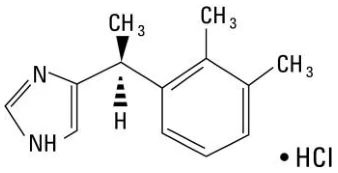
Physicochemical properties: Dexmedetomidine hydrochloride is a white or almost white powder that is freely soluble in water and has a pKa of 7.1.
14 CLINICAL TRIALS
14.1 Clinical Trials by Indication
The safety and efficacy of dexmedetomidine hydrochloride has been evaluated in four randomized, double-blind, placebo- controlled multicenter clinical trials in 1185 patients.
Intensive Care Unit Sedation < 24 hours
Two randomized, double-blind, parallel-group, placebo-controlled multicenter clinical trials included 754 adult patients being treated in a surgical intensive care unit. All patients were initially intubated and received mechanical ventilation. These trials evaluated the sedative properties of dexmedetomidine hydrochloride by comparing the amount of rescue medication (midazolam in one trial and propofol in the second) required to achieve a specified level of sedation (using the standardized Ramsay sedation scale) between dexmedetomidine hydrochloride and placebo from onset of treatment to extubation or to a total treatment duration of 24 hours. The Ramsay Level of Sedation Scale is displayed in Table 7.
Table 7: Ramsay Sedation Scale
| Clinical Score | Level of Sedation Achieved |
| 6 | Asleep, no response |
| 5 | Asleep, sluggish response to light glabellar tap or loud auditory stimulus |
| 4 | Asleep, but with brisk response to light glabellar tap or loud auditory stimulus |
| 3 | Patient responds to commands |
| 2 | Patient cooperative, oriented, and tranquil |
| 1 | Patient anxious, agitated, or restless |
In the first study, 175 adult patients were randomized to receive placebo and 178 to receive dexmedetomidine hydrochloride by intravenous infusion at a dose of 0.4 mcg/kg/hr (with allowed adjustment between 0.2 and 0.7 mcg/kg/hr) following an initial loading infusion of one mcg/kg intravenous over 10 minutes. The study drug infusion rate was adjusted to maintain a Ramsay sedation score of ≥3. Patients were allowed to receive “rescue” midazolam as needed to augment the study drug infusion. In addition, morphine sulfate was administered for pain as needed.
The prospective primary analysis assessed the sedative effects of dexmedetomidine hydrochloride by comparing the percentage of patients who achieved a Ramsay sedation score of ≥ 3 during intubation without the use of additional rescue medication. A significantly greater percentage of patients in the dexmedetomidine hydrochloride group maintained a Ramsay sedation score of ≥ 3 without receiving any midazolam rescue compared to the placebo group (see Table 8).
Table 8: Midazolam use as rescue medication during intubation (ITT), Study One
| Placebo | Dexmedetomidine Hydrochloride | p-value | |||||
| N=175 | N=178 | ||||||
| Categorized midazolam use | |||||||
| 0 mg | 43 (25%) | 108 (61%) | <0.001* | ||||
| 0-4 mg | 34 (19%) | 36 (20%) | |||||
| >4 mg | 98 (56%) | 34 (19%) | |||||
ITT (intent-to-treat) population includes all randomized patients.
*Chi-square
In a second study, 198 adult patients were randomized to receive placebo and 203 to receive dexmedetomidine hydrochloride by intravenous infusion at a dose of 0.4 mcg/kg/hr (with allowed adjustment between 0.2 and 0.7 mcg/kg/hr) following an initial loading infusion of one mcg/kg intravenous over 10 minutes. The study drug infusion was adjusted to maintain a
Ramsay sedation score of ≥3. Patients were allowed to receive “rescue” propofol as needed to augment the study drug infusion. In addition, morphine sulfate was administered as needed for pain.
A significantly greater percentage of patients in the dexmedetomidine hydrochloride group compared to the placebo group maintained a Ramsay sedation score of ≥ 3 without receiving any propofol rescue (see Table 9).
Table 9: Propofol use as rescue medication during intubation (ITT), Study Two
| Placebo | Dexmedetomidine Hydrochloride | p-value | ||||||
| N=198 | N=203 | |||||||
| Categorized propofol use | ||||||||
| 0 mg | 47 (24%) | 122 (60%) | <0.001* | |||||
| 0-50 mg | 30 (15%) | 43 (21%) | ||||||
| >50 mg | 121 (61%) | 38 (19%) | ||||||
*Chi-square
Conscious Sedation
The safety and efficacy of dexmedetomidine hydrochloride for sedation of non-intubated adult patients prior to and/or during surgical and other procedures was evaluated in two randomized, double-blind, placebo- controlled multicenter clinical trials. Study 1 evaluated the sedative properties of dexmedetomidine hydrochloride in adult patients having a variety of elective surgeries/procedures performed under monitored anesthesia care. Study 2 evaluated dexmedetomidine hydrochloride in adult patients undergoing awake fiberoptic intubation prior to a surgical or diagnostic procedure.
In Study 1, the sedative properties of dexmedetomidine hydrochloride were evaluated by comparing the percent of adult patients not requiring rescue midazolam to achieve a specified level of sedation using the standardized Observer’s Assessment of Alertness/Sedation Scale (Table 10).
Table 10: Observer’s Assessment of Alertness/Sedation
| Assessment Categories | ||||
| Responsiveness | Speech | Facial Expression | Eyes | Composite Score |
| Responds readily to name spoken in normal tone | Normal | Normal | Clear, no ptosis | 5 (alert) |
| Lethargic response to name spoken in normal tone | Mild slowing or thickening | Mild relaxation | Glazed or mild ptosis (less than half the eye) | 4 |
| Assessment Categories | ||||
| Responsiveness | Speech | Facial Expression | Eyes | Composite Score |
| Responds only after name is called loudly and/or repeatedly | Slurring or prominent slowing | Marked relaxation (slack jaw) | Glazed and marked ptosis (half the eye or more) | 3 |
| Responds only after mild prodding or shaking | Few recognizable words | -- | -- | 2 |
| Does not respond to mild prodding or shaking | -- | -- | -- | 1 (deep sleep) |
Patients were randomized to receive a loading infusion of either dexmedetomidine hydrochloride 1 mcg/kg, 0.5 mcg/kg, or placebo (normal saline) given over 10 minutes and followed by a maintenance infusion started at 0.6 mcg/kg/hr. The maintenance infusion of study drug could be titrated from 0.2 mcg/kg/hr to 1 mcg/kg/hr to achieve the targeted sedation score (Observer’s Assessment of Alertness/Sedation Scale ≤ 4). Patients were allowed to receive rescue midazolam as needed to achieve and/or maintain an Observer’s Assessment of Alertness/Sedation Scale < 4. After achieving the desired level of sedation, a local or regional anesthetic block was performed. Demographic characteristics were similar between the dexmedetomidine hydrochloride and comparator groups.
Efficacy results showed that dexmedetomidine hydrochloride was more effective than the comparator group when used to sedate non-intubated patients requiring monitored anesthesia care during surgical and other procedures (see Table 11).
In Study 2 the sedative properties of dexmedetomidine hydrochloride were evaluated by comparing the percent of adult patients requiring rescue midazolam to achieve or maintain a specified level of sedation using the Ramsay Sedation Scale score > 2 (Table 7). Patients were randomized to receive a loading infusion of dexmedetomidine hydrochloride of 1 mcg/kg or placebo (normal saline) given over 10 minutes and followed by a fixed maintenance infusion of 0.7 mcg/kg/hr. After achieving the desired level of sedation, topicalization of the airway was carried out with lidocaine formulations. Patients were allowed to receive rescue midazolam as needed to achieve and/or maintain a Ramsay Sedation Scale > 2. Demographic characteristics were similar between the dexmedetomidine hydrochloride and comparator groups. For efficacy results see Table 11.
Table 11: Key Efficacy Results of Conscious Sedation Studies
| Study | Treatment Arm | No. of Adult Patients Enrolleda | % Not Requiring midazolam rescue | Confidenceb interval on the difference vs. placebo | Mean (SD) Total Dose (mg) of Rescue midazolam Required | Confidenceb intervals of the mean rescue dose |
| Study 1 | Dexmedetomidine Hydrochloride 0.5 mcg/kg | 134 | 40 | 37 (27,48) | 1.4 (1.7) | -2.7 (-3.4, -2.0) |
Dexmedetomidine Hydrochloride 1 mcg/kg | 129 | 54 | 51 (40,62) | 0.9 (1.5) | -3.1 (-3.8, -2.5) | |
| PBO | 63 | 3 | - | 4.1 (3.0) | - | |
| Study 2 | Dexmedetomidine Hydrochloride 1 mcg/kg | 55 | 53 | 39 (20,57) | 1.1 (1.5) | -1.8 (-2.7, -0.9) |
| PBO | 50 | 14 | - | 2.9 (3.01) | - |
Notes:
a Based on ITT population defined as all randomized and treated
b Normal approximation to the binomial with continuity correction.
15 MICROBIOLOGY
No microbiological information is required for this drug product.
16 NON-CLINICAL TOXICOLOGY
General Toxicology
Acute Toxicity
The highest non-lethal dose by intravenous injects was 1000 mcg/kg in mice, rats and dogs in both sexes.
In a rat neurotoxicity study, Day 7 postnatal rat pups subcutaneously injected with dexmedetomidine hydrochloride (3 mcg/kg or 10 mcg/kg or 30 mcg/kg), did not produce significant degeneration in the limbic thalamic nuclei and limbic cortical regions compared to ketamine (20 mg/kg), which resulted in significant neuronal cell death and degeneration. This was determined by histological staining (silver, Fluoro-Jade B, and Caspase-3) to detect neuroapoptosis and neurodegeneration in postnatal rat pup brains.
Long-Term Toxicology
A two-week IV infusion study in adult dogs was performed to investigate the potential effect of dexmedetomidine hydrochloride on toxicologic, pathologic, and hormone secretion parameters.
Dexmedetomidine hydrochloride at 50 or 100 mcg/kg/day was well-tolerated, with treatment-related effects (sedation, hypothermia (↓ 3-4°C)) reversed by the end of the recovery period. Dexmedetomidine hydrochloride increased cortisol secretion, decreased LH secretion in males, decreased TSH secretion, and at the 100 mcg/kg/day dose level, decreased ACTH-stimulated cortisol secretion.
Rats receiving dexmedetomidine hydrochloride by IV administration for four weeks at doses up to 160 mcg/kg/day showed sedation and piloerection occurring at all doses, with exophthalmos observed only at the highest dose. No deaths occurred. Based on the drug-related small decreases in thymus and body weights at 160 mcg/kg/day, the no-toxic-effect-dose (NTED) of dexmedetomidine hydrochloride was determined to be 40 mcg/kg/day.
Carcinogenicity
Animal carcinogenicity studies have not been performed with dexmedetomidine.
Genotoxicity
Dexmedetomidine hydrochloride was not found to be mutagenic in the Ames Salmonella and E. coli assays, L5178/tk+/- mouse lymphoma assay, in vitro human lymphocyte cytogenics assays, and in vivo mouse micronucleus assays. No structural or numerical chromosome aberrations were noted in the presence or absence of metabolic activation. Dexmedetomidine hydrochloride did not demonstrate clastogenic activity.
Reproductive and Developmental Toxicology
Reproductive and developmental toxicity studies were performed with dexmedetomidine hydrochloride in rats and rabbits.
A fertility study (Segment I) in rats at doses up to 54 mcg/kg/day administered subcutaneously showed that the No-Observed-Adverse-Effect Level (NOAEL) for F0 males and females was 54 mcg/kg/day for fertility indices and 6 mcg/kg/day for systemic toxicity. The NOAEL for F1 development was considered to be at 6 mcg/kg/day.
In a prenatal monkey neurotoxicity study, infusion of dexmedetomidine hydrochloride to pregnant monkeys at doses up to 30 mcg/kg/hr (10X Human Equivalent Dose) for 12 hours did not induce neuroapoptosis in fetal monkey brains compared to controls. In the same study, infusion of ketamine at 20-50 mg/kg/hr for 12 hours to mothers resulted in significant neuroapoptosis in fetal monkey brains. This was determined by immunohistochemical staining for activated caspase 3 and TUNEL in fetal monkey brains.
Teratogenic effects were not observed following administration of dexmedetomidine hydrochloride at subcutaneous doses up to 200 mcg/kg in rats from day 5 to day 16 of gestation and intravenous doses up to 96 mcg/kg in rabbits from day 6 to day 18 of gestation. The dose in rats is approximately 2 times the maximum recommended human intravenous dose on a mcg/m2 basis. The exposure in rabbits is approximately equal to that in humans at the maximum recommended intravenous dose based on plasma area-under-the-curve values. However, fetal toxicity, as evidenced by increased post-implantation losses and reduced live pups, was observed in rats at subcutaneous dose of 200 mcg/kg. The no-effect dose was 20 mcg/kg (less than the maximum recommended human intravenous dose on a mcg/m2 basis). In another reproductive study when dexmedetomidine hydrochloride was administered subcutaneously to pregnant rats from gestation day 16 through nursing, it caused lower pup weights at 8 and 32 mcg/kg as well as fetal and embryocidal toxicity of second generation offspring at a dose of 32 mcg/kg (less than the maximum recommended human intravenous dose on a mcg/m2 basis). Dexmedetomidine hydrochloride also produced delayed motor development in pups at a dose of 32 mcg/kg (less than the maximum recommended human intravenous dose on a mcg/m2 basis). No such effects were observed at a dose of 2 mcg/kg (less than the maximum recommended intravenous dose on a mcg/m2 basis). Placental transfer of dexmedetomidine hydrochloride was observed when radiolabeled dexmedetomidine hydrochloride was administered subcutaneously to pregnant rats.
In rabbits, the influence of dexmedetomidine hydrochloride on teratogenicity (Segment II) after IV administration in doses up to 96 mcg/kg/day was investigated. The NOAEL was 96 mcg/kg/day for maternal toxicity and 96 mcg/kg/day for F1 development. No higher dose was feasible. No teratogenicity was observed in any dose level tested.
Prenatal and postnatal development (Segment III study) was examined in rats at doses up to 32 mcg/kg/day administered subcutaneously. The NOAEL was 8 mcg/kg/day for maternal toxicity and 2 mcg/kg/day for F1 development.
Low Tolerance Studies
A solution of dexmedetomidine hydrochloride was shown to be mildly irritating in rats when injected intramuscularly.
Special Toxicology
Dexmedetomidine hydrochloride administered subcutaneously (SC) in mice using the rotarod and traction tests indicated that it was a poor muscle-relaxant, and that it impaired motor coordination only at the clearly sedative doses of 0.01 and 0.1 mg/kg.
Dexmedetomidine hydrochloride administered subcutaneously in doses up to 0.3 mg/kg in fed rats demonstrated a significant, dose-dependent elevation of blood glucose levels, with negative correlation to plasma immunoreactive insulin levels. Insulin secretion was almost totally inhibited beginning at the 0.1 mg/kg dose. Dexmedetomidine hydrochloride did not show any effect on the level of free fatty acids.
Dexmedetomidine hydrochloride given intravenously is devoid of clear CNS activity up to 0.001 mg/kg in mice and rats; at higher doses (≥ 0.003 mg/kg), dexmedetomidine hydrochloride induced clear CNS depressant effects.
17 SUPPORTING PRODUCT MONOGRAPHS
- 1. PrPRECEDEX® solution, 100 mcg / mL (concentrate), 4 mcg / mL (ready to use), submission control 279381, Product Monograph, Pfizer Canada ULC. (Aug 30, 2024)