


Product Monograph - Diltiazem Hydrochloride Injection (Strides Pharma Canada)
ACTIONS AND CLINICAL PHARMACOLOGY
Diltiazem hydrochloride injection is a calcium ion influx inhibitor (calcium entry blocker or calcium ion antagonist).
Mechanism of Action
Diltiazem hydrochloride injection inhibits the influx of calcium ions during membrane depolarization of cardiac and vascular smooth muscle. The therapeutic benefits of diltiazem in supraventricular tachycardias are related to its ability to slow atrioventricular (AV) nodal conduction time and prolong AV nodal refractoriness. Diltiazem exhibits frequency (use) dependent effects on AV nodal conduction such that it may selectively reduce the heart rate during tachycardias involving the AV node with little or no effect on normal AV nodal conduction at normal heart rates.
Diltiazem slows the ventricular rate in patients with a rapid ventricular response during atrial fibrillation or atrial flutter (AF/FL). Diltiazem converts paroxysmal supraventricular tachycardia (PSVT) to normal sinus rhythm by interrupting the re-entry circuit in AV nodal reentrant tachycardias and reciprocating tachycardias, e.g. Wolff-Parkinson-White syndrome (WPW).
Diltiazem prolongs the sinus cycle length. It has no effects on the sinus node recovery time or on the sinoatrial (SA) conduction time in patients without SA nodal dysfunction. Diltiazem has no significant electrophysiologic effects on tissues in the heart that are fast sodium channel dependent, e.g. His-Purkinje tissue, atrial and ventricular muscle and extranodal accessory pathways.
Like other calcium channel antagonists, because of its effect on vascular smooth muscle, diltiazem decreases total peripheral resistance resulting in a decrease in both systolic and diastolic blood pressure.
Hemodynamics
In patients with cardiovascular disease, diltiazem hydrochloride administered intravenously in single bolus doses, followed in some cases by a continuous infusion, reduced blood pressure, systemic
vascular resistance, the rate-pressure product, and coronary vascular resistance and increased coronary blood flow. Following administration of one or two intravenous bolus doses of diltiazem hydrochloride injection, response usually occurs within 3 minutes and maximal heart rate reduction generally occurs in 2 to 7 minutes. Heart rate reduction may last from 1 to 3 hours. Upon discontinuation of infusion, heart rate reduction may last from 0.5 hours to more than 10 hours (median duration = 7 hours). Hypotension, if it occurs, may be similarly persistent.
In a limited number of studies of patients with compromised myocardiums (severe congestive heart failure, acute myocardial infarction, hypertrophic cardiomyopathy), administration of intravenous diltiazem produced no significant effect on contractility, left ventricular end diastolic pressure, or pulmonary capillary wedge pressure. The mean ejection fraction and cardiac output/index remained unchanged or increased. Maximal hemodynamic effects usually occurred within 2 to 5 minutes of an injection. However, in rare instances, worsening of congestive heart failure has been reported in patients with preexisting impaired ventricular function.
Pharmacodynamics
The prolongation of PR interval correlated significantly with plasma diltiazem concentration in normal volunteers using the Sigmoidal Emax model. Changes in heart rate, systolic blood pressure, and diastolic blood pressure did not correlate with diltiazem plasma concentrations in normal volunteers. Reduction in mean arterial pressure correlated linearly with diltiazem plasma concentration in a group of hypertensive patients.
In patients with atrial fibrillation and atrial flutter, a significant correlation was observed between the percent reduction in HR and plasma diltiazem concentration using the Sigmoidal Emax model. Based on this relationship, the mean plasma diltiazem concentration required to produce a 20% decrease in heart rate was determined to be 80 ng/ml. Mean plasma diltiazem concentrations of 130 ng/ml and 300 ng/ml were determined to produce reductions in heart rate of 30% and 40%.
Pharmacokinetics
Following a single intravenous injection in healthy male volunteers, diltiazem appears to obey linear pharmacokinetics over a dose range of 10.5 to 21.0 mg. The plasma elimination half-life is approximately 3.4 hours. The apparent volume of distribution of diltiazem is approximately 305 L. Diltiazem is extensively metabolized in the liver with a systemic clearance of approximately 65 L/hr.
After constant rate intravenous infusion to healthy male volunteers, diltiazem exhibits nonlinear pharmacokinetics over an infusion range of 4.8 to 13.2 mg/hr for 24 hours. Over this infusion range, as the dose is increased, systemic clearance decreases from 64 to 48 L/hr while the plasma elimination half-life increases from 4.1 to 4.9 hours. The apparent volume of distribution remains unchanged (360- 391 L).
In patients with AF/FL, diltiazem systemic clearance has been found to be decreased compared to healthy volunteers. In patients administered bolus doses ranging from 2.5 mg to 38.5 mg, systemic
clearance averaged 36 L/hr. In patients administered continuous infusions at 10 mg/hr or 15 mg/hr for 24 hours, diltiazem systemic clearance averaged 42 L/hr and 31 L/hr, respectively.
The metabolic pathways of diltiazem hydrochloride metabolism include N-and O-demethylation (via cytochrome P-450), deacetylation (via plasma and tissue esterases), in addition to conjugation (via sulfation and glucuronidation). In vitro studies have demonstrated that CYP 3A4 is the principal CYP isoenzyme involved in N-demethylation. Metabolites N-monodesmethyldiltiazem, desacetyldiltiazem, desacetyl-N-monodesmethyldiltiazem, desacetyl-O-desmethyldiltiazem and desacetyl-N, O-desmethyldiltiazem have been identified in human urine following oral administration. With oral administration 2% to 4% of the unchanged diltiazem appears in the urine. Drugs which induce or inhibit hepatic microsomal enzymes may alter diltiazem disposition.
Following single intravenous injection of diltiazem hydrochloride, however, plasma concentrations of N-monodesmethyldiltiazem and desacetyldiltiazem, two principal metabolites found in plasma after oral administration, are typically not detected. These metabolites are observed, however, following 24 hour constant rate intravenous infusion. Total radioactivity measurement following short intravenous administration in healthy volunteers suggests the presence of other unidentified metabolites which attain higher concentrations than those of diltiazem and are more slowly eliminated. Plasma half-life of total radioactivity is about 20 hours compared to 2 to 5 hours for diltiazem.
Diltiazem is 70% to 80% bound to plasma proteins.
INDICATIONS AND CLINICAL USE
Diltiazem Hydrochloride Injection (diltiazem hydrochloride injection) is indicated for the following:
- 1) Atrial Fibrillation or Atrial Flutter: Temporary control of rapid ventricular rate in atrial fibrillation or atrial flutter. It should not be used in patients with AF/FL associated with an accessory bypass tract such as in Wolff-Parkinson-White (WPW) syndrome, or short PR syndrome, e.g. Lown-Ganong-Levine syndrome. Diltiazem hydrochloride injection rarely converts atrial fibrillation or atrial flutter to normal sinus rhythm.
- 2) Paroxysmal Supraventricular Tachycardia: Rapid conversion of paroxysmal supraventricular tachycardias to sinus rhythm. This includes AV nodal reentrant tachycardias, and reciprocating tachycardias associated with an extranodal accessory pathway, such as the WPW syndrome, or short PR syndrome, e.g. Lown-Ganong-Levine syndrome. Unless otherwise contraindicated, appropriate vagal manoeuvres should be attempted prior to administration of diltiazem hydrochloride injection.
The use of Diltiazem Hydrochloride Injection for control of ventricular response in patients with atrial fibrillation or atrial flutter or conversion to sinus rhythm in patients with paroxysmal
supraventricular tachycardia should be undertaken with caution when the patient is compromised hemodynamically or is taking other drugs that decrease any or all of the following: peripheral resistance, myocardial filling, myocardial contractility, or electrical impulse propagation in the myocardium.
For either indication the setting should include continuous monitoring of the ECG and frequent measurement of blood pressure. A defibrillator and emergency equipment should be readily available.
CONTRAINDICATIONS
Diltiazem Hydrochloride Injection (diltiazem hydrochloride injection) is contraindicated:
- 1) In patients with sick sinus syndrome except in the presence of a functioning ventricular pacemaker.
- 2) In patients with second- or third-degree AV block except in the presence of a functioning ventricular pacemaker.
- 3) In patients with known hypersensitivity to diltiazem.
- 4) In patients with severe hypotension or cardiogenic shock.
- 5)
In patients with AF/FL associated with an accessory bypass tract such as in WPW syndrome, or short
PR syndrome, e.g. Lown-Ganong-Levine syndrome. As with other agents which slow AV nodal conduction and do not prolong the refractoriness of the accessory pathway (e.g. verapamil, digoxin), in rare instances patients with AF/FL associated with an accessory bypass tract may experience a potentially life-threatening increase in heart rate accompanied by hypotension when treated with diltiazem hydrochloride injection.
- 6) In patients with ventricular tachycardia. Administration of other calcium channel blockers to patients with wide complex tachycardia (QRS ≥ 0.12 seconds) has resulted in hemodynamic deterioration and ventricular fibrillation. It is important that an accurate pretreatment diagnosis distinguish wide complex QRS tachycardia of supraventricular origin from that of ventricular origin prior to administration of diltiazem hydrochloride injection.
- 7) Intravenous diltiazem and intravenous beta-blockers should not be administered together or in close proximity (within a few hours).
- 8)
In pregnancy and in women of child-bearing potential. Fetal malformations and adverse effects on pregnancy have been reported in animals. In repeated dose studies, a high incidence of
vertebral column malformations was present in the offspring of mice receiving more than 50 mg/kg of diltiazem hydrochloride orally.
In the offspring of mice receiving a single oral dose of 50 or 100 mg/kg on day 12 of gestation, the incidence of cleft palate and malformed extremities was significantly higher. Vertebral malformations were most prevalent when they received the drug on day 9. In rats, a significantly higher fetal death rate was present when 200 and 400 mg/kg were given orally on days 9 to 14 of gestation. Single oral dose studies in rats resulted in a significant incidence of skeletal malformations in the offspring of the group receiving 400 mg/kg on day 11. In rabbits, all pregnant dams receiving 70 mg/kg orally from day 6-18 of gestation aborted; at 35 mg/kg, a significant increase in skeletal malformations was recorded in the offspring (See REPRODUCTION STUDIES).
WARNINGS
Cardiac Conduction
Diltiazem hydrochloride injection prolongs AV nodal conduction and refractoriness that may rarely result in second- or third-degree AV block in sinus rhythm. Concomitant use of diltiazem with agents known to affect cardiac conduction (such as beta blockers, digitalis, or amiodarone) may result in additive effects (See PRECAUTIONS, Drug Interactions). If high-degree AV block occurs in sinus rhythm, intravenous diltiazem should be discontinued and appropriate supportive measures instituted (See SYMPTOMS AND TREATMENT OF OVERDOSAGE).
Congestive Heart Failure
Although diltiazem has a negative inotropic effect in isolated animal tissue preparations, hemodynamic studies in humans with normal ventricular function and in patients with a compromised myocardium, such as severe CHF, acute MI, and hypertrophic cardiomyopathy, have not shown a reduction in cardiac index nor consistent negative effects on contractility (dp/dt). Administration of oral diltiazem is contraindicated in myocardial infarction patients who have left ventricular failure manifested by pulmonary congestion. Experience with the use of diltiazem hydrochloride injection in patients with impaired ventricular function is limited. Caution should be exercised when using the drug in such patients.
Hypotension
Decreases in blood pressure associated with diltiazem hydrochloride injection therapy may occasionally result in symptomatic hypotension (see ADVERSE REACTIONS). In controlled clinical trials, 3.2% of patients required some form of intervention (use of intravenous fluids, or the Trendelenburg position) for blood pressure support following diltiazem hydrochloride injection.
The use of intravenous diltiazem for control of ventricular response in patients with supraventricular arrhythmias should be undertaken with caution when the patient is compromised hemodynamically.
In addition, caution should be used in patients taking other drugs that decrease peripheral resistance, intravascular volume, myocardial contractility or conduction.
Acute Hepatic Injury
In rare instances, significant elevations of enzymes such as alkaline phosphatase, LDH, SGOT, SGPT, and symptoms consistent with acute hepatic injury have been noted following oral diltiazem. Although a causal relationship to diltiazem has not been established in all cases, a drug induced hypersensitivity reaction is suspected (see ADVERSE REACTIONS). Therefore, the potential for acute hepatic injury exists following administration of intravenous diltiazem.
Ventricular Premature Beats (VPBs)
VPBs may be present on conversion of PSVT to sinus rhythm with intravenous diltiazem. These VPBs are transient, are typically considered to be benign and appear to have no clinical significance. Similar ventricular complexes have been noted during cardioversion, other pharmacologic therapy, and during spontaneous conversion of PSVT to sinus rhythm.
PRECAUTIONS
Dermatologic Events
Dermatological events (see ADVERSE REACTIONS) may be transient and may disappear despite continued use of diltiazem. Dermatologic events progressing to erythema multiforme and/or exfoliative dermatitis have been infrequently reported following oral diltiazem. Therefore, the potential for these dermatologic reactions exists following exposure to intravenous diltiazem. Should a dermatologic reaction persist, the drug should be discontinued.
Impaired Hepatic or Renal Function
Diltiazem hydrochloride injection is extensively metabolized by the liver and excreted by the kidneys and in bile. The drug should be used with caution in patients with impaired renal or hepatic function. The monitoring of laboratory parameters of renal or hepatic function is recommended. Liver cirrhosis was shown to reduce apparent oral diltiazem clearance, prolong the half-life of orally administered diltiazem and increase its bioavailability by 69%.
In subacute and chronic dog and rat studies designed to produce toxicity, high oral doses of diltiazem were associated with hepatic damage. In special subacute hepatic studies, oral doses of 125 mg/kg and higher in rats were associated with histological changes in the liver, which were reversible when the drug was discontinued. In dogs, oral doses of 20 mg/kg were also associated with hepatic changes; however, these changes were reversible with continued dosing.
Nursing Mothers
Diltiazem has been reported to be excreted in human milk. One report with oral diltiazem suggests that concentrations in breast milk may approximate serum levels. Since diltiazem safety in newborns has not been established, it should not be given to nursing mothers.
Pediatric Use
Safety and effectiveness in children have not been established.
Drug Interactions
Due to potential for additive effects, caution is warranted in patients receiving diltiazem hydrochloride injection concomitantly with any agent(s) known to affect cardiac contractility and/or· SA or AV node conduction (see WARNINGS).
Cytochrome P450 System
As with all drugs, care should be exercised when treating patients with multiple medications. Calcium channel blockers undergo biotransformation by the cytochrome P450 system. Co-administration of diltiazem with other drugs which follow the same route of biotransformation may result in altered bioavailability. Dosages of similarly metabolized drugs, particularly those of low therapeutic ratio, and especially in patients with renal and/or hepatic impairment, may require adjustment when starting or stopping concomitantly administered diltiazem to maintain optimum therapeutic blood levels.
Drugs known to be inhibitors of the cytochrome P450 system include: azole antifungals, cimetidine, cyclosporine, erythromycin, quinidine, warfarin.
Drugs known to be inducers of the cytochrome P450 system include: phenobarbital, phenytoin, rifampin.
Drugs known to be biotransformed via P450 include: benzodiazepines, flecainide, imipramine, propafenone, terfenadine, theophylline.
Amiodarone:
Severe conduction system abnormalities including heart block of varying degree, sinus arrest and a low cardiac output state of life threatening severity have been reported following the concomitant use of diltiazem and amiodarone. These drugs may also have additive effects on cardiac conduction and contractility.
Anesthetics:
The depression of cardiac contractility, conductivity, and automaticity as well as the vascular dilation associated with anesthetics may be potentiated by calcium channel blockers. When used concomitantly, anesthetics and calcium blockers should be titrated carefully.
Benzodiazepines:
Diltiazem significantly increases peak plasma levels and the elimination half-life of triazolam and midazolam.
Beta-Blockers:
Intravenous diltiazem has been administered to patients on chronic oral beta-blocker therapy. The combination of the two drugs was generally well tolerated without serious adverse effects. If intravenous diltiazem is administered to patients receiving chronic oral beta-blocker therapy, the possibility for bradycardia, AV block, and/or depression of contractility should be considered (see CONTRAINDICATIONS). Oral administration of diltiazem with propranolol in five normal volunteers resulted in increased propranolol levels in all subjects and bioavailability of propranolol was increased approximately 50%. In vitro, propranolol appears to be displaced from its binding sites by diltiazem.
Calcium Antagonists:
Limited clinical experience suggests that in certain severe conditions not responding adequately to verapamil or to nifedipine, using diltiazem in conjunction with either of these drugs may be beneficial.
Carbamazepine:
Concomitant administration of oral diltiazem with carbamazepine has been reported to result in elevated serum levels of carbamazepine (40% to 72% increase) resulting in toxicity in some cases. Patients receiving these drugs concurrently should be monitored for a potential drug interaction.
Cimetidine:
A study in six healthy volunteers has shown a significant increase in peak diltiazem plasma levels (58%) and area-under-the-curve (53%) after a 1-week course of cimetidine at 1200 mg per day and a single dose of oral diltiazem 60 mg. Ranitidine produced smaller, nonsignificant increases. Patients currently receiving diltiazem therapy should be carefully monitored for a change in pharmacological effect when initiating and discontinuing therapy with cimetidine. An adjustment in the diltiazem dose may be warranted.
Cyclosporine:
A pharmacokinetic interaction between diltiazem and cyclosporine has been observed during studies involving renal and cardiac transplant patients. In renal and cardiac transplant recipients, a reduction of cyclosporine dose ranging from 15% to 48% was necessary to maintain cyclosporine trough concentrations similar to those seen prior to the addition of diltiazem. If these agents are to be administered concurrently, cyclosporine concentrations should be monitored, especially when diltiazem therapy is initiated, adjusted or discontinued. The effect of cyclosporine on diltiazem plasma concentrations has not been evaluated.
Digitalis:
Intravenous diltiazem has been administered to patients receiving either intravenous or oral digitalis therapy. The combination of the two drugs was well tolerated without serious adverse effects. However, since both drugs affect AV nodal conduction, patients should be monitored for excessive slowing of the heart rate and/or AV block.
Lovastatin:
In a ten-subject study, co-administration of diltiazem (120 mg bid, diltiazem SR) with lovastatin resulted in a 3-4 times increase in mean lovastatin AUC and Cmax versus lovastatin alone; no change in pravastatin AUC and Cmax was observed during diltiazem co-administration. Diltiazem plasma levels were not significantly affected by lovastatin or pravastatin.
Rifampin:
Administration of diltiazem with rifampin markedly reduced plasma diltiazem concentrations and the therapeutic effect of diltiazem.
Short and Long-acting Nitrates:
Diltiazem may be safely co-administered with nitrates, but there have been few controlled studies to evaluate the antianginal effectiveness of this combination.
ADVERSE REACTIONS
Adverse reactions were derived from controlled clinical trials in 411 patients with paroxysmal supraventricular tachycardia, atrial fibrillation, or atrial flutter. Adverse reactions were reported in 17.3% of patients on diltiazem hydrochloride injection, and required discontinuation of treatment in 1.5% of patients.
Worldwide experience in over 1,300 patients was similar.
The most common adverse reactions (incidence of at least 1%) were: hypotension 7.5%, symptomatic hypotension 3.2%, injection site reaction (e.g. itching, burning) - 3.9%, vasodilation (flushing) - 1.7%, and arrhythmia (junctional rhythm or isorhythmic dissociation) - 1.0%.
In addition, the following events were reported in less than 1% in Clinical trials or during post-marketing surveillance of cases:
Cardiovascular:
Atrial flutter, first degree AV block, second degree AV block, bradycardia, chest pain, congestive heart failure, sinus pause, sinus node dysfunction, syncope, ventricular arrhythmia, ventricular fibrillation, ventricular tachycardia.
Dermatologic:
Pruritus, sweating.
Gastrointestinal:
Constipation, elevation of SGOT, SGPT or alkaline phosphatase (see WARNINGS), nausea, vomiting.
Nervous System:
Dizziness, paresthesia.
Other:
Amblyopia, asthenia, dry mouth, dyspnea, general edema, headache, hyperuricemia.
Although not observed in clinical trials with diltiazem hydrochloride injection, other reactions associated with oral diltiazem have been reported:
Cardiovascular:
Third degree AV block, bundle branch block, ECG abnormalities, palpitations, syncope, tachycardia, ventricular extrasystoles.
Dermatologic:
Alopecia, acute generalized exanthematous pustulosis, erythema multiforme (Stevens-Johnson syndrome, toxic epidermal necrolysis), exfoliative dermatitis (see PRECAUTIONS), generalized rash some characterized as leukocytoclastic vasculitis, petechiae, photosensitivity, purpura, rash, urticaria.
Gastrointestinal:
Anorexia, diarrhea, dysgeusia, dyspepsia, elevations of SGPT and LDH (see WARNINGS), thirst, weight increase.
Nervous System:
Abnormal dreams, amnesia, depression, extrapyramidal symptoms, gait abnormality, hallucinations, insomnia, nervousness, personality change, somnolence, tremor.
Other:
CPK elevation, detached retina, epistaxis, eye irritation, gingival hyperplasia, hemolytic anemia, hyperglycemia, impotence, increased bleeding time, leukopenia, muscle cramps, nasal congestion, nocturia, osteoarticular pain, polyuria, retinopathy, sexual difficulties, thrombocytopenia, tinnitus.
Events such as myocardial infarction have been observed which are not readily distinguishable from the natural history of the disease for the patient.
SYMPTOMS AND TREATMENT OF OVERDOSAGE
Overdosage experience is limited. In the event of overdosage or an exaggerated response, appropriate supportive measures should be employed. The following measures may be considered:
Bradycardia
Administer atropine (0.60 to 1.0 mg). If there is no response to vagal blockade administer isoproterenol cautiously.
High-Degree AV Block
Treat as for bradycardia above. Fixed high-degree AV block should be treated with cardiac pacing.
Cardiac Failure
Administer inotropic agents (isoproterenol, dopamine, or dobutamine) and diuretics.
Hypotension
Vasopressors (e.g. dopamine or noradrenaline).
The effectiveness of intravenous calcium administration to reverse the pharmacological effects of diltiazem overdose has been inconsistent. In a few reported cases, overdose with calcium channel blockers associated with hypotension and bradycardia that was initially refractory to atropine became more responsive to atropine after the patients received intravenous calcium. In some cases intravenous calcium has been administered (1 g calcium chloride or 3 g calcium gluconate) over 5 minutes, and repeated every 10-20 minutes as necessary. Calcium gluconate has also been administrated as a continuous infusion at a rate of 2 g per hour for 10 hours. Infusions of calcium for 24 hours or more may be required. Patients should be monitored for signs of hypercalcemia.
Actual treatment and dosage should depend on the severity of the clinical situation and the judgement and experience of the treating physician.
The intravenous LD50's in mice and rats were 58-61 and 38-39 mg/kg, respectively. The toxic dose in man is not known.
DOSAGE AND ADMINISTRATION
Direct Intravenous Single Injections (Bolus)
The initial dose of Diltiazem Hydrochloride Injection (diltiazem hydrochloride injection) should be 0.25 mg/kg body weight as a bolus administered over 2 minutes. If response is inadequate, a second dose may be administered after 15 minutes. The second bolus dose of Diltiazem Hydrochloride Injection should be 0.35 mg/kg body weight administered over two minutes. Subsequent intravenous bolus doses should be individualized for each patient. Some patients may respond to an initial dose of 0.15 mg/kg, although duration of action may be shorter.
Continuous Intravenous Infusion
For continued reduction of the heart rate (up to 24 hours) in patients with AF/FL, an intravenous infusion of Diltiazem Hydrochloride Injection may be administered. Immediately following bolus administration of 0.25 mg/kg or 0.35 mg/kg Diltiazem Hydrochloride Injection, and reduction in heart rate,
begin an intravenous infusion of Diltiazem Hydrochloride Injection. The recommended initial infusion rate of Diltiazem Hydrochloride Injection is 10 mg/hour. The infusion rate may be increased 5 mg/hour to 15 mg/hour as needed, if further reduction in heart rate is required. Some patients may maintain response to an initial rate of 5 mg/hour. The infusion may be maintained for up to 24 hours.Diltiazem shows dose-dependent, non-linear pharmacokinetics during continuous intravenous infusion. Duration of infusion longer than 24 hours and infusion rates greater than 15 mg/hour have not been studied. Therefore, infusion duration exceeding 24 hours and infusion rates exceeding 15 mg/hour are not recommended.
Dilution: To prepare Diltiazem Hydrochloride Injection for continuous intravenous infusion, aseptically transfer the appropriate quantity (see chart) of Diltiazem Hydrochloride Injection to the desired volume of either Normal Saline, D5W or D5W/0.45% NaCI. Mix thoroughly. Use within 24 hours. Keep refrigerated until use.
| Diluent Volume | Quantity of Diltiazem Hydrochloride Injection | Final Concentration | Administration | |
| Dose | Infusion Rate | |||
| 100 mL | 125 mg (25 mL) | 1.0 mg/mL | 5 mg/hr* | 5 mL/hr |
| 10 mg/hr | 10 mL/hr | |||
| 15 mg/hr | 15 mL/hr | |||
| 250 mL | 250 mg (50 mL) | 0.83 mg/mL | 5 mg/hr* | 6 mL/hr |
| 10 mg/hr | 12 mL/hr | |||
| 15 mg/hr | 18 mL/hr | |||
| 500 mL | 250 mg (50 mL) | 0.45 mg/mL | 5 mg/hr* | 11 mL/hr |
| 10 mg/hr | 22 mL/hr | |||
| 15 mg/hr | 33 mL/hr | |||
* The recommended initial infusion rate of Diltiazem Hydrochloride Injection is 10 mg/hr. An infusion rate of 5 mg/hr may be appropriate for some patients.
Diltiazem hydrochloride injection was tested for compatibility with three commonly used intravenous fluids at a maximal concentration of 1 mg diltiazem hydrochloride per ml. Diltiazem hydrochloride injection was found to be physically compatible and chemically stable in the following parenteral solutions for at least 24 hours when stored in glass or in polyvinylchloride (PVC) bags at a controlled room temperature of 15°- 30°C or under refrigeration at 2°- 8°C.
- dextrose (5%) injection, USP
- sodium chloride (0.9%) injection, USP
- dextrose (5%)
- sodium chloride (0.45%) injection, USP
Because of potential physical incompatibilities, Diltiazem Hydrochloride Injection should not be mixed with any other drugs in the same container.
Therefore, it is recommended that Diltiazem Hydrochloride Injection not be co-infused in the same intravenous line.
Physical incompatibilities (precipitate formation or cloudiness) were observed when diltiazem hydrochloride injection was infused in the same intravenous line with the following drugs: acetazolamide, acyclovir, aminophylline, ampicillin, ampicillin sodium/sulbactam sodium, cefamandole, cefoperazone, diazepam, furosemide, hydrocortisone sodium succinate, insulin (regular; 100 units/mL), methylprednisolone sodium succinate, mezlocillin, nafcillin, phenytoin, rifampin, and sodium bicarbonate.
Parenteral drug products should be inspected visually for particulate matter and discoloration prior to administration, whenever solution and container permit.
Transition to Further Antiarrhythmic Therapy: Experience in the use of antiarrhythmic agents following diltiazem hydrochloride injection is limited. In controlled clinical trials, therapy with antiarrhythmic agents to maintain reduced heart rate in atrial fibrillation or atrial flutter, or for prophylaxis of paroxysmal supraventricular tachycardia was generally started within three hours after bolus administration. Patients should be dosed on an individual basis and reference should be made to the respective manufacturer's product monograph for information relative to dosage and administration of antiarrhythmic agents.
PHARMACEUTICAL INFORMATION
Drug Substance
Proper/Common Name: diltiazem hydrochloride
Chemical Name(s): 1) 1, 5-benzothiazepin-4(5H)- one, 3- (acetyloxy)-5-[2-( dimethylamino)
ethyl]- 2,3-dihydro-2-(4-methoxy-phenyl)-, monohydrochloride, (+)-cis-,
- 2) ( + )-5-[2-(Dimethylamino) ethyl]-cis-2,3- dihydro-3-hyd roxy-2 -(p-methoxy-phenyl)- 1 ,5-benzothiaze-pin-4(5H)-one acetate (ester) monohydrochloride.
Structural Formula:
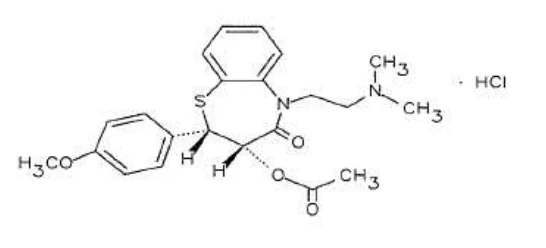
Molecular Formula: C22H26N2O4S∙HCl
Molecular Weight: 450.99
Description:
White, odourless, crystalline powder or small crystals. Freely soluble in chloroform, in formic acid, in methanol and in water; sparingly soluble in dehydrated alcohol; insoluble in ether. Melts at about 210°, with decomposition at higher temperatures. A pH of 4.7 ± 0.3 has been reported for a 1.0% (w/v) solution of diltiazem in water.
COMPOSITION
Each ml of Diltiazem Hydrochloride Injection (diltiazem hydrochloride injection) contains 5 mg diltiazem hydrochloride along with the following inactive ingredients: 0.75 mg citric acid, 0.65 mg sodium citrate, sodium hydroxide or hydrochloric acid to adjust pH, 71.4 mg sorbitol solution 70% and water for injection adjusted to a volume of 1 ml.
STABILITY AND STORAGE RECOMMENDATIONS
Diltiazem Hydrochloride Injection should be stored under refrigeration, at 2°- 8°C. Do not freeze. It may be stored at room temperature (15°- 30°C) for up to 1 month. Protect from light. Destroy after 1 month if stored at room temperature.
Dilution for Continuous Intravenous Infusion:
To prepare Diltiazem Hydrochloride Injection for continuous intravenous infusion refer to DOSAGE AND ADMINISTRATION section for diluent volumes, compatibility with intravenous fluids and stability of dilutions.
Intravenous admixtures should be inspected visually for clarity, particulate matter, precipitate, discoloration and leakage prior to administration whenever solution and container permit.
AVAILABILITY OF DOSAGE FORMS
Diltiazem Hydrochloride Injection (diltiazem hydrochloride injection) is supplied in:
- 5 ml vials containing 25 mg of diltiazem hydrochloride, package of 10 vials (2 cartons each containing 5 vials).
- 10 ml vials containing 50 mg of diltiazem hydrochloride, package of 10 vials (2 cartons each containing 5 vials).
Contains no preservative.
SINGLE USE CONTAINER. DISCARD UNUSED PORTION.
PHARMACOLOGY
Animal Pharmacology
It has been demonstrated in animal studies that diltiazem slows conduction through the AV node and increases the refractory period of the AV node in a dose-dependent and plasma concentration-dependent manner. These electrophysiological effects on the AV node are the basis for the usefulness of diltiazem in the treatment of supraventricular tachyarrhythmias. The ability of diltiazem to prolong conduction time has been demonstrated in isolated perfused AV nodes and in vivo. In a study in normotensive dogs who received 0.01, 0.02, 0.04 or 0.08 mg/kg/min i.v. diltiazem for 30 minutes, these effects on the AV node occurred at slightly lower doses than the hypotensive or bradycardic (sino-atrial node) effects. Significant prolongation of AV nodal refractory periods was apparent at the 0.02 mg/kg/min dose, while hemodynamic variables were significantly altered only at doses of 0.04 and 0.08 mg/kg/min.
In anaesthetized dogs, diltiazem (400 µg/kg + 4.0 µg/kg/min i.v.) resulted in a 37% slowing of AV conduction. This dose of diltiazem produced mean plasma levels of 175 ng/ml. Similar results were obtained in a separate study. Diltiazem (1.2 mg/kg i.v.) infused over 30 minutes resulted in a 50% increase in the A-H interval (or slowing of AV conduction) and an increase in the effective refractory period of the AV node.
A number of animal studies have investigated the antiarrhythmic effects of diltiazem on arrhythmias induced by cardiac ischemia. In the coronary occlusion model in dogs, ischemia-induced conduction impairment was improved by a diltiazem dose of 0.02 mg/kg/min i.v. for 30 minutes, resulting in less arrhythmias and ventricular fibrillation. The peak antiarrhythmic effect of diltiazem, when administered as an i.v. bolus dose of 0.1 mg/kg, occurred at approximately three minutes and persisted for five minutes.
Beneficial effects of diltiazem have also been demonstrated in the cat and in the pig. In cats where arrhythmias were induced by a combination of acute myocardial ischemia and sympathetic hyperactivity, 0.1 mg/kg plus 0.2 mg/kg/hour diltiazem injection abolished both ventricular tachycardia and fibrillation that had occurred in 64% and 36% of the control animals, respectively. In pigs, ischemia-induced conduction disturbances following coronary artery occlusion were reduced in a dose-dependent manner by pretreatment with diltiazem (0.01, 0.1, 0.3 or 1.0 mg/kg) started five minutes prior to occlusion.
TOXICOLOGY
Acute Toxicity
| Route | Species | Sex | LD50 (mg/kg) | LD50 95% Confidence Limits |
| Oral | mouse | M & F | 415-740 | (343-852) |
| rat | M & F | 560-810 | (460-1004) | |
| s.c. | mouse | M & F | 260-280 | (220-307) |
| rat | M & F | 520-550 | (452-672) | |
| i.p | mouse | M & F | 187 | (165-211) |
| rat | M & F | 211 | (155-287) | |
| i.v. | mouse | M & F | 58-61 | (52-69) |
| rat | M & F | 38-39 | (34-44) |
Diltiazem was also administered intravenously to dogs at doses ranging from 8 to 32 mg/kg. Dogs receiving 8 mg/kg exhibited decreased activity only, while the dog receiving 32 mg/kg died. Dogs receiving 12 mg/kg or more exhibited decreased activity, loss of righting reflex, convulsions, respiratory distress, and opisthotonos. The severity and duration of these findings were doserelated.
The toxic symptoms were similar in most species and consisted of decreased activity, prostration, urination, tonic and clonic convulsions, ataxia, loss of muscle tone, loss of righting reflex, and
respiratory distress at high dosages. Symptoms occurred immediately after dosing, followed a dose response with regard to duration and severity, and disappeared within 24 hours.
Subacute Toxicity
Injectable diltiazem was administered intravenously to rats at dosage levels of 3, 6, and 18 mg/kg/day for 28 consecutive days. One female receiving 18 mg/kg/day died on day 27. No treatment-related abnormalities were noted during gross or histopathological examination. Transient electrocardiographic changes and convulsive episodes were observed in the 18 mg/kg/day group. Transient bradycardia and respiratory distress were noted in some animals treated with 6 and 18 mg/kg/day. No abnormalities were noted in animals treated with 3 mg/kg/day.
When injectable diltiazem was given intravenously to dogs twice daily at 0.5, 1.5, and 4.5 mg/kg for 28 consecutive days, the major clinical symptoms displayed ranged from decreased activity at 1.5 mg/kg b.i.d. to ataxia and collapse at 4.5 mg/kg b.i.d. No abnormalities were noted during gross and histopathological examination. Examination of electrocardiographic recordings revealed AV nodal disturbances, which were dose-dependent in terms of degree and duration, and ranged from prolongation of PR interval to third degree AV block and junctional rhythms. Only the 4.5 mg/kg b.i.d. group exhibited the more severe symptoms.
CHRONIC TOXICITY AND CARCINOGENICITY
In mice, diltiazem was administered orally at doses of 5, 15, or 30 mg/kg/day for a period of 21 months in females. Because of a lower survival, males were terminated at 20 months. Gross and histopathological examination failed to reveal any treatment-related increase in the incidence of either neoplastic or other toxic lesions.
Rats received 6.25, 25 or 100 mg/kg/day of diltiazem orally for 24 months. An additional group received 200 mg/kg/day for 12 months. Treatment was terminated at 23 months in females receiving 100 mg/kg/day, because of low survival. Females had increased weight gain at 100 and 200 mg/kg/day, and food consumption was increased among both sexes at these dose levels. Organ weight data revealed a significant increase in liver weight for rats of both sexes given 200 mg/kg/day. Microscopic evaluation revealed some evidence of dose-dependent hepatic cytoplasmic vacuolization in rats treated with doses of 100 and 200 mg/kg/day and killed at 12 months. At 24 months, there were similar findings in control and treated animals. There was no increase in the incidence of neoplastic or other toxic lesions in rats treated with diltiazem.
Diltiazem was administered orally to dogs for 12 months at doses of 5, 10, and 20 mg/kg/day. A dose-related suppression of body weight gain became noticeable after 6 months.
MUTAGENICITY
There was no mutagenic response in vitro or in vivo in mammalian cell assays or in vitro in bacterial assays.
REPRODUCTION STUDIES
Results in Mice
| Route | Doses (mg/kg) | Time of Administration During Gestation | Findings in the Offspring |
| oral | 10, 25, 50, 100, 200, 400 | Days 7 to 12 | High incidence of vertebral column malformations when more than 50 mg/kg was administered. |
| Single dose of 12.5, 50, 100 or 200 | One of days 7 to 14 | Cleft palate and malformation of extremities or trunk were significantly higher when 50 or 100 mg/kg was administered on day 12. Vertebral malformations were most prevalent when 50 or 100 mg/kg was administered on day 9. | |
| intraperitoneal | 0.2, 3.1, 6.3, 12.5, 25 | Days 7 to 12 | Fetal mortality greatly increased when 12.5 mg/kg or more was administered. No teratogenic effect was demonstrated. |
| Single dose of 3.1, 6.3, 12.5, 25 or 50 | One of days 5 to 16 | Brachydactyly and hematoma in the extremities when 50 mg/kg was administered on day 13. Vertebral column malformations from the thoracic to coccygeal level and malformations of the ribs were observed when a dose of 25 mg/kg or greater was administered on day 9. |
Results in Rats
| Route | Doses (mg/kg) | Time of Administration During Gestation | Findings in the Offspring |
| oral | 10, 50, 100, 200, 400 | Days 9 to 14 | No teratogenic effect. High fetal death rate when 200 & 400 mg/kg were administered. |
| 10, 30, 100 | Days 6 to 15 | No teratogenic effect. | |
| Single dose of 300, 400, or 600 | One of days 9 to 14 | Significant increase of skeletal malformations involving vertebrae & sternebrae when 400 mg/kg was administered on day 11. General edema, short or absent tail were observed when 600 mg/kg was administered on day 12. |
| Route | Doses (mg/kg) | Time of Administration During Gestation | Findings in the Offspring |
| intraperitoneal | 0.2, 2.0, 20, 40, 80 | Days 9 to 14 | Brachydactyly & hematoma in the front paw and tail and a high fetal mortality rate was observed when 80 mg/kg was administered. |
| 80 | Days 9 to 11 | Vertebral anomalies. | |
| 80 | Days 12 to 14 | Brachydactyly, hematoma of the front paw, tail deformities and high fetal mortality rate. | |
| Single dose of 80 | One of days 9 to 14 | Fetal mortality increased on day 11, reached 100% on day 12, and decreased thereafter. Limb and tail deformities were induced when 80 mg/kg was administered on day 13 & 14. Vertebral column deformities were induced when 80 mg/kg was administered on day 11. | |
| Single dose of 40 | One of days 11 to 14 | No teratogenic effect. |
Results in Rabbits
| Route | Doses (mg/kg) | Time of Administration During Gestation | Findings in the Offspring |
| oral | 17.5, 35, 70 | Days 6 to 18 | Significant increase in skeletal malformations occurred when 35 mg/kg was administered. All pregnant dams aborted between days 21 and 25 of gestation when 70 mg/kg was administered. |
| intraperitoneal | 6.3, 12.5, 25 | Days 7 to 16 | Fetal mortality greatly increased at 12.5 mg/kg and reached 100% at 25 mg/kg. Skeletal defects and external malformations were induced when 12.5 mg/kg was administered. Their incidence was not statistically significant due to the low number of surviving fetuses. |
No evidence of impaired fertility was observed in a study performed in male and female rats at oral dosages of up to 100 mg/kg/day.
In peri- and post-natal studies, rats received diltiazem in doses of 10, 30 or 100 mg/kg/day from day 14 of gestation through day 21 post-partum. Diltiazem was associated with a reduction in early individual weights and survival rates of the pups. At 100 mg/kg/day, dystocia was evident. Retinal and tongue malformations were more frequent in the offspring of the 30 and 100 mg/kg/day group.
BIBLIOGRAPHY
- 1)
Bloedow D.C., Piepho R.W., Nies A.S., Gal J. Serum binding of diltiazem in humans. J Clin
Pharmacal 1982; 22: 201-205.
- 2) Bourassa M.G., Cote P .. The:-oux P., et al. Hemodynamics and coronary flow following diltiazem administration in anaesthetized dogs and in humans. Chest 1980; 78(suppl): 224- 230.
- 3) Dias V.C., Heywood J.T. I.V. diltiazem for paroxysmal supraventricular tachycardia (PSVT): a placebo-controlled study. Circulation 1991: 84:11-127 (Abstract).
- 4) Dias V.C., Weir S.J., Ellenbogen K.A. Pharmacokinetics and pharmacodynamics of intravenous diltiazem in patients with atrial fibrillation or atrial flutter. Circulation 1992; 86: 1421-1428.
- 5) Dougherty A., Jackman W.M., Naccarelli G.V., et al. Acute conversion of paroxysmal supraventricular tachycardia with intravenous diltiazem. Am J Cardiol 1992; 70: 587-592.
- 6) Ellenbogen K., Dias V., Plumb V., et al. A placebo-controlled trial of continuous intravenous diltiazem infusion for 24-hour heart rate control during atrial fibrillation and atrial flutter: a multicenter study. J Am Coli Cardiel 1991; 18: 891-897.
- 7) Hermann P., Rodger S.D., Remones G., Thenot J.P., London D.R., Morselli P.L. Pharmacokinetics of diltiazem after intravenous and oral administration. Eur J Clin Pharmacal 1983; 24: 349-352.
- 8)
Huycke E., Sung R., Dias V., et al. Intravenous diltiazem for termination of reentrant supraventricular tachycardia: a placebo-controlled, randomized, double-blind multicentre study. J Am Coli Cardiol
1989; 13: 538-544.
- 9) Kwong T.C., Sparks J.D., Peters P.T., Sparks C. E. Serum protein and lipoprotein binding of the calcium channel blocker diltiazem. Clin Chem 1984; 30: 1031-1032.
- 10) Materne P., Legrand V., Vandormael M., et al. Hemodynamic effects of intravenous diltiazem with impaired left ventricular function. Am J Cardiol1984; 54: 733-737.
- 11) Mitchell L.B., Jutsy K.R., Lewis S.J., et al. lntracardiac electrophysiology study of intravenous diltiazem and combined diltiazem-digoxin in patients. Am Heart J 1982; 103: 57-66.
- 12) Montamat S.C., Abernethy D.R. N-monodesmethyldiltiazem is the predominant metabolite of diltiazem in the plasma of young and elderly hypertensives. Br J Clin Pharm 1987; 24: 185- 189.
- 13) Rocha P., Baron B., Delestrain A., et al. Hemodynamic effects of intravenous diltiazem in patients treated chronically with propranolol. Am Heart J 1986; 111: 62-68.
- 14) Salerno D., Dias V., Kleiger R., et al. Efficacy and safety of intravenous diltiazem for treatment of atrial fibrillation and atrial flutter. Am J Cardiel 1989; 63: 1046-1051.
- 15) Schwartz J.B., Abernethy D.R. Responses to intravenous and oral diltiazem in elderly and younger patients with systemic hypertension. Am J Cardiel 1987; 59: 1111-1117.
- 16) Talajic M., Lemery R., Roy D., et al. Rate-dependent effects of diltiazem on human atrioventricular nodal properties. Circulation 1992; 86: 870-877.
- 17)
Product Monograph, Cardizem® Injectable, Crystaal (Division of Biovail Corporation), Mississauga,
Ontario, January 31, 2001. Control No.: 070181.