


Product Monograph - Diprosalic (Organon Canada, 0.5 mg / 30 mg)
Recent Major Label Changes
| 2025-12 |
|---|---|
| 2025-12 |
Table of Contents
Certain sections or subsections that are not applicable at the time of the preparation of the most recent authorized product monograph are not listed.
Recent Major Label Changes ................................................................................................... 2
Table of Contents ................................................................................................................... 2
Part 1: Healthcare Professional Information ........................................................................... 4
- 1.
Indications ....................................................................................................................... 4
1.1. Pediatrics .................................................................................................................. 4
1.2. Geriatrics .................................................................................................................. 4
- 2. Contraindications ............................................................................................................ 4
- 4.
Dosage and Administration ............................................................................................. 4
4.1. Dosing Considerations .............................................................................................. 4
4.2. Recommended Dose and Dosage Adjustment ......................................................... 4
4.4. Administration .......................................................................................................... 5
4.5. Missed Dose ............................................................................................................. 5
- 5. Overdose ......................................................................................................................... 5
- 6. Dosage Forms, Strengths, Composition, and Packaging ................................................... 5
- 7.
Warnings and Precautions ............................................................................................... 6
General ................................................................................................................................. 6
Driving and Operating Machinery ......................................................................................... 6
Endocrine and Metabolism ................................................................................................... 6
Genitourinary ....................................................................................................................... 6
Immune ................................................................................................................................ 6
Ophthalmologic .................................................................................................................... 6
Skin ....................................................................................................................................... 6
7.1. Special Populations .................................................................................................. 7
7.1.1. Pregnancy ........................................................................................................ 7
7.1.2. Breastfeeding .................................................................................................. 7
7.1.3. Pediatrics ......................................................................................................... 7
- 8.
Adverse Reactions ........................................................................................................... 7
8.1. Adverse Reaction Overview ...................................................................................... 7
- 9.
Drug Interactions ............................................................................................................. 8
9.3. Drug-Drug Interactions ............................................................................................. 8
9.4. Drug-Drug Interactions ............................................................................................. 8
9.5. Drug-Food Interactions............................................................................................. 8
9.6. Drug-Herb Interactions ............................................................................................. 8
9.7. Drug-Laboratory Test Interactions ........................................................................... 8
- 10.
Clinical Pharmacology ..................................................................................................... 8
10.1. Mechanism of Action ................................................................................................ 8
10.2. Pharmacodynamics .................................................................................................. 8
10.3. Pharmacokinetics ..................................................................................................... 8
- 11. Storage, Stability, and Disposal ........................................................................................ 9
Part 2: Scientific Information ................................................................................................ 10
- 13. Pharmaceutical Information .......................................................................................... 10
- 14.
Clinical Trials .................................................................................................................. 11
14.1. Clinical Trials by Indication ..................................................................................... 11
- 16. Non-Clinical Toxicology .................................................................................................. 11
Patient Medication Information ........................................................................................... 14
Part 1: Healthcare Professional Information
1. Indications
DIPROSALIC® Ointment (Betamethasone Dipropionate and Salicylic Acid) is indicated for:
- anti-inflammatory, antipruritic and keratolytic activity in the topical management of subacute and chronic hyperkeratotic and dry dermatoses responsive to corticosteroid therapy.
1.1. Pediatrics
Pediatrics (< 18 years of age): Based on the available data, the safety and efficacy of DIPROSALIC in pediatric patients have not been established.
1.2. Geriatrics
Geriatrics: There is no known evidence to suggest that use in the geriatric population is associated with differences in safety or effectiveness.
2. Contraindications
DIPROSALIC is contraindicated in patients:
- patients who are hypersensitive to this drug or to any ingredient in the formulation, including any non-medicinal ingredient, or component of the container. For a complete listing, see 6 Dosage Forms, Strengths, Composition and Packaging
- with viral diseases including vaccinia, varicella, herpes simplex.
- with fungal infections.
- with tuberculosis of the skin.
4. Dosage and Administration
4.1. Dosing Considerations
- DIPROSALIC Ointment should not be used under occlusive dressing.
4.2. Recommended Dose and Dosage Adjustment
A thin film of DIPROSALIC Ointment should be applied to cover completely the affected area. The ointment should be massaged gently and thoroughly into the skin. The usual frequency of application is twice daily, in the morning and at night.
For some patients, adequate maintenance may be achieved with less frequent application.
If symptomatic response is not noted within a few days to a week, the local application of corticosteroids should be discontinued, and the patient re-evaluated.
4.4. Administration
DIPROSALIC is for topical use only.
4.5. Missed Dose
If a dose is missed, the patient can resume treatment with the next scheduled application.
5. Overdose
Symptoms: Excessive or prolonged use of topical corticosteroids can suppress pituitary-adrenal function, resulting in secondary adrenal insufficiency, and produce manifestations of hypercorticism, including Cushing's disease.
Excessive or prolonged use of topical preparations containing salicylic acid may cause symptoms of salicylism. Overdosage of salicylates may cause temporary hearing or visual disturbances, drowsiness and nausea. If this occurs, discontinue use until symptoms disappear.
Treatment: Appropriate symptomatic treatment is indicated. Acute hypercorticoid symptoms are usually reversible. Treat electrolyte imbalance, if necessary. In case of chronic toxicity, slow withdrawal of corticosteroids is advised.
Treatment of salicylism is symptomatic. Measures should be taken to rid the body rapidly of salicylate. Administer oral sodium bicarbonate to alkalinize the urine and force diuresis.
For the most recent information in the management of a suspected drug overdose, contact your regional poison control centre or Health Canada’s toll-free number, 1-844 POISON-X (1-844-764-7669).
- 6. Dosage Forms, Strengths, Composition, and Packaging
Table [1] – Dosage Forms, Strengths, and Composition
Each g of DIPROSALIC Ointment contains 0.64 mg of betamethasone dipropionate, equivalent to 0.5 mg of betamethasone, and 30 mg of salicylic acid, in a paraben-free ointment base of white petrolatum and mineral oil. Tubes of 50 g.
| Route of Administration | Dosage Form/ Strength/Composition | Non-Medicinal Ingredients |
| Topical | Ointment / Betamethasone Dipropionate 0.05% and Salicylic Acid 3% | white petrolatum and mineral oil |
7. Warnings and Precautions
General
Systemic absorption of topical corticosteroids or salicylic acid will be increased if extensive body surface areas are treated. Suitable precautions should be taken under these conditions or when long-term use is anticipated, particularly in infants and children.
Patients should be advised to inform subsequent physicians of the prior use of corticosteroids.
Occlusive dressings should not be used, as this may result in an increase in the systemic absorption of topical corticosteroids or salicylic acid.
Driving and Operating Machinery
Due caution should be exercised when driving or operating a vehicle or potentially dangerous machinery.
Endocrine and Metabolism
Application over extensive lesions may result in significant systemic absorption producing hypercorticism manifesting itself by adrenal suppression, moon facies, striae and suppression of growth.
Genitourinary
Avoid contact with mucous membranes. Keep DIPROSALIC Ointment away from the genital area and other orifices.
Immune
If an overt infection is present, appropriate antimicrobial treatment is indicated.
Ophthalmologic
These drugs should not be used in or near the eyes since DIPROSALIC is not formulated for ophthalmic use.
Visual disturbance may be reported with systemic and topical (including, intranasal, inhaled and intraocular) corticosteroid use. If a patient presents with symptoms such as blurred vision or other visual disturbances, the patient should be considered for referral to an ophthalmologist for evaluation of possible causes of visual disturbances which may include cataract, glaucoma or rare diseases such as central serous chorioretinopathy (CSCR) which have been reported after use of systemic and topical corticosteroids.
Skin
Avoid contact with mucous membranes.
Suitable precautions should be taken in using topical corticosteroids in patients with stasis dermatitis and other skin diseases with impaired circulation.
Prolonged use of corticosteroid preparations may produce striae or atrophy of the skin or subcutaneous tissue. If this occurs, treatment should be discontinued.
If irritation, sensitization, excessive dryness, or unwanted scaling develops with the use of DIPROSALIC, treatment should be discontinued.
7.1. Special Populations
7.1.1. Pregnancy
Since safety of topical corticosteroid use in pregnant women has not been established, drugs of this class should be used during pregnancy only if the potential benefit justifies the potential risk to the fetus. Drugs of this class should not be used extensively in large amounts or for prolonged periods of time in pregnant patients.
7.1.2. Breastfeeding
Since it is not known whether topical administration of corticosteroids can result in sufficient systemic absorption to produce detectable quantities in breast milk, a decision should be made to discontinue nursing or to discontinue the drug, taking into account the importance of the drug to the mother.
7.1.3. Pediatrics
Based on the available data, the safety and efficacy of DIPROSALIC in pediatric patients have not been established.
Any of the side effects that have been reported following systemic use of corticosteroids, including adrenal suppression, may also occur with topical corticosteroids, especially in infants and children.
Pediatric patients may demonstrate greater susceptibility to topical corticosteroid-induced HPA axis suppression and to exogenous corticosteroid effects than mature patients because of a greater absorption due to a larger skin surface area to body weight ratio. Use of topical corticosteroids in children should be limited to the least amount compatible with an effective therapeutic regimen. Chronic corticosteroid therapy may interfere with growth and development of children.
HPA axis suppression, Cushing’s syndrome, linear growth retardation, delayed weight gain, and intracranial hypertension have been reported in children receiving topical corticosteroids. Manifestations of adrenal suppression in children include low plasma cortisol levels and absence of response to ACTH stimulation. Manifestations of intra-cranial hypertension include a bulging fontanelle, headaches, and bilateral papilledema.
8. Adverse Reactions
8.1. Adverse Reaction Overview
The following local adverse skin reactions have been reported with the use of topical steroids; burning, itching, irritation, dryness, folliculitis, hypertrichosis, acneiform eruptions, hypopigmentation, perioral dermatitis, allergic contact dermatitis.
The following may occur more frequently with the use of occlusive dressings: maceration of the skin, secondary infection, skin atrophy, striae, miliaria. In addition, the salicylic acid component may cause local reddening of the skin, desquamation, pruritus and smarting. Continuous application of salicylic acid preparations to the skin may cause dermatitis. Hypersensitivity to salicylic acid may occur.
Systemic adverse reactions, such as vision blurred, have also been reported with the use of topical corticosteroids.
9. Drug Interactions
9.3. Drug-Drug Interactions
The interaction of DIPROSALIC® Ointment (Betamethasone Dipropionate and Salicylic Acid) with individual behavioural risks (e.g. cigarette smoking, cannabis use, and/or alcohol consumption) has not been studied.
9.4. Drug-Drug Interactions
Interactions with other drugs have not been established.
9.5. Drug-Food Interactions
Interactions with food have not been established.
9.6. Drug-Herb Interactions
Interactions with herbal products have not been established.
9.7. Drug-Laboratory Test Interactions
Interactions with laboratory tests have not been established.
10. Clinical Pharmacology
10.1. Mechanism of Action
Betamethasone dipropionate with salicylic acid combines the anti-inflammatory, antipruritic and vasoconstrictive activity of betamethasone dipropionate with the keratolytic effects of salicylic acid.
10.2. Pharmacodynamics
Betamethasone dipropionate was compared with other fluorinated topical corticosteroids in the McKenzie/Stoughton vasoconstrictor test. In this test, betamethasone dipropionate was significantly more active (p<0.05) than fluocinolone acetonide, fluocortolone caproate plus fluocortolone, flumethasone pivalate and betamethasone valerate.While the direct applicability of this vasoconstrictor test to clinical situations has not been conclusively demonstrated, the results showed betamethasone dipropionate to be active in a concentration of 0.000016%, the lowest concentration tested which showed activity.
The keratolytic property of salicylic acid has been recognized for a long time.
10.3. Pharmacokinetics
The percutaneous absorption of betamethasone-17, 21-dipropionate and salicylic acid was studied after one and two weeks of treatment of psoriasis and eczema. The treated areas varied between 8 and 41 dm2. No change in the plasma cortisol levels was detectable by the routinely used laboratory method. The treatment gave no detectable salicylate concentrations in plasma.
- 11. Storage, Stability, and Disposal
Store between 15°C and 30°C. Protect from light.
Part 2: Scientific Information
13. Pharmaceutical Information
Drug Substance
Non-proprietary name of the drug substance(s): Betamethasone-17, 21-dipropionate
Chemical name: 9-Fluoro-11β,17,21-trihydroxy-16β-methylpregna-1,4-diene-3,20-dione 17,21-dipropionate.
Molecular formula and molecular mass: C28H37FO7; 504.61
Structural formula:
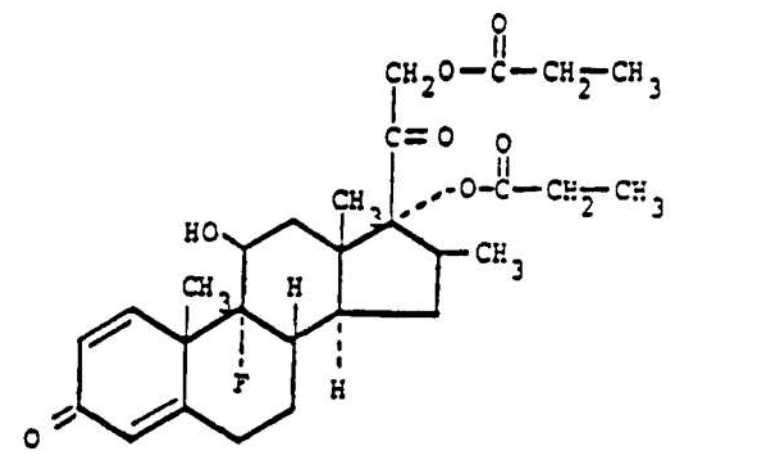
Physicochemical properties: Betamethasone dipropionate is a white to cream coloured powder, free from foreign matter with melting point ±3o, between 170o and 179o with decomposition.
Proper name: Salicylic Acid
Chemical name: 2-hydroxy benzoic acid
Molecular formula: C7H6O3
Molecular mass: 138.1
Structural formula:
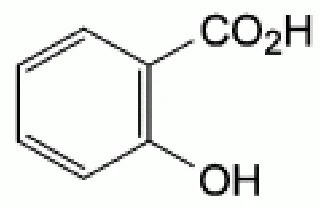
Physicochemical properties: White or almost white crystalline powder or white or colourless acicular crystals; with melting point between 158 oC to 161o C.
14. Clinical Trials
14.1. Clinical Trials by Indication
The clinical trial data on which the original indication was authorized remain unchanged.
16. Non-Clinical Toxicology
General toxicology
Acute Toxicity
When applied to the intact skin of rats and rabbits, doses of DIPROSALIC Ointment up to 3.3 g/kg caused no deaths or other observable disturbances. DIPROSALIC Ointment was also administered by gastric tube to fasted rats in doses of 5-20 g/kg. This dosage caused no deaths or symptoms of toxicity either in the immediate post-treatment period or in the 14-day observation period.
Chronic Toxicity
In rats, daily epicutaneous administration of DIPROSALIC Ointment, dosed at 333 mg/kg/day for 60 consecutive days, did not result in mortality, changes in the general physical condition or in the weight of vital organs. Some evidence of steroid absorption, namely a retardation of growth, was seen.
Subacute Dermal Toxicity
DIPROSALIC Ointment:
18 New Zealand White rabbits, weighing between 2.2 and 3.0 kg were treated with DIPROSALIC Ointment or vehicle for 3 consecutive weeks. The ointment or the vehicle was applied once daily to the intact or abraded skin of three males and three females in the following groups:
- 1. Vehicle control (1.0 g/kg body weight).
- 2. Low dose (0.5 g/kg body weight)
- 3. High dose (1.0 g/kg body weight)
No drug-related skin reactions were seen in any of the rabbits. Systemically, the usual pharmacological effects following corticosteroid absorption were evidenced. Two of the low-dose rabbits (abraded skin) died of respiratory infection.
DIPROSALIC Lotion:
DIPROSALIC Lotion, salicylic lotion or the lotion vehicle was applied twice daily for 21 consecutive days to the intact or the abraded skin of 48 New Zealand White rabbits (2.5 - 3.9 kg), with 3 males and 3 females per group. The treatment groups were as follows:
- 1. Vehicle control (1.0 g/kg/day)
- 2. Low dose (0.5 g/kg/day)
- 3. High dose (1.0 g/kg/day)
- 4. Positive control (salicylic acid - 1.0 g/kg/day).
The rabbits were observed daily and the skin reactions were numerically graded (Draize score) before the first application on the last treatment day of each week. Body weights were recorded weekly. On day 22, the rabbits were autopsied and skin specimens were taken for histological examination.
In both the intact and abraded experiments, losses in body weight, skeletal muscle atrophy and abdominal distension were seen in many of the rabbits treated with the low and high dose of
DIPROSALIC Lotion but not in the control or positive control groups.
Nine of the rabbits died in the DIPROSALIC Lotion groups (intact and abraded skin). Prior to death, the rabbits had one or more of the following symptoms; decreased food consumption, body weight loss, mucous in stools and abdomen distension.
Necropsy Findings
All rabbits had white foci on the liver and/or renal cortices, or pitted renal cortices. Three had pericarditis; two had impaction of the cecum. In addition, there was one case of the following accompanying diseases; pulmonary congestion; abscesses and infarcts of the kidney; hemorrhage and ulcerations of the stomach, mucous in the cecum, distension of urinary bladder, uterus and swelling near the urethra; hemorrhage in the medulla, enlarged kidney, flatulence in the small intestine, and blood in between the capsule and cortex; clear fluid in the peritoneal cavity.
The compound was well tolerated locally. At autopsy, the treated skin appeared normal. The livers of all DIPROSALIC Lotion treated rabbits were either friable or pale. Both DIPROSALIC Lotion and salicylic acid inhibited healing of skin lesions in the abraded skin groups. The changes seen in the blood picture were representative of a typical systemic response to corticosteroids: decreases in hematocrit and hemoglobin values, and lymphocytes count; slight increases in neutrophils and SGPT.
In summary, under the conditions of study, DIPROSALIC Lotion was well tolerated locally in rabbits. Common pharmacological effects of corticosteroids were detected, but there were no unexpected signs of toxicity.
Genotoxicity
No studies have been performed to evaluate the genotoxic potential of DIPROSALIC® Ointment (Betamethasone Dipropionate and Salicylic Acid).
Carcinogenicity
No long-term animal studies have been performed to evaluate the carcinogenic potential of DIPROSALIC® Ointment (Betamethasone Dipropionate and Salicylic Acid).
Reproductive and developmental toxicology
Betamethasone Dipropionate
Rabbits
Forty-nine virgin female New Zealand White rabbits were bred and divided into four groups as follows:
Table 2 – Dose Groups for Virgin Female New Zealand White Rabbits
| Group | Dose (mg/kg) |
| Control | - |
| Depo-Medrol (positive control) | 0.050 |
| Betamethasone dipropionate (low dose) | 0.015 |
| Betamethasone dipropionate (high dose) | 0.050 |
After mating, and every other day from Day 6 through Day 18, the dams were given the preparation mentioned above intra-muscularly. On day 30 after mating, all does were sacrificed and their offspring removed.
Clinical observations
The appearance and behaviour of all dams were normal during the study. In addition, the body weight of all dams increased at normal rates during the study.
Pregnancy data
In both groups treated with betamethasone dipropionate, the incidence of resorptions increased with the dosage level. Because those dams that had resorptions usually lost an entire litter, the average litter sizes were not appreciable different among the various groups. The incidence of late fetal deaths was similar in all groups.
Offspring data
The average body weights of offspring were similar to controls in both the positive control and the low dose groups. Body weights of offspring from the high dose group were probably below normal (statistical analyses were not done). The 24 hours survival rates of offspring from both groups treated with betamethasone dipropionate were reduced.
Abnormalities
In the low dose group, six offsprings from one litter had umbilical hernias with protrusion of the intestine. In the high dose group, three pups from one litter had umbilical hernias; one of these also had a cephalocele and another had an abnormally flexed front paw. Three pups from a different litter all had cephalocele and cleft palate; two of these also had umbilical hernia. There were no abnormalities in the control and positive control groups. Betamethasone dipropionate caused the teratogenic effects typical of many other corticosteroids.
Mice
Fifteen mice were given intramuscular doses of betamethasone dipropionate daily from day 6 through day 15 after mating, at the following dosage levels:
0.325 mg/kg/day
1.63 mg/kg/day
3.25 mg/kg/day
32.5 mg/kg/day
One mouse from each group was found not to be pregnant. At 0.325 mg/kg/day, the remaining mice (3) had normal litters with 37 total offspring. At 1.63 mg/kg/day, 1 mouse had a normal litter, 1 mouse delivered 1 live offspring with stunted growth with the remaining conceptuses resorbed; the third mouse had all conceptuses resorbed.
At 3.25 and 32.5 mg/kg, all mice (5) had conceptuses resorbed.
Rats
Ten rats that had mated were given betamethasone dipropionate intramuscularly in daily doses of either 1 mg/kg or 3 mg/kg from day 6 through day 15 after mating. There were no indications of adverse effects of either the dams or their offspring. 112 pups were produced; all were normal.