


Product Monograph - Duavive
RECENT MAJOR LABEL CHANGES
No major label changes related to safety and efficacy have been made within the past 24 months.
TABLE OF CONTENTS
Sections or subsections that are not applicable at the time of authorization are not listed .
RECENT MAJOR LABEL CHANGES............................................................................................ 2
TABLE OF CONTENTS .............................................................................................................. 2
PART I: HEALTH PROFESSIONAL INFORMATION ..................................................................... 4
- 1.
INDICATIONS .............................................................................................................. 4
1.1 Pediatrics......................................................................................................... 4
1.2 Geriatrics ......................................................................................................... 4
2 CONTRAINDICATIONS ................................................................................................. 4
3 SERIOUS WARNINGS AND PRECAUTIONS BOX ............................................................ 5
4 DOSAGE AND ADMINISTRATION................................................................................. 5
4.1 Dosing Considerations...................................................................................... 5
4.2 Recommended Dose and Dosage Adjustment ................................................... 5
4.4 Administration ................................................................................................. 6
4.5 Missed Dose .................................................................................................... 6
5 OVERDOSAGE ............................................................................................................. 6
6 DOSAGE FORMS, STRENGTHS, COMPOSITION AND PACKAGING ................................. 7
7 WARNINGS AND PRECAUTIONS .................................................................................. 7
7.4 Special Populations ........................................................................................ 12
7.4.1 Pregnant Women ....................................................................................... 12
7.4.2 Breast-feeding............................................................................................ 12
7.4.3 Pediatrics ................................................................................................... 12
7.4.4 Geriatrics ................................................................................................... 13
8 ADVERSE REACTIONS ................................................................................................ 13
8.4 Adverse Reaction Overview ............................................................................ 13
8.5 Clinical Trial Adverse Reactions ...................................................................... 13
8.6 Less Common Clinical Trial Adverse Reactions ................................................ 16
9 DRUG INTERACTIONS................................................................................................ 17
9.2 Drug Interactions Overview ............................................................................ 17
9.4 Drug-Drug Interactions................................................................................... 17
9.5 Drug-Food Interactions .................................................................................. 19
9.6 Drug-Herb Interactions................................................................................... 19
9.7 Drug-Laboratory Test Interactions .................................................................. 19
10 CLINICAL PHARMACOLOGY ....................................................................................... 20
10.1 Mechanism of Action ..................................................................................... 20
10.2 Pharmacodynamics ........................................................................................ 20
10.3 Pharmacokinetics........................................................................................... 20
11 STORAGE, STABILITY AND DISPOSAL ......................................................................... 24
12 SPECIAL HANDLING INSTRUCTIONS........................................................................... 24
PART II: SCIENTIFIC INFORMATION ...................................................................................... 25
13 PHARMACEUTICAL INFORMATION............................................................................ 25
14 CLINICAL TRIALS........................................................................................................ 26
14.1 Clinical Trials by Indication ............................................................................. 26
14.2 Study Results ................................................................................................. 27
15 MICROBIOLOGY .............................................................................................................. 32
16 NON-CLINICAL TOXICOLOGY ..................................................................................... 32
16.1.1 Comparative Non-Clinical Pharmacodynamics............................................. 34
PATIENT MEDICATION INFORMATION ................................................................................. 36
PART I: HEALTH PROFESSIONAL INFORMATION
1. INDICATIONS
DUAVIVE (conjugated estrogens/bazedoxifene) is indicated in women with a uterus for the treatment of moderate to severe vasomotor symptoms associated with menopause.
DUAVIVE should not be taken with a progestin, additional estrogens or selective estrogen receptor modulators (SERMs) (see 4 DOSAGE AND ADMINISTRATION, Dosing Considerations).
1.1 Pediatrics
Pediatrics (< 18 years of age): No data are available to Health Canada; therefore, Health Canada has not authorized an indication for pediatric use.
1.2 Geriatrics
Geriatrics (> 75 years of age):
DUAVIVE has not been studied in women over 75 years of age, therefore DUAVIVE is not recommended for women over 75 years of age (see 14 CLINICAL TRIALS and 10 CLINICAL PHARMACOLOGY, Special Populations and Conditions, Geriatrics
2 CONTRAINDICATIONS
- Active or past history of confirmed venous thromboembolism (such as deep vein thrombosis or pulmonary embolism) or active thrombophlebitis.
- Active or past history of arterial thromboembolic disease (e.g. stroke, myocardial infarction, coronary heart disease).
- Patients who are hypersensitive (for example, angioedema, anaphylaxis) to estrogens, bazedoxifene or to any ingredient in the formulation or component of the container. For a complete listing, see the 6 DOSAGE FORMS, STRENGTHS, COMPOSITION AND PACKAGING section of the product monograph.
- Undiagnosed abnormal genital bleeding.
- Known, suspected, or past history of breast cancer.
- Known or suspected estrogen-dependent malignant neoplasia (e.g. endometrial cancer).
- Liver dysfunction or disease as long as liver functions tests have failed to return to normal
- Endometrial hyperplasia.
- Known protein C, protein S, or antithrombin deficiency or other known thrombophilic disorders.
- Known or suspected pregnancy, women who may become pregnant, and nursing mothers.
- Partial or complete loss of vision due to ophthalmic vascular disease.
3 SERIOUS WARNINGS AND PRECAUTIONS BOX
Serious Warnings and Precautions
The Women’s Health Initiative (WHI) trial examined the health benefits and risks of oral estrogen-alone therapy (n=10,739) in postmenopausal women aged 50 to 79 years. The estrogen-alone arm of the WHI trial (mean age 63.6 years) indicated an increased risk of stroke and deep vein thrombosis in hysterectomized women treated with CEE-alone (0.625 mg/day) for 6.8 years compared to those receiving placebo. Therefore, the following should be given serious consideration at the time of prescribing:
|
|---|
4 DOSAGE AND ADMINISTRATION
4.1 Dosing Considerations
DUAVIVE contains conjugated estrogens and bazedoxifene. Women taking DUAVIVE should not be taking progestins, additional estrogens or selective estrogen receptor modulators (SERMs).
DUAVIVE may be given at any time of day, without regard to meals. Tablets should be swallowed whole.
DUAVIVE should be used at the lowest effective dose and for a duration consistent with treatment goals and the benefits and risks for the individual woman. Women should be re-evaluated periodically as clinically appropriate. The safety and efficacy of DUAVIVE have been evaluated in clinical trials of up to 2 years in duration.
4.2 Recommended Dose and Dosage Adjustment
DUAVIVE should be taken as a single oral tablet, once daily. DUAVIVE should be taken at the same time each day.
Special Populations
Use in patients with renal impairment.
The pharmacokinetics of DUAVIVE have not been adequately evaluated in women with renal impairment (see 10 CLINICAL PHARMACOLOGY, Special Populations and Conditions, Renal Insufficiency), therefore use in this population is not recommended.
Use in patients with hepatic impairment.
DUAVIVE has not been studied in women with impaired liver function or past history of cholestatic jaundice. Women with hepatic impairment [i.e. Child-Pugh Class A, B, and C] treated with 20 mg bazedoxifene showed up to a 4.3-fold increase in AUC compared with controls (see 10 CLINICAL PHARMACOLOGY, Special Populations and Conditions, Hepatic Insufficiency). Due to the increase in bazedoxifene exposure in women with hepatic impairment, use of DUAVIVE in patients with known liver dysfunction or disease is contraindicated (see 2 CONTRAINDICATIONS).
Use in elderly patients.
DUAVIVE has not been studied in women over 75 years of age, therefore DUAVIVE is not recommended for women over 75 years of age. In 224 women included in clinical trials, between 65 and 75 years of age, no dosage adjustment was required (see 10 CLINICAL PHARMACOLOGY, Special Populations and Conditions, Geriatrics and 14 CLINICAL TRIALS).
Use in children.
DUAVIVE is not indicated for pediatric use.
4.4 Administration
DUAVIVE contains conjugated estrogens and bazedoxifene. Women taking DUAVIVE should not be taking progestins, additional estrogens or selective estrogen receptor modulators (SERMs).
DUAVIVE should be taken as a single oral tablet, once a day. DUAVIVE should be taken at the same time each day.
4.5 Missed Dose
If a patient misses a dose, advise them to take the dose as soon as possible. If it is almost time for the patient’s next dose, advise the patient to skip the missed dose and go back to their normal schedule. Patients should not take 2 doses at the same time.
5 OVERDOSAGE
Symptoms of overdose
Numerous reports of ingestion of large doses of estrogen products and estrogen-containing oral contraceptives by young children have not revealed acute serious ill effects. Over dosage with estrogen may cause nausea, vomiting, dizziness, drowsiness/fatigue, breast discomfort, fluid retention, abdominal pain, bloating or vaginal bleeding in women.
There is currently no information on the over dosage of bazedoxifene or DUAVIVE.
Treatment of overdose
In the case of overdosage with DUAVIVE, there is no specific antidote, and treatment should be symptomatic.
| For management of a suspected drug overdose, contact your regional poison control centre. |
|---|
6 DOSAGE FORMS, STRENGTHS, COMPOSITION AND PACKAGING
| Route of Administration | Dosage Form / Strength | Clinically Relevant Non-medicinal Ingredients |
| Oral | modified release tablet 0.45 mg conjugated estrogens / 20 mg bazedoxifene as bazedoxifene acetate | Sucrose, Lactose For a complete listing see Dosage Forms, Composition and Packaging section. |
Description
Dosage Forms
DUAVIVE 0.45 mg/20 mg modified-release tablets are oval, biconvex, pink tablets, branded with “0.45/20” in black ink on one side.
Packaging
DUAVIVE 0.45 mg/20 mg is supplied in a carton containing a foil pouch with 1 blister card of 15 or 28 tablets.
Composition
Each 0.45 mg/20 mg modified-release tablet contains 0.45 mg of conjugated estrogens in an extended-release core and 20 mg bazedoxifene as bazedoxifene acetate in an immediate release coating.
DUAVIVE contains the following inactive ingredients: ascorbic acid, black iron oxide, calcium phosphate tribasic, hydroxyethylcellulose, hydroxypropyl cellulose, hypromellose, lactose monohydrate, magnesium stearate, maltitol, microcrystalline cellulose, poloxamer 188, polyethylene glycol, polydextrose, povidone, powdered cellulose, propylene glycol, red iron oxide, sucrose, sucrose palmitic acid ester, titanium dioxide.
7 WARNINGS AND PRECAUTIONS
Please see 3 SERIOUS WARNINGS AND PRECAUTIONS BOX.
Carcinogenesis and Mutagenesis
Breast cancer
In the estrogen-alone arm of the WHI trial, there was no statistically significant difference in the rate of invasive breast cancer in hysterectomized women treated with conjugated equine estrogens versus women treated with placebo.
It is recommended that estrogens not be given to women with existing breast cancer or those with a previous history of the disease (see 2 CONTRAINDICATIONS).
There is a need for caution in prescribing estrogens for women with known risk factors associated with the development of breast cancer, such as strong family history of breast cancer (first degree relative) or who present a breast condition with an increased risk (abnormal mammograms and/or atypical hyperplasia at breast biopsy).
Other known risk factors for the development of breast cancer such as nulliparity, obesity, early menarche, late age at first full term pregnancy and at menopause should also be evaluated.
It is recommended that women undergo mammography prior to the start of hormone therapy (HT) treatment and at regular intervals during treatment, as deemed appropriate by the treating physician and according to the perceived risks for each patient.
The overall benefits and possible risks of HT should be fully considered and discussed with patients.
Instructions for regular self-examination of the breasts should be included in this counselling.
Endometrial hyperplasia & endometrial carcinoma
An increased risk of endometrial hyperplasia and endometrial carcinoma has been reported with the use of unopposed estrogen therapy in women with a uterus. The reported endometrial cancer risk among unopposed estrogen users is about 2 to 12 times greater than in nonusers and appears dependent on duration of treatment and on estrogen dose.
DUAVIVE contains a SERM. This component reduces the risk of endometrial hyperplasia that can occur with the conjugated estrogens component of DUAVIVE. Endometrial hyperplasia may be a precursor to endometrial cancer. Women taking DUAVIVE should not take additional estrogens as this may increase the risk of endometrial hyperplasia.
Break-through bleeding and spotting may occur during treatment. If break-through bleeding or spotting appears after some time on therapy, or continues after treatment has been discontinued, the reason should be investigated. The investigation may include endometrial biopsy to exclude endometrial malignancy.
Ovarian cancer
Some recent epidemiologic studies have found that the use of estrogen-alone therapies, in particular for five or more years, has been associated with an increased risk of ovarian cancer.
Cardiovascular
Stroke
The results of the WHI trial indicate that the use of estrogen-alone is associated with an increase in the risk of stroke in postmenopausal women.
WHI trial findings
In the estrogen-alone arm of the WHI trial of women with prior hysterectomy, among 10,000 women over a one-year period, there were/was:
- 12 more cases of stroke (44 on estrogen-alone therapy versus 32 on placebo)
- no statistically significant difference in the rate of CHD.
Should a stroke occur or be suspected, DUAVIVE should be discontinued immediately (see 2 CONTRAINDICATIONS).
Blood pressure
Women using HT sometimes experience increased blood pressure. Blood pressure should be monitored with HT use. Elevation of blood pressure in previously normotensive or hypertensive patients should be investigated and HT may have to be discontinued.
Ear/Nose/Throat
Otosclerosis
Estrogens should be used with caution in patients with otosclerosis.
Endocrine and Metabolism
Glucose and lipid metabolism
A worsening of glucose tolerance and lipid metabolism has been observed in a significant percentage of peri- and post-menopausal patients. Therefore, diabetic patients, or those with a predisposition to diabetes, should be observed closely to detect any alterations in carbohydrate or lipid metabolism, especially in triglyceride blood levels.
Women with familial hyperlipidemias need special surveillance. Lipid-lowering measures are recommended additionally, before treatment is started.
Hypertriglyceridemia
DUAVIVE has not been studied in women with baseline triglyceride levels >300 mg/dL (>3.4 mmol/L).
Bazedoxifene may increase serum triglyceride levels; therefore, caution should be exercised in women with known hypertriglyceridemia. Bazedoxifene has not been studied in women with triglyceride levels >300 mg/dL (>3.4 mmol/L).
In women with pre-existing hypertriglyceridemia, treatment with estrogens alone may be associated with further elevations of plasma triglycerides leading to pancreatitis and other complications. Consider discontinuation of DUAVIVE if pancreatitis occurs.
Heme metabolism
Women with porphyria need special surveillance.
Calcium and phosphorus metabolism
Because the prolonged use of estrogens influences the metabolism of calcium and phosphorus, estrogens should be used with caution in patients with metabolic and malignant bone diseases associated with hypercalcemia and in patients with renal insufficiency.
Hypothyroidism
Estrogen administration leads to increased thyroid-binding globulin (TBG) levels. Patients who require thyroid hormone replacement therapy and who are also taking estrogen may require increased doses of their thyroid replacement therapy. These women should have their thyroid function monitored in order to maintain their free thyroid hormone levels remain in an acceptable range (see 9 DRUG INTERACTIONS Drug-Laboratory Test Interactions).
Other conditions
DUAVIVE contains lactose. In patients with rare hereditary galactose intolerance, lactase deficiency or glucose-galactose malabsorption, the severity of the condition should be taken into careful consideration before prescribing DUAVIVE. The patients should be closely monitored.
Genitourinary
Vaginal bleeding
Abnormal vaginal bleeding, due to its prolongation, irregularity or heaviness, occurring during therapy should prompt appropriate diagnostic measures to rule out the possibility of uterine malignancy and the treatment should be re-evaluated.
Uterine Leiomyomata
Pre-existing uterine leiomyomata may increase in size during estrogen use. Growth, pain or tenderness of uterine leiomyomata requires discontinuation of medication and appropriate investigation.
Endometriosis
Symptoms and physical findings associated with a previous diagnosis of endometriosis may reappear or become aggravated with estrogen use.
Hematologic
Venous thromboembolism (VTE)
Available epidemiological data indicate that use of estrogens by postmenopausal women is associated with an increased risk of developing venous thromboembolism (VTE).
In the estrogen-alone arm of the WHI trial, among 10,000 women on estrogen therapy over a one-year period, there were 7 more cases of venous thromboembolism, although there was no statistically significant difference in the rate of pulmonary embolism.
SERMs (including bazedoxifene, the SERM component of DUAVIVE) and estrogens individually are known to increase the risk of VTE.
Women with active or past history of VTE should not take DUAVIVE (see 2 CONTRAINDICATIONS).
Generally recognized risk factors for VTE include a personal history, a family history (the occurrence of VTE in a direct relative at a relatively early age may indicate genetic predisposition), severe obesity (body mass index > 30 kg/m2) and systemic lupus erythematosus. The risk of VTE also increases with age and smoking.
The risk of VTE may be temporarily increased with prolonged immobilization, major surgery or trauma. In women on HT, attention should be given to prophylactic measures to prevent VTE following surgery. Also, patients with varicose veins should be closely supervised. The physician should be alert to the earliest manifestations of thrombotic disorders (thrombophlebitis, retinal thrombosis, cerebral embolism and pulmonary embolism). If these occur or are suspected, DUAVIVE should be discontinued immediately, given the risks of long-term disability or fatality.
If feasible, DUAVIVE should be discontinued at least 4 weeks before major surgery which may be associated with an increased risk of thromboembolism, or during periods of prolonged immobilization. In addition, women taking DUAVIVE should be advised to move about periodically during travel involving prolonged immobilization.
Hepatic/Biliary/Pancreatic
Gallbladder disease
A 2 to 4 fold increase in the risk of gallbladder disease requiring surgery in postmenopausal women receiving estrogens alone has been reported.
Jaundice
Caution is advised in patients with a history of liver and/or biliary disorders. If cholestatic jaundice develops during treatment, the treatment should be discontinued and appropriate investigations carried out. DUAVIVE may be poorly metabolized in patients with impaired liver function.
Hepatic hemangioma
Particular caution is indicated in women with hepatic hemangiomas as estrogens may cause an exacerbation of this condition.
Liver function tests
Liver function tests should be done periodically in subjects who are suspected of having hepatic disease. For information on endocrine and liver function tests, see Monitoring and Laboratory Tests.
Immune
Angioedema
Estrogens may induce or exacerbate symptoms of angioedema, in particular in women with hereditary angioedema.
Systemic lupus erythematosus
Particular caution is indicated in women with systemic lupus erythematosus.
Neurologic
Cerebrovascular insufficiency
Patients who develop visual disturbances, classical migraine, transient aphasia, paralysis or loss of consciousness should discontinue medication.
Patients with a previous history of classical migraine and who develop a recurrence or worsening of migraine symptoms should be reevaluated.
Dementia
The Women's Health Initiative Memory Study (WHIMS), a clinical substudy of the WHI, was designed to assess whether postmenopausal HT(oral estrogen plus progestin or oral estrogen-alone) reduces the risk of dementia in women aged 65 and over (age range 65-79 years) and free of dementia at baseline.
In the estrogen-alone arm of the WHIMS (n=2947), women with prior hysterectomy were treated with daily 0.625 mg CEE or placebo for an average of 5.21 years. The results, when extrapolated to 10,000 women treated over a one-year period showed:
- 12 more cases of probable dementia (37 on estrogen-alone versus 25 on placebo), although this difference did not reach statistical significance.
Epilepsy
Particular caution is indicated in women with epilepsy, as estrogens with or without progestins may cause an exacerbation of this condition.
Renal
Fluid retention
Estrogens may cause fluid retention.
Therefore, particular caution is indicated in cardiac, renal dysfunction, or asthma. If, in any of the above-mentioned conditions, a worsening of the underlying disease is diagnosed or suspected during treatment, the benefits and risks of treatment should be reassessed based on the individual case.
The pharmacokinetics of DUAVIVE has not been adequately evaluated in women with renal impairment, therefore use in this population is not recommended (see 4 DOSAGE AND ADMINISTRATION, Recommended Dose and Dosage Adjustment and 10 CLINICAL PHARMACOLOGY, Special Populations and Conditions).
7.4 Special Populations
Premenopausal women
The safety of DUAVIVE in premenopausal women has not been established, and its use is not recommended.
7.4.1 Pregnant Women
DUAVIVE must not be used in women who are or may become pregnant (see 2 CONTRAINDICATIONS and 16 NON-CLINICAL TOXICOLOGY, Reproduction and Teratology).
7.4.2 Breast-feeding
DUAVIVE should not be used by lactating women (see 2 CONTRAINDICATIONS). It is not known whether this drug is excreted in human milk. Detectable amounts of estrogens have been identified in the milk of mothers receiving conjugated estrogens. Estrogen administration to nursing mothers has been shown to decrease the quantity and quality of the milk.
7.4.3 Pediatrics
DUAVIVE is not indicated for pediatric use.
7.4.4 Geriatrics
DUAVIVE has not been studied in women over 75 years of age, therefore DUAVIVE is not recommended for women over 75 years of age (see 10 CLINICAL PHARMACOLOGY, Special Populations and Conditions, Geriatrics and 14 CLINICAL TRIALS).
Use in Women with High Body Mass Index (BMI)
Following DUAVIVE administration, the systemic exposures of conjugated estrogens and bazedoxifene were lower in obese women, compared to non-obese women. (see 10 CLINICAL PHARMACOLOGY, Special Populations and Conditions). A greater reduction in bazedoxifene exposure may be associated with an increased risk of endometrial hyperplasia. Monitor and evaluate women with postmenopausal or unexplained genital bleeding for possible endometrial hyperplasia or malignancy.
Monitoring and Laboratory Tests
Before DUAVIVE is administered, the patient should have a complete physical examination including blood pressure determination. Breasts and pelvic organs should be appropriately examined and a Papanicolaou smear should be performed. Endometrial biopsy should be done only when indicated. Baseline tests should include mammography, measurements of blood glucose, calcium, triglycerides and cholesterol, and liver function tests. Before starting treatment pregnancy should be excluded. The first follow-up examination should be done within three to six months of initiation of treatment to assess response to treatment. Thereafter, examinations should be made at intervals of at least once a year. Appropriate investigations should be arranged at regular intervals as determined by the physician.
Mammography examinations should be scheduled based on patient age, prior mammogram results, and/or other risk factors.
The importance of regular self-examination of the breasts should be discussed with the patient.
8 ADVERSE REACTIONS
8.4 Adverse Reaction Overview
See 7 WARNINGS AND PRECAUTIONS regarding potential induction of malignant neoplasms and adverse effects similar to those of oral contraceptives.
The most common ADRs that occurred in the conjugated estrogens/bazedoxifene group were abdominal pain, muscle spasms, and vulvovaginal mycotic infection.
8.5 Clinical Trial Adverse Reactions
Because clinical trials are conducted under very specific conditions the adverse reaction rates observed in the clinical trials may not reflect the rates observed in practice and should not be compared to the rates in the clinical trials of another drug. Adverse drug reaction information from clinical trials is useful for identifying drug-related adverse events and for approximating rates
Patient exposure
The safety of conjugated estrogens/bazedoxifene was evaluated in 4,158 postmenopausal women who participated in multiple-dose trials. Among these, 1,224 were treated with DUAVIVE, conjugated estrogens 0.45 mg/bazedoxifene 20 mg, and 1,069 received placebo. Long-term exposure to DUAVIVE over 2 years was evaluated. There were a total of 699 women exposed to DUAVIVE for at least one year and 297 women exposed to DUAVIVE for 2 years.
Adverse events reported as reasons for discontinuation of treatment
In randomized clinical trials, 7.5 % of the 1,224 women treated with DUAVIVE discontinued treatment due to an adverse event, compared with 10.0 % of the 1,069 women who received placebo. The most common adverse event leading to discontinuation as the primary reason in the four trials for up to 2 years was hot flush in 0.7% in women treated with DUAVIVE and 1.8 % of women who received placebo.
Table 1 below lists the adverse events (regardless of causality) occurring in >1% of women treated with DUAVIVE in double-blind, placebo-controlled Phase 3 studies of up to 2 years duration.
Table 1 Adverse Events (regardless of causality) with an incidence exceeding the placebo rate and reported by ≥ 1% of patients from placebo-controlled Phase 3 trials of DUAVIVE
| System organ class /Preferred term | DUAVIVE n= 1,224 (%) | Placebo n= 1,069 (%) |
|---|---|---|
| Cardiac disorders | ||
| Palpitations | 17 (1.4) | 13 (1.2) |
| Tachycardia | 14 (1.1) | 9 (0.8) |
| Ear and labyrinth disorders | ||
| Vertigo | 30 (2.5) | 18 (1.7) |
| Gastrointestinal Disorders | ||
| Abdominal discomfort | 26 (2.1) | 16 (1.5) |
| Abdominal pain | 73 (6.0) | 56 (5.2) |
| Abdominal pain lower | 16 (1.3) | 10 (0.9) |
| Abdominal pain upper | 75 (6.1) | 50 (4.7) |
| Diarrhoea | 90 (7.4) | 53 (5.0) |
| Dyspepsia | 74 (6.0) | 50 (4.7) |
| Flatulence | 39 (3.2) | 30 (2.8) |
| Gastritis | 14 (1.1) | 10 (0.9) |
| Nausea | 95 (7.8) | 52 (4.9) |
| Toothache | 48 (3.9) | 41 (3.8) |
| Vomiting | 40 (3.3) | 29 (2.7) |
| General disorders and administration site conditions | ||
| Fatigue | 46 (3.8) | 39 (3.6) |
| System organ class /Preferred term | DUAVIVE n= 1,224 (%) | Placebo n= 1,069 (%) |
|---|---|---|
| Non-cardiac chest pain | 14 (1.1) | 5 (0.5) |
| Oedema peripheral | 46 (3.8) | 40 (3.7) |
| Pain | 45 (3.7) | 38 (3.6) |
| Pyrexia | 26 (2.1) | 20 (1.9) |
| Immune system disorders | ||
| Seasonal allergy | 22 (1.8) | 18 (1.7) |
| Infections and Infestations | ||
| Bronchitis | 28 (2.3) | 20 (1.9) |
| Cystitis | 22 (1.8) | 17 (1.6) |
| Gastroenteritis viral | 21 (1.7) | 9 (0.8) |
| Nasopharyngitis | 180 (14.7) | 127 (11.9) |
| Vaginal infection | 13 (1.1) | 11 (1.0) |
| Vulvovaginal mycotic infection | 25 (2.0) | 7 (0.7) |
| Injury, poisoning and procedural complications | ||
| Arthropod bite | 16 (1.3) | 5 (0.5) |
| Investigations | ||
| Blood triglycerides increased | 32 (2.6) | 17 (1.6) |
| Smear cervix abnormal | 21 (1.7) | 15 (1.4) |
| Metabolism and nutrition disorders | ||
| Hypertriglyceridaemia | 28 (2.3) | 19 (1.8) |
| Musculoskeletal and connective tissue disorders | ||
| Back pain | 181 (14.8) | 152 (14.2) |
| Muscle spasms | 101 (8.3) | 60 (5.6) |
| Musculoskeletal chest pain | 20 (1.6) | 6 (0.6) |
| Myalgia | 100 (8.2) | 84 (7.9) |
| Neck pain | 56 (4.6) | 42 (3.9) |
| Nervous system disorders | ||
| Dizziness | 60 (4.9) | 35 (3.3) |
| Hypoaesthesia | 13 (1.1) | 7 (0.7) |
| Sinus headache | 44 (3.6) | 24 (2.2) |
| Psychiatric disorders | ||
| Depression | 51 (4.2) | 43 (4.0) |
| Renal and urinary disorders | ||
| Dysuria | 19 (1.6) | 12 (1.1) |
| Reproductive system and breast disorders | ||
| Breast pain | 34 (2.8) | 17 (1.6) |
| Breast tenderness | 21 (1.7) | 16 (1.5) |
| Respiratory, thoracic and mediastinal disorders | ||
| Cough | 72 (5.9) | 62 (5.8) |
| Nasal congestion | 41 (3.3) | 21 (2.0) |
| Oropharyngeal pain | 69 (5.6) | 50 (4.7) |
| Pulmonary congestion | 12 (1.0) | 6 (0.6) |
| Rhinorrhoea | 12 (1.0) | 8 (0.7) |
| System organ class /Preferred term | DUAVIVE n= 1,224 (%) | Placebo n= 1,069 (%) |
|---|---|---|
| Sinus congestion | 31 (2.5) | 24 (2.2) |
| Skin and subcutaneous tissue disorders | ||
| Acne | 13 (1.1) | 7 (0.7) |
| Alopecia | 26 (2.1) | 12 (1.1) |
| Dermatitis contact | 15 (1.2) | 8 (0.7) |
| Dry skin | 17 (1.4) | 6 (0.6) |
| Pruritus | 24 (2.0) | 16 (1.5) |
| Rash | 33 (2.7) | 19 (1.8) |
| Vascular disorders | ||
| Hypertension | 51 (4.2) | 41 (3.8) |
8.6 Less Common Clinical Trial Adverse Reactions
The following lists the adverse events (regardless of causality) occurring in > 0.1 % and <1% but exceeding the placebo rate that occurred in women treated with DUAVIVE in double-blind, placebo-controlled Phase 3 studies of up to 2 years duration.
| Blood and lymphatic system disorders: Anaemia, Thrombocytopenia |
|---|
| Cardiac disorders: Angina pectoris |
| Ear and labyrinth disorders: Deafness, Ear discomfort, Motion sickness, Vertigo positional |
| Endocrine disorders: Autoimmune thyroiditis, Goitre, Hypothyroidism |
Eye disorders: Diplopia, Eye disorder, Eye haemorrhage, Eye pain, Eye pruritus, Eyelid oedema Eyelid ptosis, Photopsia, Vision blurred, Visual impairment |
| Gastrointestinal disorders: Anal pruritus, Colonic polyp, Gingival pain, Haematemesis, Haemorrhoids, Mouth ulceration, Odynophagia, Oral discomfort, Oral pain, Paraesthesia oral, Tooth disorder |
| General disorders and administration site conditions: Axillary pain, Feeling hot, Influenza like illness, Irritability, Oedema, Temperature intolerance |
| Hepatobiliary disorders: Biliary colic, Cholecystitis, Cholelithiasis, Hepatic pain |
| Immune system disorders: Allergy to chemicals, House dust allergy |
Infections and infestations: Carbuncle, Cervicitis, Diverticulitis, Fungal infection, Fungal skin infection, Genital herpes, Herpes zoster, Lower respiratory tract infection, Oral herpes, Pelvic inflammatory disease, Rhinitis, Skin infection, Staphylococcal infection, Tinea pedis, Tonsillitis, Viral upper respiratory tract infection, Vulvovaginitis trichomonal |
| Injury, poisoning and procedural complications: Animal bite, Foot fracture, Head injury, Joint injury, Laceration, Rib fracture, Road traffic accident, Traumatic haematoma, Wrist fracture |
| Investigations: Blood alkaline phosphatase increased, Blood glucose increased, Blood potassium increased, Blood thyroid stimulating hormone increased, Blood urine present, Gamma-glutamyltransferase increased, Platelet count decreased, Transaminases increased, Ultrasound uterus abnormal, very low density lipoprotein increased, Weight decreased, White blood cell count decreased, White blood cell count increased |
Metabolism and nutrition disorders: Decreased appetite, Diabetes mellitus, Hypokalaemia Increased appetite |
Musculoskeletal and connective tissue disorders: Bunion, Bursitis, Flank pain, Groin pain Joint swelling, Musculoskeletal discomfort, Pubic pain, Synovial cyst, Tendonitis |
| Musculoskeletal and connective tissue disorders: Pain in extremity |
|---|
| Neoplasms benign, malignant and unspecified (incl cysts and polyps): Lipoma, Malignant melanoma, Melanocytic naevus, Seborrhoeic keratosis, Thyroid neoplasm |
| Nervous system disorders: Burning sensation, Dysgeusia, Lethargy, Somnolence |
Psychiatric disorders: Abnormal dreams, Affective disorder, Depressed mood, Libido increased Mood swings, Nightmare, Panic attack |
| Renal and urinary disorders: Incontinence |
| Reproductive system and breast disorders: Breast cyst, Breast discharge, Breast disorder, Breast swelling, Cervical polyp, Cystocele, Dysmenorrhoea, Metrorrhagia, Rectocele, Uterine polyp, Uterine spasm, Vulvovaginal burning sensation, Vulvovaginal disorder |
| Respiratory, thoracic and mediastinal disorders: Dyspnoea, Epistaxis, Pharyngolaryngeal pain, Pleurisy, Respiratory tract congestion, Throat irritation, Upper respiratory tract congestion |
| Skin and subcutaneous tissue disorders: Chloasma, Dermatitis, Eczema, Hair growth abnormal, Hair texture abnormal, Hypertrichosis, Ingrowing nail, Pain of skin, Photosensitivity reaction, Rash generalized, Rash macular, Rash pruritic, Rosacea, Skin exfoliation, Skin lesion, Skin nodule, Urticaria |
| Vascular disorders: Hypotension |
If adverse symptoms persist, the prescription of HT should be re-considered.
9 DRUG INTERACTIONS
9.2 Drug Interactions Overview
Estrogens may diminish the effectiveness of anticoagulant, antidiabetic and antihypertensive agents.
Preparations inducing liver enzymes (e.g. barbiturates, hydantoins, carbamazepine, meprobamates, phenylbutazone or rifampicin) may interfere with the activity of orally administered estrogens.
No clinically important pharmacokinetic interactions were identified between conjugated estrogens and bazedoxifene (see 4 DOSAGE AND ADMINISTRATION, Dosing Considerations).
9.4 Drug-Drug Interactions
Results from a clinical drug-drug interaction study conducted with DUAVIVE as well as results from monotherapy trials with conjugated estrogens or bazedoxifene, the components of DUAVIVE, are noted below:
Cytochrome P450
In vitro and in vivo trials have shown that estrogens are partially metabolized by cytochrome P450 3A4 (CYP3A4). Concomitant administration of itraconazole, a strong CYP3A4 inhibitor, with DUAVIVE in a clinical drug-drug interaction study, resulted in increases in bazedoxifene exposure (40%) and, to a lesser extent, conjugated estrogens exposure (9% for baseline-adjusted total estrone, 5% for total equilin), compared to DUAVIVE alone.
Inhibitors of CYP3A4, such as erythromycin, clarithromycin, ketoconazole, itraconazole, ritonavir and grapefruit juice, may increase plasma concentrations of estrogens and may result in adverse effects. Increased exposure of conjugated estrogens may increase the risk of endometrial hyperplasia, therefore, patients with undiagnosed persistent or recurring abnormal genital bleeding who are under long-term treatment with CYP3A4 inhibitors, should have adequate diagnostic measures taken to rule out malignancy, including directed or random endometrial sampling when indicated.
Inducers of CYP3A4, such as St. John's Wort (Hypericum perforatum) preparations, phenobarbital, carbamazepine, phenytoin, and rifampin, may reduce plasma concentrations of estrogens, possibly resulting in a decrease in therapeutic effects and/or changes in the uterine bleeding profile of estrogen therapy.
Bazedoxifene undergoes little or no cytochrome P450 (CYP)-mediated metabolism. Bazedoxifene does not induce or inhibit the activities of major CYP isoenzymes. BZA did not inhibit CYP3A4, CYP2D6, CYP2C9, CYP2C19, or CYP1A2 in human liver microsomes at concentrations which are expected to result in clinically meaningful drug-drug interactions. There was no significant induction observed for CYP1A1/2, CYP2B, CYP2A1, CYP3A, CYP2B1, or CYP2C11 following administration of BZA to rats. In vitro data suggest that bazedoxifene is unlikely to interact with co-administered drugs via CYP-mediated metabolism.
Uridine Diphosphate Glucuronosyltransferase (UGT)
Bazedoxifene undergoes metabolism by uridine diphosphate glucuronosyltransferase (UGT) enzymes in the intestinal tract and liver. The metabolism of BZA may be increased by concomitant use of substances known to induce UGTs, such as rifampin, phenobarbital, carbamazepine, and phenytoin, potentially leading to decreased systemic concentrations of bazedoxifene. Decreased exposure of bazedoxifene may increase the risk of endometrial hyperplasia, therefore, patients with undiagnosed persistent or recurring abnormal genital bleeding who are taking UGT inducers and DUAVIVE should have adequate diagnostic measures taken to rule out malignancy, including directed or random endometrial sampling when indicated.
Inhibitors of UGT enzymes could potentially increase the systemic concentrations of bazedoxifene.
Ibuprofen
The pharmacokinetics of bazedoxifene (20 mg, single-dose) and ibuprofen (600 mg, single-dose) were not significantly altered when the drugs are co-administered in generally healthy postmenopausal women.
The drug interaction between conjugated estrogens and ibuprofen has not been evaluated.
Atorvastatin
Concomitant administration of bazedoxifene (40 mg daily) and atorvastatin (20 mg, single-dose) to healthy postmenopausal women did not affect the pharmacokinetics of bazedoxifene, atorvastatin or its active metabolites.
The drug interaction between conjugated estrogens and atorvastatin has not been evaluated.
Azithromycin
Co-administration of a single 40 mg dose of bazedoxifene with azithromycin (500 mg loading dose followed by daily doses of 250 mg) to healthy postmenopausal women did not significantly alter the pharmacokinetics of bazedoxifene.
The drug interaction between conjugated estrogens and azithromycin has not been evaluated.
Aluminum and magnesium hydroxide
Concomitant administration of bazedoxifene (40 mg) and antacids containing aluminum and magnesium hydroxide to healthy postmenopausal women did not significantly alter the pharmacokinetics of bazedoxifene.
Drugs highly bound to plasma proteins
Bazedoxifene is highly bound to plasma proteins. In vitro trials showed the protein binding of warfarin, diazepam or digoxin was not altered by bazedoxifene. Similarly, the protein binding of bazedoxifene was not altered by these drugs. Therefore, drug-drug interactions due to alterations of protein binding between bazedoxifene and warfarin, diazepam or digoxin are unlikely.
Lamotrigine
Hormonal contraceptives containing estrogens have been shown to significantly decrease plasma concentrations of lamotrigine when co-administered due to induction of lamotrigine glucuronidation. This may reduce seizure control. The same interaction has been reported in women taking lamotrigine along with HRT containing estrogens.
9.5 Drug-Food Interactions
When conjugated estrogens/bazedoxifene were administered with a high-fat meal, the absorption of bazedoxifene was increased, whereas the pharmacokinetics of conjugated estrogens were unaffected. No adjustment in dose is recommended; DUAVIVE may be given at any time of the day, without regard to meals (see 4 DOSAGE AND ADMINISTRATION).
Inhibitors of CYP3A4, such as grapefruit juice, may increase plasma concentrations of estrogens and may result in adverse effects (see 9 DRUGS INTERACTIONS, Drug-Drug Interactions, Cytochrome P450).
9.6 Drug-Herb Interactions
It was found that some herbal products (e.g. St. John’s wort) which are available as over-the counter (OTC) products might interfere with steroid metabolism and therefore alter the efficacy and safety of estrogen products (see 9 DRUGS INTERACTIONS, Drug-Drug Interactions, Cytochrome P450).
Physicians and other health care providers should be made aware of other non-prescription products concomitantly used by the patient, including herbal and natural products obtained from the widely spread health stores
9.7 Drug-Laboratory Test Interactions
The results of certain endocrine and liver function tests may be affected by estrogen-containing products:
- increased prothrombin time and partial thromboplastin time; increased levels of fibrinogen and fibrinogen activity, increased coagulation factors VII, VIII, IX, X; increased norepinephrine-induced platelet aggregability; decreased antithrombin III;
- increased thyroid-binding globulin (TBG) levels leading to increased circulating total thyroid hormone (T4), as measured by column or radioimmunoassay;T3 resin uptake is decreased, reflecting the elevated TBG; free T4 concentration is unaltered;
- impaired glucose tolerance;
- increased serum triglycerides and phospholipids concentration;
- other binding proteins may be elevated in serum i.e., corticosteroid binding globulin (CBG), sex-hormone binding globulin (SHBG), leading to increased circulating corticosteroids and sex steroids, respectively; free or biologically active hormone concentrations are unchanged.
The results of the above laboratory tests should not be considered reliable unless therapy has been discontinued for two to four weeks.
The pathologist should be informed that the patient is receiving hormone therapy (HT) when relevant specimens are submitted.
In clinical trials of up to 2 years duration, the following laboratory results were observed in women treated with DUAVIVE:
- Increased plasma HDL cholesterol, reduced total cholesterol and LDL cholesterol concentrations, increased triglyceride levels. Decrease in Lp (a) and increase in Apo A1 and decrease in Apo B
- Decrease in antithrombin III activity and fibrinogen
- Small increases from baseline in plasminogen activity
- No effect on partial thromboplastin time, prothrombin time, or serum concentrations of D-dimer
- No significant changes in fasting glucose, fasting insulin, or C-reactive protein levels
10 CLINICAL PHARMACOLOGY
10.1 Mechanism of Action
DUAVIVE pairs the SERM, bazedoxifene, with conjugated estrogens. Conjugated estrogens and bazedoxifene function by binding to and activating the two estrogen receptors (α and β). Conjugated estrogens are composed of multiple estrogens that demonstrate tissue selective estrogen receptor agonist activity. Bazedoxifene demonstrates both tissue selective estrogen receptor agonist and antagonist activity. The pairing of a SERM with one or more estrogens (conjugated estrogens/bazedoxifene) is described as a tissue selective estrogen complex (TSEC). For any endpoint measured, the outcome observed is a result of a composite of the components’ effects, which are distinct from conjugated estrogens and bazedoxifene when they are administered alone. The net effect of the TSEC, conjugated estrogens/bazedoxifene, in any particular tissue is specific for that target tissue (i.e., tissue selective activity).
10.2 Pharmacodynamics
Pharmacodynamic trials have not been conducted with DUAVIVE.
10.3 Pharmacokinetics
The pharmacokinetics of conjugated estrogens/bazedoxifene were evaluated in healthy women who were naturally postmenopausal or who had undergone bilateral oophorectomy.
In a study involving once-daily administration of conjugated estrogens 0.45 mg/bazedoxifene 20 mg for
10 days, the mean steady state pharmacokinetic parameters for conjugated estrogens (baseline adjusted total estrone) and bazedoxifene are summarized in Table 2.
| Table 2: Mean ± SD Steady-State Pharmacokinetic Parameters (n=24) | |||
|---|---|---|---|
Cmax (ng/mL) | Tmax (hr) | AUCss (ng⋅hr/mL) | |
| Bazedoxifene | 6.9 ± 3.9 | 2.5 ± 2.1 | 71 ± 34 |
| Baseline-adjusted total estrone | 2.6 ± 0.8 | 6.5 ± 1.6 | 35 ± 12 |
Cmax= peak plasma concentration; Tmax = time to peak; AUCss = area under the curve for steady state
Absorption
When conjugated estrogens/bazedoxifene were administered with a high-fat meal, the Cmax and AUC of bazedoxifene were increased. The pharmacokinetics of conjugated estrogens were unaffected. No adjustment in dose is recommended; DUAVIVE may be given at any time of the day, without regard to meals (see 4 DOSAGE AND ADMINISTRATION).
Some drugs, such as cholestyramine or other anion exchange resins, have the potential to reduce the absorption and/or enterohepatic recycling of bazedoxifene, therefore, co-administration of these drugs and DUAVIVE is not recommended.
Results from monotherapy trials with conjugated estrogens or bazedoxifene, components of DUAVIVE, are noted below:
Bazedoxifene exhibits a linear increase in plasma concentrations for single doses from 5 mg up to 120 mg and multiple daily doses from 5 mg to 80 mg. The absolute bioavailability of bazedoxifene is approximately 6%.
Conjugated estrogens are soluble in water and are well-absorbed from the gastrointestinal tract after release from the drug formulation.
Distribution:
The distribution of conjugated estrogens and bazedoxifene after administration of DUAVIVE has not been studied.
Results from monotherapy trials with conjugated estrogens or bazedoxifene, components of DUAVIVE are noted below:
Following intravenous (IV) administration of a 3 mg dose of bazedoxifene alone, the volume of distribution is 14.7 ± 3.9 L/kg. Bazedoxifene is highly bound (98%-99%) to plasma proteins in vitro, but does not bind to sex hormone binding globulin (SHBG).
The distribution of exogenous estrogens is similar to that of endogenous estrogens. Estrogens are widely distributed in the body and are generally found in higher concentrations in the sex hormone target organs. Estrogens circulate in the blood largely bound to SHBG and albumin.
Metabolism:
The metabolic disposition of conjugated estrogens and bazedoxifene, after administration of DUAVIVE, has not been studied.
Results from monotherapy trials with conjugated estrogens or bazedoxifene, components of DUAVIVE, are noted below:
Exogenous estrogens are metabolized in the same manner as endogenous estrogens. Circulating estrogens exist in a dynamic equilibrium of metabolic interconversions. 17β-estradiol is converted reversibly to estrone, and both can be converted to estriol, which is the major urinary metabolite. In postmenopausal women a significant proportion of the circulating estrogens exist as sulfate conjugates, especially estrone sulfate, which serves as a circulating reservoir for the formation of more active estrogens.
The metabolic disposition of bazedoxifene has been determined following oral administration of 20 mg of radiolabeled bazedoxifene. Bazedoxifene is extensively metabolized in women. Glucuronidation is the major metabolic pathway. Little or no cytochrome P450-mediated metabolism is evident. Bazedoxifene-5-glucuronide is the major circulating metabolite. The concentrations of this glucuronide are approximately 10-fold higher than those of unchanged drug in plasma.
Elimination:
After administration of a single dose of conjugated estrogens/bazedoxifene, bazedoxifene is eliminated with a half-life of approximately 30 hours. Baseline-adjusted total estrone (representing conjugated estrogens) is eliminated with a half-life of approximately 17 hours. Steady-state concentrations of conjugated estrogens and bazedoxifene are achieved by the second week of once-daily administration.
Results from monotherapy trials with conjugated estrogens or bazedoxifene, components of DUAVIVE, are noted below:
The clearance is 0.4 ± 0.1 L/h/kg based on IV administration. The major route of excretion of radiolabeled bazedoxifene is the feces (>90%), and less than 1% of the dose is eliminated in urine.
Conjugated estrogens components, 17β-estradiol, estrone, and estriol are excreted in the urine, along with glucuronide and sulfate conjugates.
Special Populations and Conditions
- Pediatrics The pharmacokinetics of conjugated estrogens/bazedoxifene have not been evaluated in a pediatric population.
Geriatrics DUAVIVE has not been studied in women over 75 years of age, therefore DUAVIVE is not recommended for women over 75 years of age. The effect of age on the pharmacokinetics of conjugated estrogens/bazedoxifene tablets has not been evaluated (see 14 CLINICAL TRIALS). No pharmacokinetic trials for conjugated estrogens were conducted in specific populations, including women over 75 years of age. The pharmacokinetics of a 20 mg single-dose of bazedoxifene were evaluated in postmenopausal women. On average, compared to women 51 to 64 years of age (n=8), women 65 to 74 years of age (n=8) showed a 1.5-fold
- -fold increase in AUC.
Hepatic Insufficiency The pharmacokinetics and safety and efficacy of DUAVIVE have not been evaluated in women with impaired liver function or past history of cholestatic jaundice (see 2 CONTRAINDICATIONS and 7 WARNINGS AND PRECAUTIONS). Due to the increase in bazedoxifene exposure in women with hepatic impairment, use of DUAVIVE in patients with known liver dysfunction or disease is contraindicated (see 2 CONTRAINDICATIONS). The disposition of a single 20 mg dose of bazedoxifene was compared in women with hepatic impairment (Child-Pugh Class A (n=6), B (n=6), and C (n=6)) and women with normal hepatic function (n=18). On average, women with hepatic impairment (Child-Pugh Class A, B, and C) showed increases in AUC of 3.6-, 2.1-, and 4.3-fold, respectively, compared with controls.
No pharmacokinetic trials for conjugated estrogens were conducted in specific populations, including women with hepatic impairment.
Renal Insufficiency The pharmacokinetics of conjugated estrogens/bazedoxifene have not been adequately evaluated in women with renal impairment, therefore use in this population is not recommended (see 7 WARNINGS AND PRECAUTIONS).
Limited clinical data for bazedoxifene are available in women with moderate renal impairment (CrCl <50 mL/min). A single 20 mg dose of bazedoxifene was administered to these women (n=5). Negligible (<1%) amounts of bazedoxifene were eliminated in urine. Impaired renal function showed little or no influence on bazedoxifene pharmacokinetics.
No pharmacokinetic trials for conjugated estrogens were conducted in specific populations, including women with renal impairment.
Bone Mineral Density (BMD)
SMART 1 Study:
In a clinical study, the efficacy of DUAVIVE for the maintenance of bone mineral density (BMD) in postmenopausal women was assessed in two substudies:
Bone Substudy I assessed women >5 years from last menstrual period: n=182 women receiving conjugated estrogens 0.45 mg/bazedoxifene 20 mg and n= 173 women receiving conjugated estrogens 0.625 mg/bazedoxifene 20 mg.
Bone Substudy II and Metabolic Substudy assessed women between 1 and 5 years post menopause, with at least one additional risk factor for osteoporosis: n=111 women receiving conjugated estrogens 0.45 mg/bazedoxifene 20 mg and n=105 women receiving conjugated estrogens 0.625 mg/bazedoxifene 20 mg.
SMART 5 Study:
The efficacy of conjugated estrogens/bazedoxifene for the maintenance of bone mineral density in postmenopausal women was assessed in a substudy in women who were <5 years postmenopausal (n=512).
Body Mass Index (BMI)
Following DUAVIVE administration, the systemic exposures of conjugated estrogens and bazedoxifene were lower in obese subjects, compared to non-obese subjects.
In a clinical study, a single dose of DUAVIVE (conjugated estrogens 0.45 mg/bazedoxifene 20 mg) was administered to 12 obese BMI ≥ 30 [mean (SD) = 32.7 (2.7) kg/m2] and 12 non-obese BMI < 30 [mean (SD) 25.3 (2.6) kg/m2] postmenopausal women. In obese subjects, systemic exposures of baseline-adjusted total estrone, total equilin, and bazedoxifene were 21%, 32%, and 13% lower, respectively, compared to non-obese subjects.
A greater reduction in bazedoxifene exposure compared to conjugated estrogens may be associated with decreased protection from endometrial hyperplasia. Monitor and evaluate women with postmenopausal or unexplained genital bleeding for possible endometrial hyperplasia or malignancy.
Estrogen Pharmacology
Conjugated estrogens function by binding to and activating the two estrogen receptors (α and β). Conjugated estrogens are composed of multiple estrogens that demonstrate tissue selective estrogen receptor agonist activity. The primary source of estrogen in normally cycling adult women is the ovarian follicle, which secretes 70 to 500 μg of estradiol daily, depending on the phase of the menstrual cycle. After menopause, most endogenous estrogen is produced by conversion of androstenedione, which is secreted by the adrenal cortex, to estrone in the peripheral tissues. Thus, estrone and the sulfate-conjugated form, estrone sulfate, are the most abundant circulating estrogens in postmenopausal women. Circulating estrogens modulate the pituitary secretion of the gonadotropins, luteinizing hormone (LH) and follicle stimulating hormone (FSH), through a negative feedback mechanism. Estrogens act to reduce the elevated levels of these gonadotropins seen in postmenopausal women. The use of unopposed estrogen therapy has been associated with an increased risk of endometrial hyperplasia, a possible precursor of endometrial adenocarcinoma. The bazedoxifene component reduces the risk of endometrial hyperplasia that can occur with the conjugated estrogens component. The endometrial safety of DUAVIVE was demonstrated in two Phase 3 trials (see 14 CLINICAL TRIALS).
11 STORAGE, STABILITY AND DISPOSAL
DUAVIVE modified-release tablets should be stored at 20° to 25°C; excursions permitted to 15° to 30°C.
12 SPECIAL HANDLING INSTRUCTIONS
Dispense product in the original package. Tablets should not be removed from blisters until immediately before use. Protect from moisture. After opening outer foil pouch, product must be used within 45 days.
PART II: SCIENTIFIC INFORMATION
13 PHARMACEUTICAL INFORMATION
Drug Substance
Proper name: Conjugated estrogens (CE)
Chemical name: Conjugated estrogens are a mixture of at least the following estrogens: estrone, equilin, 17α-dihydroequilin, 17α-estradiol, 17β-dihydroequilin, Δ8,9-dehydroestrone,
17β-estradiol, equilenin, 17α-dihydroequilenin, and 17β-dihydroequilenin, as sodium salts of their sulfate esters.
Molecular formula and molecular mass: Not applicable
Structural formula: Not applicable
Physicochemical properties: Conjugated estrogens contain a mixture of estrogens obtained exclusively from natural sources, occurring as the sodium salts of water-soluble estrogen sulfates blended to represent the average composition of material derived from pregnant mares’ urine.
Drug Substance
Proper name: Bazedoxifene acetate
Chemical name: acetate) whose chemical name is 1H-Indol-5-ol, 1-[[4-[2-(hexahydro-1H-azepin-1-yl)
ethoxy]phenyl]methyl]-2-(4-hydroxyphenyl)-3-methyl-, monoacetate
Molecular formula and molecular mass: C30H34N2O3 • C2H4O2, 530.65
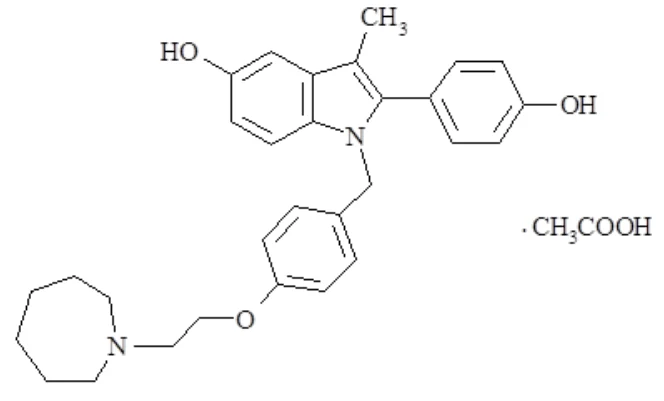
Structural formula:
Physicochemical properties: Bazedoxifene acetate is a white to tan powder. The aqueous solubility of bazedoxifene is pH-dependent. Solubility is higher at lower pH. The solubility of bazedoxifene acetate in unbuffered sterile water was measured to be 923 μgA/ml1 at pH5.4
14 CLINICAL TRIALS
14.1 Clinical Trials by Indication
Study demographics and trial design
The Selective Estrogens, Menopause, and Response to Therapy (SMART) trials, evaluated the safety and efficacy of DUAVIVE in generally healthy, non-hysterectomized postmenopausal women. A summary of the pivotal phase 3 trials is provided in Table 3.
Table 3 Summary of patient demographics for clinical trials in specific indication
| Study # | Trial Design | Objectives | Dosage/Duration | Study Subjects / Gender/ Mean Age |
|---|---|---|---|---|
| SMART 1 | Randomized, DB, placebo- and active-controlled safety and efficacy study evaluating the effect of 6 combinations of CE/BZA on the incidence of endometrial hyperplasia and menopausal symptoms in postmenopausal women. | Endometrial safety Vasomotor symptoms Bone Mineral Density (sub-study) (see 10 CLINICAL PHARMACOLOGY) | CE 0.45 mg/BZA 20 mg Total CE/BZA Raloxifene 60 mg Placebo 24 months | N=433 N=2547 N= 423 N= 427 Female / 56 years |
| SMART 2 | Randomized, DB, placebo-controlled, efficacy and safety study designed to demonstrate the efficacy of CE/BZA in the treatment of moderate to severe VMS. | Vasomotor symptoms | CE 0.45 mg/BZA 20 mg Total CE/BZA Placebo 12 weeks | N= 127 N= 255 N= 63 Female / 53 years |
| SMART 5 | Randomized, DB, placebo- and active-controlled efficacy and safety study evaluating CE/BZA for endometrial safety. | Endometrial safety Bone Mineral Density (sub-study) (see 10 CLINICAL PHARMACOLOGY) | CE 0.45 mg/BZA 20 mg Total CE/BZA BZA 20 mg CE 0.45 mg/MPA 1.5 mg Placebo 12 months | N= 445 N= 919 N= 230 N= 220 N= 474 Female/ 54 years |
| Abbreviations: CE = conjugated estrogens; BZA = Bazedoxifene;; DB=double-blind; MPA = medroxyprogesterone acetate; SMART = selective estrogen menopause and response to therapy; | ||||
SMART 1 was a 24-month, double-blind, randomized, placebo- and active-controlled dose-ranging trial evaluating the safety and efficacy of 6 combinations of conjugated estrogens/bazedoxifene (conjugated estrogens doses of 0.45 mg or 0.625 mg in combination with bazedoxifene doses of 10 mg, 20 mg, or 40 mg) compared with raloxifene 60 mg and placebo. A total of 3,397 women (mean age=56) were enrolled (women receiving conjugated estrogens 0.45 mg/bazedoxifene 20 mg [n=433]. Women took calcium and vitamin D (Caltrate 600 + D™) daily. The primary endpoint was the incidence of endometrial hyperplasia. The SMART 1 trial also evaluated the safety and efficacy of DUAVIVE for the treatment of vasomotor symptoms (VMS).
SMART 2 was a 12-week, double-blind, randomized, placebo-controlled trial to assess the safety and efficacy of conjugated estrogens 0.45 mg/bazedoxifene 20 mg and conjugated estrogens 0.625 mg/bazedoxifene 20 mg for the treatment of moderate to severe VMS. A total of 318 women (mean age=53 years) who were seeking treatment for hot flushes and who had 7 moderate to severe hot flushes per day or 50 or more per week at baseline were enrolled. Women were randomly assigned to 1 of 3 treatment groups, receiving either conjugated estrogens 0.45 mg/ bazedoxifene 20 mg (n=127), conjugated estrogens 0.625 mg/ bazedoxifene 20 mg (n=128), or placebo (n= 63).
SMART 5 was a 12-month, double-blind, randomized, placebo- and active-controlled trial evaluating the safety and efficacy of conjugated estrogens 0.45 mg/bazedoxifene 20 mg and conjugated estrogens 0.625 mg/bazedoxifene 20 mg on endometrial hyperplasia. SMART 5 also assessed the effect of conjugated estrogens 0.45 mg/bazedoxifene 20 mg and conjugated estrogens 0.625 mg/ bazedoxifene 20 mg on breast density in a subset of women. A total of 1,843 women (mean age=54 years) were randomly assigned to 1 of the 5 treatment groups, receiving conjugated estrogens 0.45 mg/bazedoxifene 20 mg (n=445), conjugated estrogens 0.625 mg/ bazedoxifene 20 mg (n=474), bazedoxifene 20 mg (n=230), conjugated estrogens 0.45 mg/medroxyprogesterone acetate (MPA)1.5 mg (n=220) or placebo (n=474). Women also took calcium, 600 mg and vitamin D, 400 IU daily.
14.2 Study Results
Treatment of moderate to severe vasomotor symptoms associated with menopause.
The safety and efficacy of DUAVIVE in treating moderate to severe VMS (hot flushes) was assessed in SMART 2 and SMART 1 (two randomized, double-blind, placebo-controlled trials), the latter of which provided data up to 2 years. In SMART 2, four (4) co-primary endpoints were analyzed to assess treatments for moderate to severe VMS associated with menopause: (A) the change from baseline in the average daily number of moderate to severe hot flushes at Week 4 (1) and Week 12 (2), and (B) the change from baseline in the average daily severity score of hot flushes at Week 4 (3) and Week 12 (4).
Secondary endpoints from SMART 2, included the following: (1) number of mild, moderate, and severe hot flushes, (2) sleep parameters [Medical Outcomes Study (MOS) scale], and (3) overall Menopause Specific Quality of Life (MENQOL).
In the SMART 2 trial, DUAVIVE significantly reduced the number and severity of hot flushes, as measured by the daily severity score, compared with placebo at Weeks 4 and 12. In the SMART 1 trial, DUAVIVE also significantly reduced the number and severity of hot flushes compared with placebo beginning at Week 4; this effect was demonstrated for 2 years with continued treatment.
The change from baseline in the number and severity of hot flushes observed in SMART 1 and SMART 2 is shown in Tables 4 and 5 as well as Figure 1 and 2.
| Table 4: Adjusted Mean Change from Baseline in the Number of Moderate and Severe Hot Flushes/Day (SMART 1 and SMART 2) | ||||||||||||||||||
|---|---|---|---|---|---|---|---|---|---|---|---|---|---|---|---|---|---|---|
| SMART 1* | SMART 2† | |||||||||||||||||
| Treatment Group | Week | N | Mean Change ± SE | p-Value vs. Placebo | N | Mean Change ± SE | p-Value vs. Placebo | |||||||||||
| DUAVIVE | 4 | 28 | -5.23 ± 1.05 | 0.022 | 122 | -5.90 ± 0.42 | < 0.001 | |||||||||||
| 12 | 28 | -8.74 ± 1.09 | <0.001 | 122 | -7.63 ± 0.36 | < 0.001 | ||||||||||||
| Placebo | 4 | 33 | -1.91 ± 0.98 | -- | 63 | -2.84 ± 0.56 | -- | |||||||||||
| 12 | 33 | -2.45 ± 1.02 | -- | 63 | -4.92 ± 0.48 | -- | ||||||||||||
SE = Standard error
* = Efficacy Evaluable 1 population, Last Observation Carried Forward
† = Modified Intention To Treat population, Last Observation Carried Forward
| Table 5: Adjusted Mean (SE) Change from Baseline in the Average Daily Severity of Hot Flushes (SMART 1 and SMART 2) | ||||||||||||||||||
|---|---|---|---|---|---|---|---|---|---|---|---|---|---|---|---|---|---|---|
| SMART 1* | SMART 2† | |||||||||||||||||
| Treatment Group | Week | N | Mean Change ± SE | p-Value vs. Placebo | N | Mean Change ± SE | p-Value vs. Placebo | |||||||||||
| DUAVIVE | 4 | 28 | -0.38 ± 0.13 | 0.406 | 122 | -0.58 ± 0.07 | < 0.001 | |||||||||||
| 12 | 28 | -1.00 ± 0.15 | <0.001 | 122 | -0.87 ± 0.08 | < 0.001 | ||||||||||||
| Placebo | 4 | 33 | -0.23 ± 0.12 | -- | 63 | -0.09 ± 0.09 | -- | |||||||||||
| 12 | 33 | -0.21 ± 0.14 | -- | 63 | -0.26 ± 0.11 | -- | ||||||||||||
SE = Standard error
* = Efficacy Evaluable 1 population, Last Observation Carried Forward
† = Modified Intention To Treat population, Last Observation Carried Forward
Figure 1 - Mean (±SE) Daily Number of Hot Flushes in SMART 2
| Weeks M e a n D a i l y N u m b e r o f H o t Fl u s h e s 0 1 2 3 4 5 6 7 8 9 10 11 12 1 2 3 4 5 6 7 8 9 10 11 CE 0.45/BZA 20 (n=122) Placebo (n=63) |
|---|
Figure 2- Mean (±SE) Daily Severity Score of Hot Flushes in SMART 2
In SMART 2, DUAVIVE demonstrated superiority compared with the placebo group for multiple secondary endpoints.
The 75% responder rates for mild, moderate, and severe hot flushes in the DUAVIVE were statistically significantly higher than in the placebo group at both Week 4 and Week 12 (p<0.01). In the LOCF
| Weeks M e a n D a i l y S e v e r i ty S c o r e o f H o t Fl u s h e s 0 1 2 3 4 5 6 7 8 9 10 11 12 1.00 1.14 1.28 1.42 1.56 1.70 1.84 1.98 2.12 2.26 2.40 CE 0.45/BZA 20 (n=122) Placebo (n=63) |
|---|
analysis, approximately 50% of the DUAVIVE treated subjects reached at least a 75% decrease from baseline at Week 12 in the number of mild, moderate, and severe hot flushes compared with 22% in the placebo group.
The adjusted mean change from baseline in the Medical Outcomes Study (MOS) sleep scale was significantly improved (p<0.001) at Week 12 in the DUAVIVE treatment group compared with the placebo group for time to fall asleep, sleep adequacy, sleep disturbance, and sleep problem index I and II. The other 4 parameters assessed were not significantly different from placebo.
At Week 12, decreases from baseline were observed in the mean change for the individual and total MENQOL scores. These decreases were significantly greater (p<0.001) in the DUAVIVE treatment group for the vasomotor function and total scores compared with the placebo treated subjects.
Effects on the endometrium
Effects of DUAVIVE on endometrial hyperplasia and endometrial malignancy were assessed in SMART 1 and SMART 5. The incidence of endometrial hyperplasia for DUAVIVE was below 1% in both trials (see Table 6).
| Table 6: Incidence of Endometrial Hyperplasia/Malignancy at Month 12 and Month 24 | |||||
|---|---|---|---|---|---|
| SMART 1* | SMART 5* | ||||
| Treatment Group | Month | n/N (%) | 1 – Sided 95% UL | n/N (%) | 1 – Sided 95% UL |
| DUAVIVE | 12 | 0/336 (0.00%) | 0.89 | 1/335 (0.30%) | 1.41 |
| 24 | 2/294 (0.68%) | 2.13 | -- | -- | |
UL = Upper limit
* = Efficacy Evaluable population
Effects on uterine bleeding or spotting
Cumulative amenorrhea (absence of uterine bleeding or spotting) was evaluated in two clinical trials (SMART 1 and SMART 5). In SMART 1, cumulative amenorrhea at Year 1 was 83% in women treated with DUAVIVE, similar to placebo (85%). In SMART 5, cumulative amenorrhea at Year 1 (Cycle 1 to 13th), (Figure 3) was 88% with DUAVIVE, similar to placebo (84%).
Figure 3 - Percentage (95% CI) of Subjects With Cumulative Amenorrhea From Indicated Cycles SMART 5
Cycle C u m u l a ti v e A m e n o rr h e a P e r c e n t (9 5 %C I) 1-13th 3-13th 5-13th 7-13th 9-13th 11-13th 13-13th 40 50 60 70 80 90 100 40 50 60 70 80 90 100 CE 0.45/BZA 20(n=392) Placebo (n=380)
Footnote: Time points are not different. Data points at 1-13th, 7-13th, and 13-13th cycles has been slightly offset to allow better visualization of confidence intervals.
Effects on breast
Breast pain
The effect of DUAVIVE on breast pain was evaluated in SMART 1, 2 and 5. Breast pain was not statistically different between DUAVIVE and placebo. In SMART 1 the rates for DUAVIVE and placebo were 9% and 6% respectively at Weeks 9-12. The rates in SMART 2 were 10% and 5% respectively at Weeks 9-12. In SMART 5, the rates were 6% and 5% respectively at Weeks 9-12.
Breast density
In SMART 5, after 1 year of treatment, the change in mammographic density in postmenopausal women (mean age=54 years) treated with DUAVIVE (n=186) was not different from placebo (n=181).
The mean percentage point changes in breast density from baseline to Month 12 were comparable among the DUAVIVE and placebo treatment groups (-0.49% and -0.51%, respectively).
Supplemental evaluation of mammograms from the SMART 1 trial yielded results consistent with SMART 5.
15 MICROBIOLOGY
No microbiological information is required for this drug product
16 NON-CLINICAL TOXICOLOGY
General Toxicology:
Single-Dose Toxicity
Bazedoxifene
The single-dose toxicity of bazedoxifene was evaluated in male and female mice, rats, and monkeys. Bazedoxifene was of low acute toxicity by the oral route in mice and rats (lethal dosage >4000 mg/kg), but did result in mortality after intraperitoneal (IP) dosages of 2000 and 500 mg/kg in mice and rats, respectively. A single IV bolus dose of bazedoxifene at 3 mg/kg was well tolerated by female rats and monkeys.
Conjugated Estrogens
When single oral or IP doses of 125 mg/kg of conjugated estrogens were given to male and female mice and rats, no conjugated estrogens -related deaths occurred. Results from these studies indicated minimal acute toxicity for conjugated estrogens.
Repeat-Dose Toxicity
Rats
In Sprague-Dawley rats, 1- and 6-month toxicity studies with conjugated estrogens/bazedoxifene at 0/0, 0.33/3, 1/12, or 3/60 mg/kg/day were conducted. Bazedoxifene in combination with conjugated estrogens was well tolerated at all dosages in these studies. Alopecia was observed and was likely related to the estrogenic activity of conjugated estrogens/bazedoxifene. Effects on reproductive tissues included ovarian cysts/cystic follicles; increased vaginal mucification, uterine lumen dilatation, uterine, vaginal, and cervical atrophy; and uterine squamous metaplasia. After a 3-month recovery period in rats, the ovarian changes resolved, the uterine alterations did not resolve (primarily at the highest dosage of 3/60 mg/kg/day), and there was an increased incidence of lobular hyperplasia of the mammary gland in all treated recovery groups. The findings at all dosages administered in these studies were consistent with the pharmacological actions of bazedoxifene and/or conjugated estrogens, and were not considered adverse. Based on the absence of adverse effects at any dosage, the no-observed-adverse-effect level (NOAEL) was 3/60 mg/kg/day for conjugated estrogens/bazedoxifene, the highest dosage administered. This NOAEL dose corresponds to systemic exposures (based on AUC) of 1.5 and 2.3-fold (conjugated estrogens), and 16 and 14-fold (bazedoxifene), for the 1-month and 6-month studies, respectively, compared to the exposures observed in postmenopausal women administered 0.45 mg of conjugated estrogens in combination with 20mg/day bazedoxifene.
Monkeys
In monkeys, conjugated estrogens/bazedoxifene at 0/0, 0.2/15, 0.66/50, or 2/150 mg/kg/day was administered for 1 month and conjugated estrogen/bazedoxifene at 0/0, 0.1/7.5, 0.45/33.5, or 2/150 mg/kg/day was administered for 9 months. Bazedoxifene in combination with conjugated estrogens or 17β-E2 was well tolerated at all dosages in these studies. There were ovarian cysts/cystic follicles and uterine, vaginal, and cervical atrophy. The findings at all dosages administered in these studies were consistent with the pharmacological actions of bazedoxifene and/or conjugated estrogens, and were not considered adverse. Based on the absence of adverse effects at any dosage, the NOAEL was 2/150 mg/kg/day for conjugated estrogens /bazedoxifene, the highest dosages administered. These NOAEL doses correspond to systemic exposures (based on AUC) of 16 and 12-fold (conjugated estrogens) and 22 and 58-fold (bazedoxifene) for the 1-month and 9-month studies, respectively, compared to the exposures observed in postmenopausal women administered 0.45 mg of conjugated estrogens in combination with 20mg/day bazedoxifene.
Carcinogenicity: Carcinogenicity studies with conjugated estrogens/bazedoxifene have not been conducted.
In 6-month carcinogenicity studies of bazedoxifene in transgenic mice, there was an increased incidence of benign, ovarian granulosa-cell tumors in female mice given 150 or 500 mg/kg/day. Systemic exposure (AUC) to bazedoxifene in these groups was 41 and 80 times that in postmenopausal women administered 0.45 mg of conjugated estrogens in combination with 20mg/day bazedoxifene for 10 days.
In a two-year carcinogenicity study of bazedoxifene in rats, an increased incidence of benign, ovarian granulosa-cell tumors was observed in female rats at dietary concentrations of 0.03% and 0.1%. Systemic exposure (AUC) of bazedoxifene in these groups was 3.0 and 7.6 times that observed in postmenopausal women administered 0.45 mg of conjugated estrogens in combination with 20mg/day bazedoxifene for 10 days.
The observation of benign, ovarian granulosa-cell tumors in female mice and rats administered bazedoxifene is a class effect of SERMs related to its pharmacology in rodents when treated during their reproductive lives, when their ovaries are functional and responsive to hormonal stimulation.
In the two-year carcinogenicity study, bazedoxifene, administered orally in the diet to rats at dosages of 0%, 0.003%, 0.01%, 0.03%, or 0.1%, resulted in exposure ratios of 0.06 to 4.7 in males and 0.30 to 7.6 times in females, respectively, compared to those observed in postmenopausal women administered bazedoxifene doses of 20 mg/day in combination with 0.45 mg of conjugated estrogens. Based on surface area (mg/m2) dose ratios resulted in approximately 0.6 to 22 times and 1.0 to 29 times in males and females, respectively, the clinical dose of 20 mg bazedoxifene. In short- and long-term studies, bazedoxifene caused corticomedullary nephrocalcinosis and enhanced spontaneous chronic progressive nephropathy (CPN) in male rats. Since chronic progressive nephropathy and corticomedullary nephrocalcinosis are most likely rat-specific nephropathies, these findings are presumably not relevant for humans. In long-term studies, renal tumors (adenomas and carcinomas) were observed in male rats at all doses tested, most likely as a consequence of this chronic renal damage.
In an 18-month bone efficacy study in aged ovariectomized cynomolgus monkeys, renal cell carcinomas were observed. These tumors are considered as spontaneous renal cell carcinomas that are known to occur in aged nonhuman primates and are unlikely to be relevant to humans. Bazedoxifene, administered orally to monkeys at dosages of 0, 0.2, 0.5, 1, 5, or 25 mg/kg/day, resulted in exposure ratios of 0.06 to 19 times and dose ratios, based on surface area (mg/m2) of approximately 0.2 to 24 times the clinical dose of 20 mg.
Carcinogenicity studies have not been conducted using conjugated estrogens alone.
Mutagenicity:
Mutagenicity studies with conjugated estrogens/bazedoxifene have not been conducted. Bazedoxifene was not genotoxic or mutagenic in a battery of tests, including in vitro bacterial reverse mutation assay, in vitro mammalian cell forward mutation assay at the thymidine kinase (TK±) locus in L5178Y mouse lymphoma cells, in vitro chromosome aberration assay in Chinese hamster ovary (CHO) cells, and in vivo mouse micronucleus assay.
Reproductive and Developmental Toxicology:
DUAVIVE is only indicated for post-menopausal women and should not be used by women who may become pregnant.
Impairment of fertility studies with conjugated estrogens/bazedoxifene have not been conducted.
Female rats were administered daily dosages of 0.3 to 30 mg/kg (0.15 to 14.6 times the human dose based on body surface area, mg/m2 [20 mg/kg dosage in humans is 12.3 mg/m2]) of bazedoxifene prior to and during mating with untreated males. Estrous cycles and fertility were adversely affected in all bazedoxifene-treated female groups.
No studies were performed on animals to evaluate the effects on reproduction with conjugated estrogens/bazedoxifene.
In studies conducted with rabbits administered bazedoxifene at daily dosages of 0.05, 0.5, and 5.0 mg/kg/day during gestation, abortion and an increased incidence of heart (ventricular septal defect) and skeletal system (ossification delays, misshapen or misaligned bones, primarily of the spine and skull) anomalies in the fetuses were present at maternally toxic dosages of 0.5 mg/kg/day (0.4 times the human dose based on body surface area or exposure ratios of 1.7 to 2.0 times those observed in postmenopausal women administered 0.45 mg of conjugated estrogens in combination with bazedoxifene doses of 20 mg/day). Administration of bazedoxifene to rats at maternally toxic dosages 1 mg/kg/day ( 0.4 times the human dose based on body surface area or an exposure ratio of 0.3 times the clinical 20 mg dose) resulted in reduced numbers of live fetuses and fetal growth retardation (reduced fetal body weights and delayed ossification of the skull). No other fetal developmental anomalies were observed.
Teratogenicity was not observed in rats or rabbits.
16.1.1 Comparative Non-Clinical Pharmacodynamics
In vitro Studies
In vitro evaluation of conjugated estrogens/bazedoxifene was performed in cofactor interaction assays and gene microarray analyses. Key conclusions that can be drawn from these studies include the following: 1) conjugated estrogens and SERMs, when bound to estrogen receptor α, result in different conformations impacting the proteins that can potentially interact with the receptor and, therefore, affect estrogen receptor α activity in the regulation of gene transcription; 2) estrogens and the SERM are competing for the same pool of estrogen receptors in any particular cell; therefore, the resulting pharmacologic response will be a blend of the transcriptional activity associated with all of the components and not simply an additive result; 3) the results from in vitro pharmacology studies have shown that bazedoxifene binds with high affinity and selectivity to estrogen receptors α and β; and 4) functional in vitro studies have demonstrated both agonist and antagonist (relative to 17β-E2) properties of bazedoxifene, depending on the gene target or test system.
In vivo
The in vivo evaluation of conjugated estrogens/bazedoxifene included primarily uterine, mammary gland, vasomotor, thrombogenic, lipid, and skeletal responses.
In an immature rat uterine model, bazedoxifene antagonized conjugated estrogen-stimulated increases in uterine wet weight. Conjugated estrogen-regulated endometrial hyperplasia/hypertrophy in non-human primates was also demonstrated to be inhibited by bazedoxifene.
In an ovariectomized mouse model changes in mammary gland morphology following conjugated estrogen treatment consisted of an increase in ductal fat pad infiltration, elongation and branching. Treatment with CE/BZA did not elicit these morphologic changes and resulted in a mammary gland morphology similar to untreated control mice supporting the estrogen receptor antagonist effects of bazedoxifene when combined with conjugated estrogens. Bazedoxifene was also an effective antagonist of the conjugated estrogens-stimulated increases in amphiregulin gene expression, a gene associated with pubertal mammary gland development and a marker of estrogenic stimulation.
The rodent “hot flush” model demonstrated that conjugated estrogens/bazedoxifene effectively inhibited changes in tail skin temperature similar to conjugated estrogens alone; thus, the appropriate dose combination of bazedoxifene with conjugated estrogens should effectively relieve vasomotor instability (reduce hot flashes) in clinical trials.
Using the venous thromboembolism model, bazedoxifene in combination with conjugated estrogens was not shown to promote thrombus induction in the ovariectomized mouse.
In the 6-week ovariectomized rat model, conjugated estrogens/bazedoxifene reduced total cholesterol concentration not unlike conjugated estrogens or bazedoxifene alone and uterine wet weight changes stimulated by conjugated estrogens alone were not seen with the appropriate doses of conjugated estrogens/bazedoxifene.