


Product Monograph - Emend IV (Merck Canada, 115 mg)
SUMMARY PRODUCT INFORMATION
INDICATIONS AND CLINICAL USE
EMEND® IV (fosaprepitant dimeglumine), in combination with a 5-HT3 antagonist class of antiemetics and dexamethasone, is indicated for the:
- 1. prevention of acute and delayed nausea and vomiting due to highly emetogenic cancer chemotherapy
- 2. prevention of nausea and vomiting in women due to treatment with moderately emetogenic cancer chemotherapy.
Approval of EMEND® IV is based on the bioequivalence study indicating that 115 mg of the pro-drug, fosaprepitant, is equivalent to 125 mg oral aprepitant in regard to aprepitant exposure. No clinical trials that involved the use of fosaprepitant and both dexamethasone and a 5-HT3 antagonist class of antiemetics have been submitted. (see also DRUG INTERACTIONS, CLINICAL TRIALS and DOSAGE AND ADMINISTRATION).
Geriatrics (≥65 years of age): In clinical studies, the efficacy and safety of aprepitant in the elderly (≥65 years) were comparable to those seen in younger patients (<65 years). No dosage adjustment is necessary in elderly patients.
Pediatrics (<18 years of age): No data available.
Route of Administration | Dosage Form / Strength | Clinically Relevant Non-Medicinal Ingredients |
| Intravenous | Lyophilized powder/ 115 mg/vial | For a complete listing see DOSAGE FORMS, COMPOSITION AND PACKAGING section. |
CONTRAINDICATIONS
- Patients who are hypersensitive to EMEND® IV, aprepitant, polysorbate 80, or to any ingredient in the formulation. For a complete listing, see the DOSAGE FORMS, COMPOSITION AND PACKAGING section of the product monograph.
- EMEND® IV should not be used concurrently with pimozide, terfenadine, astemizole, or cisapride. Inhibition of cytochrome P450 isoenzyme 3A4 (CYP3A4) by aprepitant could result in elevated plasma concentrations of these drugs, potentially causing serious or life-threatening reactions (see DRUG INTERACTIONS).
WARNINGS AND PRECAUTIONS
Serious Warnings and Precautions
Drug interactions with:
- Medicinal products that are metabolized through CYP3A4 (see DRUG INTERACTIONS)
- Warfarin (see DRUG INTERACTIONS)
- Hormonal contraception (see DRUG INTERACTIONS)
Isolated reports of immediate hypersensitivity reactions including flushing, erythema, and dyspnea have occurred during infusion of fosaprepitant. These hypersensitivity reactions have generally responded to discontinuation of the infusion and administration of appropriate therapy. The infusion should not be reinitiated in patients who experience hypersensitivity reactions (see CONTRAINDICATIONS).
Special Populations
Pregnant Women: There are no adequate and well-controlled studies in pregnant women; therefore, EMEND® IV are not recommended for use during pregnancy unless clearly necessary (see TOXICOLOGY, Reproduction and Development).
Nursing Women: EMEND® IV, when administered intravenously, is rapidly converted to aprepitant. Aprepitant is excreted in the milk of lactating rats. It is not known whether this drug is excreted in human milk; therefore, breastfeeding is not recommended during treatment with EMEND® IV.
Pediatrics (<18 years of age): Safety and effectiveness of EMEND® IV in pediatric patients have not been established.
Geriatrics (≥65 years of age): In 2 well-controlled clinical studies, of the total number of patients (N=544) treated with aprepitant, 31% were 65 and over, while 5% were 75 and over. No overall differences in safety or effectiveness were observed between these subjects and younger
subjects. Greater sensitivity of some older individuals cannot be ruled out. Dosage adjustment in the elderly is not necessary.
ADVERSE REACTIONS
Clinical Trial Adverse Experiences
No clinical trials that involved the use of fosaprepitant and both dexamethasone and a 5-HT3 antagonist class of antiemetics have been submitted. Since EMEND® IV is converted to aprepitant, those adverse reactions associated with aprepitant are to be expected to occur with EMEND® IV. The overall safety of aprepitant was evaluated in approximately 4300 individuals. Injection site adverse reaction can also be expected.
Fosaprepitant (intravenous formulation)
In a randomized, open-label crossover, bioequivalence study, 66 subjects were dosed with 115 mg of EMEND® IV intravenously and 125 mg of aprepitant orally. Systemic exposure of 115 mg of intravenous EMEND® IV is equivalent to 125 mg oral aprepitant. The following drug related clinical adverse experiences were reported in subjects dosed with EMEND® IV: infusion site pain, 5 (7.6%); infusion site induration, 1 (1.5%); headache, 2 (3%).
Oral Aprepitant
Highly Emetogenic Chemotherapy
In 2 well-controlled clinical trials in patients receiving cisplatin-based chemotherapy, 544 patients were treated with aprepitant during Cycle 1 of chemotherapy and 413 of these patients continued into the Multiple-Cycle extension for up to 6 cycles of chemotherapy. Oral aprepitant was given in combination with ondansetron and dexamethasone and was generally well tolerated. Most adverse experiences reported in these clinical studies were described as mild to moderate in intensity.
In Cycle 1, clinical adverse experiences were reported in approximately 69% of patients treated with the aprepitant regimen compared with approximately 68% of patients treated with standard therapy. Table 1 shows the percent of patients with clinical adverse experiences reported at an incidence ≥3%.
Table 1 - All adverse experiences, regardless of causality, (incidence ≥3%) occurring in patients receiving highly emetogenic chemotherapy who were treated with the aprepitant regimen for chemotherapy induced nausea and vomiting (CINV) in clinical studies (cycle 1)
Aprepitant Regimen N = 544 % | Standard Therapy N = 550 % |
Body As A Whole/Site Unspecified Abdominal Pain ( 4.6) ( 3.3) Asthenia/Fatigue (17.8) (11.8)
Aprepitant Regimen N = 544 % | Standard Therapy N = 550 % | |
| Dehydration Dizziness Fever Mucous Membrane Disorder | ( 5.9) ( 6.6) ( 2.9) ( 2.6) | ( 5.1) ( 4.4) ( 3.5) ( 3.1) |
| Digestive System Constipation Diarrhea Epigastric Discomfort Gastritis Heartburn Nausea Vomiting | (10.3) (10.3) ( 4.0) ( 4.2) ( 5.3) (12.7) ( 7.5) | (12.2) ( 7.5) ( 3.1) ( 3.1) ( 4.9) (11.8) ( 7.6) |
| Eyes, Ears, Nose, and Throat Tinnitus | ( 3.7) | ( 3.8) |
| Hemic and Lymphatic System Neutropenia | ( 3.1) | ( 2.9) |
| Metabolism and Nutrition Anorexia | (10.1) | ( 9.5) |
| Nervous System Headache Insomnia | ( 8.5) ( 2.9) | ( 8.7) ( 3.1) |
| Respiratory System Hiccups | (10.8) | ( 5.6) |
In addition, isolated cases of serious adverse experiences, regardless of causality, of bradycardia, disorientation, and perforating duodenal ulcer were reported in highly emetogenic CINV clinical studies.
Moderately Emetogenic Chemotherapy
During Cycle 1 of 2 moderately emetogenic chemotherapy studies, 868 patients were treated with the aprepitant regimen and 686 of these patients continued into extensions for up to 4 cycles of chemotherapy. In the combined analysis of Cycle 1 data for these 2 studies, adverse experiences were reported in approximately 69% of patients treated with the aprepitant regimen compared with approximately 72% of patients treated with standard therapy.
In the combined analysis of Cycle 1 data for these 2 studies, the adverse experience profile in the moderately emetogenic chemotherapy studies was generally comparable to the highly emetogenic chemotherapy studies. Table 2 shows the percent of patients with clinical adverse experiences reported at an incidence ≥3%.
Table 2 - All adverse experiences, regardless of causality, (incidence ≥3%) occurring in patients receiving moderately emetogenic chemotherapy who were treated with the aprepitant regimen for CINV in clinical studies (cycle 1)
| Blood and Lymphatic System Disorders Neutropenia | Aprepitant Regimen N=868 % | Standard Therapy N=846 % |
| ( 5.8) | ( 5.6) | |
| Metabolism and Nutrition Disorders Anorexia | ( 6.2) | ( 7.2) |
| Psychiatric Disorders Insomnia | ( 2.6) | ( 3.7) |
Nervous System Disorders Dizziness Headache | ( 2.8) (13.2) | ( 3.4) (14.3) |
Gastrointestinal Disorders Constipation Diarrhea Dyspepsia Nausea Stomatitis | (10.3) ( 7.6) ( 5.8) (5.8) ( 3.1) | (15.5) ( 8.7) ( 3.8) ( 5.1) ( 2.7) |
| Skin and Subcutaneous Tissue Disorders Alopecia | (12.4) | (11.9) |
General Disorders and General Administration Site Conditions Asthenia Fatigue | ( 4.7) (15.4) | ( 4.6) (15.6) |
In a combined analysis of these two studies, isolated cases of serious adverse experiences were similar in the two treatment groups.
Additional Clinical Trial Adverse Experiences (>0.5% and greater than standard therapy), Regardless of Causality, Occurring in Patients Receiving Highly and Moderately Emetogenic Chemotherapy with aprepitant regimen:
Blood and lymphatic system disorders: anemia, febrile neutropenia, thrombocytopenia.
Cardiac disorders: myocardial infarction, palpitations, tachycardia.
Eye disorders: conjunctivitis.
Gastrointestinal disorders: abdominal pain upper, acid reflux, deglutition disorder, dry mouth, dysgeusia, dysphagia, eructation, flatulence, obstipation, salivation increased.
General disorders and administrative site conditions: edema, malaise, pain, rigors.
Infections and infestations: candidiasis, herpes simplex, lower respiratory infection, oral candidiasis, pharyngitis, septic shock, upper respiratory infection, urinary tract infection.
Investigations: weight loss.
Metabolism and nutrition disorders: appetite decreased, diabetes mellitus, hypokalemia.
Musculoskeletal and connective tissue disorders: arthralgia, back pain, muscular weakness, musculoskeletal pain, myalgia.
Neoplasms benign, malignant and unspecified (including cysts and polyps): malignant neoplasm, non-small cell lung carcinoma.
Nervous system: peripheral neuropathy, sensory neuropathy, taste disturbance, tremor.
Psychiatric disorders: anxiety disorder, confusion, depression.
Renal and urinary disorders: dysuria, renal insufficiency.
Reproductive system and breast disorders: pelvic pain.
Respiratory, thoracic and mediastinal disorders: cough, dyspnea, nasal secretion, pharyngolaryngeal pain, pneumonitis, pulmonary embolism, respiratory insufficiency, vocal disturbance.
Skin and subcutaneous tissue disorders: acne, diaphoresis, pruritus, rash. Fosaprepitant injections may result in injection site erythema, induration and pain.
Vascular disorders: deep venous thrombosis, flushing, hot flush, hypertension, hypotension.
Stevens-Johnson syndrome was reported as a serious adverse experience in a patient receiving aprepitant with cancer chemotherapy in another CINV study.
Abnormal Hematologic and Clinical Chemistry Findings
Table 3 shows the percent of patients with laboratory adverse experiences reported at an incidence ≥3% in patients receiving highly emetogenic chemotherapy.
Table 3 - All laboratory abnormalities, regardless of causality, (incidence ≥3%) occurring in patients receiving highly emetogenic chemotherapy who were treated with the aprepitant regimen for CINV in clinical studies (cycle 1)
| ALT increased AST increased Blood urea nitrogen increased Serum creatinine increased Proteinuria | Aprepitant Regimen N=544 % | Standard Therapy N=550 % |
(6.0) (3.0) (4.7) (3.7) (6.8) | (4.3) (1.3) (3.5) (4.3) (5.3) |
Table 4 shows the percent of patients with laboratory adverse experiences reported at an incidence ≥3% in patients receiving moderately emetogenic chemotherapy.
Table 4 - Percent of Patients Receiving Moderately Emetogenic Chemotherapy with Laboratory Adverse Experiences (Incidence ≥3%) — Cycle 1
| Neutrophil Count Decreased White Blood Cell Count Decreased | Aprepitant Regimen (N = 868) | Standard Therapy (N = 846) |
| 4.6 5.1 | 4.6 4.7 |
The following additional laboratory adverse experiences (incidence >0.5% and greater than standard therapy), regardless of causality, were reported in patients treated with aprepitant regimen: alkaline phosphatase increased, hyperglycemia, hyponatremia, leukocytes increased, erythrocyturia, leukocyturia. The adverse experiences of increased AST and ALT were generally mild and transient.
The adverse experience profiles in the Multiple-Cycle extensions of Highly and Moderately Emetogenic Chemotherapy studies for up to 6 cycles of chemotherapy were generally similar to those observed in Cycle 1.
Post-Market Adverse Drug Reactions
Regardless of causality with aprepitant the following adverse events have been reported rarely or very rarely and occur with multiple confounding factors: loss of consciousness, depressed level of consciousness, convulsion, somnolence, paresthesia, syndrome of inappropriate antidiuretic hormone, hallucination, pruritus, rash, urticaria, and hypersensitivity reactions including anaphylactic reactions.
Immediate hypersensitivity reactions have been observed during the infusion of fosaprepitant which may include the following: flushing, erythema, dyspnea (see WARNINGS AND PRECAUTIONS).
DRUG INTERACTIONS
Following the infusion of fosaprepitant 115 mg, a higher aprepitant Cmax (~ 2-fold) was observed
compared to oral aprepitant (125 mg). A theoretical risk for increased adverse experiences due to a higher peak aprepitant exposure cannot be ruled out.
Serious Drug Interactions
- Fosaprepitant is rapidly converted to aprepitant, which is a moderate inhibitor of CYP3A4 when administered as a 3-day antiemetic dosing regimen for CINV. Fosaprepitant should be used with caution in patients receiving concomitant medicinal products that are primarily metabolized through CYP3A4 and CYP2C9, including chemotherapy agents. Inhibition of CYP3A4 by aprepitant could result in elevated plasma concentrations of these concomitant medicinal products. Induction of CYP2C9 by aprepitant could result in decreased plasma concentrations of these concomitant medicinal products (see CONTRAINDICATIONS and DRUG INTERACTIONS).
- The effect of oral aprepitant on the pharmacokinetics of orally administered CYP3A4 substrates is greater than the effect of oral aprepitant on the pharmacokinetics of intravenously administered CYP3A4 substrates.
- Coadministration of aprepitant with warfarin results in decreased prothrombin time, reported as International Normalized Ratio (INR). In patients on chronic warfarin therapy, the prothrombin time (INR) should be closely monitored in the 2-week period, particularly at 7 to 10 days, following initiation of the 3-day regimen of fosaprepitant followed by oral aprepitant with each chemotherapy cycle (see DRUG INTERACTIONS).
- The efficacy of hormonal contraceptives during and for 28 days after administration of fosaprepitant or aprepitant may be reduced. Alternative or back-up methods of contraception should be used during treatment with fosaprepitant or aprepitant and for 1 month following the last dose (see DRUG INTERACTIONS).
Overview
Drug interactions following administration of fosaprepitant are likely to occur with drugs that interact with oral aprepitant. The following information was derived from data with oral aprepitant and one study conducted with fosaprepitant and oral midazolam.
Aprepitant is a substrate, a moderate inhibitor, and an inducer of CYP3A4. Aprepitant is also an inducer of CYP2C9.
Chronic continuous use of EMEND® IV is not recommended because it has not been studied and because the drug interaction profile may change during chronic dosing.
Effect of aprepitant on the pharmacokinetics of other agents
As a moderate inhibitor of CYP3A4, aprepitant can increase plasma concentrations of orally coadministered medicinal products that are metabolized through CYP3A4. Aprepitant may increase the plasma concentration of orally administered CYP3A4 substrates to a greater extent than if the substrate was administered intravenously.
Aprepitant has been shown to induce the metabolism of S(-) warfarin and tolbutamide, which are metabolized through CYP2C9. Coadministration of fosaprepitant or oral aprepitant with these drugs or other drugs that are known to be metabolized by CYP2C9, such as phenytoin, may result in lower plasma concentrations of these drugs.
Effect of other agents on the pharmacokinetics of aprepitant
Aprepitant is a substrate for CYP3A4; therefore, coadministration of fosaprepitant or aprepitant with drugs that inhibit CYP3A4 activity may result in increased plasma concentrations of aprepitant. Consequently, concomitant administration of fosaprepitant or aprepitant with strong CYP3A4 inhibitors (e.g., ketoconazole, itraconazole, nefazodone, troleandomycin, clarithromycin, ritonavir, nelfinavir) should be approached cautiously. Moderate CYP3A4 inhibitors (e.g., diltiazem) resulted in a 2-fold increase in plasma concentrations of aprepitant; therefore, concomitant administration should also be approached with caution.
Aprepitant is a substrate for CYP3A4; therefore, coadministration of fosaprepitant or aprepitant with drugs that strongly induce CYP3A4 activity (e.g., rifampin, carbamazepine, phenytoin) may result in reduced plasma concentrations and decreased efficacy.
Drug-Drug Interactions
Table 5 - Established or potential drug-drug interactions
Proper name
| Ref | Effect |
Clinical comment
pimozide
| T | ↑ pimozide concentration |
Potentially causing serious or life-threatening reactions.
terfenadine
| T | ↑ terfenadine concentration |
Potentially causing serious or life-threatening reactions.
Astemizole
| T | ↑ astemizole concentration |
Potentially causing serious or life-threatening reactions.
Cisapride
| T | ↑ cisapride concentration |
Potentially causing serious or life-threatening reactions.
Warfarin
| CT | ↓ Warfarin concentration ↓ INR |
In patients on chronic warfarin therapy, the INR should be closely monitored in the 2-week period, particularly at 7 to 10 days, following initiation of the 3-day regimen of fosaprepitant followed by aprepitant with each chemotherapy cycle (see WARNINGS AND PRECAUTIONS and DETAILED PHARMACOLOGY). tolbutamide
| CT | ↓ tolbutamide concentration |
Aprepitant induces the metabolism of drug metabolized by CYP2C9 (see DETAILED
Proper name
| Ref | Effect |
Clinical comment
PHARMACOLOGY). Phenytoin
| T | ↓ phenytoin concentration |
Aprepitant induces the metabolism of drug metabolized by CYP2C9.
dexamethasone
| CT | ↑ dexamethasone concentration |
The usual oral dexamethasone doses should be reduced by approximately 50% when coadministered with a regimen of fosaprepitant followed by aprepitant, to achieve exposures of dexamethasone similar to those obtained when it is given without EMEND® (see DETAILED PHARMACOLOGY).
methylprednisolone
| CT | ↑ methylprednisolone concentration |
The usual IV methylprednisolone dose should be reduced by approximately 25%, and the usual oral methylprednisolone dose should be reduced by approximately 50% when coadministered with a regimen of fosaprepitant followed by aprepitant, to achieve exposures of methylprednisolone similar to those obtained when it is given without aprepitant (see DETAILED PHARMACOLOGY).
hormone contraceptives with all routes of
administration
| CT | ↓ hormone concentration |
The efficacy of hormonal contraceptives during and for 28 days after administration fosaprepitant or aprepitant may be reduced. Alternative or back-up methods of contraception should be used during treatment with fosaprepitant or aprepitant and for 1 month following the last dose (see WARNINGS AND PRECAUTIONS and DETAILED PHARMACOLOGY). Midazolam oral and IV
| CT | ↑ midazolam concentration |
The potential effects of increased plasma concentrations of midazolam or other benzodiazepines metabolized via CYP3A4 (alprazolam, triazolam) should be considered when coadministering these agents with a 3-day regimen of EMEND® IV followed by EMEND® (see
DETAILED PHARMACOLOGY). ketoconazole
| CT | ↑ aprepitant concentration |
Concomitant administration of
fosaprepitant and aprepitant with strong CYP3A4 inhibitors should be approached cautiously (see DETAILED
PHARMACOLOGY).
Rifampin
| CT | ↓ aprepitant concentration |
Coadministration of fosaprepitant and aprepitant with drugs that induce CYP3A4 activity may result in reduced plasma concentrations and decreased efficacy of EMEND® (see DETAILED
Proper name
| Ref | Effect |
Clinical comment
PHARMACOLOGY). Diltiazem
| CT | ↑ aprepitant and diltiazem concentration |
No clinically meaningful changes in ECG, heart rate, PR interval or blood pressure beyond those changes induced by diltiazem alone (see DETAILED PHARMACOLOGY).
paroxetine
| CT | ↓ aprepitant and paroxetine concentration |
See DETAILED PHARMACOLOGY.
Legend: CT = Clinical Trial; T = Theoretical
Fosaprepitant or aprepitant are unlikely to interact with drugs that are substrates for the P-glycoprotein transporter, as demonstrated by the lack of interaction of oral aprepitant with digoxin in a clinical drug interaction study.
5-HT3 antagonists: In clinical drug interaction studies, aprepitant did not have clinically important effects on the pharmacokinetics of ondansetron administered intravenously, granisetron administered orally, or hydrodolasetron (the active metabolite of dolasetron) following oral administration of dolasetron.
Chemotherapeutic agents: Chemotherapy agents that are known to be metabolized by CYP3A4 include docetaxel, paclitaxel, etoposide, irinotecan, ifosfamide, imatinib, vinorelbine, vinblastine and vincristine. In clinical studies, the oral aprepitant regimen was administered with the following chemotherapeutic agents metabolized primarily or in part by CYP3A4: etoposide, vinorelbine, docetaxel, and paclitaxel. The doses of these agents were not adjusted to account for potential drug interactions. However, caution is advised and additional monitoring may be appropriate in patients receiving chemotherapy agents known to be metabolized by CYP3A4, especially those not studied in the clinical trials, including vinblastine, vincristine and ifosfamide (see WARNINGS AND PRECAUTIONS).
Docetaxel: In a separate pharmacokinetic study, oral aprepitant did not influence the pharmacokinetics of docetaxel.
Etoposide, paclitaxel: No pharmacokinetic studies to determine the effect of oral aprepitant on the concentration of etoposide or paclitaxel were performed.
Vinorelbine: In a separate pharmacokinetic study, oral aprepitant (125 mg/80 mg regimen) did not influence the pharmacokinetics of vinorelbine.
Drug-Food Interactions
EMEND® IV may be administered with or without food.
Drug-Herb Interactions
Interactions with herbal products have not been established.
Drug-Laboratory Interactions
Interactions with laboratory tests have not been established.
DOSAGE AND ADMINISTRATION
Dosing Consideration
EMEND® IV (115 mg) may be substituted for EMEND® (125 mg) prior to chemotherapy, on Day 1 only of the CINV regimen as an infusion administered over 15 minutes.
EMEND® IV has not been demonstrated to be effective as a single anti-emetic agent and must be administered with other anti-emetic agents.
Recommended Dose and Dosage Adjustment
The 3-day CINV regimen includes EMEND® IV (115 mg) 30 minutes prior to chemotherapy or EMEND® (125 mg orally) 1 hour prior to chemotherapy on Day 1; EMEND® (80 mg orally) on Days 2 and 3; in addition to a corticosteroid and a 5-HT3 antagonist.
In clinical studies with EMEND®, the following regimen was used for the prevention of nausea and vomiting associated with cisplatin-based highly emetogenic cancer chemotherapy:
| Day 1 | Day 2 | Day 3 | Day 4 | |
| EMEND®* | 125 mg orally | 80 mg orally | 80 mg orally | none |
| Dexamethasone** | 12 mg orally | 8 mg orally | 8 mg orally | 8 mg orally |
| Ondansetron† | 32 mg IV | none | none | none |
* EMEND® was administered orally 1 hour prior to chemotherapy treatment on Day 1 and in the morning on Days 2 and 3. ** Dexamethasone was administered 30 minutes prior to chemotherapy treatment on Day 1 and in the morning on Days 2 through 4. The dose of dexamethasone was chosen to account for drug interactions. Increasing the dose of dexamethasone is not recommended (see DRUG INTERACTIONS).
† Ondansetron was administered 30 minutes prior to chemotherapy treatment on Day 1.
For highly emetic chemotherapy, there is only limited efficacy data with EMEND® in combination with oral ondansetron or other 5-HT3 antagonist class of antiemetics and dexamethasone.
In a clinical study with EMEND®, the following regimen was used for the prevention of nausea and vomiting associated with moderately emetogenic cancer chemotherapy:
| Day 1 | Day 2 | Day 3 | |
| EMEND®* | 125 mg orally | 80 mg orally | 80 mg orally |
| Dexamethasone** | 12 mg orally | none | none |
| Ondansetron† | 2 x 8 mg orally | none | none |
* EMEND® was administered orally 1 hour prior to chemotherapy treatment on Day 1 and in the morning on Days 2 and 3. ** Dexamethasone was administered 30 minutes prior to chemotherapy treatment on Day 1. The dose of dexamethasone was chosen to account for drug interactions. Increasing the dose of dexamethasone is not recommended (see DRUG INTERACTIONS).
† Ondansetron 8-mg capsule was administered 30 to 60 minutes prior to chemotherapy treatment and one 8-mg capsule was administered 8 hours after the first dose on Day 1.
For moderately emetogenic chemotherapy, there is only limited efficacy data with EMEND® in combination with other 5-HT3 antagonist class of antiemetics and dexamethasone.
See DRUG INTERACTIONS for additional information on the administration of fosaprepitant or aprepitant with corticosteroids.
Refer to each product’s respective Product Monograph for additional information on coadministered antiemetic agents.
No dosage adjustment is necessary for the elderly.
No dosage adjustment is necessary based on gender or race.
No dosage adjustment is necessary for patients with severe renal insufficiency (creatinine clearance <30 mL/min) or for patients with end stage renal disease undergoing hemodialysis.
No dosage adjustment is necessary for patients with mild to moderate hepatic insufficiency (Child-Pugh score 5 to 9). There are no clinical data in patients with severe hepatic insufficiency (Child-Pugh score >9).
Administration
EMEND IV is for IV infusion only, upon reconstitution and dilution and for single use only.
Instructions for reconstitution and dilution
Preparation of EMEND® IV for Injection
- 1. Aseptically inject 5 mL 0.9% Sodium Chloride for injection (saline) into the vial. Assure that saline is added to the vial along the vial wall in order to prevent foaming. Swirl the vial gently. Avoid shaking and jetting saline into the vial.
- 2. Aseptically prepare an infusion bag filled with 110 ml 0.9% NaCl for injection
- 3. Aseptically withdraw the entire volume from the vial and transfer it into an infusion bag containing 110 ml of saline to yield a total volume of 115 ml and a final concentration of approximately 1 mg fosaprepitant/mL. Gently invert the bag 2-3 times.
The reconstituted and diluted solutions should be used immediately; however, after reconstitution and dilution the final drug solution is stable for 24 hours at ambient room temperature (at or below 25°C).
Reconstituted and diluted solutions should be inspected for discoloration, cloudiness and particulate matter before administration whenever solution and container permit. Discard unused portion.
EMEND® IV is incompatible with any solutions containing divalent cations (e.g., Ca2+, Mg2+), including Hartman’s and Lactated Ringer’s Solution. EMEND® IV must not be reconstituted or mixed with solutions for which physical and chemical compatibility have not been established.
OVERDOSAGE
For management of a suspected drug overdose, contact your regional Poison Control Centre.
No specific information is available on the treatment of overdosage. Single doses up to 200 mg of fosaprepitant IV and 600 mg of aprepitant were generally well tolerated in healthy subjects. Three out of 33 subjects receiving 200 mg of fosaprepitant experienced mild injection site thrombosis. Aprepitant was generally well tolerated when administered as 375 mg once daily for up to 42 days to patients in non-CINV studies. In 33 cancer patients, administration of a single 375-mg dose of aprepitant on Day 1 and 250 mg once daily on Days 2 to 5 was generally well tolerated.
Drowsiness and headache were reported in one patient who ingested 1440 mg of aprepitant.
In the event of overdose, EMEND® IV should be discontinued and general supportive treatment and monitoring should be provided. Because of the antiemetic activity of aprepitant, drug-induced emesis may not be effective.
Aprepitant cannot be removed by hemodialysis.
ACTION AND CLINICAL PHARMACOLOGY
Mechanism of Action
Fosaprepitant is a prodrug of aprepitant and accordingly, its antiemetic effects are attributable to aprepitant.
Aprepitant has a unique mode of action; it is a selective high affinity antagonist at human substance P neurokinin 1 (NK1) receptors. Counter-screening assays showed that aprepitant was at least 3,000-fold selective for the NK1 receptor over other enzyme, transporter, ion channel and receptor sites including the dopamine and serotonin receptors that are targets for existing chemotherapy induced nausea and vomiting (CINV) therapies.
NK1-receptor antagonists have been shown pre-clinically to inhibit emesis induced by cytotoxic chemotherapeutic agents, such as cisplatin, via central actions. Preclinical and human Positron Emission Tomography (PET) studies with aprepitant have shown that it is brain penetrant and occupies brain NK1 receptors. Preclinical studies show that aprepitant has a long duration of central activity, inhibits both the acute and delayed phases of cisplatin-induced emesis, and augments the antiemetic activity of the 5-HT3-receptor antagonist ondansetron and the corticosteroid dexamethasone against cisplatin-induced emesis.
Pharmacokinetics
Table 6 - Summary of pharmacokinetic parameters of EMEND® in healthy subjects
Absorption: Following a single intravenous dose of fosaprepitant administered as a 15-minute infusion to healthy volunteers the mean AUC0-∞ of aprepitant was 31.7 (± 14.3) mcg•hr/mL and the mean maximal aprepitant concentration (Cmax) was 3.27 (± 1.16) mcg/mL. The mean aprepitant plasma concentration at 24 hours postdose was similar between the 125-mg oral aprepitant dose and the 115-mg intravenous fosaprepitant dose.
Aprepitant after Fosaprepitant Administration
The AUC of aprepitant which is formed following administration of 115 mg of the IV prodrug fosaprepitant was equivalent to the AUC of 125 mg of orally administered aprepitant. Mean plasma concentrations following single doses are depicted in Figure 1.
| Cmax (μg/mL) | AUC0-24hr (μg•hr/mL) | |
| Day 1 oral dose aprepitant 125 mg | 1.5 | 19.5 |
| Day 3 oral dose aprepitant 80 mg | 1.4 | 20.1 |
Figure 1: Mean Plasma Concentration of Aprepitant Following 125-mg Oral Aprepitant and 115-mg IV Fosaprepitant
The mean absolute oral bioavailability of aprepitant is approximately 60 to 65% and the mean peak plasma concentration (Cmax) of aprepitant occurred at approximately 4 hours (Tmax). Oral administration of the capsule with a standard breakfast had no clinically meaningful effect on the bioavailability of aprepitant.
The pharmacokinetics of aprepitant are non-linear across the clinical dose range. In healthy young adults, the increase in AUC0-∞ was 26% greater than dose proportional between 80-mg and 125-mg single doses administered in the fed state.
Following oral administration of a single 125-mg dose of EMEND® on Day 1 and 80 mg once daily on Days 2 and 3, the AUC0-24hr was approximately 19.5 μg•hr/mL and 20.1 μg•hr/mL on Day 1 and Day 3, respectively. The Cmax of 1.5 μg/mL and 1.4 μg/mL were reached in approximately 4 hours (Tmax) on Day 1 and Day 3, respectively.
Distribution: Fosaprepitant is rapidly converted to aprepitant.
Aprepitant is greater than 95% bound to plasma proteins. The geometric mean apparent volume of distribution at steady state (Vdss) is approximately 66 L in humans.
Aprepitant crosses the placenta in rats, and crosses the blood brain barrier in rats and ferrets. PET studies in humans indicate that aprepitant crosses the blood brain barrier (see ACTION AND CLINICAL PHARMACOLOGY).
Time (hr)
0 12 24 36 48 60 72
0
500
1000
1500
2000
2500
3000
3500
125-mg Oral Aprepitant 115-mg IV Fosaprepitant
Metabolism: Fosaprepitant was rapidly converted to aprepitant in in vitro incubations with liver preparations from nonclinical species (rat and dog) and humans. Furthermore, fosaprepitant underwent rapid and nearly complete conversion to aprepitant in S9 preparations from multiple other human tissues including kidney, lung and ileum. Thus, it appears that the conversion of fosaprepitant to aprepitant can occur in multiple extrahepatic tissues in addition to the liver. In humans, fosaprepitant administered intravenously was rapidly converted to aprepitant within 30 minutes following the end of infusion.
Aprepitant undergoes extensive metabolism. In healthy young adults, aprepitant accounts for approximately 24% of the radioactivity in plasma over 72 hours following a single oral 300-mg dose of [14C]-aprepitant, indicating a substantial presence of metabolites in the plasma. Seven metabolites of aprepitant, which are only weakly active, have been identified in human plasma. The metabolism of aprepitant occurs largely via oxidation at the morpholine ring and its side chains. In vitro studies using human liver microsomes indicate that aprepitant is metabolized primarily by CYP3A4 with minor metabolism by CYP1A2 and CYP2C19, and no metabolism by CYP2D6, CYP2C9, or CYP2E1.
All metabolites observed in urine, feces and plasma following an intravenous 100-mg [14C]-fosaprepitant dose were also observed following an oral dose of [14C]-aprepitant. Upon conversion of 115-mg of fosaprepitant to aprepitant, 18.3 mg of phosphate is liberated from fosaprepitant.
Excretion: Following administration of a single IV 100-mg dose of [14C]-fosaprepitant to healthy subjects, 57% of the radioactivity was recovered in urine and 45% in feces.
Aprepitant is eliminated primarily by metabolism; aprepitant is not renally excreted. Following administration of a single oral 300-mg dose of [14C]-aprepitant to healthy subjects, 5% of the radioactivity was recovered in urine and 86% in feces.
The apparent plasma clearance of aprepitant ranged from approximately 60 to 84 mL/min. The apparent terminal half-life ranged from approximately 9 to 13 hours.
Special Populations and Conditions
Pediatrics: The pharmacokinetics of EMEND® and EMEND® IV have not been evaluated in patients below 18 years of age.
Geriatrics: Following oral administration of a single 125-mg dose of EMEND® on Day 1 and 80 mg once daily on Days 2 through 5, the AUC0-24hr of aprepitant was 21% higher on Day 1 and 36% higher on Day 5 in elderly (≥65 years) relative to younger adults. The Cmax was 10% higher on Day 1 and 24% higher on Day 5 in elderly relative to younger adults. These differences are not considered clinically meaningful. No dosage adjustment for EMEND® is necessary in elderly patients.
Gender: Following oral administration of a single 125-mg dose of aprepitant, the Cmax for aprepitant is 16% higher in females as compared with males. The half-life of aprepitant is 25% lower in females as compared with males and its Tmax occurs at approximately the same time. No dosage adjustment is necessary based on gender.
Race: Following oral administration of a single 125-mg dose of aprepitant, the AUC0-24hr is approximately 25% and 29% higher in Hispanics as compared with Caucasians and Blacks, respectively. The Cmax is 22% and 31% higher in Hispanics as compared with Caucasians and Blacks, respectively. These differences are not considered clinically meaningful. No dosage adjustment is necessary based on race.
Hepatic Insufficiency: Fosaprepitant is metabolized in various extrahepatic tissues; therefore hepatic insufficiency is not expected to alter the conversion of fosaprepitant to aprepitant.
Oral aprepitant was well tolerated in patients with mild to moderate hepatic insufficiency. Following administration of a single 125-mg dose of oral aprepitant on Day 1 and 80 mg once daily on Days 2 and 3 to patients with mild hepatic insufficiency (Child-Pugh score 5 to 6), the AUC0-24hr of aprepitant was 11% lower on Day 1 and 36% lower on Day 3, as compared with healthy subjects given the same regimen. In patients with moderate hepatic insufficiency (Child-Pugh score 7 to 9), the AUC0-24hr of aprepitant was 10% higher on Day 1 and 18% higher on Day 3, as compared with healthy subjects given the same regimen. These differences in AUC0-24hr are not considered clinically meaningful; therefore, no dosage adjustment is necessary in patients with mild to moderate hepatic insufficiency.
There are no clinical or pharmacokinetic data in patients with severe hepatic insufficiency (Child-Pugh score >9).
Renal Insufficiency: A single 240-mg dose of aprepitant was administered to patients with severe renal insufficiency (CrCl<30 mL/min) and to patients with end stage renal disease (ESRD) requiring hemodialysis.
In patients with severe renal insufficiency, the AUC0-∞ of total aprepitant (unbound and protein bound) decreased by 21% and Cmax decreased by 32%, relative to healthy subjects. In patients with ESRD undergoing hemodialysis, the AUC0-∞ of total aprepitant decreased by 42% and Cmax decreased by 32%. Due to modest decreases in protein binding of aprepitant in patients with renal disease, the AUC of pharmacologically active unbound drug was not significantly affected in patients with renal insufficiency compared with healthy subjects. Hemodialysis conducted 4 or 48 hours after dosing had no significant effect on the pharmacokinetics of aprepitant; less than 0.2% of the dose was recovered in the dialysate.
No dosage adjustment is necessary for patients with severe renal insufficiency or for patients with ESRD undergoing hemodialysis.
STORAGE AND STABILITY
Vials: store at 2-8°C.
DOSAGE FORMS, COMPOSITION AND PACKAGING
EMEND® IV is to be administered intravenously as an infusion. Available in one 115 mg single dose per 10 mL glass vial as a white to off-white lyophilized solid. 1 vial per carton.
Active ingredients:
Each vial of EMEND® IV for intravenous administration contains 188 mg of fosaprepitant dimeglumine equivalent to 115 mg of fosaprepitant.
Inactive ingredients:
Each vial of EMEND® IV for intravenous administration contains the following inactive ingredients: edetate disodium, polysorbate 80, lactose anhydrous, sodium hydroxide and/or hydrochloric acid (for pH adjustment).
PART II: SCIENTIFIC INFORMATION
PHARMACEUTICAL INFORMATION
Drug Substance
Proper name: Fosaprepitant dimeglumine
Chemical name: Fosaprepitant dimeglumine is a prodrug of aprepitant and is chemically described as 1-Deoxy-1-(methylamino)-D-glucitol [3-[[(2R,3S)-2-[(1R)-1-[3,5-
bis(trifluoromethyl)phenyl]ethoxy]-3-(4-fluorophenyl)-4-morpholinyl]methyl]-2,5-dihydro-5-oxo-1H-1,2,4-triazol-1-yl]phosphonate (2:1) (salt).
Molecular formula: C23H22F7N4O6P•2 (C7H17NO5)
Molecular mass: 1004.83
Structural formula:
N
O
O
CF3
CF3
F
N
NH
O
CH3
O
P
N
HO
HO
H3C
H
N
OH OH
OH
OH
OH
2 .
Physicochemical
properties:
Description: Fosaprepitant dimeglumine is a white to off-white amorphous powder.
Solubilities: It is freely soluble in water.
pH: The pH of a 1.0 g sample of fosaprepitant dimeglumine, dissolved in 25 mL of water, is approximately 8.3.
pKa: Fosaprepitant dimeglumine has four functional groups which have pKa values of 3.05 ± 0.03, 4.92 ± 0.02, 9.67 ± 0.01 and 10.59 ± 0.03. The pka value of 3.05 corresponds to the morpholinium group, the pka of 4.92 corresponds to the monophosphonate group, the pka of 9.67 corresponds to the meglumine counter ion, and the pka of 10.59 corresponds to the triazolinone NH group.
CLINICAL TRIALS
Fosaprepitant, a prodrug of aprepitant, when administered intravenously is rapidly converted to aprepitant. No clinical trials that involved the use of fosaprepitant and both dexamethasone and a 5-HT3 antagonist class of antiemetics have been submitted. The pivotal efficacy studies were conducted with oral aprepitant.
Oral administration of EMEND® (aprepitant) in combination with ondansetron and dexamethasone has been shown to prevent nausea and vomiting associated with highly and moderately emetogenic chemotherapy in well-controlled clinical studies.
Highly Emetogenic Chemotherapy
Study Demographics and Trial Design
Table 7 - Summary of patient demographics for clinical trials in highly emetogenic chemotherapy
| Study # | Trial design | Dosage, route of administration and duration | Study subjects (n=number) | Mean age (Range) | Gender |
| 052 | Randomized, double-blind, placebo- controlled, parallel-group | EMEND® 125 mg on Day 1 80 mg/day on Days 2 and 3 in combination with ondansetron 32 mg IV on Day 1 and dexamethasone 12 mg on Day 1 and 8 mg once daily on Days 2 through 4. OR Standard therapy which consisted of placebo in combination with ondansetron 32 mg IV on Day 1 and dexamethasone 20 mg on Day 1 and 8 mg twice daily on Days 2 through 4. | 266 268 | 14-84 | Male Female |
| 054 | Randomized, double-blind, placebo- controlled, parallel-group | EMEND® 125 mg on Day 1 80 mg/day on Days 2 and 3 in combination with ondansetron 32 mg IV on Day 1 dexamethasone 12 mg on Day 1 and 8 | 283 286 | 18-82 | Male Female |
| Study # | Trial design | Dosage, route of administration and duration | Study subjects (n=number) | Mean age (Range) | Gender |
mg once daily on Days 2 through 4. OR Standard therapy which consisted of placebo in combination with ondansetron 32 mg IV on Day 1 and dexamethasone 20 mg on Day 1 and 8 mg twice daily on Days 2 through 4. |
In the above clinical studies, all enrolled patients received high-dose cisplatin ≥70 mg/m2. Approximately 95% of the patients in the aprepitant group received a concomitant chemotherapeutic agent. The most common chemotherapeutic agents and the number of aprepitant patients exposed follows: etoposide (106), fluorouracil (100), gemcitabine (89), vinorelbine (82), paclitaxel (52), cyclophosphamide (50), doxorubicin (38), docetaxel (11). The efficacy of EMEND® has not been investigated in highly emetogenic chemotherapy clinical trials without cisplatin.
The antiemetic activity of EMEND® was evaluated during the acute phase (0 to 24 hours post-cisplatin treatment), the delayed phase (25 to 120 hours post-cisplatin treatment) and overall (0 to 120 hours post-cisplatin treatment) in Cycle 1. Efficacy was based on evaluation of the following endpoints:
Primary endpoint:
- complete response (defined as no emetic episodes and no use of rescue therapy)
Other prespecified endpoints:
- complete protection (defined as no emetic episodes, no use of rescue therapy, and a maximum nausea visual analogue scale [VAS] score <25 mm on a 0 to 100 mm scale)
- no emesis (defined as no emetic episodes regardless of use of rescue therapy)
- no nausea (maximum VAS <5 mm on a 0 to 100 mm scale)
- no significant nausea (maximum VAS <25 mm on a 0 to 100 mm scale)
A summary of the key study results from each individual study analysis is shown in Table 8 and in Table 9.
Study Results
Table 8 – Percent of patients receiving highly emetogenic chemotherapy responding by treatment group and phase for study 1 – Cycle 1
ENDPOINTS
Aprepitant Regimen (N = 260)†
%
Standard Therapy (N = 261) †
%
p-Value
PRIMARY ENDPOINT
Complete Response
Overall‡ 73 52 <0.001
OTHER PRESPECIFIED ENDPOINTS
Complete Response
Acute phase§
Delayed phase||
89
75
78
56
<0.001 <0.001 Complete Protection
Overall
Acute phase
Delayed phase
63
85
66
49
75
52
0.001 NS* <0.001 No Emesis
Overall
Acute phase
Delayed phase
78
90
81
55
79
59
<0.001 0.001 <0.001 No Nausea
Overall
Delayed phase
48
51
44
48
NS** NS** No Significant Nausea
Overall
Delayed phase
73
75
66
69
NS** NS** † N: Number of patients (older than 18 years of age) who received cisplatin, study drug, and had at least one post-treatment efficacy evaluation.
‡ Overall: 0 to 120 hours post-cisplatin treatment.
§ Acute phase: 0 to 24 hours post-cisplatin treatment. || Delayed phase: 25 to 120 hours post-cisplatin treatment. * Not statistically significant when adjusted for multiple comparisons. ** Not statistically significant.
Visual analogue scale (VAS) score range: 0 mm = no nausea; 100 mm = nausea as bad as it could be.
Table 9 – Percent of patients receiving highly emetogenic chemotherapy responding by treatment group and phase for study 2 – Cycle 1
ENDPOINTS
Aprepitant Regimen (N = 261)†
%
Standard Therapy (N = 263) †
%
p-Value
PRIMARY ENDPOINT
Complete Response
Overall‡ 63 43 <0.001
OTHER PRESPECIFIED ENDPOINTS
Complete Response
Acute phase§
Delayed phase||
83
68
68
47
<0.001 <0.001 Complete Protection
Overall
Acute phase
Delayed phase
56
80
61
41
65
44
<0.001 <0.001 <0.001 No Emesis
Overall
Acute phase
Delayed phase
66
84
72
44
69
48
<0.001 <0.001 <0.001 No Nausea
Overall
Delayed phase
49
53
39
40
NS* NS* No Significant Nausea
Overall
Delayed phase
71
73
64
65
NS** NS** † N: Number of patients (older than 18 years of age) who received cisplatin, study drug, and had at least one post-treatment efficacy evaluation.
‡ Overall: 0 to 120 hours post-cisplatin treatment.
§ Acute phase: 0 to 24 hours post-cisplatin treatment.
|| Delayed phase: 25 to 120 hours post-cisplatin treatment.
* Not statistically significant when adjusted for multiple comparisons.
** Not statistically significant.
Visual analogue scale (VAS) score range: 0 mm = no nausea; 100 mm = nausea as bad as it could be.
In both studies, a statistically significantly higher proportion of patients receiving the aprepitant regimen in Cycle 1 had a complete response (primary endpoint), compared with patients receiving standard therapy. A statistically significant difference in complete response in favor of the aprepitant regimen was also observed when the acute phase and the delayed phase were analyzed separately.
In both studies, the estimated time to first emesis after initiation of cisplatin treatment was longer with the aprepitant regimen, and the incidence of first emesis was reduced in the aprepitant regimen group compared with standard therapy group as depicted in the Kaplan-Meier curves in Figure 2.
Figure 2 - Percent of patients receiving highly emetogenic chemotherapy who remain emesis free over time – Cycle 1
0 24 48 72 96 120
Hours
0
20
40
60
80
100
Study 1
Standard Therapy Aprepitant Regimen
(N=260)
(N=261)
0 24 48 72 96 120 0
20
40
60
80
100
Study 2
Standard Therapy Aprepitant Regimen
(N=261)
(N=263)
p-Value <0.001 based on a log rank test for Study 1 and Study 2; nominal p-values not adjusted for multiplicity.
Patient-Reported Outcomes: The impact of nausea and vomiting on patients’ daily lives was assessed in Cycle 1 of both Phase III studies using the Functional Living Index–Emesis (FLIE), a validated nausea and vomiting-specific patient-reported outcome measure. Minimal or no impact of nausea and vomiting on patients’ daily lives is defined as a FLIE total score >108. In each of the 2 studies, a higher proportion of patients receiving the aprepitant regimen reported minimal or no impact of nausea and vomiting on daily life (Study 1: 74% versus 64%; Study 2: 75% versus 64%).
Multiple-Cycle Extension: In the same 2 clinical studies, 851 patients continued into the Multiple-Cycle extension for up to 6 cycles of chemotherapy. The efficacy of the aprepitant regimen was maintained during all cycles.
Moderately Emetogenic Chemotherapy
Study Demographics and Trial Design
Table 10 - Summary of patient demographics for clinical trials in moderately emetogenic chemotherapy
| Study # | Trial design | Dosage, route of administration and duration | Study subjects (n=number) | Mean age (Range) | Gender |
| 071 | Randomized, double-blind, parallel-group, standard therapy | EMEND® 125 mg on Day 1 and 80 mg/day on Days 2 and 3 in combination with ondansetron 8 mg orally twice on Day 1 plus dexamethasone 12 | 866 | 52 (23-78) | Female: 864 Male: 2 |
| Study # | Trial design | Dosage, route of administration and duration | Study subjects (n=number) | Mean age (Range) | Gender |
mg orally on Day 1 Standard Therapy consisted of placebo in combination with ondansetron 8 mg orally (twice on Day 1, and every 12 hours on Days 2 and
dexamethasone 20 mg orally on Day 1. | |||||
| 130 | Randomized, Double-Blind, Parallel-Group Study Conducted Under In-House Blinding Conditions | EMEND® 125 mg on Day 1 and 80 mg/day on Days 2 and 3 in combination with ondansetron 8 mg orally twice on Day 1 plus dexamethasone 12 mg orally on Day 1 Standard Therapy consisted of placebo in combination with ondansetron 8 mg orally (twice on Day 1, and every 12 hours on Days 2 and
dexamethasone 20 mg orally on Day 1 | 848 | 56 (19-87) | Female: 652 Male: 196 |
The first MEC study (P071) enrolled breast cancer patients (99% women) receiving a chemotherapy regimen that included cyclophosphamide 750-1500 mg/m2; or cyclophosphamide 500-1500 mg/m2 and doxorubicin (≤60 mg/m2) or epirubicin (≤100 mg/m2). Some patients also received other chemotherapeutic agents such as fluorouracil, methotrexate, docetaxel or paclitaxel.
In the first MEC study (P071), the antiemetic activity of EMEND® was evaluated during the acute phase (0 to 24 hours post-chemotherapy treatment), the delayed phase (25 to 120 hours post-chemotherapy treatment) and overall (0 to 120 hours post-chemotherapy treatment) in Cycle
- 1. The antiemetic activity of EMEND® was evaluated based on the following endpoints:
Primary endpoint:
- complete response (defined as no emetic episodes and no use of rescue therapy) in the overall phase (0 to 120 hours post-chemotherapy)
Other prespecified endpoints:
- no emesis (defined as no emetic episodes regardless of use of rescue therapy)
- no nausea (maximum VAS <5 mm on a 0 to 100 mm scale)
- no significant nausea (maximum VAS <25 mm on a 0 to 100 mm scale)
- complete protection (defined as no emetic episodes, no use of rescue therapy, and a maximum nausea visual analogue scale [VAS] score <25 mm on a 0 to 100 mm scale)
- complete response during the acute and delayed phases
A summary of the key results from this study is shown in Table 11.
Study Results
Table 11 – Percent of patients receiving moderately emetogenic chemotherapy responding by treatment group and phase – Cycle 1
ENDPOINTS
Aprepitant Regimen (N = 433)†
%
Standard Therapy (N = 424)†
%
p-Value
PRIMARY ENDPOINT
Complete Response‡ 51 42 0.015
OTHER PRESPECIFIED ENDPOINTS
No Emesis 76 59 NS* No Nausea 33 33 NS No Significant Nausea 61 56 NS No Rescue Therapy 59 56 NS Complete Protection 43 37 NS † N: Number of patients included in the primary analysis of complete response.
‡ Overall: 0 to 120 hours post-chemotherapy treatment.
* NS when adjusted for prespecified multiple comparisons rule; unadjusted p-value <0.001.
In this study, a statistically significantly (p=0.015) higher proportion of patients receiving the aprepitant regimen (51%) in Cycle 1 had a complete response (primary endpoint) during the overall phase compared with patients receiving standard therapy (42%). The difference between treatment groups was primarily driven by the ''No Emesis Endpoint'', a principal component of this composite primary endpoint. In addition, a higher proportion of patients receiving the aprepitant regimen in Cycle 1 had a complete response during the acute (0-24 hours) and delayed (25-120 hours) phases compared with patients receiving standard therapy; however, the treatment group differences failed to reach statistical significance, after multiplicity adjustments.
Patient-Reported Outcomes: In a phase III study in patients receiving moderately emetogenic chemotherapy, the impact of nausea and vomiting on patients' daily lives was assessed in Cycle 1 using the FLIE. A higher proportion of patients receiving the aprepitant regimen reported
minimal or no impact on daily life (64% versus 56%). This difference between treatment groups was primarily driven by the ''No Vomiting Domain'' of this composite endpoint.
Multiple-Cycle Extension: A total of 744 patients receiving moderately emetogenic cancer chemotherapy continued into the Multiple-Cycle extension for up to 4 cycles of chemotherapy. The efficacy of the aprepitant regimen was maintained during all cycles.
In a second multicenter, randomized, double-blind, parallel-group, clinical study, the aprepitant regimen was compared with standard therapy in 848 patients receiving a chemotherapy regimen that included any IV dose of oxaliplatin, carboplatin, epirubicin, idarubicin, ifosfamide, irinotecan, daunorubicin, doxorubicin; cyclophosphamide IV (<1500 mg/m2); or cytarabine IV (>1 g/m2). Patients who were randomized to receive the aprepitant regimen consisted of 76% women and 24% men. Patients receiving the aprepitant regimen were receiving chemotherapy for a variety of tumor types including 52% with breast cancer, 21% with gastrointestinal cancers including colorectal cancer, 13% with lung cancer and 6% with gynecological cancers.
The aprepitant regimen consisted of EMEND® 125 mg on Day 1 and 80 mg/day on Days 2 and 3 in combination with ondansetron 8 mg orally twice on Day 1 plus dexamethasone 12 mg orally on Day 1. Standard therapy consisted of placebo in combination with ondansetron 8 mg orally (twice on Day 1, and every 12 hours on Days 2 and 3) plus dexamethasone 20 mg orally on Day
1.
The antiemetic activity of EMEND® was evaluated during the overall phase (0 to 120 hours post-chemotherapy treatment) in Cycle 1. Efficacy was based on the evaluation of the following endpoints:
Primary endpoint:
- no vomiting in the overall period (0 to 120 hours post-chemotherapy)
Other prespecified endpoints:
complete response (defined as no vomiting and no use of rescue therapy) in the overall period
(0 to 120 hours post-chemotherapy)
- time to first vomiting episode overall (0 to 120 hours post-chemotherapy)
no vomiting – Acute (0 to 24 hours following initiation of chemotherapy infusion) and
Delayed (25 to 120 hours following initiation of chemotherapy infusion)
- complete response - Acute and Delayed, as defined above
- no use of rescue therapy – Overall, Acute, and Delayed, as defined above
- no Impact on Daily Life (Functional Living Index-Emesis [FLIE] total score >108) – Overall, as defined above
- no vomiting and no significant nausea (VAS <25 mm) – Overall, as defined above
A summary of the key study results is shown in Table 12.
Table 12 - Percent of Patients Receiving Moderately Emetogenic Chemotherapy Responding by Treatment Group and Phase for Study 2 – Cycle 1
ENDPOINTS
Aprepitant Regimen (N = 430)†
%
Standard Therapy (N = 418)†
%
p-Value
PRIMARY ENDPOINT
No Vomiting
Overall 76 62 <0.0001
KEY SECONDARY ENDPOINT
Complete Response
Overall 69 56 0.0003
OTHER SECONDARY ENDPOINTS
No Vomiting
Acute phase 92 84 0.0002 Delayed phase 78 67 0.0005 No Impact on Daily Life (FLIE total score >108)
Overall 73 66 0.035 Complete Response
Acute phase
Delayed phase
89
71
80
61
0.0005
0.0042
No Use of Rescue Therapy
Overall
Acute phase
Delayed phase
81
95
84
75
91
79
0.0427ß
0.0179ß
0.0922ß
No Vomiting and No Significant
Nausea (VAS <25 mm)
Overall 65 53 0.0011 †N = Number of patients who received chemotherapy treatment, study drug, and had at least one post-treatment efficacy evaluation.
ßNot statistically significant after adjustment for multiplicity.
Visual analogue scale (VAS) score range: 0 mm = no nausea; 100 mm = nausea as bad as it could be.
In this study, a statistically significantly (p<0.0001) higher proportion of patients receiving the aprepitant regimen (76%) in Cycle 1 had no vomiting (primary endpoint) during the overall phase compared with patients receiving standard therapy (62%). In addition, a higher proportion of patients receiving the aprepitant regimen in Cycle 1 had a complete response in the overall phase (0-120 hours) compared with patients receiving standard therapy. Aprepitant was numerically superior versus standard therapy regardless of age, gender, or tumor type (breast, gastrointestinal, lung or other) as assessed by the No Vomiting and Complete Response endpoints. During the overall phase, complete response to the aprepitant regimen and standard therapy, respectively, was reached in 209/324 (65%) and 161/320 (50%) in women and 83/101 (82%) and 68/87 (78%) of men. No vomiting in the aprepitant regimen and standard therapy, 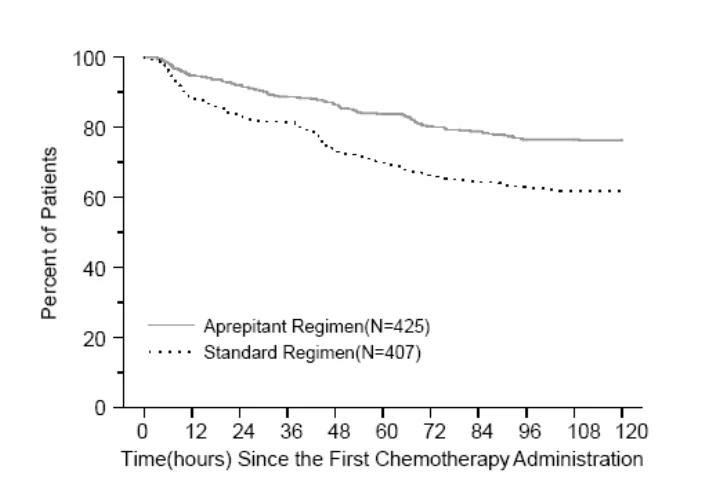
respectively, was reached in 235/324 (73%) and 181/319 (57%) in women and 89/101 (88%) and 71/87 (82%) in men.
In this study, the estimated time to first vomiting after initiation of chemotherapy treatment was longer with the aprepitant regimen, and the incidence was reduced in the aprepitant regimen group compared with standard therapy group as depicted in the Kaplan-Meier curves in Figure 2.
Figure 2: Kaplan-Meier Curves for Time to First Vomiting Episode From Start of Chemotherapy Administration in the Overall Phase – Cycle 1 (Full Analysis Set Patient Population)
In this study, a statistically significantly higher proportion of patients receiving the aprepitant regimen in Cycle 1 reported no impact of nausea and vomiting on daily life, as measured by a FLIE total score >108, compared with patients receiving standard therapy.
DETAILED PHARMACOLOGY
Fosaprepitant, a prodrug of aprepitant, when administered intravenously is rapidly converted to aprepitant, a substance P/neurokinin 1 (NK1) receptor antagonist. Plasma concentrations of fosaprepitant are below the limits of quantification (10 ng/ml) within 30 minutes of the completion of infusion.
Dexamethasone: Oral aprepitant, when given as a regimen of 125 mg with dexamethasone coadministered orally as 20 mg on Day 1, and oral aprepitant when given as 80 mg/day with dexamethasone coadministered orally as 8 mg on Days 2 through 5, increased the AUC of dexamethasone, a CYP3A4 substrate by 2.2-fold, on Days 1 and 5. The usual oral dexamethasone doses should be reduced by approximately 50% when coadministered with a regimen of fosaprepitant followed by aprepitant, to achieve exposures of dexamethasone similar to those obtained when it is given without aprepitant. The daily dose of dexamethasone administered in
clinical CINV studies with oral aprepitant reflects an approximate 50% reduction of the dose of dexamethasone (see DOSAGE AND ADMINISTRATION).
Methylprednisolone: Oral aprepitant, when given as a regimen of 125 mg on Day 1 and 80 mg/day on Days 2 and 3, increased the AUC of methylprednisolone, a CYP3A4 substrate, by 1.3-fold on Day 1 and by 2.5-fold on Day 3, when methylprednisolone was coadministered intravenously as 125 mg on Day 1 and orally as 40 mg on Days 2 and 3. The usual IV methylprednisolone dose should be reduced by approximately 25%, and the usual oral methylprednisolone dose should be reduced by approximately 50% when coadministered with a regimen of fosaprepitant followed by aprepitant, to achieve exposures of methylprednisolone similar to those obtained when it is given without aprepitant.
Warfarin: A single 125-mg dose of aprepitant was administered on Day 1 and 80 mg/day on Days 2 and 3 to healthy subjects who were stabilized on chronic warfarin therapy. Although there was no effect of oral aprepitant on the plasma AUC of R(+) or S(-) warfarin determined on Day 3, there was a 34% decrease in S(-) warfarin (a CYP2C9 substrate) trough concentration accompanied by a 14% decrease in the prothrombin time (reported as International Normalized Ratio or INR) 5 days after completion of dosing with oral aprepitant. In patients on chronic warfarin therapy, the prothrombin time (INR) should be closely monitored in the 2-week period, particularly at 7 to 10 days, following initiation of the 3-day regimen of fosaprepitant followed by aprepitant with each chemotherapy cycle (see WARNINGS AND PRECAUTIONS).
Tolbutamide: Oral aprepitant, when given as 125 mg on Day 1 and 80 mg/day on Days 2 and 3, decreased the AUC of tolbutamide (a CYP2C9 substrate) by 23% on Day 4, 28% on Day 8, and 15% on Day 15, when a single dose of tolbutamide 500 mg was administered orally prior to the administration of the 3-day regimen of oral aprepitant and on Days 4, 8, and 15.
Oral contraceptives: Aprepitant, when given once daily for 14 days as a 100-mg capsule with an oral contraceptive containing 35 mcg of ethinyl estradiol and 1 mg of norethindrone, decreased the AUC of ethinyl estradiol by 43%, and decreased the AUC of norethindrone by 8%; therefore the efficacy of hormonal contraceptives during and for 28 days after administration of fosaprepitant or aprepitant may be reduced. Alternative or back-up methods of contraception should be used during treatment with fosaprepitant or aprepitant and for 1 month following the last dose (see WARNINGS AND PRECAUTIONS).
Midazolam: A study was completed with fosaprepitant and oral midazolam. Fosaprepitant was given at a dose of 100 mg over 15 minutes along with a single dose of midazolam 2 mg. The plasma AUC of midazolam was increased by 1.6-fold. This effect was not considered clinically important.
Oral aprepitant increased the AUC of midazolam, a sensitive CYP3A4 substrate, by 2.3-fold on Day 1 and 3.3-fold on Day 5, when a single oral dose of midazolam 2 mg was coadministered on Day 1 and Day 5 of a regimen of oral aprepitant 125 mg on Day 1 and 80 mg/day on Days 2 through 5. The potential effects of increased plasma concentrations of midazolam or other
benzodiazepines metabolized via CYP3A4 (alprazolam, triazolam) should be considered when coadministering these agents with a 3-day regimen of fosaprepitant followed by aprepitant.
In another study with intravenous administration of midazolam, oral aprepitant was given as 125 mg on Day 1 and 80 mg/day on Days 2 and 3, and midazolam 2 mg IV was given prior to the administration of the 3-day regimen of oral aprepitant and on Days 4, 8, and 15. Oral aprepitant increased the AUC of midazolam by 25% on Day 4 and decreased the AUC of midazolam by 19% on Day 8 relative to the dosing of oral aprepitant on Days 1 through 3. These effects were not considered clinically important. The AUC of midazolam on Day 15 was similar to that observed at baseline.
An additional study was completed with intravenous administration of midazolam and oral aprepitant. Intravenous midazolam 2 mg was given 1 hour after oral administration of a single dose of oral aprepitant 125 mg. The plasma AUC of midazolam was increased by 1.5-fold. Depending on clinical situations (e.g., elderly patients) and degree of monitoring available, dosage adjustment for intravenous midazolam may be necessary when it is coadministered with aprepitant for the chemotherapy induced nausea and vomiting indication (125 mg on Day 1 followed by 80 mg on Days 2 and 3).
Ketoconazole: When a single 125-mg dose of oral aprepitant was administered on Day 5 of a 10-day regimen of 400 mg/day of ketoconazole, a strong CYP3A4 inhibitor, the AUC of aprepitant increased approximately 5-fold and the mean terminal half-life of aprepitant increased approximately 3-fold. Concomitant administration of fosaprepitant or aprepitant with strong CYP3A4 inhibitors should be approached cautiously.
Rifampin: When a single 375-mg dose of oral aprepitant was administered on Day 9 of a 14-day regimen of 600 mg/day of rifampin, a strong CYP3A4 inducer, the AUC of aprepitant decreased approximately 11-fold and the mean terminal half-life decreased approximately 3-fold. Coadministration of fosaprepitant or aprepitant with drugs that induce CYP3A4 activity may result in reduced plasma concentrations and decreased efficacy.
Diltiazem: In a study in 10 patients with mild to moderate hypertension, intravenous infusion of 100 mg fosaprepitant over 15 minutes with diltiazem 120 mg 3 times daily, resulted in a 1.5-fold increase of aprepitant AUC and a 1.4-fold increase in diltiazem AUC. It also resulted in a small but clinically meaningful further maximum decrease in diastolic blood pressure [mean (SD) of 24.3 (± 10.2) mm Hg with fosaprepitant versus 15.6 (± 4.1) mm Hg without fosaprepitant] and resulted in a small further maximum decrease in systolic blood pressure [mean (SD) of 29.5 (± 7.9) mm Hg with fosaprepitant versus 23.8 (± 4.8) mm Hg without fosaprepitant], which may be clinically meaningful, but did not result in a clinically meaningful further change in heart rate or PR interval, beyond those changes induced by diltiazem alone.
In patients with mild to moderate hypertension, administration of aprepitant once daily, as a tablet formulation comparable to 230 mg of the capsule formulation, with diltiazem 120 mg 3 times daily for 5 days, resulted in a 2-fold increase of aprepitant AUC and a simultaneous 1.7-fold
increase of diltiazem AUC. These pharmacokinetic effects did not result in clinically meaningful changes in ECG, heart rate, or blood pressure beyond those changes induced by diltiazem alone.
Paroxetine: Coadministration of once daily doses of aprepitant, as a tablet formulation comparable to 85 mg or 170 mg of the capsule formulation, with paroxetine 20 mg once daily, resulted in a decrease in AUC by approximately 25% and Cmax by approximately 20% of both aprepitant and paroxetine.
TOXICOLOGY
Animal Toxicology
Acute Toxicity
The approximate oral LD50 of aprepitant was >2000 mg/kg in female mice and rats. The approximate intraperitoneal LD50 of aprepitant was >800 mg/kg, but <2000 mg/kg in female rats and >2000 mg/kg in female mice.
The approximate LD50 of fosaprepitant following intravenous administration was >500 mg/kg in female mice and >200 mg/kg in female rats
Chronic Toxicity
Fosaprepitant, when administered intravenously, is rapidly converted to aprepitant.
The toxicity potential of aprepitant was evaluated in a series of repeated-dose oral toxicity studies in rats and in dogs for up to 1 year.
In rats, oral administration of aprepitant for 6 months at doses up to the maximum feasible dose of 1000 mg/kg twice daily (approximately equivalent to [females] or lower than [males] the adult human dose based on systemic exposure) produced increased hepatic weights that correlated with hepatocellular hypertrophy, increased thyroidal weights that correlated with thyroid follicular cell hypertrophy and/or hyperplasia, and pituitary cell vacuolation. These findings are a species-specific consequence of hepatic CYP enzyme induction in the rat, and are consistent with changes observed in rats with other structurally and pharmacologically dissimilar compounds that have been shown to induce hepatic CYP enzymes.
In dogs administered aprepitant orally for 9 months at doses ≥5 mg/kg twice daily (greater than or equal to 13 times the adult human dose based on systemic exposure), toxicity was characterized by slight increases in serum alkaline phosphatase activity and decreases in the albumin/globulin ratio. Significantly decreased body weight gain, testicular degeneration, and prostatic atrophy were observed at doses ≥25 mg/kg twice daily (greater than or equal to 31 times the adult human dose based on systemic exposure). A slight increase in hepatic weights with no histologic correlate was seen at 500 mg/kg twice daily (70 times the adult human dose based on systemic
exposure). No toxicity was observed in dogs administered 32 mg/kg/day (6 times the adult human dose based on systemic exposure) for 1 year.
Carcinogenesis
Carcinogenicity studies were conducted in mice and rats for approximately 2 years. In mice, aprepitant was not carcinogenic at doses up to 500 mg/kg/day (approximately 2 times the adult human dose based on systemic exposure). Rats developed hepatocellular adenomas at a dose of 25 mg/kg twice daily (females) and 125 mg/kg twice daily (females and males), thyroid follicular cell adenomas at a dose of 125 mg/kg twice daily (females and males), and thyroid follicular cell carcinomas at a dose of 125 mg/kg twice daily (males). Systemic exposures at these doses in rats were approximately equivalent to or lower than exposures in humans at the recommended dose. Tumors of these types are a species-specific consequence of hepatic CYP enzyme induction in the rat, and are consistent with changes observed in rats with other structurally and pharmacologically dissimilar compounds that have been shown to induce hepatic CYP enzymes.
Mutagenesis
Fosaprepitant and aprepitant were neither mutagenic nor genotoxic in assays conducted to detect mutagenicity, DNA strand breaks, and chromosomal aberrations. Aprepitant was negative in the in vitro microbial and TK6 human lymphoblastoid cell mutagenesis assays, the in vitro alkaline elution/rat hepatocyte DNA strand break test, the in vitro chromosomal aberration assay in Chinese hamster ovary cells, and the in vivo mouse micronucleus assay in bone marrow.
Reproduction
Fosaprepitant, when administered intravenously, is rapidly converted to aprepitant. In the fertility studies conducted with fosaprepitant and aprepitant, the highest systemic exposures to aprepitant were obtained following oral administration of aprepitant.
Aprepitant administered to female rats at doses up to the maximum feasible dose of 1000 mg/kg twice daily (approximately equivalent to the adult human dose based on systemic exposure) had no effects on mating performance, fertility, or embryonic/fetal survival.
Administration of aprepitant to male rats at doses up to the maximum feasible dose of 1000 mg/kg twice daily (lower than the adult human dose based on systemic exposure) produced no effects on mating performance, fertility, embryonic/fetal survival, sperm count and motility, testicular weights, or the microscopic appearance of the testes and epididymides.
Development
Fosaprepitant, when administered intravenously, is rapidly converted to aprepitant. In the teratology studies conducted with fosaprepitant and aprepitant, the highest systemic exposures to aprepitant were obtained following oral administration of aprepitant.
In rats and rabbits administered oral doses of aprepitant up to 1000 mg/kg twice daily and 25 mg/kg/day, respectively (up to 1.5 times the systemic exposure at the adult human dose), there was no evidence of developmental toxicity as assessed by embryonic/fetal survival, fetal body weight, and fetal external, visceral, and skeletal morphology. Placental transfer of aprepitant
occurred in rats and rabbits at these doses. Concentrations of aprepitant in fetal plasma were approximately 27% and 56% of maternal plasma concentrations in rats and rabbits, respectively.
Significant concentrations of aprepitant were observed in the milk of lactating rats administered 1000 mg/kg twice daily. At this dose, the mean milk drug concentration was 90% of the mean maternal plasma concentration.
REFERENCES
- 1.
MRL Clinical Study Report: A Randomized, Double-Blind, Placebo-Controlled, Parallel-
Group Study, Conducted Under In-House Blinding Conditions, to Examine the Safety, Tolerability, and Efficacy of MK–0869 for the Prevention of Chemotherapy-Induced Nausea and Vomiting Associated With High-Dose Cisplatin (Protocol 052).
- 2.
MRL Clinical Study Report: A Randomized, Double-Blind, Placebo-Controlled, Parallel-
Group Study, Conducted Under In-House Blinding Conditions, to Examine the Safety, Tolerability, and Efficacy of MK–0869 for the Prevention of Chemotherapy-Induced Nausea and Vomiting Associated With High-Dose Cisplatin (Protocol 054).
- 3.
MRL Clinical Study Report, Multicenter Study: A Randomized, Double-Blind, Parallel-
Group Study Conducted Under In-House Blinding Conditions to Determine the Efficacy and Tolerability of Aprepitant for the Prevention of Chemotherapy-Induced Nausea and Vomiting Assoicated With Moderately Emetogenic Chemotherapy (Protocol 071).
- 4.
MRL Clinical Study Report, A Randomized, Double-Blind, Parallel-Group Study Conducted
Under In-House Blinding Conditions to Determine the Efficacy and Tolerability of Aprepitant for the Prevention of Chemotherapy-Induced Nausea and Vomiting Associated With Moderately Emetogenic Chemotherapy (Protocol 130).
- 5.
de Wit R, Herrstedt J, Rapoport B, Carides AD, Guoguang-Ma J, Elmer M et al. The oral
NK(1) antagonist, aprepitant, given with standard antiemetics provides protection against nausea and vomiting over multiple cycles of cisplatin-based chemotherapy: a combined analysis of two randomised, placebo-controlled phase III clinical trials. Eur J Cancer 2004;40:403–10.
- 6.
Gralla RJ, de Wit R, Herrstedt J. Carides AD, Ianus J, Guoguang-Ma J et al. Antiemetic
Efficacy of the Neurokinin-1 Antagonist, Aprepitant, Plus a 5HT3 Antagonist and a Corticosteroid in Patients Receiving Anthracyclines or Cyclophosphamide in Addition to High-Dose Cisplatin. Cancer 2005 Aug 15;104(4):864-8.
- 7.
Hesketh PJ, Grunberg SM, Gralla RJ, Warr DG, Roila F, de Wit R et al. The oral neurokinin-
1 antagonist aprepitant for the prevention of chemotherapy-induced nausea and vomiting: a multinational, randomized, double-blind, placebo-controlled trial in patients receiving high-dose cisplatin—the Aprepitant Protocol 052 Study Group. J Clin Oncol 2003;21:4112–9.
- 8. Hesketh PJ, Grunberg, SM, Herrstedt J, de Wit R, Gralla RJ, Carides AD. Combined data from two phase III trials of the NK1 antagonist aprepitant plus a 5HT3 antagonist and a corticosteroid for prevention of chemotherapy-induced nausea and vomiting: effect of gender on treatment response. Support Care Cancer 2006;14:354–60.
- 9.
Poli-Bigelli S, Rodrigues-Pereira J, Carides AD, Guoguang-Ma J, Eldridge K, Hipple A et al.
Addition of the neurokinin 1 receptor antagonist aprepitant to standard antiemetic therapy improves control of chemotherapy-induced nausea and vomiting. Results from a randomized, double-blind, placebo-controlled trial in Latin America. Cancer 2003;97:3090–8.
- 10. Rapoport BL, Jordan K, Boice JA, Taylor A, Brown C, Hardwick JS et al. Aprepitant for the prevention of chemotherapy-induced nausea and vomiting associated with a broad range of moderately emetogenic chemotherapies and tumor types: a randomized, double blind study. Support Care Cancer 2009 Jul 01; published on line.
- 11. Warr DG, Hesketh PJ, Gralla RJ, Muss HB, Herrstedt J, Eisenbert PD et al. Efficacy and tolerability of aprepitant for the prevention of chemotherapy-induced nausea and vomiting in patients with breast cancer after one cycle of moderately emetogenic chemotherapy. J Clin Oncol 2005;23:2822–30.