


Product Monograph - Estalis Sequi
ACTION AND CLINICAL PHARMACOLOGY
ESTALIS (norethindrone acetate (NETA)/estradiol-17ß) is designed to provide continuous estrogen and progestin therapy, in a 28-day treatment cycle in women with an intact uterus.
ESTALIS-SEQUI (estradiol-17ß and NETA/estradiol-17ß) is designed to provide continuous estrogen and sequential progestin therapy, in a 28-day treatment cycle, for women with an intact uterus.
Transdermally delivered estradiol is metabolized only to a small extent by the skin and by-passes the first pass effect seen with orally administered estrogen products. Therapeutic estradiol serum levels with lower circulating levels of estrone and estrone conjugates are achieved with smaller transdermal doses (daily and total) as compared to oral therapy and more closely approximate premenopausal concentrations.
In a pharmacokinetic study, it was shown that ESTALIS matrix transdermal delivery system achieves estradiol serum levels and estrone to estradiol ratios in the range of those observed in premenopausal women at the early (estradiol >40 pg/mL) to mid-follicular phase. These features are maintained for an entire 84 to 96 hour wear period. Multiple applications of ESTALIS (250/50 :g/day, 140/50 :g/day) matrix transdermal delivery system resulted in average estradiol serum concentrations at steady-state of 50 and 45 pg/mL, respectively. At the end of the application periods, the average estradiol serum concentrations were 37 and 27 pg/mL, respectively. Estradiol has a short elimination half-life of approximately 2 to 3 hours. Therefore, a rapid decline in serum levels is observed after the matrix transdermal delivery system is removed. After removal of the matrix transdermal delivery system, serum concentrations of estradiol return to untreated postmenopausal levels (<20 pg/mL) within 4 - 8 hours.
In a pharmacokinetic study it was shown that multiple applications of ESTALIS (250/50 :g/day, 140/50 :g/day) matrix transdermal delivery systems resulted in average norethindrone serum concentrations at steady-state of 840 and 489 pg/mL, respectively. At the end of the application period, the average serum concentrations of norethindrone were 686 and 386 pg/mL, respectively. Serum norethindrone concentrations of ESTALIS increased linearly with increasing doses of NETA. The elimination half-life of norethindrone is reported to be 6 to 8 hours. After removal of the ESTALIS matrix transdermal delivery system, norethindrone serum concentrations diminish rapidly and are less than 50 pg/mL within 48 hours.
Minimal fluctuations in serum estradiol and norethindrone concentrations demonstrate consistent deliveries over the application interval. There is no accumulation of estradiol or norethindrone in the circulation following multiple applications.
PIVOTAL CLINICAL TRIALS
Treatment of vasomotor symptoms
Efficacy and safety of ESTALIS in the relief of menopausal and postmenopausal symptoms have been studied in two 3-month multicenter, randomized, double-blind, placebo-controlled, parallel group studies. A total of 446 non-hysterectomized healthy postmenopausal women with moderate-to-severe vasomotor symptoms ($ 8 hot flushes/day of moderate-to-severe intensity with sweating) were enrolled in the studies 303 and 304. Over 3 months (3 cycles of 28 days), the study systems were applied on the skin twice weekly. In study 303, patients received ESTALIS as a continuous regimen (50 :g/day estradiol in combination with either 140 or 250 :g/day norethindrone acetate), whereas in study 304, patients received ESTALIS in a sequential regimen (50 :g/day estradiol only (VIVELLE) for the first 14 days of each 28-day cycle followed by 50 :g/day estradiol in combination with either 140 or 250 :g/day norethindrone acetate for the remaining 14 days of each 28-day cycle).
In both studies 303 and 304, ESTALIS was better than placebo in reducing the number of hot flushes per day from baseline to endpoint (p<0.001), as well as reducing the intensity of hot flushes (p<0.001) and sweating (p<0.001). In studies 303 and 304 combined, the discontinuation rate was 8%. In the ESTALIS 140/50 and 250/50 groups, the discontinuation rate due to adverse events was 4.5% compared to 2% in the placebo group.
Protection against endometrial hyperplasia
ESTALIS was effective in reducing the incidence of estrogen-induced endometrial hyperplasia after 1 year of therapy in two Phase II clinical trials. Nine hundred fifty-five (955) postmenopausal women (with intact uteri) were treated with (i) a continuous regimen of ESTALIS alone (Continuous Combined regimen), (ii) a sequential regimen with an estradiol-only transdermal system (VIVELLE) followed by an ESTALIS transdermal system (Continuous Sequential regimen) or (iii) continuous regimen with an estradiol-only transdermal system. The incidence of endometrial hyperplasia (primary endpoint) was significantly less after 1 year of therapy with either ESTALIS regimen than with the estradiol-only transdermal system (1% or less vs 35-70%, p<0.001). A regular and predictable bleeding pattern occurred in approximately two-thirds of women in each of the sequential regimen (ESTALIS + VIVELLE) groups. By comparison, the estrogen-only group had an increasing incidence of unpredictable irregular bleeding and spotting which contributed to the higher dropout rate of 37% for this group.
Information regarding lipid effects
There are possible additional risks that may be associated with the inclusion of a progestin in estrogen replacement regimens. The potential risks include adverse effects on carbohydrate and lipid metabolism, mood changes and edema. The choice and dose of progestin may be important in minimizing these adverse effects and may differ among women.
One year clinical trials show that the ESTALIS transdermal delivery system decreases plasma LDL-cholesterol, total cholesterol, apolipoprotein B, high density lipoprotein-cholesterol (HDL-C), Lipoprotein(a), and triglycerides. Significantly greater reductions in LDL-cholesterol concentrations and triglycerides were achieved as compared to continuous transdermal estradiol-alone. Changes in mean total cholesterol / HDL-C ratios were minimal after 1 year of treatment.
INDICATIONS AND CLINICAL USE
ESTALIS (NETA/estradiol-17ß) and ESTALIS-SEQUI (estradiol-17ß and NETA/estradiol-17ß) are indicated for the relief of menopausal and postmenopausal symptoms occurring in naturally or surgically induced estrogen deficiency states e.g. hot flushes, sleep disturbances and vulvar and vaginal atrophy.
ESTALIS and ESTALIS-SEQUI are recommended for the above indication only in patients with an intact uterus since the regimen includes a progestin whose role is to prevent endometrial hyperplasia.
CONTRAINDICATIONS
ESTALIS (NETA/estradiol-17ß) and ESTALIS-SEQUI (estradiol-17ß and NETA/estradiol-17ß) should not be administered to patients with any of the following conditions:
C Personal history of known or suspected estrogen-dependent neoplasia such as breast or endometrial cancer
C Known or suspected pregnancy
- Breast-feeding
C Endometrial hyperplasia
C Undiagnosed abnormal vaginal bleeding
C Porphyria
C Active or past history of arterial thromboembolic disease (eg.cerebrovascular accident, myocardial infarction, coronary heart disease)
C Active or past history of confirmed venous thromboembolism (such as deep venous thrombosis or pulmonary embolism) or active thrombophlebitis
C Active hepatic dysfunction or disease, especially of the obstructive type
- Severe hepatic disease
- Classical migraine
- Partial or complete loss of vision from ophthalmic vascular disease
- Known or suspected hypersensitivity to any component of the patch
WARNINGS
See Boxed Warning at the front page.
CARDIOVASCULAR DISORDERS
Available epidemiological disorders data indicate that use of estrogen with or without progestin is associated with an increased risk of stroke and coronary heart disease. WHI-trial’s results concluded that there are more risks than benefits among women using combined Hormone Replacement Therapy (HRT), compared to the group using placebo. In 10,000 women on combined oral HRT (conjugated equine estrogens/medroxyprogesterone acetate) over one year period, there were seven more cases of coronary heart disease (37 on combined HRT versus 30 on placebo) and eight more cases of strokes (29 versus 21).
In the Heart and Estrogen/progestin Replacement Study (HERS) of postmenopausal women with documented heart disease (n =2763, average age 66.7 years), a randomized placebo-controlled clinical trial of secondary prevention of coronary heart disease (CHD), treatment with 0.625 mg/day oral conjugated equine estrogen (CEE) plus 2.5 mg medroxyprogesterone acetate (MPA) demonstrated no cardiovascular benefit.
Specifically, during an average follow-up of 4.1 years, treatment with CEE plus MPA did not reduce the overall rate of CHD events in postmenopausal women with established coronary heart disease. There were more CHD events in the hormone-treated group than in the placebo group in year 1, but not during the subsequent years.
From the original HERS trial, 2321 women consented to participate in an open label extension of HERS, HERS II. Average follow-up in HERS II was an additional 2.7 years, for a total of 6.8 years overall. After 6.8 years, hormone therapy did not reduce the risk of cardiovascular events in women with CHD.
BREAST CANCER
Current epidemiological data indicate that the use of combined HRT is associated with an increased risk of invasive breast cancer. WHI-trial’s results suggest that risks exceed benefits among women using combined HRT (conjugated equine estrogens/medroxyprogesterone acetate), compared to the group using placebo. In 10,000 women on combined HRT over one year period, there were eight more cases of invasive breast cancer (38 on combined HRT versus 30 on placebo).
The WHI study reported that the invasive breast cancers diagnosed in the estrogen plus progestin group were similar in histology but were larger [mean (SD), 1.7 cm (1.1) vs 1.5 cm (0.9), respectively; P=0.04] and were at a more advanced stage compared with those diagnosed in the placebo group. The WHI trial also reported that the percentage of women with abnormal mammograms (recommendations for short-interval follow-up, a suspicious abnormality, or highly suggestive of malignancy) was significantly higher in the oestrogen plus progestin group versus the placebo group. This difference appeared at year one and persisted in each year thereafter.
It is recommended that estrogens not be given to women with existing breast cancer or those with a previous history of the disease. There is a need for caution in prescribing estrogens for women with known risk factors associated with the development of breast cancer, such as strong family history of breast cancer (first degree relative) or who present a breast condition with an increased risk (breast nodules, fibrocystic disease of the breast, or abnormal mammograms and/or atypical hyperplasia at breast biopsy). Other known risk factors for the development of breast cancer such as nulliparity, obesity, early menarche, late age at first full term pregnancy and at menopause should also be evaluated.
It is recommended that women undergo mammography prior to the start of HRT treatment and at regular intervals during treatment, as deemed appropriate by the treating physician and according to the perceived risks for each patient.
The overall benefits and possible risks of hormone replacement therapy should be fully considered and discussed with patients. It is important that the increased risk of being diagnosed with breast cancer after 4 years of treatment with HRT (as reported in the results of WHI-trial) is discussed with the patient and weighed against its known benefits. Instructions for self-examination of the breasts should be included in this counselling.
VENOUS THROMBOEMBOLISM
Recent epidemiological data indicate that the use of estrogen with or without progestin is associated with an increased risk of developing venous thromboembolism (VTE). WHI-trial’s results suggest that risks exceed benefits among women using combined HRT (conjugated equine estrogens/medroxyprogesterone acetate), compared to the group using placebo. In 10,000 women on combined HRT over a period of one year, there were eighteen more cases of total blood clots in the lungs and legs (34 on combined HRT versus 16 on placebo).
Generally recognized risk factors for VTE include a personal history, a family history (the occurrence of VTE in a direct relative at a relatively early age may indicate genetic predisposition) of thromboembolic disease, severe obesity (body mass index > 30 kg/m2), systemic lupus erythematosus (SLE) and severe varicose veins. The risk of VTE also increases with age and smoking.
A history of recurrent spontaneous abortions should be investigated to exclude thrombophilic predisposition. In patients in whom this diagnosis is confirmed, the use of HRT is viewed as contraindicated.
The risk of VTE may be temporarily increased with prolonged immobilization, major elective surgery or posttraumatic surgery, or major trauma (if feasible, HRT should be discontinued at least 4 weeks before major surgery which may be associated with an increased risk of thromboembolism, or during periods of prolonged immobilization). The treatment should not be restarted until the woman is completely mobile. In women on HRT, attention should be given to prophylactic measures to prevent VTE following surgery Also, patients with varicose veins should be closely supervised although there is no consensus about the possible role of varicose veins in VTE. The physician should be alert to the earliest manifestations of thrombotic disorders (thrombophlebitis, retinal thrombosis, cerebral embolism and pulmonary embolism). If these occur or are suspected, hormone therapy should be discontinued immediately.
Patients should be told to contact their doctor immediately if they become aware of a potential thromboembolic symptom (e.g. painful swelling of a leg, sudden pain in the chest, dyspnoea).
ENDOMETRIAL HYPERPLASIA & ENDOMETRIAL CARCINOMA
Estrogen-only HRT increases the risk of endometrial hyperplasia (if taken by women with intact uteri).
The risk of endometrial cancer in users of unopposed estrogens who have an intact uterus is greater than in non-users and appears to depend on the duration of treatment and the estrogen dose. The greatest risk appears to be associated with prolonged use. It has been shown that adequate concomitant progestogen therapy lowers the incidence of endometrial hyperplasia and therefore the potential risk of endometrial carcinoma associated with prolonged use of estrogen therapy (see Coadministration of Progestins under Dosage and Administration and Pharmacology).
OVARIAN CANCER
In some epidemiological studies, the long-term use of unopposed estrogens in hysterectomised women has been associated with an increased risk of ovarian cancer. It is uncertain whether long-term use of combined HRT (estrogens and progestogens) confers a different risk than estrogen-only HRT products.
GALLBLADDER DISEASES
A 2- to 4-fold increase in the risk of gallbladder disease requiring surgery in women receiving postmenopausal estrogens has been reported with combined oral CE and MPA treatment.
CONTACT SENSITIZATION
Contact sensitization is known to occur with topical applications. Although it is extremely rare, patients who develop contact sensitization to any component of the patch should be warned that a severe hypersensitivity reaction may occur with continuing exposure to the causative agent.
BENIGN HEPATIC ADENOMAS AND HEPATOCELLULAR CARCINOMA
Benign hepatic adenomas have been associated with the use of combined estrogen and progestin oral contraceptives. Although benign and rare, these tumours may rupture and cause death from intra-abdominal hemorrhage. Such lesions have not yet been reported in association with other estrogen or progestin preparations, but they should be considered if abdominal pain and tenderness, abdominal mass, or hypovolemic shock occurs in patients receiving estrogen. Hepatocellular carcinoma has also been reported in women taking estrogen-containing oral contraceptives. The causal relationship of this malignancy to these drugs is not known.
DEMENTIA
In a randomized placebo controlled ancillary study of the WHI, the Women’s Health Initiative Memory Study (WHIMS), women aged 65 and older (average age 71) treated with oral CEE and MPA for an average follow-up of 4 years were reported to have a two-fold increase in the risk of developing probable dementia. The absolute excess risk of probable dementia was 23 additional cases per 10,000 person-years (45 versus 22) in CEE/MPA treated women and the relative risk was 2.05.
Since only women aged 65 and older were included in this study, it is unknown whether these findings apply to younger postmenopausal women.
The estrogen-only sub-study of the WHIMS is currently on-going and no data are available yet. It is therefore unknown whether these findings apply to estrogen-only therapy.
For transdermal estrogen-only or estrogen-progestogen combined products, no large randomized clinical trials have assessed the HRT-associated risk of probable dementia to date. Therefore there are no data to support the conclusion that the frequency of probable dementia is different with ESTALIS or ESTALIS-SEQUI.
PRECAUTIONS
- Before ESTALIS OR ESTALIS-SEQUI (norethindrone acetate (NETA)/estradiol-17ß) is administered, the patient should have a complete physical examination including a blood pressure determination. Breasts and pelvic organs should be appropriately examined and a Papanicolaou smear should be performed. Endometrial biopsy should be done when indicated. Baseline tests should include mammography, measurements of blood glucose, calcium, triglycerides and cholesterol, and liver function tests.
- The first follow-up examination should be done within 3-6 months after initiation of treatment to assess response to treatment. Thereafter, examinations should be made at intervals at least once a year and should include at least those procedures outlined above.
- Women should be advised that changes in their breasts should be reported to their doctor or nurse. Investigations, including mammography, should be carried out in accordance with currently accepted screening practices and adapted to the clinical needs of the individual woman.
- It is important that patients are encouraged to practice frequent self-examination of the breasts.
- Abnormal vaginal bleeding, due to its prolongation, irregularity or heaviness, occurring during therapy should prompt diagnostic measures like endometrial biopsy or curettage to rule out the possibility of uterine malignancy and the treatment should be re-evaluated.
- Pre-existing uterine leiomyoma may increase in size during estrogen use. Growth, pain or tenderness of uterine leiomyoma requires discontinuation of medication.
- Symptoms and physical findings associated with a previous diagnosis of endometriosis may reappear or become aggravated with estrogen use.
- If feasible, HRT should be discontinued at least 4 weeks before major surgery which may be associated with an increased risk of thromboembolism, or during periods of prolonged immobilization.
- Patients who develop visual disturbances, classical migraine, transient aphasia, paralysis, or loss of consciousness should discontinue medication.
- Women using hormonal replacement therapy (HRT) sometimes experience increased blood pressure. Blood pressure should be monitored with HRT use. Elevation of blood pressure in previously normotensive or hypertensive patients should be evaluated and HRT therapy may have to be discontinued.
- Estrogens may cause fluid retention. Therefore, particular caution is indicated in cardiac or renal dysfunction, epilepsy or asthma. Treatment should be stopped if there is an increase in epileptic seizures. If, in any of the above-mentioned conditions, a worsening of the underlying disease is diagnosed or suspected during treatment, the benefits and risks of treatment should be reassessed based on the individual case.
- Because the prolonged use of estrogens influences the metabolism of calcium and phosphorus, estrogens should be used with caution in patients with metabolic and malignant bone diseases associated with hypercalcemia, in patients with renal insufficiency and in patients with otosclerosis.
- A worsening of glucose tolerance and lipid metabolism have been observed in a significant percentage of peri- and post-menopausal patients on oral estrogen treatment. Therefore, diabetic patients or those with a predisposition to diabetes should be observed closely to detect any alterations in carbohydrate or lipid metabolism, especially in triglyceride blood levels.
- Caution is advised in patients with a history of estrogen-related jaundice and pruritus. If cholestatic jaundice develops during treatment, the treatment should be discontinued and appropriate investigations carried out.
- Women with familial hypertriglyceridemia need special surveillance. Lipid-lowering measures are recommended additionally, before treatment is started.
- Liver function tests should be done periodically in subjects who are suspected of having hepatic disease. For information on endocrine and liver function tests, see the section under Laboratory Tests.
DRUG INTERACTIONS
Estrogens may diminish the effectiveness of anticoagulants, antidiabetic and antihypertensive agents.
Preparations inducing liver enzymes (e.g., barbiturates, hydantoins, carbamazepine, meprobamate, phenylbutazone or rifampicin) may interfere with the activity of orally administered estrogens.
The following section contains information on drug interactions with ethinyl estradiol-containing products (specifically, oral contraceptives) that have been reported in the public literature. It is unknown whether such interactions occur with drug products containing other types of estrogens.
- 1. The metabolism of ethinyl estradiol is increased by rifampicin and anticonvulsants such as phenobarbital, phenytoin and carbamazepine. Coadministration of troglitazone and certain ethinyl estradiol containing drug products (e.g., oral contraceptives containing ethinyl estradiol) reduces the plasma concentrations of ethinyl estradiol by 30 percent.
Ascorbic acid and acetaminophen may increase AUC and/or plasma concentrations of ethinyl estradiol. Coadministration of atorvastatin and certain ethinyl estradiol containing drug products (e.g., oral contraceptives containing ethinyl estradiol) increases AUC values for ethinyl estradiol by 20 percent.
Clinical pharmacokinetics studies have not demonstrated any consistent effect of antibiotics (other than rifampicin) on plasma concentrations of synthetic steroids.
- 2. Drug products containing ethinyl estradiol may inhibit the metabolism of other compounds. Increased plasma concentrations of cyclosporin, prednisolone, and theophylline have been reported with concomitant administration of certain drugs containing ethinyl estradiol (e.g., oral contraceptives containing ethinyl estradiol). In addition, these drugs containing ethinyl estradiol may induce the conjugation of other compounds.
Decreased plasma concentrations of acetaminophen and increased clearance of temazepam, salicylic acid, morphine and clofibric acid have been noted when these drugs were administered with certain ethinyl estradiol containing drug products (e.g., oral contraceptives containing ethinyl estradiol).
Concomitant administration of aminoglutethimide with medroxyprogesterone acetate (MPA) may significantly reduce the bioavailability of MPA.
It was found that some herbal products (e.g., St. John’s wort) which are available as OTC products might affect metabolism, and therefore, efficacy and safety of estrogen/progestin products.
Physicians and other health care providers should be aware of other non-prescription products concomitantly used by the patients, including herbal and natural products obtained from the widely spread Health Stores.
Laboratory Tests
The results of certain endocrine and liver function tests may be affected by estrogen-containing products:
C increased sulfobromophthalein retention;
C increased prothrombin time and partial thromboplastin time; increased levels of fibrinogen and fibrinogen activity; increased coagulation factors VII, VIII, IX, X; increased norepinephrine-induced platelet aggregability; decreased antithrombin III;
C increased thyroxine-binding globulin (TBG), leading to increased circulating total thyroid hormone (T4) as measured by column or radioimmunoassay; free T3 resin uptake is decreased, reflecting the elevated TBG; free T4 concentration is unaltered;
C other binding proteins may be elevated in serum i.e., corticosteroid binding globulin (CBG), sex-hormone binding globulin (SHBG), leading to increased circulating corticosteroids and sex steroids respectively; free or biologically active hormone concentrations are unchanged;
C reduced response to the METOPIRONE test;
C impaired glucose tolerance;
C reduced serum folate concentration;
C increased serum triglyceride and phospholipid concentration.
With transdermally administered estradiol-17ß, no effect on fibrinogen, antithrombin III, TBG, CBG or SHBG and decreases in serum triglycerides have been observed.
The results of the above laboratory tests should not be considered reliable unless therapy has been discontinued for two to four months. The pathologist should be informed that the patient is receiving HRT when relevant specimens are submitted.
Information To Be Provided To The Patient
See Information For The Consumer.
Adverse Reactions
See Warnings and Precautions regarding potential induction of malignant neoplasms and adverse effects similar to those of oral contraceptives.
The most commonly reported adverse reaction to ESTALIS (NETA/estradiol-17ß) in clinical trials was erythema at the application site. Less than 1% of patients treated sequentially and about 5% of patients treated continuously discontinued therapy due to an application site reaction. The most commonly reported adverse reaction to VIVELLE (estradiol-17ß) in clinical trials was redness and irritation at the application site. This caused approximately 0.8% of patients to discontinue therapy.
The following adverse reactions have been reported with estrogens in general.
Gastrointestinal
Nausea; vomiting; abdominal discomfort (cramps, pressure, pain); bloating; gallbladder disorder; asymptomatic impaired liver function; cholestatic jaundice.
Genitourinary
Breakthrough bleeding; spotting; change in menstrual flow; dysmenorrhea; vaginal itching/discharge; dyspareunia; dysuria; endometrial hyperplasia; pre-menstrual-like syndrome; reactivation of endometriosis; cystitis; changes in cervical erosion and amount of cervical secretion.
Skin
Allergic contact dermatitis; reversible post-inflammatory pigmentation; general pruritus and exanthema; loss of scalp hair; chloasma or melasma, which may persist when drug is discontinued; pigmentation of the skin; erythema nodosum; erythema multiforme; hemorrhagic skin eruptions; precipitation or aggravation of porphyria cutanea tarda in predisposed individuals and hirsutism.
Isolated cases of anaphylactoid reactions (some of the patients had a history of previous allergy or allergic disorders).
Endocrine
Breast swelling and tenderness; increased blood sugar levels; decreased glucose tolerance; sodium retention.
Cardiovascular/Hematologic
Palpitations; isolated cases of: thrombophlebitis; thromboembolic disorders; exacerbations of varicose veins; increase in blood pressure (see Warnings and Precautions). Coronary thrombosis; altered coagulation tests (see Laboratory Tests under Precautions).
Central Nervous System
Aggravation of migraine headaches; headaches; mental depression; nervousness; dizziness; fatigue; irritability; neuro-ocular lesions (e.g., retinal thrombosis, optic neuritis).
Dementia has been reported in association with some estrogen-progestogen treatments.
Ophthalmic
Visual disturbances; steepening of the corneal curvature; intolerance to contact lenses; neuro-ocular lesions (see CNS above).
Miscellaneous
Changes in appetite; changes in body weight; edema; neuritis; change in libido; musculoskeletal pain [including leg pain not related to thromboembolic disease (usually transient, lasting 3-6 weeks). If symptoms persist, the dose of estrogen should be reduced].
If adverse symptoms persist, the prescription of HRT should be re-considered.
Symptoms and Treatment of Overdosage
Symptoms
Numerous reports of ingestion of large doses of estrogen products and estrogen-containing oral contraceptives by young children have not revealed acute serious ill effects. Overdosage with estrogen may cause nausea, breast discomfort, fluid retention, bloating or vaginal bleeding in women.
Progestin (norethindrone acetate) overdosage has been characterized by depressed mood, tiredness, acne and hirsutism.
Treatment
Owing to the mode of administration (transdermal), plasma levels of estradiol-17ß and norethindrone acetate can be rapidly reduced by removal of the patch.
Symptomatic treatment should be given.
Dosage And Administration
Dosage
For initiation and maintenance of treatment, the lowest effective dose should always be used.
Hormone replacement therapy (HRT) involving either estrogen alone or estrogen-progestogen combined therapy should only be continued as long as the benefits outweigh the risks for the individual.
ESTALIS and ESTALIS-SEQUI are used as a continuous treatment (uninterrupted application twice weekly).
In women who are not currently taking oral estrogens, treatment with ESTALIS (NETA/estradiol-17ß) or ESTALIS-SEQUI (estradiol-17ß and NETA/estradiol-17ß) can be initiated at once. In women who are currently taking oral estrogen, treatment with ESTALIS or ESTALIS-SEQUI can be initiated on reappearance of menopausal symptoms, following discontinuation of oral therapy.
Therapeutic Regimens: Combination progestin/estrogen regimens are indicated for women with an intact uterus. Two ESTALIS (NETA/estradiol-17ß) patches are available: 140 µg norethindrone acetate with 50 µg estradiol per day (9 cm2) and 250 µg norethindrone acetate with 50 µg estradiol per day (16 cm2). For all regimens, the requirement for hormone replacement therapy for menopausal symptoms should be reassessed periodically. Attempts to taper or discontinue the medication should be made at 3- to 6-month intervals.
Continuous Combined Regimen:
ESTALIS 140/50 or ESTALIS 250/50 µg per day (16 cm2) is worn continuously on the abdomen or buttocks. A new patch should be applied twice weekly during a 28-day cycle. Irregular uterine bleeding may occur particularly in the first 6 months, but generally decreases with time, and often to an amennorheic state.
If irregular uterine bleeding persists and uterine pathology has been ruled out by appropriate diagnostic measures, it may be more appropriate instead to prescribe Estalis using the sequential regimen described immediately below in order to make withdrawal uterine bleeding more regular and predictable.
Sequential Regimen:
ESTALIS-SEQUI is used in a sequential regimen.
In this treatment regimen, VIVELLE 50 µg per day (nominal delivery rate) estradiol transdermal system is worn for the first 14 days of a 28-day cycle, replacing the system twice weekly. For the remaining 14 days of the 28-day cycle, ESTALIS 140/50 or ESTALIS 250/50 µg per day (16 cm2) should be applied. The ESTALIS patch should be replaced twice weekly during this period in the cycle. Women should be advised that monthly withdrawal bleeding often occurs.
Figure 1
| Week 1 | ± | ± | VIVELLE 50 patch for the first 2 weeks |
| Week 2 | ± | ± | |
| Week 3 | ± | ± | ESTALIS 140/50 or ESTALIS 250/50 patch |
for the following 2 weeks
| Week 4 | ± | ± |
ESTALIS-SEQUI (estradiol-17ß followed by NETA/estradiol-17ß) provides, therefore, 14 days of progestin per cycle. The addition of sufficient NETA to induce secretory transformation of the endometrium during estrogen replacement therapy is mandatory.
As observed in the normal menstrual cycle, cyclical administration of NETA from ESTALIS 250/50 as recommended in the sequential regimen should induce REGULAR CYCLICAL bleeding with mean onset towards the end of the application phase. The normal duration of vaginal bleeding associated with sequential administration of ESTALIS is around 6 days. This cyclical bleeding is expected to be of light intensity or spotting for 60-70% of this time. There are individual variations in these parameters. Once all 4 patches of ESTALIS have been used as recommended, the first VIVELLE 50 patch of the new cycle is applied even if some vaginal bleeding still persists. Vaginal bleeding should stop early in the new cycle.
Abnormal vaginal bleeding, due to its prolongation, irregularity or heaviness, in any patient receiving hormone replacement therapy requires institution of prompt diagnostic measures like endometrial biopsy or curettage to rule out the possibility of uterine malignancy.
The short-term effects of NETA co-administration may include vaginal bleeding during or after NETA treatment, breast tenderness, and mood and weight changes. The long-term effects generally depend on the dosage and type of progestin used. The lowest effective dose of estrogen and progestin should be prescribed (see Coadministration Of Progestins under Pharmacology).
See the Precautions Section on the examination of the patient before ESTALIS or ESTALIS-SEQUI administration.
Patch Application
The physician should discuss the most appropriate placement of the patch with the patient. Immediately after removal of a patch from the pouch and removal of one-half of the protective liner, the adhesive side of the ESTALIS or VIVELLE patch should be placed on a clean, dry area of intact skin and peel off the remaining one-half of the protective liner . The area selected should not be oily, damaged or irritated, and not exposed to the sun. The site selected should also be one at which little wrinkling of the skin occurs during movement of the body (buttocks and lower abdomen). The waistline should be avoided, since tight clothing may dislodge the patch. The patch should be pressed firmly in place with the palm of the hand for at least 10 seconds, making sure there is good contact, especially around the edges. In the event that a patch should fall off, it can be reapplied. If it fails to adhere then a new patch may be applied. In either case, the original treatment schedule should be continued. Patches should not be applied to the same skin site for at least one week. ESTALIS and VIVELLE must not be applied to the breasts to avoid potentially harmful effects on the breast tissue.
If a woman has forgotten to apply a patch, she should apply a new patch as soon as possible. The subsequent patch should be applied according to the original treatment schedule. The interruption of treatment might increase the likelihood of recurrence of symptoms and breakthrough bleeding and spotting.
Children
ESTALIS and ESTALIS-SEQUI should not be used in children.
Pharmaceutical Information
Drug Substance:
Estradiol USP (Estradiol-17ß):
Description: White to creamy white, odorless, crystalline powder.
Chemical name: Estradiol hemihydrate
Estra-1,3,5(10)-triene-3,17$-diol.
Molecular weight: 281.4
Molecular formula: C18H24O2.½H2O
Structural Formula:
* ½ H2O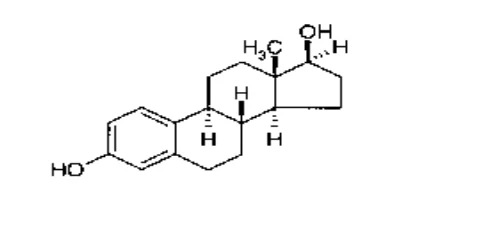
Solubilities: Practically insoluble in water;
Soluble 1 in 28 of alcohol
Soluble 1 in 17 of acetone
NORETHINDRONE ACETATE USP:
Description: White to creamy white, odorless, crystalline powder.
Chemical name: Norethindrone acetate
17-hydroxy-19-nor-17"-pregn-4-en-20-yn-3-one acetate.
Molecular weight: 340.47
Protective Liner Adhesive Layer Backing
Molecular formula: C22H28O3.
Structural Formula:
Solubilities: Insoluble in water;
Soluble 1 in 4 in acetone Composition
ESTALIS is an alcohol-free, adhesive-based matrix transdermal patch comprising three layers. Proceeding from the visible surface toward the surface attached to the skin, these layers are: a backing, an adhesive layer, and a protective liner. The adhesive matrix containing 17$-estradiol and norethindrone acetate is applied to a polyester/ethylene vinyl acetate laminate film on one side and is protected on the other side by a transparent fluoropolymer coated release liner. The transparent release liner must be removed before the system can be used. Each patch is enclosed in a heat-sealed pouch.
ESTALIS 140/50 and 250/50 contain a fixed combination of norethindrone acetate (NETA) and estradiol-17ß. ESTALIS patches release controlled amounts of NETA and estradiol-17ß simultaneously through the skin for up to 4 days.
The active components of the system are estradiol USP and norethindrone acetate USP. The remaining components of the system are pharmacologically inactive; they are: a silicone (BIO PSA® X7-4603) and acrylic (Gelva® 737)-based multipolymeric adhesive, povidone USP, oleic acid NF, and dipropylene glycol.
Protective Liner Adhesive Layer Backing
ESTALIS-SEQUI contains two types of patches, VIVELLE 50 and ESTALIS 250/50 or ESTALIS 140/50. VIVELLE contains estradiol-17ß and ESTALIS contains norethindrone acetate (NETA) and estradiol-17ß.
The first type of patch to be applied on the skin during the first 14 days of a 28-day treatment cycle is VIVELLE 50. VIVELLE 50 is a thin, circular, multilayer, transparent transdermal adhesive patch, containing estradiol-17ß that is designed for application to an area of intact skin.
The VIVELLE patch comprises three layers. Proceeding from the visible surface toward the surface attached to the skin, these layers are a backing film, an adhesive layer and a protective layer:
- 1. a flexible semi-transparent backing film of polyurethane and ethylene vinyl alcohol polymer.
- 2. an adhesive formulation containing estradiol-17ß, acrylic polymers, polyisobutylene, oleic acid, synthetic rubber based adhesive, vinyl acetate resin base, phosphatidylcholine, propylene glycol, bentonite, butylene glycol, mineral oil and dipropylene glycol.
- 3. a protective liner of polyester that is attached to the adhesive surface and must be removed before the patch can be used.
The second type of patch contained in ESTALIS-SEQUI and which should be applied to the skin during the last 14 days of a 28-day treatment cycle is ESTALIS 250/50 or ESTALIS 140/50. The active components of the system are estradiol USP and norethindrone acetate USP. The remaining components of the system are pharmacologically inactive; they are: a silicone (BIO PSA® X7-4603) and acrylic (Gelva® 737)-based multipolymeric adhesive, povidone USP, oleic acid NF, and dipropylene glycol.
Stability And Storage Recommendations
ESTALIS AND ESTALIS-SEQUI: Store between 2/C and 8/C until dispensing. Do not freeze.
After dispensing, the patches may be stored unrefrigerated at 20 to 25/C, in which case they should be used within 6 months or before the expiry date, whichever comes first. If the patches are stored in the refrigerator, in this case, they should be used before the expiry date and should be allowed to reach room temperature before application to ensure that they stick satisfactorily.
Do not store the patches in areas where extreme temperatures can occur. Each patch is individually sealed in a separate pouch. Do not store out of the pouch. Apply immediately upon removal from the protective pouch. Apply whole patches.
Keep out of the reach and sight of children and pets both before use and when disposing of used patches.
Availability Of Dosage Forms
The ESTALIS (NETA/estradiol-17ß) package consists of the following systems:
| ESTALIS 140/ 50 | ESTALIS 250/50 | |
| Estradiol-17ß Dosage Nominal in vivo delivery | 50 :g/day | 50 :g/day |
| NETA Dosage Nominal in vivo delivery | 140 :g/day | 250 :g/day |
| Total Estradiol-17ß Content | 0.62 mg | 0.51 mg |
| Total NETA Content | 2.7 mg | 4.8 mg |
| Drug-Releasing Area | 9 cm2 | 16 cm2 |
| Shape of patch | Round | Round |
| Presentation | Cartons of 8 patches | Cartons of 8 patches |
The ESTALIS-SEQUI (estradiol-17ß + NETA/estradiol-17ß) package consists of the following systems:
| ESTALIS-SEQUI 140/ 50 | ESTALIS-SEQUI 250/50 | |||
| VIVELLE 50 | ESTALIS 140/ 50 | VIVELLE 50 | ESTALIS 250/50 | |
| Estradiol-17ß Dosage Nominal in vivo delivery | 50 :g/day | 50 :g/day | 50 :g/day | 50 :g/day |
| NETA Dosage Nominal in vivo delivery | -- | 140 :g/day | -- | 250 :g/day |
Total Estradiol-17ß Content | 4.33 mg | 0.62 mg | 4.33 mg | 0.51 mg |
| Total NETA Content | -- | 2.7 mg | -- | 4.8 mg |
| Drug-Releasing Area | 14.5 cm2 | 9 cm2 | 14.5 cm2 | 16 cm2 |
| Shape of patch | Round | Round | Round | Round |
| Presentation | Cartons of 4 Vivelle and 4 Estalis patches | Cartons of 4 Vivelle and 4 Estalis patches | ||