


Product Monograph - Extra Strength Allergy Relief (Pharmascience)
RECENT MAJOR LABEL CHANGES
| N/A |
|---|
TABLE OF CONTENTS
Sections or subsections that are not applicable at the time of authorization are not listed.
RECENT MAJOR LABEL CHANGES ........................................................................................... 2
1 INDICATIONS ................................................................................................................... 4
1.1 Pediatrics ....................................................................................................................... 4
1.2 Geriatrics ....................................................................................................................... 4
2 CONTRAINDICATIONS ...................................................................................................... 4
4 DOSAGE AND ADMINISTRATION ...................................................................................... 4
4.1 Dosing Considerations .................................................................................................. 4
4.2 Recommended Dosage and Dosage Adjustment ......................................................... 4
4.4 Administration .............................................................................................................. 5
4.5 Missed Dose .................................................................................................................. 5
5 OVERDOSAGE .................................................................................................................. 5
6 DOSAGE FORMS, STRENGTHS, COMPOSITION AND PACKAGING ....................................... 6
7 WARNINGS AND PRECAUTIONS ....................................................................................... 6
7.1 Special Populations ....................................................................................................... 7
7.1.1 Pregnant Women .......................................................................................................... 7
7.1.2 Breast-feeding ............................................................................................................... 7
7.1.3 Pediatrics ....................................................................................................................... 7
7.1.4 Geriatrics ....................................................................................................................... 8
8 ADVERSE REACTIONS ....................................................................................................... 8
8.1 Adverse Reaction Overview .......................................................................................... 8
8.2 Clinical Trial Adverse Reactions .................................................................................... 9
8.2.1 Clinical Trial Adverse Reactions – Pediatrics ............................................................... 11
8.3 Less Common Clinical Trial Adverse Reactions (< 1%) ................................................ 11
8.4 Abnormal Laboratory Findings: Hematologic, Clinical Chemistry and Other Quantitative Data ........................................................................................................ 12
8.5 Post-Market Adverse Reactions .................................................................................. 12
9 DRUG INTERACTIONS ..................................................................................................... 12
9.2 Drug Interactions Overview ........................................................................................ 12
9.3 Drug-Behavioural Interactions .................................................................................... 12
9.4 Drug-Drug Interactions ............................................................................................... 12
9.5 Drug-Food Interactions ............................................................................................... 13
9.6 Drug-Herb Interactions ............................................................................................... 13
9.7 Drug-Laboratory Test Interactions .............................................................................. 13
10 CLINICAL PHARMACOLOGY ............................................................................................ 13
10.1 Mechanism of Action .................................................................................................. 13
10.2 Pharmacodynamics ..................................................................................................... 14
10.3 Pharmacokinetics ........................................................................................................ 18
11 STORAGE, STABILITY AND DISPOSAL .............................................................................. 20
12 SPECIAL HANDLING INSTRUCTIONS ................................................................................ 20
PART II: SCIENTIFIC INFORMATION ......................................................................................... 21
13 PHARMACEUTICAL INFORMATION ................................................................................. 21
14 CLINICAL TRIALS ............................................................................................................. 22
14.1 Trial Design and Study Demographics ........................................................................ 22
14.2 Study Results ............................................................................................................... 23
14.3 Comparative Bioavailability Studies ........................................................................... 24
15 MICROBIOLOGY ............................................................................................................. 24
16 NON-CLINICAL TOXICOLOGY........................................................................................... 25
17 SUPPORTING PRODUCT MONOGRAPHS ......................................................................... 33
PART I: HEALTH PROFESSIONAL INFORMATION
1 INDICATIONS
Adults and Children 12 Years of Age and Over: ALLERGY RELIEF & EXTRA STRENGTH ALLERGY RELIEF (cetirizine hydrochloride tablets 5 mg and 10 mg, respectively) are indicated for the fast relief of nasal and non-nasal symptoms associated with seasonal and perennial allergic rhinitis (i.e., sneezing, rhinorrhea, post-nasal discharge, nasal congestion/stuffiness, tearing and redness of the eyes, itchy nose/throat) and chronic idiopathic urticaria (e.g., pruritus and hives).
1.1 Pediatrics
Pediatrics (< 18 years of age): No data are available to Health Canada; therefore, Health Canada has not authorized an indication for pediatric use.
1.2 Geriatrics
Geriatrics: (> 65 years of age) Evidence from clinical studies and experience suggests that use in the geriatric population is associated with differences in safety or effectiveness and a brief discussion can be found in the appropriate sections (see 7.1.4 Geriatrics).
2 CONTRAINDICATIONS
ALLERGY RELIEF & EXTRA STRENGTH ALLERGY RELIEF (cetirizine hydrochloride tablets 5 mg and 10 mg, respectively) are contraindicated in those patients with a known hypersensitivity to it, to its parent compound, hydroxyzine, or to piperazine derivatives, in patients who are hypersensitive to any other ingredient in the formulation, or in patients with severe renal impairment (less than 10 mL/min creatinine clearance). For a complete listing, see 6 DOSAGE FORMS, STRENGTHS, COMPOSITION AND PACKAGING.
4 DOSAGE AND ADMINISTRATION
4.1 Dosing Considerations
Do not exceed recommended dose. Prolonged use only as directed by a physician. Not to be used longer than 14 days in children unless directed by a physician.
4.2 Recommended Dosage and Dosage Adjustment
Adults and children 12 Years of Age and Over: The recommended initial dose of cetirizine hydrochloride is 5 mg to 10 mg, depending on symptom severity, given as a single daily dose, with or without food. If sufficient response is not obtained with the non-prescription strengths of 5 mg (ALLERGY RELIEF) or 10 mg (EXTRA STRENGTH ALLERGY RELIEF), consult a physician; the dose may be increased and prescribed as necessary to the maximum recommended daily dose of 20 mg. The time of administration, with or without food, may be varied to suit individual patient needs.
Adults 65 Years and Over: In patients with moderate hepatic and/or renal impairment: a starting dose of 5 mg/day is recommended. Consult a doctor if unsure about dosage.
Clinical studies to date support treatment for up to 6 months; thus, medical recommendation is advised for long-term use.
Do not give to children under 12 years of age, unless advised by physician.
4.4 Administration
See 4.2 Recommended Dose and Dosage Adjustment
4.5 Missed Dose
If you missed a dose of this medication, you do not need to make up the missed dose. Skip the missed dose and continue with your next scheduled dose. Do not take two doses at the same time. Do not exceed the maximum daily dose.
5 OVERDOSAGE
Overdose has been reported with cetirizine hydrochloride. Symptoms observed after an overdose of cetirizine are mainly associated with CNS effects or with symptoms that could suggest an anticholinergic effect. Adverse events reported after an intake of at least 5 times the recommended daily dose are: confusion, diarrhea, dizziness, fatigue, headache, malaise, mydriasis, pruritus, restlessness, sedation, somnolence, stupor, tachycardia, hypertension, tremor, and urinary retention. Hyperactivity and severe lethargy have been seen in children. If an acute overdose occurs, evacuation of the stomach should be considered during the first few hours after this overdose. Treatment should be symptomatic and supportive, taking into account any concomitantly ingested medications. There is no known specific antidote to cetirizine hydrochloride. Cetirizine hydrochloride is not effectively removed by dialysis, and dialysis will be ineffective unless a dialyzable agent has been concomitantly ingested. The minimal lethal oral dose in rodents is at least 590 times the maximum clinically studied dose.
For management of a suspected drug overdose, contact your regional poison control centre.
6 DOSAGE FORMS, STRENGTHS, COMPOSITION AND PACKAGING
Table – Dosage Forms, Strengths, Composition and Packaging
| Route of Administration | Dosage Form / Strength / Composition | Non-medicinal Ingredients |
| Oral | Film-coated tablets / 5 mg, 10 mg | Corn starch, hypromellose, lactose monohydrate, magnesium stearate, polyethylene glycol, povidone and titanium dioxide. |
Description
ALLERGY RELIEF & EXTRA STRENGTH ALLERGY RELIEF (Cetirizine hydrochloride Film-coated Scored Tablet): 5 mg and 10 mg of cetirizine hydrochloride, respectively.
ALLERGY RELIEF tablets are white, modified rectangle shape, biconvex, coated tablet debossed with “5” on the left and “P” on the right of a score line on one face and nothing on the other face. Available in blister packages of 12, 24 and 36 tablets.
EXTRA STRENGTH ALLERGY RELIEF tablets are white, modified rectangle shape, biconvex, coated tablet debossed with “10” on the left and “P” on the right of a score line on one face and nothing on the other face. Available in blister packages of 10, 12, 20, 24, 30, 36, 40, 48, 60, 84 and 108 tablets and HDPE bottles of 120 and 200 tablets.
7 WARNINGS AND PRECAUTIONS
General
Severe skin reactions, such as acute generalized exanthematous pustulosis (AGEP) have been reported very rarely with cetirizine-containing products. This acute pustular eruption may exhibit an early or delayed onset with numerous small, mostly non-follicular pustules arising on a widespread edematous erythema mainly localized on the skin folds, trunk, and upper extremities, which may be accompanied by fever. Patients should be carefully monitored. If symptoms persist or worsen, or if new symptoms occur, the patient should discontinue use and consult a physician.
Activities Requiring Mental Alertness: Studies using objective measurements have shown no effect of cetirizine hydrochloride on cognitive function, motor performance or sleep latency in healthy volunteers. However, in clinical trials the appearance of some CNS effects, particularly somnolence, have been observed. If drowsiness occurs, patients should be advised not to drive or operate machinery and to avoid concurrent use of ALLERGY RELIEF or EXTRA STRENGTH ALLERGY RELIEF with sedating substances because additional reductions in alertness and additional impairment of CNS performance may occur (see 9 DRUG INTERACTIONS).
Driving and Operating Machinery
Exercise caution when driving or operating a vehicle or potentially dangerous machinery.
RespiratoryUse in Asthmatics
Cetirizine hydrochloride has been safely administered to patients with mild to moderate asthma. Cetirizine hydrochloride did not cause exacerbation of asthma symptoms.
7.1 Special Populations
7.1.1 Pregnant Women
No teratogenic effects were caused by oral doses as high as 60, 188 and 133 times the maximum clinically studied human dose in mice, rats and rabbits, respectively. No effects on reproduction and fertility were observed at doses as high as 40 and 10 times the maximum recommended human dose in male and female mice, respectively. An oral dose 60 times the maximum clinically studied human dose in female mice did not affect parturition or lactation. Although the animal studies are not indicative of any adverse effects during pregnancy at clinically relevant doses, such studies are not always predictive of a human response. There are no adequate and well-controlled studies in pregnant women. Until such data become available, ALLERGY RELIEF & EXTRA STRENGTH ALLERGY RELIEF should not be used during pregnancy, unless advised otherwise by a physician.
7.1.2 Breast-feeding
Nursing Women: Studies in beagle dogs indicate that approximately 3% of the dose is excreted in milk. The extent of excretion in human milk is unknown. Use of ALLERGY RELIEF & EXTRA STRENGTH ALLERGY RELIEF in nursing mothers is not recommended, unless directed otherwise by a physician.
7.1.3 Pediatrics
Unless directed otherwise by a physician, ALLERGY RELIEF & EXTRA STRENGTH ALLERGY RELIEF should not be administered to children below 12 years of age (see 6 DOSAGE AND ADMINISTRATION)
7.1.4 Geriatrics
Cetirizine hydrochloride was well-tolerated by patients aged 65 and over. Clearance of cetirizine hydrochloride is reduced in proportion to creatinine clearance. In patients whose creatinine clearance is reduced (i.e., those with moderate renal impairment), a starting dose of 5 mg/day is recommended (see 10.3 Pharmacokinetics).
Occasional instances of liver function test (transaminase) elevations have occurred during cetirizine hydrochloride therapy. This incidence was 1.6% in the short-term trials and 4.4% in the 6-month trials. These liver enzyme elevations, mainly ALT, were generally reversible. There was no evidence of jaundice or hepatitis, and the clinical significance is presently unknown. Consequently, ALLERGY RELIEF or EXTRA STRENGTH ALLERGY RELIEF should be used with caution in patients with pre-existing liver disease. In patients with moderate hepatic impairment, a starting dose of 5 mg is recommended.
8 ADVERSE REACTIONS
8.1 Adverse Reaction Overview
In clinical development programs (domestic and international), cetirizine hydrochloride has been evaluated in more than 6,000 treated patients at daily doses ranging from 5 to 20 mg. The most common adverse reactions were headache and somnolence (see paragraph below). The incidence of headache associated with cetirizine hydrochloride was not different from placebo. The incidence of somnolence associated with cetirizine hydrochloride was dose-related and predominantly mild to moderate. The adverse reaction profile in children shows a lower incidence of somnolence.
Incidence of somnolence reported in placebo-controlled efficacy trials with cetirizine should not be misinterpreted as these studies were not designed or powered to assess somnolence or lack of somnolence. Several placebo-controlled studies involving objective and subjective tests in healthy volunteers have demonstrated that cetirizine hydrochloride at doses up to 10 mg did not significantly differ from placebo with respect to CNS impairment or task performance.
Most adverse reactions reported during cetirizine hydrochloride therapy in clinical trials were mild to moderate. The incidence of discontinuation due to adverse reactions in patients receiving cetirizine hydrochloride was not significantly different from placebo (1.0% vs. 0.6%, respectively, in placebo-controlled trials). There was no difference by gender or by body weight with regard to the incidence of adverse reactions.
Occasional instances of transient, reversible hepatic transaminase elevations have occurred during cetirizine hydrochloride therapy, without evidence of jaundice, hepatitis or other clinical findings.
8.2 Clinical Trial Adverse Reactions
Clinical trials are conducted under very specific conditions. The adverse reaction rates observed in the clinical trials; therefore, may not reflect the rates observed in practice and should not be compared to the rates in the clinical trials of another drug. Adverse reaction information from clinical trials may be useful in identifying and approximating rates of adverse drug reactions in real-world use.
Adverse events which were reported at an incidence of greater than 1/50 (2%) in clinical trials are listed in Tables 1 and 2.
Table 1: Adverse Reactions Reported in Placebo-Controlled Cetirizine Hydrochloride Trials (Maximum Dose of 10 mg) at Rates of 2% or Greater (Percent Incidence)
| Adverse Experience | Cetirizine Hydrochloride (N = 3,260) | Placebo (N = 3,061) | Difference of Percentage |
|---|---|---|---|
| Headache | 7.42 | 8.07 | (0.65) * |
| Dry Mouth | 2.09 | 0.82 | 1.27 |
| Somnolence | 9.63 | 5.00 | 4.63 |
| ( )* = Higher frequency in placebo group. | |||
Table 2: Adverse Reactions Reported in Placebo-Controlled United States Cetirizine Hydrochloride Trials (Total Daily Dose 20 mg) at Rates of 2% or Greater (Percent Incidence)
| Adverse Experience | Cetirizine Hydrochloride 20 mg (N = 272) | Placebo (N = 671) | Difference of Percentage |
|---|---|---|---|
| Somnolence | 23.9% | 7.7% | 16.2 |
| Headache | 16.5 | 18.8 | (2.3)* |
| Dry Mouth | 7.7 | 1.5 | 6.2 |
| Fatigue | 7.0 | 2.4 | 4.6 |
| Nausea | 2.9 | 4.2 | (1.3)* |
( )* = Higher frequency in placebo group.
The following events were observed infrequently (equal to or less than 2%), in 3,982 patients who received cetirizine hydrochloride in worldwide trials, including an open study of 6 months duration; a causal relationship with cetirizine hydrochloride administration has not been established.
Application Site: application site reaction, injection site inflammation
Autonomic Nervous System: anorexia, urinary retention, flushing, saliva increased
Cardiovascular: palpitation, tachycardia, hypertension, arrhythmia, cardiac failure
Central and Peripheral Nervous Systems: fatigue, dizziness, insomnia, nervousness paresthesia, confusion, hyperkinesia, hypertonia, migraine, tremor, vertigo, leg cramps, ataxia, dysphonia, coordination abnormal, hyperesthesia, hypoesthesia, myelitis, paralysis, ptosis, speech disorder, twitching, visual field defect
Endocrine: thyroid disorder
Gastrointestinal: nausea, pharyngitis, appetite increased, dyspepsia, abdominal pain, diarrhea, flatulence, constipation, vomiting, stomatitis ulcerative, tongue disorder, tooth caries aggravated, stomatitis, tongue discoloration, tongue edema, gastritis, hemorrhage rectum, hemorrhoids, melena, hepatic function abnormal
Genitourinary: polyuria, urinary tract infection, cystitis, dysuria, hematuria, urine abnormal
Hearing and vestibular: earache, tinnitus, deafness, ototoxicity
Metabolic/Nutritional: thirst, edema, dehydration, diabetes mellitus
Musculoskeletal: myalgia, arthralgia, bone disorder, arthrosis, tendon disorder, arthritis, muscle weakness
Psychiatric: depression, emotional lability, concentration impaired, anxiety, depersonalization, paroniria, thinking abnormal, agitation, amnesia, libido decreased, euphoria
Resistance Mechanism: healing impaired, herpes simplex, infection, infection fungal, infection viral
Respiratory System: epistaxis, rhinitis, coughing, respiratory disorder, bronchospasm, dyspnea, upper respiratory tract infection, hyperventilation, sinusitis, sputum increased, bronchitis, pneumonia
Reproductive: dysmenorrhea, menstrual disorder, breast pain female, intermenstrual bleeding, leukorrhea, menorrhagia, pregnancy unintended, vaginitis, testes disorder
Reticuloendothelial: lymphadenopathy
Skin: pruritus, rash, skin disorder, skin dry, urticaria, acne, dermatitis, rash erythematous, sweating increased, alopecia, angioedema, furunculosis, bullous eruption, eczema, hyperkeratosis, hypertrichosis, photosensitivity reaction, photosensitivity toxic reaction, rash maculopapular, seborrhea, purpura
Special Senses: taste perversion, taste loss, parosmia
Vision: eye abnormality, vision abnormal, eye pain, conjunctivitis, xerophthalmia, glaucoma, ocular hemorrhage
Body as a Whole: weight increase, back pain, malaise, pain, chest pain, fever, asthenia, edema generalized, edema periorbital, edema peripheral, rigors, edema legs, face edema, hot flushes, abdomen enlarged, allergic reaction, nasal polyp
8.2.1 Clinical Trial Adverse Reactions – Pediatrics
The adverse reaction profile in children is similar to the one in adults with, however, a lower incidence of somnolence (3.7% overall vs. 0.84% for children receiving placebo) and higher incidences of abdominal pain, pharyngitis, coughing and epistaxis, as indicated in Table 3 below. Adverse drug reactions at rates of 1 % or greater in children aged from 6 months to 12 years, included in placebo-controlled clinical or pharmacoclinical trials are:
Table 3: Most Common Adverse Reactions Reported in Placebo-Controlled Pediatric Trials
| Adverse Experience | Placebo (N=239) | Cetirizine Hydrochloride 5 mg (N=161) | Cetirizine Hydrochloride 10 mg (N=144) |
|---|---|---|---|
| Headache | 10.9 | 11.2 | 12.5 |
| Abdominal pain | 2.1 | 4.4 | 6.3 |
| Pharyngitis | 3.8 | 6.2 | 4.2 |
| Coughing | 3.4 | 4.4 | 3.5 |
| Epistaxis | 2.5 | 3.7 | 2.8 |
| Somnolence | 0.8 | 1.9 | 4.2 |
| Nausea | 2.1 | 1.9 | 4.2 |
8.3 Less Common Clinical Trial Adverse Reactions (< 1%)
Weight gain was reported as an adverse event in 0.4% of cetirizine patients in placebo-controlled trials. In an open study of 6 months duration, the mean weight gain was 2.8% after 20 weeks, with no further increase at 26 weeks.
In a 6-week, placebo-controlled study of 186 patients with allergic rhinitis and mild to moderate asthma, cetirizine hydrochloride 10 mg o.d. improved rhinitis symptoms and did not alter pulmonary function. This study supports the safety of administering cetirizine hydrochloride to allergic rhinitis patients with mild to moderate asthma.
8.4 Abnormal Laboratory Findings: Hematologic, Clinical Chemistry and Other Quantitative Data
Occasional instances of transient, reversible hepatic transaminase elevations have occurred during cetirizine therapy.
8.5 Post-Market Adverse Reactions
Additional adverse drug reactions identified during post-marketing experience with cetirizine include: blurred vision, eye swelling, feeling abnormal, enuresis, hepatic function abnormal (increased transaminases, alkaline phosphatase, alanine aminotransferase, aspartate aminotransferase, lγglutamyl transferase and bilirubin), erectile dysfunction, hallucination, dysgeusia, dyskinesia, dystonia, memory impairment, tremor, arthralgia, urinary retention, fixed drug eruption, pruritus, pruritus upon withdrawal and weight increased.
In post-marketing experience the following additional rare, but potential severe adverse events have been reported: hemolytic anemia, thrombocytopenia, orofacial dyskinesia, severe hypotension, anaphylaxis, hepatitis [including Drug-induced liver injury (DILI) and other types of non-infectious hepatitis], glomerulonephritis, stillbirth, cholestasis and acute generalized exanthematous pustulosis. In addition, isolated cases of the following adverse drug reactions have been reported: convulsions, syncope, aggression, and hypersensitivity.
9 DRUG INTERACTIONS
9.2 Drug Interactions Overview
Interaction studies with cetirizine hydrochloride and alcohol or diazepam indicate that at therapeutic doses, cetirizine hydrochloride does not increase alcohol-induced or diazepam-induced impairment of motor and mental performance.
The drug should not be used with sedating substances such as alcohol and some other medications, including antianxiety medications, sleep aids, antihistamines, antidepressants, muscle relaxants or prescription analgesics due to possible interactions.
9.3 Drug-Behavioural Interactions
Interactions with lifestyle have not been established.
9.4 Drug-Drug Interactions
No clinically significant drug interactions have been found with theophylline, pseudoephedrine, cimetidine, erythromycin and ketoconazole. Epidemiologic data suggests that there also would not be interaction with other macrolide antibiotics or imidazole antifungals. In clinical trials, cetirizine hydrochloride has been safely administered with beta-agonists, non-steroidal anti-inflammatory drugs, oral contraceptives, narcotic analgesics, corticosteroids, H2-antagonists, cephalosporins, penicillins, thyroid hormones and thiazide diuretics. If drowsiness occurs, concurrent use of ALLERGY RELIEF or EXTRA STRENGTH ALLERGY RELIEF with sedating substances should be avoided because additional reductions in alertness and additional impairment of CNS performance may occur (see Activities Requiring Mental Alertness).
Based on (1) its relatively low level of metabolic elimination, (2) no effect on corrected QT intervals at plasma concentrations three times the maximal therapeutic levels, and (3) no apparent interactions with ketoconazole or erythromycin, cetirizine is unlikely to have clinically significant interactions with other macrolides such as clarithromycin or other imidazole antifungals such as itraconazole in patients with normal renal and hepatic function. Although no data with these other drugs are available at the present time, there is no epidemiological evidence (the safety database comprised 6,490 patients evaluated in U.S. and Canadian studies) of interactions between macrolide antibiotics and/or imidazole antifungals taken orally, and cetirizine/hydroxyzine. The epidemiologic data do not suggest an increase of adverse events, cardiac or non-cardiac, in patients treated with cetirizine and concomitant macrolide or imidazole antifungal medication.
9.5 Drug-Food Interactions
Interactions with food have not been established.
9.6 Drug-Herb Interactions
Interactions with herbal products have not been established.
9.7 Drug-Laboratory Test Interactions
Interactions with laboratory tests have not been established.
10 CLINICAL PHARMACOLOGY
10.1 Mechanism of Action
Cetirizine hydrochloride, an active human metabolite of hydroxyzine, is a histamine H1 receptor antagonist anti-allergic compound; its principal effects are mediated via selective inhibition of peripheral H1 receptors. Cetirizine hydrochloride is distinguished from other histamine H1 receptor antagonists by the presence of a carboxylic acid function. This difference may be partly responsible for the selectivity of cetirizine hydrochloride seen in pharmacologic models and its distinctive pharmacokinetic properties in humans.
10.2 Pharmacodynamics
The antihistaminic activity of cetirizine hydrochloride has been well-documented in a variety of animal and human models. In vivo animal models have shown negligible anticholinergic or antiserotonergic activity. In vitro receptor binding studies have detected no measurable affinity for other than H1 receptors. Autoradiographic studies have shown negligible penetration into the brain. Systemically administered cetirizine does not significantly occupy cerebral H1 receptors. Several studies involving objective and subjective tests in healthy volunteers have demonstrated that cetirizine hydrochloride at doses up to 10 mg did not significantly differ from placebo with respect to CNS impairment, daytime drowsiness, reaction times, mental alertness, task performance, objective CNS depression and various other tests of cognitive function.
Cetirizine hydrochloride does not exacerbate asthma and is effective in a variety of histamine mediated disorders. In adults, oral doses of 5 – 20 mg in humans strongly inhibit the skin wheal and flare response caused by the intradermal injection of histamine. The onset of activity occurs within 20 (50% of subjects) to 60 (95% of subjects) minutes and persists for at least 24 hours following a single dose. The effects of intradermal injection of various other mediators or histamine releasers as well as components of the allergy cascade, including allergic inflammatory response to cutaneous antigen challenge are also inhibited.
In children aged 2 – 12 years, with a documented history of pollen-induced allergic rhinitis, once daily treatment with 5 mg or 10 mg cetirizine significantly suppressed the wheal and flare response to histamine, with onset of action occurring within 1 hour and persisting for 24 hours following the initial dose; significant suppression of the wheal and flare response persisted on repeated once daily treatment for 35 days and was accompanied by significant improvements in nasal and ocular symptoms.
Studies in normal volunteers show that cetirizine hydrochloride at doses of 5 to 20 mg strongly inhibits the skin wheal and flare caused by the intradermal injection of histamine. The onset of activity corresponds with the occurrence of maximal plasma levels, and significant blockade persists for at least 24 hours after a single dose. The effects of intradermal injection of various other mediators or histamine releasers are also inhibited by cetirizine hydrochloride, as is cold-induced urticaria.
In mildly asthmatic subjects, cetirizine hydrochloride at 5 to 20 mg is highly effective in blocking bronchoconstriction due to nebulized histamine, with virtually total blockade after a 20-mg dose; a modest reduction of resting bronchial tone is also seen.
Studies in normal subjects using objective assessments of psychomotor performances showed that cetirizine hydrochloride at doses up to 20 mg did not produce significant changes in the Multiple Sleep Latency test, a measure of daytime drowsiness, in comparison with placebo. However, hydroxyzine 25 mg caused a statistically significant decrease in time to sleep onset. When the Flicker Fusion Threshold was used to measure mental alertness, cetirizine hydrochloride did not produce significant change, but hydroxyzine significantly reduced the mental alertness. In this study, cetirizine hydrochloride 10 and 20 mg and hydroxyzine 25 mg had equipotent antihistaminic activity as determined by the suppression of skin wheal response to histamine.
Several combined placebo and positive control studies in normal subjects using a multiple crossover design with objective and subjective assessments of CNS and performance impairment showed that cetirizine hydrochloride 10 mg did not differ from placebo. Positive controls i.e., sedating antihistamines, e.g., diphenhydramine, hydroxyzine, triprolidine, were included in these trials to verify that the tests were able to detect impairment. Objective tests included: Multiple Sleep Latency Test (EEG monitoring), Critical Flicker-Fusion (CFF), Choice Reaction Time (CRT), Continuous Tracking Test (CTT), word testing, simulated driving tests and assembly line tests (SALT), actual road-driving tests. Subjective tests included: Visual Analog Scale (VAS) reporting, Stanford Sleepiness Scale (SSS) by the subject, as well subjective assessments by driving instructors.
Due to the association of torsades and QT prolongation with newer antihistamines, and the metabolic/pharmacokinetic interaction of antihistamines with erythromycin and ketoconazole, three studies were performed to evaluate the pharmacokinetic effects and ECG effects of cetirizine, and the possible interactions of cetirizine with ketoconazole and erythromycin. These studies show that cetirizine, alone or in combination with erythromycin or ketoconazole, does not cause clinically significant QTc prolongation. Furthermore, no effects on the pharmacokinetics of erythromycin or ketoconazole and no effects of these two compounds on the pharmacokinetics of cetirizine were seen.
Protocol 90CK16-0497: There were no statistically significant differences among the treatments in mean QTc prior to daily dosing, indicating that multiple dosing with cetirizine at both the maximal clinically studied daily dose (20 mg) or three times the maximal clinically studied dose (60 mg once daily) has no effect on QTc relative to a placebo effect. Furthermore, cetirizine did not have any statistically significant effect on QT (uncorrected) or on heart rate as measured by RR interval. This finding was consistent over all dose days as indicated by no statistically significant treatment-by-day interaction for each of the three parameters. This suggests that, within the first 7 days of treatment, cetirizine produces neither an early transient effect nor a late-appearing cumulative effect. Also, there were no significant differences with respect to the mean changes in QTc, QT, and RR from pre-dosing to 1, 2, 4, and 6 hours after dosing indicating that a dose of cetirizine has no acute effect on QT interval or heart rate relative to placebo at any of the post-dose hours for up to 7 days of treatment. The plasma cetirizine concentration-time profiles were dose proportional.
Four subjects (19.1%) during cetirizine 20 mg treatment and 6 subjects (28.6%) during cetirizine 60 mg experienced at least one 10% prolongation of QTc as compared to 6 subjects (28.6%) on placebo. These incidence rates were not significantly different. The largest prolongations observed were 15.6%, 19.0%, and 15.4% over baseline for placebo, cetirizine 20 mg, and cetirizine 60 mg, respectively.
Protocol 92KC16-0604: The objectives of this study were to determine whether cetirizine, in the presence of erythromycin, induces a prolongation of the QT interval and to determine whether there are pharmacokinetic interactions between cetirizine and erythromycin in young, healthy males. This was a randomized, multiple dose, open (the cardiologist was blinded), two-way crossover study with a washout period. The two treatment regimens administered in the study were the following:
Regimen 1
Day 1:
placebo o.d.
Days 2 – 6:
20 mg cetirizine o.d.
Days 7 –16:
500 mg erythromycin q8h and
20 mg cetirizine o.d.
Regimen 2
Day 1:
placebo o.d.
Days 2 – 6:
500 mg erythromycin q8h
Days 7 – 16:
500 mg erythromycin q8h and
20 mg cetirizine o.d.
The mean change from baseline Hodges QTc after 5 days of dosing with cetirizine alone and erythromycin alone was -5, 10 msec and 3.01 msec, respectively. After an additional 10 days of dosing with combination treatment, the mean change from baseline was -3.71 msec for combination treatment following cetirizine alone and -0.39 msec for combination treatment following erythromycin alone. Using these mean changes, the drug interaction effect was estimated to be 0.03 msec, which is not statistically significantly different from zero. This result indicates that any possible effect on changes in Hodges QTc attributable to either drug alone is not altered by the presence of the other, and that the effect on Hodges QTc of combination dosing is the sum of the individual effects. The estimated effect of cetirizine is -5.08 msec which is a statistically significant reduction from baseline. The estimated erythromycin effect of 3.03 msec was not statistically significant. These results indicate that cetirizine did not induce a mean prolongation of Hodges QTc, and since the effect of combination dosing was just the sum of each component (estimated to be - 2.05), there was no significant mean prolongation associated with combination treatment.
No subject experienced a 10% prolongation of Hodges QTc over baseline during cetirizine alone treatment. Eight subjects experienced at least 1 prolongation of 10% or greater. Two subjects (13.3%) had a 10% or greater increase during treatment with erythromycin alone, 2 subjects (14.3%) during combination treatment following cetirizine and 4 subjects (26.7%) had an occurrence during combination treatment following erythromycin. The maximum prolongation in any subject in the study was 17.8%, which occurred during erythromycin treatment alone. There was no significant pharmacokinetic interaction between cetirizine and erythromycin when administered concomitantly in therapeutic dosages and regimens.
Protocol 92CK16-0603: The objectives of this study were to determine whether cetirizine, in the presence of ketoconazole, induces a prolongation of the QT interval and to determine whether there are pharmacokinetic interactions between cetirizine and ketoconazole in young, healthy males. This was a randomized, multiple dose, open (the cardiologist was blinded), two-way crossover study. The two treatment regimens administered in the study were the following:
Regimen 1
Day 1:
placebo o.d.
Days 2 – 6:
400 mg ketoconazole o.d.
Days 7 – 16:
400 mg ketoconazole o.d. and
20 mg cetirizine o.d.
Regimen 2
Day 1:
placebo o.d.
Days 2 – 6:
placebo o.d.
Days 7 – 16:
20 mg cetirizine o.d.
There was no statistically significant drug interaction effect on the change in Hodges QTc from baseline. This indicates that the effect of the combination on changes in Hodges QTc is equal to the sum of the individual component effects. The effects of each drug alone on change in Hodges QTc from baseline were statistically significant, with a mean increase from baseline of 8.16 msec and 8.32 msec for cetirizine and ketoconazole, respectively. Based on these findings, the effect of combination treatment on changes in Hodges QTc is estimated to be 16.48 msec.
No subject experienced a 10% or greater QTc prolongation during the 5 days placebo treatment. Two subjects (13.3%) experienced an increase in QTc of 10% or greater during the 10-day cetirizine treatment, 1 subject (6.3%) during the 5-day ketoconazole treatment and 5 subjects (31.3%) had an occurrence during combination treatment (2 in study phase 1 and 3 in study phase II). The maximum prolongation in any subject in the study was 14.3%, which occurred during combination treatment. Cetirizine did not significantly affect ketoconazole plasma pharmacokinetics.
Using Bazett's formula for QTc, 3 subjects had a total of 12 occurrences of a QTc > 440 msec. There was 1 occurrence on placebo, 4 on cetirizine treatment and 7 on combined treatment. These occurrences of QTc > 440 msec were episodic and not sustained.
The results of the study of protocol 90CK16-0497 demonstrate that cetirizine alone in multiple doses up to 60 mg (three times the maximum recommended dose of 20 mg) does not cause a prolongation of the QTc. Cetirizine did not increase mean QTc nor increase the percentage of patients who had 10% increases or greater in post-dose QTc. The pharmacokinetics of cetirizine were linear over the dose range and no dose-related increase in QTc was seen. The results of study protocols 92CK16-0603 and 0604 demonstrate there was no significant interaction of cetirizine with either ketoconazole or erythromycin on QTc. Cetirizine given at the maximum recommended dose of 20 mg daily did not prolong the QTc when given in combination with either ketoconazole 400 mg o.d. or erythromycin 500 mg q8h for 10 days. Moreover, cetirizine did not significantly alter the pharmacokinetics of either ketoconazole or erythromycin nor were the pharmacokinetics of cetirizine altered by either ketoconazole or erythromycin.
With regard to QTc effect of cetirizine alone in the interaction studies, a small clinically insignificant decrease was seen in the erythromycin-cetirizine interaction study, and a small clinically insignificant increase in QTc was seen in the cetirizine-ketoconazole study. However, this small increase may be the result of other factors. For example, in the study of protocol 0497, a small increase in QTc was seen with placebo. In order to facilitate a comparison of the data in the 20 – 60 mg cetirizine study (protocol 90CK16-0497) with that in the two interaction studies, an analysis was done using the Hodges QTc formula and statistical models similar to the interaction study analyses. Based on this analysis, QTc increases of 5.4 msec, 3.0 msec and 7.3 msec for placebo, 20 mg and 60 mg cetirizine, respectively, were observed at the end of the 7-day treatment period. A shortened RR interval was found in all treatment groups, including placebo. The increase associated with placebo treatment indicates that other factors may affect QTc such as deconditioning during confinement, which is essentially a time effect.
In one multicenter, double-blind, parallel-group, placebo-controlled 4-week study involving a total of 205 children 6-11 years of age with seasonal allergic rhinitis treated with either 5 mg (N = 66) or 10 mg (N = 69) cetirizine, or placebo (N = 70), analysis of the available ECG data in 202 patients with regards to mean changes from baseline to either last ECG or to ECGs obtained 11 – 17 days after the start of the study revealed that treatment with cetirizine did not result in statistically greater mean increases in QTc compared to placebo. None of the 202 patients had an increase of 20% or more from the baseline QTc. Furthermore, the number of patients with 10 – 20% increase in QTc was comparable between treatment groups.
10.3 Pharmacokinetics
Absorption
In adults, cetirizine hydrochloride is rapidly absorbed after oral administration. Peak plasma levels after a 10-mg dose are approximately 300 ng/mL and occur at about 1 hour. Co- administration of cetirizine hydrochloride with food does not affect bioavailability as measured by AUC; but, absorption is delayed by about 1 hour, with 23% lower Cmax.
While a high-fat meal does not impact the extent of absorption of cetirizine from the orally disintegrating tablet (ODT) as measured by AUCT, absorption is delayed by approximately 3 hours and Cmax is reduced by approximately 37% when the ODT is administered with a high-fat meal relative to the ODT administered under fasted conditions.
Cetirizine hydrochloride is rapidly absorbed after oral administration. Peak plasma levels after a 10-mg dose are approximately 300 ng/mL and occur at about 1 hour. Co-administration with food slows absorption somewhat (lower Cmax and greater Tmax, but does not affect bioavailability as measured by AUC. Plasma protein binding is 93%. The apparent volume of distribution is 0.45 L/kg, suggestive of significant extravascular distribution. The plasma elimination half-life is approximately 8 hours and does not change with multiple dosing. Plasma levels are proportional to the dose administered over the clinically studied range of 5 to 20 mg.
Distribution
Plasma protein binding is 93% in the concentration range observed in clinical studies.
Metabolism
In adults, cetirizine hydrochloride is less extensively metabolized than other antihistamines and approximately 60% of an administered dose is excreted unchanged in 24 hours. High bioavailability is associated with generally low inter-subject variation in blood levels. It is attributable primarily to low first-pass metabolism. Only one metabolite has been identified in humans - the product of oxidative dealkylation of the terminal carboxymethyl group. The antihistaminic activity of this metabolite is negligible.
Elimination
The plasma elimination half-life is approximately 8 to 9 hours and does not change with multiple dosing. Pharmacokinetics are dose-independent and plasma levels are proportional to the dose administered over the clinically studied range of 5 to 20 mg.
In contrast to other known antihistamines, cetirizine hydrochloride is less extensively metabolized, and approximately 60% of an administered dose is excreted unchanged in urine. This results in high bioavailability with low inter- or intrasubject variation in blood levels. A study using 14C-labelled cetirizine hydrochloride showed that most of the plasma radioactivity is associated with the parent compound. Only one metabolite has been identified in man, the product of oxidative dealkylation of the terminal carboxymethyl group. The antihistaminic activity of this metabolite is negligible.
The total body clearance of cetirizine hydrochloride is reduced in subjects with renal dysfunction, but below a creatinine clearance of about 30-50 mL/min, little further change occurs. Plasma levels of cetirizine hydrochloride are essentially unaffected by hemodialysis, and the plasma elimination half-life in dialysis patients is approximately 20 hours. The plasma AUC is increased about threefold in these patients.
The clearance of cetirizine hydrochloride is reduced in elderly patients, but only in proportion to the decrease in creatinine clearance. Thus, in 16 patients with a mean age of 77 years, half-life increased to 12 hours. Cetirizine hydrochloride blood levels were monitored in a clinical trial of 59 patients aged 60 to 82, who received 10 mg of cetirizine hydrochloride daily for 3 weeks and no undue accumulation of cetirizine hydrochloride was found.
The AUC and Cmax, in pediatric subjects who are administered the same doses as adults, are higher than in adults, in proportion to their lower body weights; however, the weight-normalized total body clearance is also increased at the same time and elimination half-life is reduced to 5.6 hours.
Special Populations and Conditions
Pediatrics
In children, when compared to adults, the observed Cmax and AUC increases with decreasing age, in inverse relationship to body weight. Based on cross-study comparison, the elimination half-life was 33-41% shorter in children than in adults, with weight-normalized total body clearance 33% greater in 7 – 12-year-olds and 88 – 111% greater in younger children than in adults. The nature of the metabolites formed in children is unknown at present. Table 4 below compares typical pharmacokinetic parameters in children vs. adults.
Table 4: Typical Pharmacokinetics Parameters of Cetirizine in Children and in Adults
| Parameter | Adults 10 mg Single-Dose | Children 6-12 years 5 mg Single-Dose |
|---|---|---|
| Cmax (ng/mL) | 300 | 275 |
| Tmax (hr) | 1.1 | 1.1 |
| T1/2 (hr) | 8.0 | 5.6 |
| AUC (ng.hr/mL) | 2,871 | 2,201 |
| Urinary recovery (%) | 60 | 40 – 50 |
Hepatic Insufficiency/Renal Insufficiency
In patients with mild to moderate hepatic and renal impairment, total body clearance of cetirizine hydrochloride is reduced, and AUC and half-life increased by about 2 to 3-fold. Clearance is reduced in proportion to the decline in creatinine clearance. Plasma levels are unaffected by hemodialysis. The plasma elimination half-life in dialysis patients is approximately 20 hours and the plasma AUC is increased by about threefold.
Animal Pharmacology
Cetirizine hydrochloride has been shown to be a potent H1 antagonist in 14 animal studies carried out to evaluate the antihistaminic activity of the drug in vivo. The selectivity of cetirizine hydrochloride for H1 receptors has also been demonstrated in isolated organ studies and receptor binding studies in vitro. Cetirizine hydrochloride has been shown to inhibit endogenous and exogenous histamine-induced bronchial and cutaneous reactions.
Autoradiographic studies with radiolabeled cetirizine hydrochloride in the rat have shown negligible penetration of the brain. Ex vivo experiments in the mouse have shown that systemically administered cetirizine hydrochloride minimally occupies cerebral H1 receptors. In various animal behaviour models and neuropharmacologic studies in mice, rats and dogs, cetirizine hydrochloride exhibits a lack of significant central nervous system effects up to doses of 15 mg/kg to 46 mg/kg given p.o. or i.p. These doses are 30 to 1,000 times higher than the dose required to exert an antihistaminic effect on cutaneous reactions.
11 STORAGE, STABILITY AND DISPOSAL
Recommended storage: Store between 15°C – 30°C.
12 SPECIAL HANDLING INSTRUCTIONS
Not Applicable.
PART II: SCIENTIFIC INFORMATION
13 PHARMACEUTICAL INFORMATION
Drug Substance
Common name: Cetirizine hydrochloride
Proper name: Cetirizine dihydrochloride
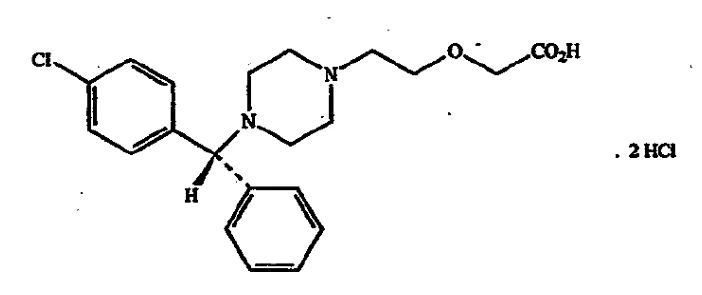
Chemical name: (±) [2-[4-[(4-chlorophenyl) phenylmethyl]-1-piperazinyl] ethoxy]-acetic acid, dihydrochloride.
Molecular formula: C21H25N203Cl·2HCl
Molecular mass: 461.8 g/mol
Structural formula:
Physicochemical Properties
Description: Cetirizine hydrochloride is a white or practically white powder.
Solubility: It is freely-soluble in water and practically insoluble in chloroform and acetone.
14 CLINICAL TRIALS
14.1 Trial Design and Study Demographics
Randomized, multi-centre, double-blind, placebo-controlled clinical trials have demonstrated the effectiveness of cetirizine hydrochloride in relieving the symptoms associated with seasonal allergic rhinitis, perennial allergic rhinitis and chronic idiopathic urticaria. The clinical trials have shown only weak anticholinergic effects. There is no evidence that tolerance to the antihistaminic or anti-allergy effects of cetirizine hydrochloride develops or that cetirizine hydrochloride has any abuse potential or dependency liability.
In adults, objective and subjective tests in healthy volunteers, have demonstrated that cetirizine hydrochloride at doses up to 10 mg did not significantly differ from placebo with respect to CNS impairment, daytime drowsiness, reaction times, mental alertness, task performance, objective CNS depression and various other tests of cognitive function.
Specific electrocardiographic (ECG) studies in healthy adult volunteers at doses up to 60 mg per day (three times the maximum clinically studied dose) for 1 week did not prolong QTc intervals nor was there any evidence of QTc prolongation in clinical trials which included ECG evaluations.
Cetirizine given at the maximum clinically studied dose of 20 mg daily did not prolong the QTc when given in combination with either ketoconazole 400 mg o.d. or erythromycin 500 mg q8h for 10 days. Moreover, cetirizine did not significantly alter the pharmacokinetics of either ketoconazole or erythromycin nor were the pharmacokinetics of cetirizine altered by either ketoconazole or erythromycin.
Three well-controlled clinical trials assessed cetirizine’s effects on nasal congestion as an individual symptom score when it was part of the constellation of symptoms associated with allergic rhinitis (as assessed in adults with SAR). Cetirizine proved to be significantly more effective than placebo in improving nasal congestion (Day et al 2001, Howarth et al, 1999, Hyo et al, 2005).
Clinical data in pediatric patients indicate that treatment with cetirizine does not increase the QTc interval from baseline to any significant extent compared to placebo. None of the 202 subjects tested in the pediatric population had an increase of more than 20% from baseline and the numbers of patients with QTc increases between 10% and 20% were similar for cetirizine and placebo.
Improvement in quality of life (QOL) with cetirizine hydrochloride in patients with allergic rhinitis has been demonstrated in a number of published studies using a variety of validated QOL measurement tools (see Table 5). Improvement in the following QOL domains were observed: physical, social and work activities, vitality and social functioning, practical problems, symptom distress (nasal, eye), sleep problems, and emotional difficulties.
14.2 Study Results
Table 5: Randomized, Parallel, Double-Blind, Placebo-Controlled Clinical Studies Demonstrating Improvement in Quality of Life Domains Following Regular Cetirizine Hydrochloride 10 mg (p.o.) Use (> 2 Weeks)
| Study | Study Description | Result |
| Bousquet J. et al (1996) | Objective to determine effect of cetirizine HCl 10 mg on QOL in patients with allergic rhinitis. Duration of study: 6 weeks. Total of 122 subjects completed cetirizine arm versus 126 subjects in placebo arm. Validated QOL measurement tool used: SF-36* | Quality of life and nasal symptoms were measured after 1 and 6 weeks of treatment using SF-36 questionnaire. After 6 weeks, percentage of days without rhinitis or only mild rhinitis was significantly greater in the cetirizine group compared with the placebo group. Cetirizine improved all nine QOL dimensions (from p = 0.01 to p < 0.0001) after 1 and 6 weeks of cetirizine treatment. |
| Burtin B. et al (2000) | Investigate extent to which cetirizine HCl 10 mg continues to improve QOL after long-term treatment (6 weeks) versus shorter-term treatment (1 week). Validated QOL measurement tool used: SF-36*. Note: This is an additional analysis of the study published by Bousquet et al (1996). | Further 5-week course of therapy maintains QOL improvements seen after 1 week. |
| Murray JJ. et al (2002) | Evaluate the health-related quality of life effects, safety and efficacy of cetirizine HCl 10 mg in treatment of seasonal allergic rhinitis. Patients completing the 2-week treatment period included 413 in the cetirizine group and 396 in the placebo group. Validated QOL measurement tool used: RQLQ† | QOL scores were measured following 2 weeks of treatment. The cetirizine-treated patient group experienced greater (p < 0.001) improvement in overall RQLQ and individual domain scores, compared to the placebo patient group. |
| Noonan MJ. et al (2003) | Test the effect of cetirizine HCl 10 mg once daily on the health-related QOL (HRQL) of adult patients 18-65 years of age with allergic rhinitis. Study duration: 2 weeks. 196 subjects completed the cetirizine study arm; 183 completed the placebo study arm. Validated QOL measurement tool used: RQLQ† | The cetirizine-treated patient group reported greater improvement in overall HRQL (p < 0.001) and in each of the seven domains of RQLQ after two weeks (p < 0.05 to p < 0.001) versus the placebo patient group. |
* SF-36: Medical Outcome Short-Form Health Survey
† RQLQ: Rhinoconjunctivitis Quality of Life Questionnaire
14.3 Comparative Bioavailability Studies
A single-center, randomized, single-dose blinded, two-way, crossover comparative bioavailability study was conducted under fasting conditions on eighteen (18) healthy male volunteers. The rate and extent of absorption of cetirizine were measured and compared following a single dose (1 x 20 mg) administration of pms-CETIRIZINE (cetirizine hydrochloride) tablets and REACTINETM tablets. The bioavailability of the two formulations of cetirizine was equivalent under fasting conditions. The results from measured data based on eighteen (18) subjects are summarized in the following table.
Cetirizine (1 x 20 mg tablet, Fasted) From measured data Geometric Mean Arithmetic Mean (CV %) | ||||
| Parameter | Test1 | Reference2 | % Ratio of Geometric Means | 90% Confidence Interval |
AUC0-t (ng·h/mL) | 5,070.9 5,178.1 (20.8) | 5,328.1 5,430.6 (19.8) | 95.17 | 90.46 – 100.13 |
AUCI (ng·h/mL) | 5,430.5 5,534.5 (20.0) | 5,656.3 5,764.0 (19.7) | 96.01 | 91.57 – 100.66 |
Cmax (ng/mL) | 556.6 560.8 (12.7) | 594.1 607.1 (20.5) | 93.69 | 87.23 – 100.62 |
Tmax3 (h) | 1.00 (0.50 – 2.00) | 1.00 (0.50 – 4.00) | ||
T½4 (h) | 8.02 (16.9) | 8.02 (17.1) | ||
1pms-CETIRIZINE tablets, (Pharmascience Inc., )
2REACTINETM, tablets, (Pfizer Canada Inc.,)
3Expressed as the median (range) only
4Expressed as the arithmetic mean (CV %) only
15 MICROBIOLOGY
No microbiological information is required for this drug product.
16 NON-CLINICAL TOXICOLOGY
General Toxicology:
Acute Toxicity Studies
- 1. Rodents
Cetirizine hydrochloride was administered orally or intravenously to 10 fasted animals/sex/dose level. Clinical signs, food consumption, and mortality were observed for 14 days; body weights were recorded at 1 and 2 weeks, and all animals were necropsied. Results revealed no differences in clinical signs nor lethality for either sex. The oral non-lethal dose for the most sensitive sex was 250 times the expected maximal clinical dose (EMCD) of 0.4 mg/kg (20 mg/50 kg). The severity of symptoms was dose-related. The main symptoms were dose- related. The main symptoms were cyanosis and dyspnea. Following oral administration in rats, mortalities occurred within 24 hours; after IV administration, all deaths occurred within 10 minutes and survivors recovered within 1 – 3 hours. In mice, mortalities were seen in the first 3 days after oral and within 24 hours in most cases after IV administration. The results of the rodent acute toxicity studies are summarized in Table 7.
Table 7: Summary of Rodent Acute Toxicity Studies
Maximum Non-Lethal Dose mg/kg | LD50 (95% Confidence Limits) mg/kg | LD50 Ratio | |||||||||
| Species | Sex | PO | IV | PO | IV | PO/IV | |||||
Rats (Wistar) | M F | 237 237 | ND* 42 | 703 (305 – 1,175) 865 (553 – 1,353) | 66 (58 – 96) 70 (61 – 82) | 10.65 12.36 | |||||
Mice (NMRI) | M F | 237 100 | 240 240 | 600 (375 – 1,391) 752 (432 – 5,114) | 336 (301 – 476) 301 (264 – 366) | 1.79 2.50 | |||||
| * ND = Not determined. | |||||||||||
- 2. Dogs
Cetirizine hydrochloride was administered orally to groups of 2 fasted beagle dogs (1M; 1F) at doses of 40, 80, 160, or 320 mg/kg and IV in the cephalic vein at a dose of 70 mg/kg to 2 fasted beagle dogs (1M; 1F) and 125 mg/kg to 1 fasted female beagle dog. Clinical signs, food consumption, and mortality were observed daily for 14 days.
Oral: No symptoms were observed at 40 mg/kg; at 80 mg/kg an increase of heart rate was seen; at higher doses, vomiting was observed; in this study the non-lethal oral dose was approximately 320 mg/kg, 800 times the EMCD.
IV: At 70 mg/kg, salivation and hematuria were observed; at 125 mg/kg the treated male died, thus the maximum non-lethal IV dose in these conditions, was 70 mg/kg, 175 times the EMCD. Administration of cetirizine pediatric solution and the corresponding vehicle to Beagle dogs at a single dose of 20 mg/kg produced no significant signs of toxicity.
Chronic Toxicity Studies
- 1. Fifteen-day Study in Mice
Fifteen-day oral studies comparing gavage dosing with diet dosing in mice (6/sex/level) at dose levels of 5, 10, 20, 40, 80, or 160 mg/kg/day revealed that similar hepatic findings, consisting of increased liver weights and periacinar hepatocytic hypertrophy, were induced by both routes of administration. The findings were similar in character, incidence and severity. Periacinar hepatocytic steatosis occurred in only 3 mice (2 male, 1 female) at 160 mg/kg by gavage dosing.
- 2. Four-Week Study in Mice
Dietary administration of cetirizine hydrochloride to mice (16/sex/level) at dose levels of 1, 3, 9, 27 or 81 mg/kg/day for 4 weeks resulted in hepatic changes which were more pronounced in males than in female mice. In males, treatment resulted in minimal to moderate centrilobular hepatic hypertrophy at dose levels of 3 mg/kg or greater.
In females, treatment resulted in microsomal enzyme induction at dose levels of 9 mg/kg or greater, and elevated serum triglyceride levels at 27 and 81 mg/kg. Increased liver weights, hepatic hypertrophy and/or steatosis did not occur in female mice.
Electron microscopical examination of the livers of male mice revealed a moderate or minimal proliferation of smooth endoplasmic reticulum and apparent relative decrease in the amount of rough endoplasmic reticulum in centrilobular hepatocytes in all male mice receiving 27mg/kg/day. Smooth endoplasmic reticulum proliferation was also present in 5/10 male mice receiving 9 mg/kg/day.
- 3. Four-Week Reversibility Study in Mice
In order to determine the reversibility of the hepatic changes in mice, cetirizine hydrochloride was administered to male and female mice (36/sex/level) by dietary admixture at dose levels of 40, or 160 mg/kg/day for 4 weeks followed by recovery periods of 4 and 13 weeks. After 4 weeks of cetirizine hydrochloride treatment, hepatic and/or hepatic-related changes similar to those observed in previously conducted mouse toxicity studies were induced.
Following the 4-week recovery period, the serum biochemical parameters, hepatic lipid levels, microsomal drug metabolizing enzyme activities, and liver electron microscopic results were essentially similar to controls. Although still evident at this time period, the increased liver weights, as well as the macroscopic and microscopic liver findings indicated a trend towards reversibility. By 13 weeks of recovery, the hepatic changes were no longer apparent.
- 4. Fifteen-day Study in Rats
Fifteen-day oral studies comparing gavage dosing with diet dosing in rats (6/sex/level) at dose levels of 5, 10, 20, 40, 80, or 160 mg/kg/day revealed that hepatic changes, consisting of liver weight increases, periacinar hepatocytic hypertrophy and large droplet hepatic steatosis, were induced by both routes of administration. However, the findings occurred more frequently and tended to be more severe with dietary dosing.
- 5. One-Month Gavage Study in Rats
In a preliminary study to investigate target organ toxicity, cetirizine hydrochloride was administered to rats (10/sex/level) by oral gavage for 1 month at dose levels of 25, 75, and 225 mg/kg/day. At 225 mg/kg, treatment was associated with increased serum alpha-2-globulin values and increased liver weights in male and female, increased serum cholesterol values in female rats, and hepatic steatosis and necrosis in all 10 male rats. Hepatic steatosis and necrosis were also reported in 3 male rats at 75 mg/kg. There were no significant treatment-related elevations in serum enzyme levels in male rats, including alkaline phosphatase, LDH, ASAT, ALAT, and sorbitol dehydrogenase (SDH). All H&E and Oil Red O stained liver sections from male and female animals were re-evaluated. Results indicate midzonal and/or centrilobular hepatic hypertrophy in male and female rats at 75 and 225 mg/kg; hepatic steatosis in 2 males at 75 mg/kg and 10 males and 1 female rat at 225 mg/kg, and an area of centrilobular necrosis in one lobe from 1 male rat at 225 mg/kg. Centrilobular necrosis was not evident in male animals at the mid-dose or in 9/10 male rats at the high-dose.
- 6. Four-Week Diet Study in Rats
Dietary administration of cetirizine hydrochloride to rats (16/sex/level) at dose levels of 2, 6, 18, 54, or 160 mg/kg/day for 4 weeks resulted in hepatic changes which, as in oral gavage studies, were more pronounced in males than in females. At 54 and 160 mg/kg, increased liver weights were reported in male rats, and centrilobular hepatic hypertrophy, microsomal enzyme induction, and midzonal/centrilobular hepatic steatosis were observed in male and female rats. Other findings included lower food consumption for females at 18 (94.3%), 54 (94.7%) and 160 (92.1%) mg/kg, and lower body weight gains in male and female rats at 160 mg/kg. A slight increase in erythropoietic activity in the spleen, characterized by increases in erythrocytic parameters and white blood cells, increased spleen weights, and a minimally increased cellularity of the splenic red pulp, was observed in male treated rats, particularly at 54 or 160 mg/kg. However, there were no associated microscopic bone marrow changes.
- 7. Four-Week Reversibility Study in Rats
In order to determine the reversibility of the hepatic changes in rats, cetirizine hydrochloride was administered to male and female rats (30/sex/level) by dietary admixture at dose levels of 40, or 160 mg/kg/day for 4 weeks followed by recovery periods of 4 and 13 weeks. After 4 weeks of cetirizine hydrochloride treatment, hepatic and/or hepatic-related changes similar to those observed in previously conducted rat toxicity studies were induced. Following the 4-week recovery period, serum biochemical parameters, hepatic lipid levels, microsomal drug metabolizing enzyme activities, liver weights, liver electron microscopic findings, and hepatic macroscopic and microscopic findings were similar to controls, indicating a reversibility of all observed liver and liver-related effects.
- 8. Six-Month Gavage Study in Rats
Oral administration of cetirizine hydrochloride to rats (25/sex/level) by gavage at dose levels of 8, 25, or 75 mg/kg/day for 6 months produced hepatic changes consisting of hypertrophy, increased liver weights, altered serum biochemical values (after 3 months treatment) and steatosis. The modifications were less pronounced after 6 months than at 3 months and males were affected to a greater extent than females.
At the 3-month interim sacrifice, hepatic hypertrophy was observed in both sexes at all treatment levels. The degree was dose-related, ranging from minimal to moderate. Increased liver weights were reported in males at 75 mg/kg and in females at 25 and 75 mg/kg. Minimal to slight hepatic steatosis was observed in 1 male at 25 mg/kg and in 3 males and 1 female at 75 mg/kg. The steatosis was associated with slightly reduced serum triglyceride levels at 75 mg/kg. Serum SDH levels were elevated in males at all treatment levels and in females at 75 mg/kg.
After 6 months treatment, the incidence of hepatic hypertrophy was lower than reported at 3 months, and the incidence of hepatic steatosis was similar to 3-month results. Results of electron microscopic examination of livers from several control and high-dose treated animals revealed definite smooth endoplasmic reticulum (SER) proliferation in male treated rats and a slight SER proliferation in 1 female treated rat.
- 9. One-Month Study in Dogs
Cetirizine hydrochloride was administered orally (capsules) to beagle dogs (3/sex/level) at dosage levels of 15, 45 or 135 mg/kg/day for 1 month. At 15 and 45 mg/kg, cetirizine hydrochloride was well-tolerated with only an increased incidence of vomiting, 2.5% and 7.1%, respectively, above control incidence (0.6%) reported. At 135 mg/kg, treatment resulted in an increased incidence of vomiting (17.2%); body tremor; salivation; ataxia; body weight loss and reduced food intake in 2 female dogs at the end of the treatment period; decreased mean urine specific gravity associated with an increased urine volume; a slight increase in mean serum alkaline phosphatase and a slight increase in alpha-2-globulins for females at 4 weeks. Histopathological examination of tissues from all dogs on study revealed no treatment-related alterations.
Oral administration of cetirizine pediatric syrup for 4 weeks to groups of 6 immature male and female Beagle dogs at dose levels of 0.5 mg/kg/day and 5.0 mg/kg/day did not reveal any toxic effect in terms of clinical signs, physical and ophthalmoscopic observations, electrocardiograms, body weights, food consumption, clinical laboratory studies and results of gross and microscopic post-mortem examinations.
- 10. Six-Month Study in Dogs
In a 6-month study (with a 3-month interim sacrifice), cetirizine hydrochloride was administered orally (capsules) to beagle dogs (5/sex/level) at dosage levels of 8, 25, or 75 mg/kg/day. At 8 mg/kg for 6 months, 20 times the EMCD, cetirizine hydrochloride administration was well-tolerated with only a very slight increased incidence of vomiting (0.8%) over control incidence (0.3%) reported. At 25 and 75 mg/kg, 62.5 and 187.5 times the EMCD, cetirizine hydrochloride treatment resulted in an increased incidence of vomiting, 1.6% and 4.0% respectively, and decreased body weight gains in female dogs, 27% and 47% respectively, after 27 weeks of treatment. In addition, at 75 mg/kg, 1 male dog died and a 2nd male dog became moribund and was sacrificed during the study. Histopathological examination of tissues did not reveal any treatment-related lesions.
- 11. Two-Week Study in Monkeys
In a 2-week duration study, cetirizine hydrochloride was administered by oral gavage to cynomolgus monkeys (1/sex/level) at dose levels of 50, 100, or 200 mg/kg/day. At 200 mg/kg, vomiting, salivation, and other signs indicative of a debilitating condition were reported. Both monkeys at this level exhibited a progressive loss in body weight and a marked reduction in food consumption during the treatment period. One monkey each at 50 (124 g) and 100 mg/kg (183 g) also exhibited a body weight loss during the treatment period. Histopathological examinations revealed minimal to moderate fatty infiltration in centrilobular hepatocytes from both monkeys at 200 mg/kg.
- 12. Four-Week Study in Monkeys
In a 4-week study, cetirizine hydrochloride was administered by oral gavage to cynomolgus monkeys (3/sex/level) at doses of 17, 50 or 150 mg/kg/day. Vomiting, huddled posture, poor coat condition, limb tremors, abnormal scratching motions and a reduced body temperature were observed in animals treated at 150 mg/kg. One female monkey at 150 mg/kg became moribund and was sacrificed on day 22 of dosing. This animal exhibited a debilitated body condition; a marked reduction in food consumption, an overall body weight loss of 622 g; elevated serum urea, GPT and GOT levels with decreased serum calcium and triglycerides, and a slow heart rate with sinus arrhythmia noted from an ECG recording made immediately prior to sacrifice. No treatment-related microscopic findings were reported. Marked body weight losses were recorded for the majority of monkeys at 150 mg/kg. Results of laboratory investigations performed during week 4 revealed decreased Ornithine Carbomoyltransferase (OCT) and SDH levels for the groups receiving 50 or 150 mg/kg, and increased triglyceride levels for the group receiving 150 mg/kg. No changes in the activities of measured hepatic microsomal enzymes were detected and no treatment-related microscopic abnormalities were observed.
- 13. One-Year Study in Dogs
The oral (capsule) administration of cetirizine hydrochloride to beagle dogs (5/sex/level) at dose levels of 4, 15, or 60 mg/kg/day for 52 weeks was well-tolerated and did not produce any significant toxicological findings. A dose-related increased incidence of vomiting, up to 6.3% at 60 mg/kg, within 1-hour of dose administration occurred in all treatment groups. There were no other treatment-related clinical signs. At necropsy, hepatic drug metabolizing enzyme activities were evaluated for each dog. Cetirizine hydrochloride, at dose levels up to 60 mg/kg/day, did not cause any induction of hepatic microsomal drug metabolizing enzymes, microsomal protein levels, or cytochrome P-450.
- 14. One-Year Study in Monkeys
The oral (gavage) administration of cetirizine hydrochloride to cynomolgus monkeys (5/sex/level) at dose levels of 5, 15 or 45 mg/kg/day for 52 weeks was well-tolerated and did not produce any significant toxicological findings. A dose-related increased incidence of salivation at or just after dose administration was reported in all dose groups. At necropsy, hepatic drug metabolizing enzyme activities were evaluated for each monkey. Cetirizine hydrochloride, at dose levels up to 45 mg/kg/day, did not cause any induction of hepatic microsomal drug metabolizing enzymes, microsomal protein levels, or cytochrome P-450.
Carcinogenicity
- 1. Two-Year Study in Mice
Dietary administration of cetirizine hydrochloride to mice (52/sex/level) at dose levels of 1, 4, or 16 mg/kg/day for 104 weeks, produced no evidence of a carcinogenic potential at doses 40 times the maximum clinically studied human daily dose (20 mg).
- 2. Two-Year Study in Rats
Dietary administration of cetirizine hydrochloride to rats (50/sex/level) at dose levels of 3, 8, or 20 mg/kg/day for 104 weeks produced no evidence of a carcinogenic potential at doses 50 times higher than the maximum clinically studied human daily dose.
Non-neoplastic treatment-related microscopic findings consisted of a tendency towards an increased incidence of centrilobular vacuolation and fat deposition in the liver in male rats at 8 and 20 mg/kg, and of a slight, not dose-related, increased incidence of ulceration of the non-glandular stomach in female rats.
Mutagenicity
The mutagenic potential of cetirizine hydrochloride was assessed in in vitro non-mammalian cell systems as well as in in vitro and in vivo mammalian cell systems. Cetirizine hydrochloride was not mutagenic.
Reproductive and Developmental Toxicology:
Reproduction and Fertility Study in Mice
Cetirizine hydrochloride, dissolved in distilled water, was administered by oral gavage at dose levels of 0, 4, 16 and 64 mg/kg/day to groups of 20 male and 40 female COBS CD-1 mice, in a reproduction and fertility study. There were no effects on male and female fertility or reproductive performance, or on pup development through 2 generations at oral doses up to 16 mg/kg, 40 times the expected maximum clinical dose (EMCD) of 20 mg.
- 2. Teratology
- a. Teratology Study in Mice: Cetirizine hydrochloride was administered by oral gavage at dose levels of 6, 24, and 96 mg/kg/day to groups of 30 time-mated COBS CD-1 female mice from day 6 to day 15 of gestation. Cetirizine hydrochloride at dose levels up to 96 mg/kg/day from gestation days 6 through 15 was neither embryo-fetotoxic, nor teratogenic.
- b. Teratology Study in Rats: Cetirizine hydrochloride, administered by oral gavage at dose levels of 8, 25, 75 and 225 mg/kg/day to mated Sprague Dawley female rats (25/level at 8 and 25 mg/kg; 26/level at 75 and 225 mg/kg; 26 in the control group) from day 6 to day 15 of gestation, was not teratogenic. The incidence of the major malformations was not dose-related and the 2 fetuses exhibiting these malformations were both runts, 1 at 8 mg/kg (agnathia with displacement of the eyes and ears and left microphthalmia) and 1 at 225 mg/kg (left microphthalmia). Although the limited in-house historical data on this species of rat (1,225 – 2,800 fetuses) did not report agnathia or microphthalmia (Report No. T-27), these types of malformations have been reported at a low incidence in control data for Charles River CD rats (Report No. T-28). The no-effect level for maternal toxicity was 25 mg/kg, and the no-effect level for embryo-fetotoxicity, although not clearly established, was approximately 8 mg/kg. At 8 mg/kg, the incidence of reduced ossification of parietal, interparietal, and hyoid cranial bones was slightly higher than control incidence, but, considered to be within normal variability.
- c. Teratology Study in Rabbits: Cetirizine hydrochloride, administered by oral gavage at dose levels of 15, 45, and 135 mg/kg/day to mated New Zealand White female rabbits (16/level at 15 and 45 mg/kg; 18/level at 135 mg/kg; 17 in the control group) from day 6 to day 18 of gestation was not teratogenic. The no-effect level for maternal toxicity and embryo-fetotoxicity was 15 mg/kg, 37.5 times the EMCD. At 15 mg/kg, maternal body weight gain was slightly decreased during the post-treatment period.
- d. Conclusion: The above described anomalies, irregularly found in all cetirizine hydrochloride treated groups, did not occur in a dose-related fashion; moreover, these sorts of anomalies are known to occur spontaneously in untreated animal populations. In addition, many of the anomalies observed occurred in small fetuses, and at doses associated with maternal toxicity. Consequently, a definitive causal relationship with cetirizine hydrochloride cannot be ruled out.
- 3. Peri- and Post-Natal Development Study in Mice
Cetirizine hydrochloride was administered by oral gavage to groups of 32 time-mated COBS CD-1 female mice at dose levels of 0, 6, 24 or 96 mg/kg/day from day 15 of gestation and continued up to sacrifice of the dams on, or shortly after, day 21 post-partum (weaning). Cetirizine hydrochloride, at dose levels of 6 and 24 mg/kg/day, up to 60 times the EMCD, from day 15 of gestation to weaning of pups, did not produce any adverse effect on perinatal conditions or progeny development. At 96 mg/kg, cetirizine hydrochloride treatment was associated with slight maternal effects and lower mean pup weights after birth, at 4 to 21 days of lactation.
Toxicology Summary
The principle findings in rodent subchronic oral toxicity studies were related to the liver and consisted of hypertrophy of hepatocytes, proliferation of smooth endoplasmic reticulum (SER), microsomal enzyme induction, increased liver weights, hepatic steatosis, hepatic necrosis, elevated or reduced serum triglyceride levels, and increased serum GPT, OCT and SDH values. Of these findings, the SER proliferation associated with microsomal enzyme induction and hepatic hypertrophy followed by increased liver weights are probably pharmacological responses to cetirizine hydrochloride treatment rather than toxicological. The hepatotoxic findings consisting of hepatic steatosis and necrosis, and altered biochemical parameters appear to be related to the marked hepatic metabolism of cetirizine hydrochloride in rodents. Significant safety margins, calculated for rodent hepatotoxicity, ranged from 20 to greater than 370 times the expected maximum human clinical dose (EMCD) of 20 mg depending on species, route of administration, and duration of treatment.
Similar liver-related findings were not evident in dogs receiving cetirizine hydrochloride orally for 1 month at doses up to 338 times the EMCD or for 6 months and 1 year respectively at doses up to 188 and 150 times the EMCD, nor were liver-related changes observed in cynomolgus monkeys receiving cetirizine hydrochloride for 1 month and 1 year respectively at doses up to 375 and 112.5 times the EMCD.
The dietary administration of cetirizine hydrochloride to mice at doses up to 16 mg/kg/day, 40 times the EMCD, and to rats at doses up to 20 mg/kg/day, 50 times the EMCD, for 104 weeks showed no indications of carcinogenic potential.
Recent re-analysis of the data demonstrated that no adverse effects on embryo-fetal viability, body weight or morphology were produced by maternally toxic dosages in development toxicity (Segment II) studies in the rat (225 mg/kg/day, 563 times the maximum clinically studied human dose), rabbit (135 mg/kg/day, 338 times the maximum clinically studied human dose) and mouse (96 mg/kg/day, 240 times the maximum clinically study human dose.)
Cetirizine is a major human metabolite of hydroxyzine (50 mg hydroxyzine = 20 mg cetirizine). Thus, the long-term experience with hydroxyzine also provides an indication of the safety of cetirizine in pregnancy. During 30 years of clinical use, hydroxyzine has not been associated with an increase of any human congenital malformation above the expected background incidence. Thus, human exposure to cetirizine has occurred for more than 30 years without any indication that it or its parent compound, hydroxyzine, is a human teratogen. The effect of hydroxyzine on human pregnancies have been studied in a large epidemiology study [the Collaborative Perinatal Project (Heinonen et al., 1977)]. The study did not report any increase in human congenital malformation as a consequence of the use of hydroxyzine.
The only other reported effect of hydroxyzine on pregnancy in a laboratory species was abortion in rhesus monkeys at dosages of 5 to 12 mg/kg. Steffek et al. (1968), identified three abortions and 2 normal offspring produced after administration of 5 to 12 mg/kg dosages during organogenesis. The rhesus monkey is known to have a high incidence of abortion. The absence of expected control procedures in this old study, and the use of only 5 animals precludes drawing a causal relationship of this observation with hydroxyzine.
17 SUPPORTING PRODUCT MONOGRAPHS
REACTINE®, 5 mg and 10 mg, tablets, submission control 275437, Product Monograph, McNeil Consumer Healthcare, division of Johnson & Johnson Inc., Date of revision: DEC 15, 2023.