


Product Monograph - Extraneal
SUMMARY PRODUCT INFORMATION
| Route of Administration | Dosage Form / Strength | All Nonmedicinal Ingredients |
| Intraperitoneal | 75 g/L icodextrin 5.35 g/L sodium chloride 4.48 g/L sodium lactate 257 mg/L calcium chloride 51 mg/L magnesium chloride | Hydrochloric acid (For pH adjustment) Sodium Hydroxide (For pH adjustment) Water for Injection |
INDICATIONS AND CLINICAL USE
EXTRANEAL (icodextrin, sodium chloride, sodium lactate, calcium chloride, magnesium chloride) is indicated for use as an osmotic agent for long dwell, up to 12 hours, in continuous ambulatory peritoneal dialysis (CAPD) or automated peritoneal dialysis (APD), where it can be used for 14 and up to 16 hours.
CONTRAINDICATIONS
EXTRANEAL is contraindicated for use in patients with:
- acute renal failure
- an allergy to starch-based polymers (e.g., corn starch) and/or icodextrin
- maltose or isomaltose intolerance.
- glycogen storage disease
- pre-existing severe lactic acidosis
- uncorrectable mechanical defects that prevent effective PD or increase the risk of infection
- documented loss of peritoneal function or extensive adhesions that compromise peritoneal function
The product is also contra-indicated in patients with a history of abdominal surgery in the month preceding commencement of therapy, patients with abdominal fistulae,
- the abdominal wall, abdominal surface or intra-abdominal cavity - in common with other peritoneal dialysis fluids until healing is complete. In patients with impaired respiratory function or potassium deficiency, peritoneal dialysis may also be contraindicated.
- EXTRANEAL is not recommended for use in children.
Use in Pregnancy & Lactation
- No data from animal studies on the effects of EXTRANEAL on reproduction or lactation are available and therefore, EXTRANEAL solution should not be used during pregnancy or lactation. Women of childbearing potential should be treated with EXTRANEAL solution only when adequate contraceptive precautions have been taken. Potential effects on male and female fertility are unknown.
WARNINGS AND PRECAUTIONS
Warnings
General
Blood glucose measurement in patients receiving EXTRANEAL must be done with a glucose-specific method (monitor and test strips) to avoid interference by maltose or other metabolites of EXTRANEAL1. Maltose interference results in inaccurate blood glucose measurement which could lead to errors in the administration of insulin to any Extraneal patient, and also in the overall management of diabetes in diabetic Extraneal patients. Glucose dehydrogenase pyrroloquinolinequinone (GDH-PQQ) or glucose-dye-oxidoreductase (GDO)-based methods must not be used. Also, the use of some glucose monitors and test strips using glucose dehydrogenase flavin-adenine dinucleotide (GDH-FAD) methodology has resulted in falsely elevated glucose readings due to the presence of maltose. The manufacturer(s) of the monitor and test strips should be contacted to determine if icodextrin or maltose causes interference or falsely elevated glucose results.
If GDH-PQQ, GDO, or GDH-FAD-based methods are used, using EXTRANEAL may cause a falsely high glucose reading which could result in the administration of more insulin than needed. Administration of more insulin than needed has caused hypoglycemia, which has resulted in loss of consciousness, coma, neurological damage and death. Additionally, falsely elevated blood glucose measurements due to maltose interference may mask true hypoglycemia and allow it to go untreated with similar consequences.
Falsely elevated glucose levels may be measured up to two weeks following cessation of EXTRANEAL(icodextrin) therapy when GDH-PQQ, GDO, or GDH-FAD-based blood glucose monitors and test strips are used.
Because GDH-PQQ, GDO, and GDH-FAD-based blood glucose monitors may be used in hospital settings, it is important that the health care providers of all peritoneal dialysis patients using EXTRANEAL(icodextrin) carefully review the product information of the blood glucose testing system, including that of test strips, to determine if the system is appropriate for use with EXTRANEAL(icodextrin).
To avoid improper insulin administration, educate all patients on EXTRANEAL therapy to alert health care providers of this interaction whenever they are admitted to the hospital.
Encapsulating peritoneal sclerosis (EPS) is considered to be a known, rare complication of peritoneal dialysis therapy. EPS has been reported in patients using peritoneal dialysis solutions including EXTRANEAL. Fatal outcomes of EPS have been reported with EXTRANEAL.
If peritonitis occurs, the choice and dosage of antibiotics should be based upon the results of identification and sensitivity studies of the isolated organism(s) when possible. Prior to identification of the involved organism(s), broad-spectrum antibiotics may be indicated.
Rarely, serious hypersensitivity reactions to EXTRANEAL have been reported such as toxic epidermal necrolysis, angioedema, serum sickness, erythema multiforme and vasculitis. Anaphylactic/anaphylactoid reactions may occur. Stop the infusion immediately and drain the solution from the peritoneal cavity if any signs or symptoms of a suspected hypersensitivity reaction develop. Appropriate therapeutic countermeasures must be instituted as clinically indicated.
Patients with severe lactic acidosis should not be treated with lactate-based peritoneal dialysis solutions. It is recommended that patients with conditions known to increase the risk of lactic acidosis [e.g. severe hypotension or sepsis, hepatic failure and/or renal failure, inborn errors of metabolism, treatment with drugs such as metformin2 and nucleoside/nucleotide reverse transcriptase inhibitors (NRTIs)3] must be monitored for occurrence of lactic acidosis before the start of treatment and during treatment with lactate-based peritoneal dialysis solutions.
When prescribing the solution to be used for an individual patient, consideration should be given to the potential interaction between the dialysis treatment and therapy directed at other existing illnesses. Serum potassium levels should be monitored carefully in patients treated with cardiac glycosides. For example, rapid potassium removal may create arrhythmias in cardiac patients using digitalis or similar drugs; digitalis toxicity may be masked by hyperkalemia, hypermagnesemia, or hypocalcemia. Correction of electrolytes by dialysis may precipitate signs and symptoms of digitalis excess. Conversely, toxicity may occur at suboptimal dosages of digitalis if potassium is low or calcium high.
Precautions
General
EXTRANEAL is intended for intraperitoneal administration only. Not for intravenous administration.
Do not administer if the solution is discoloured, cloudy, contains particulate matter or shows evidence of leakage or if seals are not intact.
The drained fluid should be inspected for the presence of fibrin or cloudiness which may indicate the presence of peritonitis.
Safety and effectiveness in pediatric patients have not been established.
Protein, amino acids, water-soluble vitamins and other medicines may be lost during peritoneal dialysis and may require replacement.
Peritoneal dialysis should be done with caution in patients with: 1) fecal fistula, colostomy, large polycystic kidneys, or other conditions that compromise the integrity of the abdominal wall, abdominal surface, or intra-abdominal cavity; and 2) other conditions including aortic graft placement.
Patients should be carefully monitored to avoid over- and under hydration. An accurate fluid balance record should be kept and the patient’s body weight monitored.
Overinfusion of an EXTRANEAL volume into the peritoneal cavity may be characterized by abdominal distension, feeling of fullness and/or shortness of breath.
Treatment of EXTRANEAL overinfusion is to drain the EXTRANEAL from the peritoneal cavity.
Potassium is omitted from EXTRANEAL solutions due to the risk of hyperkalemia.
- In situations in which there is a normal serum potassium level or hypokalemia, the addition of potassium chloride (up to a concentration of 4 mEq/L) may be indicated to prevent severe hypokalemia and should be made after careful evaluation of serum and total body potassium, only under the direction of a physician. (See Monitoring and Laboratory Tests).
In diabetic patients, blood glucose levels should be regularly monitored and the dosage insulin or other treatment for hyperglycemia should be adjusted following initiation of treatment with EXTRANEAL. Appropriate monitoring of blood glucose should be performed and insulin dosage adjusted if necessary.
Because the use of EXTRANEAL interferes with glucose dehydrogenase pyrroloquinolinequinone (GDH-PQQ) or glucose-dye-oxidoreductase based blood glucose measurements, diabetic patients should be instructed to use only glucose-specific glucose monitors and test strips. (See Monitoring and Laboratory Tests).
Fluid, haematology, blood chemistry and electrolyte concentrations should be monitored periodically, including, magnesium and bicarbonate. If serum magnesium levels are low, oral magnesium supplements or peritoneal dialysis solutions containing higher magnesium concentrations may be used. Decreases in serum sodium and chloride have been observed in patients using EXTRANEAL.
Monitoring and Laboratory Tests
Blood glucose measurement must be done with a glucose-specific method to prevent maltose interference. Glucose dehydrogenase pyrroloquinolinequinone (GDH-PQQ) or glucose-dye-oxidoreductase (GDO)-based methods must not be used2. Also, the use of some glucose monitors and test strips using glucose dehydrogenase flavin-adenine dinucleotide (GDH-FAD) methodology has resulted in falsely elevated glucose readings due to the presence of maltose (See WARNINGS AND PRECAUTIONS).
An apparent decrease in serum amylase activity has been observed in patients administered EXTRANEAL4.
ADVERSE REACTIONS
Clinical Trial Adverse Drug Reactions
Because clinical trials are conducted under very specific conditions the adverse reaction rates observed in the clinical trials may not reflect the rates observed in practice and should not be compared to the rates in the clinical trials of another drug. Adverse drug reaction information from clinical trials is useful for identifying drug-related adverse events and for approximating rates.
| Clinical Trial Adverse Reactions† | |||
| System Organ Class (SOC) | Preferred MedDRA Term | Frequency* | Frequency Percentage or Ratio N=493 |
| INFECTIONS AND INFESTATIONS | Influenza Furuncle Infection | Uncommon Uncommon Uncommon | 0.6 0.2 0.2 |
| BLOOD AND LYMPHATIC SYSTEM DISORDERS | Anemia Leukocytosis Eosinophilia | Uncommon Uncommon Uncommon | 0.4 0.6 0.2 |
| ENDOCRINE DISORDERS | Parathyroid disorder (Increased intact-PTH) | ** | ** |
| METABOLISM AND NUTRITION DISORDERS | Dehydration Hypovolemia Hypoglycemia Hyponatremia Hyperglycemia Hypervolemia Anorexia Hypochloremia Hypomagnesemia Hypoproteinemia | Common Common Uncommon Uncommon Uncommon Uncommon Uncommon Uncommon Uncommon Uncommon | 2.0 1.0 0.4 0.4 0.2 0.8 0.8 0.8 0.4 0.4 |
| PSYCHIATRIC DISORDERS | Thinking abnormal Anxiety Nervousness | Uncommon Uncommon Uncommon | 0.2 0.2 0.2 |
| NERVOUS SYSTEM DISORDERS | Dizziness Headache Hyperkinesia Parathesia Ageusia | Common Common Uncommon Uncommon Uncommon | 1.8 1.4 0.2 0.6 0.2 |
| EAR AND LABYRINTH DISORDERS | Tinnitus | Common | 3.6 |
| CARDIAC DISORDERS | Cardiovascular disorder Tachycardia | Uncommon Uncommon | 0.2 0.2 |
| VASCULAR DISORDERS | Hypotension Hypertension Orthostatic hypotension | Common Common Uncommon | 3.2 2.6 0.2 |
| RESPIRATORY, THORACIC, AND MEDIASTINAL DISORDERS | Pulmonary edema Dyspnea Cough Hiccups Lung disorder | Uncommon Uncommon Uncommon Uncommon Uncommon | 0.2 0.4 0.2 0.2 0.4 |
| GASTROINTESTINAL DISORDERS | Abdominal pain Abdominal distension Intestinal obstruction Peritonitis Bloody peritoneal effluent Diarrhea Gastric ulcer Gastritis Gastrointestinal disorder Vomiting Constipation Dyspepsia Nausea Dry mouth Flatulence | Common ** Uncommon Uncommon Uncommon Uncommon Uncommon Uncommon Uncommon Uncommon Uncommon Uncommon Uncommon Uncommon Uncommon | 1.6 ** 0.2 0.6 0.2 0.6 0.2 0.2 0.4 0.2 0.4 0.6 0.2 0.4 0.2 |
| SKIN AND SUBCUTANEOUS DISORDERS | Dermatitis exfoliative Rash Pruritus Urticaria Dermatitus bullous Psoriasis Rash, maculo-papular Skin ulcer Eczema | Common Common Common Uncommon Uncommon Uncommon Uncommon Uncommon Uncommon | 1.6 5.5 1.4 0.2 0.2 0.4 0.2 0.2 0.2 |
Nail disorder Skin disorder Dry skin Skin discolouration | Uncommon Uncommon Uncommon Uncommon | 0.6 0.2 0.2 0.2 | |
| MUSCULOSKLETAL, CONNECTIVE TISSUE DISORDERS | Bone pain Muscle spasms Myalgia Neck Pain | Uncommon Uncommon Uncommon Uncommon | 0.1 0.4 0.4 0.4 |
| RENAL AND URINARY DISORDERS | Renal pain | Uncommon | 0.2 |
| GENERAL DISORDERS AND ADMINISTRATIVE SITE CONDITIONS | Edema peripheral Asthenia Chest pain Catheter-related complication Face edema Edema Pain | Common Common Uncommon Uncommon Uncommon Uncommon Uncommon | 1.4 1.2 0.4 0.2 0.2 0.6 0.2 |
| INVESTIGATIONS | Urine output decreased Laboratory test abnormal Alanine aminotransferase increased Aspartate aminotransferase increased Blood alkaline phosphatase increased Liver function test abnormal Weight decreased Weight increased | ** Common Uncommon Uncommon Uncommon Uncommon Uncommon Uncommon | ** 2.6 0.4 0.4 0.6 0.6 0.2 0.6 |
| INJURY, POISONING, AND PROCEDURAL COMPLICATIONS | Injury | Uncommon | 0.2 |
*Frequency has been evaluated using the following criteria: very common (≥1/10), common (≥1/100 to
<1/10), uncommon (≥1/1,000 to <1/100), rare (≥1/10,000 to <1/1,000), very rare (<1/10,000). Within each frequency grouping, undesirable effects are presented in order of decreasing seriousness.
†This table represents an integration of safety data from the following clinical trials of 493 patients: RD-97-CA-130, RD-97-CA-131, ML/IB/001, PRO-Renal-Reg-035, ML/IB/020 (DELIA), ML/IB/011 (DIANA), ML/IB/004
(Midas-2), RD-99-CA-060, and ML/IB/014. The table also includes adverse events from clinical study
BLR-PG21. Additionally, safety data from studies BLR-PG22, RD-00-CA-050 and RD-00-CA-022 were reviewed and did not require additions to the clinical trial data presented.
**Reported in 1 of 18 patients who were exposed to EXTRANEAL in clinical trial BLR-PG21. Therefore, estimation of frequency not presented due to limited patient population in clinical trial BLR-PG21.
Post-Market Adverse Drug Reactions
In addition to the adverse reactions noted in clinical trials, the following adverse reactions have been reported in the post marketing experience. These reactions are listed by MedDRA System Organ Class (SOC), then by Preferred Term in order of severity.
INFECTIONS AND INFESTATIONS: Fungal peritonitis, Peritonitis bacterial, Catheter site infection, Catheter related infection
BLOOD AND LYMPHATIC SYSTEM DISORDERS: Thrombocytopenia, Leukopenia
IMMUNE SYSTEM DISORDERS: Vasculitis, Serum sickness, Hypersensitivity
METABOLISM AND NUTRITION DISORDERS: Shock hypoglycemia, Fluid overload, Fluid imbalance
NERVOUS SYSTEM DISORDERS: Hypoglycemic coma, Burning sensation
EYE DISORDERS: Vision blurred
RESPIRATORY, THORACIC AND MEDIASTINAL DISORDERS: Bronchospasm, Stridor
GASTROINTESTINAL DISORDERS: Encapsulating peritoneal sclerosis, Aseptic peritonitis*, Peritoneal cloudy effluent, Ileus, Ascites, Inguinal hernia, Abdominal discomfort
SKIN AND SUBCUTANEOUS DISORDERS: Toxic epidermal necrolysis, Erythema multiforme, Angioedema, Urticaria generalized, Toxic skin eruption, Swelling face, Periorbital edema, Exfoliative rash, Skin exfoliation, Prurigo, Rash (including macular, papular, erythematous), Dermatitis (including allergic and contact), Drug eruption, Erythema, Onychomadesis, Skin chapped, Blister
MUSCULOSKELETAL, CONNECTIVE TISSUE DISORDERS: Arthralgia, Back pain, Musculoskeletal pain
REPRODUCTIVE SYSTEM AND BREAST DISORDERS: Penile edema, Scrotal edema
GENERAL DISORDERS AND ADMINISTRATION SITE CONDITIONS: Discomfort, Pyrexia, Chills, Malaise, Drug effect decreased, Drug ineffective, Catheter site erythema, Catheter site inflammation, Infusion related reaction (including Infusion site pain, Instillation site pain)
INJURY, POISONING AND PROCEDURAL COMPLICATIONS: Device interaction
*Lower level term
DRUG INTERACTIONS
Overview
No interaction studies have been conducted with EXTRANEAL. The blood concentration of dialyzable drugs may be reduced by peritoneal dialysis.
Drug-Drug Interactions
Some drug additives may be incompatible with EXTRANEAL.
Addition of Potassium
Potassium is omitted from EXTRANEAL solutions because dialysis may be performed to correct hyperkalemia. In situations where there is a normal serum potassium level or hypokalemia, the addition of potassium chloride (up to a concentration of 4 mEq/L) may be indicated to prevent severe hypokalemia. The decision to add potassium chloride should be made by the physician after careful evaluation of serum potassium.
Addition of Insulin
Addition of insulin to EXTRANEAL was evaluated in 6 insulin-dependent diabetic patients undergoing CAPD for end stage renal disease. No interference of EXTRANEAL with insulin absorption from the peritoneal cavity or with insulin’s ability to control blood glucose was observed (SEE WARNINGS AND PRECAUTIONS: Monitoring and Laboratory Tests). Appropriate monitoring of blood glucose should be performed when initiating EXTRANEAL in diabetic patients and insulin dosage adjusted if needed5 (SEE WARNINGS AND PRECAUTIONS: Monitoring and Laboratory Tests).
Addition of Heparin
No human drug interaction studies with heparin were conducted. In vitro studies demonstrated no evidence of incompatibility of heparin with EXTRANEAL.
Addition of Antibiotics
Compatibility has been demonstrated with vancomycin6, cefazolin7, ceftazidime7, gentamicin6, and netilmicin8. However, aminoglycosides should not be mixed with penicillins due to chemical incompatibility9, 10.
Minimum Inhibitory Concentration (MIC)
No formal clinical data interaction studies have been performed. In vitro studies with EXTRANEAL and the following antibiotics have demonstrated no effects with regard to minimum inhibitory concentration (MIC): vancomycin, cefazolin, ampicillin, ampicillin/flucoxacillin, ceftazidime, gentamicin, and amphotericin.
Drug-Laboratory Interactions
Blood glucose measurement must be done with a glucose-specific method to prevent maltose interference. Glucose dehydrogenase pyrroloquinolinequinone (GDH-PQQ)- or glucose-dye-oxidoreductase (GDO)-based methods must not be used1. Also, the use of some glucose monitors and test strips using glucose dehydrogenase flavin-adenine dinucleotide (GDH-FAD) methodology has resulted in falsely elevated glucose readings due to the presence of maltose (See WARNINGS AND PRECAUTIONS).
An apparent decrease in serum amylase activity has been observed in patients administered EXTRANEAL4.
DOSAGE AND ADMINISTRATION
Dosing Considerations
EXTRANEAL is intended for intraperitoneal administration only. Not for intravenous administration.
Treatment should be initiated under the supervision of a physician. The mode of therapy, frequency of treatment, exchange volume, duration of dwell and length of dialysis should be initiated and supervised by the physician.
Do not administer if the solution is discoloured, cloudy, contains particulate matter or shows evidence of leakage, or if seals are not intact.
EXTRANEAL is recommended for single use only. Discard any unused remaining solution.
Recommended Dose and Dosage Adjustment
EXTRANEAL is available in either a 2000 mL or a 2500 mL bag. The volume administered is based on the patient’s need for adequate dialysis, as determined by the prescribing physician.
Adults: By intraperitoneal administration as a single daily exchange for the long dwell, up to 12 hours, in CAPD or 14 and up to 16 hours in APD. Aseptic technique should be employed throughout the peritoneal dialysis procedure.
The contents of a 2000 mL or 2500 mL bag (as appropriate for the patient’s dialysis needs) should be instilled over a period of approximately 10 to 20 minutes at a rate which the patient finds comfortable. The recommended dwell time is between 6 and 12 hours in CAPD and 14-16 hours in APD. Drainage of CAPD fluid is by gravity and APD fluid is by a process which simulates gravity. Both should be at a rate comfortable for the patient.
The drained fluid should be inspected for the presence of fibrin or cloudiness, which may indicate the presence of infection.
Elderly: As for adults.
Children: Not recommended for use in children (less than 18 years of age).
Administration
EXTRANEAL is intended for intraperitoneal administration only.
Aseptic technique should be employed throughout the peritoneal dialysis procedure.
To reduce discomfort on administration, the solution may be warmed to a temperature of 37oC (98.6oF) prior to use. This should be done using dry heat ideally using a warming plate or heating pad specially designed for the purpose. The bag should not be immersed in water to warm it to avoid contamination of connectors. Do not microwave.
OVERDOSAGE
No data is available on the effects of overdosage. However, continuous administration of more than one bag of EXTRANEAL in 24 hours would increase plasma levels of carbohydrate metabolites and maltose. The effects of such an increase are unknown but an increase in plasma osmolality may occur. Treatment could be managed by icodextrin free peritoneal dialysis or haemodialysis.
ACTION AND CLINICAL PHARMACOLOGY
Mechanism of Action
EXTRANEAL is a water-soluble α−1,4 and α−1,6 linked glucopyranose (cyclic form of glucose) polymer with an average molecular weight range of 12,000 to 20,000 daltons. When administered intraperitoneally icodextrin acts as a colloid osmotic agent, leading to net fluid movement from blood to dialysate. Icodextrin is approximately iso-osmolar (284 mOsmol/L) to serum. As an osmotic agent it is 5.5 times more effective than glucose 1.36% solution and as effective as glucose 3.86% solution.
Icodextrin does not appear to be metabolized within the peritoneal cavity and is only slowly absorbed from the peritoneal cavity, mostly by the lymphatic system6. The extent of absorption depends on the dwell time of the solution; about 20% of the total carbohydrate is absorbed in 8 hours, and this rises to 34% in 12 hours. This translates into mean
For management of a suspected drug overdose, contact your regional Poison Control Centre.
carbohydrate absorption for the icodextrin 29.5 ± 5g vs 62 ± 5g for glucose 4.25% solution per 12 hour dwell. The reduced absorption of glucose leads to reduced potential for hyperglycemia, hyperinsulemia and caloric load12.
Absorbed icodextrin has been shown to be degraded to smaller oligosaccharides (principally maltose and maltotriose) by serum α-amylase 13 . In subjects with normal renal function, these metabolites are further degraded by kidney enzymes14. In dialysis patients, the clearance of the icodextrin and its metabolites is slower and the levels of the metabolites increase, however there is no effect on serum osmolality12, 13, 15. With daily use of icodextrin solution, steady state concentrations of total icodextrin, maltose and metabolites of higher molecular weight are achieved within 7-10 days. In the MIDAS study, steady-state levels were 4.6 mg/mL for total icodextrin derived material, 1.2 mg/mL for maltose, 1.8 mg/mL for oligosaccharides between 3 and 9 glucose units (G3-G9), and 1.8 mg/ml for metabolites larger than G9. Plasma levels return to baseline values within approximately two weeks following cessation of icodextrin administration4. The long-term effects of raised plasma levels of maltose and glucose polymer are unknown, but there is no reason to suspect these to be harmful.
In APD (automated peritoneal dialysis), EXTRANEAL solution used for the long daytime dwell allows greater flexibility in fluid intake compared to glucose solutions.
Toxicity studies show no evidence of local damage or irritation of the peritoneum, nor any evidence of storage of the polymer.
STORAGE AND STABILITY
Store at room temperature (15-25°C). Do not store below 4oC. Do not use unless the solution is clear and the container undamaged. Any unused portion of the solution should be discarded.
SPECIAL HANDLING INSTRUCTIONS
SEE STORAGE AND STABILITY
DOSAGE FORMS, COMPOSITION AND PACKAGING
Dosage Forms
EXTRANEAL is available in Viaflex® Single or TwinBag containers holding 2000 mL or 2500 mL.
Composition
EXTRANEAL is a sterile, peritoneal dialysis fluid containing icodextrin at a concentration of 7.5% w/v in an electrolyte solution containing the following:
| mmol/litre (approx) | mEq/litre (approx) | |
| Sodium | 132 | 132 |
| Calcium | 1.75 | 3.5 |
| Magnesium | 0.25 | 0.5 |
| Chloride | 96 | 96 |
| Lactate | 40 | 40 |
Each one litre contains
| Icodextrin | 75 g |
| Sodium Chloride, PhEur or USP | 5.35 g |
| Sodium Lactate, DAB or USP | 4.48 g |
| Calcium Chloride Dihydrate, PhEur or USP | 257 mg |
| Magnesium Chloride Hexahydrate, PhEur or USP | 51 mg |
| Water for Injection, PhEur or USP | q.s. |
| Theoretical osmolarity | 284 milliosmoles per litre |
| pH | 5.2 |
Packaging
See Dosage Forms.
PART II: SCIENTIFIC INFORMATION
PHARMACEUTICAL INFORMATION
Drug Substance
Proper name: Icodextrin
Chemical name: α-1,4, poly glucopyranose
Molecular formula and molecular mass: [C6H10O5]n
n = number of glucose units in polydisperse glucose polymer
Structural formula:
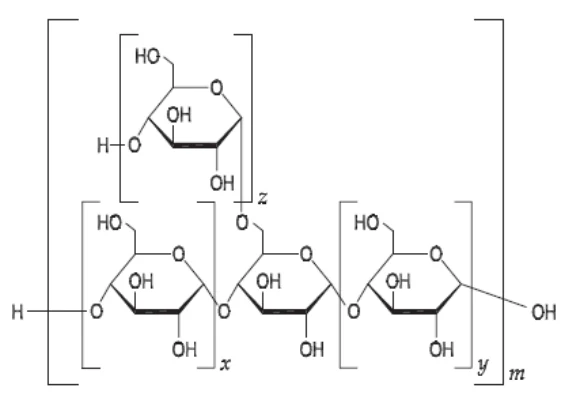
Physicochemical properties: Icodextrin is a glucopyranose (cyclic form of glucose) polymer (linked by α -1,4 and α -1,6 bonds, but predominantly α -1,4) produced by the hydrolysis of starch and fractionated by membrane separation technology to produce material with the desired molecular weight distribution. Icodextrin has a weight average molecular weight between 12,000 and 20,000 Daltons and a number average molecular weight between 5,000 and 6,500 Daltons. It bears a close structural relationship to glycogen, the natural storage polymer in the human body 15.
DETAILED PHARMACOLOGY
Colloid osmosis is the predominant basis of action of icodextrin 16, 17. In biological systems, a transport mechanism similar to that elicited by that of icodextrin in CAPD exists naturally across the permeable membranes of capillaries. Albumin (68,000 daltons) is an effective osmotic agent whose passage across the capillary wall is restricted. It exerts a colloid osmotic pressure, even though its molar concentration (0.66 mmol/L) is a fraction of the total plasma osmolarity (295 mmol/L). Icodextrin is a glucose polymer composed of glucose residues joined largely through 1-4 links with a small degree of branching through 1,6 links with an average molecular weight at the range of 12,000 to 20,000 daltons.
Carbohydrates with structures like icodextrin are substrates for α-amylase which is found in pancreatic juice, saliva and plasma. Alpha-amylase hydrolyses these carbohydrates to oligosaccharides, maltose, isomaltose and maltotriose. These are hydrolyzed to glucose by maltase and isomaltase found in the small intestine, kidney and a variety of other tissues13. An assay was developed to separate and detect icodextrin and its hydrolysis products (G1-glucose to G10 and high molecular weight structure >G10) in body fluids18. The fate of intraperitoneally administered icodextrin is determined by its stability in the peritoneal cavity, the degree of absorption into systemic circulation and renal and metabolic elimination. The results of pharmacokinetic studies in animals are limited by the fact that most animal models have normal kidney function. The kidney is a major site for further metabolism of oligosaccharides by maltase. The animal studies can provide information on the absorption from the peritoneal cavity and on rates of non-renal clearance, but may not give all the desired information on metabolism and distribution. In addition, rats and dogs metabolize (due to higher levels of maltase) and excrete the product much faster than humans, as demonstrated in a 28-day study where icodextrin was not detected in the plasma of rats or dogs and was rapidly eliminated.
Table 1: Comparative Pharmacokinetic data for Icodextrin
| Species | Dose Details | Sample Time (n) | Mean Plasma Levels (mg/mL) G2 G3-G10 G>10 | ||
| Rat | 4.0 & 6.0 g/kg IP twice daily for 28 days | None detected | |||
| Dog | 6.0 g/kg IP twice daily for 28 days (12g/kg/day) | Pre-dose (8) Day 1:5h (8) Day 1:24h (8) Day 21:5h (8) Day 21:24h (8) Day 28:5h (8) Day 28:24h (8) | 0.02 0.11 0.02 0.05 0.02 0.03 0.02 | 0.02 0.52 0.22 0.33 0.24 0.28 0.26 | 0.10 0.17 0.13 0.18 0.16 0.14 0.16 |
| Man | 150 g once daily IP for 6 months (2.14g/kg/day) | Pre-dose (91) 1 month (80) 3 months (72) 6 months (53) | 0.04 1.20 1.00 1.06 | 0.02 1.84 1.67 1.76 | 0.29 1.83 1.73 1.84 |
Pharmacokinetics: There is evidence of slow constant absorption of icodextrin from the peritoneal cavity via the lymphatic system16, 17. In the systemic circulation it is metabolized by amylase to smaller oligosaccharides (principally maltose and maltotriose) which are detectable in serum and are cleared by metabolism and peritoneal dialysis. Following the use of icodextrin on a daily basis for overnight exchange, maltose levels reach steady-state (1.2 mg/mL) after 7-10 days. Plasma levels of icodextrin and maltose were measured in 12 patients who stopped once a day treatment with icodextrin after approximately two years. Icodextrin related material (4.8 mg/mL) and maltose (1.1 mg/mL) fell to pretreatment levels in 7-10 days19.
Clinical trials: The MIDAS15 6 month clinical trial was set up to compare and evaluate the efficacy and safety of icodextrin with glucose (weak 1.36%/1.5% and strong 3.86%/4.25%) in 8 hours of CAPD. On weeks 4, 13 and 21, the hours were extended for 12 hours. The results indicate that icodextrin was well-tolerated and produced up to 5.5 times more ultrafiltration than 1.36% glucose and the same ultrafiltration as a 3.86% glucose solution.
Table 2: Mean Volume (mL) of Net Ultrafiltration for 8 Hour Dwell by Glucose Concentration*
| Week | Control Mean SD (N) | Icodextrin Mean SD (N) |
| Weak (1.36%) | ||
| Week 3 | 150.6 ± 328.7 (50) | 497.4 ± 228.3 (42)* |
| Week 12 | 141.8 ± 309.6 (40) | 480.7 ± 208.3 (42)* |
| Week 20 | 153.2 ± 313.0 (38) | 516.9 ± 234.7 (37)* |
| Medium (2.27%) or Strong (3.86%) | ||
| Week 3 | 615.4 ± 288.8 (30) | 528.1 ± 241.0 (28) |
| Week 12 | 553.0 ± 357.2 (29) | 515.2 ± 211.7 (23) |
| Week 20 | 464.6 ± 379.2 (24) | 461.8 ± 198.5 (19) |
| *p<0.0001 | ||
Table 3: Mean Volume (mL) of Ultrafiltrate for Special Weeks (12 hr Dwell) by Glucose Concentration
| Special Week | Control Mean SD (N) | Icodextrin Mean SD (N) |
| 1.5% Dextrose | ||
| 4 | 72.7 339.0 (51) | 529.6 290.2 (42)* |
| 13 | 49.3 302.0 (41) | 496.9 288.9 (40)* |
| 21 | 125.9 324.3 (38) | 552.1 309.3 (36)* |
| 4.25% Dextrose | ||
| 4 | 498.4 418.5 (31) | 610.4 238.8 (28) |
| 13 | 458.3 434.1 (29) | 593.5 223.8 (23) |
| 21 | 427.0 461.4 (25) | 509.5 205.5 (21) |
| *p<0.0001 | ||
In the icodextrin group, 7% of the patients experienced negative ultrafiltration (UF), while in the control group, up to 41% of the patients experienced negative UF. Over the 12-hour dwell, net ultrafiltration was similar in patients receiving icodextrin solution and the controls who were using 4.25% dextrose solution for the long dwell.
Safety: The side effects in this study were reported by half of the patients and were equally distributed between the two groups. They were mainly related to preexisting cardiovascular disease. Excluding peritonitis, the most common reported were respiratory, musculoskeletal and gastrointestinal events. There was no difference in severity of the side effects between the two groups. The icodextrin patients experienced symptomatic improvement in abdominal fullness, fatigue and shortness of breath. There were no differences in the insulin dose for diabetic patients (n=26) in both groups. The mean carbohydrate absorption for the icodextrin group (29 ± 5g) was lower than with 4.25% dextrose (62 ± 5g). The icodextrin group mean serum maltose and metabolite levels (total GHO-G1) rose to a steady-state level.
Table 4: Serum Levels of Maltose and Total Icodextrin and Metabolites
| Visit 2 Baseline | Visit 6 | Visit 9 | Visit 12 | ||||||||
| Maltose (mg/mL) | Control | 0.0300.02 (91) | 0.030.01 (64) | ||||||||
| Icodextrin | 0.040.04 (91) | 1.200.38 (91) | 1.010.35 (80) | 1.090.39 (67) | |||||||
| Total CHO-G1 (mg/mL) | Control | 0.320.10 (98) | 0.350.09 (64) | ||||||||
| Icodextrin | 0.350.15 (91) | 4.871.55 (80) | 4.411.36 (73) | 4.621.46 (67) | |||||||
The elevated levels of maltose did not appear to have any clinical side effects. Some patients in the UK who elected to continue using icodextrin have been doing so for more than 5 years without any adverse effects related to icodextrin accumulation.
TOXICOLOGY
Recommended human dose 2-3 g/kg/day.
Animal toxicology testing was limited by several factors, notably by restrictions on the volume/viscosity of icodextrin which could be administered intraperitoneally, lack of renal failure animal models and by differences in the degree and speed of metabolism and excretion of icodextrin, especially in the rat and in the dog. The chronic toxicity studies were not done for the same reasons. Therefore, the results of animal toxicology studies are mostly useful for their information on the local effects of icodextrin.
Acute toxicity: Single i.v. and i.p. dose of icodextrin had no systemic or local effect in the mouse or the rat. No effect on the CNS was observed. Subacute 28-day toxicity testing in the rat (12 g/kg/day) and the dog (12 g/kg/day) revealed rapid elimination and limited exposure by icodextrin in the rat and similarly, rapid metabolism and excretion in the dog (blood levels 10-20% lower than humans), with exposure to icodextrin metabolites similar to humans despite a much higher dose.
There was no apparent effect on the peritoneum in the rat or the dog and only small changes in electrolytes, BUN and MCV, consistent with the anticipated physiological effect of peritoneal dialysis even in the presence of normal renal function. A sharp decline in the production of urine and production of more concentrated urine in the dog was consistent with the effect of peritoneal dialysis. Plasma glucose has shown dose-related increases of up to 25-30%, which is attributed to the hydrolysis of icodextrin as it is released from the peritoneal “reservoir”. The dog has also high levels of circulating maltose and maltotriose. All changes had largely or completely disappeared after the 14-day recovery period.Mutagenicity: Using the Ames test, no effect was found at up to (icodextrin) 10,000g/plate.
In a very full test, (icodextrin) had no clastogenic effect in concentrations up to 200 mg/mL, in the presence and absence of S9 microsomes.
This concentration did not affect the osmolality of the culture medium. It had no cytotoxic action.
In a mouse micronucleus test, mice of both sexes were given (icodextrin) up to 6 g/kg i.p. In samples of bone marrow taken at several times, no micronuclei were found.
Icodextrin does not possess chemical structures known to be capable of being metabolized to mutagenic electrophilic groups. No further experiments have been done in vitro or in vivo because of the chemical nature of icodextrin, the lack of activity even in very high concentrations in the in vitro studies, and because it is metabolized in vivo to compounds normally present in the body.
Local Toxicity Studies: In terms of irritancy, clinical and necropsy observations in the acute toxicity tests did not show any features of local irritation. In a 28-day experiment in the dog, residual peritoneal fluid was sometimes obtained in vivo and at autopsy. It did show a variable, low leukocyte count and protein content in most instances, often exceeded by the values in fluid from animals receiving 5% glucose i.p. The latter might have been anticipated in view of the know irritancy (in man) of 5% glucose.
REFERENCES
- 1. Janssen W, Harf G, Caers M, Schellekens A. Positive interference of icodextrin metabolites in some enzymatic glucose methods. Clin Chem 44:2379-2380, 1998.
- 2. Silvestre J, Carvalho S, Mendes V, Coelho L, Tapadinhas C, Ferreira P, Povoa P, and Ceia F. Metformin-induced lactic acidosis: a case series. J of Med Case Rpts. 2007;1:126.
- 3. Geddes R, Knight S, Moosa MYS, Reddi A, Uebel K, and Sunpath R. A high incidence of nucleoside reverse transcriptase inhibitor (NRTI)-induced lactic acidosis in HIV-infected patients in a South African context. SAMJ. 2006;22:722-724.
- 4. Plum J, Gentile S, Verger C, et al. Efficacy and safety of a 7.5% icodextrin peritoneal dialysis solution in patients treated with automated peritoneal dialysis. Am J Kidney Dis. 2002;39:862-871.
- 5. Data on file, Baxter Healthcare Corporation. ML/IB/002, Dextrin 20 Insulin Study
- 6. Choo, C. G., et al. Compatibility of 7.5% polyglucose peritoneal dialysis solution with gentamicin, vancomycin, heparin and insulin. Perit. Dial. Int 17 (1997): S94.
- 7. Baxter. Compatibility of Extraneal Peritoneal Dialysis Solution (PDS) with Cefazolin and Ceftazidime. Study Report RD-98-PD038.
- 8. Baxter. Compatibility of Netilmycin with Physioneal and Extraneal Peritoneal Dialysis Solution (PDS). Study Report RD-96-PD-135,A.
- 9. Henderson JL, Polk RE, Kline BJ. In vitro inactivation of gentamicin, tobramycin, and netilmicin by carbenicillin, azlocillin, or mezlocillin. Am J Hosp Pharm. 1981 Aug;38(8):1167-70.
- 10. Navarro AS, Lanao JM, Dominguesz-Gil Hurlé A. In-vitro interaction between dibekacin and penicillins. J Antimicrob Chemother. 1986 Jan;17(1):83-9.
- 11. Hatano Research Institute Food and Drug Safety Center (Japan) Final Report. Protocol #Q-98-003; Distribution Study of Icodextrin in Rats.
- 12. Alsop RM. History, chemical and pharmaceutical development of icodextrin. Perit Dial Int 1994; 14 (Suppl 2): S5-S12.
- 13. Mistry CD. Glucose polymer as an osmotic agent in continuous peritoneal dialysis. MD Thesis, University of London, 1989.
- 14.
Silverman M. Brush border disaccharidases is dog kidney and their spatial relationship to
- glucose transport receptors. J. Clin Invest 1973; 52:2486 -2494.
- 15. Mistry CD, Gokal R, Peers E, MIDAS Study Group. A randomized multicenter clinical trial comparing isosmolar icodextrin with hyperosmolar glucose solutions in CAPD. Kidney Int 1994; 46:496-503.
- 16. Mistry CD, Mallick NP, Gokal R. Ultrafiltration with isosmotic solution during long peritoneal dialysis exchanges. Lancet 1987; ii:178-182.
- 17. Pannekeet MM, Stegeman G, Struijk DG, Krediet RT. Peritoneal permeability characteristics using glucose polymer based dialysate. Perit Dial Int 1995; 15 (suppl1):536.
- 18. Johnson DW, Arndt M, O’Shea A, et al. Icodextrin as salvage therapy in peritoneal dialysis patients with refractory fluid overload. BMC Nephrology 2001; 2:2.
- 19. Davies DS. Kinetics of icodextrin. Peritoneal Dialysis International 1994; 14(2):S45-S50.
- 20. Evaluation of the Efficacy and Safety of a 12-Hour Night Time Dwell of BLPG in Patients Receiving Continuous Ambulatory Peritoneal Dialysis (CAPD). Protocol: BLR-PG21. Baxter Japan Limited. March 28, 2001.
- 21. Arkray 510(k) Substantial Equivalence Determination Decision Summary Assay and Instrument Combination Template. 510(k) number: k063771. Section M.1.e.
- 22. Baxter. Determination of Potential Interference of Icodextrin and Its Metabolites on Human Blood Glucose Measurement Using Chosen Glucometer – Glucocard X-Meter (Arkray). Study Report 33541.