


Product Monograph - Ferriprox
Recent Major Label Changes
| 4 Dosage and Administration, 4.4 Administration | 2026-09 |
|---|---|
| 7 Warnings and Precautions, Hematologic | 2026-09 |
| 7 Warnings and Precautions, 7.1.3 Pediatrics | 2026-09 |
Table of Contents
Sections or subsections that are not applicable at the time of authorization are not listed.
Recent Major Label Changes ................................................................................................... 2
Table of Contents ................................................................................................................... 3
Part I: Health Professional Information .................................................................................. 5
- 1.
Indications .................................................................................................................. 5
1.1 Pediatrics .............................................................................................................. 5
1.2 Geriatrics .............................................................................................................. 5
- 2. Contraindications ........................................................................................................ 5
- 3. Serious Warnings and Precautions Box ....................................................................... 6
- 4.
Dosage and Administration ......................................................................................... 6
4.1 Dosing Considerations .......................................................................................... 6
4.2 Recommended Dose and Dosage Adjustment ...................................................... 7
4.4 Administration ...................................................................................................... 9
4.5 Missed Dose ........................................................................................................ 10
- 5. Overdose................................................................................................................... 10
- 6. Dosage Forms, Strengths, Composition and Packaging .............................................. 10
- 7.
Warnings and Precautions ......................................................................................... 11
7.1 Special Populations ............................................................................................. 15
7.1.1 Pregnant Women .......................................................................................... 15
7.1.2 Breast-feeding ............................................................................................... 15
7.1.3 Pediatrics ....................................................................................................... 15
7.1.4 Geriatrics ....................................................................................................... 15
- 8.
Adverse Reactions ..................................................................................................... 16
8.1 Adverse Reaction Overview ................................................................................ 16
8.2 Clinical Trial Adverse Reactions........................................................................... 16
8.2.1 Clinical Trial Adverse Reactions – Pediatrics .................................................. 21
8.3 Less Common Clinical Trial Adverse Reactions.................................................... 22
8.3.1 Less Common Clinical Trial Adverse Reactions – Pediatrics ........................... 22
8.4 Abnormal Laboratory Findings: Hematologic, Clinical Chemistry and Other Quantitative Data .................................................................................................... 22
8.5 Post-Market Adverse Reactions .......................................................................... 22
- 9.
Drug Interactions ...................................................................................................... 23
9.2 Drug Interactions Overview ................................................................................ 23
9.3 Drug-Behaviour Interactions ............................................................................... 23
9.4 Drug-Drug Interactions ....................................................................................... 23
9.5 Drug-Food Interactions ....................................................................................... 24
9.6 Drug-Herb Interactions ....................................................................................... 24
9.7 Drug-Laboratory Test Interactions ...................................................................... 24
- 10.
Clinical Pharmacology ............................................................................................... 24
10.1 Mechanism of Action .......................................................................................... 24
10.2 Pharmacodynamics ............................................................................................. 25
10.3 Pharmacokinetics ................................................................................................ 26
- 11. Storage, Stability and Disposal .................................................................................. 29
- 12. Special Handling Instructions .................................................................................... 29
Part 2: Scientific Information ................................................................................................ 30
- 13. Pharmaceutical Information ...................................................................................... 30
- 14.
Clinical Trials ............................................................................................................. 31
14.1 Clinical Trials by Indication .................................................................................. 31
Transfusional iron overload due to Thalassemia syndromes ....................................... 31
Transfusional iron overload due to Sickle Cell Disease and Other Anemias ................. 36
14.2 Comparative Bioavailability Studies .................................................................... 37
- 15. Microbiology ............................................................................................................. 40
- 16. Non-Clinical Toxicology ............................................................................................. 40
Patient Medication Information ........................................................................................... 43
Part I: Health Professional Information
1. Indications
FERRIPROX and FERRIPROX MR (deferiprone) are indicated for:
- the treatment of patients with transfusional iron overload due to thalassemia syndromes when current chelation therapy is inadequate.
- the treatment of patients with transfusional iron overload due to sickle cell disease or other anemias
Safety and effectiveness have not been established for the treatment of transfusional iron overload in patients with myelodysplastic syndrome or in patients with Diamond Blackfan anemia.
FERRIPROX and FERRIPROX MR are available only through a controlled distribution program called CHIESI Assist. Under this program, only physicians and pharmacists registered with the program are able to prescribe and dispense the product. In addition, FERRIPROX and FERRIPROX MR can be dispensed only to patients who are registered with and meet the conditions of the CHIESI Assist program. Please call 1-844-347-7200 or log onto chiesiassist.ca.
1.1 Pediatrics
Pediatrics (1-15 years of age): Based on the data submitted to and reviewed by Health Canada, the safety and efficacy of FERRIPROX in pediatric patients (1-15 years of age) with thalassemia syndromes and iron overload has been established. Therefore, Health Canada has authorized an indication for pediatric patients of 1-15 years of age with thalassemia syndromes and iron overload. In clinical trials, pediatric patients experienced a higher frequency of decreased neutrophil counts than older patients (see 7.1.3 Pediatrics).
Pediatrics (3-16 years of age): Based on the data submitted to and reviewed by Health Canada, the safety and efficacy of FERRIPROX in pediatric patients (3-16 years of age) with sickle cell disease or other anemias and iron overload has been established. Therefore, Health Canada has authorized an indication for pediatric patients of 3-16 years of age with sickle cell disease or other anemias and iron overload. In clinical trials, pediatric patients experienced a higher frequency of abdominal pain, decreased neutrophil counts, bone pain and oropharyngeal pain than older patients (see 7.1.3 Pediatrics).
1.2 Geriatrics
There are limited data on the use of FERRIPROX in this population.
2. Contraindications
FERRIPROX and FERRIPROX MR are contraindicated in patients who are hypersensitive to this drug or to any ingredient in the formulation, including any non-medicinal ingredient, or component of the container. For a complete listing, see 6 DOSAGE FORMS,
- COMPOSITION AND PACKAGING.
- FERRIPROX and FERRIPROX MR are contraindicated in women who are pregnant and/or breastfeeding (see 7.1.1 Pregnant Women and 7.1.2 Breast-feeding).
- FERRIPROX and FERRIPROX MR are contraindicated in patients who have baseline severe neutropenia (absolute neutrophil count < 0.5 × 10⁹/L) (see 7 WARNINGS AND PRECAUTIONS, Hematologic).
3. Serious Warnings and Precautions Box
|
|---|
4. Dosage and Administration
4.1 Dosing Considerations
Prevention of Medication Errors
FERRIPROX 1 000 mg tablets and FERRIPROX MR 1 000 mg extended-release (modified-release) tablets are two different 1 000 mg formulations with the same strength, but different dosing regimens.
- FERRIPROX is given three times a day (see 4.2 Dosage and Administration)
- FERRIPROX MR is given two times a day (see 4.2 Dosage and Administration)
Ensure the tablet formulation is appropriate for the dosing regimen upon prescribing and dispensing to prevent medication errors.
- The effect of FERRIPROX and FERRIPROX MR in decreasing the body iron load is directly influenced by the dose and the degree of iron overload (pre-existing iron load and amount of iron input (transfusional iron and gastrointestinal iron absorption)).
- The long-term effectiveness of FERRIPROX and FERRIPROX MR in controlling body iron load should be evaluated on a regular basis. It is recommended to monitor serum ferritin concentrations every two to three months and to monitor liver and cardiac iron concentrations annually, or as clinically indicated.
- Dose adjustments should be tailored to the individual patient’s response and therapeutic goals (maintenance or reduction of iron burden). Reduction in dose of FERRIPROX and FERRIPROX MR should be considered if serum ferritin measurements approach normal.
- In patients who develop gastrointestinal upset, such as nausea, vomiting and abdominal pain, the dose of FERRIPROX and FERRIPROX MR should be decreased for one to two weeks.
4.2 Recommended Dose and Dosage Adjustment
The recommended starting dosage of FERRIPROX or FERRIPROX MR for adults and pediatric patients is 75 mg/kg actual body weight/day orally. The maximum dosage is 100 mg/kg actual body weight/day orally.
Recommended Dosage for FERRIPROX (three times a day)
For FERRIPROX 500 mg or 1 000 mg tablets taken three times a day, dose per kilogram body weight should be calculated to the nearest half tablet. To obtain a dose of about 75 mg/kg/day, use the number of tablets suggested in the following tables for the body weight of the patient.
Table 1: Dosage table for FERRIPROX 500 mg tablets
| Body weight (kg) | Total daily dose (mg) | Number of 500 mg tablets* | ||||||||
| Morning | Midday | Evening | ||||||||
| 20 | 1 500 | 1.0 | 1.0 | 1.0 | ||||||
| 30 | 2 250 | 1.5 | 1.5 | 1.5 | ||||||
| 40 | 3 000 | 2.0 | 2.0 | 2.0 | ||||||
| 50 | 3 750 | 2.5 | 2.5 | 2.5 | ||||||
| 60 | 4 500 | 3.0 | 3.0 | 3.0 | ||||||
| 70 | 5 250 | 3.5 | 3.5 | 3.5 | ||||||
| 80 | 6 000 | 4.0 | 4.0 | 4.0 | ||||||
| 90 | 6 750 | 4.5 | 4.5 | 4.5 | ||||||
*rounded to nearest half tablet
Table 2: Dosage table for FERRIPROX 1 000 mg tablets
| Body weight (kg) | Total daily dose (mg) | Number of 1 000 mg tablets* | ||||||||
| Morning | Midday | Evening | ||||||||
| 20 | 1 500 | 0.5 | 0.5 | 0.5 | ||||||
| 30 | 2 250 | 1.0 | 0.5 | 1.0 | ||||||
| 40 | 3 000 | 1.0 | 1.0 | 1.0 | ||||||
| 50 | 3 750 | 1.5 | 1.0 | 1.5 | ||||||
| 60 | 4 500 | 1.5 | 1.5 | 1.5 | ||||||
| 70 | 5 250 | 2.0 | 1.5 | 2.0 | ||||||
| 80 | 6 000 | 2.0 | 2.0 | 2.0 | ||||||
| 90 | 6 750 | 2.5 | 2.0 | 2.5 | ||||||
*rounded to nearest half tablet
For FERRIPROX oral solution taken three times a day, dose per kilogram body weight should be calculated to the nearest 2.5 mL. To obtain a dose of about 75 mg/kg/day, use the number of millilitres suggested in the following table for the body weight of the patient.
Table 3: Dosage table for FERRIPROX 100 mg/mL oral solution
| Body weight (kg) | Total daily dose (mg) | mL of oral solution* | ||||||||
| Morning | Midday | Evening | ||||||||
| 20 | 1 500 | 5.0 | 5.0 | 5.0 | ||||||
| 30 | 2 250 | 7.5 | 7.5 | 7.5 | ||||||
| 40 | 3 000 | 10.0 | 10.0 | 10.0 | ||||||
| 50 | 3 750 | 12.5 | 12.5 | 12.5 | ||||||
| 60 | 4 500 | 15.0 | 15.0 | 15.0 | ||||||
| 70 | 5 250 | 17.5 | 17.5 | 17.5 | ||||||
| 80 | 6 000 | 20.0 | 20.0 | 20.0 | ||||||
| 90 | 6 750 | 22.5 | 22.5 | 22.5 | ||||||
*rounded to the nearest 2.5 mL
Recommended Dosage for FERRIPROX MR (twice-a-day)
For FERRIPROX MR 1 000 mg extended-release (modified-release) tablets taken twice-a-day with food, dose per kilogram body weight should be calculated to the nearest half tablet. Only split the tablet if requested for dosing. Preferably swallow whole tablet if no need to split for dose adjustment. To obtain a dose of about 75 mg/kg/day, use the number of tablets suggested in the following tables for the body weight of the patient.
Table 4: Dosage table for FERRIPROX MR 1 000 mg extended-release tablets
| Body weight (kg) | Total daily dose (mg) | Number of 1 000 mg extended-release tablets* | ||||||
| Morning | Evening | |||||||
| 20 | 1 500 | 0.5 | 1.0 | |||||
| 30 | 2 250 | 1.0 | 1.5 | |||||
| 40 | 3 000 | 1.5 | 1.5 | |||||
| 50 | 3 750 | 2.0 | 2.0 | |||||
| 60 | 4 500 | 2.0 | 2.5 | |||||
| 70 | 5 250 | 2.5 | 3.0 | |||||
| 80 | 6 000 | 3.0 | 3.0 | |||||
| 90 | 6 750 | 3.5 | 3.5 | |||||
*rounded to nearest half tablet
Dose Modifications for Patients with Hepatic Impairment
No adjustment of the FERRIPROX or FERRIPROX MR dosage regimen is recommended in patients with mildly (Child-Pugh Class A) or moderately (Child-Pugh Class B) impaired hepatic function. There are no data in patients with severe (Child-Pugh Class C) hepatic impairment. Liver enzymes should be carefully monitored in this patient population during FERRIPROX or FERRIPROX MR therapy. If there is evidence of deterioration in hepatic function, discontinuation of FERRIPROX or FERRIPROX MR therapy should be considered (see 7 WARNINGS AND PRECAUTIONS and 10 CLINICAL PHARMACOLOGY).
Dose Modification for Patients with Renal Impairment
No adjustment of FERRIPROX and FERRIPROX MR dosage is recommended in patients with mild, moderate or severe renal impairment. There are no data in patients with end-stage renal disease on dialysis.
4.4 Administration
FERRIPROX can be taken with or without food. Taking FERRIPROX with meals may reduce nausea.
FERRIPROX MR should be taken with food. Half tablets must be taken with food. Do not crush or chew FERRIPROX MR.
Allow at least a 4-hour interval between FERRIPROX or FERRIPROX MR and other medications or supplements containing polyvalent cations such as iron, aluminum or zinc (see 9 DRUG INTERACTIONS).
4.5 Missed Dose
If a dose of this medicine has been missed, it should be taken as soon as possible. However, if it is almost time for the next dose, the missed dose should be skipped, and the regular dosing schedule resumed. Patients should not catch up or double doses.
5. Overdose
There is no specific antidote to FERRIPROX or FERRIPROX MR overdose.
Prolonged overdosing (at approximately 2.5 times the maximum recommended dose) has been reported to be associated with adverse neurological effects, such as cerebellar symptoms, diplopia, lateral nystagmus, psychomotor slowdown, abnormal hand movements and axial hypotonia (see 7 WARNINGS AND PRECAUTIONS). The neurological disorders regressed after FERRIPROX discontinuation.
| For management of a suspected drug overdose, contact your regional poison control centre. |
|---|
6. Dosage Forms, Strengths, Composition and Packaging
Table 5: Dosage Forms, Strengths, Composition and Packaging
| Route of Administration | Dosage Form / Strength/Composition | Non-medicinal Ingredients |
|---|---|---|
| Route of Administration | Dosage Form / Strength/Composition | Non-medicinal Ingredients |
| oral | Tablets / 500 mg | Colloidal silicon dioxide Hydroxypropyl methyl cellulose (2910) Magnesium stearate Microcrystalline cellulose (M102) Polyethylene glycol (3350) Titanium dioxide |
| oral | Tablets / 1 000 mg | Crospovidone Hydroxypropyl cellulose (LF) Magnesium stearate Methyl cellulose (A15LV) Polyethylene glycol (8000) Titanium dioxide |
| oral | Oral solution / 100 mg/mL | Artificial cherry flavour Glycerol Hydrochloric acid Hydroxyethyl cellulose (Type H Pharm) Peppermint oil Purified water Sucralose Sunset Yellow FCF |
| oral | extended-release tablets / 1 000 mg | Colloidal anhydrous silica Hypromellose acetate succinate Light magnesium oxide Magnesium stearate Methacrylic acid and ethyl acrylate copolymer dispersion Talc Titanium dioxide Triethyl citrate |
FERRIPROX 500 mg tablets
White to off-white, capsule-shaped tablets, scored and engraved with “APO” score “500” on one side and plain on the other. The tablets can be broken in half along the score. Each 500 mg tablet contains 500 mg deferiprone supplied in bottles of 100 tablets.
FERRIPROX 1 000 mg tablets
White to off-white, capsule-shaped tablets, scored and engraved with “APO” score “1000” on one side and plain on the other. The tablets can be broken in half along the score. Each 1 000 mg tablet contains 1 000 mg deferiprone. Supplied in bottles of 50 tablets.
FERRIPROX 100 mg/mL oral solution
A clear, reddish orange-coloured liquid supplied in 500 mL bottles.
FERRIPROX MR 1 000 mg extended release (modified-release) tablets
White to off-white, capsule-shaped, bevelled edge, biconvex coated tablets, scored and engraved with “APO” score “1000” on one side, and “FPX” score “DR” on the other. The tablets can be broken in half along the score. Each 1 000 mg extended-release tablet contains 1 000 mg deferiprone. Supplied in blister packs of 50 tablets or in bottles of 50 tablets.
7. Warnings and Precautions
Please see 3 SERIOUS WARNINGS AND PRECAUTIONS BOX.
Carcinogenesis and Mutagenesis
Please refer to the animal data presented in 16 NON-CLINICAL TOXICOLOGY.
Hematologic
Agranulocytosis/Severe Neutropenia
FERRIPROX and FERRIPROX MR can cause agranulocytosis/severe neutropenia that may lead to serious and life-threatening infections. Agranulocytosis may be preceded by neutropenia (see ADVERSE REACTIONS). The mechanism of FERRIPROX-associated agranulocytosis is unknown.
In the pooled safety database, agranulocytosis/severe neutropenia was reported in 1.7% of patients. Agranulocytosis and neutropenia usually resolve upon discontinuation of FERRIPROX, but there have been post-marketing reports of agranulocytosis leading to death. Suggested management of cases of neutropenia and agranulocytosis is outlined below. It is recommended that such a management protocol be in place prior to initiating any patient on FERRIPROX or FERRIPROX MR treatment.
Patients should avoid other medicinal products known to be associated with neutropenia or agranulocytosis.
Measure the absolute neutrophil count (ANC) before starting FERRIPROX or FERRIPROX MR therapy and monitor according to the following schedule during treatment:
- Months 1 to 6 of therapy: Monitor ANC weekly;
- Months 7 to 12 of therapy: Monitor ANC once every two weeks;
- After 12 months of therapy in patients that have not experienced an interruption due to any decrease in ANC: Monitor ANC every two to four weeks (or at the patient’s blood transfusion interval).
Reduction in the frequency of ANC monitoring should be considered on an individual patient basis, according to the healthcare provider’s assessment of the patient’s understanding of the risk minimization measures required during therapy.
Advise the patient to present the wallet card when seeing any healthcare professional for any reason as patients should avoid other medicinal products known to be associated with neutropenia or agranulocytosis.
For infection
Interrupt FERRIPROX or FERRIPROX MR therapy if infection develops and monitor the ANC more frequently.
If patients taking FERRIPROX or FERRIPROX MR experience any symptoms indicative of infection, advise them to immediately interrupt therapy, seek medical help and present the wallet card to the healthcare professional.
For neutropenia (ANC < 1.5 × 10⁹/L and ≥ 0.5 × 10⁹/L):
Interrupt FERRIPROX or FERRIPROX MR therapy if neutropenia develops.
Instruct the patient to immediately discontinue FERRIPROX or FERRIPROX MR and all other medications with a potential to cause neutropenia. The patient should be advised to limit contact with other individuals in order to reduce the risk of infection.
Obtain a complete blood cell (CBC) count, including a white blood cell (WBC) count corrected for the presence of nucleated red blood cells, an absolute neutrophil count (ANC), and a platelet count daily until full recovery (ANC ≥ 1.5 × 10⁹/L). Should any evidence of infection develop concurrently with the neutropenia, the appropriate cultures and diagnostic procedures should be performed and an appropriate therapeutic regimen instituted.
For agranulocytosis/severe neutropenia (ANC < 0.5 × 10⁹/L):
Follow the above guidelines for neutropenia and if clinically indicated, admit patient to the hospital and institute other management as clinically appropriate.
Limited information is available regarding rechallenge in patients who experienced FERRIPROX-induced neutropenia or agranulocytosis. FERRIPROX therapy has been resumed in 31 patients (3 from clinical trials and 28 in post-marketing surveillance) who previously experienced FERRIPROX-induced agranulocytosis, and agranulocytosis recurred in 14 (45%) of these patients. In clinical trials, rechallenge in patients with moderate or severe neutropenia was not permitted by protocol. Resumption of FERRIPROX in patients who develop agranulocytosis is not recommended.
Patients with Diamond-Blackfan anemia, an unauthorized indication, may be at greater risk of FERRIPROX-induced agranulocytosis/severe neutropenia. FERRIPROX or FERRIPROX MR therapy is not recommended in patients with Diamond-Blackfan anemia.
Hepatic/Biliary/Pancreatic
In the pooled safety database, 7.5% of 642 patients treated with FERRIPROX developed increased serum alanine aminotransferase (ALT) values. The majority of these events were transient. Four (0.6%) FERRIPROX-treated patients discontinued the drug due to increased serum ALT levels and 1 (0.2%) due to an increase in both ALT and aspartate aminotransferase (AST) values.
Serum ALT values should be monitored periodically during therapy with FERRIPROX and FERRIPROX MR and interruption of therapy should be considered if there is a persistent increase in ALT levels.
Hepatic Impairment
A serious adverse event of acute liver and renal injury was seen in one subject with moderate hepatic impairment. No adjustment of the FERRIPROX dosage regimen is required in patients with mildly or moderately impaired hepatic function. Liver enzymes should be carefully monitored in this patient population during FERRIPROX or FERRIPROX MR therapy. If there is evidence of deterioration in hepatic function, discontinuation of FERRIPROX or FERRIPROX MR therapy should be considered (see 4.2 Dosage Recommendation).
Immune
Given that FERRIPROX and FERRIPROX MR can be associated with neutropenia and agranulocytosis, therapy in immune-compromised patients should not be initiated unless potential benefits outweigh potential risks.
Interrupt FERRIPROX and FERRIPROX MR therapy if infection develops and monitor the ANC more frequently.
Advise patients taking FERRIPROX and FERRIPROX MR to immediately interrupt therapy and report to their physician if they experience any symptoms indicative of infection.
Monitoring and Laboratory Tests
The long-term effectiveness of FERRIPROX and FERRIPROX MR in controlling body iron load should be evaluated on a regular basis. It is recommended to monitor serum ferritin concentrations every two to three months and to monitor liver and cardiac iron concentrations annually, or as clinically indicated (see 4 DOSAGE AND ADMINISTRATION).
Absolute Neutrophil Counts
Measure the absolute neutrophil count (ANC) before starting FERRIPROX or FERRIPROX MR therapy and monitor it regularly during therapy (See 2 CONTRAINDICATIONS and 7 WARNINGS AND PRECAUTIONS, Hematologic).
Hepatic function
Hepatic status should be evaluated prior to initiating FERRIPROX or FERRIPROX MR treatment. Serum ALT values should be monitored periodically during therapy with FERRIPROX or FERRIPROX MR. In patients with hepatic impairment, hepatic enzymes should be monitored periodically. Special care must be taken to ensure that iron chelation in patients with hepatitis C is optimal. In these patients careful monitoring of liver enzymes and of liver histology is recommended.
Plasma Zinc concentration
Monitoring of plasma zinc concentration, and supplementation in case of a deficiency, is recommended.
Neurologic
Neurological disorders such as cerebellar symptoms, diplopia, lateral nystagmus, psychomotor slowdown, abnormal hand movements and axial hypotonia, have been observed in two children treated for several months with approximately 2.5 times the maximum recommended dose, but have also been observed with standard doses of deferiprone. The neurological disorders regressed after FERRIPROX discontinuation (5 OVERDOSAGE).
Reproductive Health: Female and Male Potential
Women of childbearing potential must be advised to avoid pregnancy. These women should be advised to take highly effective contraceptive measures during treatment with FERRIPROX or FERRIPROX MR and for at least six months after the last dose. Women of childbearing potential should immediately stop taking FERRIPROX or FERRIPROX MR if they become pregnant or plan to become pregnant (See 2 CONTRAINDICATIONS and 7.1.1 Pregnant Women). Males with female partners of reproductive potential should use effective contraception during treatment with FERRIPROX or FERRIPROX MR and for at least three months after the last dose.
Fertility
Deferiprone had no significant effects on fertility and reproductive performance in non-iron-loaded male and female rats dosed orally at ≤ 75 mg/kg bid prior to and through mating (males) or through early gestation (females) (see 16 NON-CLINICAL TOXICOLOGY).
7.1 Special Populations
7.1.1 Pregnant Women
Deferiprone is contraindicated in pregnancy (see 2 CONTRAINDICATIONS). No studies in pregnant women have been conducted, and relevant data from clinical use are limited. In animal studies, administration of deferiprone during the period of organogenesis resulted in embryofetal death and malformations at doses lower than equivalent human clinical doses (see 16 NON-CLINICAL TOXICOLOGY).
7.1.2 Breast-feeding
Deferiprone is contraindicated in nursing women. No studies have been conducted to determine the extent of deferiprone excretion in human milk. No prenatal and postnatal reproductive studies have been conducted in animals. If treatment is unavoidable, breast-feeding must be stopped.
7.1.3 Pediatrics
FERRIPROX has been studied in 222 pediatric patients with thalassemia syndromes and iron overload participating in clinical trials, including 61 children less than 6 years old. A higher rate of the following adverse events were reported in children less than 6 years old than in older patients: decreased neutrophil count (17 (27.9%) vs 40 (6.9%)), neutropenia (7 (11.5%) vs 36 (6.2%)), increased alanine aminotransferase (10 (16.4%) vs 46 (7.9%)), and agranulocytosis (2 (3.3%) vs 9 (1.5%)).
FERRIPROX has been studied in 113 pediatric patients with sickle cell disease and other anemias and iron overload participating in clinical trials. The age of these patients ranged from 3 to 16 years old (66 patients were 3 to ˂12 years, 47 patients were 12 to 16 years). Seventy-seven percent of these patients had sickle cell disease. A higher rate of the following adverse events were reported in children than in adults: abdominal pain (41 (36.3%) vs 16 (19.3%)), decreased neutrophil count (20 (17.7%) vs 4 (4.8%)), bone pain (41 (36.3%) vs 17 (20.5%)), and oropharyngeal pain (23 (20.4%) vs 8 (9.6%)).
7.1.4 Geriatrics
Clinical studies of deferiprone did not include sufficient numbers of subjects aged 65 and over to determine whether they respond differently from younger subjects. Other reported clinical experience has not identified differences in responses between the elderly and younger patients.
8. Adverse Reactions
8.1 Adverse Reaction Overview
The most common adverse reactions reported during therapy with FERRIPROX in clinical trials were chromaturia, nausea, abdominal pain, vomiting, arthralgia, alanine aminotransferase increased, and neutropenia. The most serious adverse reaction reported in clinical trials with FERRIPROX was agranulocytosis/severe neutropenia, defined as an absolute neutrophil count of less than 0.5 × 10⁹/L, which occurred in approximately 2% of patients. Less severe episodes of neutropenia were reported in approximately 6% of patients (see 7 WARNINGS AND PRECAUTIONS).
Arthropathies (including arthralgia, arthritis, and arthropathy) led to FERRIPROX discontinuation in 1.9% of patients. Gastrointestinal symptoms led to the discontinuation of FERRIPROX therapy in 1.6% of patients. Chromaturia (reddish/brown discolouration of the urine) is a result of the excretion of deferiprone-iron complex in the urine; it is an expected effect of FERRIPROX therapy and it is not harmful.
8.2 Clinical Trial Adverse Reactions
Clinical trials are conducted under very specific conditions. The adverse reaction rates observed in the clinical trials; therefore, may not reflect the rates observed in practice and should not be compared to the rates in the clinical trials of another drug. Adverse reaction information from clinical trials may be useful in identifying and approximating rates of adverse drug reactions in real-world use.
Thalassemia Syndromes
Study LA16-0102
Adverse events described in Table 6 below reflect the safety data from Study LA16-0102, a randomized, controlled trial in which 29 patients who were treated with FERRIPROX for a median duration of 359 days were compared to 32 patients treated with deferoxamine for a median duration of treatment of 365 days. Therapy with FERRIPROX was initiated at 75 mg/kg/d and was gradually increased to 100 mg/kg/d over an approximately 8-week period. The mean dose of FERRIPROX during the study was 92 mg/kg/d. Adverse events reported at ≥10% incidence in either the FERRIPROX or deferoxamine arms are presented.
Table 6: Adverse events reported in ≥10% in either the FERRIPROX or deferoxamine arms in Study LA16-0102
| FERRIPROX n subjects exposed=29 | Deferoxamine n subjects exposed=32 | |
| FERRIPROX n subjects exposed=29 | Deferoxamine n subjects exposed=32 | |
| System Organ Class Preferred Term | N subjects (%) | N subjects (%) |
| System Organ Class Preferred Term | N subjects (%) | N subjects (%) |
| Eye disorders | 3 ( 10) | 4 ( 13) |
| Conjunctivitis | 3 ( 10) | 4 ( 13) |
| Gastrointestinal disorders | 20 ( 69) | 14 ( 44) |
| Nausea | 11 ( 38) | 0 ( 0) |
| Abdominal pain upper | 9 ( 31) | 3 ( 9) |
| Vomiting | 9 ( 31) | 5 ( 16) |
| Diarrhea | 7 ( 24) | 2 ( 6) |
| Abdominal discomfort | 4 ( 14) | 1 ( 3) |
| Abdominal pain | 4 ( 14) | 4 ( 13) |
| Epigastric discomfort | 4 ( 14) | 3 ( 9) |
| Eructation | 4 ( 14) | 0 ( 0) |
| Toothache | 3 ( 10) | 4 ( 13) |
| General disorders and administration site conditions | 5 ( 17) | 4 ( 13) |
| Asthenia | 3 ( 10) | 4 ( 13) |
| Chest pain | 3 ( 10) | 0 ( 0) |
| Infections and infestations | 19 ( 66) | 22 ( 69) |
| Pharyngitis | 7 ( 24) | 12 ( 38) |
| Rhinitis | 6 ( 21) | 5 ( 16) |
| Viral infection | 6 ( 21) | 9 ( 28) |
| Gastroenteritis | 3 ( 10) | 5 ( 16) |
| Tooth abscess | 3 ( 10) | 2 ( 6) |
| Vaginal infection | 3 ( 10) | 2 ( 6) |
| Nasopharyngitis | 2 ( 7) | 7 ( 22) |
| Injury, poisoning and procedural complications | 4 ( 14) | 7 ( 22) |
| Transfusion reaction | 4 ( 14) | 4 ( 13) |
| Allergic transfusion reaction | 0 ( 0) | 4 ( 13) |
| Investigations | 21 ( 72) | 16 ( 50) |
| Weight increased | 12 ( 41) | 6 ( 19) |
| Alanine aminotransferase increased | 11 ( 38) | 5 ( 16) |
| Aspartate aminotransferase increased | 6 ( 21) | 1 ( 3) |
| Electrocardiogram t wave inversion | 6 ( 21) | 0 ( 0) |
| White blood cell count decreased | 5 ( 17) | 6 ( 19) |
| Gamma-glutamyltransferase increased | 4 ( 14) | 2 ( 6) |
| Electrocardiogram repolarisation abnormality | 3 ( 10) | 0 ( 0) |
| Neutrophil count decreased | 1 ( 3) | 4 ( 13) |
| Weight decreased | 1 ( 3) | 9 ( 28) |
| Metabolism and nutrition disorders | 9 ( 31) | 0 ( 0) |
| Increased appetite | 9 ( 31) | 0 ( 0) |
| Musculoskeletal and connective tissue disorders | 16 ( 55) | 17 ( 53) |
| Back pain | 12 ( 41) | 15 ( 47) |
| Arthralgia | 8 ( 28) | 4 ( 13) |
| Myalgia | 3 ( 10) | 2 ( 6) |
| Nervous system disorders | 15 ( 52) | 16 ( 50) |
| Headache | 14 ( 48) | 16 ( 50) |
| Dizziness | 2 ( 7) | 4 ( 13) |
| Reproductive system and breast disorders | 3 ( 10) | 3 ( 9) |
| Dysmenorrhea | 3 ( 10) | 3 ( 9) |
| Respiratory, thoracic and mediastinal disorders | 0 ( 0) | 6 ( 19) |
| Cough | 0 ( 0) | 6 ( 19) |
| Skin and subcutaneous tissue disorders | 5 ( 17) | 3 ( 9) |
| Dermatitis contact | 3 ( 10) | 1 ( 3) |
| Urticaria | 3 ( 10) | 2 ( 6) |
- Treatment Emergent Adverse Events are coded with MedDRA Dictionary Version 13.0.
Study LA36-0310
LA36-0310 was prospectively designed as a pooled analysis of pre-existing data from studies that evaluated the efficacy of FERRIPROX. A safety evaluation was not included in the LA36-0310 analysis.
Pooled Safety Database
The safety of FERRIPROX has been evaluated from a pooled safety population of 642 FERRIPROX-treated patients who participated in 11 single arm or active-controlled clinical studies for which safety data was collected.
Table 7 below lists the adverse drug reactions that occurred in at least 1% of patients in the FERRIPROX pooled safety database.
Table 7: Adverse drug reactions reported in ≥ 1% of FERRIPROX-treated patients from pooled safety database
| Body System Preferred Term | (N=642) % Patients |
|---|---|
| BLOOD AND LYMPHATIC SYSTEM DISORDERS | |
| Neutropenia | 6.2 |
| Agranulocytosis/severe neutropenia | 1.7 |
| GASTROINTESTINAL DISORDERS | |
| Nausea | 12.6 |
| Abdominal pain/discomfort | 10.4 |
| Vomiting | 9.8 |
| Diarrhea | 3.0 |
| Dyspepsia | 2.0 |
| INVESTIGATIONS | |
| Alanine aminotransferase increased | 7.5 |
| Neutrophil count decreased | 7.3 |
| Weight increased | 1.9 |
| Aspartate aminotransferase increased | 1.2 |
| METABOLISM AND NUTRITION DISORDERS | |
| Increased appetite | 4.0 |
| Decreased appetite | 1.1 |
| MUSCULOSKELETAL AND CONNECTIVE TISSUE DISORDERS | |
| Arthralgia | 9.8 |
| Back pain | 2.0 |
| Pain in extremity | 1.9 |
| Arthropathy | 1.4 |
| NERVOUS SYSTEM DISORDERS | |
| Headache | 2.5 |
| URINARY DISORDERS | |
| Chromaturia | 14.6 |
Sickle Cell Disease or other Anemias
The safety of FERRIPROX has been evaluated in 196 patients with sickle cell disease or other anemias who participated in studies LA38-0411 and LA38-EXT.
Table 8 below lists the adverse events that occurred in at least 5% of patients treated with FERRIPROX in LA38-0411 subjects with sickle cell disease or other anemias.
Table 8: Adverse events reported in ≥5% of FERRIPROX-treated patients with sickle cell disease or other anemias (Study LA38-0411)
| Body System Adverse Reaction | FERRIPROX (N=152) % Patients | DEFEROXAMINE (N=76) % Patients |
|---|---|---|
| Body System Adverse Reaction | FERRIPROX (N=152) % Patients | DEFEROXAMINE (N=76) % Patients |
| BLOOD AND LYMPHATIC SYSTEM DISORDERS | ||
| Sickle cell anemia with crisis | 17 | 13 |
| GASTROINTESTINAL DISORDERS | ||
| Abdominal pain* | 26 | 13 |
| Vomiting | 19 | 11 |
| Nausea | 7 | 9 |
| Diarrhea | 5 | 8 |
| GENERAL DISORDERS AND ADMINISTRATION SITE CONDITIONS | ||
| Pyrexia | 28 | 33 |
| Pain | 5 | 4 |
| INFECTIONS AND INFESTATIONS | ||
| Nasopharyngitis | 9 | 12 |
| Upper respiratory tract infection | 5 | 3 |
| INVESTIGATIONS | ||
| Alanine aminotransferase increased | 12 | 0 |
| Aspartate aminotransferase increased | 11 | 0 |
| Neutrophil count decreased | 8 | 4 |
| MUSCULOSKELETAL AND CONNECTIVE TISSUE DISORDERS | ||
| Bone pain | 25 | 34 |
| Pain in extremity | 18 | 15 |
| Back pain | 13 | 18 |
| Arthralgia | 10 | 8 |
| NERVOUS SYSTEM DISORDERS | ||
| Headache | 20 | 13 |
| RESPIRATORY, THORACIC AND MEDIASTINAL DISORDERS | ||
| Oropharyngeal pain | 10 | 15 |
| Cough | 8 | 15 |
*Grouped term
Patients who completed the 1-year non-inferiority study LA38-0411 were offered the opportunity to take part in in the 2-year extension study LA38-EXT. Those who had been treated with FERRIPROX continued to receive it (N=89), while those who had been treated with deferoxamine were switched to FERRIPROX (N=45). The long-term safety profile of deferiprone in patients with sickle cell disease and other transfusion dependent anemias is consistent with above safety profile. Agranulocytosis rate, the deferiprone side effect of greatest concern, is comparable to the rate of between 1% and 2% seen in thalassemia patients.
8.2.1 Clinical Trial Adverse Reactions – Pediatrics
FERRIPROX has been studied in 222 pediatric patients with thalassemia syndromes and iron overload participating in clinical trials, including 61 children less than 6 years old. A higher rate of the following adverse events were reported in children less than 6 years old than in older patients: decreased neutrophil count (17 (27.9%) vs 40 (6.9%)), neutropenia (7 (11.5%) vs 36 (6.2%)), increased alanine aminotransferase (10 (16.4%) vs 46 (7.9%)), and agranulocytosis (2 (3.3%) vs 9 (1.5%)).
FERRIPROX has been studied in 113 pediatric patients with sickle cell disease and other anemias and iron overload participating in clinical trials. The age of these patients ranged from 3 to 16 years old (66 patients were 3 to ˂12 years, 47 patients were 12 to 16 years). Seventy-seven percent of these patients had sickle cell disease. A higher rate of the following adverse events were reported in children than in adults: abdominal pain (41 (36.3%) vs 16 (19.3%)), decreased neutrophil count (20 (17.7%) vs 4 (4.8%)), bone pain (41 (36.3%) vs 17 (20.5%)), and oropharyngeal pain (23 (20.4%) vs 8 (9.6%)).
8.3 Less Common Clinical Trial Adverse Reactions
Not applicable.
8.3.1 Less Common Clinical Trial Adverse Reactions – Pediatrics
Not applicable.
8.4 Abnormal Laboratory Findings: Hematologic, Clinical Chemistry and Other Quantitative Data
Not applicable.
8.5 Post-Market Adverse Reactions
The following additional adverse reactions have been reported in patients receiving FERRIPROX. Because these reactions are reported voluntarily from a population of uncertain size, it is not possible to reliably estimate their frequency or to establish a causal relationship to drug exposure.
Blood and lymphatic system disorders: agranulocytosis, including some fatal cases, thrombocytosis, pancytopenia.
Cardiac disorders: atrial fibrillation, cardiac failure.
Congenital, familial and genetic disorders: hypospadias, congenital anomaly.
Eye disorders: diplopia, papilledema, retinal toxicity.
Gastrointestinal disorders: enterocolitis, rectal hemorrhage, gastric ulcer, pancreatitis, parotid gland enlargement.
General disorders and administration site conditions: chills, pyrexia, edema peripheral, multi-organ failure.
Hepatobiliary disorders: jaundice, hepatomegaly.
Immune system disorders: anaphylactic shock, hypersensitivity.
Infections and infestations: cryptococcal cutaneous infection, enteroviral encephalitis, pharyngitis, pneumonia, sepsis, furuncle, infectious hepatitis, rash pustular, subcutaneous abscess.
Investigations: blood bilirubin increased, blood creatinine phosphokinase increased.
Metabolism and nutrition disorders: metabolic acidosis, dehydration.
Musculoskeletal and connective tissue disorders: myositis, chondropathy, trismus.
Nervous system disorders: cerebellar syndrome, cerebral hemorrhage, convulsion, gait disturbance, intracranial pressure increased, psychomotor skills impaired, pyramidal tract syndrome, somnolence.
Psychiatric disorders: bruxism, depression, obsessive-compulsive disorder.
Renal disorders: glycosuria, hemoglobinuria.
Respiratory, thoracic and mediastinal disorders: acute respiratory distress syndrome, epistaxis, hemoptysis, pulmonary embolism.
Skin, subcutaneous tissue disorders: hyperhidrosis, periorbital edema, photosensitivity reaction, pruritis, urticaria, rash, Henoch-Schönlein purpura.
Vascular disorders: hypotension, hypertension.
9. Drug Interactions
9.2 Drug Interactions Overview
In vitro, deferiprone up to 400 µM (56 µg/mL) did not inhibit any of the CYP450 enzymes tested, i.e., CYP3A4, 2D6, 2C9, 1A2, 2E1 and 1A1. Drug-drug interactions between deferiprone and medications metabolized by cytochrome P450 enzymes are unlikely to occur.
9.3 Drug-Behaviour Interactions
Interactions with behavioural risks have not been established.
9.4 Drug-Drug Interactions
Drugs associated with neutropenia or agranulocytosis
Avoid concomitant use of FERRIPROX or FERRIPROX MR with other drugs known to be associated with neutropenia or agranulocytosis (see 7 WARNINGS AND PRECAUTIONS).
UDP-glucuronosyltransferases (UGTs) inhibitors and inducers
Deferiprone is primarily eliminated via metabolism to the 3-O-glucuronide. In vitro studies suggest that glucuronidation is catalyzed primarily by UDP glucuronosyltransferase 1A6. Deferiprone exposure may be increased in the presence of a UGT1A6 inhibitor. An in vitro study showed a dose-dependent inhibition of deferiprone glucuronide formation by acetaminophen (up to 33%) in human UGT1A6 Supersome incubations. Deferiprone glucuronide formation was increased by omeprazole (up to 43%) in human hepatocyte cultures.
However, the clinical significance of coadministration of FERRIPROX with a UGT1A6 inhibitor (e.g., acetaminophen, probenecid, and valproic acid) or an inducer (e.g., omeprazole, phenobarbital, and carbamazepine) has not been determined. Closely monitor patients for adverse reactions that may require downward dose titration or interruption when FERRIPROX is concomitantly administered with a UGT1A6 inhibitor.
Polyvalent cations
Concurrent use of FERRIPROX or FERRIPROX MR with mineral supplements and antacids that contain polyvalent cations has not been studied. Since deferiprone has the potential to bind polyvalent cations (e.g., iron, aluminum, and zinc), the concurrent use may result in reduced absorption of deferiprone and mineral supplements. It is recommended to allow at least a 4-hour interval between taking FERRIPROX or FERIPROX MR and other medications (e.g., antacids), or supplements containing these polyvalent cations (see 4 DOSAGE AND ADMINISTRATION).
9.5 Drug-Food Interactions
Administration of FERRIPROX tablets and oral solution with food in healthy volunteers decreased the Cmax of deferiprone by 38% and the AUC by 10% (see 10 CLINICAL PHARMACOLOGY, 10.3 Pharmacokinetics).
FERRIPROX can be taken with or without food. Taking FERRIPROX with meals may reduce nausea.
Administration of FERRIPROX MR tablets with food in healthy volunteers resulted very slight reductions of deferiprone Cmax and AUC (mean decreases of less than 2%) in comparison to administration under fasted conditions. FERRIPROX MR should be taken with food. The effect of dosing the half tablet under fasted conditions was not studied. Half tablets must be taken with food (see 4 DOSAGE AND ADMINISTRATION and 10.3 Pharmacokinetics).
Avoid alcohol while taking FERRIPROX MR extended-release tablets. At 40% (v/v) alcohol concentration in vitro dissolution studies, there was 88% release of deferiprone from a FERRIPROX MR extended-release tablet within 2 hours compared to 4% release of deferiprone within 2 hours in the absence of alcohol.
9.6 Drug-Herb Interactions
Interactions with herbal products have not been established.
9.7 Drug-Laboratory Test Interactions
Interactions with laboratory tests have not been established.
10. Clinical Pharmacology
10.1 Mechanism of Action
Deferiprone is an orally active, bidentate iron(III) chelating agent with an affinity for ferric ions (iron III), binding them in neutral 3:1 (deferiprone:iron) complexes. Deferiprone has a lower binding affinity for metal ions such as copper, aluminum, zinc and ferrous ions (iron II) than for ferric ions.
10.2 Pharmacodynamics
The amount of deferiprone-induced iron excretion from the body is related to the dose of deferiprone, and is also influenced by the pre-existing iron load.
Primary pharmacodynamics
Deferiprone has a high affinity for iron(III) (pFe+3 = 19.4) and preferentially binds trivalent cations over divalent in the order of affinity: Fe(III) > Al(III ) > Cu(II) > Zn(II) > Fe(II).
A clinical study in thalassemia patients with iron overload demonstrated a dose-response relationship for deferiprone and 24-h urinary iron excretion at daily doses of between 25 and 100 mg/kg. Iron balance studies in thalassemia patients with iron overload demonstrated a dose-response relationship for deferiprone and iron excretion at doses of between 17 and 33 mg/kg three times daily. Deferiprone at doses of 25 mg/kg given three times daily promoted iron excretion sufficient to achieve negative iron balance or to neutralize the continued transfusional iron loading in the majority of transfusion-dependent patients.
Secondary Pharmacodynamics
Secondary pharmacodynamic effects of deferiprone may occur due to its binding of labile iron or other biologically important cations (e.g., Zn2+, Cu2+), which could result in depletion of cation pools required for metalloenzyme function. In vivo or in vitro studies revealed that deferiprone can inhibit the activity of the following enzymes at doses relevant to clinical exposures: tyrosine hydroxylase, tryptophan hydroxylase, hypoxia-inducible factor prolyl hydroxylase, ribonucleotide reductase, deoxyhypusine hydroxylase, catechol-O-methyltransferase, soybean LOX-1 (as a model for human 5-lipoxygenase) and heme iron-dependent cyclooxygenase. Inhibition of the non-heme iron-containing metalloenzyme ribonucleotide reductase is consistent with findings of clastogenicity, teratogenicity, and atrophy of proliferating tissues. Deferiprone was shown to reduce zinc levels and induce apoptosis in murine thymocytes.
Cardiac Electrophysiology, Electrocardiography
A study was conducted to evaluate the effect of single therapeutic (33 mg/kg) and supratherapeutic (50 mg/kg) oral doses of FERRIPROX 500 mg tablets on the cardiac QT and QTc interval duration in healthy subjects. The upper bound of the 95% one-sided confidence interval for the least-squares mean difference in QTcF between placebo and either dose was < 10 milliseconds (ms) at all post-dose time points. The largest mean differences in QTcF from placebo were recorded at the 2 h time point and were 3.0 ms (95% one-sided UCL: 5.0 ms) for the 33 mg/kg dose and 5.2 ms (95% one-sided UCL: 7.2 ms) for the 50 mg/kg dose. Deferiprone was concluded to produce no significant prolongation of the QTc interval.
The 33 mg/kg dose of deferiprone was associated with statistically significant positive mean differences from placebo in heart rate, with a maximum mean difference of 4.9 (beats per minute) bpm (90% CI 3.2, 6.6) at 3 h. The 50 mg/kg dose of deferiprone was associated with statistically significant increases in heart rate from 2-10 h post-dosing, inclusive, with a maximum mean difference from placebo of 12.9 bpm (90% CI 10.8, 15.0) at 4 h.
The 33 mg/kg dose of deferiprone was associated with statistically significant decreases in systolic blood pressure at 0.6 h and 2 h, with a maximal mean difference from placebo of 3.0 mmHg (90% CI -5.1, -0.9). The 50 mg/kg dose of deferiprone was associated with statistically significant decreases in systolic blood pressure from 1 to 6 h, inclusive, with a maximum mean difference from placebo of -4.4 mmHg (90% CI -6.6, -2.1) at 1 h post-dosing.
The 33 mg/kg dose of deferiprone was associated with statistically significant decreases in diastolic blood pressure at 1 h, 2 h, and 6 h post-dosing, with a maximum mean difference from placebo of -3.2 mmHg (90% CI -5.0, -1.4) at 6 h. The 50 mg/kg dose of deferiprone was associated with statistically significant decreases in diastolic blood pressure at 1 h, 2 h, and 4 h post-dosing, with a maximum mean difference from placebo of -4.5 mmHg (90% CI -6.4, -2.7) at 4 h.
10.3 Pharmacokinetics
FERRIPROX 500 mg tablets, 1 000 mg tablets, oral solution
Following administration of FERRIPROX 500 mg tablets at doses of 33 mg/kg and 50 mg/kg in healthy volunteers, mean maximum serum deferiprone concentrations were reached at approximately 0.8 h and then declined in a multi-exponential manner. Mean apparent terminal elimination half-life was approximately 1.8 h, and the AUC0-t values were 93 and 148 μg∙h/mL for the 33 mg/kg and 50 mg/kg doses, respectively (see Table 9 below).
Exposures to deferiprone and deferiprone 3-O-glucuronide were proportional to dose, i.e., approximately 60% higher following the 50 mg/kg deferiprone dose than after the 33 mg/kg dose. The PK parameter values of Tmax, half-life, CL/F, and Vz/F were similar between the 2 treatments and doses.
Table 9: Mean (SD) Deferiprone and Glucuronide Serum Pharmacokinetic Parameters in Healthy Volunteers following a Single Dose of FERRIPROX 500 mg tablets under Fasting Conditions
| Pharmacokinetic Parameters | 33 mg/kg (N=46) | 50 mg/kg (N=48) | ||||
|---|---|---|---|---|---|---|
| Deferiprone | ||||||
| Cmax (μg/mL) | 34 (8.85) | 54 (16.4) | ||||
| Tmax (h)a | 0.82 (0.32, 2.13) | 0.82 (0.57, 4.07) | ||||
| AUC0-t (μg·h/mL) | 93 (17.4) | 148 (22.1) | ||||
| t1/2 (h) | 1.85 (0.31) | 1.84 (0.25) | ||||
| CL/F (L/h) | 25 (5.58) | 23 (4.57) | ||||
| VZ/F (L) | 66 (15.4) | 62 (14.9) | ||||
| Deferiprone glucuronide | ||||||
| Cmax (μg/mL) | 35 (8.54) | 51 (13.4) | ||||
| Tmax (h)a | 3.07 (1.39, 4.07) | 3.07 (2.07, 6.07) | ||||
| AUC0-t (μg·h/mL) | 203 (44) | 330 (75.2) | ||||
| t1/2 (h) | 2.51 (0.52) | 2.59 (0.24) | ||||
a. Tmax is presented as Median (Minimum, Maximum)
Absorption
Deferiprone is rapidly absorbed from the upper part of the gastrointestinal tract, appearing in the blood within 5 to 10 minutes of oral administration. Exposures to deferiprone are dose proportional over the dose range of 22-50 mg/kg.
Pharmacokinetic data in patients with iron overload are limited. In four adult patients with iron overload and biopsy-proven liver cirrhosis, the mean Cmax was 11 µg/mL and AUCτ 33 µg·h/mL after a 25 mg/kg dose at steady state (25 mg/kg three times per day) following a standard breakfast. After an initial delay in absorption, deferiprone serum levels rose steadily to attain their maximum concentration at approximately 2 hours post-dose. In patients with iron overload, serum deferiprone levels are lower than in healthy subjects.
Food effect
Administration with food decreased the Cmax of deferiprone by 38% and the AUC by 10%. Following a single dose of 33 mg/kg in healthy subjects under fasting conditions, the mean Cmax was 35 μg/mL and AUC0-t 93 μg∙h/mL. Peak serum concentrations occurred approximately 1 hour after a single dose in fasted subjects, and up to 2 hours after a single dose in the fed state.
Distribution:
The volume of distribution of deferiprone is approximately 1 L/kg in healthy subjects and 1.6 L/kg in patients with iron overload. The in vitro plasma protein binding of deferiprone is approximately 14%.
At doses lower than those used clinically, deferiprone has been shown to penetrate the blood brain barrier in rats, and to interfere with dopamine and serotonin metabolism through inhibitory effects on catechol-O-methyltransferase and tyrosine and tryptophan hydroxylases.
Metabolism:
The majority of an oral dose of deferiprone is metabolized to deferiprone 3-O-glucuronide, which lacks iron binding capacity; in vitro evidence indicates that the conjugation is catalyzed primarily by UGT1A6. Peak serum concentration of the 3-O-glucuronide occurs approximately 3 to 4 hours after administration of deferiprone in healthy subjects and in patients with iron overload. Systemic exposure to deferiprone 3-O-glucuronide was 1.4- to 2-fold (on a molar basis) that of the parent drug in patients with iron overload.
Elimination
More than 90% of deferiprone is eliminated from plasma within 8 hours of ingestion. Following oral administration, 75% to 90% is recovered in the urine in the first 24 hours, primarily as the glucuronide, while approximately 5% of the administered dose is excreted as deferiprone. The elimination half-life is approximately 1.8 hours for deferiprone and 2.5 hours for the glucuronide metabolite in fasting healthy volunteers.
FERRIPROX MR 1 000 mg extended-release (modified-release) tablets
Following oral administration of a single 1 000 mg dose of FERRIPROX MR tablets with food to healthy volunteers, the mean maximum concentration (Cmax) of deferiprone in serum is approximately 6 µg/ml, and the mean total area under the concentration-time curve (AUC) is approximately 28 µg·h/ml.
The peak and extent of exposure to deferiprone following twice daily administration of FERRIPROX MR extended-release tablets is equivalent to that of FERRIPROX 500 mg immediate-release tablets taken three times daily over 24 hours at steady state under fed conditions. Accordingly, no adjustment to the total daily dose is necessary when a patient is switched from the 500 mg or 1 000 mg tablets to the extended-release tablets.
Absorption:
FERRIPROX MR extended-release tablets are rapidly absorbed from the upper part of the gastrointestinal tract, with deferiprone peak serum concentrations occurring approximately 2 hours after a single dose in fasted healthy subjects.
Food effect:
In healthy volunteers, administration of 1 000 mg FERRIPROX MR tablet with a high-fat meal does not impact deferiprone exposure compared to fasted conditions. However, split tablets were only studied under fed conditions, therefore it is strongly recommended that tablets that are split are administered with food.
Distribution:
The volume of distribution of deferiprone is approximately 1 L/kg in healthy subjects.
Elimination:
The elimination half-life (t1/2) of deferiprone is approximately 2 hours.
Special Populations and Conditions
The influence of age, race, gender, or obesity on deferiprone pharmacokinetics has not been established.
Pediatrics: The pharmacokinetics of deferiprone in children was assessed in 7 patients with thalassemia and iron overload aged 11 to 18 years (mean age=15 ± 2.7 years; median=16 years). These patients were on long term therapy with deferiprone and were thus considered to be at steady state. Drug concentrations were measured
- following administration of a dose of deferiprone, 25 mg/kg, after a standard breakfast. The exposures to deferiprone of the pediatric patients were consistent with those determined in adult patients when the drug was administered under fed conditions. Serum levels of deferiprone were maximal approximately 2 hours after dosing and declined with a half-life of 1.8 hours; levels of deferiprone glucuronide peaked at approximately 3 hours and fell with a half-life of 2.0 hours. No pharmacokinetic study has been conducted in patients <11 years of age.
- Hepatic Insufficiency: The pharmacokinetics of deferiprone and its 3-O-glucuronide metabolite following a single oral 33 mg/kg dose of FERRIPROX 500 mg tablets were compared in subjects with mild (Child-Pugh classification score A: 5– 6 points) or moderate (Child-Pugh classification score B: 7– 9 points) hepatic impairment to healthy volunteers. Systemic exposure to deferiprone and to its metabolite deferiprone 3-O-glucuronide was assessed by the PK parameters Cmax and AUC. AUC did not differ; Cmax was decreased by 20% compared to healthy volunteers. The pharmacokinetic profile of deferiprone in patients with severe hepatic impairment has not been studied.
- Renal Insufficiency: The pharmacokinetics of deferiprone and its 3-O-glucuronide metabolite following a single oral 33 mg/kg dose of FERRIPROX 500 mg tablets were compared in subjects with renal impairment and in healthy volunteers. Systemic exposure to deferiprone, as indicated by Cmax and AUC, was not significantly altered by renal impairment. Conversely, systemic exposure to the 3-O-glucuronide metabolite increased 1.3-, 2.7- and 5.6-fold (AUC∞) in subjects with mild, moderate and severe renal impairment, respectively, as compared to that in subjects with normal renal function. Renal clearances of both deferiprone and the 3-O-glucuronide metabolite were significantly reduced by renal impairment. Most of the dose of FERRIPROX was excreted in urine over the first 24 hours as the 3-O-glucuronide metabolite, irrespective of the severity of renal impairment. The pharmacokinetic profile of deferiprone in patients with end-stage renal disease on dialysis has not been studied.
11. Storage, Stability and Disposal
Store at room temperature (15 to 30°C).
Keep in a safe place out of the reach and sight of children.
For the oral solution: After first opening, use within 35 days.
For FERRIPROX MR tablets: After first opening the bottle, use within 50 days.
12. Special Handling Instructions
None.
Part 2: Scientific Information
13. Pharmaceutical Information
Drug Substance
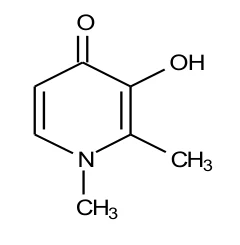
Proper name: deferiprone
Chemical name: 3-hydroxy-1,2-dimethylpyridin-4-one
Molecular formula and molecular mass: C7H9NO2; 139.15
Structural formula:
Physicochemical properties:
Solubility: deferiprone is slightly soluble in methanol and ethanol and very slightly soluble in acetone
The aqueous solubility of deferiprone throughout the pH range of 1 to 7.5 is provided in Table 10.
Table 10: Deferiprone - Aqueous pH Solubility Profile
| Medium | Final pH Value | Solubility [mg/mL] |
|---|---|---|
| Water | 5.7 | 14.3 |
| 0.01N HCl | 2.0 | 16.0 |
| 0.1N HCl | 1.1 | 32.7 |
| Simulated Gastric Fluid (without enzymes) | 1.2 | 28.9 |
| 0.05M Phosphate Buffer | 2.5 | 17.1 |
| 0.05M Phosphate Buffer | 4.5 | 14.6 |
| 0.05M Phosphate Buffer | 6.0 | 13.9 |
| 0.05M Phosphate Buffer | 6.8 | 13.4 |
| 0.05M Phosphate Buffer | 7.2 | 13.8 |
| 0.05M Phosphate Buffer | 7.5 | 13.3 |
14. Clinical Trials
14.1 Clinical Trials by Indication
Transfusional iron overload due to Thalassemia syndromes
The efficacy of FERRIPROX for the treatment of patients with transfusional iron overload due to thalassemia syndromes has been evaluated in twelve clinical studies: eight clinical trials, one of which (LA16-0102) is considered pivotal, three compassionate use studies, and an investigator sponsored study. LA36-0310, a prospectively planned, pooled analysis of pre-existing data from these twelve studies, evaluated the efficacy of FERRIPROX in transfusion-dependent iron-overloaded patients (nearly all with thalassemia) in whom previous iron chelation therapy (deferoxamine or deferasirox; mostly deferoxamine) had failed, due to an inadequate response or poor tolerance.
Demographic characteristics for LA16-0102 and for LA36-0310 are shown in Table 11.
Table 11: Summary of patient demographics for clinical trials in Thalassemia syndromes
| Study # | Study design | Dosage, route of administration and duration | Study subjects (n) | Mean age (Range) | Sex |
| Study # | Study design | Dosage, route of administration and duration | Study subjects (n) | Mean age (Range) | Sex |
| LA16-0102 | Open-label, randomized, active comparator controlled clinical trial | FERRIPROX: Initiated at a dose of 25 mg/kg tid for a total daily dose of 75 mg/kg. Treatment was increased to 28.3 mg/kg tid approximately 4 weeks after therapy initiation and further increased to the maintenance dose of 33.3 mg/kg tid for a total daily dose of 100 mg/kg approximately 8 weeks after therapy initiation. Deferoxamine: 50 mg/kg/day, subcutaneous infusion on 5-7 days per week. Duration: 12 months | FERRIPROX = 29 Deferoxamine = 32 | FERRIPROX = 25.1 (18-32) Deferoxamine = 26.2 (18-35) | FERRIPROX = 15 (52%) M/14 (48%) F Deferoxamin e = 16 (50%) M/16 (50%) F |
| LA36-0310 | Prospectively planned, pooled analysis of pre-existing data | FERRIPROX: 35 to 100 mg/kg/day, administered orally in either tablet or solution form. Duration: Up to 12 months | 747 | (monotherapy patients) For serum ferritin = 20 (2, 76) For LIC = 19 (6, 52) For MRI T2* = 25 (15, 32) | (monotherap y patients) For serum ferritin (236 patients) Female: 128 (54%) Male: 108 (46%) For LIC (87patients) Female: 45 (52%) Male: 42 (48%) For MRI T2* (31 patients+) Female: 16 (52%) Male: 15 (48%) |
+ 29 of 31 (93.5%) of the patients were from LA16-0102
LA16-0102
Study LA16-0102 was a 12-month, multi-centre, open-label, randomized, active controlled study conducted in transfusion-dependent β-thalassemia major patients between 18 and 36 years of age. Subjects had been receiving ongoing chelation therapy with deferoxamine for at least the past 5 years and had an abnormal (<20 milliseconds (ms)) but not severely abnormal (>8 ms) cardiac Magnetic Resonance Imaging T2-star (MRI T2*) value, a left ventricular ejection fraction (LVEF) greater than 56% (measured by Cardiovascular Magnetic Resonance), and a left ventricular shortening fraction greater than 30% (measured by echocardiogram). Patients were stratified into moderate (≥8 ms to <14 ms) or mild (≥14 ms to <20 ms) cardiac iron overload according to their baseline cardiac MRI T2* assessment and were randomized in a 1:1 ratio to receive either FERRIPROX administered three times a day (tid) orally in doses of 25 mg/kg for the first 4 weeks, increased to 28.3 mg/kg for the subsequent 4 weeks and maintained at 33.3 mg/kg for the remainder of the trial, or to continue with deferoxamine at a dose of 50 mg/kg/day administered by subcutaneous infusion on 5-7 days per week. A total of 61 patients were randomized and treated with FERRIPROX (N = 29) at an average dose of 92 mg/kg/day or with deferoxamine (N = 32) at an average dose of 43 mg/kg/day for 5.7 days per week.
The baseline demographics for age, sex, cardiac MRI T2* and liver iron concentration (LIC) were similar between the groups, although serum ferritin concentrations at baseline were higher in deferoxamine-treated patients (serum ferritin = 2,795 μg/L) compared to FERRIPROX-treated patients (serum ferritin = 1,790 μg/L). FERRIPROX-treated patients had a mean baseline cardiac MRI T2* value of 13.6 ms and LIC of 6.16 mg Fe/g dry weight (mg/g dw); corresponding values in deferoxamine-treated patients were similar at 13.9 ms and 6.32 mg Fe/g dry weight, respectively.
The primary efficacy measure was the subjects’ cardiac iron status as determined by cardiac MRI T2*. An increase in cardiac iron concentration will decrease the cardiac MRI T2* value. A cardiac T2* value below 20 ms demonstrates cardiac iron overload, and lower cardiac T2* values are observed with increased severity of overload. Secondary efficacy measures were the assessment of serum ferritin concentration and LIC. LIC was assessed by the Superconducting Quantum-Interference Device (SQUID) BioSusceptometer. A tertiary efficacy measure was the LVEF measured by Cardiovascular Magnetic Resonance.
At the 12-month assessment, there was an improvement in cardiac MRI T2* of 3.5 ms (from 13.0 ms to 16.5 ms) in patients treated with FERRIPROX compared with a change of 1.7 ms (from 13.3 ms to 15.0 ms) in patients treated with deferoxamine, which corresponds to 27% increase and 13% increase for FERRIPROX and deferoxamine, respectively. The improvement in cardiac MRI T2* was significantly greater for FERRIPROX than deferoxamine (p = 0.02).
No significant difference (p = 0.16) in mean change of serum ferritin from baseline to 12 months between the two treatment groups was detected. In addition, the difference in mean decrease in LIC at 12 months (0.61 mg/g dw) between the 2 groups was statistically non-significant (p = 0.40). Over the same 12 months, LVEF increased from baseline by 3.1 ± 3.6 absolute units (%) in the FERRIPROX group and by 0.3 ± 3.4 absolute units (%) in the deferoxamine group (difference between groups; nominal p = 0.003). Results for the efficacy endpoint MRI T2* are presented in Table 12. Results for efficacy endpoints serum ferritin, LIC and LVEF are presented in Table 13.
Table 12: LA16-0102: Relative Change in MRI T2* from baseline to 12 months for FERRIPROX and deferoxamine treatment groups – Intent-To-Treat Population
| MRI T2* | Baseline | 12 Months | ||||||||||
|---|---|---|---|---|---|---|---|---|---|---|---|---|
| FERRIPROX [n=29] | Deferoxamine [n=32] | FERRIPROX [n=29] | Deferoxamine [n=31] | |||||||||
Geometric Mean (milliseconds)† | 13.0 | 13.3 | 16.5 | 15.0 | ||||||||
| Coefficient of Variation (%)§ | 32 | 30 | 38 | 39 | ||||||||
| Percentage of Baseline | 127 | 113 | ||||||||||
| Ratio of Means (%)|| | 98 | 112 | ||||||||||
| p-value¶ | 0.77 | 0.02 | ||||||||||
- Geometric mean is defined as antilog of the mean of the log data
- Coefficient of variation is defined as √[evariance-1], where variance is the variance of the mean in log scale.
- The ratio is defined as FERRIPROX mean/deferoxamine mean. At 12 months, the ratio is corrected for the difference in baseline mean between the two treatment groups by dividing it by 0.98.
¶ The Log (MRI T2*) between the FERRIPROX and deferoxamine treatment groups was compared by the two-sample t-test.
Table 13: LA16-0102: Change in other efficacy endpoints from baseline to 12 months for FERRIPROX and deferoxamine treatment groups – Intent-To-Treat Population
| Parameter | Change from baseline to 12 months | Difference between two treatment groups (95% Confidence Interval) | P-value for the difference | |
|---|---|---|---|---|
| FERRIPROX | Deferoxamine | |||
Mean (±SD) serum ferritin (µg/L) [N=number of study subjects] | -181 ± 826 (N=29) | -466 ± 739 (N=32) | 285 (-116, 686) | 0.16 |
Mean (±SD) LIC (mg/g dw) [N=number of study subjects] | -0.93 ± 2.93 (N=27) | -1.54 ± 2.49 (N=30) | 0.61 (-0.83, 2.05) | 0.40 |
Mean (±SD) LVEF (%) [N=number of study subjects] | 3.07 ± 3.58 (N=29) | 0.32 ± 3.38 (N=31) | 2.75 (0.95, 4.55) | 0.003 |
LA36-0310
In LA36-0310, data from 747 patients who had received FERRIPROX therapy were analyzed for study eligibility. Criteria for chelation failure were defined by one or more measures of iron accumulation above a boundary level associated with an increased risk of organ damage, as follows: serum ferritin > 2,500 µg/L before treatment with FERRIPROX (main criterion); or liver iron concentration (LIC) of > 7 mg/g dw; or excess cardiac iron stores as demonstrated by a cardiac MRI T2* < 20 ms. Results from patients who received FERRIPROX in combination with other chelation therapy are excluded from the presented analysis. Analysis criteria were met for serum ferritin, LIC, and cardiac MRI T2* for 236 patients, and 87 patients, and 31 patients, respectively. Most (29/31 (93.5%)) of the patients evaluated for the cardiac MRI T2* criterion were from LA16-0102.
FERRIPROX therapy was considered successful in individual patients who experienced a reduction in serum ferritin of ≥20% from baseline within one year of starting therapy (primary efficacy endpoint). Other success criteria (secondary efficacy endpoints) were a decline in LIC of ≥20% from baseline within one year of starting therapy or a decline in cardiac iron overload, defined as an increase in cardiac MRI T2* ≥20% from baseline within one year of starting therapy. Overall success rates were calculated as the proportion of patients with a successful outcome. In order to consider FERRIPROX therapy as successful for a particular measure, the lower limit of the 95% confidence interval (CI) for that efficacy measure had to be greater than 20%.
The dose of FERRIPROX ranged from 35-100 mg/kg/day, administered orally in either tablet or solution form. The majority (77%) of patients eligible for assessment for the primary efficacy endpoint were administered a dose of 75 mg/kg/day; 18% received a dose of 100 mg/kg/day and 5% received a dose of ≤ 50 mg/kg/day.
The success rate for serum ferritin for patients on FERRIPROX monotherapy was 50% (95% CI: 43% to 57%). Mean serum ferritin decreased by 940 μg/L within one year of therapy (p=0.0001), i.e., from 4,444 μg/L at baseline to 3,503 μg/L at the last observation. The overall success rate for LIC was 38% (95% CI: 28% to 49%). For LIC, the mean decreased by 1.4 mg/g dw within one year of therapy (p=0.09), from 16.4 mg/g dw at baseline to 15.0 mg/g dw at the last observation. The overall success rate for cardiac MRI T2* was 65% (95% CI: 45% to 81%). For cardiac MRI T2* the mean increased by 3.9 ms within one year of therapy (p=0.0001), from 13.3 ms at baseline to 17.2 ms at the last observation.
Subgroup analyses were consistent with the primary analysis in that the lower limit of the 95% CI was greater than 20% for all subsets involved in analyses examining the impact of age, gender, and region.
Natural History Studies
Data from two natural history studies (Piga A, 2003; Borgna-Pignatti C, 2006) are supportive of the clinical effectiveness of FERRIPROX in the treatment of transfusional iron overload due to thalassemia syndromes.
Transfusional iron overload due to Sickle Cell Disease and Other Anemias
The efficacy of FERRIPROX for the treatment of patients with transfusional iron overload due sickle cell disease or other anemias has been evaluated in clinical trials LA38-0411 and LA38-EXT.
A controlled non-inferiority study compared the efficacy of FERRIPROX to that of deferoxamine in patients with sickle cell disease and other transfusion-dependent anemias by evaluating liver iron concentration.
Table 14: Summary of patient demographics for LA38-0411 in transfusional Iron Overload due to Sickle Cell Disease and Other Anemias
| Study # | Study design | Dosage, route of administration and duration | Study subjects (n) | Mean age (Range) | Sex |
| LA38-0411 | Multi-center, randomized, open-label, active-controlled study comparing the efficacy and safety of deferiprone vs. deferoxamine in the population of interest | FERRIPROX: 75 or 99 mg/kg/day Deferoxamine: 20 or 40 mg/kg/day, 5 to 7 days a week (children) 40 or 50 mg/kg/day, 5 to 7 days a week (adults) For up to 12 months | FERRIPROX: 152 Deferoxamine: 76 Sickle Cell Anemia: 192 (84.2%) Other Anemias: 36 (15.8%) | 16.9 (3-59) | Male: 121 (53.1%) Female: 107 (46.9%) |
The primary endpoint was the change in liver iron concentration from baseline after 12 months of FERRIPROX (75 or 99 mg/kg/day) compared to deferoxamine (20 or 40 mg/kg (children); 40 or 50 mg/kg (adults)). Patient enrollment was stopped following an interim analysis. After adjusting for the type I (alpha) error, the non-inferiority criterion was established as the upper limit of the 96.01% confidence interval for the difference between treatments being ≤2 mg/g dry weight (dw).
Data from 185 patients (122 on FERRIPROX and 63 on deferoxamine) were analyzed. There were no significant treatment group differences at baseline or after 12 months (p-values >0.05). Over 12 months, the Least Squares estimate of mean decrease from baseline in liver iron concentration was 4.13 ± 0.50 mg/g dw for FERRIPROX and 4.38 ± 0.59 mg/g dw for deferoxamine, and the non-inferiority criterion was met.
Patients who completed the 1-year non-inferiority study LA38-0411 were offered the opportunity to take part in in the 2-year extension study LA38-EXT. Those who had been treated with FERRIPROX continued to receive it (N=89), while those who had been treated with deferoxamine were switched to FERRIPROX (N=45). Liver iron concentration continued to decrease over time, with the mean value dropping from 14.93 mg/g dw at baseline to 12.30 mg/g dw after one year of treatment, to 11.19 mg/g dw after two years of treatment, and to 10.45 mg/g dw after three years of FERRIPROX treatment.
14.2 Comparative Bioavailability Studies
Comparative Bioavailability Studies of FERRIPROX 500 mg and 1 000 mg tablets and 100 mg/mL oral solution
Study LA33-BA was an open-label, comparative, randomised, single-dose, crossover bioavailability study of a 1 000 mg dose of FERRIPROX (deferiprone) 1 000 mg immediate release tablets and 500 mg immediate release tablets in healthy volunteers under fasting conditions.
A single oral dose of 1 000 mg of deferiprone was administered in the form of 1 x 1 000 mg deferiprone immediate release tablet or in the form of 2 x 500 mg FERRIPROX immediate release tablets under fasting conditions. The single doses were separated by a washout period of seven days. The safety and tolerability of deferiprone was also evaluated in this study in which thirty-six subjects were enrolled.
Bioequivalence between the 1 000 mg and 500 mg tablets was demonstrated.
Table 15 Study LA33-BA: Pharmacokinetic parameters
| Deferiprone (1 x 1 000 mg or 2 x 500 mg) From measured data Geometric Mean Arithmetic Mean (CV %) | ||||
| Parameter | FERRIPROX 1 x 1 000 mg Tablet | FERRIPROX 2 x 500 mg Tablet | % Ratio of Geometric Means | 90% Confidence Interval |
AUCT (µg.h/mL) | 30.5 31.5 (26.3%) | 30.3 31.3 (26.1%) | 1.01 | 0.98 – 1.04 |
AUCI (µg.h/mL) | 31.3 32.4 (26.7%) | 31.1 32.1 (26.7%) | 1.01 | 0.98 – 1.04 |
Cmax (µg.h/mL ) | 11.6 12.4 (38.3%) | 10.7 11.3 (36.2%) | 1.08 | 0.96 – 1.22 |
Tmax (h) | 0.981 (69.1%) | 1.03 (76.1%) | Not applicable | Not applicable |
| T1/2 (h) | 1.74 (11.3%) | 1.75 (12.3%) | Not applicable | Not applicable |
Study LA21-BE was a randomized, open label, comparative, crossover bioavailability study of deferiprone oral solution and FERRIPROX® (deferiprone) tablets in healthy volunteers under fasting conditions.
An oral dose of 1 500 mg of deferiprone either in the solution form or in the tablet form was administered under fasting conditions. The single doses were separated by a washout period of seven days. The safety and tolerability of deferiprone was also evaluated in this study in which forty-two subjects were enrolled.
Bioequivalence between the oral solution and the tablet form was demonstrated.
Table 16 Study LA21-BE: Pharmacokinetic parameters
| Deferiprone (1 500 mg or 3 x 500 mg) From measured data uncorrected for potency Geometric Mean Arithmetic Mean (CV %) | ||||
| Parameter | FERRIPROX 100 mg /mL Oral solution | FERRIPROX 500 mg Tablet | % Ratio of Geometric Means | Confidence Interval# |
| AUCT‡ (µg.h/mL) | 48.2 (22.6) | 48.0 (23.3) | 100.6% | 98.0 – 103.4 |
| AUCI (µg.h/mL) | 49.3 (22.9) | 49.2 (23.4) | 100.4% | 97.7 – 103.1 |
| Cmax (µg/mL) | 18.9 (30.8) | 19.2 (36.2) | 98.3% | 88.9 – 108.7 |
| Tmax (h) | 0.805 (66.6) | 0.911 (50.5) | ||
| T½ (h) | 1.71 (13.4) | 1.72 (13.3) | ||
Comparative bioavailability studies on FERRIPROX MR 1 000 mg extended-release (modified-release) tablets
Study LA53-0116 was a single center, randomized, single dose, open-label, crossover study in healthy volunteers to evaluate the bioavailability of FERRIPROX MR under fasting and fed conditions and to compare the PK profiles of a whole tablet vs. 2 half-tablets of FERRIPROX MR under fed conditions.
A total of 28 healthy volunteers were enrolled and randomized to receive the following treatments:
- Treatment A: A single 1 000 mg dose of FERRIPROX MR tablet formulation (one 1 000 mg tablet), under fasting conditions
- Treatment B: A single 1 000 mg dose of FERRIPROX MR tablet formulation (one 1 000 mg tablet), under fed conditions
- Treatment C: A single 1 000 mg dose of FERRIPROX MR tablet formulation administered as half-tablets (one 1 000 mg tablet divided in two), under fed conditions
- Treatment D: A single 1 000 mg dose of FERRIPROX immediate release tablet formulation (two 500 mg tablets), under fed conditions
Results demonstrated that the extent of exposure to a single 1 000 mg dose of FERRIPROX MR tablet formulation is equivalent to a single 1 000 mg dose of FERRIPROX immediate release tablet formulation under fed condition. However, the peak exposure was higher for deferiprone IR. Results also showed that food does not impact the pharmacokinetics of intact extended-release tablets and that the extended-release properties are maintained when the tablet is cut in half under fed conditions.
Table 17 Study LA53-0116: Pharmacokinetic parameters
Deferiprone (1 000 mg) From measured data uncorrected for potency Geometric Mean Arithmetic Mean (CV %) | ||||
| Parameter | Test* | Reference† | % Ratio of Geometric Means | 90% Confidence Interval |
AUCT (µg·h/mL) | 26.532 | 28.724 | 92.37 | 88.90 - 95.97 |
AUCI (µg·h/mL) | 27.270 | 29.279 | 93.14 | 89.74 - 96.66 |
Cmax (µg/mL) | 5.805 | 8.862 | 65.50 | 57.58 - 74.51 |
Tmax§ (h) | 3.00 (2.00-8.00) | 1.33 (0.50-8.00) | ||
T½€ (h) | 1.80 (16.5) | 1.79 (15.2) | ||
* FERRIPROX MR under fed conditions (1 x 1 000 mg tablet)
† FERRIPROX IR under fed conditions (2 x 500 mg tablets)
§ Expressed as median (range)
€ Expressed as the arithmetic mean (CV%) only
Study LA45-0116 was a single center, randomized, multiple dose, open-label, crossover study in healthy volunteers to compare the steady state PK profile of FERRIPROX MR to that of FERRIPROX IR under fed conditions.
- Treatment A: 1 500 mg FERRIPROX MR (1.5 x 1 000 tablets) twice daily every 12 hours for 3 consecutive days, under fed conditions
- Treatment B: 1 000 mg FERRIPROX IR (2 x 500 mg tablets) three times daily every 8 hours for 3 consecutive days, under fed conditions
Results demonstrated that the peak and extent of exposure to 1 500 mg FERRIPROX MR extended-release tablets (1.5 x 1 000 mg tablets) taken twice daily is equivalent to that of 1 000 mg FERRIPROX (2 x 500 mg tablets) taken three times daily over 24 hours at steady state under fed conditions.
Table 18 Study LA45-0116: Pharmacokinetic parameters
Deferiprone (1 500 mg) From measured data uncorrected for potency Geometric Mean Arithmetic Mean (CV %) | ||||
| Parameter | Test* | Reference† | % Ratio of Geometric Means | 90% Confidence Interval# |
AUCtau (µg·h/mL) | 81.057 | 81.624 | 99.31 | 97.03 – 101.65 |
Cmax (µg/mL) | 9.364 | 10.552 | 88.74 | 83.00 – 94.89 |
Cmin (µg/mL) | 0.382 | 0.566 | 67.54 | 61.76 – 73.86 |
| FL¶ (%) | 266.08 (16.3) | 297.32 (25.8) | ||
* FERRIPROX MR under fed conditions (1.5 x 1 000 mg tablet BID)
† FERRIPROX IR under fed conditions (2 x 500 mg tablet TID)
§ Expressed as median (range)
¶ Expressed as the arithmetic mean (CV%) only
15. Microbiology
No microbiological information is required for this drug product.
16. Non-Clinical Toxicology
General Toxicology:
Acute Toxicity
The median lethal dose (LD50) of deferiprone in non-iron-loaded mice and rats given a single i.p. injection was 983 and 650 mg/kg, respectively. Convulsions preceded death in mice. The oral LD50 in rats was 2,000 to 3,000 mg/kg.
Subchronic and Long-Term Toxicity
In a 3-month rodent toxicology study, a minority of iron-supplemented rats given 125 mg/kg deferiprone bid orally were subject to unscheduled euthanasia during the latter two-thirds of the study, as a result of declining clinical condition, and decreased circulating RBC, platelet, and WBC counts. Microscopic examination revealed bone marrow hypocellularity, hepatic centrilobular degeneration and necrosis, and lymphocytic depletion in the thymic cortex. Bone marrow depression and non-regenerative anemia were considered to be the cause of death. Less severe effects were evident at 75 mg/kg bid, but no toxicologically relevant effects occurred at 37.5 mg/kg bid.
In a 3-month primate toxicology study, non-iron-loaded monkeys were terminated because of declining physical condition after 42-50 days’ oral administration of deferiprone, 125 mg/kg bid and later 150 mg/kg bid; animals given 50 or 100 mg/kg bid (100 or 200 mg/kg/day) survived treatment as scheduled. Moderate to severe reductions in circulating platelet, reticulocyte and white cell (all types) counts were observed. Serum levels of iron were also decreased. Intestinal degeneration and necrosis were identified as the cause of morbidity, but bone marrow hypocellularity, depletion and necrosis of thymus, spleen and lymph nodes, and liver pathology were also significant. No toxicologically relevant effects were noted at 50 mg/kg bid.
In a 12-month rodent toxicology study, following administration of deferiprone at doses of 150 or 200 mg/kg/day in 2 divided doses (75 or 100 mg/kg bid), to non-iron-loaded or iron-loaded rats, respectively, 7 of 50 non-iron-loaded and 3 of 50 iron-loaded animals were either found dead or sacrificed moribund with severe anemia and slight to moderate centrilobular degeneration and necrosis. Animals from which blood samples could be collected prior to their unscheduled termination had elevated levels of total bilirubin, aspartate aminotransferase, and/or alanine aminotransferase of up to ca. 8, 4, and 14 times their respective group mean control value. These findings could be ascribed to hypoxia due to severe anemia (hemoglobin concentration <2.5 g/dL). No findings of severe anemia with or without centrilobular degeneration and necrosis, or isolated findings of centrilobular degeneration and necrosis, were noted in non-iron-loaded or iron-loaded survivors. Relatively mild decreases in RBC and WBC counts in surviving rats partially reversed during a 4-week off-dose period following 12 months’ treatment; recovery of bone marrow hypocellularity was complete in iron-loaded, but partial in non-iron-loaded, animals. The mean relative weight of the adrenal and pituitary gland was significantly greater in non-iron-loaded rats given 75 mg/kg deferiprone bid as compared to non-iron-loaded untreated rats.
In a 12-month primate toxicology study, no treatment-related changes were detected in non-iron-loaded monkeys dosed orally with 75 mg/kg deferiprone bid. Iron loading produced increases in serum ALT activity, which may have been exacerbated by deferiprone.
Carcinogenicity:
Non-clinical carcinogenicity studies have not been conducted with deferiprone. In a 12 month rat toxicology study, reversible mammary gland hyperplasia occurred in female animals of all deferiprone-treated groups, irrespective of iron loading. The incidence of mammary tumors (1 of 65 males, 1 of 65 females) in deferiprone-treated animals was not statistically significantly different from that in controls.
However, in view of positive genotoxicity results (refer to genotoxicity information below) and the findings of mammary gland hyperplasia and mammary gland tumors in rats treated with deferiprone for 52 weeks, tumor formation in rodent carcinogenicity studies must be regarded as likely. Deferiprone was clastogenic in an in vitro mouse lymphoma cell assay and in a Chinese hamster ovary cell chromosomal aberration test. Deferiprone given orally or intraperitoneally was clastogenic in a bone marrow micronucleus assay in non-iron-loaded mice. A micronucleus test was also positive when mice predosed with iron dextran were treated with deferiprone.
Genotoxicity:
Deferiprone was not mutagenic in a bacterial reverse mutation assay. It was positive in an in vitro L5178Y/TK+/- mouse lymphoma mutagenesis assay in the absence or presence of metabolic activation. Evidence of clastogenic effect was observed in a bone marrow micronucleus test in non-iron-loaded mice and after iron loading. There was no difference in the frequencies of lymphocyte chromosomal aberrations in thalassemia patients treated with deferiprone and deferoxamine in a clinical trial conducted to a crossover design.
Reproductive and Developmental Toxicology:
Deferiprone had no significant effects on fertility and reproductive performance in non-iron-loaded male and female rats dosed orally at ≤ 75 mg/kg bid prior to and through mating (males) or through early gestation (females). In females, estrous cycle prolongation (manifested as time to confirmed mating) was noted at all doses tested.
Skeletal and soft tissue malformations occurred in offspring of rats and rabbits that received deferiprone orally during organogenesis at the lowest doses tested (25 mg/kg per day in rats; 10 mg/kg per day in rabbits). These doses were equivalent to 3% to 4% of the maximum recommended human dose (MRHD) based on body surface area. No maternal toxicity was evident at these doses.
Embryofetal lethality and maternal toxicity occurred in pregnant rabbits given 100 mg/kg/day deferiprone orally during the period of organogenesis. This dose is equivalent to 32% of the MRHD based on body surface area.