


Patient Medication Information: uses, side effects, how to take - Fluorescein
ABOUT THIS MEDICATION
What the medication is used for:
FLUORESCEIN is a diagnostic aid used by your doctor as part of certain eye exams.
What it does:
FLUORESCEIN contains fluorescein sodium, which acts by lighting up your eye (fluorescence) to allow your doctor to see the blood moving through the small blood vessels at the back of your eye(s).
When it should not be used:
FLUORESCEIN should not be used if you are allergic to fluorescein sodium or any other of the ingredients in FLUORESCEIN (see What the important nonmedicinal ingredients are).
FLUORESCEIN is injected into a vein and must not be injected into an artery or intrathecally (i.e. into any space surrounded by a sheath or membrane, such as the spine or brain).
What the medicinal ingredient is:
Fluorescein sodium (fluorescein 100 mg/mL)
What the important nonmedicinal ingredients are:
Hydrochloric acid and/or sodium hydroxide (to adjust pH to 9.0), purified water
What dosage forms it comes in:
FLUORESCEIN comes as a solution for intravenous injection in a 5 mL vial, 10 per box.
WARNINGS AND PRECAUTIONS
- Are taking many different drugs at the same type.
- Are pregnant or planning to become pregnant.
These are all important factors your doctor needs to know about when deciding whether to use FLUORESCEIN.
Low Salt Diet
Before FLUORESCEIN is used, tell your doctor if you are on a low salt diet. FLUORESCEIN can contain a lot of salt.
Breastfeeding
Tell your doctor if you are or planning to breastfeed. Stop breastfeeding for at least 1 week after FLUORESCEIN is used. Breast milk should be pumped and discarded.
Driving and Using Machines
If you experience blurry vision after FLUORESCEIN is used, wait until your vision is back to normal before driving or using machines.
Tell your doctor about all the medicines you are taking, recently took or are planning to take.
Drugs that may interact with FLUORESCEIN include:
- Beta-blocking agents (e.g. propranolol, atenolol, sotalol).
- Antiarrhythmics (for irregular heartbeat, e.g. quinidine, digoxin).
- Probenecid (gout medicine).
If you are scheduled for any laboratory tests, tell your doctor that you were given FLUORESCEIN as it may affect your test results.
Usual dose:
Your doctor will decide how much to give to you or your child and will administer FLUORESCEIN by injection into a vein.
Overdose:
Your doctor should carefully decide how much
FLUORESCEIN to give you to avoid an overdose.
BEFORE FLUORESCEIN is used, tell to your doctor if you:
Have ever had any side effects (other than nausea or
vomiting) after FLUORESCEIN was used.
Have a history of allergies, including those to foods or
other drugs.
- Have asthma.
- Have or have had heart disease.
- Have diabetes.
Serious Warnings and Precautions
Your doctor must weigh the benefit of using FLUORESCEIN as a diagnostic agent with the risk of a serious allergic reaction (see Side Effects and What to Do About Them).
If you feel you have been given too much
FLUORESCEIN, contact your attending healthcare practitioner, hospital emergency department or regional Poison Control Centre immediately, even if there are no symptoms.
INTERACTIONS WITH THIS MEDICATION
PROPER USE OF THIS MEDICATION

 FLUORESCEIN* Prescribing Information Page 9 of 9
IMPORTANT: PLEASE READ
Like all medicines, FLUORESCEIN may cause side effects, but not everyone gets them.
Side effects that can occur at the injection site may include: general pain and soreness or accidental leakage of FLUORESCEIN into surrounding areas, which may cause intense pain, local reaction and other effects, such as a dull aching pain in the injected arm. If this occurs, contact your healthcare professional immediately for medical attention.
Your skin may also become yellowish in colour and your urine may become bright. These effects should go away on their own after a few days.
Other side effects include: stomach pain/discomfort, nausea, vomiting, feeling hot or cold, dizziness, bad taste in the mouth, fainting, a tingling or numb sensation, headache, tremors, cough, shortness of breath, sneezing, throat irritation, rash or itchy skin, excess sweating and low or high blood pressure.
You may also report any suspected side effects to Pharma Stulln Inc. directly at: 1-833-278-8556. e-mail:
info@pharmastulln.ca
Your doctor will watch you closely for any signs of these serious side effects, for at least 30 minutes after treatment, and give you immediate medical treatment if you need it.
This is not a complete list of side effects.
Revised: July 9, 2020
The healthcare professional will store FLUORESCEIN between 15oC to 30oC. Do not freeze
HOW TO STORE IT
SIDE EFFECTS AND WHAT TO DO ABOUT THEM
MORE INFORMATION
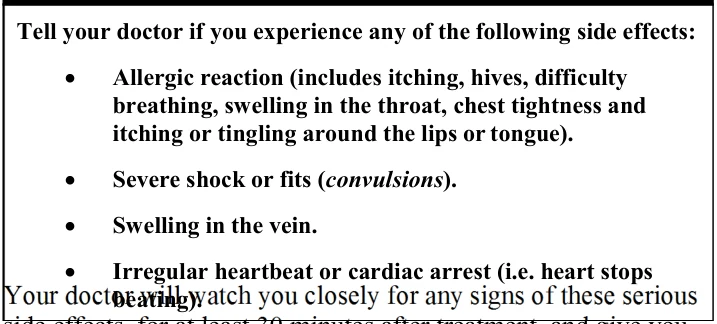
Tell your doctor if you experience any of the following side effects:
- Allergic reaction (includes itching, hives, difficulty breathing, swelling in the throat, chest tightness and itching or tingling around the lips or tongue).
- Severe shock or fits (convulsions).
- Swelling in the vein.
- Irregular heartbeat or cardiac arrest (i.e. heart stops beating).
SERIOUS SIDE EFFECTS, HOW OFTEN THEY HAPPEN AND WHAT TO DO ABOUT THEM
REPORTING SUSPECTED SIDE EFFECTS
You can report any suspected adverse reactions associated with the use of health products to the Canada Vigilance Program by one of the following 3 ways:
--------------------------------------------------------------------------
- Report online at www.healthcanada.gc.ca/medeffect
- Call toll-free at 1-866-234-2345
Complete a Canada Vigilance Reporting Form and:
- Fax toll-free to 1-866-678-6789, or
Mail to: Canada Vigilance Program
Health Canada
Postal Locator 0701D Ottawa, Ontario K1A 0K9
Postage paid labels, Canada Vigilance Reporting Form and the adverse reaction reporting guidelines are available on the MedEffect™ Canada Web site at www.healthcanada.gc.ca/medeffect.
NOTE: Should you require information related to the management of side effects, contact your health professional. The Canada Vigilance Program does not provide medical advice.